Best of 2023
Best of 2022
Best of 2021
Best of 2020
Best of 2019
Best of 2017-2018
1567belmont


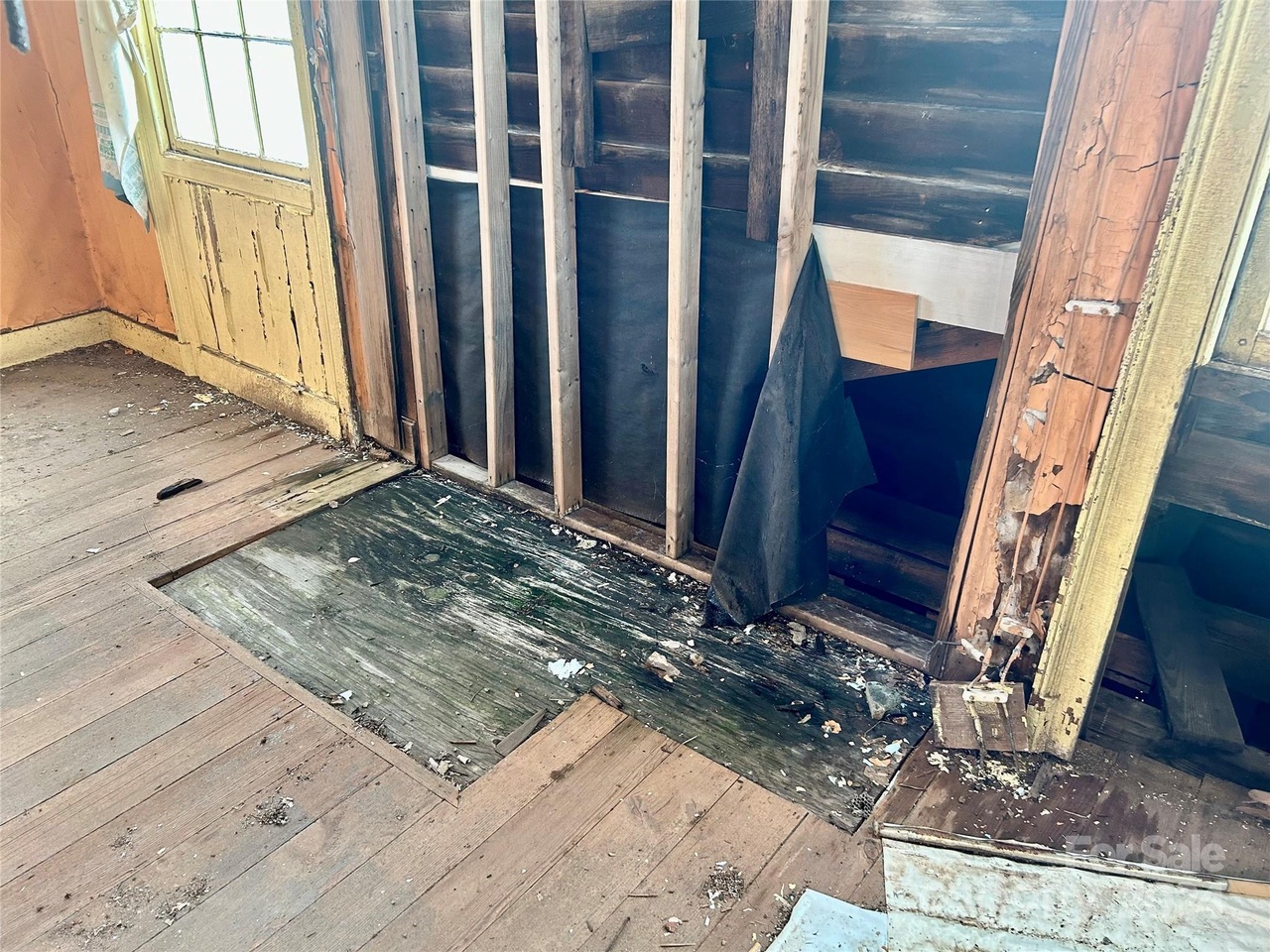

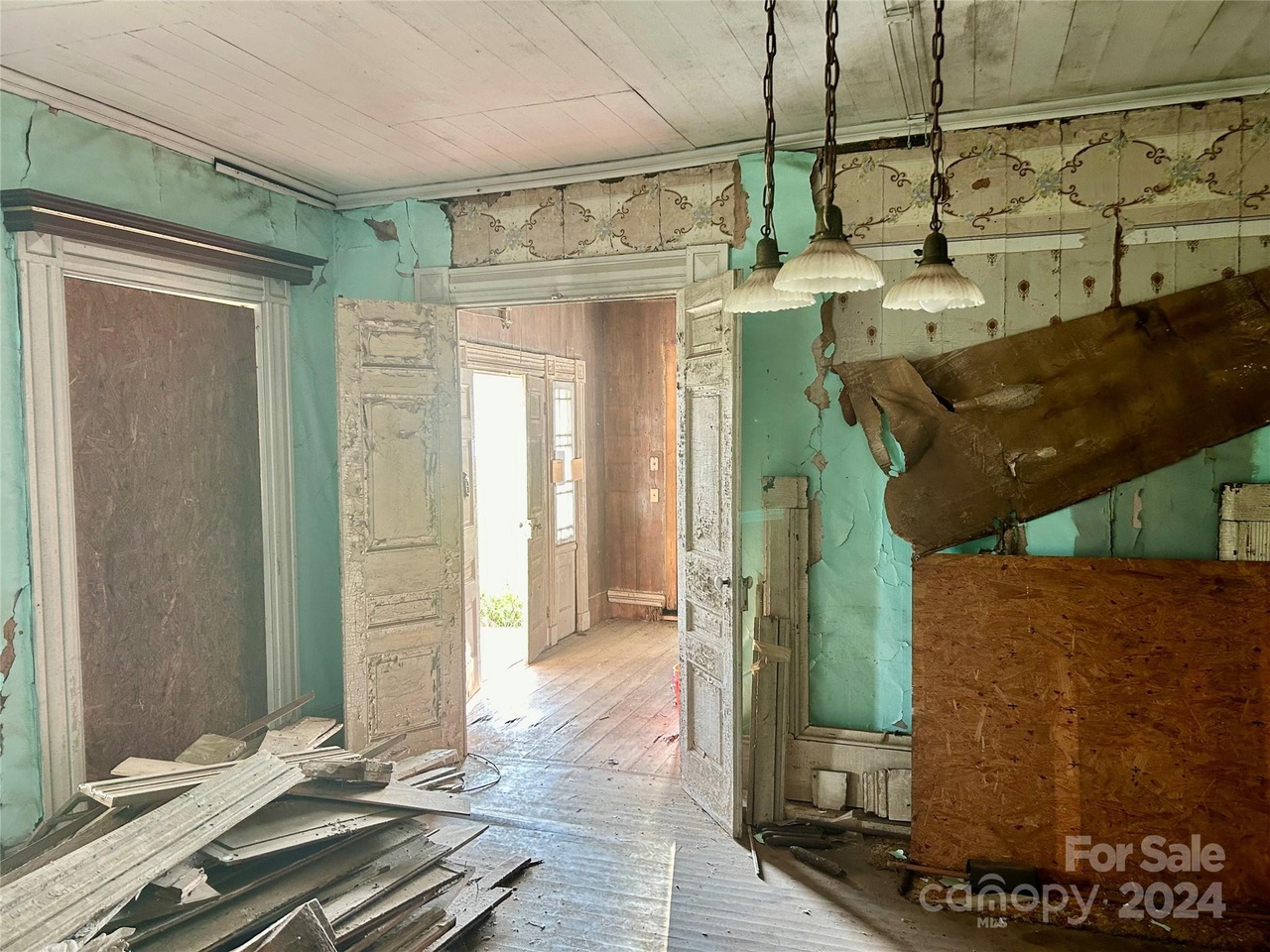

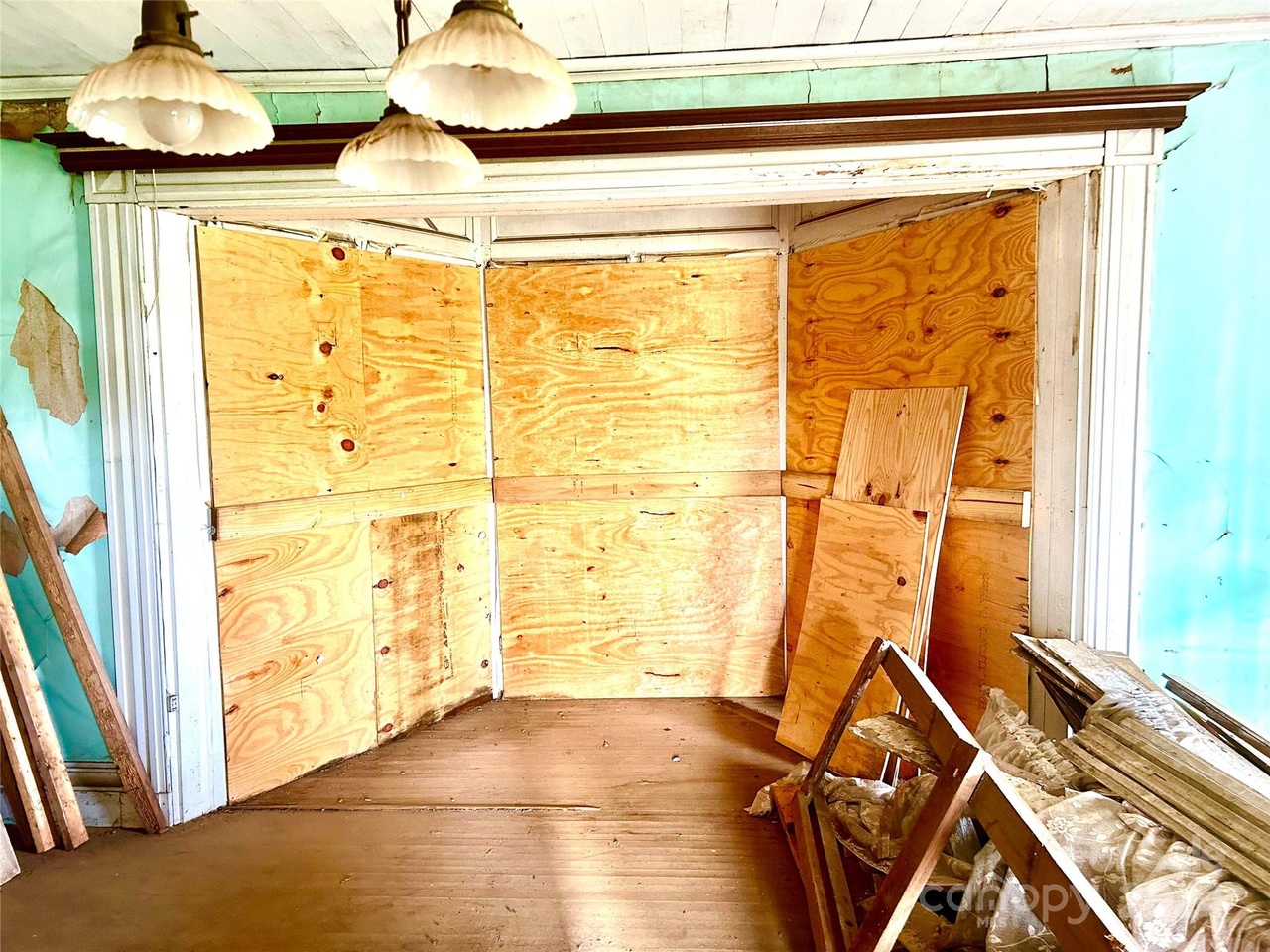


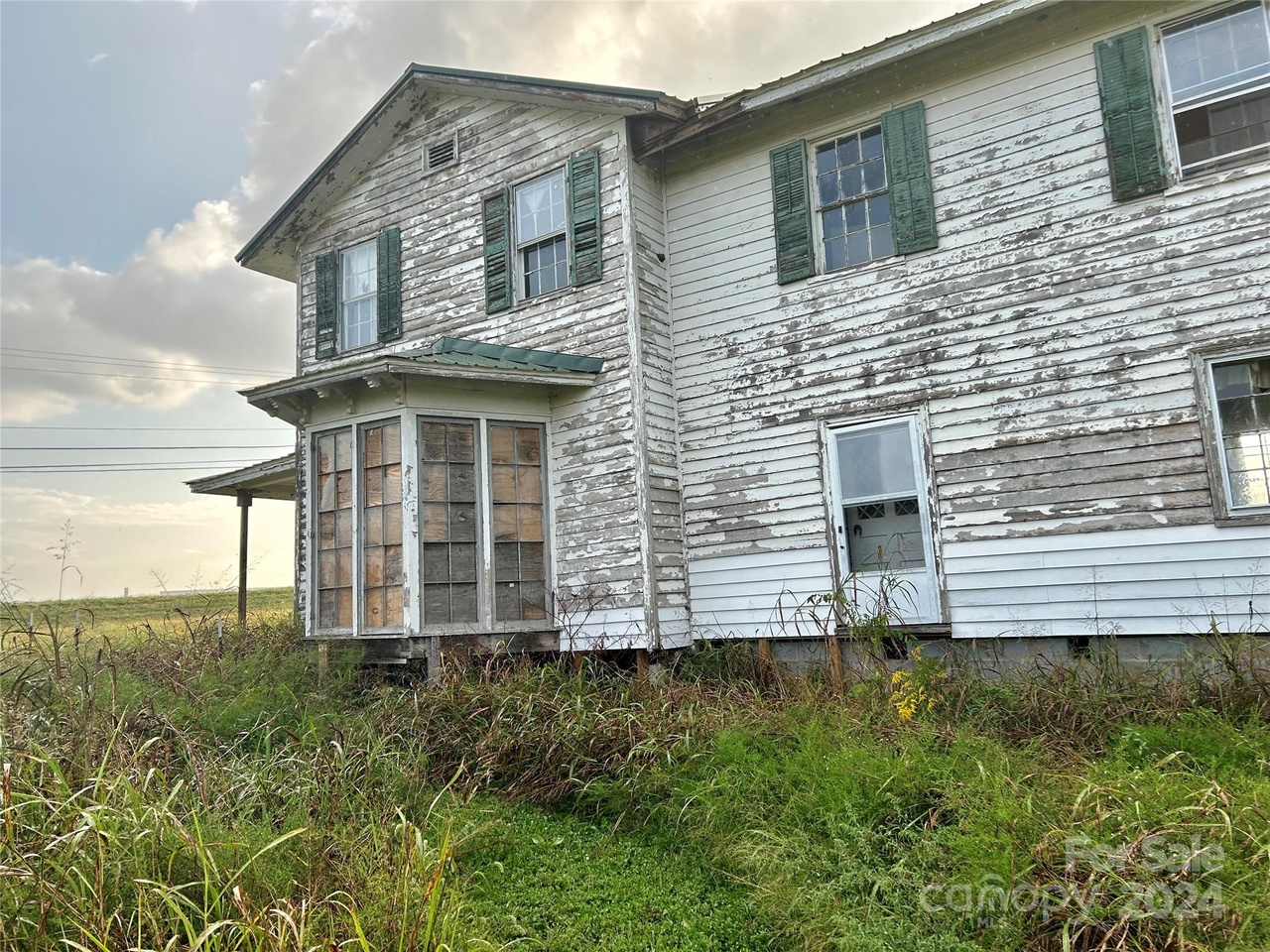

1567 Belmont Road, Linwood, Davidson County (also here)
Beallmont
- Sold for $69,000 on November 6, 2024 (originally $75,000)
- 2 bedrooms, 1 bathroom, 2,422 square feet, 2.6 acres
- Price/square foot: $28
- Preservation NC listing: “Rare NC example of 1840s Picturesque Cottage with decorative lattice porch, bay window and early woodwork.”
- “The original small two-story frame house was built by either Doctor Robert Moore, the original grant holder, or his son Ebenezer, in the late eighteenth century or early nineteenth century. A two-story log addition was built early on. Ebenezer’s son-in-law Burgess Lamar Beall, a prominent physician and politician, transformed the house into a fashionable picturesque villa in the late 1840’s. … The side wing was added during the picturesque villa remodeling and also featured latticework. The current one-bay wide porch was added in the twentieth century.”
- The house has been moved to a nearby lot with access to a small pond. The surrounding land will be protected by a conservation easement.
- The house will require a complete rehabilitation, including structural repair, restoration carpentry, new systems, bathrooms and kitchen.
2900country
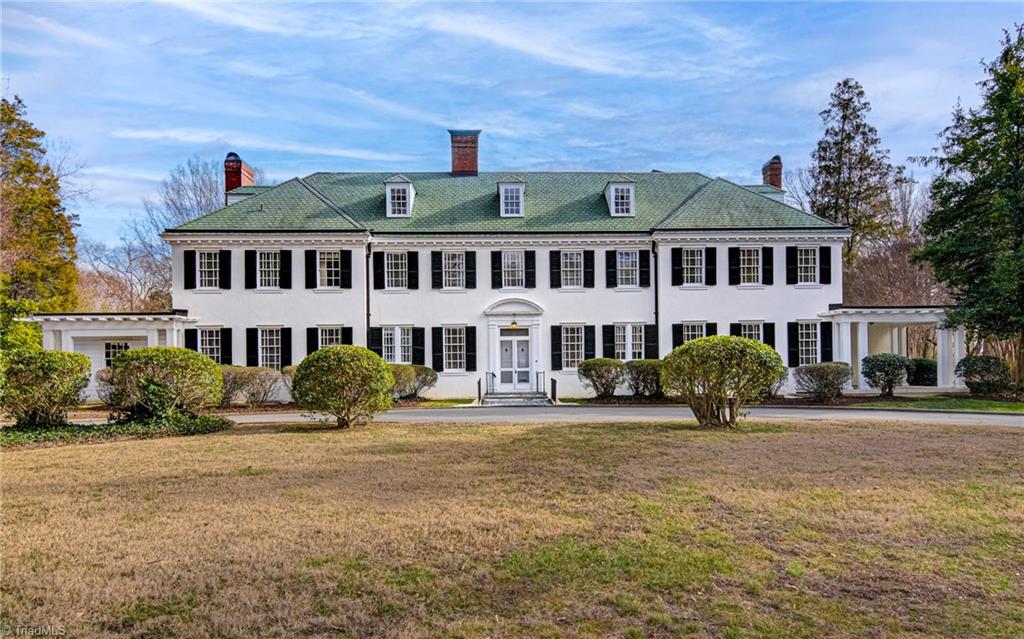
2900 Country Club Road, Winston-Salem
The Benjamin and Josephine Huntley House, Huntlyholme
- Sold for $1.8 million on November 5, 2024 (originally $3 million)
- 9 bedrooms, 5 full bathrooms 2 half-bathrooms, 9,318 square feet, 1.82 acres
- Price/square foot: $193
- Built in 1924
- Listed August 11, 2023
- Last sale: $130,000, June 1976
- Neighborhood: Westview
- Note: The listing hows only 8,410 square feet ($357/square foot).
- Listing: “The original 3 Car Garage & Chauffeur’s Quarters [are] now a 1,548 sq.ft. Guest Cottage w/2 BDs, 2 Full Baths, LR, DR & Den under the original green Ludowici-Celadon Tile Roof”
- Designed by designed by architects Charles Barton Keen and William Roy Wallace. Original landscaping by Thomas Sears.
- The 11-bay, stucco Georgian mansion “features slightly projecting hip-roofed bays flanking the central section. A classical surround with fluted pilasters and an arched pediment frames the primary entrance. Three hipped dormers and brick interior chimneys with tall corbelled stacks pierce the Ludowici-Celadon green tile roof above a modillion cornice.” (Winston-Salem’s Architectural Heritage)
- The Westview neighborhood is built on the former Westview Farm, a dairy operation owned by William Neal Reynolds (1863-1951). With the city limits creeping toward it, Reynolds moved the farm to Davie County near his Tanglewood estate in 1923 and sold the 148-acre Westview property.
- The house was built for Benjamin Franklin Huntley Sr. (1863-1925) and Josephine Myers Huntley (1875-1947), who owned a furniture factory and store. Benjamin was memorialized in a mournful editorial in the Winston-Salem Journal: “Benjamin F. Huntley was one of the comparatively small group of far-sighted and courageous business men who had the most to do with building here at the gateway of Northwest North Carolina the largest city in the Commonwealth. In his untimely passing, Winston-Salem is again called upon to mourn one of it foremost citizens and most outstanding civic leaders.”
- The editorial cited his “masterful leadership” in the construction of the Robert E. Lee Hotel (“one of the greatest community enterprises in the history of Winston-Salem”), his service as a founder and first president of the local Kiwanis Club (“a mighty force for progress and civic righteousness”) and his leading role in building the First Baptist Church (“the finest and most beautiful Baptist church structure in the South”).
- Of his business career, the newspaper called him “the rare type of business man who possessed in marked degree the genius of both merchant and manufacturer.”
- After Josephine’s death, the house was sold to the Catholic church, which established a school there, Villa Marie Anna Academy. In 1953, the school opened St. Leo’s Catholic School at a new location, and the house became a convent and education center until 1976. (Winston-Salem’s Architectural Heritage)
- The owners since 1976 have been Dr. Nat Erskine Smith (1922-2008) and Marguerite DeSauliniers Smith (1924-2022). Nat was a native of York, South Carolina, and a graduate of Erskine College and the Medical College of Georgia. He served in the Army 1949-1951 and then completed a residency at George Washington University Hospital. After teaching at The University of Illinois Medical School and Mercer University, he came to Winston-Salem in 1976 as associate dean of the Bowman Gray Medical School at Wake Forest. After retiring he worked as a physician at the Veterans Administration hospital in Winston-Salem before retiring again at age 81.
- Marguerite was born in Boston and grew up in Williamsport, Pennsylvania. During World War II she worked for the Piper Aircraft Corporation, where she became a pilot. She later graduated from Lycoming Junior College with degrees in English and biology. She received a master’s degree from Penn State, where was a member of a team testing antibiotics. She met Nat while leading a lab at George Washington University Hospital. They were married for 55 years and had seven children.
- “An avid reader, she believed strongly that children should be raised by educated mothers,” her obituary said. “Until the last weeks of her life, she read the NY Times Sunday paper cover to cover. A good cook, seamstress and decorator, she learned all these skills through reading, well before there was an Internet to guide her.”
200smain


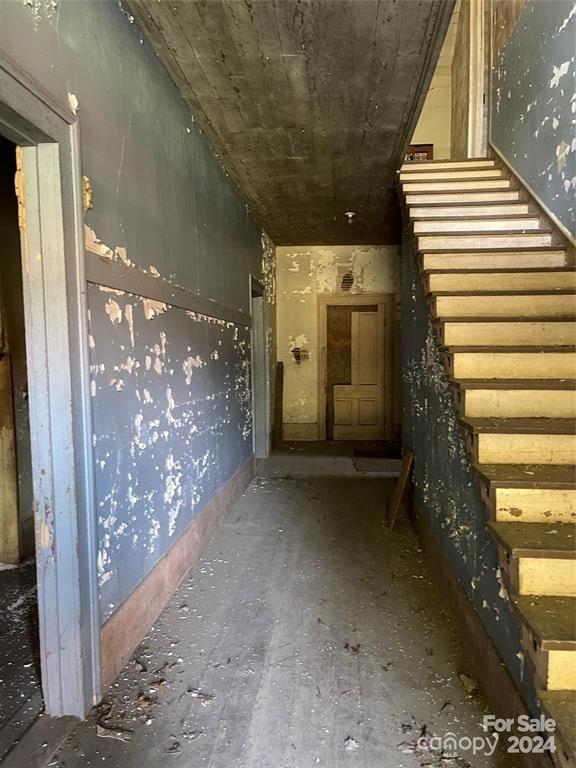
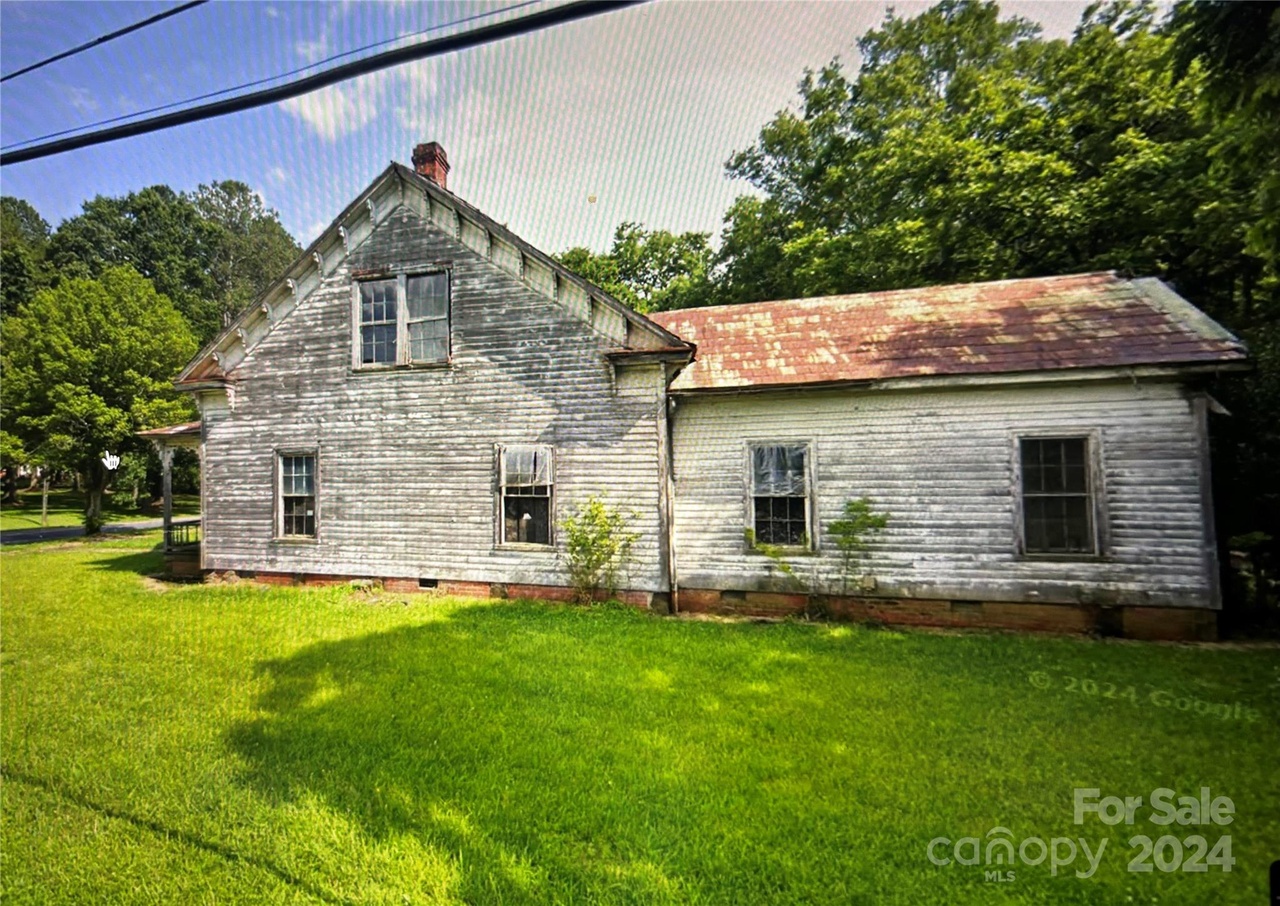
200 S. Main Street, Mount Gilead, Montgomery County
The Haywood-Taft House
- Sold for $41,000 on October 17, 2024 (listed at $41,000)
- 2 bedrooms, 1 bathroom, 2,074 square feet, 0.75 acre
- Price/square foot: $20
- Built in 1910 (per county)
- Listed September 10, 2024
- Last sales: $22,500, March 2024; $30,000, March 2021; $5,000, January 1973
- 2021 listing: “The Haywood-Taft House requires a comprehensive rehabilitation including all new systems (HVAC, plumbing, and electrical), significant carpentry repairs, and updates to the kitchen and baths.”
- State Historic Preservation Office: “c. 1905 1-1/2-story side gable center passage double pile frame Queen Anne house w/ weatherboard siding”
5605main
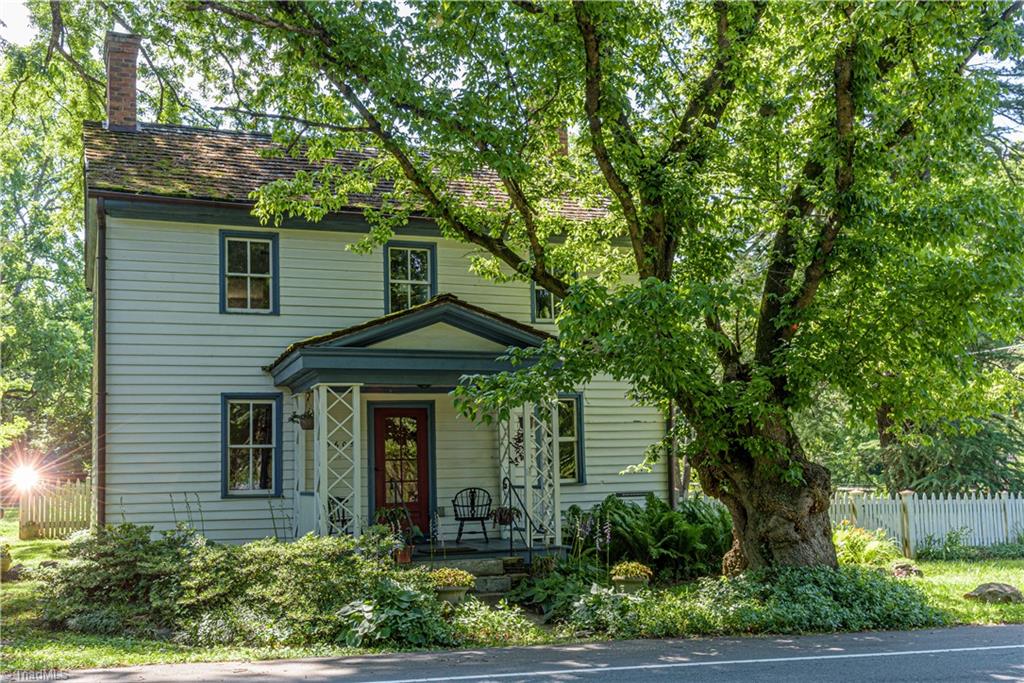


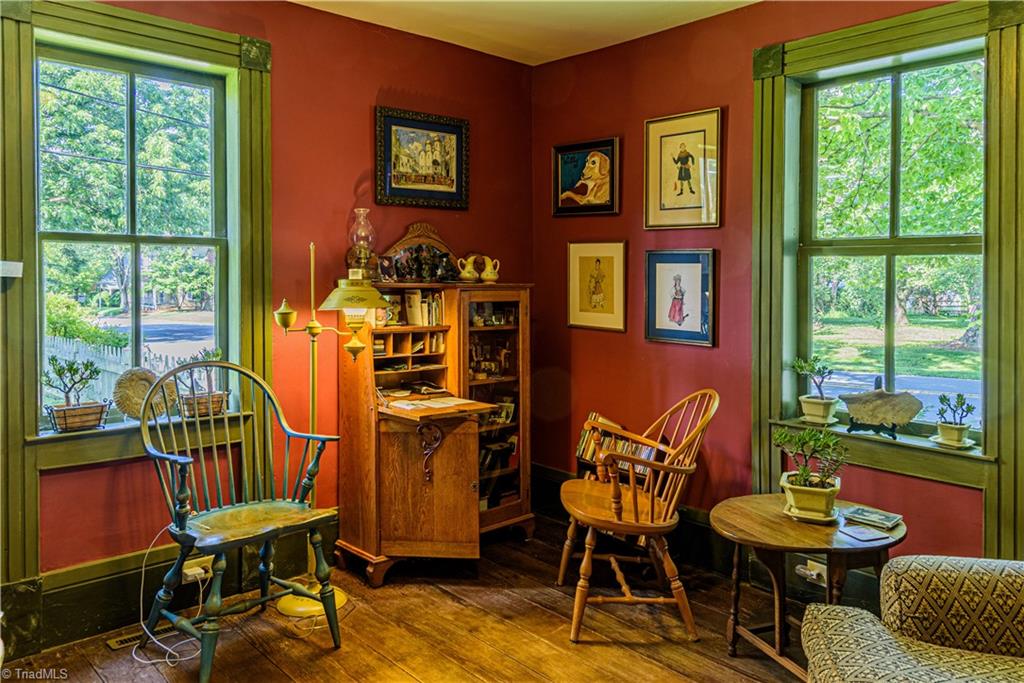
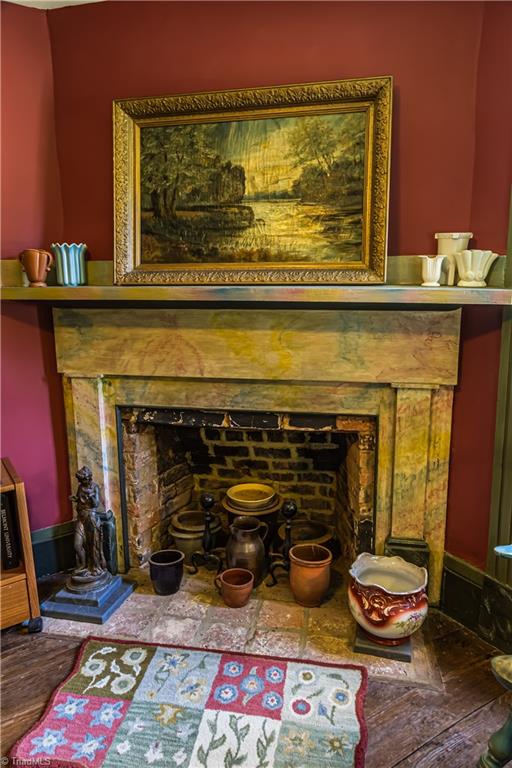

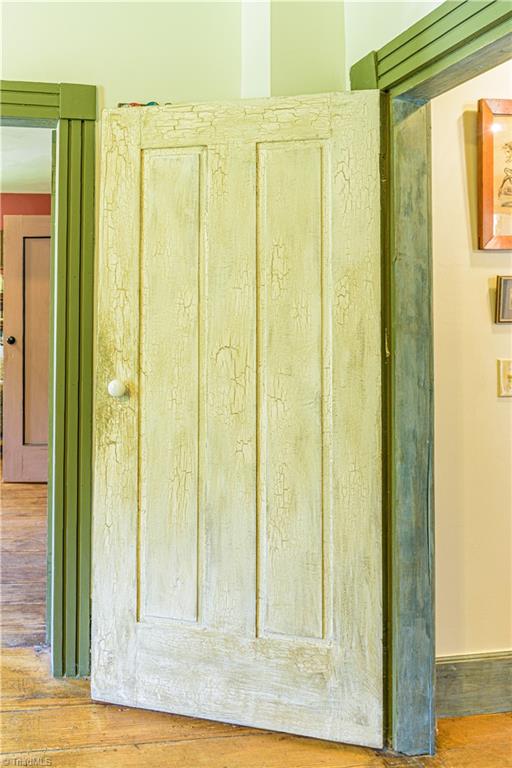

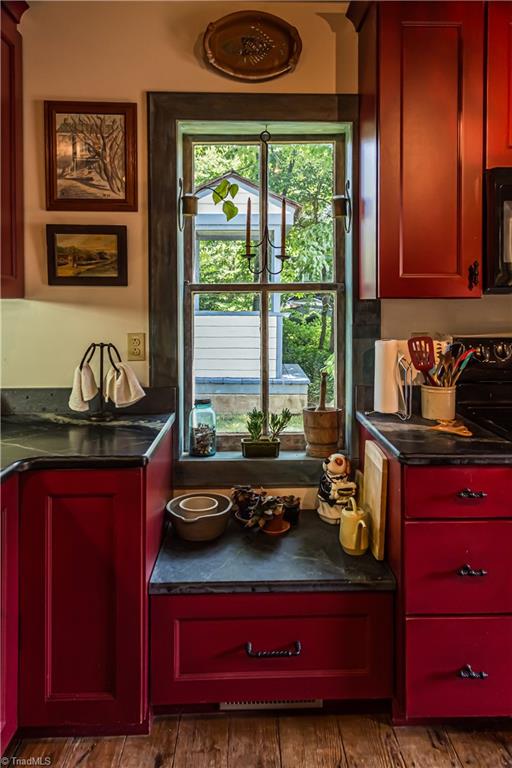
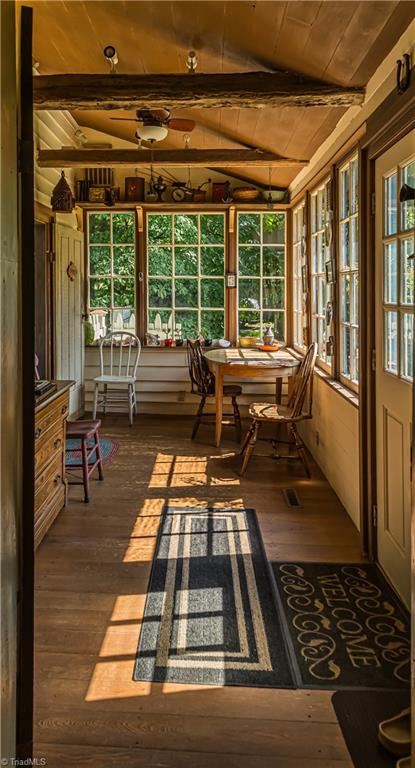
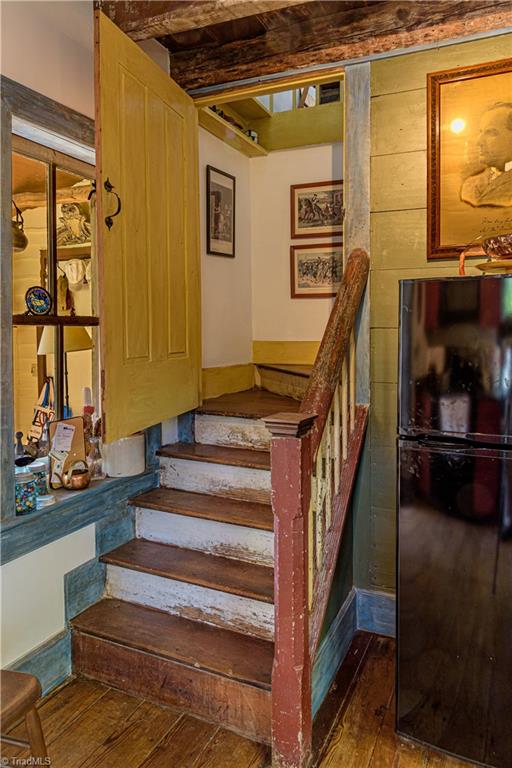
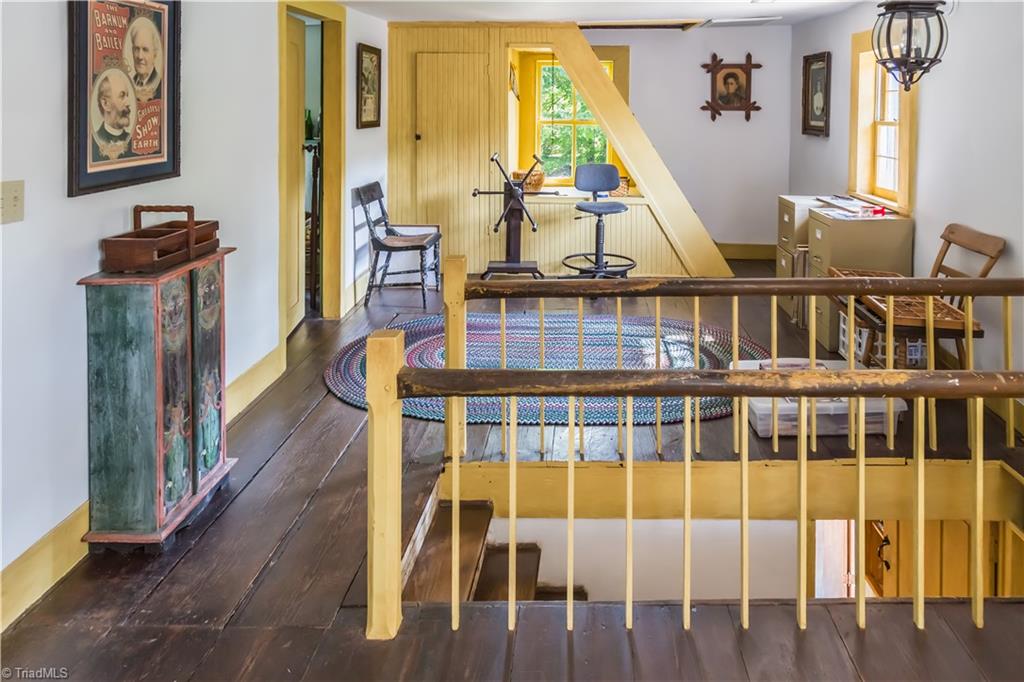


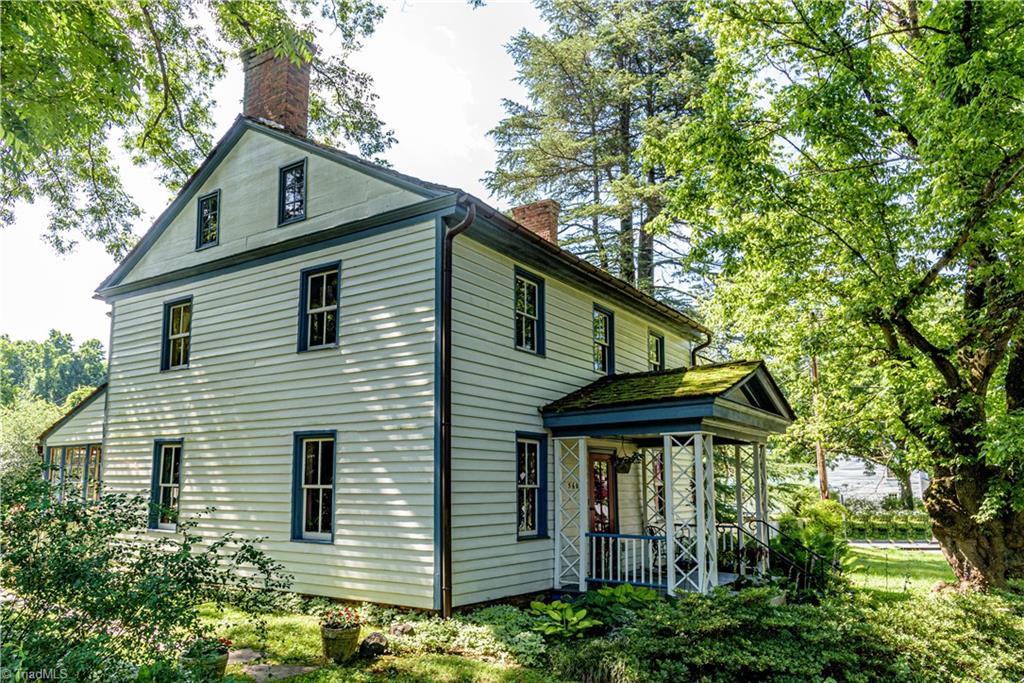

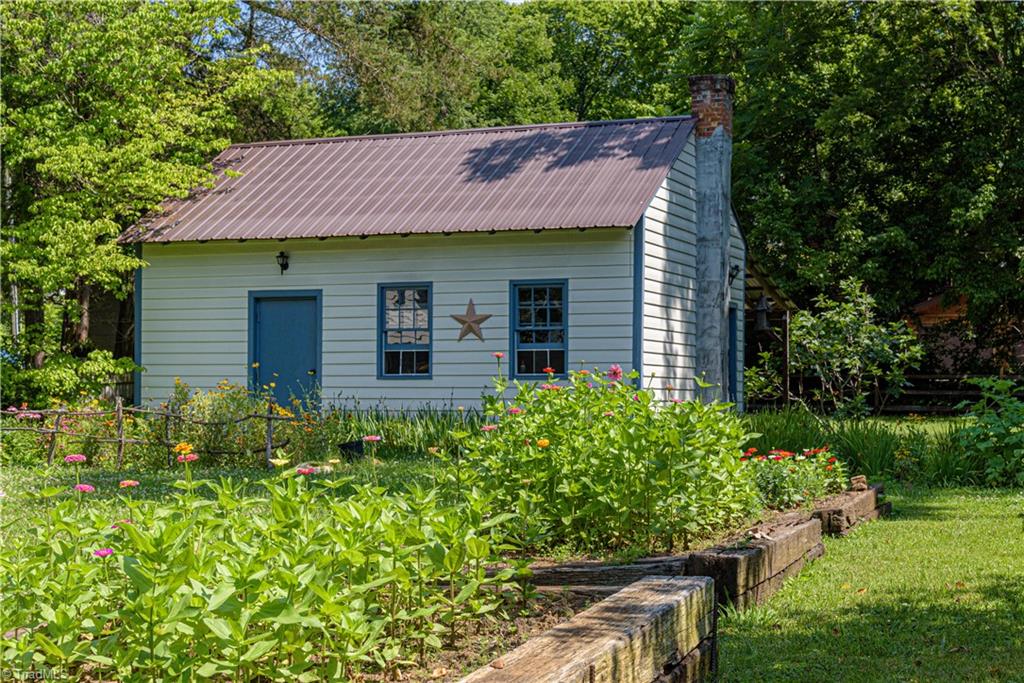
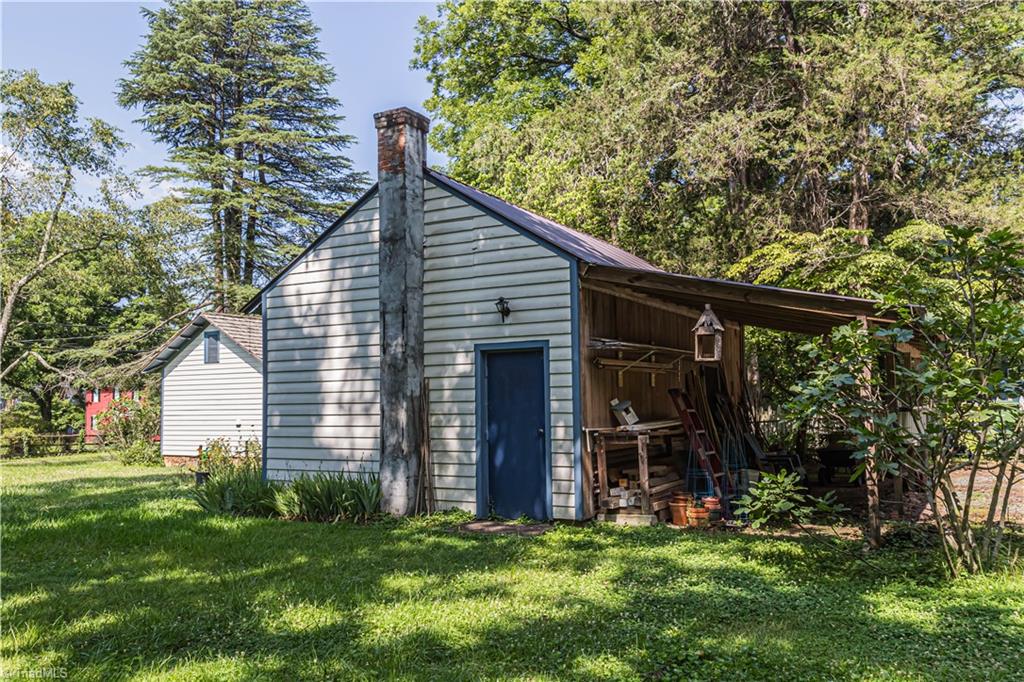
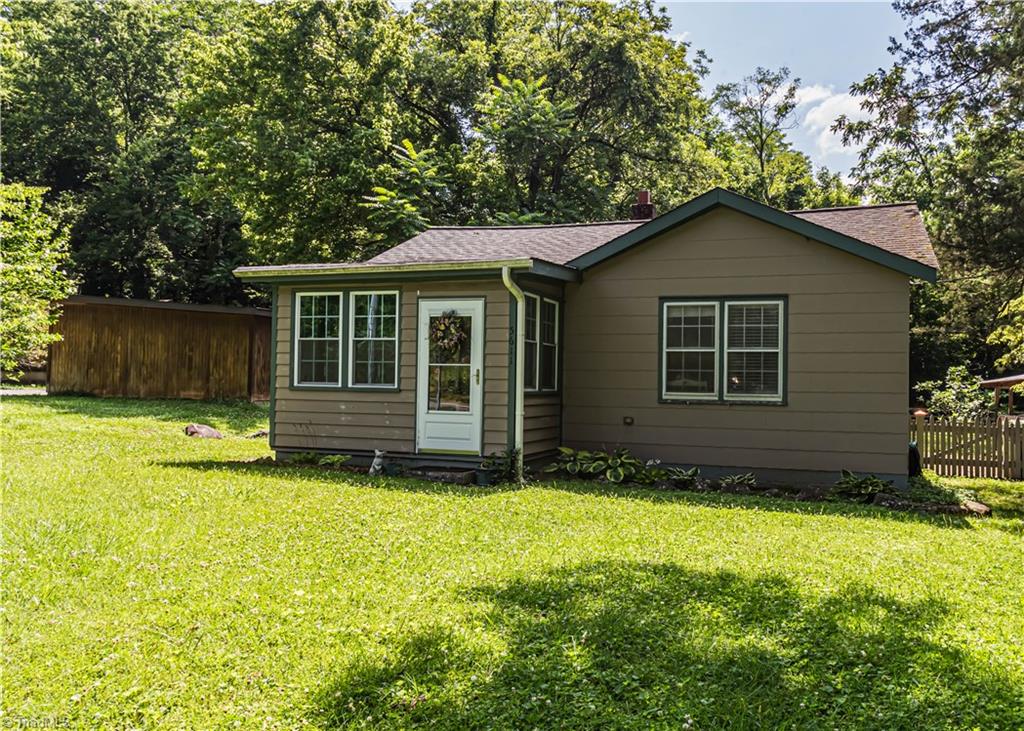
5605 Main Street, Bethania, Forsyth County
The Michael Hauser House
- Sold for $422,500 on August 20, 2024 (listed at $429,000)
- 3 bedrooms, 2 bathrooms, 1,690 square feet, 0.42 acre
- Price/square foot: $250
- Built circa 1789
- Listed July 12, 2024
- Last sale: $80,000, November 2007
- Neighborhood: Bethania Historic District (NR)
- Note: For an account of the home’s 2008-09 restoration, click here (if the link breaks, click here).
- The restoration also was the subject of a 57-minute documentary, “Saving the Hansen House.” A promo and other material are on YouTube.
- The sale includes the smaller 5611 Main Street, a circa 1950, 1 bedroom, 1 bathroom guest house. “Both properties are under [Preservation North Carolina] protective covenants and cannot be separated. The work shop [circa 1970] has electric and a wood stove. The block exterior was sheathed to match the house.”
- The covenants, which include both the exterior and interior of the house, are included in the 2007 deed.
- District NR nomination: “The exterior fabric of the Michael Hauser House is Greek Revival in style, with flush-sheathed pedimented gable ends and ovalo-molded trim. The interior openings have surrounds with corner blocks. …
- [T]he interior end chimneys, with corner fireplaces … are perhaps original, for no central chimney indications exist. Other original fabric … includes the fieldstone foundation and rear cellar, log walls, and probably the four-room floor plan and enclosed rear stair to the second floor, with cellar stair beneath this stair.”
- “The six two-story log houses [including the Michael Hauser House] — probably built from the late eighteenth to the early nineteenth century, represent the earliest constructional type. … An extant 1820 watercolor of Bethania shows each of the houses covered with siding, and it may be that these log houses were sided at the time of construction. …
- “Mid-19th-c. remodeling in the Greek Revival style includes flush-sheathed pedimented gable ends and ovolomolded trim, as well as surrounds with corner blocks on the interior.
- “This lot is shown on the 1765 Bethania Lot Distribution Map as a special lot split from original Orchard Lot #13b, the only agricultural lot so divided in this manner. This lot was first held by Michael Hauser (1731-1789) by 1765. … Although the intended use of this unique lot in the Orchard Lot section is unknown, Michael Hauser probably built the present house.”
- Michael Josephus Hauser’s father emigrated to Pennsylvania from the Alsatian village of Riquewihr (or Reichenweier) in 1727. The family came to North Carolina in 1753.
- Michael and Anna Kunigunda Fiscus Hauser (1734-1804) had 10 children. Their eldest, Johannes Hauser (1754-1784), died fighting for the Continental Army in the Revolutionary War.
802smain

802 S. Main Street, Reidsville, Rockingham County
Melrose, the Hugh Reid Scott House
- Sold for $737,000 on August 12, 2024 (originally $895,000)
- 5 bedrooms, 4 bathrooms and 2 half-bathrooms, 5,316 square feet (per county), 2.96 acres
- Price/square foot: $139
- Built in 1909
- Listed August 25, 2023
- Last sale: $420,000, March 2019 (originally listed at $725,000)
- Neighborhood: Old Post Road Historic District (local), Reidsville Historic District (NR)
- Note: The listing says the house has “7,000+” square feet. The 2017 listing shows 6,316.
- Previous listing: “9 fireplaces, 12 foot ceilings with an elegant Mahogany staircase leading up to a view of a one of a kind, hand made stained glass masterpiece.”

- District NR nomination: “Designed by Greensboro architect Richard Gambier, this grand Neo-classical Revival residence was built in 1909-1910 for Hugh Reid Scott (1855-1947), nephew of Governor David Settle Reid and a prominent attorney and landowner in his own right. Scott was also an active business and civic leader, serving as a director or officer of many local businesses.
- “The house was built shortly after his marriage to Flossie Brewer [1885-1958]. … The finest example of Neo-Classical Revival residential architecture in the district (only the Robert Payne Richardson House III beyond the limits of the district exceeds it in grandeur), Melrose is a substantial two-story frame building surrounded by a large landscaped yard enclosed by an iron and stone fence.
- “Certainly the most notable feature of the house is the monumental Ionic projecting portico with balustraded flat roof. A one-story porch supported by smaller Ionic columns begins on the south elevation, spans the three-bay facade, and continues on the north elevation to a porte cochere.
- “Other classical features include a full Ionic entablature, large modillion brackets, and a double-leaf entrance with beveled glass sidelights and transom. Clad in weather- board siding, the house is topped by a hipped roof of asphalt shingles with gables extending over projecting bays on the side elevations and over a large central dormer. Smaller dormers on the north and south are hip-roofed.”
- Hugh Reid Scott’s father was a a planter, merchant and member of the Court of Pleas and Quarter Sessions. His mother was the sister of Governor Reid, a major figure in pre-Civil War state politics. Hugh graduated from Reidsville Academy and Wake Forest College. He studied law under Chief Justice Richmond Pearson. He practiced law and was elected twice to the State Senate.
- “Although he had no banking experience, he was chosen in 1895 to organize the Citizens’ Bank of Reidsville, which prospered under his leadership,” his obituary said.
- Hugh’s daughter, Cecilia Scott Hester (1910-2003), lived in the house her entire life, raising her family with her husband, Dr. William Shepherd Hester (1902-1983), a surgeon. She left the house to their sons Hugh Hester and John John N. Hester III. The family sold the house in 2019.
517smain

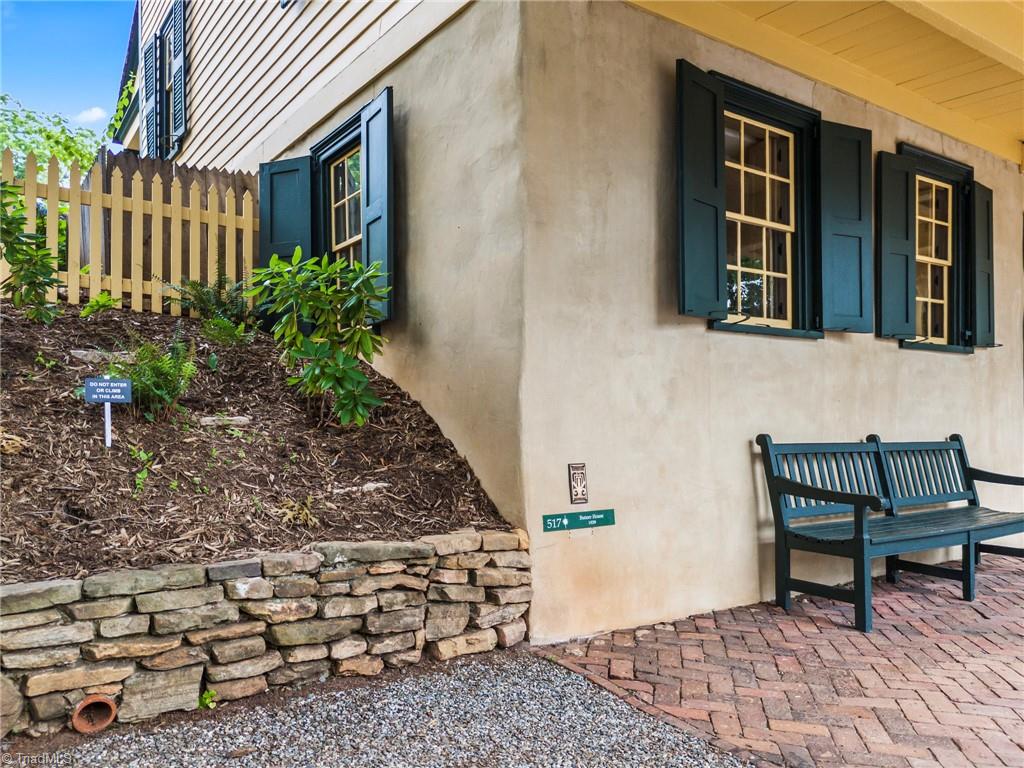
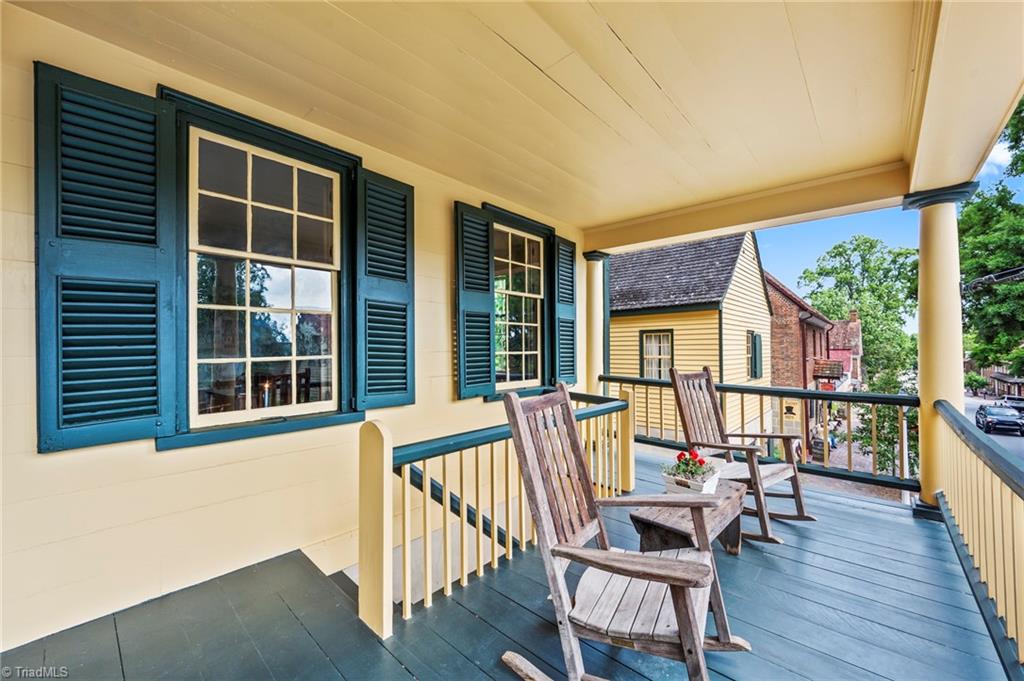


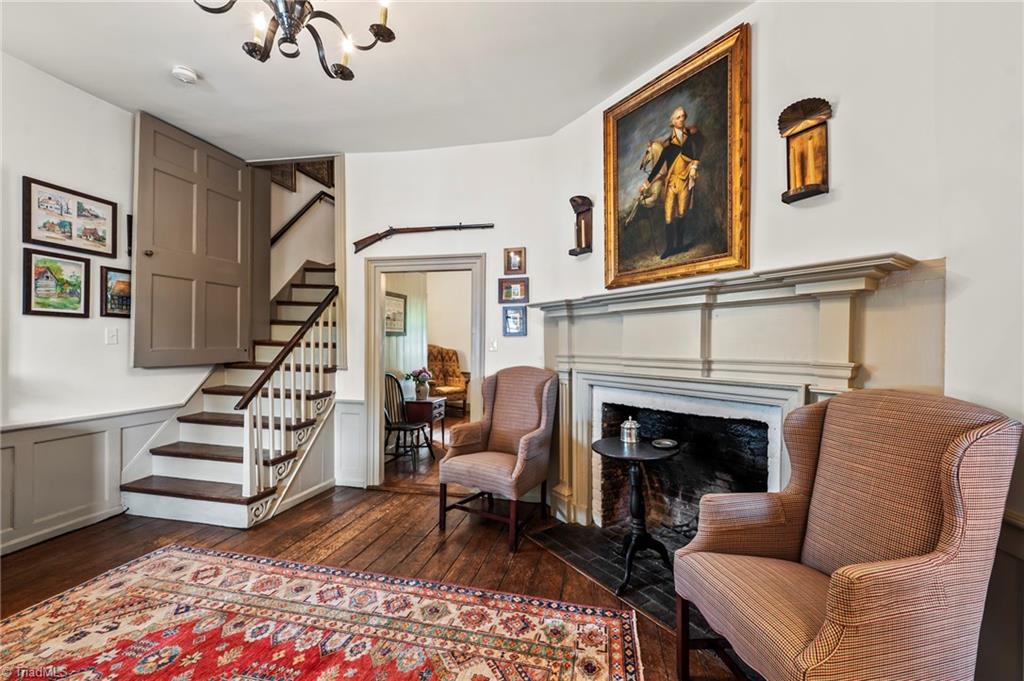


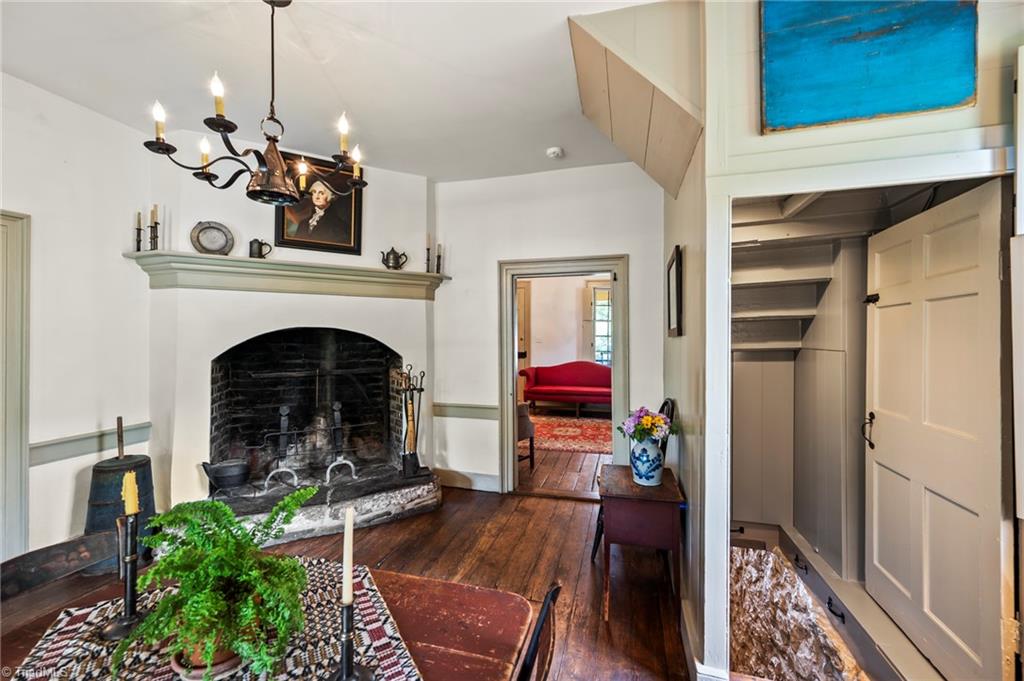
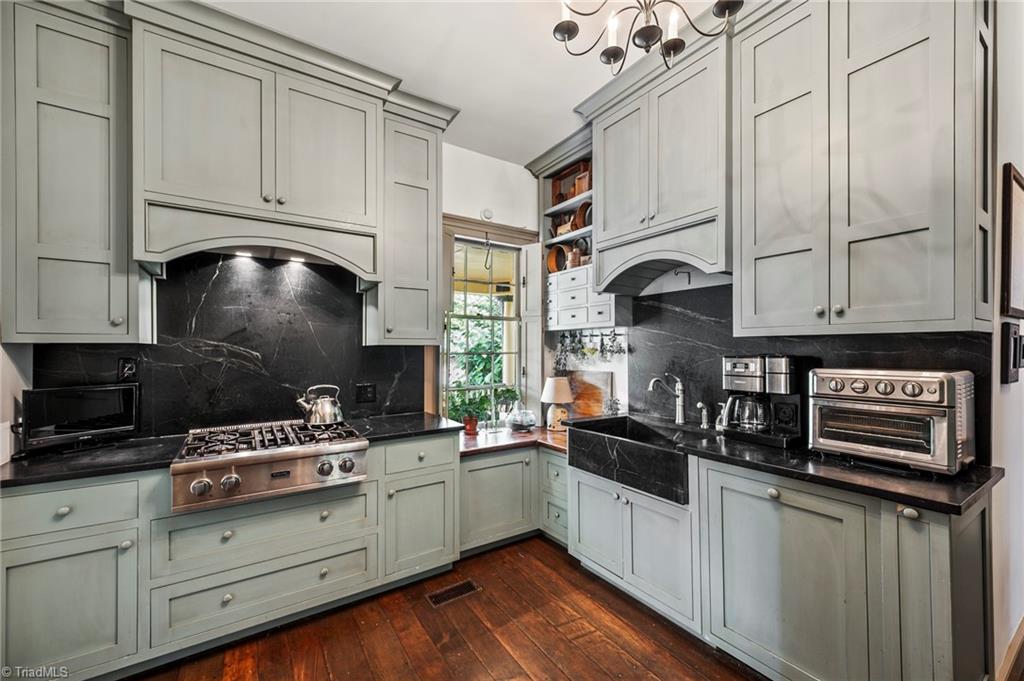
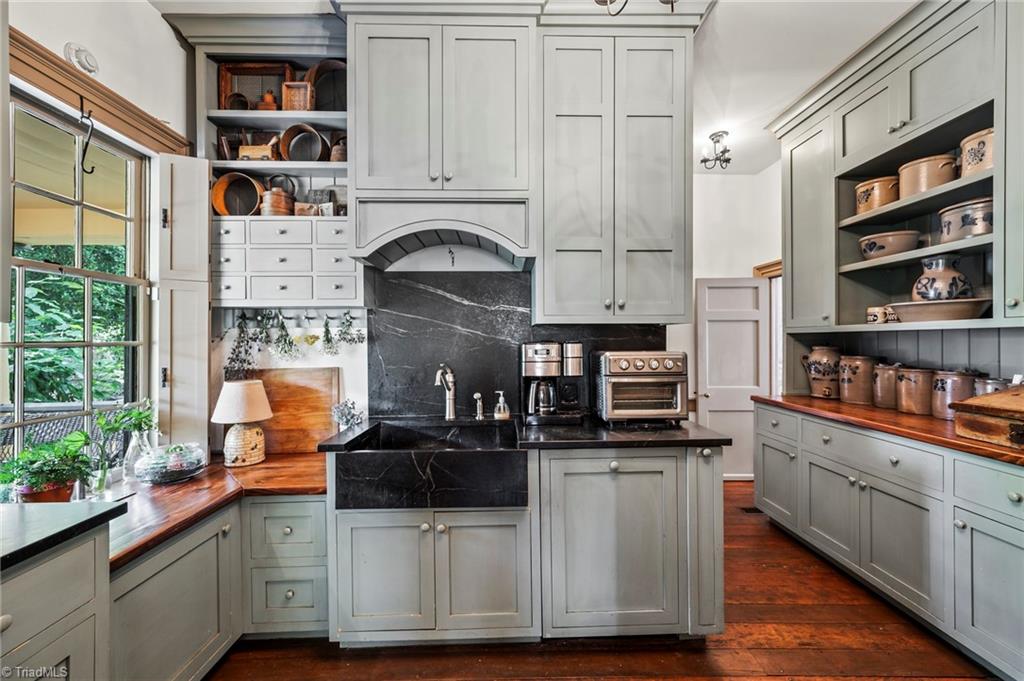
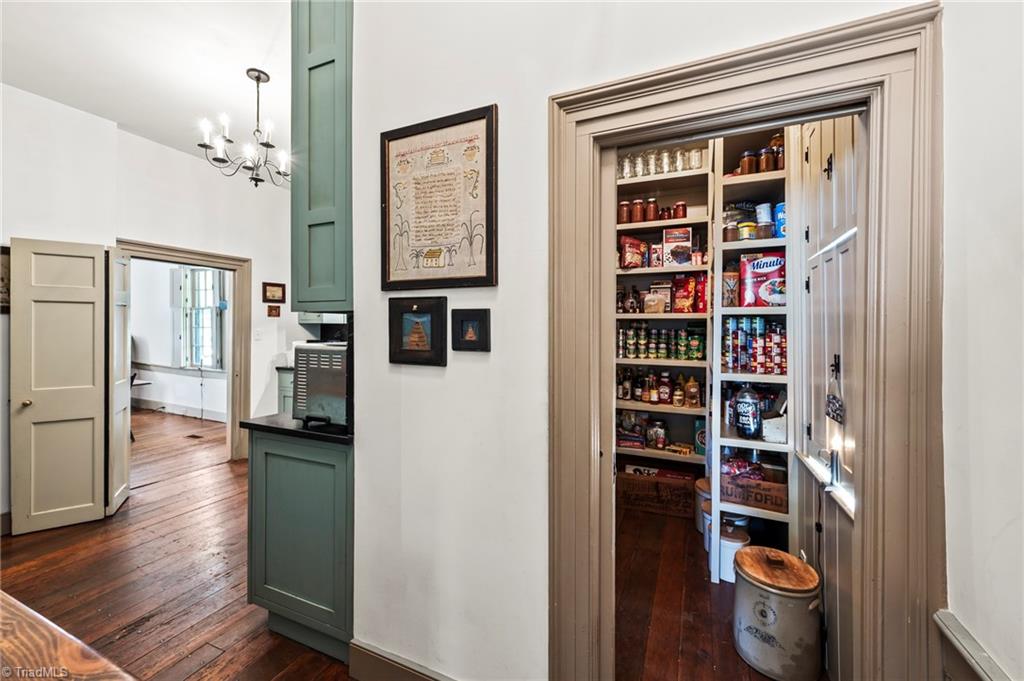
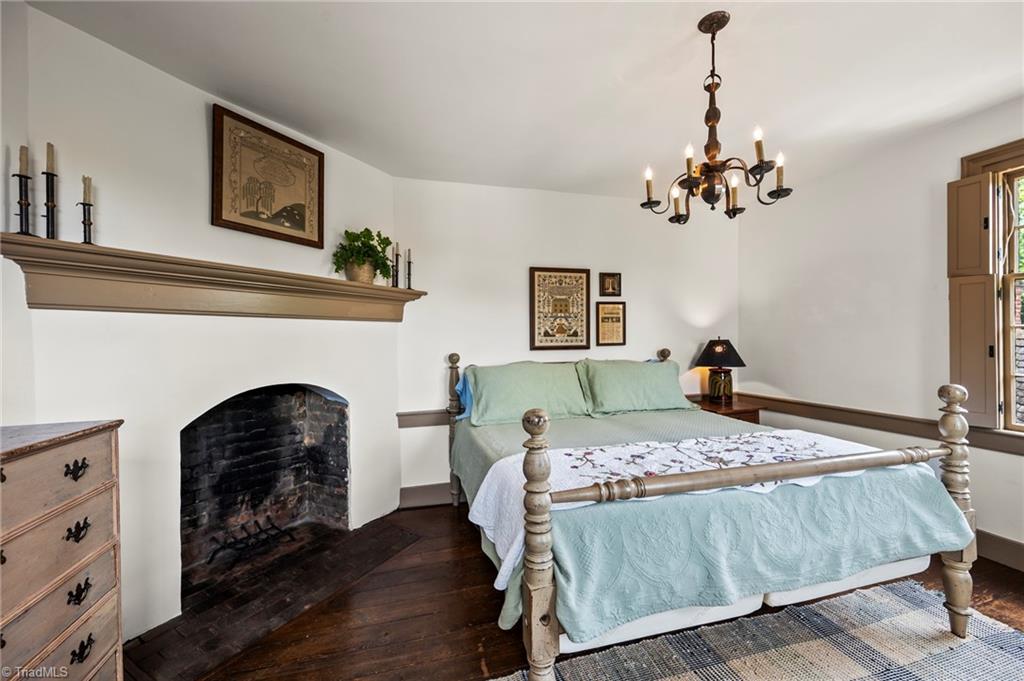


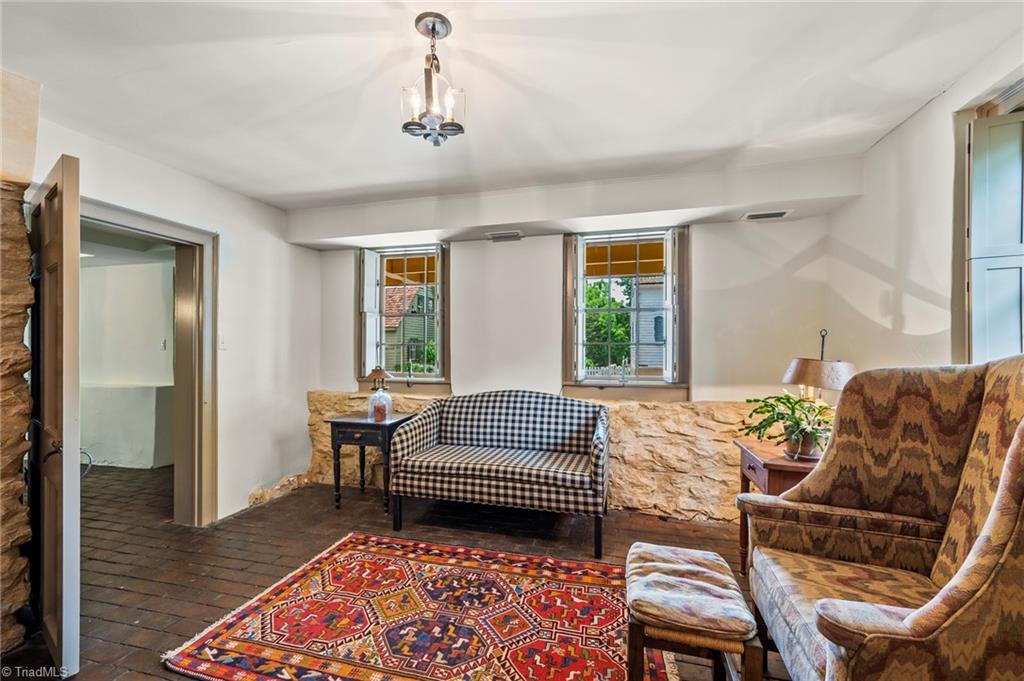


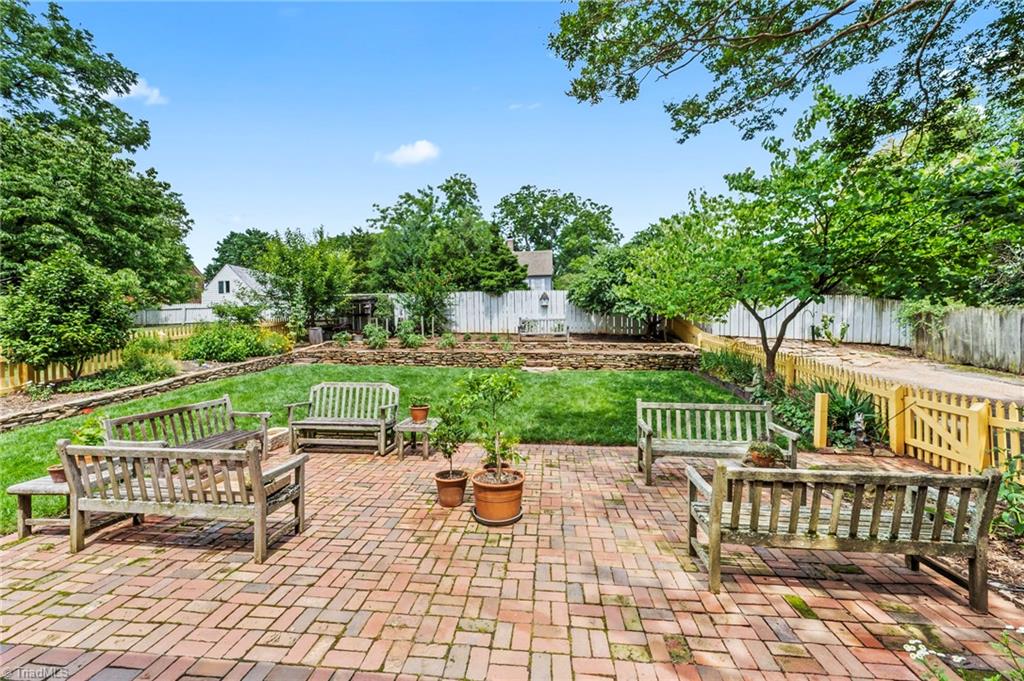

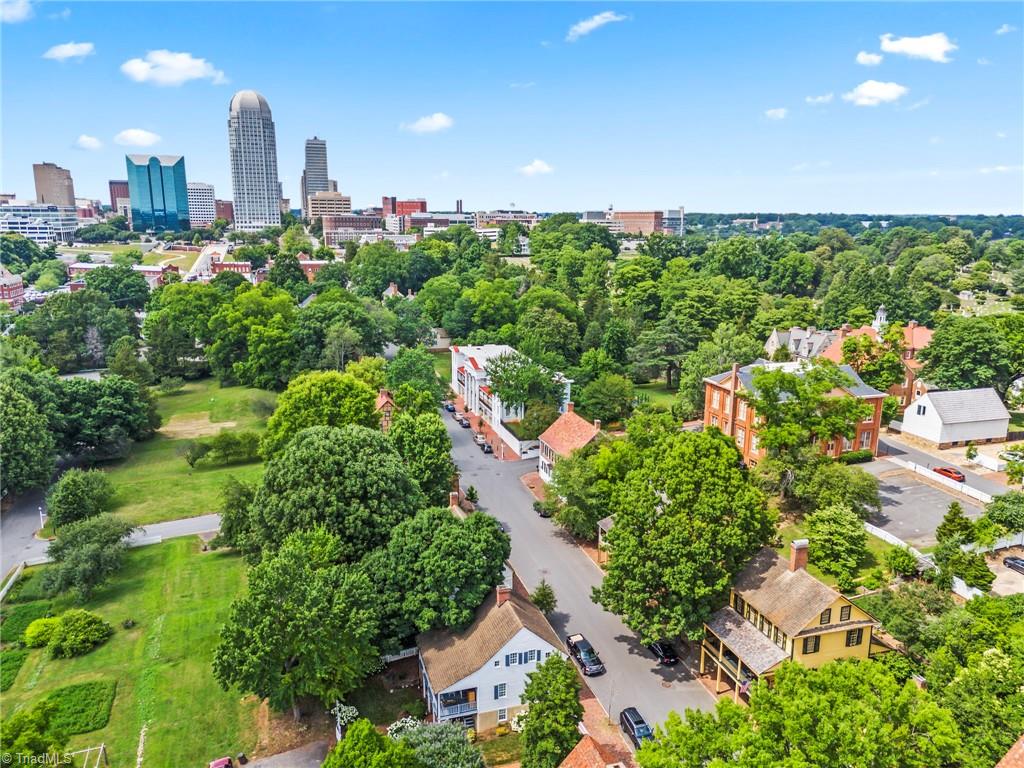
517 S. Main Street, Old Salem, Winston-Salem
The Butner House
- Sold for $740,000 on August 8, 2024 (listed at $795,000)
- 3 bedrooms, 4 bathrooms, 1,856 square feet, 0.11 acre
- Price/square foot: $399
- Built in 1829
- Listed June 14, 2024
- Last sale: $360,000, September 2016
- Neighborhood: Old Salem Historic District (local and NR)
- Listing: It’s one of only two homes in Old Salem with a second-story porch over the sidewalk.
- “Roof is cedarshake on both front and back porches, beaver tail tile on main house.”
- District NR nomination: “Lot 32 was used as pasture early and then later for firewood storage by the bakery on Lot 31 next door. In 1825 the Single Brother Adam Butner was granted permission to construct a shop on vacant Lot 32 and to establish himself as a hat maker in Salem. The Single Brothers Diacony had disbanded in 1823, and the Single Brothers House no longer functioned. From that time, the establishment of single brethren in Salem often followed this procedure: establish oneself on a lot by building a shop which also served as a dwelling until one’s circumstances permitted the construction of a residence on the lot.
- “In 1828 Butner proposed the plans for his house, which followed his adjacent neighbor Herbst’s prototype in the design of the house against the sidewalk and the porch over the sidewalk, a plan which well accommodated their steeply sloping lots. A picket fence surrounds the lot and is a board fence at the rear.
- “The houses are similar in form, with the Butner House featuring decorative elements of the Federal style. The two-story, frame (weatherboard) house has a side gable roof (wood shingle) with central brick chimney with corbelled cap and is on a full story stuccoed stone foundation against the sidewalk. The gable ends are pedimented and have flush sheathing and the box cornice has scrolled modillions and bed molding.
- “The four room plan house had four rooms clustered around the central chimney. The first floor is a story above the sidewalk level and the full-façade porch is accessed by a wooden staircase rising from the sidewalk. The six-panel front door is in the second bay from the left. The shed roof porch covers the entire width of the sidewalk in front of the house. It continues the bed molding at the cornice and has four Tuscan columns with simple balustrade at the first floor, supported by plain posts at the cellar level.
- “The façade has four bays and window sash is evenly spaced six-over-nine on first and second floors, with six-over-six sash at the cellar. Windows are hung with louver shutters. In each pedimented gable end are two six-over-six sash windows at the third floor/attic level. Windows and doors have molded casings.
- “Built into the slope of this east side of Main Street, the full story cellar facade has a six-panel entry door and two windows. Two granite steps up to this door were needed following the lowering of the street grade in 1890 with the coming of the street car. A shed roof porch is across the rear elevation, which is at grade.
- “By 1829 Butner had built a bake oven and a cowshed in his yard. He sold his improvements in 1847, and in 1857 the house was leased as a town hall and watch house for the new municipality of Salem. The house passed through other owners and by the late nineteenth century, there were several outbuildings in the yard.
- “By 1917, the Sanborn Insurance Maps show that all outbuildings and the shop had been removed and Lot 32 split in half with a new large two-story frame Colonial Revival house built on the rear (east) half fronting Church Street. Old Salem acquired the front half of Lot 32 and the house was restored in 1961. By that time, the front porch had been lost, the door replaced by a window, and a side entry porch added to the north elevation.”
4337nc62


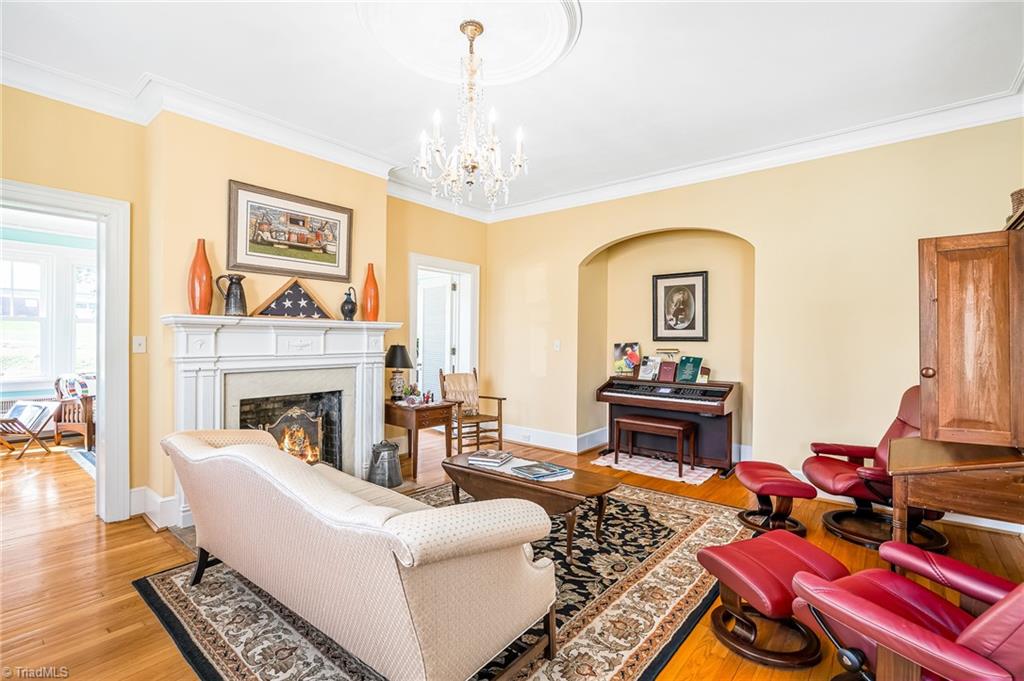
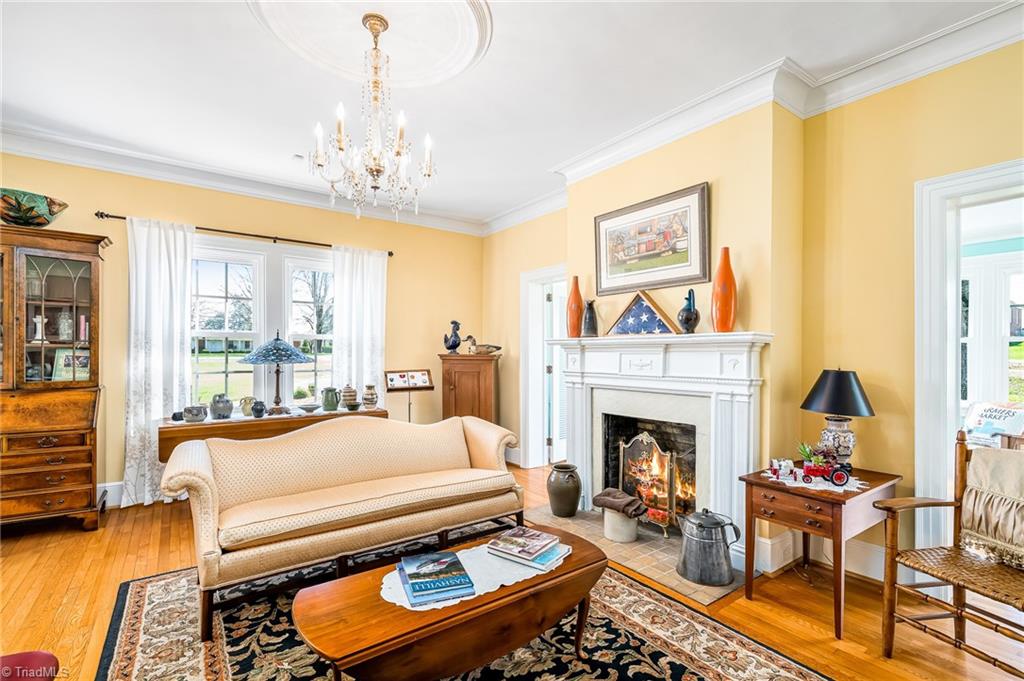
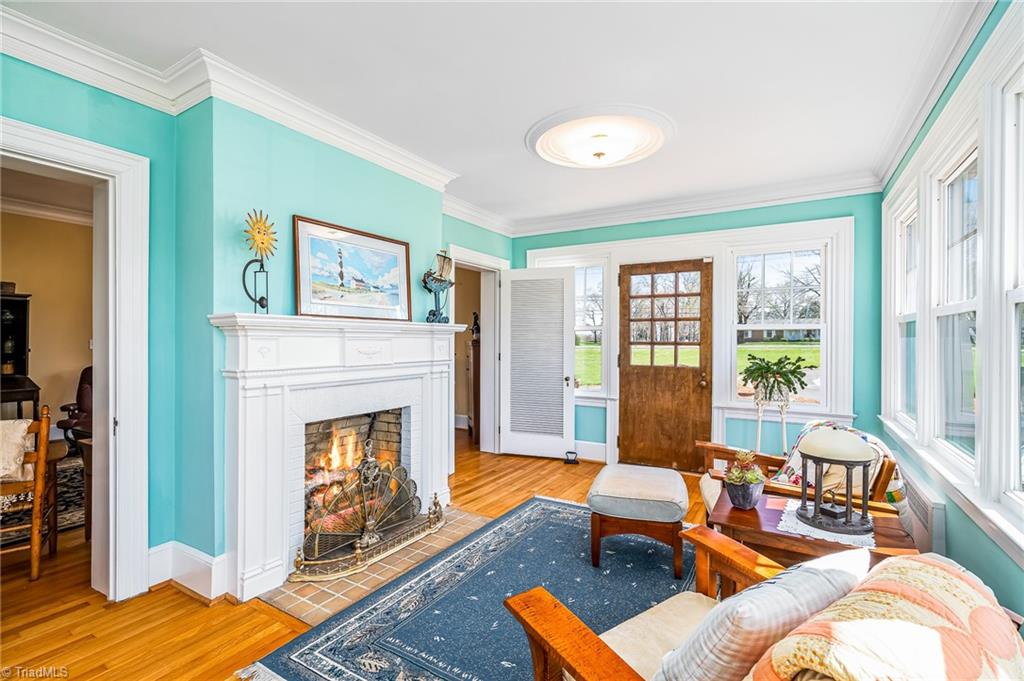
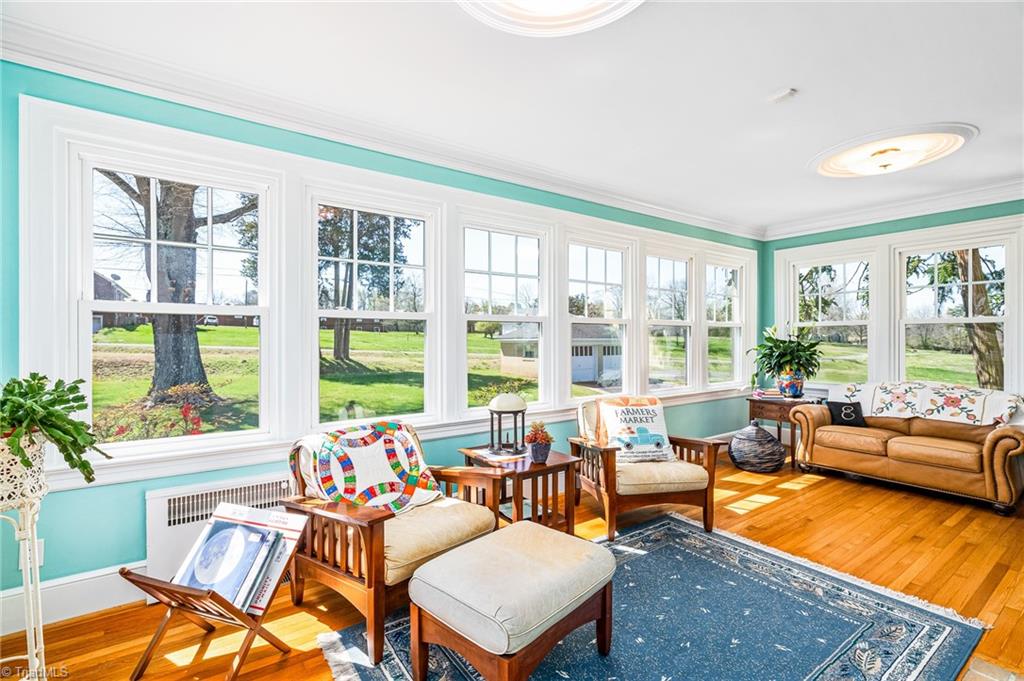


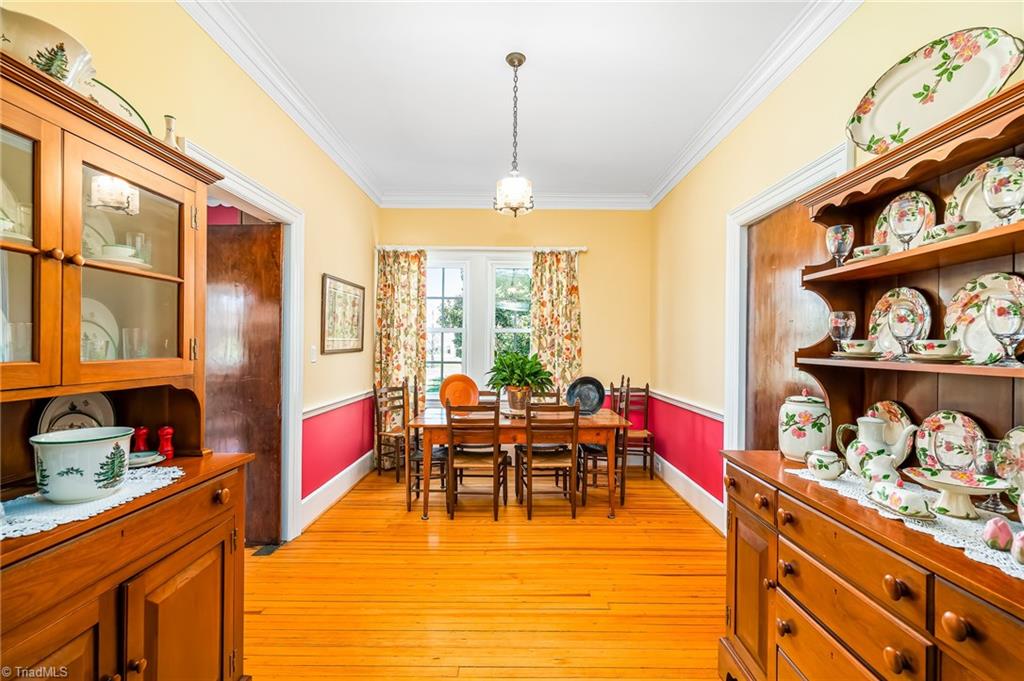
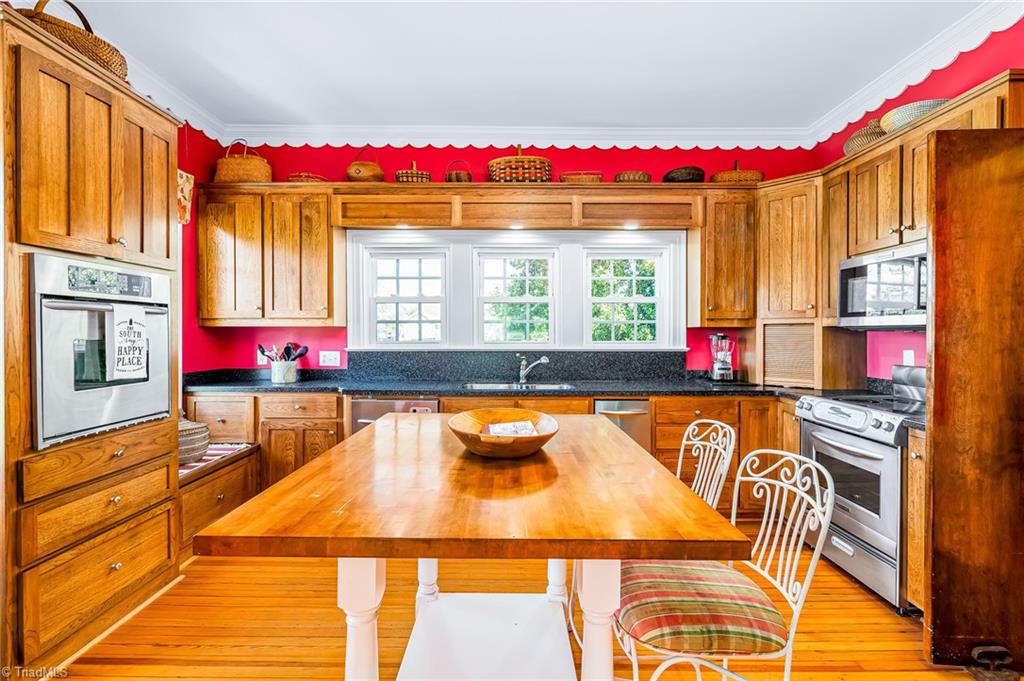


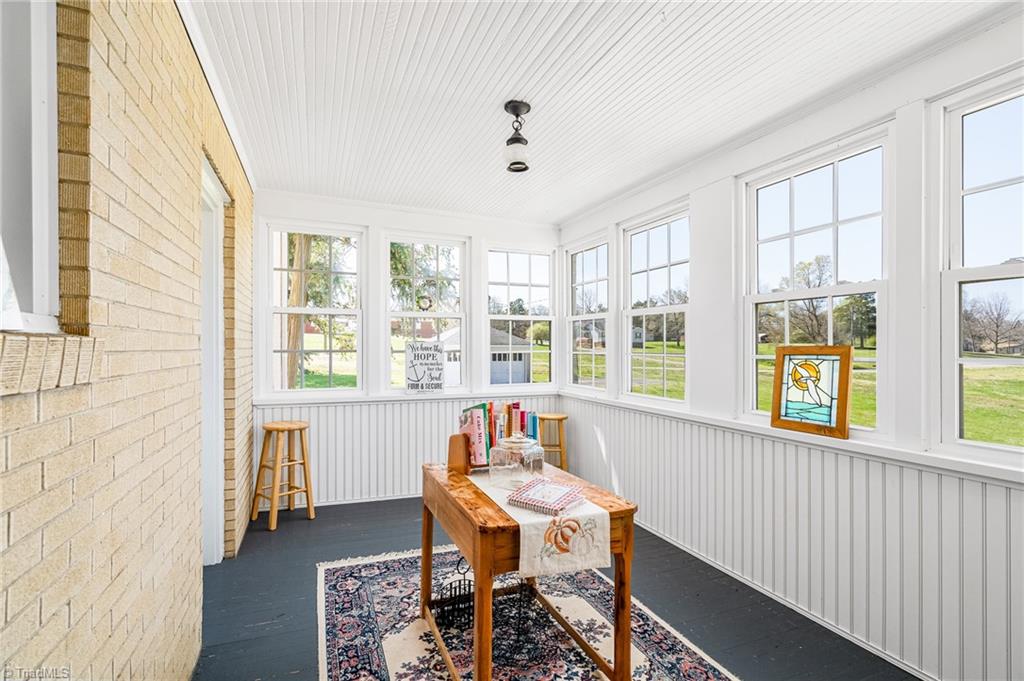

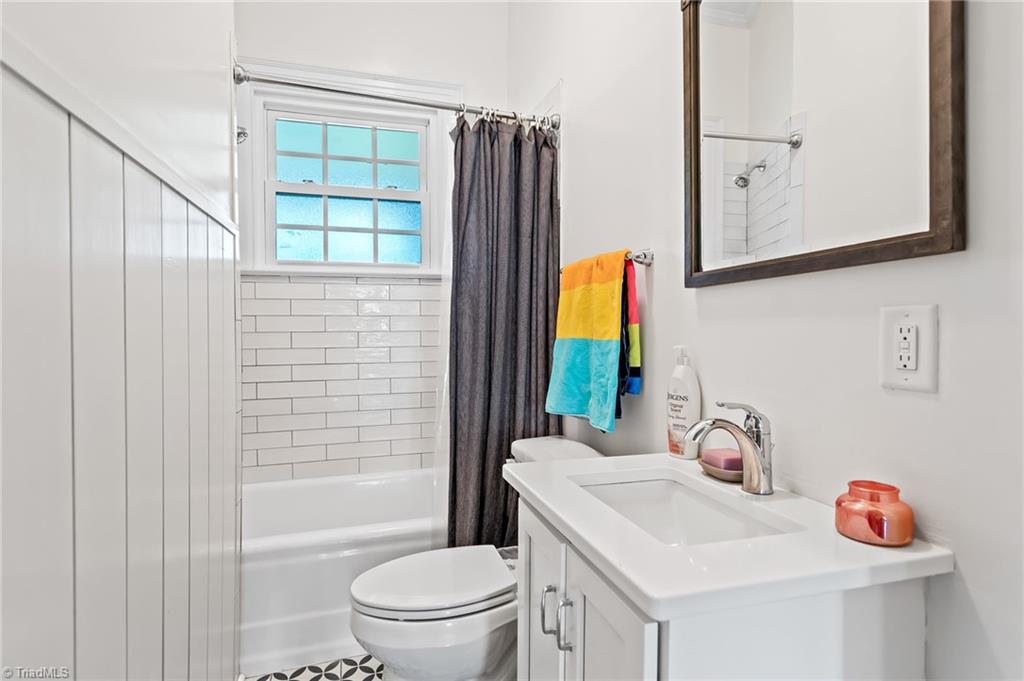


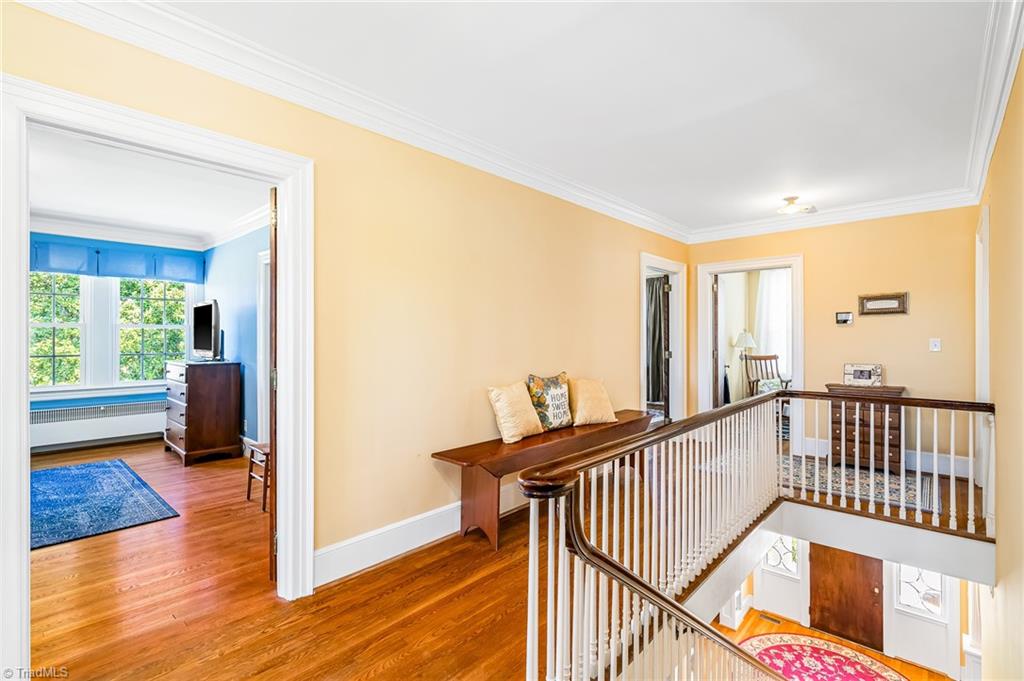

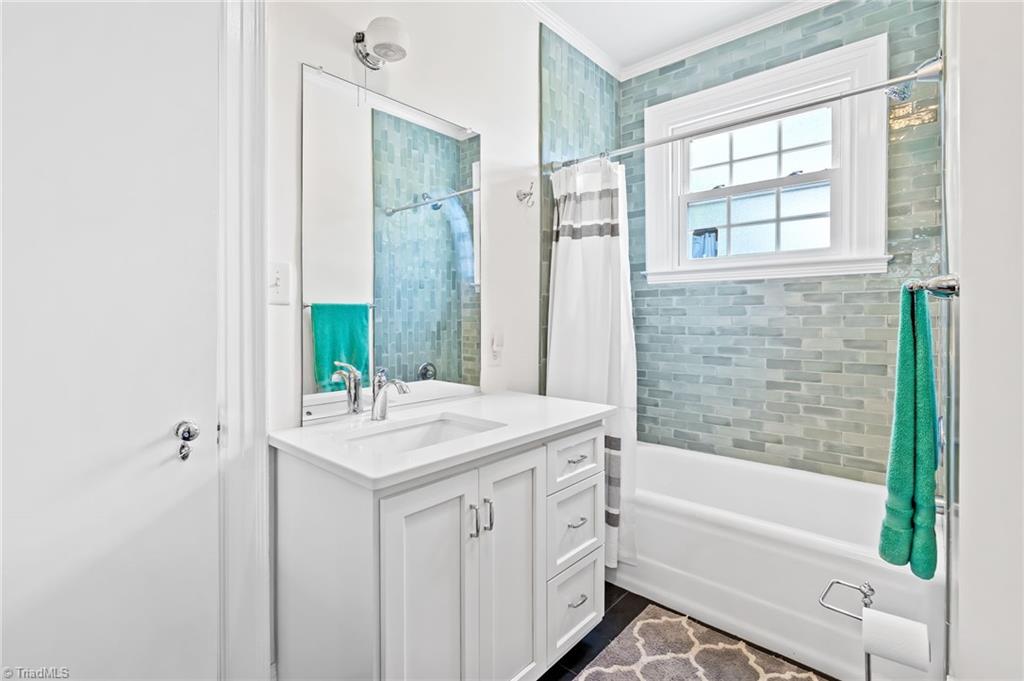
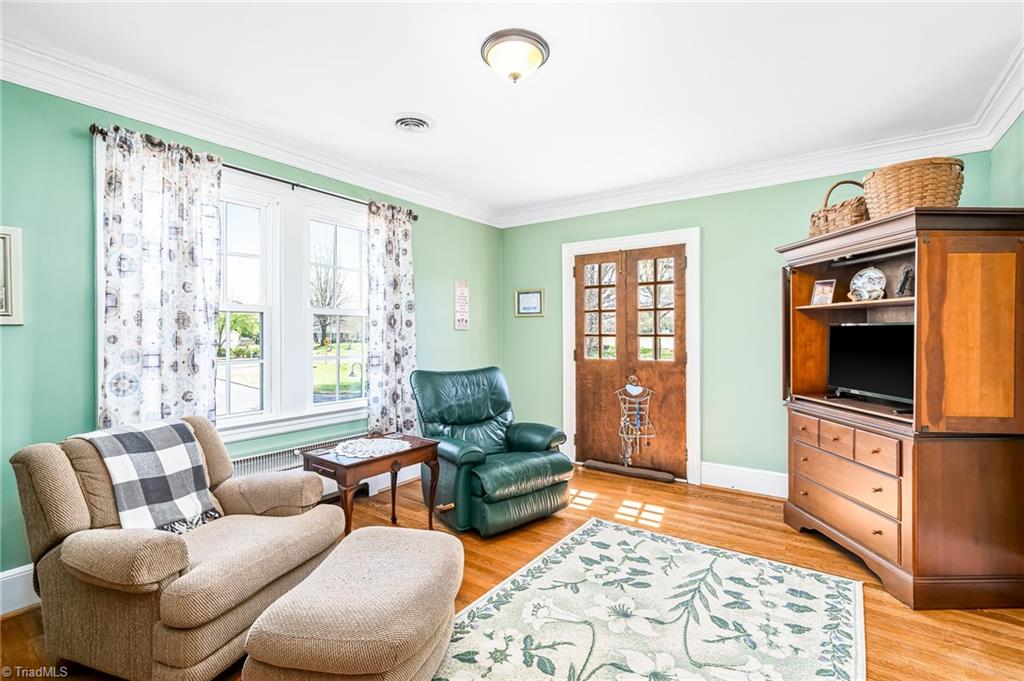
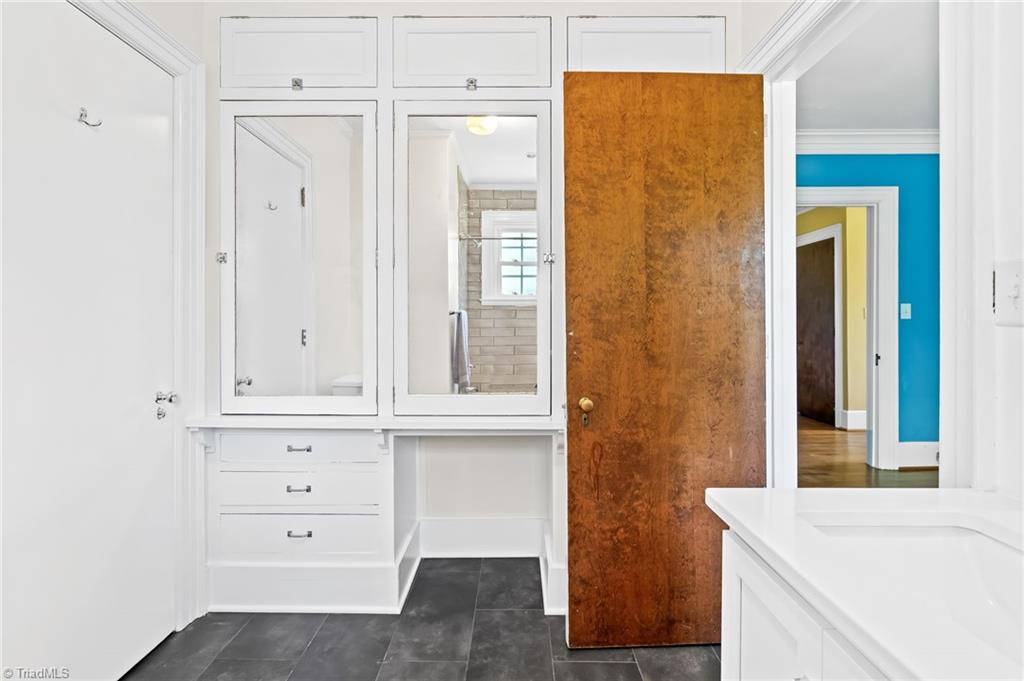


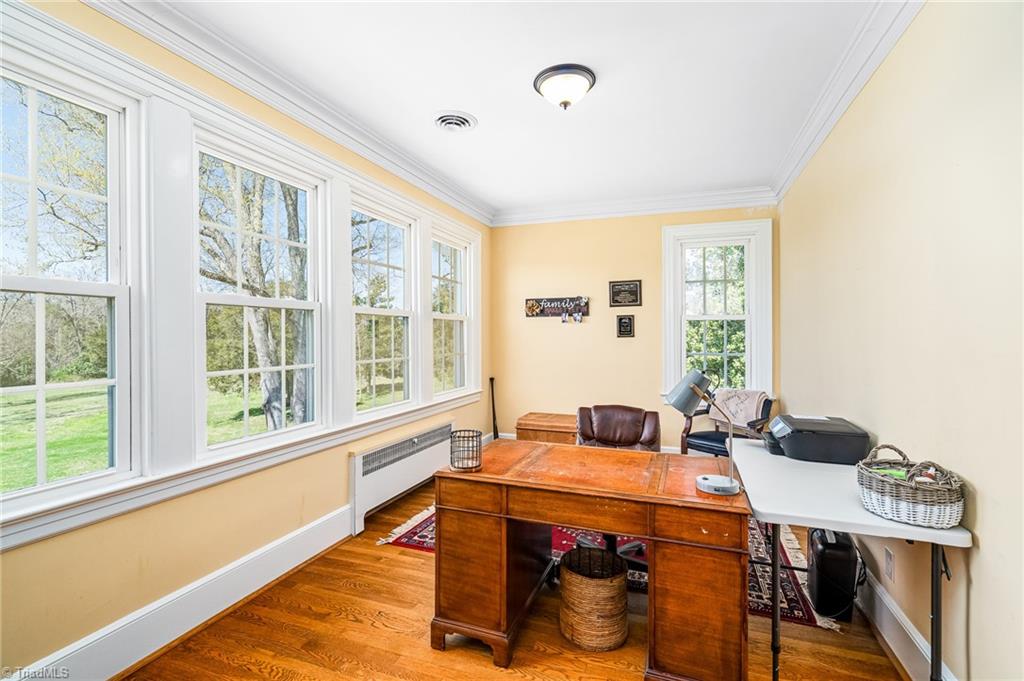


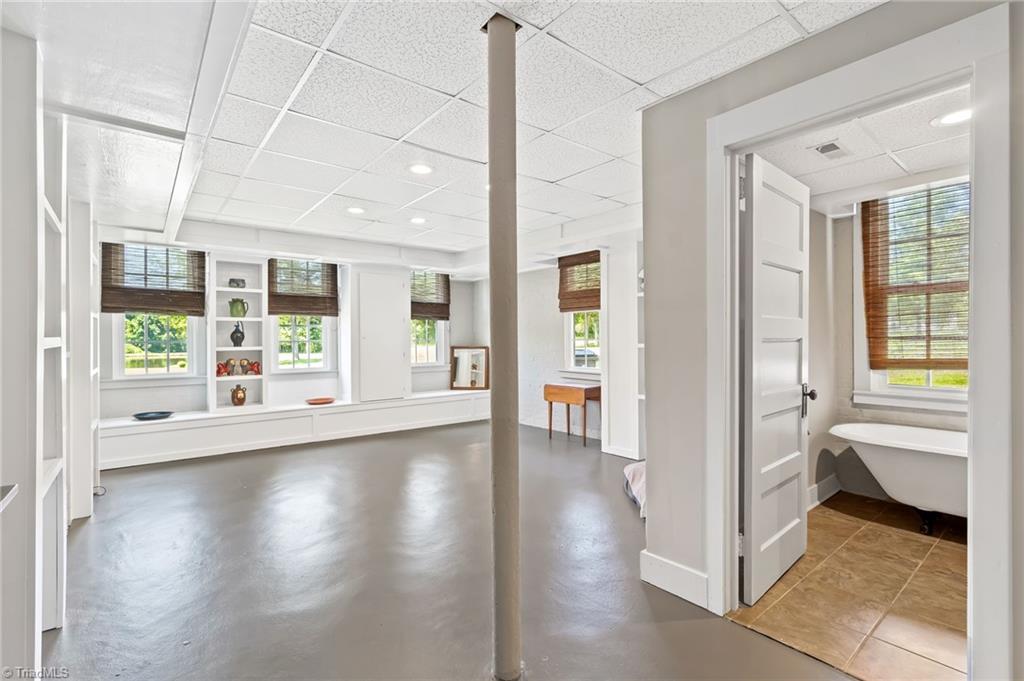
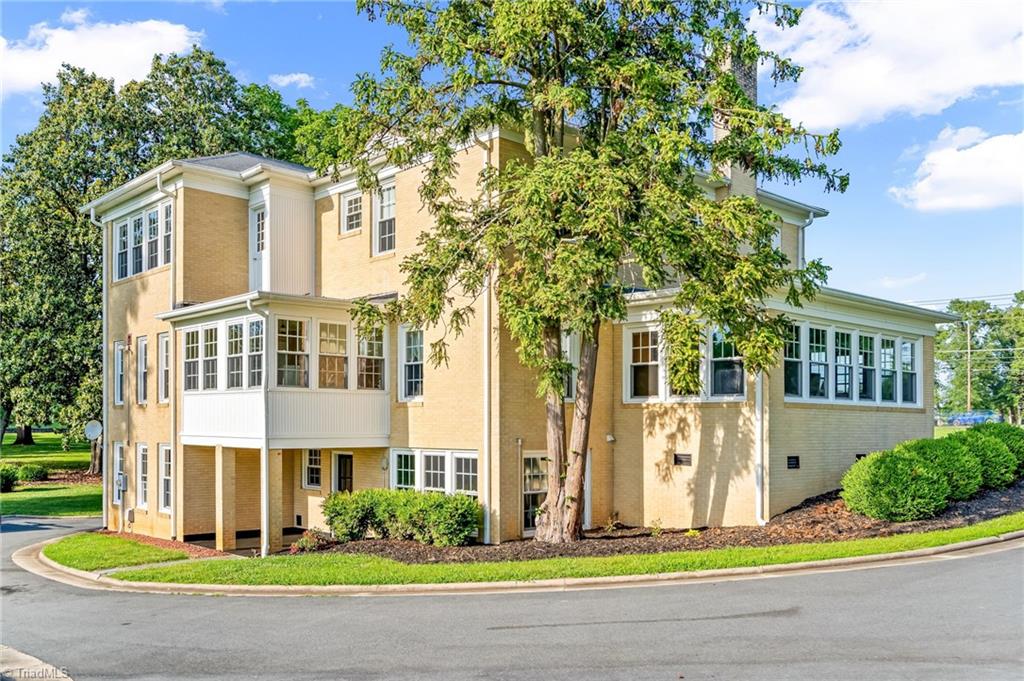
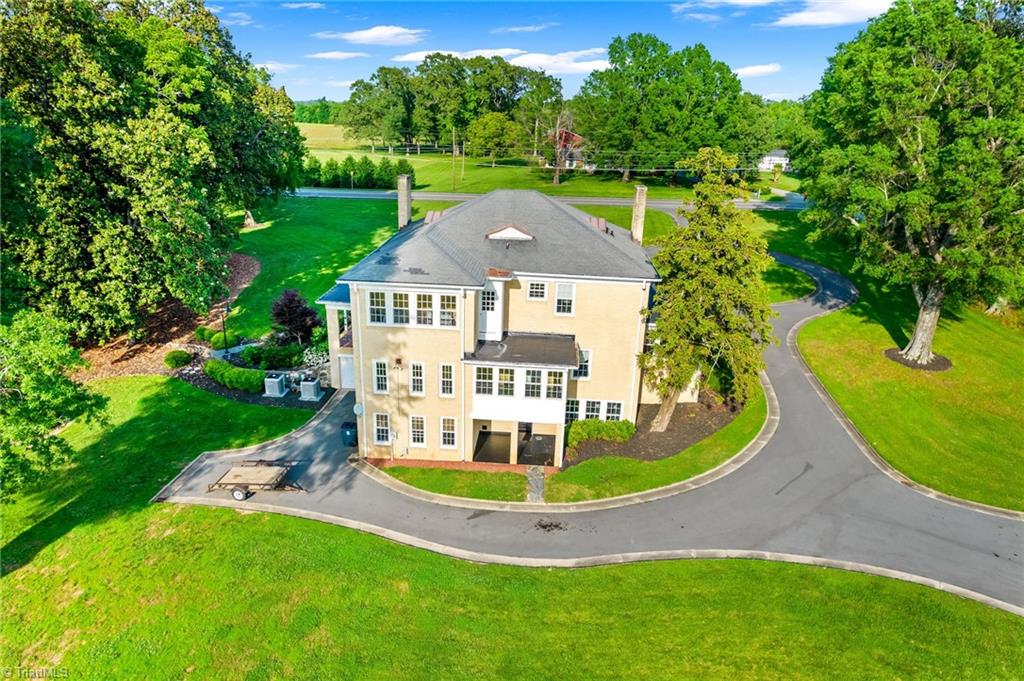

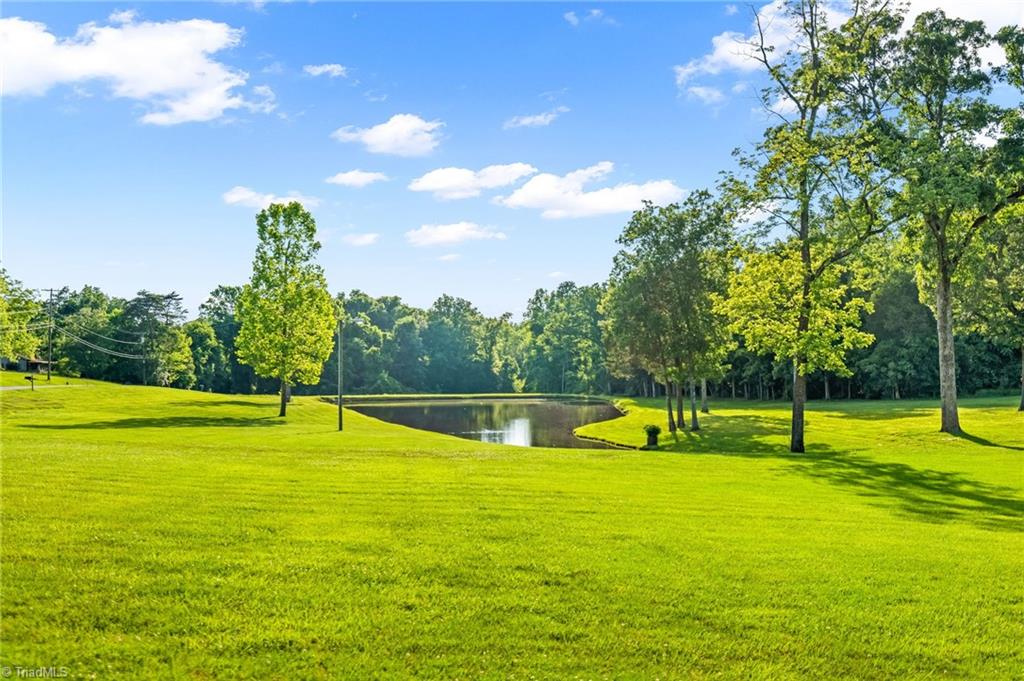


4337 N.C. Highway 62 S., Alamance, Alamance County
The Elizabeth Fogleman House
- Sold for $690,000 on July 15, 2024 (originally $675,000)
- 5 bedrooms, 5 bathrooms, 5,735 square feet, 4.61 acres
- Price/square foot: $120
- Built in 1935
- Listed April 7, 2021
- Last sale: $162,500, December 2005
- Neighborhood: The house is in Alamance village, 6 miles south of Burlington. It has a Burlington mailing address.
- Note: The original owner appears to have been Elizabeth Varlier McCuiston Fogleman (1894-1992). She bought the property in 1935, two years after the death of her husband, Clarence Ernest Fogleman (1893-1933). He had been a contractor and a director of Standard Hosiery Mills in Alamance. They had six children. She sold the house in 1954.
- The house was owned from 1954 to 2005 by Dr. Emmett Stevenson Lupton (1913-2005), a physician, and his wife, Ruth Paschal Lupton (1914-2002). Emmett came from a high-achieving family of four brothers — Emmett and Carroll were doctors, Harvey was a Superior Court judge and Frederick was a lieutenant colonel in the Air Force who served in World War II, Korea and Vietnam. Ruth was a graduate of Wake Forest University, where she majored in Greek. After a seven-year courtship, Ruth and Emmett were wed in 1940 and remained married until her death 62 years later. They rode motorcycles together.
- There are at least three houses called the “Fogleman House” in the immediate area. This one is on N.C. 62 south of Alamance mill village, next to First Baptist Church of Alamance. The Polly Fogleman House is on Brick Church Road, just off N.C. 62 almost to the Guilford County line; it’s on the National Register. Another Fogleman House is just across the county line in Guilford County on the same road (it’s called Holt’s Store Road in Guilford).
3125arnold

3125 Arnold Road, Hamptonville, Yadkin County
The Haynes-White-Wood House
- Sold for $212,500 on July 11, 2024 (originally $269,900)
- 3 bedrooms, 1 bathroom, 1,800 square feet, two tracts — 1.65 acres (3125 Arnold Road) and 1.43 acres (3131 Arnold, see note below)
- Price/square foot: $118
- Built in 1813
- Listed March 7, 2023
- Last sale: January 1922 (55 acres), price not recorded on deed
- Something to ask about: The listing says the property includes two tracts totaling 3 acres. County records show the two tracts have different owners, both apparently including descendants of Arthur Wood, who bought the property in 1922.
- Note: The listing claims the house was “originally built” in 1764 and “contains mantles and custom moldings with the single most important piece of Georgian woodwork surviving in Yadkin County.” It also has a mix of vinyl flooring and wall-to-wall carpeting, and much of the historic character has been renovated out of the interior.
- From Historical Architecture of Yadkin County: “Midway up the shaft of the north chimney is the date 1813, presumably the house’s date of construction. If so, it is one of the oldest buildings in Yadkin County.”
- “With its vertical proportions emphasized by the tall Flemish-bond chimneys, the Haynes-White-Wood House clearly demonstrates its Federal period of construction. …
- “Despite the addition of wide aluminum siding, alterations to the porch and the addition at the rear, the house retains its overall Federal style characteristics. … Substantial remodeling of the first-floor rooms has removed or covered much of the original fabric. However, a handsome mantel in the north room frames an arched fireplace opening. It has a two-panel frieze and thin pilasters with fluted upper shafts. …
- “The three-room upper floor is virtually unchanged [as of 1987, the publication date of the book]. The stair opens into the larger of the three rooms. Still visible are the Federal style molded window surrounds, chair rail, and six-panel raised-panel doors. An enclosed stair in one corner of the room leads to the attic. However, the most notable feature in this room, and in the house itself, is the mantel. A rather typical molded surround frames the arched fireplace opening, but it is surmounted by an impressive Georgian style cushioned frieze and deep moldings supporting a prominent matelshelf. It is the single most important piece of Georgian woodwork surviving in Yadkin County.”
- The original owners are believed to have been the Rev. William Haynes (1764-1836) and Philadelphia Haynes (1768-1829). Records from 1812 show William owning 1,000 acres in Yadkin County. He and Philadelphia are buried in a family cemetery behind the house.
- The next owners were their daughter Malinda (1807-1837) and husband William White (1803-1867). After Malinda’s death, her sister Mahala moved in and helped raise the three children of Malinda and William. He was a carpenter and builder, credited with building the county’s first courthouse in 1852-53 (demolished in the 1950s). Like his father-in-law, he was a sizable land owner with 600 acres by 1851. Malinda and William are buried in the family cemetery behind the house.
- The next two owners, Elizabeth I. Haynes and then Alfred Haynes, are of unknown relationship to the earlier Haynes family and to each other.
- In 1922, the house and 55 acres were bought by Henry Arthur Wood (1881-1970). Descendants of Arthur and Bessie Adams Wood (1911-1994) own the two properties for sale.
2457glencoe

2457 Glencoe Street, Glencoe Mill Village, Alamance County
- Sold for $268,000 on July 9, 2024 (listed at $275,000)
- 2 bedrooms, 2 bathrooms, 1,654 square feet, 0.29 acre
- Price/square foot: $162
- Built in 1885
- Listed June 13, 2024
- Last sales: $247,000, November 2020; $35,000, February 2002
- HOA: $55/month
- Note: Glencoe is a National Register historic district and one of Burlington’s local historic districts. Although it’s outside the city limits, Glencoe is within the city’s zoning jurisdiction.
- The listing appeared with only one photo.
3307gaston
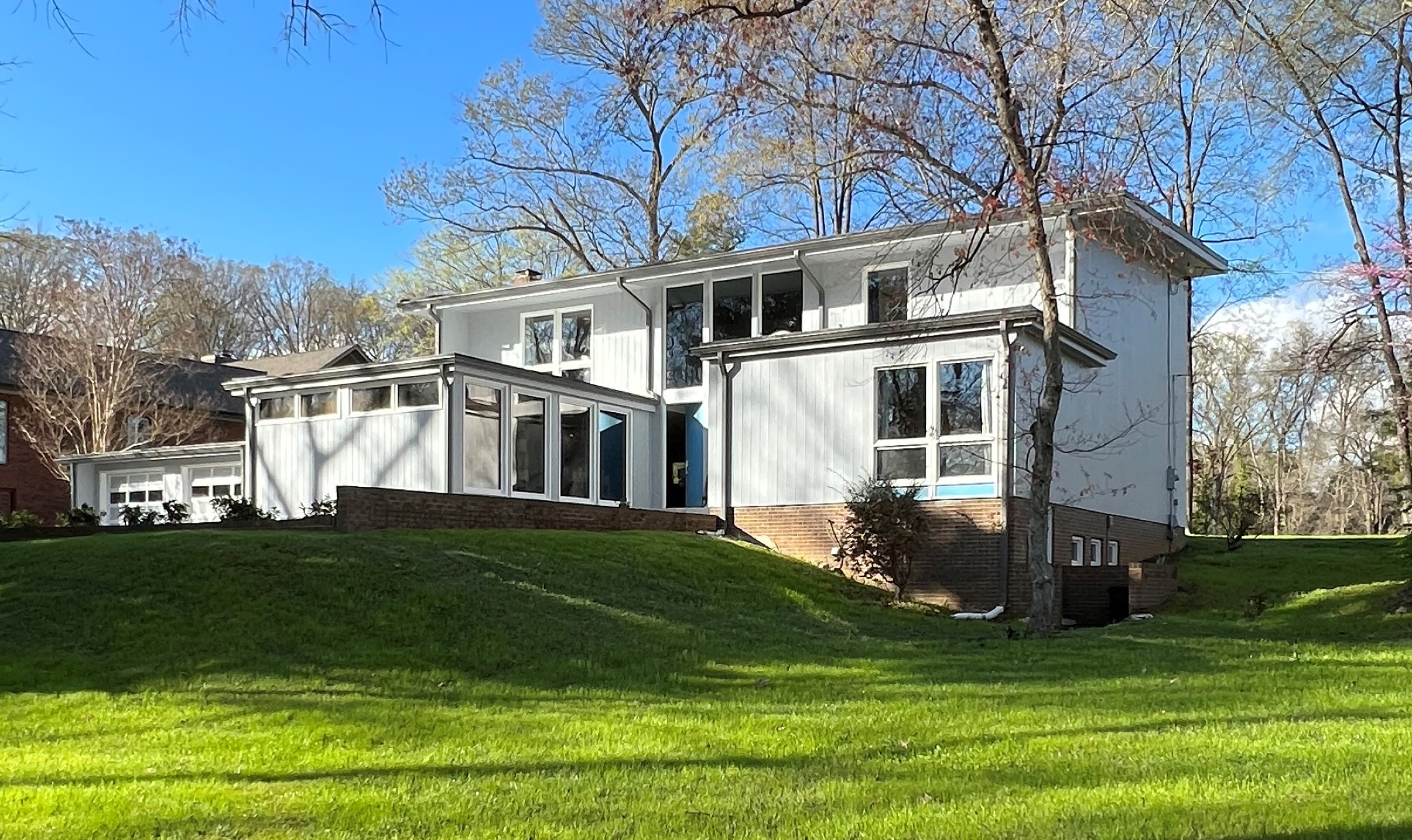
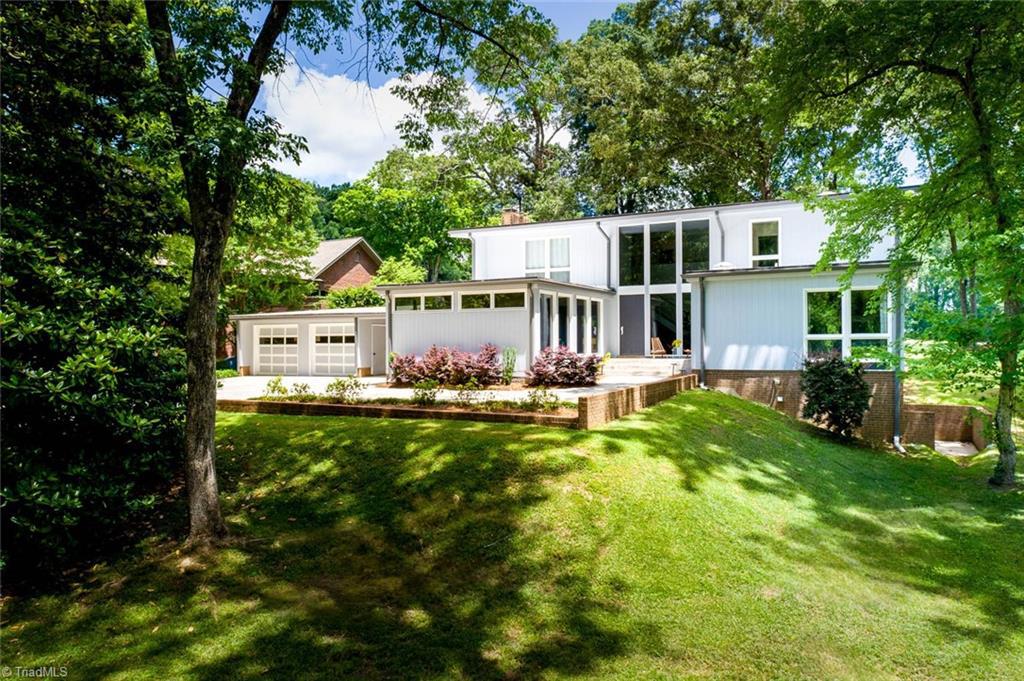




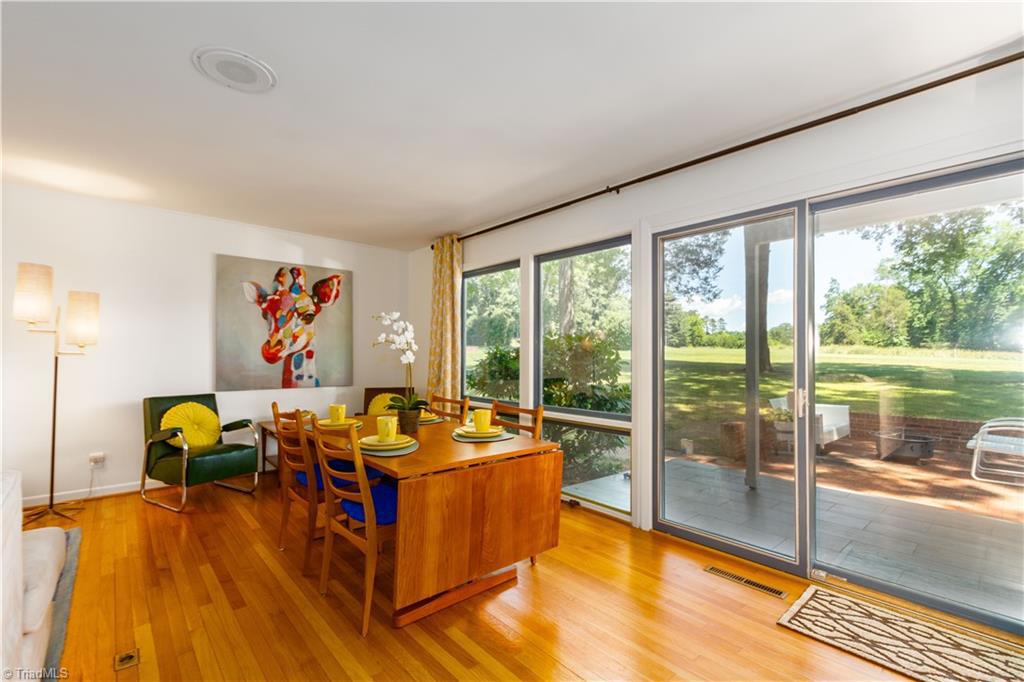

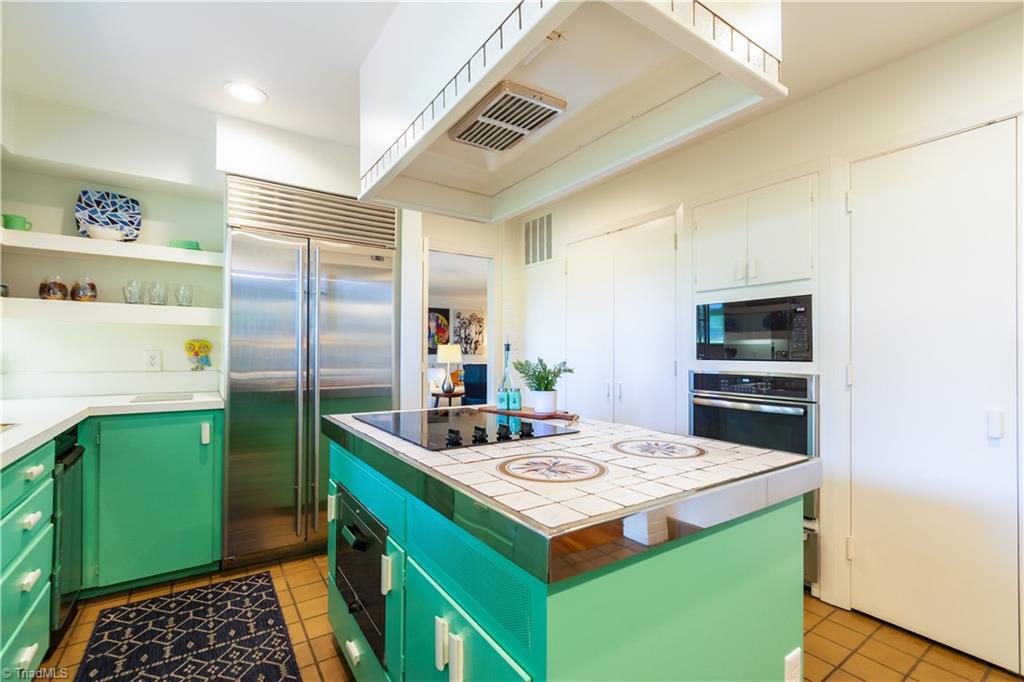
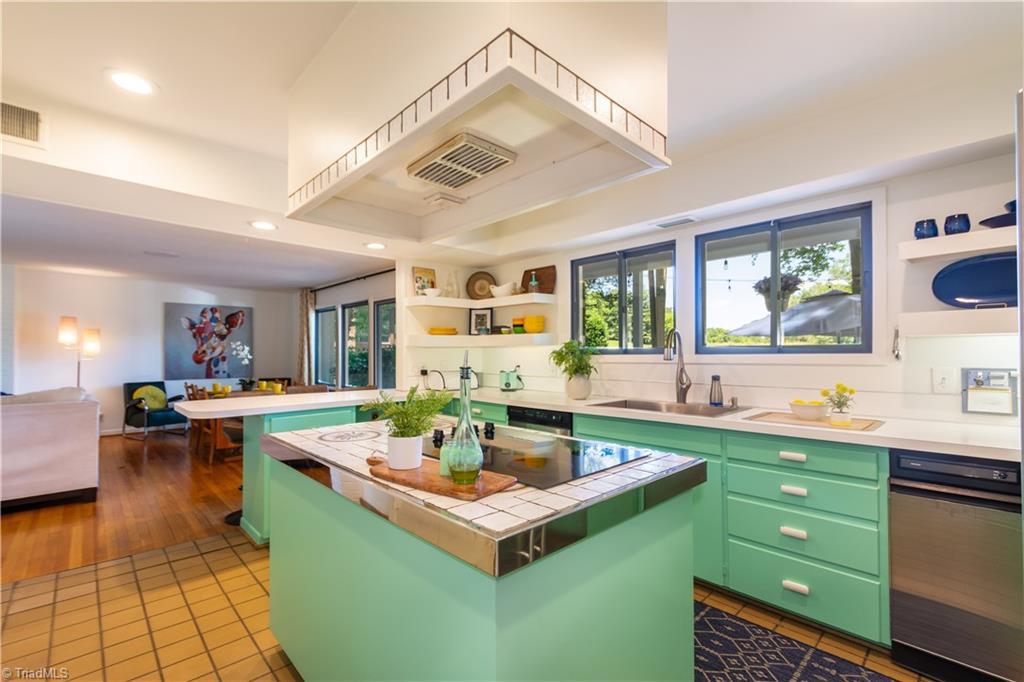
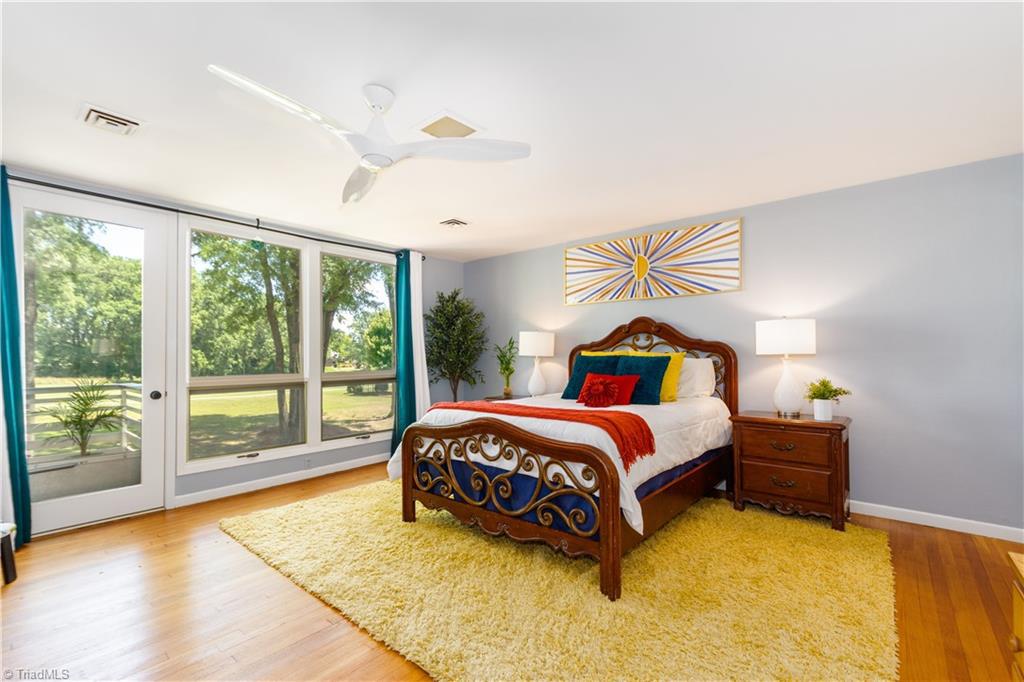


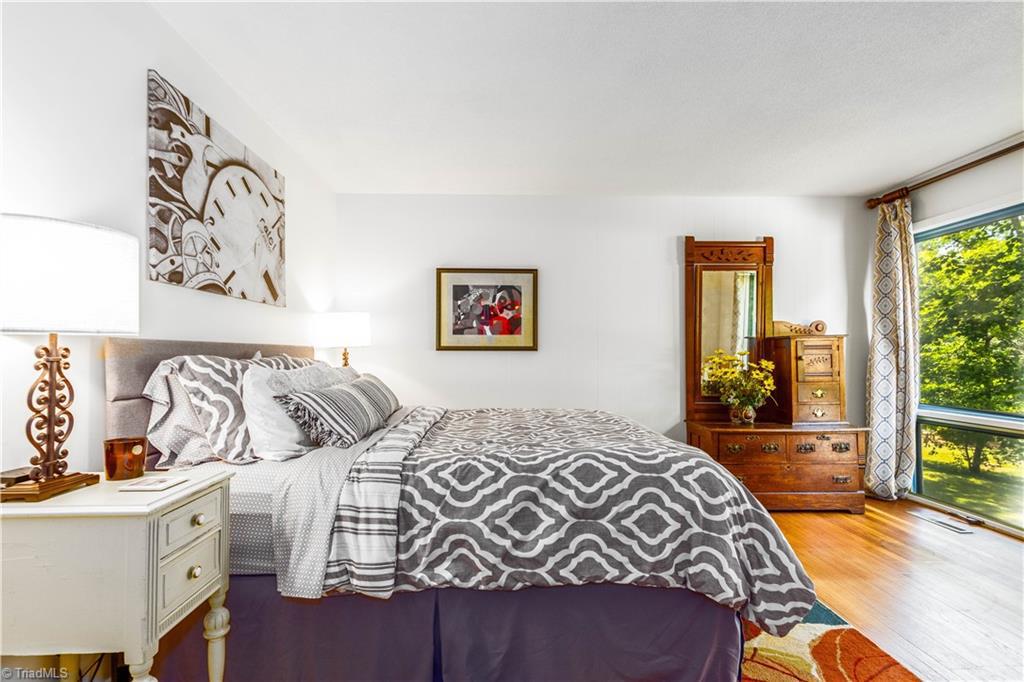
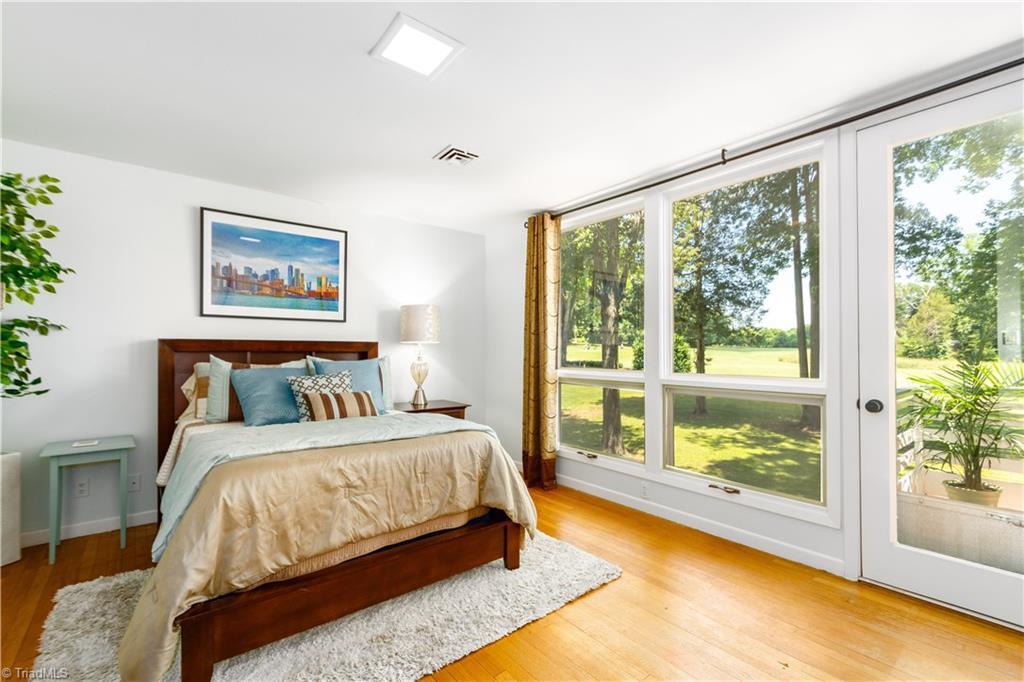
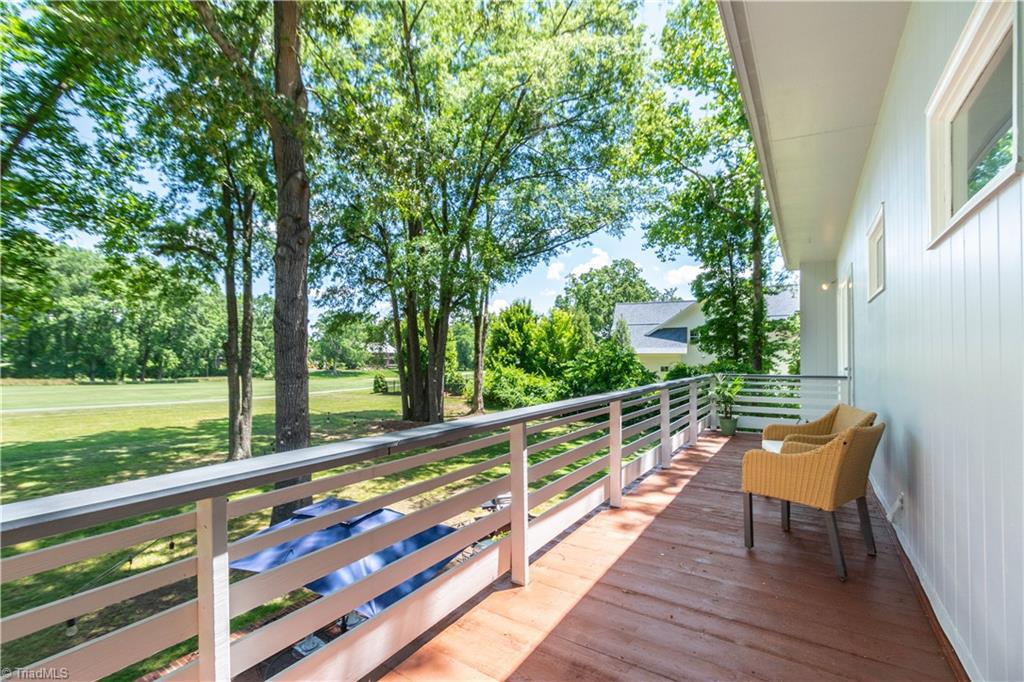
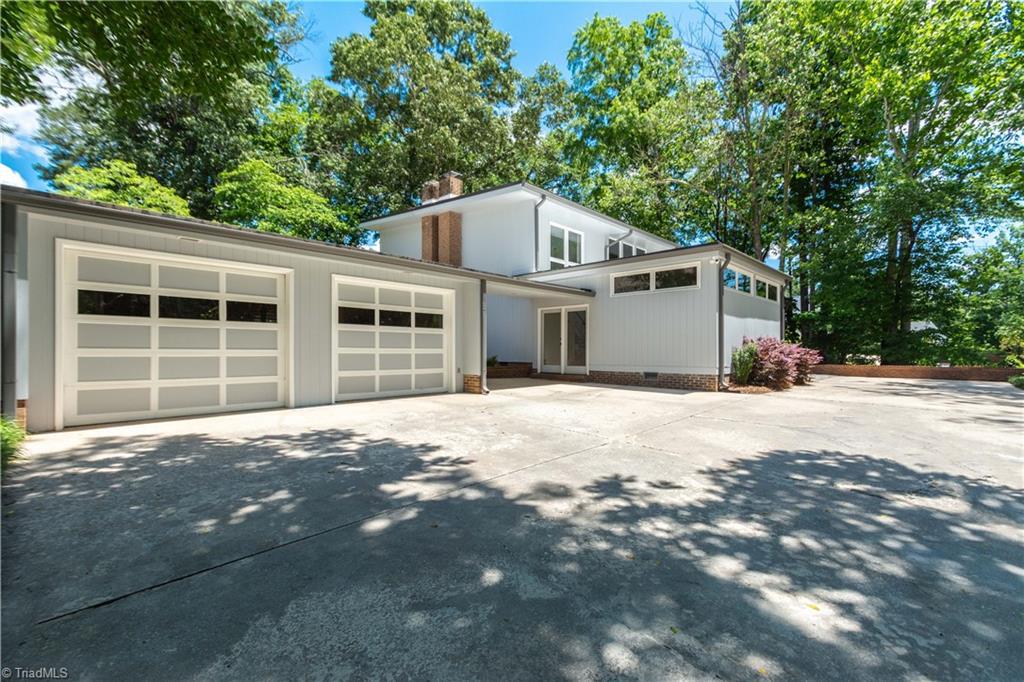


3307 Gaston Road, Sedgefield, Guilford County
Commencement House III
The Herbert and Nancy Downs Smith House
Blog post (2022) — A 1964 House in Sedgefield Designed by Edward Lowenstein and 22 UNCG Undergraduates, $765,000
- Sold for $835,000 on July 5, 2024 (originally $765,000)
- 4 bedrooms, 3 bathrooms, 4,088 square feet, 1.6 acres
- Price/square foot: $204
- Built in 1965
- Listed April 5, 2022
- Last sale: $359,000, October 2009
- Neighborhood: Sedgefield
- Note: One of Edward Lowenstein‘s “Commencement Houses,” the three homes designed by Lowenstein and his students at the Women’s College (which had become UNCG by the time this one was built).
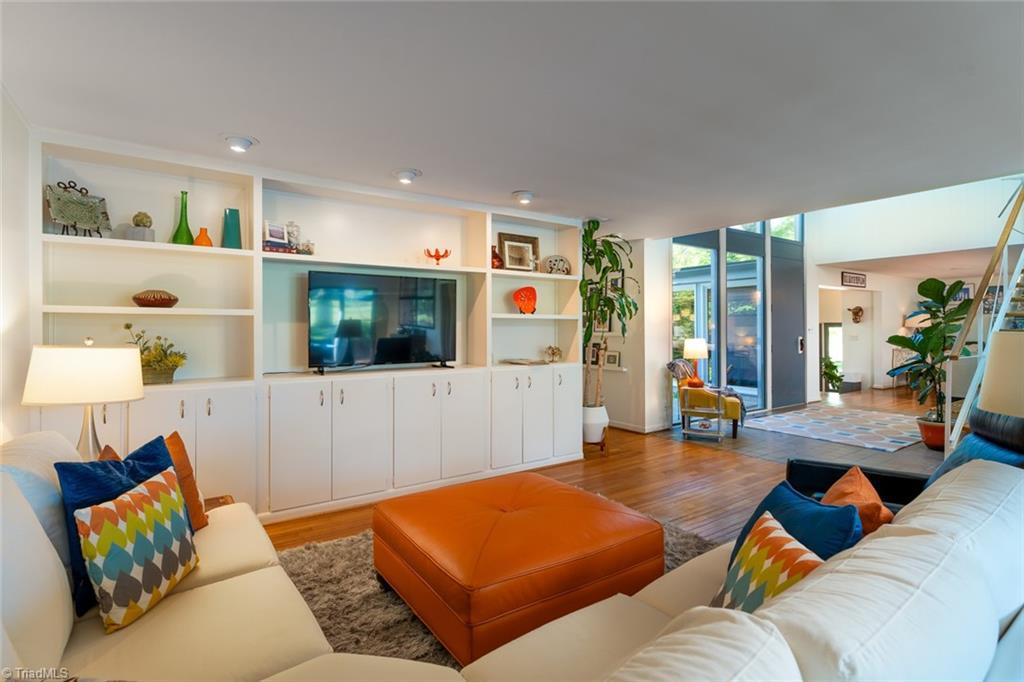
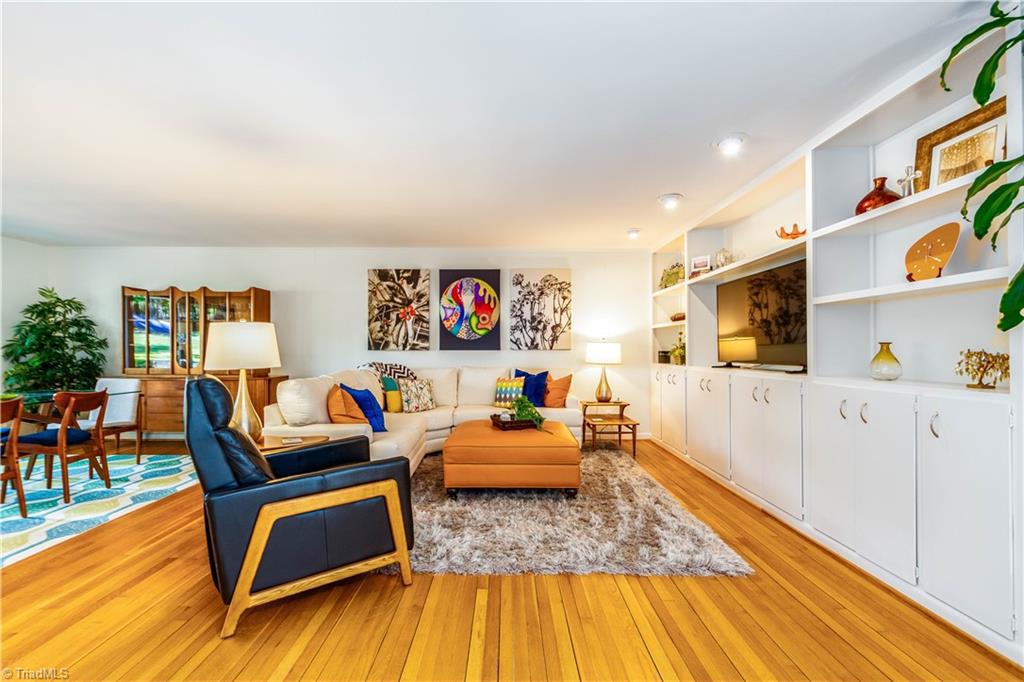
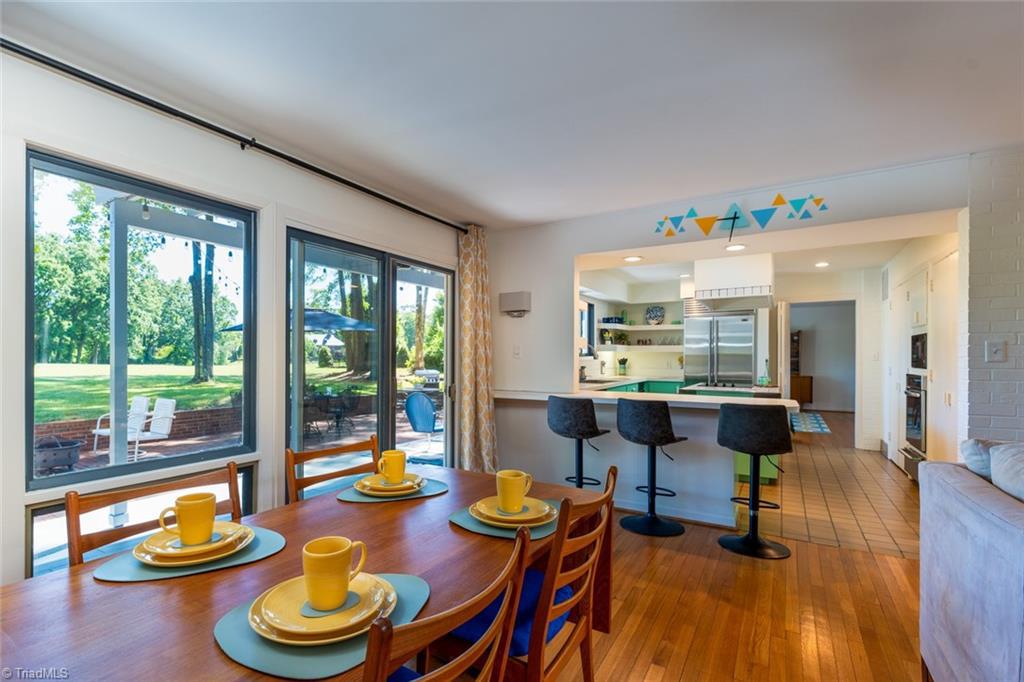
- The entrance hall has a 17-foot high wall of windows. There are large windows throughout the house, an open staircase and minimal ornamentation. At the back, a second-floor deck provides a view of the Sedgefield Country Club golf course. The house sits well back from the street in a forested landscape. The kitchen is modern but maintains its strikingly 1950s look.
- Herbert L. Smith Jr. was general manager of Cummins Diesel Carolina. Nancy was with WUNC-TV. “Nancy Downs, hostess for the WUNC-TV show Potpourri, had covered the 1958 Commencement House and had her eyes on being the next Commencement House client,” N.C. Modernist says. The Smiths owned the house until 1986.
- Located along the 2nd fairway of Sedgefield Country Club’s Donald Ross course.

1255 Luna Trail Road, Sandy Ridge, Stokes County
- Sold for $138,500 on June 28, 2024
- Sold subject to a conservation easement.
- The buyer is a company owned by Greensboro developer Roy Carroll.
- 1,119 square feet, 28.85 acres
- Price/square foot: $124
- Built in 1860
- Last sale: $10,000, October 1973
- Note: The property was a bequest to the Piedmont Land Conservancy.
- “Our intent is to sell the property subject to a conservation easement via a request for proposals process. This will allow us to conserve these 29 acres and use the proceeds to further other land conservation projects.”
- The cabin is described as very rustic.
- The owners since 1973 have been Patricia Anne Griffin (1941-2021) and Frances R. Sandlin (1942-2023). Patricia graduated from Reidsville High School class of 1959 and attended the first Girl Scout Round Up in 1956. She was a Phi Beta Kappa graduate of the Women’s College, now UNCG. Patricia taught math in Virginia and at Page High School in Greensboro before teaching at UNCG. She was a founder of Habitat for Humanity of Stokes County and served on the board of directors.
- Frances Anna Rand Sandlin was born in Wisconsin and graduated from Texas Women’s University. She was an occupational therapist.
9501nc86

9501 N.C. Highway 86 N., Cedar Grove, Orange County
The Nicholas Corbett Hester House
- Sold for $911,000 on June 26, 2024 (listed at $898,000)
- 2 bedrooms, 1 1/2 bathrooms, 1,513 square feet, 18.21 acres
- Price/square foot: $602
- Built circa 1881
- Listed October 29, 2023
- Last sale: $57,500, December 2000
- Neighborhood: Located in the northwestern corner of Orange County near the Alamance and Caswell county lines.
- Listing: “Original Hester 1850s homestead/kitchen saved & converted to covered outdoor dining/entertaining, wood stove heated hot tub, solar powered koi pond … giant equipment/party shed; guest/rental suite fashionably fashioned from original tobacco barn, over the top artist studio complete with main level kitchen/full bath, state of the art kiln & loft; well-equipped, light-filled workshop. Rumford fireplace, 2 outdoor showers, radiant heated floors & more.”
- Note: Designated an Orange County Landmark
- Nicholas Corbett Hester (1836-1891) was a farmer. He may have built his house on land that was owned by his father. He had been active in local Democratic Party politics before the Civil War and served as a lieutenant in the Confederate Army, 1862-63. He was married to Sallie Thomas Hester (1838-1913).
- The Historic Architecture of Orange County, North Carolina: “Although traditional house plans and types persisted following the Civil War, the use of stylish ornamentation increased with the availability of milled lumber. During the 1870s and 1880s, decorative motifs reflected the popular Italianate style. The Hester Farmhouse, ca. 1870s, in northern Orange County epitomizes this trend. The carpenters erected a typical center-hall plan, I-house, to which they applied ornate eave brackets, decorative attic vents, crossetted window surrounds, and an exuberant two-tiered entrance portico with decorative sawn and turned woodwork. …
- “Once the focal point of domestic farm life, the kitchen was still being built detached from the main house in the years following the Civil War. Typically located to the rear or side of the house, kitchens were usually one or two rooms with large exterior end chimneys. In addition to providing a place for food preparation, the kitchen could have also served as a dining room and extra sleeping quarters. The Hester Farm has a large one-room log kitchen sheathed in weatherboards, located directly behind the main house. According to a descendant of the original owners, the male children would sleep in its half-story loft.”
2402nc62


2402 N.C. Highway 62 North, Burlington, Alamance County
The Robert Holt House, aka the Holt-Green House
- Sold for $625,000 on June 24, 2024 (listed at $625,000)
- 4 bedrooms, 2 bathrooms, 2,569 square feet, 3.39 acres
- Price/square foot: $243
- Built in 1897
- Listed April 26, 2024
- Last sale: $27,000, June 1995
- Neighborhood: Glencoe, just outside the mill village
- Note: The house is owned by Elon University. The university acquired it in 2013, most likely as a gift (the deed isn’t clear). In September 2013, the university put it up for sale for almost two years without success.
- The home was built by Glencoe Mill owner Robert Lacy Holt (1866-1923). Robert bought the Glencoe mill and village in 1897; it had been started by his father, James Henry Holt, and an uncle, William Edwin Holt. They were sons of Edwin Michael Holt, founder of the textile industry in Alamance County.
- Robert ran the mill until he died. A brother-in-law, Walter Guerry Green (1868-1946), took over then. His wife was Robert’s sister Daisy (1879-1976), the youngest of 12 siblings.

- Walter was succeeded by their son James Holt Green (1909-1945), who had attended Harvard Business School. Holt eventually left to serve in World War II. As detailed by Harvard, he was rejected by the Army, but Holt’s business skills got him into the Navy for duty with the Office of Strategic Services, the forerunner of the Central Intelligence Agency. He served in Cairo and then behind German lines in Yugoslavia, rescuing downed Allied airmen. In September 1944, James led a four-man team behind German lines into present-day Slovakia, again to rescue downed Allied airmen but also to support the Slovak National Uprising. After the anti-Nazi uprising collapsed, Green and his men went on the run, providing intelligence by radio and staging sabotage attacks when they could, before being captured by the German SS in December 1945. Holt and his team were taken to the Mauthausen Concentration Camp in Austria, tortured and executed. They were among 12 U.S. prisoners of war executed there. Holt posthumously received the Distinguished Service Cross for extreme gallantry and the Czechoslovak War Cross. He’s buried at Epinal American Cemetery, Lorraine, France.
- After the war, Holt’s brother Walter Jr. (1908-1987), an attorney, operated the mill until it closed in 1954.
- In 1995, Walter Guerry Green III sold the house to George T. Nall and Jerolene K. Nall. George was a school principal for 32 years. He developed skills in building and construction and restored the Holt house and a house in neighboring Glencoe Mill Village. He wrote Celebrating the Past … Looking to the Future for the Textile Heritage Museum in Glencoe. Jerolene is a retired teacher. They either sold the house to Elon or donated it to the school.
—
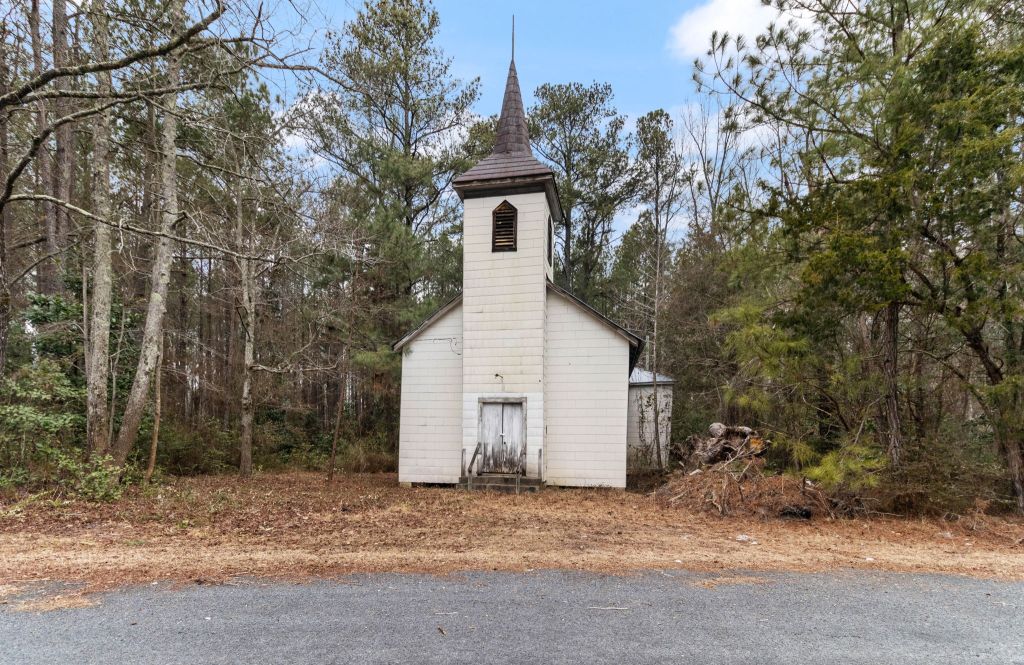
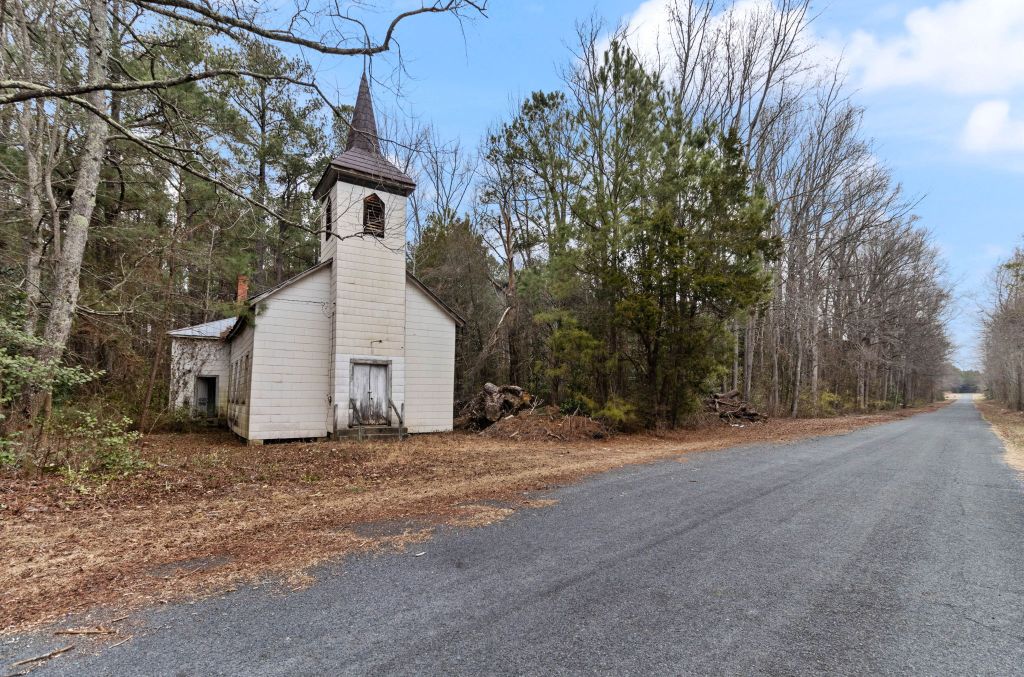
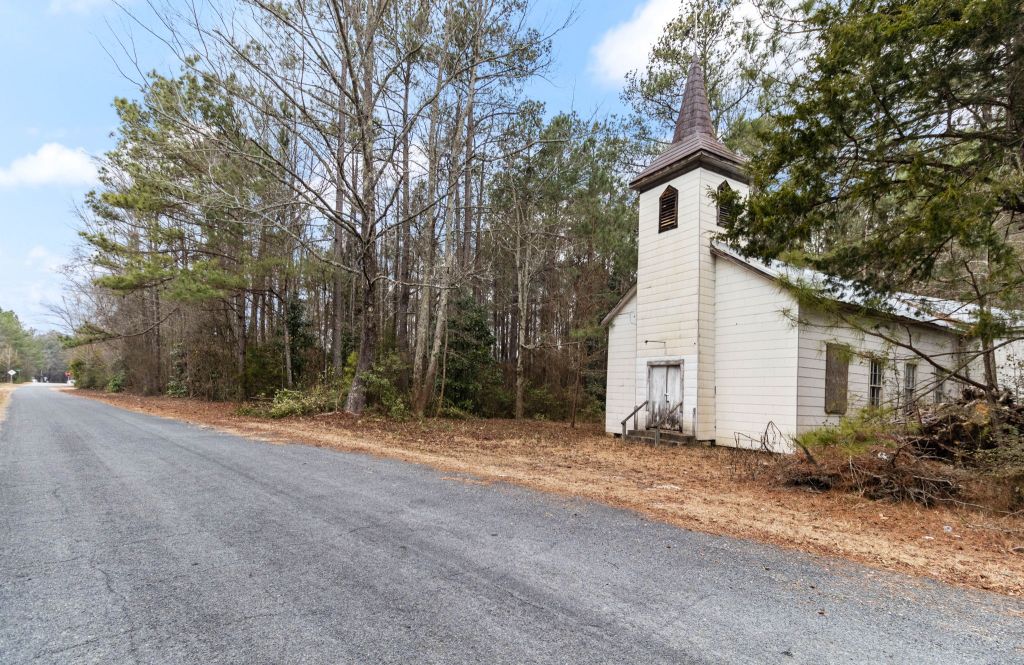
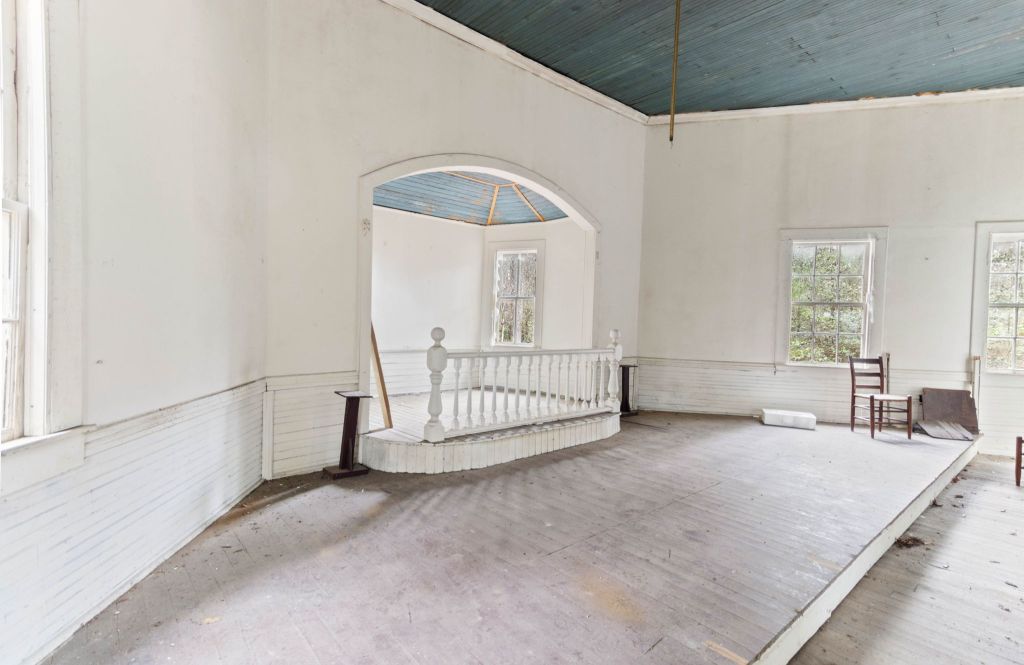
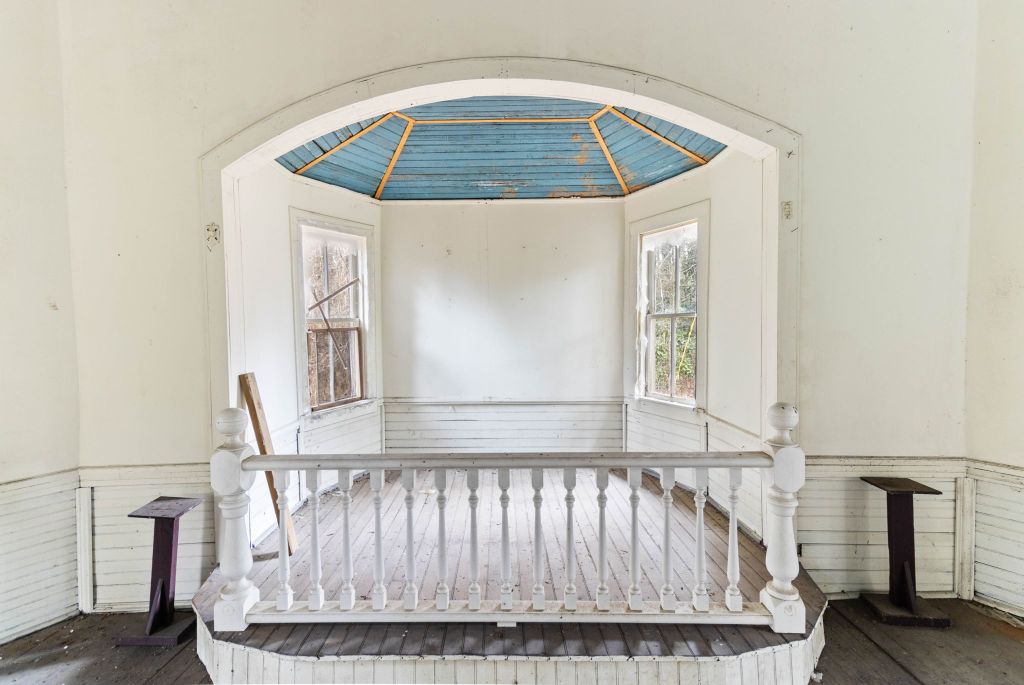
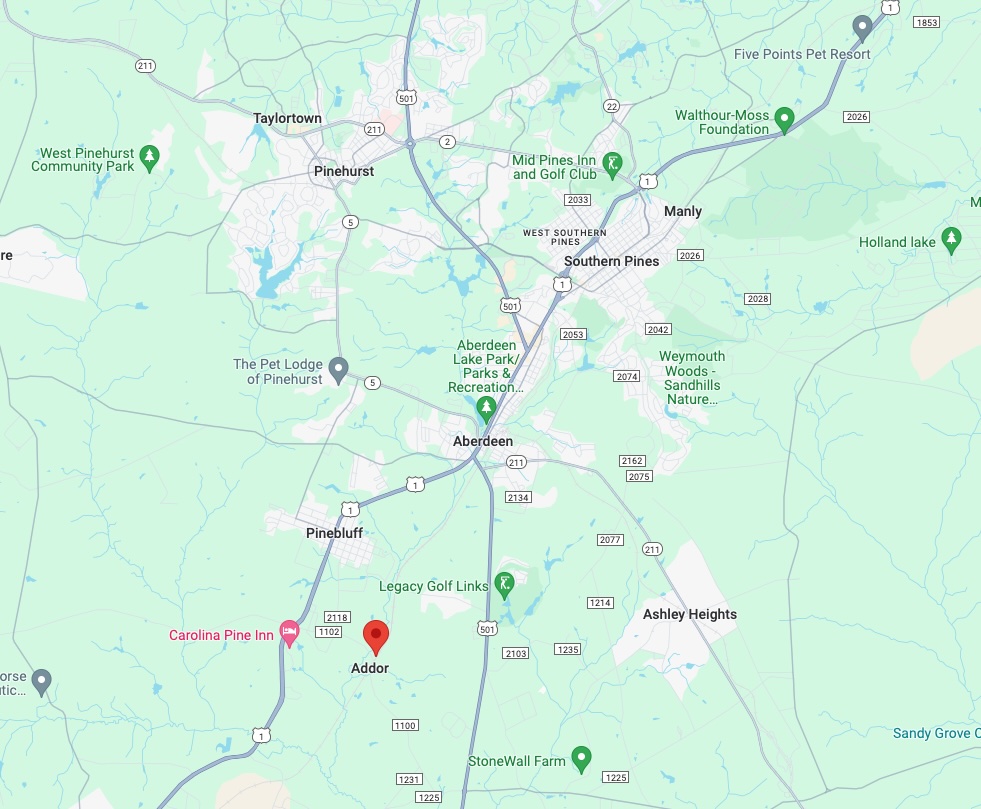
151 Hammond Road, Pinebluff, Moore County
Free Liberty United Christian Church
- Sold for $23,000 on May 16, 2024 (originally $60,000)
- 1,448 square feet, 0.31 acre
- Price/square foot: $16
- Built circa 1880
- Listed March 7, 2024
- Last sale: $18,000, October 2020
- Neighborhood: Near the Addor community, about 10 miles south of Southern Pines and Pinehurst. It has a Pinebluff mailing address.
- Note: The property is protected under preservation covenants held by Preservation North Carolina.
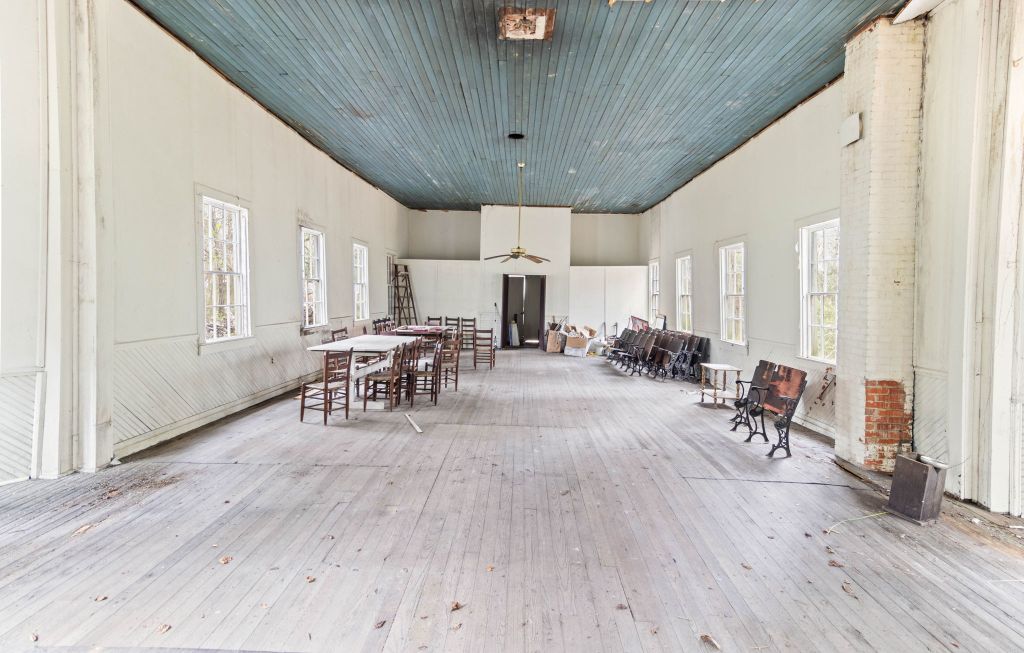
- “The rear section, possibly added in the early 20th century, boasts a striking tongue-and-groove ceiling adorned in brilliant blue paint.”
- “This historical treasure presents a unique opportunity for complete rehabilitation, necessitating new systems and restoration carpentry.”
- Little, if any, history of the historically African American church can be found online, apart from a news report of a racist vandalism attack 21 years ago.
701-703-5th
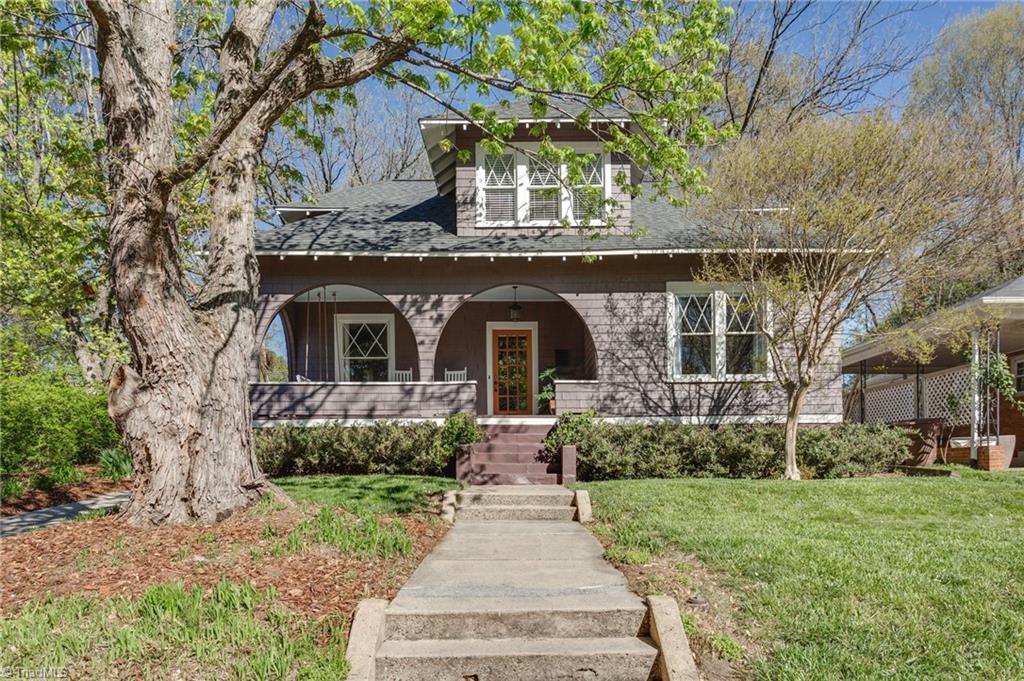
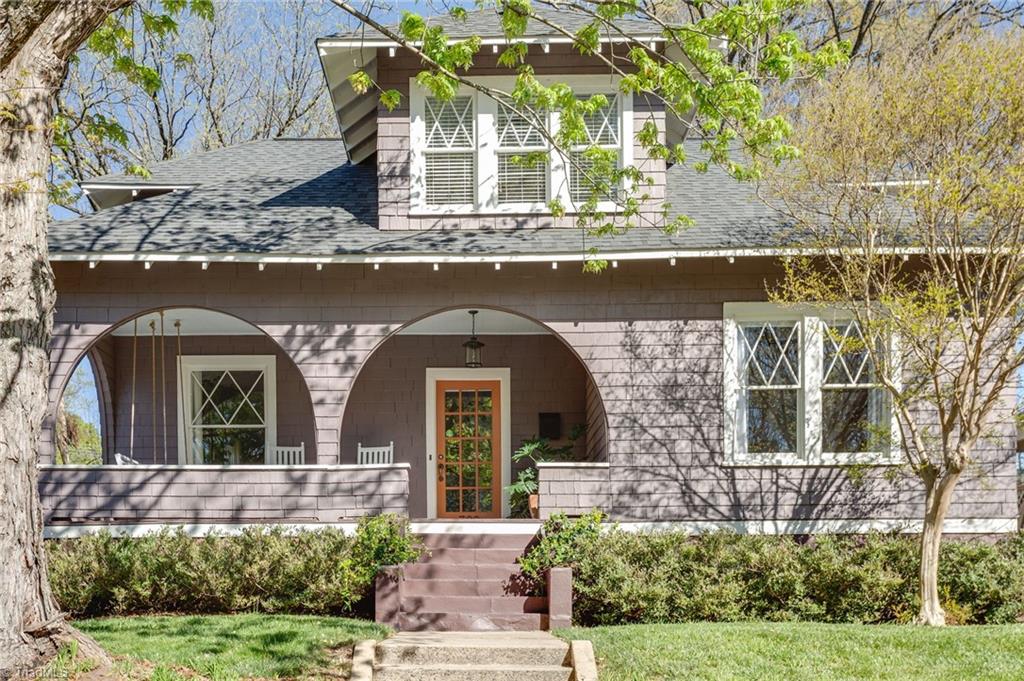
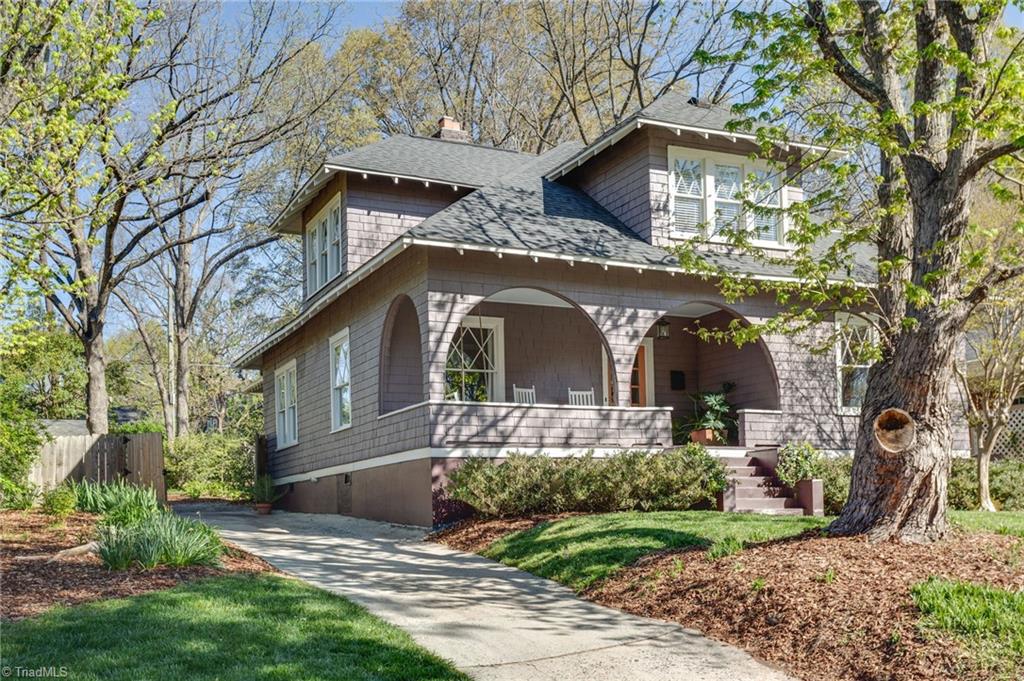
701-703 5th Avenue, Greensboro
The Denny-McMahan House
- Sold for $550,000 on May 15, 2024 (listed at $495,000)
- 4 bedrooms, 2 1/2 bathrooms, 2,136 square feet, 0.75 acre (two lots)
- Price/square foot: $257
- Built in 1923 (per county, but probably a couple years earlier; see note)
- Listed April 11, 2024
- Last sale: $273,000 total — $18,000 for 701 5th Avenue, February 2015; and $255,000 for 703 5th Avenue, June 2016.
- Neighborhood: Dunleath Historic District (local), Summit Avenue Historic District (NR)
- Note: The property consists of two lots — 701 5th Avenue, on the corner of 5th Avenue and Yanceyville Street, and 703 5th Avenue, which is the lot with the house.
- The original owner of the house was C.M. York, who bought the property in 1920. By 1921, the first time the address was listed in the city directory, York had sold the house to Kathleen Shirley Evan Denny (1864-1928), and she and her husband, Robert McCheyne Denny (1855-1942) were living at the address. Robert was a clerk with Arctic Ice & Coal Company. They sold the house in 1925 but continued to live in it until 1929.
- In 1941, Noah McMahan (1894-1969) bought the house. His widow, Ruby Lee Rakestraw McMahan (1904-1980), sold it in 1970. Noah was the superintendent of the Greensboro water filter plant. He was a veteran of World War I.
- District NR nomination: “This eclectic cottage draws from a number of late nineteenth and early twentieth century styles; its round-arched porch recalls the Richardsonian Romanesque and its continuous shingled walls the Shingle style, while its diamond-paned windows and exposed rafter ends harken to the more contemporary Tudor Revival and Craftsman styles.”
280halcyon
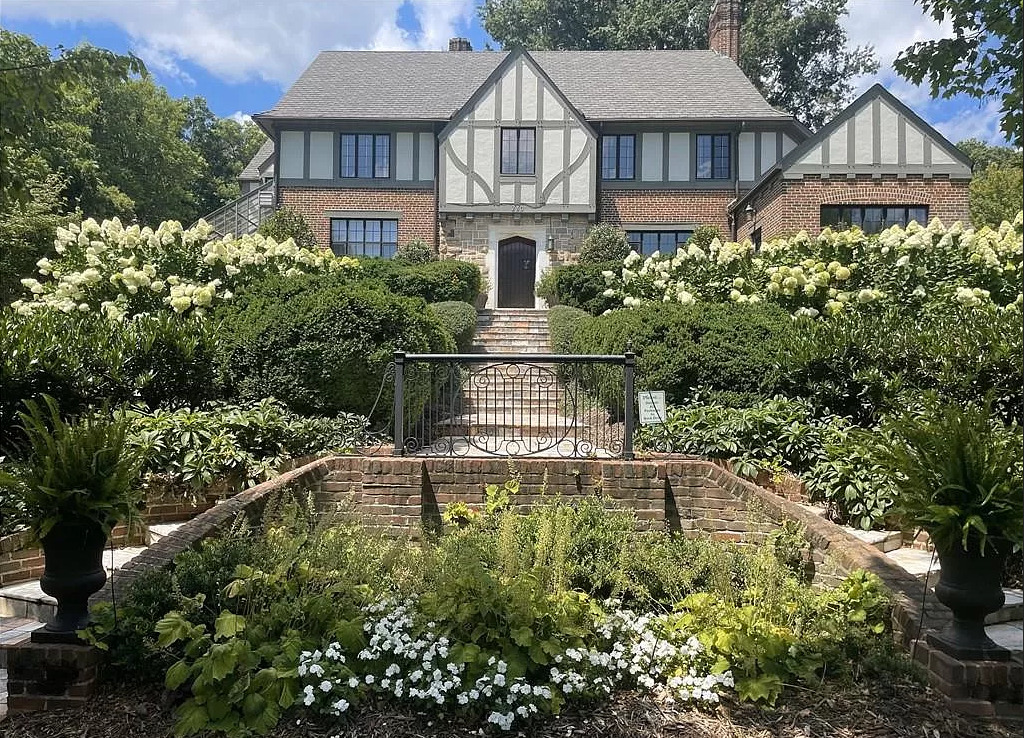
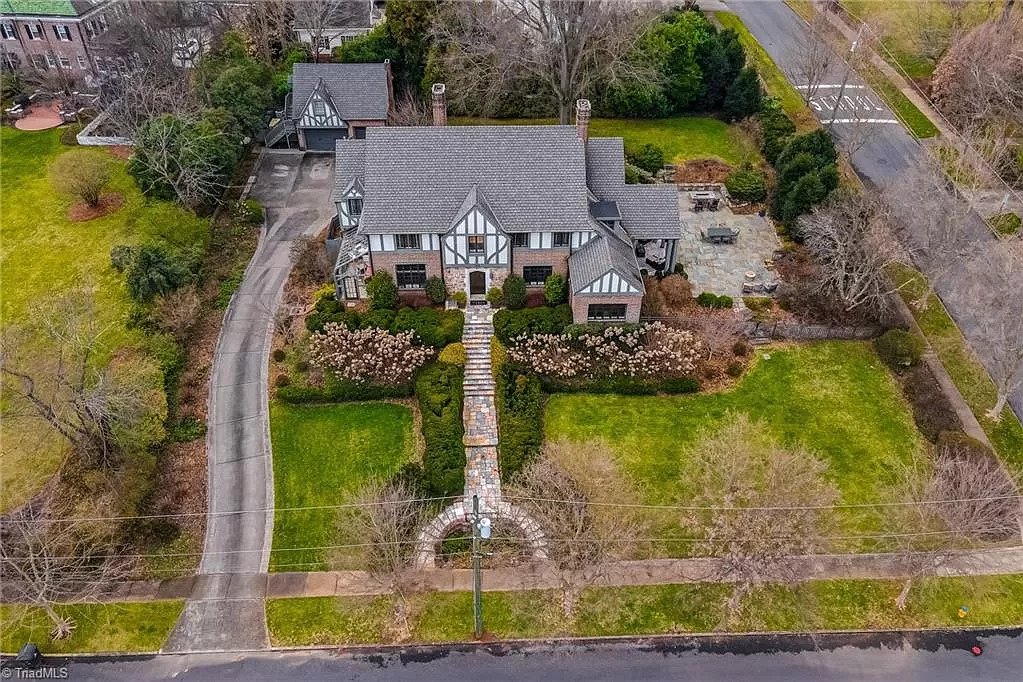
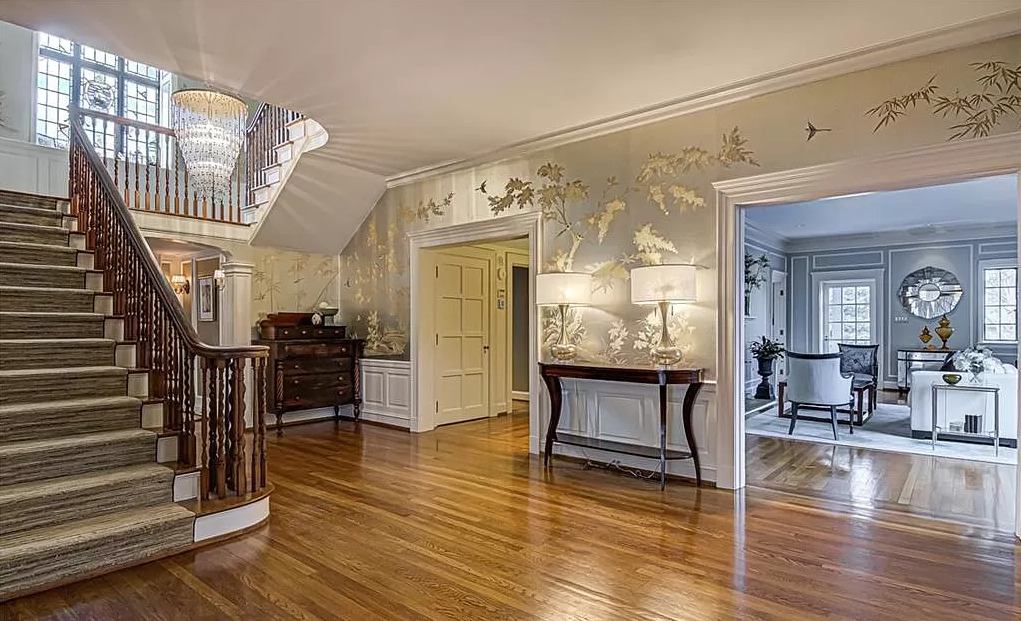
280 Halcyon Avenue, Winston-Salem
The Thomas and Minnie Smither House
- Sold for $1.65 million on May 10, 2024 (originally $1.79 million)
- 5 bedrooms, 4 1/2 bathrooms, 5,360 square feet, 0.63 acre
- Price/square foot: $308
- Built in 1928
- Listed February 12, 2024
- Last sale: $1.1 million, December 2014
- Neighborhood: West Highlands
- Note: The property has been determined to be eligible for consideration for the National Register (2019).
- William Thomas Smither (1890-1969) and Minnie Gray Marshall Smither (1893-1970) bought the property in 1925 and were listed in the 1929 city directory at 1906 Georgia Avenue, which was the home’s address as long as they owned it (which is a bit odd — although it’s at the corner of Georgia and Halcyon, it faces Halcyon Avenue). It was sold by Minnie’s estate in 1970.
- Thomas joined R.J. Reynolds Tobacco in 1906 and moved to Winston-Salem in 1907. He was the company’s advertising manager from 1937 until he retired in 1957. He was a director of the company from 1946. Minnie chaired the first Forsyth County Christmas Seals campaign for tuberculosis in 1941 and was active in the effort for the rest of her life. She also was an active Red Cross volunteer.
- In 1970 the house was bought by Suzanne Walker McCarthy (1936-2002), about whom little information exists online. Born Suzanne Walker in Forsyth County, she was Suzanne Walker Simpson from the mid-1950s to late ’60s. In the 1970s she was identified as Suzanne Walker McCarthy and as a widow; only her name was on the deed. She advocated for the preservation of the West End and was active in local Republican politics. The house was sold by her estate in 2003.
1073sweetbriar

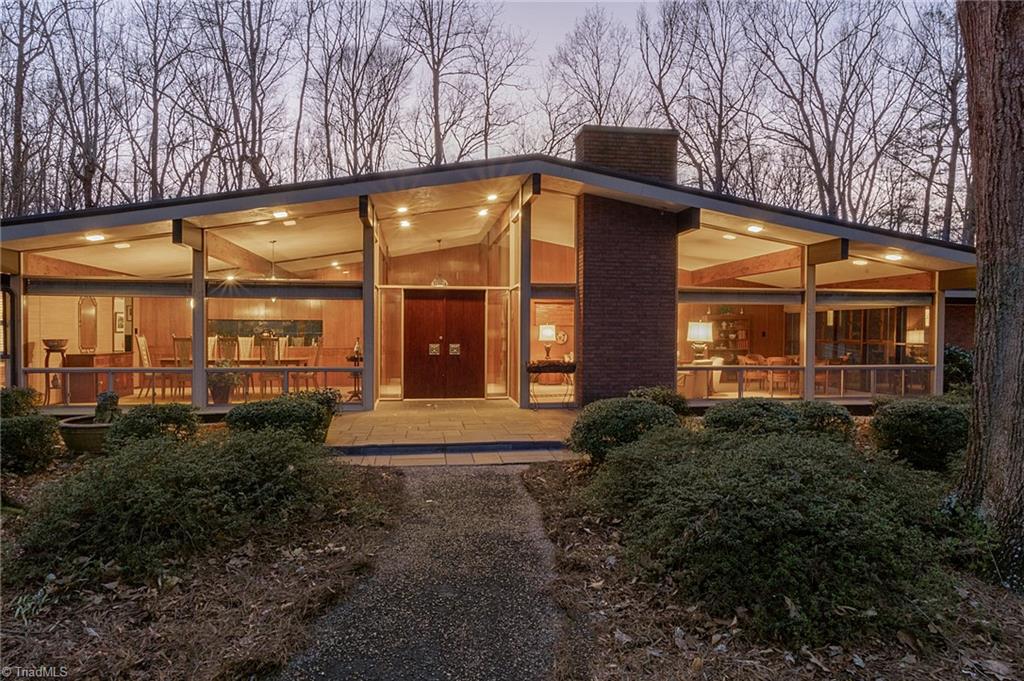
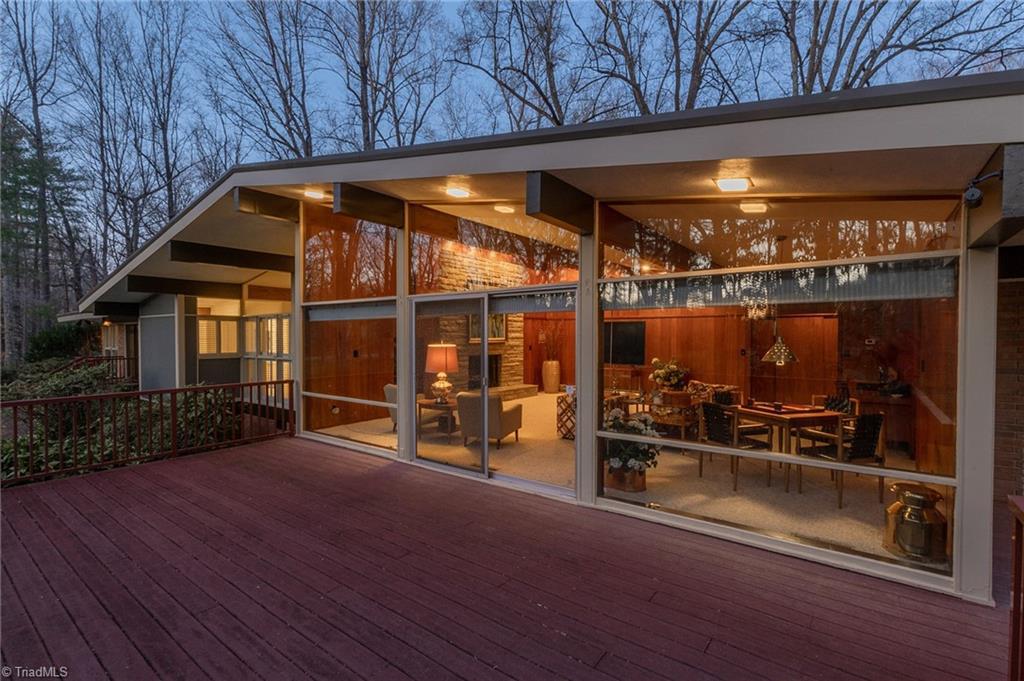
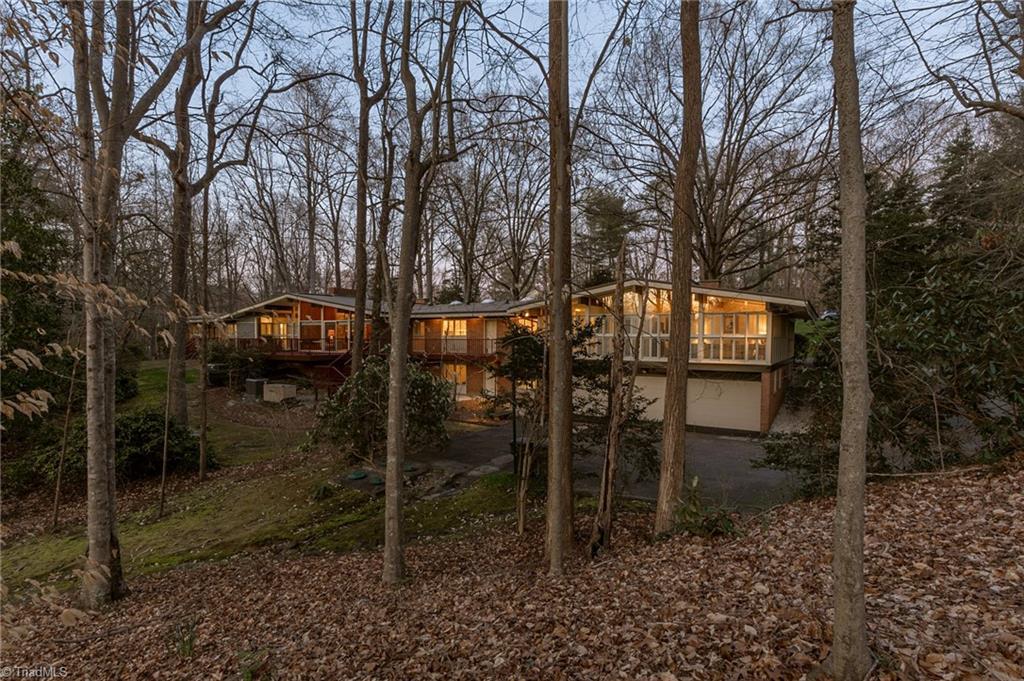



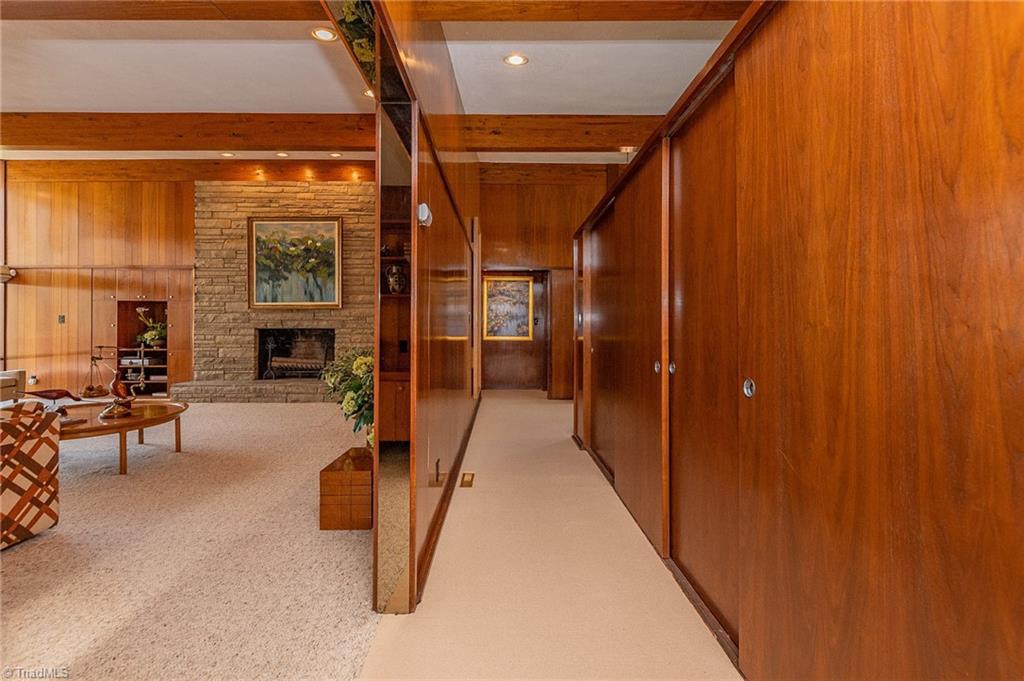


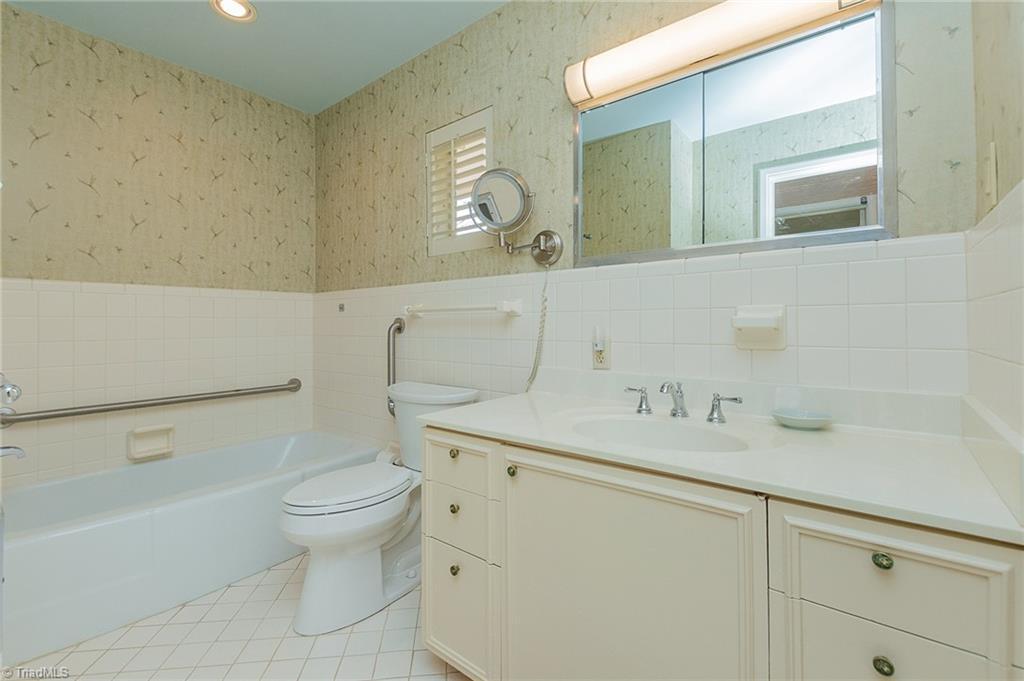

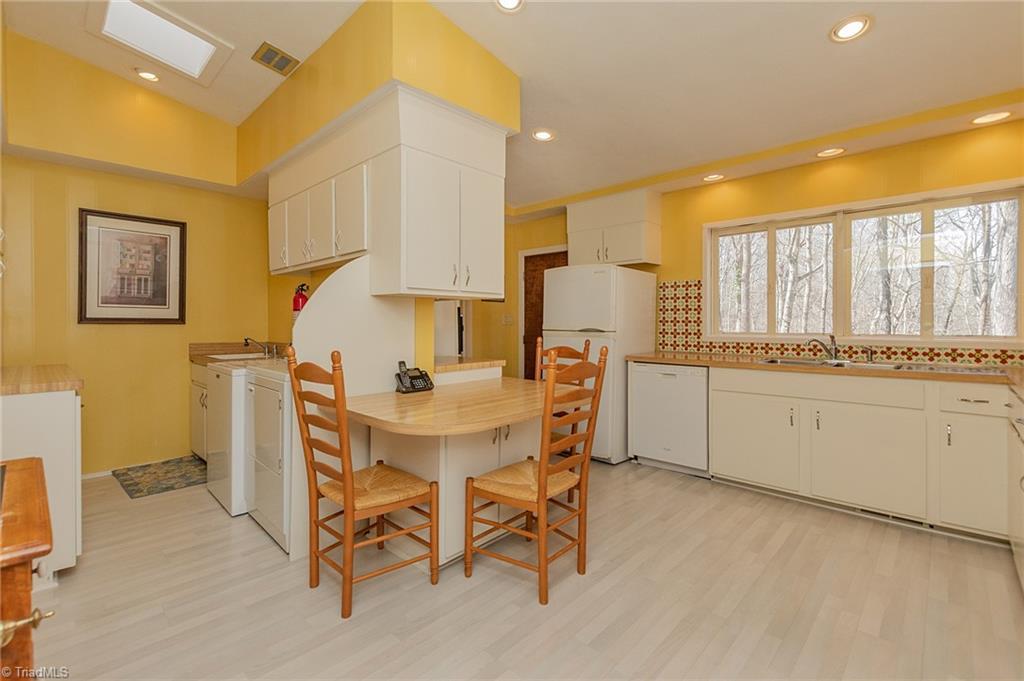
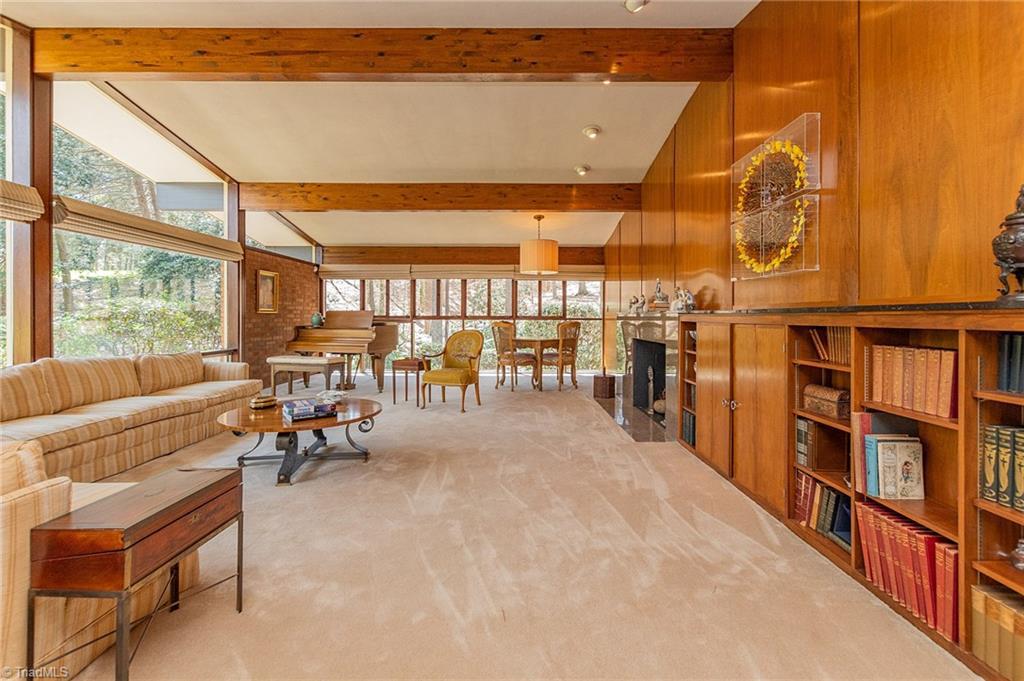




1073 Sweetbriar Road, High Point
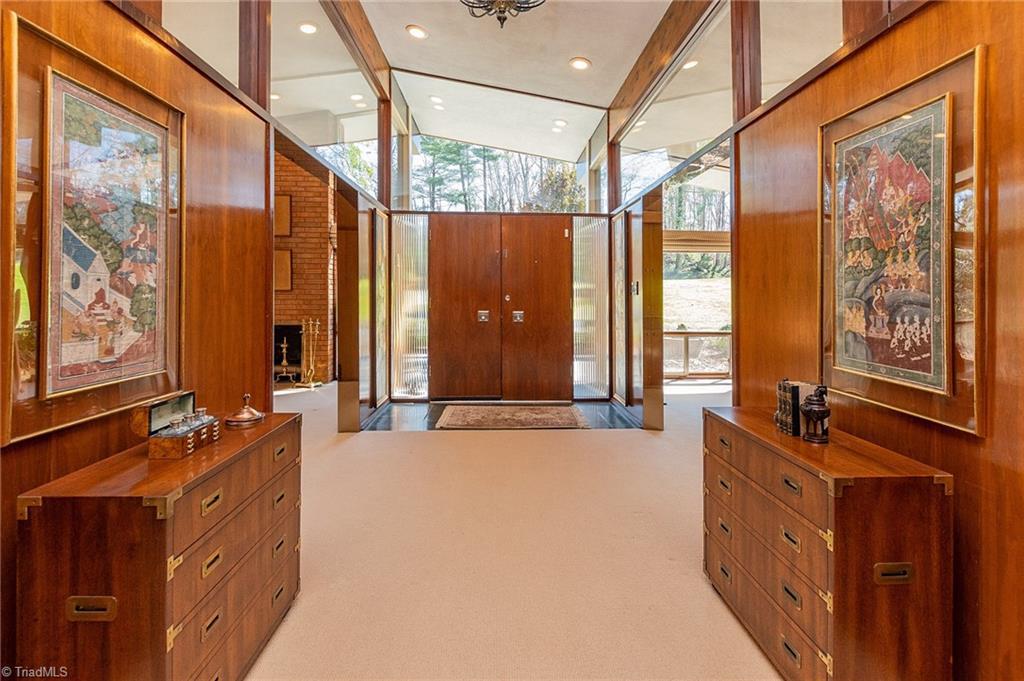
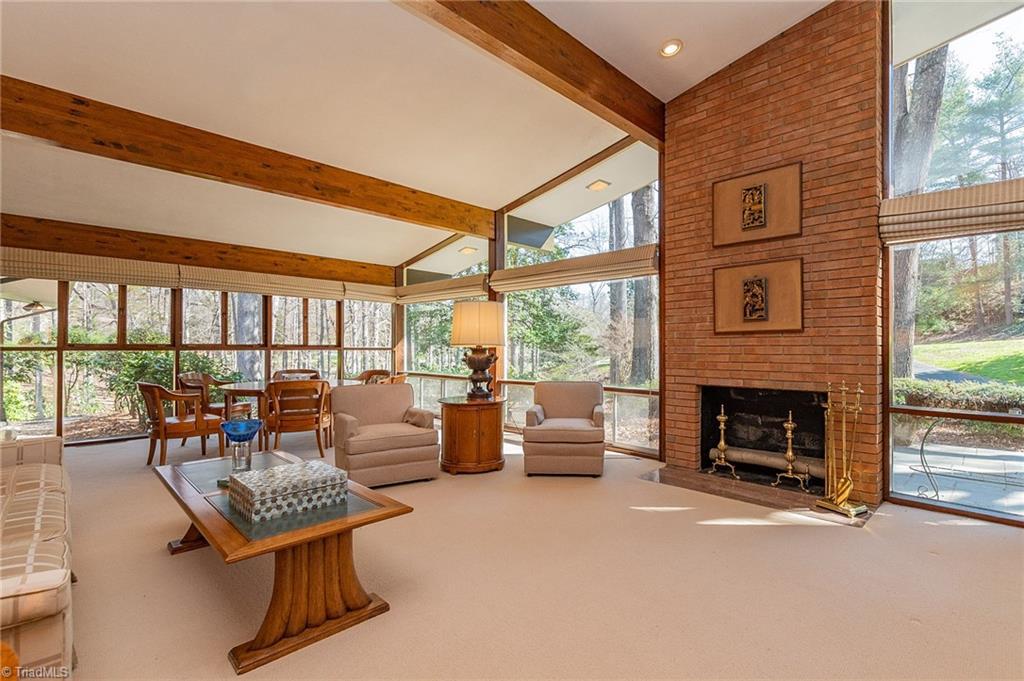
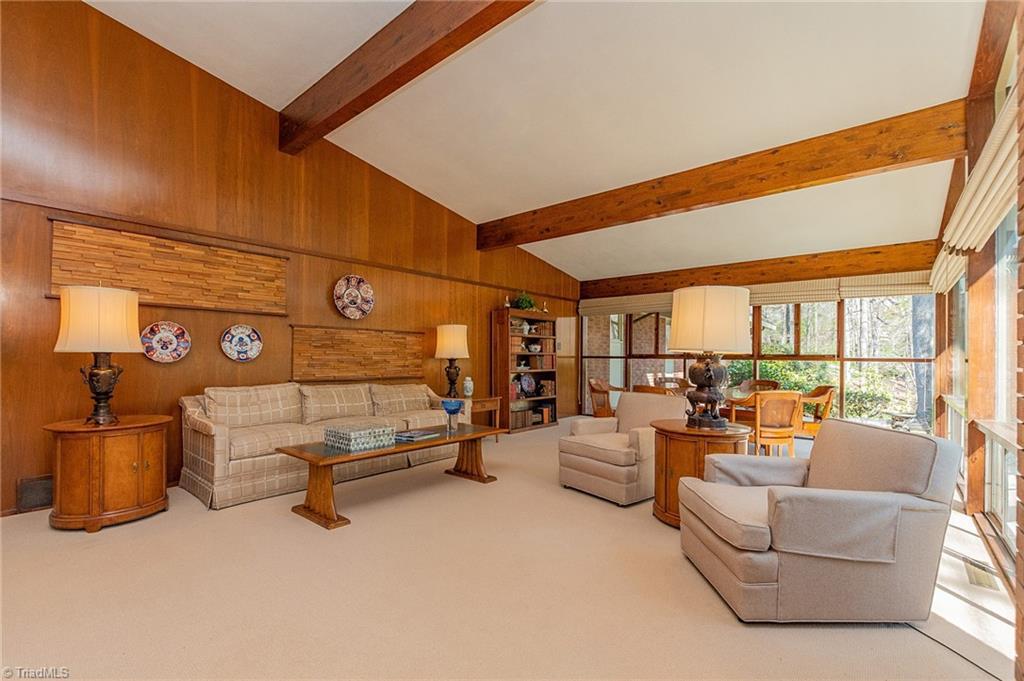
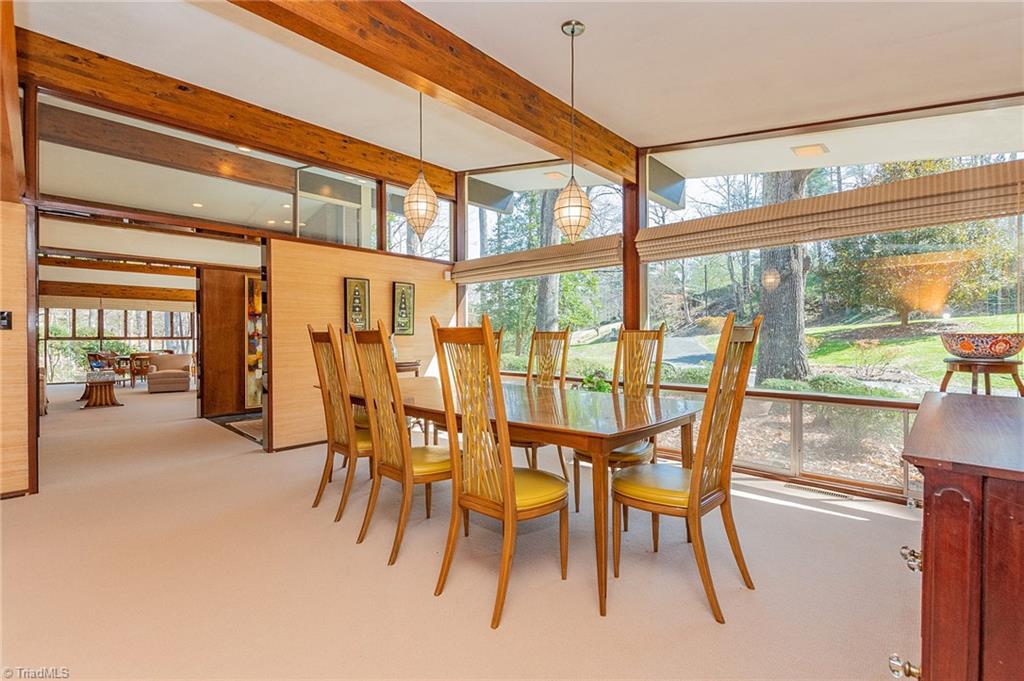
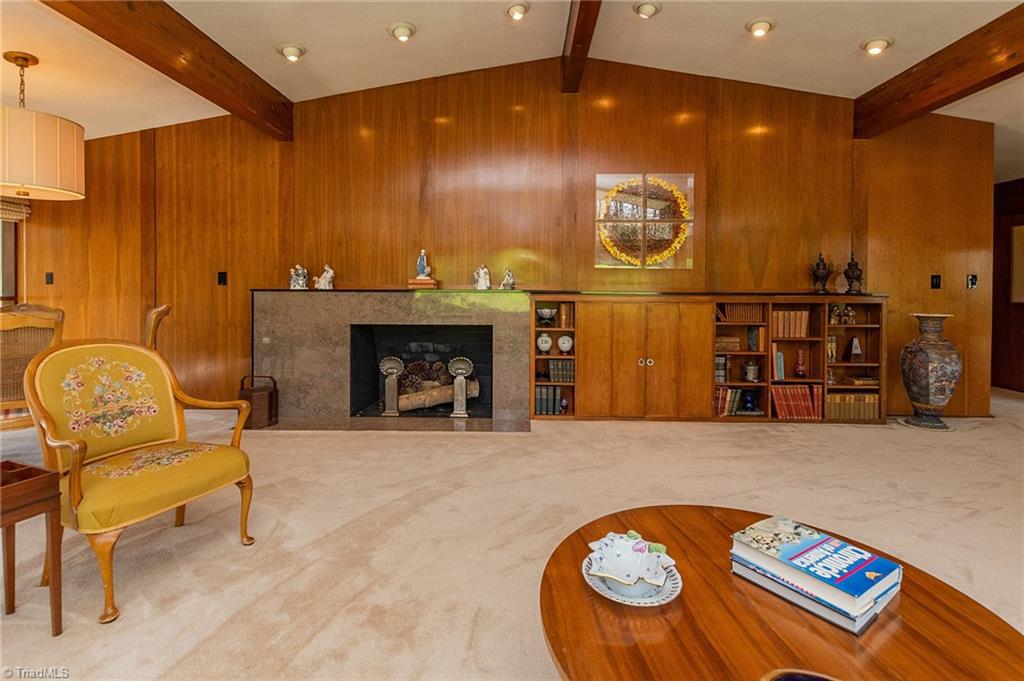
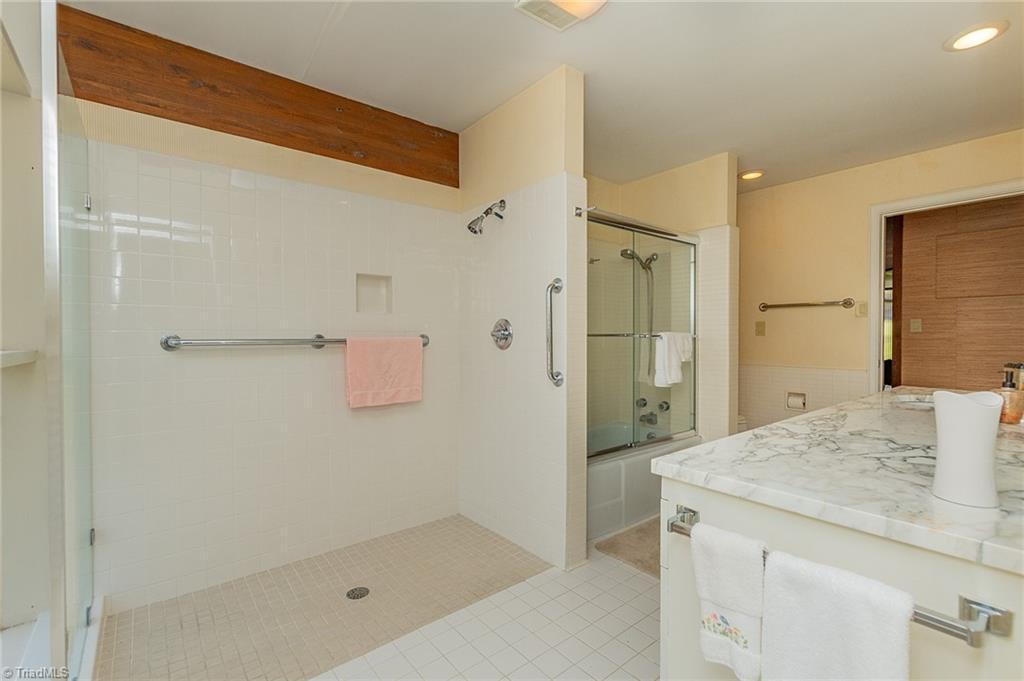
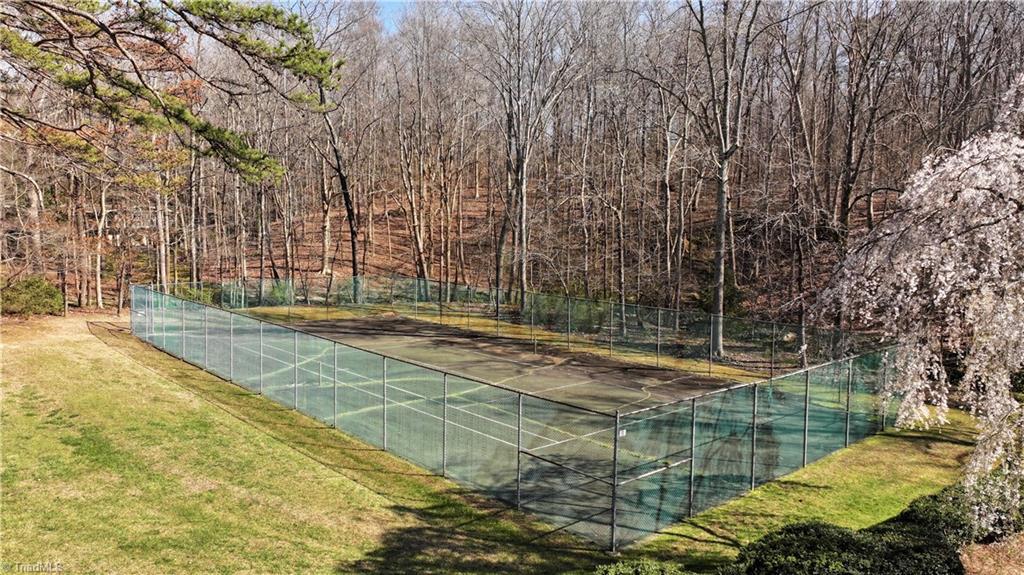
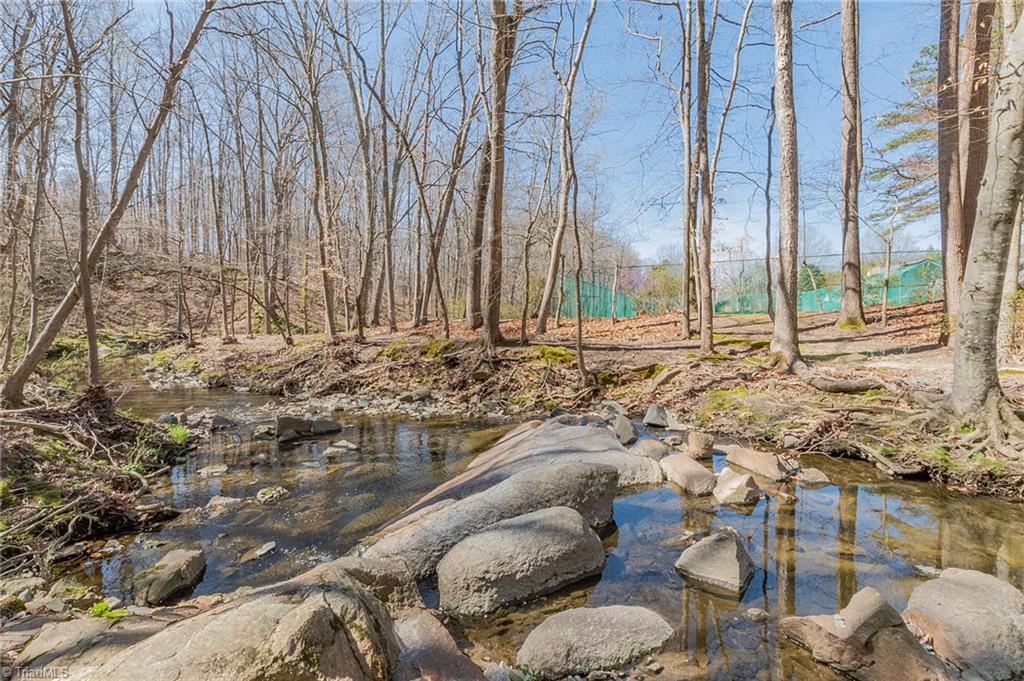
The Edward and Suzanne Silver House
- Sold for $999,999 on May 10, 2024 (listed at $999,999)
- 5 bedrooms, 4.5 bathrooms, 7,128 square feet, 1.38 acres
- Price/square foot: $140
- Built in 1961
- Listed March 26, 2024
- Neighborhood: Emerywood Forest
- Last sale: $2,200, July 1961
- Note: Designed by Voorhees and Eccles
- The property was bought and the house built by Edward S. Silver (1929-2010) and Suzanne Weiss Silver, now living out of state, in 1961. The deed is still in Edward’s name. Edward took over his family’s business, Silver Knit Industries, in 1951. He expanded the business significantly and sold it in 1983. He then started a successful second career in commercial real estate. Edward served as president of B’nai Israel Synagogue, as had his father.
1801georgia




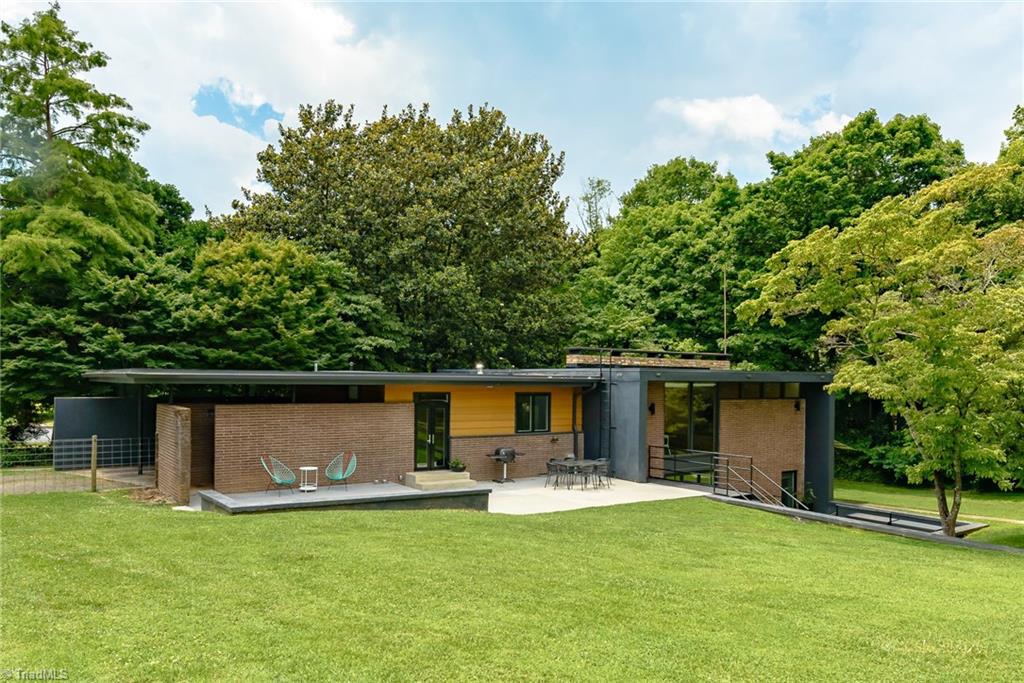


1801 Georgia Avenue, Winston-Salem
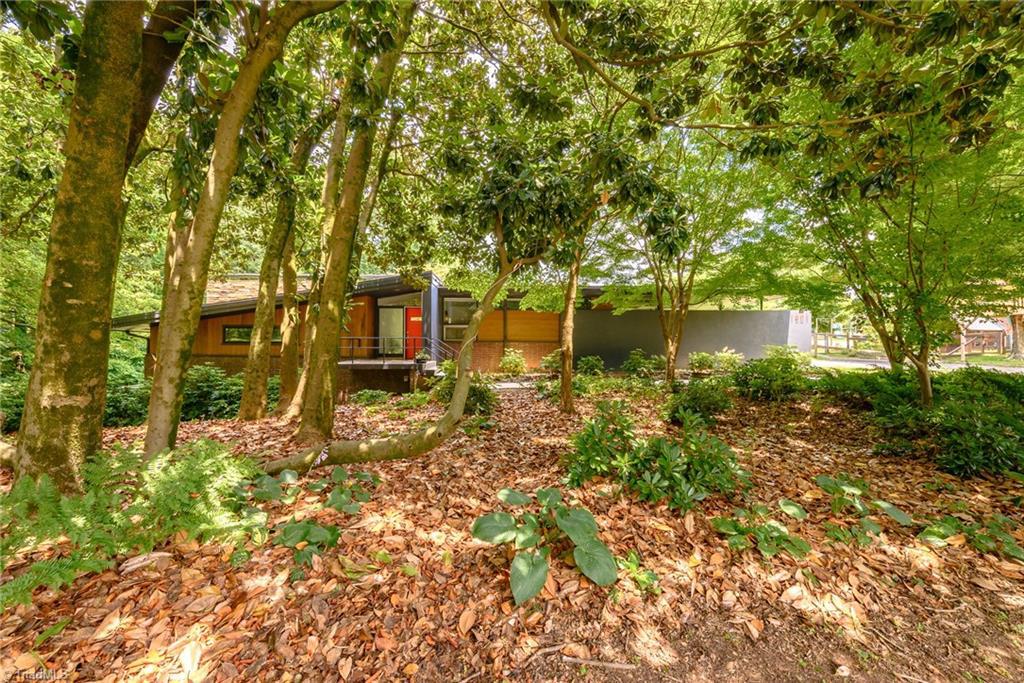
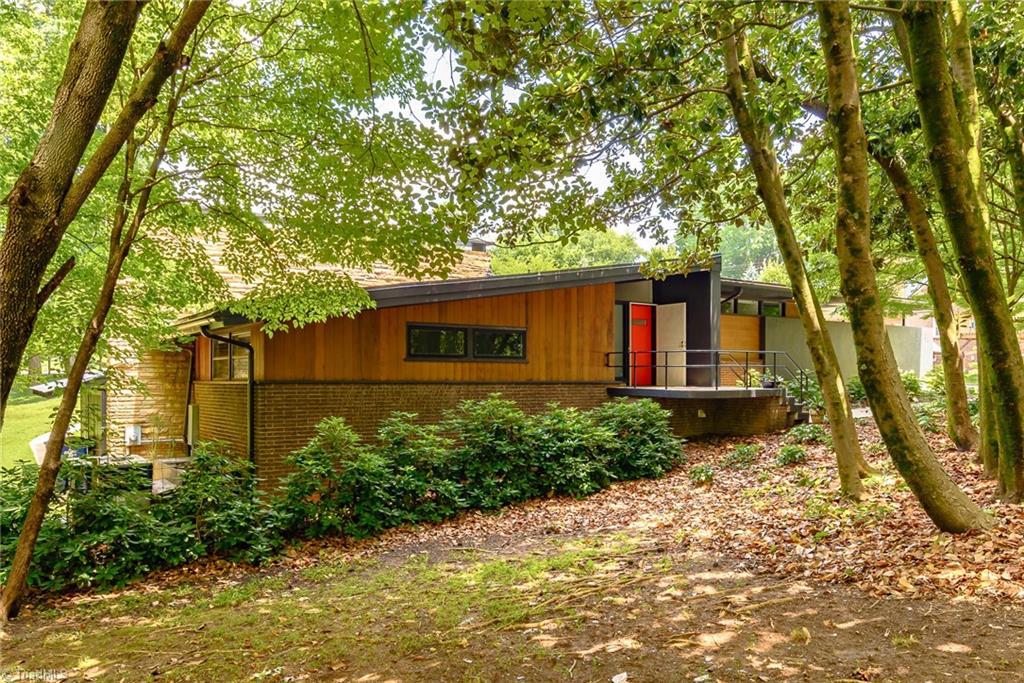
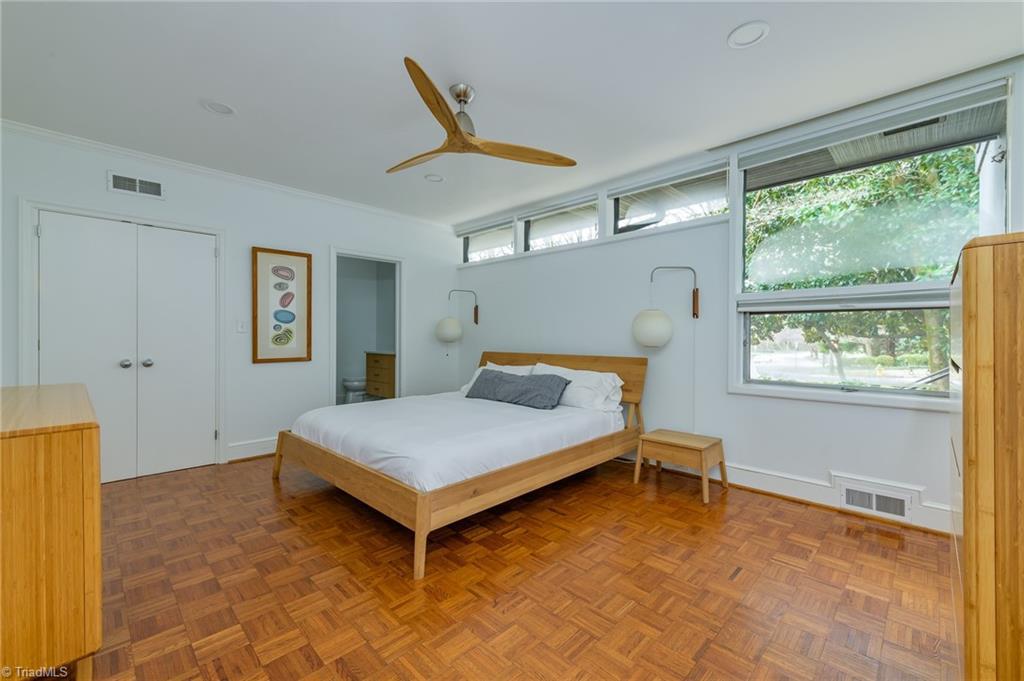
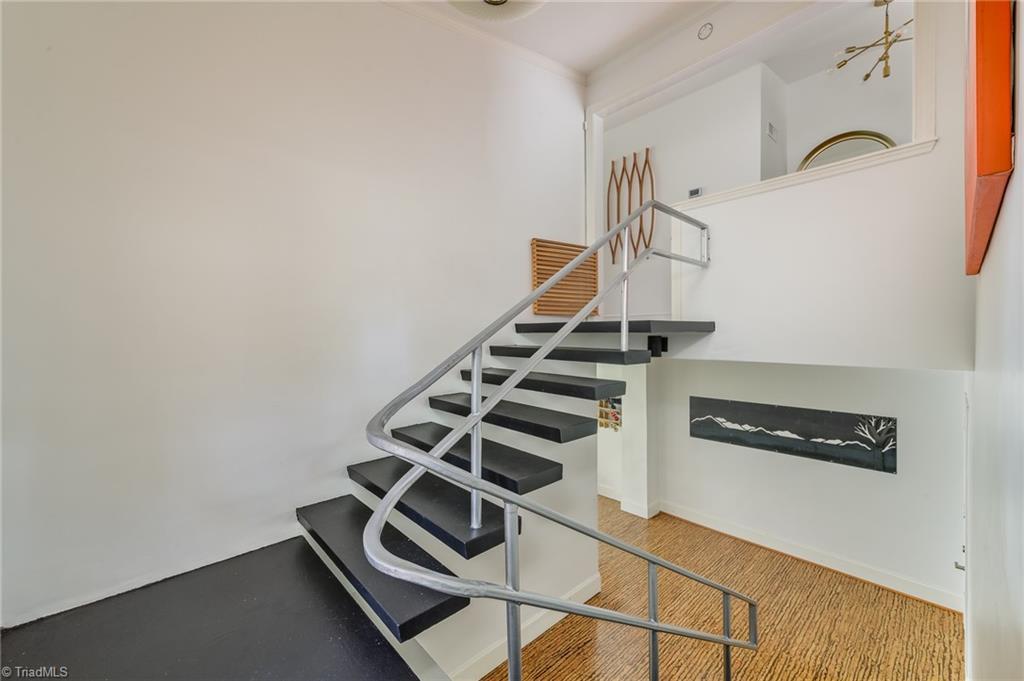
The Floyd and Vivian Burge House
- Sold for $853,000 on May 10, 2024 (listed at $799,000)
- Sold to an LLC associated with an investment firm in St. Petersburg, Florida
- 3 bedrooms, 2 bathrooms, 1,655 square feet, 0.64 acre
- Price/square foot: $515
- Built in 1953
- Listed April 18, 2024
- Last sale: $236,000, March 2014
- Neighborhood: West Highlands
- Note: The home’s original owners were Floyd Smith Burge Sr. (1903-1998) and Vivian Mildred Saylor Burge (1903-1977). Floyd founded Floyd S. Burge Construction Company. He sold the house in 1978.
- N.C. Modernist: “Designed and built by their son, J. Kenneth Burge [1926-2017], based on classes he took with George Matsumoto at the NCSU School of Design.” Ken Burge was a graduate of Reynolds High School and N.C. State University, with a degree in architectural engineering. He served in the Army in the Philippines during World War II. He joined his father’s firm and established Burge Enterprises; Home Lumber Company, an architectural millwork firm; and BB&L, a holding company. He headed all four companies until he retired in 1989.
1505pendergrass
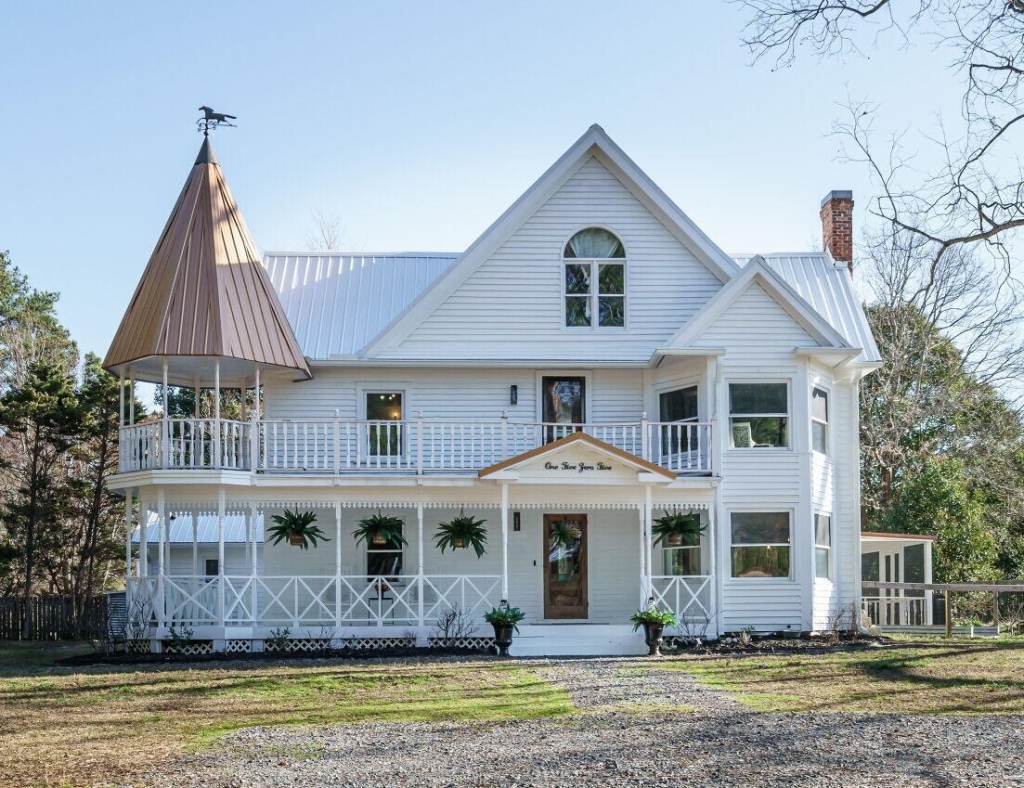
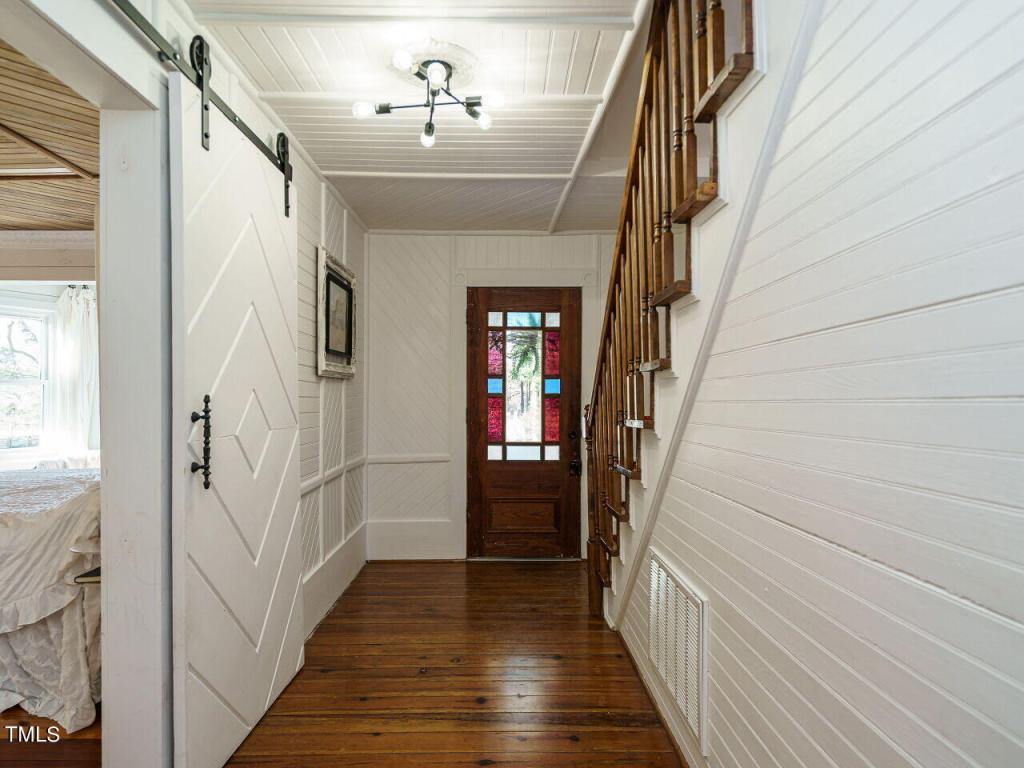
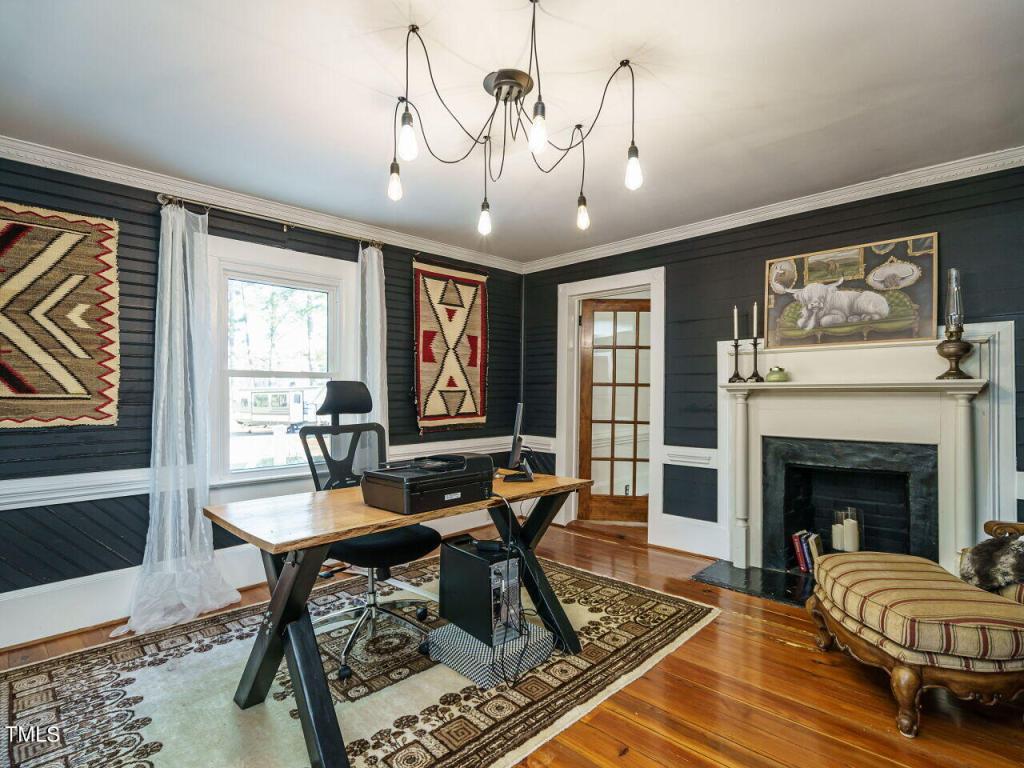
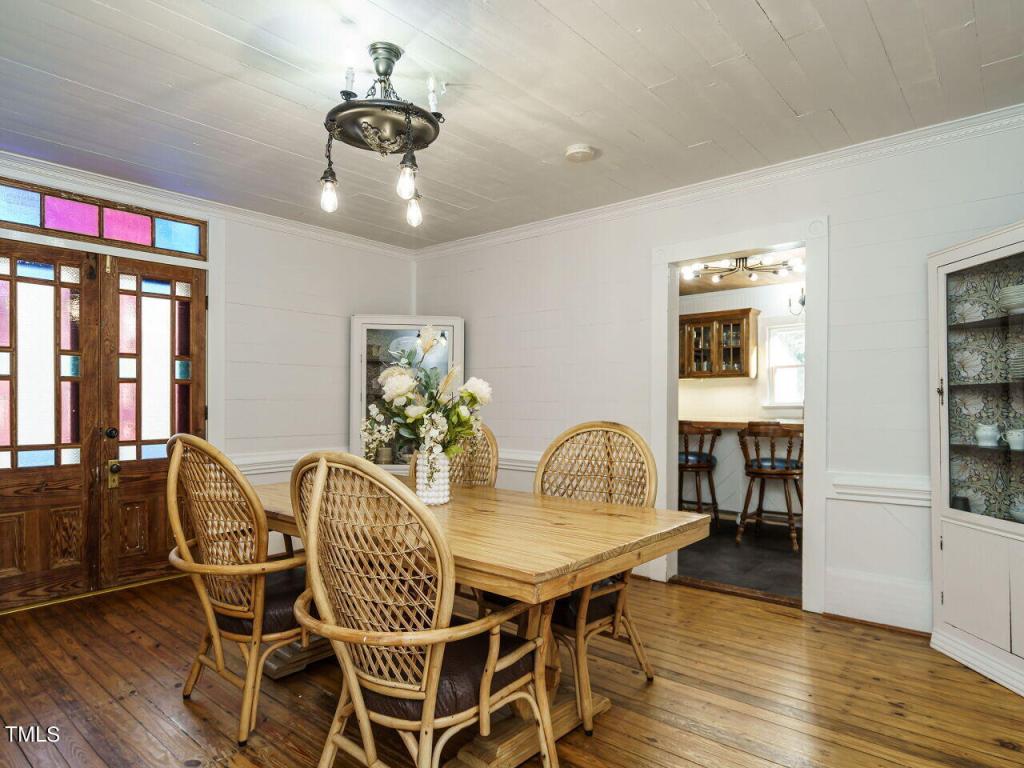
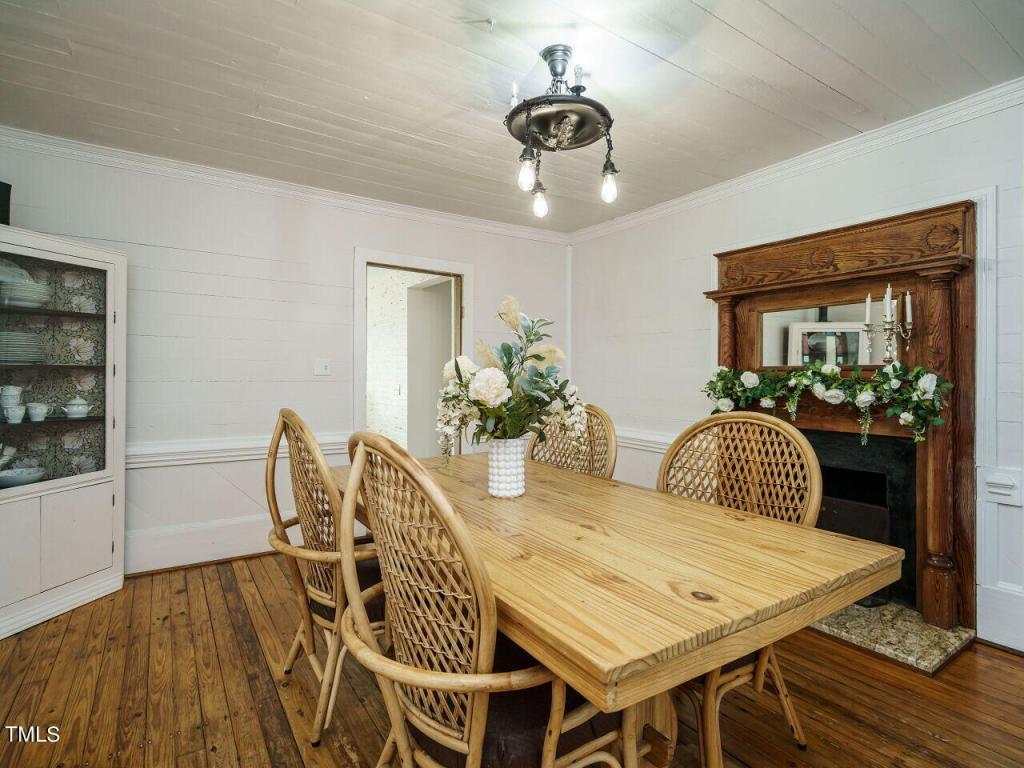
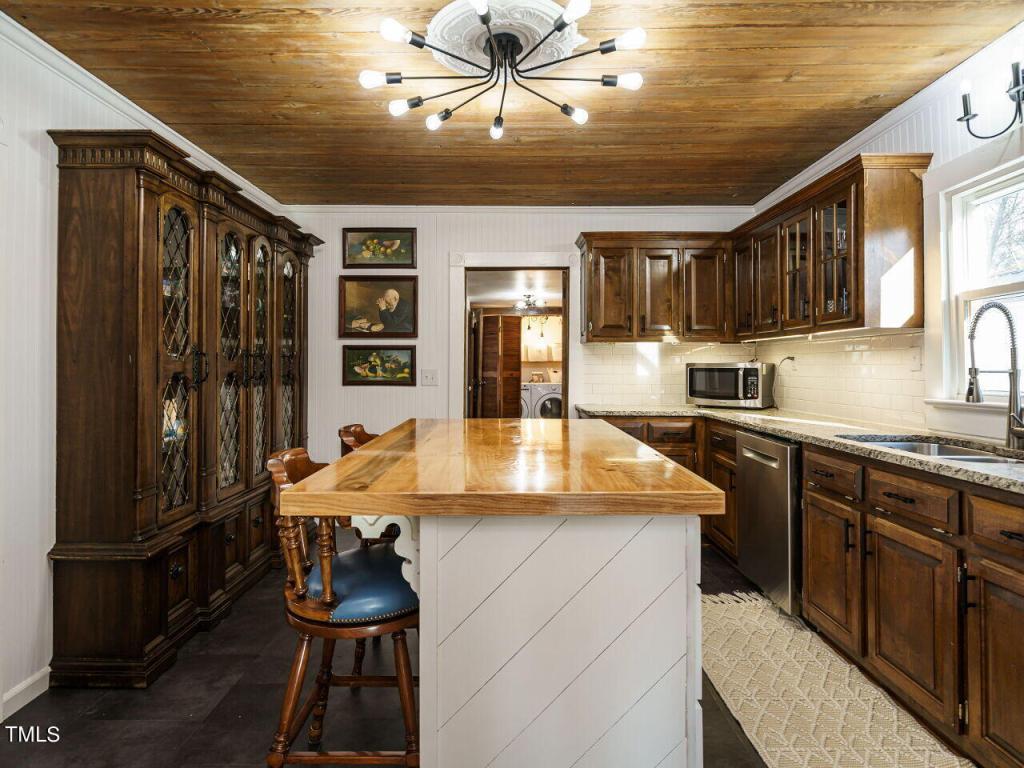
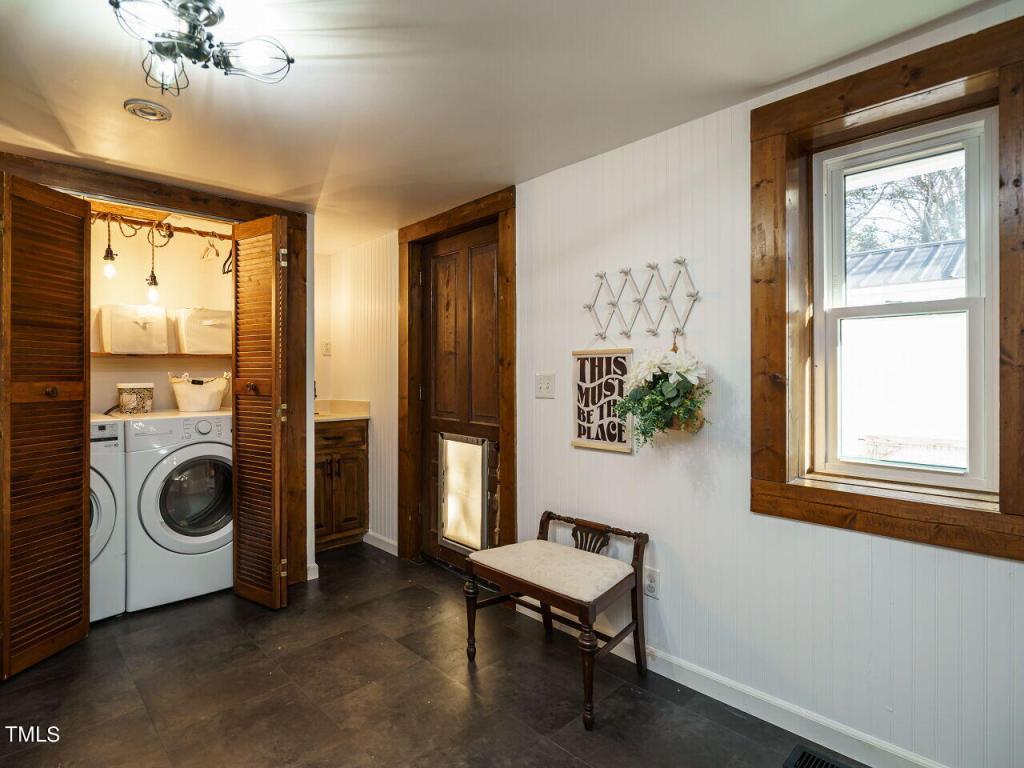
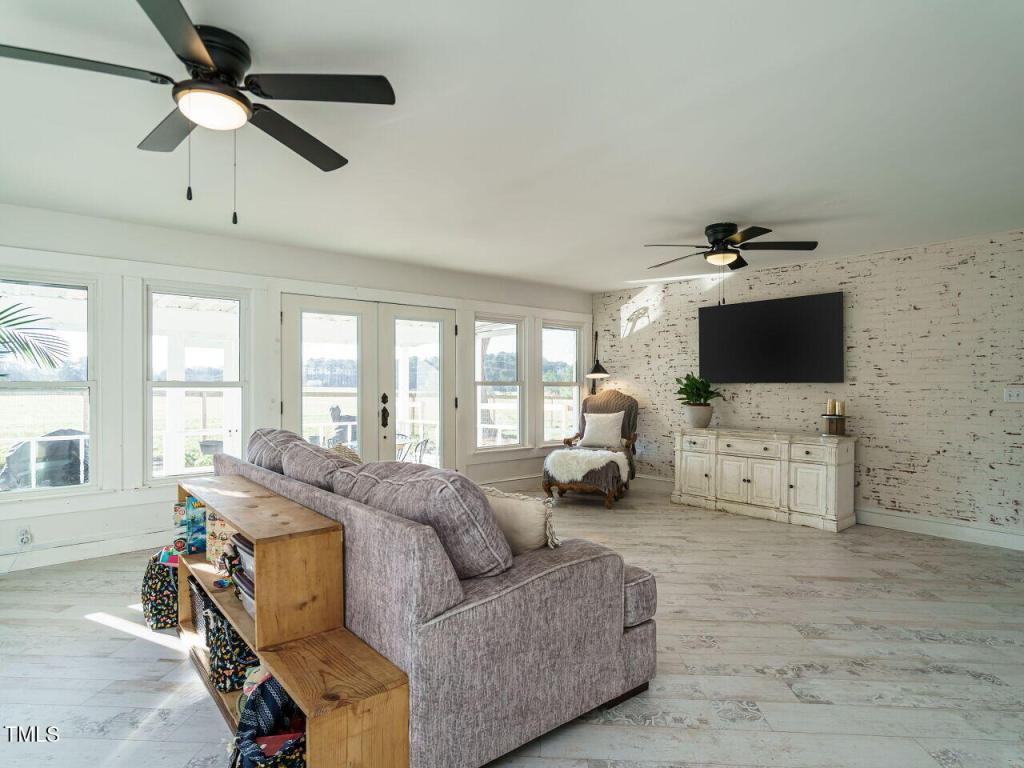
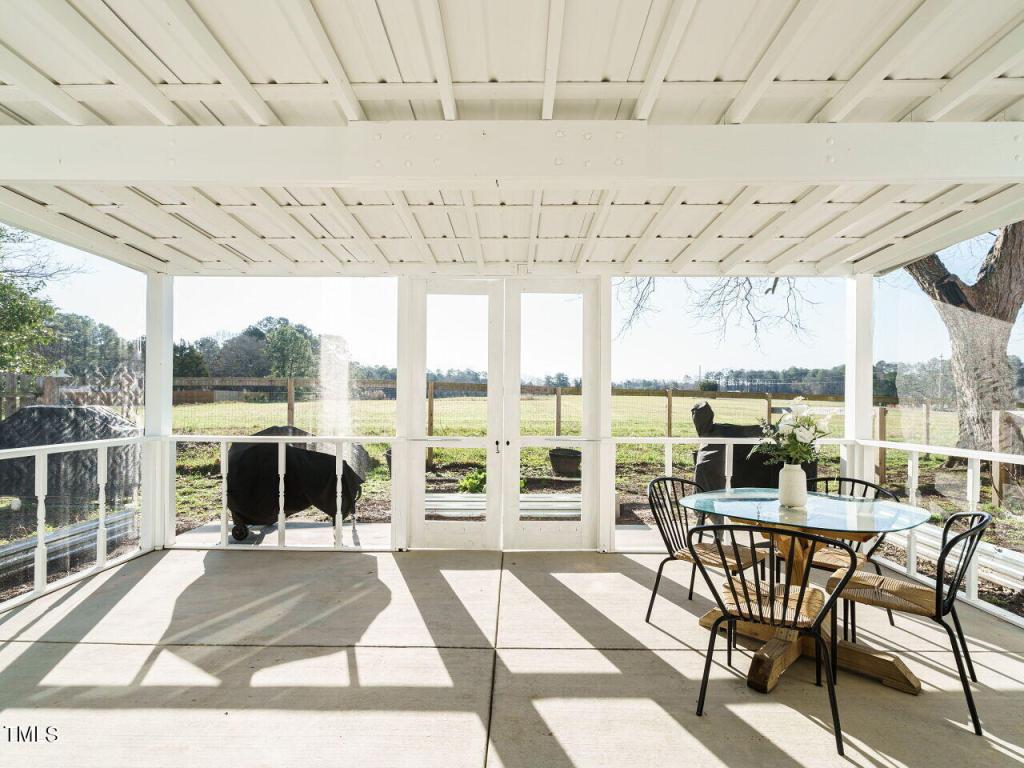
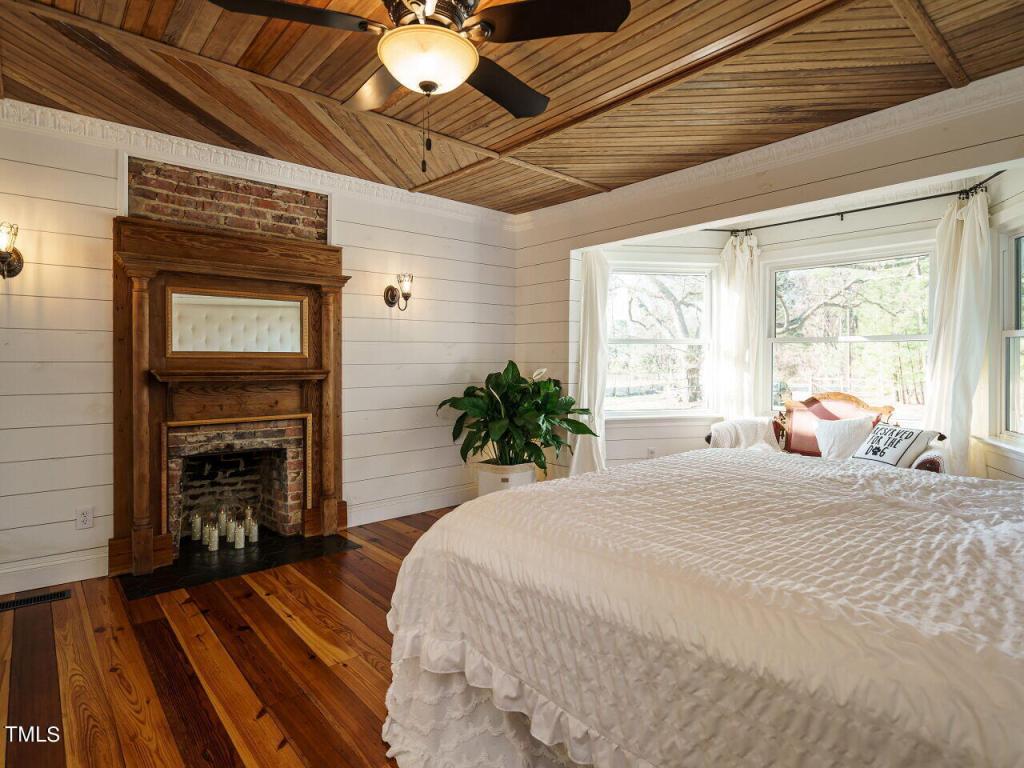
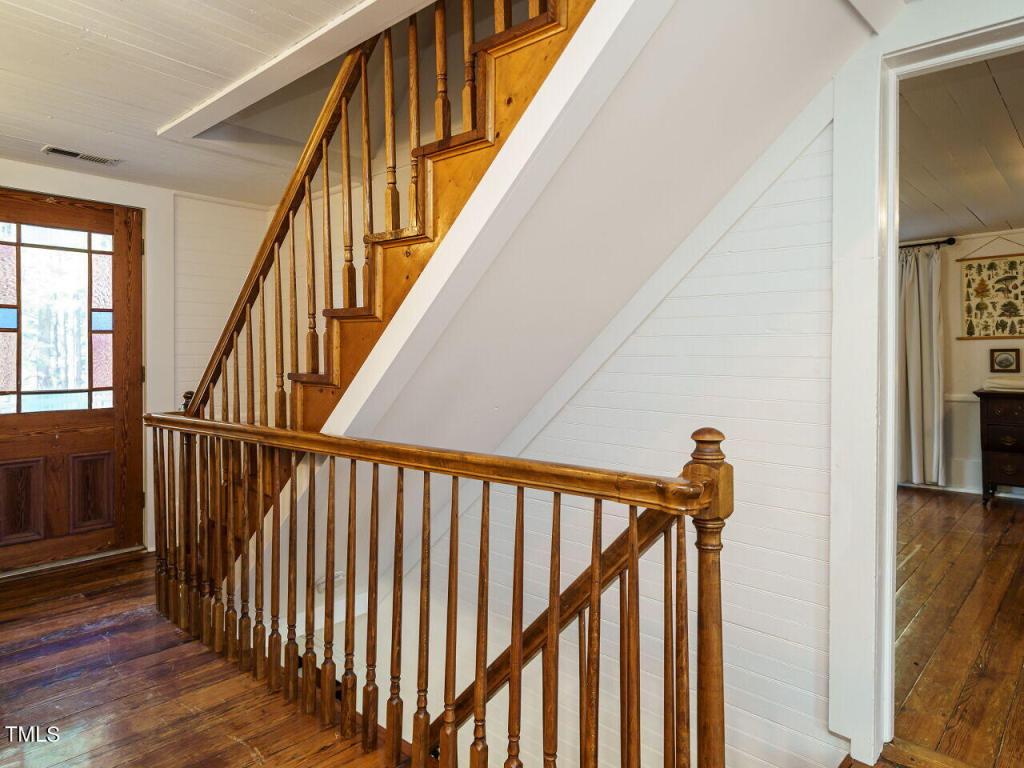
1505 Pendergrass Road, Sanford, Lee County
- Sold for $610,000 on May 10, 2024 (listed at $625,000)
- 3 bedrooms, 2 1/2 bathrooms, 2,908 square feet, 1.66 acres
- Price/square foot: $210
- Built in 1900 (per county)
- Listed February 16, 2024
- Last sale: $252,000, September 2019
- Neighborhood: Owl’s Nest
- Note: If there’s any history of this house online, it’s well hidden. It hasn’t been documented with the State Historic Properties Office or the National Register. Local historic landmarks don’t appear to be listed online, though there’s no indication that this house has been designated as such. Online deeds can be traced only to the 1980s.
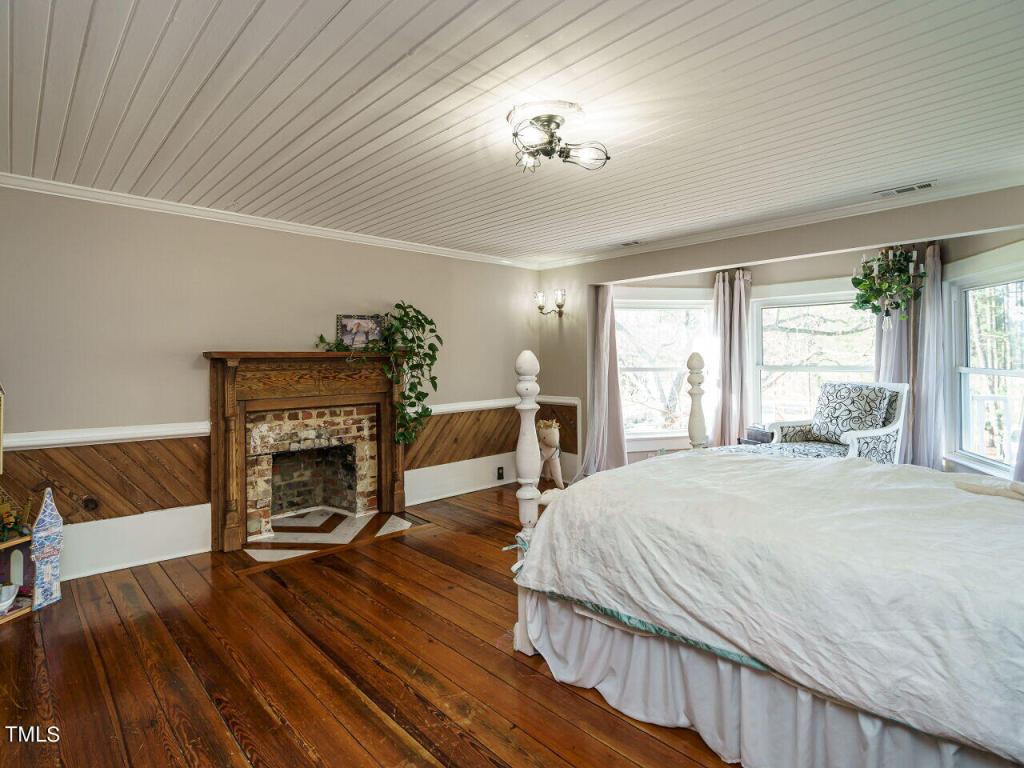
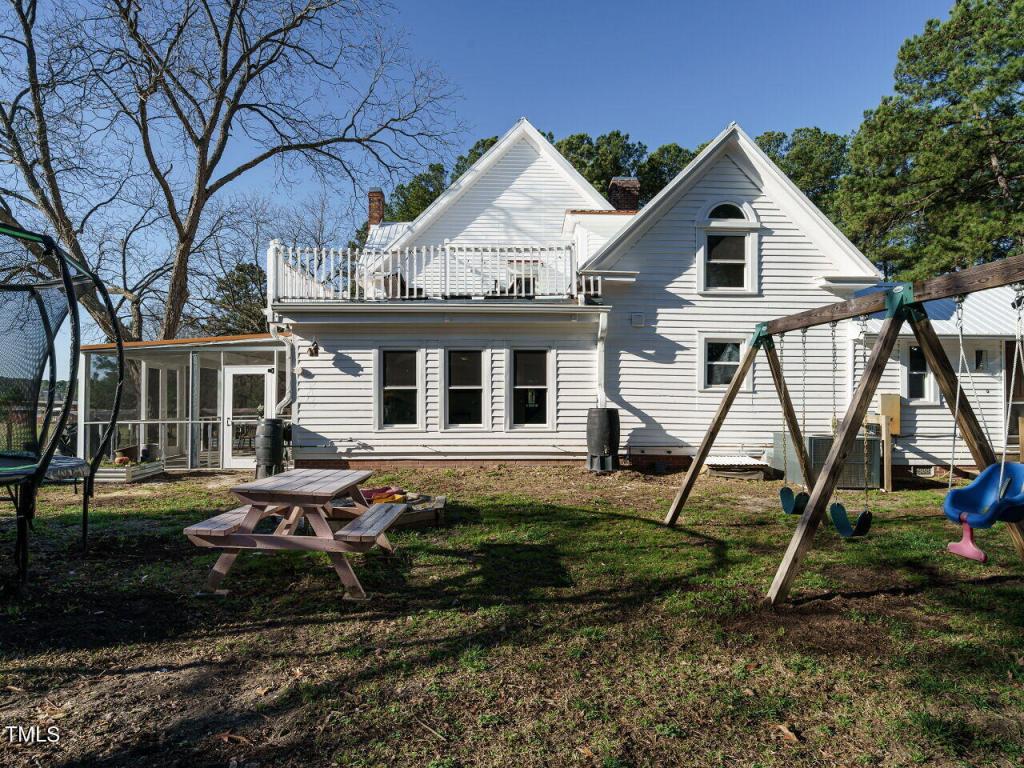
- The third floor is a walk-up attic.
- The property includes a detached garage/workshop.
- Some of the ceiling lights are unusual.
593cedar


- Sold for $95,000 on May 10, 2024 (listed at $129,000)
- 3 bedrooms, no bathrooms, 1,782 square feet, 2.79 acres
- Price/square foot: $53
- Built in 1899
- Listed April 4, 2024
- Last sale: July 1937, no price recorded on deed (but the price would be irrelevant because the sale was for about 500 cares)
- Neighborhood: In the Uwharrie National Forest, about 2 1/2 miles southwest of Biscoe and 7 miles southeast of Troy
- Note: The listing shows no bathrooms in the house; county records show 0.9 bathrooms, whatever that means.
- No heating or air conditioning systems
- Listing: “One in a million find. … Needs TLC to get it back to its original look. Out in the country with 2.79 acres, just been surveyed out of a 174 acre tract. … All kinds of outside buildings. Has a 50 foot right of way to get to it from Cedar Creek Rd.”
1228glade


1228 Glade Street, Winston-Salem
The Lawrence-Shore-Byerly House
- Sold for $840,000 on May 9, 2024 (originally $897,900)
- 4 bedrooms 3 1/2 bathrooms, 3,206 square feet, 0.20 acre
- Price/square foot: $262
- Built in 1920
- Listed February 5, 2024
- Last sales: $542,000, July 2020; $520,000, September 2016; $46,250, June 1983
- Neighborhood: West End Historic District (local and NR)
- Note: From 1983-2016, the home of Rence Callahan (Harry Lawrence Callahan Jr.), senior partner with Walter Robbs Callahan & Pierce Architects (as of February 2023 part of Michael Graves Architecture of Princeton, New Jersey).
- District NR nomination: “Like the other houses along this stretch of Glade St., this one is situated on a hill with a terraced front lawn, long flights of steps, and a stone retaining wall.
- “The well-preserved English cottage-influenced house is a two-story dwelling with a pebbledash first story, a wood shingled second story, and a gabled roof with widely overhanging braced eaves. The house is also characterized by groups of twelve-over-one and sixteen-over-one sash windows, a Craftsman front door, and front and side porches with heavy square posts and simple brackets.
- “The house is shown on the 1917 Sanborn Map, and the first listed occupants were Charles S. and Alice Lawrence. He was a physician. By 1920, however, J. I. Shore was living in the house, and the Shore family continued to occupy it until 1927, when it was purchased by Thomas J. and Habel Byerly. He was vice-president of Farmers National Bank. After Byerly’s death, Hrs. Byerly continued to occupy the house until selling it ca. 1960.
- “On the alley behind the house is a one-car pyramidal-roofed pebbledash garage which matches the house and appears to be contemporary with it.”
204ehendrix
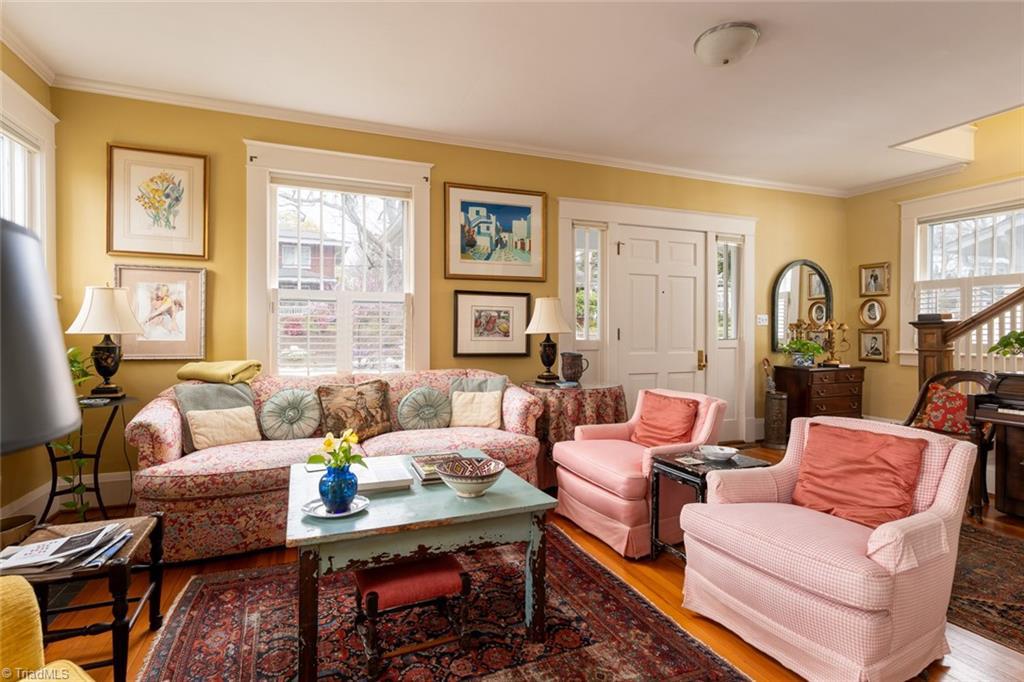
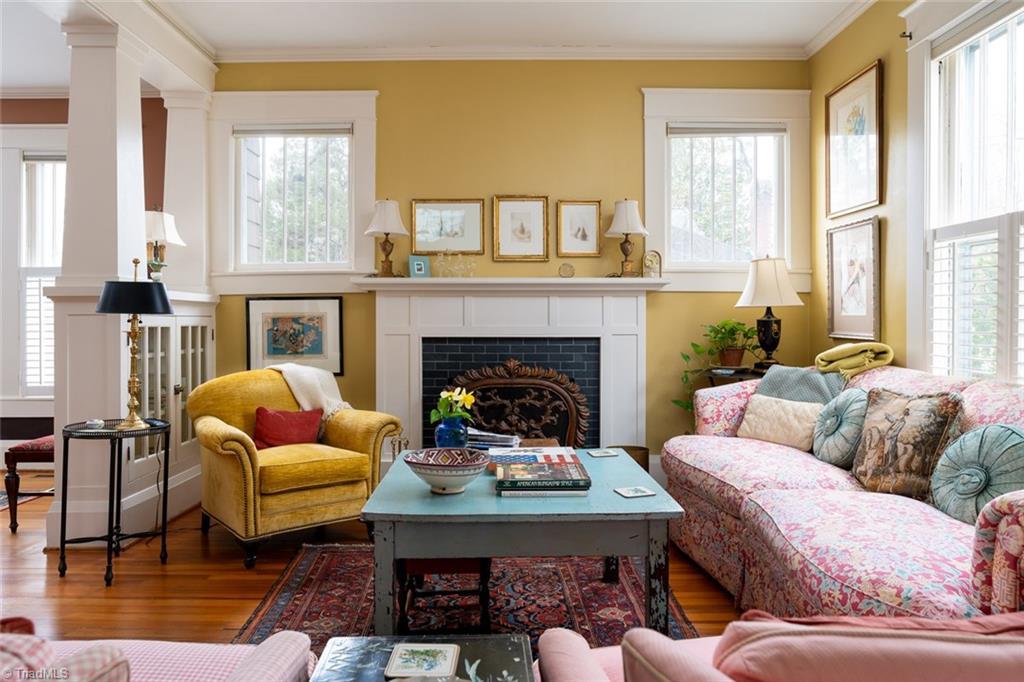
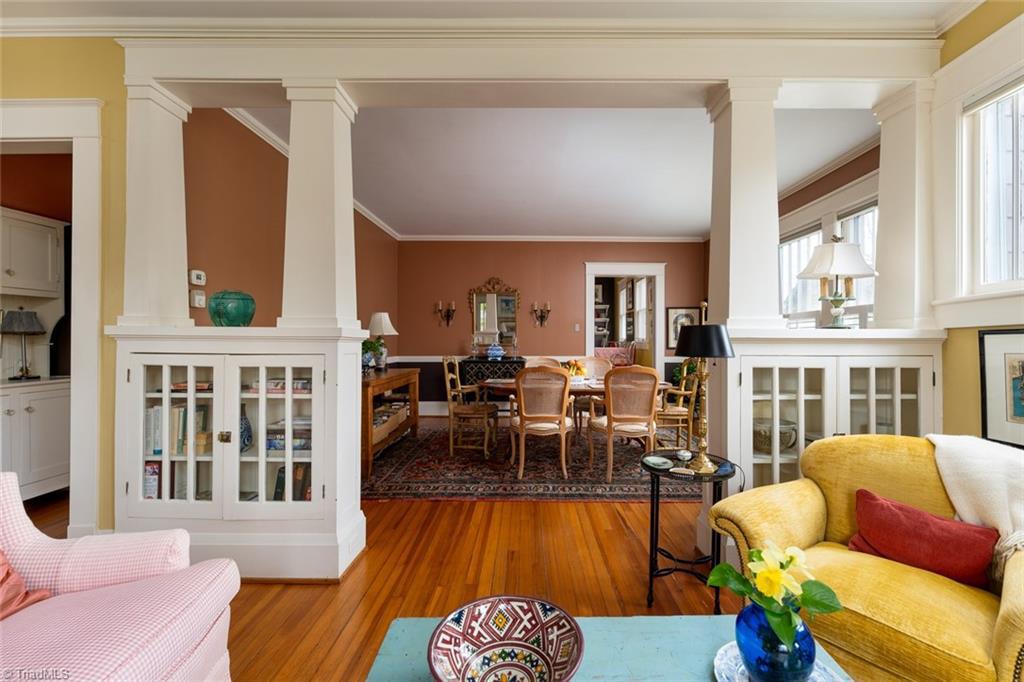
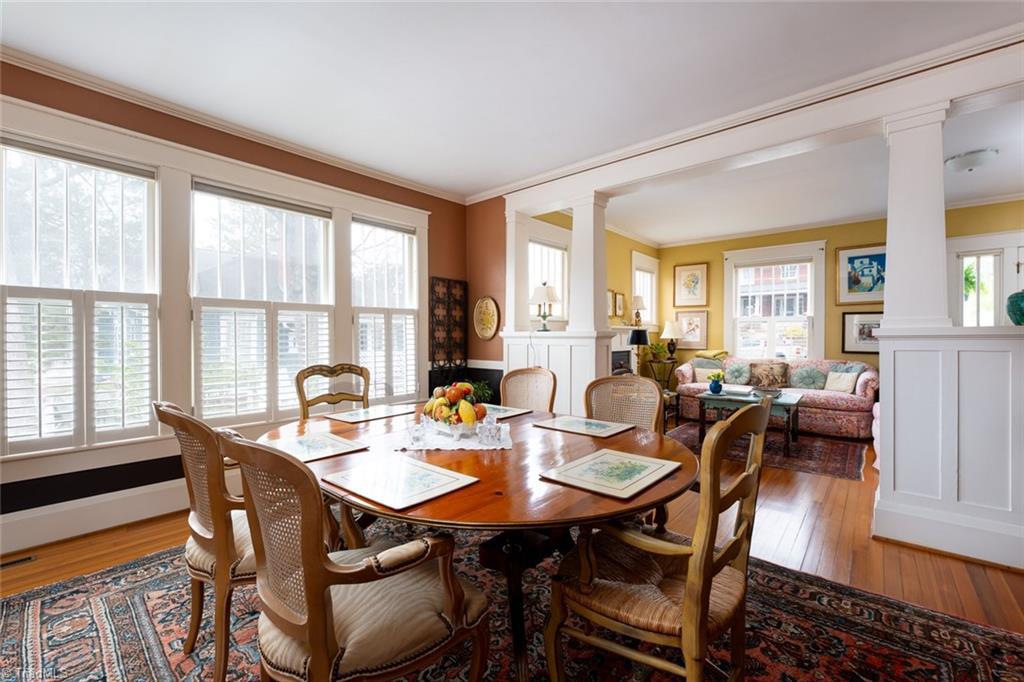
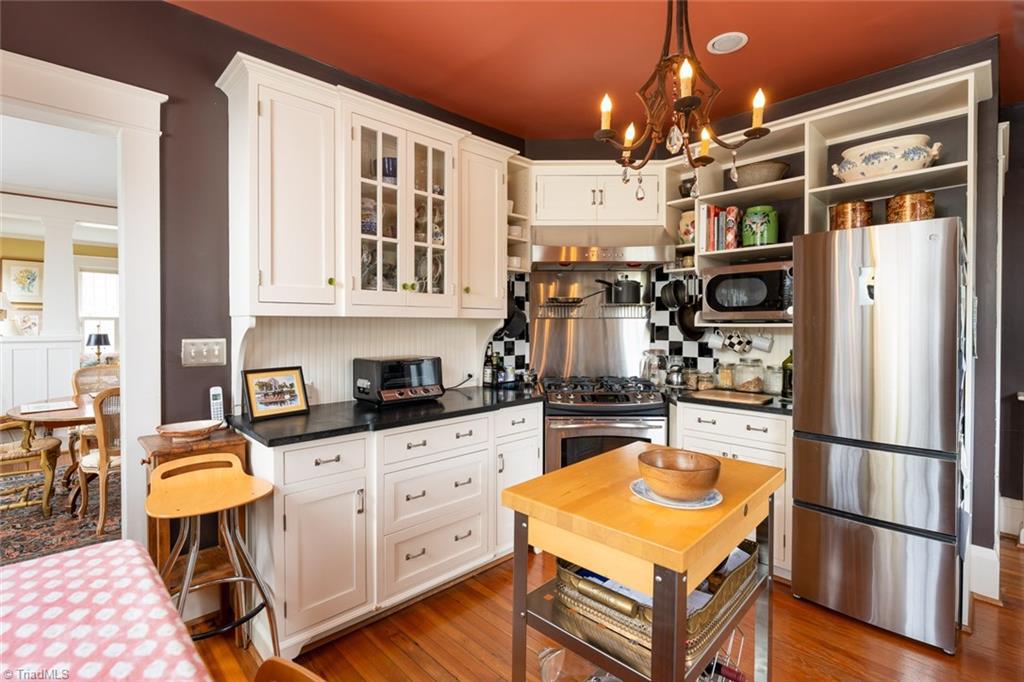
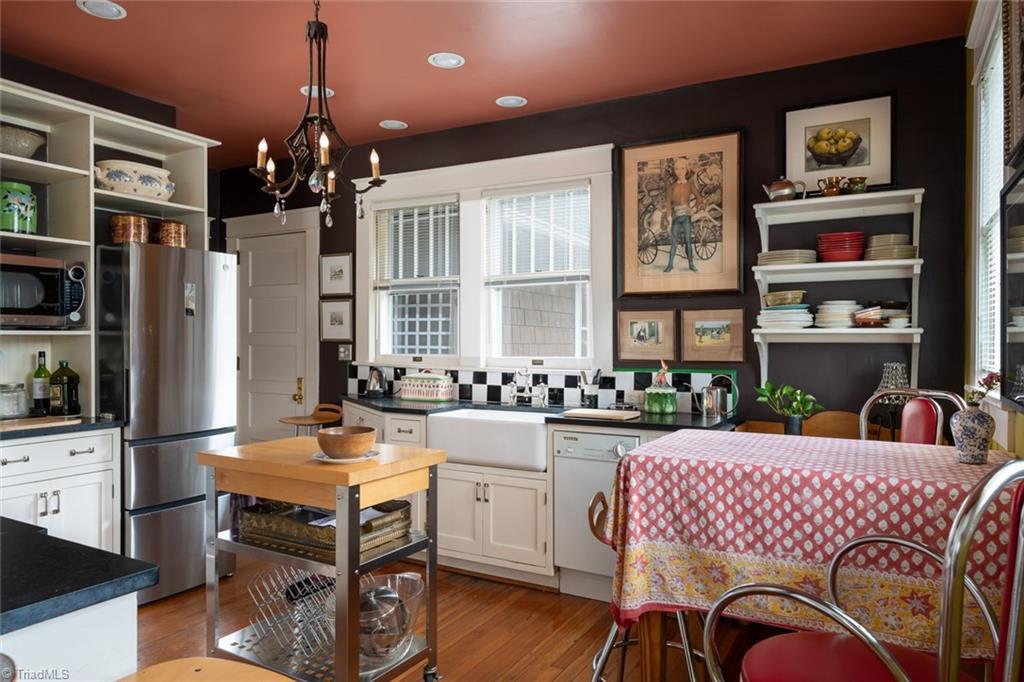
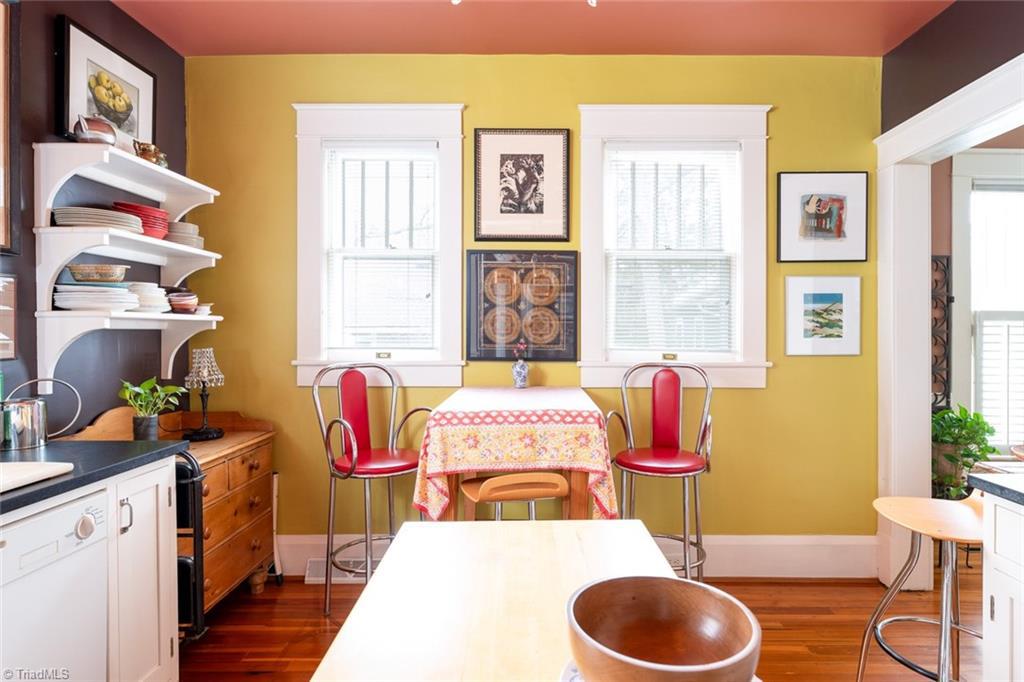
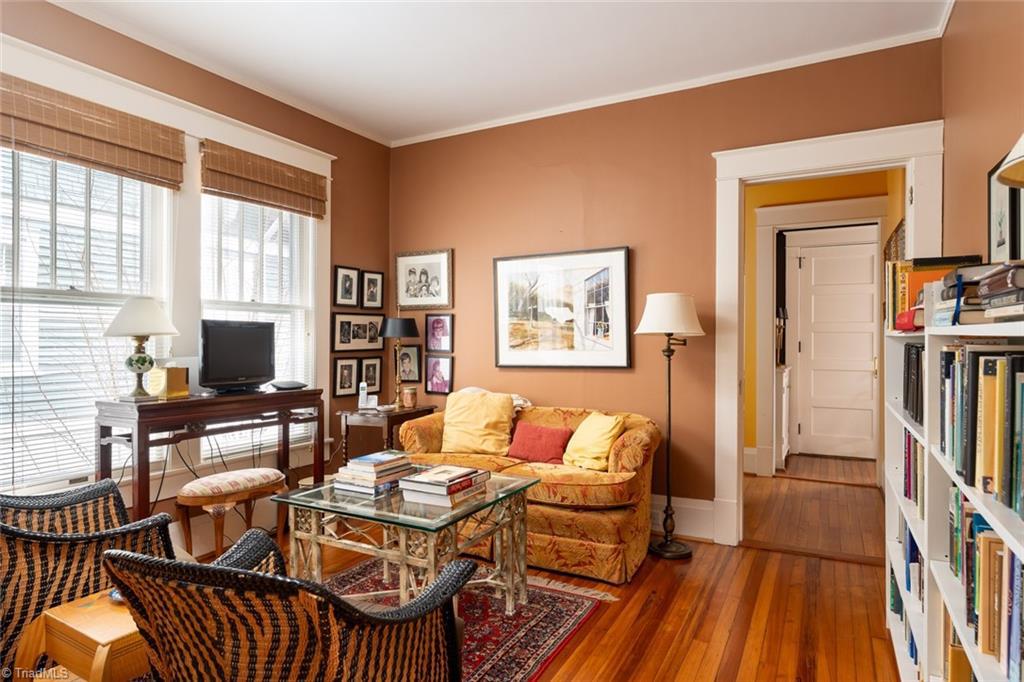
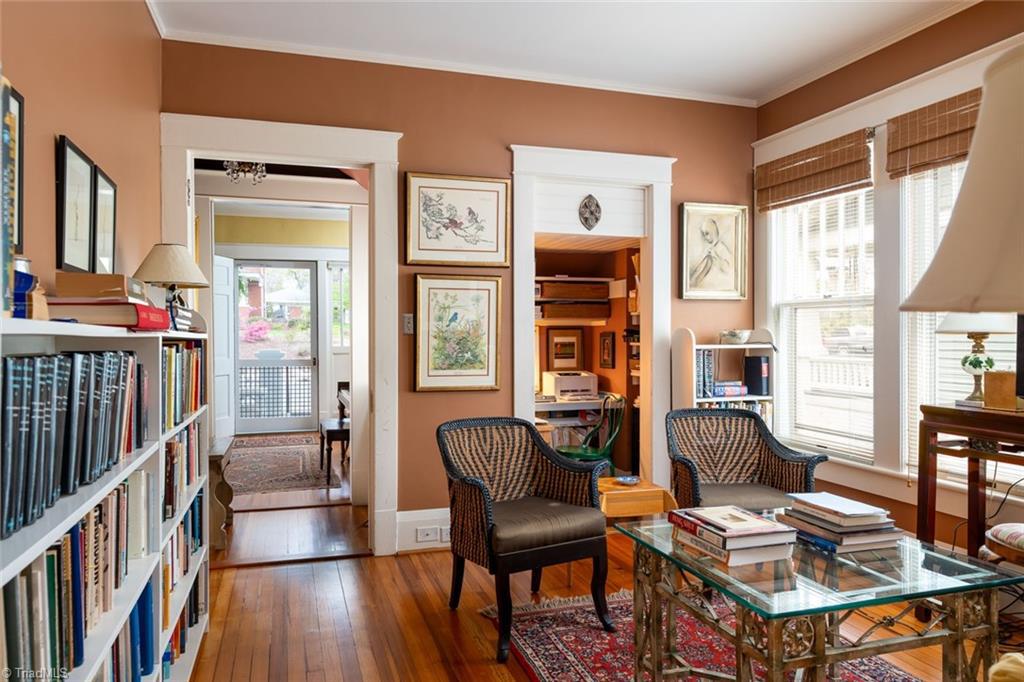
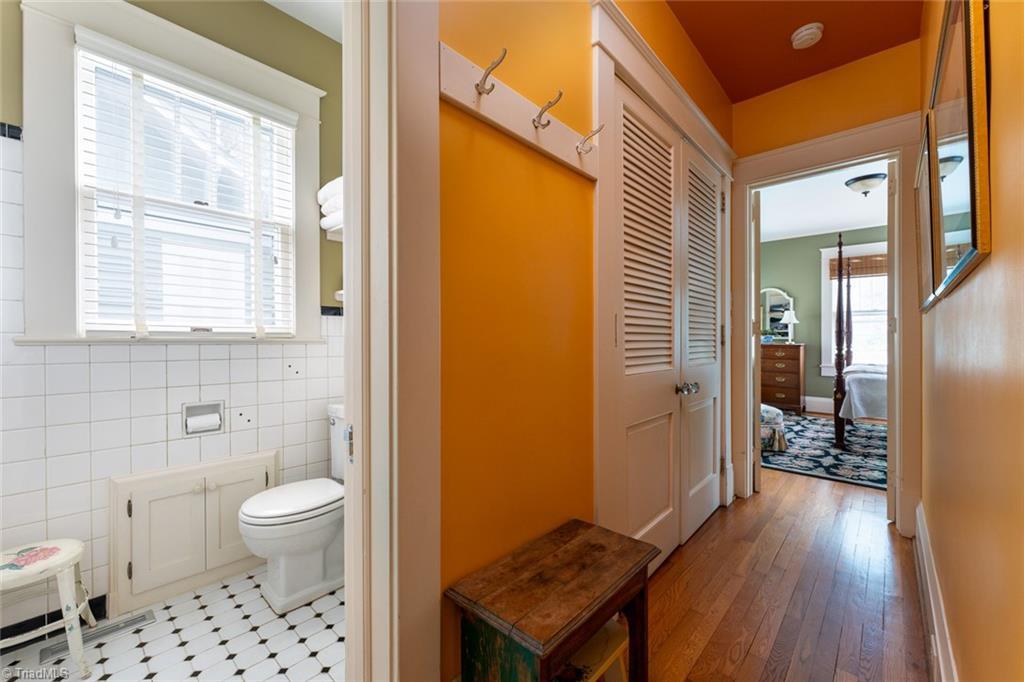
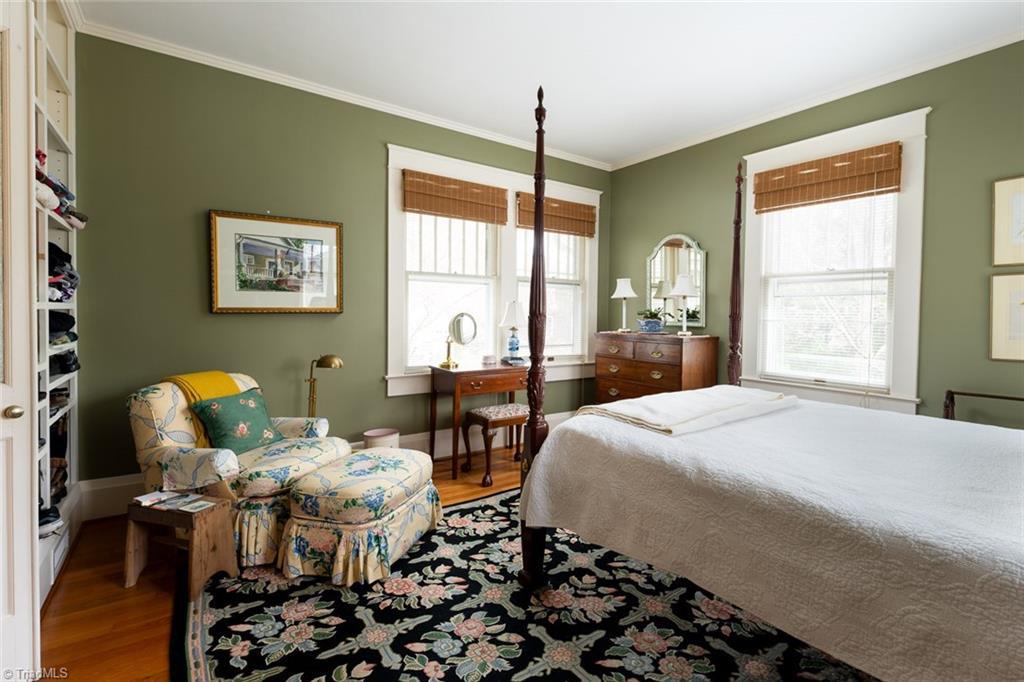
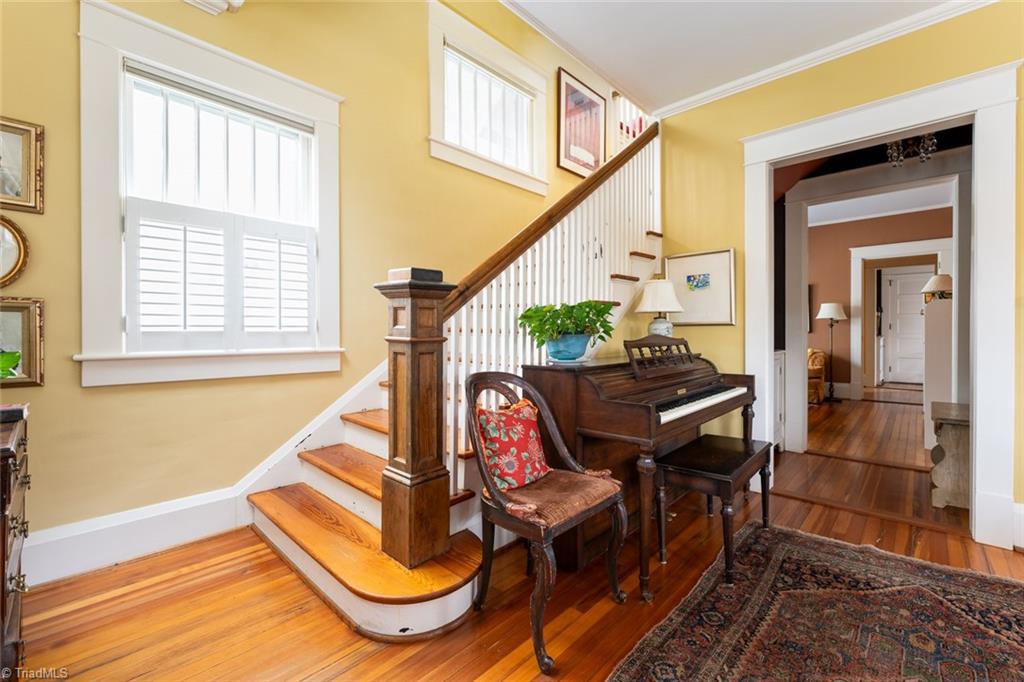
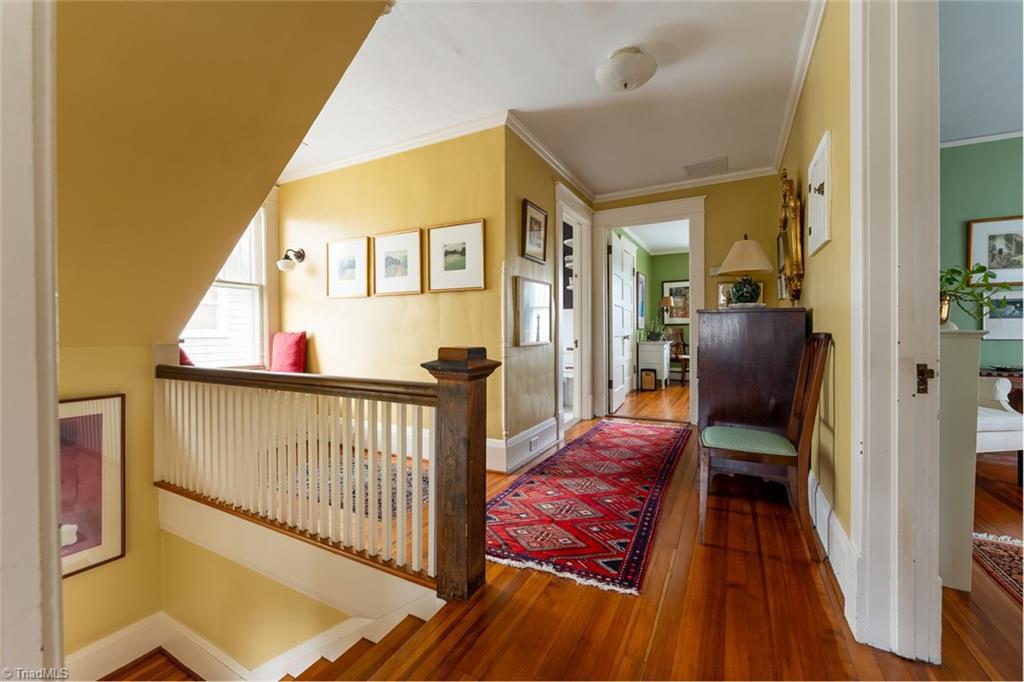
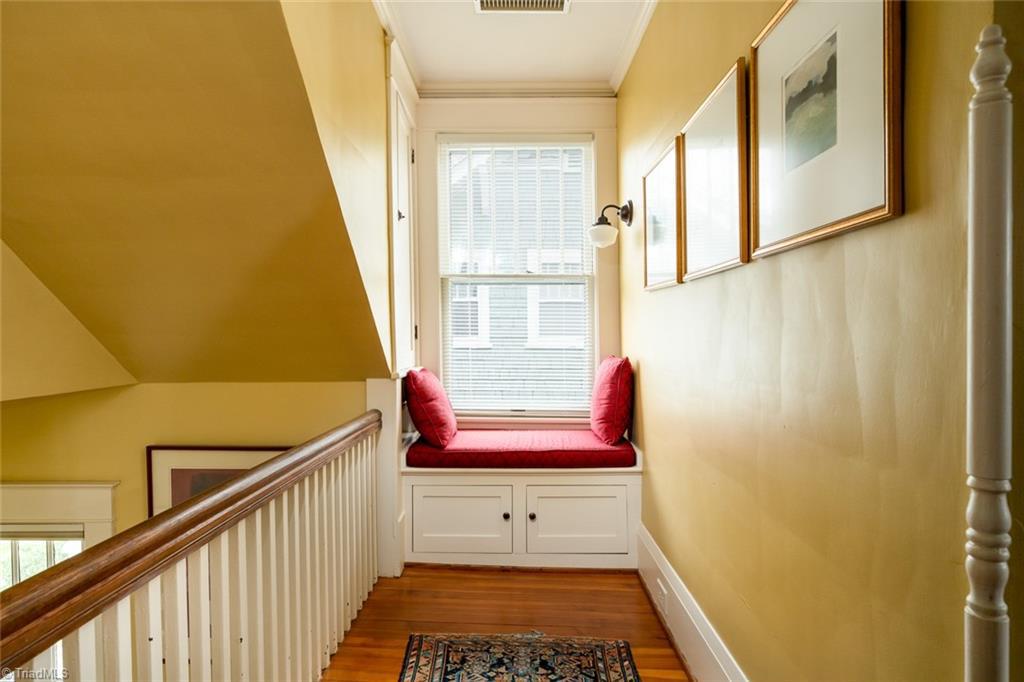
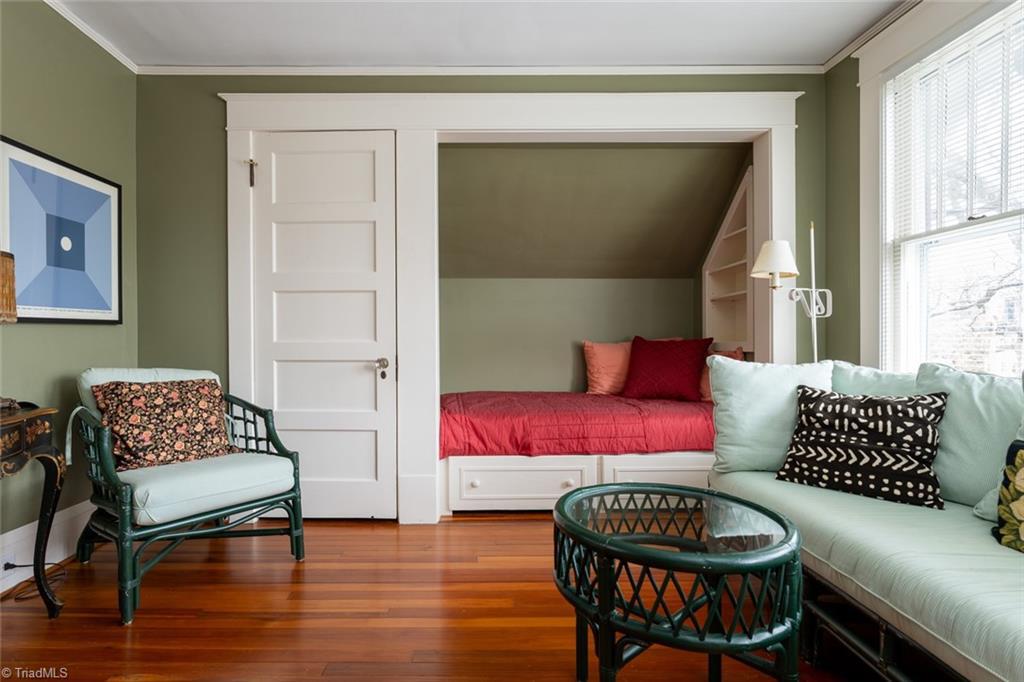
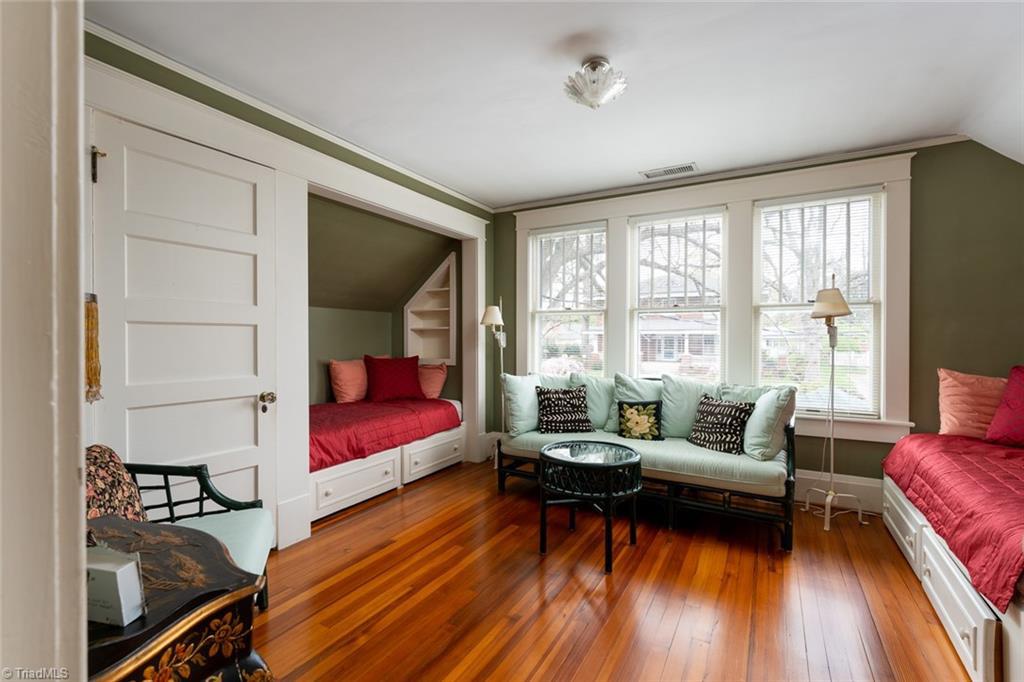
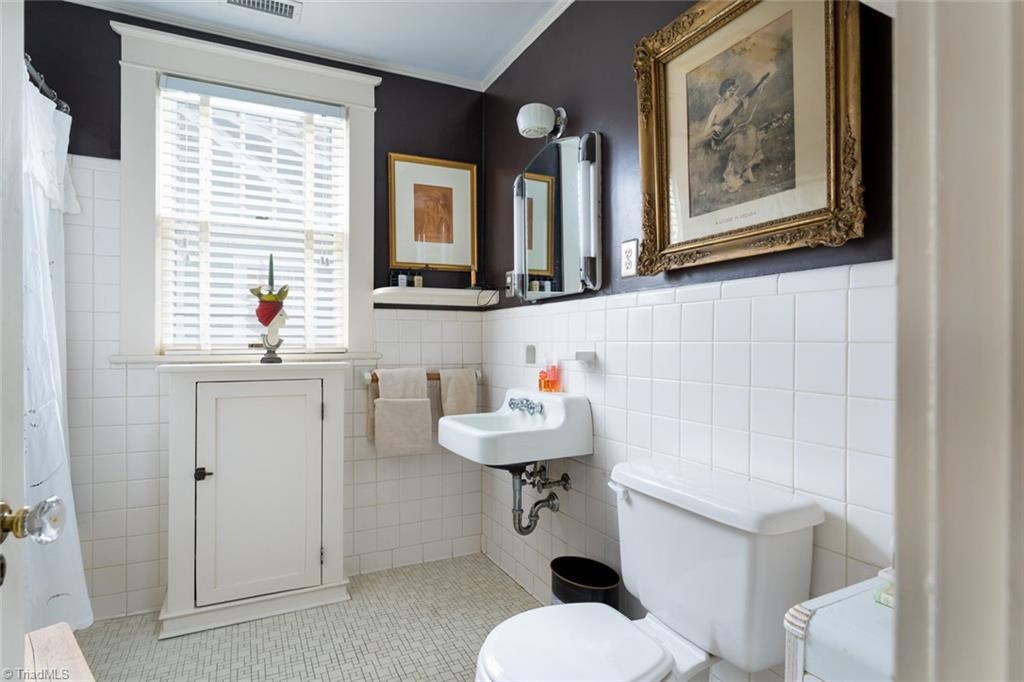
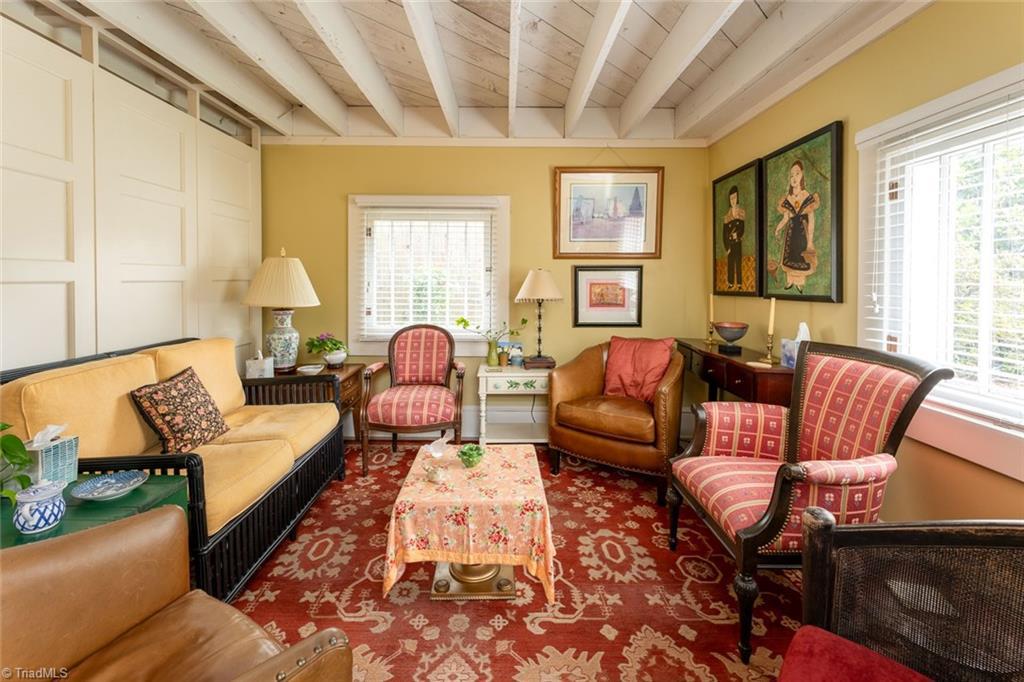
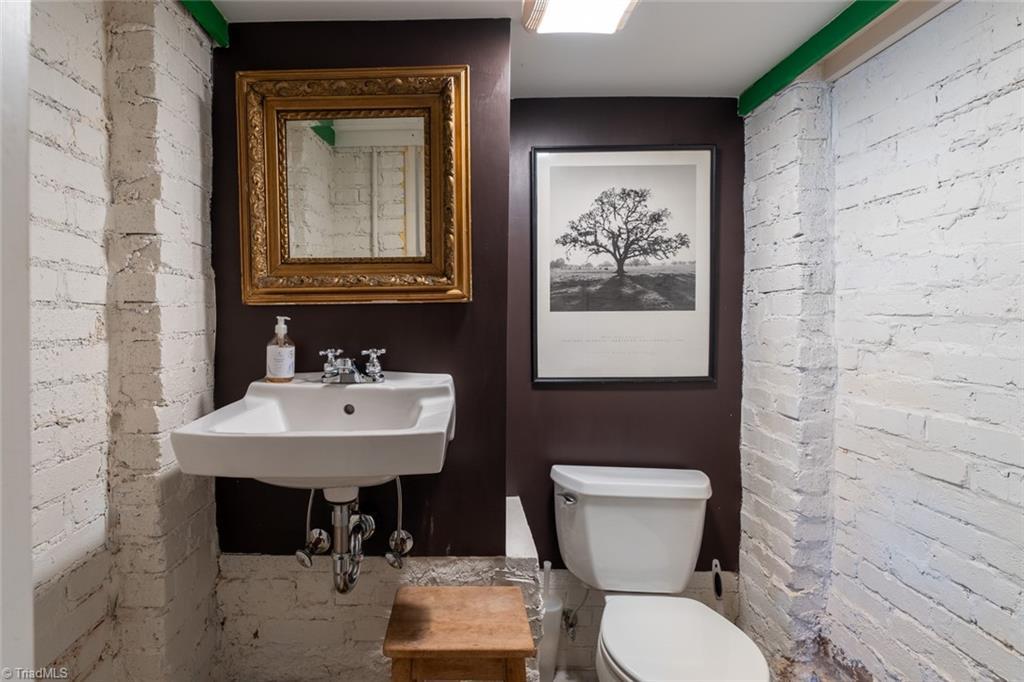
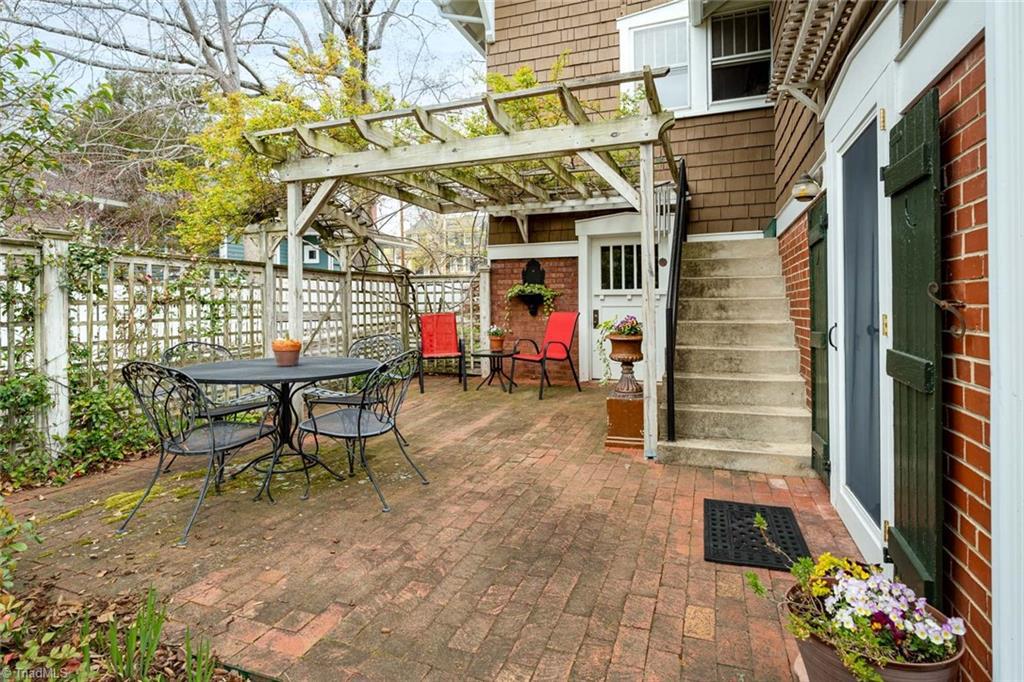
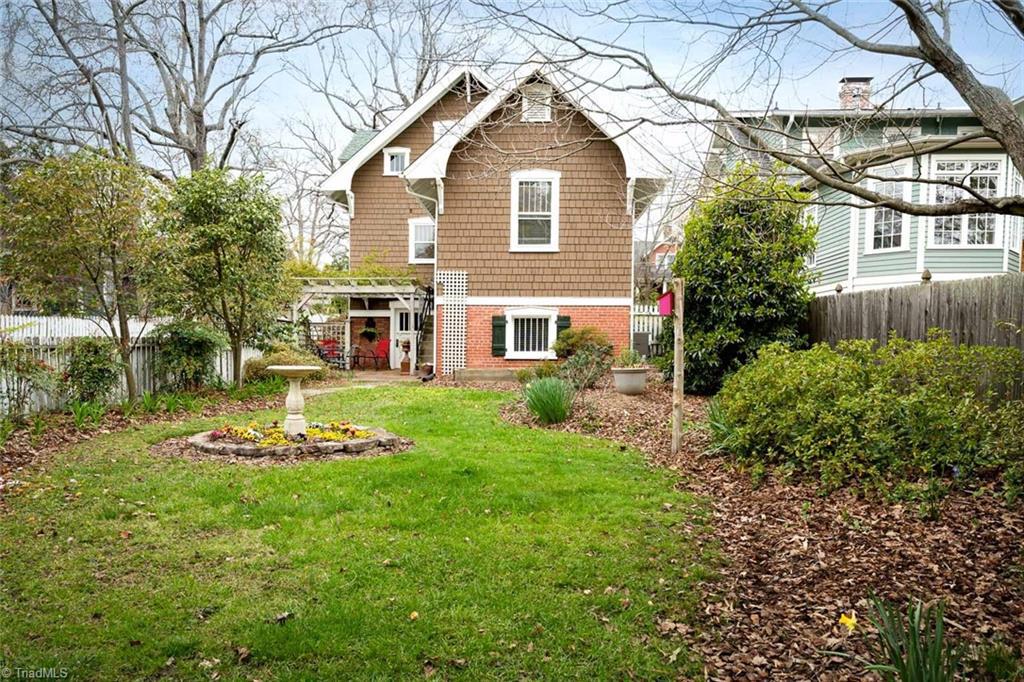
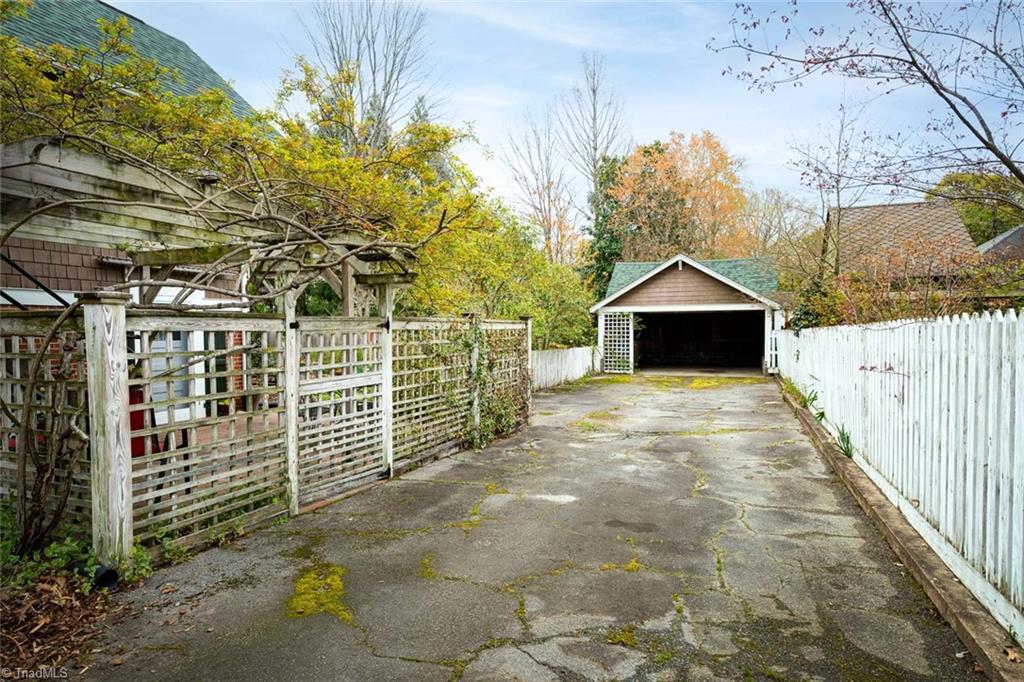
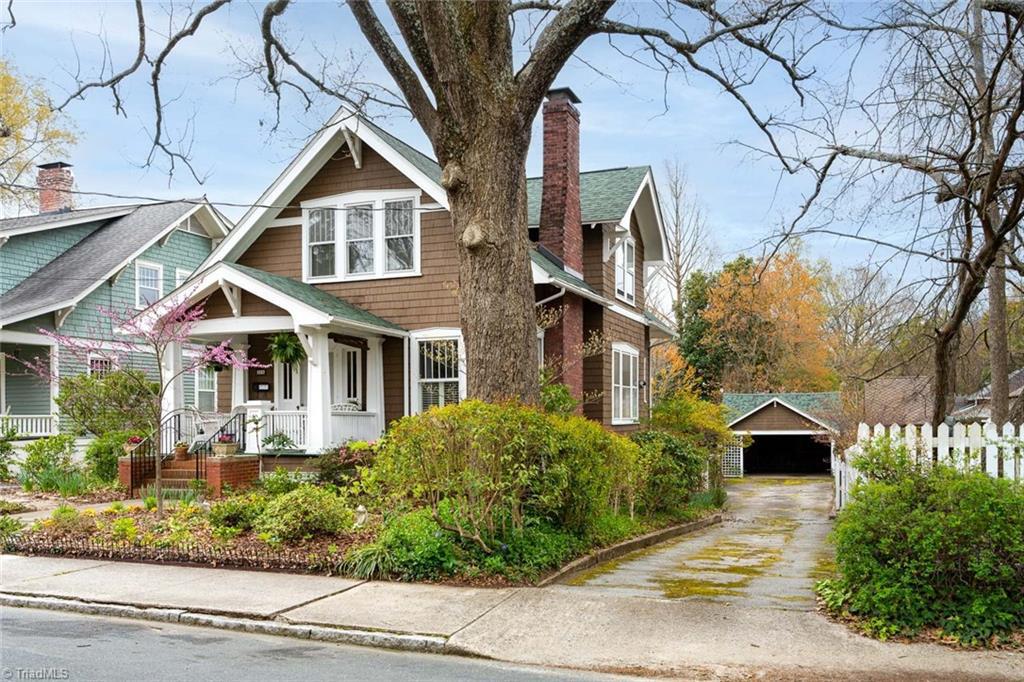
- Sold for $645,000 on May 3, 2024 (listed at $635,000)
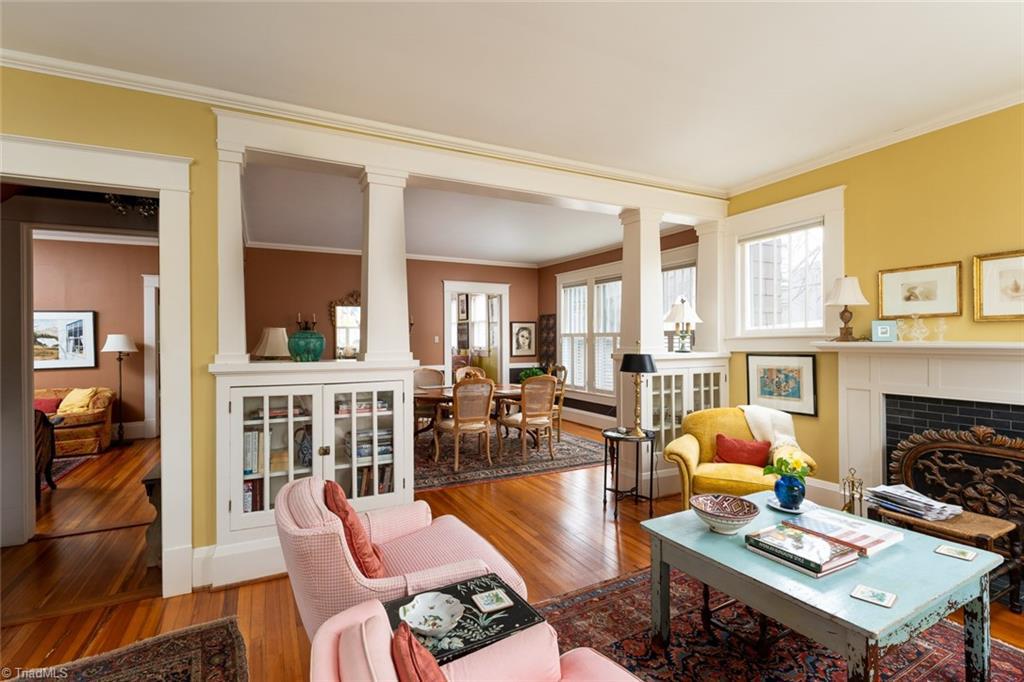
- 4 bedrooms, 2 1/2 bathrooms, 1,820 square feet, 0.19 acre
- Price/square foot: $354
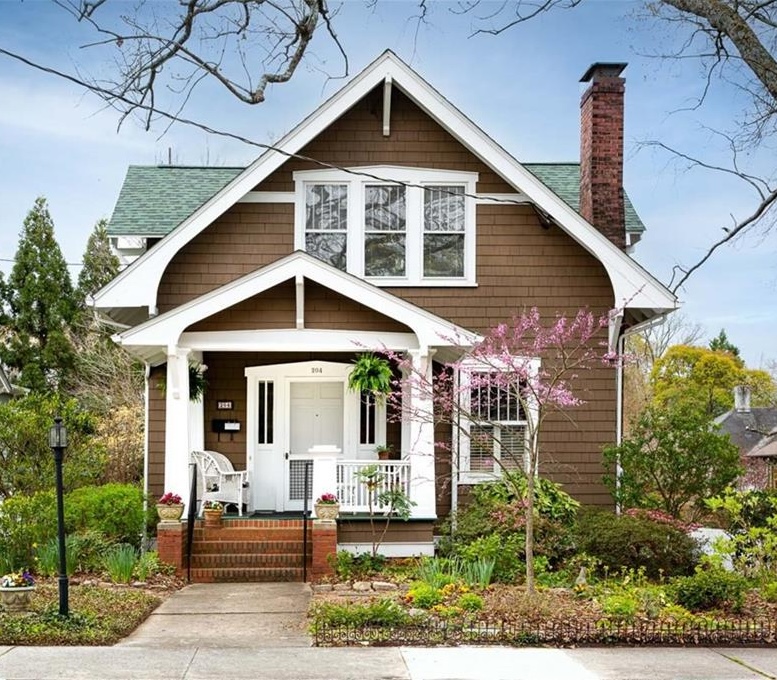
- Built in 1913 (per county, possibly a bit later; see note)
- Listed March 29, 2024
- Last sale: $365,000, July 2015
- Neighborhood: Fisher Park Historic District (local and NR)
- Note: The house doesn’t appear in the city directory until 1917. It was listed that year with Walter Harry Dickieson (1883-1970) and Ethel Hale Dickieson (1888-1976) identified as the residents. Walter was a traveling salesman. They don’t appear to have owned the house, although the original owner is difficult to identify.
- By 1927, Pearly Arthur Hayes (1882-1963) and Virginia Townsend Hayes (1890-1973) owned the house and were renting it out. They lived next door at 206 East Hendrix. Pearly was a prominent local businessman and a prolific buyer of Greensboro real estate. He was president of Byrd Laboratories, which produced patent medicines; president of Justice Drugs, a drug wholesaler and manufacturer; and secretary-treasurer of Barbee-Hayes Company, wholesale confectioners. He was still chairman of the board of Justice Drug when he died at age 80.
- He served as a City Council member and mayor pro tem. He was chairman of the Juvenile Court Commission from 1933-1953. During World War II, he was a member of the local draft board. He served as president of the Greensboro Chamber of Commerce, Greensboro Rotary Club and the Community Chest.
- Pearly was a founder of the N.C. Pharmaceutical Research Association and in 1940 served as president of the National Wholesale Druggists Association.
- By 1922, Frank Thomas Miller (1884-1960) and Louise Davis Miller (1888-1983) were listed as the tenants. By 1931, they had bought the house, and it stayed in their family until 1983. Frank was a consulting engineer.
738smain

738 S. Main Street, Mount Airy, Surry County
The Early and Hallie Benbow House
- Sold for $391,680 on April 29, 2024 (originally $399,000)
- 5 bedrooms, 3 bathrooms, 3,000 square feet, 0.29 acre
- Price/square foot: $131
- Built in 1931
- Listed October 25, 2023
- Last sale: $111,000, June 2003
- Neighborhood: Mount Airy Historic District (local and NR)
- District NR nomination (1985): “A remarkably large number of unaltered, classic Bungalow style houses survive throughout the district. They are typically frame or brick residences, one-and-one-half stories with broad gable roofs and gracious, engaged front porches. … [A] notable large brick bungalow is the c. 1928 Benbow House at 738 South Main Street {1168) which exhibits Tudor Revival influences in its stuccoed gable ends with applied wooden trim imitative of half-timbering. …
- “Spacious, handsomely detailed one-and-one half story brick bungalow … The large attached front porch, with wide, gabled entry bay, extends across the main elevation to the north to encompass a porte-cochere; heavy, battered brick piers support the porch.
- “Both the porch gable and an offset gabled dormer feature rough stucco and applied wooden trim imitative of half-timbering and are lighted by Palladian windows. The main entrance is composed of leaded glass sidelights and multi-paned door.”
- Early Quincy Benbow (1895-1962) and Hallie Stanton Benbow (1900-1981) were the original owners. They bought the house in 1931 and lived in it until 1951.
- Early was born in Guilford County; he was a veteran of World War I. He came to Mount Airy in 1926. He and his partners opened the Grand Theatre in 1928 and the Earle in 1935.
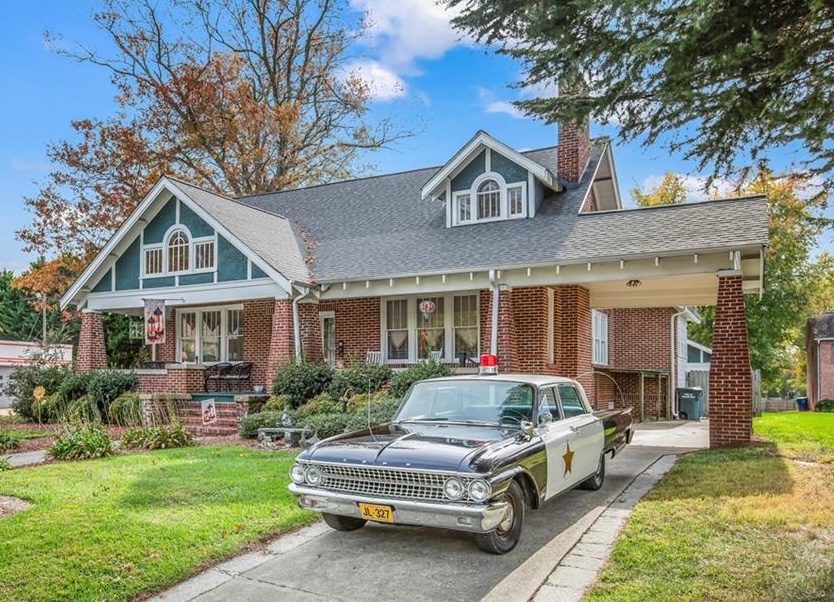
- Adding a little local color to the online listing:
400country
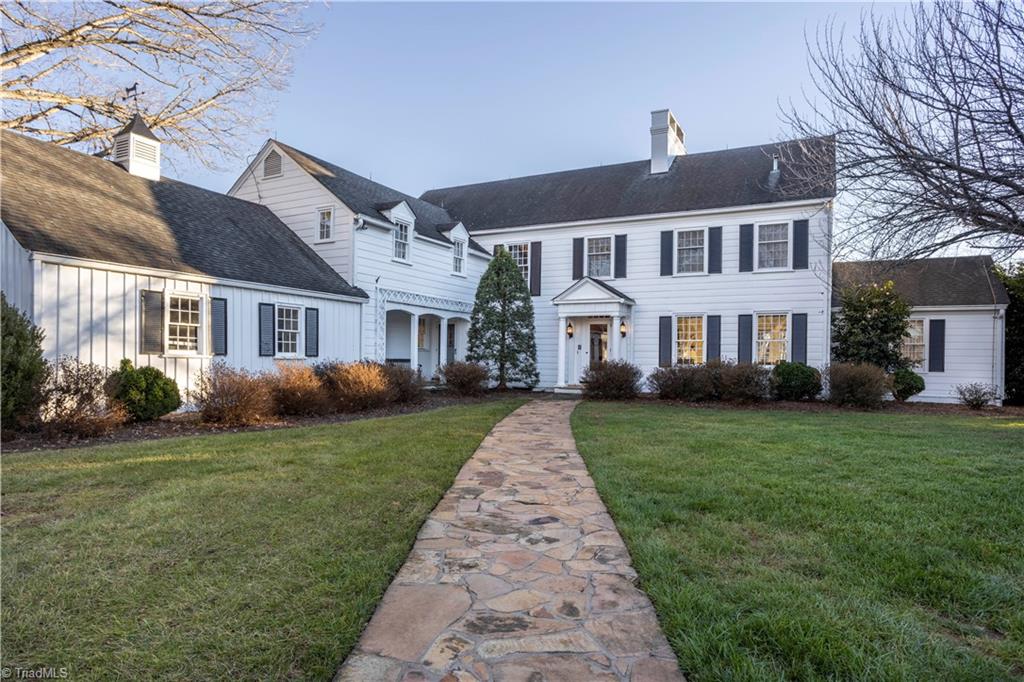


400 Country Club Road, Lexington, Davidson County
The Eddie and Sarah Smith House
- Sold for $650,000 on April 25, 2024 (originally $1.2 million)
- 5 bedrooms, 5 1/2 bathrooms, 7,392 square feet, 7 acres
- Price/square foot: $88
- Built in 1932
- Listed June 16, 2023
- Last sale: Apparently in 1962 or 1963, price unknown
- Note: The property includes an outdoor kitchen, a patio and pool area, and a pool house with a sauna and two dressing rooms with showers.
- The last sale of the property apparently occurred in 1962 or 1963, when it was bought by the current owners, Edward Calvin Smith (1918-2007) and Sarah Lanier Smith (1921-1998). They’re listed at the address in the 1963-64 city directory, the first year it was included in the directory (it had been outside the city limits for all or most of its history to that point). Although Eddie died 16 years ago and Sarah, 25 years ago, ownership of the property is still in their names, according to county records.
- Eddie Smith was born in Garner, just outside Raleigh. When he was 10, he and his three siblings were orphaned; they were then raised at the Junior Order Orphanage in Lexington. After working as manager of a taxi company, he founded the National Wholesale Company in 1952 and became one of Lexington’s most prominent business owners.
- He served as mayor of Lexington, City Council member, and as chairman of the Chamber of Commerce, Davidson County Community College, and Lexington Memorial Hospital.
- Eddie led the campaign to save and restore Lexington’s historic Carolina Theater as a civic center. It’s now named in his honor. He also led the effort to establish Family Services of Davidson County.
803smain


803 S. Main Street, Reidsville, Rockingham County
The Andrew Jackson Boyd and Isabella Richardson Boyd House
- Sold for $235,000 on April 25, 2024 (listed at $250,000)
- The buyer is listed as Joe Homebuyer Central NC LLC of Winston-Salem (“Get A Cash Offer Today! Fast and Hassle Free.”). The offer was accepted four days after listing, and the sale closed two days later through a company called 24 Hour Closing.
- Sold for $350,000 on May 13, 2024
- The buyer was two LLCs in Reidsville, which were dumb enough to pay $115,000 more than the house sold for three weeks earlier.
- 5 bedrooms, 2 1/2 bathrooms, 3,840 square feet, 1.7 acres
- Price/square foot: $65 the first time, $91 the second
- Built in 1870
- Listed April 19, 2024
- Last sale: $150,000, April 2016
- Neighborhood: Old Post Road Historic District (local), Reidsville Historic District (NR)
- Note: There are only four photos in the listing, and what they show of the house is in very good condition. It’s priced like a fixer-upper, though, so you have to wonder what the photos don’t show.
- District NR nomination: “The most elaborate of the several important Italianate houses in the district, this elegant frame residence is said to have been built in the mid 1870s by Robert Payne Richardson, Sr., for his daughter Margaret Isabella [1847-1911] and her husband Col. Andrew Jackson Boyd (1836-1893).
- “Boyd, a Civil war officer and attorney, was prominent in Reidsville affairs from about 1870 until his death. Among other activities, he was the first president of the Bank of Reidsville, the town’s first banking establishment, and one of the principal backers of the Reidsville Cotton Mills, organized in 1889. He was first married to Sallie A. Richardson [1843-1869], eldest daughter of R.P. Richardson, Sr.; she died in 1869, leaving him with three children.
- “In 1875, he married Margaret I. Richardson, a younger sister of his first wife; they had five children. The house remained in the Boyd family until 1919, when it was sold to P. Watt Richardson (1881-1958), a nephew of Boyd’s wives; Richardson is listed in city directories as a tobacconist. After his death, the property passed to Marion Watt Bagwell, president of General Steel Tank Co. and Isometrics Inc.
- “The focal point of the two-story, L-plan house is the three-story tower centered on the three-bay facade. Its first floor contains the double-leaf main entrance, while the second floor has a two over two window below a projecting pediment. The third floor has two narrow round-arch openings with one over one sash.
- “The gable-roofed projecting right (south) bay on the facade has a one-story semi-hexagonal bay with narrow one over one windows below a pedimented two over two window and a round attic vent. Other windows are two over two sash with bracketed cornices.
- “A one-story porch supported by paired, tapered, paneled wooden posts extends from in front of the tower across the north bay and around the north north elevation; it has a spindle frieze, a turned baluster railing, and a gable with triangular tympanum above the front steps. An identical porch is located on the south elevation.
- “The house is embellished with sawn eaves brackets and paneled classical cornerboards and has tall brick interior chimneys with paneled stacks. Across the rear are a number of one-story wings and additions.
- “The gable and hip roof is of standing seam tin with returns. Like the adjacent Walters House, the Boyd House sits far back from the street on a large lot with mature trees and landscaping.”
3020wsedgefield
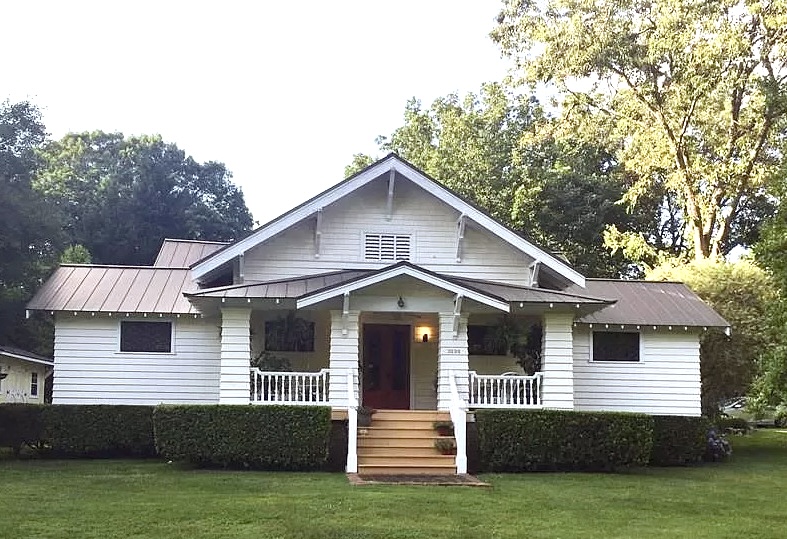
3020 W. Sedgefield Drive, Greensboro
The Sidney and Bessie Alderman House
- Sold for $480,000 on April 24, 2024 (listed at $459,900)
- 3 bedrooms, 2 bathrooms, 1,494 square feet, 0.47 acre
- Price/square foot: $321
- Built in 1927
- Listed January 1, 2024
- Last sale: $228,500, September 2016
- Neighborhood: Sedgefield
- Note: For sale by owner
- The Sedgefield Country Club is across the street.
- The property includes a swimming pool.
- The house is one of the oldest in Sedgefield. Development of the community began in 1923.
The original owners were Sidney Love Alderman (1860-1931) and Bessie Carolina Sherrill Alderman (1870-1939). Sidney was a commercial photographer and artist, “prominently identified throughout the greater part of his life with the civic advancement of Greensboro,” the Greensboro Daily News said upon his death. They bought the property in 1925. Although Bessie died in 1939, her estate didn’t sell the house until 1965.
In 1966 the house was bought by Audrey Herzberg McCrory (1925-2006) and Rollin John McCrory (d. 1995). They moved to Sedgefield from Columbus, Ohio. Audrey was born in Milwaukee. She earned a B.S. in nursing from Marquette University and masters and doctoral degrees in human growth and development from UNC Greensboro. She taught sociology at Elon University, High Point University and Guilford Technical Community College. They were the parents of Pat McCrory, former governor of North Carolina. Audrey sold the house in 2004.
620arbor


620 Arbor Road, Winston-Salem
The Bert and Corinna Bennett House
- Sold for $1.58 million on April 17, 2024 (listed at $1.5 million)
- 6 bedrooms, 4 1/2 bathrooms, 4,736 square feet, 0.36 acre
- Price/square foot: $334
- Built in 1927 (per county, but probably a few years later; see note)
- Listed March 4, 2024
- Last sale: $335,000, October 1994
- Neighborhood: Buena Vista
- Note: The original owners, Bert Lester Bennett Sr. (1890-1941) and Corinna Johnston Bennett (1896-1966), were listed on Arbor Road with no house number in 1930 and then at 620 Arbor in 1931. Bert was president of the Bennett-Lewallen Company, a wholesaler of cigars and candy, and vice president of Quality Oil Company, which operated several Shell service stations (including the unique National-Register Shell station at Sprague and Peachtree). After Bert’s death, Corinna stayed in the house until about 1954.
- Their son Bert Jr. joined Quality Oil in 1947. He made it one of the largest branded oil jobbers in the country and expanded into hotels, convenience stores, transportation, and real estate development. The was also a major figure in the state Democratic Party, serving as campaign manager for Terry Sanford in 1960 and chairman of the state party.
- The listing includes an outdated photo of the front of the house:

226nstratford
305church

305 Church Street, Gibsonville, Guilford County
The Berry and Emily Davidson House
Blog post — A Prominent Millwright’s 1880’s Home in Gibsonville, $400,000
- Sold for $380,000 on April 17, 2024 (originally $425,000)
- 5 bedrooms, 2 bathrooms, 3,151 square feet, 1.22 acres
- Price/square foot: $121
- Built in 1881 (or possibly 1887; see note below)
- Listed December 9, 2023
- Last sale: $36,000, June 1975
- Note: The house has had only two owners. Descendants of Berry and Emily Davidson sold it in 1975 to the current owner.
- The property includes a garden shed, workshop and one-car garage.
- The original owners were Berry Davidson (1831-1915) and Emily Holt Newlin Davidson (1847-1911).
- “Berry Davidson, a millwright in the central Piedmont of North Carolina, left an unusually complete narrative of a career that extended from the 1840s until after 1900, a key period in the industrial development of the region. Depicting a rural millwright’s mobility, versatility, and adaptability, his account illuminates the career of an important type of artisan for whom such detailed histories are seldom found. He built and equipped saw mills, grist mills, and cotton mills mainly in Alamance County and Guilford County, centers of Quaker settlement and early industrial development, but his work also extended into Chatham, Cumberland, Harnett, Moore, and Randolph counties. He began with water-powered operations, chiefly on the Haw River and its tributaries, but from the 1850s onward he also built and operated steam-powered plants as that technology came into wider use.” (North Carolina Architects and Builders)
- As a 14-year-old apprentice, he helped install a power plant for a mill owned by E.M. Holt, beginning a long association with one of the area’s foremost textile pioneers. After completing his two-year apprenticeship, he began building mills at age 16. In the 1850s, Berry became a very active investor in mills as well as a builder. He spent 10 years as part-owner and superintendent of the Snow Camp Foundry and Machine Shop, producing mill equipment. He continued to build mills as well. After the Civil War, he worked mostly in Alamance County, building several mills for members of the Holt family and others.
- “Shifting his attention to Gibsonville, a village on the North Carolina Railroad in Guilford County, in 1886 he built the steam-powered Minneola Cotton Mill there for himself and his nephew, Joseph A. Davidson. … In 1887 Davidson built a family residence, the Berry Davidson House, in Gibsonville and moved his family there in December. In Gibsonville, Davidson became a leading citizen as well as a major industrialist. He sold his interest in Minneola to the Cone Export and Commission Company in 1892 and built another mill, called Hiawatha Cotton Mill, in the same community in 1893.” (North Carolina Architects and Builders)
- Berry served as mayor of Gibsonville from 1907 to 1911.
305kensington
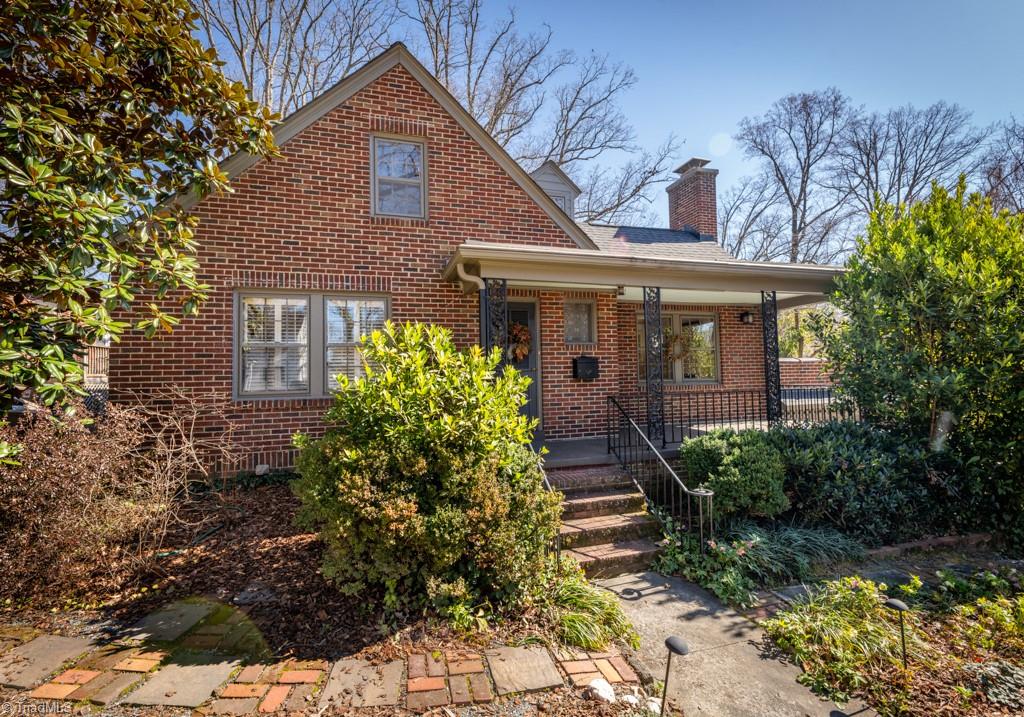
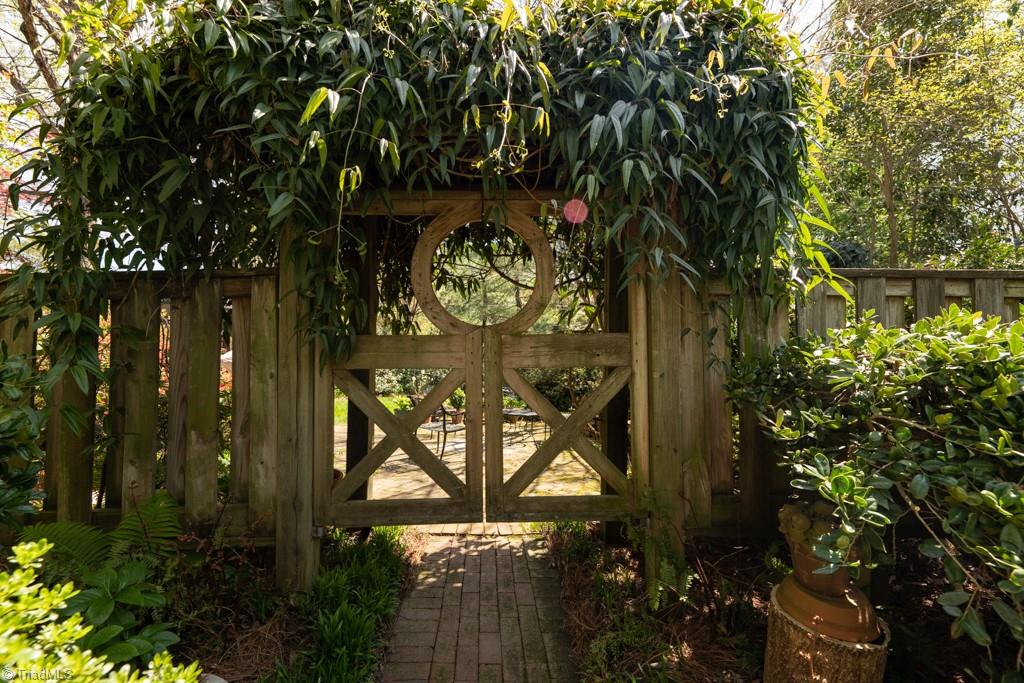


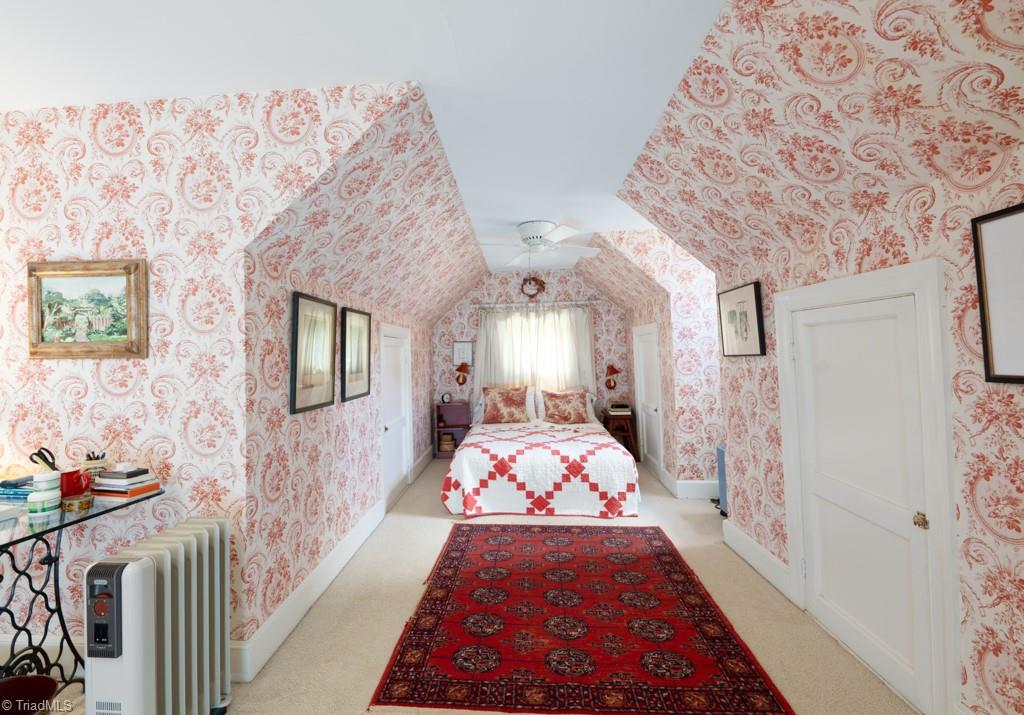


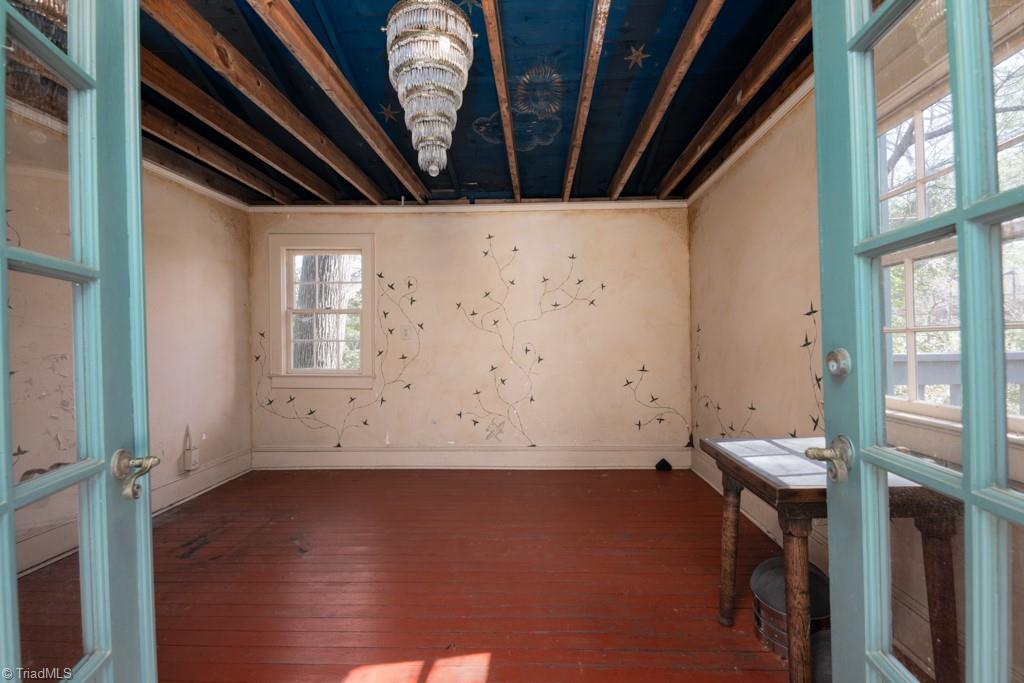

305 Kensington Road, Greensboro
The Fred and Susan Chappell House
- Sold for $610,000 on April 12, 2024 (listed at $525,000)
- 2 bedrooms, 2 bathrooms, 2,418 square feet, 0.17 acre
- Price/square foot: $252
- Built in 1933
- Listed February 22, 2024
- Last sale: $36,000, 1973
- Neighborhood: Sunset Hills Historic District (NR)
- Note: The home of the late poet, novelist and critic Fred Davis Chappell (1936-2024) and Susan N. Chappell. They bought the house in 1973. Fred taught at UNC Greensboro, served as poet laureate of North Carolina and won the prestigious Bollingen Prize for poetry in 1985.
- “Not since James Agee and Robert Penn Warren has a Southern writer displayed such masterful versatility,” Frank Levering wrote in The Los Angeles Times in 1997. The New York Times wrote an excellent obituary.
- District NR nomination: “The one-and-a-half-story, three-bay, hip-roofed, brick Period Cottage with front and side gables features a projecting, flat-roofed porch supported by decorative metal posts.
- “The porch shelters the single-leaf front door and a small, fixed-light window just to the south (right) of the entrance. Brick steps flanked by metal balustrades lead to the concrete and brick porch where the metal balustrade continues.
- “A front-gabled dormer with German siding rests on the front hip-roofed slope, while a large, shed-roofed dormer occupies the north elevation roof slope. Windows are six-over-six and framed by soldier-course lintels and header-course sills. A brick chimney rises on the south gable end.
- “A flat-roofed, two-bay garage with tile coping is attached to the south elevation; because of the topography, it is set lower than the house.”
- Floyd Ray Eubanks Sr. (1906-1953) and Nancy Caroline “Nannie” Eubanks (1908-1998) bought the property in September 1938 “and likely built the house soon thereafter. He was owner of Banks Clothing Company. They sold the house in 1951.”
653vernon


- Sold for $60,000 on April 12, 2024, (listed at $69,000) to the Historic Preservation Foundation of North Carolina
- Sold by the foundation for $65,000 on April 12, 2024, to an owner who will restore the house
- Bedrooms and bathrooms to be determined, 1,643 square feet, 10 acres
- Price/square foot: $37
- Built ca. 1800
- Last sale: 1785, price not available
- Listing: “The farm has been continuously owned and operated by the King family and was designated a North Carolina Century Farm in 1986 and a Bicentennial Farm by the N.C. Dept. of Agriculture in 2017.”
- “Early log house with large stone chimneys, exposed beaded ceiling joists, wide wall planks, hand-forged door hardware, and a rear wing, once an early separate kitchen. Family cemetery with ancient soapstone markers nearby all situated on a scenic ridge between Wentworth and Reidsville.”
- “The house has been covered by rolled asphalt siding. Small sections have been uncovered to reveal lap siding on the main house and board-and-batten siding on the kitchen.”
- “The house will require a complete rehabilitation including repair of the roof (some 5v metal panels were ripped off in a recent storm), restoration/repair of log structure, installation of new systems including electrical, plumbing and HVAC, a new kitchen and bathrooms.”
- The property for sale is a 10-acre piece of a 240-acre farm. It includes the cemetery.
226nstratford


226 N. Stratford Road, Winston-Salem
The Hanes-Norfleet-Strickland House
- Sold for $1.84 million on April 9, 2024
- 5 bedrooms, 3 1/2 bathrooms, 7,273 square feet, 2.85 acres
- Price/square foot: $253
- Built in 1925 (per county, probably a couple years later; see note)
- Not listed publicly for sale
- Last sale: $200,000, August 1972
- Neighborhood: Stratford Place, West Highlands
- TL/DR: A Tudor Revival mansion designed by Charles Barton Keen for Dr. Frederick Moir Hanes and Elizabeth Peck Hanes. Frederick was a highly accomplished physician and teacher, particularly at Duke, where he headed the department of medicine and was chief physician at Duke Hospital. The Sarah P. Duke Gardens were his idea. A couple of the home’s later owners were quite prominent as well. The house can hardly be seen from the street, and since it hasn’t been on the market for 52 years, few photos are available apart from those in public records and Google Maps.
- Note: The house is a block up the street from the home of Frederick’s sister, Lucy Hanes Chatham, and her husband, Thurmond Chatham, which is on the National Register, and the home of Robert March Hanes, Frederick and Lucy’s brother, also on the National Register. It’s next door to the Bunyan and Edith Womble House (family friends), which is on the National Register, too.
- A recent book on Winston-Salem mansions describes Frederick and Elizabeth’s house as “Olde England on Stratford Road” and identifies an “Arts and Crafts aesthetic” within the Tudor design. “The Haneses’ multi-gabled, one-and-a-half story brick Tudor cottage unequivocally evokes the romantic English theme implicit in the naming of Runnyemede Park, Stratford Road and Arden Road. …
- “Multiple cross gables of varying sizes punctuate the the steeply pitched slate roof, as do massive chimneys crowned by chimney pots. Typical of Winston-Salem country houses of this era were the sleeping porches; less typical were the small closets for a house so large (more than 6,500 square feet). Adjacent to the main house are a Tudor-influenced brick garage and servants quarters …”
- Dr. Frederick Moir Hanes (1883-1946) and Elizabeth Peck Hanes (1883-1953) bought the property from Wachovia in 1927 and were listed at the address in the city directory that year, the first time Stratford Road had been listed. Dr. Hanes was one of the most distinguished members of the Hanes family, although he never worked for the companies started by his father, John Wesley Hanes, and an uncle, Pleasant Henderson Hanes. “He was a brilliant physician and scientist, a man of deep principles and unquestioned character, and a natural leader,” a Duke School of Medicine article says.
- Frederick graduated from the University of North Carolina at age 20, earned a masters at Harvard and received his medical degree from Johns Hopkins. He also studied in Germany and at the Pasteur Institute in Paris. He worked as a pathologist in New York and as a researcher with the Rockefeller Institute. He taught pathology at Columbia University and neurology at Washington University in St. Louis before returning to Winston-Salem to practice medicine. He left to work as a neurologist at a hospital in London and then to teach at the Medical College of Virginia. When World War I began, he joined the Army as a lieutenant colonel and commanded an Army hospital in France.
- He returned to Winston-Salem after the war and resumed his practice. He also served as medical director for Security Life & Trust, of which he eventually became chairman (the company later was known as Integon, then GMAC and now is National General Insurance, a Winston-Salem-based unit of Allstate).
- In 1930 he left Winston-Salem again, this time for good, to become a founding faculty member at the Duke School of Medicine. He headed the department of medicine, held a distinguished professorship, taught and conducted research, and served as chief physician at Duke Hospital. Frederick and Elizabeth donated the funds to build a dormitory for nurses, Elizabeth Hanes House, and the books that formed the initial medical school library. Frederick left his estate to the School of Medicine.
- His most recognizable contribution to Duke came in 1934, when he convinced Sarah P. Duke to finance a garden in an unsightly ravine on campus. A year later, heavy rains washed the vast plantings away, and after Sarah’s death in 1936 he convinced her daughter, Mary Biddle Duke, to create a new garden on higher ground as a memorial. The Sarah P. Duke Gardens now include 55 acres of gardens and woods, 5 miles of walks and paths, and thousands of plants. Almost 500,000 people visit every year.
- “He was a lover of art, a bibliophile, a horticulturist, and an admirer of Samuel Johnson‘s works,” NCpedia says. He and Elizabeth also were close friends of H.L. Mencken, one of the most significant journalists and social critics of the first half of the 20th century.
- In 1935, the Haneses sold the house to Charles E. Norfleet (1902-1973) and Katy Norwood Norfleet (1905-1976). Charles was an attorney and assistant trust officer at Wachovia. He also served as vice president of the Old Town Country Club. Charles spent his career at Wachovia, retiring as a vice president. Banking ran in the family; his uncle, Charles M. Norfleet, was president of First National Bank of Winston-Salem. Charles E. also served as chairman of the board of Goody’s Manufacturing and as a member of the county planning board.
- Charles E.’s greatest impact on the community came as a member of city’s airport commission. “Mr. Norfleet has been credited with almost single-handedly building Smith Reynolds Airport and acquiring airline service here,” the Winston-Salem Journal said in his obituary.
- “At the time he became a member of the Airport Commission, the airport was a 100-acre field converted from the county farm over the protests of a county official who complained that ‘this is the best corn-growing land around here.'” The airport’s address is now 3800 Norfleet Drive.
- Charles and Katy actually named one of their sons Norwood Norfleet.
- They sold the house in 1961 to Philip Michalove (1916-2010) and June Michalove (1924-2017). Philip was president of the State Furniture Company; June was secretary-treasurer. They owned the house for 11 years.
- The house was bought in 1972 by Robert L. Strickland (1931-2018) and Elizabeth Miller Strickland (1932-2023). Their children just sold it. Robert was born in Florence, South Carolina, and grew up in Asheboro. He graduated from UNC-Chapel Hill and served in the Navy during the Korean War. After graduating from Harvard Business School, he joined Lowe’s Companies in 1957 as advertising director. He retired 40 years later as chairman of the board. He served a single term in the state House, elected in 1962. He later served on the boards of the School of the Arts Foundation, Wilkes Community College and UNC-CH, of which he was chairman for two years. He served on the board of the Federal Reserve Bank of Richmond and the corporate boards of T. Rowe Price, Hannaford Brothers and Krispy Kreme.
- Elizabeth grew up in several states, including North Carolina, as her father was a naval officer. She attended High Point College. In the 1980s she opened Oxford Antiques and Gifts, a philanthropic venture that generated more than $1 million for the Crisis Control Ministry, the North Carolina Shakespeare Festival, the Winston-Salem Symphony and other nonprofits.
- Their children sold the house to an LLC in Charlotte associated with a CPA and business consultant who provides “strategic leadership” services to families burdened with “the practical and emotional complexities of legacy wealth.”
1837elizabeth

- Sold for $455,000 on April 9, 2024 (listed at $465,000)
- 4 bedrooms, 2 bathrooms, 1,876 square feet, 0.19 acre
- Price/square foot: $243
- Built circa 1926 (see note)
- Listed February 23, 2024
- Last sale: $360,000, December 2021
- Neighborhood: Ardmore Historic District (NR)
- Note: County records show a 1937 date. The district’s National Register nomination says circa 1926.
- District NR nomination: “Craftsman Bungalow. One and a half story, front gable; asbestos siding; four (vertical)-over-one, double-hung sash; gable front porch with square columns; sidelights; knee braces. 1926 [city directory]: Lansing Womble, a high school teacher, and wife Phoebe.”


- Sold for $1.195 million on April 8, 2024 (listed at $1.195 million)
- 5 bedrooms, 4 bathrooms, 3,783 square feet, 0.39 acre
- Price/square foot: $316
- Built in 1926
- Listed May 10, 2021
- Last sale: $310,000, May 2000
- Neighborhood: Irving Park
- Note: A 1 1/2-story cross-gable, brick Tudor Revival house
- County records actually have the address wrong, listing it as 2331 Kirkpatrick. Since the houses on either side are 2317 and 2323, 2321 is definitely the right number.
- “Could have possible guest quarters with additional 565 square feet above garage.”
- A renovation gutted the house down to the studs, replacing the electricity, plumbing and, sadly, the windows.
- The original owners were Matthew De Coursey Coiner (1893-1939) and Elsie Clewer Coiner (1892-1980). Matthew was a cotton broker. They moved to Fayetteville in 1936. Matthew died of a stroke at age 45 in 1939.
- In 1949 the house was bought by E. Wayne Weant (1906-1992) and Margaret King Weant (1911-1978). He was a vice president and secretary of Blue Bell Inc. They owned the house for 27 years.
1606west

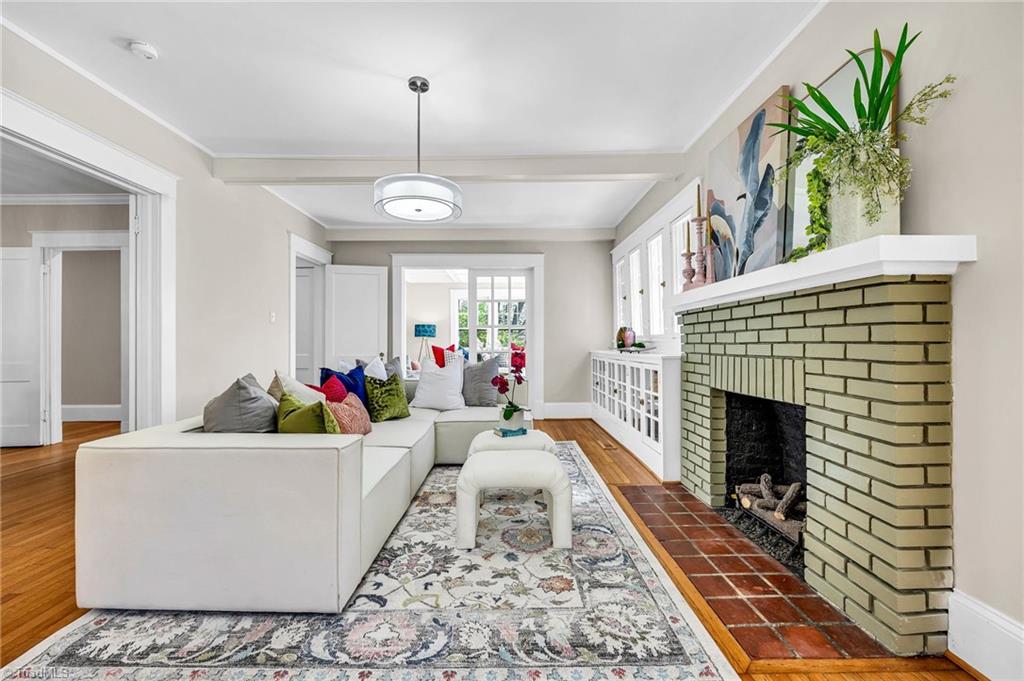


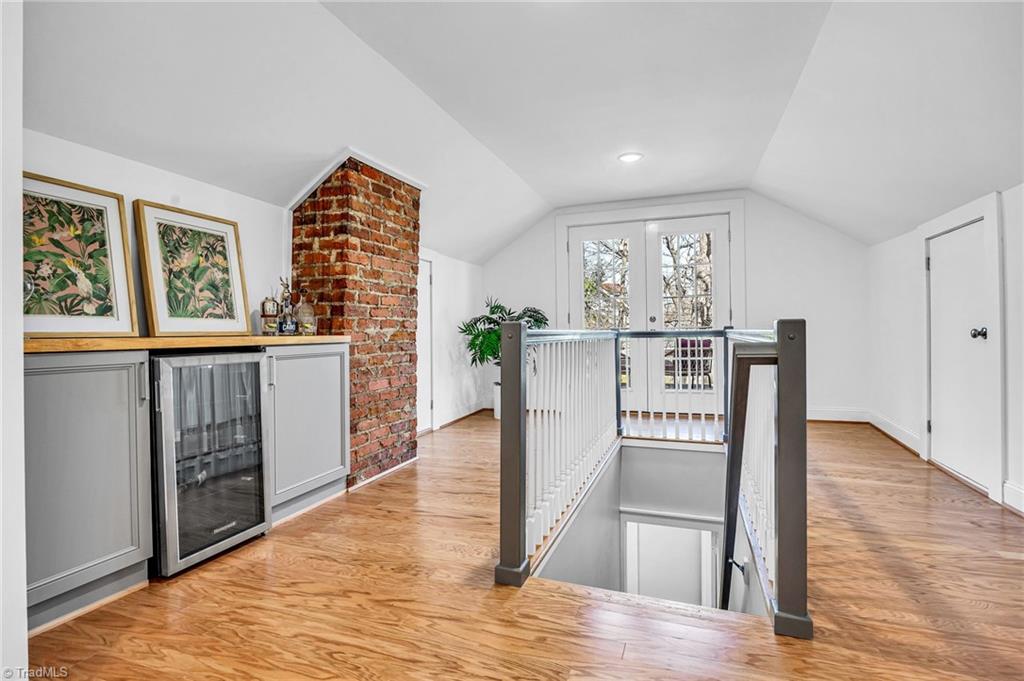


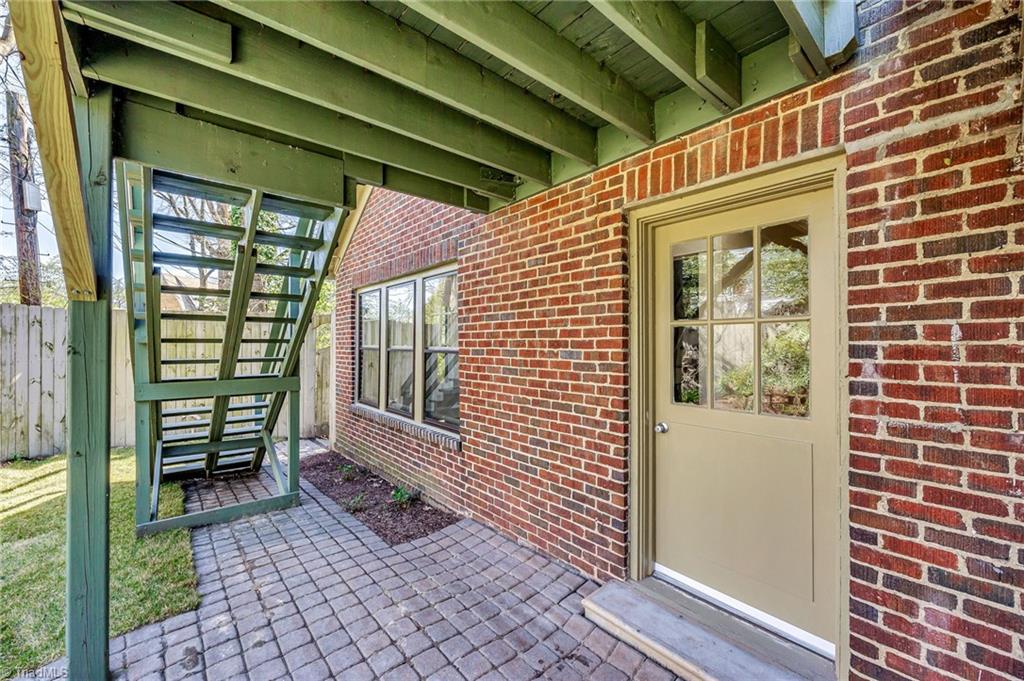

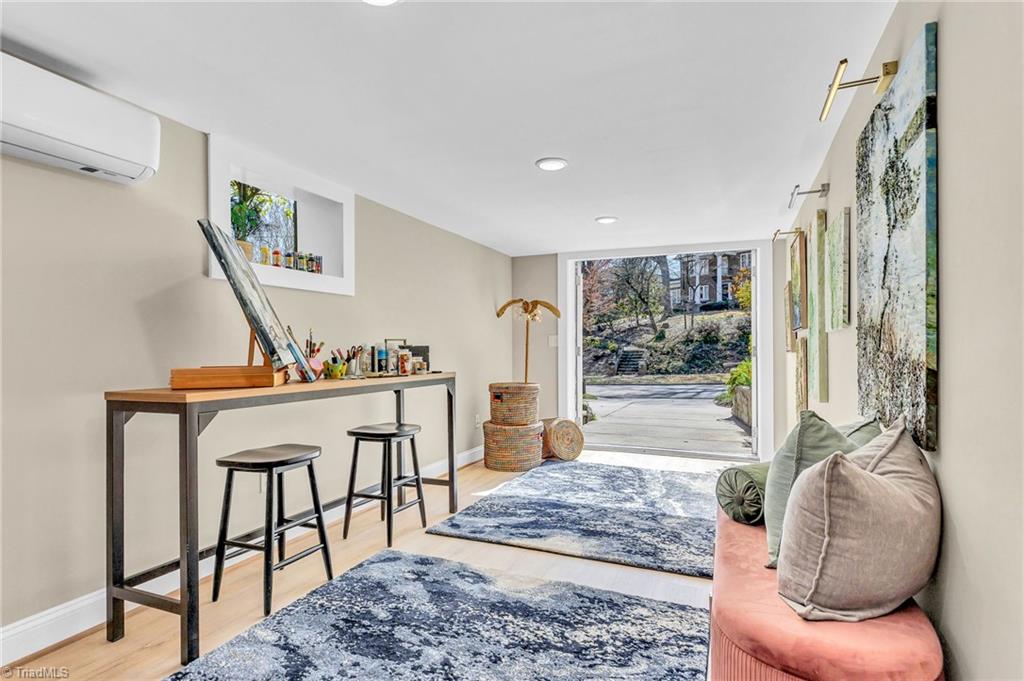
- Sold for $699,000 on April 2, 2024 (listed at $699,000)
- The buyers’ address is listed in Carmel, Indiana.
- The sale closed 15 days after the full-price offer was accepted, 18 days after the house was listed for sale.
- 3 bedrooms, 2 bathrooms, 2,473 square feet, 0.19 acre
- Price/square foot: $283
- Built in 1933 (per county, but probably a few years earlier; see note)
- Listed March 15, 2024
- Last sale: $295,000, November 20, 2023
- Neighborhood: College Park
- Note: This is a bafflingly high price for a house in this neighborhood and an audacious money grab. To compare, one of the grandest mansions in Irving Park was recently sold for $402/square foot.
- The address was first listed in the city directory in 1926 with Dewey Madison Morris (1898-1937) and Addie R. Morris (1902-1992) as residents. Dewey had come to Greensboro in 1920 from Spray, where he worked for Carolina Cotton and Woolen Mills. He was city auditor and chief of the Accounting Department until 1926, after which he organized the State Industrial Bank and served as vice-president and cashier until 1931. He later headed the district office of Hogart Manufacturing Company. At the age of 38, he died on a trip to Raleigh “of what the coroner reported apparently was an attack of acute indigestion.”
- Dewey and Addie had lost the house to foreclosure in 1932. In 1936 Conrad Bryan Haynes (1896-1976) and Mary Belle Smith Haynes (1903-1992) bought the house and owned it for the rest of their lives. Haynes was a salesman for Rabb-Smith Company, a store that sold appliances, radios, sporting goods, toys and games.
- Mary’s heir sold the house in 1994.
406wbessemer
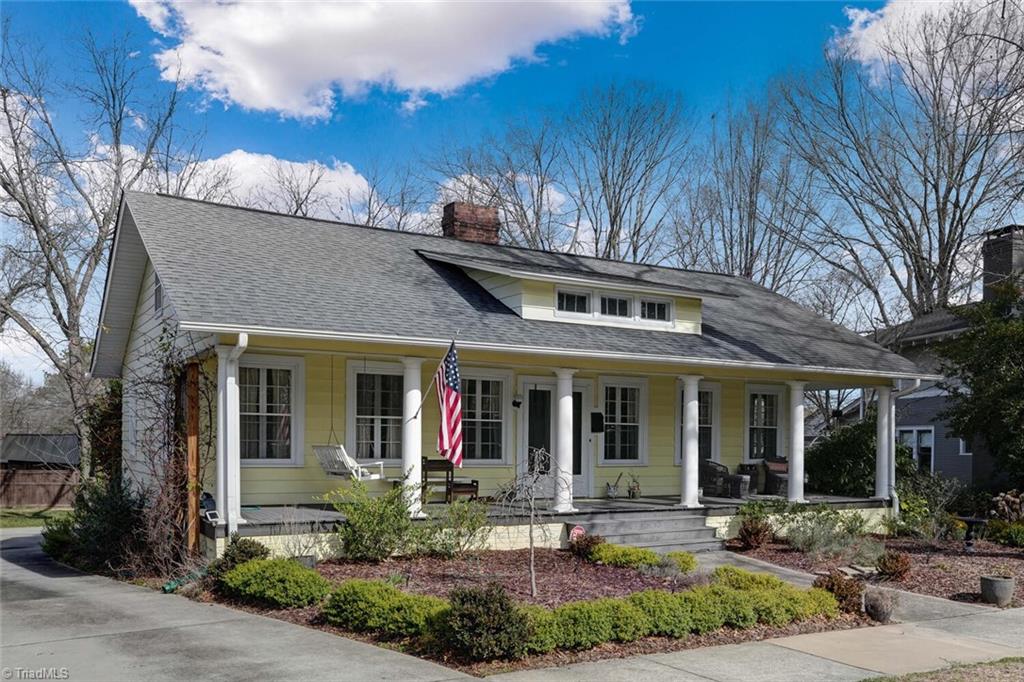
406 W. Bessemer Avenue, Greensboro
- Sold for $337,000 on April 1, 2024 (listed at $335,000)
- 2 bedrooms, 1 bathroom, 1,253 square feet, 0.26 acre
- Price/square foot: $269
- Built in 1926 (per county, but probably earlier; see note)
- Listed March 2, 2024
- Last sales: $319,900, February 2022; $165,500, November 2010
- Neighborhood: Fisher Park Historic District
- District NRHP nomination: “Colonial Revival bungalow, 1920-23. Gable-end structure with full facade, engaged, columned porch.”
- The first residents were Leon M. King and his wife, Edith. He was a salesman with Justice Drug Company. They were listed at the address in the city directory in 1921.
- Note: This is an Aladdin kit home, the Kentucky model. Developer J.E. Latham had a number of Aladdin homes built in this part of Fisher Park.

8174hawkins

8174 Hawkins Road, Clemmons, Forsyth County
- Sold for $415,000 on March 25, 2024 (listed at $415,000)
- 4 bedrooms, 3 bathrooms, 2,892 square feet, 1.81 acres
- Price/square foot: $143
- Built in 1828
- Listed February 9, 2024
- Last sale: $180,000, June 1999
- Neighborhood: Located about 4 to 5 miles north of Tanglewood Park
- Note: The State Historic Preservation Office lists the house as “c. 1828,1868,1910.” It’s on the study list for the National Register.
- Photos from the SHPO (possibly from around 2008) and Google Street View (2022). The porch columns in 2008 looked broader (and more historically appropriate) than the current ones.

.

1218frye


- Sold for $165,000 on March 22, 2024 (listed at $168,000)
- 1 bedroom, 1 bathroom, square feet not recorded, 20.12 acres (per county)
- Price/square foot: Unknown
- Built in 1940 (per listing; see notes)
- Listed February 9, 2024
- Last sales: $110,000, February 2, 2024; $85,000, February 2022
- Neighborhood: Located about 11 miles east of Westfield, not far from Tory’s Den Cave.
- Listing: “The cabin contains a minisplit for HVAC, a sleeping and storage loft, bathroom with shower, and a kitchen with wood burning fireplace. The electricity is installed underground and is metered at the cabin. There is an additional transformer box behind the cabin on the main ridge for future homesite. Cabin is connected to underground septic system, and water is provided by a rain water collection system and pressure tank. New owner has the option to install a water treatment system to make the rain water potable, use one of the nearby springs for their water source or drill a well.”
- The property includes “mature hardwood forest, long range views (leaf off), and several springs and creeks.”
- Note: Sold in February 2024 and listed for sale seven days later.
- Owned by an LLC based in Colorado, as was the last owner.
- Although the listing says the cabin was built in 1940, county records show no building on the property (there does appear to be one, though).
- The deed and online listings show 20.69 acres.
- The 1940 construction date appears on only one online listing. The actual construction date is relatively insignificant because the cabin has been extensively renovated.
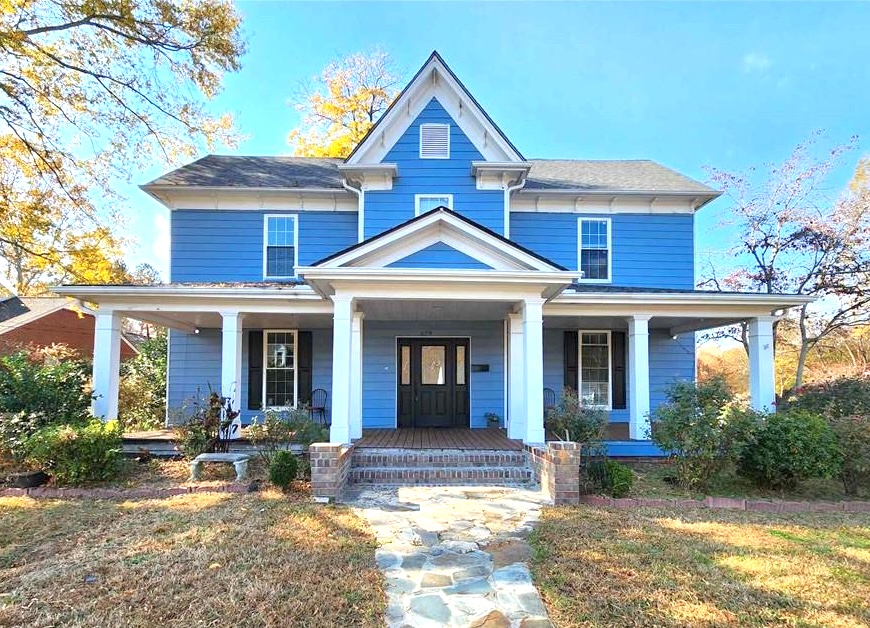
579 S. Salisbury Street, Mocksville, Davie County
The Benjamin and Marie Morris House
- Sold for $400,000 on March 19, 2024 (originally $420,000, later $399,999)
- 4 bedrooms, 2 bathrooms, 3,103 square feet, 0.73 acre
- Price/square foot: $129
- Built in 1905
- Listed July 22, 2022
- Last sale: $85,000, April 2018
- Neighborhood: Salisbury Street Historic District (NRHP)
- Note: The historic district’s National Register nomination mistakenly lists the house number as 544.
- District NR nomination: “three-bay, single pile frame house with projecting gabled bay centered in front; full-width hipped front porch with projecting, pedimented bay, narrow Tuscan columns; small brackets in cornices; rear one and two-story ell; tin-shingled roofs; rear chimneys; two over two sash; vinyl sided [the listing says the house now has aluminum and wood siding].”
- The house is believed to have been built by Benjamin Owen Morris (1857-1940), register of deeds and later clerk of court and Mocksville postmaster. He also worked as secretary-treasurer of the Mocksville Building and Loan Association. At his death, he was the oldest deacon of the Mocksville Presbyterian Church. His wife was Marie Wailes Morris (1864-1934).
6056jasmine
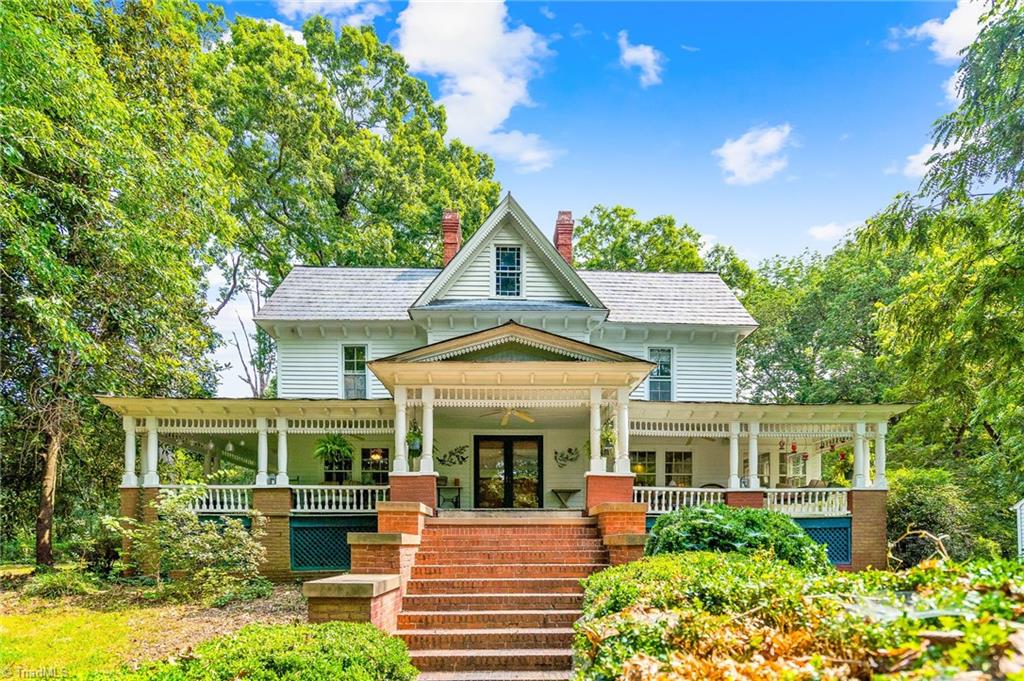
6056 Jasmine Lane, Coleridge, Randolph County
The Robert and Sarah Caveness House
- Sold for $495,000 on March 13, 2024 (listed at $510,000)
- 5 bedrooms, 2 bathrooms, 3,422 square feet (per county), 9.74 acres
- Price/square foot: $145
- Built in 1850
- Listed August 16, 2023
- Last sale: $85,000, November 1993
- Note: The property includes four outbuildings with electricity.
- The house has a Ramseur mailing address but is 7 1/2 miles south of town in Coleridge.
- The listing shows only 3,294 square feet.
- “The Caveness home is a lovely example of late 19th century domestic architecture. The two-story center-hall plan house has a projecting entrance bay which is echoed by a projection of the wrap-around porch. The raised porch is carried on coupled short turned posts set on brick pillars; a spindle frieze and sawnwork decoration is used between the posts. The cornice overhang of the roof is bracketed and the central and end gables have sawnwork eave decorations.” (The Architectural History of Randolph County North Carolina, p. 165)
- If the 1850 date is correct, the original ownership of the house doesn’t appear to be documented online. The first known owners, probably in the 1800’s, were Dr. Robert Lee Caveness (1866-1951) and Sarah Florence Cole Caveness (1875-1950). Robert and two of his daughters sold the house in 1951 to his third daughter, Faye Cole Caveness Albright (1901-1956), and Robert Lynn Albright (1908-1988).
- Sarah’s father, James Abram Cole (1840-1902), founded the town and in 1883 the local mill, Enterprise Manufacturing Company.
- Robert practiced medicine for 10 years and then bought the mill from his father-in-law in 1904.
- “From this unobtrusive house tucked away on a hillside behind his brother’s home, Dr. Robert L. Caveness ruled his little mill village. In 1917, the local newspaper observed that ‘Dr. R.L. Caveness is at the head of practically everything in Coleridge. For 10 years he most successfully practiced medicine and his friends assert that he is equally as good as a doctor as he is as a manufacturer. For the past ten years he has been devoting a majority of his time to the duties of the position of secretary, treasurer and general manager of the Enterprise Manufacturing Company.’ …
- “He was directly involved in the operation of the mill until 1922 and served as president of the company until his death in 1951.” (The Architectural History of Randolph County North Carolina, p. 165)
707nmain


707 N. Main Street, Mount Airy, Surry County
The Reece House
- Sold for $300,000 on March 6, 2024 (listed at $300,000)
- 4 bedrooms, 2 bathrooms, 4,616 square feet, 1.13 acres
- Price/square foot: $65
- Built in 1900
- Listed February 28, 2024
- Last sale: $74,000, May 1985
- Neighborhood: Mount Airy Historic District (local and NR)
- Listing: “Has roof damage and water damage to interiors main and upper floor.”
- District NRHP nomination: “Two-and-one-half story brick veneer Colonial Revival style house …Two tall corbelled chimneys and hipped and gabled dormers pierce the moderately high hip roof; the central dormer is lighted by a Palladian style window.
- “A sweeping wrap-around porch is carried by Doric columns set on granite plinths; granite is also used in the lintels and sills of the one-over-one sash windows. The handsome entryway is composed of an oval bevelled glass door, topped with a leaded glass transom, and flanked by twelve-light beveled glass sidelights.
- “The house was constructed by 1910 for Dr. R.W. Reece, a local dentist.”
- Dr. Robert Wilson Reece (1865-1926) was born in Yadkin County and graduated from the Baltimore School of Dental Surgery. He practiced for 33 years, mostly in Elkin and Mount Airy. He was remembered as “one of Surry County’s most prominent citizens” in an obituary in The Charlotte Observer. He had been in poor health for eight to ten years, suffering four strokes.
- “Dr. ‘Bob’ Reece, as he was familiarly called by his friends, was one of those men whom it was a privilege to know, for he always met the world with a pleasant word and a friendly smile and his life was an inspiration to all with whom he came in contact,” the Greensboro Daily News said.
200smain
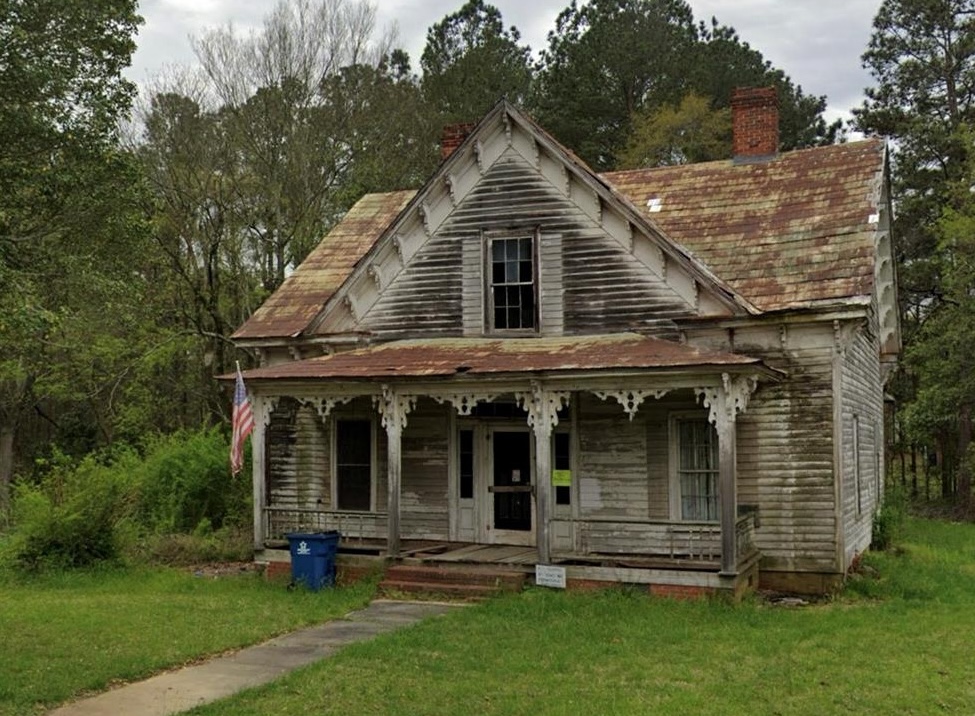
200 S. Main Street, Mount Gilead, Montgomery County
The Haywood-Taft House
- Sold for $22,500 on March 5, 2024 (listed at $40,000)
- 2 bedrooms, 1 bathroom, 2,074 square feet, 0.75 acre
- Price/square foot: $11
- Built in 1910 (per county)
- Listed February 9, 2024
- Last sales: $30,000, March 2021; $5,000, January 1973
- 2021 listing: “The Haywood-Taft House requires a comprehensive rehabilitation including all new systems (HVAC, plumbing, and electrical), significant carpentry repairs, and updates to the kitchen and baths.”
- State Historic Preservation Office: “c. 1905 1-1/2-story side gable center passage double pile frame Queen Anne house w/ weatherboard siding”
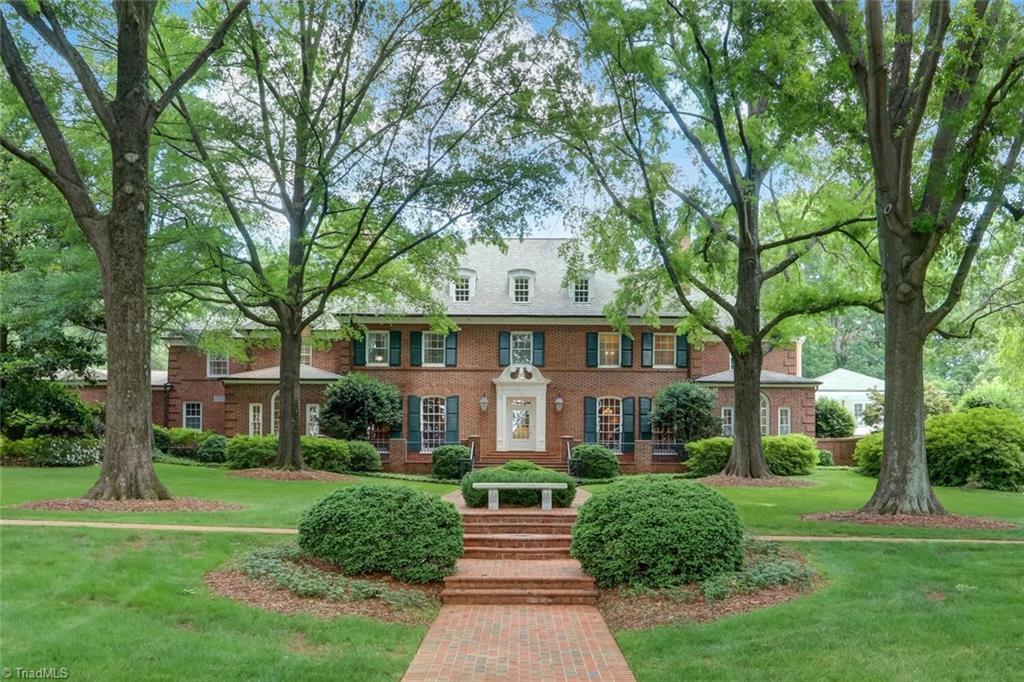
- Sold for $4.5 million on February 27, 2024 (originally $7.495 million)
- 6 bedrooms, 7 full bathrooms, 3 half-bathrooms, 11,201 square feet, 3.3 acres
- Price/square foot: $402
- Built in 1937
- Listed August 5, 2021
- Last sale: $2.49 million, February 1997
- Neighborhood: Irving Park Historic District (NR)
- Listing: “In the late 1990’s the house underwent a total renovation by the present owners. Original features to the house include the Grand Foyer, Formal Living & Dining Rooms, Sunroom, Library, Kitchen, Butler Pantry’s, Morning Room, Six Bedrooms, inclusive of a magnificent primary suite with his & hers dressing rooms, baths.
- “Lower level with Sauna, hot tub, bedroom, bath, exercise room & mechanical room. Pool House with two kitchens, two living areas & three bedrooms. The Cottage with open kitchen & living area, massive fireplace, two bedrooms, two baths, Carriage House with kitchen, bedroom & bath.
- “Gazebo, Tennis Court & open air breeze back grounds overlooking beautifully maintained gardens. Picturesque park like grounds face Greensboro Country Club golf course.”
- District NRHP nomination: “This was the residence of J. Spencer Love, president of Burlington Mills, and his family. The Love House is a palatial Georgian Revival mansion inspired by eighteenth century Virginia houses. It features Flemish bond brickwork, a steep hipped roof with segmental-arched dormers and a modillioned cornice, a five-bay facade with a swan’s neck pedimented entrance, a string course between floors, and brick corner quoins. Large one and two-story wings project from either side of the main block. An expansive landscaped lawn fronts the house and is bordered by a molded brick wall.”
- James Spencer Love (1896-1962) was born in Cambridge, Massachusetts. His father, James Lee Love, was a professor of mathematics at Harvard and, more importantly, a native a Gastonia, where his father and brother owned a small mill called the Gastonia Cotton Manufacturing Company. After graduating from Harvard, J. Spencer went to Gastonia and in 1919 bought the company. In 1922 he moved it to Burlington and gave it a new name. “Shortly afterwards, he decided to gamble on a new product, rayon. Throughout his business career, Love continued to be bold, expanding frequently and seeking new products even in the hard times of the 1930s.” (Dictionary of North Carolina Biography) That kind of initiative turned his small mill into the largest textile company in the world, Burlington Industries.
- Benjamin and Anne Cone bought the house in 1941 from Love’s ex-wife, Elizabeth Love Appleget. Cone (1899-1982) was a son of Ceasar and Jeannette Cone. He served as chairman of Cone Mills, 1957-71; mayor of Greensboro, 1949-51 (Greensboro mayors traditionally served only one term until the 1970s); and chairman of Moses H. Cone Memorial Hospital, 1956-65. He and his wife, Anne Coleman Wortham Cone (1915-1999), were major benefactors to the Weatherspoon Art Museum. They owned the house until 1977, when they sold it to Richard Love, a son of J. Spencer Love, and his wife, Bonnie B. Love. They sold the house in 1982.
- in 1997, the house was bought by the current owner, Bonnie McElveen Hunter, founder and CEO of Greensboro’s Pace Communications, president of the American Red Cross and former ambassador to Finland, and her husband, Bynum Merritt Hunter (1925-2018).
- The buyer is an LLC registered to Roy Carroll, CEO of the Carroll Companies, a Greensboro-based real-estate developer, and Craig Carlock, Carroll’s chief operating officer and former CEO of the Fresh Market.
1009hampton
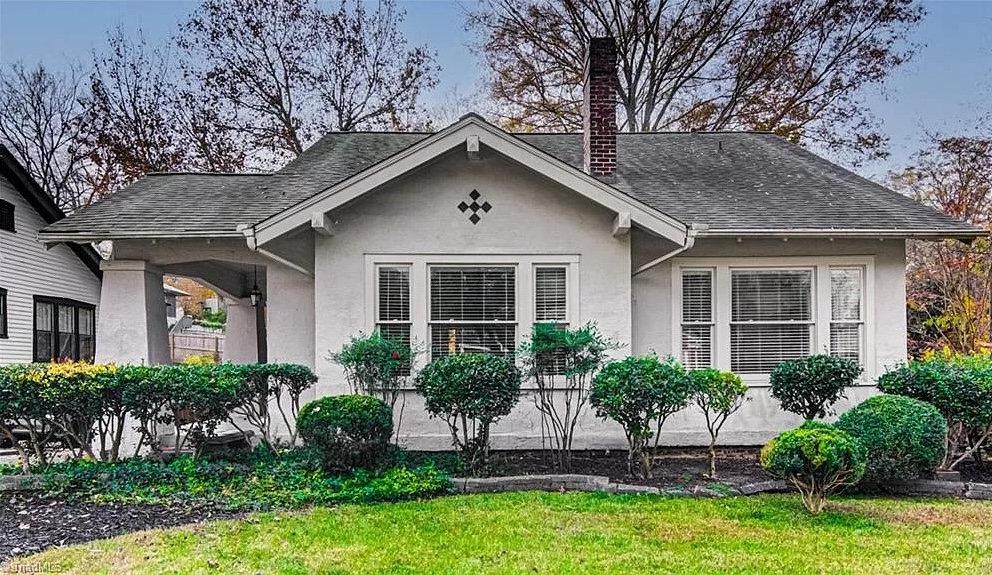
- Sold for $259,900 on February 12, 2024 (listed at $259,900)
- 3 bedrooms, 1 bathroom, 1,377 square feet, 0.19 acre
- Price/square foot: $189
- Built in 1928
- Listed November 24, 2023
- Last sale: $$112,000, August 1994
- Neighborhood: Westerwood
- Note: Being sold by an estate.
- The original owners were Houston Jones Wilson (1871-1948) and Susan R. Highfill Wilson (1869-1947). Houston was a printer and a carpenter. They sold the house in 1930 to their adopted daughter, May Crocker Wilson (1891-1945). She sold it in 1944. May worked in the circulation department of the Greensboro Daily News until she retired in 1940 due to poor health.
- May sold the house to George W. Lemons Jr. (1905/1906-1989) and Georgia V. Lemons (dates unknown). George was advertising manager for the Greensboro Daily News, a position he held for 23 years. He served as president of the national Newspaper Advertising Executives Association in 1959. He also served as president of the Greensboro Merchants Association and the Greensboro Holiday Jubilee and as a charter director of the United Fund of Greater Greensboro. George sold the house in 1988.
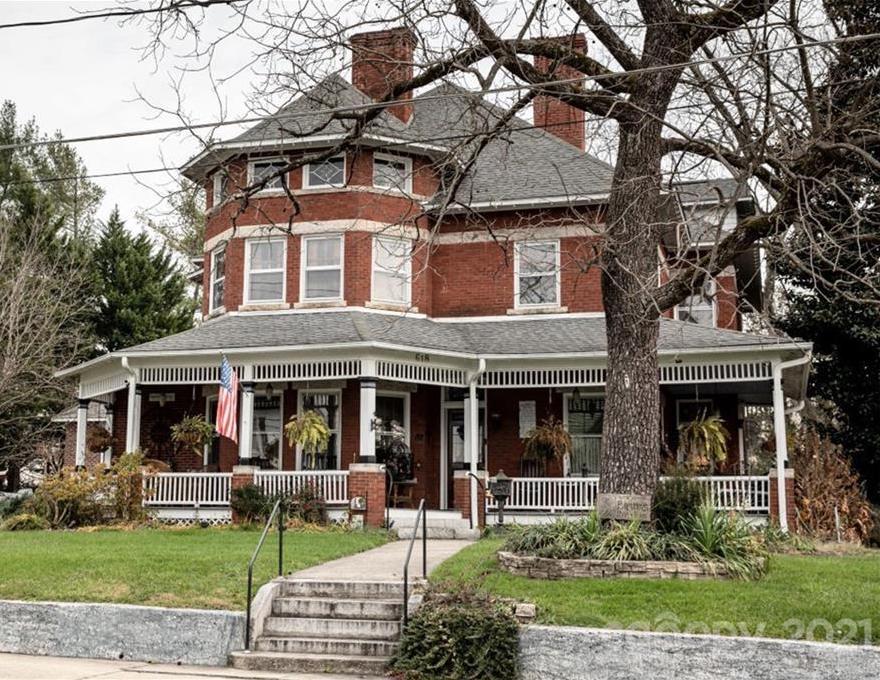
618 N. Main Street, Mount Airy, Surry County
The William Edward Merritt House
Heart & Soul Bed & Breakfast
- Sold for $849,900 on February 1, 2024 (originally $850,000, later $750,000)
- 6 bedrooms, 6 bathrooms, 5,024 square feet (per county), 0.66 acre
- Price/square foot: $169
- Built in 1901
- Listed July 8, 2021
- Last sale: $152,000, April 2014
- Neighborhood: Mount Airy Historic District
- Note: The listing gives the square footage as 4,779.
- The listing previously said there were 7 bedrooms and 7 1/2 bathrooms.
- Listing: “The house is selling completely furnished except for personal belongings.” That includes a restored 1939 Cadillac Series 75 limousine (click for photo).
- The property includes a detached two-car garage with an apartment above.
- District NRHP nomination: “Large, impressive two-story brick late Victorian style house with granite trim, dominated by a two-and-one-half story polygonal projecting bay and one-story wrap-around porch with spindle frieze.
- “The virtually unaltered house also features decorative, tall, corbelled and recessed panel interior chimneys, one-over-one windows with granite lintels and sills, granite string course extending around the house above the second story windows, decorative sawn brackets supporting wide overhanging eaves and Colonial Revival interior features.
- “Built in 1901 by contractor J.A. Tesh for W.E. Merritt, who owned a hardware store and brickyard, and was the founder of the Renfro Textile Company and one of the founders of the Mount Airy Furniture Company.”
- William Edward “Ed” Merritt (1867-1946) was born in Chatham, Virginia. His wife, Caroline Octavia “Carrie” Kochtitzky Merritt (1868-1960), was a native of Oakland, Missouri. After they came to Mount Airy, Ed’s parents and five of his six siblings also moved to the town.
- From the Mount Airy News: “As is often the case, this new blood energized and benefited the community, as they established or led several major businesses: Merritt Hardware, Renfro Hosiery, Mount Airy Furniture Company, Merritt Machine Shop, Piedmont Manufacturing Company, and Floyd Pike Electrical, the North Carolina Granite Corp., and others. Several family members have served as town commissioners, the city engineer, the Surry County Draft Board, the county Board of Commissioners, and in the US Navy and Army.”
.

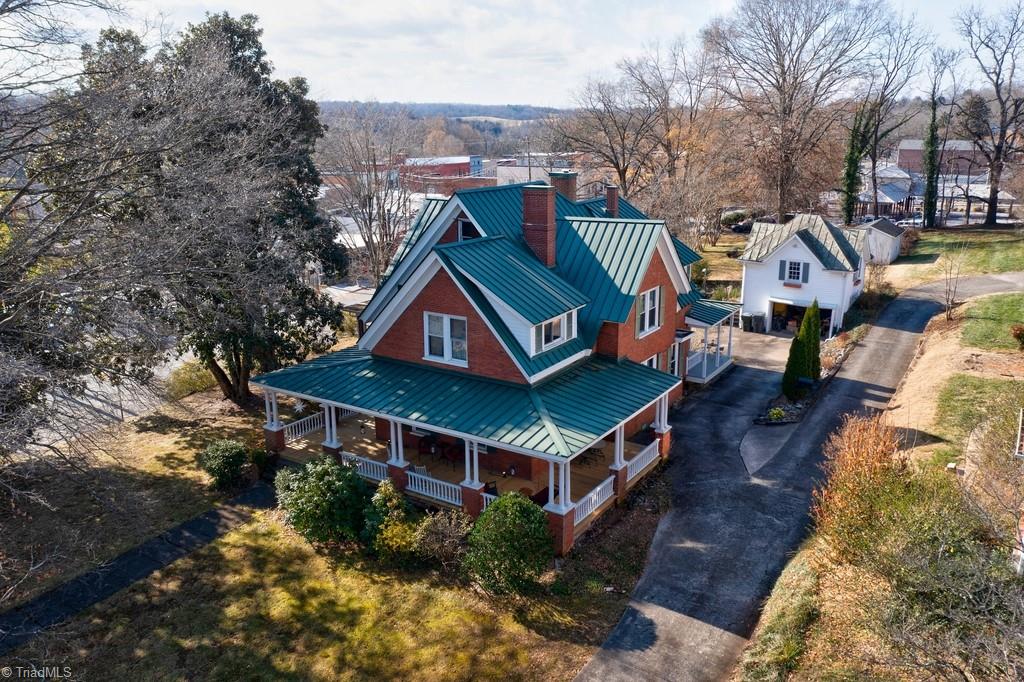
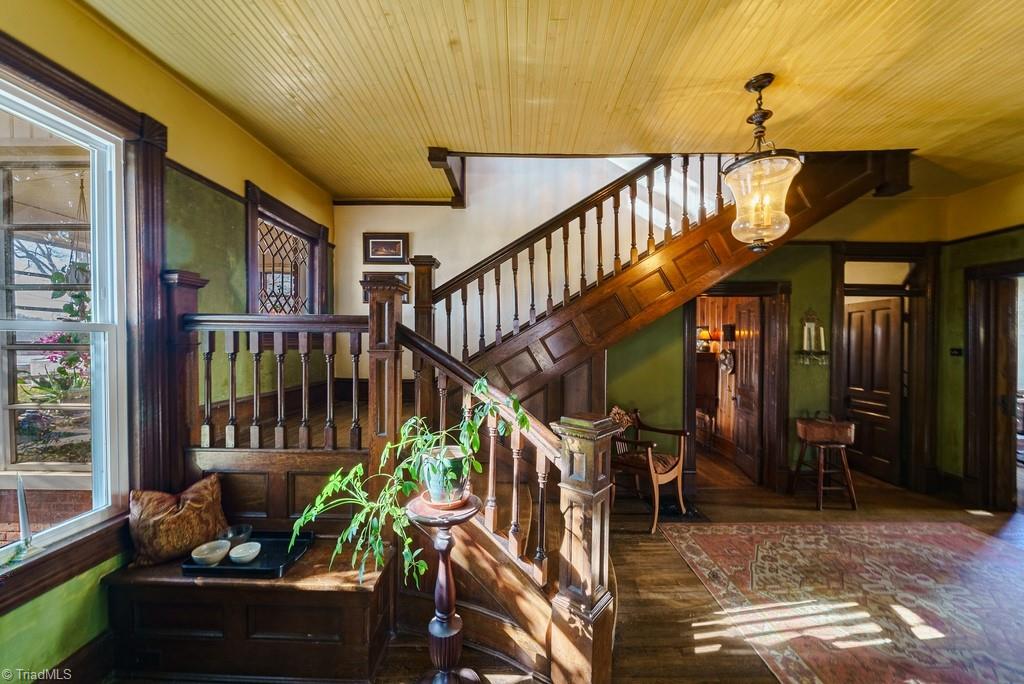
105 Gwyn Avenue, Elkin, Surry County
The Mason and Marion Lillard House
- Sold for $480,000 on January 18, 2024 (listed at $475,000)
- 4 bedrooms, 2 bathrooms, 3,076 square feet, 0.66 acres
- Price/square foot: $156
- Built in 1910
- Listed December 8, 2023
- Last sale: $212,000, April 2014
- Neighborhood: Gwyn Avenue-Bridge Street Historic District (NR)
- Note: The property includes a garage with former maid’s quarters upstairs.
- District NR nomination: Many one- and two-story Queen Anne-style houses in the district “reflect the fanciful spirit of the style.”
- “The ca. 1910 Mason Lillard House at 105 Gwyn Avenue made use of an asymmetrical Queen Anne-style form, while incorporating a hint of the Colonial Revival style in its wraparound porch with Tuscan colonettes. When built, the Lillard House was one of only six brick houses in Elkin. Mason Lillard was an executive with the nearby Chatham Manufacturing Company and a civic leader. …
- “Thomas Mason Lillard (1870-1943) moved to Elkin from Tennessee in 1891 to work for the Chatham Manufacturing Company. He quickly became active in the community, and in 1896 was listed as a member of both the Elkin Cornet Band and the Elkin Bicycle Club. In 1902, Lillard married Kate Gwyn, but she died two years later.
- “By 1907 Lillard had become secretary of the Chatham Manufacturing Company; he later was promoted to vice-president. Also in 1907, Lillard married his second wife, Marion Howison Kelly (1881-1966). Educated at the North Carolina College for Women in Greensboro, she moved to Elkin in 1901 to become secretary to Hugh Chatham, and in doing so, became the first woman to be employed in the offices of Chatham Manufacturing Company.
- “The Lillard House was probably built ca. 1910, within a few years after the marriage of Mason and Marion. According to Grady Burgiss, writing in the October 4, 1934, issue of The Elkin Tribune about Elkin twenty years earlier (1914), the T.M. Lillard House was one of only six brick houses in Elkin at that time. Here the Lillards reared four daughters born between 1909 and 1918.
- “Mason Lillard was an active member of the Methodist church. In 1914 he served on an appointed citizens’ committee—with C.E. Holcomb and A.G. Click—to oversee the installation of Elkin’s water and sewerage system and to arrange for the town’s new lighting system. He was on the original board of trustees of the Hugh Chatham Memorial Hospital when it was established in 1931.
- “Lillard was also on the boards of directors of the Elkin Building and Loan Company, the Elkin National Bank, and the Bilt-Rite Furniture Company, and he served as secretary and treasurer of the Elkin Water Company, directing its operation and growth for many years. His community service continued with his help in surveying, planning, and maintaining Hollywood Cemetery.
- “Marion Lillard also possessed a strong community spirit. Like Mason, she was an active member of the Methodist church. She also was a charter member of the Yadkin Valley Garden Club, the Elkin Woman’s Club, and the Parent-Teacher Association. Accustomed to being a ‘first’ when it came to women’s roles, Marion Lillard was also the first woman member and the secretary-treasurer of the Elkin School Board.
- “Set on a rise above both Gwyn Avenue and Market Street, the Lillard House is a one-and-a-half-story brick dwelling. Its metal-shingled roof consists of multiple front and side intersecting gables; two shed dormers flank the north-side gable.
- “Interior chimneys pierce the roof. A distinctive wraparound porch features grouped Tuscan colonettes set on brick plinths and a turned balustrade. Another, smaller, porch wraps around the northwest corner at the rear of the house. It has turned posts and is screened.
- “On the south side of the house, what was originally an open porch is now a sun room enclosed with jalousie windows. Other windows are one-over-one sash. …
- “Because of the district’s topography, many houses have no outbuildings. … The oldest outbuilding in the district is also one of the largest. It is the one-and-a-half story frame garage/apartment associated with the Mason and Marion Lillard House at 105 Gwyn Ave.
- “Though now covered with vinyl siding, the ca. 1910 building still conveys a strong sense of its original appearance, when it provided housing for a servant with space below for a vehicle. The building has a steep hipped roof with intersecting cross gables.”
.


- Sold for $265,000 on January 16, 2024 (listed at $265,000)
- 2 bedrooms, 2 bathrooms, 1,438 square feet, 0.46 acre
- Price/square foot: $184
- Built in 1885
- Listed November 9 2023
- Last sale: $168,000, March 2016
- Neighborhood: Glencoe Mill Village Historic District (NR)
- District NR nomination: Glencoe “is a typical but remarkably well-preserved example of nineteenth century industrial villages that once flourished in North Carolina’s Piedmont region. The district covers a little more than 100 acres and consists of three parts: 1) a manufacturing and commercial complex; 2) a power and water system; and 3) a residential and social unit. …
- “The predominant house type was originally a four-room, two-story structure typical of North Carolina rural housing of the late nineteenth and early twentieth centuries. The front porches are two bays wide and supported by four unornamented posts. A central hallway open onto rooms to the east and west. …
- “Chimneys are set on the east. Upstairs there are usually two rooms, with the railing from the narrow staircase extending into the west room. Detached kitchens of brick and batten construction are set behind the houses; a typical kitchen was about 20′ by 12′. Open wells serve[d] four houses each.
- “A later modification of the mill housing is the kitchen, attached at the back of the east wing of most houses, forming an L. These rooms had, by 1910, largely replaced the detached kitchens, of which only a handful remain. The connected kitchens have chimneys and customarily have side porches facing the river and the mill (west).”
.
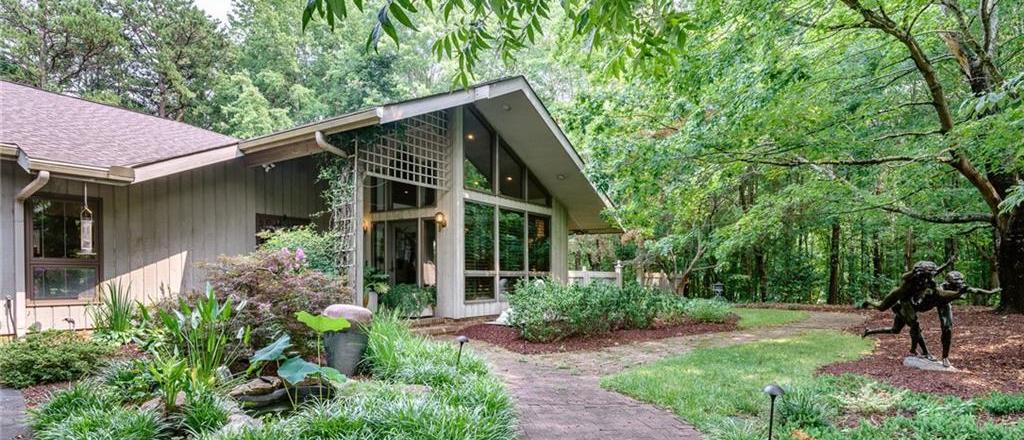


9069 Lasater Road, Clemmons, Forsyth County
The Herbert and Patricia Williams House
- Sold for $525,000 on January 11, 2024 (originally $610,000)
- 3 bedrooms, 2 bathrooms, 2,148 square feet, 9.27 acres
- Price/square foot: $244
- Built in 1980
- Listed September 8, 2023
- Last sale: $481,000, June 2021
- Note: The house was built by Herbert E. Williams (1941-2020) and Patricia W. Williams. They bought the property in 1979 and owned it until 2021. Herbert was born in Forsyth County. He graduated from Gray High School and Guilford College. He worked for Reynolds American for 30 years.
.


11964 Austin Traphill Road, Traphill, Wilkes County
The Traphill Bargain House
- Sold for $725,000 on January 9, 2024 (originally $850,000)
- 2 bedrooms, 2 bathrooms 1,920 square feet, 2.20 acres
- The property includes an 1840 “event cabin,” 1,200 square feet, with indoor and outdoor speakers, a bar, dishwasher, sink and a half-bathroom; a 1908 store building, 1,800 square feet with a one-bedroom apartment; and an artist’s studio.
- Price/square foot: $378
- Built in 1880 (per listing)
- Listed November 16, 2022
- Last sale: $45,000, January 2010
- Neighborhood: Traphill Historic District (NR)
- Note: The house was originally a store.
- The county gives the date of the house as 1890. The district NR nomination says 1882 “or shortly thereafter.”
- Now the home of Traphill Studios (also here)
- District NR nomination (1980): A “major Traphill store, the Traphill Bargain House … Now deteriorated and over-grown with foliage, this two-story structure has its entrance in the gable end oriented to the street, and is distinguished by its two-story recessed porch that carries across the entire facade, supported by narrow trellisses.
- “This facade under the porch is sheathed in the same sort of flush horizontal boards found on the other walls of Traphill porches that extend across the entire facade.
- “The floor plan is irregular, with two rooms, front to back, on the first floor, an enclosed staircase in a rear corner, and several rooms upstairs.
- “An early photograph indicates that there once was a one-story, gable-roofed, hewn log wing on the north side of the store; it is possible that the two-story frame portion of the store was added to the log structure.
- “There also was a walkway that extended from the second floor of the porch across the street at an angle to the house on the bank of the southwest corner that burned several years ago.”
- “Situated in the foothills of the Blue Ridge Hountains in northeastern Wilkes County, the small rural community of Traphill retains several structures that formed the heart of the village in its nineteenth and early twentieth century period of importance as a regional trading and educational center.
- “Taken as a whole, these structures and their undisturbed setting provide a glimpse into past rural community life of western North Carolina in a way that has not often survived in similar crossroads settlements of the region. The dozen buildings are of simple, vernacular forms representing the broad scope of agricultural, religious, educational, and commercial life of a remote agrarian community.”
 Piedmont Historic Homes