Updated October 18, 2026
Some older properties, especially outsized, rural ones, are marketed as possible commercial properties — B&B’s, vineyards, event venues and such — rather than or in addition to residential use.
1pari
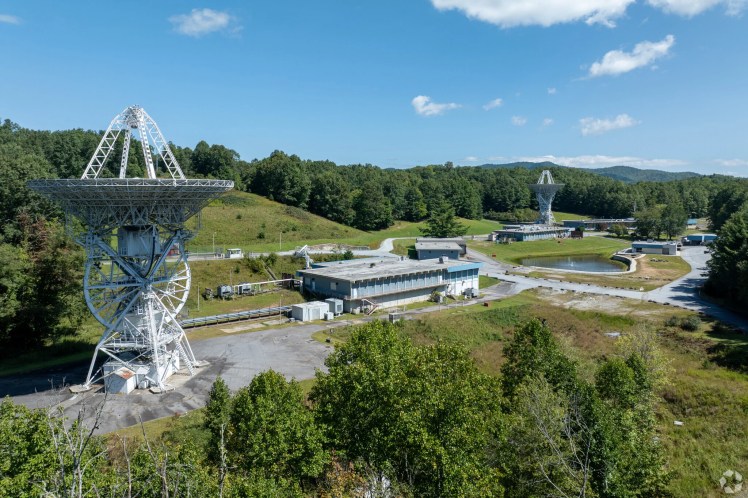
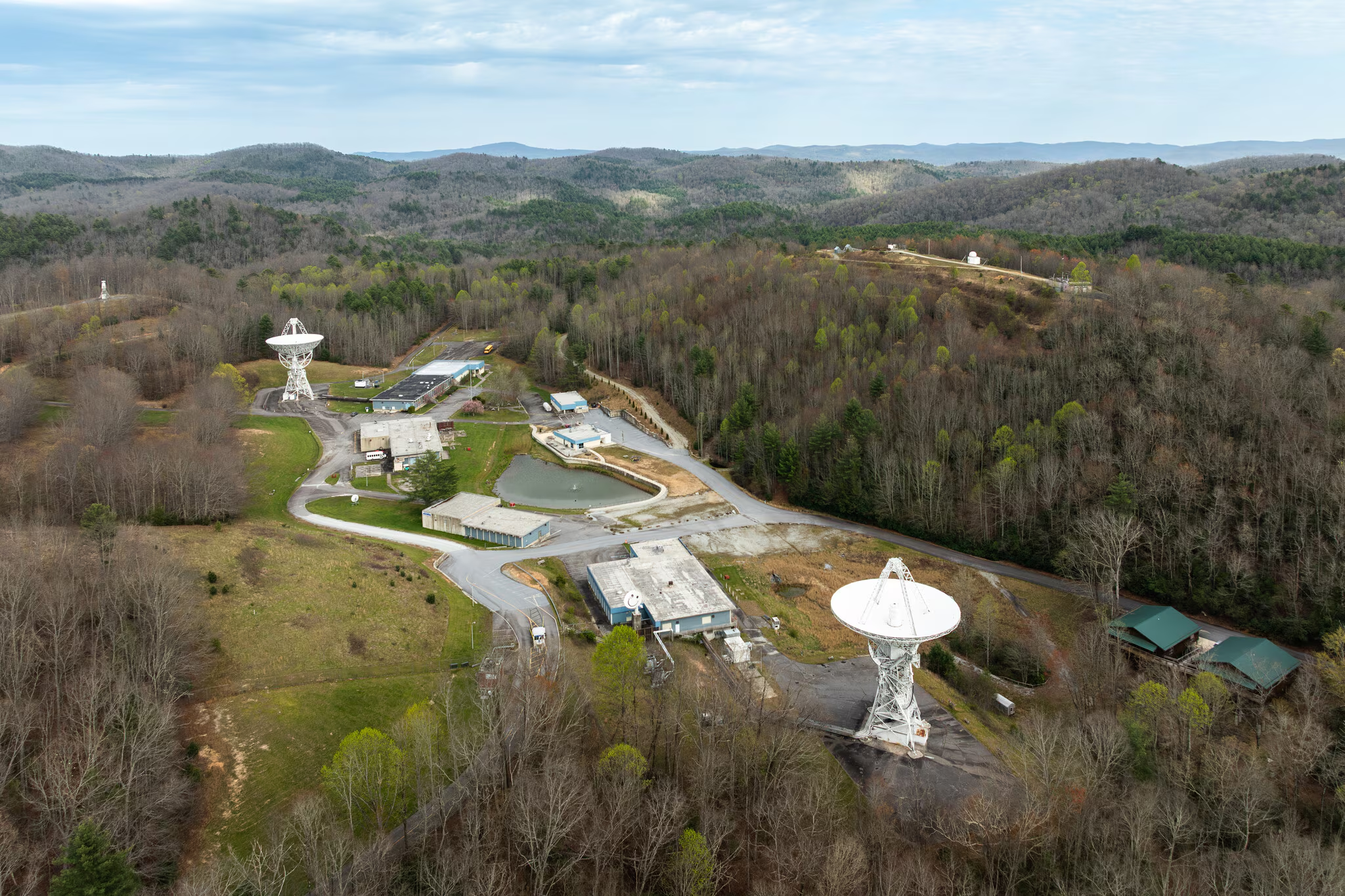
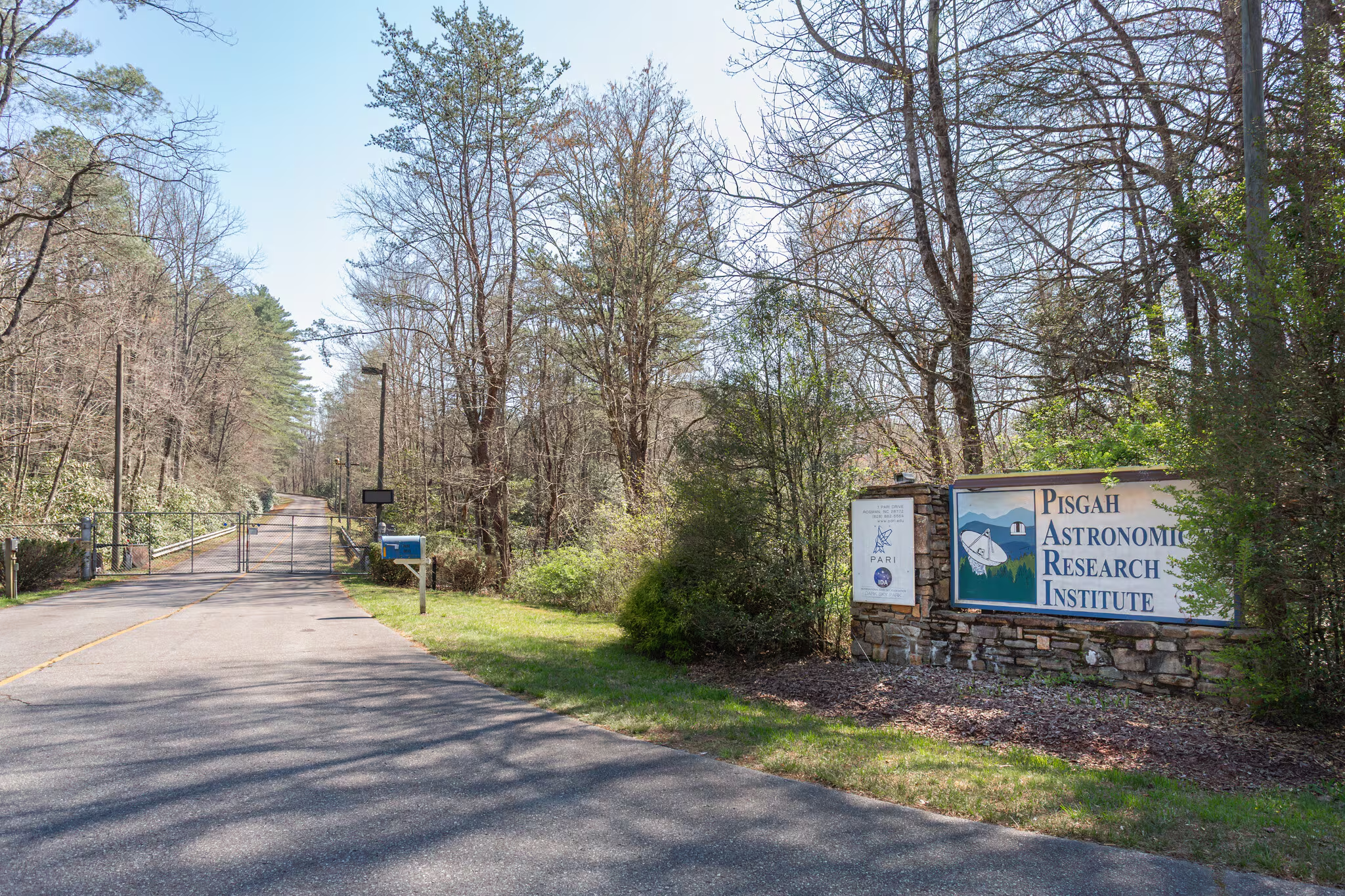
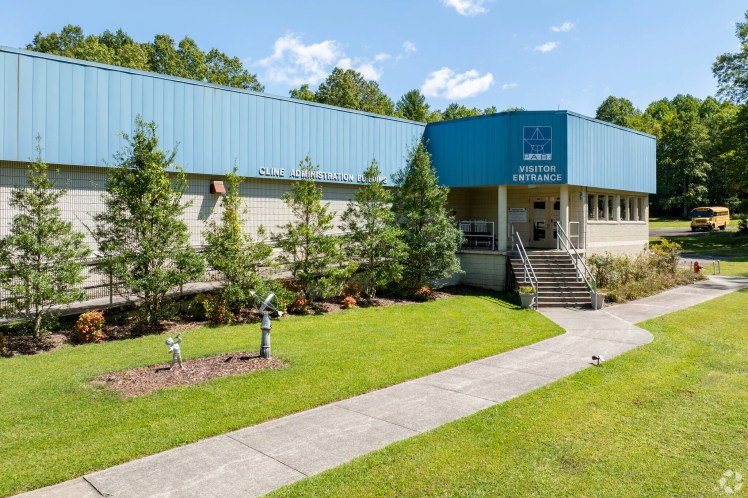
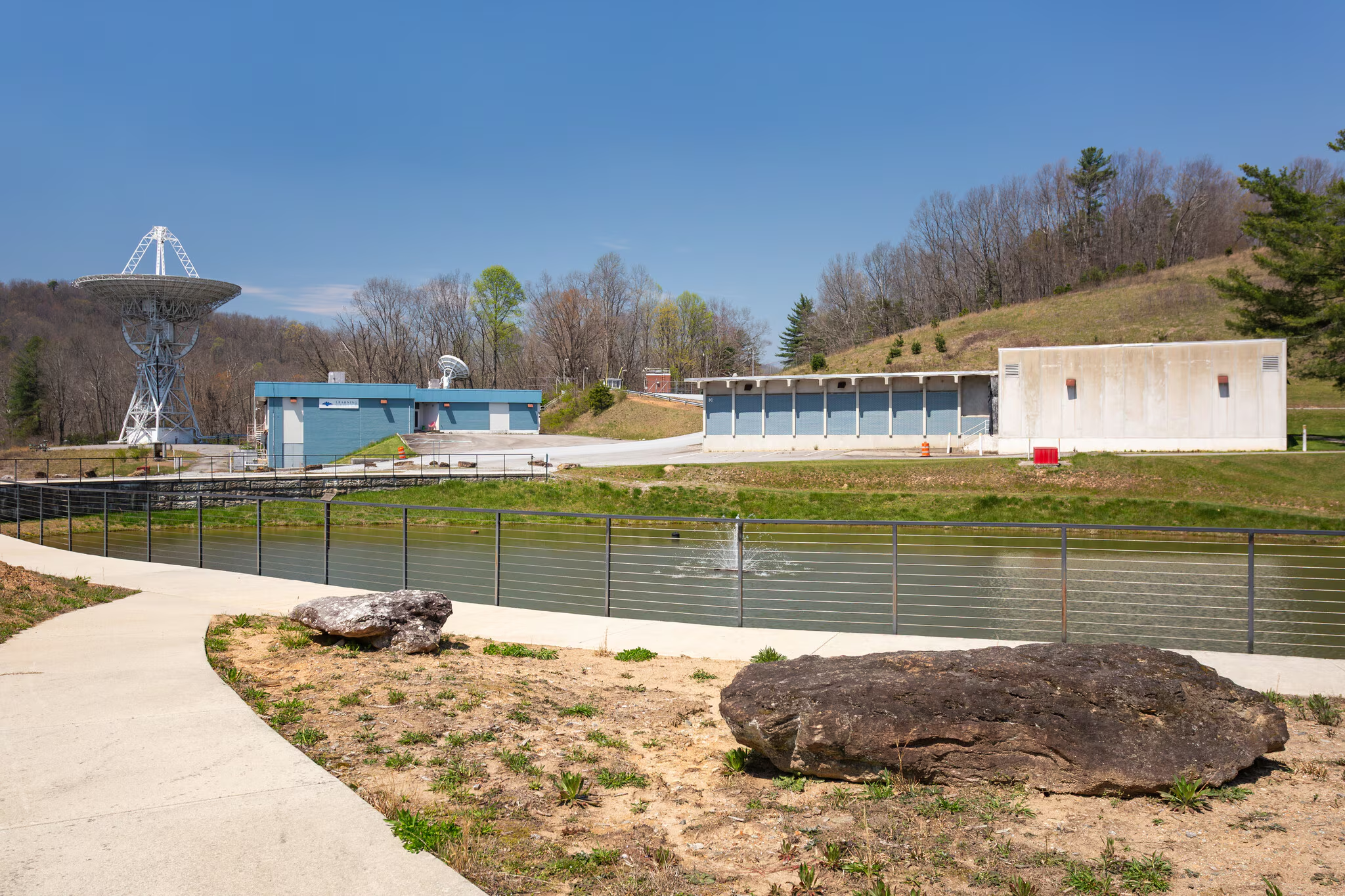
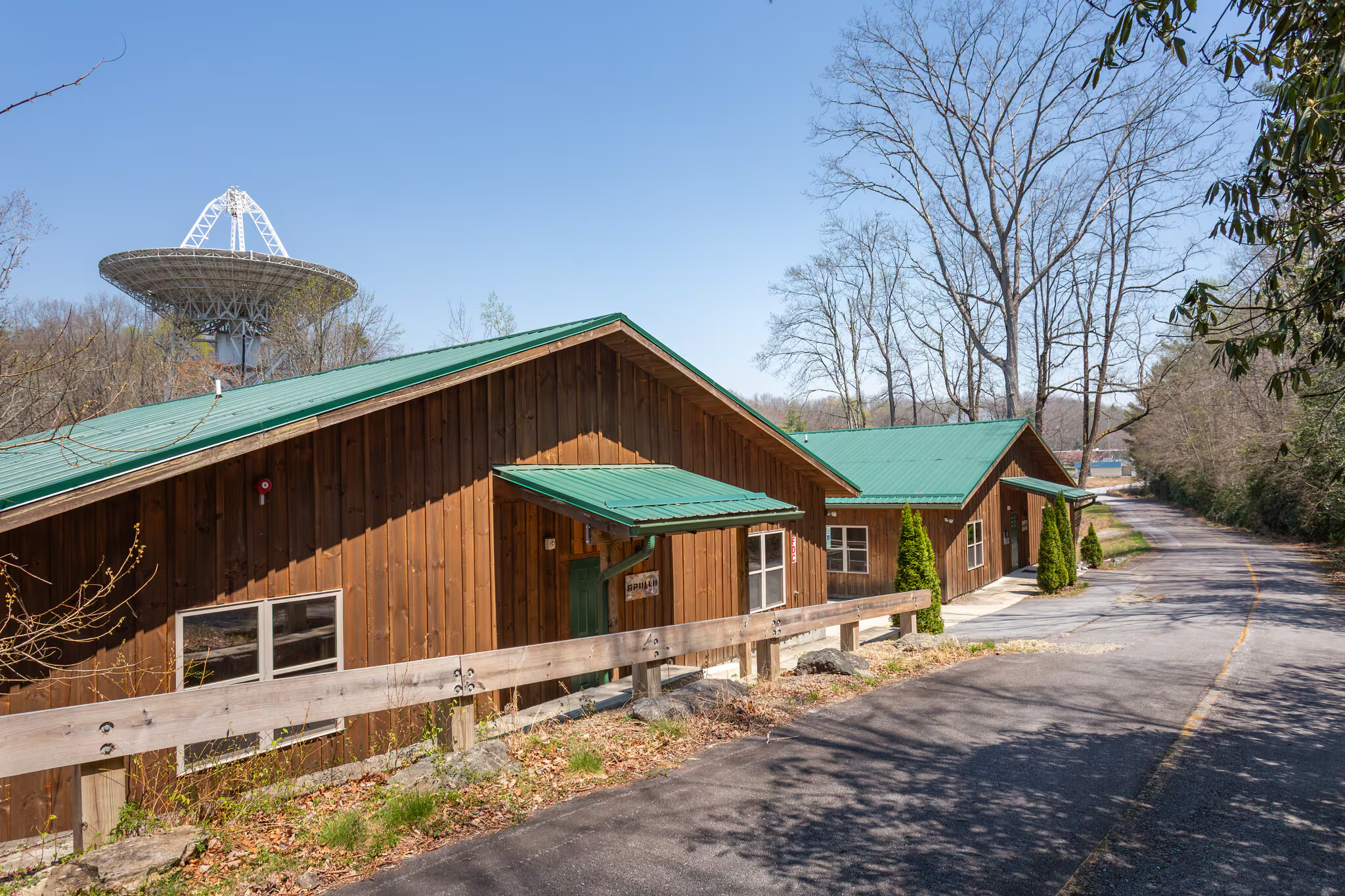
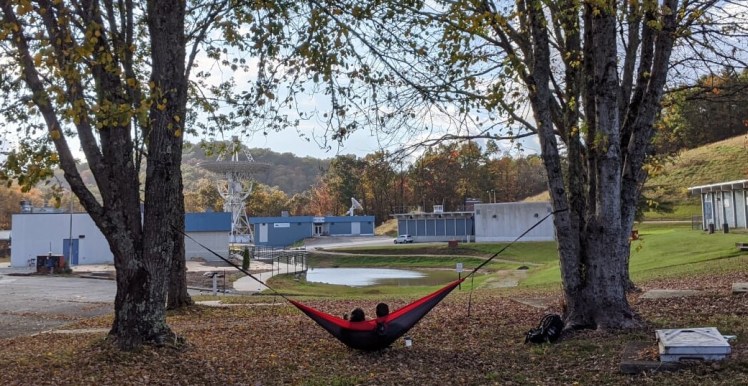
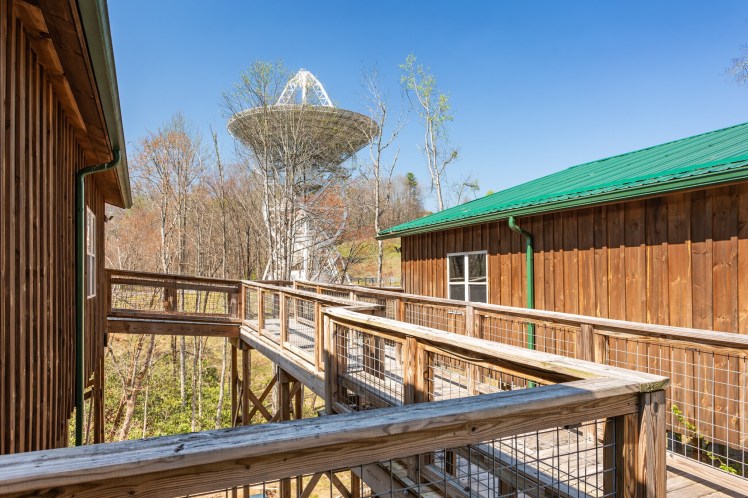
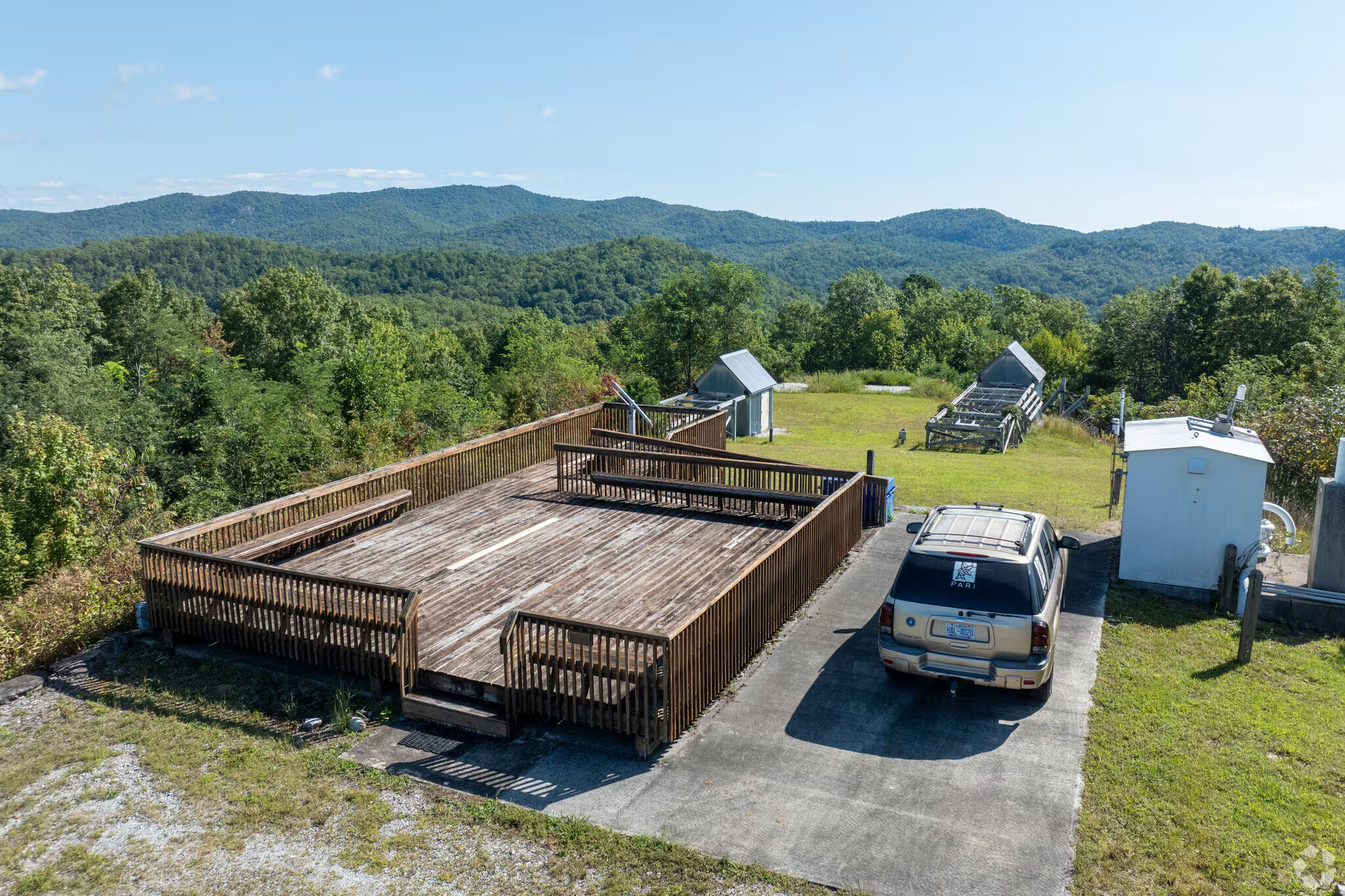
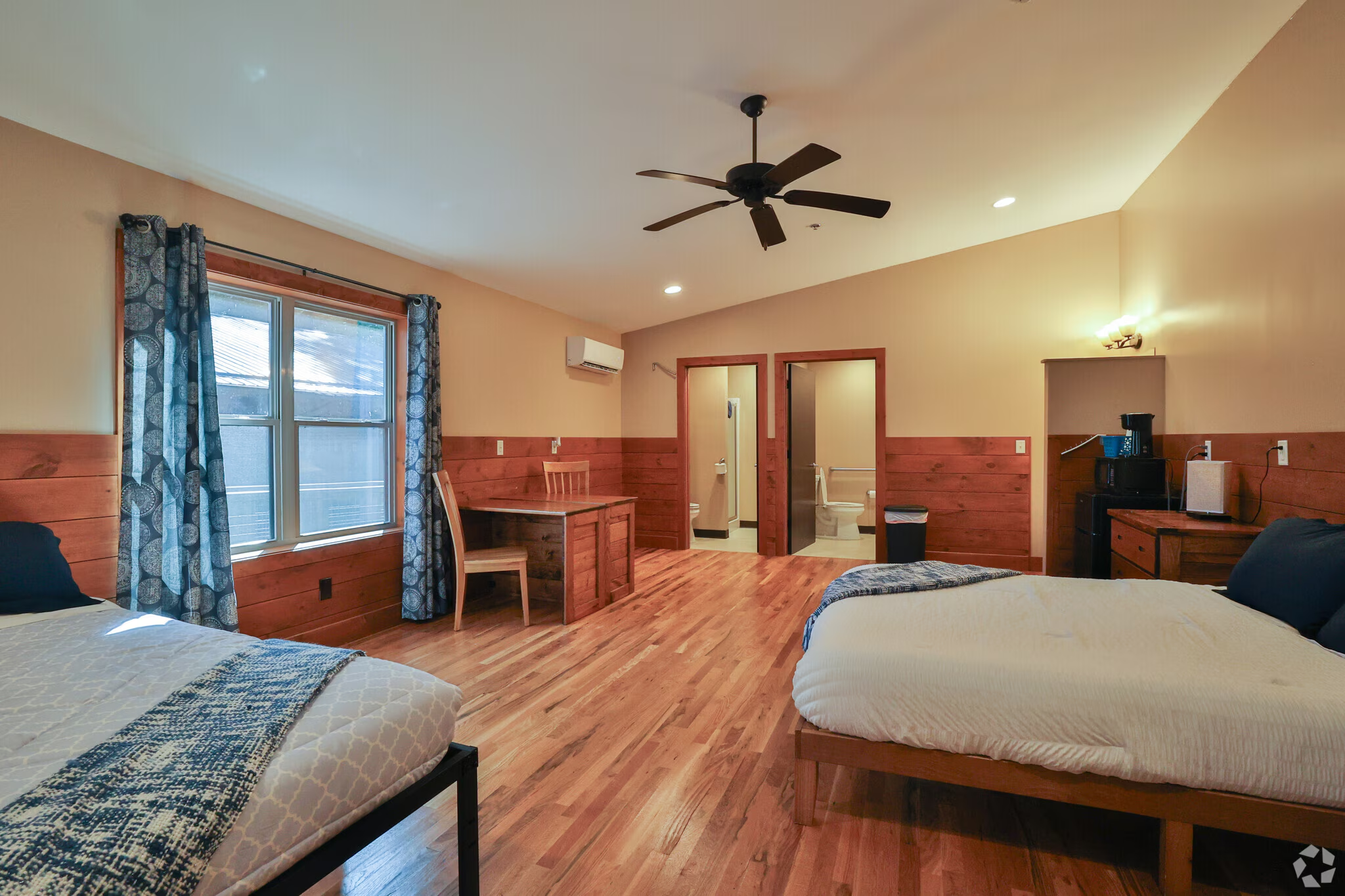
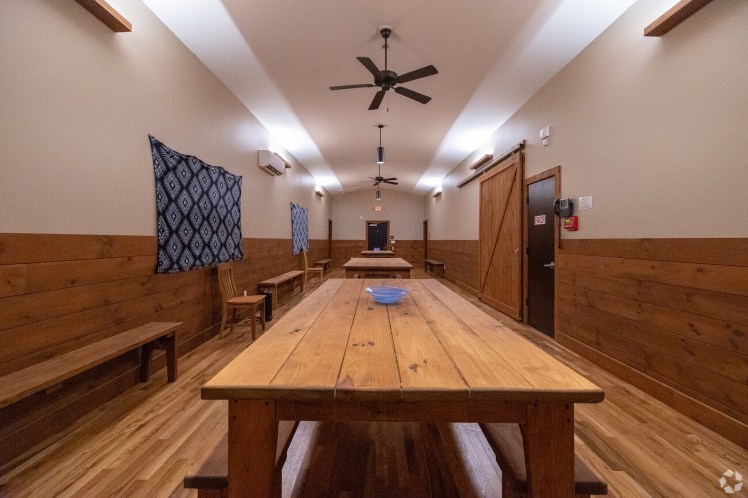
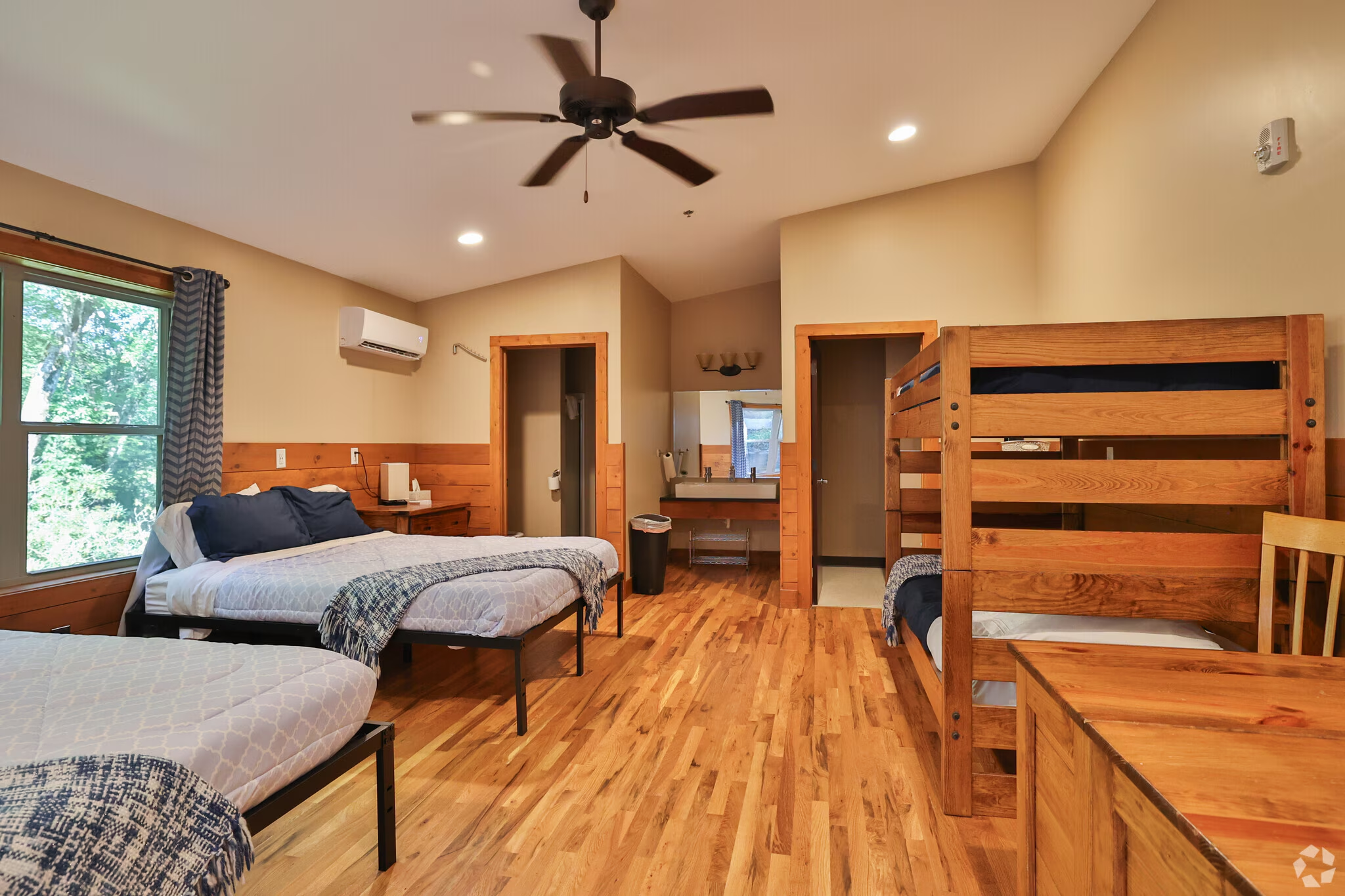
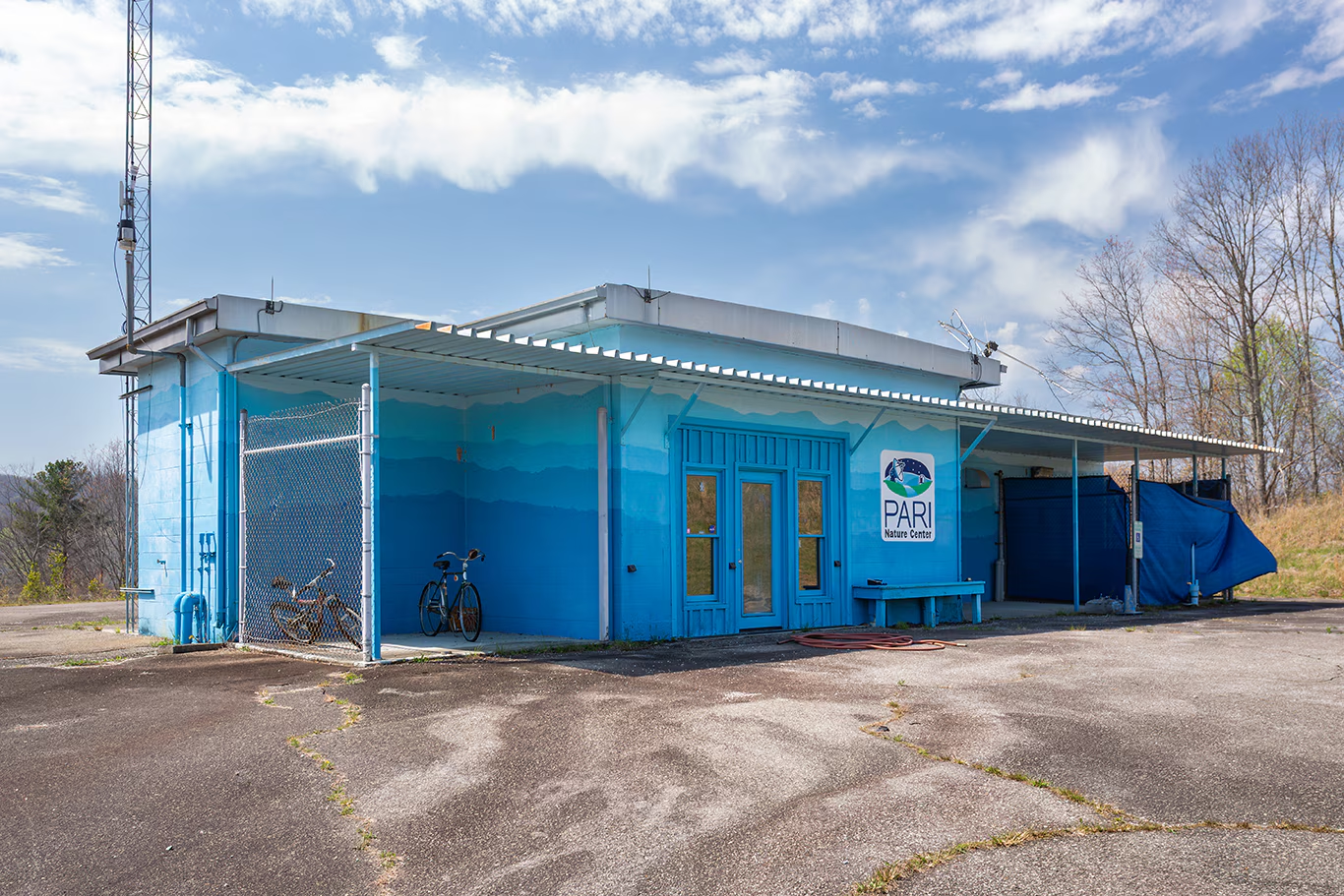
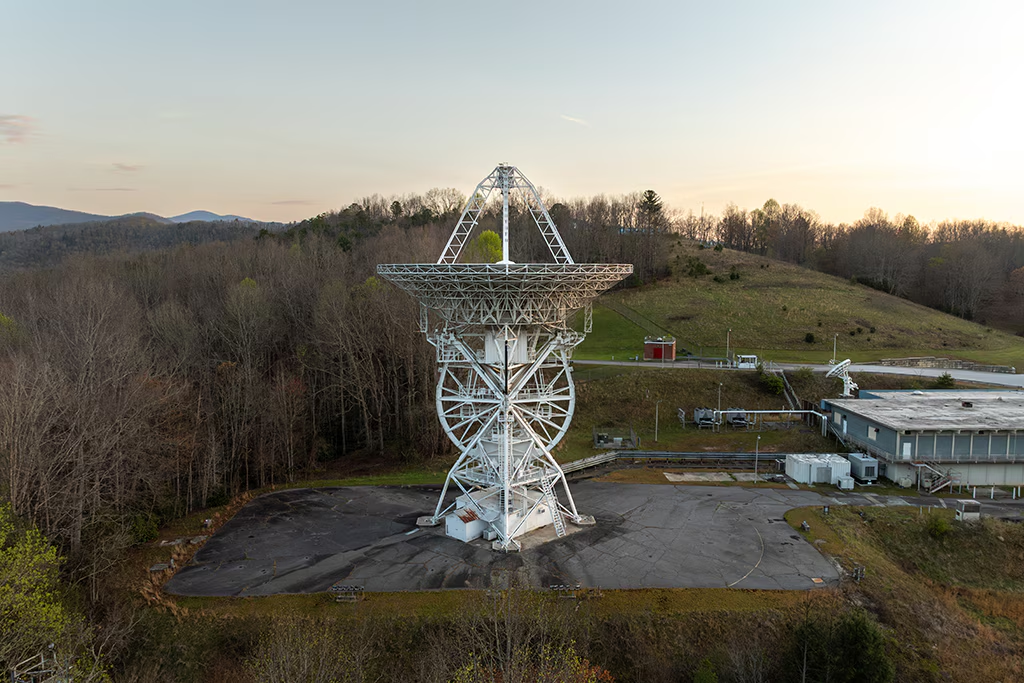
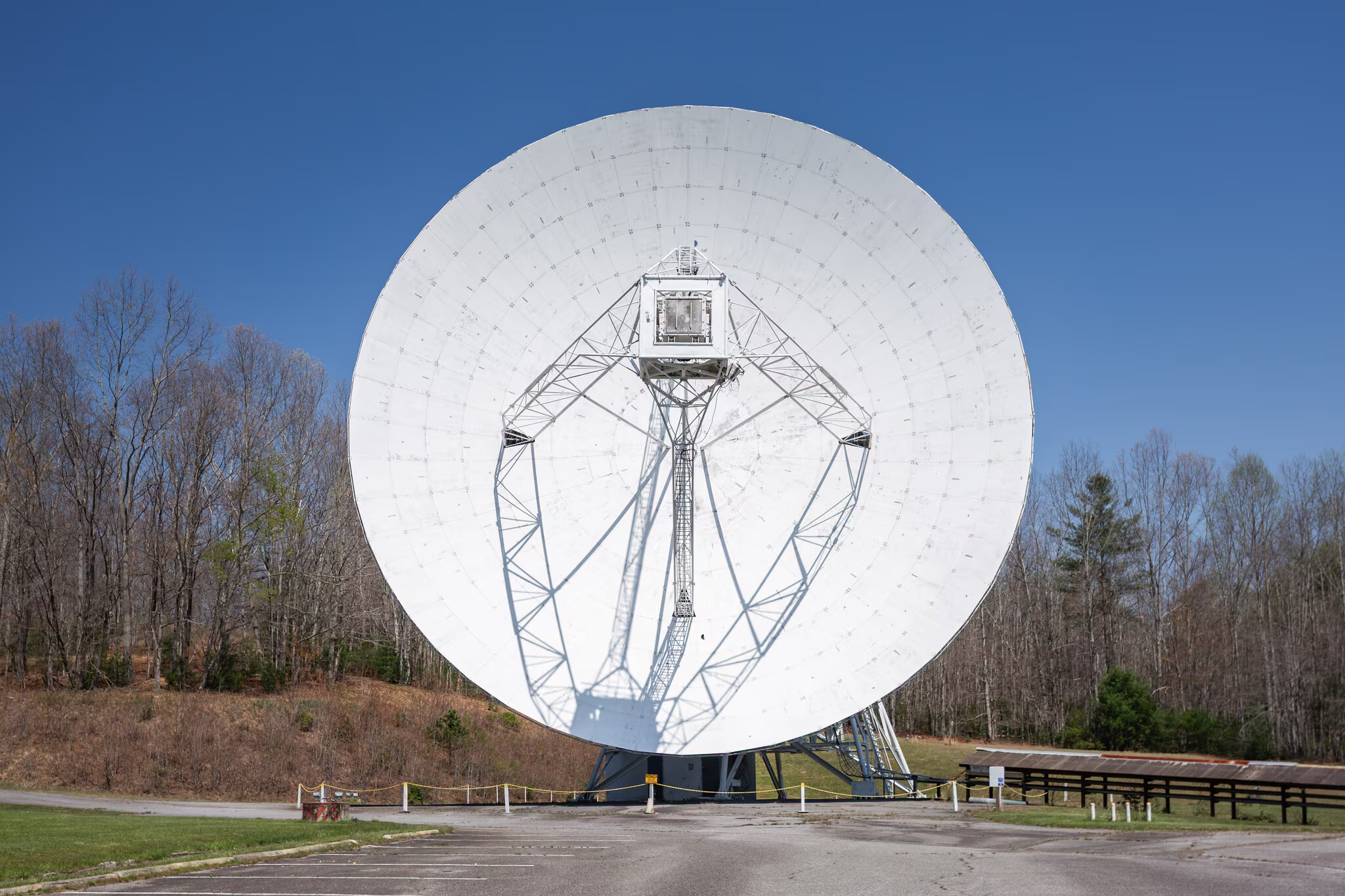
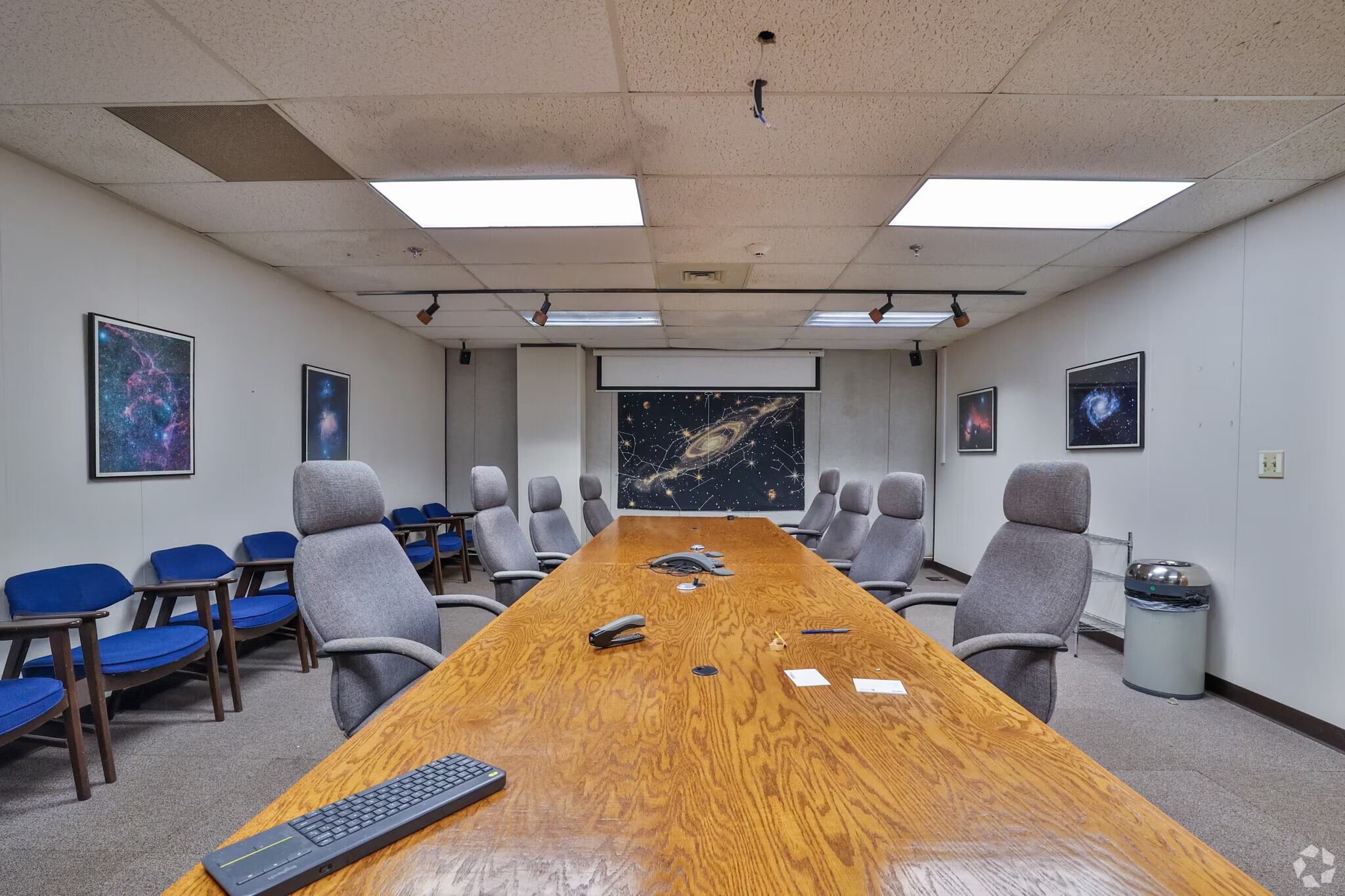
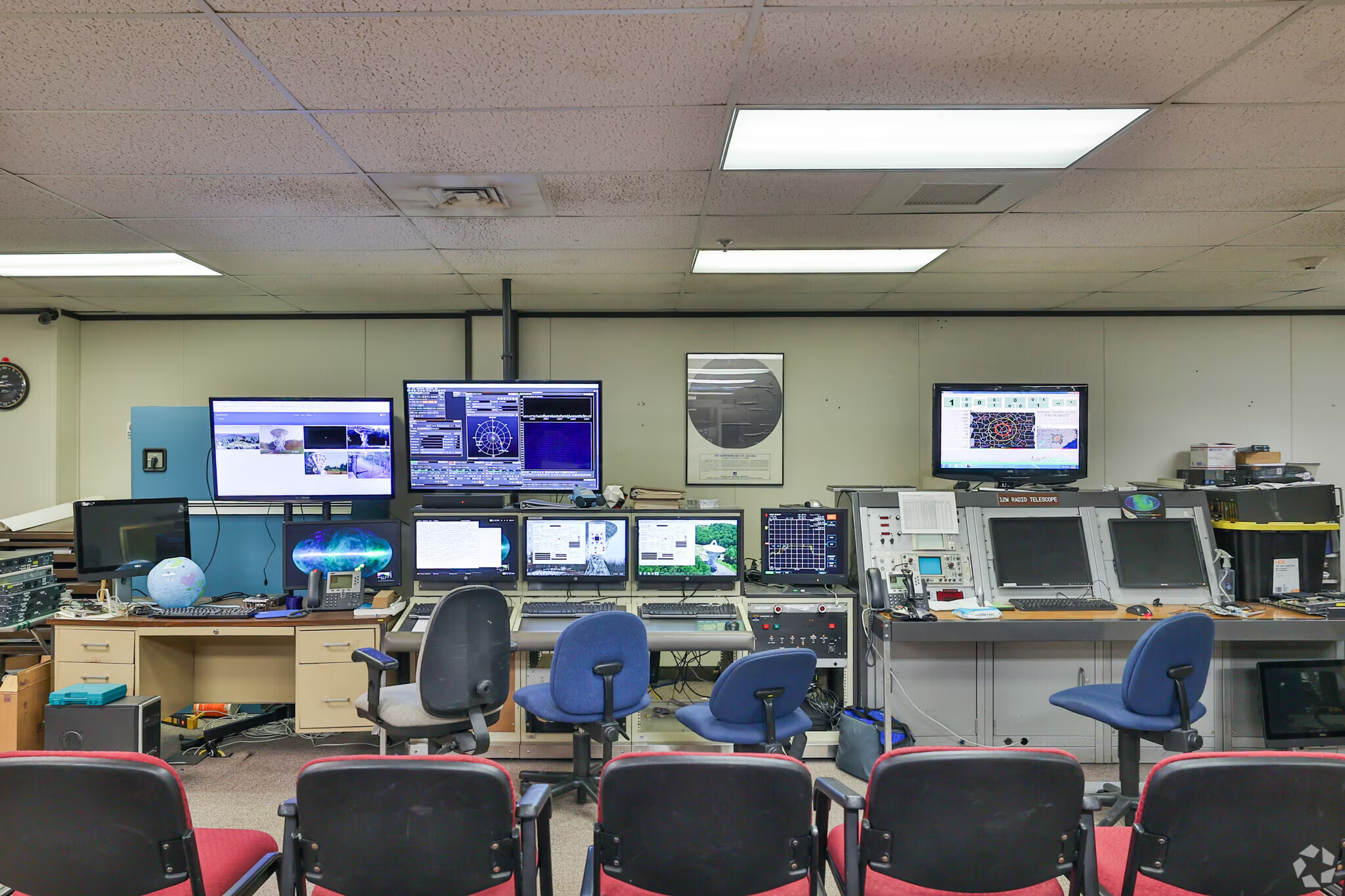
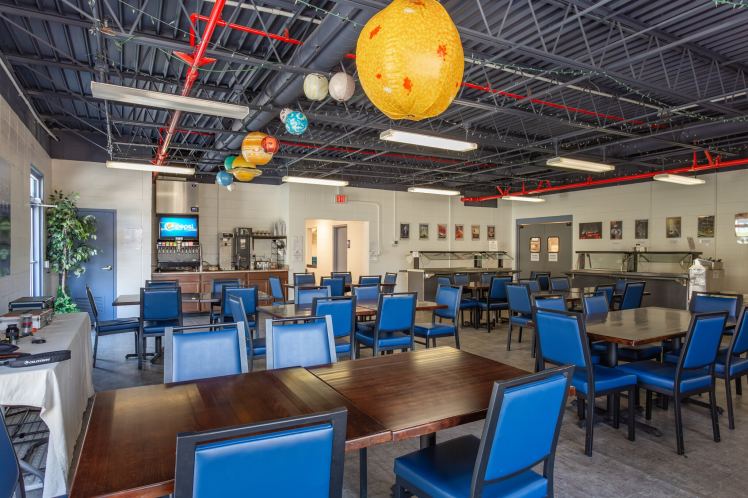
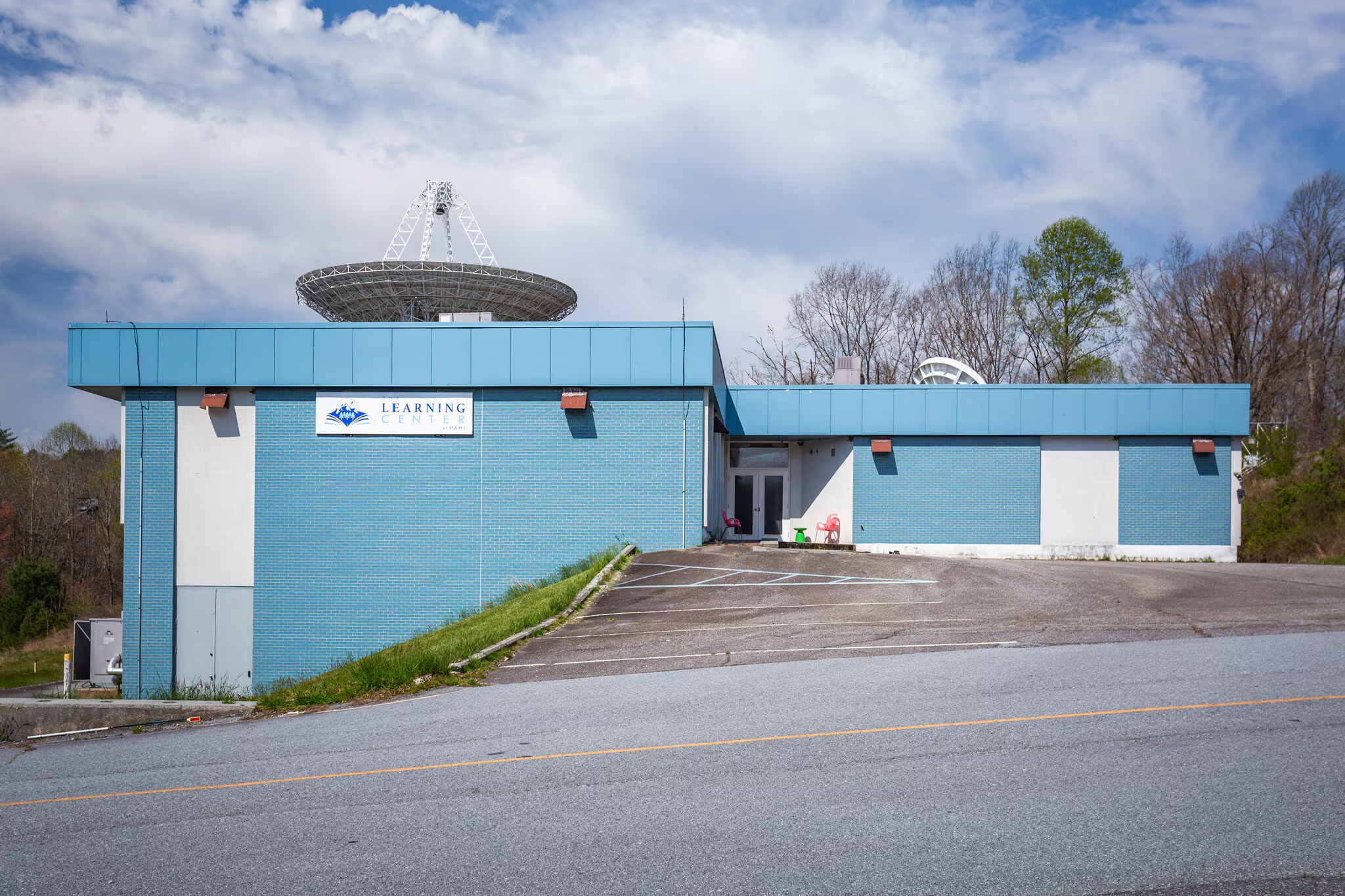
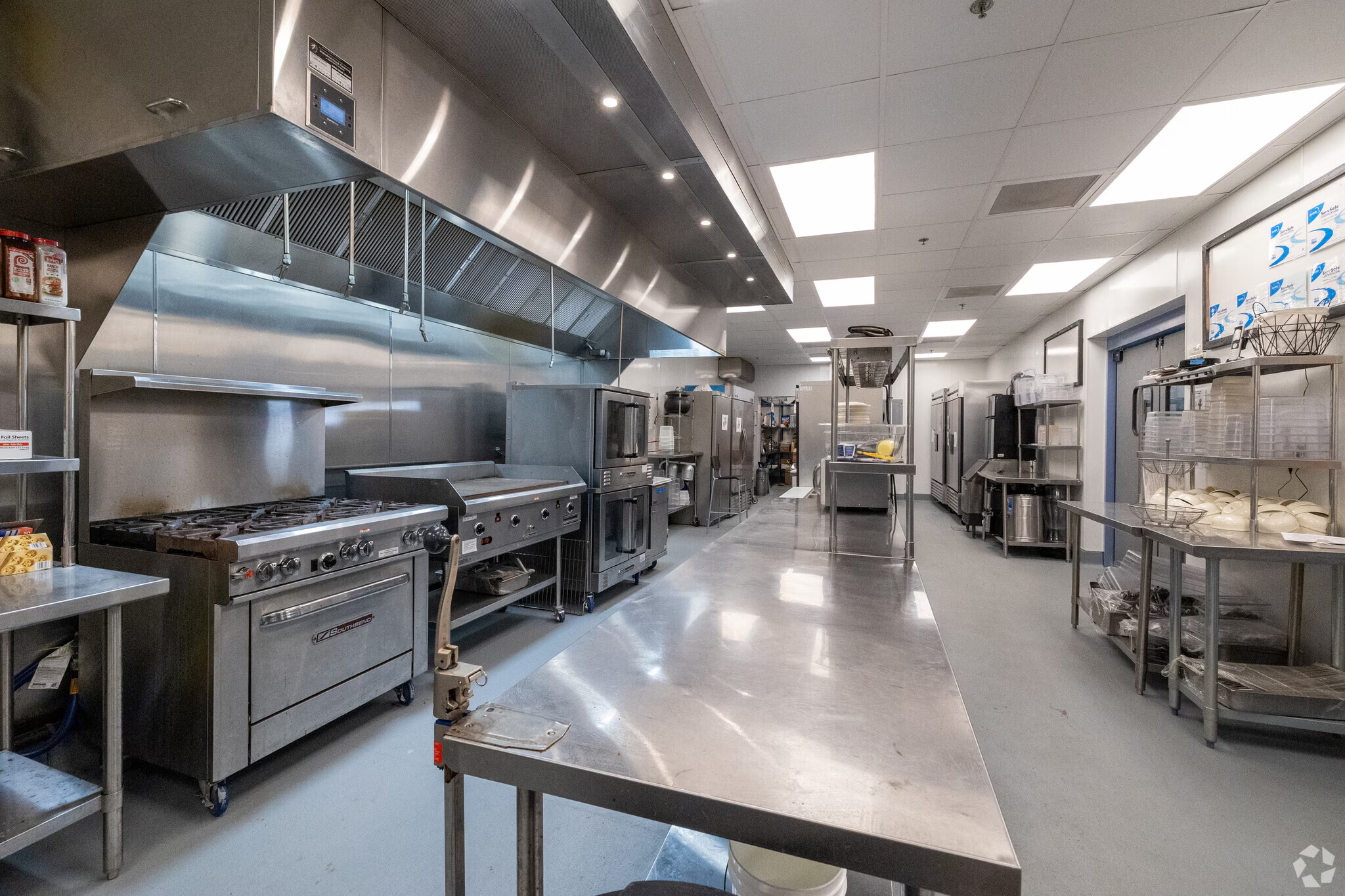
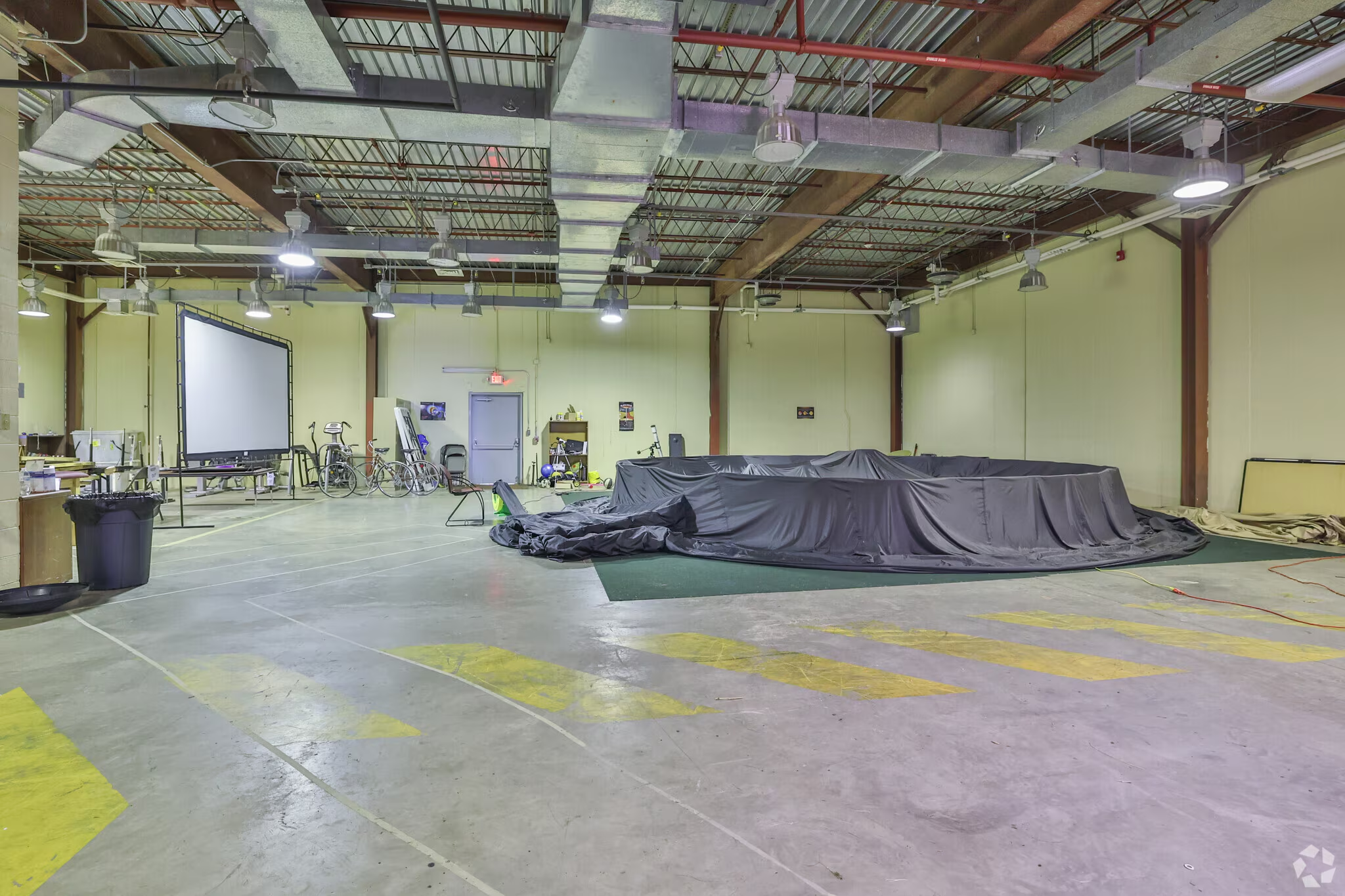
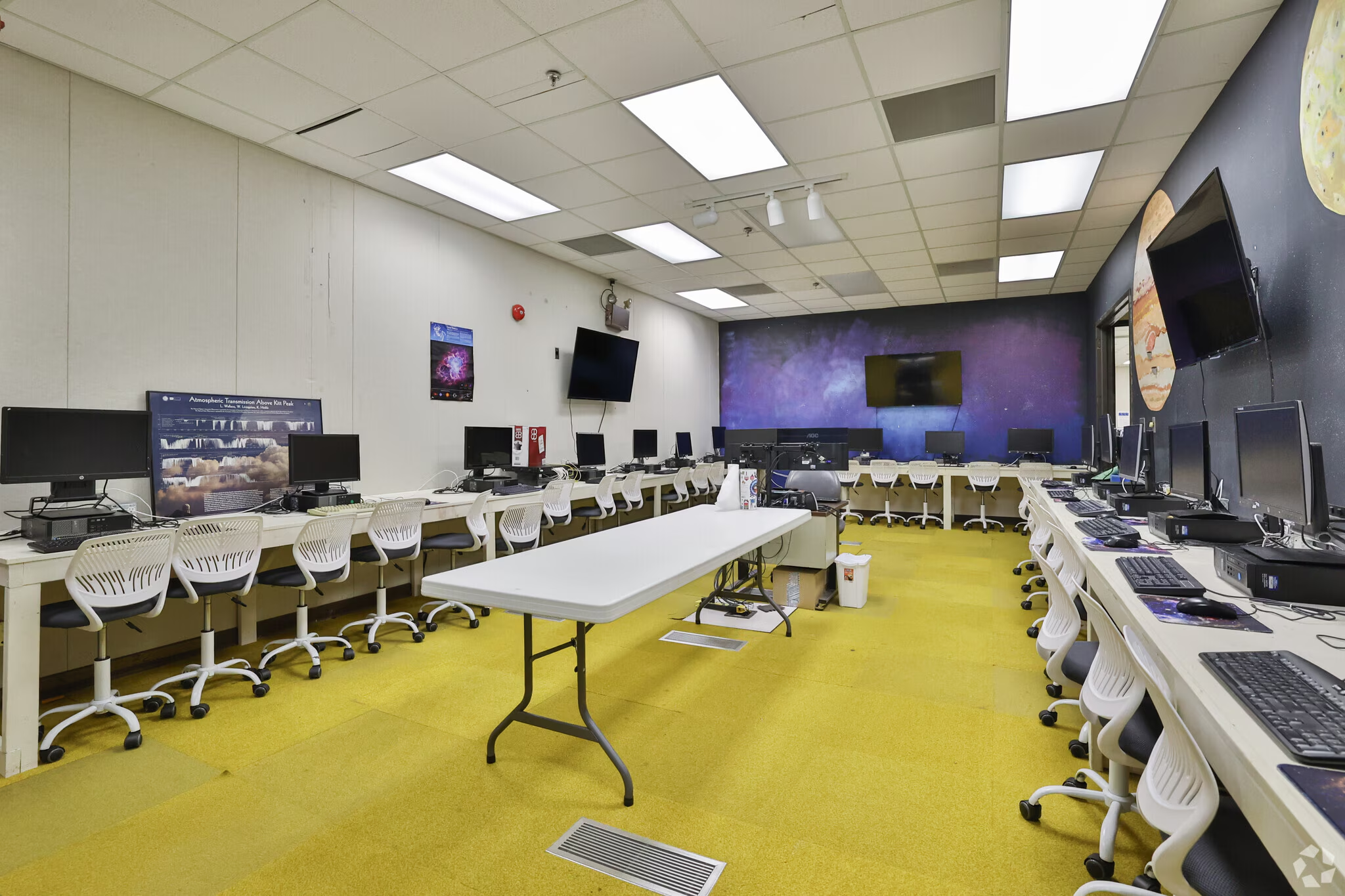
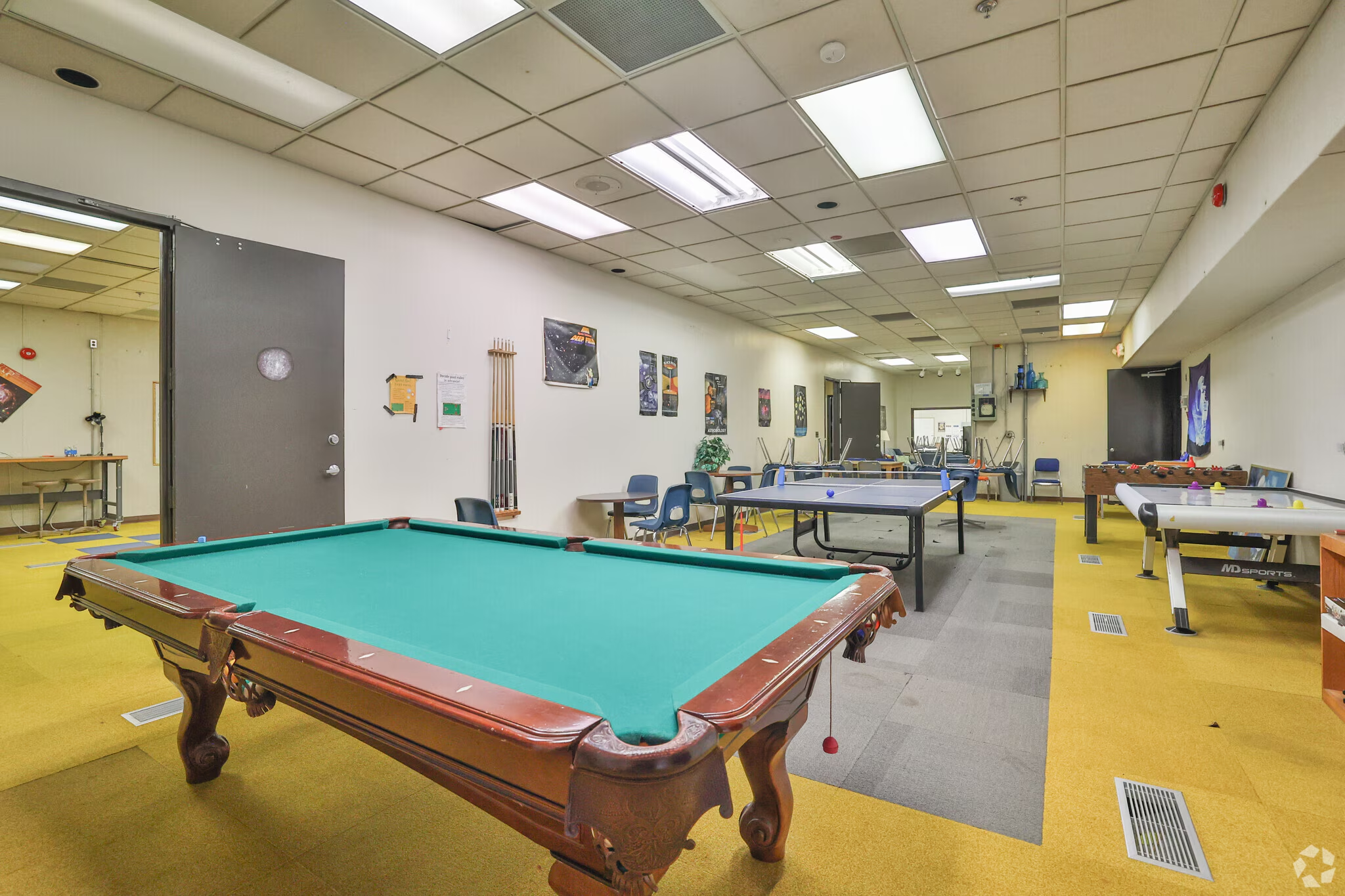
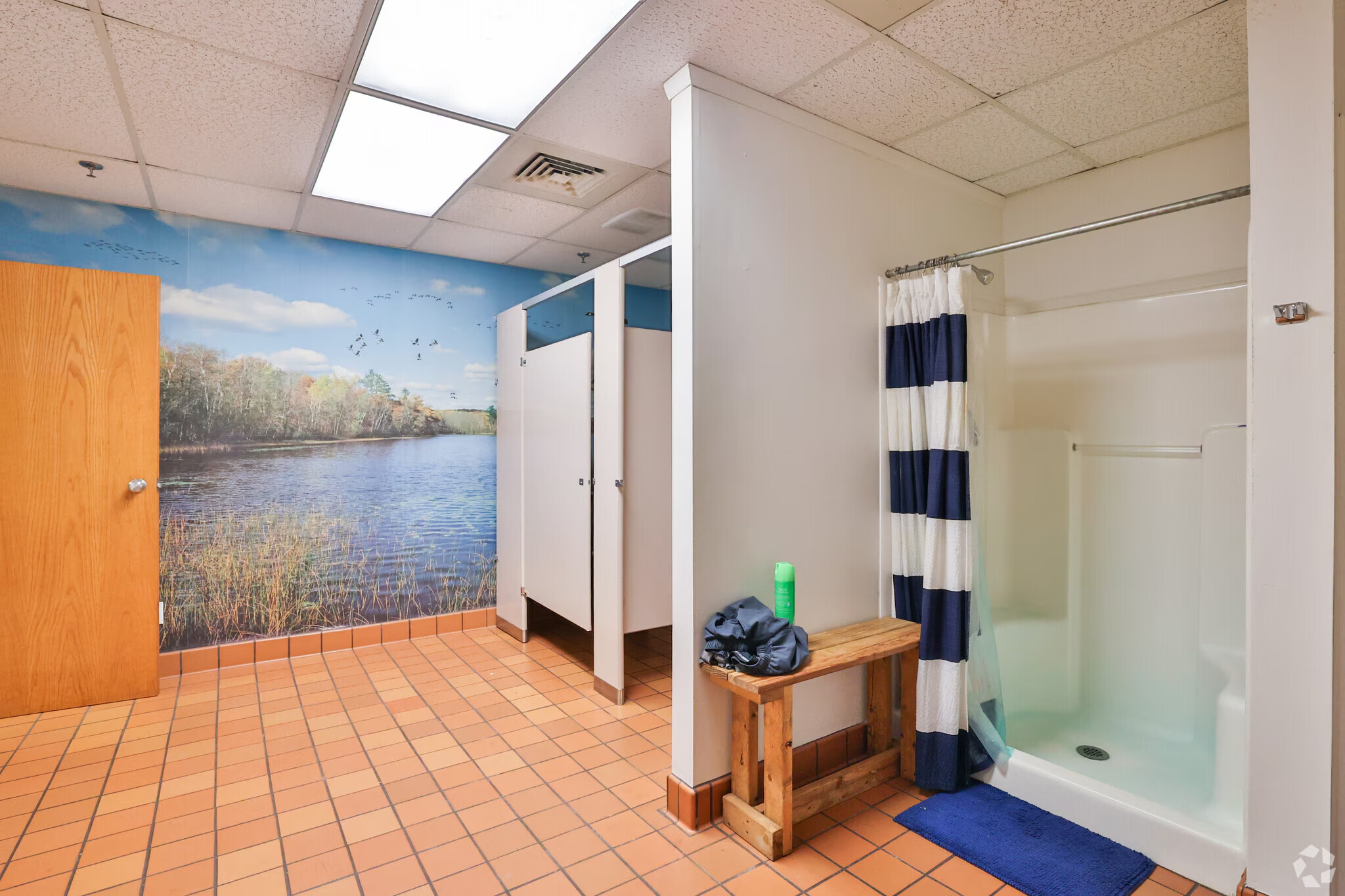
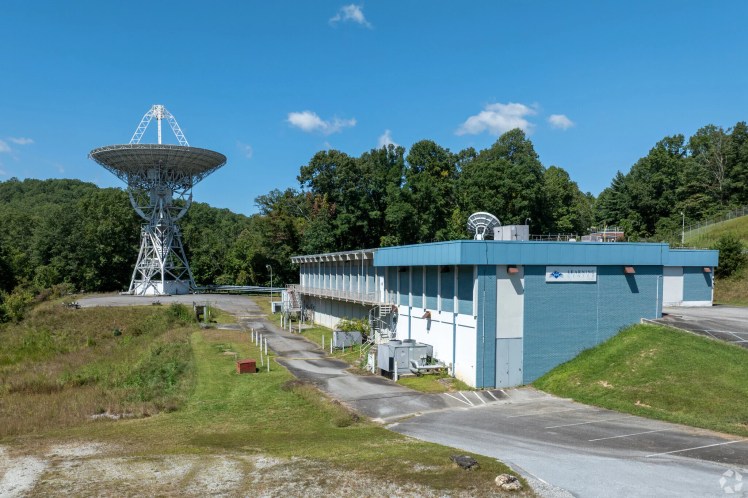
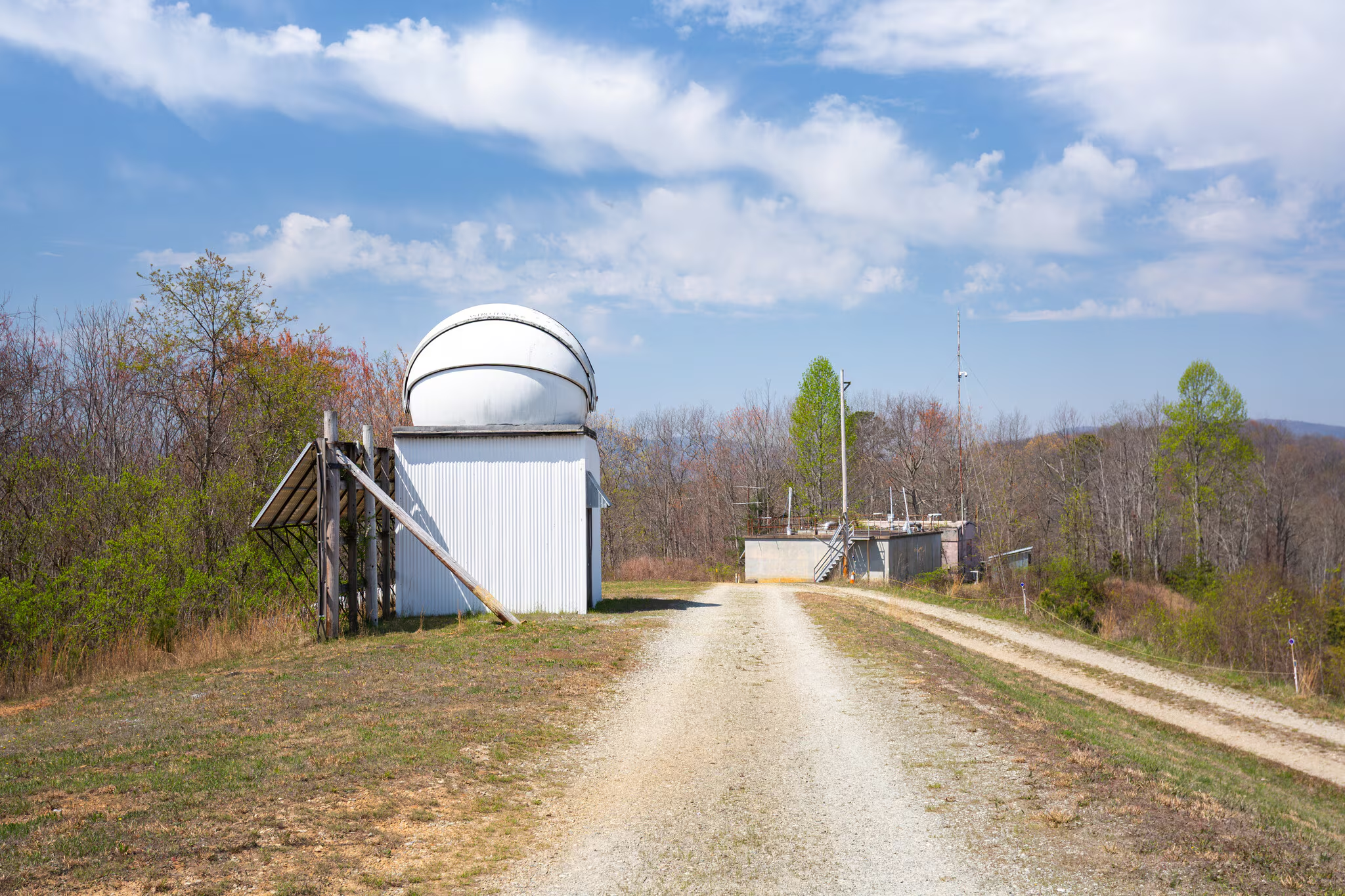
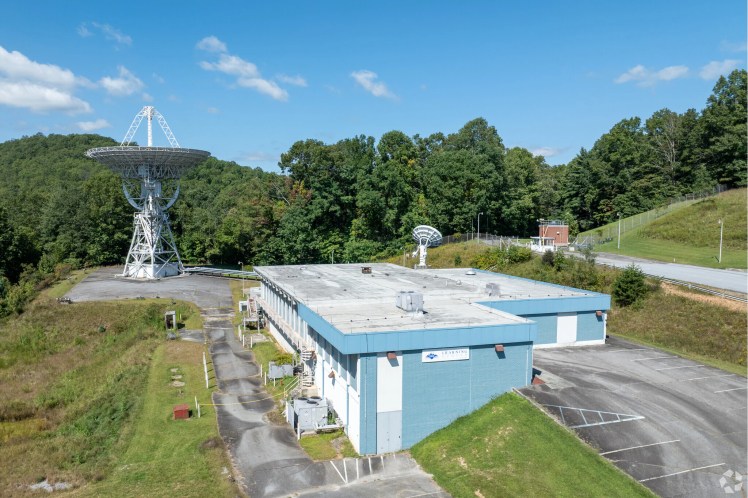
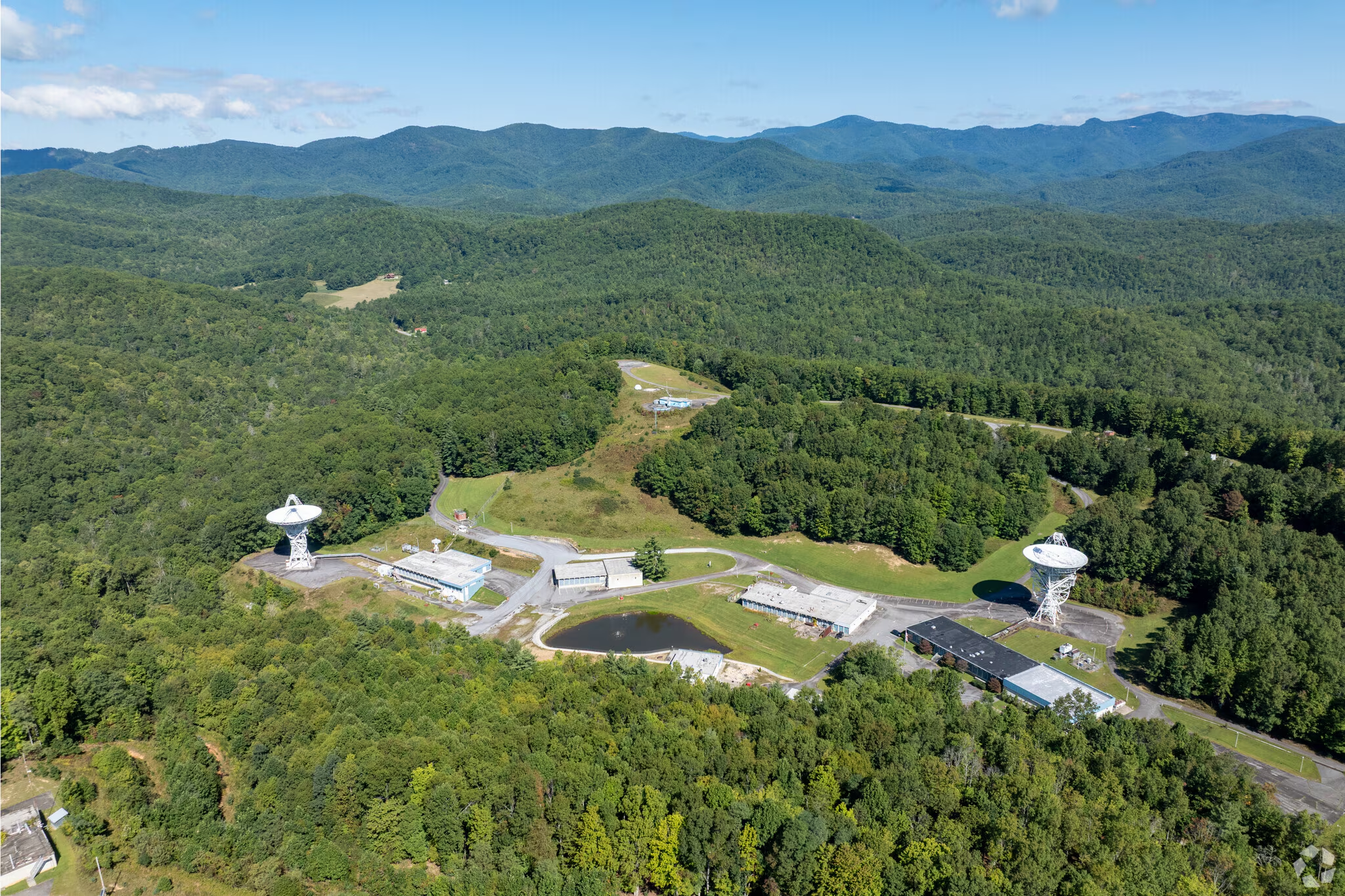
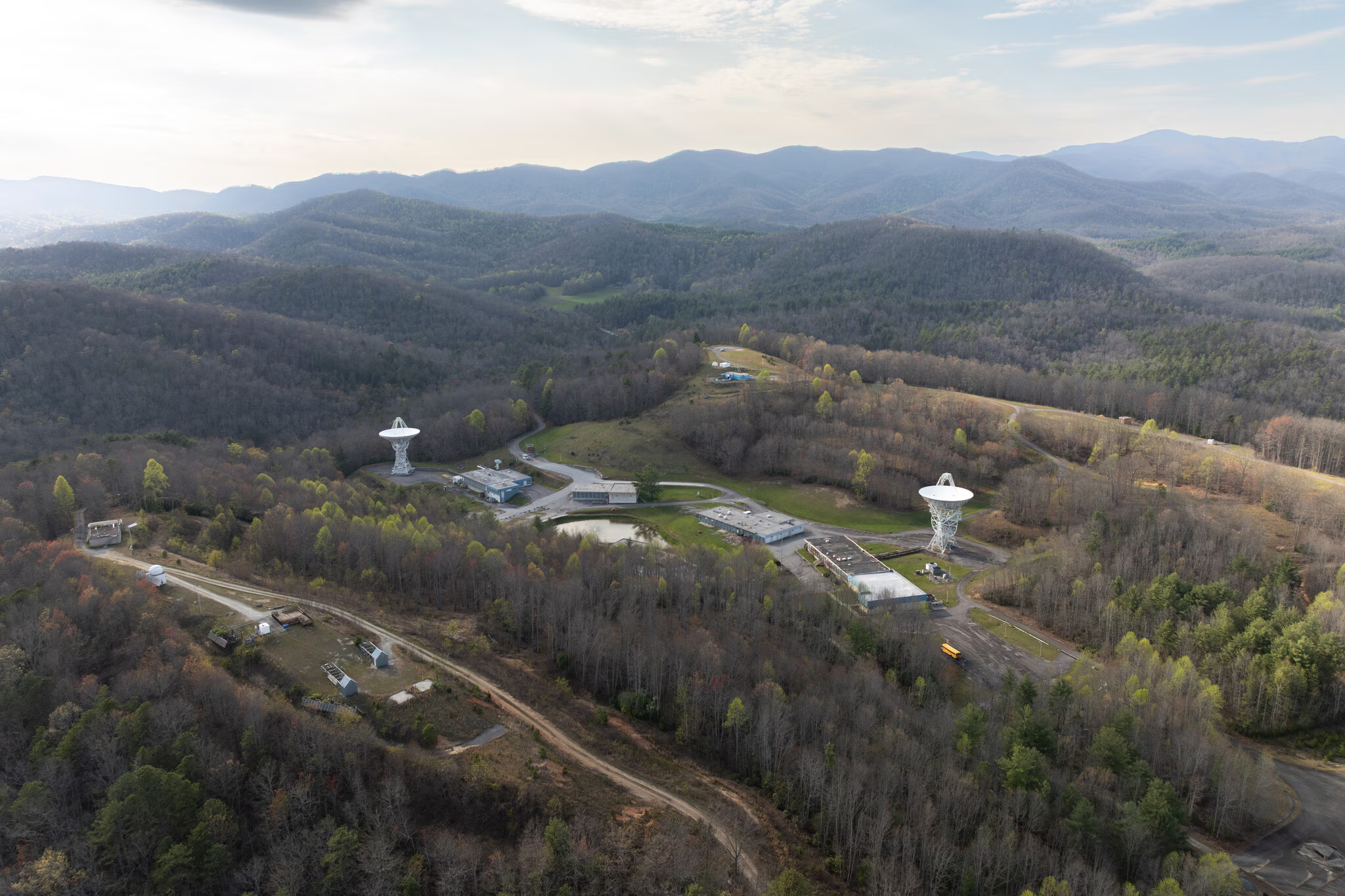
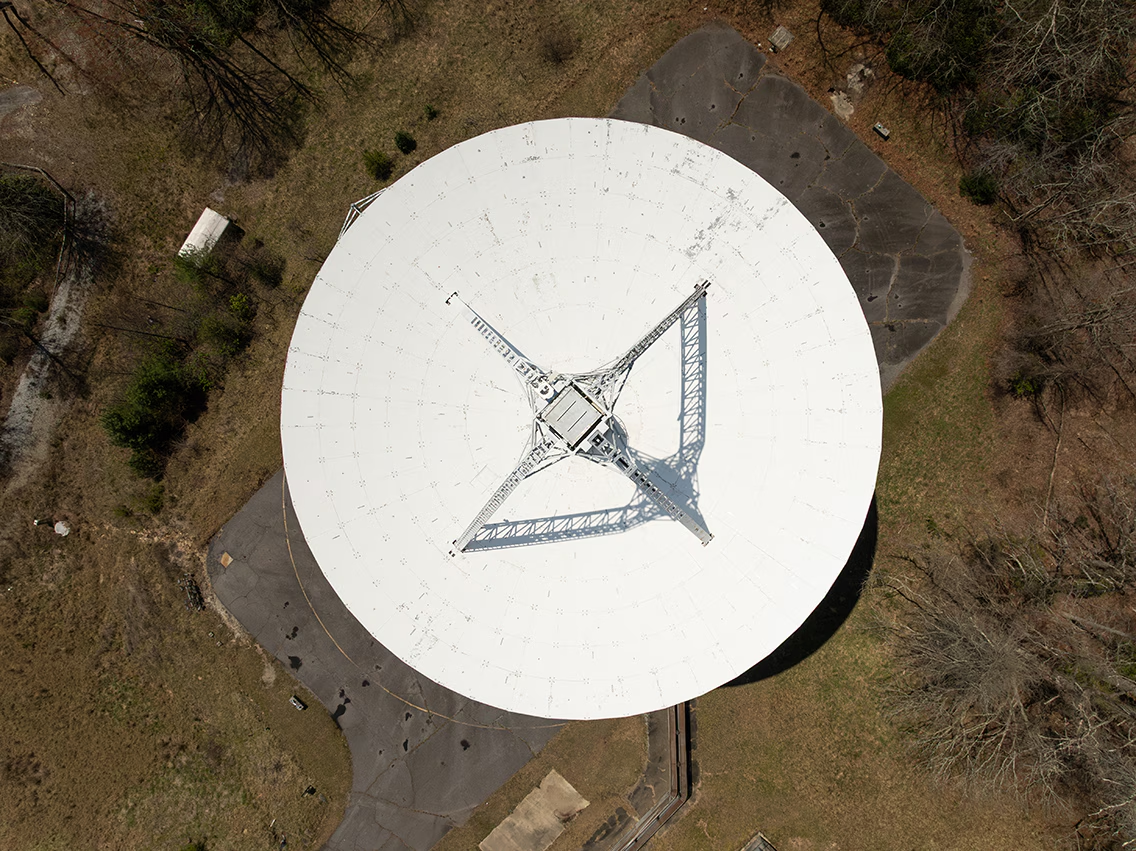
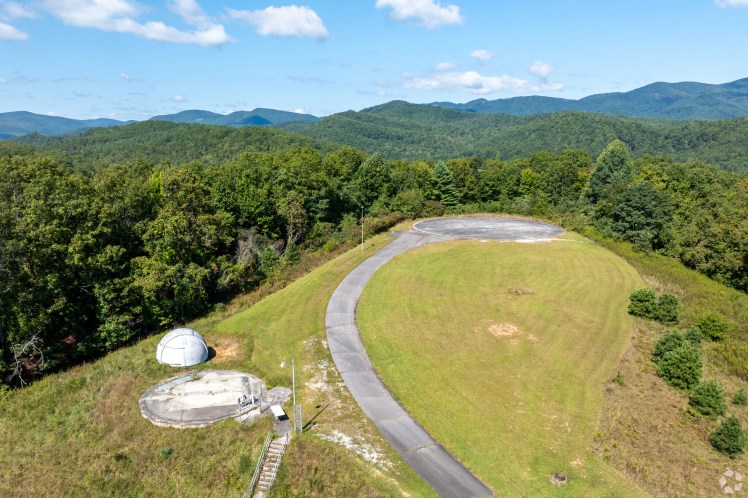
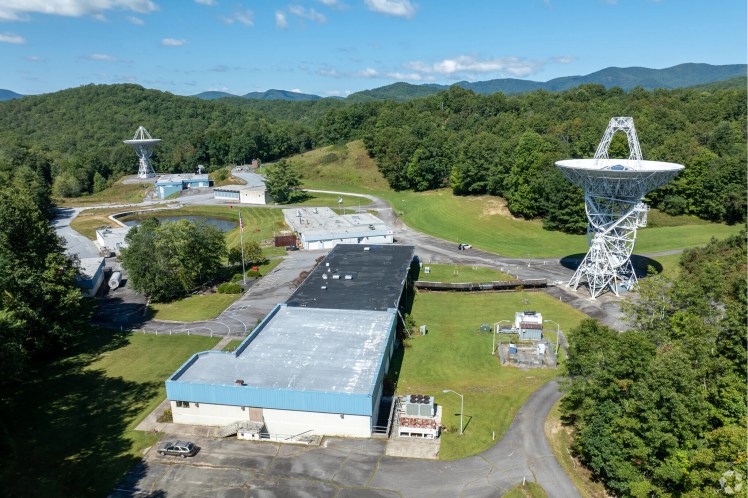
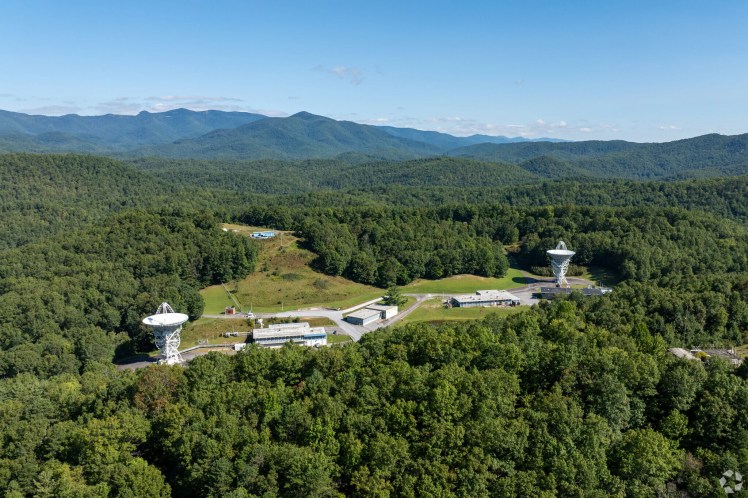
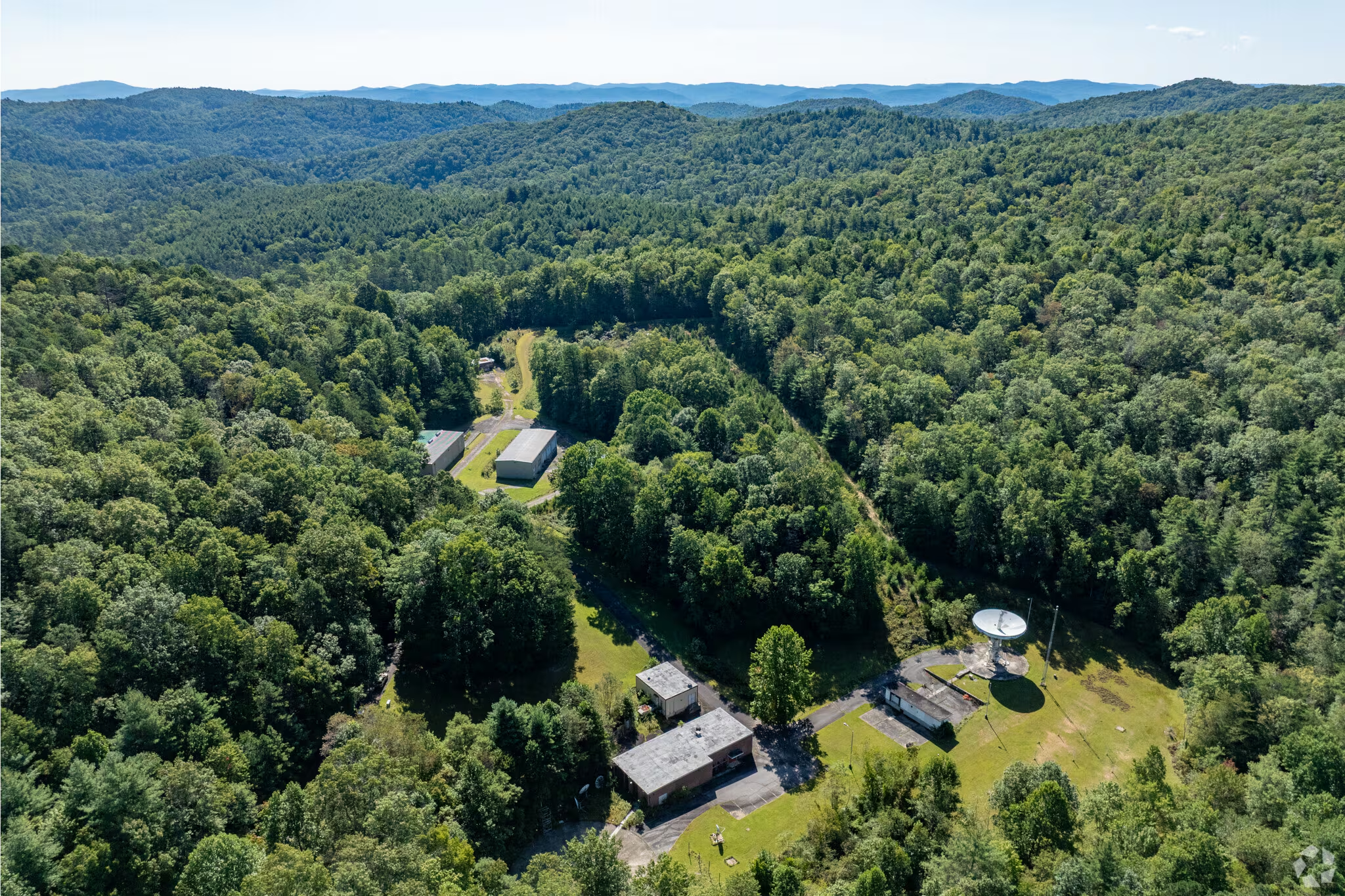
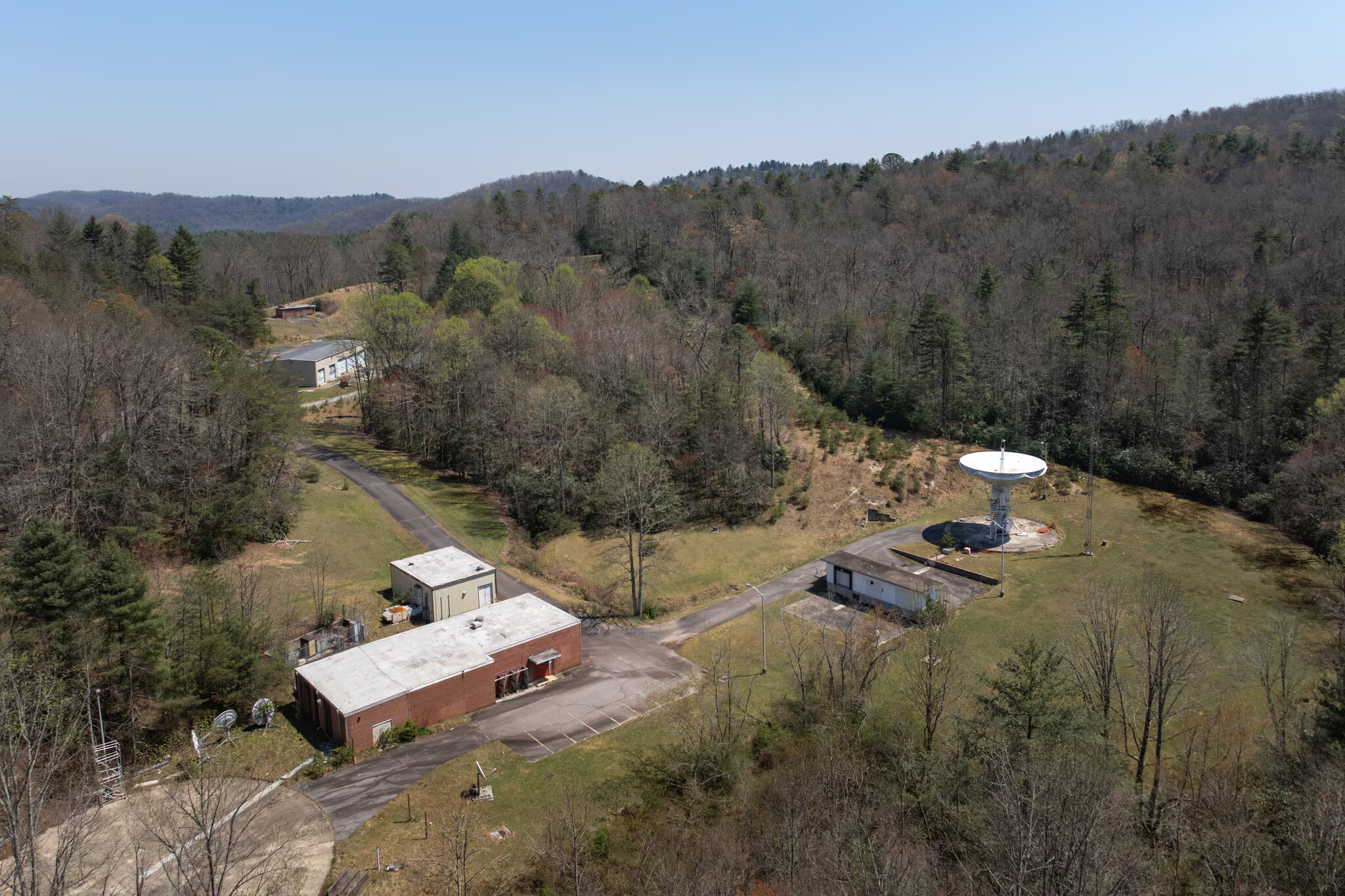
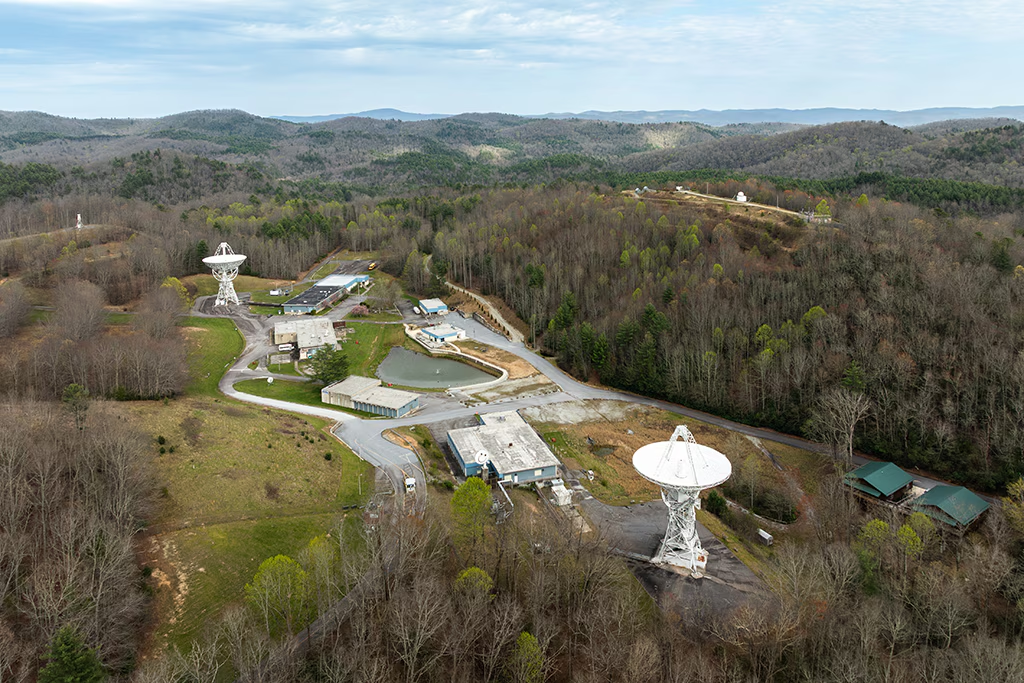
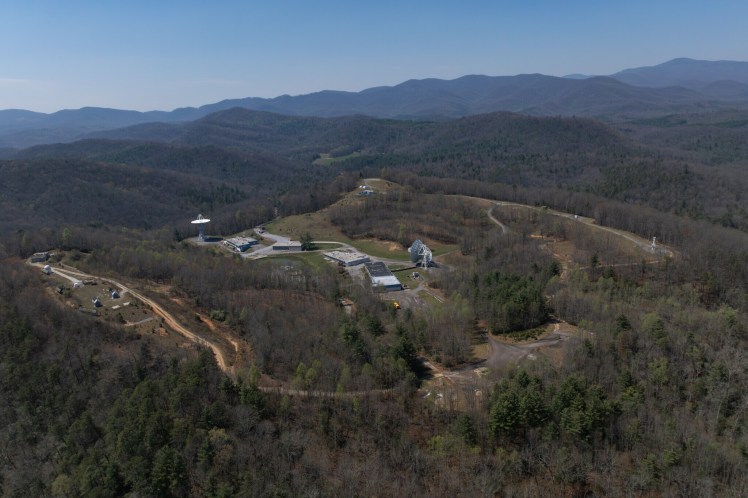
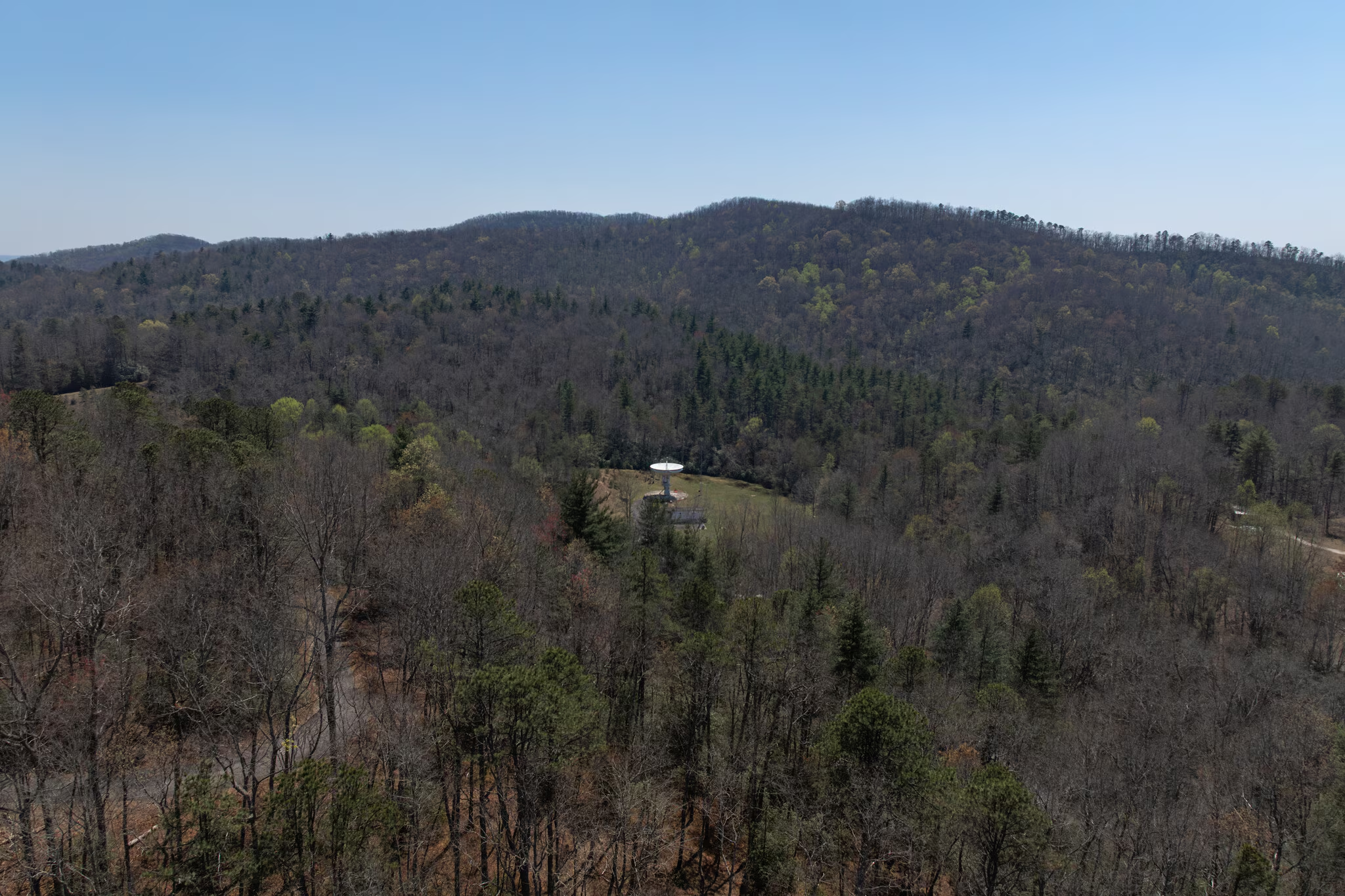
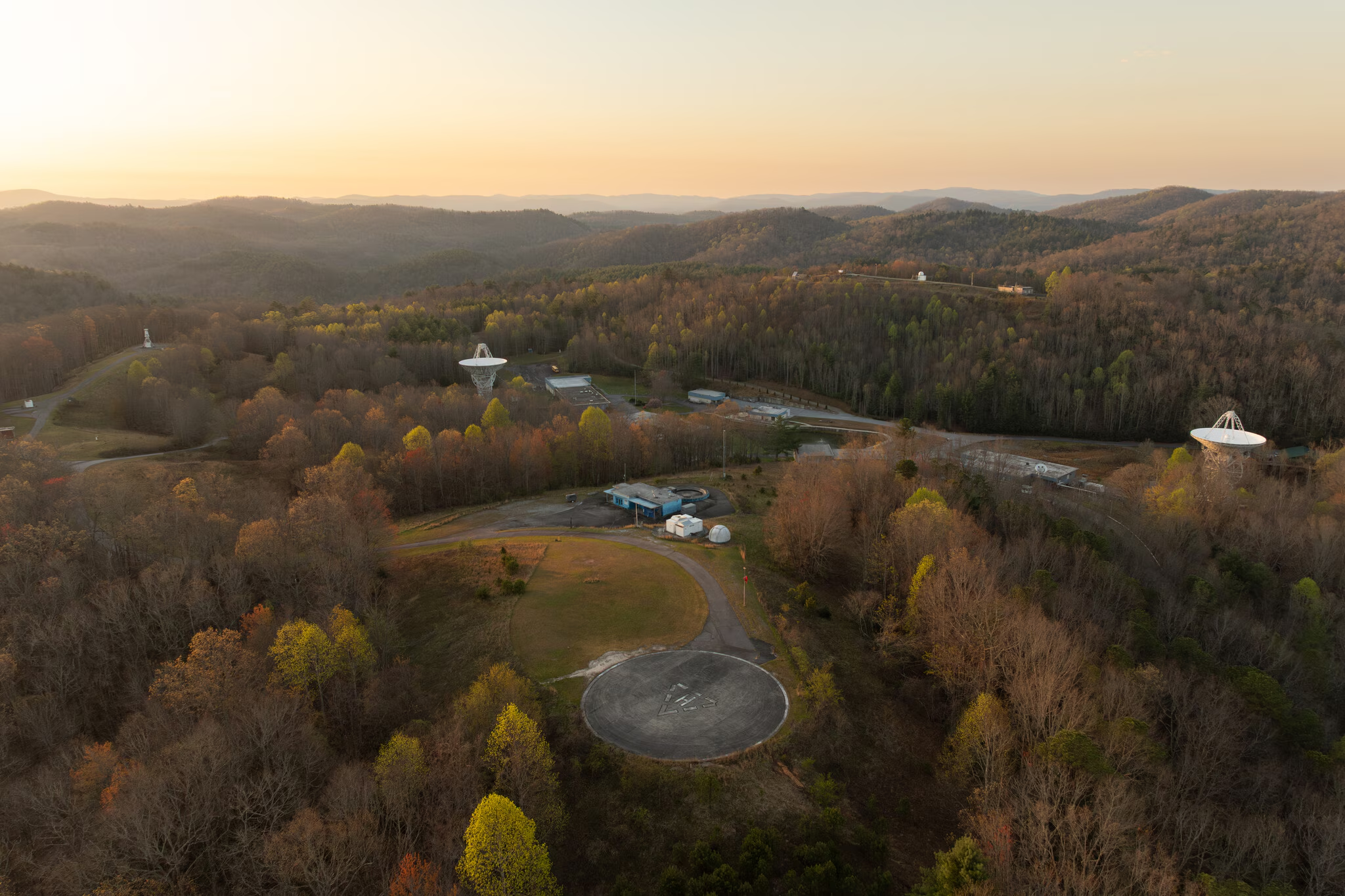
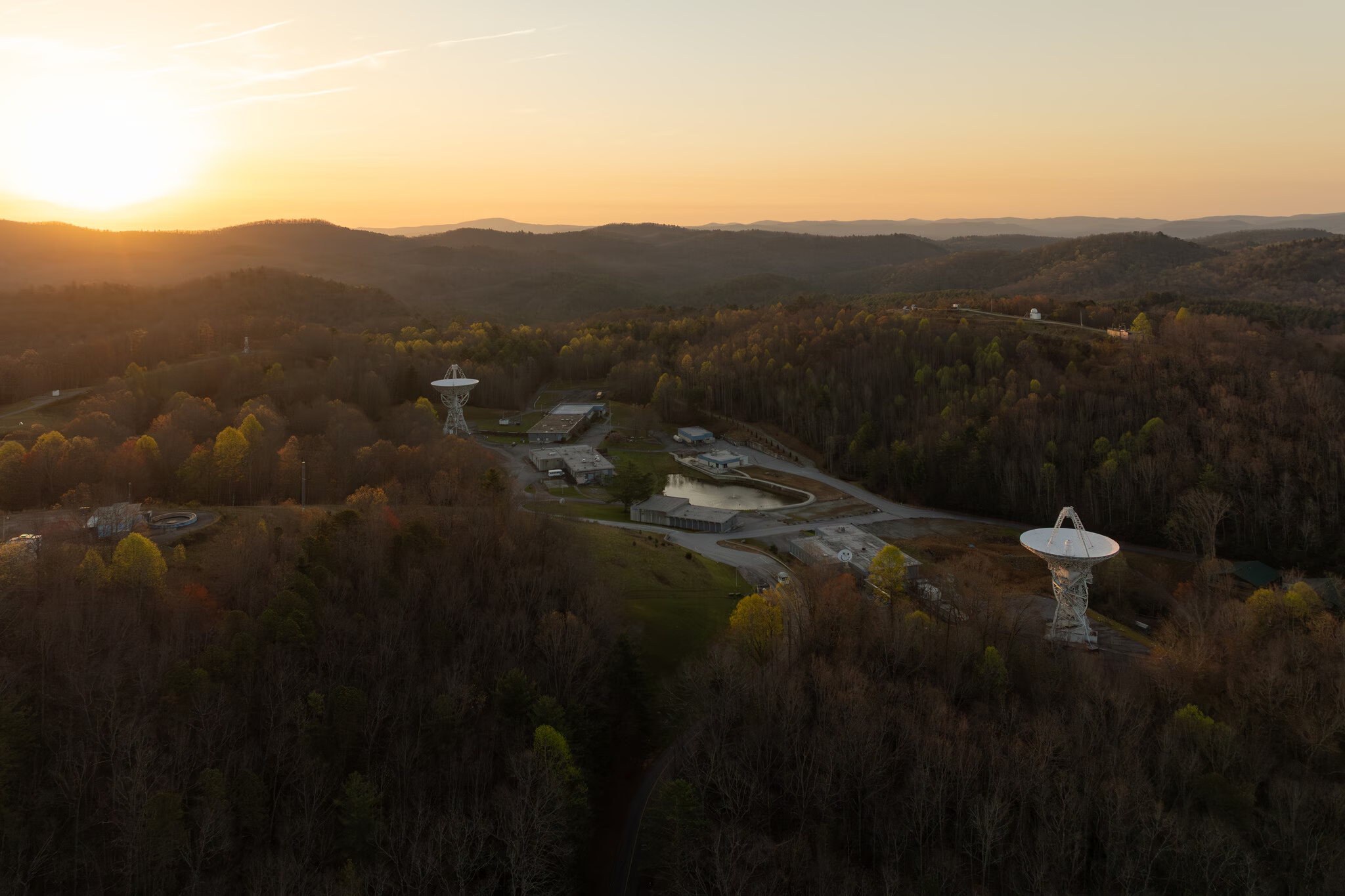
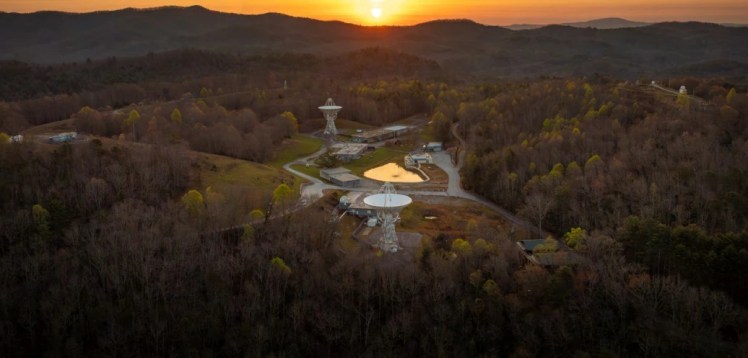
1 Pari Drive, Rosman, Transylvania County (also here)
Pisgah Astronomical Research Institute
- $30 million
- 4 bedrooms, 6 bathrooms, 2,300 square feet (residence), 192 acres
- 30-plus buildings, total square feet: 94,346
- Price/square foot: $321
- Built in 1962
- Listed June 4, 2025
- Last sale: $2.4 million, January 1999
- Neighborhood: Pisgah National Forest, about 10 miles northwest of Rosman, 38 miles southwest of Hendersonville.
- Note: “An international dark sky park surrounded by over a half million acres of protected national forest, ideal for both astronomical observation and scientific research.”
- The property includes two 85-foot radio telescopes, more than 25 optical telescopes, research labs, guest cabins, a helipad, and a 200-person cafeteria and commercial kitchen capable of serving 500 meals per day.
- “Located in an electromagnetically quiet zone, one of only about 100 in the world, PARI is decidedly positioned to leverage its institution-grade elements in an environment where few other sites can.”
- The facility was built by NASA for satellite tracking. Later it was used by the National Security Agency for other purposes. Investment in the site has totaled more than $240 million.
- Since 1998, it has been the home of the Pisgah Astronomical Research Institute: “From food to communication, transportation to public safety, space is the next frontier and exploring it has become more important than ever. If we don’t arm future explorers with what they need to reach the next frontier, they’ll miss opportunities and be left behind.”
- PARI Website: “While the listing describes what a full sale of the facility would entail, the option to purchase or lease only a portion of the site is also available. Any change in ownership of part or all of the site and the conditions of that change must be approved by PARI’s board of directors and the North Carolina State Attorney General. We are confident that they have the preservation of PARI’s mission as their top priority.
- “The site has served many purposes in the past, from a NASA ground station, to Department of Defense facility, to its current role as a center for learning and research. Of the three, the site has been owned by the Pisgah Astronomical Research Institute since 1998, making our STEM mission the longest the site has ever served. The decision to offer some or all of the property for sale was made to help give PARI the flexibility and resources to continue this mission for decades to come.”
301fisher


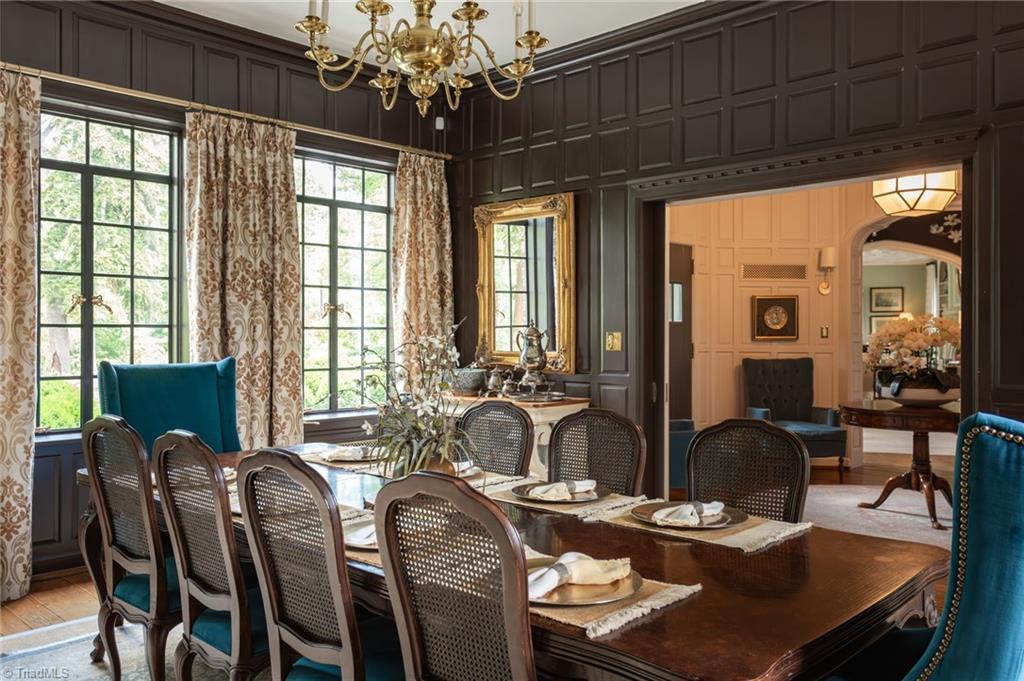


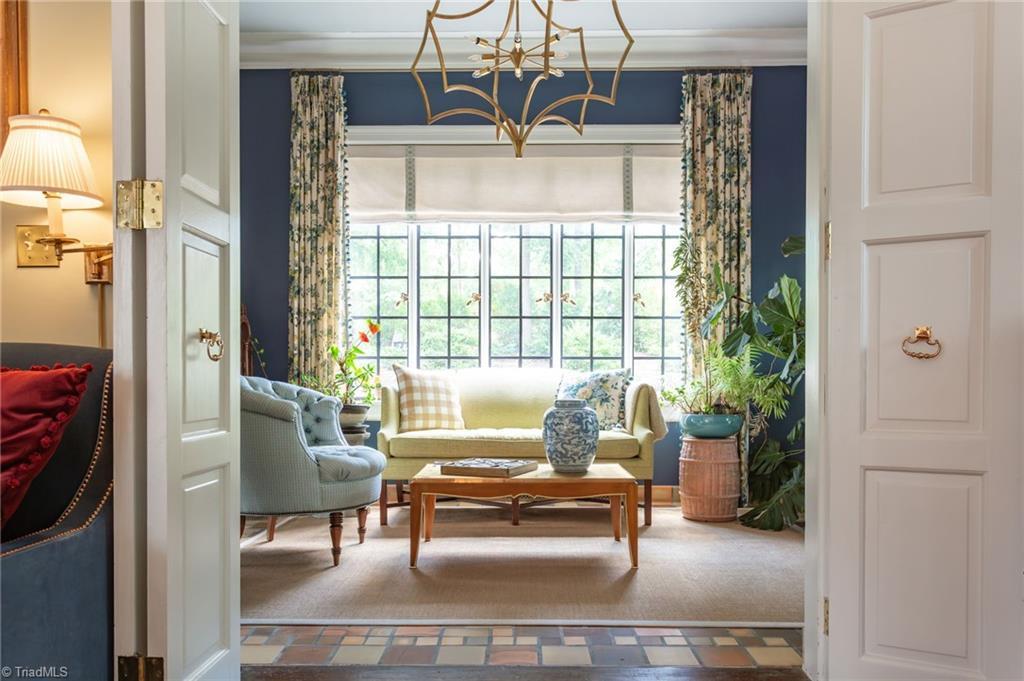


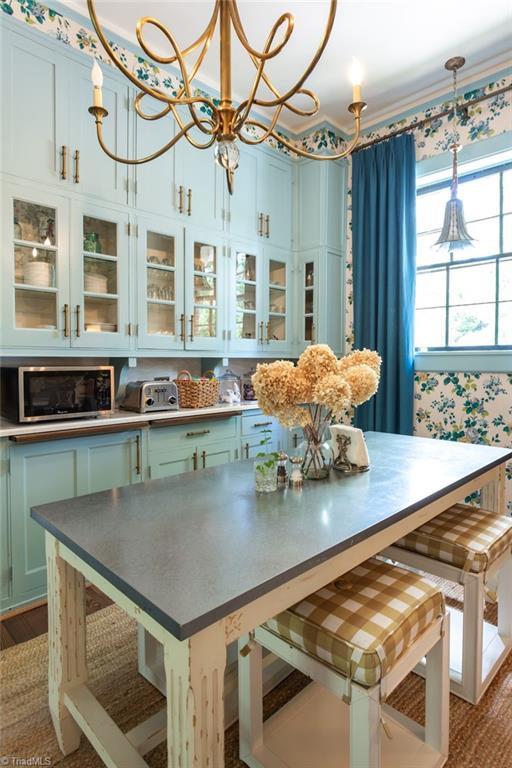












301 Fisher Park Circle, Greensboro
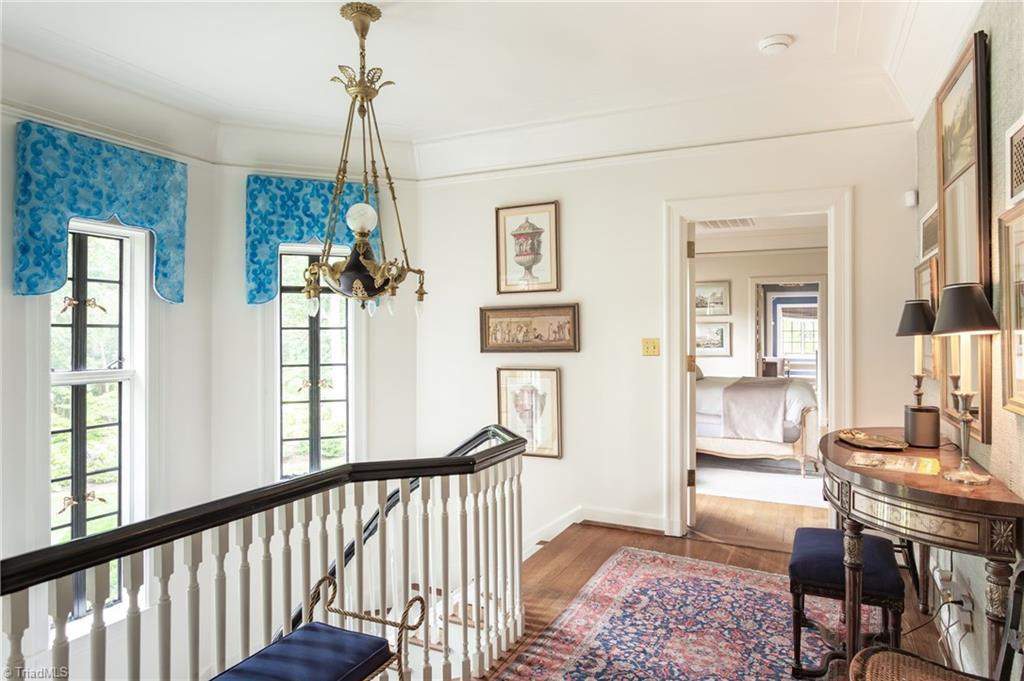
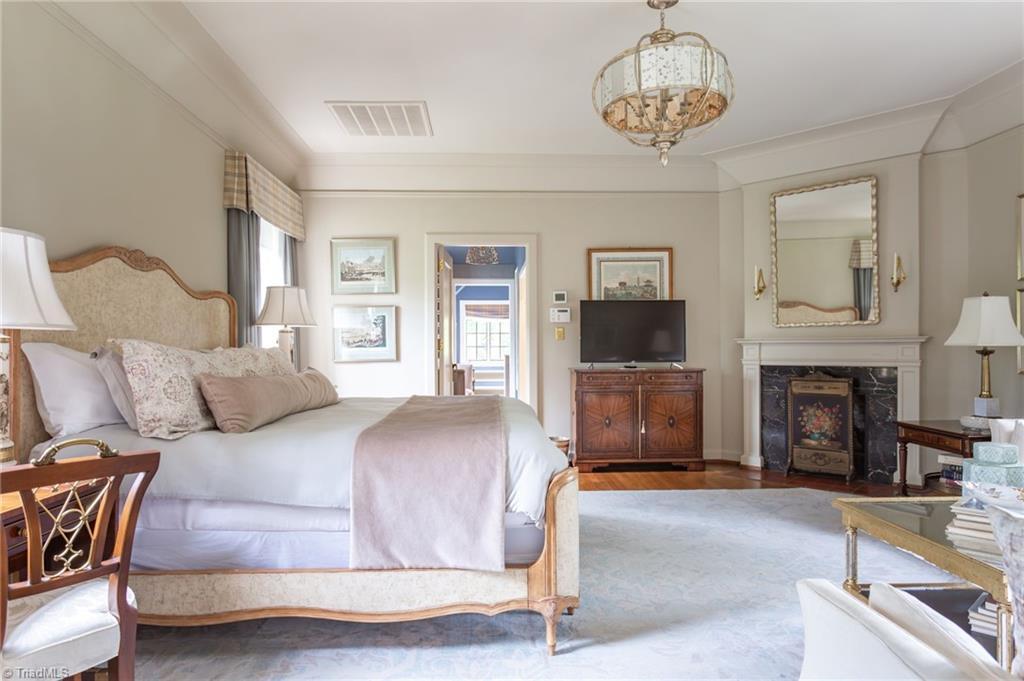
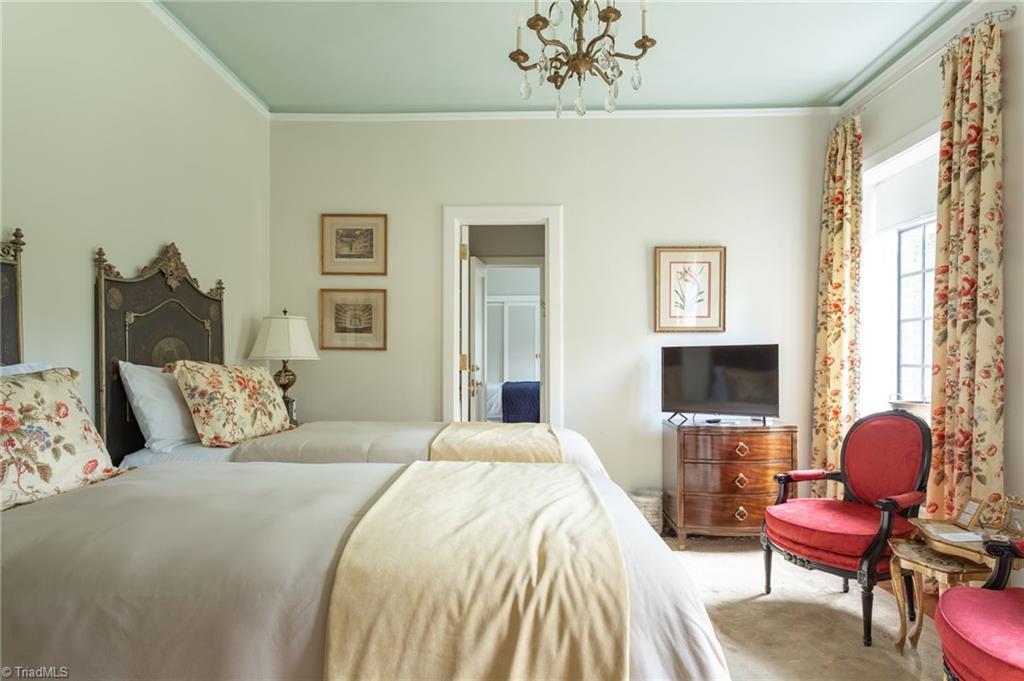
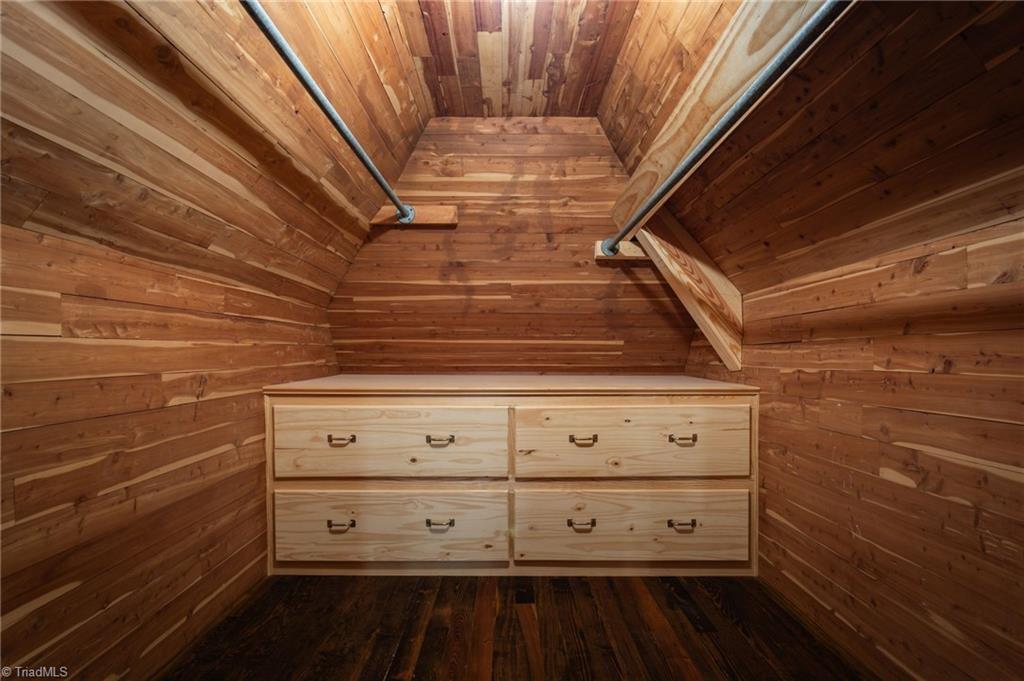
Hillside, the Julian Price House
The Storybook Transformation of the Julian Price House (Our State magazine, January 2024)
- $3.975 million (originally $5.25 million)
- 8 bedrooms, 6 full bathrooms, 2 half-bathrooms, 6,767 square feet (per county), 1.61 acres
- Price/square foot: $587
- Built in 1929
- Listed September 6, 2024
- Last sale: $415,000, September 2016
- Neighborhood: Fisher Park Historic District (local and NR)
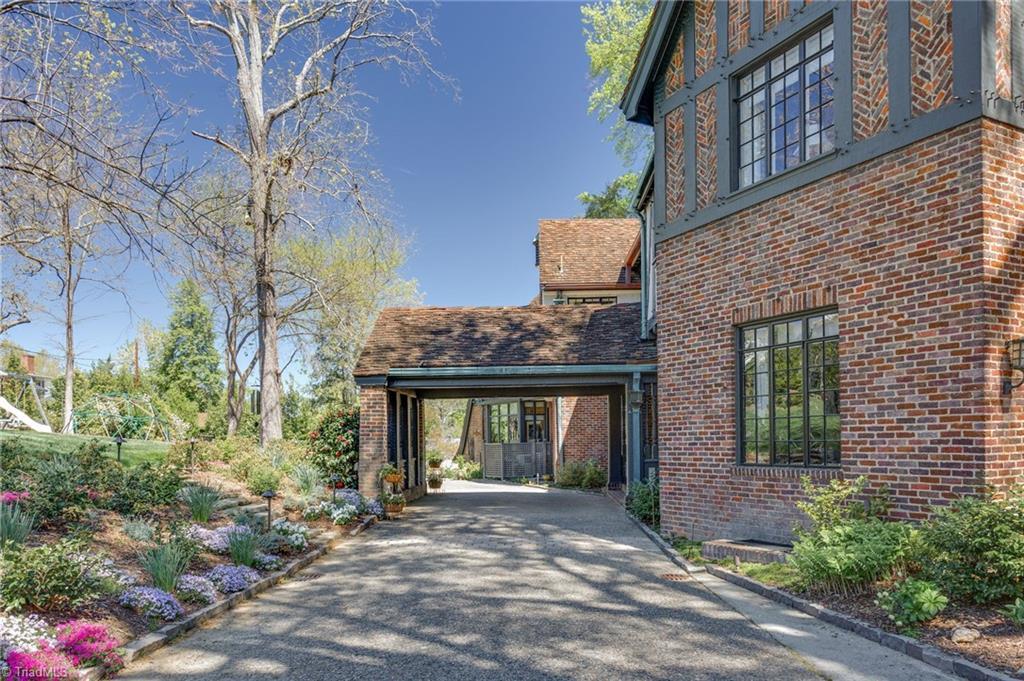
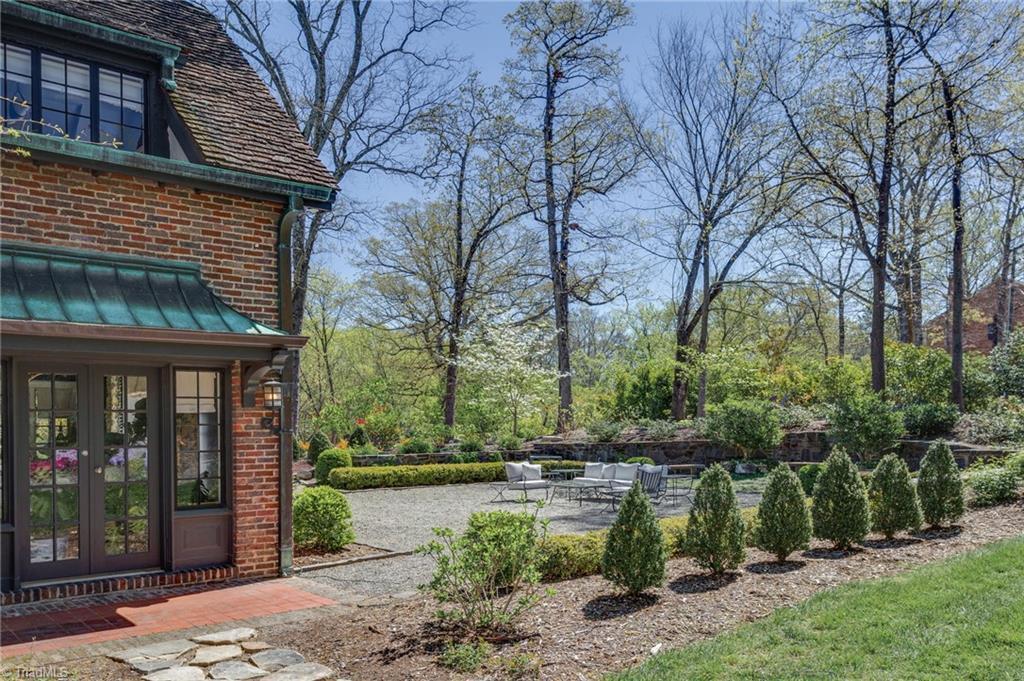
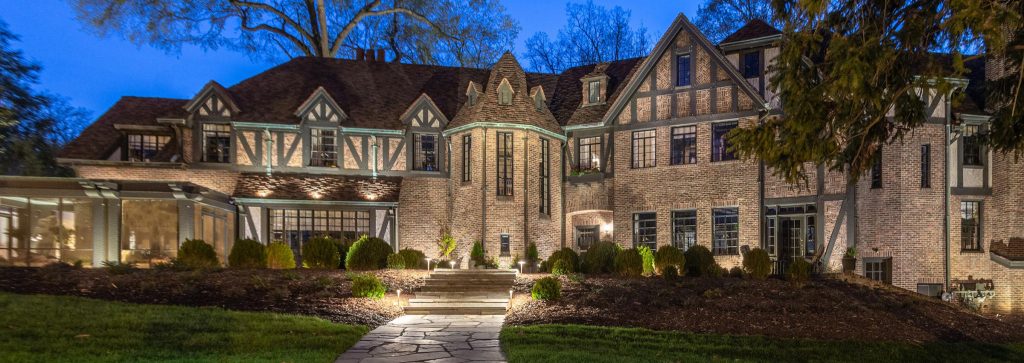
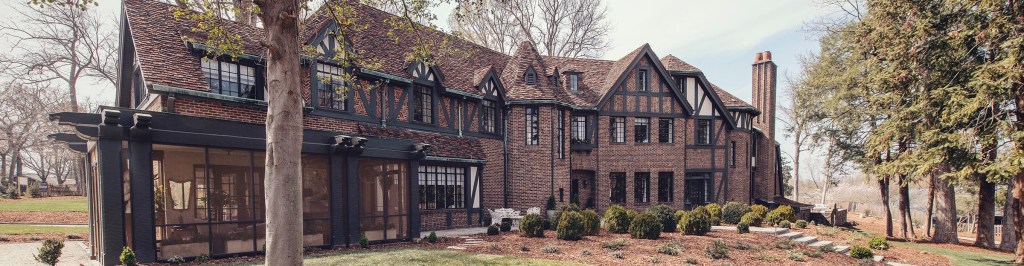
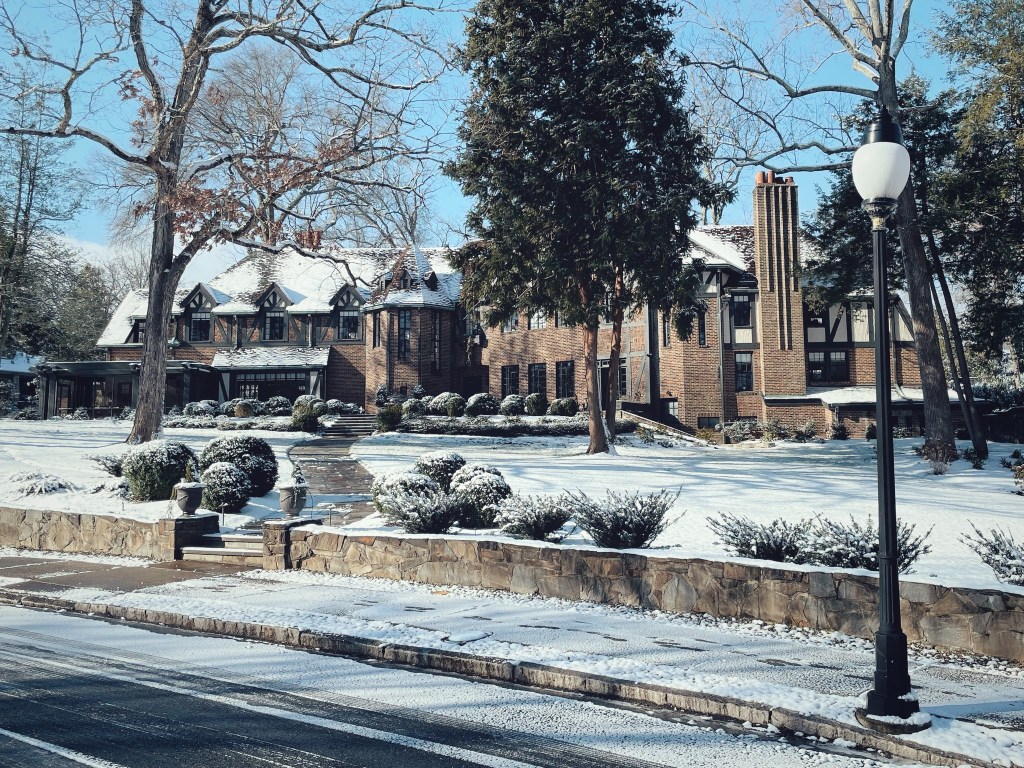
- Note: The house has a Ludowici tile roof and copper gutters.
- Other sources put the square footage at 7,266.
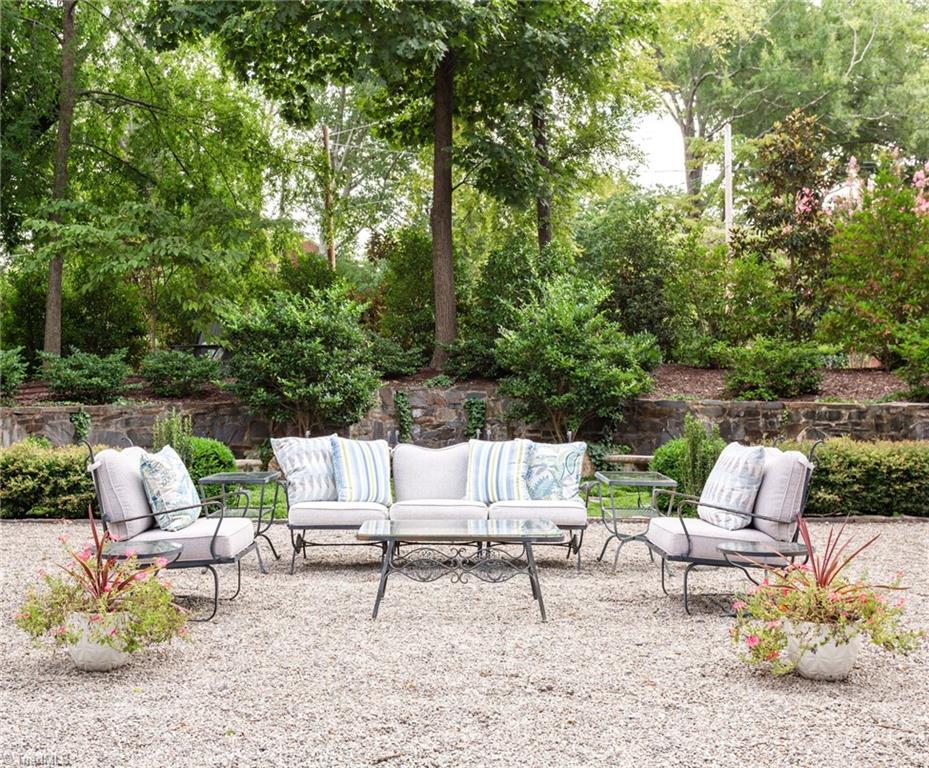
- The property includes landscaping designed by Chip Callaway, an irrigation system with a well, landscape lighting, a gardener’s cottage and a three-car garage.
National Register nomination: “Hillside, the Julian Price residence at 301 Fisher Park Circle, like the neighborhood itself, is a visible symbol of the financial success that evolved in Greensboro in the decades following World War I. Greensboro architect, Charles C. Hartmann, designing for a client he already knew, created this spacious, elegant but intentionally unpretentious Tudor style mansion. By all accounts a complex personality, Mr. Price combined a ‘just home folks’ manner with brilliant financial acumen. The executive behind the expansion of the Jefferson Standard Life Insurance Company wielded a powerful influence in the development of Greensboro as a major commercial city. Hillside seems to
reflect the private aspect of Price just as Jefferson Standard Life Building (also designed by Hartmann) reflects Price’s public spirited qualities.”
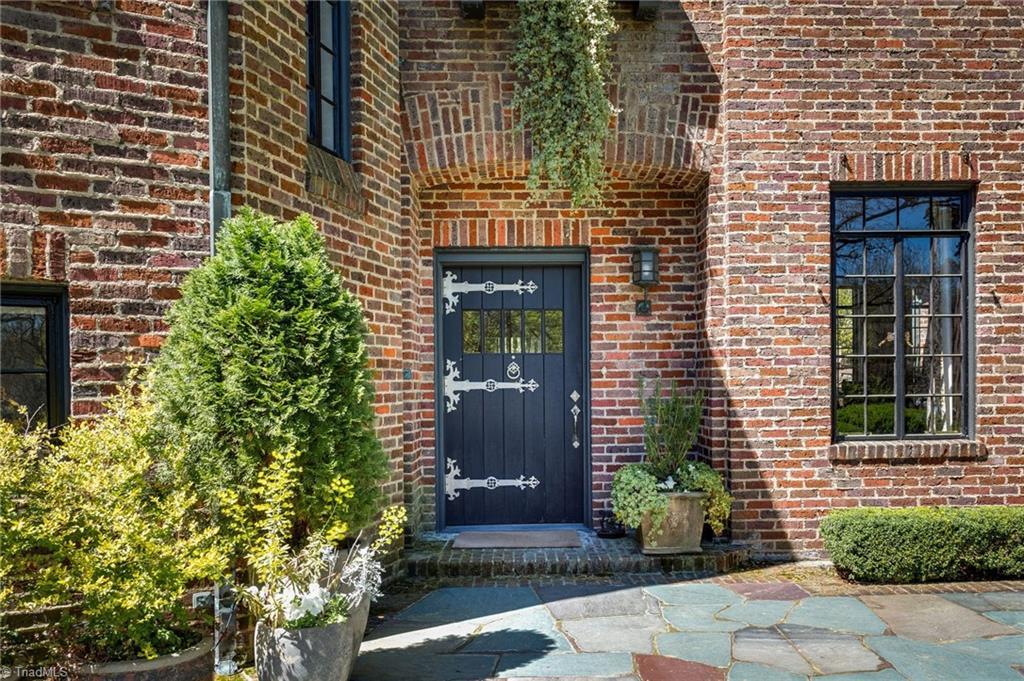
Hillside “has the appearance of a mountain retreat, said to be the image Price wanted Hartmann to create,” the nomination says. “Hartmann’s ability as a designer is vividly illustrated in his success at making a thirty room, four story, 160 foot long house resemble a picturesque assemblage of forms that merge with nature. This effect is achieved by judicious use of elements derived from the English Tudor and Gothic Revivals and the American cottage tradition.
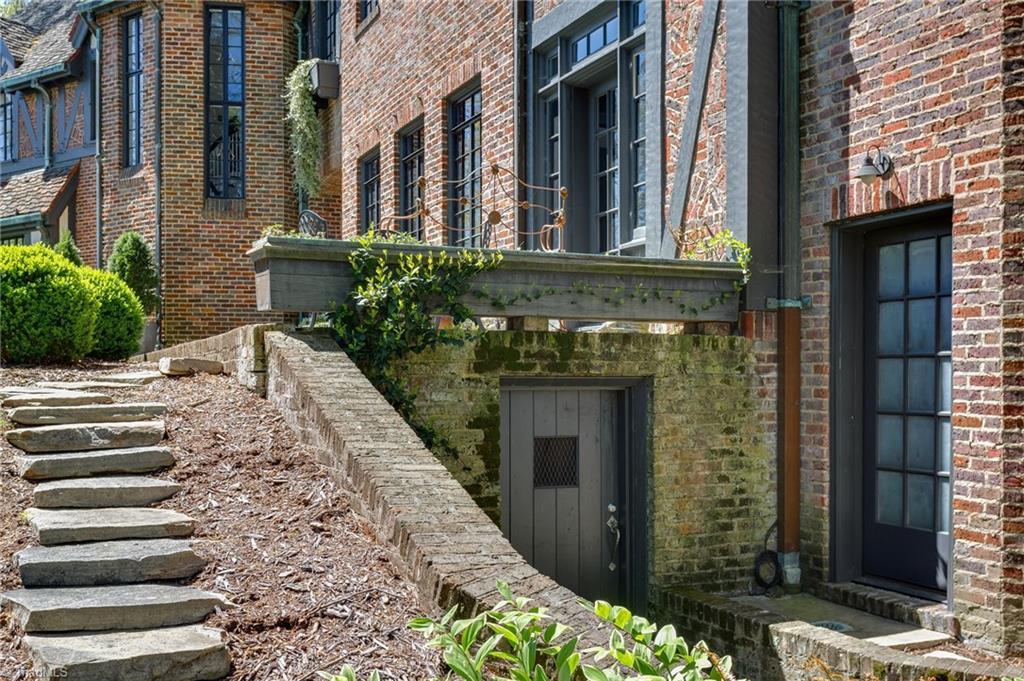
“Placed on the highest point of Fisher Park Circle, the house originally stood in a larger setting of informal paths, plantings, and trees, accented by a gazebo (demolished) and a rustic board and batten gardener’s cottage, which remains. A raised terraced and rock wall conceal the entire basement level with its driveway, and service entry diminishing the height of the house.”
The significance of Hillside is more than local. “The house represents a high level of design and craftsmanship and is a distinctive domestic type which has limited representation of this quality in North Carolina.”
Julian Price himself (1867-1946) was a figure of statewide significance. He worked for one of the companies that became Jefferson Standard Life Insurance in a 1912 merger. He was initially vice president and agency manager of the new company and in 1919 became president. In his 27 years leading the company, its assets grew from $9.7 million to $174 million and insurance in force grew from $81 million to $655 million.
Under his leadership, Jefferson Standard created a broadcasting division and in 1949 established North Carolina’s first television station, WBTV in Charlotte, which is now located at 1 Julian Price Place. He also served as president of the Atlantic and Yadkin Railway.
“During the administration of Governor Angus W. McLean (1924–28), Price, as head of the North Carolina Salary and Wage Commission, was instrumental in effecting a fair system of employment and pay for state employees,” NCpedia says. “He became Governor McLean’s most trusted financial adviser. Towards the end of McLean’s term Price was strongly mentioned throughout the state for governor on the Democratic ticket but refused to have his name placed in nomination.”
He was a notable philanthropist as well. As a memorial to his wife, he funded the construction of Our Lady of Grace Catholic Church in Greensboro. NCpedia relates a story of smaller-scale generosity told by granddaughter Kathleen Bryan Edwards:
“During World War II Guilford County was dry and this was hard on local Air Force base personnel. One officer inquired of the name of the local bootlegger and was told it was Price. He called Julian Price one Sunday afternoon and asked if he were the local source of liquor. Price asked what kind the captain wanted and when told, Johnny Walker, he asked the young officer, ‘Black or Red?’ ‘Black,’ replied the stunned officer, who was then told to drive up in back of the house. The captain could hardly believe his luck when he tried to pay, for Price said, ‘No, no, young man, nothing is too good for our boys in the service.'”
318elkin

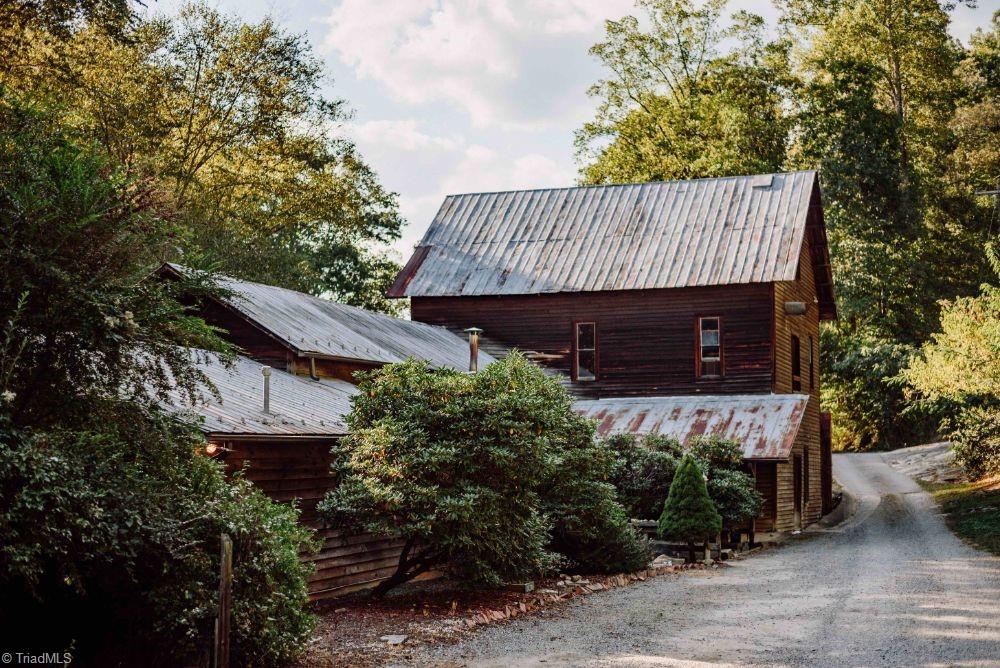


318 Elkin Mill Creek Road, Wilkes County
Elkin Creek Mill
- $2.25 million for the entire 38-acre property, including the mill and residence, a winery, vineyard, restaurant, barn/event space and four cabins (originally $3.2 million).
- A previous offer of $1.97 million for 28.5 acres, including the mill and residence, a winery, vineyard and restaurant, has been withdrawn.
- 3 bedrooms, 3 bathrooms, 2,304 square feet, 38 acres
- Built in 1896
- Listed May 8, 2023
- Last sale: $1,206,500, May 2012
- Note: The mill, a residence since the 1990s, is on the National Register. The rest of the 38-acre property is not on the NR.
- Video and commercial listing (PDF if online link is broken)
- Located in the Yadkin Valley AVA
- The property has an Elkin mailing address but is just across the county line, about 4.5 miles northwest of town.
National Register nomination (1982): “Located in a wooded section of east Wilkes County, the Elkin Creek Mill survives intact as one of the best examples of a full-scale, water-powered milling operation in western North Carolina. The simple frame structure houses all of the equipment used in the production of flour cornmeal) and feed, most of it dating from the early years of the mill’s operation.
“Powered by three water-turbine power sources, the systems include three roller mills; a traditional millstone, a hammer mill, and a complex array of cleaners, sifters, mixers, and elevators used in the various processes.
“The mill was established in 1896 by L.T. Stimpson and John A. Butler, prominent industrialists of neighboring Iredell County, and operated continuously until 1970.
“Its last 32 years of activity were under the stewardship of Alexander County native Edward Jolly, who in retirement remains an authority on traditional milling processes.
“After several years of neglect, the mill may have a better future adapted as a restaurant now planned by its present owners.”
Lazarus Theophilus Stimpson (1843-1916) was “one of Iredell County’s most beloved citizens,” The Statesville Sentinel wrote upon his death. “Noted for his integrity in business as in other phases of his life,” he was still working when he died at age 72, operating a cotton mill, flour mill and store in Iredell County and serving as president of Merchants and Farmers Bank.
John A. Butler (1853-1904) had business interests in Iredell, Wilkes and Gaston counties. He died in Gastonia after suffering from dropsy, Bright’s disease and tuberculosis. “During his residence here he had won many friends by his gentlemanly bearing and cheerful disposition,” The Gastonia Gazette reported.
8262nc87
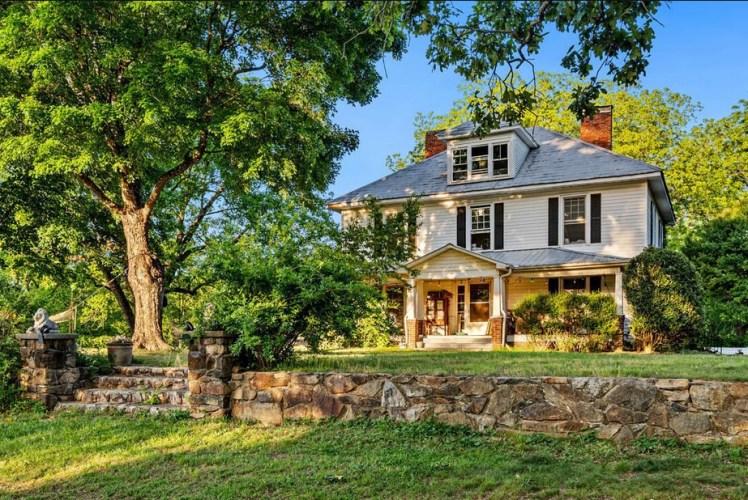
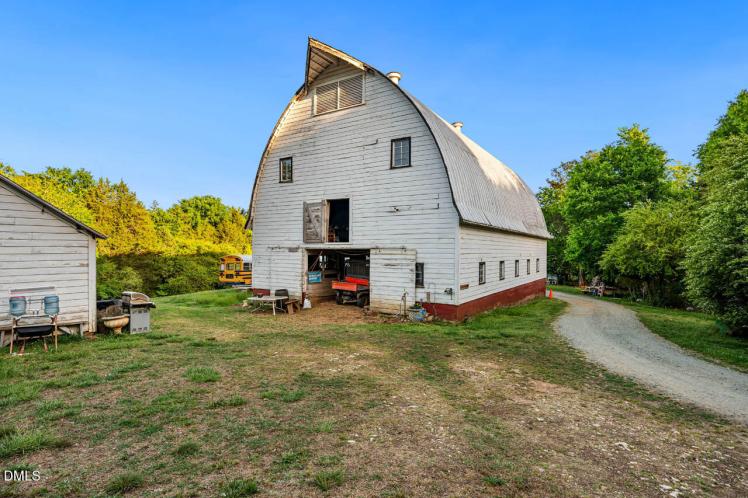
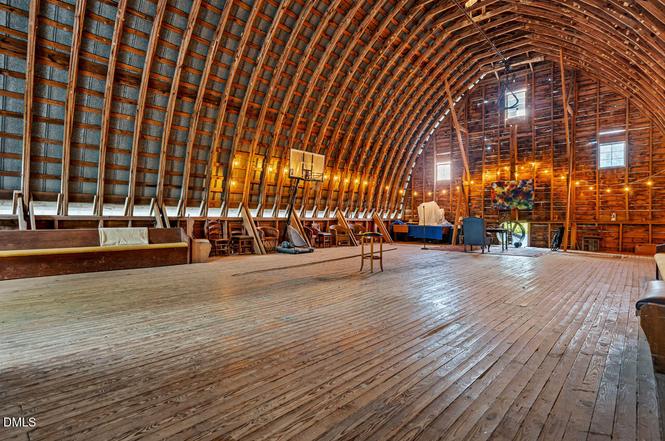
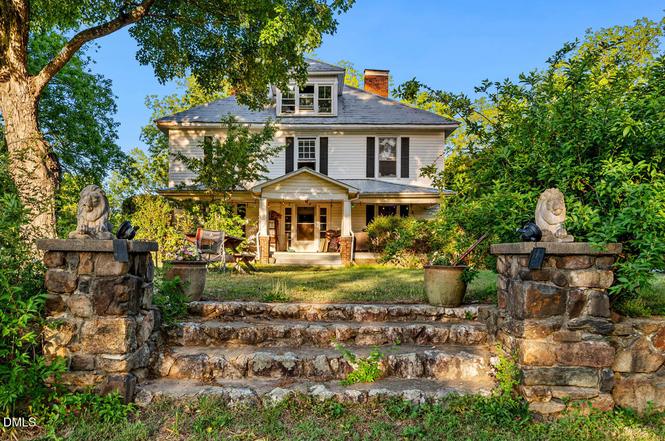
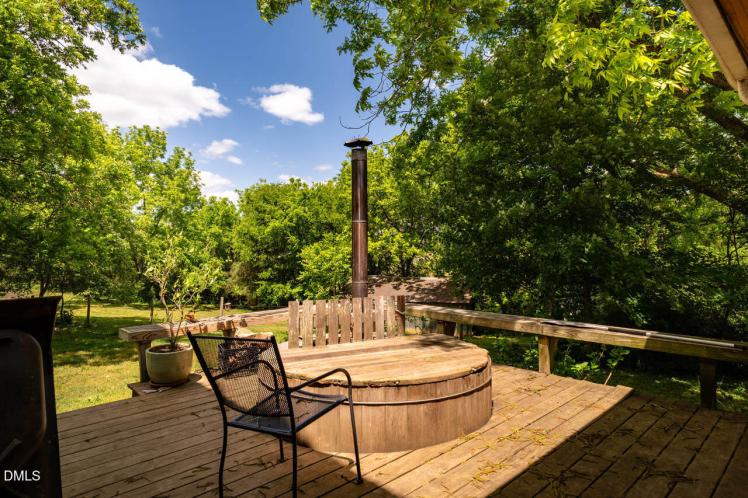
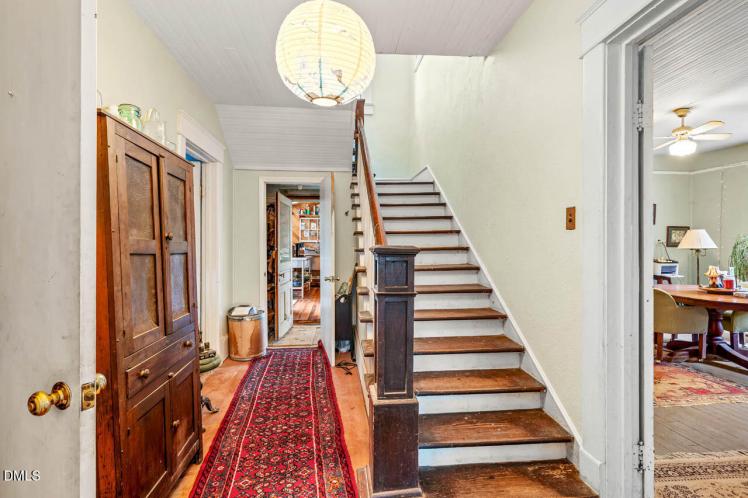
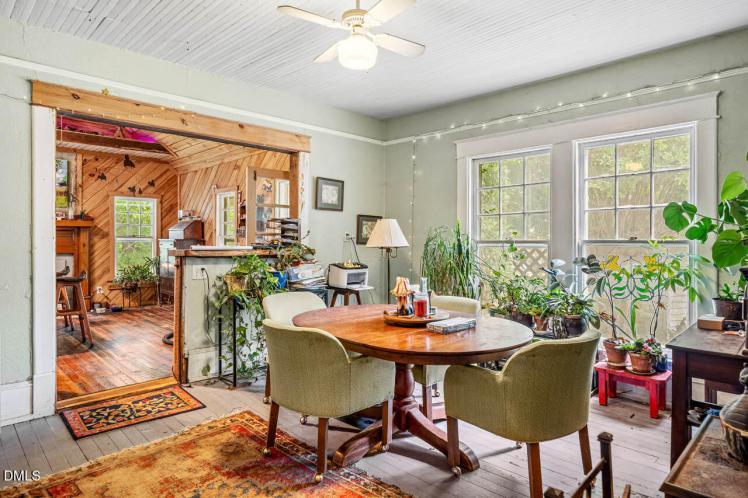
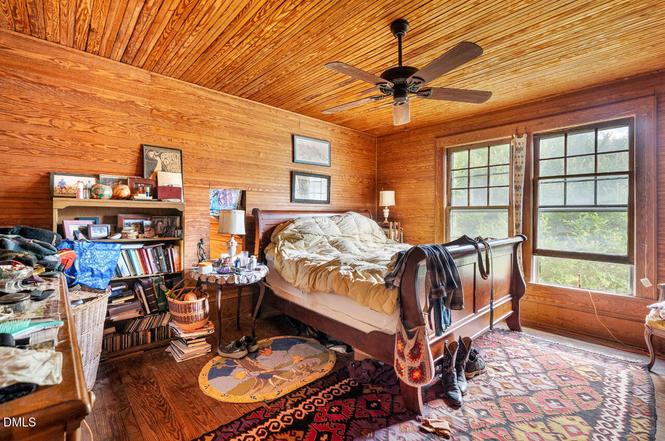
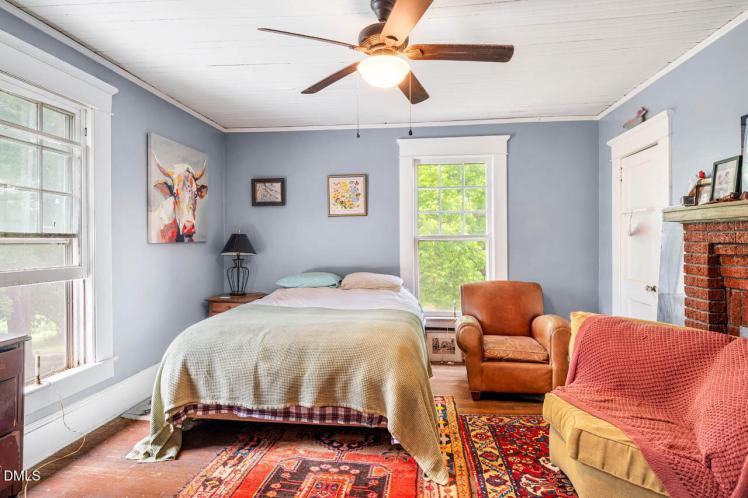
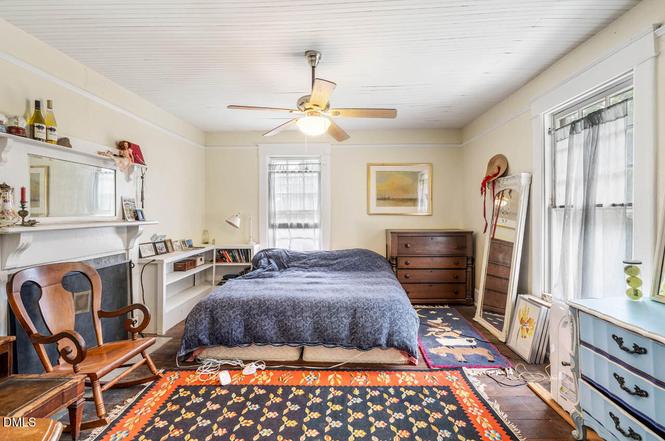
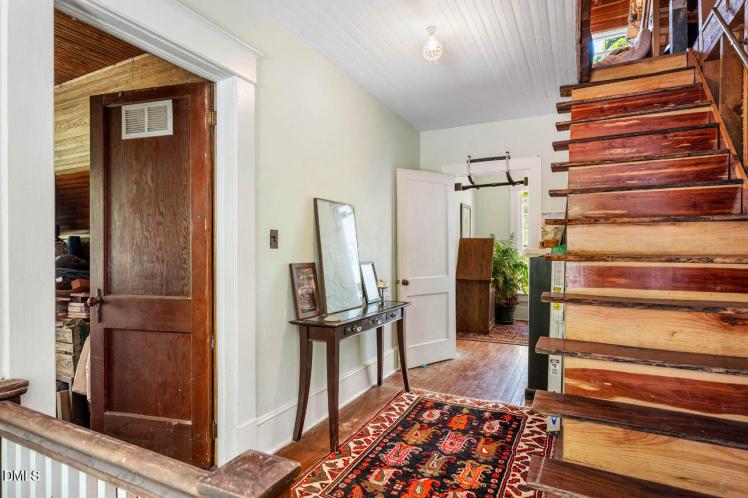
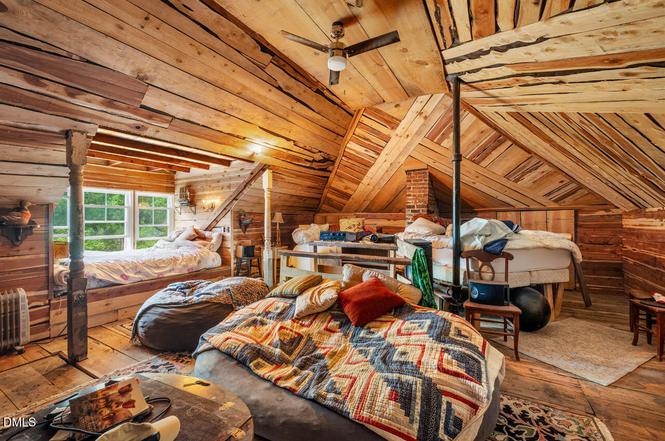
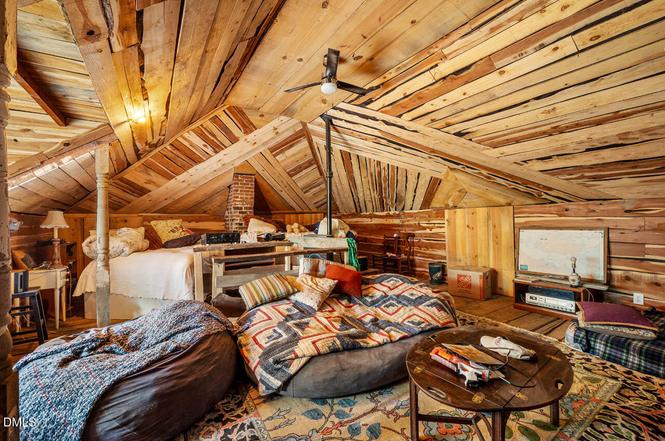
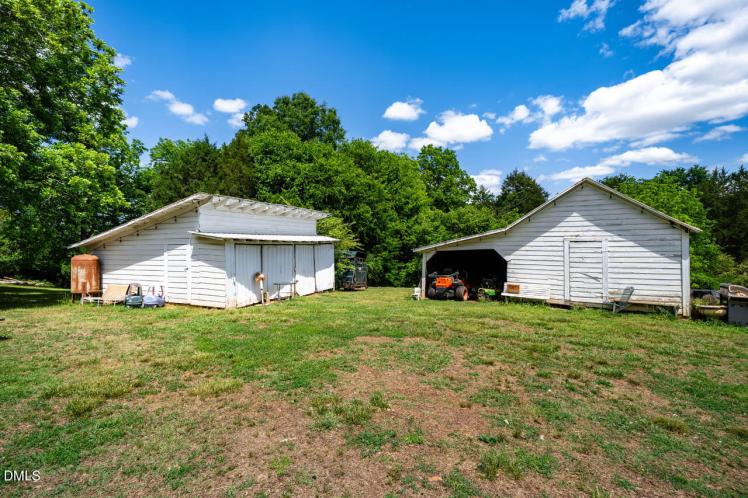
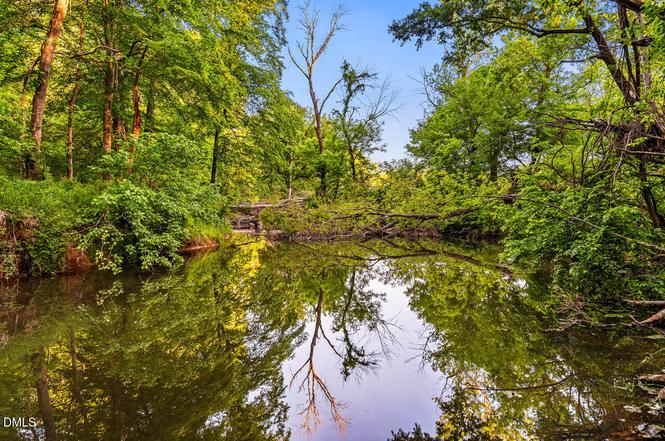
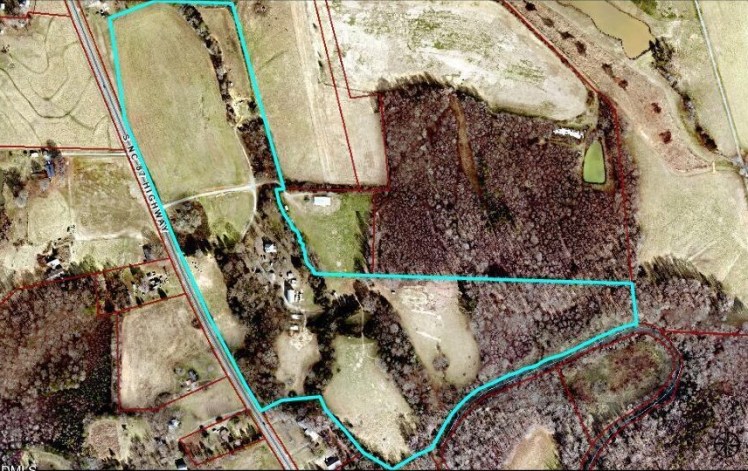
8262 N.C. Highway 87, Snow Camp, Alamance County
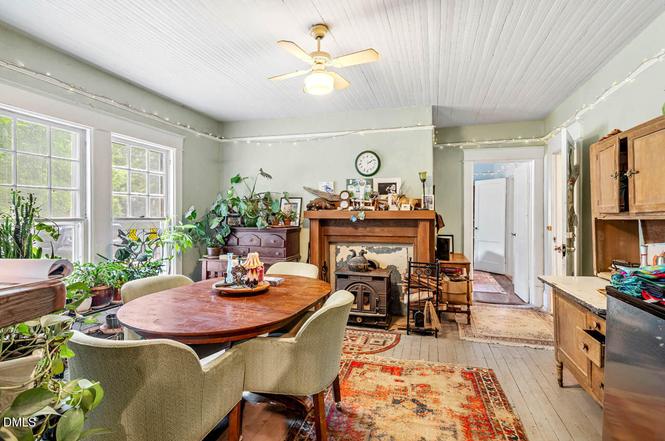
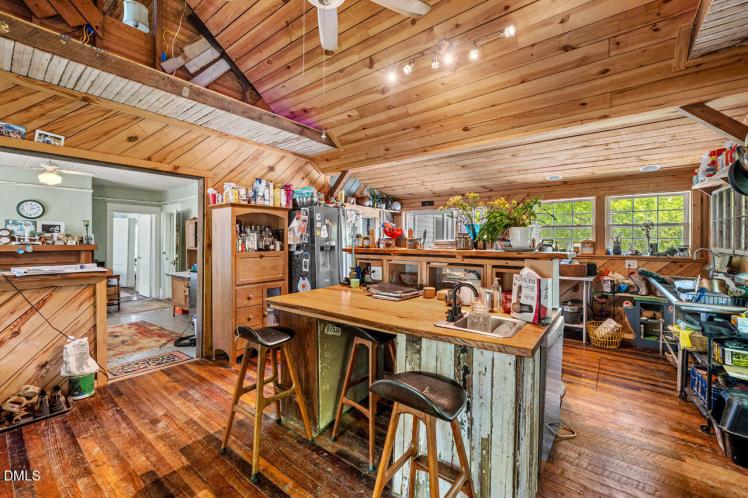
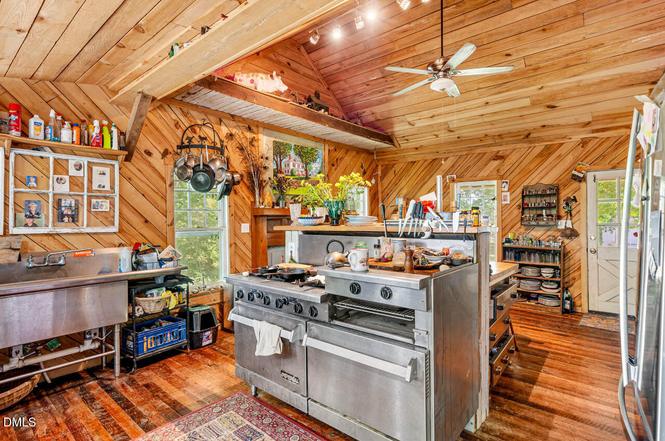
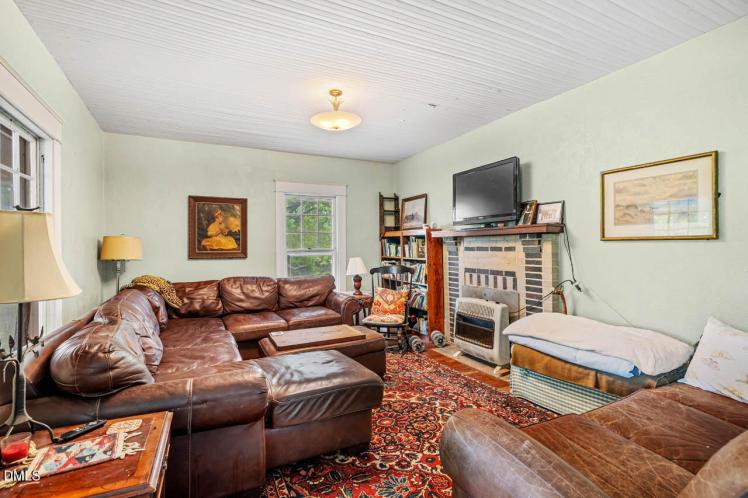
Cane Creek Farm
- $1.69 million (originally $1.75 million)
- 4 bedrooms, 1 1/2 bathrooms, 2,861 square feet (per county), 55.7 acres (per county)
- Price/square foot: $591
- Price/acre: $31,418
- Built in 1925
- Listed May 23, 2026
- Last sale: $375,000, June 2020
- Neighborhood: Down there just south of Eli Whitney, about 8 1/2 miles east of Snow Camp and 5 miles south of Saxaphaw. The property has a Snow Camp mailing address.
- Note: Fifty acres of the farm is protected by a conservation agreement with the Piedmont Land Conservancy.
- Website: “After decades of thoughtful family ownership and sustainable farming practices, the land entered a quiet retirement before being carefully reawakened in 2020 as Cane Creek Farm — a vibrant community-supported farm and gathering place dedicated to regeneration, education, and connection.
- “Today, the property once again thrives under a philosophy of sustainable agriculture, producing pasture-raised livestock for local families and celebrated regional restaurants while serving as a destination for agritourism, ecotourism, and seasonal community events.”
- The farm includes a “two-story Gothic-arch barn, constructed in 1945 by renowned craftsman Harvey Newlin, a striking example of enduring design and purposeful craftsmanship.”
- The farm was part of a 111-acre tract bought by Loy E. Guthrie (1889-1974) and Daisy Thompson Guthrie (1888-1975) in 1933. Loy was a farmer. He served two terms on the Alamance Board of Commissioners and on the Eli Whitney school board. In 1968 they passed ownership to their four daughters. One of their daughters sold the farm to the current owner in 2020.
803smain
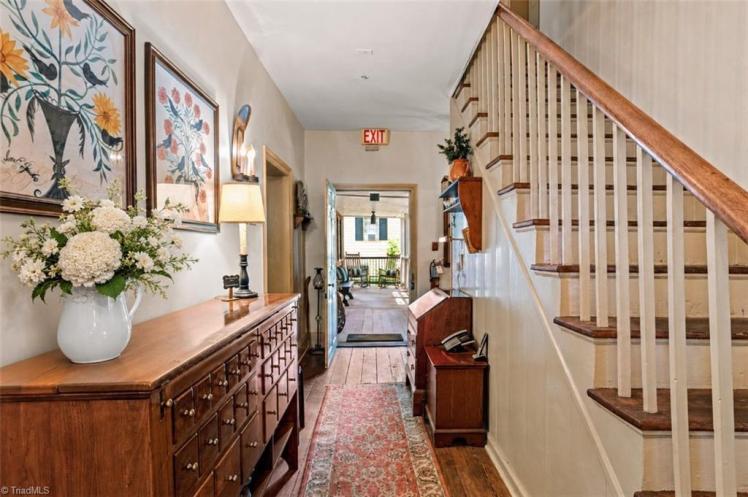
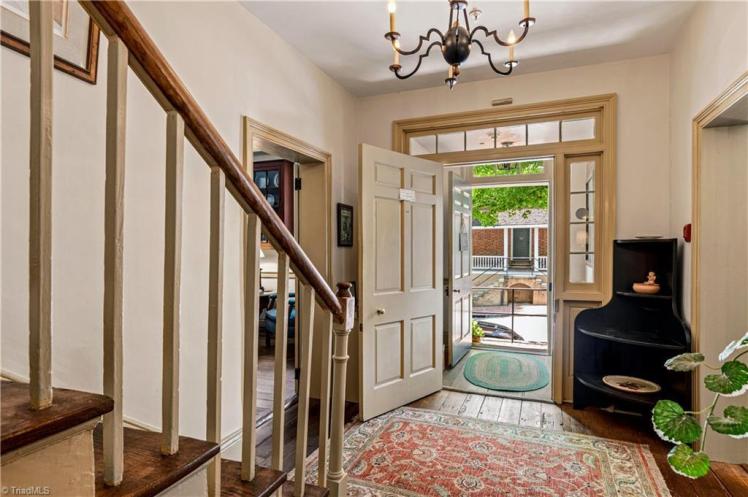
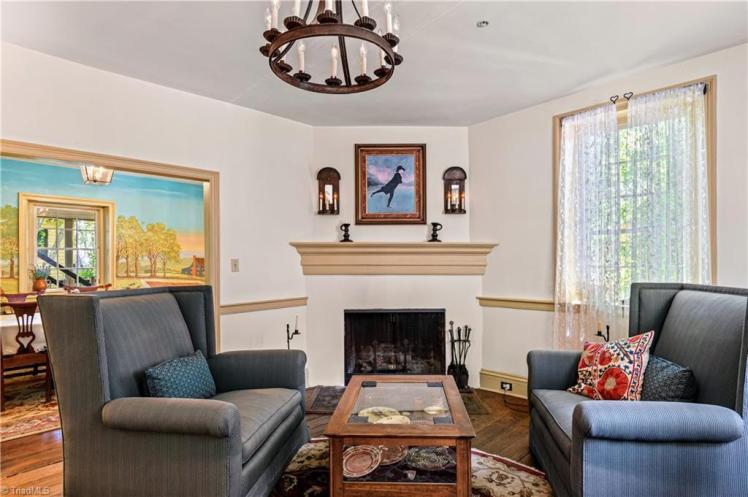
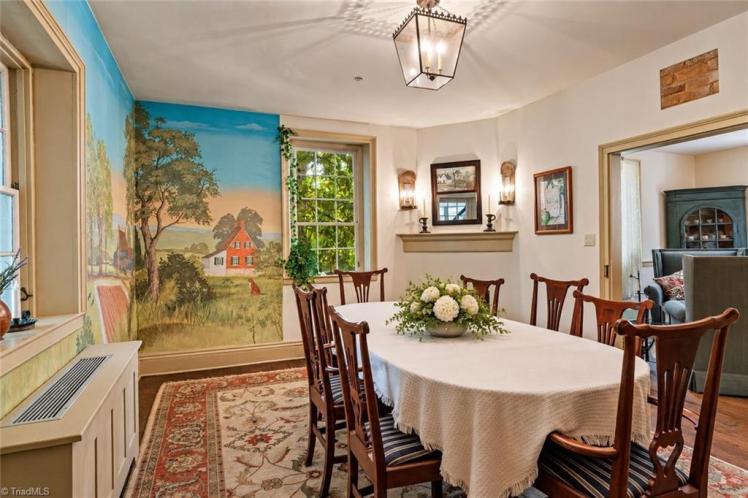
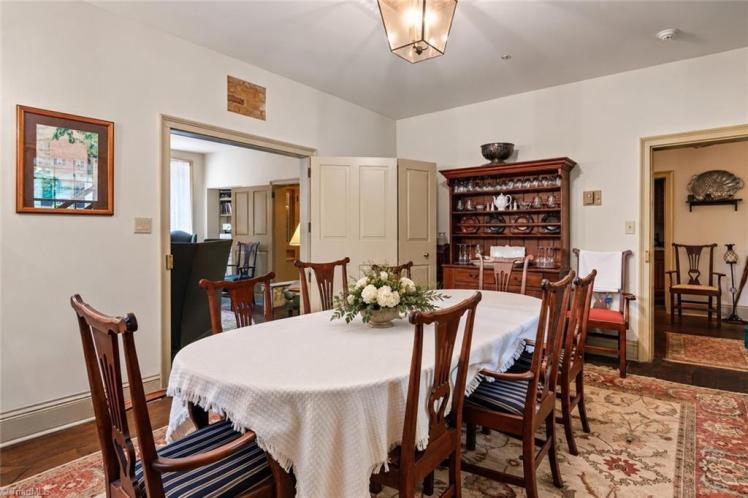
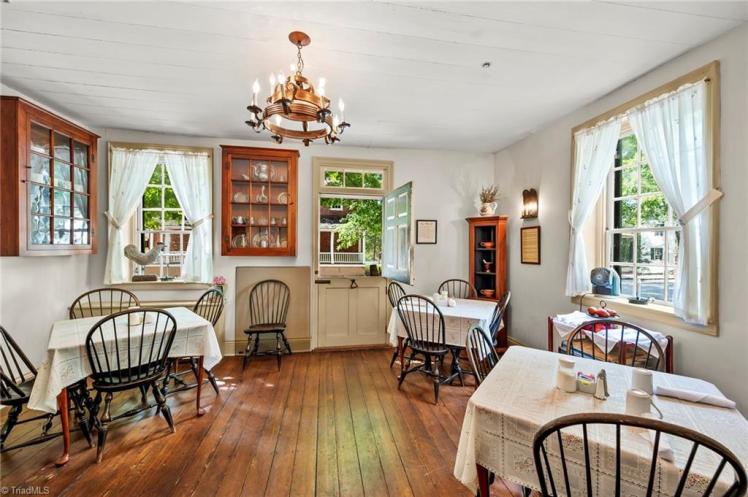
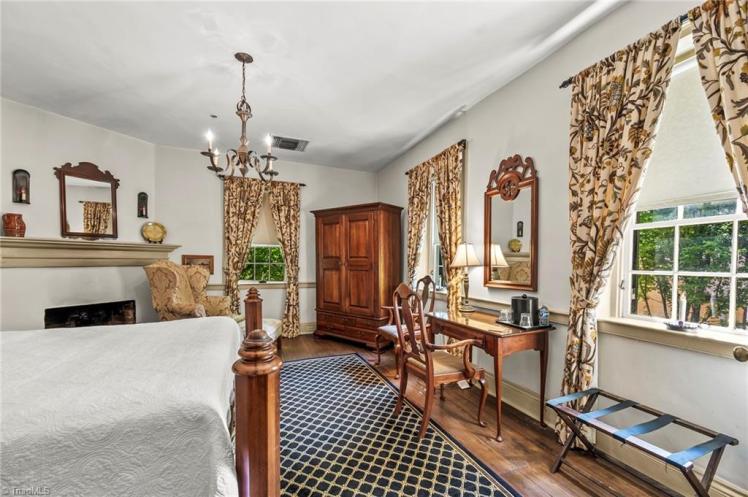
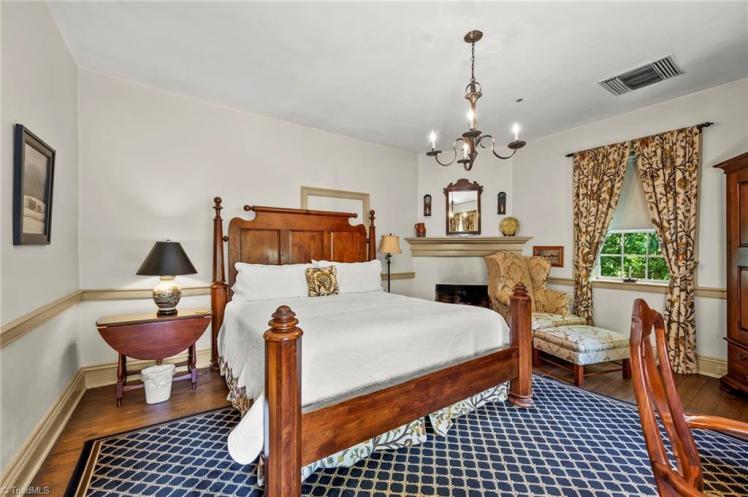
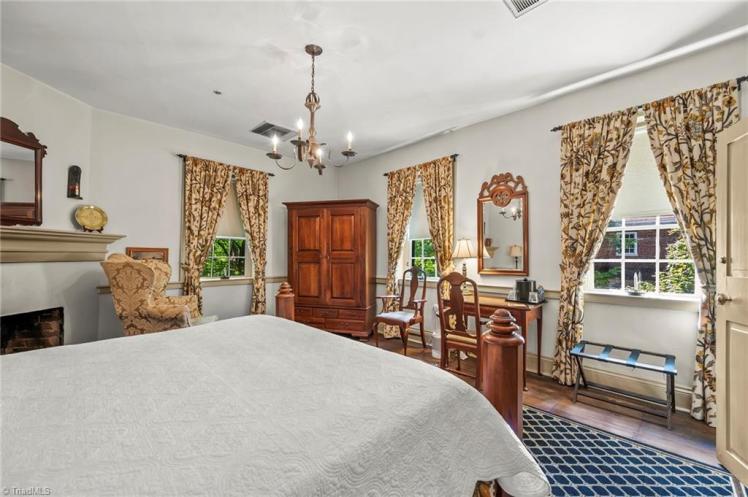
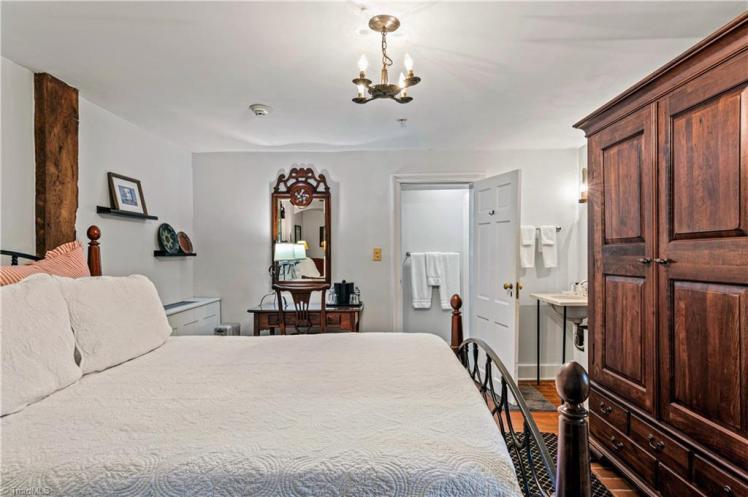
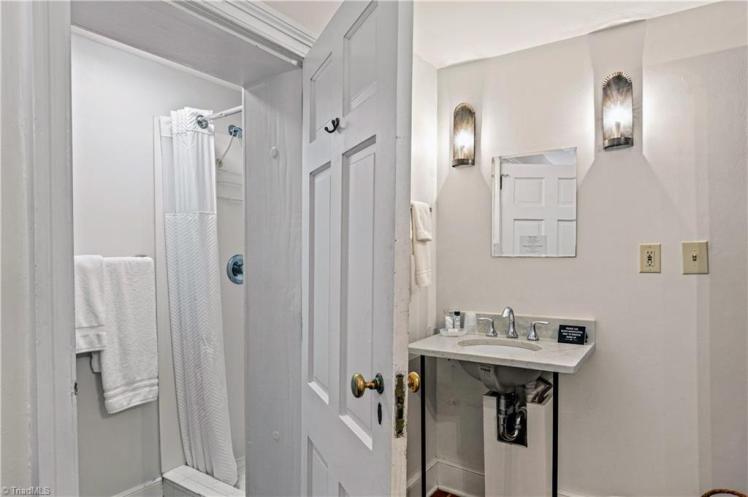
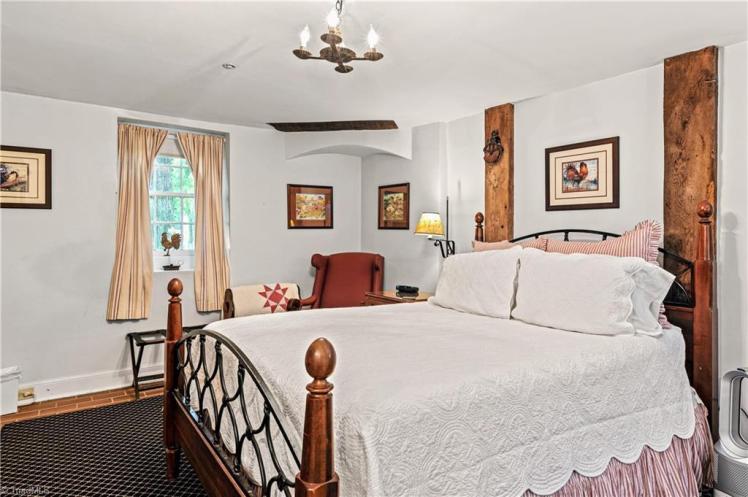
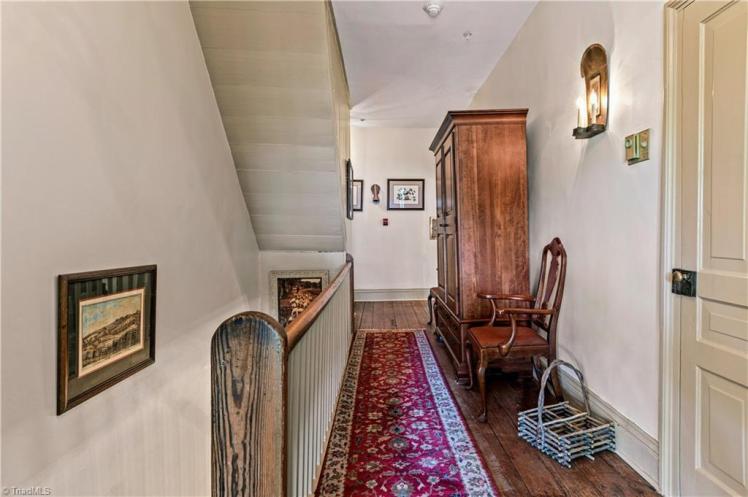
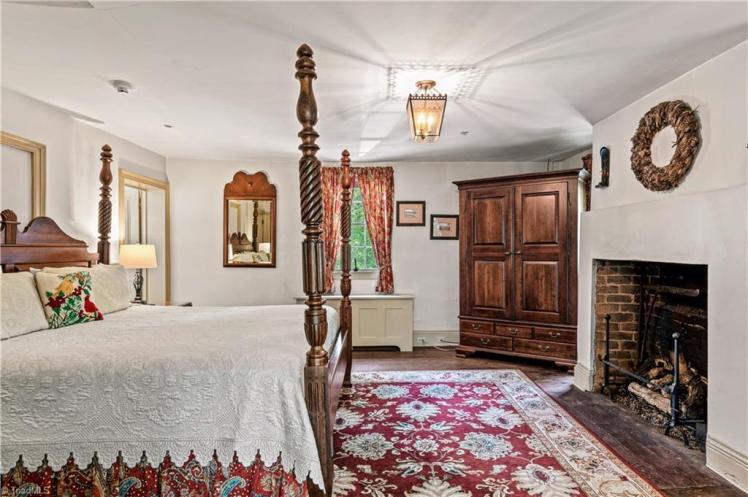
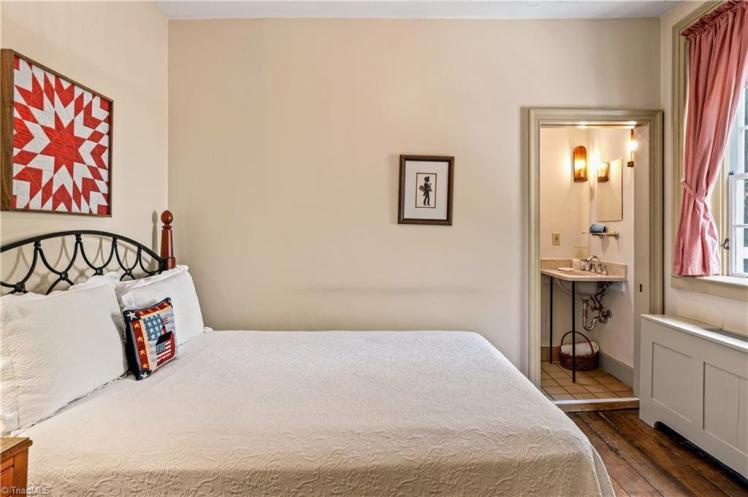
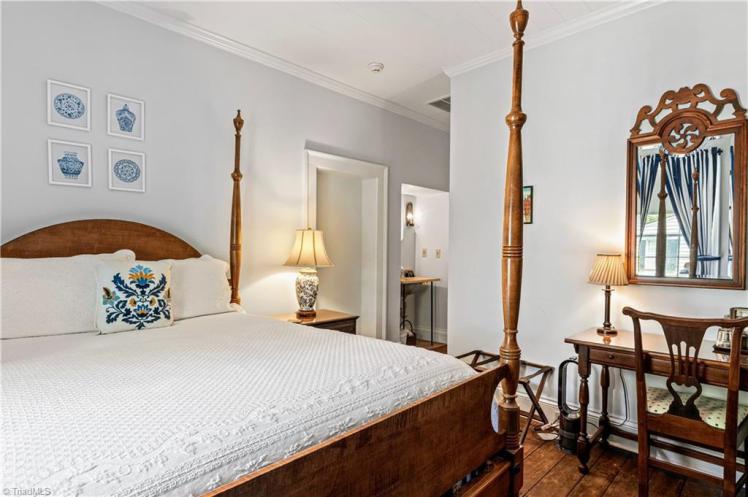
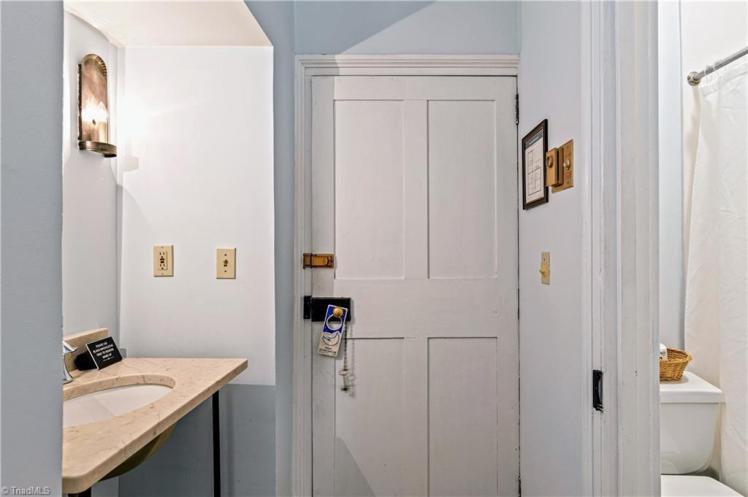
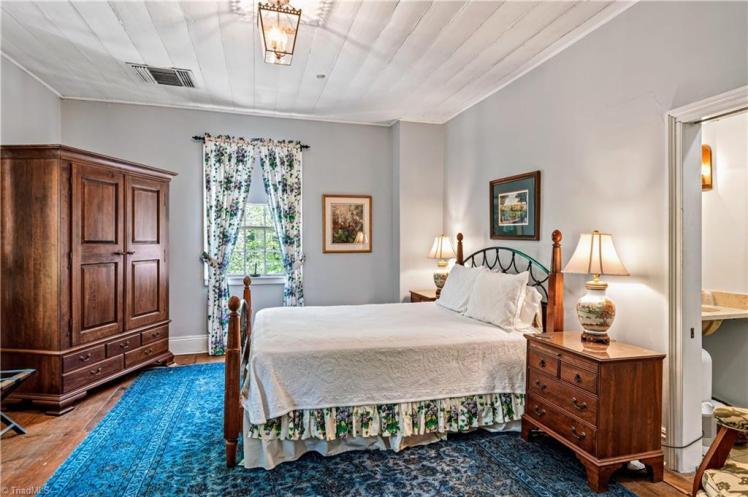
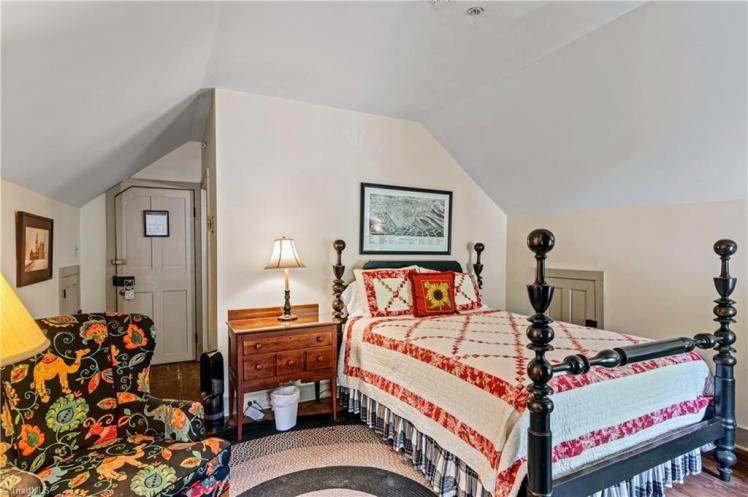
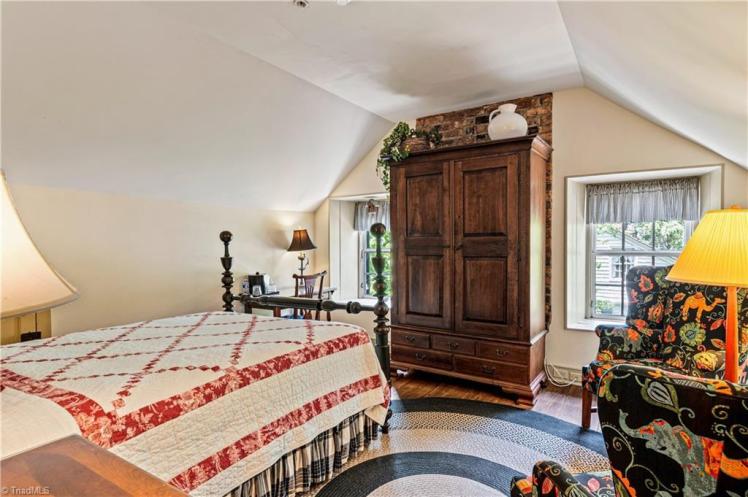
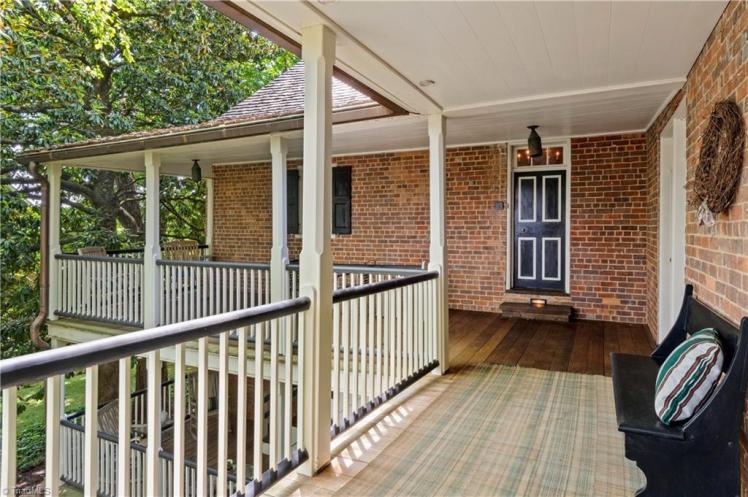
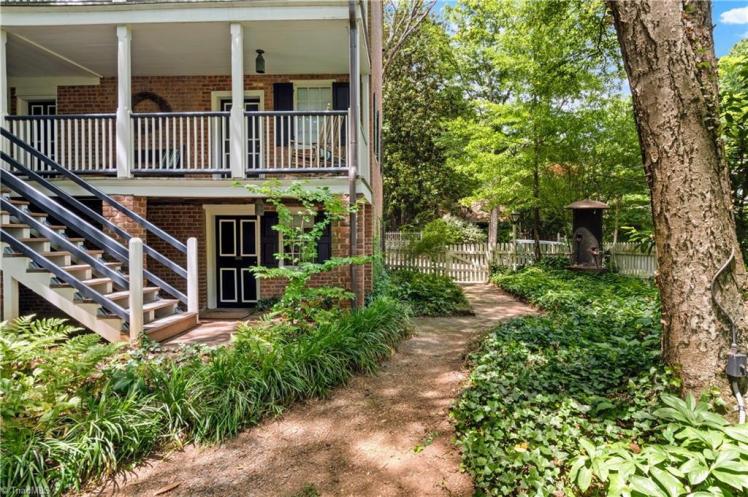
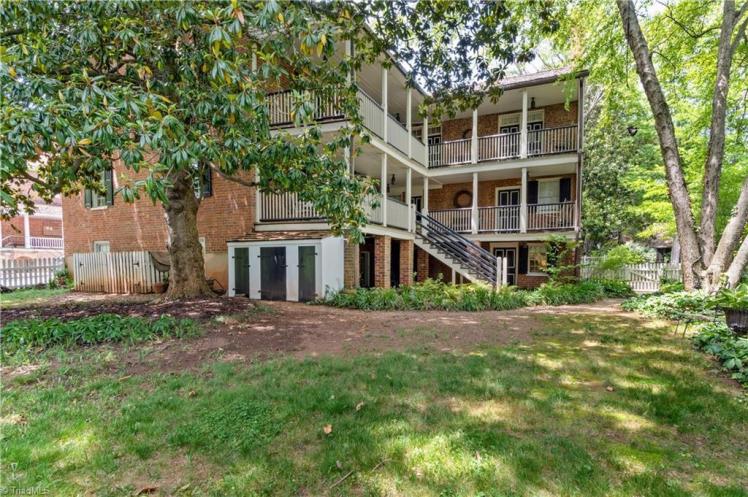
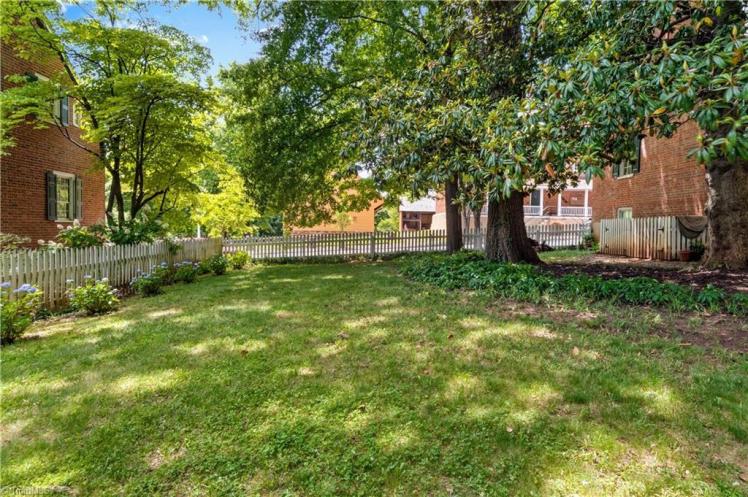
803 S. Main Street, Winston-Salem
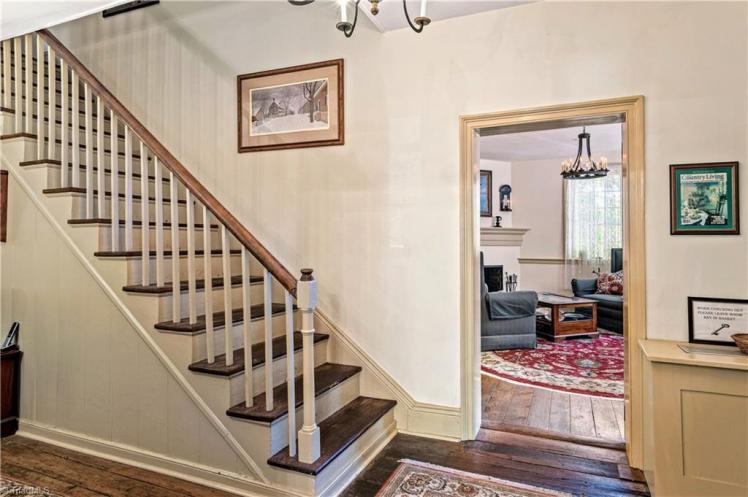
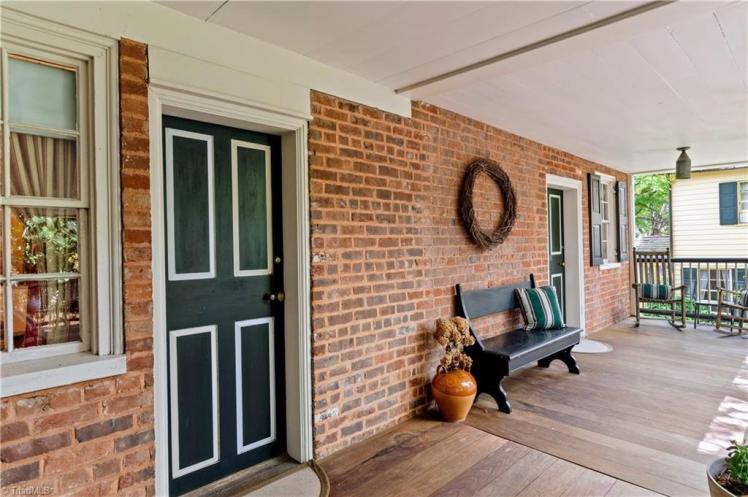
The Augustus Zevely House
The Zevely Inn
- $1.295 million
- 14 bedrooms, 14 1/2 bathrooms, 4,356 square feet (per county), 0.3 acre
- Price/square foot: $297
- Built in 1844
- Listed September 29, 2026
- Last sale: $200,000, June 1993
- Neighborhood: Old Salem Historic District (local and NR)
- Listing: “The Inn offers 12/13 well-appointed guest rooms including one two-bedroom suite with its own sitting room, all with en-suite bathrooms plus a separate innkeeper’s apartment.”
- “Property to be sold fully furnished.”
- District NR nomination: The house was built by David Blum, who planned to open a store. His plan was rejected, and he sold the house to Dr. Augustus Zeverly in 1844.
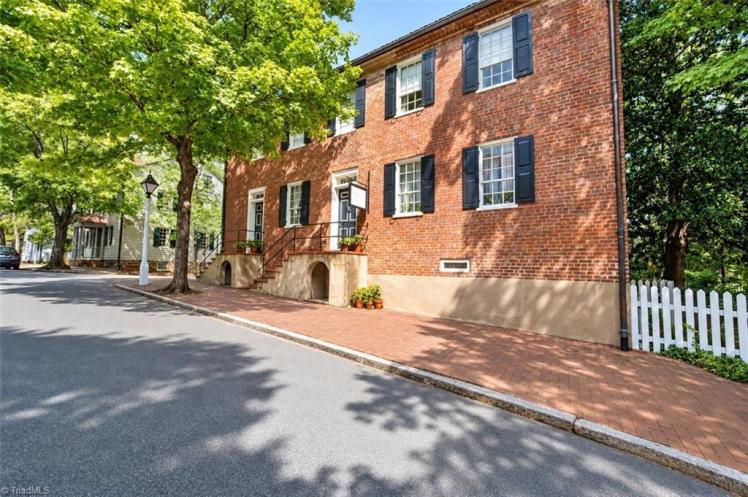
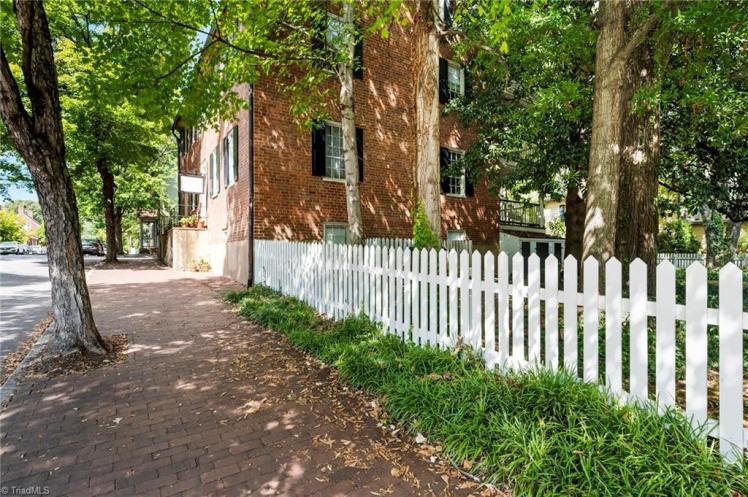
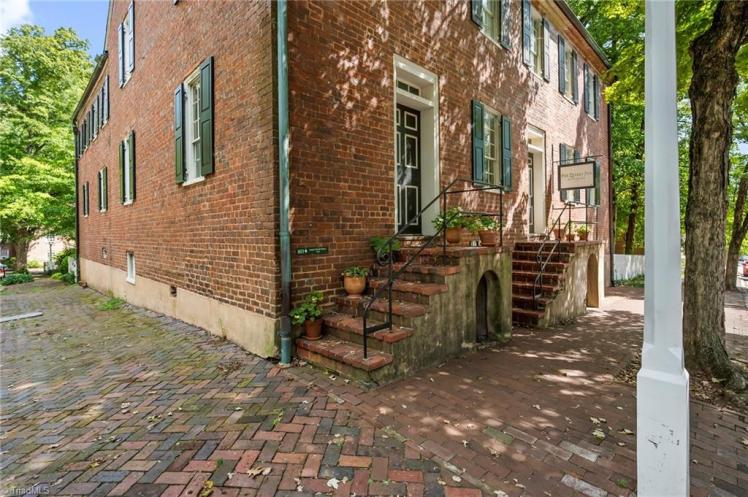
- “The building sits against the sidewalks of Main and Blum Streets on this corner lot. The two-story, common bond (4:1) brick building with side gable roof (wood shingle) has interior end chimneys with corbelled caps and is on a brick foundation that is partially stuccoed.
- “The Greek Revival five-bay façade has corbelled brick cornice, evenly spaced windows, and a centered front door at a stoop. To its left is a second entry door for the northwest front room, also at a stoop. Each entry is a six panel door with three-light transom. Each stoop is a arched masonry structure with five to seven brick steps, with wrought iron hand rails, at their north sides going down to the sidewalk. …
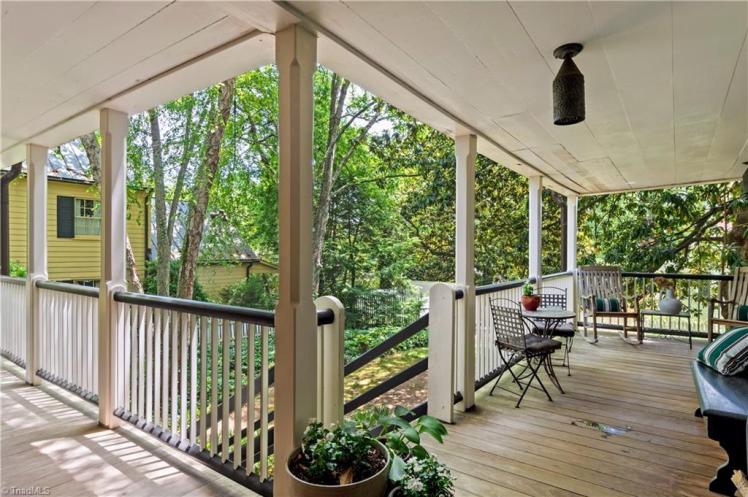
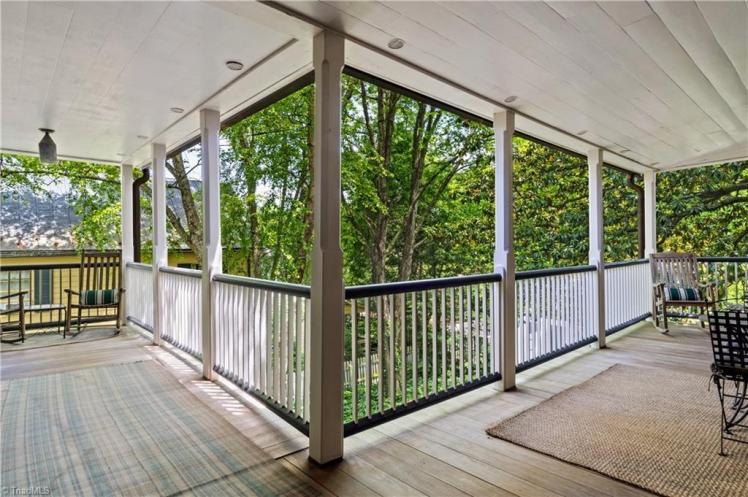
- “In the late 1840s and early 1850s Zevely operated the house as an inn for overflow guests from the Tavern across the street. … A two-story addition was made to the south end of the house and a large two-story front porch was extended over the sidewalk so that by 1880s, the Zevely abutted the three-story addition at the north side of the Traugott Leinbach House next door, forming expansive street front. The Zevely family held the property until 1905. …
- “Salem Academy and College removed later additions and partially restored the Zevely House in 1941 for apartments. In 1976 it was acquired by Old Salem, Inc. and continued as apartments until being sold with deed and covenant restrictions for the ca. 1993 rehabilitation as the ‘Augustus T. Zevely Inn,’ Old Salem’s only bed and breakfast.”
301mcreynolds
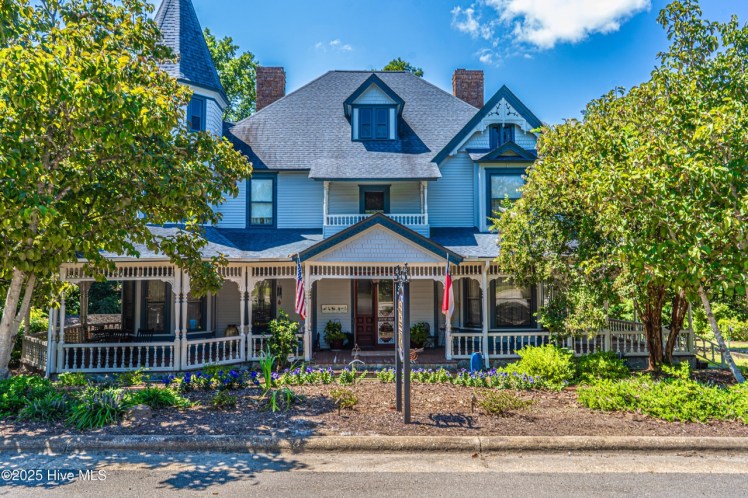
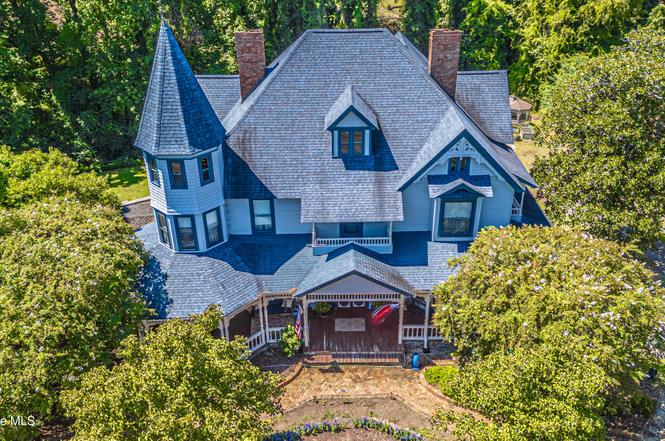
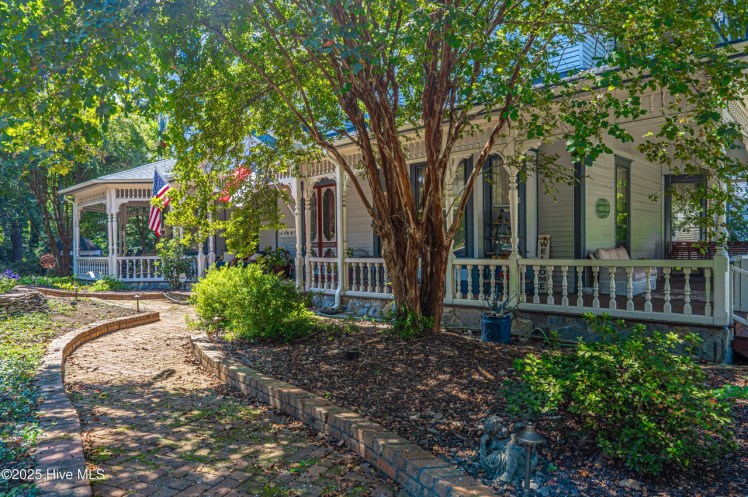
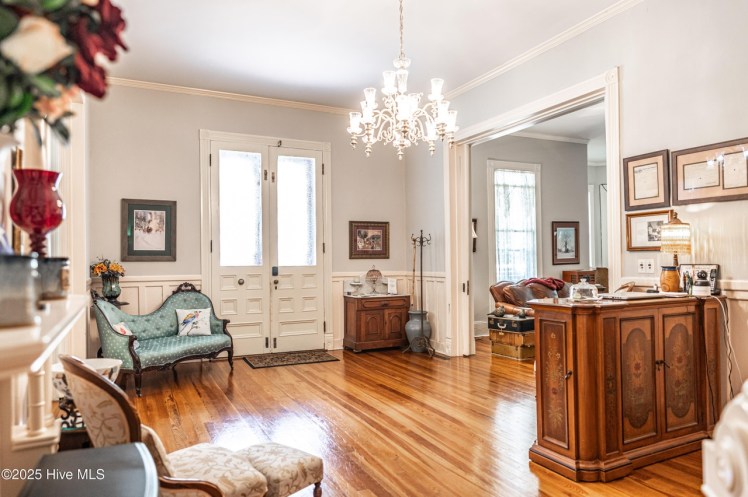
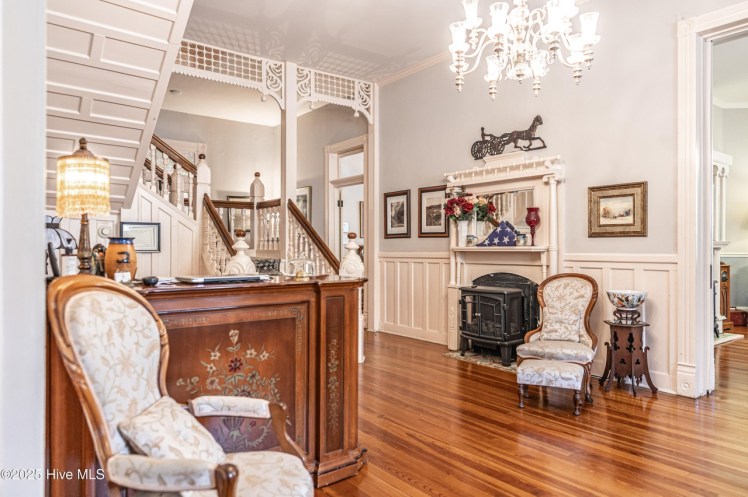
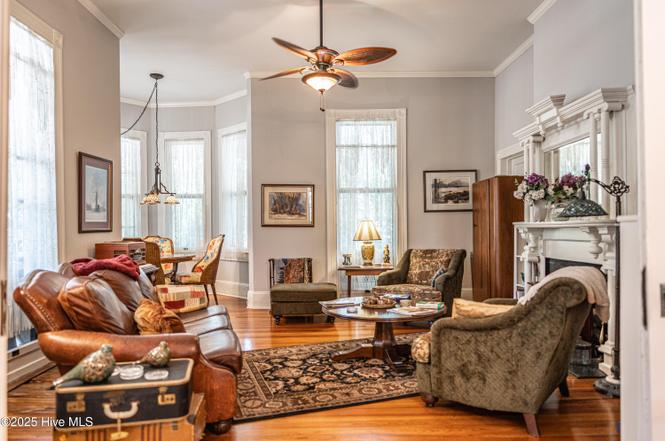
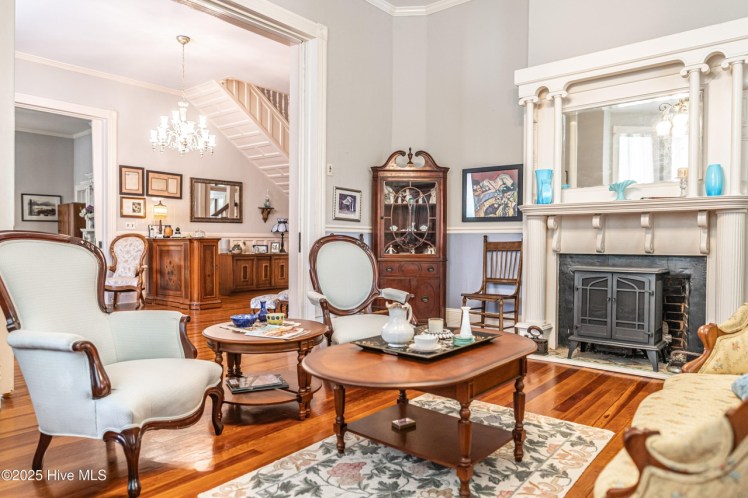
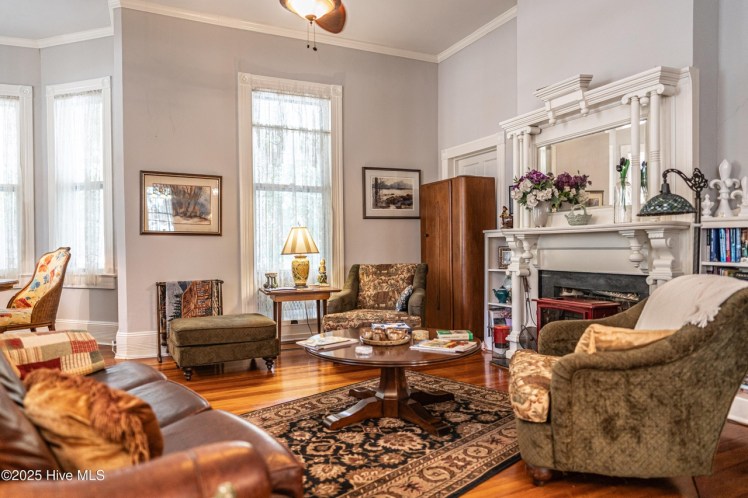
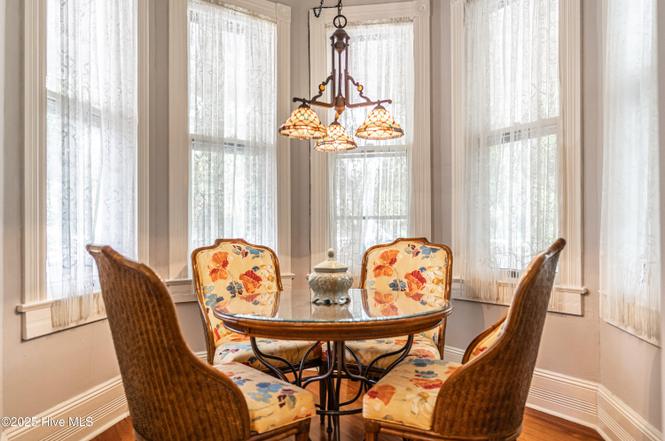
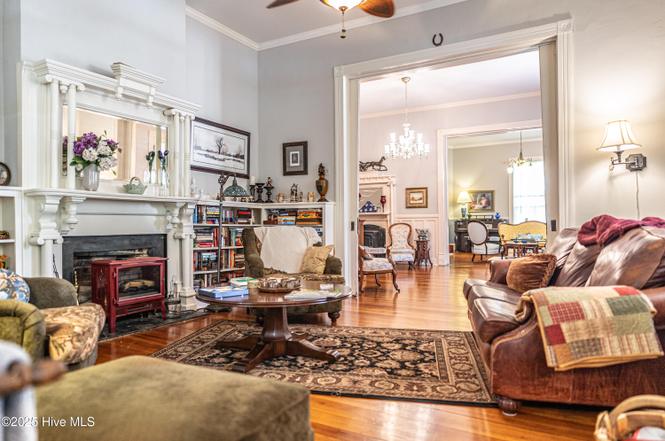
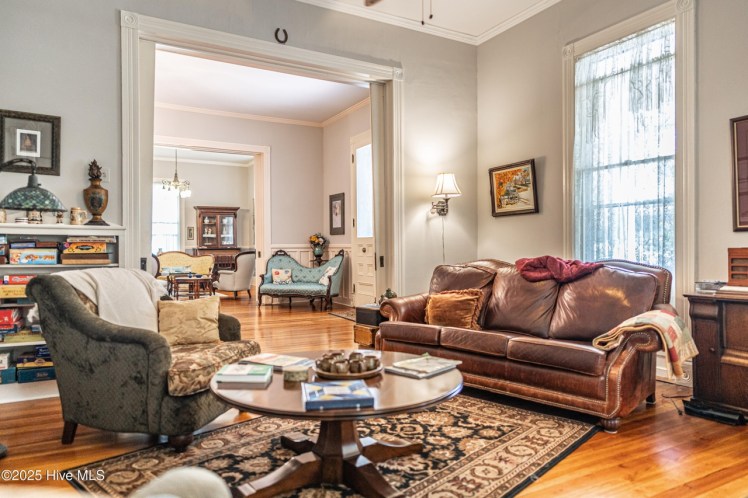
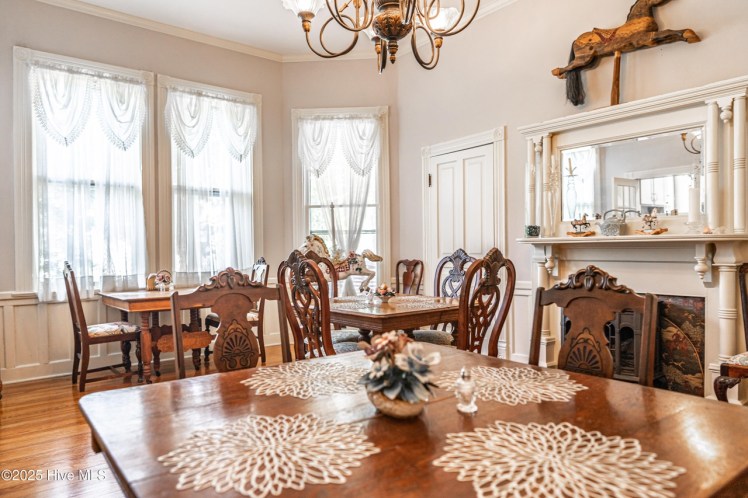
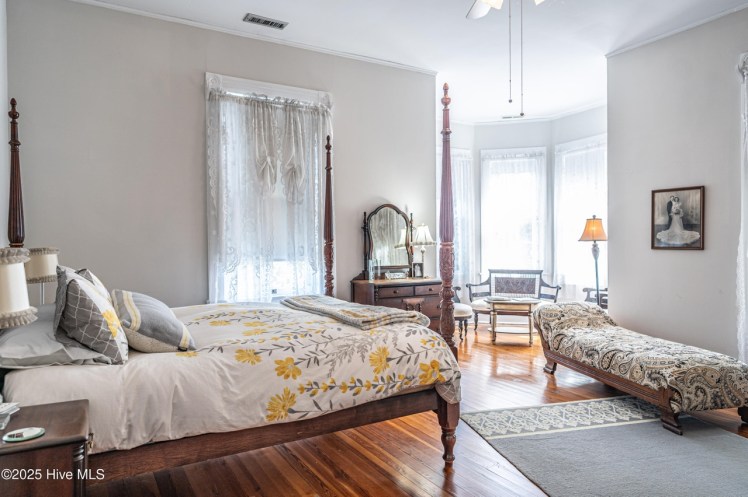
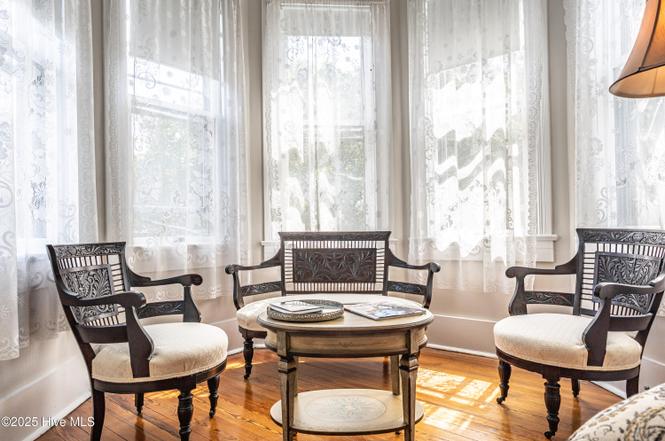
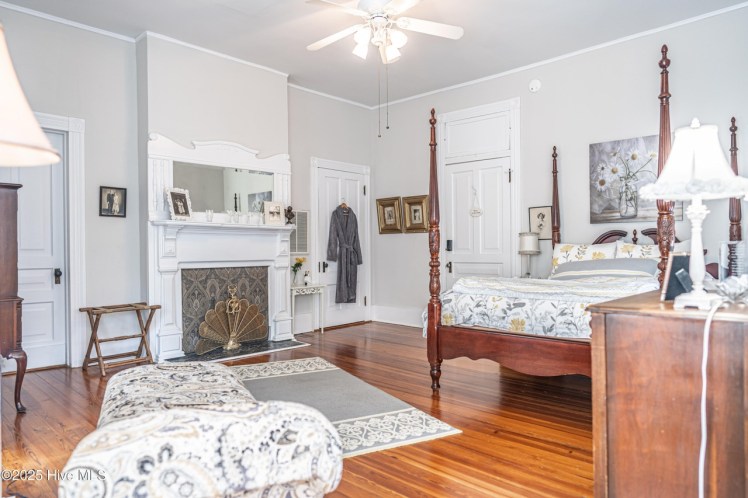
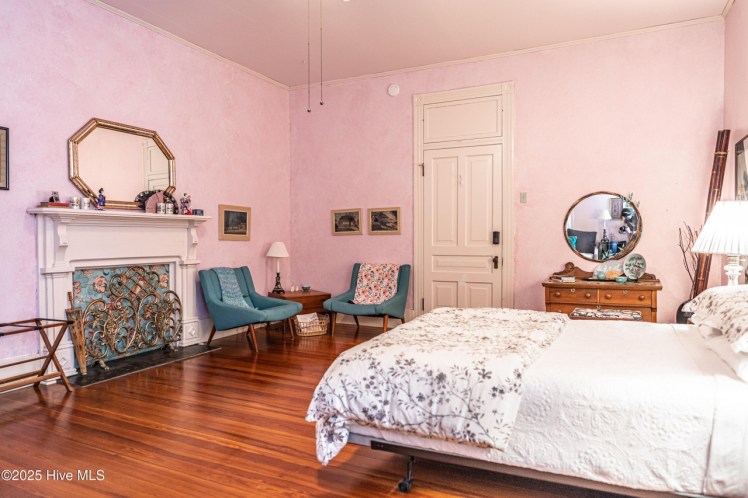
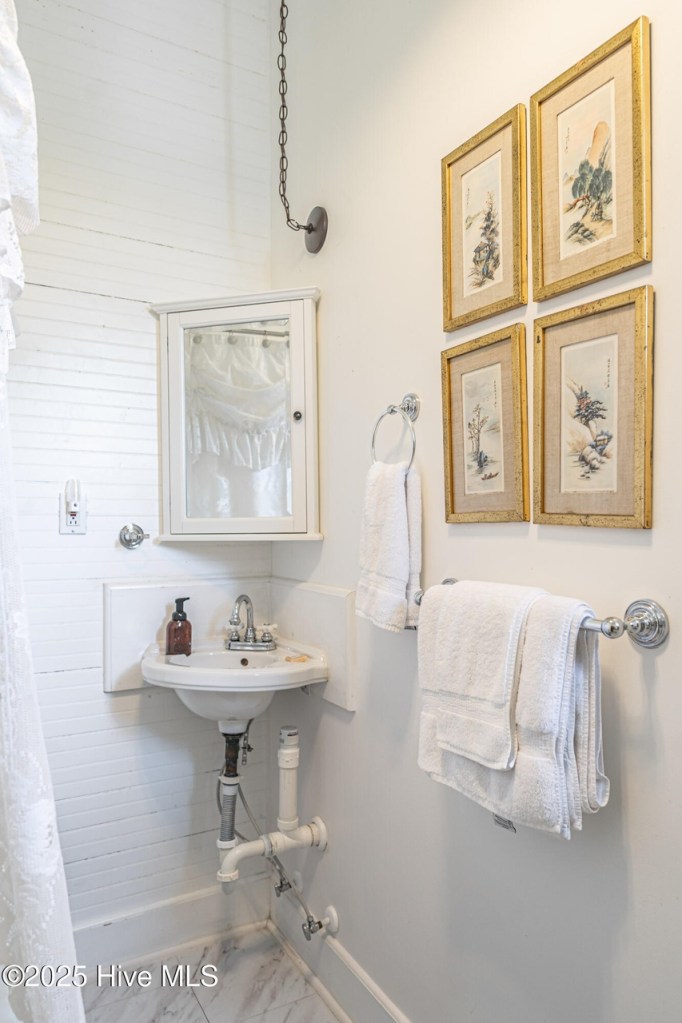
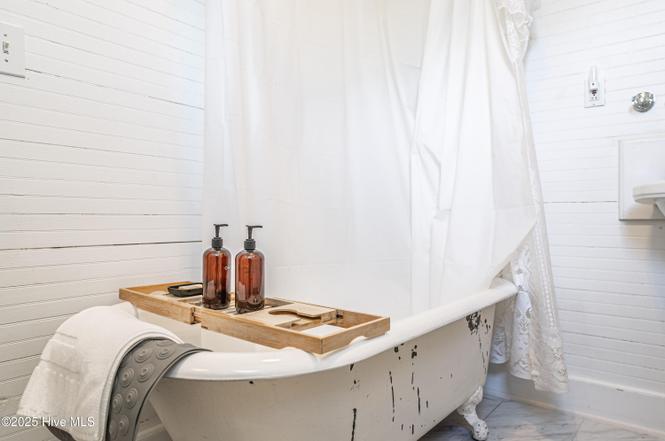
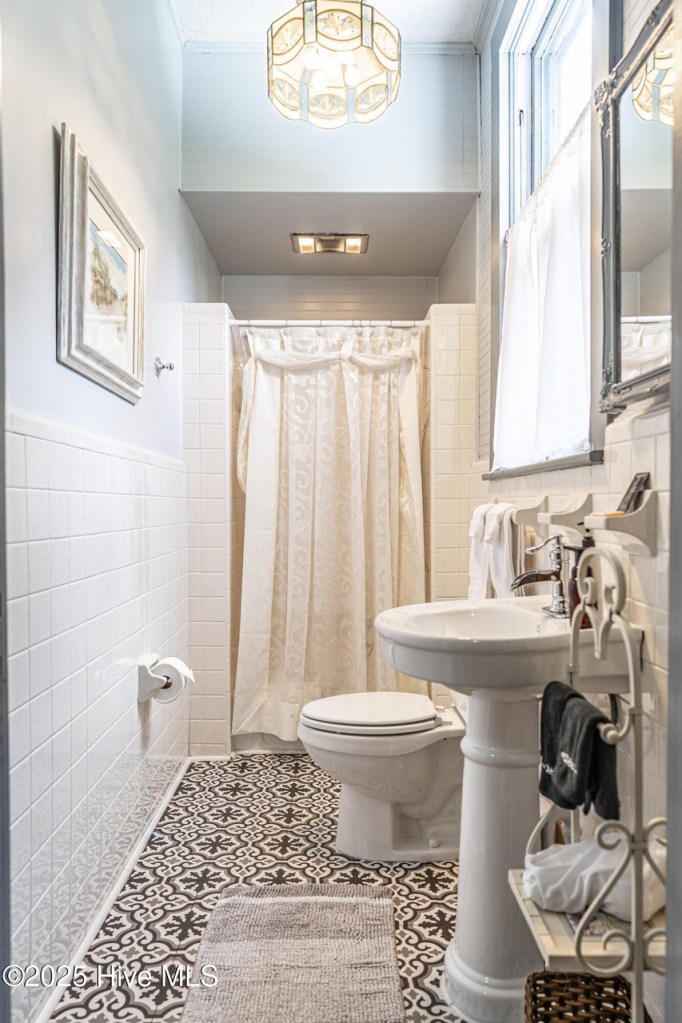
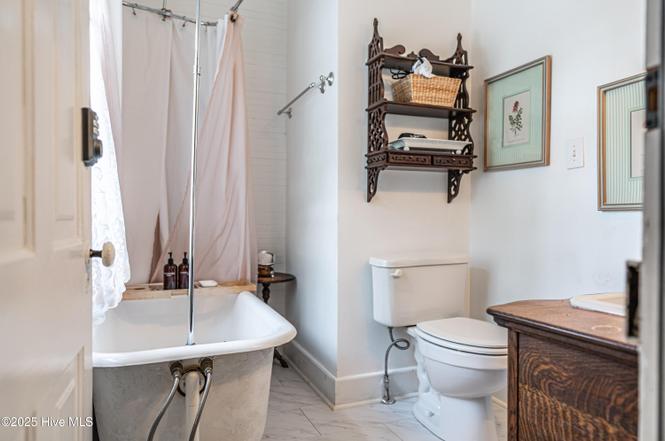
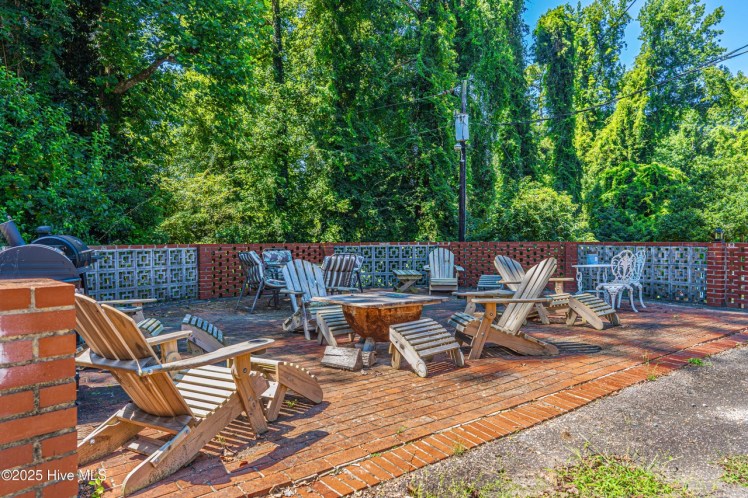
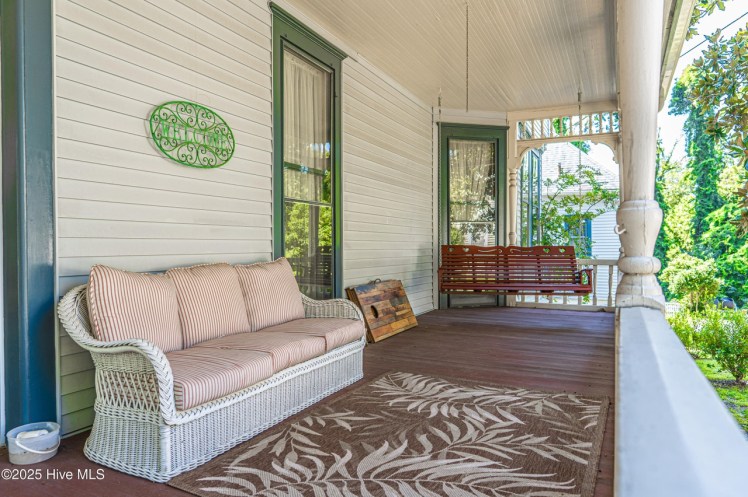
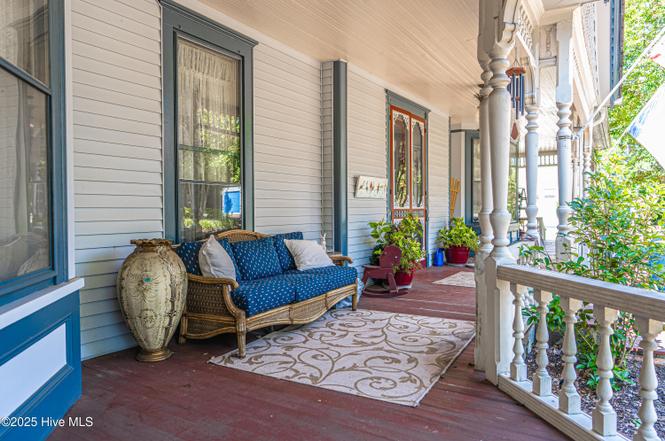
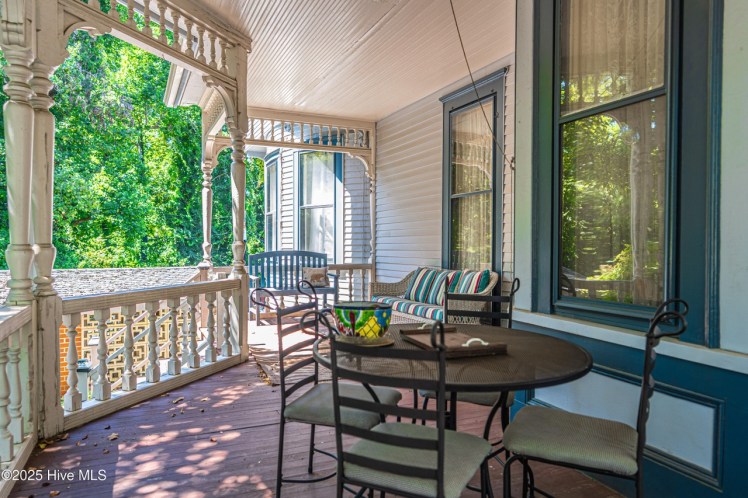
301 McReynolds Street, Carthage, Moore County
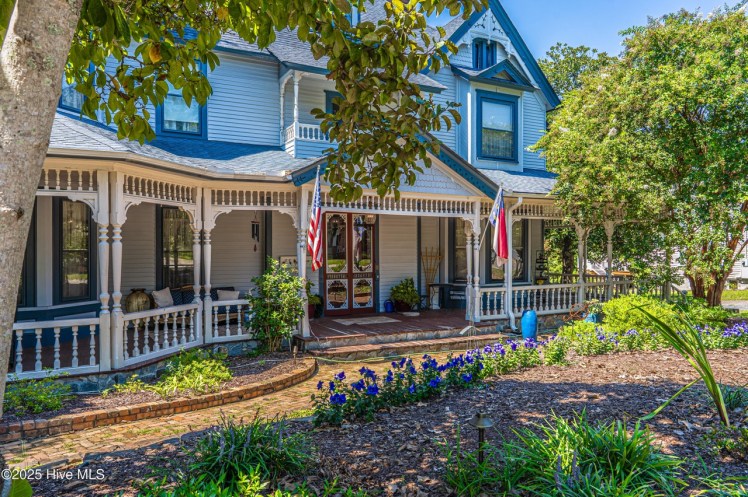
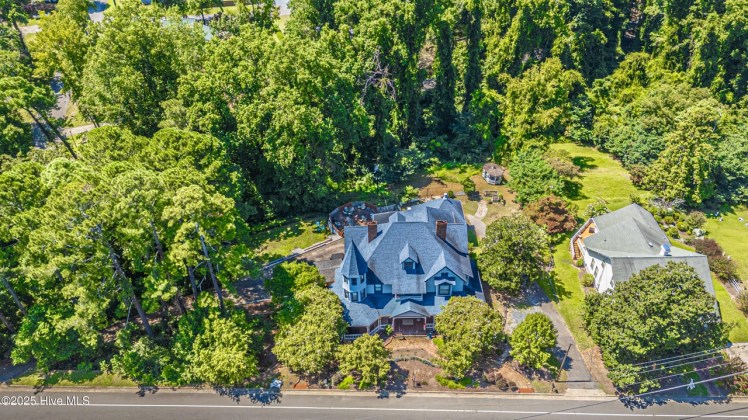
The W.T. Jones House
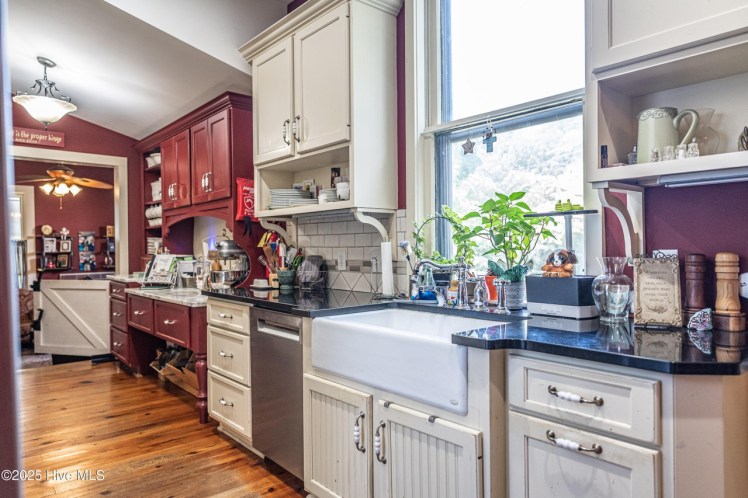
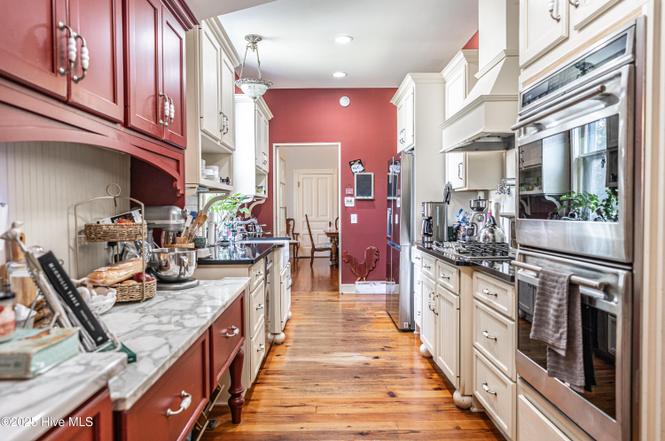
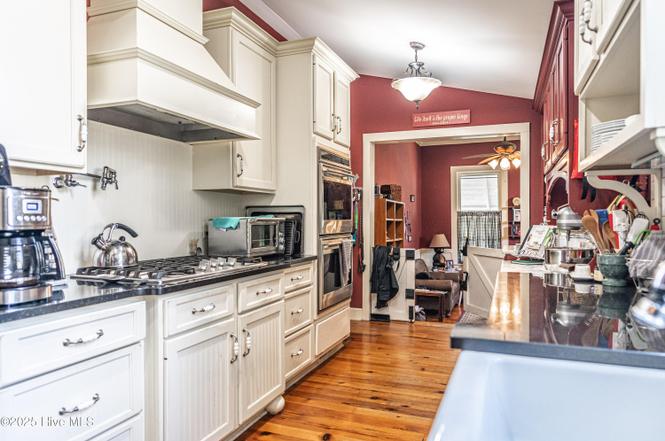
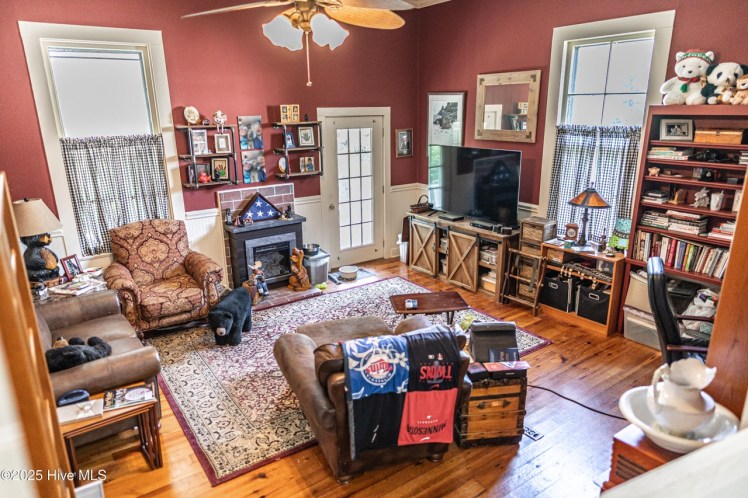
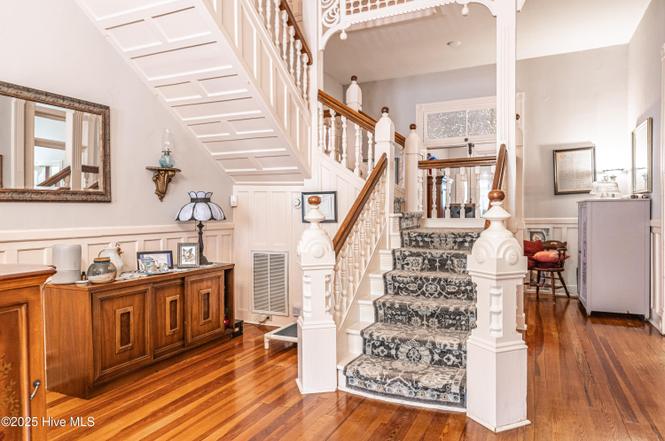
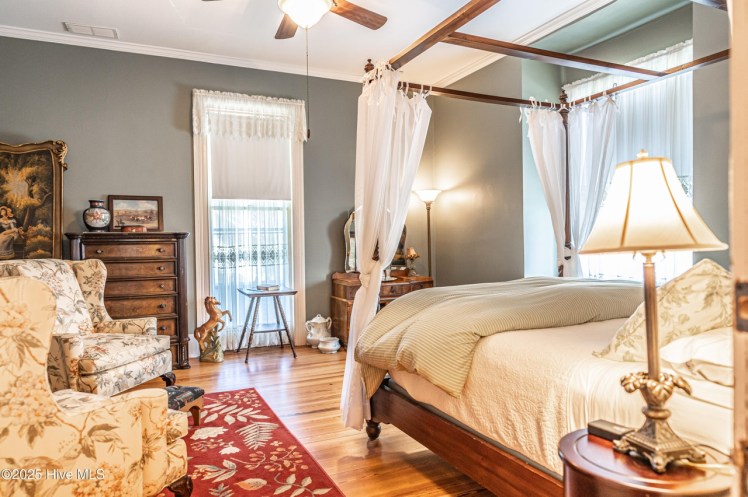
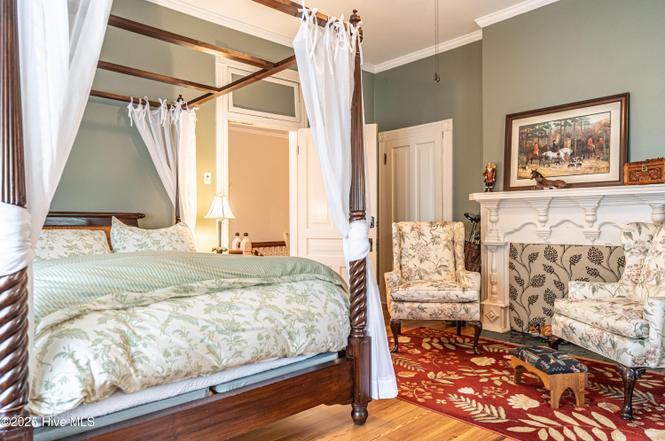
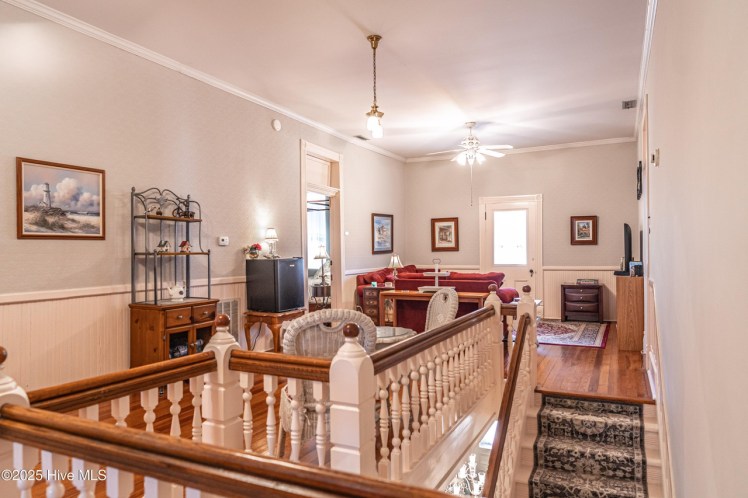
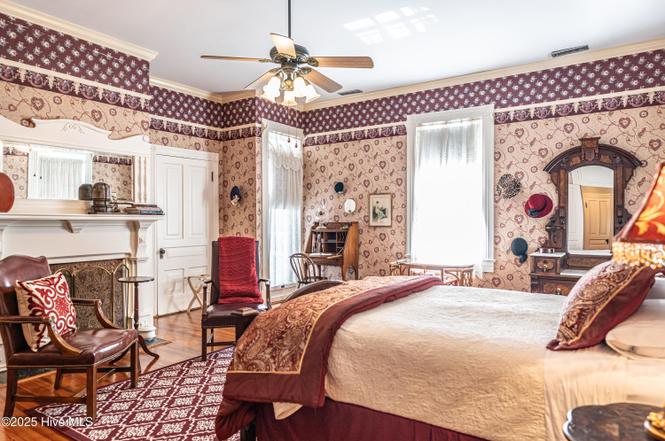
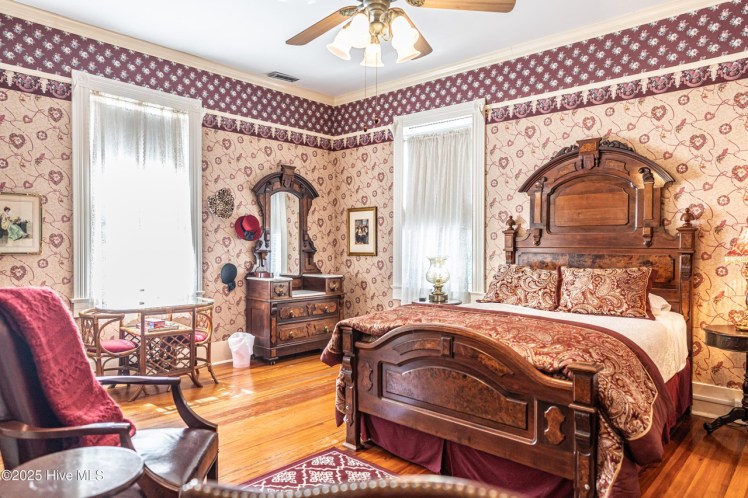
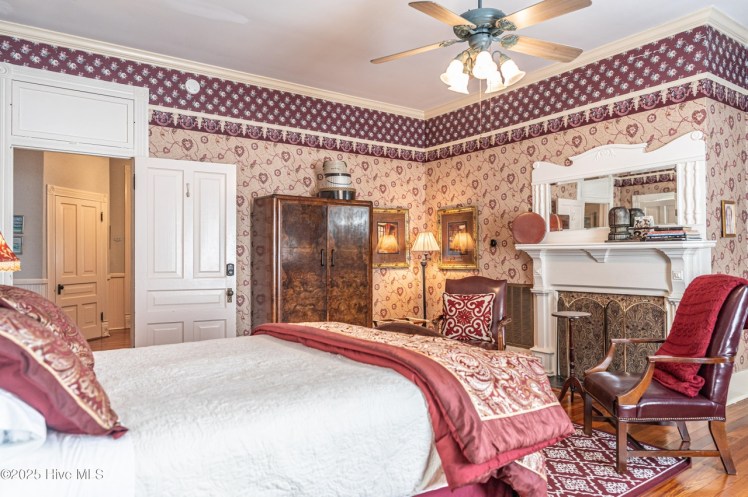
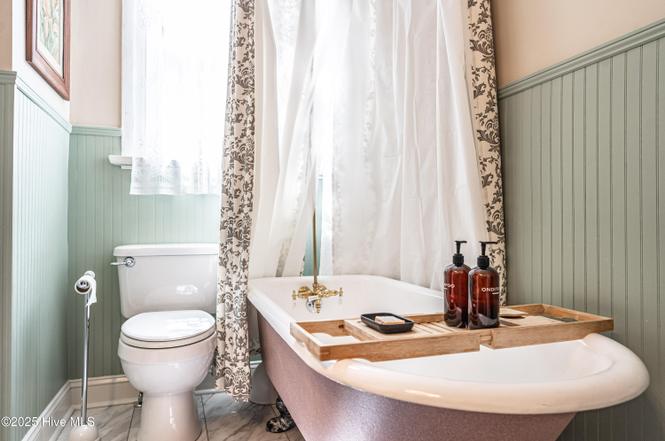
The Old Buggy Inn
- $749,900 (originally $776,400)
- 6 bedrooms, 6 bathrooms, 5,050 square feet (per county), 1.04 acres
- Price/square foot: $148
- Built in 1880 or 1897 (see note)
- Listed March 30, 2026
- Last sale: $358,500, June 2019
- Neighborhood: Carthage Historic District (NR)
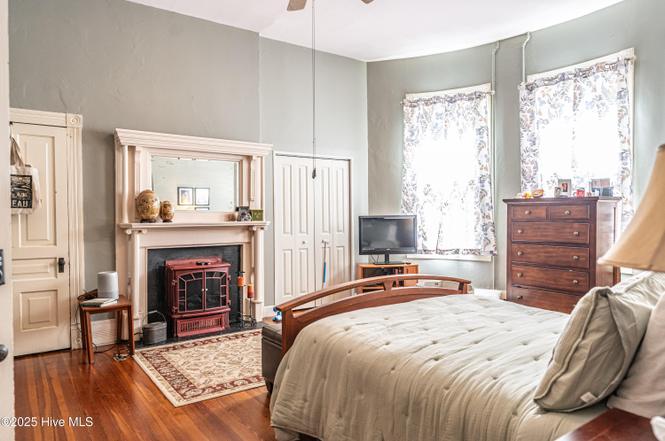
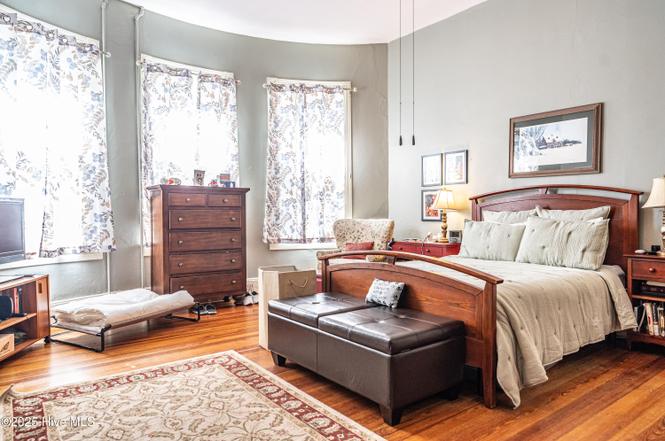
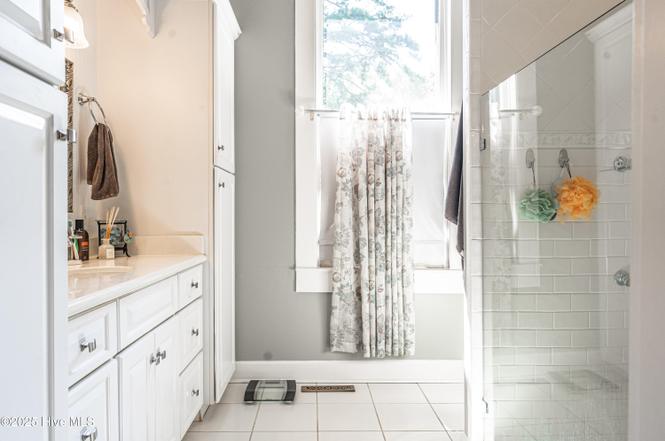
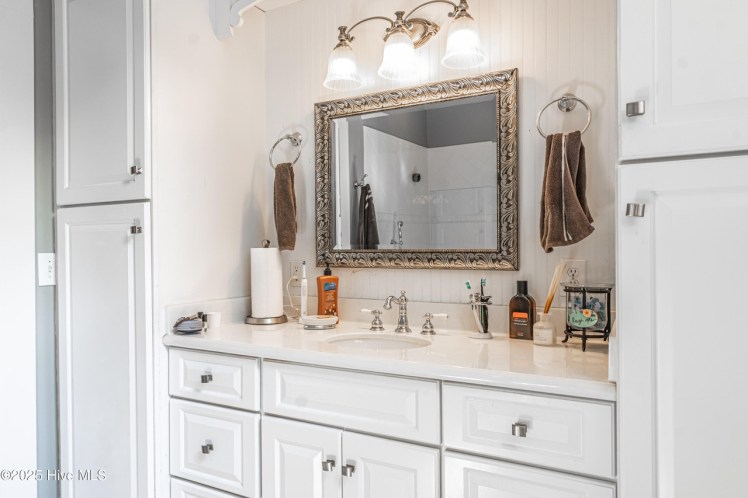
- Note: The inn has four guest suites. It originally became a B&B in the 1970s, but has not operated continuously. The current owners reopened it after buying it in 2019.
- County records give the house an 1880 date. The National Register nomination, quoted below, says it was built in 1897 after a house built on the site in 1889 burned.
- District NR nomination: “elaborately embellished frame Queen Anne: steeply pitched hip roof over double-pile main block; projecting gable-roofed two-story bays on facade and side elevations; octagonal three-story corner tower with tent roof:
- “one-story wraparound porch with bracketed turned posts, spindle frieze, turned balusters; treatment repeated on shed balconies on three-bay facade and west elevation: shingled gable ends, sawn gable ornament, bossed vergeboards;
- “tall brick chimneys with paneled stacks; two-story rear ell with connector to one-story, hip-roofed wing; vinyl siding; broad central hall with spindle screen, ornate stair and vernacular Classical Revival mantel;
- “built on site of house erected for Jones in 1889, which burned; W. T. Jones was partner in and president of Tyson & Jones Buggy Co., president of Carriage Builders National Assn., and a local school trustee.”
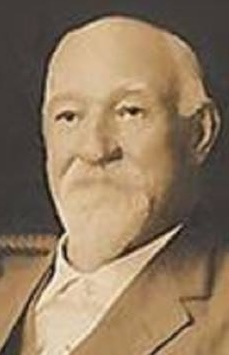
- William Thomas “Tom” Jones (1833-1910) was a remarkable historic figure. Born in Bladen County to a slave owner and a slave, he passed for white his entire life. He came to Carthage from Fayetteville in 1857 to work at a buggy manufacturer. By 1859, he had become a partner in the business.
- He joined the Confederate Army in 1861, was promoted to lieutenant and spent the final year a prisoner of war. In the prison camp, Tom made moonshine from potato peelings and bread crusts. He sold it guards and townspeople and came home after the war with $3,000.
- Tom’s moonshine money allowed the buggy company to reopen. When it became incorporated in 1889, he was named president. Tyson & Jones Buggy Company produced up to 3,000 carriages and buggies per year. It continued in business until 1925.
- Tom’s biracial background was apparently an open secret in Carthage, known but not talked about, at least not with strangers. In 2005, the B&B’s owner researched the house and discovered Jones’s story. In the finest Southern tradition, everyone in town denied it until she produced proof, at which point everyone said of course they all knew.
- At a time when interracial marriage was illegal, he married a white woman, and after she died he remarried, again to a white woman. Her brother was the U.S. Marshal in Raleigh. It is said that Tom built such a large house to accommodate a big family, but he had no children with either wife.
- “The fine presence and bearing of Mr. Jones made him a conspicuous figure in any gathering, and there was not a more popular man in the Carriage Builders’ National Association,” the Durham Recorder said in Tom’s obituary.
- Much of this information comes from a 2016 article in the Asheboro Courier-Journal. It’s behind a paywall but can be found here and there on the internet, including here.

