804miller
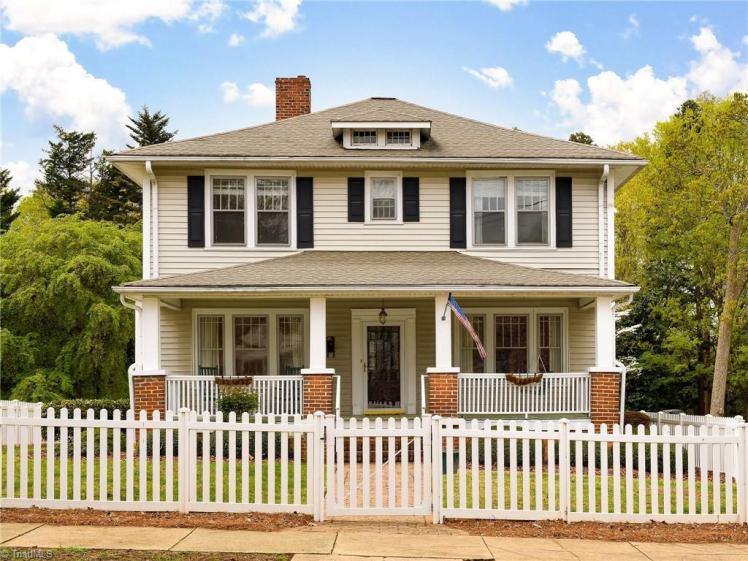
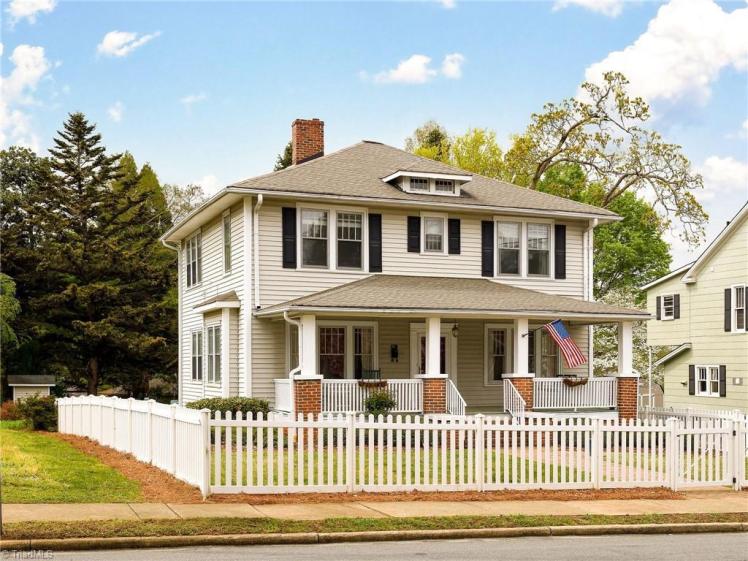
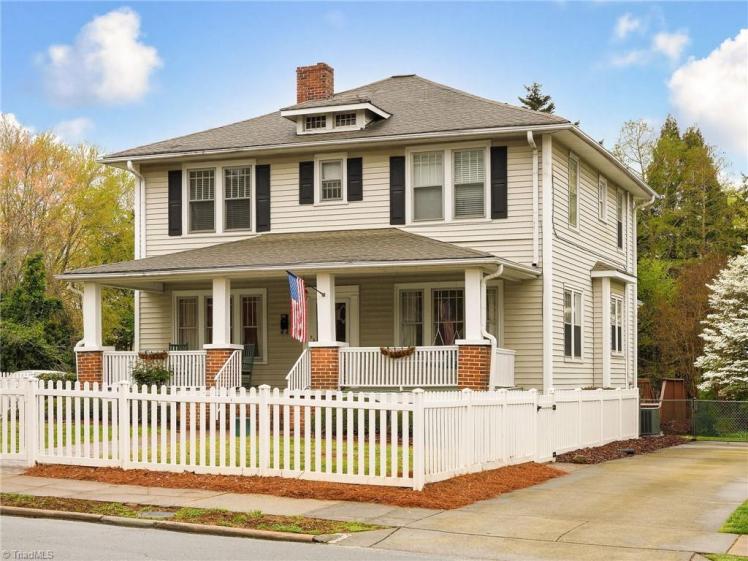


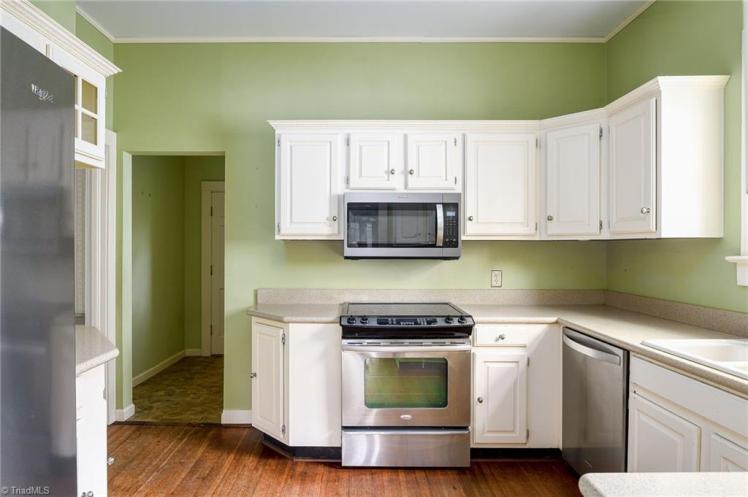


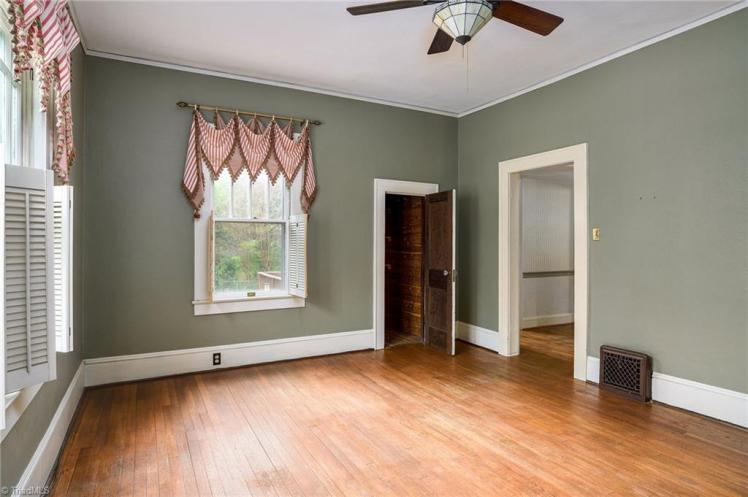
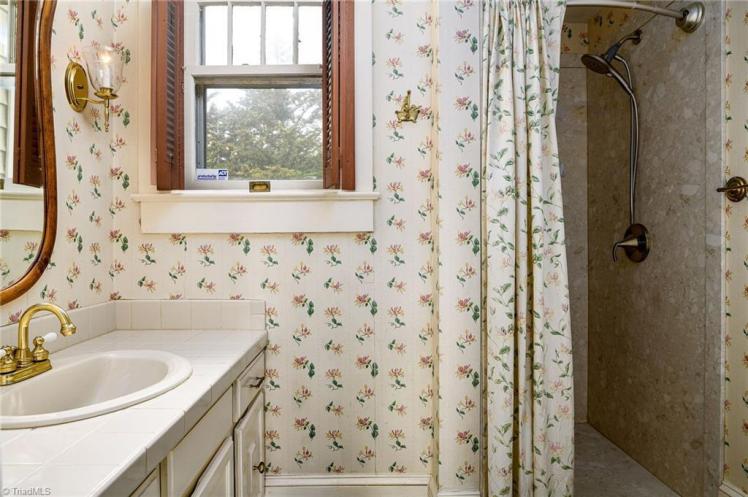
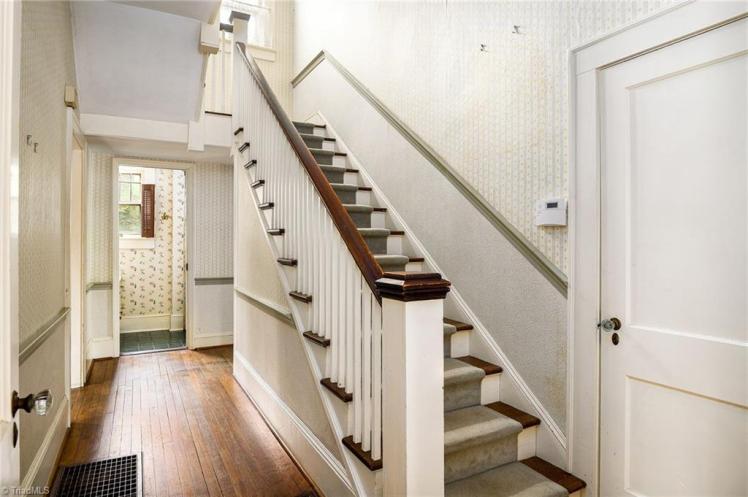


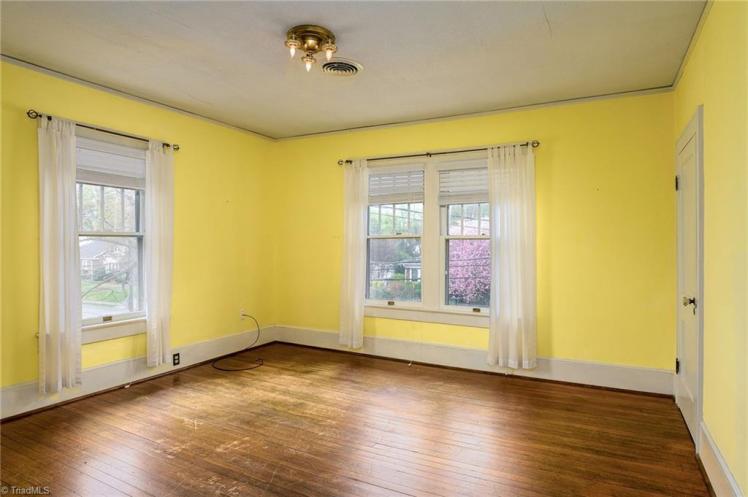


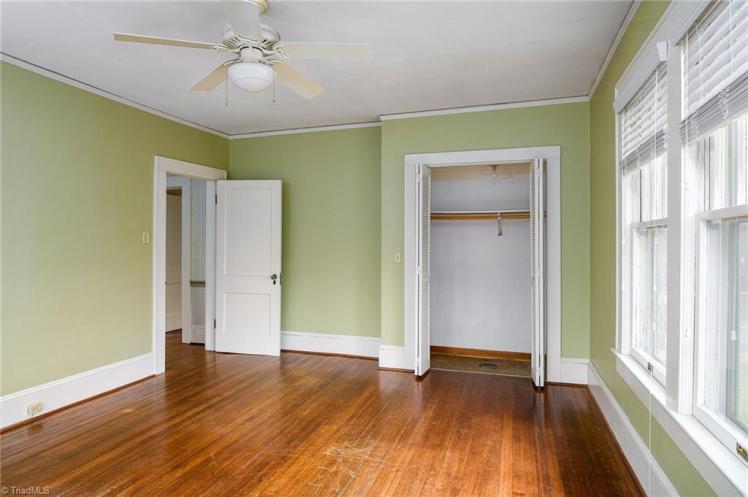


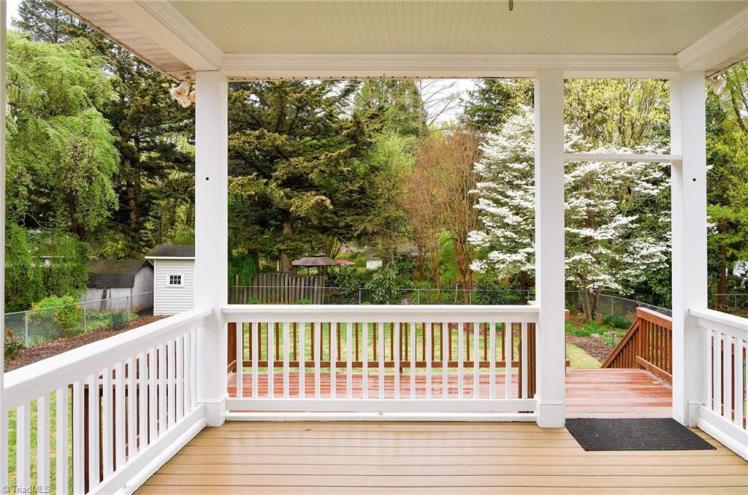


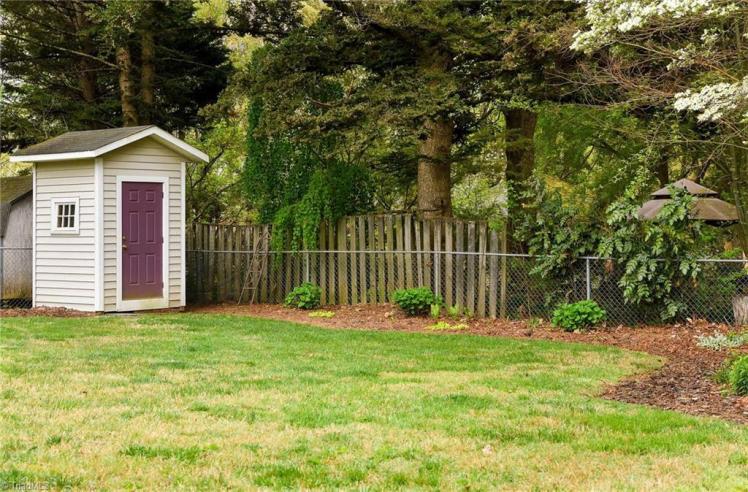
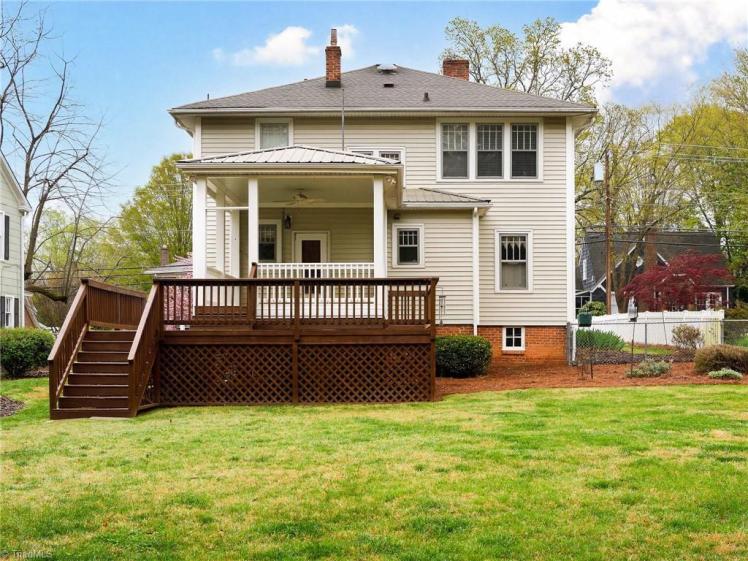
804 Miller Street, Winston-Salem
The Manley and Jessie Brunt House
- Sold for $350,000 on June 30, 2025 (originally $429,900)
- 4 bedrooms, 2 bathrooms, 2,315 square feet, 0.28 acre
- Price/square foot: $151
- Built in 1924
- Listed April 8, 2025
- Last sale: $113,000, March 1990
- Neighborhood: Ardmore Historic District (NR)
- District NR nomination: “Foursquare. Two story; hip-roof; hip-roof dormer; vinyl siding; Craftsman-style, eight-over-one windows; hip-roof porch; large, square posts on brick piers; pilasters at entry.”
- Manley Yates Brunt (1884-1959) and Jessie C. Evans Brunt (1896-1985) were listed at the address in 1925, the first year it was included in the city directory. They owned it for 54 years. Manley was a foreman at P.H. Hanes Company, He worked for Hanes from 1914 to 1950.
- Jessie graduated from Salem Academy and attended Salem College. She sold the house in 1979.
410e


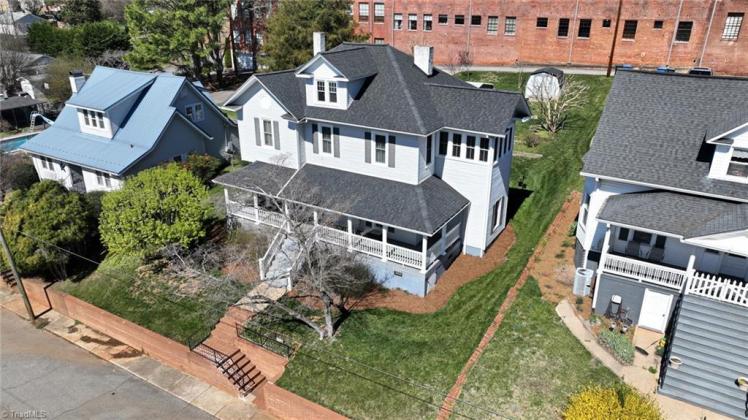

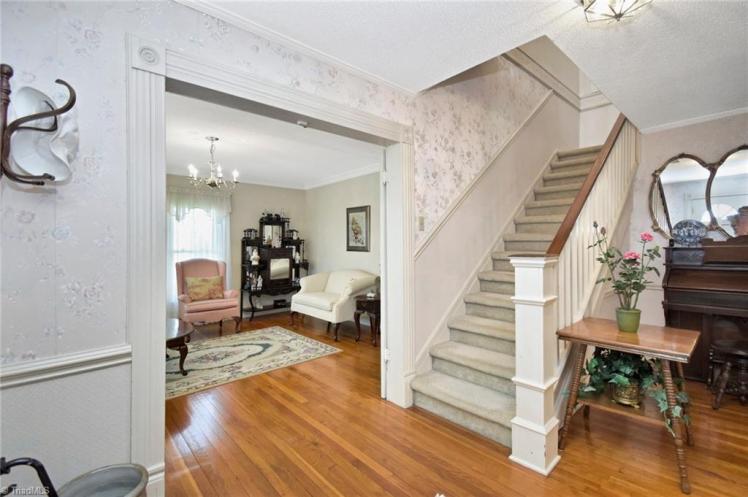
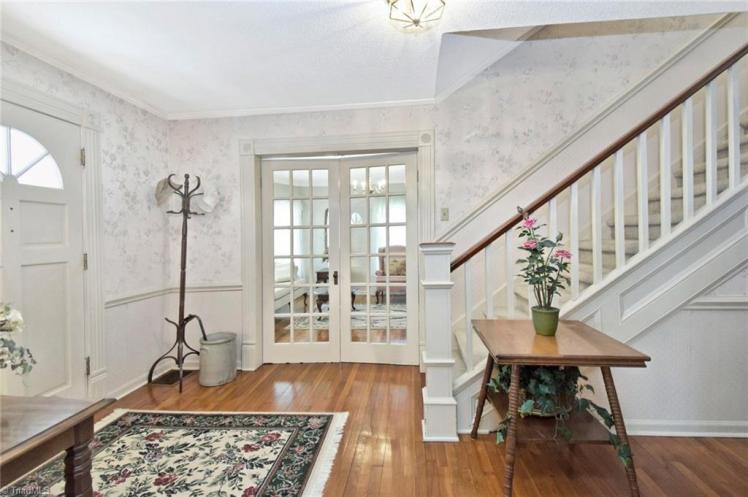
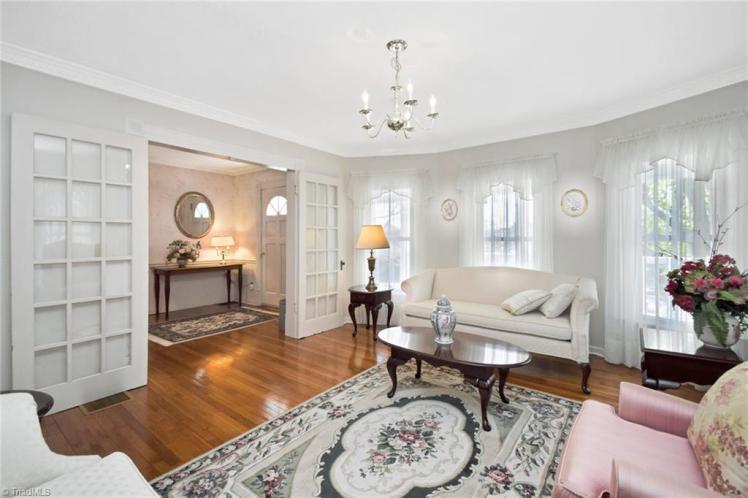

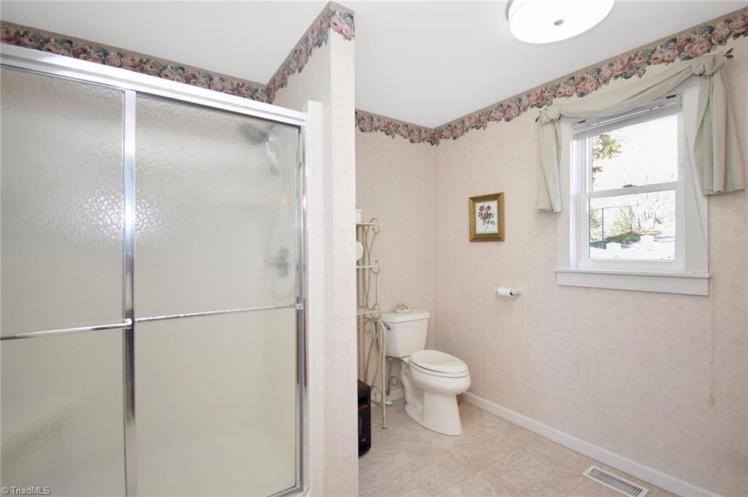
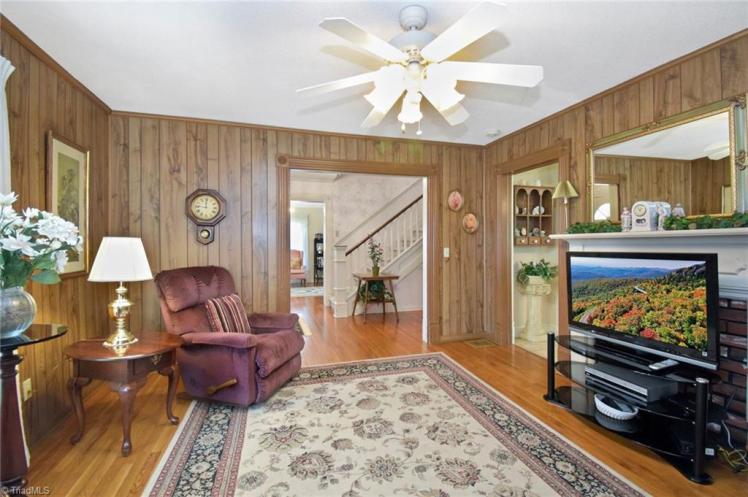


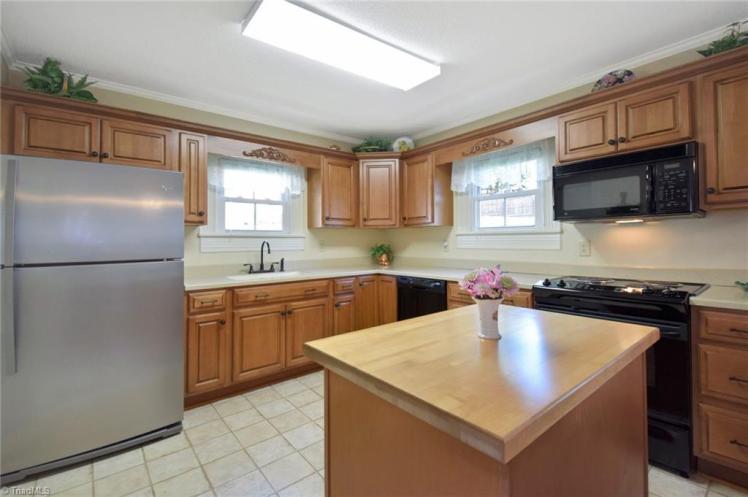
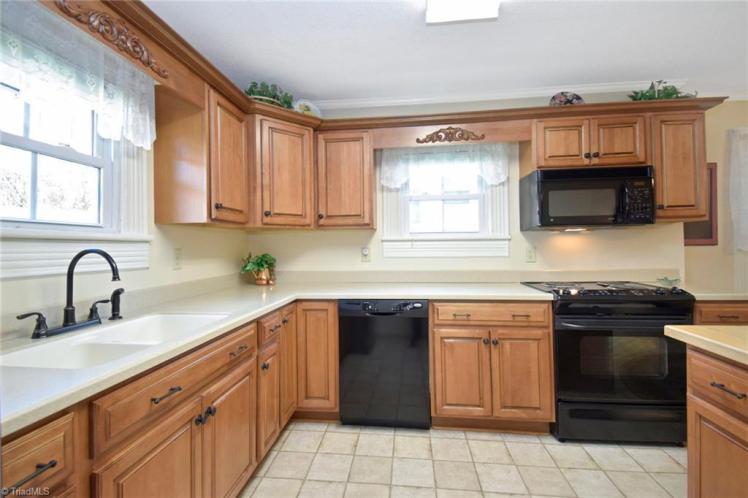


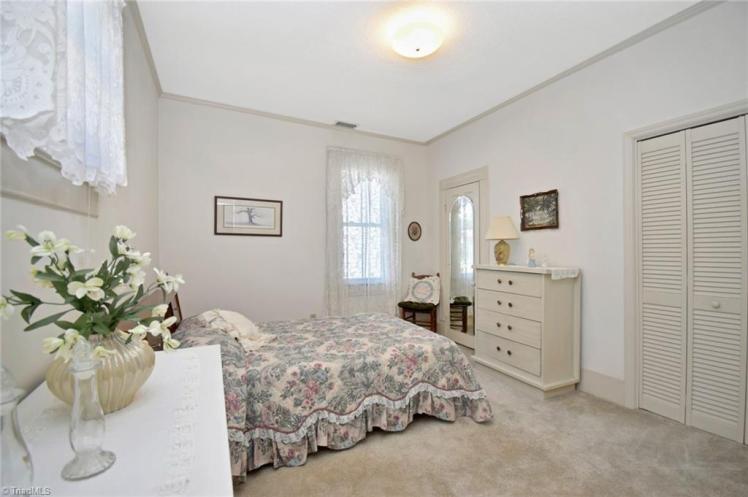
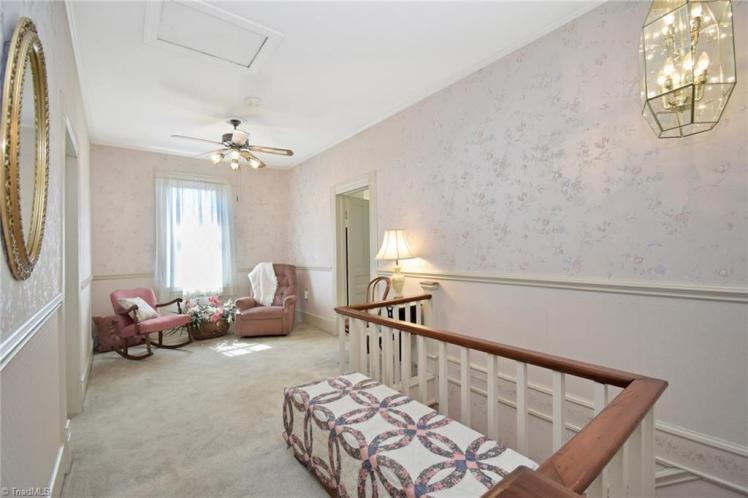

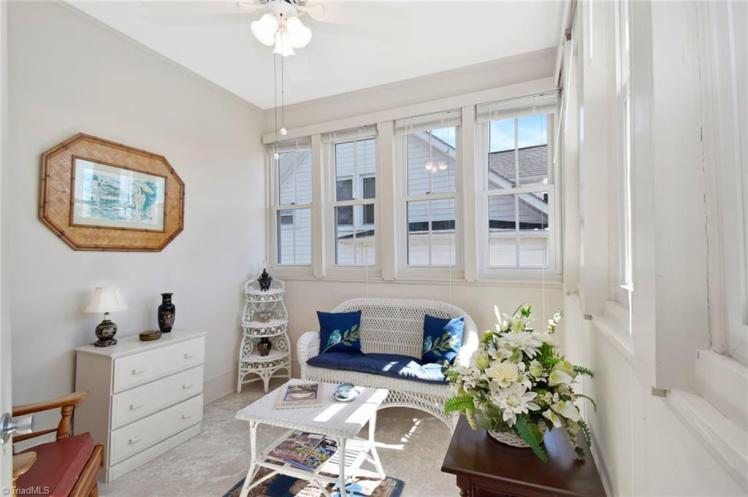
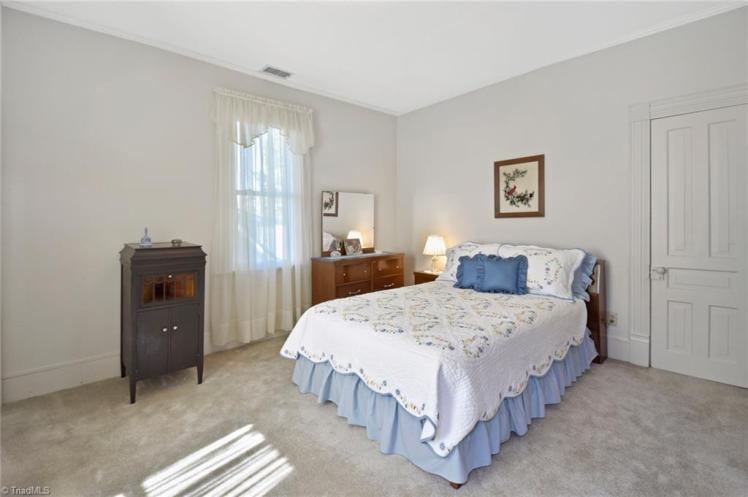

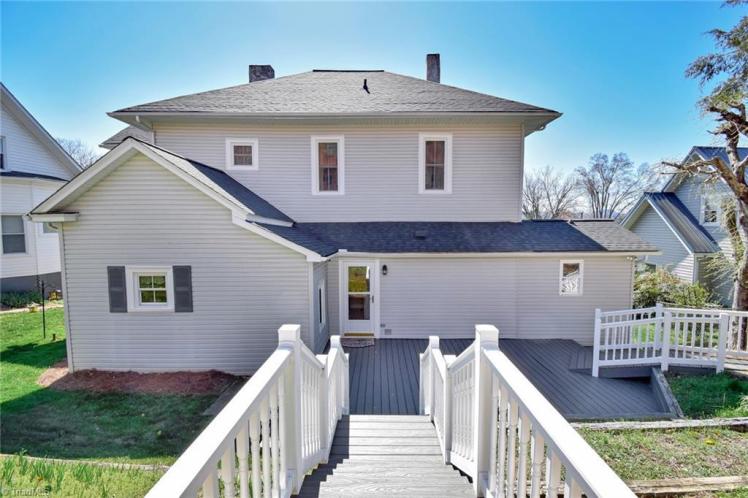


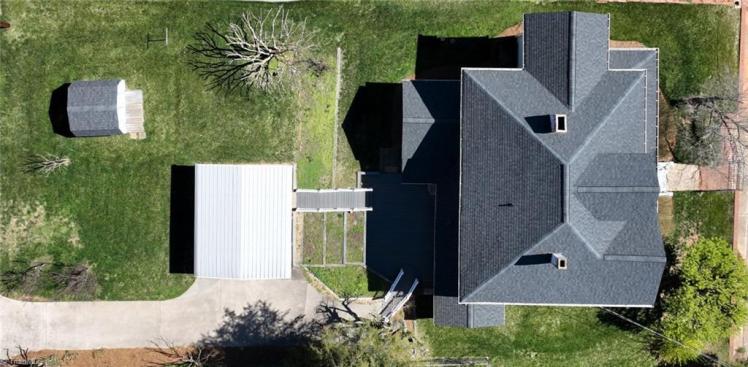

410 E. Street, North Wilkesboro, Wilkes County
The Earl Ward Trogdon House
- Sold for $269,000 on June 25, 2025 (originally $328,000)
- 4 bedrooms, 2 1/2 bathrooms, 2,471 square feet, 0.23 acre
- Price/square foot: $109
- Built in 1910
- Listed April 7, 2025
- Last sale: 1950, deed not available online
- Note: The house backs up to the Wilkes Hosiery Mills factory, listed on the National Register and now a residential condo building called Key City Lofts.
- Earl Ward Trogdon (1880-1928) and Elsie Jane Bundy Trogdon (1881-1957) may have been the original owners. Earl was born in Randolph County, the seat of the Trogdon family. Around 1908 he moved to North Wilkesboro, founded by Willard Franklin Trogdon (relationship unknown). Earl served as a North Wilkesboro alderman and worked as a furniture-company superintendent.
228gwyn


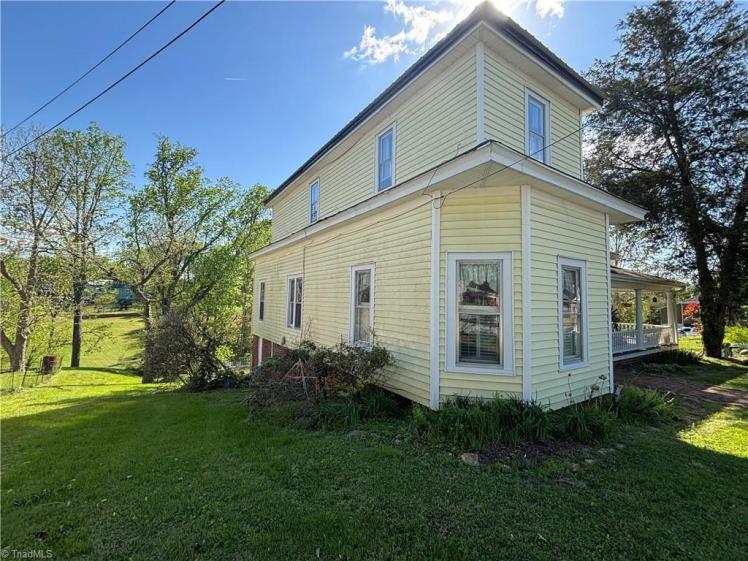


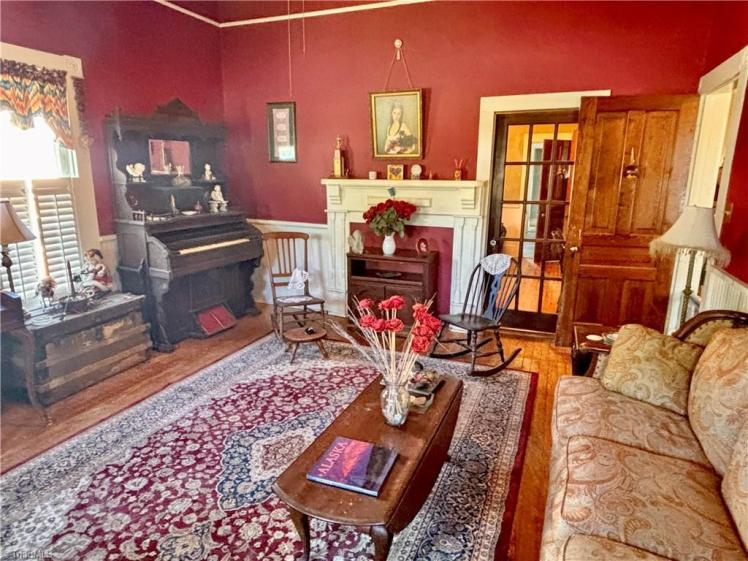

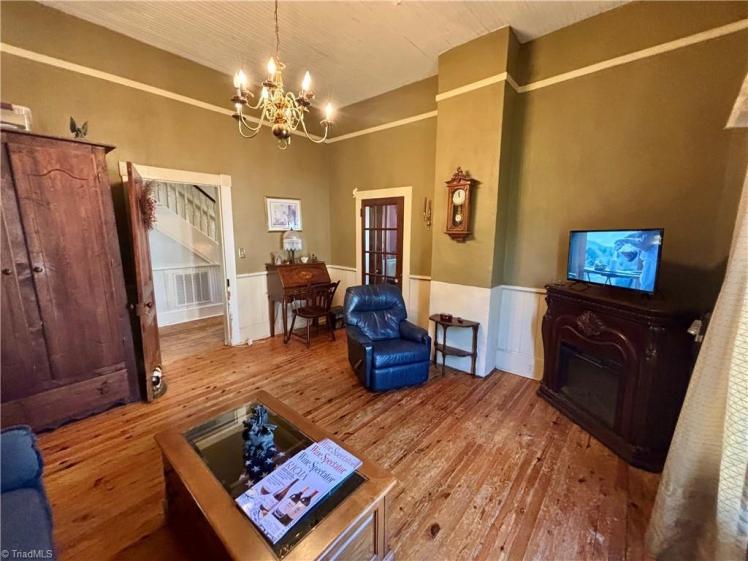


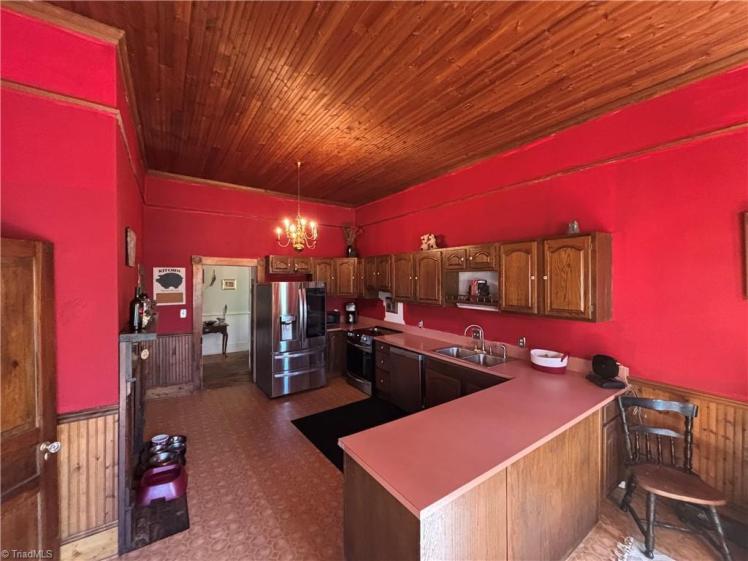
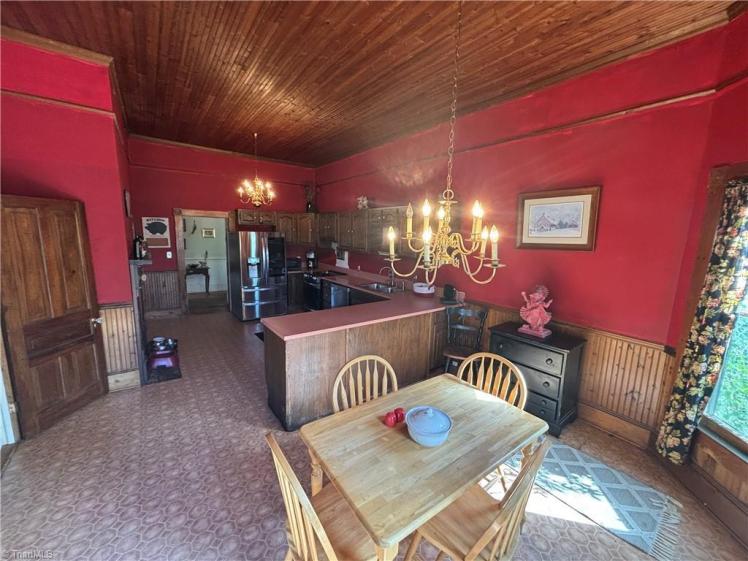
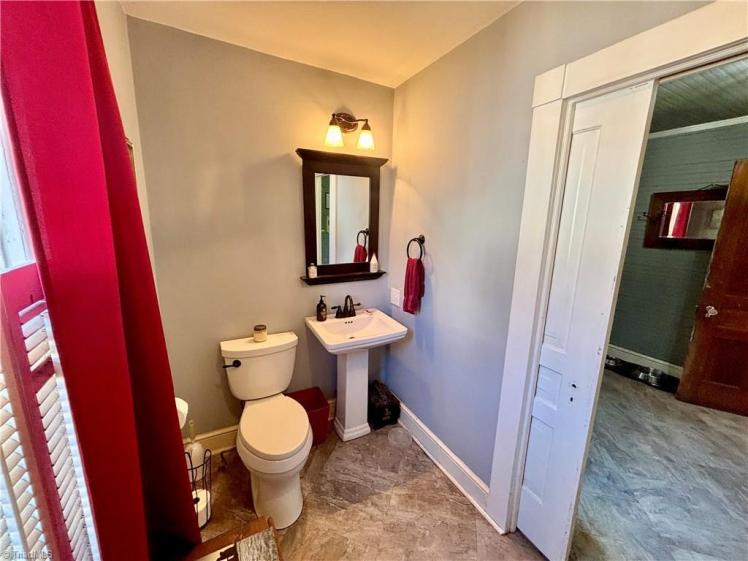


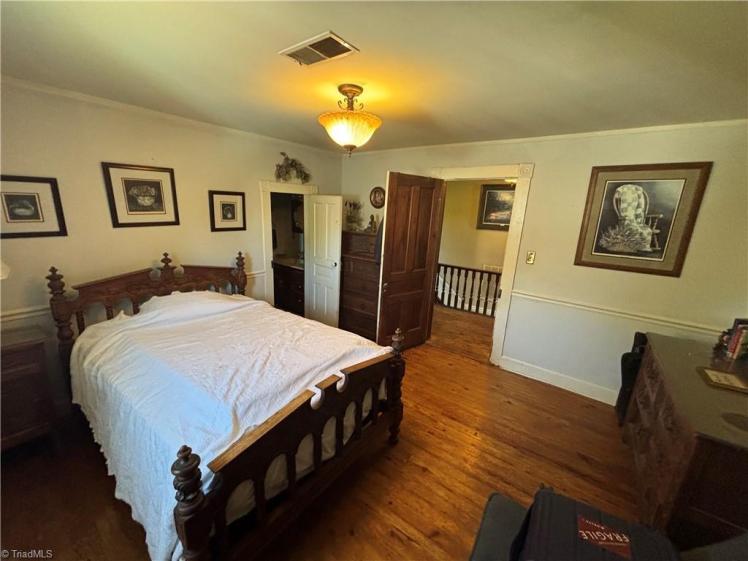

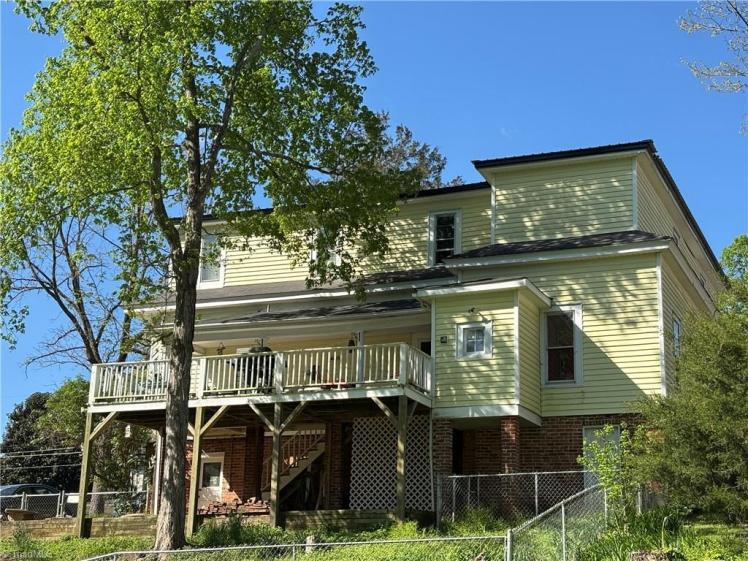


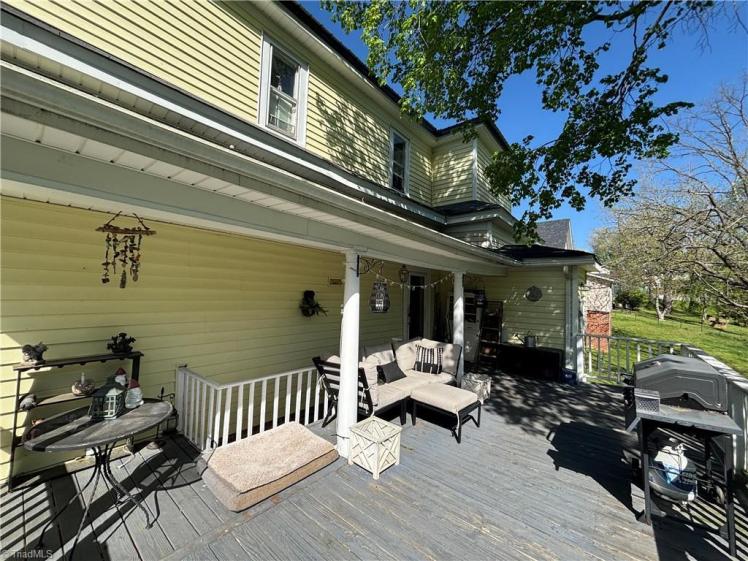

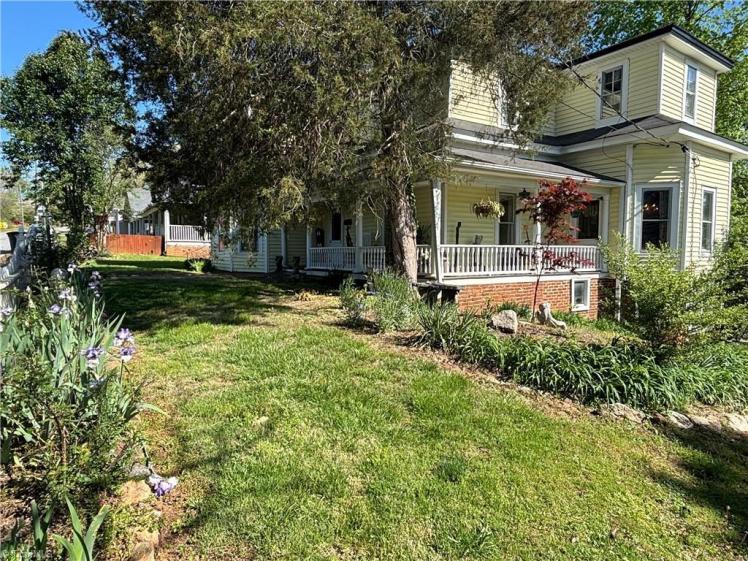


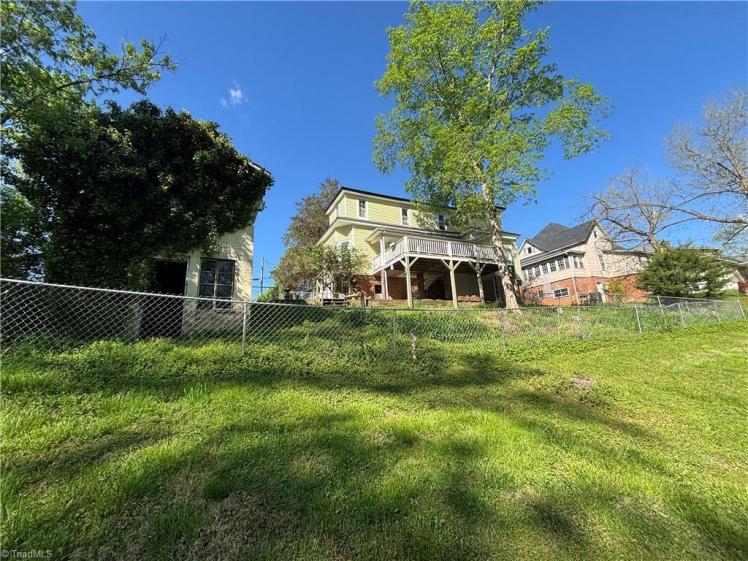

228 Gwyn Avenue, Elkin, Surry County
- Sold for $248,000 on June 23, 2025 (originally $299,950)
- 4 bedrooms, 2 1/2 bathrooms, 3,026 square feet, 0.42 acre
- Price/square foot: $82
- Built in 1900
- Listed April 21, 2025
- Last sale: October 2022, price not recorded on deed.
- Neighborhood: Gwyn Avenue-Bridge Street Historic District (NR)
- District NR nomination: “The earliest history of the house is not known. On August 31, 1905, the Elkin Land Company sold two lots at this location to W.J. Boyles, and he may have built the house. However, the first known occupant was John Park, who moved here with his family around 1930. During these years, Park was an auto mechanic.” He had been a co-owner of the local Ford-Essex auto dealership but lost his business in the Depression.
- “The two-story, L-shaped, frame house is unusual in that a pent roof caps the first-story, while the second story has a flat roof. Additionally, the left front and south side wings of the house end in three-sided bays, while on the second story, these ends are slightly recessed and are squared-off.
- “The first story has one-over-one sash windows; on the second story the windows are four-over-four sash. A porch with Tuscan columns and a plain balustrade stretches across the south two thirds of the facade, and a service porch and deck are on the rear.
- “The house, which has been sheathed with replacement vinyl siding, has a brick foundation with above-grade basement rooms at the rear. A white picket fence set in broad scallops borders the front yard.”
610peele

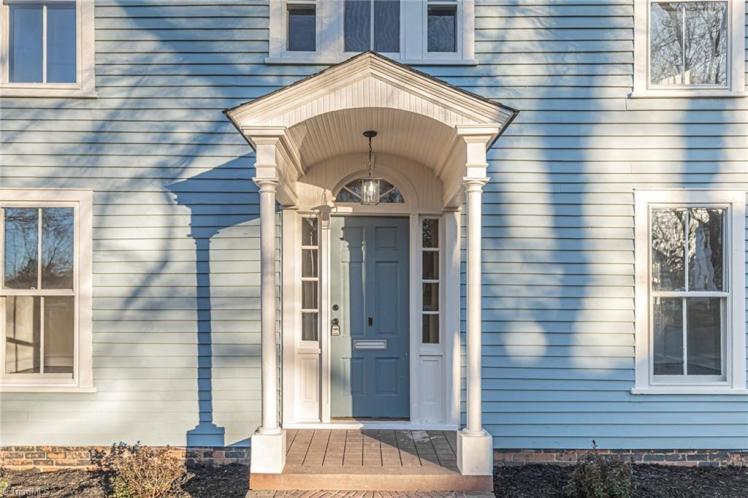


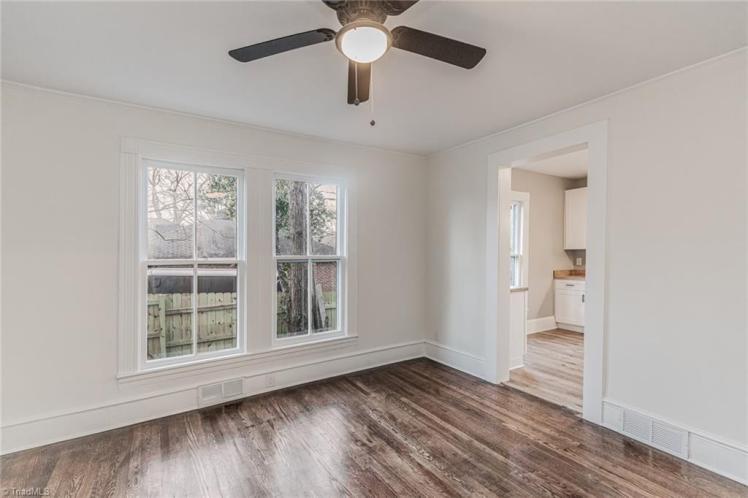

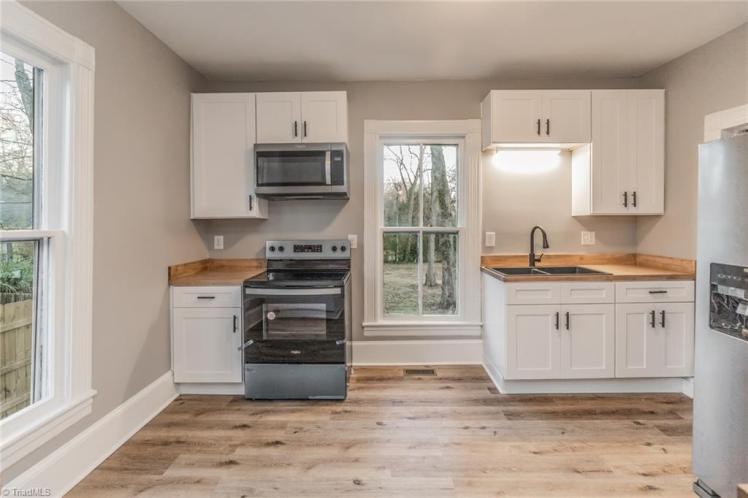





610 Peele Street, Burlington, Alamance County
- Sold for $310,000 on June 19, 2025 (originally $380,000)
- 4 bedrooms, 2 bathrooms, 2,101 square feet (per listing), 0.40 acre
- Price/square foot: $148
- Built in 1910
- Listed February 12, 2025
- Last sales: $158,000, May 2024; $25,000, September 2012
- Neighborhood: West Davis Street-Fountain Place Historic District (local and NR)
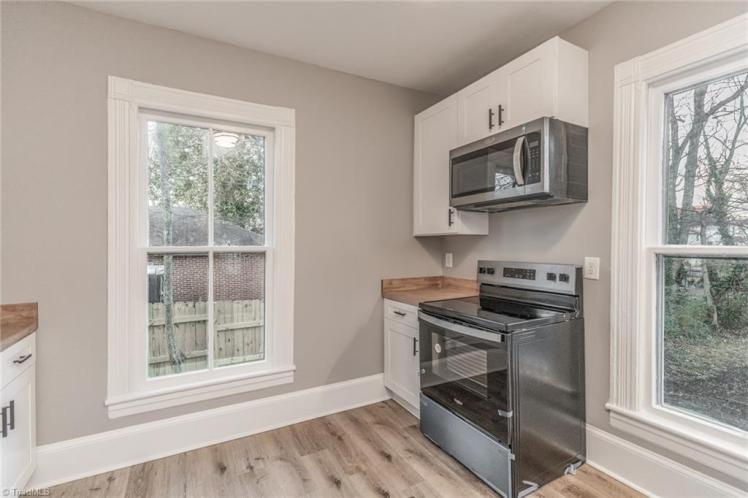
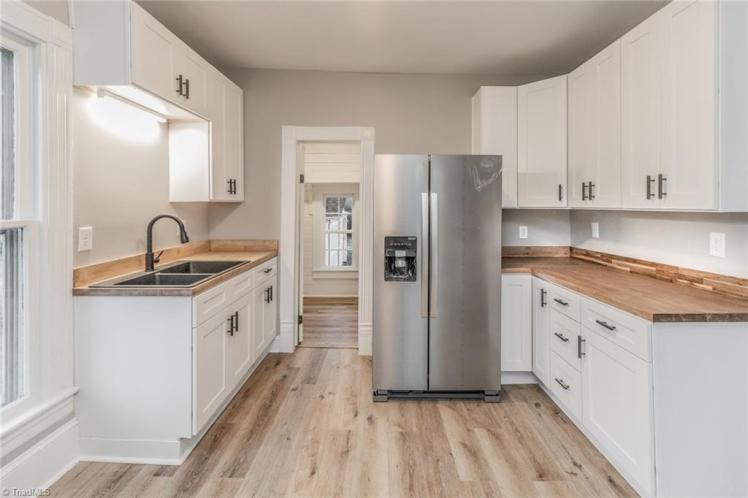
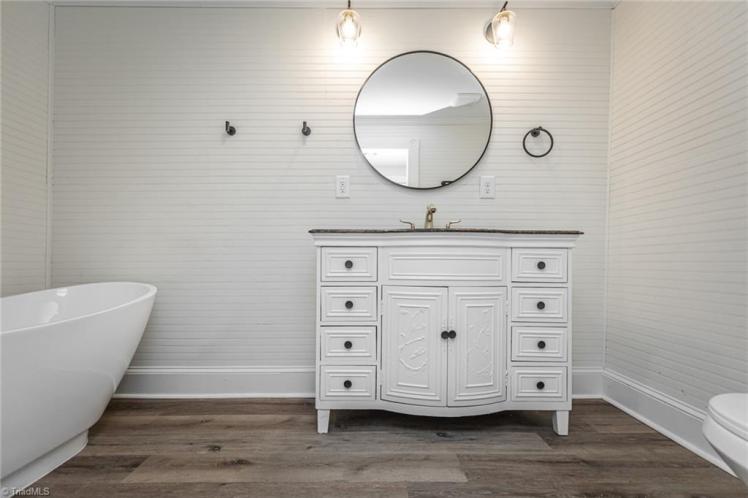
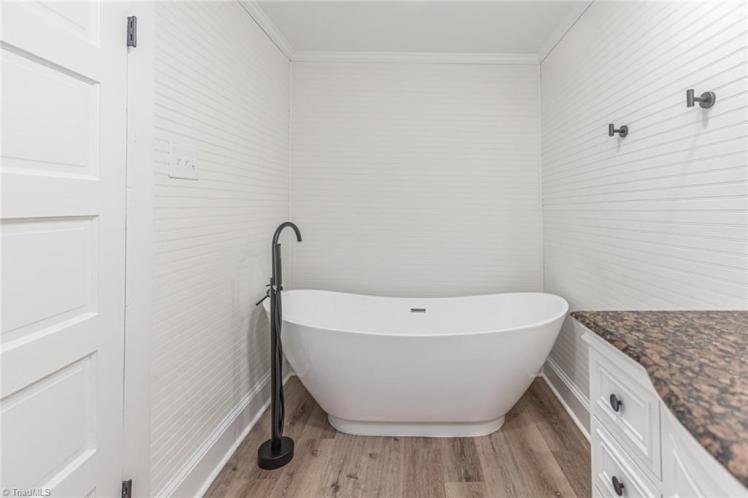
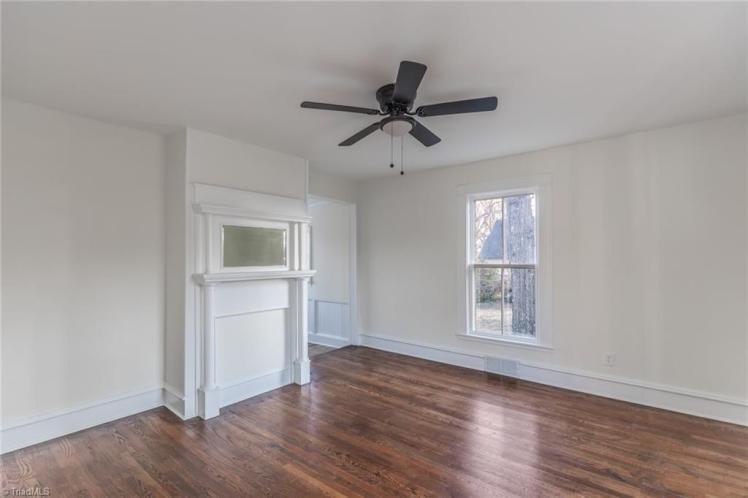
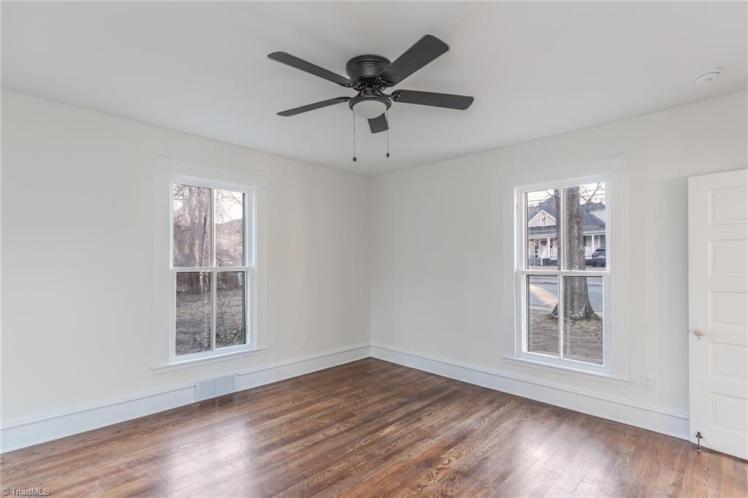
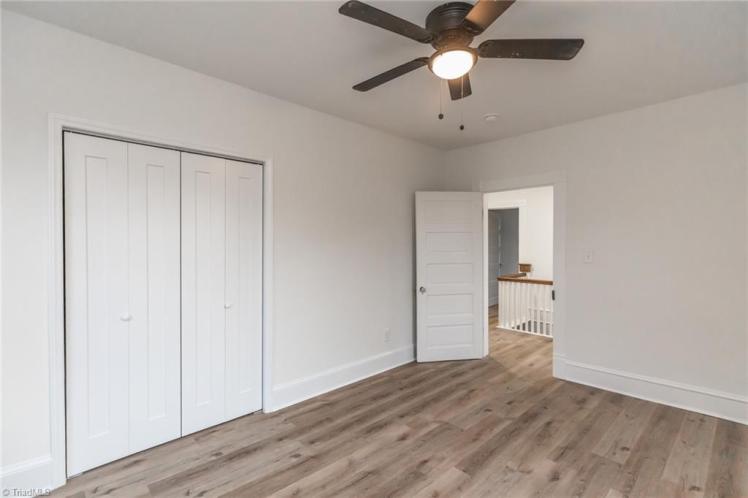
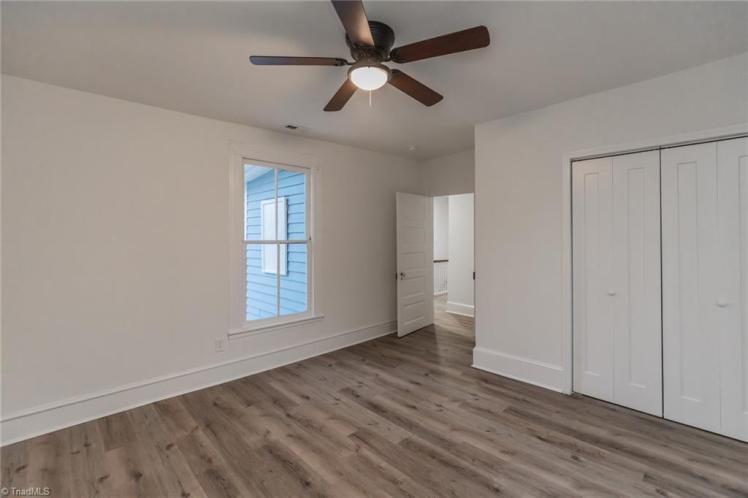
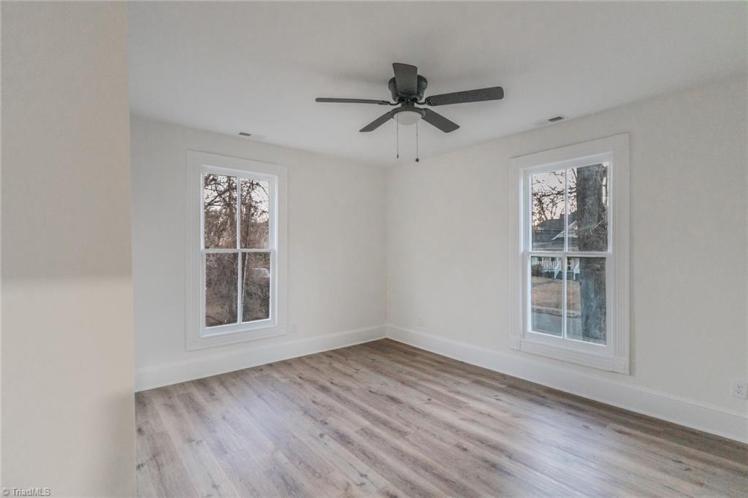
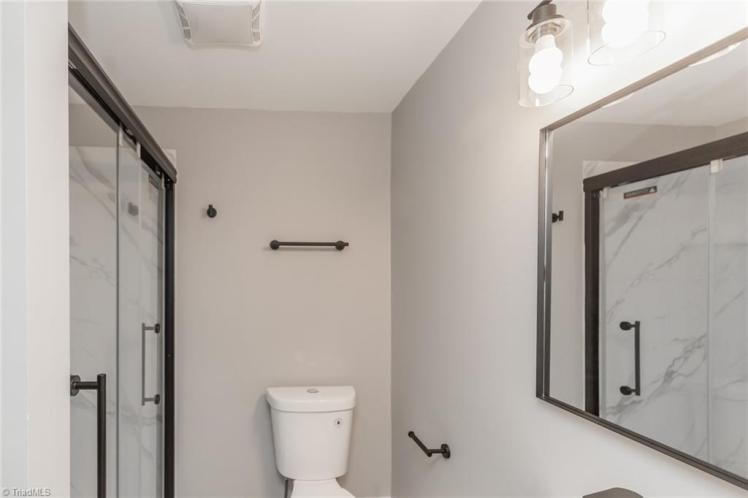
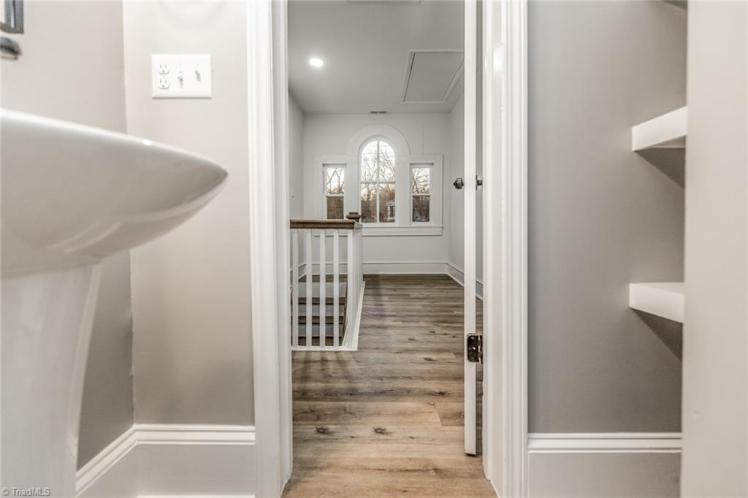
- Note: Flipped house. Caveat emptor, although this owner appears to have had better taste than most (except for the egregious cheap vinyl floors upstairs).
- The property includes a detached two-car garage/workshop
- The early history of the house is obscure. It was built at an unknown address on West Front Street. By 1930 it had been moved to its present location, the address of which was then 508 Peele. That year, the city sold the property and the seven-room house to Cleo Wade Johnson Fonville (1891-1977). The house remained in the Fonville family for 82 years.
- County records show 1,870 square feet, but a previous listing says, “Finished square footage is listed as 1278 due to areas that are currently unfinished and/or unheated, however, once rehab is complete, the finished total should be around 2200 square feet.”
- District NR nomination: “This two-story one-room-deep frame house with a rear one-story ell appears to date from the turn of this century. Its earliest known occupants were Mr. and Mrs. John L. Fonville …; Mr. Fonville was a superintendent of the King Cotton Mills.
- “At the center bay, classical features distinguish the house. Attenuated columns support the entrance porch, an elliptical fanlight appears above the front door, and there is a Palladian window in the second story.”
- Cleo and John (1885-1975) had come to Burlington from Cheraw, South Carolina. In 1970 they sold the house to their son Robert Harrell Fonville Sr. (1914-1979) and his wife, Christine Boone Fonville (1914-2017). Robert and Christine operated Fifth Street Cleaners from 1944 to 1980. In 1975 they bought Robert’s Variety Store, which they operated for 11 years with their son. Robert Jr. sold the house in 2012.
1010spoplar


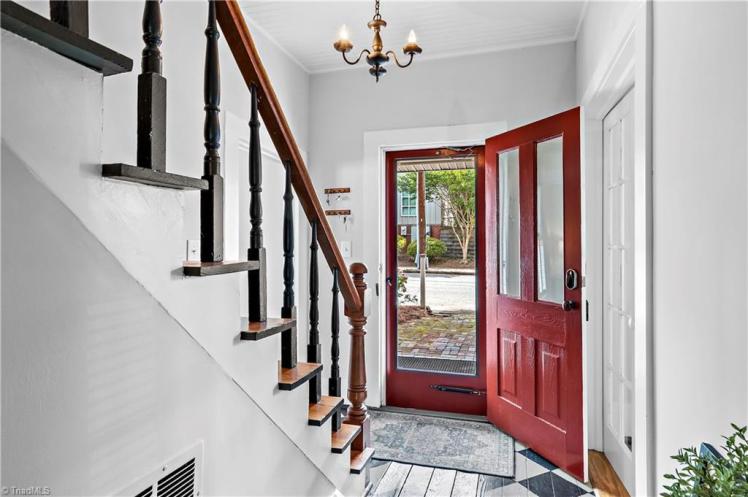

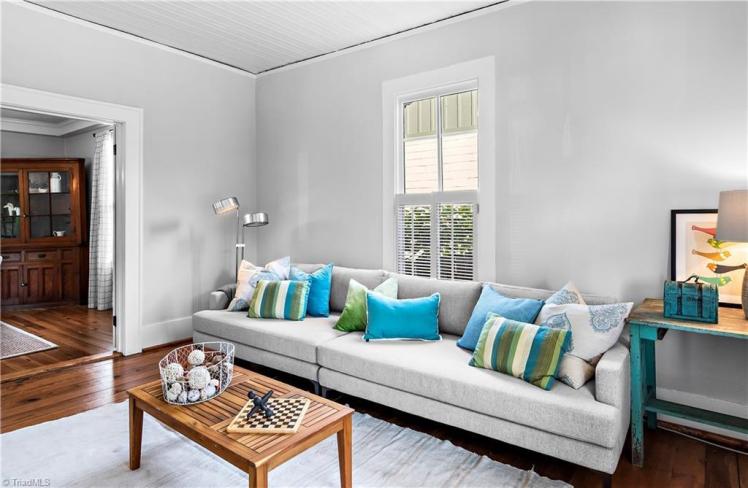

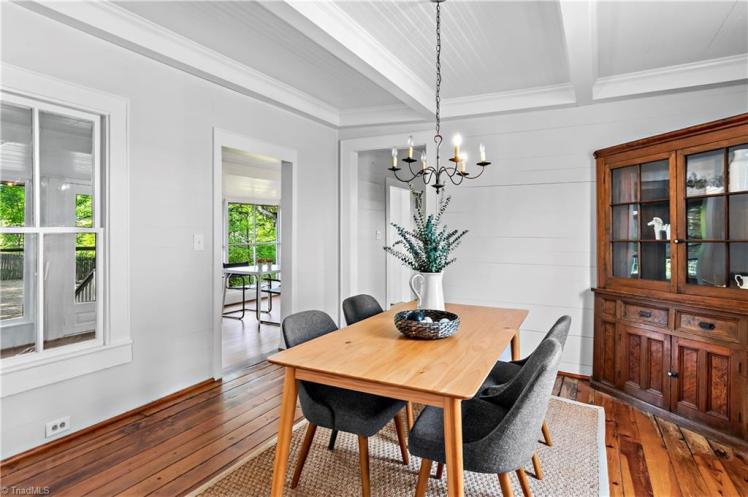
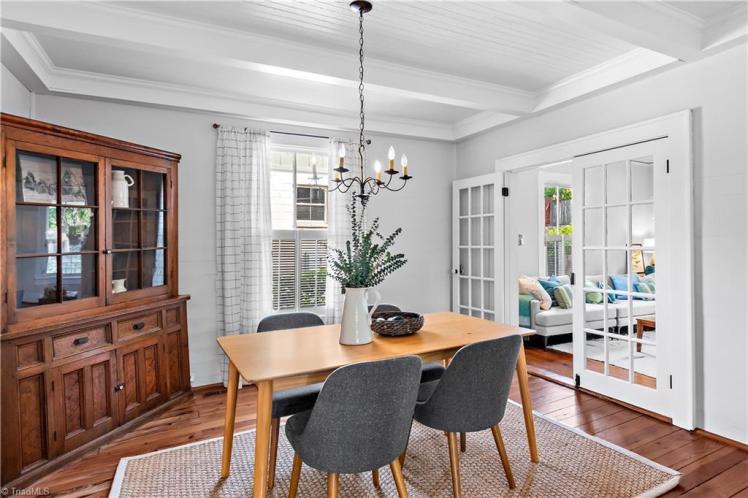
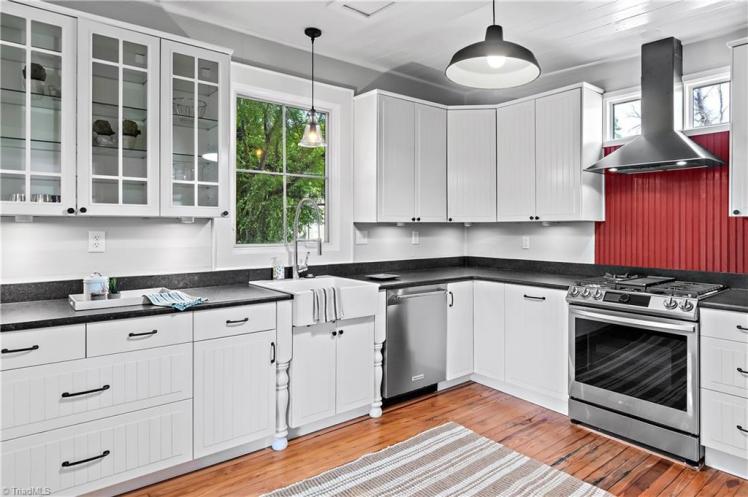
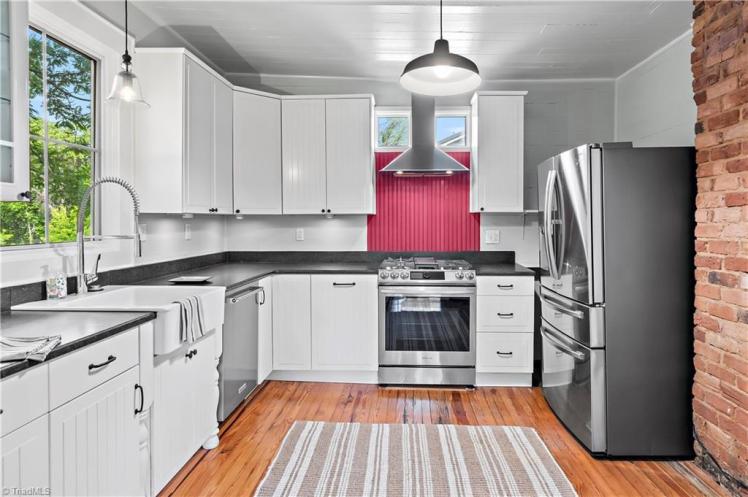
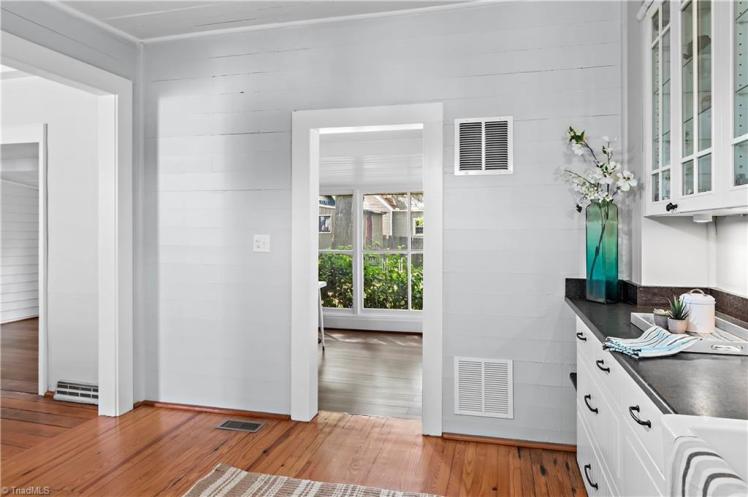
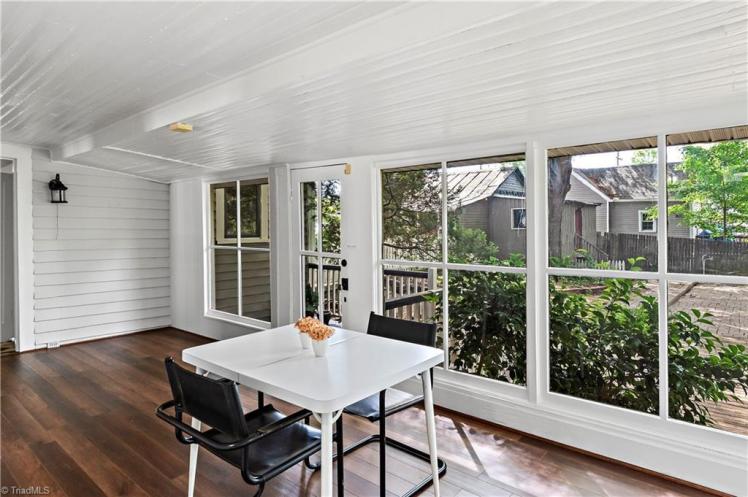
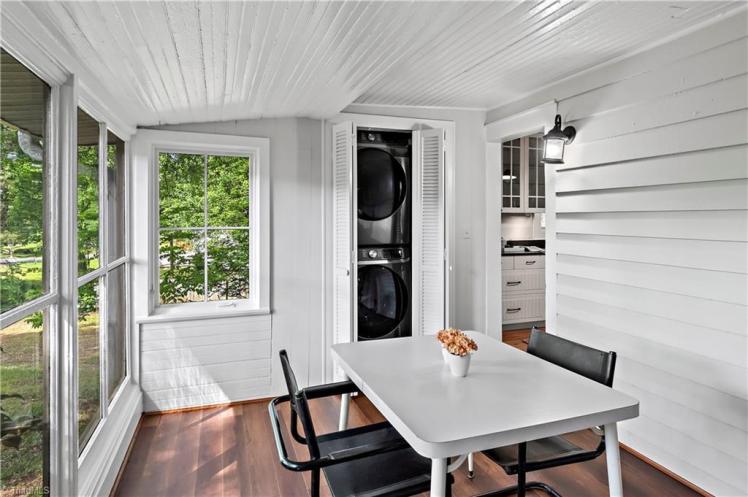

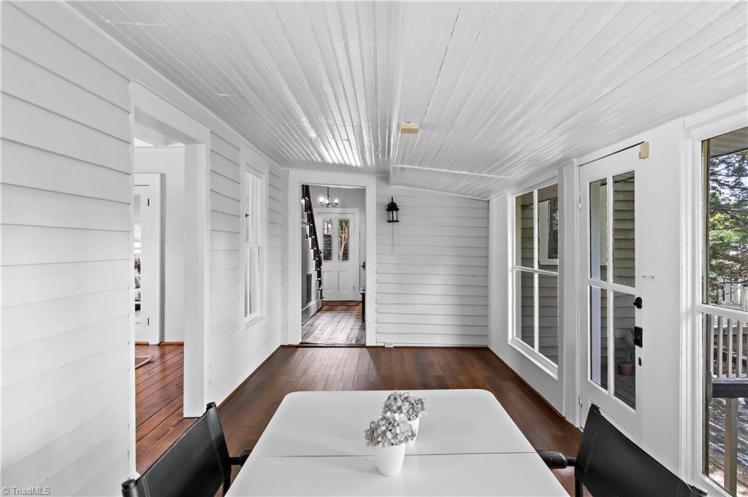

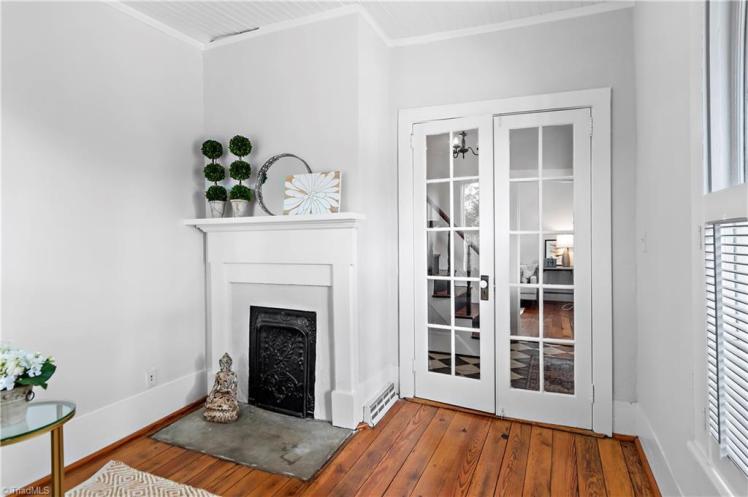
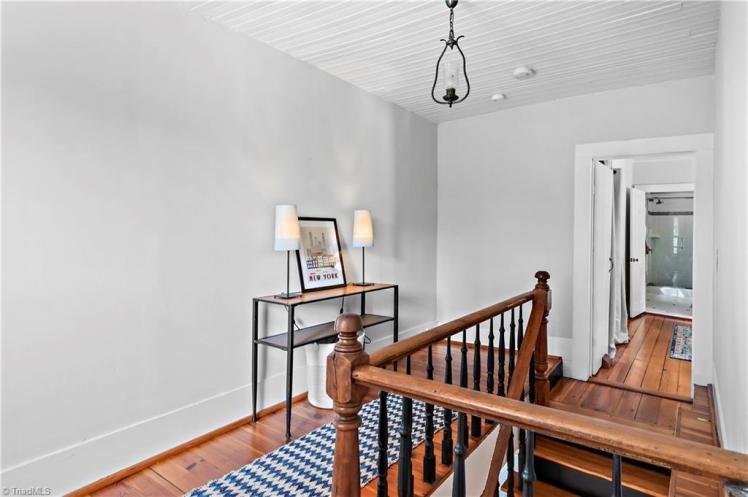

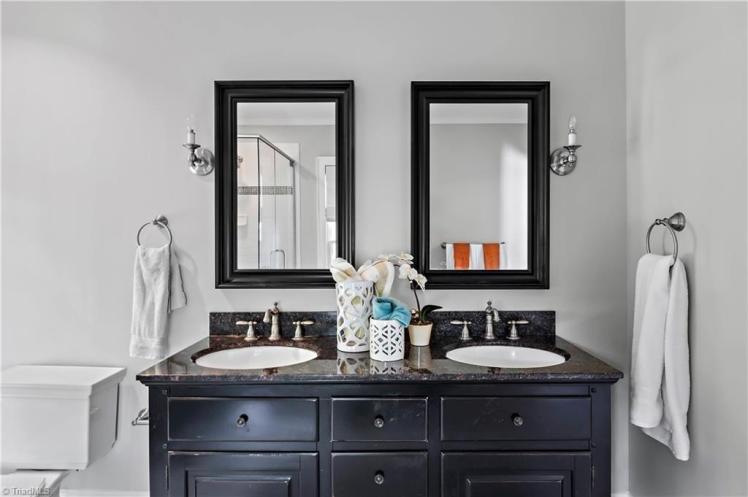


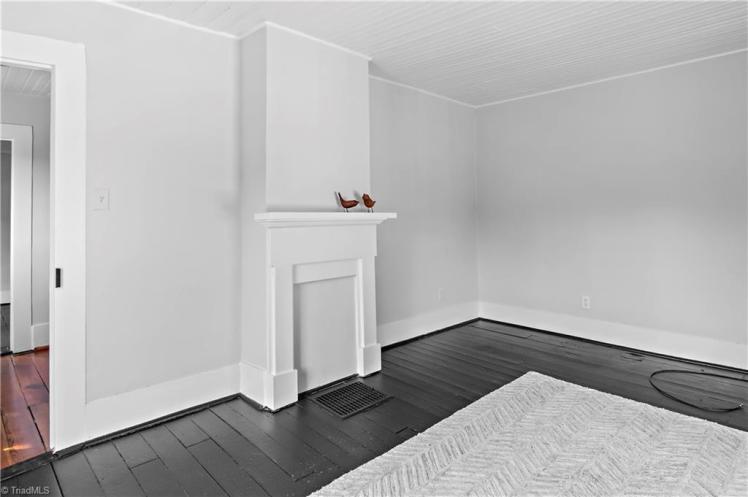
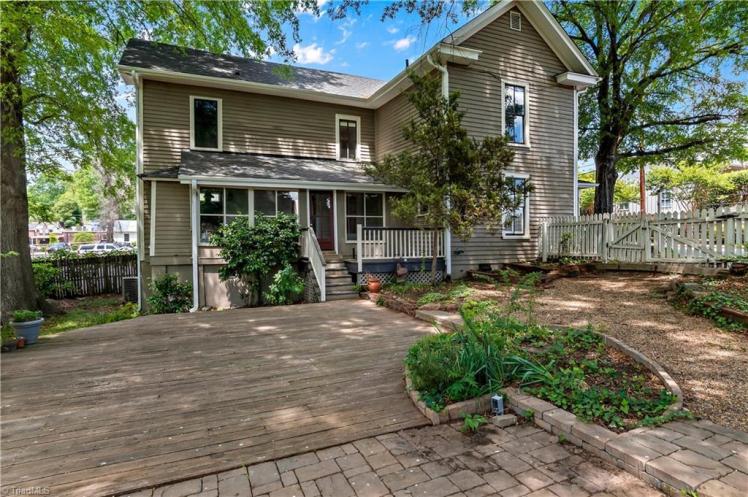


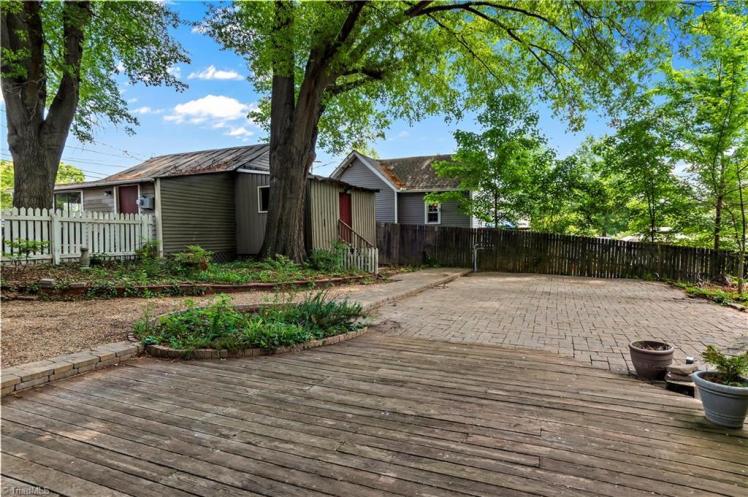


1010 S. Poplar Street, Winston-Salem
- Sold for $469,000 on June 17, 2025 (listed at $469,000)
- 3 bedrooms, 2 bathrooms, 2,652 square feet, 0.34 acre
- Price/square foot: $177
- Built in 1895
- Listed May 15, 2025
- Last sale: $297,000, July 2010
- Neighborhood: West Salem Historic District (NR)
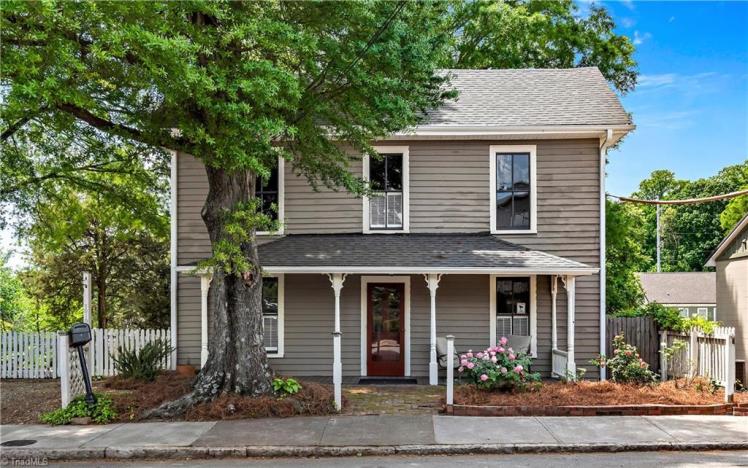
- Note: The listing describes the house as being built in 1880. County records say 1895; the district’s National Register nomination says circa 1900.
- The property includes a former neighborhood grocery store, formerly 1016 S. Poplar. The NR nomination says it was built around 1915, but it didn’t appear in the city directory until 1925, as Disher’s Grocery. The listing says it has about 680 square feet. In the late 1990s it was known as the Poplar Street Country Store and Antiques.
- District NR nomination: “I-house. Two story; side gable; single pile; two-over-two, double-hung sash; hip-roof porch; turned posts; sawn brackets; weatherboard.”
740park


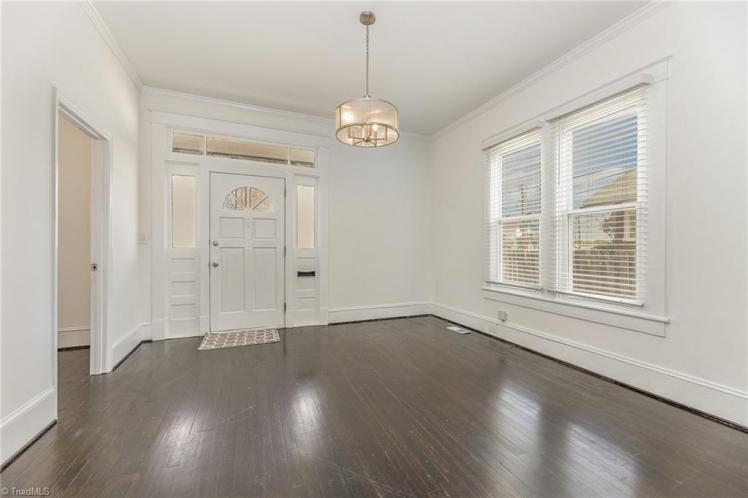
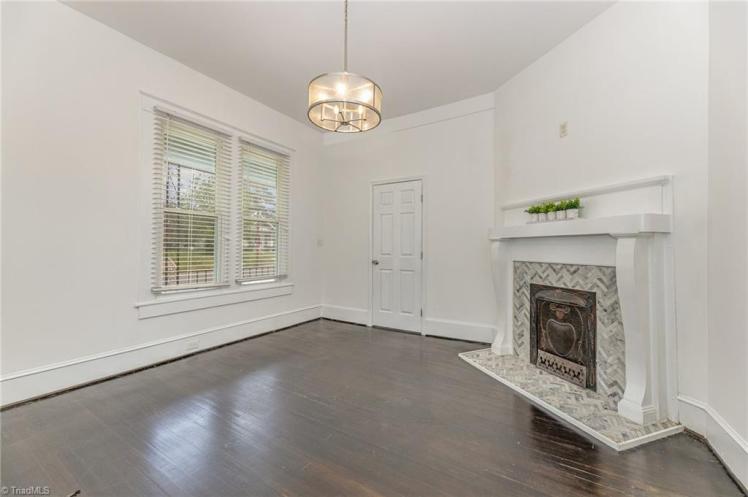


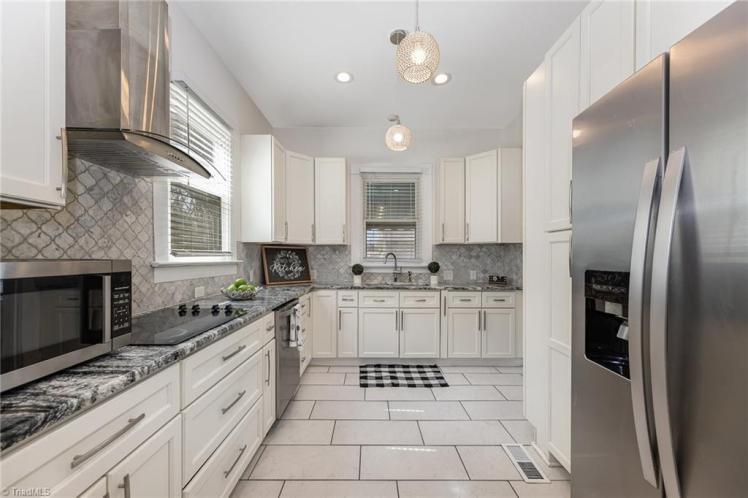
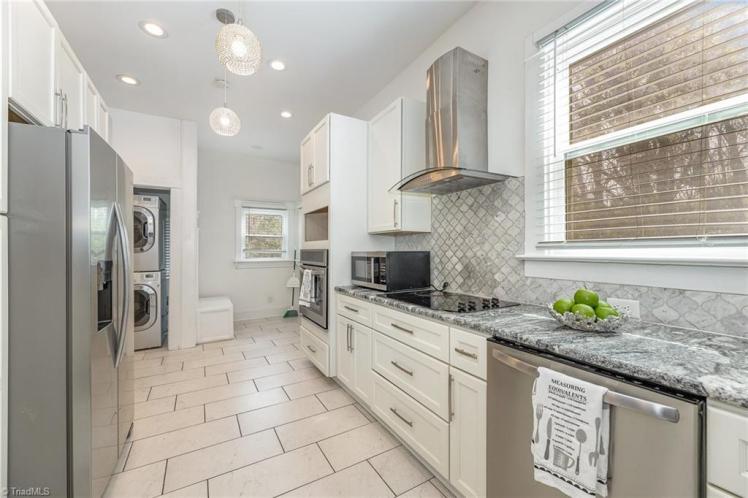


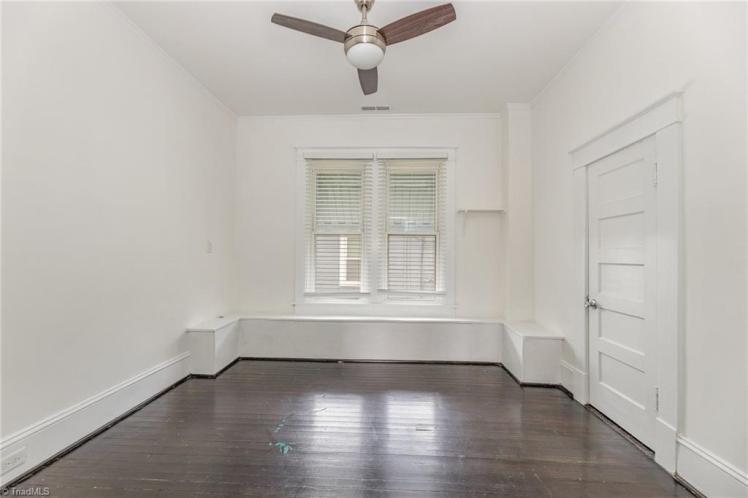

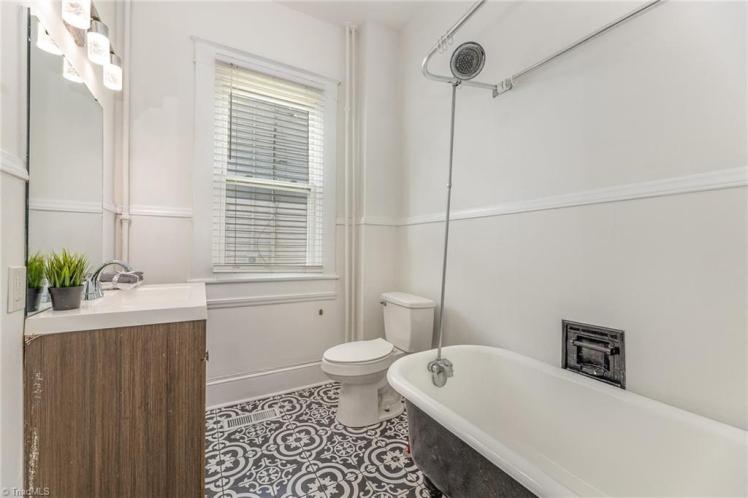


740 Park Avenue, Greensboro
The Charles and Maude Patterson House
- Sold for $265,000 on June 17, 2025 (originally $315,000)
- 4 bedrooms, 2 bathrooms, 1,954 square feet, 0.202 acre
- Price/square foot: $136
- Built in 1913
- Listed April 5, 2025
- Last sale: $195,000, February 2020
- Neighborhood: Dunleath Historic District (local), Summit Avenue Historic District (NR)
- Note: Owned by an LLC in Huntersville
- District NR nomination: “Colonial Revival, Residence, 1915-20”
- The original owners were Charles Oscar Patterson (1881-1924) and Maude Clapp Patterson (1886-1984), who bought the property in 1915. By 1917 they were listed in the city directory at this address. Charles was the owner of the Proximity Barber Shop and Proximity Pressing Club. He was a member of the Knights of Pythias and the related Dramatic Order of the Knights of Khorassan. He died suddenly at home at age 43. Maude outlived him by 60 years and never remarried. She continued to live in the house until selling it in 1983.
511nmendenhall

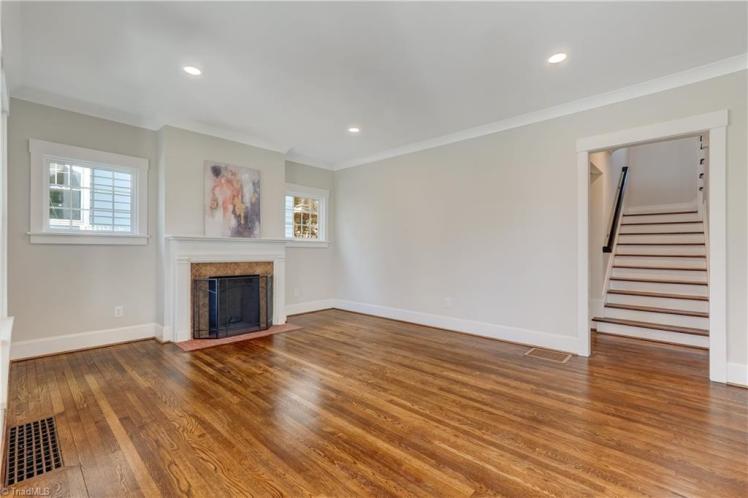
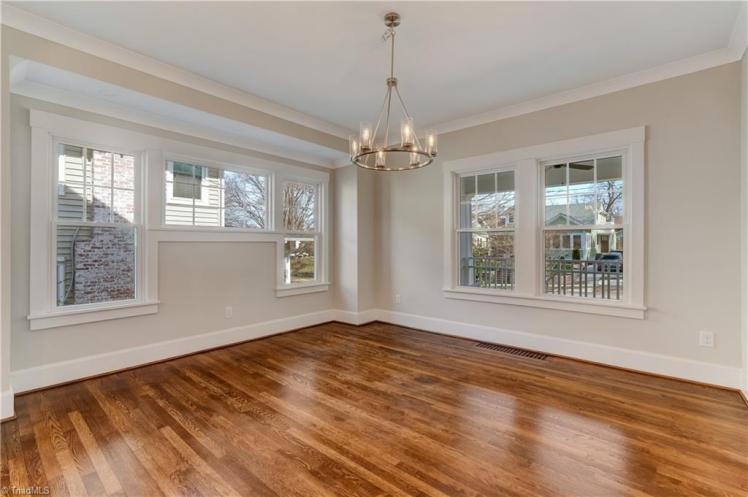
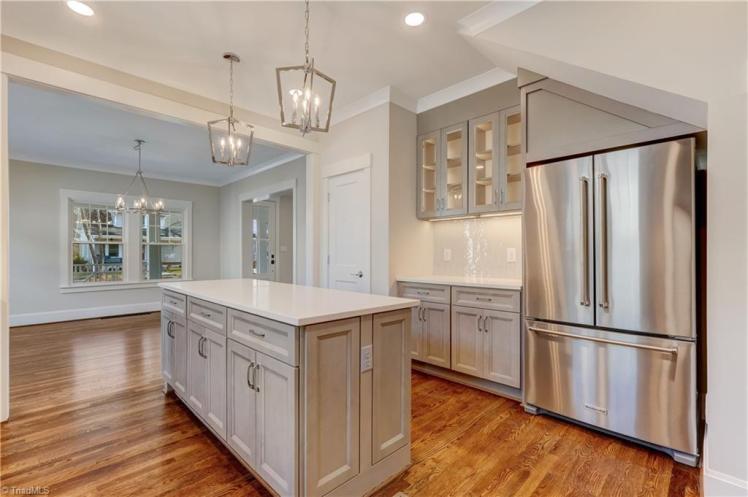


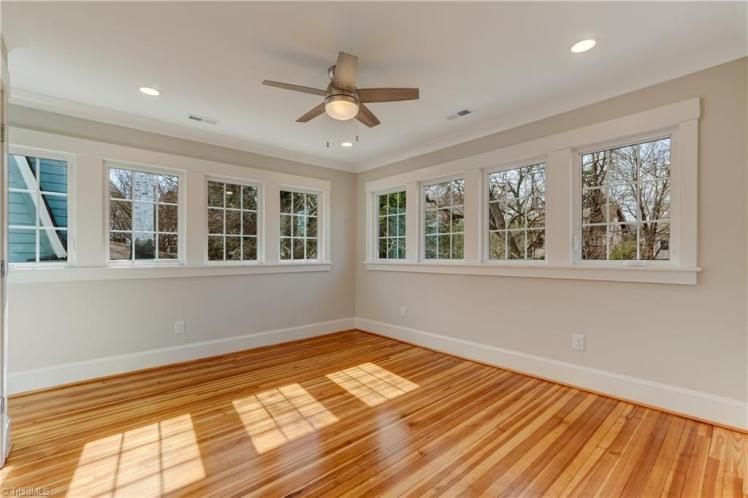
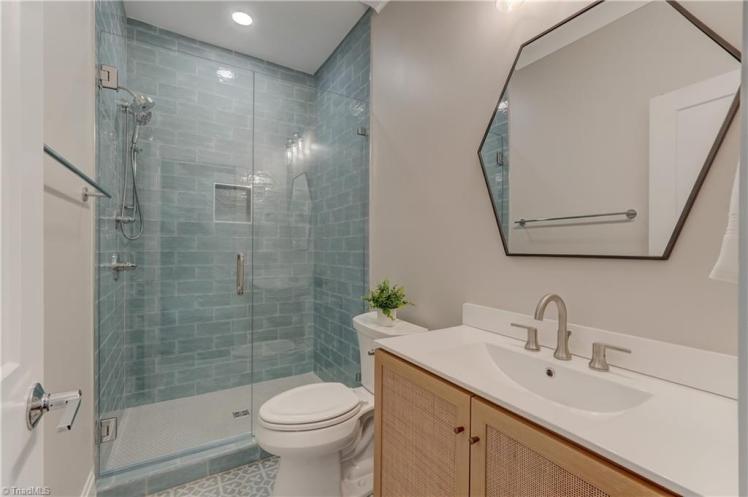
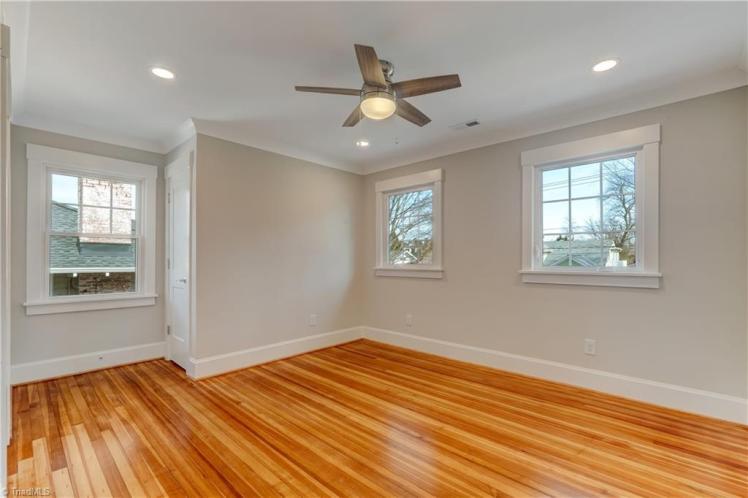
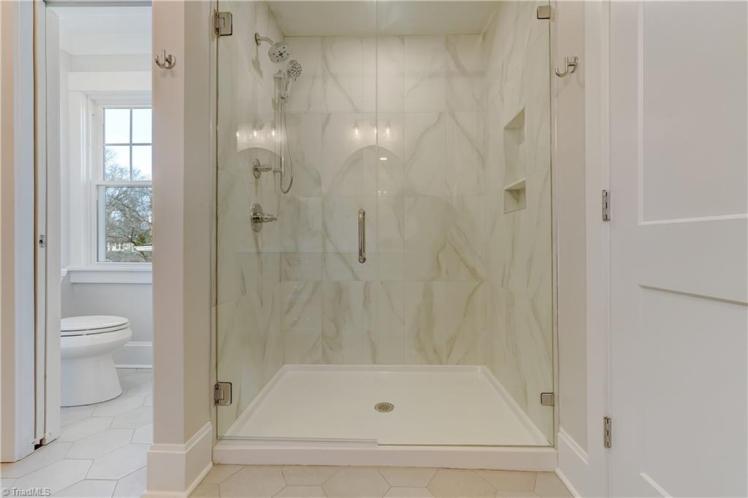
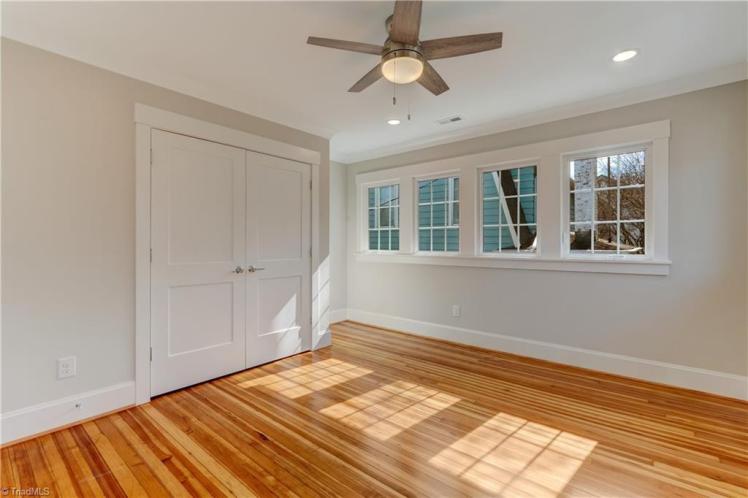

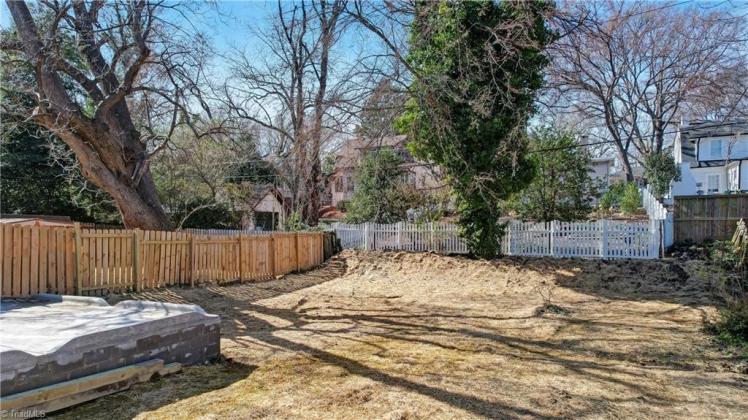
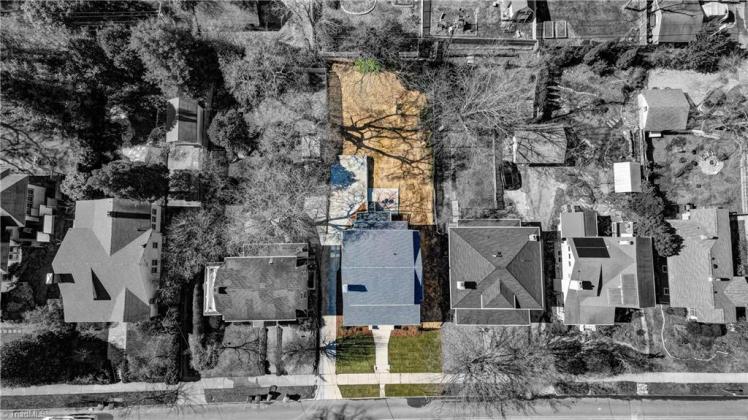
511 N. Mendenhall Street, Greensboro
- Sold for $632,000 on June 13, 2025 (originally $699,900)
- 4 bedrooms, 3 bathrooms, 2,042 square feet, 0.19 acre
- Price/square foot: $310
- Built in 1924
- Listed February 18, 2025
- Last sale: $250,000, April 2024
- Neighborhood: Westerwood
- Note: Flipped house with an huge markup relative to the neighborhood.
- The house was a rental property until 1953 and then again from 1959 to 1974. The seller in 2024 had owned the house by far the longest of any owners, 41 years.
222eminneola
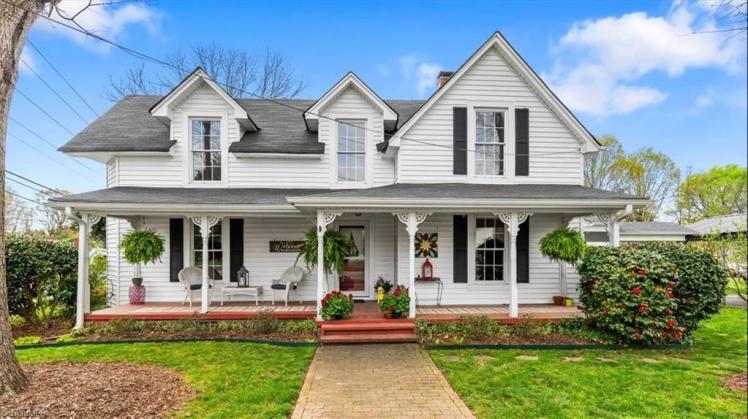


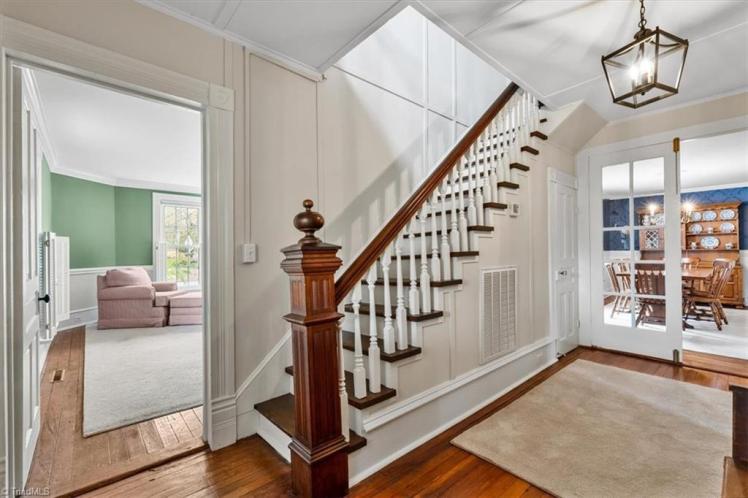
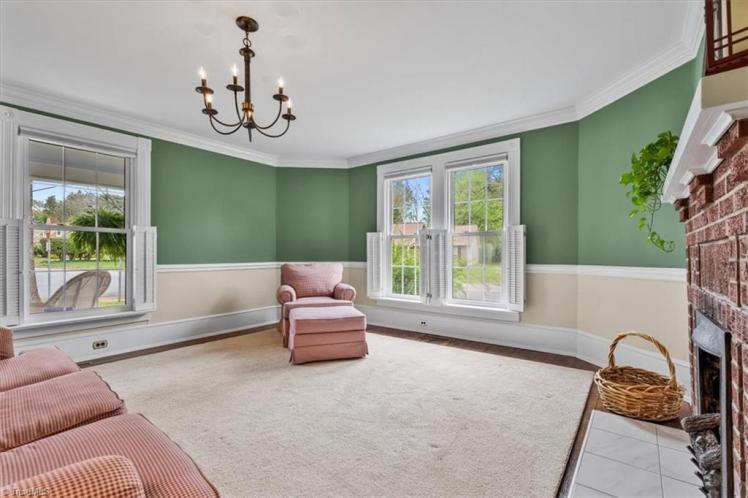
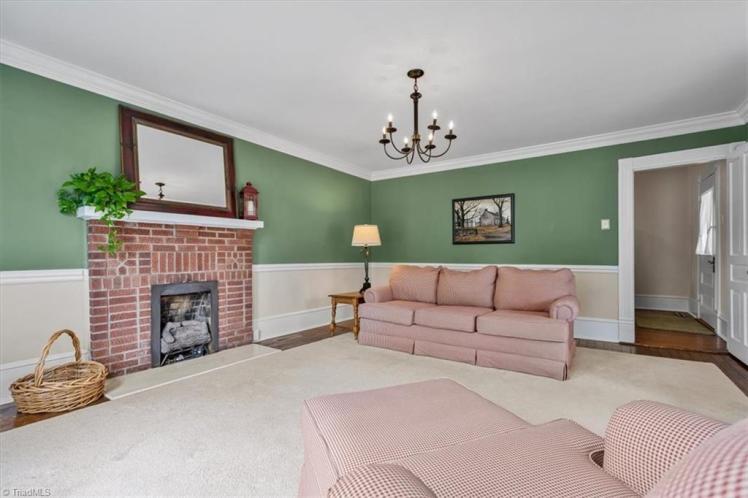
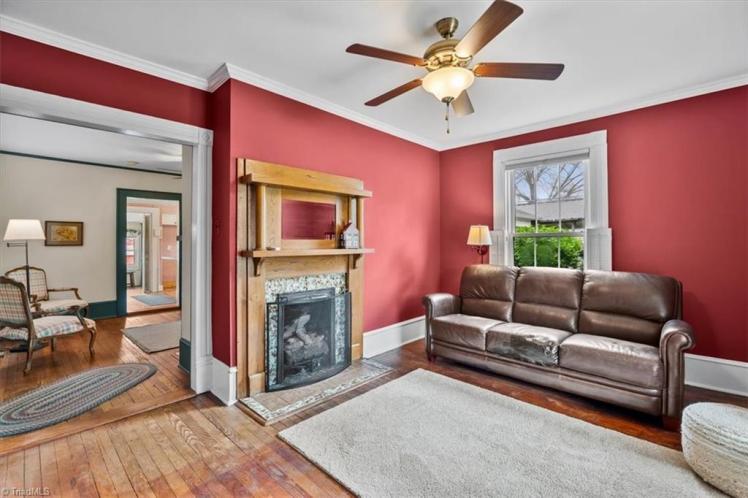
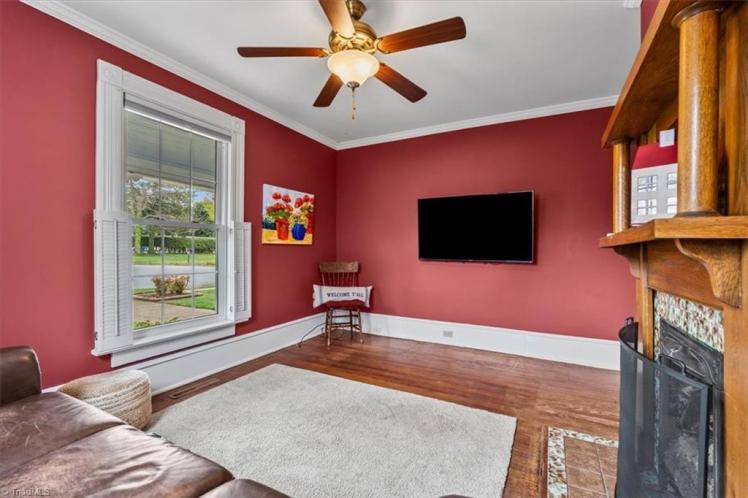
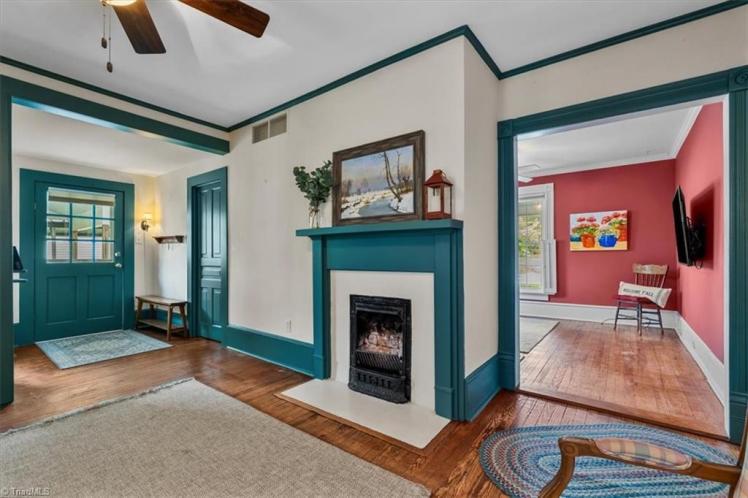
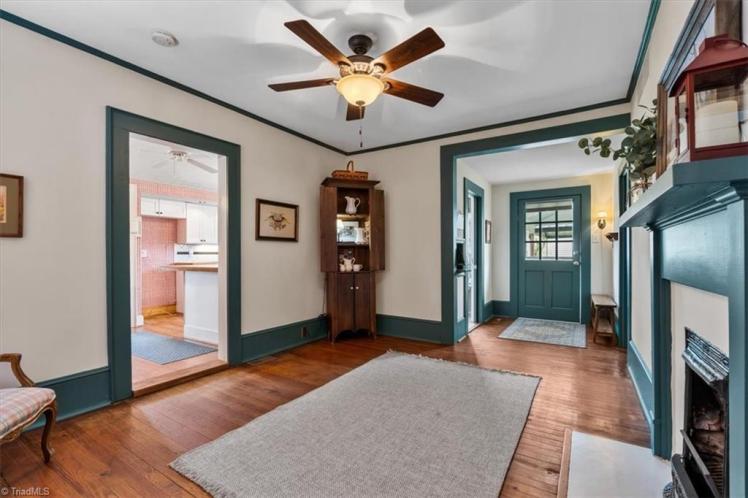
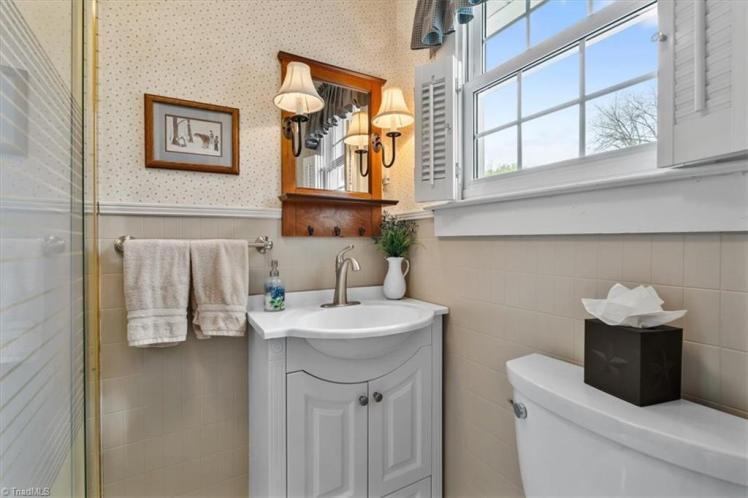
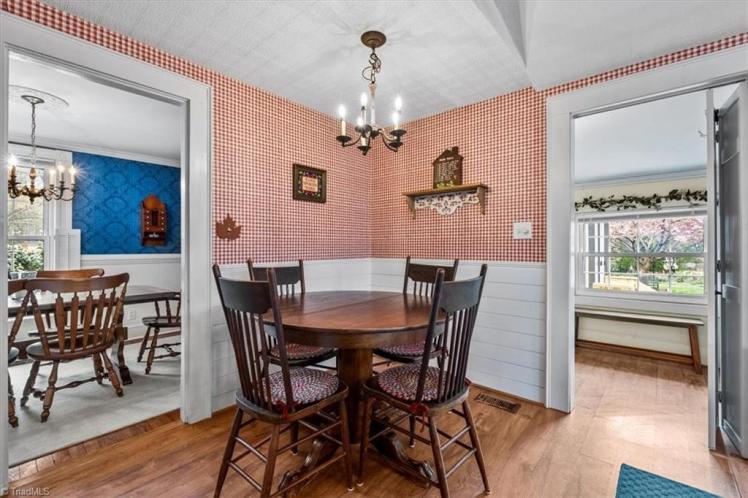


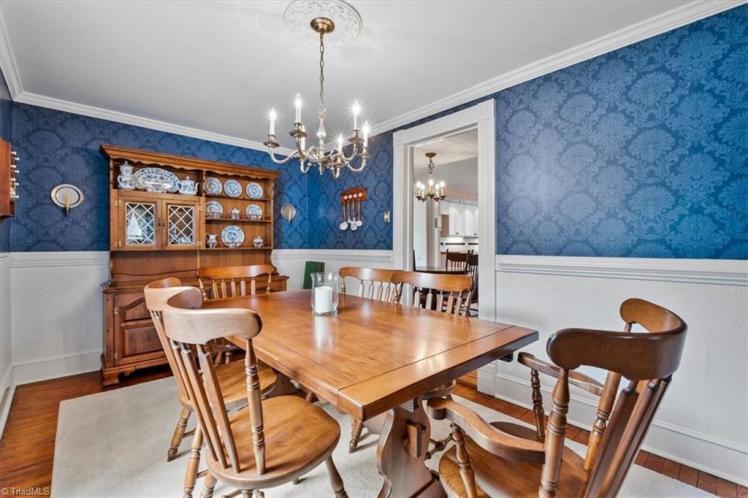


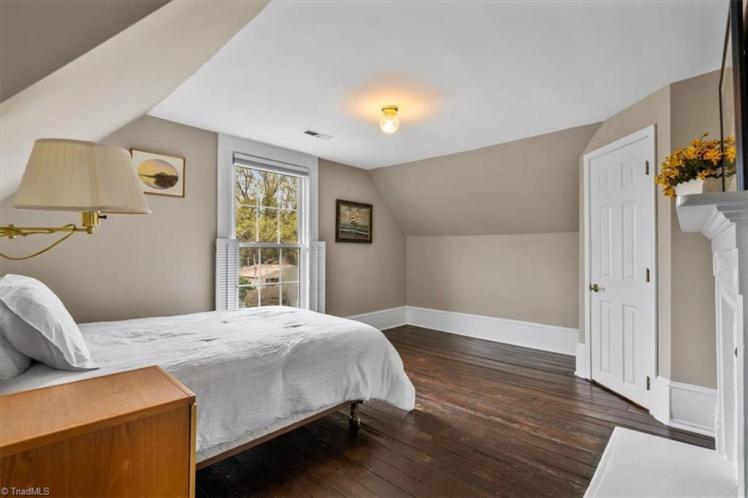
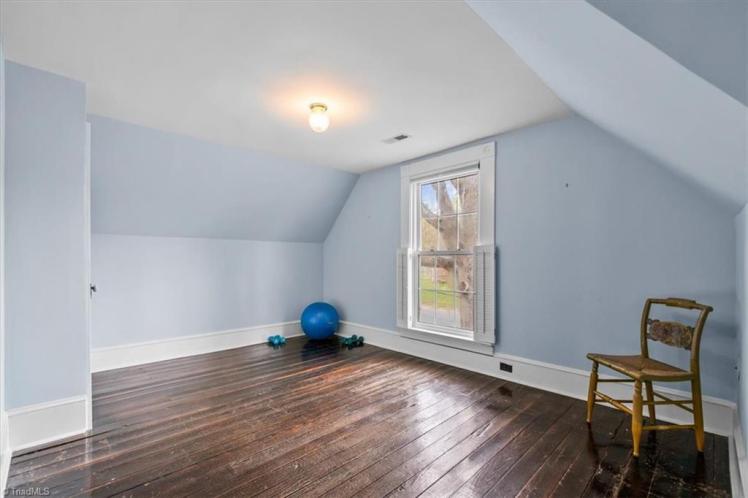
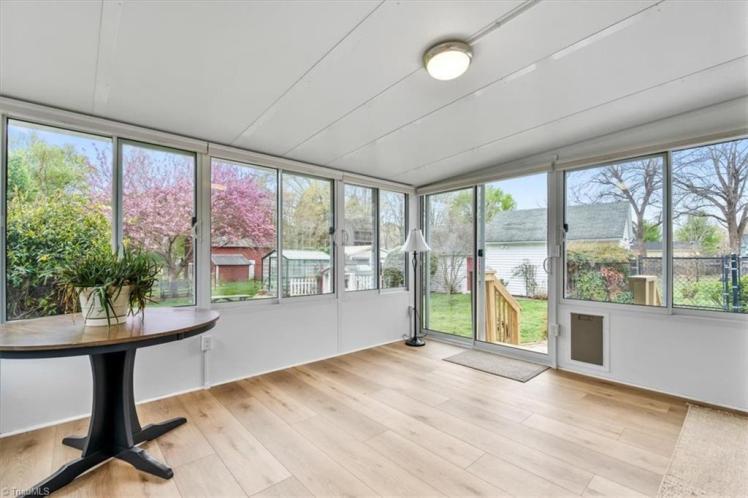
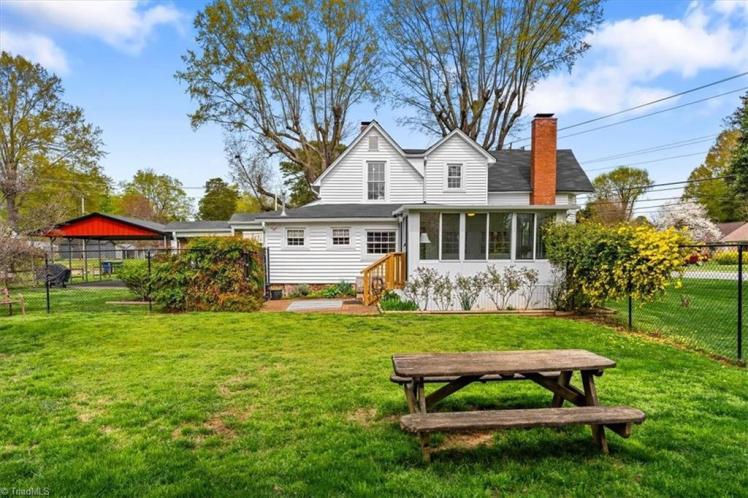


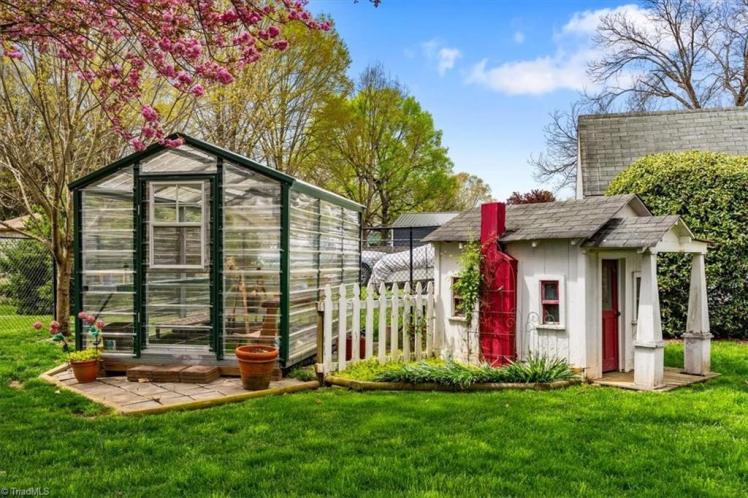


222 E. Minneola Street, Gibsonville, Alamance County
- Sold for $345,000 on June 11, 2025 (listed at $375,000)
- 3 bedrooms, 2 bathrooms, 1,858 square feet (per county), 0.39 acre
- Price/square foot: $172
- Built in 1902
- Listed April 8, 2025
- Last sale: $145,000, December 2001
- Note: Online listings show 2,385 square feet.
- The property was bought in 1902 by Dr. Harlan Page Bowman (1869-1937), a physician. Around 1912 he moved his practice to Greensboro. He sold the house in 1921 to the nearby Minneola Mill, by then owned by Cone Mills.
- Cone sold the house in 1962 to Elmore Jennings Cobb (1898-1975) and Evie Hornbuckle Cobb (1899-1989). Elmore was an overseer at the Minneola plant. Their daughters sold the house in 1989.
514nmain





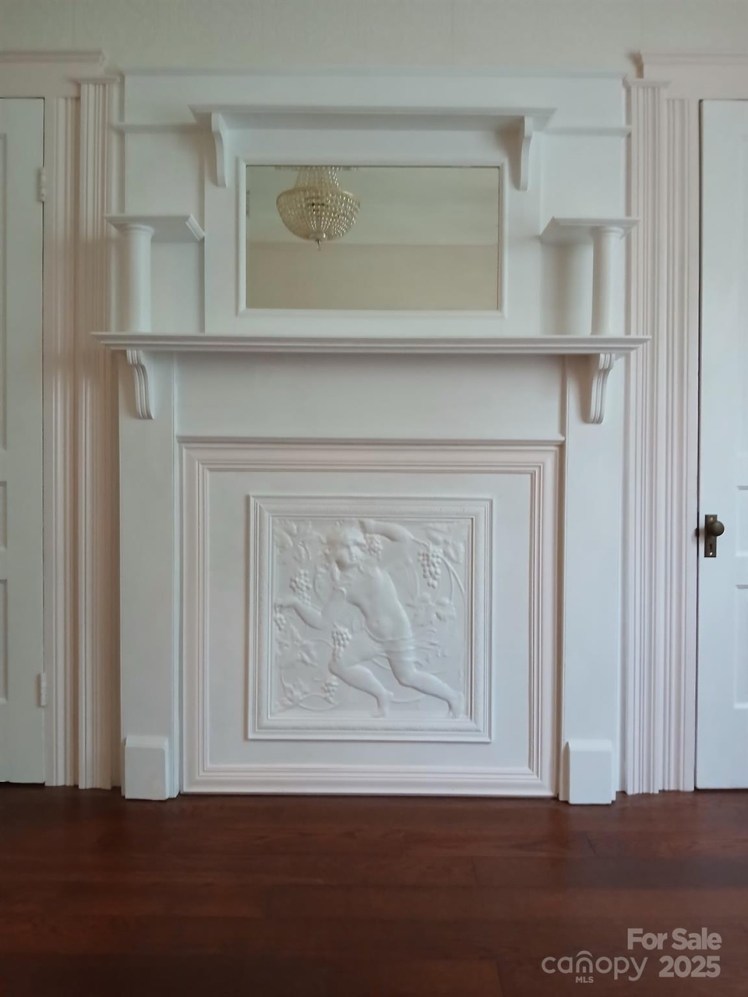


514 N. Main Street, Mount Gilead, Montgomery County
- Sold for $275,000 on June 10, 2025 (listed at $275,000)
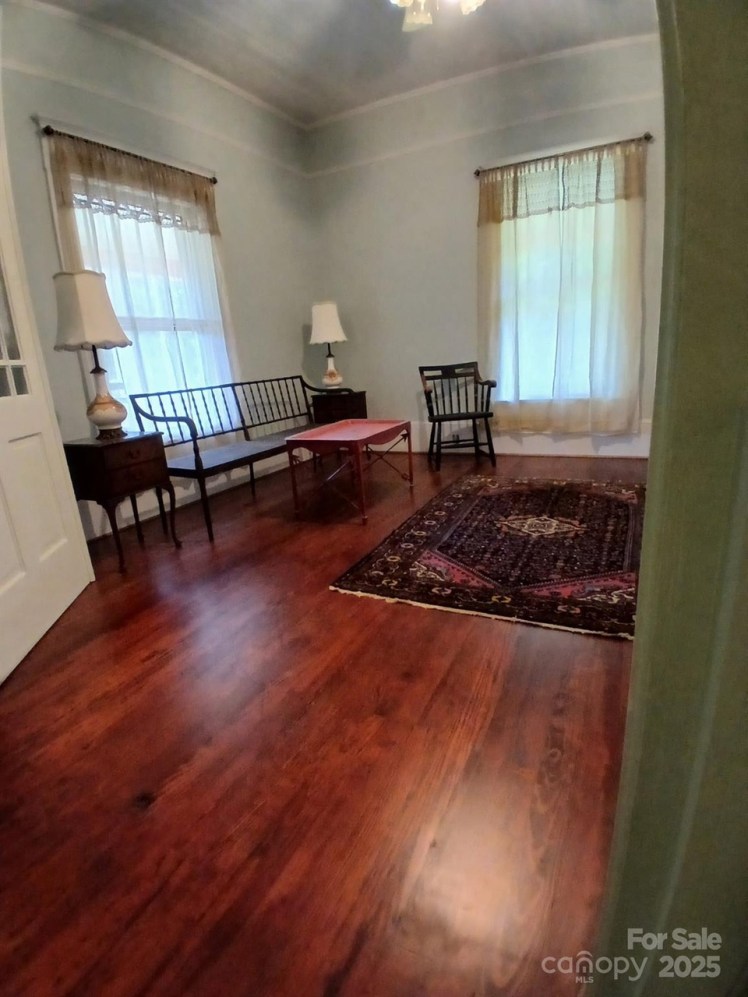
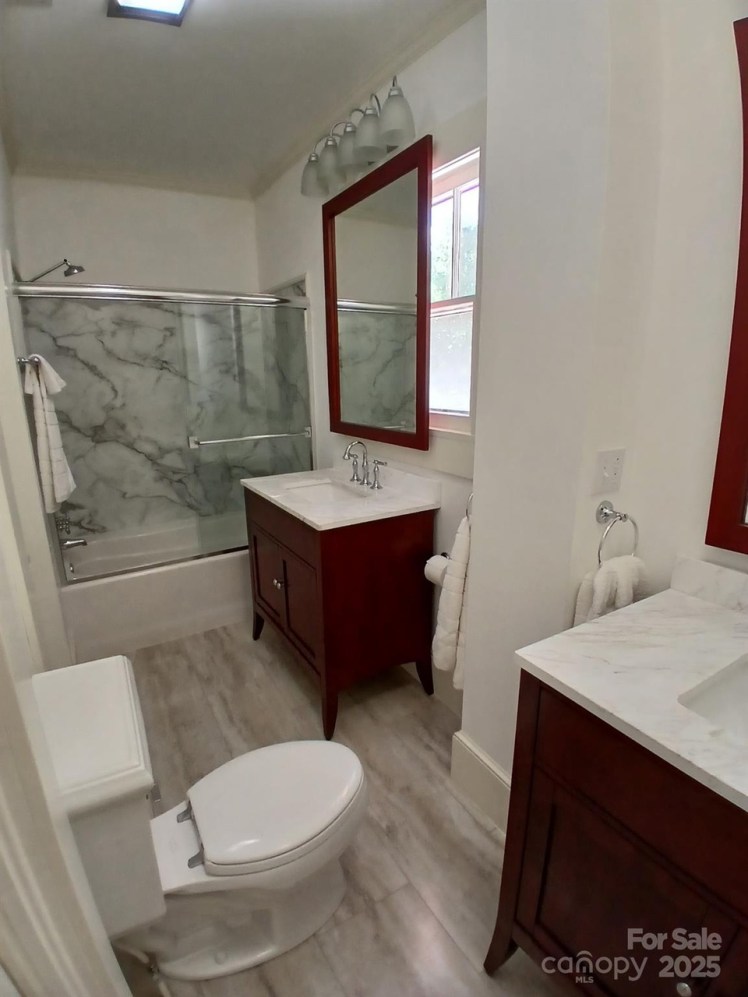
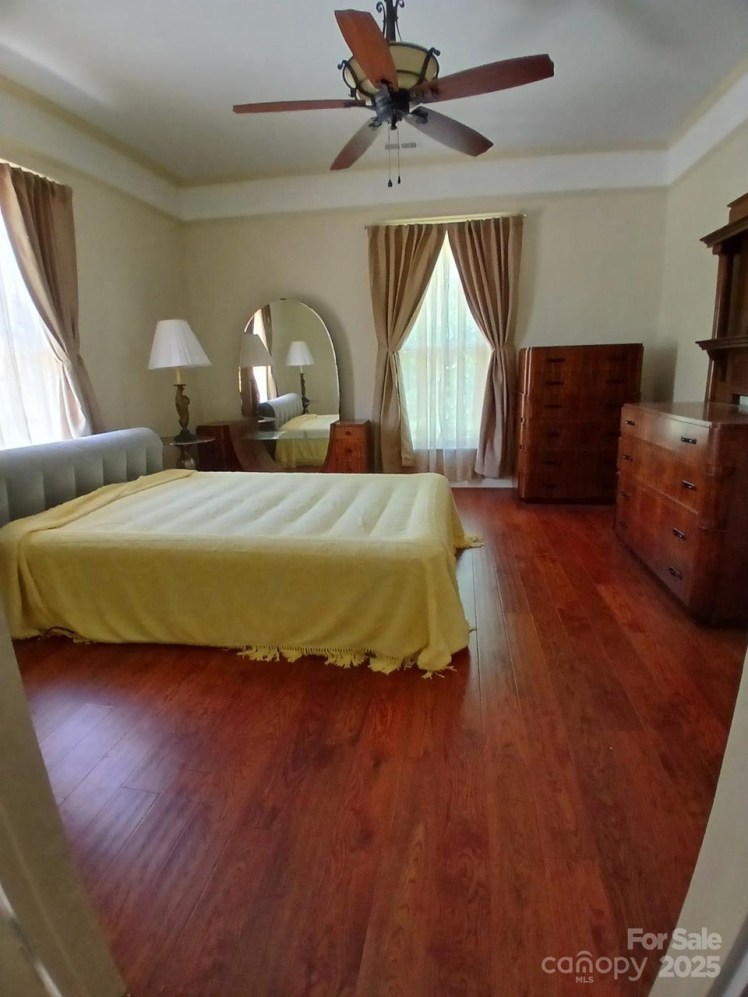
- 3 bedrooms (per county), 1 bathroom, 2,456 square feet, 1.92 acres
- Price/square foot: $112
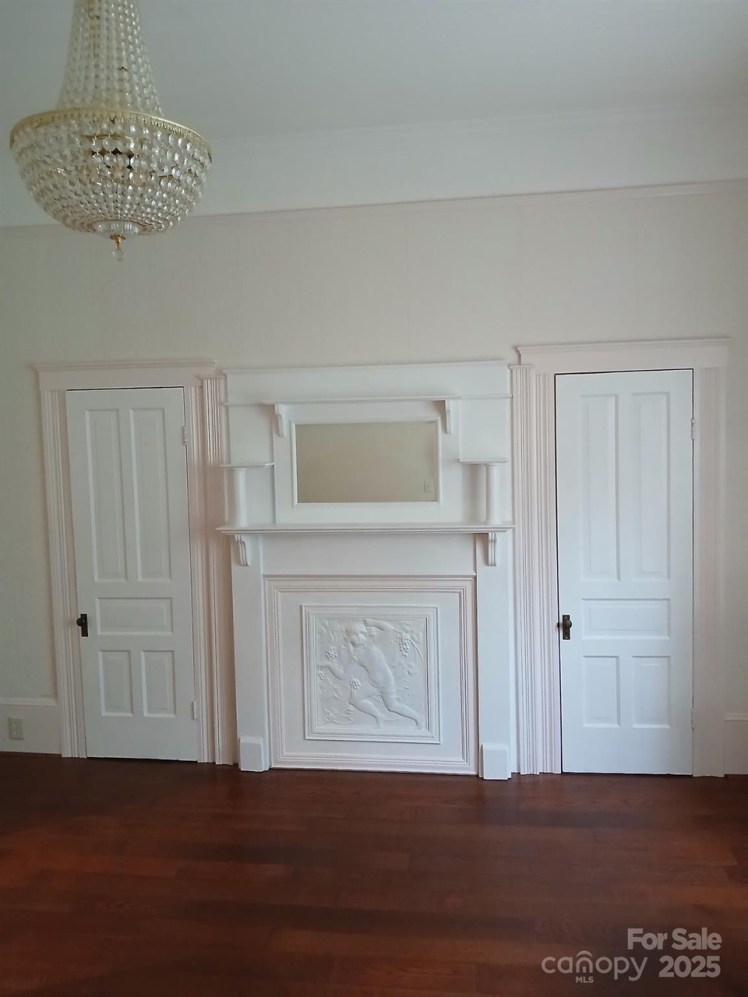
- Built in 1908
- Listed May 19, 2025
- Last sale: $45,000, December 2005
- Note: Online listings show 5 bedrooms but describe the house as “potentially 5 BR.”
- The property includes a detached garage/workshop.
- Note on county property record card, presumably outdated but worth asking about: “ROOF FALLEN IN ON REAR OF GARAGE IN OUTBLDGS”
2440glencoe






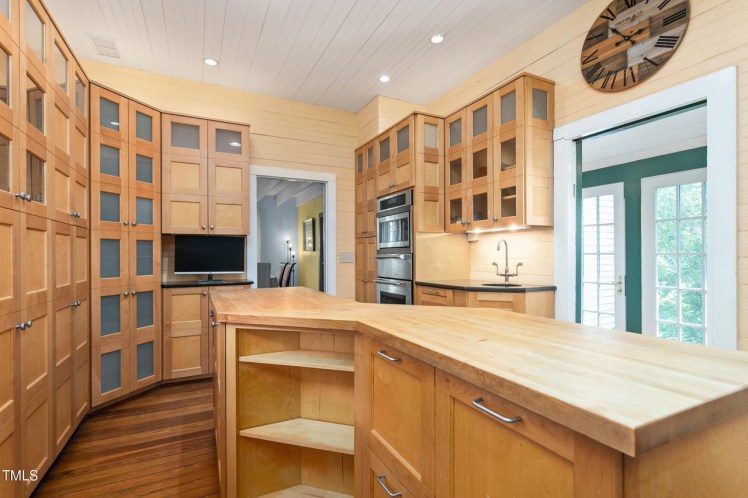

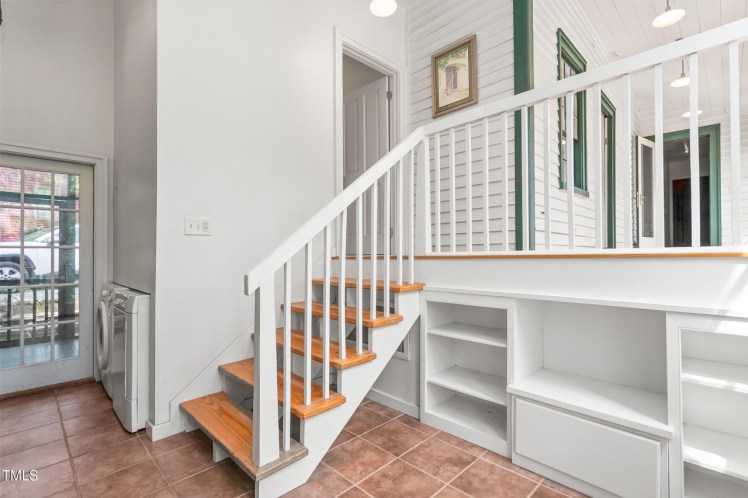


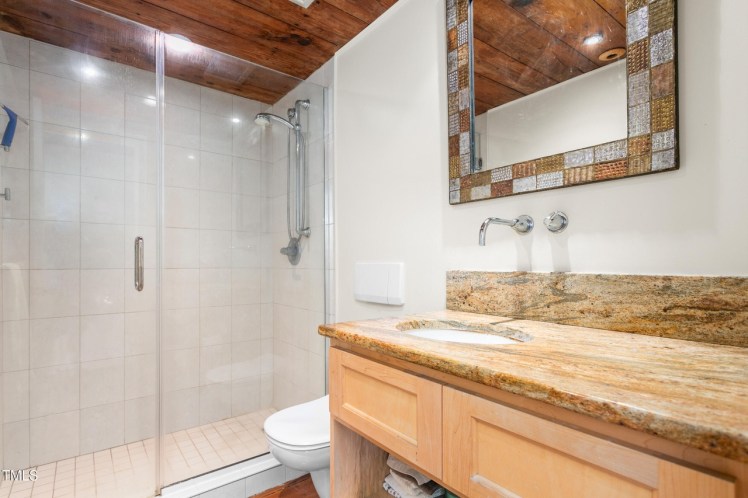


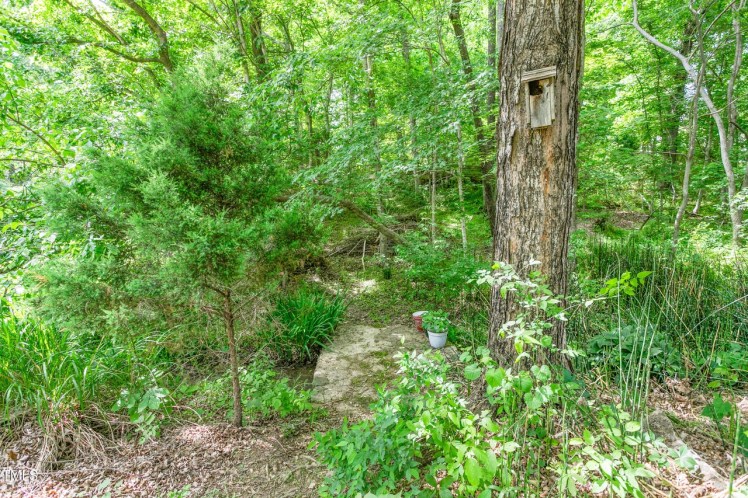

2440 Glencoe Street, Glencoe Mill Village, Alamance County
Blog entry (2018)
- Sold for $390,000 on June 9, 2025 (listed at $390,000)
- 3 bedrooms, 2 bathrooms, 2,031 square feet (per county), 0.31 acre
- Price/square foot: $192
- Built in 1885
- Listed May 5, 2025
- Last sales: $252,000, September 2018; $38,000, April 2000
- Neighborhood: Glencoe Historic District (local and NR). The village has Burlington mailing addresses.
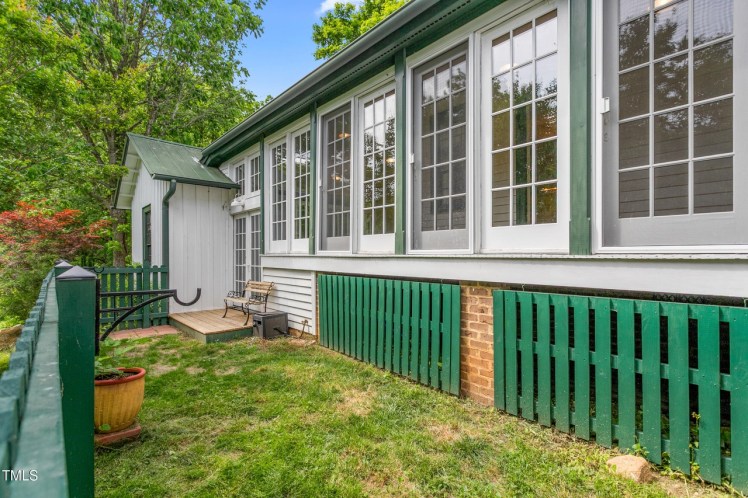
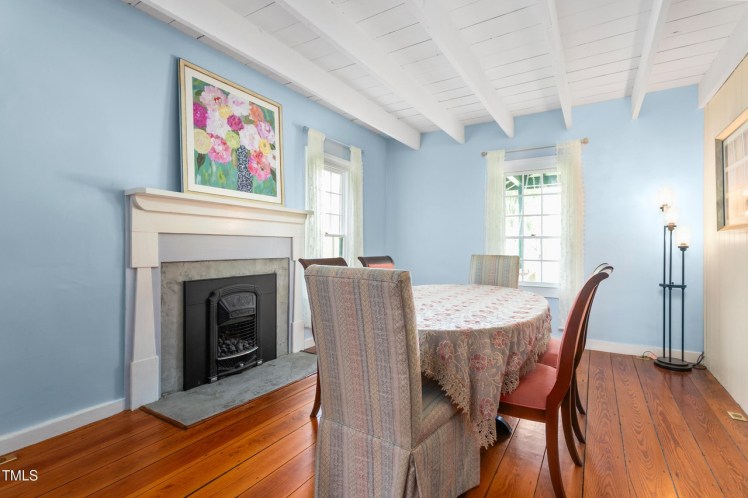
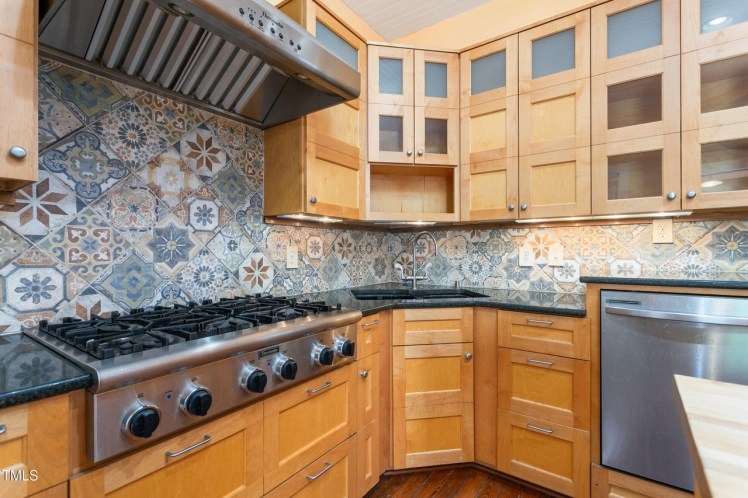
- Note: Glencoe Mill Village is on the Haw River just north of Burlington. Its 30-some restored houses comprise one of the most intact mill villages still standing in North Carolina. The houses themselves have been renovated and in many cases, like this one, sensitively expanded.
612guilford


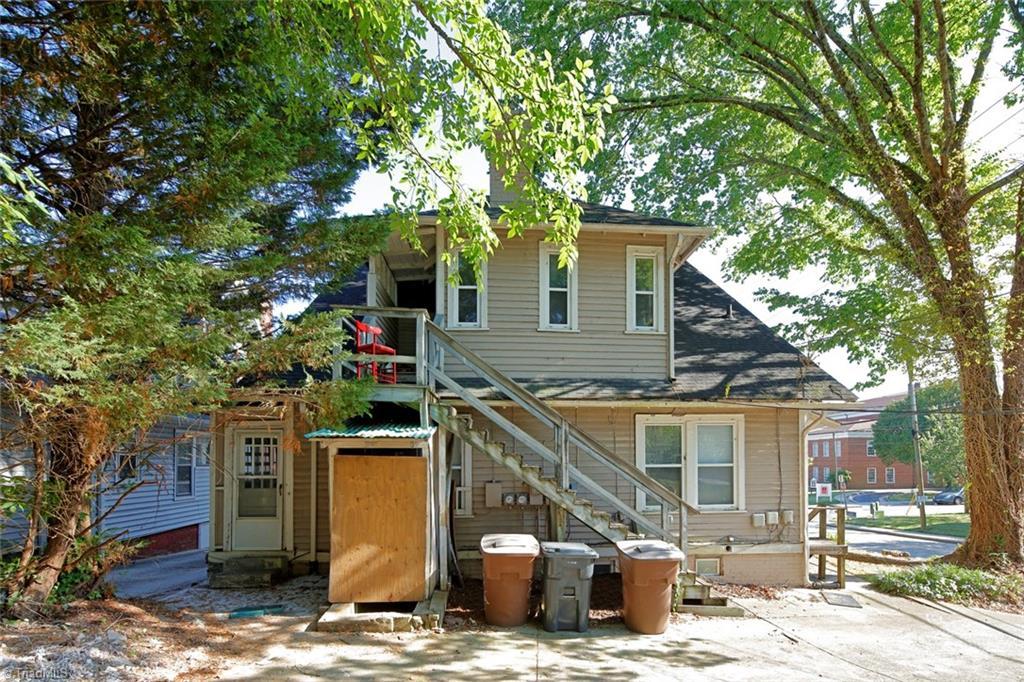

612 Guilford Avenue, Greensboro
- Sold for $312,500 on June 4, 2025 (originally $395,000)
- Originally a single-family house, now divided into three units (bedrooms and bathrooms not specified), 1,958 square feet, 0.17 acre
- Price/square foot: $160
- Built in 1920
- Listed June 29, 2024
- Last sale: $90,000, October 2017
- Neighborhood: Westerwood
- Note: No central air conditioning
- The home’s original owners were John Jasper Phoenix (1867-1951) and Christina Forsyth Phoenix (1870-1940). They bought the property in 1921; it appeared in the city directory for the first time in 1923. J.J. had operated the company store for Cone Mills and was vice president of the Textile Bank, led by Julius W. Cone. He left around 1920 to become superintendent of the N.C. Children’s Home Society, a position he held for about 20 years. He also served on the city Board of Public Amusements. A longtime Mason, he was named grand master of the grand lodge of North Carolina in 1929. He played a significant role in the establishment of the Masonic and Eastern Star Home in Greensboro.
- J.J. and Christina lived in the house until she died in 1940. Within a couple years, J.J. retired and moved to Florida. He rented the house out before selling it in 1950. The new owner was an absentee landlord who divided it into two apartments.
- Before the house was built, the property had a remarkable series of owners. The earliest documented owner was H. Smith Richardson (1920-1999), son of Lunsford Richardson, inventor of Vicks VapoRub. H. Smith is generally credited with transforming the product from an item sold in his father’s drug store into the foundation of a major corporation. He was an innovative business executive, philanthropist and was politically active, particularly as an isolationist opposed the U.S. entry into World War II.
- Richardson sold the property to Charles Decatur Cunningham (1874-1957), general manager of the Keeley Institute in Greensboro. The institute was a national chain of asylums for alcoholics; its snake-oil cure was based on bichloride of gold. The Greensboro asylum was located at Blandwood Mansion.
- In 1917, Cunningham sold the house to George A. Grimsley, the city’s first school superintendent, statewide advocate for public libraries and later an insurance executive and president of Jefferson-Standard.
- Grimsley sold the property in 1919 to James Calloway Morris Morris (1861-1935) and Meda Gillespie Morris (1865-1949). James was a contractor; they lived across the street at 203 N. Mendenhall. The Morrises sold the property to the Phoenixes in 1921 and may have built the house for them after the sale.
- Located at the corner of South Mendenhall Street and Guilford Avenue, the house’s original address was 200 S. Mendenhall Street. It later became 300 S. Mendenhall before finally being given its current address sometime after 1968.
209schapman
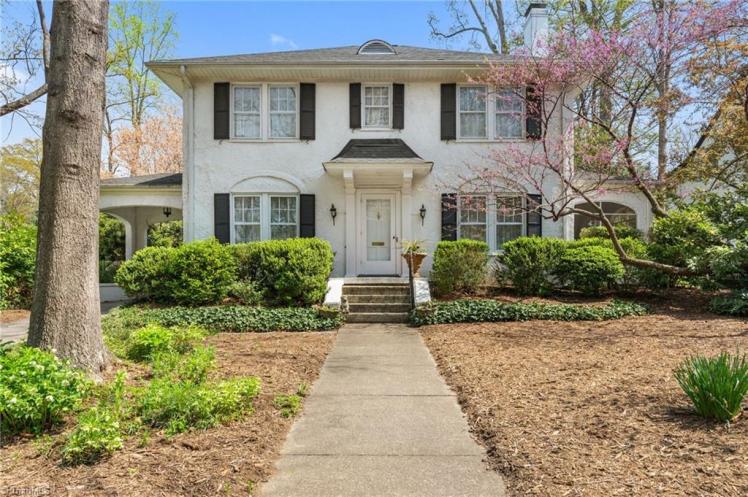
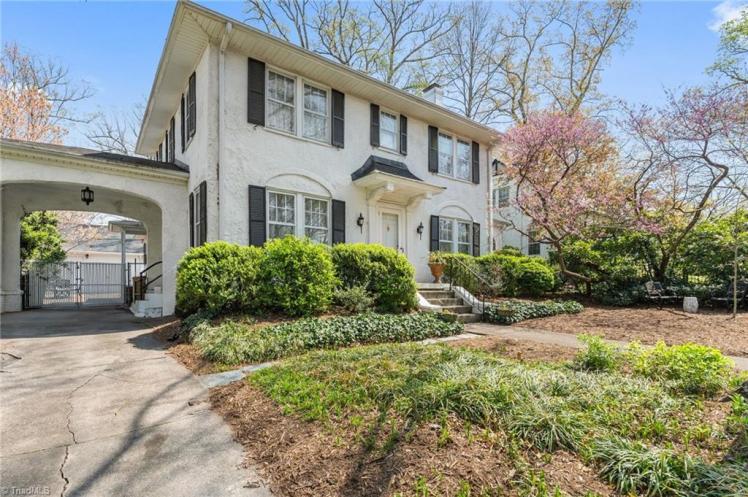
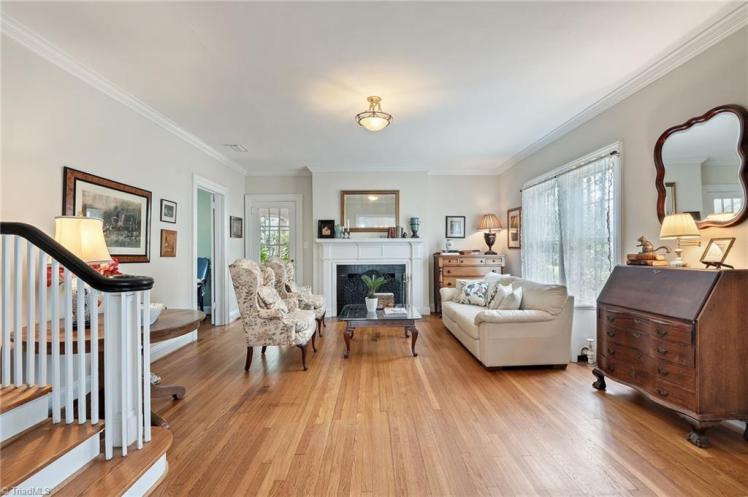
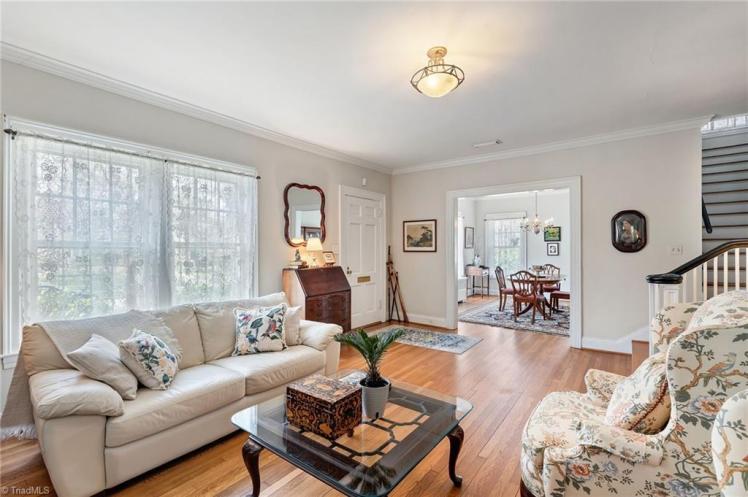


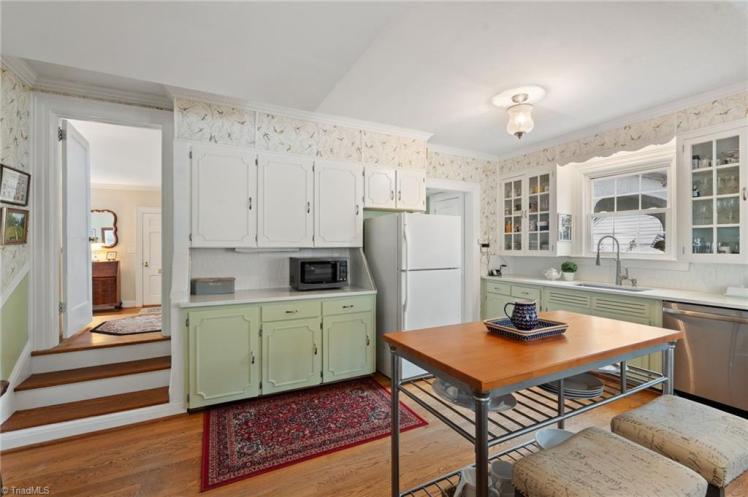


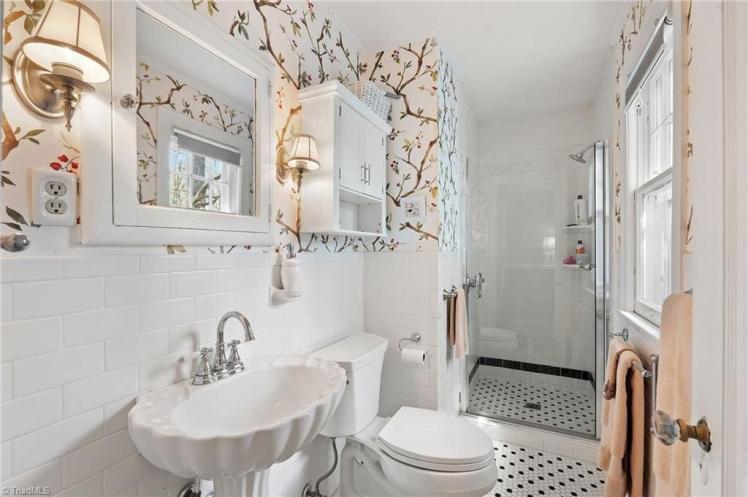
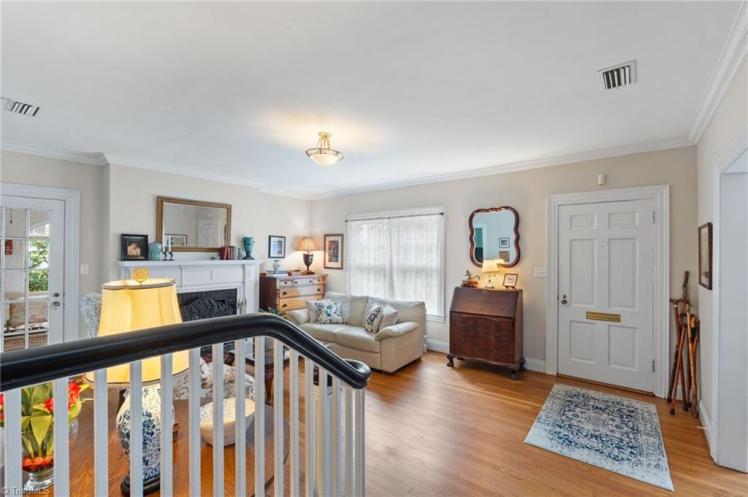






209 S. Chapman Street, Greensboro
The Della and Victor Welker House
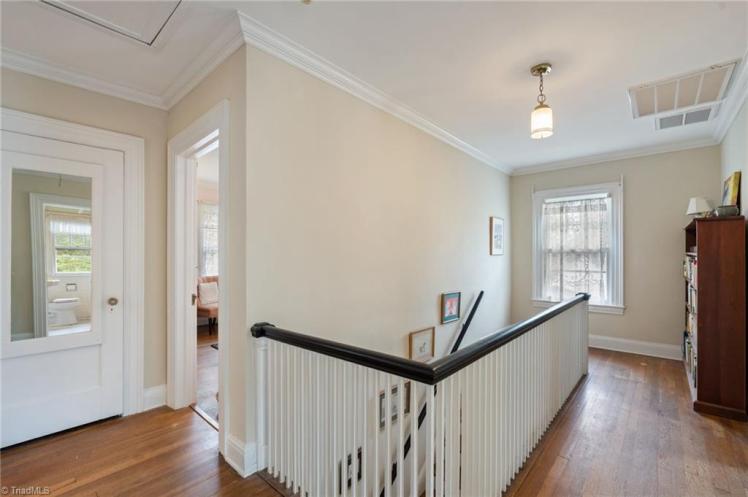
- Sold for $595,000 on June 3, 2025 (listed at $609,900)
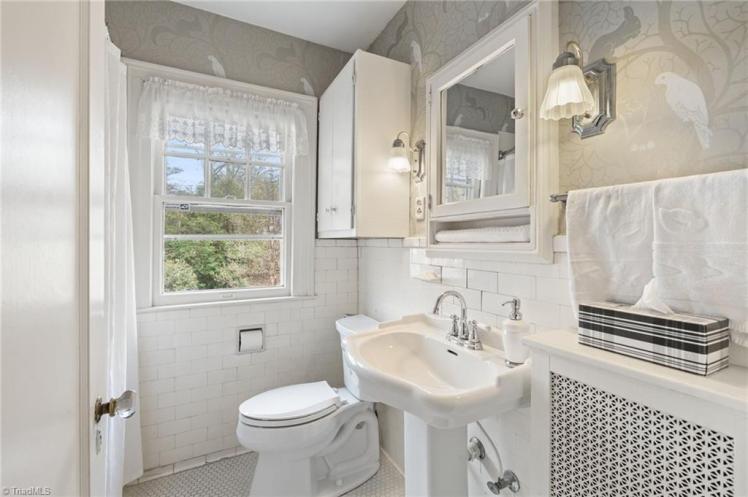
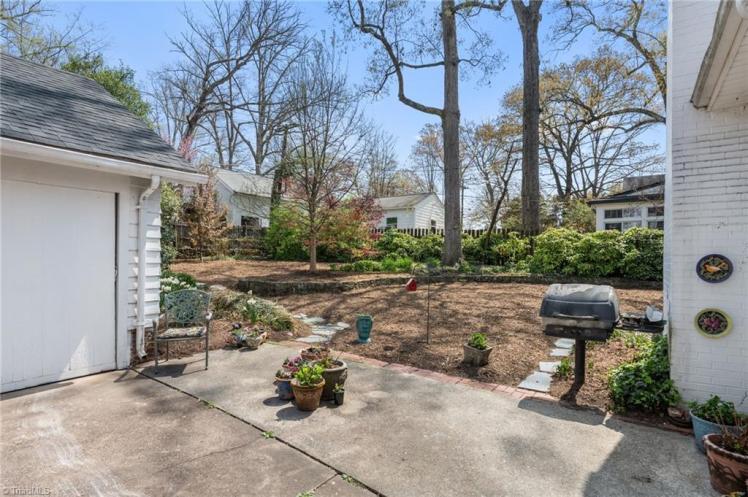
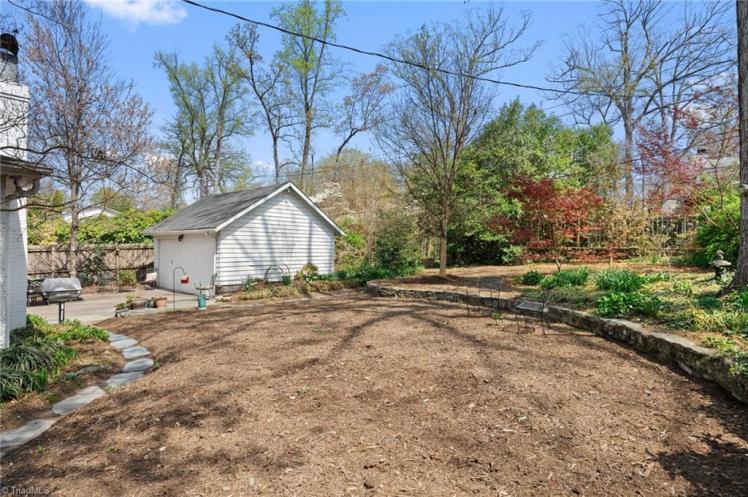
- 3 bedrooms, 2 bathrooms, 1,422 square feet (per county), 0.17 acre
- Price/square foot: $418
- Built in 1922
- Listed April 4, 2025
- Last sale: $10,000, 1977
- Neighborhood: Sunset Hills Historic District (NR)
- Note: The listing shows 2,325 square feet, which looks more likely than the figure in county tax records. That would come out to $262/square foot.
- District NR nomination: “The two-story, three-bay, hip-roofed, Colonial Revival-style dwelling displays a stucco exterior. Concrete steps bordered by flanking low paved walls ascend to a stoop forward of a paneled wood door framed in fluted classical pilasters. The surmounting hood has a flat crown and bellcast eaves and is supported by scrolled brackets on its underside.
- “Windows are paired and single six-over-six; a segmental, slightly projecting blind arch tops the first floor façade windows; three diamond-shaped projecting stucco tiles are centered over the windows.
- “One story, hip-roofed wings flank the main block: the north serves as a porte-cochere supported by rectangular, stucco posts and pierced with arched openings, while the south wing is a porch with arched openings. A half-circle louvered vent pierces the front roof slope, while a stucco chimney occupies the exterior wall of the south elevation of the two-story block.
- “The Welkers bought the property in April 1928 and first appear in the 1928 city directory at this address. He was an electrician. They sold the house in June 1929 to Rosa and Dan Field; he was a department manager for Cone Export and Commission Company. The Fields sold the house in 1941.”
407wmountain
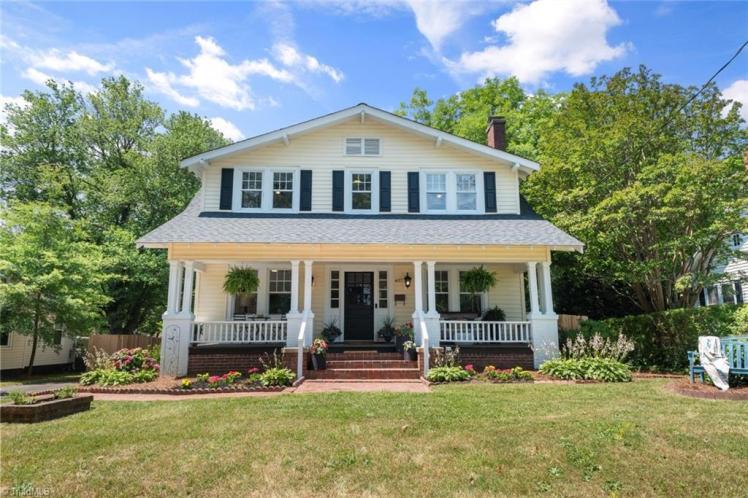

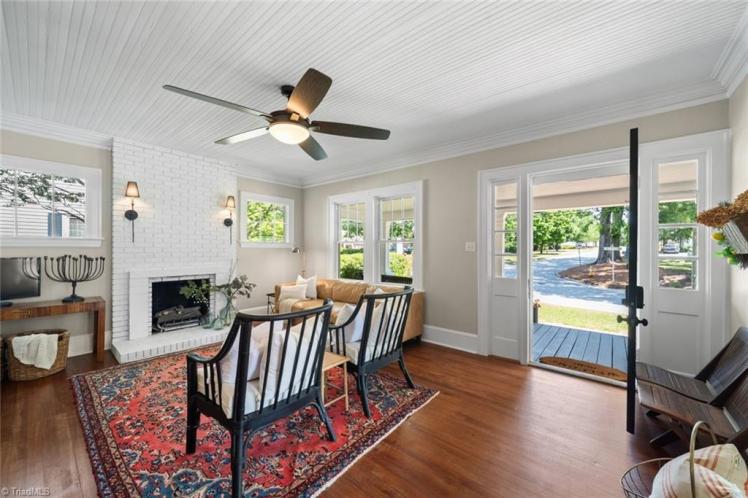


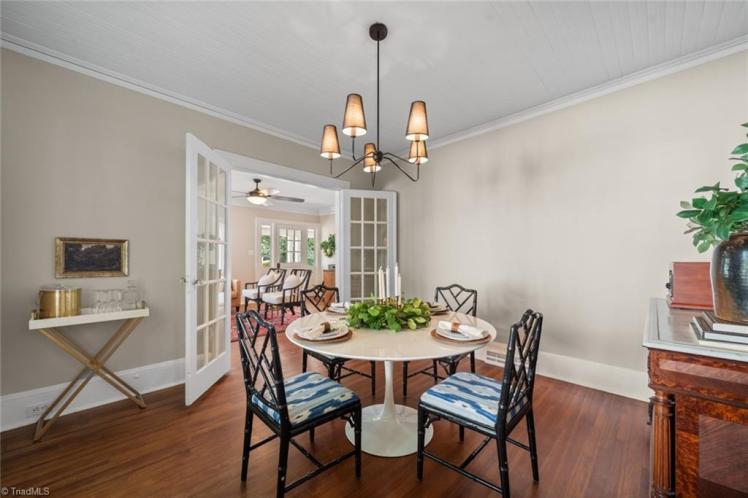


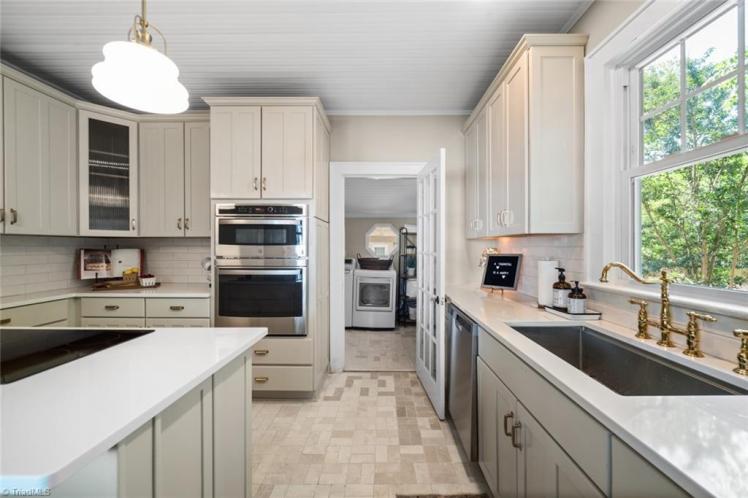


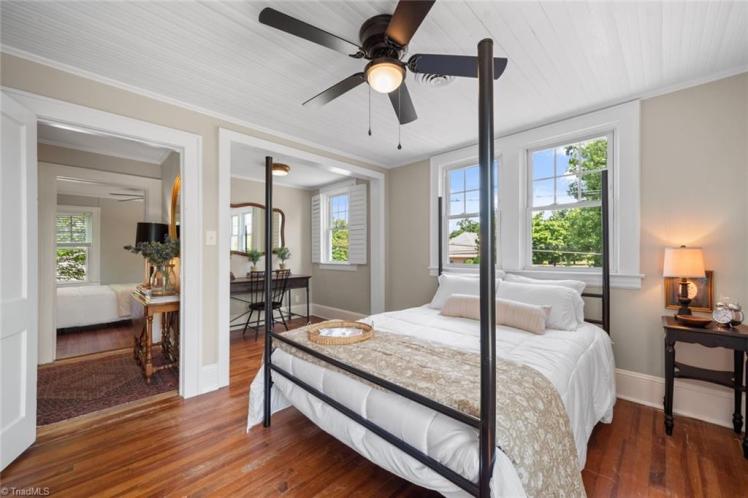
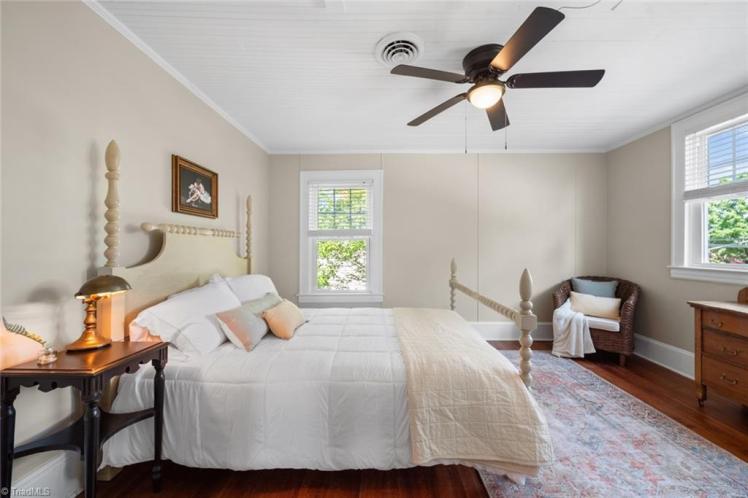
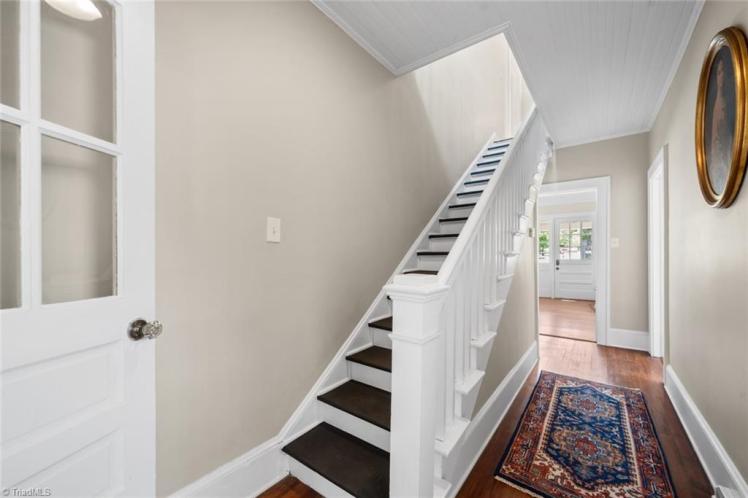


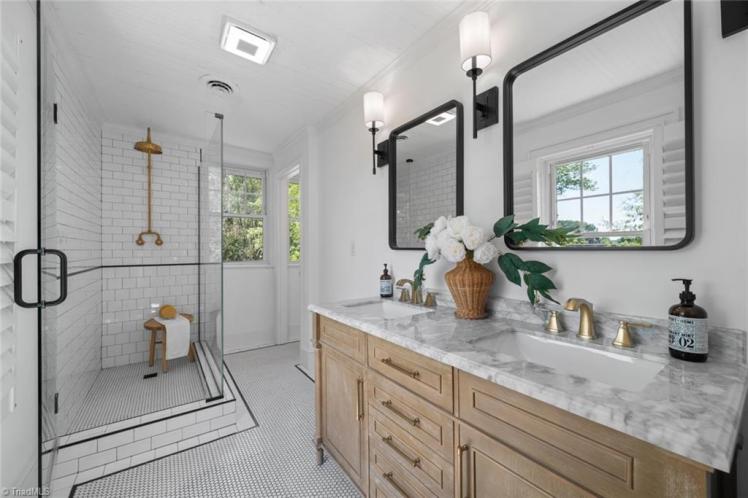


407 W. Mountain Street, Kernersville, Forsyth County
- Sold for $535,000 on June 2, 2025 (originally $549,777)
- 4 bedrooms, 3 bathrooms, 1,977 square feet, 0.32 acre
- Price/square foot: $271
- Built in 1923
- Listed June 14, 2024
- Last sale: $245,000, March 2023
- Note: In this century, the house has been sold five times and foreclosed upon once.
111martin


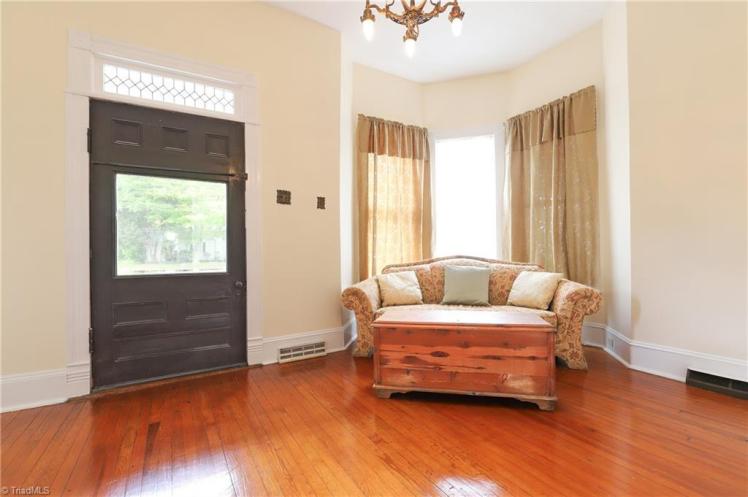
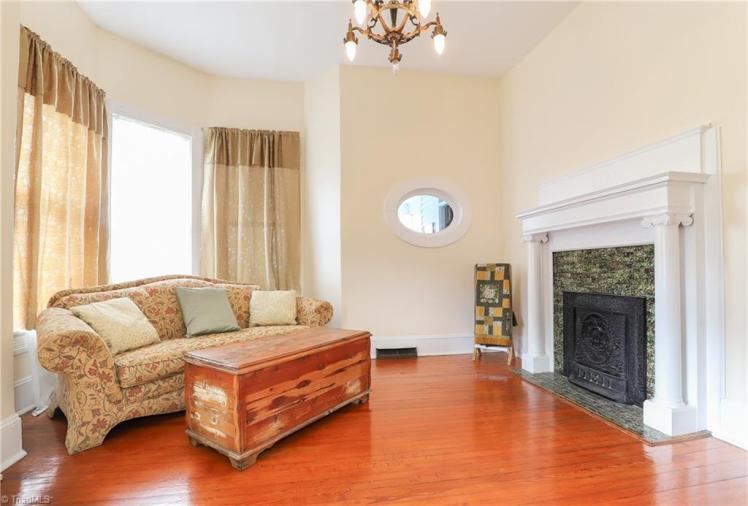
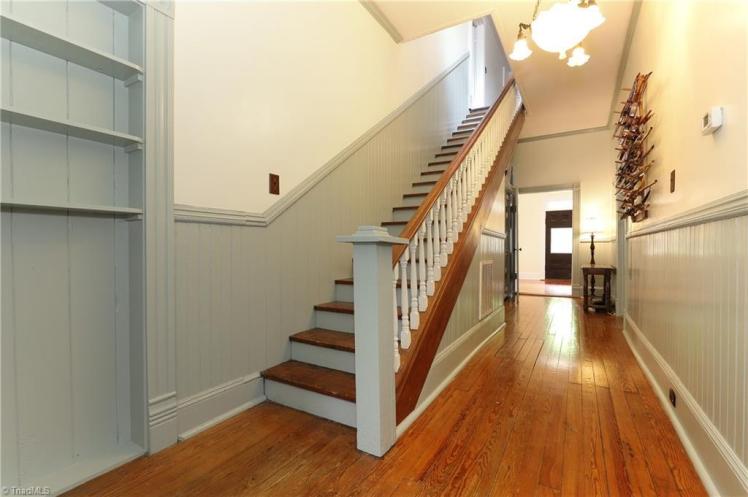
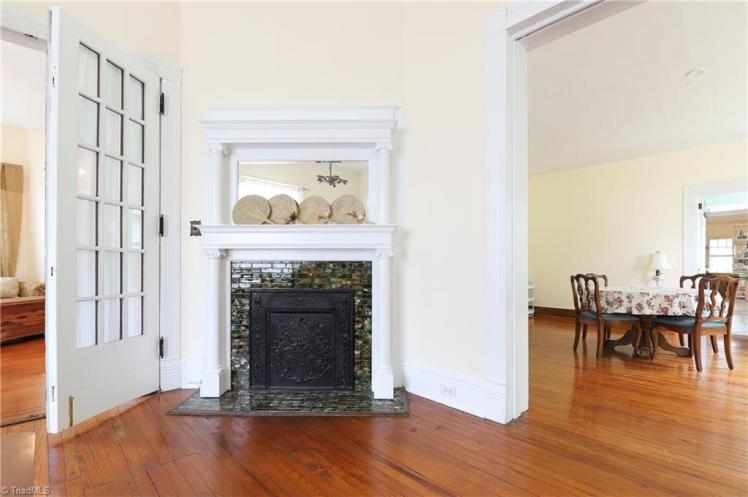
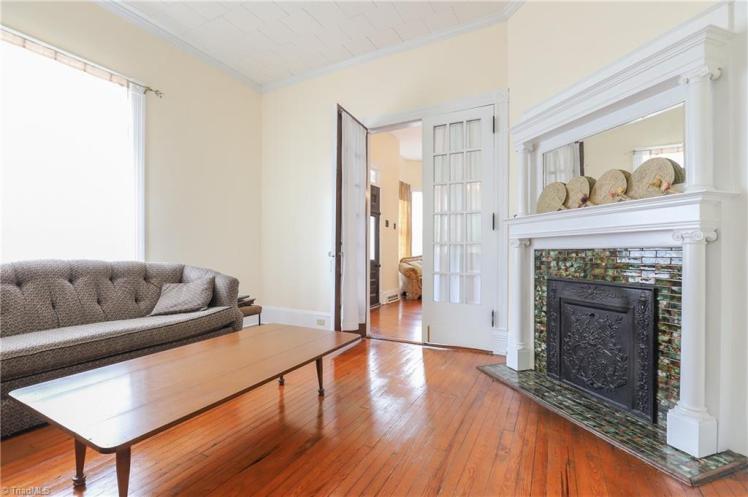

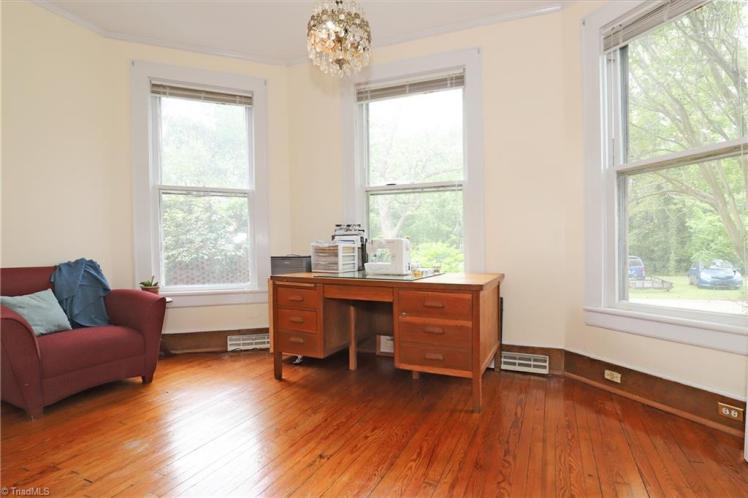

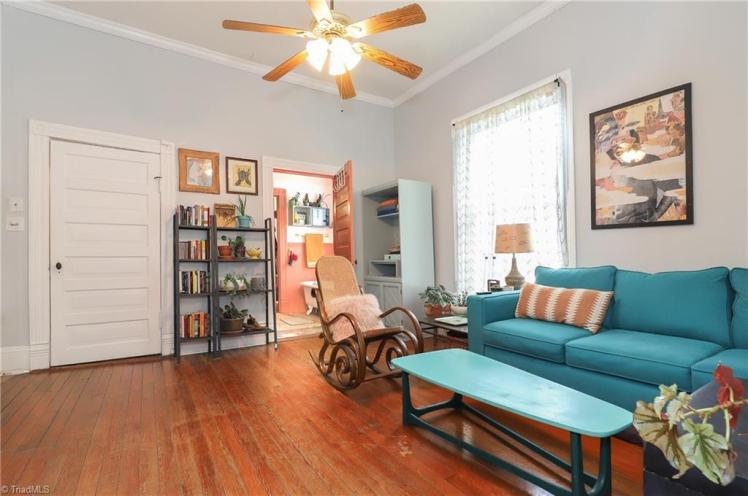

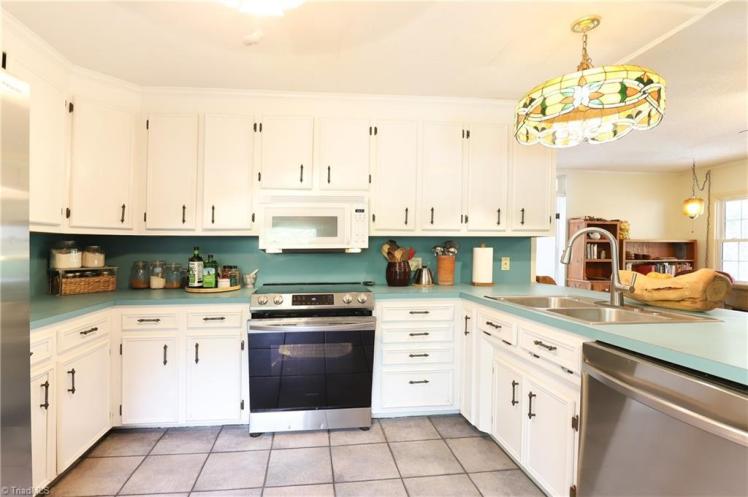
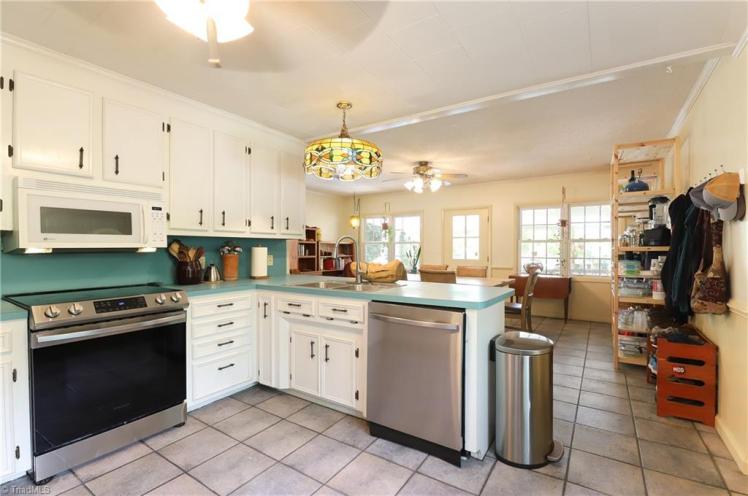

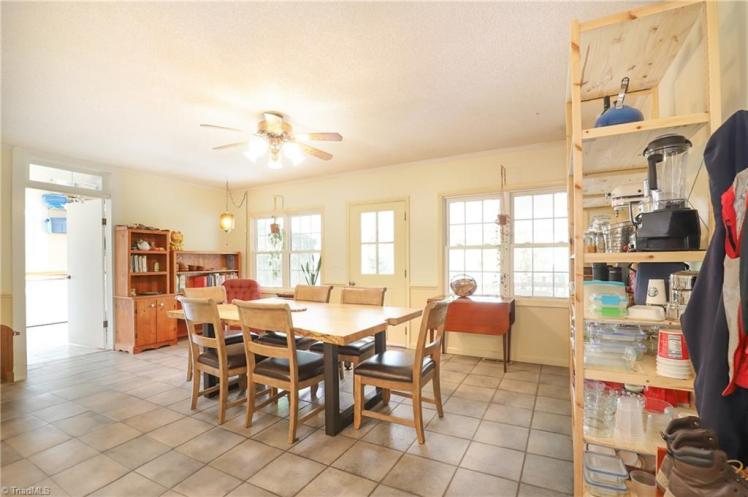


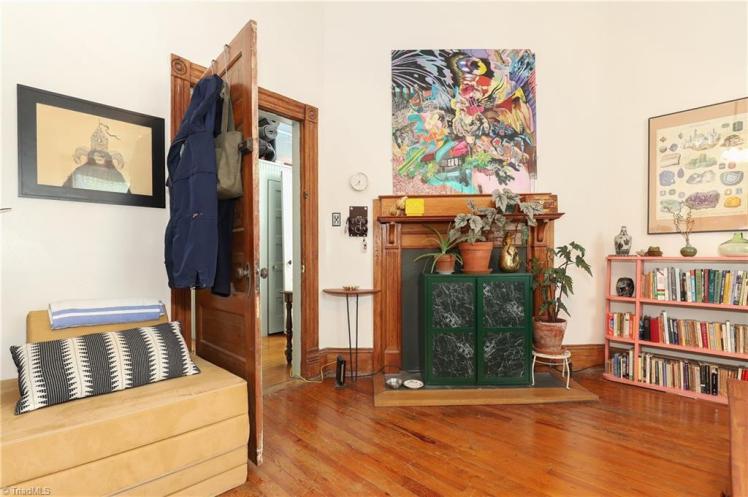
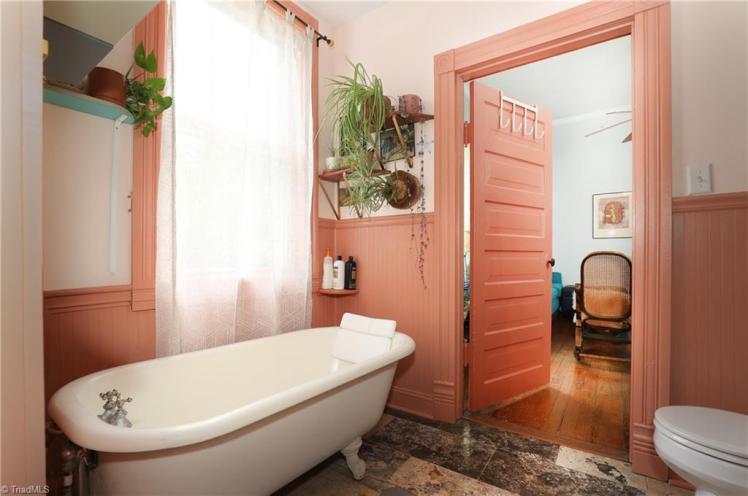


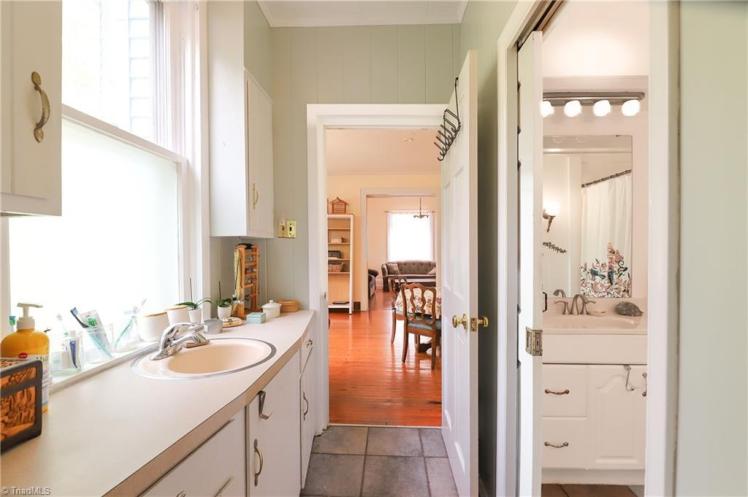
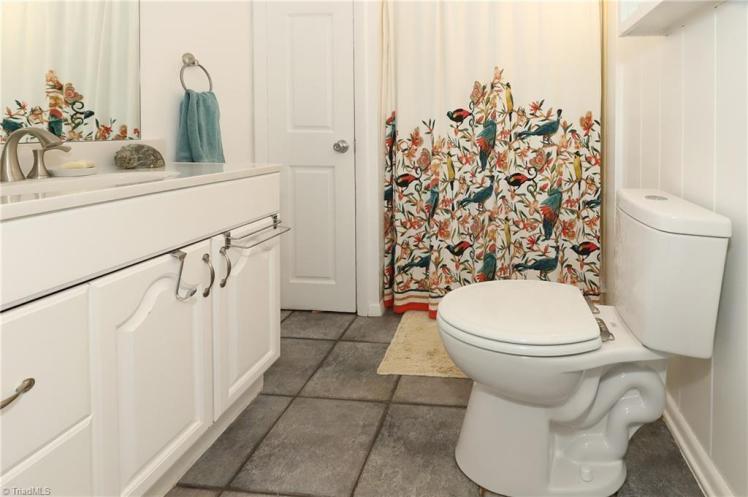

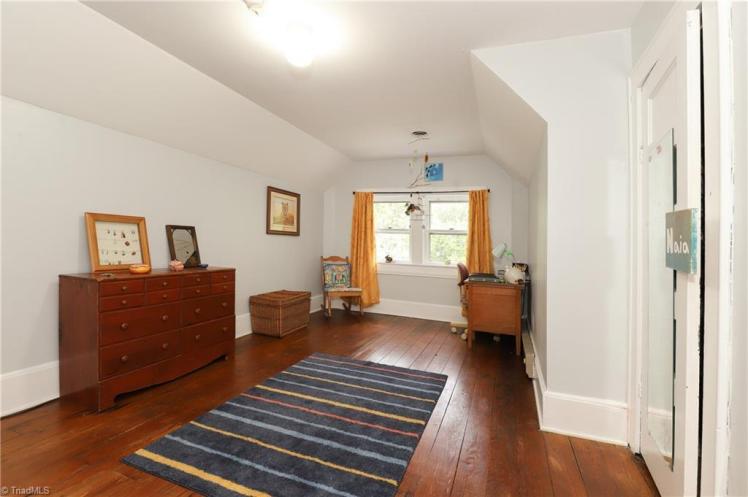
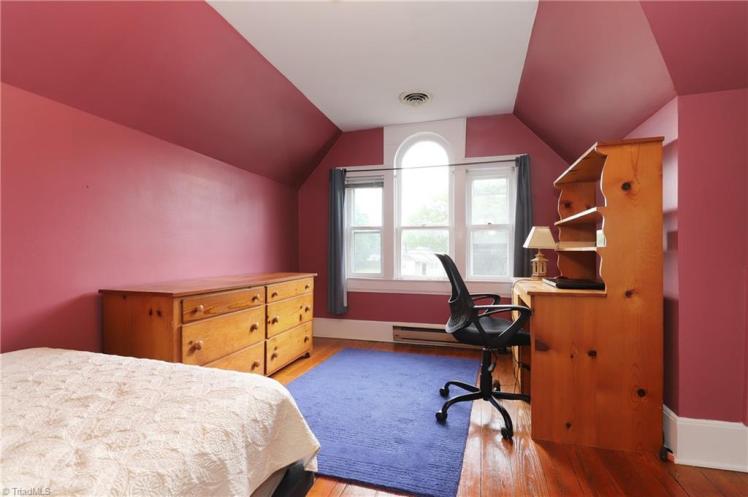


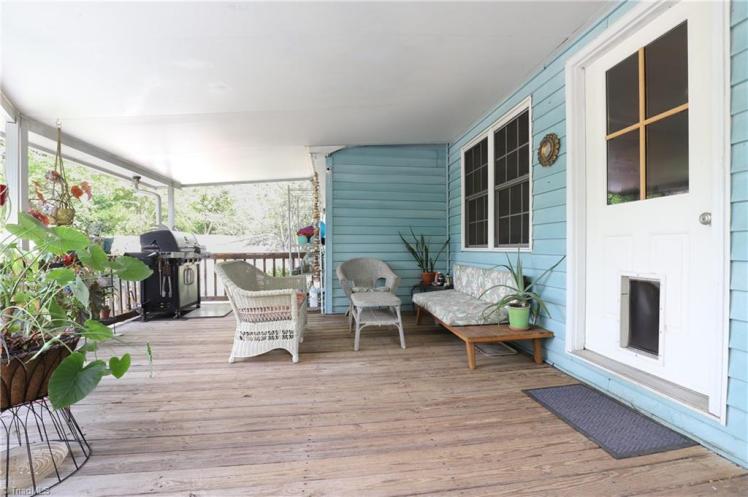
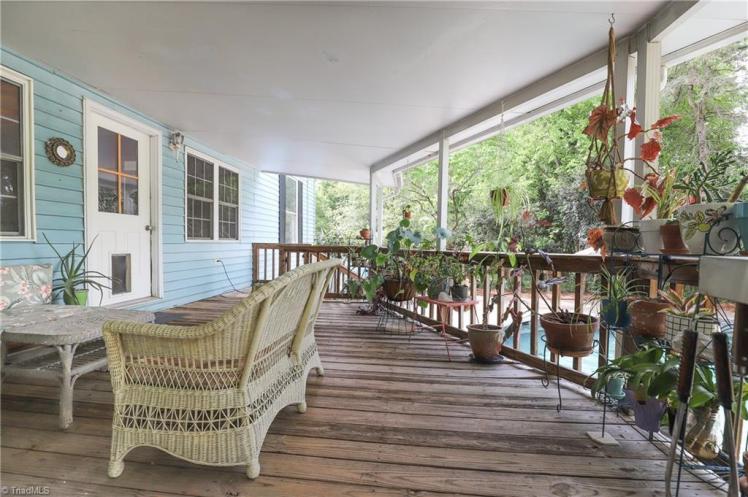


111 Martin Luther King Jr. Boulevard, Lexington, Davidson County
The H.B. Warner House
- Sold for $370,000 on June 2, 2025 (listed at $359,900)
- 5 bedrooms, 2 1/2 bathrooms, 3,320 square feet (per county), 1.77 acres
- Price/square foot: $111
- Built in 1900
- Listed April 25, 2025
- Last sales: $280,000, November 2022; $105,000, July 2012
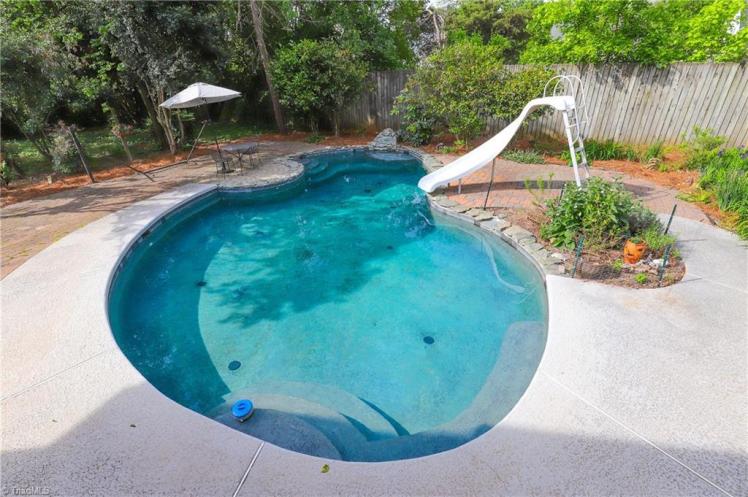
- Note: The property includes an in-ground pool.
- Queen Anne, asymmetrical front, steeply pitched hipped roof with a cross gable, a Palladian window in the gable and a turret at the left front corner of the main body of the house.
- The State Historic Preservation Office identifies it as the H.B. Warner House, but gives no other information except that the address used to be 253 W. 6th Street. No one named H.B. Warner can be found in Lexington city directories of the era or other online sources.
- City directories from 1916, 1925 and 1937 show Ervin Allen Pickett (1882-1947) and Jennie Belle Alexander Pickett (1900-1963) as residents. Ervin and his brother Ocko P. Pickett operated the Pickett Brothers grocery store in Lexington for 30 years. Jennie was a music teacher. By 1941 they were living elsewhere.
1182w4th

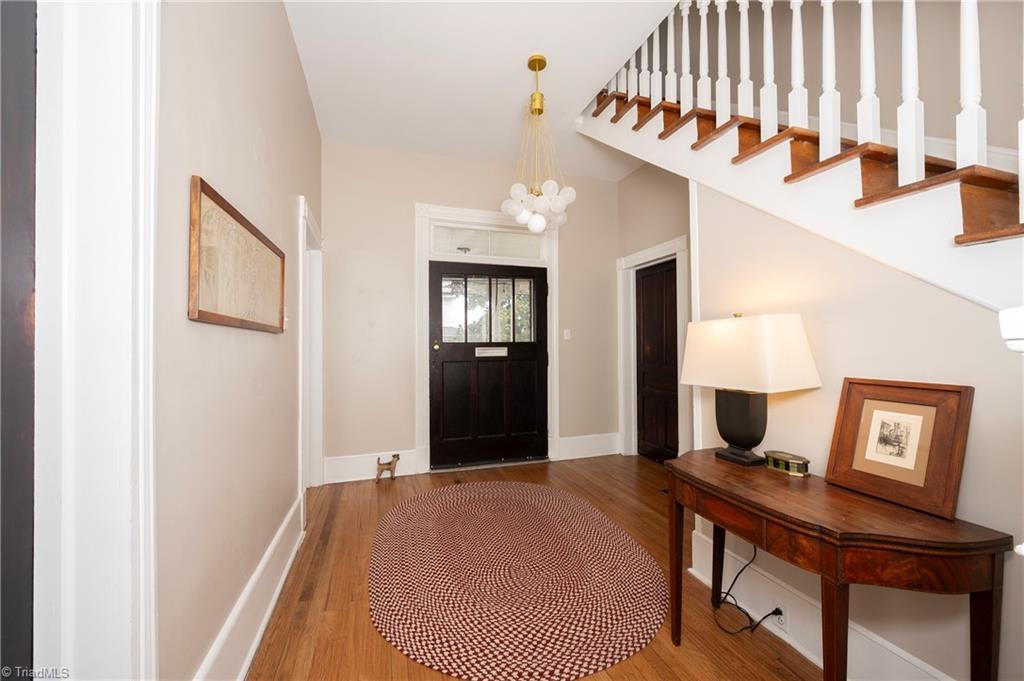


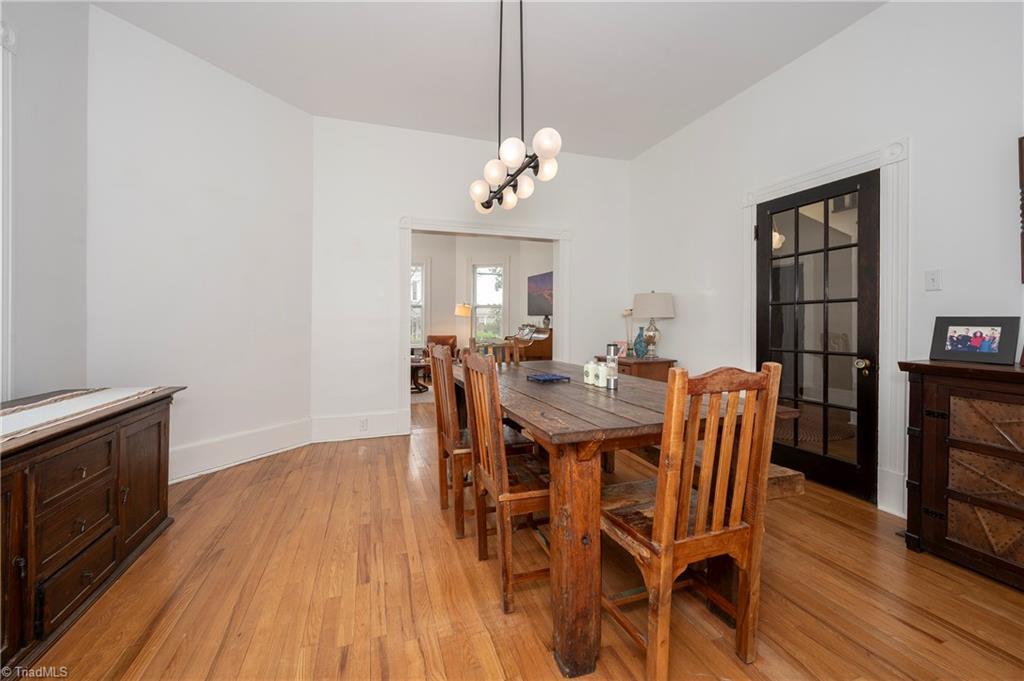
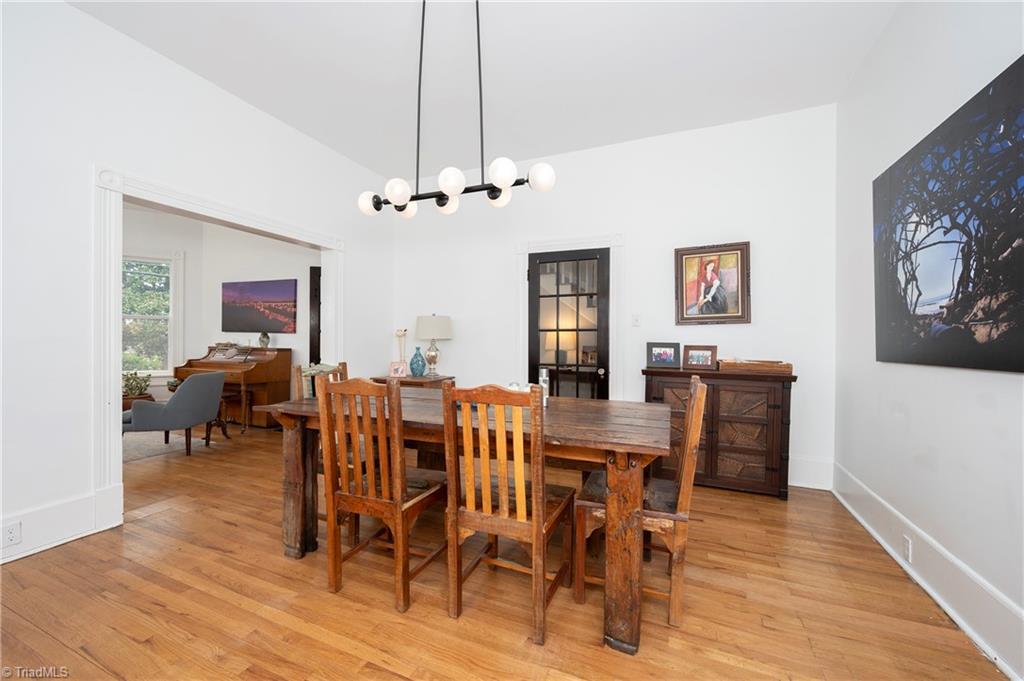
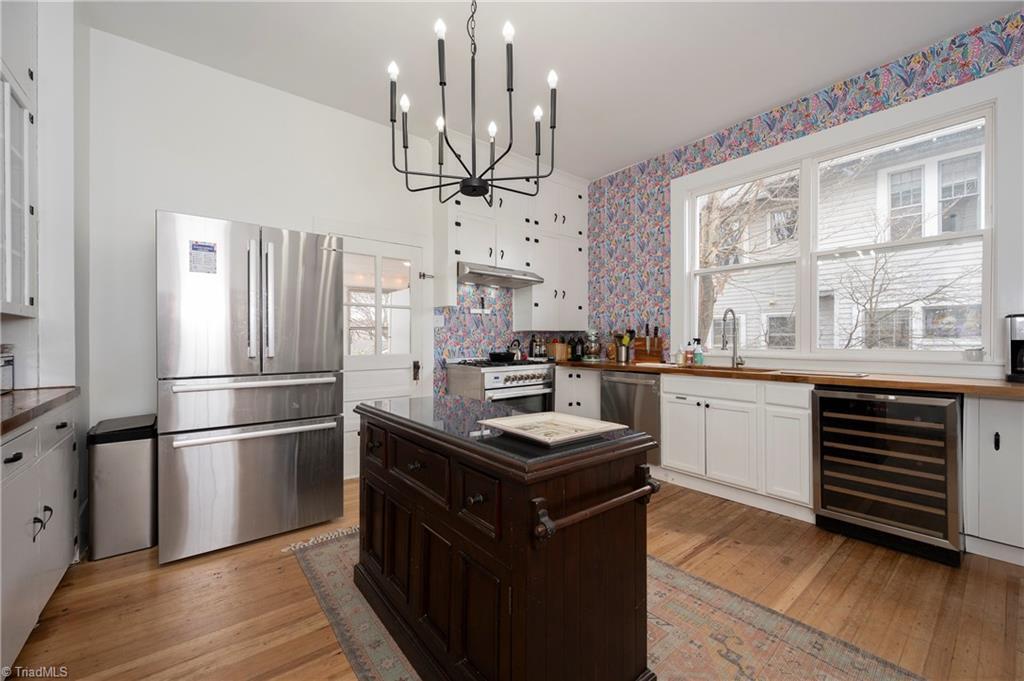
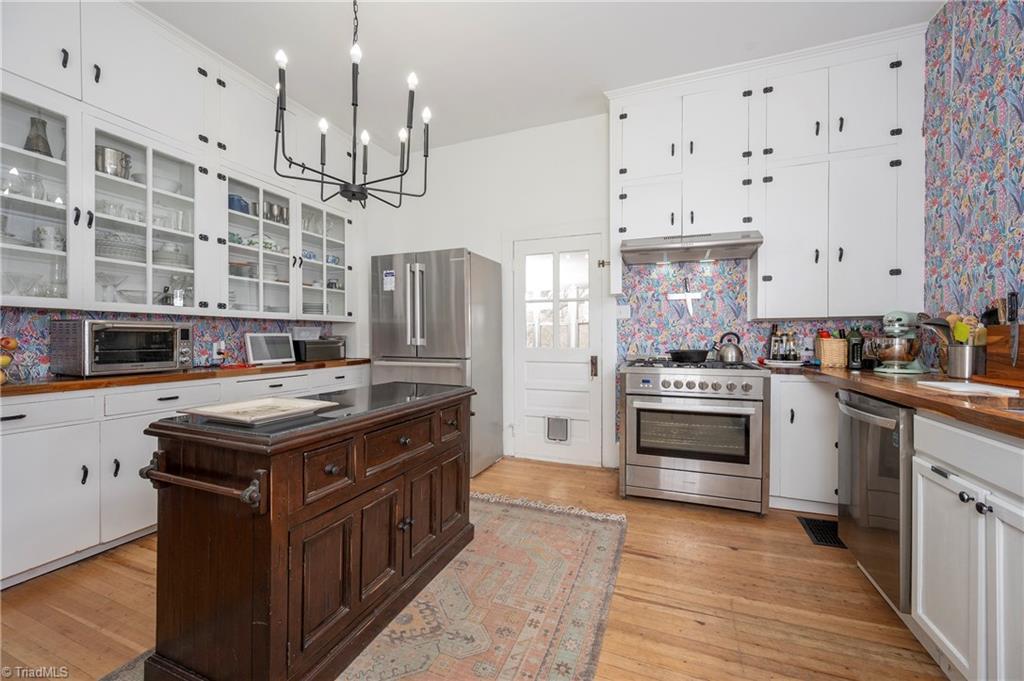
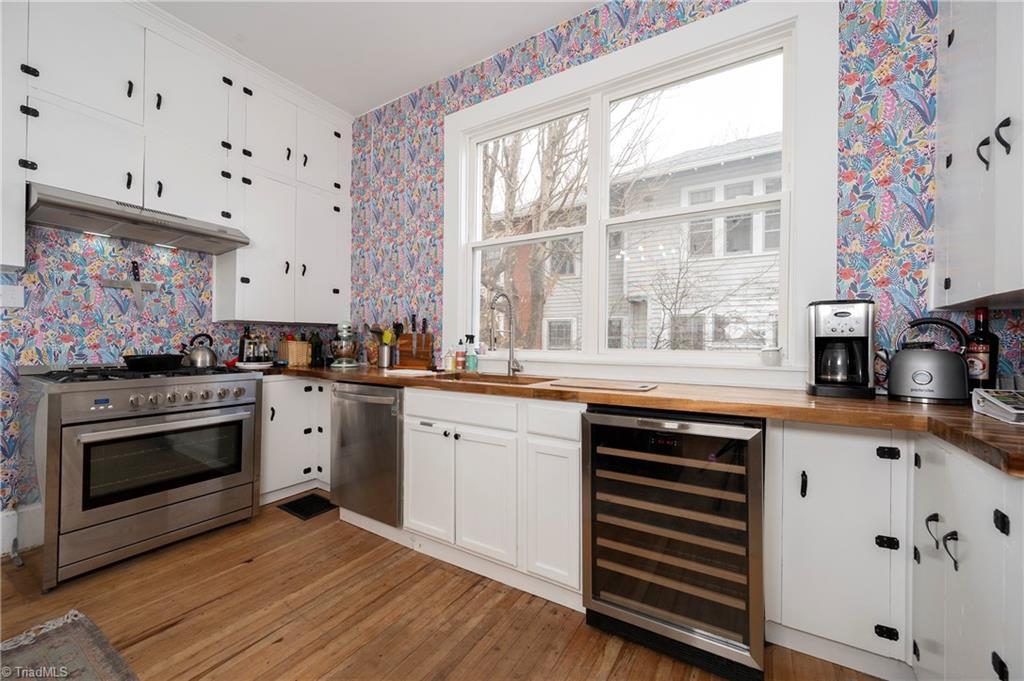
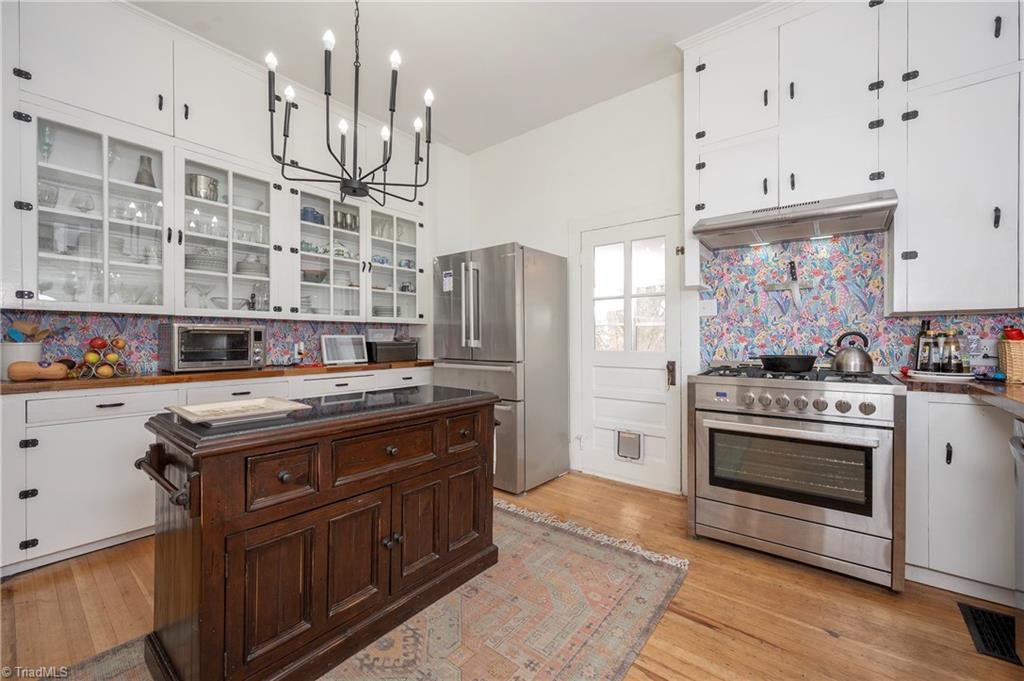


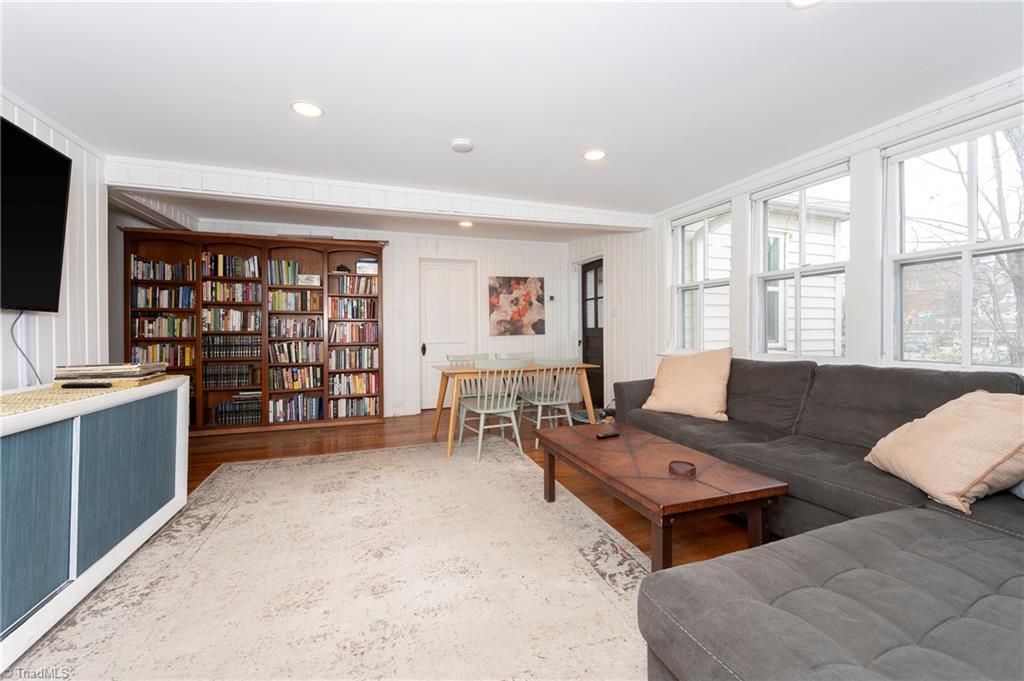
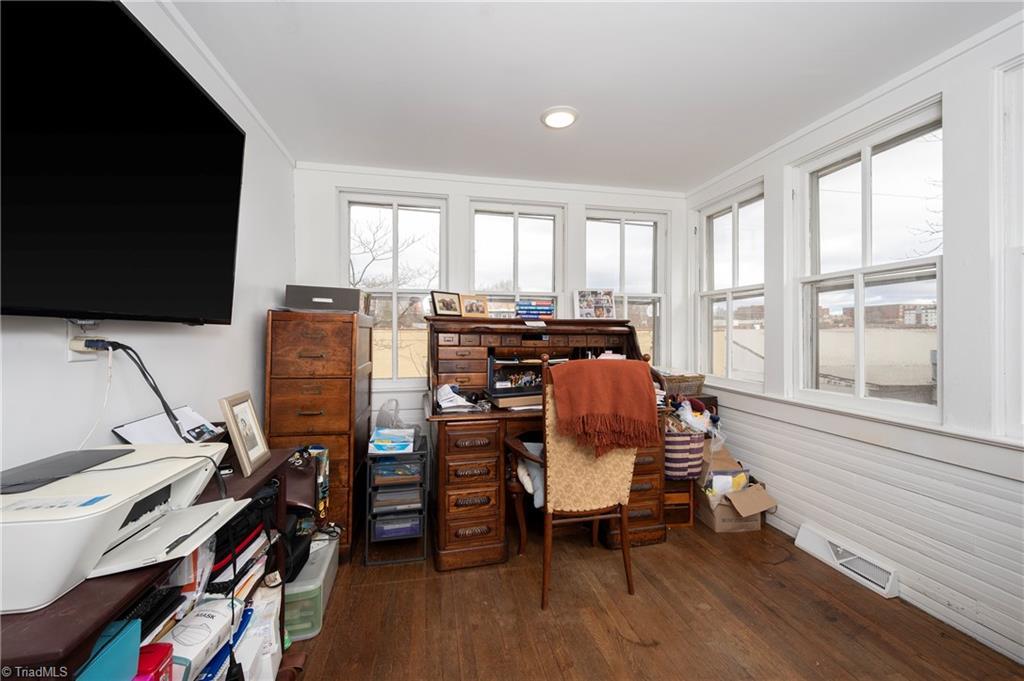
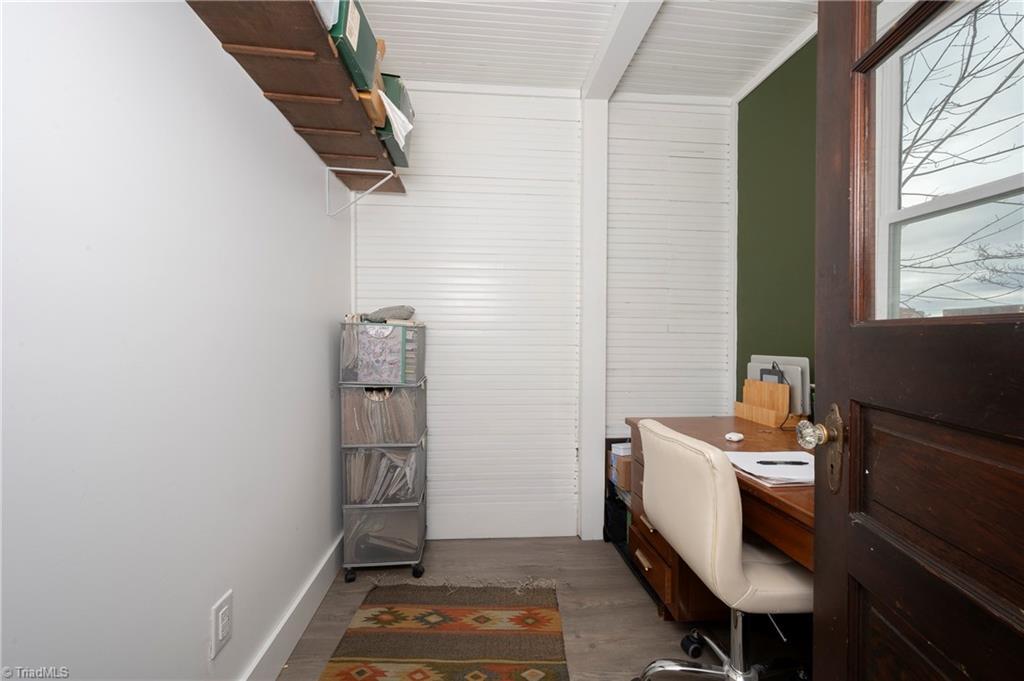

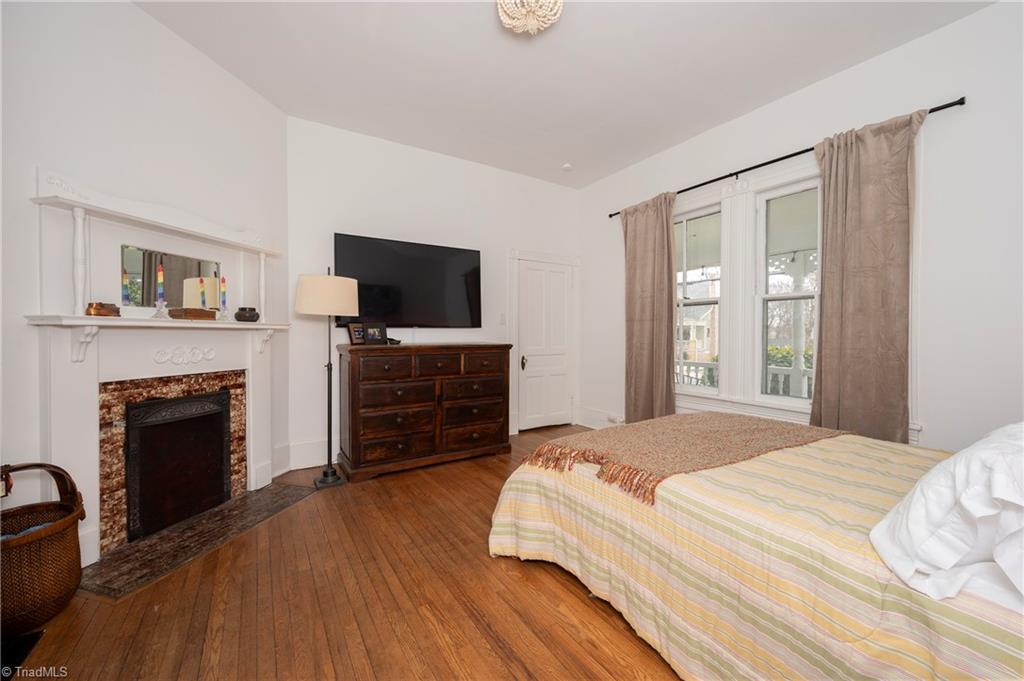
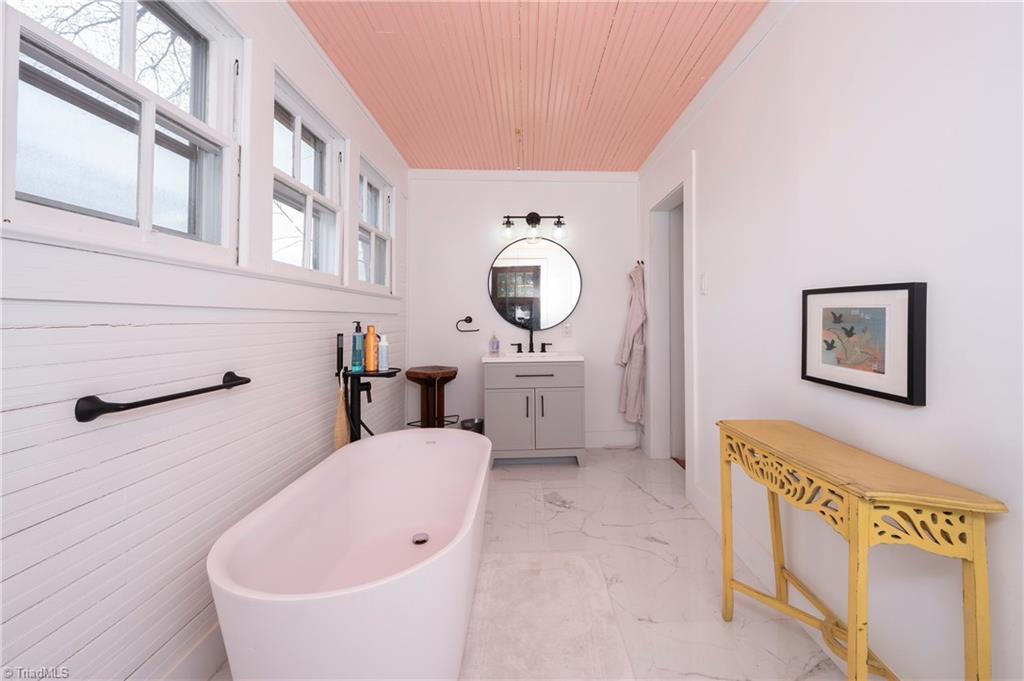


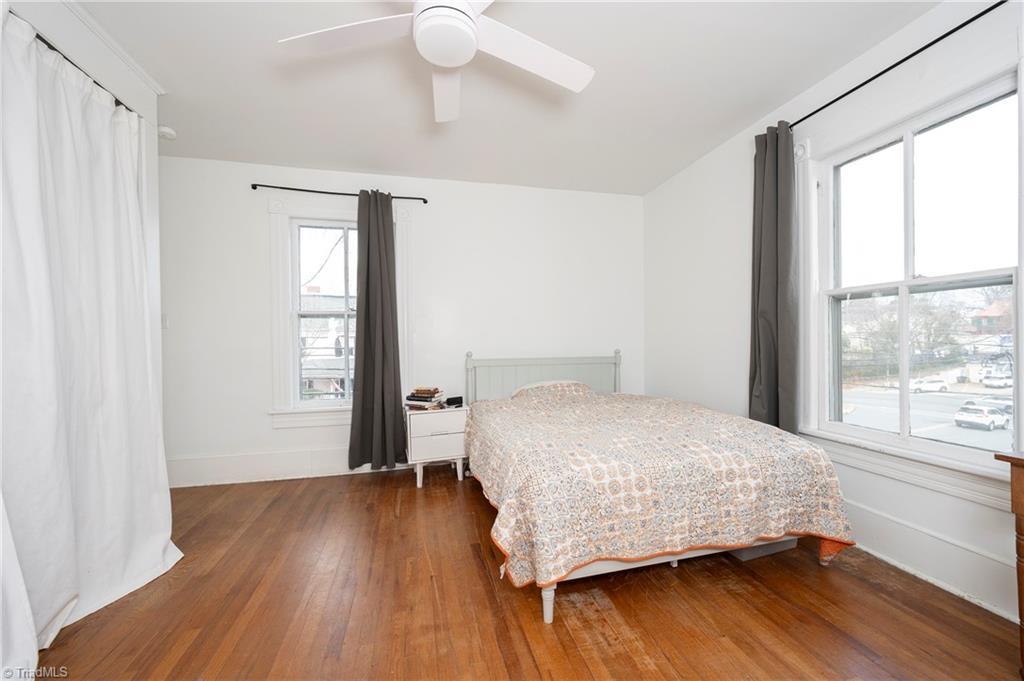

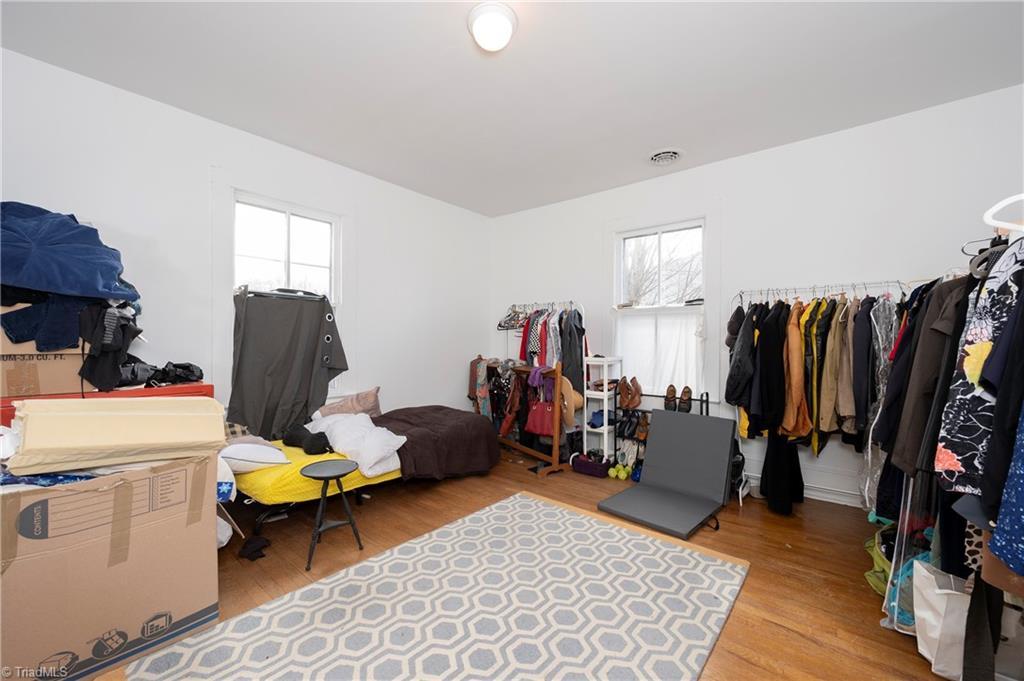

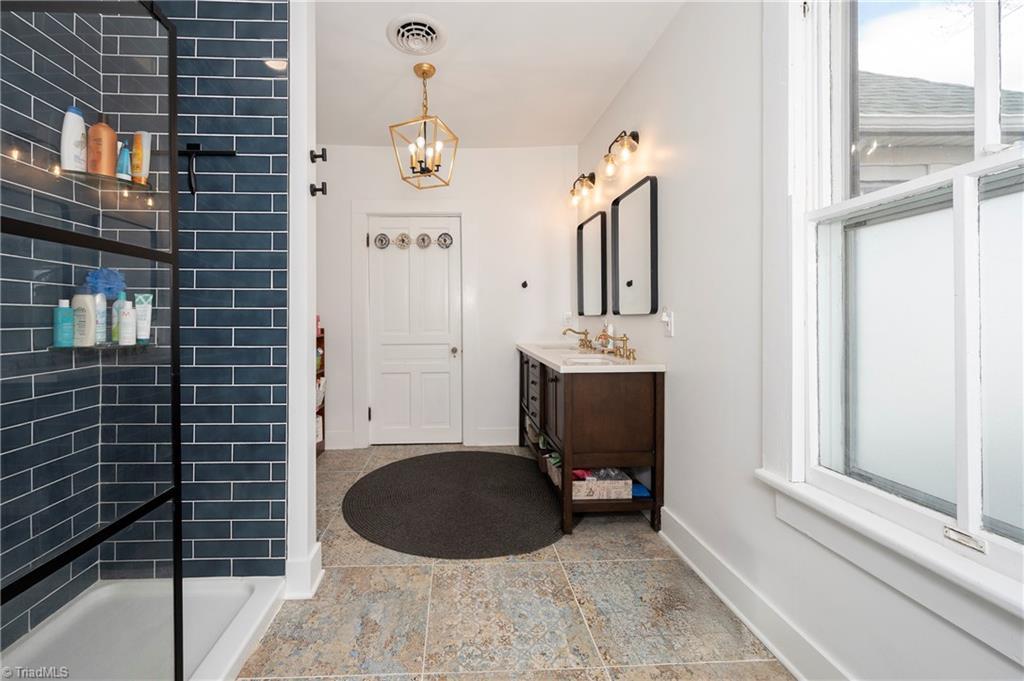


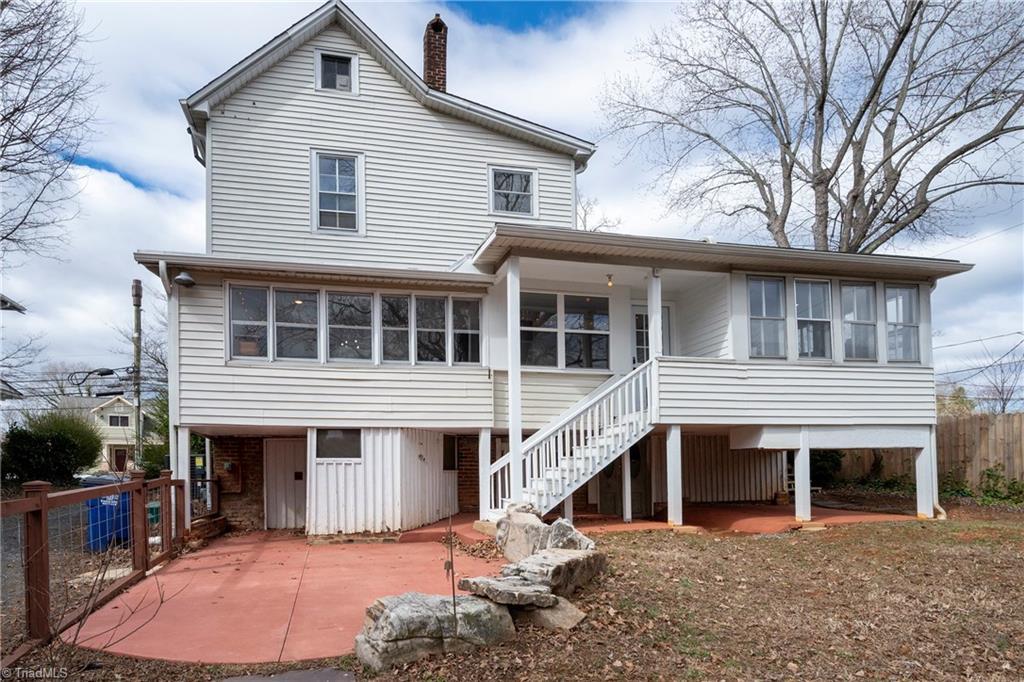
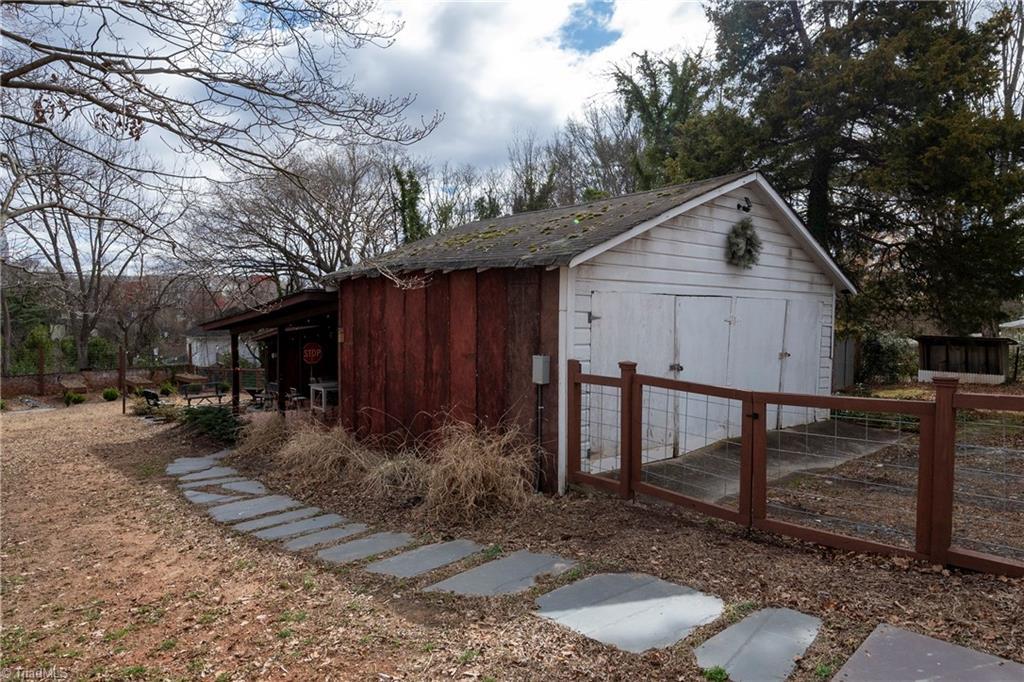
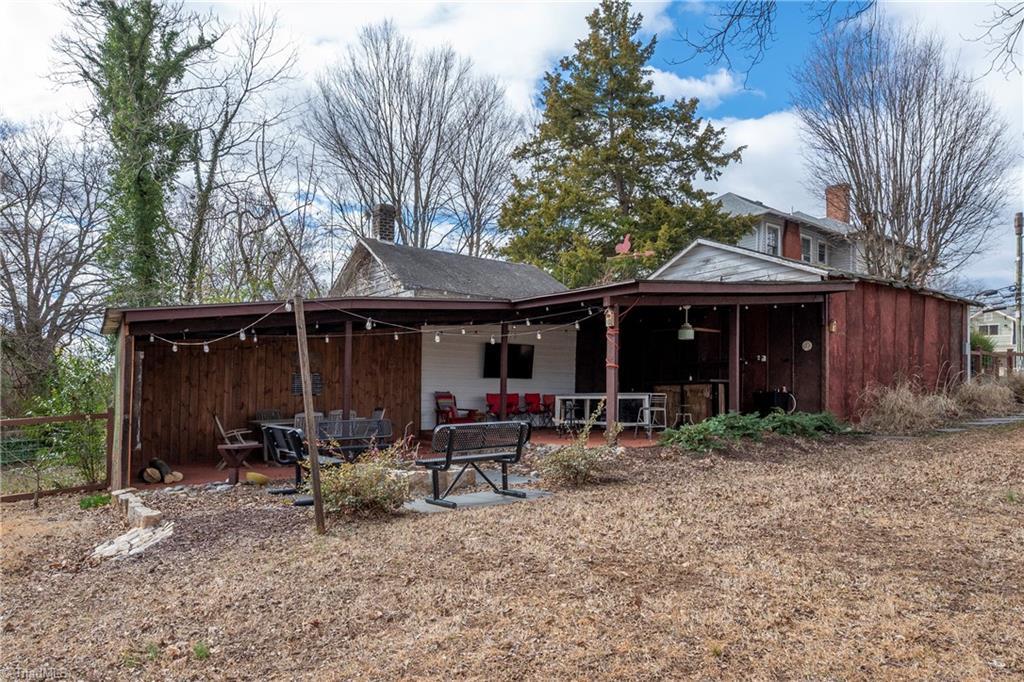
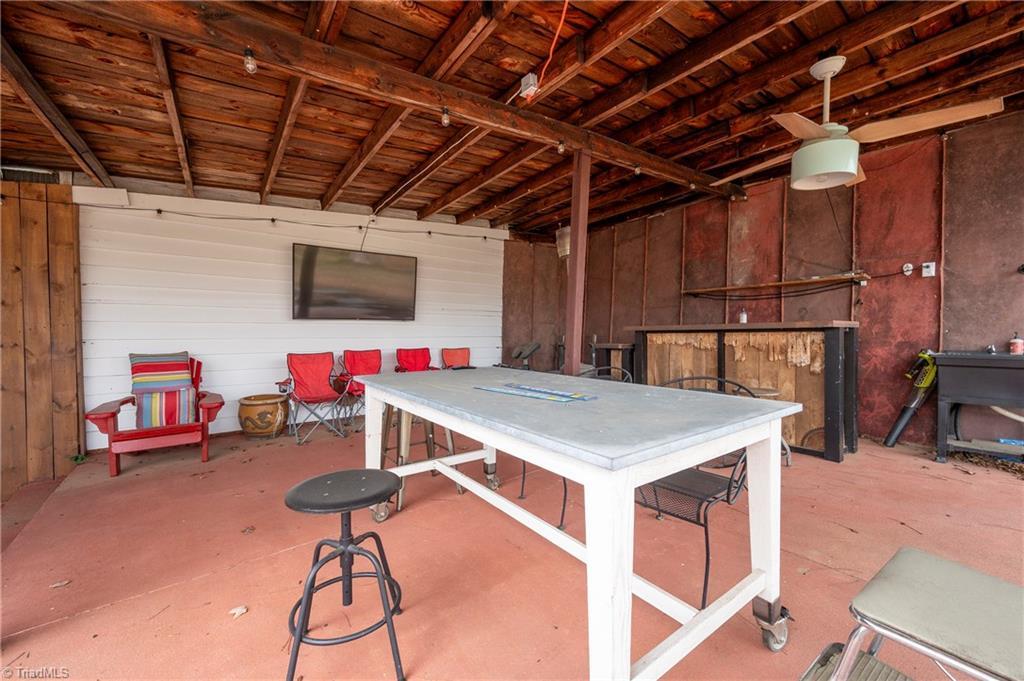
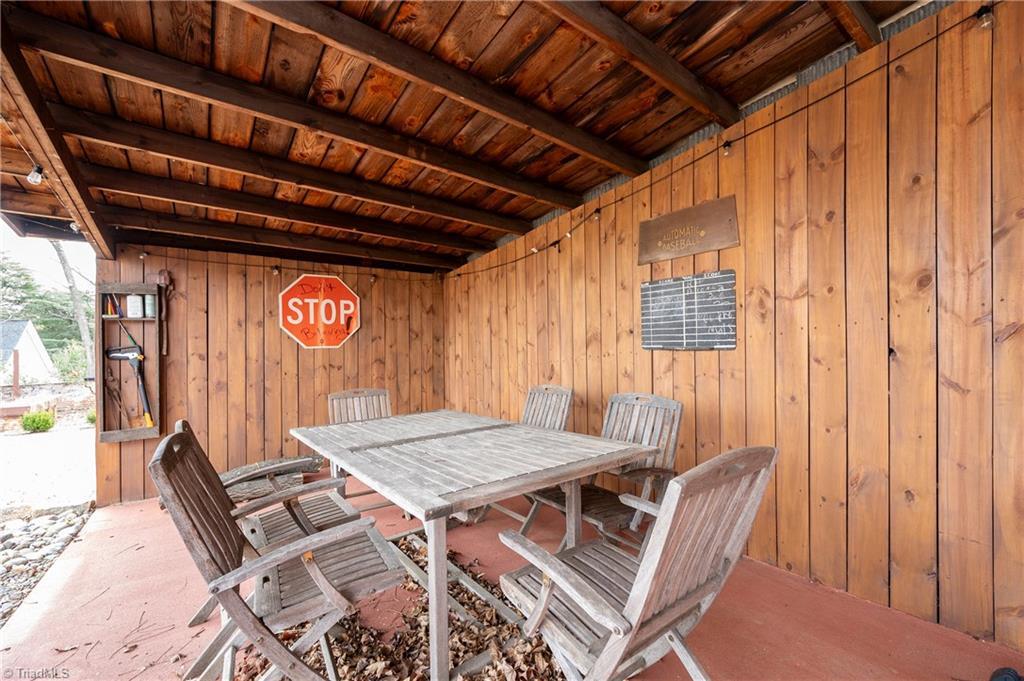


1182 W. 4th Street, Winston-Salem
The Dull-Hinkle House
- Sold for $650,000 on May 28, 2025 (listed at $699,000)
- 5 bedrooms, 2 bathrooms, 2,939 square feet (per county), 0.35 acre
- Price/square foot: $221
- Built in 1911 (per county, maybe a few years earlier; see note)
- Listed March 7, 2025
- Last sale: $410,650, August 2022; $26,500, December 1986
- Neighborhood: West End Historic District (local and NRHP)
- Note: The listing shows 3,137 square feet; the previous listing showed 3,275.
- District NRHP nomination: “The Dull-Hinkle House is a late Victorian dwelling of simple Queen Anne style influence. The two-story frame hip-roofed house is dominated by a boldly projecting right front polygonal bay with a decoratively shingled gable and sawnwork corner brackets.
- “Sanborn maps show that the porch, with its turned posts and balustrade and sawnwork brackets, originally wrapped around the north side of the house, but this side was enclosed at an undetermined date. In recent years the house was sheathed with vinyl siding, but this and the alteration of the porch have not destroyed its architectural character.
- “The house was included on the 1912 Sanborn Map, and the following year G.L. Dull was listed in the city directory at this location. He occupied the house through at least 1920. In 1932 D.R. and Rebecca B. Hinkle purchased the property, and the house remains in family ownership and occupancy [as of October 1986].” The estate of the Hinkles’ last living child sold the house in 2022.
- George Lewis Dull (1843-1932) and Susan Virginia Bowman Dull (1850-1926) were listed at what appears to be this address from as early as 1908 to 1928. George was president of Wachovia Mills, “which at that time operated one of the largest feed and roller mills in this section of the state,” the Winston-Salem Journal’s obituary said. It called him “one of Winston-Salem’s oldest and best-known citizens.”
- George was born in Virginia. A note on findagrave.com says he was a sergeant in the Confederate Army but was was listed as a deserter in late 1864. By 1890 he was president of the Middletown Land and Improvement Company. He came to Winston-Salem in 1892 and became involved with the feed business. He retired in 1913.
- David Raymond Hinkle (1889-1940) was a salesman and later operated the Piedmont Specialty Company. Rebecca Ellen Byerly Hinkle (1902-1985) continued to live in the house after David died.
512country


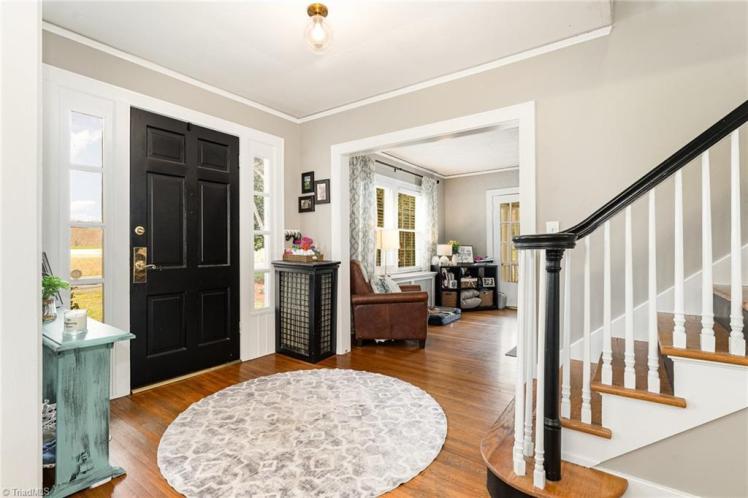
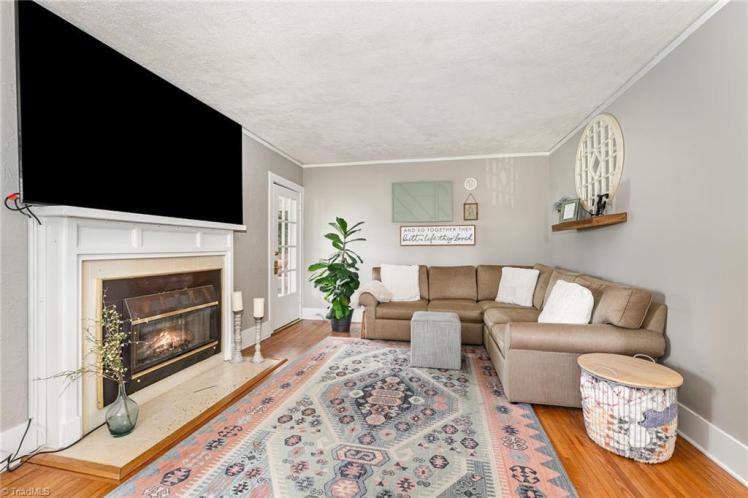


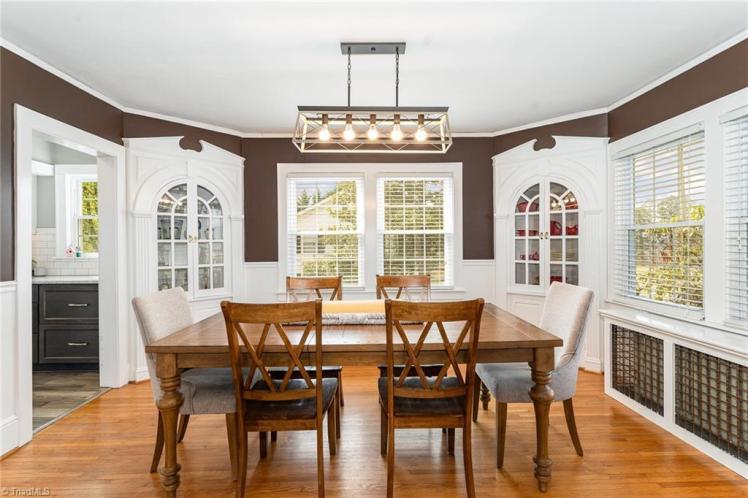

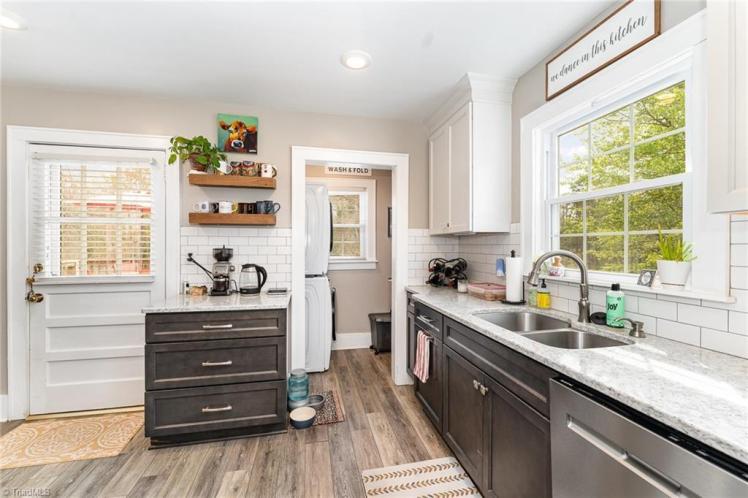
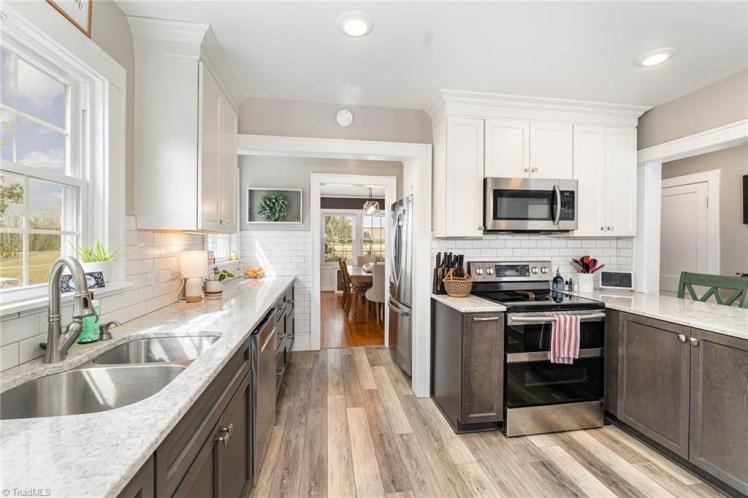
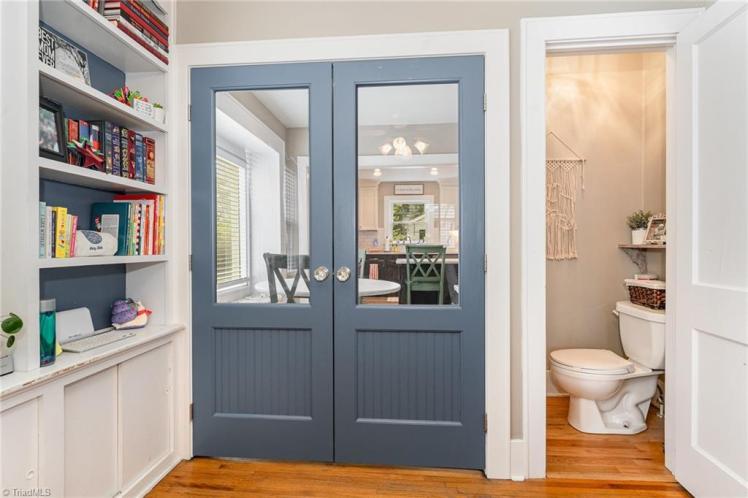


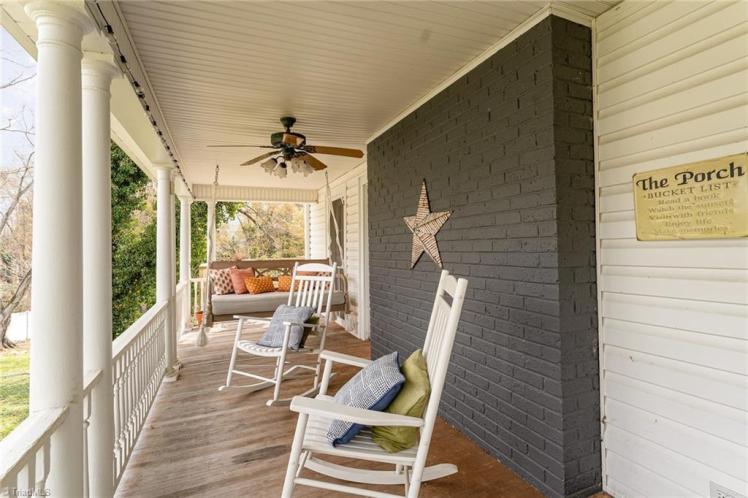

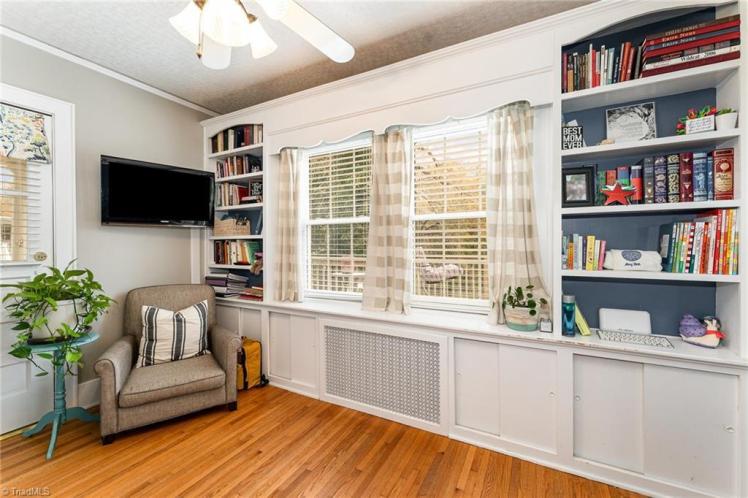

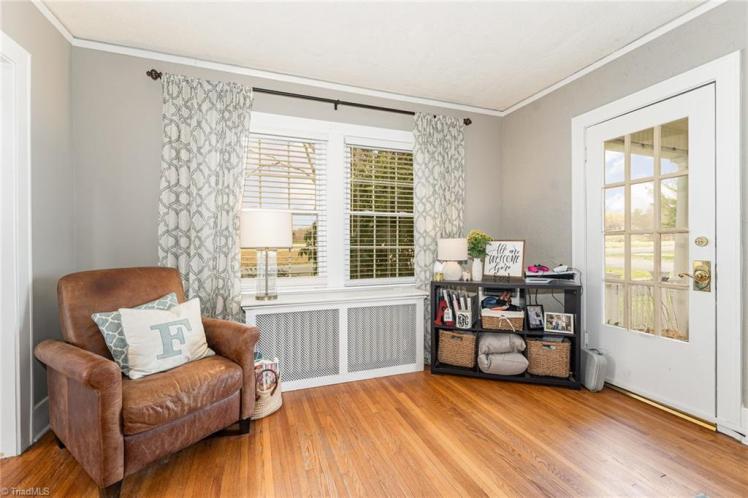
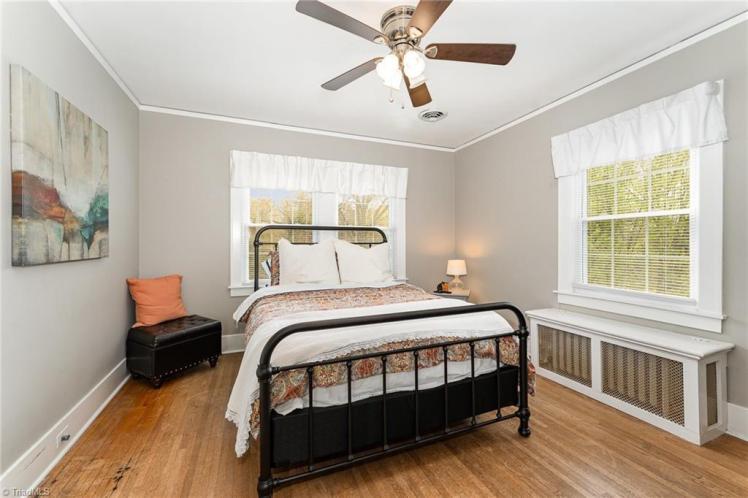


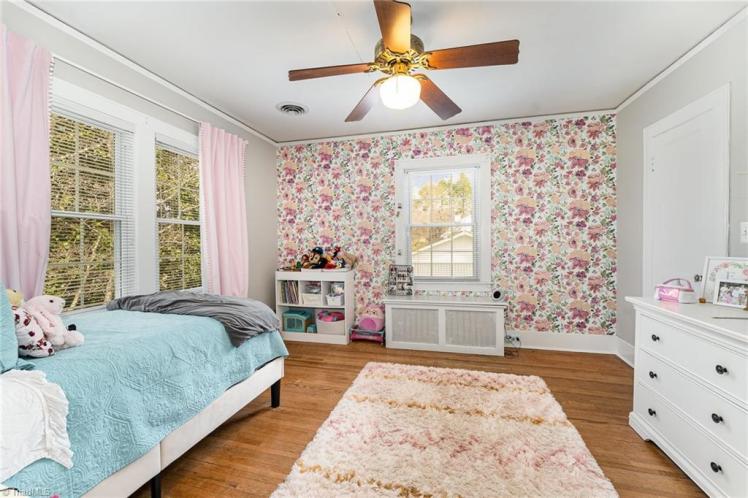
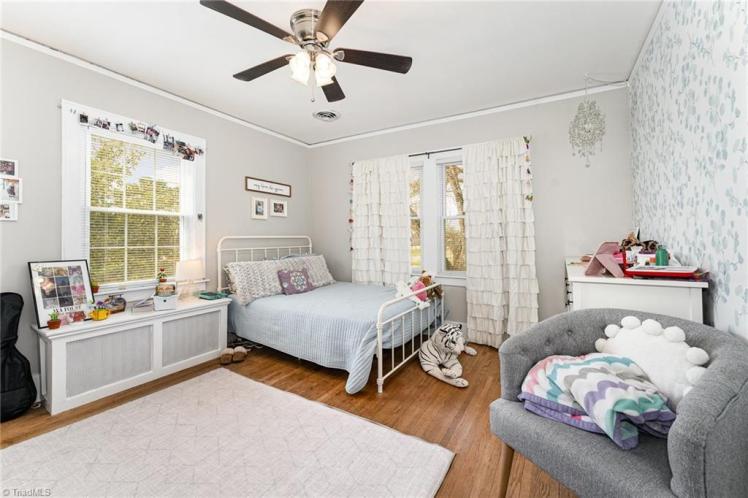
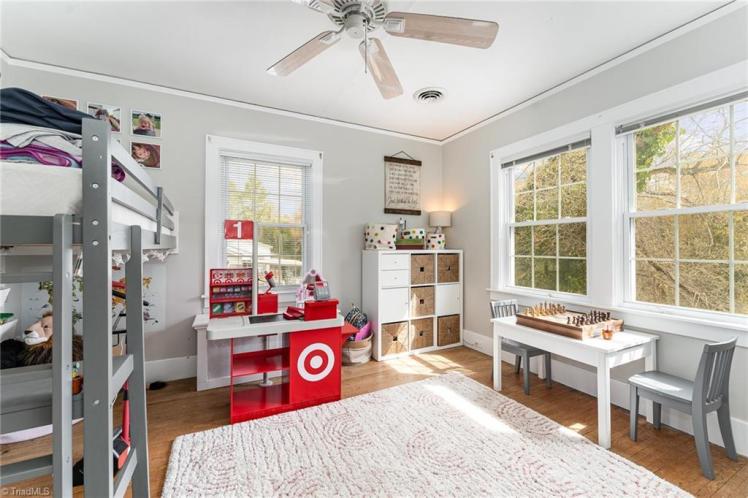


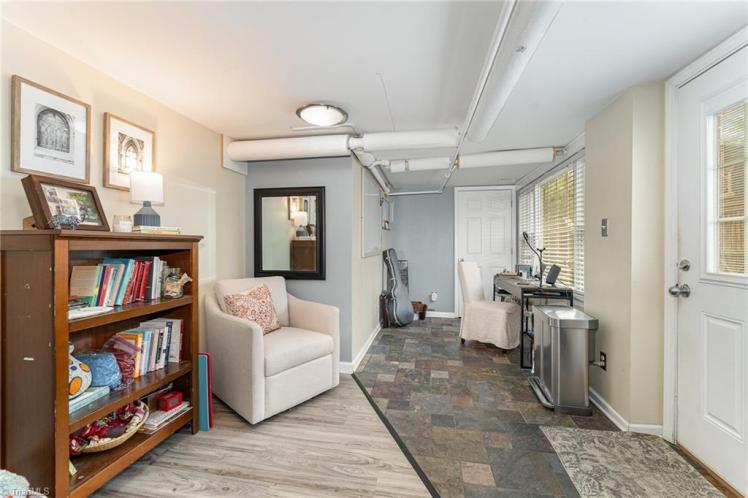


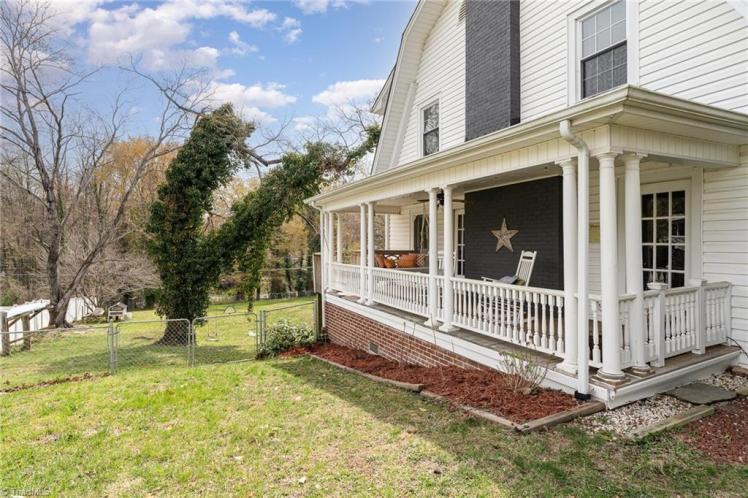
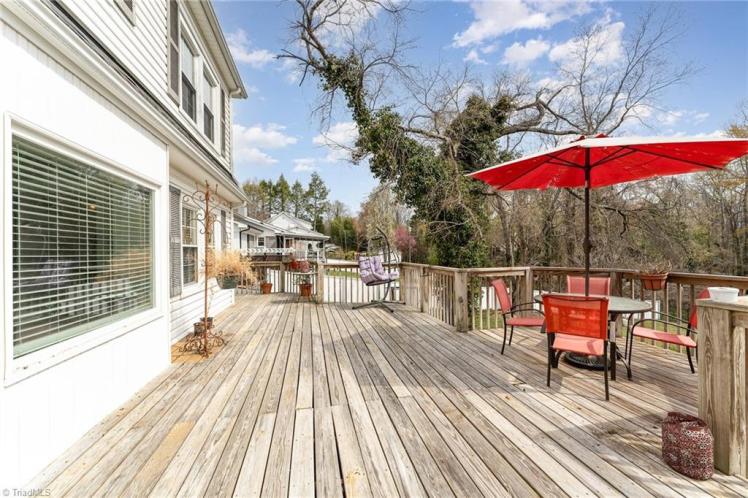


512 Country Club Road, Mount Airy, Surry County
The Prather-Fowler House
- Sold for $395,000 on May 28, 2025 (listed at $400,000)
- 4 bedrooms, 3 bathrooms, 2,986 square feet (per county), 0.72 acre
- Price/square foot: $132
- Built in 1935
- Listed March 31, 2025
- Last sales: $362,000, July 2023; $82,750, November 1994
- Neighborhood: Country Club Estates Historic District (NR)
- Note: Located across the street from the Mount Airy Country Club.
- A small creek runs along the back of the lot.
- District NR nomination: “Story-and-a-half Dutch Colonial Revival house of novelty vinyl-sided frame construction with an asphalt-shingled side-gambrel roof.
- “Long shed dormers extend across the front and rear roof planes. The front entry has sidelights, a wood panel door, and replacement classical columns. The porch roof is supported at the house wall by original decorative wood brackets.
- “On the north end is a one-story porch with slender replacement classical columns in groups of twos and threes and turned balusters. Other features include a brick foundation, an exterior brick chimney on the north end, and a modern rear deck.
- “The driveway leading to an exposed basement garage is flanked by a retaining wall that gives the front yard a terraced appearance.
- “According to Billee Prather Miller, the daughter of Country Club Estates developer Joseph William Prather [1891-1956] and his wife, Gertrude Prather [1894-1980], this house was built as her parents’ first residence in the subdivision. The Prathers later moved to the house at 528 Country Club.”
- Marshall Cornelius Foster (1894-1956) and Lucy James Barker Fowler (1895-1985) owned the house in the early 1950s. Marshall was a tobacconist. After his death, Lucy had a house built next door at 515 Country Club Road and lived there.
- Dr. Richard D. Jackson (1919-2009) and Julia Anderon Jackson (1920-2011) bought the house from Julia. Richard was a surgeon who came to Mount Airy when Northern Hospital opened. A wing of the hospital is named in his honor. He was a native of Erie, Pennsylvania. His father was a doctor, as were two of their three sons and a granddaughter.
- Julia was originally from Edgefield, South Carolina. She was a graduate of Chatham College in Pittsburgh, Pennsylvania, where she was honored as the school’s best all-around athlete. She worked as a swimming instructor in Erie, where she met Richard, and worked as a high school teacher and in life insurance sales. Two of her three brothers were doctors.
407mcreynolds


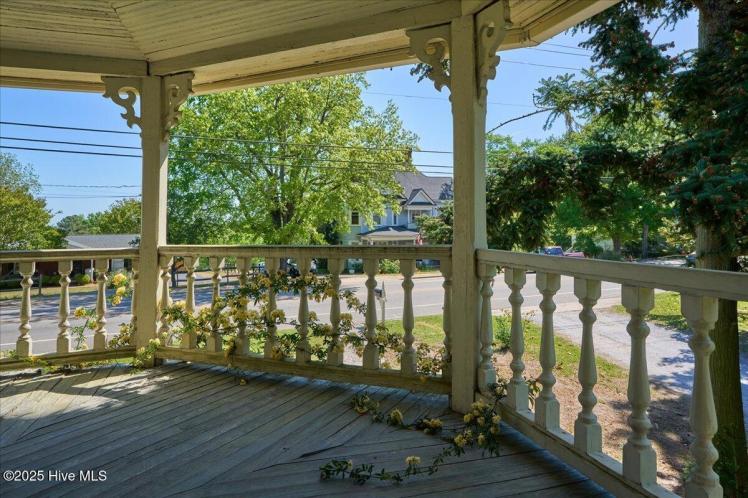
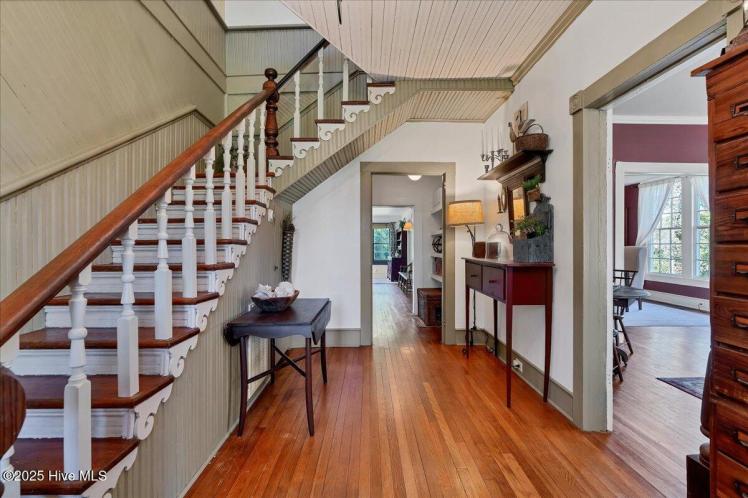


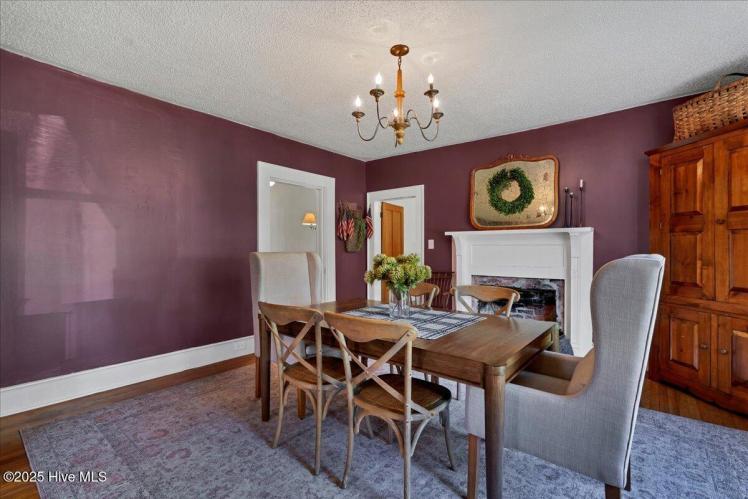


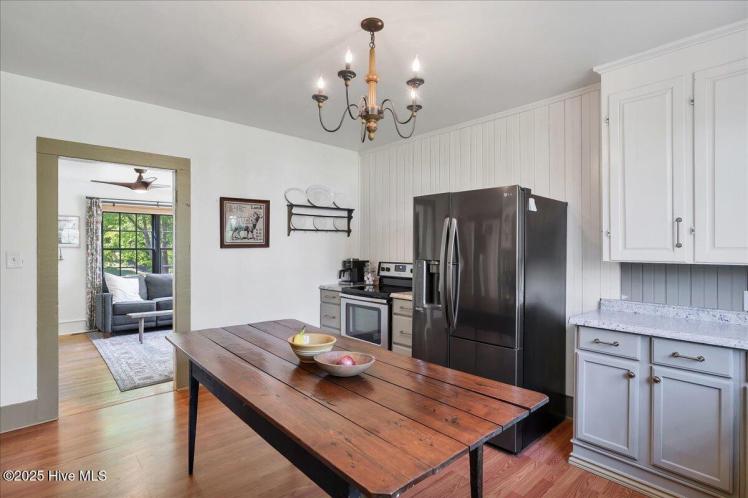
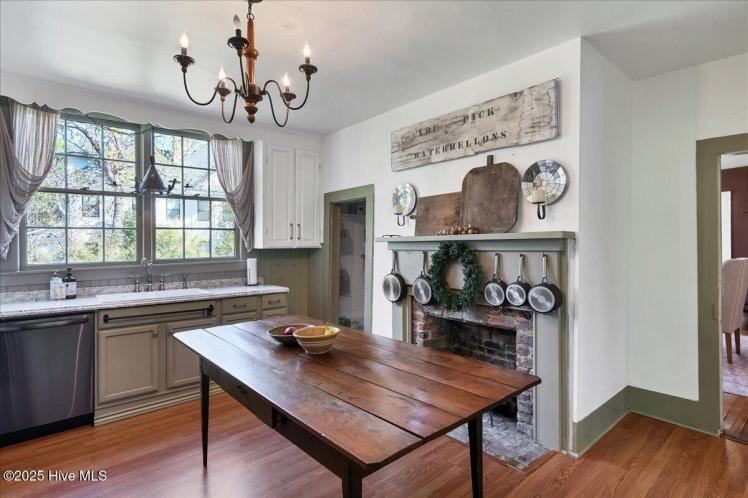

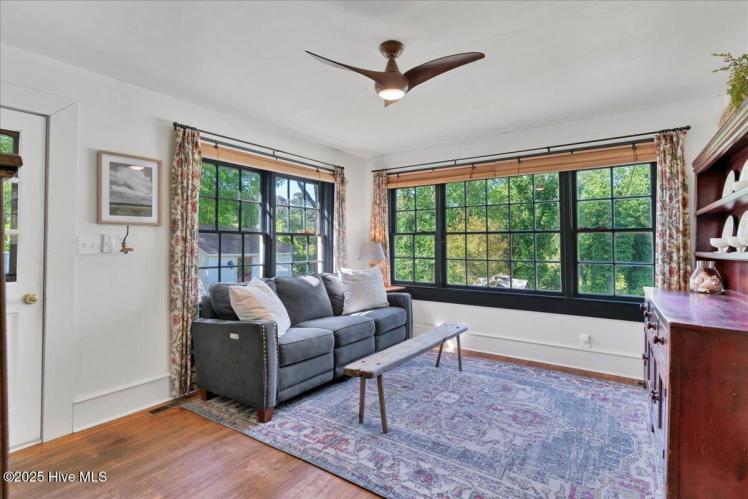


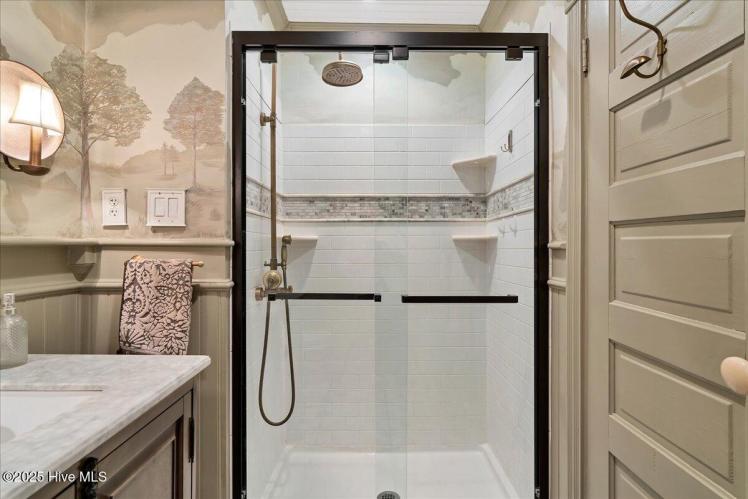

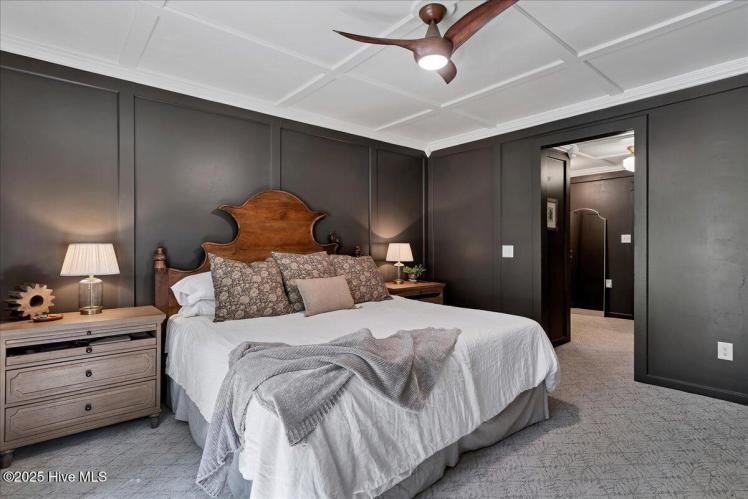
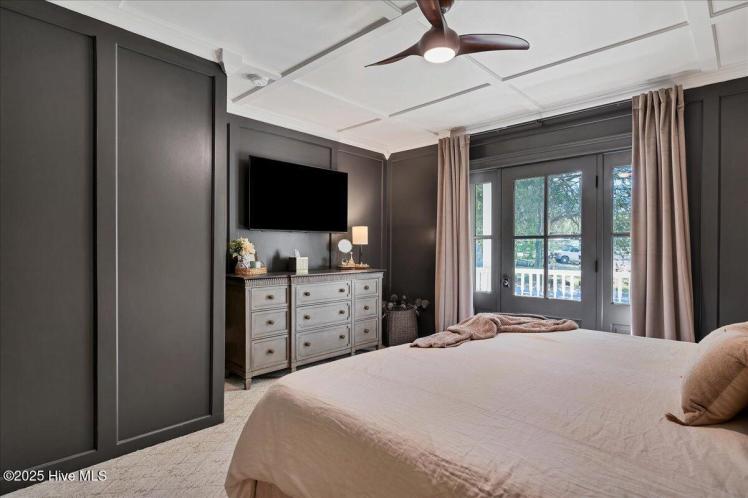

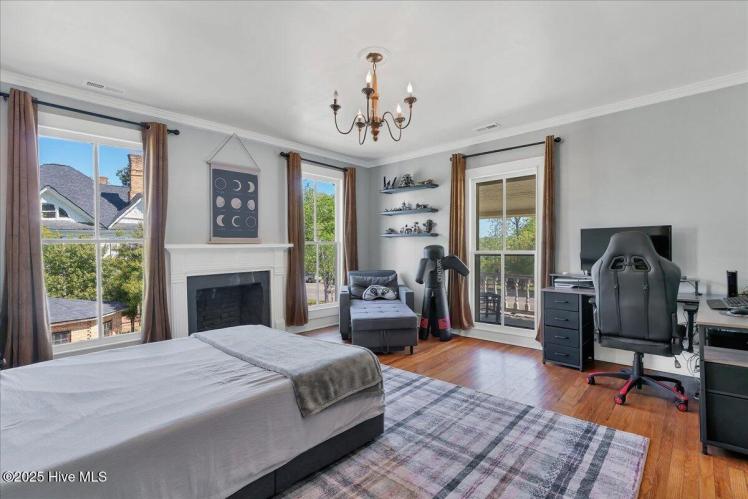


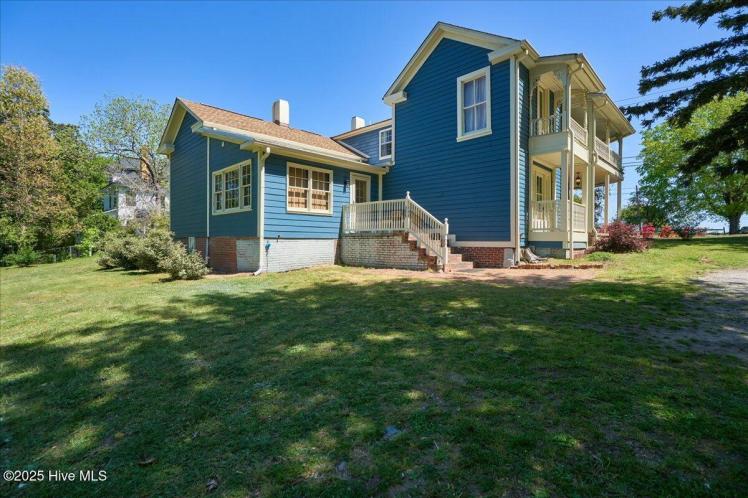
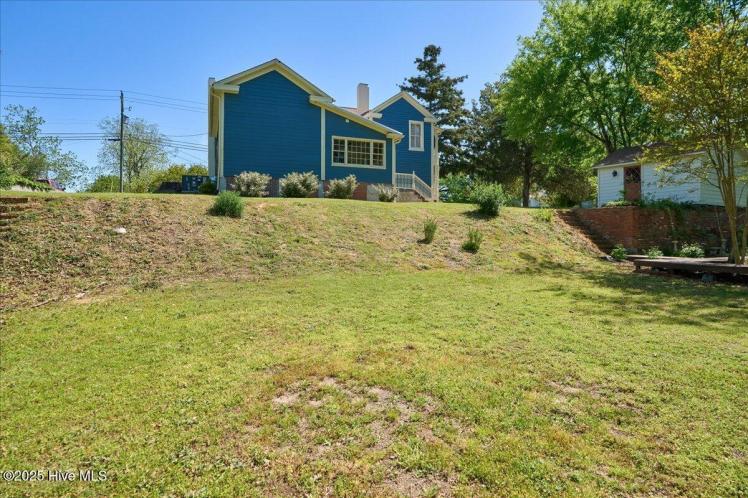

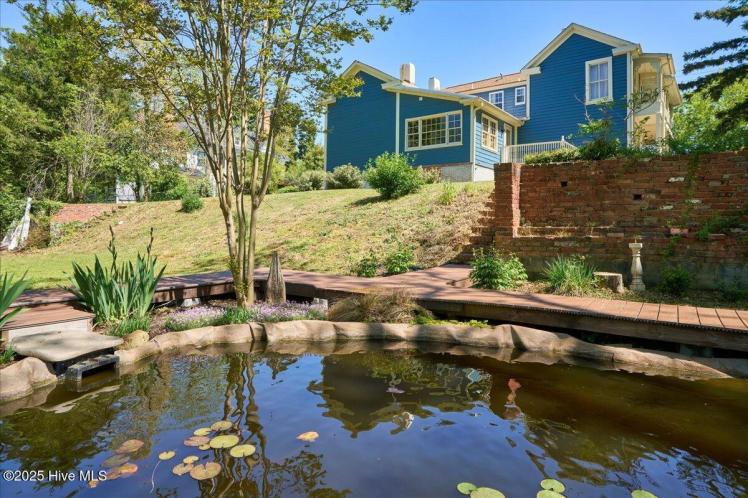
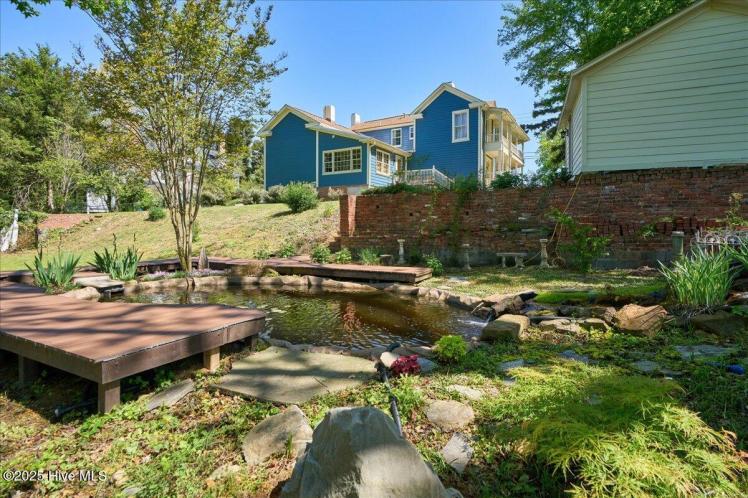


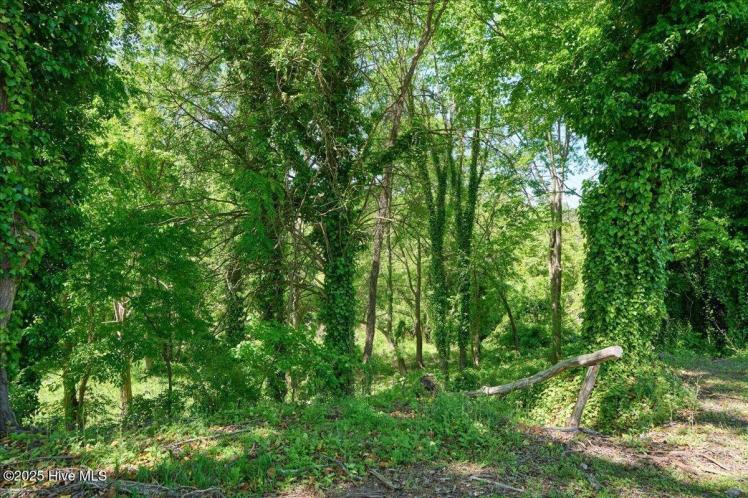

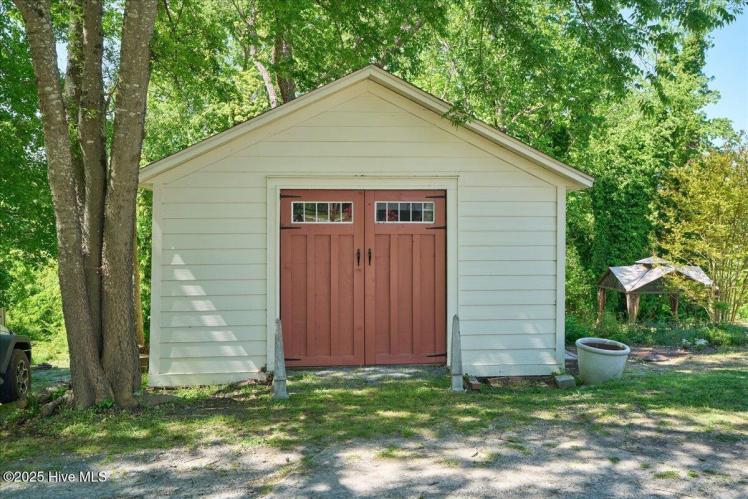

407 McReynolds Street, Carthage, Moore County
The Waddill-Larkin House
- Sold for $430,000 on May 17, 2025 (listed at $415,000)
- 4 bedrooms, 2 bathrooms, 2,780 square feet, 1.56 acres
- Price/square foot: $155
- Built in 1880
- Listed April 25, 2025
- Last sale: $149,000, February 2018
- Neighborhood: Carthage Historic District (NR)
- Note: The listing says the garage was built around 1915.
- The original owner appears to have been named Edmund Waddill, not Waddell, as the name appears in both the online for-sale listings and National Register nomination.
- District NR nomination: “Traditional frame house with single-pile, center-hall plan topped by gable root with gablet centered above three-bay facade; built in two stages; two-tiered, shed-roofed porch across facade and on east elevation has square-section posts on first floor, bracketed chamfered posts; turned balusters on both floors; one- and two-story rear wings and additions; two-story southeast wing has bay window with shed-roofed balcony above; two-over-two windows; interior and exterior end chimneys; double-leaf front doors; interior finish in at least three styles — Greek Revival, Victorian and Craftsman; earliest sections built for E. Waddell; additions made by son-in-law, J.V. Larkin, merchant, harness maker/dealer, and undertaker; J.M. Brown was owner in 1920s and 1930s acquired in 1939 by Greek restaurateur James Katsos.”
- There’s little to be learned online about Edmund Waddill (1828-1894). He was nominated as a Democrat for county coroner in 1878. He was apparently well known. An obituary in The Sanford Express said, “He was of sturdy stock, active and energetic, and had been identified with the best interests of his town. He was an excellent citizen and a good Methodist.”
820 pine.


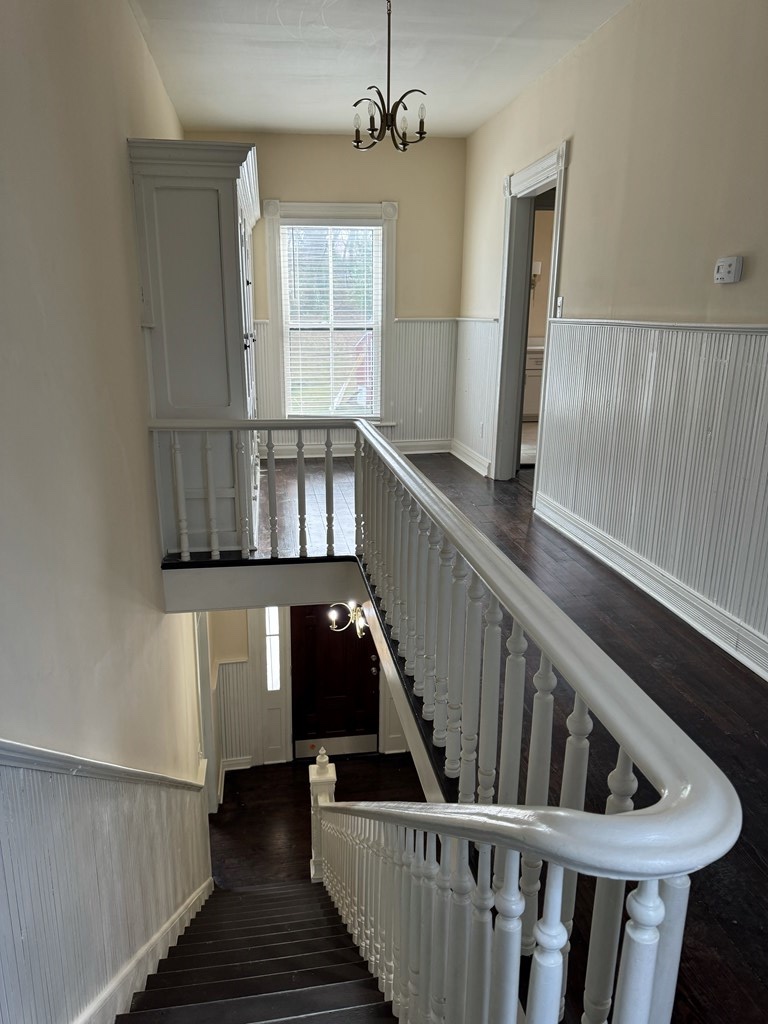


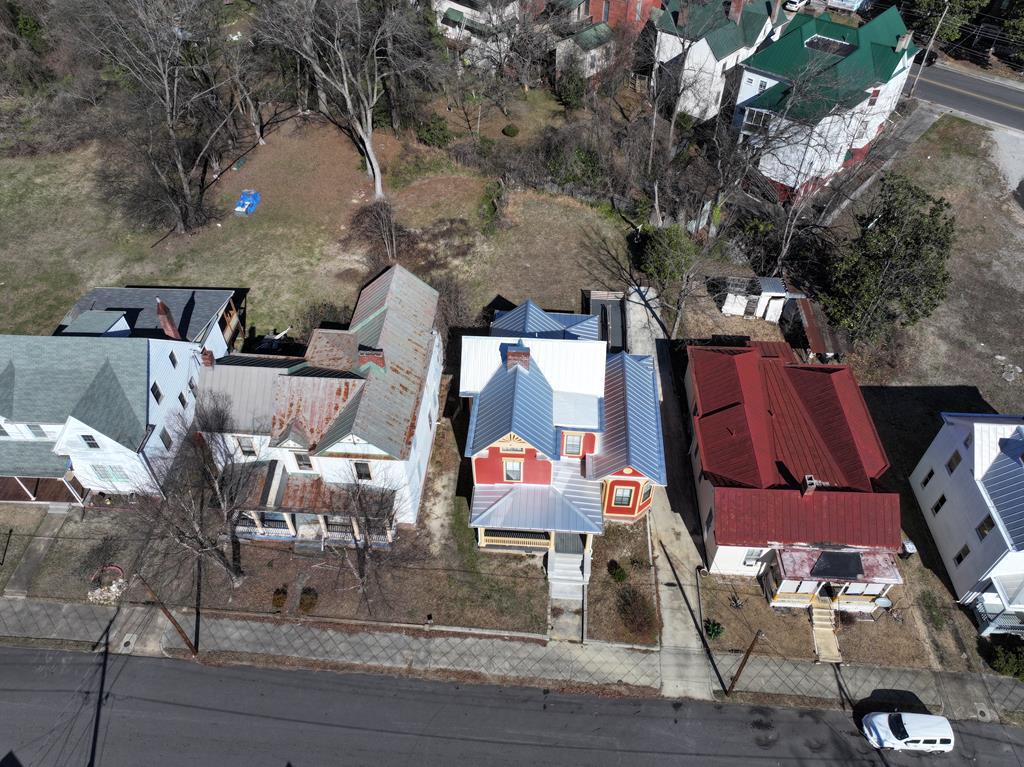
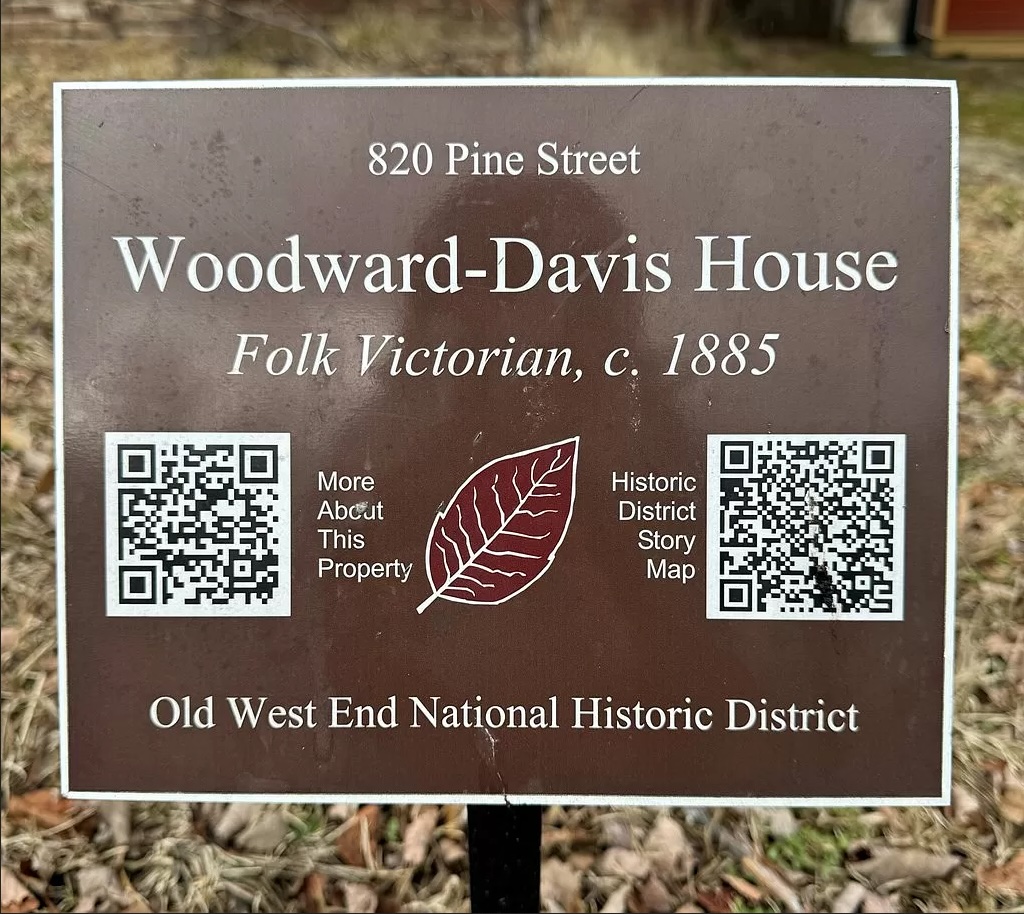
820 Pine Street, Danville, Virginia
The Woodward-Davis House
- Sold for $305,000 on May 21, 2025 (originally $325,000)
- 2 bedrooms, 2 1/2 bathrooms, 2,584 square feet, 0.18 acre
- Price/square foot: $118
- Built in 1903 (per city; see note)
- Listed January 25, 2024
- Last sale: $36,000, May 2003
- Neighborhood: Danville Historic District (NR), Old West End Historic District (local)
- Note: The yard sign in the photo above dates the house to circa 1885; the National Register nomination says circa 1890. The city says 1900.
- The property is being sold by the Danville Redevelopment and Housing Authority.
- Old West End Historic District: The first recorded resident was Betty Myers (d. 1896), who was listed at 820 Pine in the 1888 city directory.
- “By 1900, the house was owned by Ben Woodward, a carpenter, and his wife, Ellen. They lived there with their three children before moving to Broad Street.”
- By 1910 Andrew Jackson Davis (1856-1921) and Capitola Virginia Shelton Davis (1862-1938) owned the house. “Capitola was active in community service while Mr. Davis worked as an engineer for the fire department. The couple had five children—four daughters and a son. Mr. Davis died in 1921. Months before, their second eldest daughter returned home, having separated from her husband. … She remained in the home with Mrs. Davis for many years after.
- “The house was a large one, and so the family supplemented their income by taking in lodgers and renting a portion of the house out as an apartment.”
- In 1938, the house was bought by Peter George Maurakis (1890-1963) and Irene Gergeritakis Maurakis (1895-1982). Originally from Greece, they came to the United States in 1910. They operated a cafe. After Irene died, the house was vacant until it became Gough’s Home for Adults in the 1890s.
1077flat
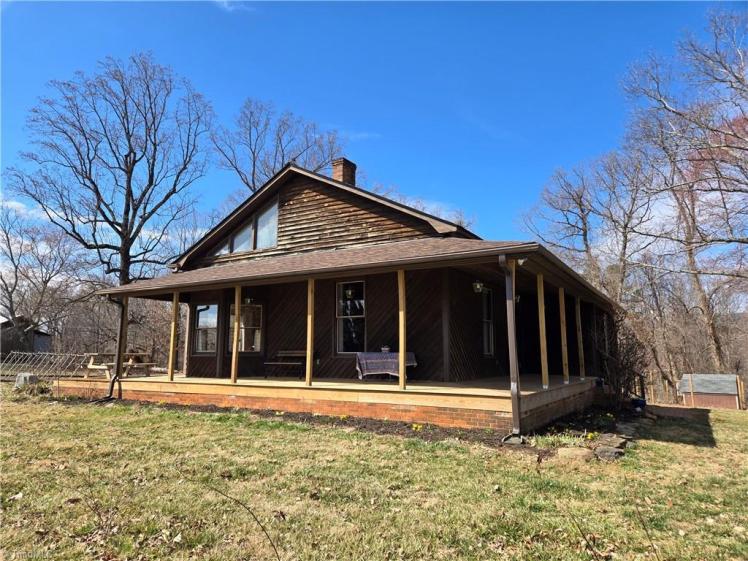
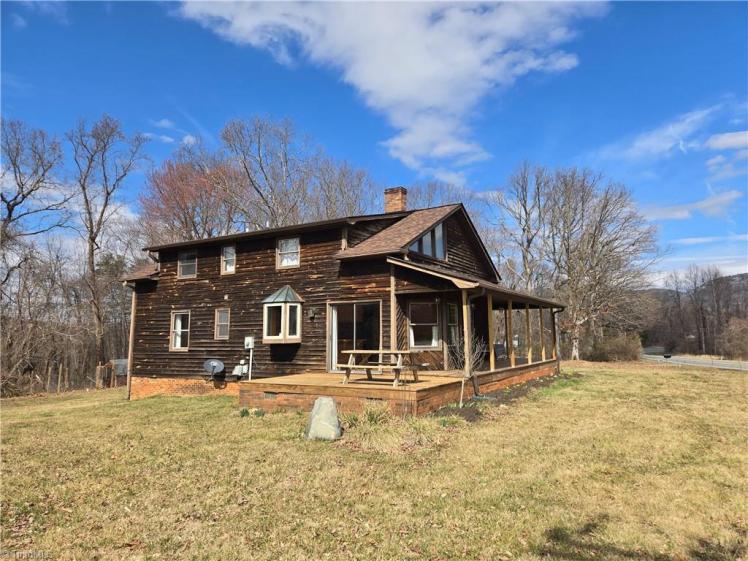
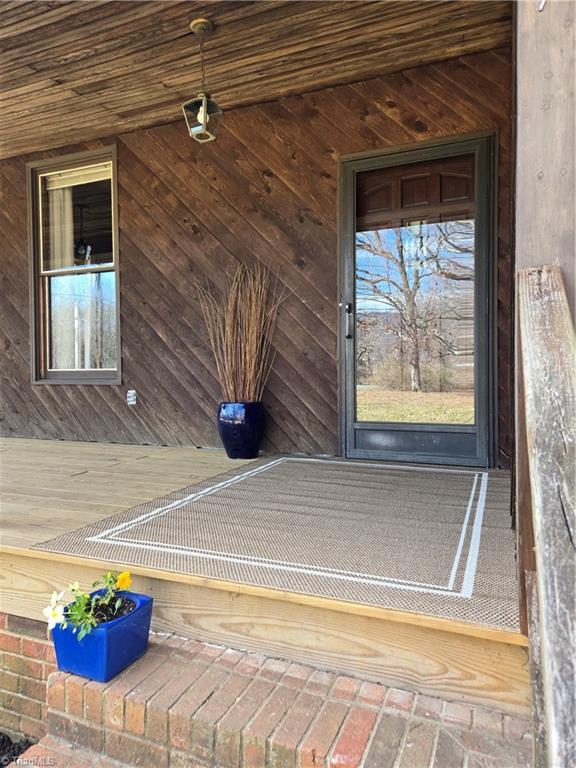


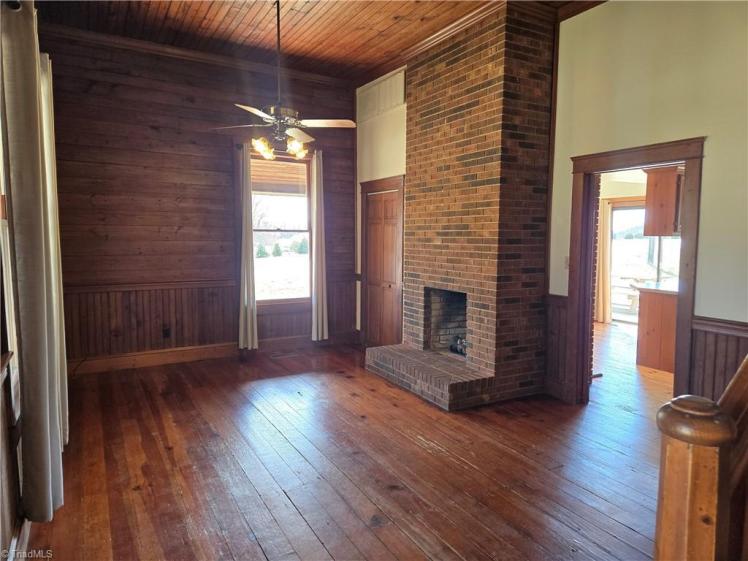

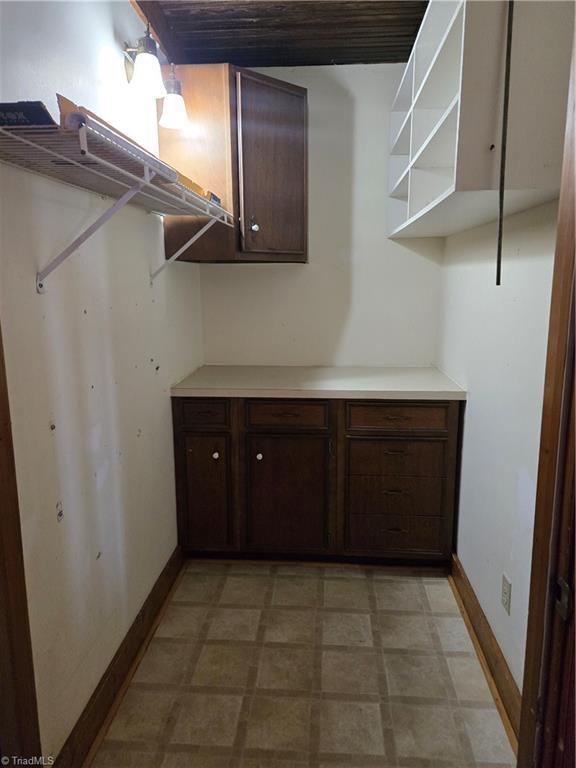

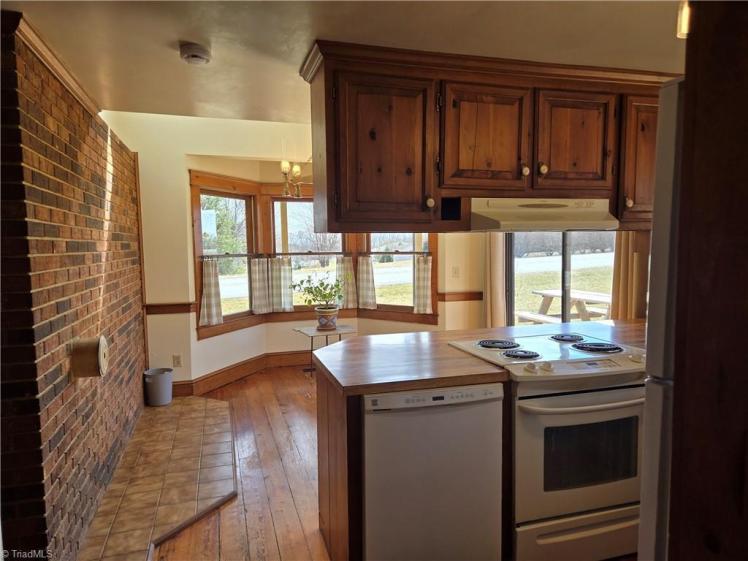
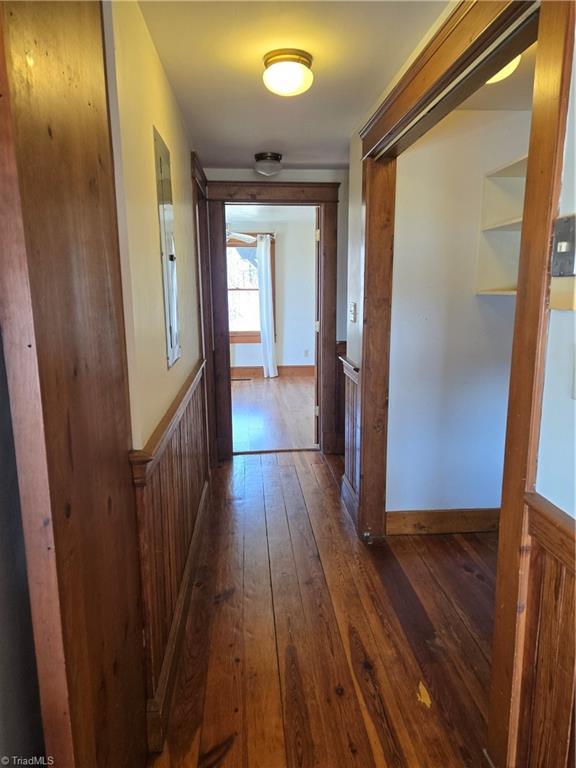
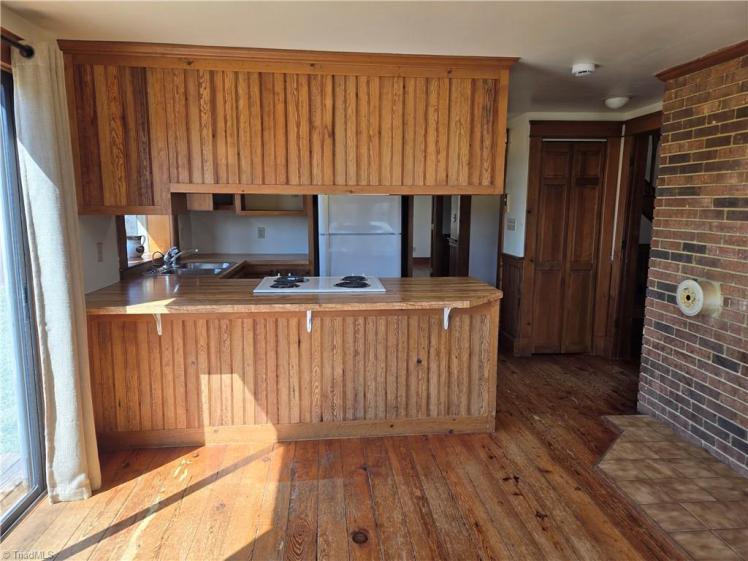

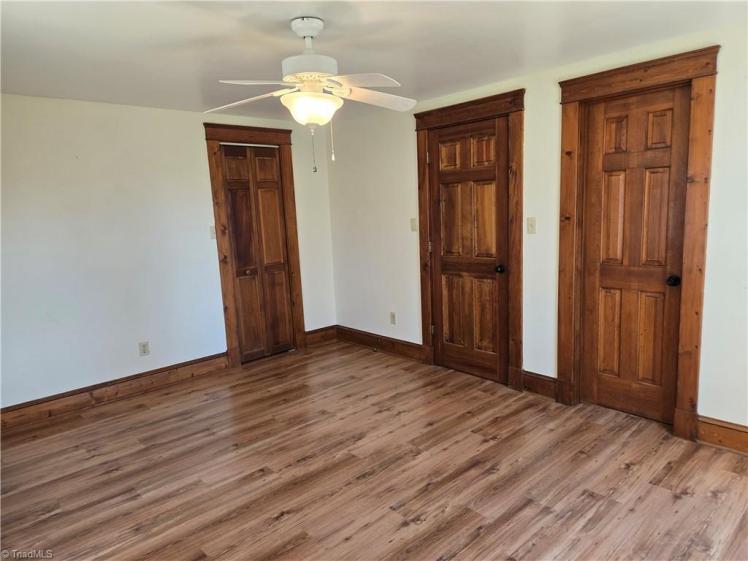
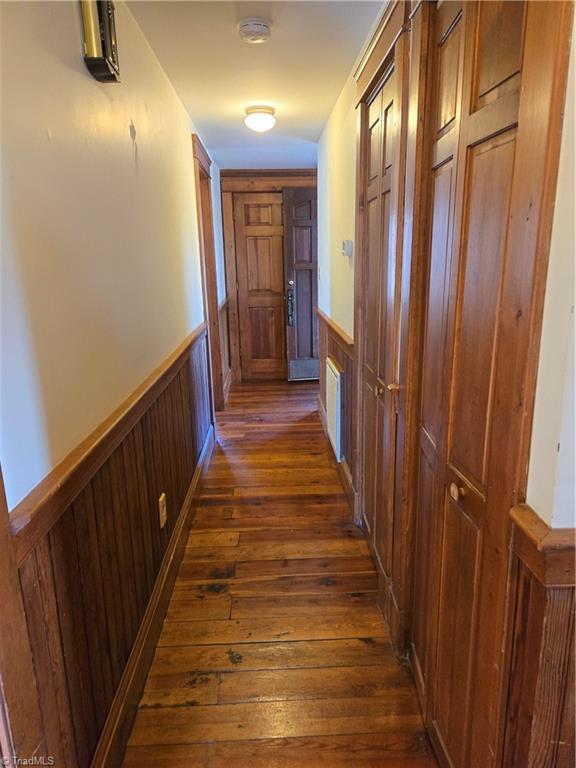


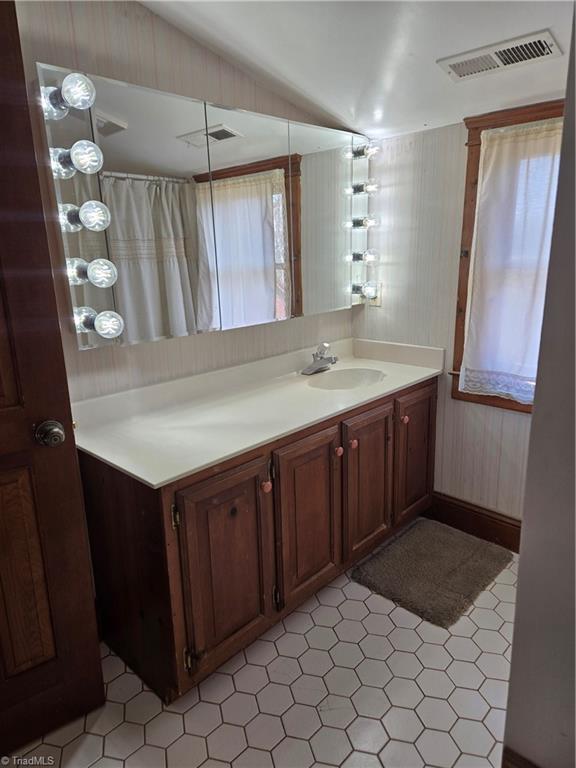
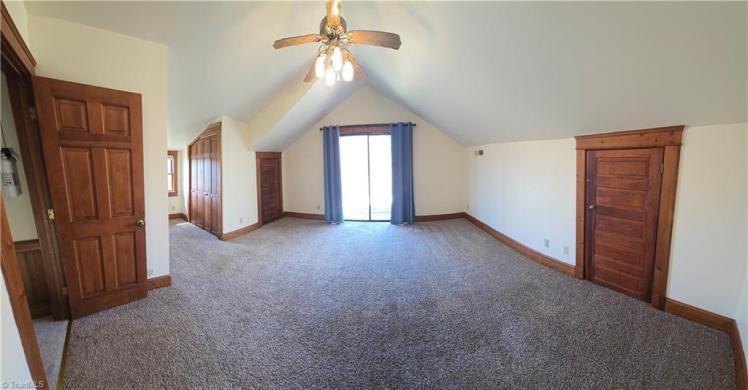

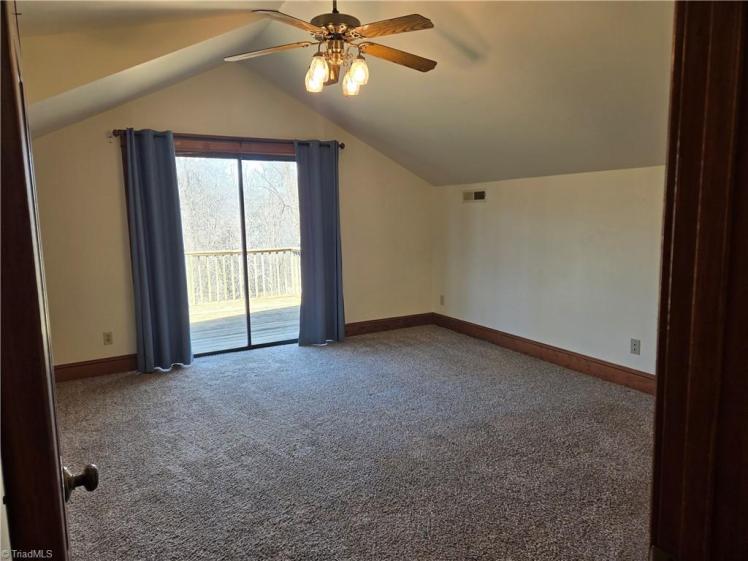
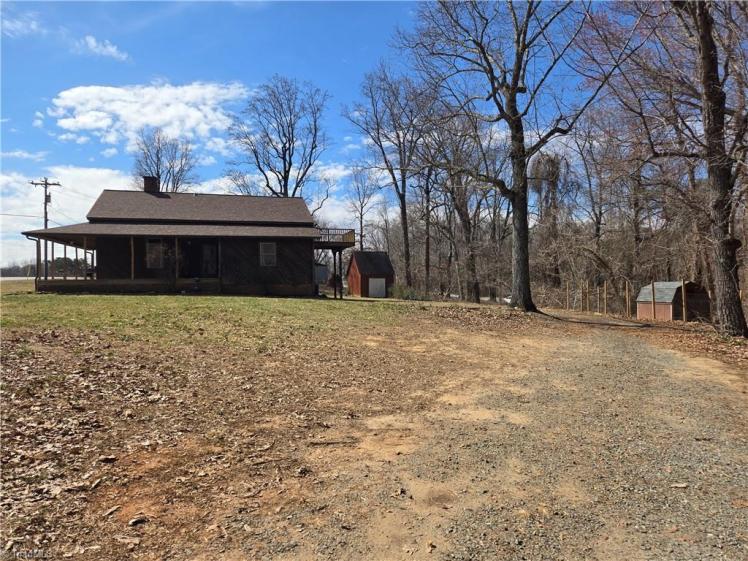


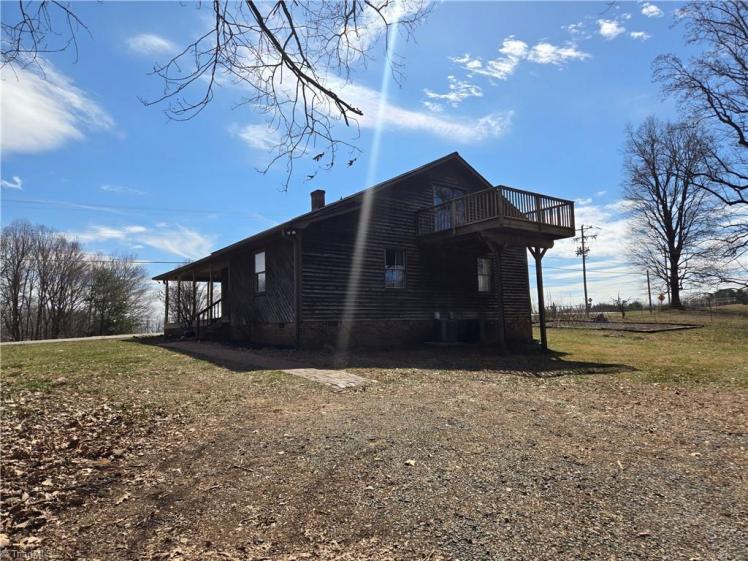

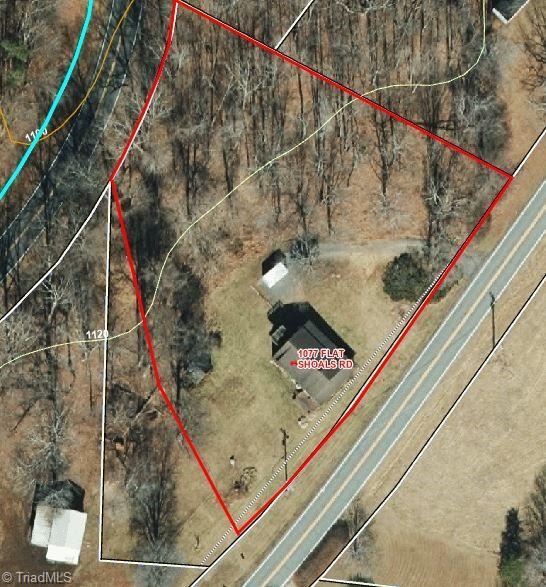
1077 Flat Shoals Road, Stokes County
Capella Church of Christ
- Sold for $277,500 on May 21, 2025 (listed at $277,500)
- 4 bedrooms, 2 bathrooms, 1,839 square feet, 1.62 acres (per county)
- Price/square foot: $151
- Built in 1913 (see note)
- Listed March 14, 2025
- Last sale: $131,000, March 2006
- Neighborhood: Located about 7 miles north of King near the Capella community.
- Note: Online listings give a 1985 date. That actually was the year the house was renovated.
- The house originally served as the Capella Church of Christ, now located at 1187 Flat Shoals Road.
- The property includes a “deluxe house for chickens.”
1601ncollege

1601 N. College Park Drive, Greensboro
The Cox-Ellinwood House
- Sold for $839,000 on May 15, 2025 (listed at $849,500)
- 4 bedrooms 3 bathrooms, 3,092 square feet (per county), 0.52 acre
- Price/square foot: $271
- Built in 1925
- Listed April 24, 2025
- Last sale: $652,000, May 2022; $345,000, July 1995
- Neighborhood: College Park
- Note: The house was already under contract when it was listed for sale.
- Italian Renaissance Revival house with a symmetrical facade; projecting wings; a low-pitched, tile hip roof with wide overhanging eaves with decorative brackets; arches above the first-floor windows and doors; less elaborate second-floor windows; and a columned portico with a balustrade above, which is repeated atop the wings. The house sits high above the street above a terraced front lawn.
- The listing shows 3,271 square feet.
- The property was sold three times in less than 18 months in 1924-25, around the time the house was built. The first owners who lived in the house appear to have been Grover Cleveland Cox (1885-1944) and Mabel Clarice Causey Cox (1896-1928). Grover was secretary-treasurer of Gate City Motors, which sold Chrysler cars and Firestone tires. The house was sold after his death in 1944.
- In 1949, Dr. Everett Hews Ellinwood (1901-1969) and Hulda Eggleston Holloman Ellinwood (1901-1993) bought the house and owned it for 44 years. Everett was the county health director. In 1950 he declared a ordered a quarantine of dogs because of an outbreak of rabies. In one month, 22 people were bitten by rabid animals; eight dogs were found to be rabid. After his death in 1969, Hulda owned the house until her death in 1993.
220edgedale
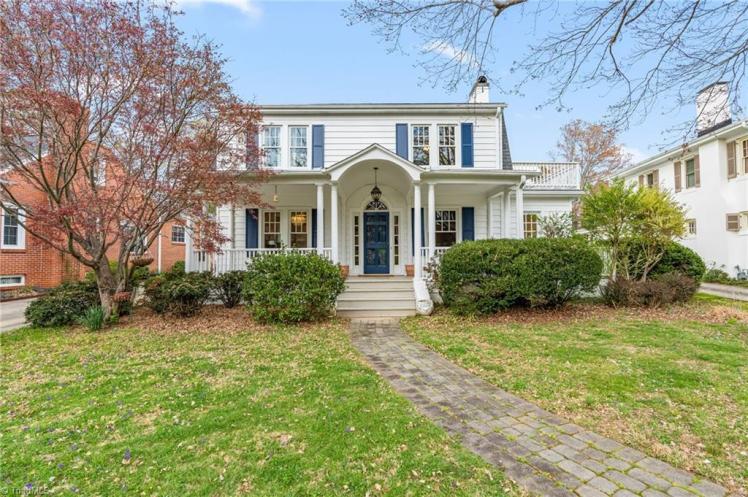


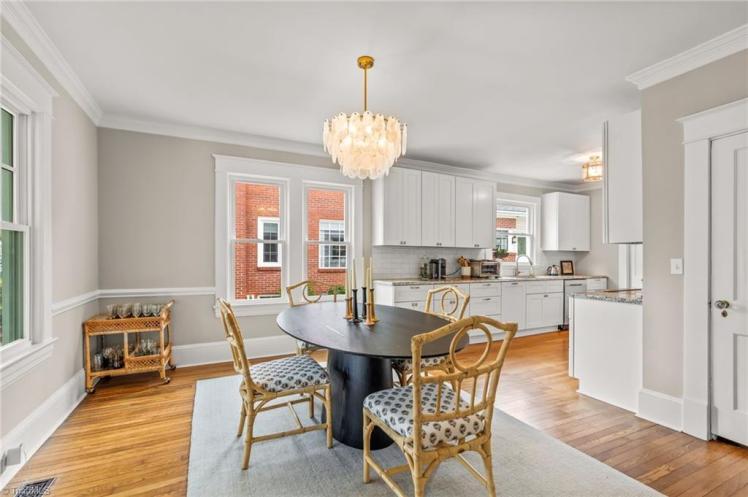

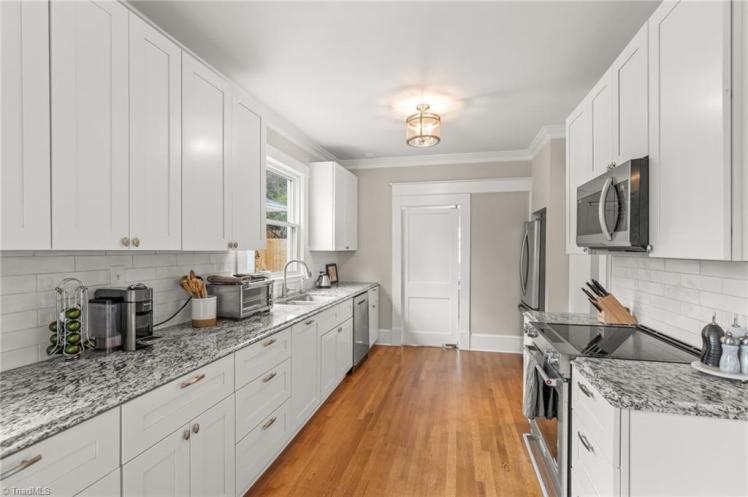

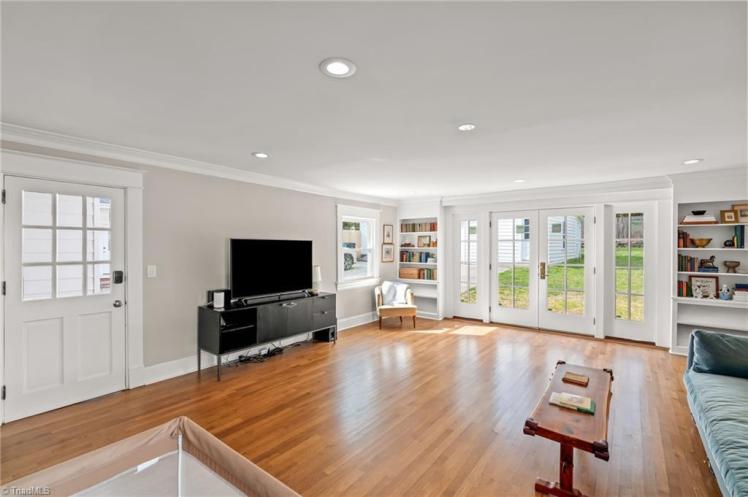

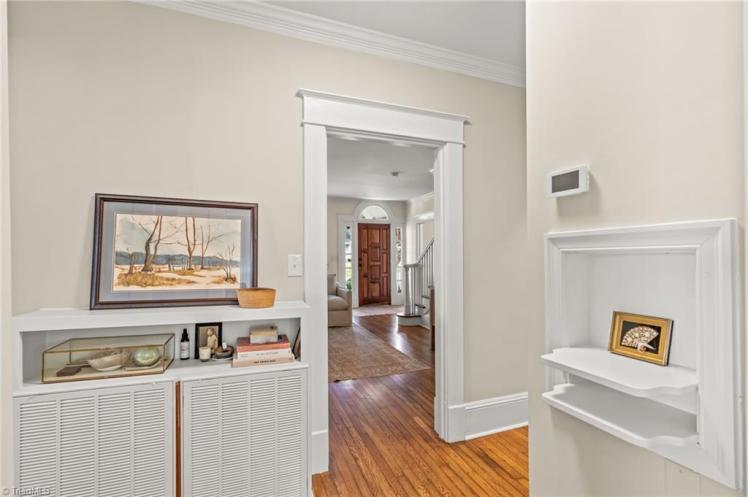
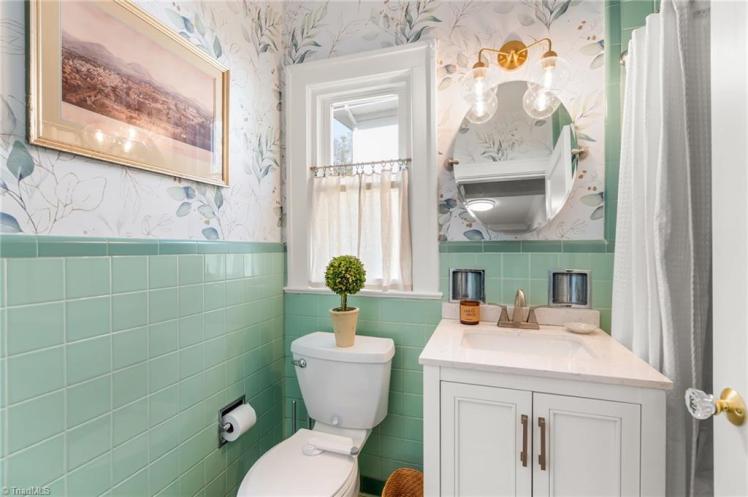


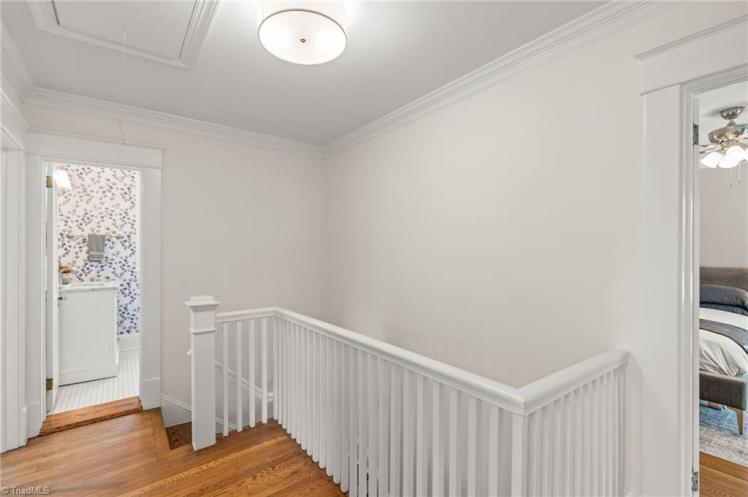
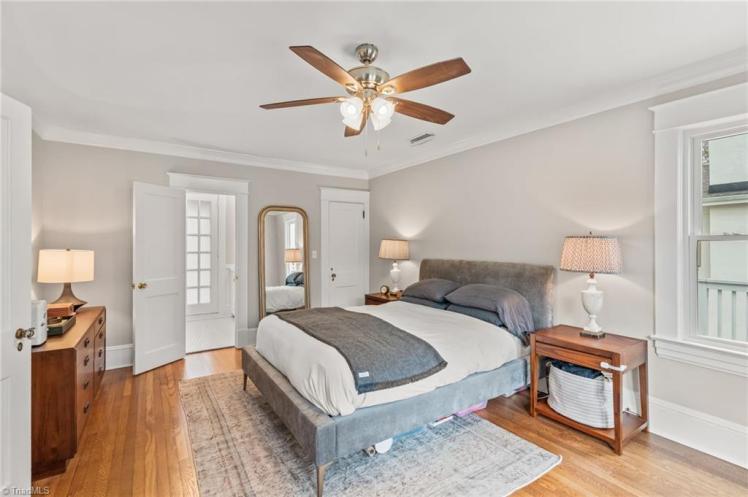

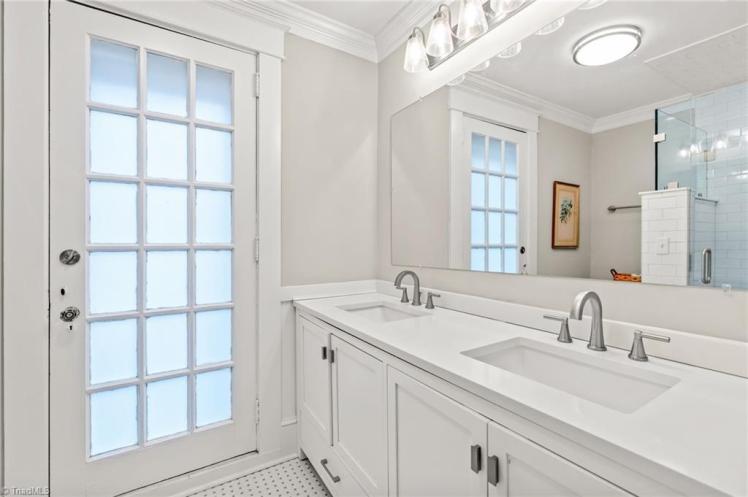


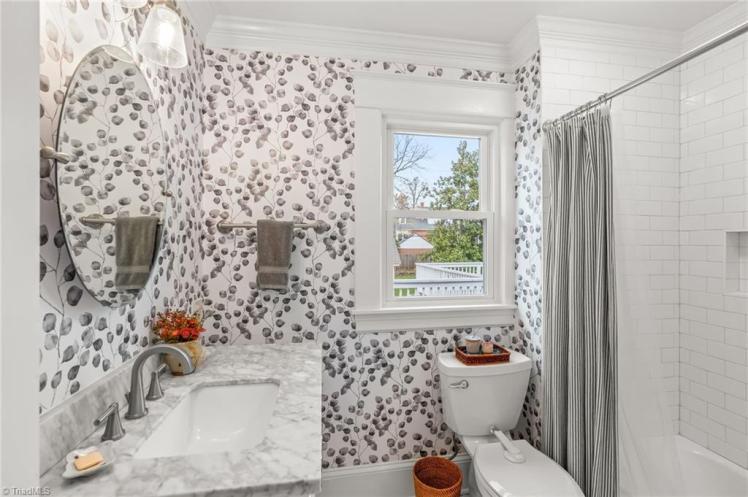
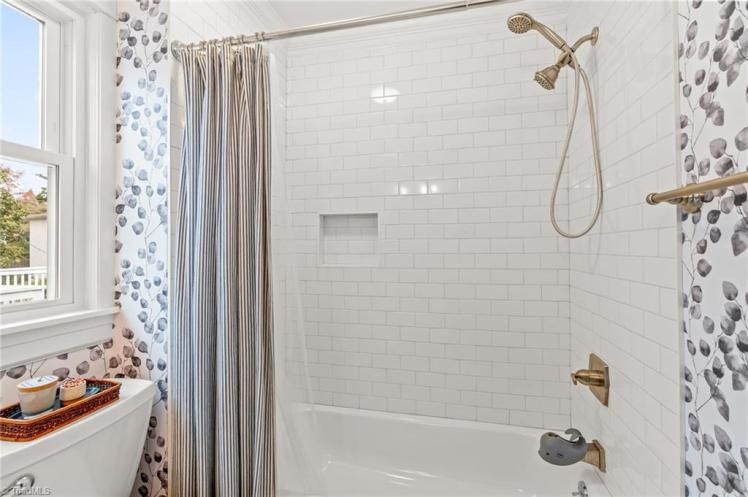
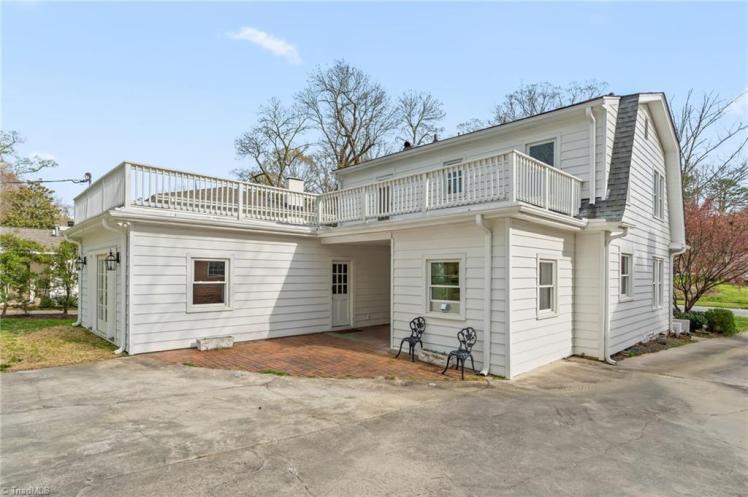
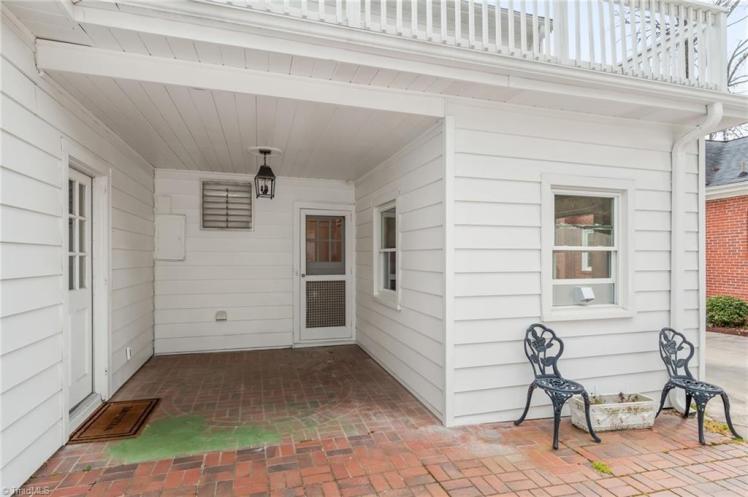

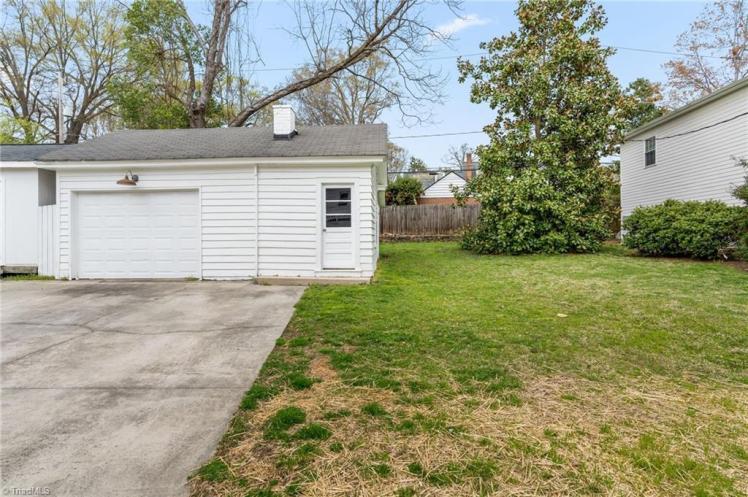
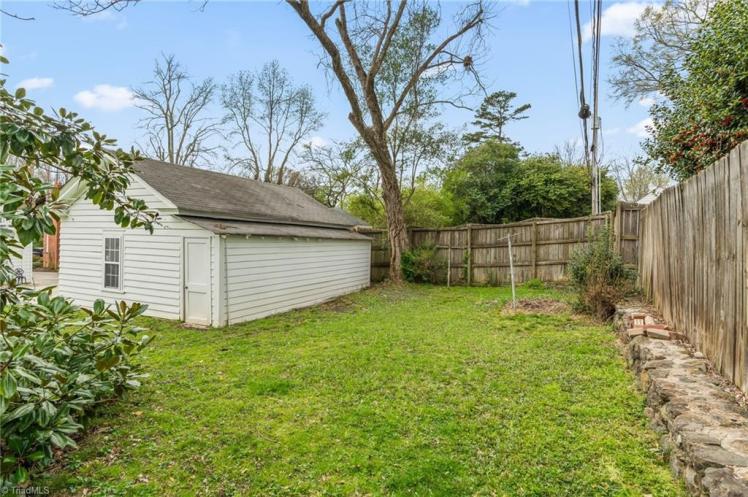
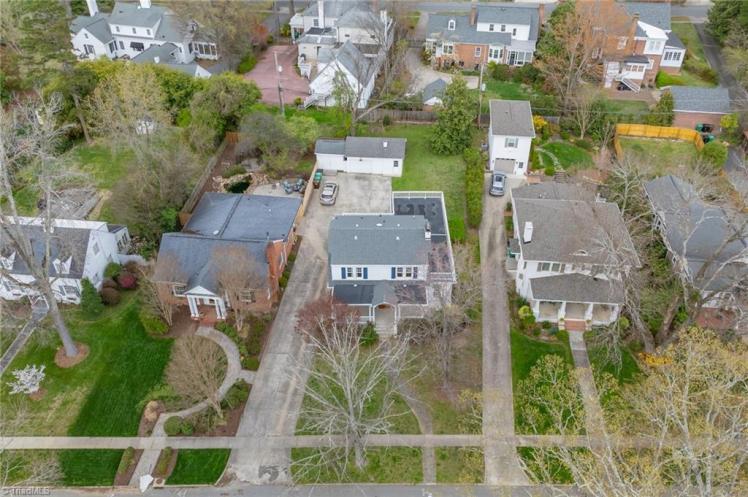
220 Edgedale Drive, High Point
The John H. Grubb House
- Sold for $442,500 on May 15, 2025 (originally $469,900)
- 4 bedrooms, 3 bathrooms, 2,396 square feet, 0.25 acre
- Price/square foot: $185
- Built in 1924
- Listed March 27, 2025
- Last sales: $430,000, May 2023; $275,000, August 2022
- Neighborhood: Emerywood, Uptown Suburbs Historic District (NR)
- Note: Replacement windows, vinyl siding
- District NR nomination: “This two-story, gambrel-roofed, Dutch Colonial Revival-style house is three bays wide and double-pile with full-width, shed-roofed dormers on the facade and rear elevations. The house has vinyl siding and eight-over-one, wood-sash windows, generally paired.
- “The multi-panel door has five-light-over-one-panel sidelights and is sheltered by a full-width, hip-roofed porch supported by grouped slender columns. The porch has a low projecting gable over the entrance.
- “A one-story, flat-roofed wing extends across the rear (north) and right (east) elevations. It has vinyl siding and a low wood railing along the roofline.
- “The earliest known occupant is John H. Grubb (traveling salesman) in 1927.”
- From 1948 to 1990 the house was owned by Dr. Lemuel Underwood Creech (1914-1972), a physician, and Lorraine Humphrey Creech (dates unknown).
105dodson


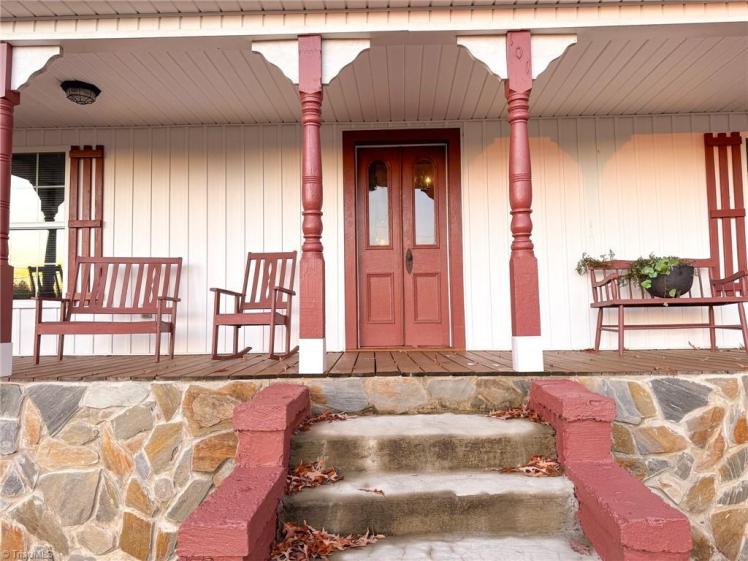

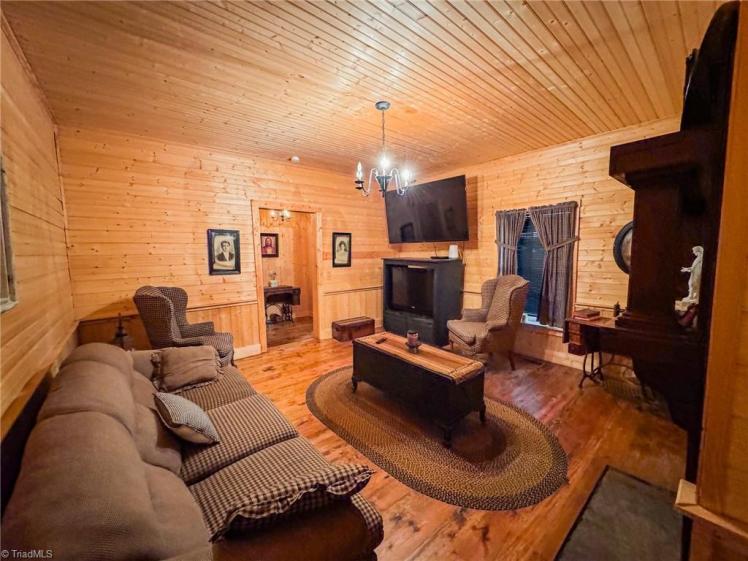
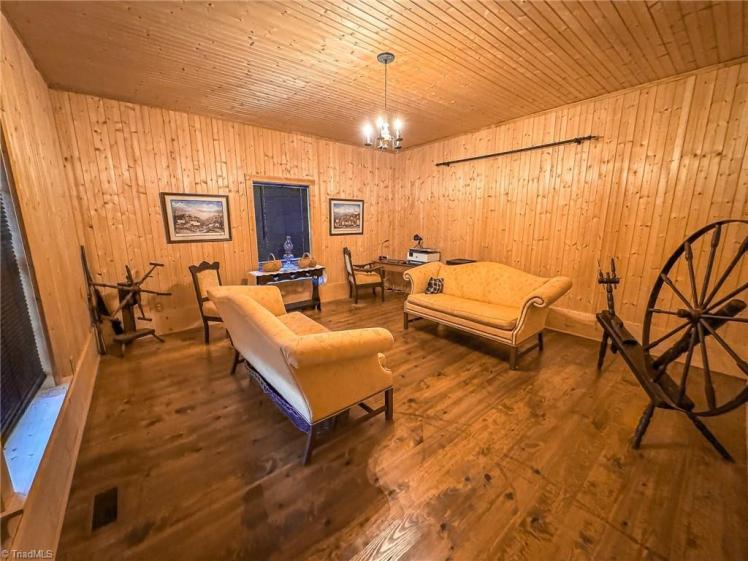


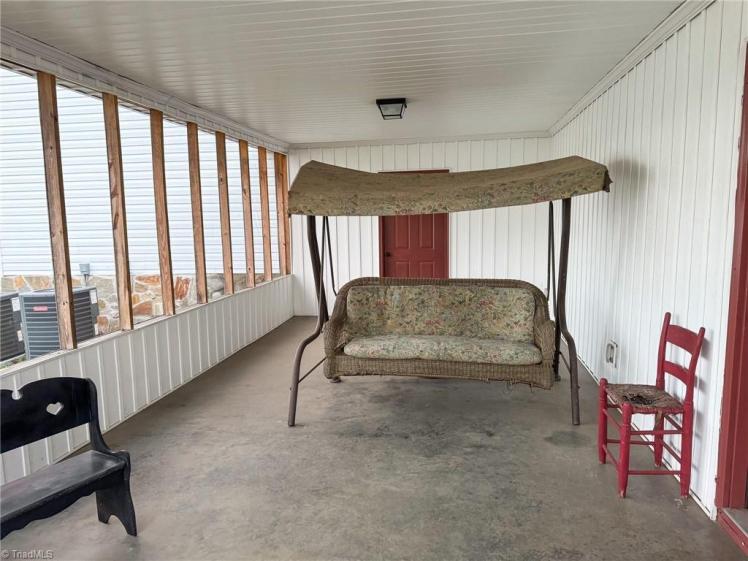


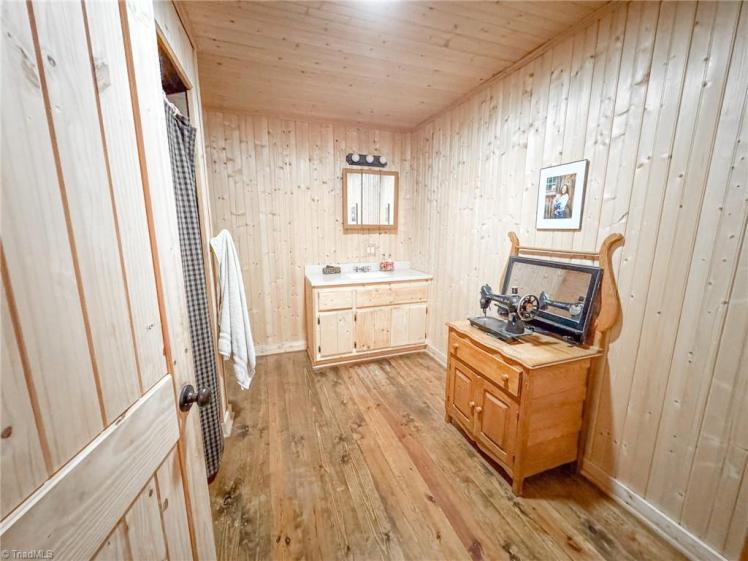
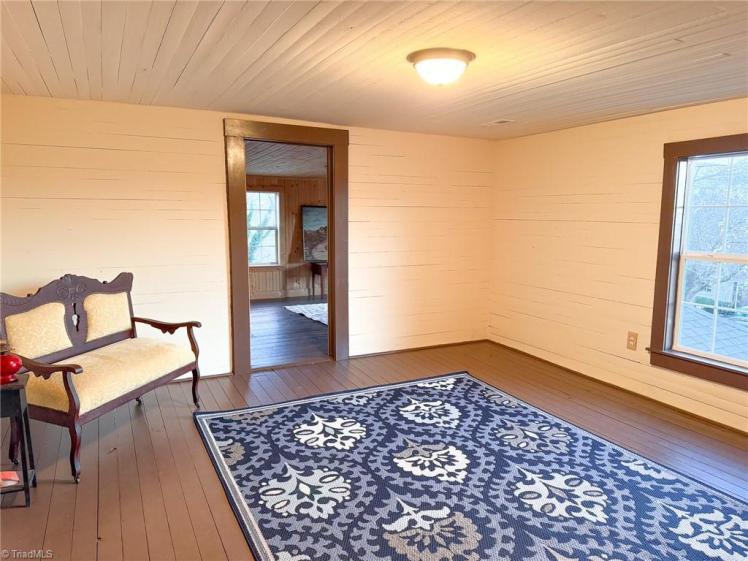

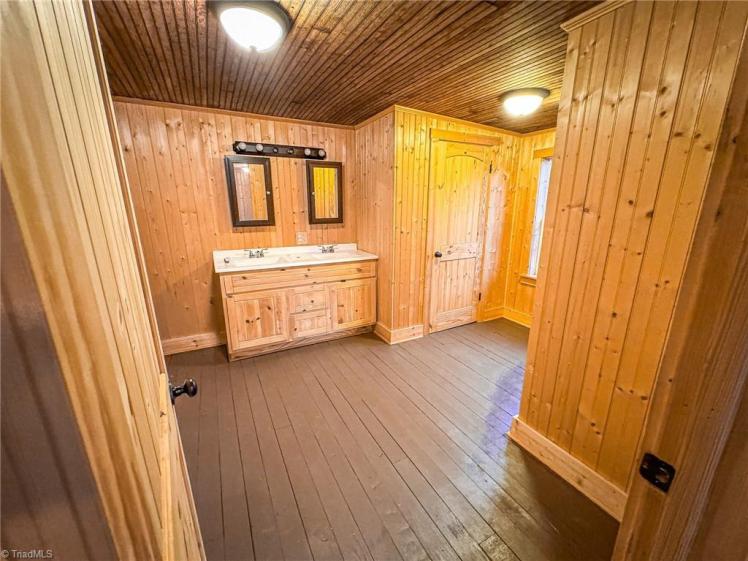
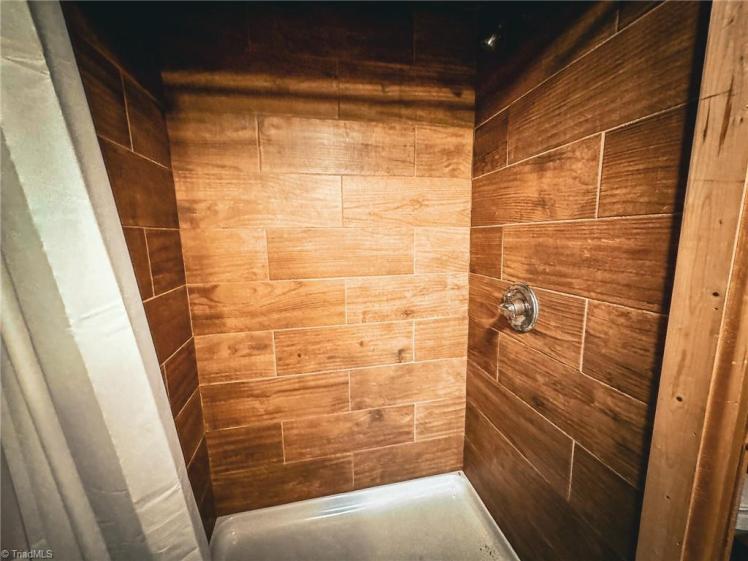
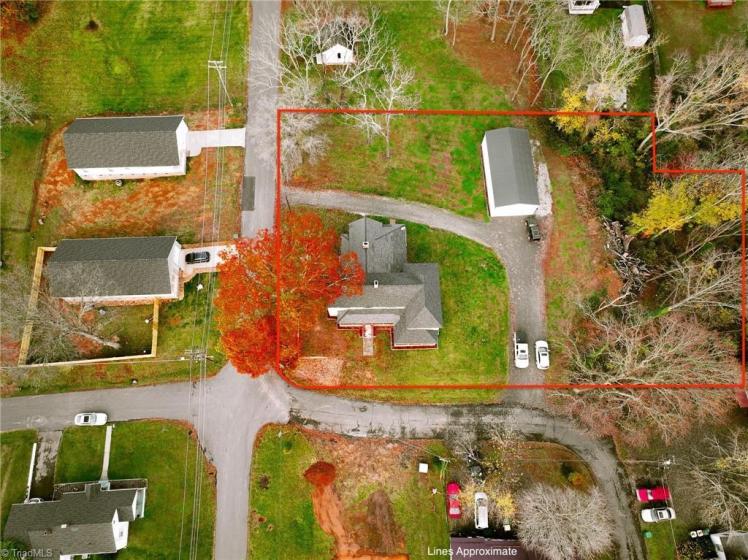

105 Dodson Street, Pilot Mountain, Surry County
The Oscar and Laura Snow House
- Sold for $360,000 on May 15, 2025 (originally $465,000)
- 4 bedrooms, 2 bathrooms, 2,871 square feet, 0.91 acre
- Price/square foot: $125
- Built in 1900
- Listed November 29, 2022
- Last sale: $29,000, November 2018
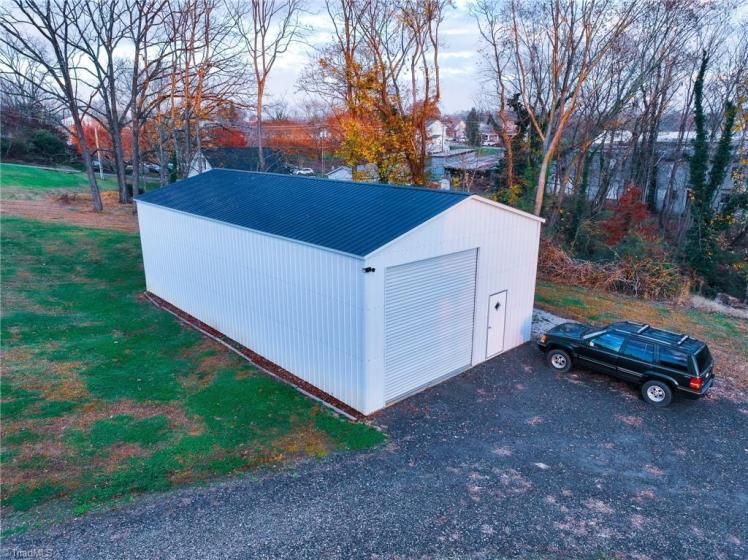
- Note: The property includes a 24-by-48 metal building with a concrete floor.
- The house is named for Oscar Edward Snow (1874-1941) and Laura Mae Fulp Snow (1878-1963). Oscar was an attorney and a veteran of the Spanish-American War.
1100shawthorne
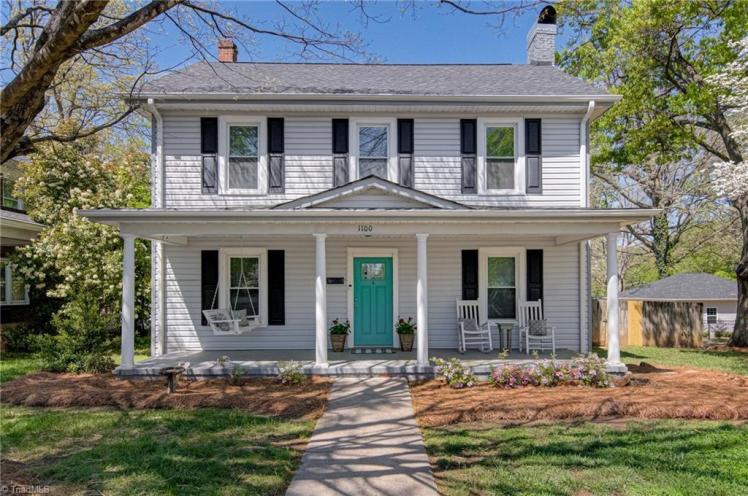
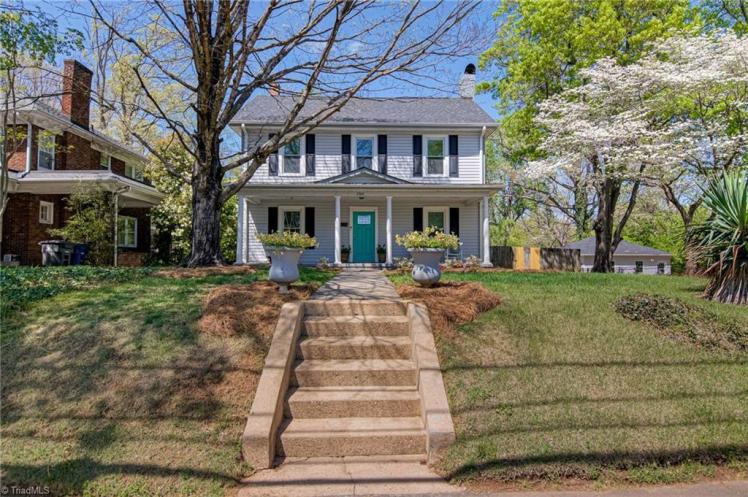


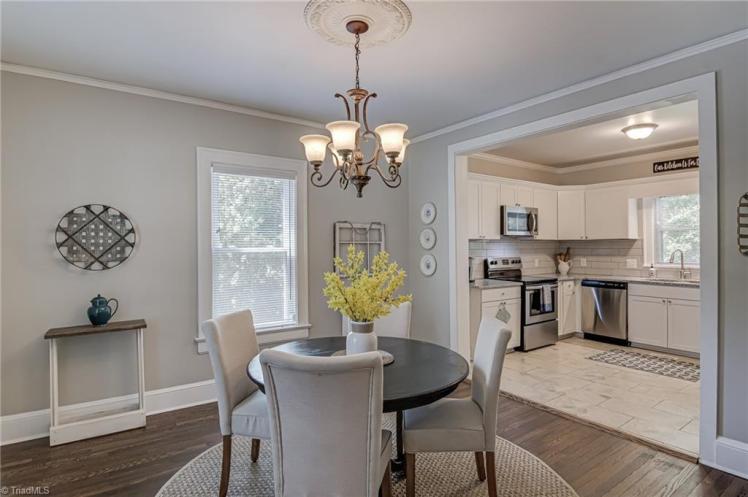


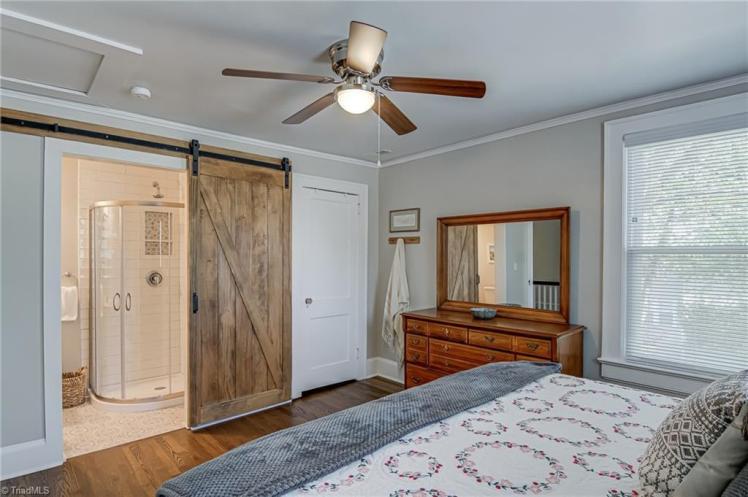
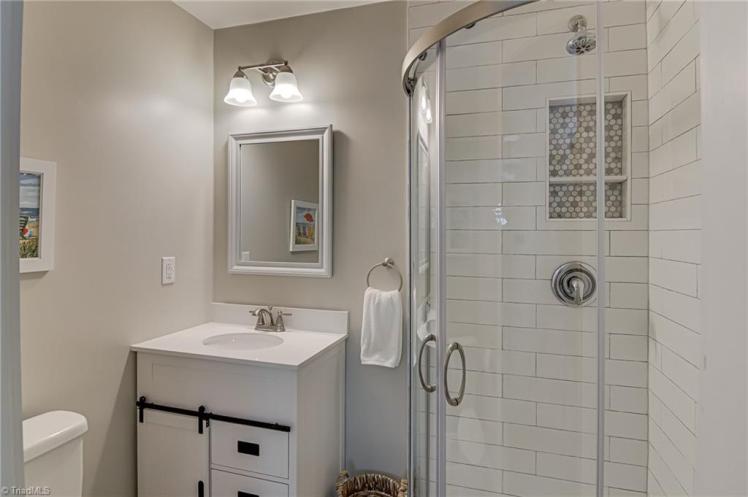
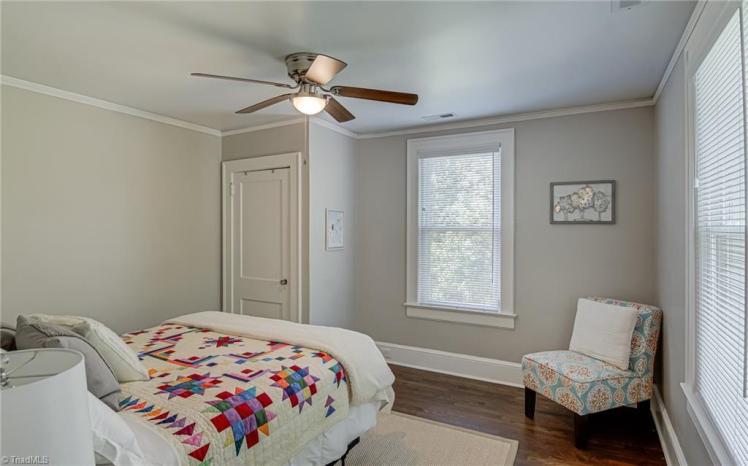


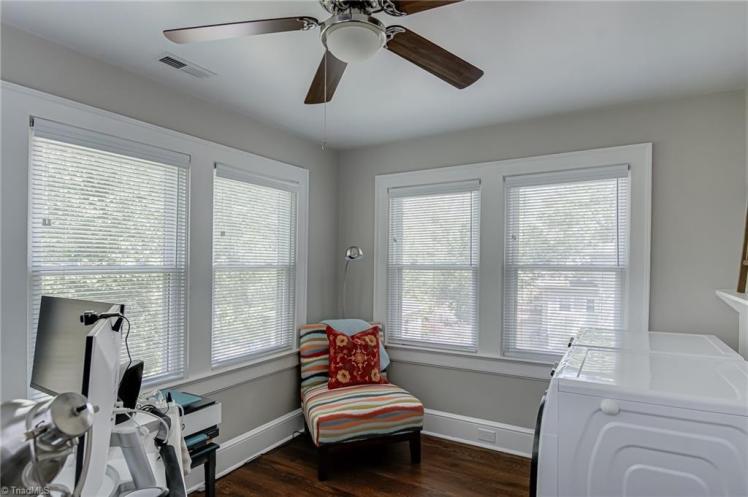

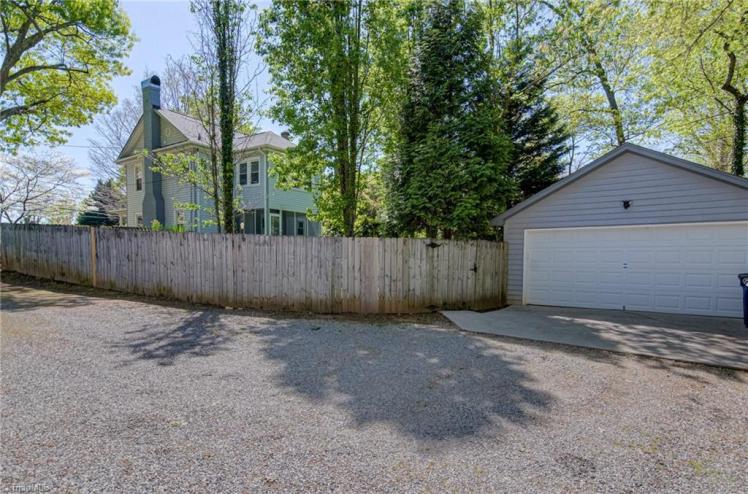
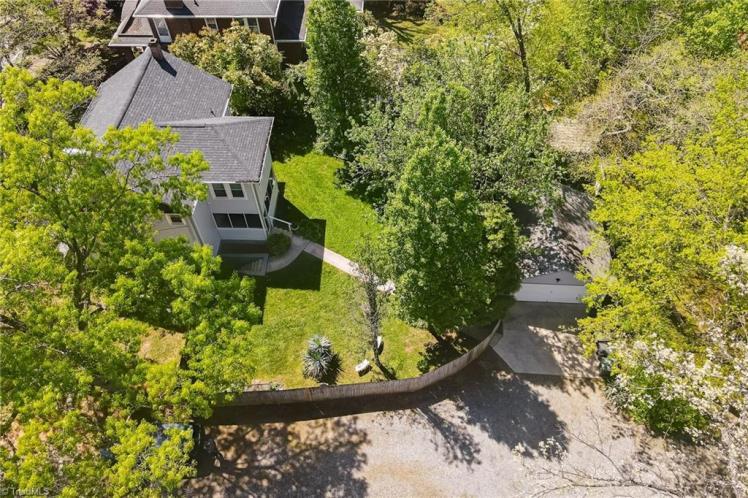

1100 S. Hawthorne Road, Winston-Salem
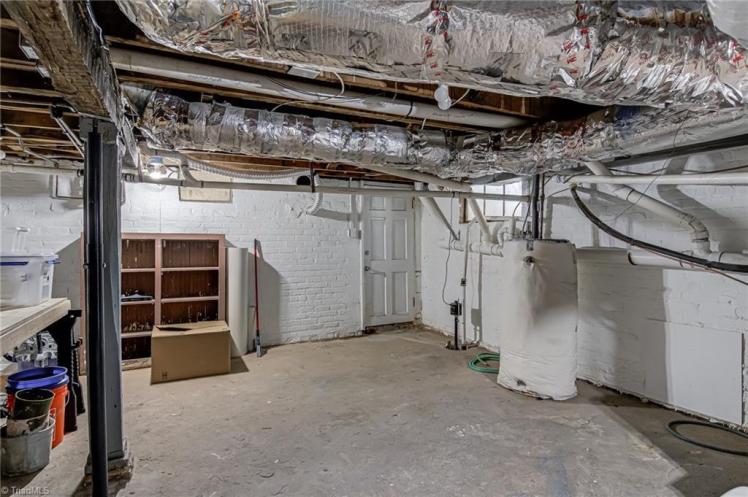
- Sold for $410,000 on May 8, 2025 (listed at $399,900)
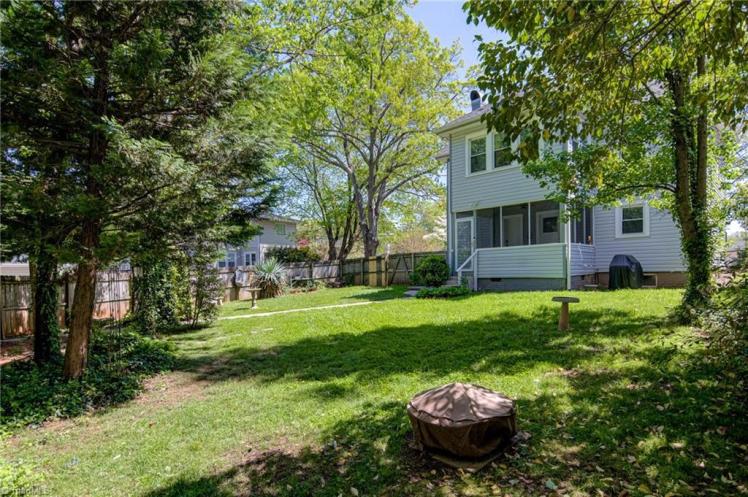
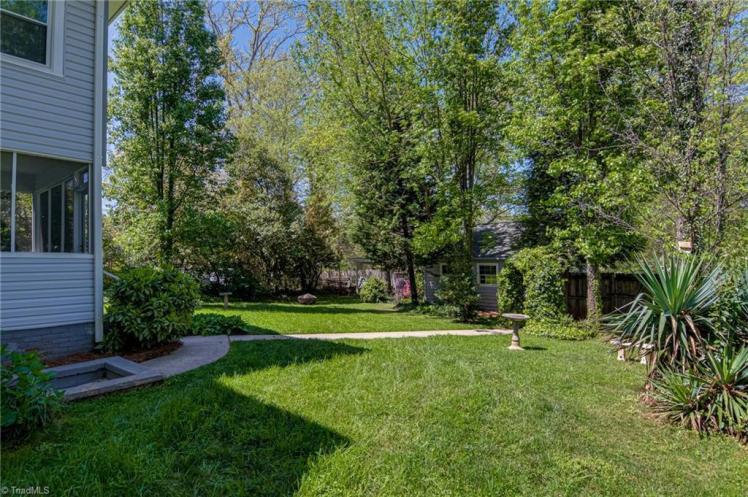
- 3 bedrooms, 2 1/2 bathrooms, 1,676 square feet, 0.28 acre
- Price/square foot: $245
- Built in 1925
- Listed April 10, 2025
- Last sale: $240,000, September 2019
- Neighborhood: Ardmore Historic District (NR)
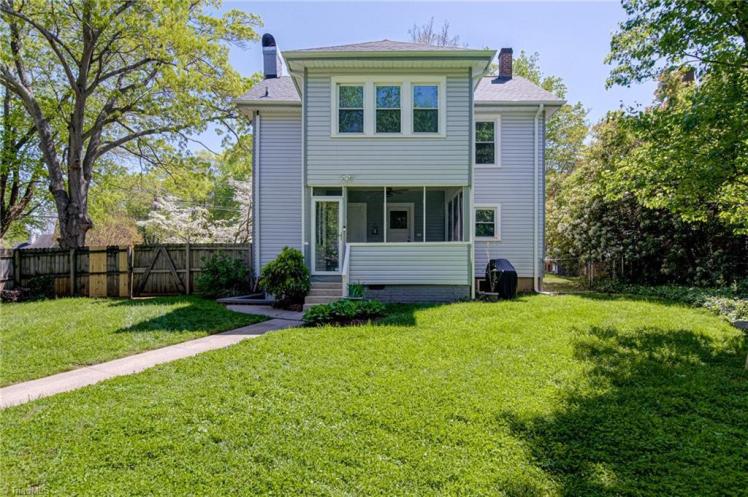
- District NR nomination: “Colonial Revival. Two story; side gable; weatherboard; six-over-one, double-hung sash; hip-roof porch; gable at porch entry; Tuscan columns; modillions.”
- The original owners appear to have been Theron Snipes Womble (1892-1982) and Gladys Mary Nelson Womble (1899-1981), listed at this address in the 1928 city directory. Theron was assistant cashier with Farmer’s National Bank & Trust. He also was a notary. Gladys was a teacher. They sold the house around 1944.
1504edgedale
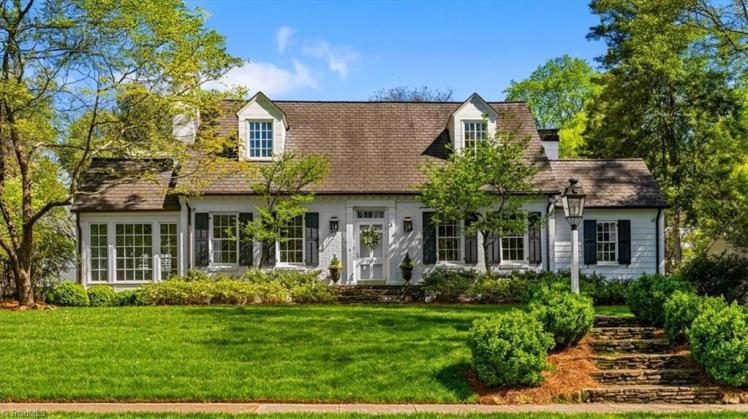
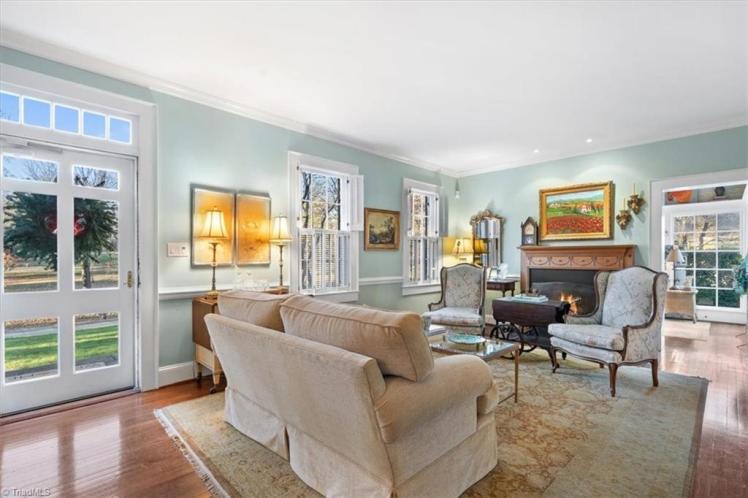


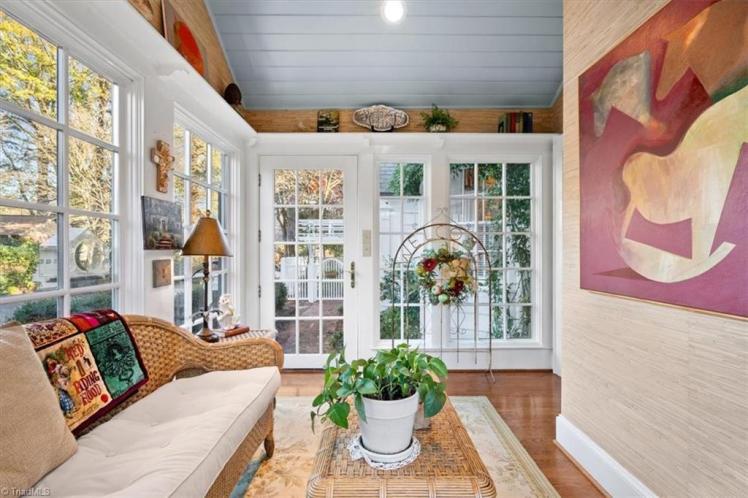


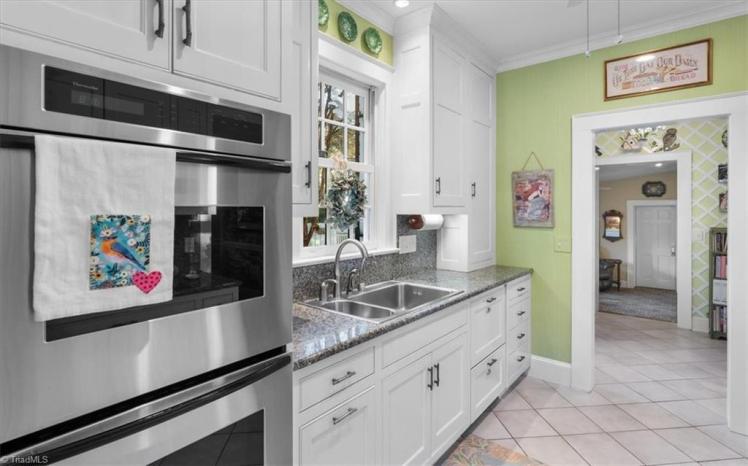
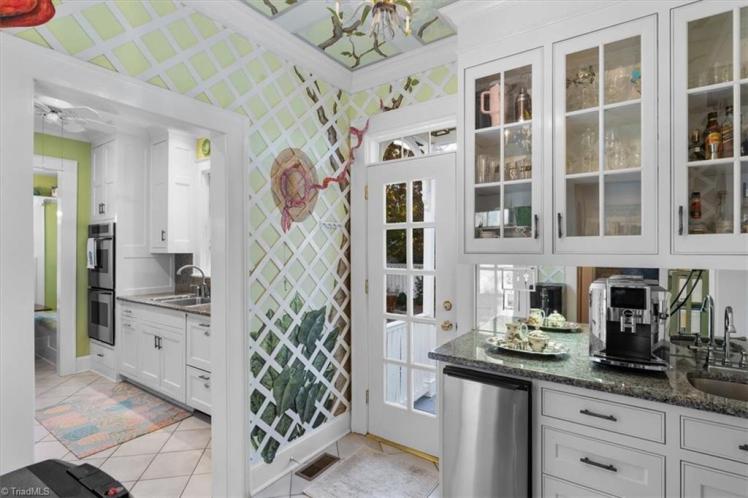

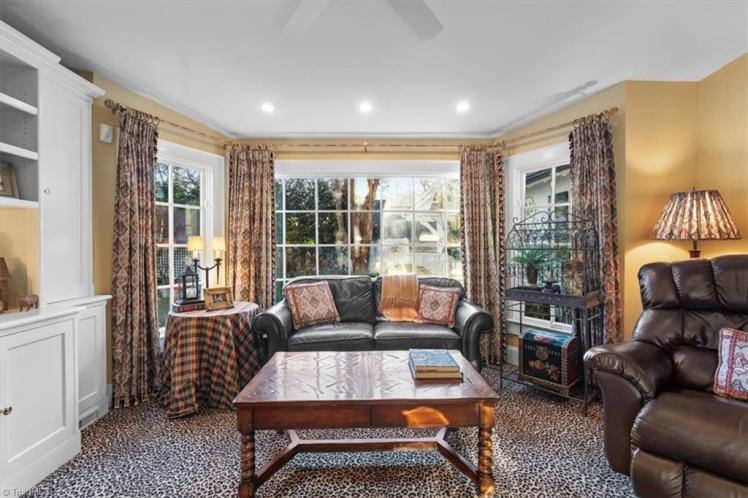


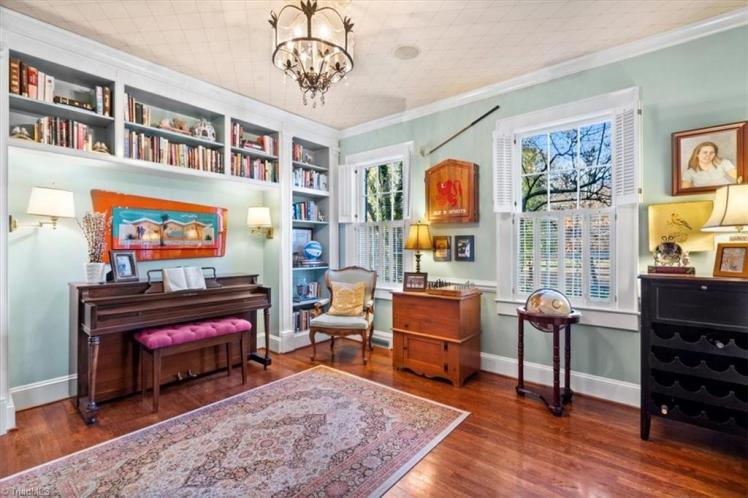
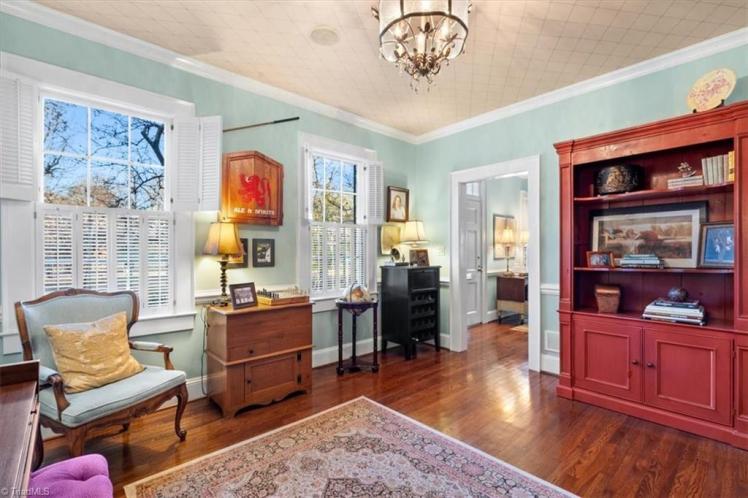


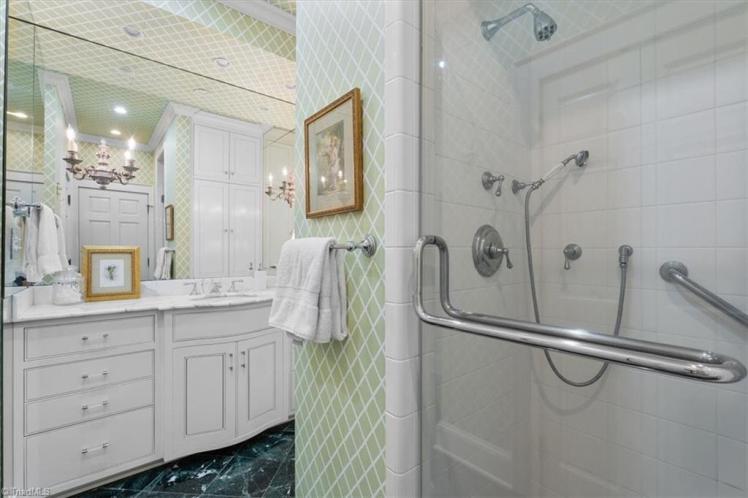
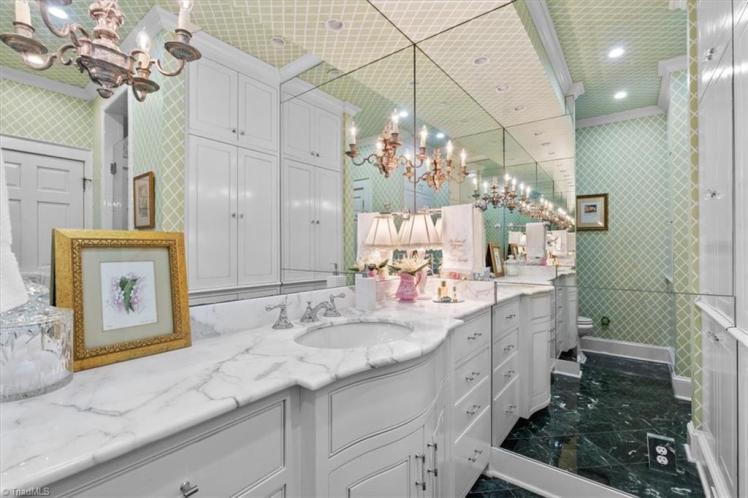

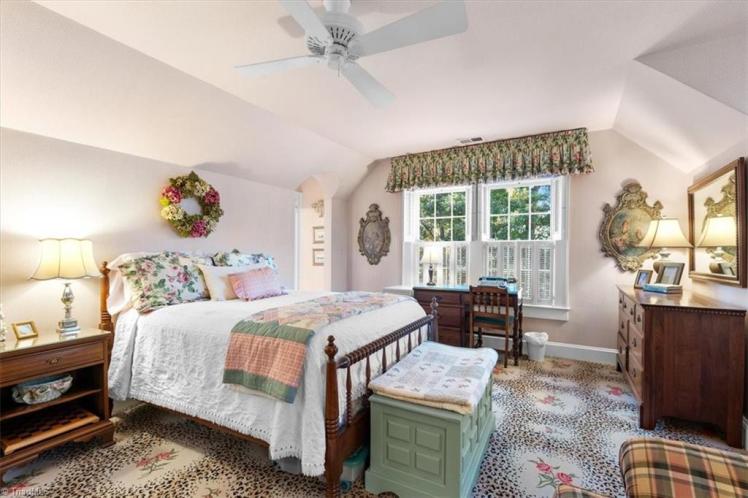
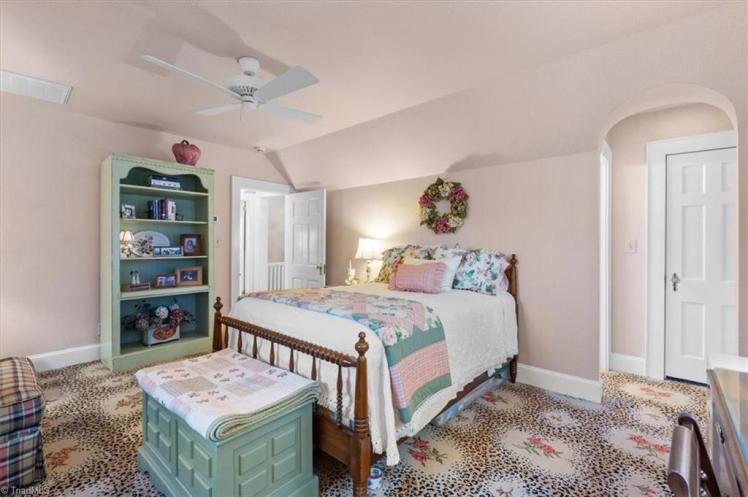


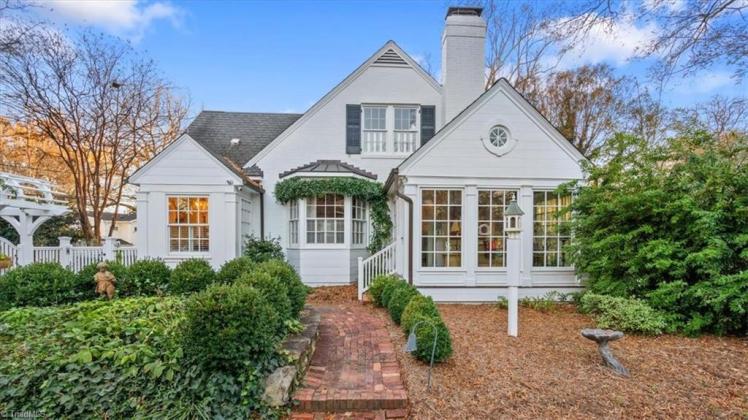


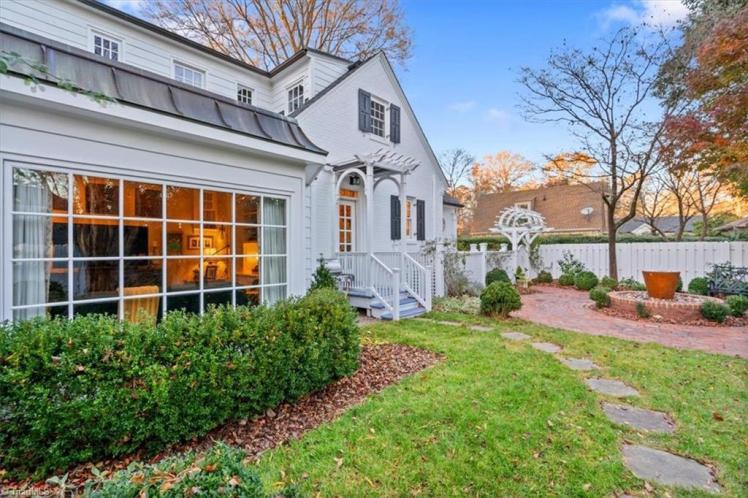
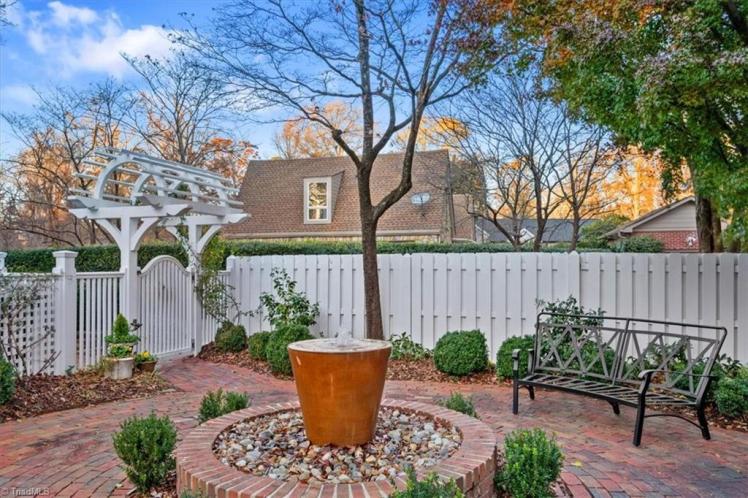
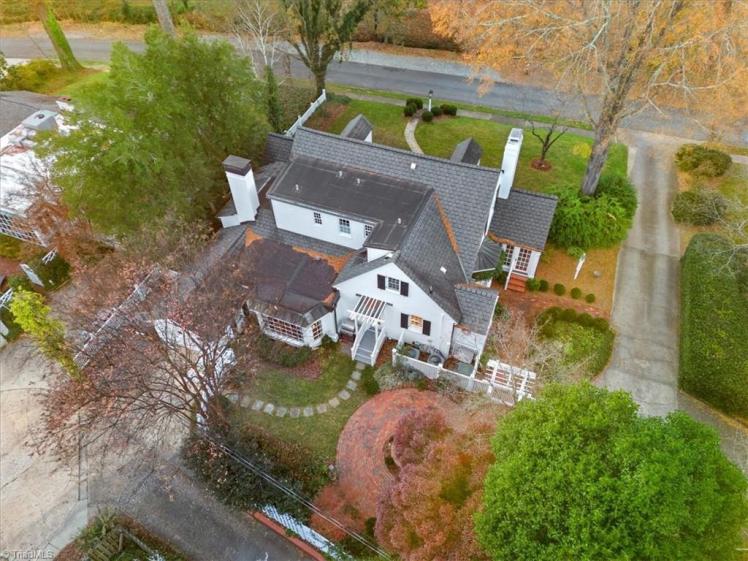
1504 Edgedale Road, Greensboro
The Charles and Minnie Pope House
- Sold for $1.09 million on May 6, 2025 (originally $1.15 million)
- 3 bedrooms, 3 1/2 bathrooms, 2,886 square feet, 0.22 acre
- Price/square foot: $378
- Built in 1937
- Listed January 9, 2025
- Last sale: $717,000, July 2017
- Neighborhood: Irving Park Historic District (NR)
- Note: Something you don’t see every day — two laundry facilities, one in the basement and space for a stackable washer and dryer in the primary bathroom.
- District NR nomination: “The Pope House is a one-and-a-half-story brick Cape Cod style dwelling. It has a simple classical entrance, two gabled dormers and a screened porch on the north side.
- “Charles W. and Minnie C. Pope were the first occupants. He was a supervisor with National Life Insurance company of Montpelier, Vt. and with Provident Life & Accident Insurance Company of Chattanooga, Tenn. By 1938 the house was occupied by W. Gordon and Allie H. Latham. He was a manager with E.A. Pierce & Company.”
655nspring
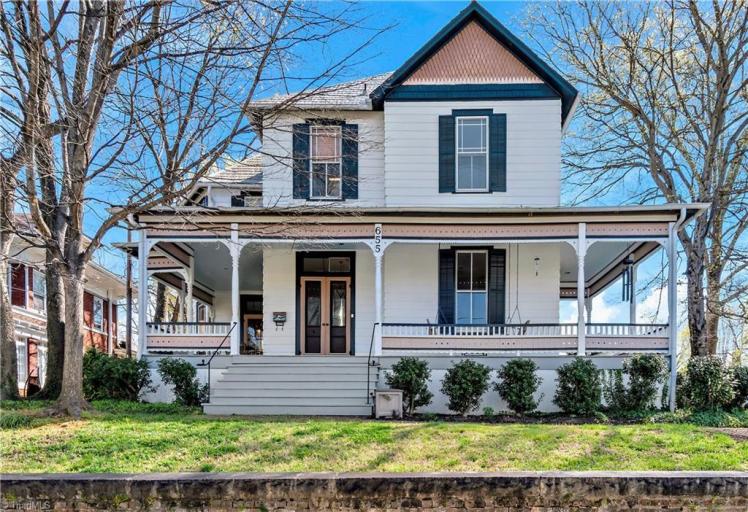
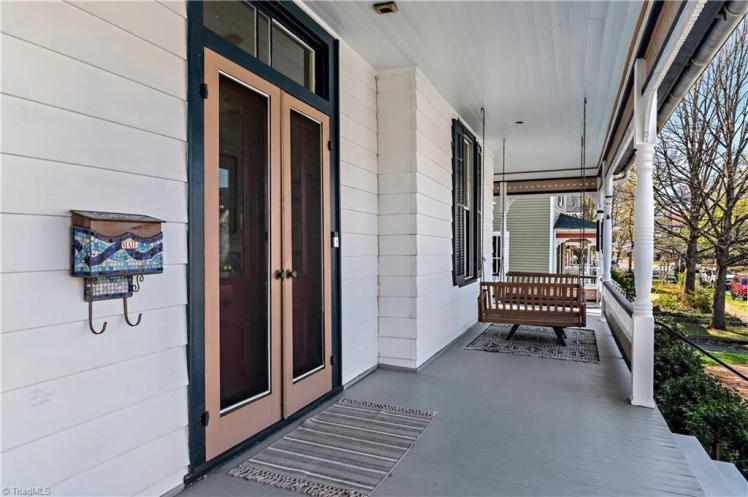
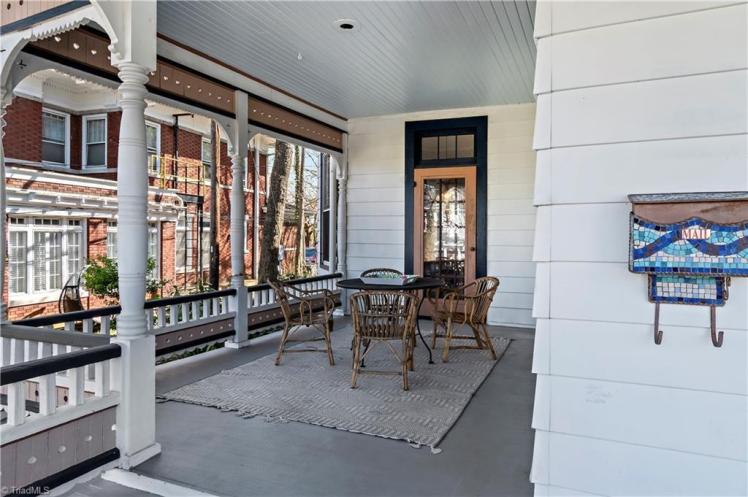

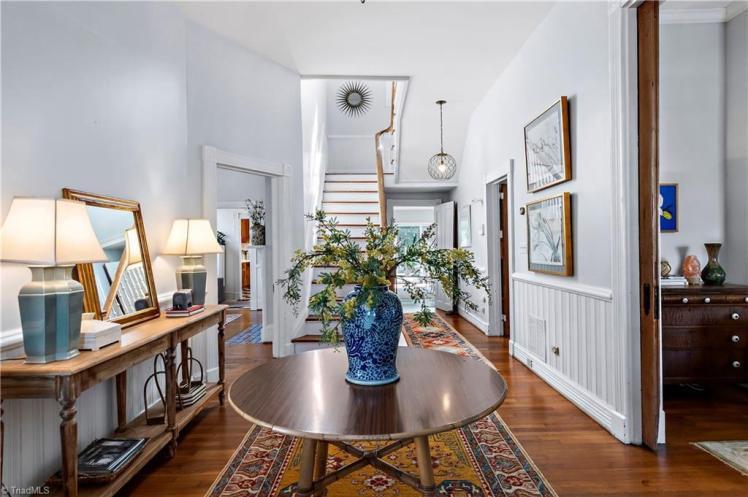


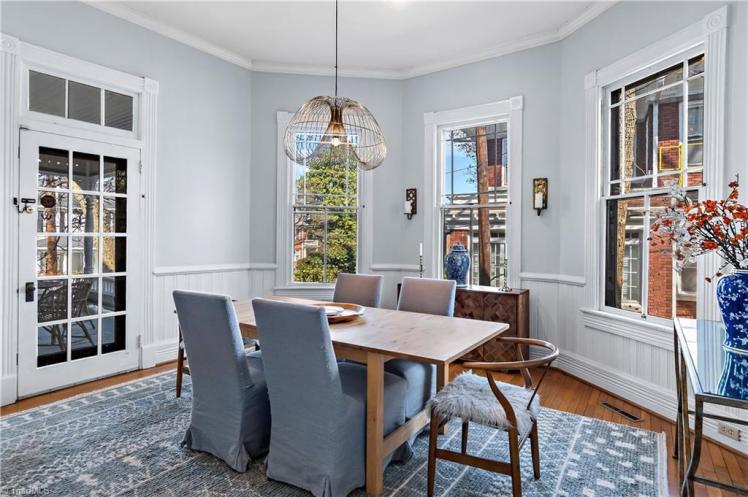


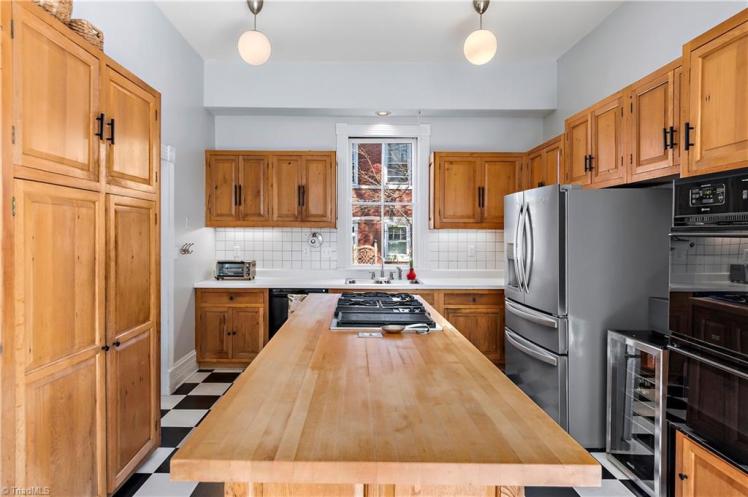


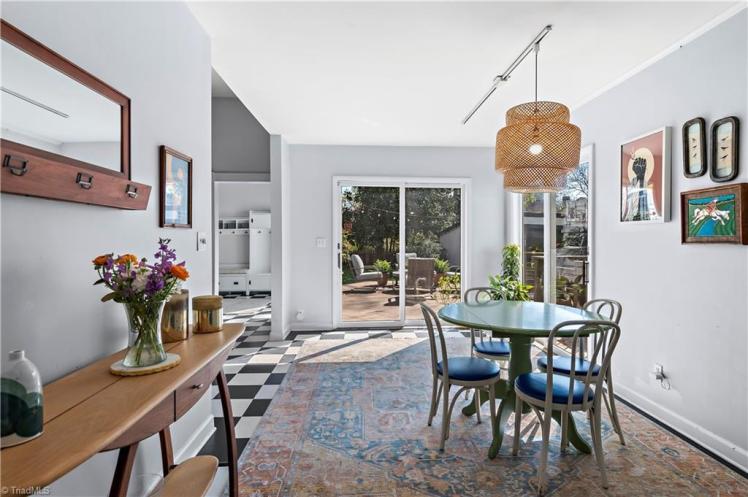
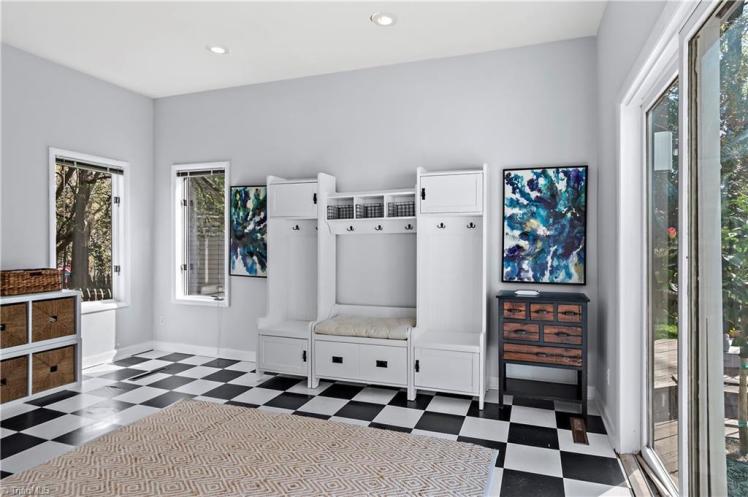
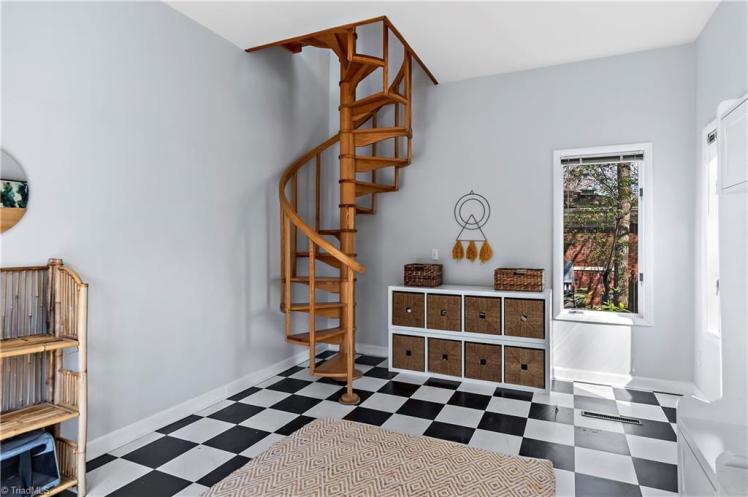

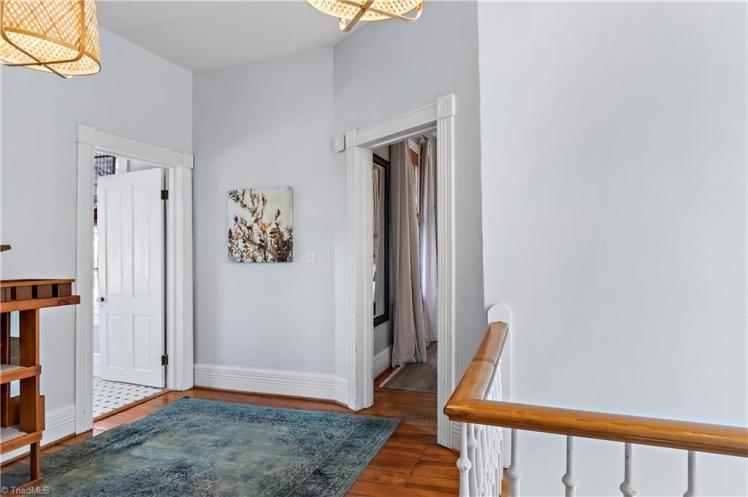


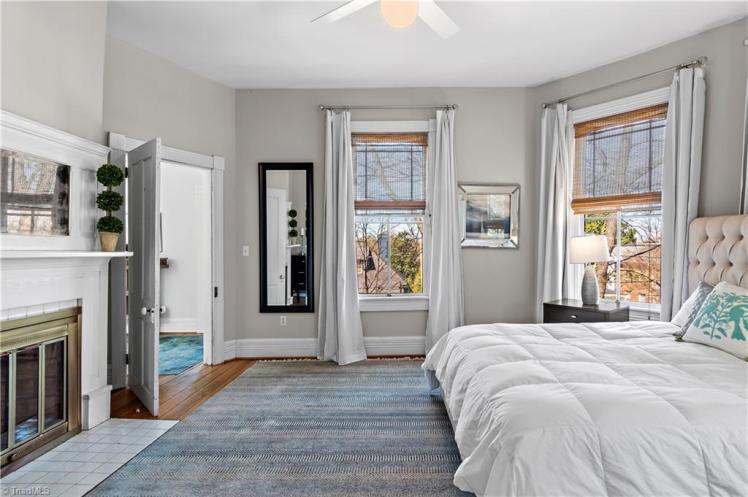
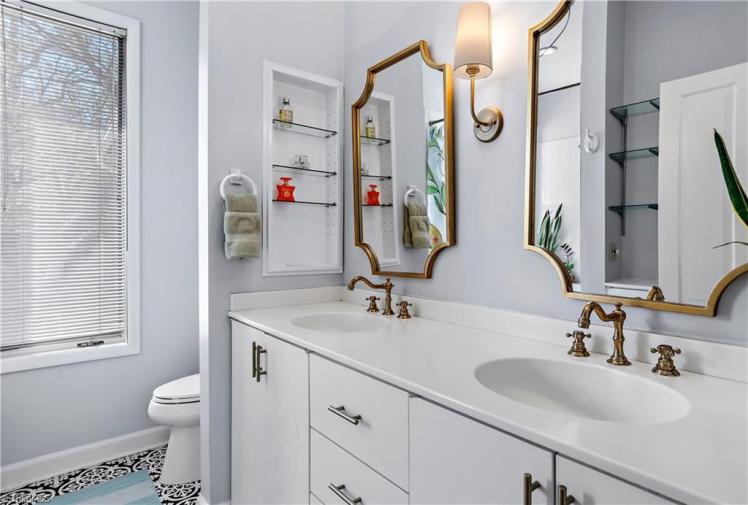


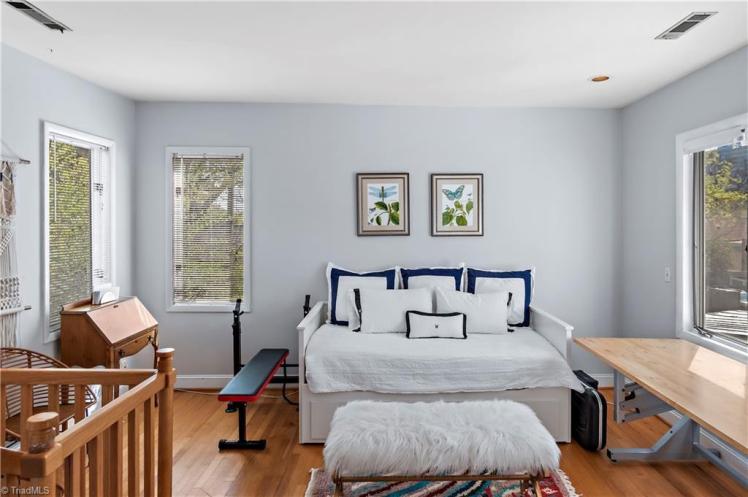
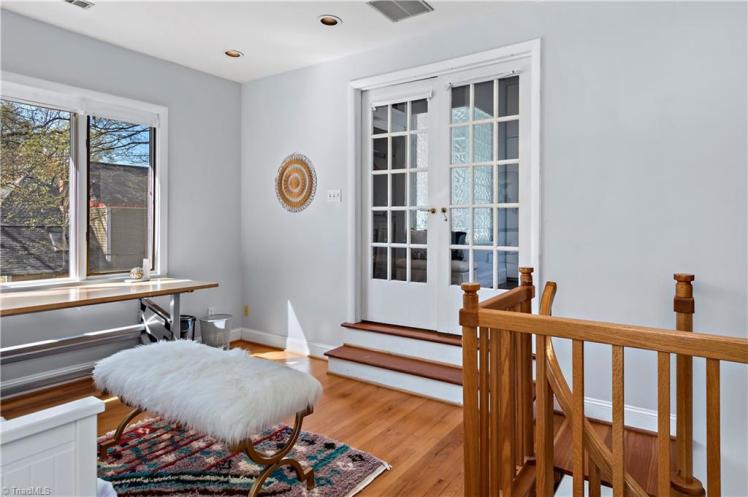

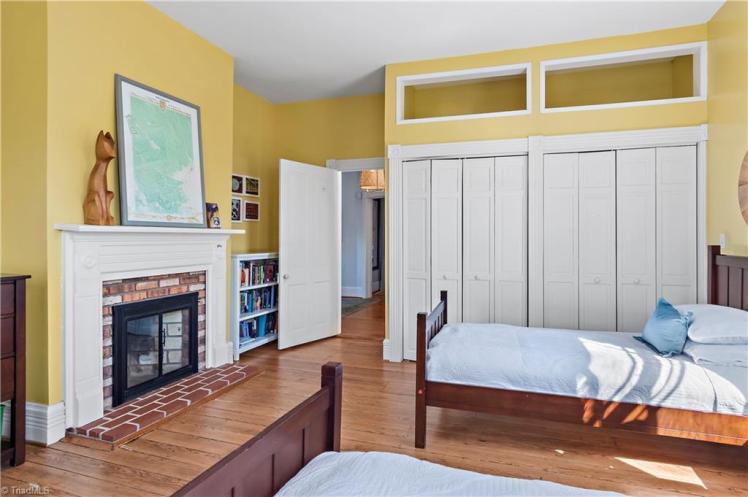


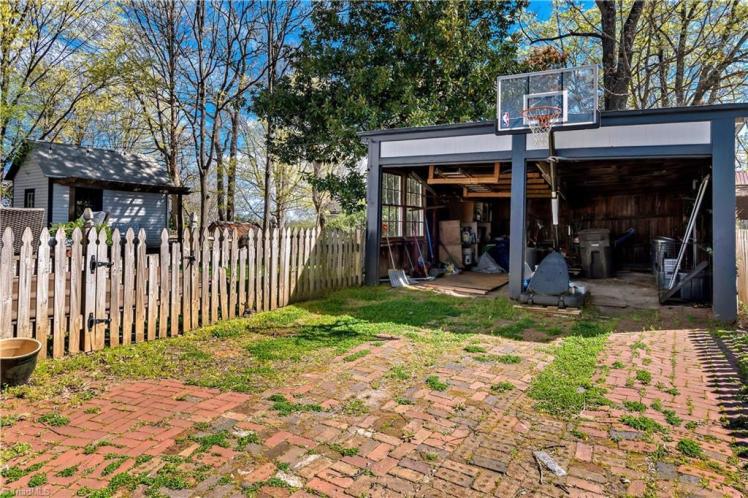
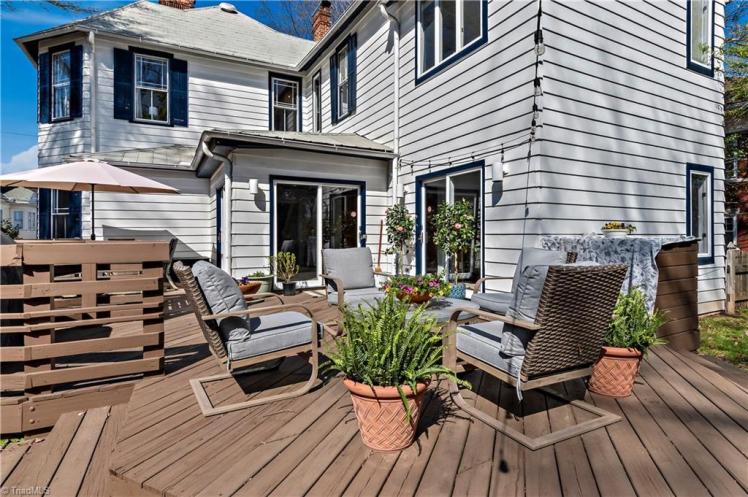
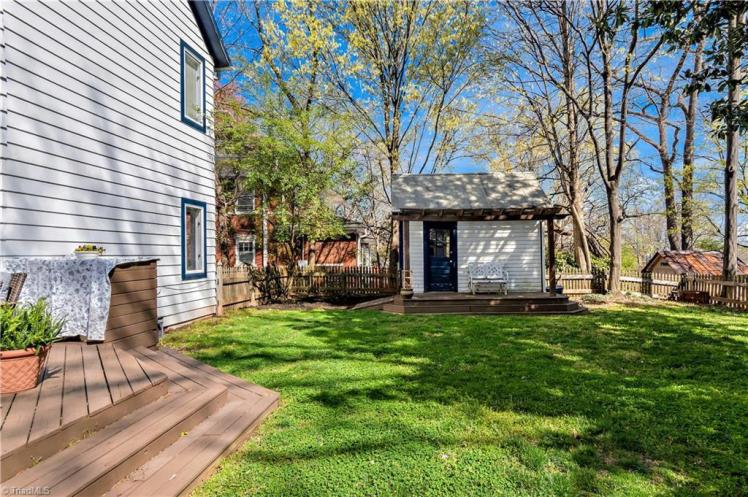


655 N. Spring Street, Winston-Salem
The Webb-Reece House
- Sold for $625,000 on May 6, 2025 (listed at $639,000)
- 3 bedrooms, 3 bathrooms, 3,554 square feet, 0.25 acre
- Price/square foot: $176
- Built in 1890
- Listed April 4, 2025
- Last sale: $405,000, May 2019
- Neighborhood: West End Historic District (local and NR)
- District NR nomination: “The Hebb-Reece House is one of the largest of the Queen Anne houses in this section of the the West End. The two-story frame dwelling of irregular configuration has a projecting octagonal bay on each side; a hipped, gabled, and polygonal roof (with a decoratively shingled front gable); and a large wrap-around porch with turned posts and sawnwork brackets, frieze, and balustrade.
- “A handsome brick retaining wall with a granite cap separates the front yard from the sidewalk.
- “During the third quarter of [the twentieth] century the house was sheathed with aluminum siding, and at some unknown date the rear porch was enclosed. Neither of these changes has detracted significantly from the architectural integrity of the house.
- “Garland E. Webb, of the firm of Webb and Kronheimer, publishers of the Southern Tobacco Journal, was the original owner. He and his wife, Addie, lived in the house from ca. 1893 to 1920, when Risden P. Reece purchased the property. Reece was assistant chief engineer at R.J. Reynolds Tobacco Co., and his family occupied the house until selling it … in 1977.”
1012neugene

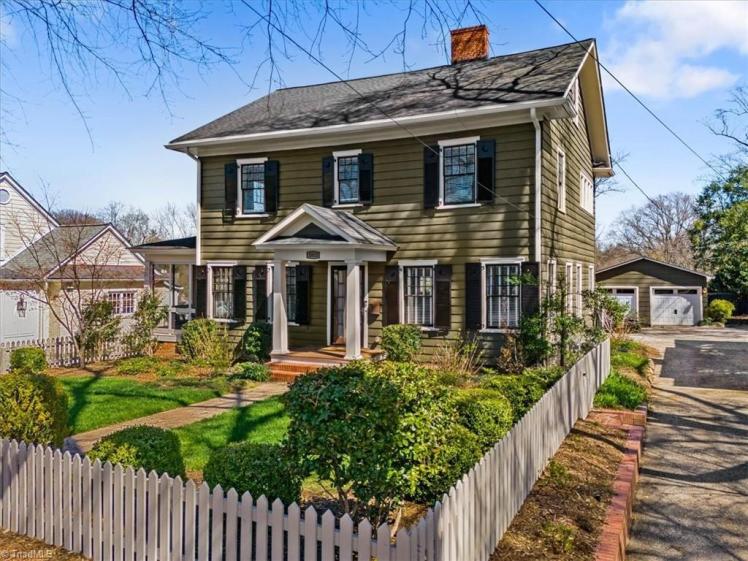

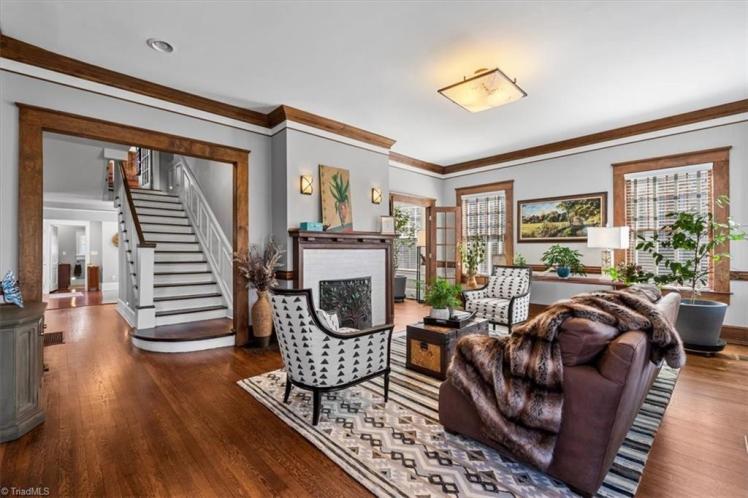


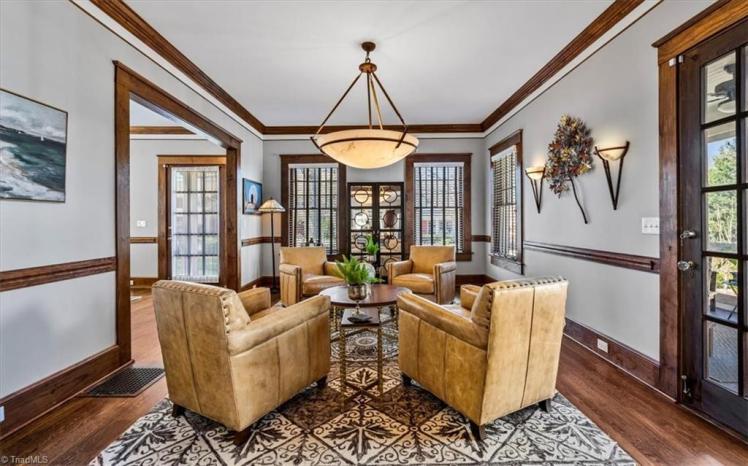

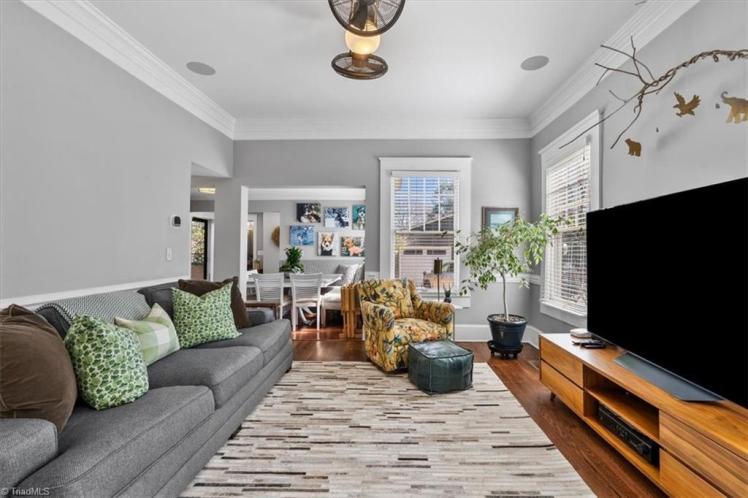


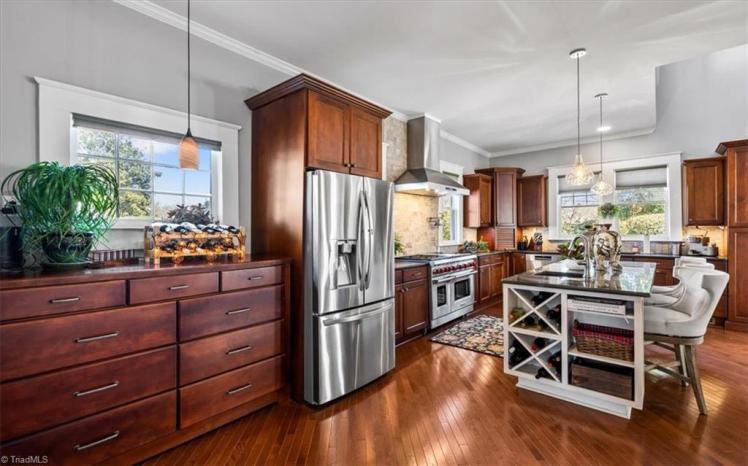


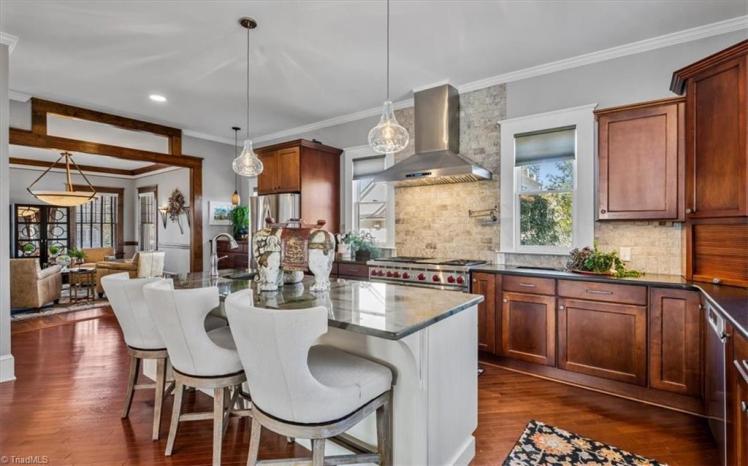


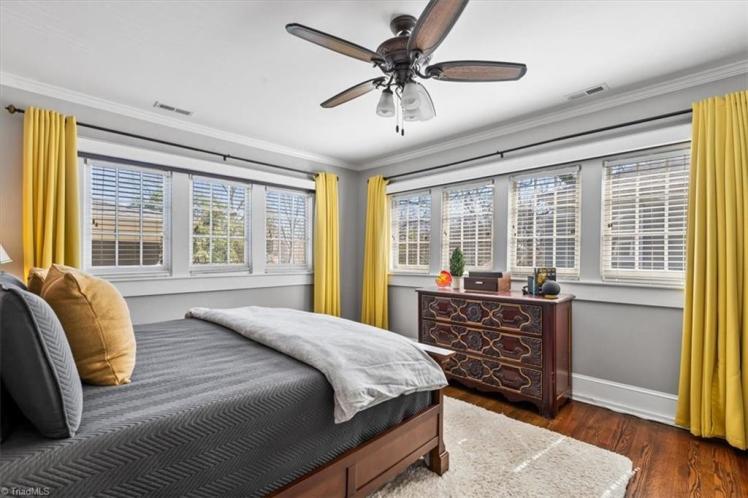

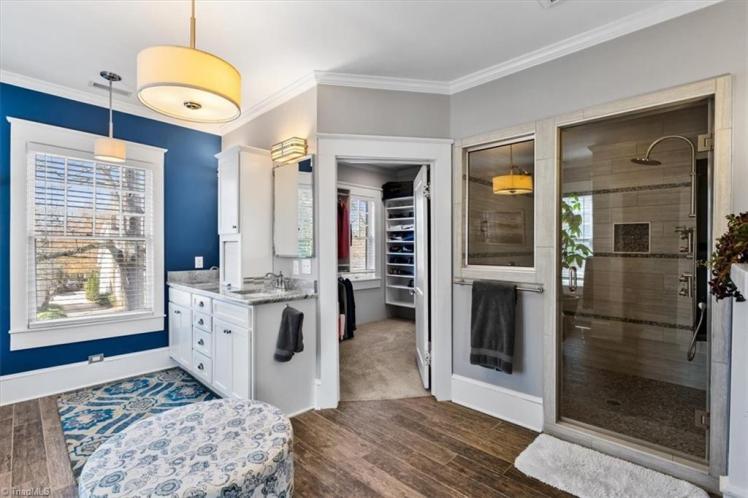


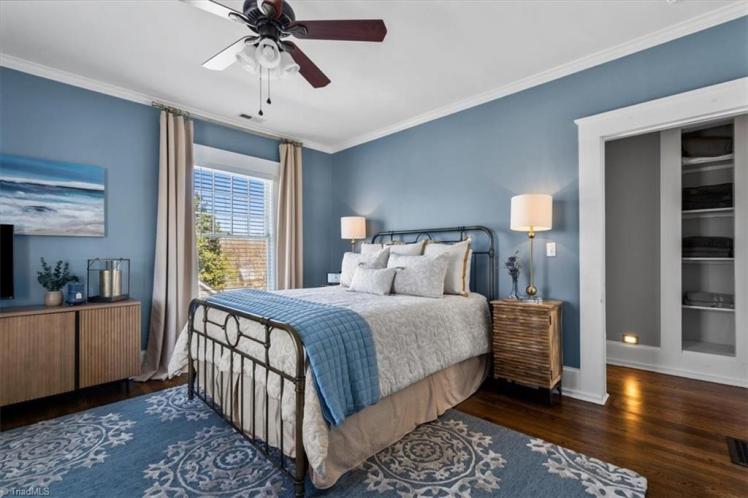


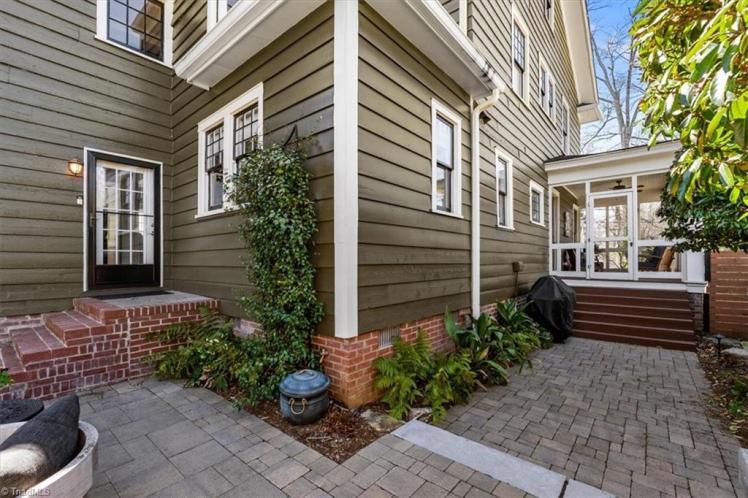


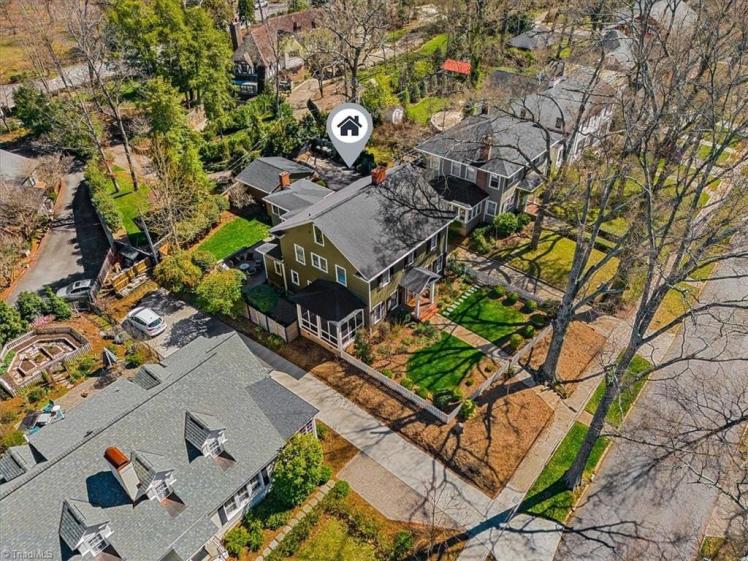

1012 N. Eugene Street, Greensboro
The Tyree and Angela Dillard House
- Sold for $825,000 on May 2, 2025 (listed at $848,000)
- 4 bedrooms, 3 bathrooms, 3,005 square feet, 0.19 acre
- Price/square foot: $275
- Built in 1920
- Listed March 20, 2025
- Last sales: $550,000, December 2019; $217,000, October 2013
- Neighborhood: Fisher Park Historic District (local and NR)
- District NR nomination: “Colonial Revival, residence, 1920-25”
- The original owners were Achilles Tyree Dillard (1873-1950) and Angela Tinsley Dillard (1885-1972), who lived in the house for 30 years. Tyree was a “specialty man” for Armour & Company, where he worked for 36 years. Angela sold the house after he died.
124northridge


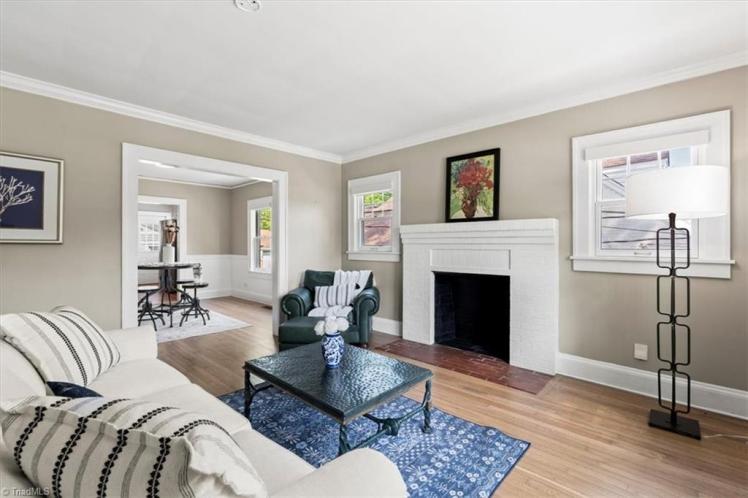


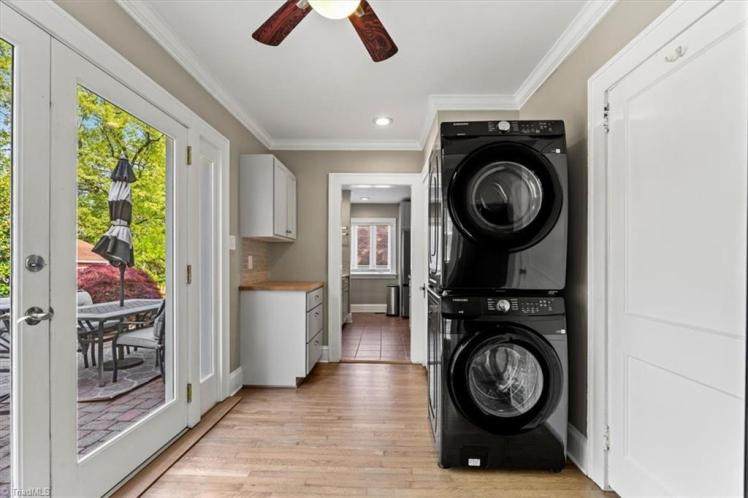


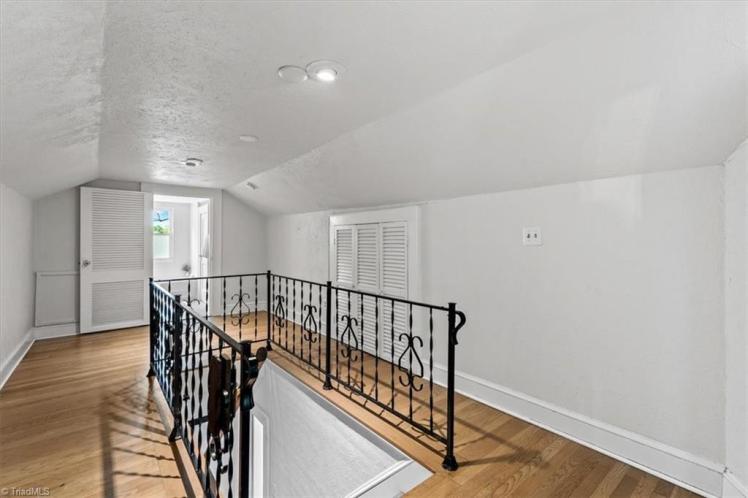


124 Northridge Street, Greensboro
- Sold for $425,000 on May 1, 2025 (listed at $425,000)
- 3 bedrooms, 2 1/2 bathrooms, 1,685 square feet, 0.17 acre
- Price/square foot: $252
- Built in 1936
- Listed April 17, 2025
- Last sale: $380,000, January 2024
- Neighborhood: Lindley Park
- Note: The original owners were Robert W. Lentz (1896-1976) and Agnes Ellis Lentz (1901-1967), who were listed at the address in 1937, the first year it was included in the city directory. Robert was a repairman for Burroughs adding machines.
- In 1944, they sold the house to Paul M. Fadis (1903-1988) and Constance M. Fadis (1911-1974). Paul and his brother Nick, who lived with them, were the proprietors of Jim’s Lunch on South Elm Street.
- Wilmer LaFayette Dellinger (1902-1977) and Evie Estelle “Stella” Irvin Dellinger (1909-1977) bought the house in 1960. Wilmer was a supervisor with Gladiola Biscuit. The house was sold by Wilmer’s estate around 1977.
228sfayetteville


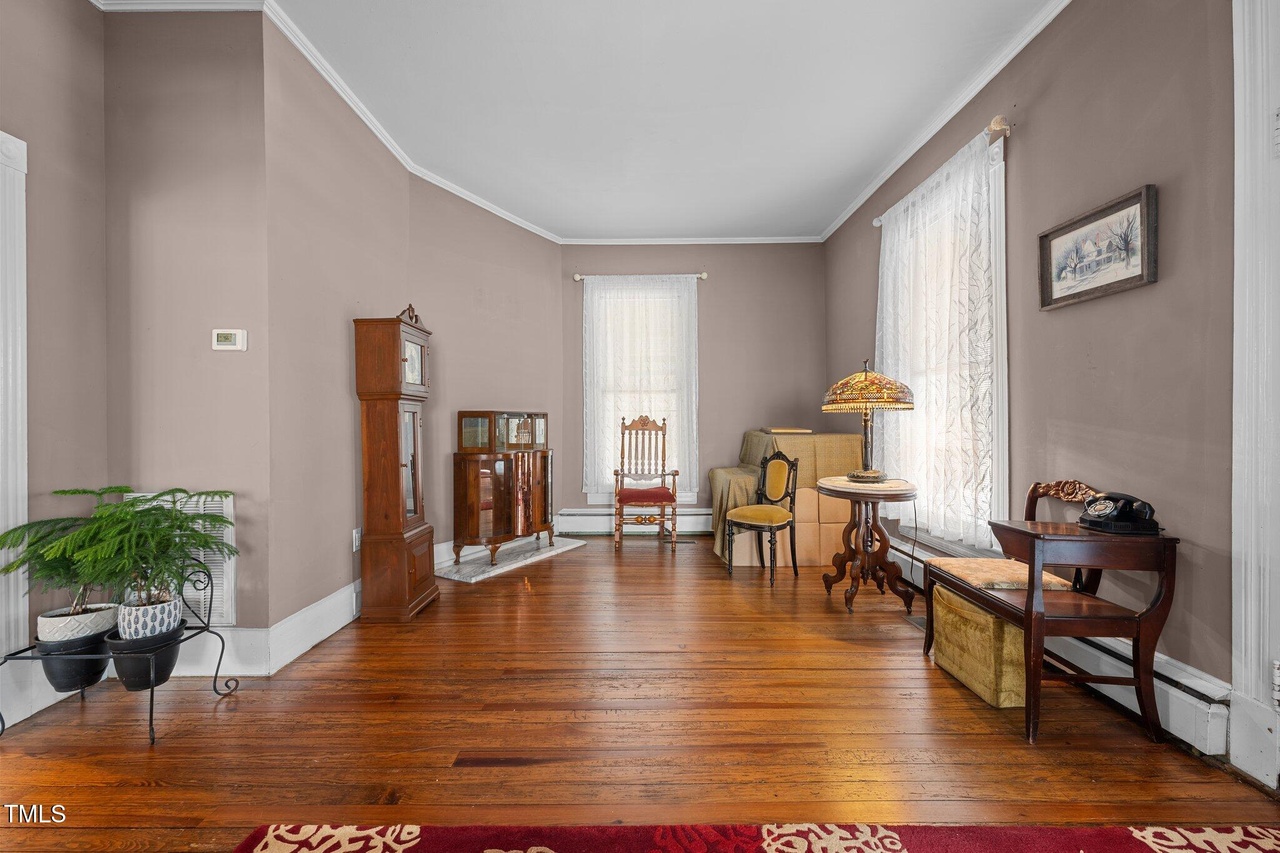
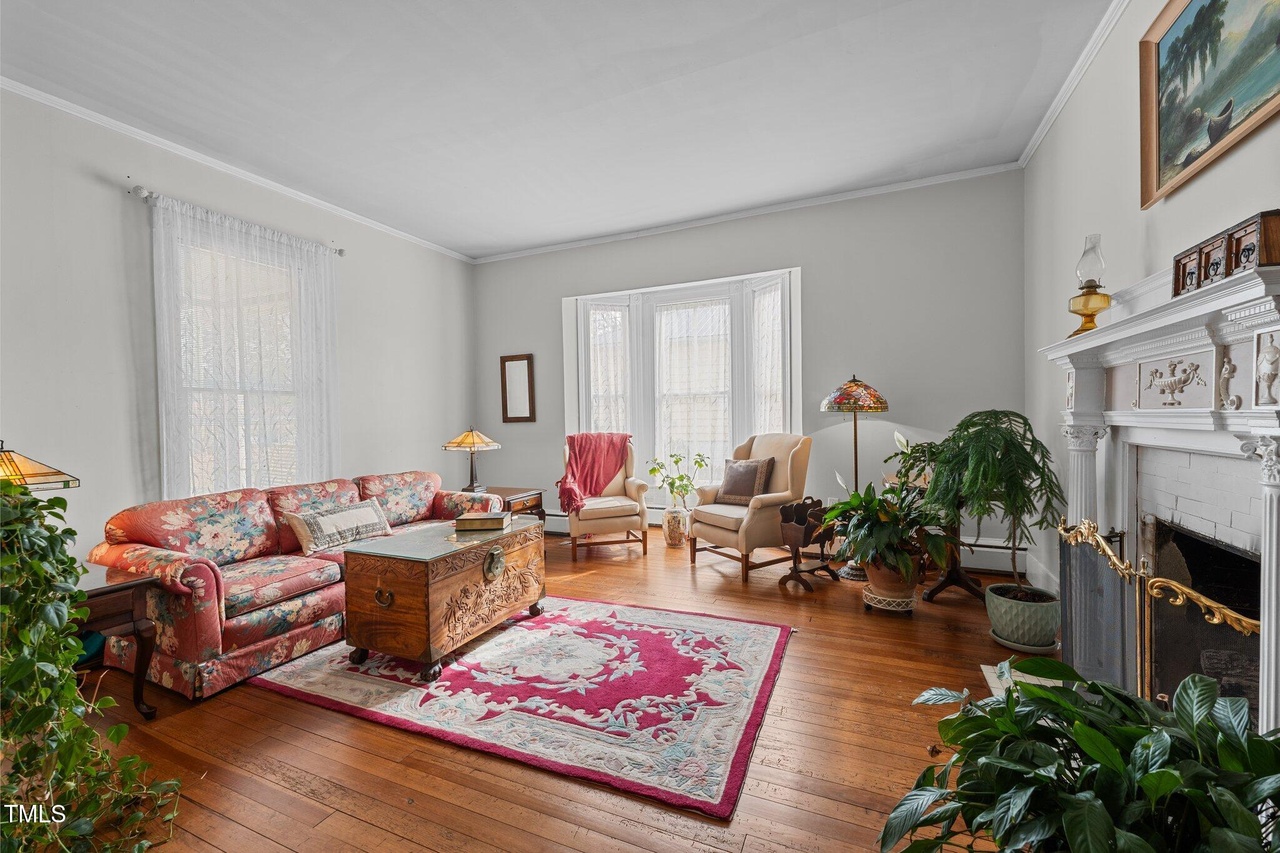
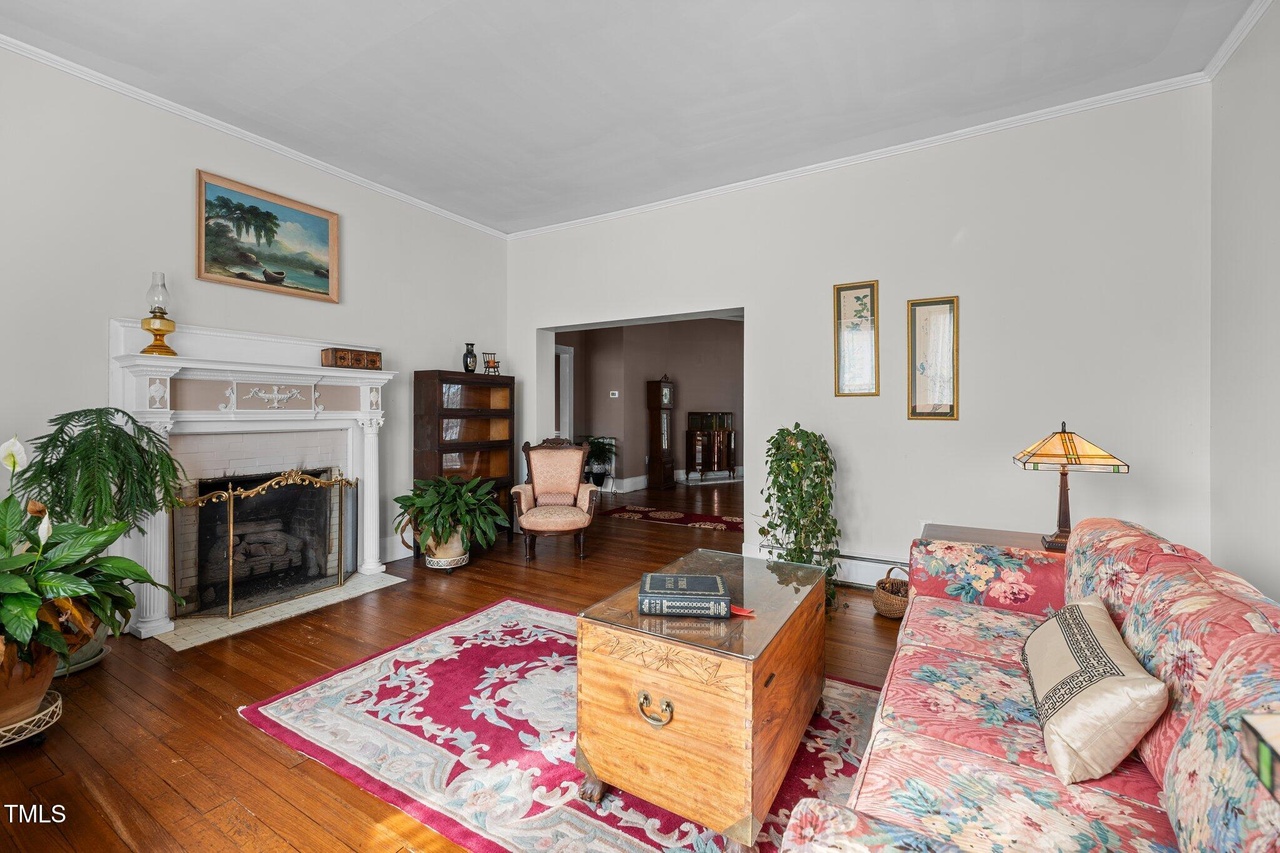
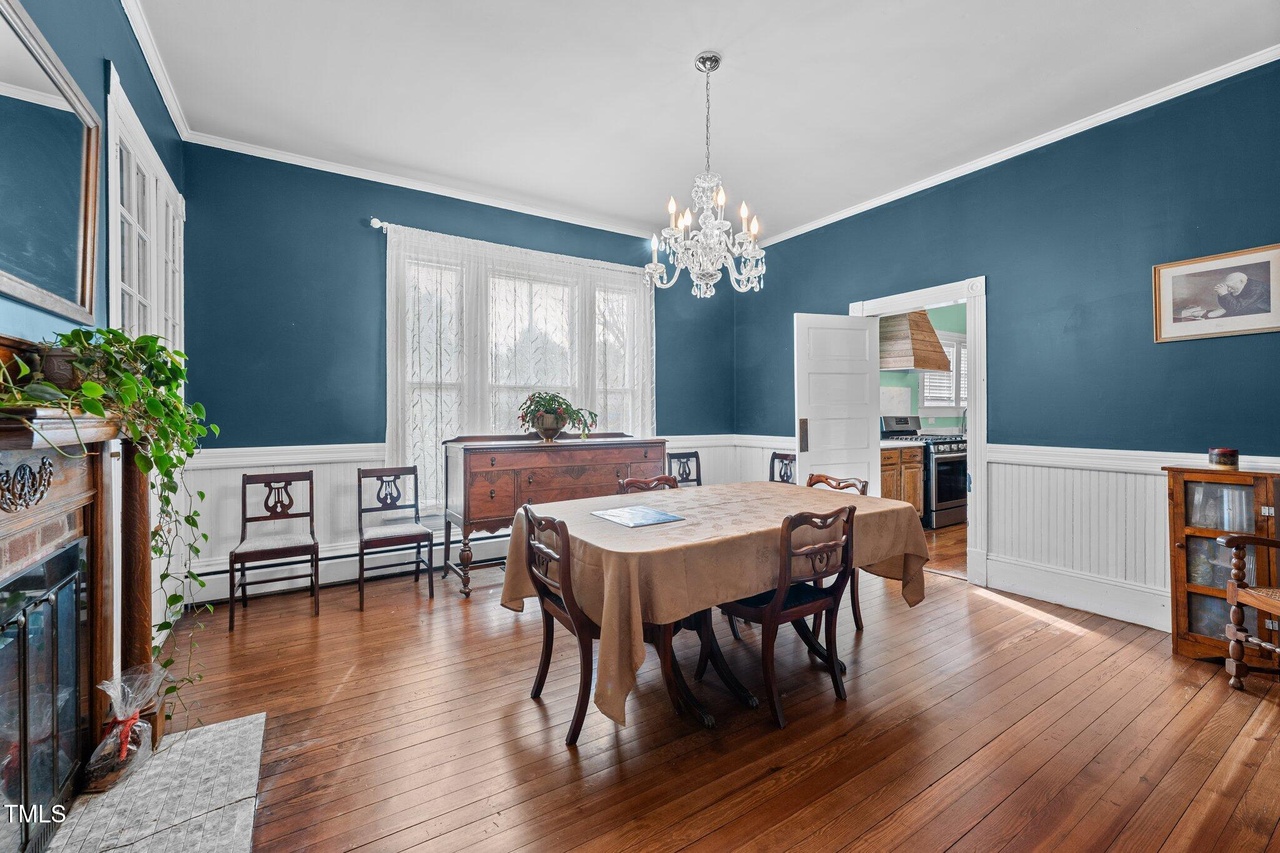
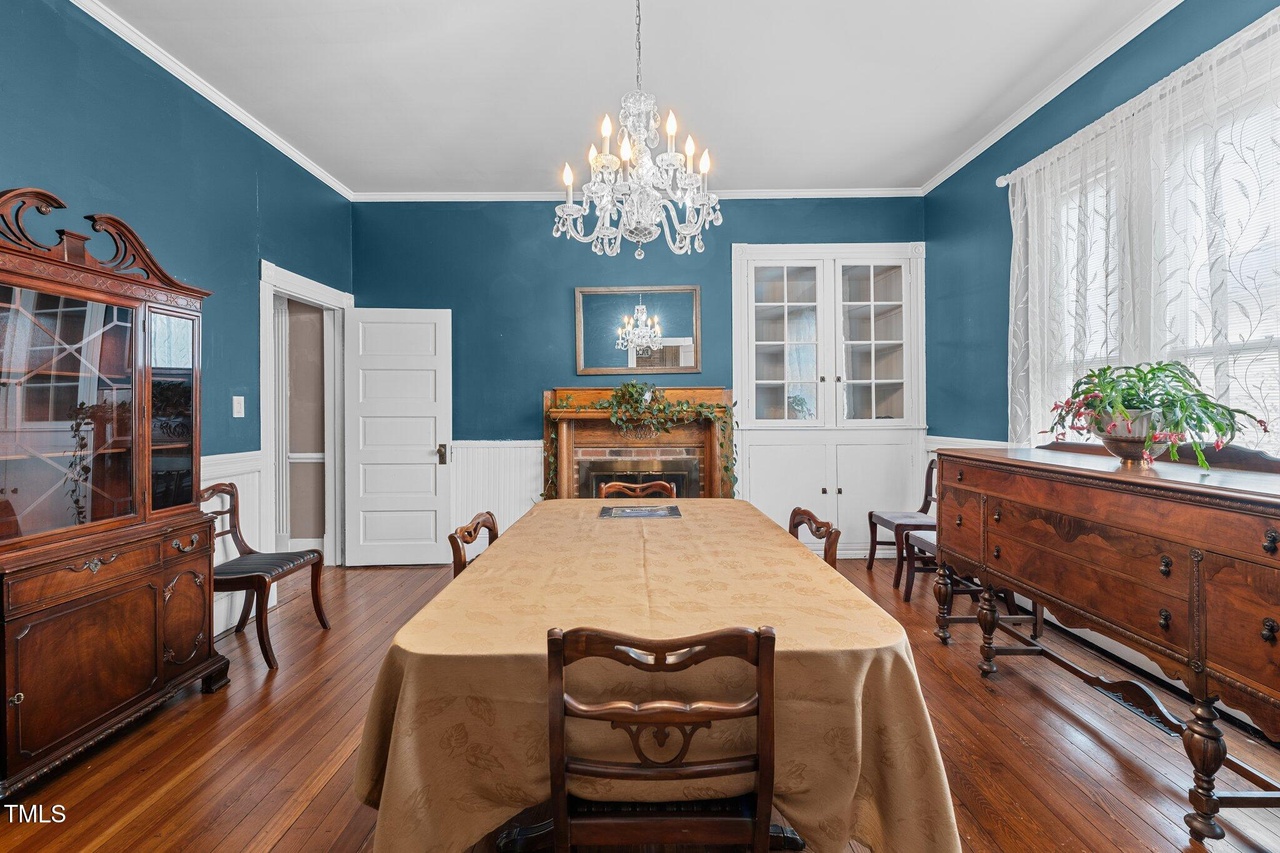


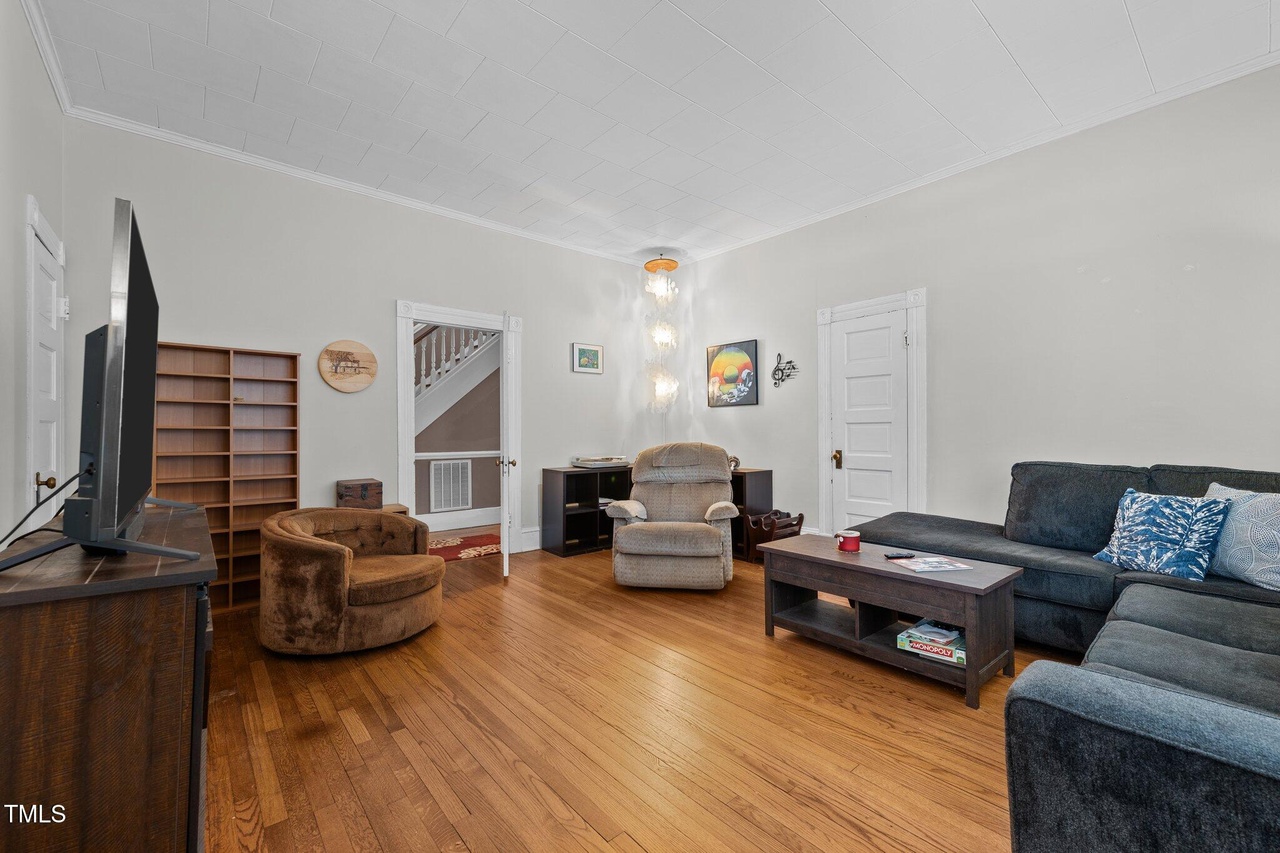

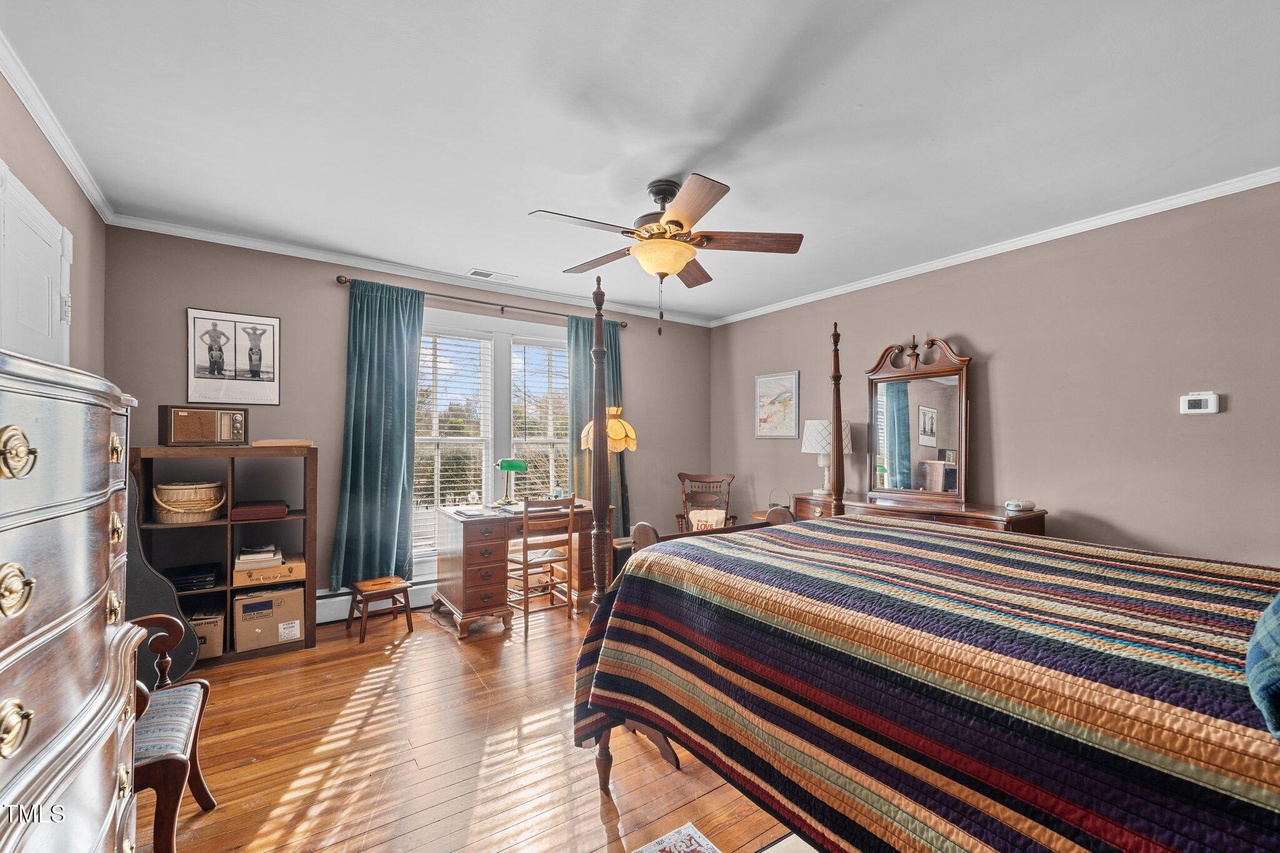
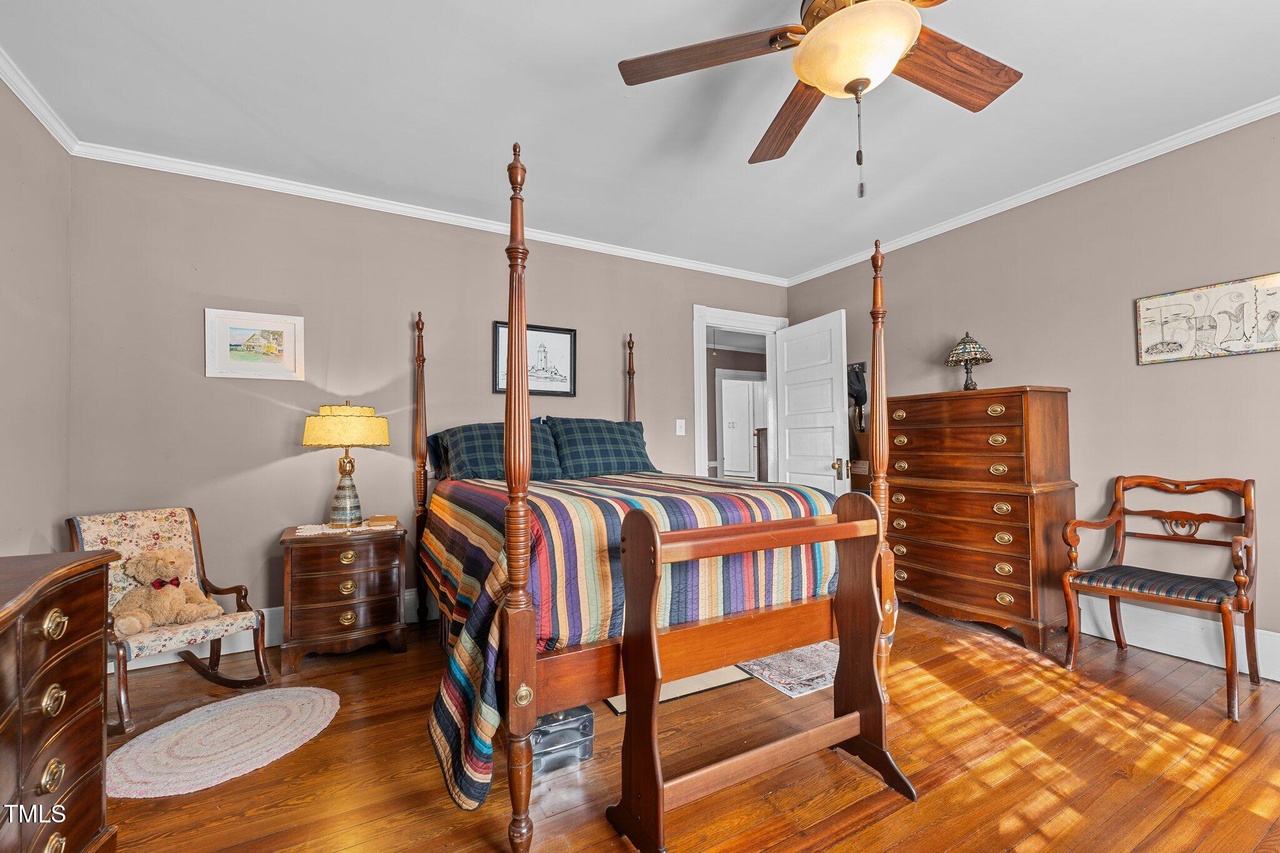

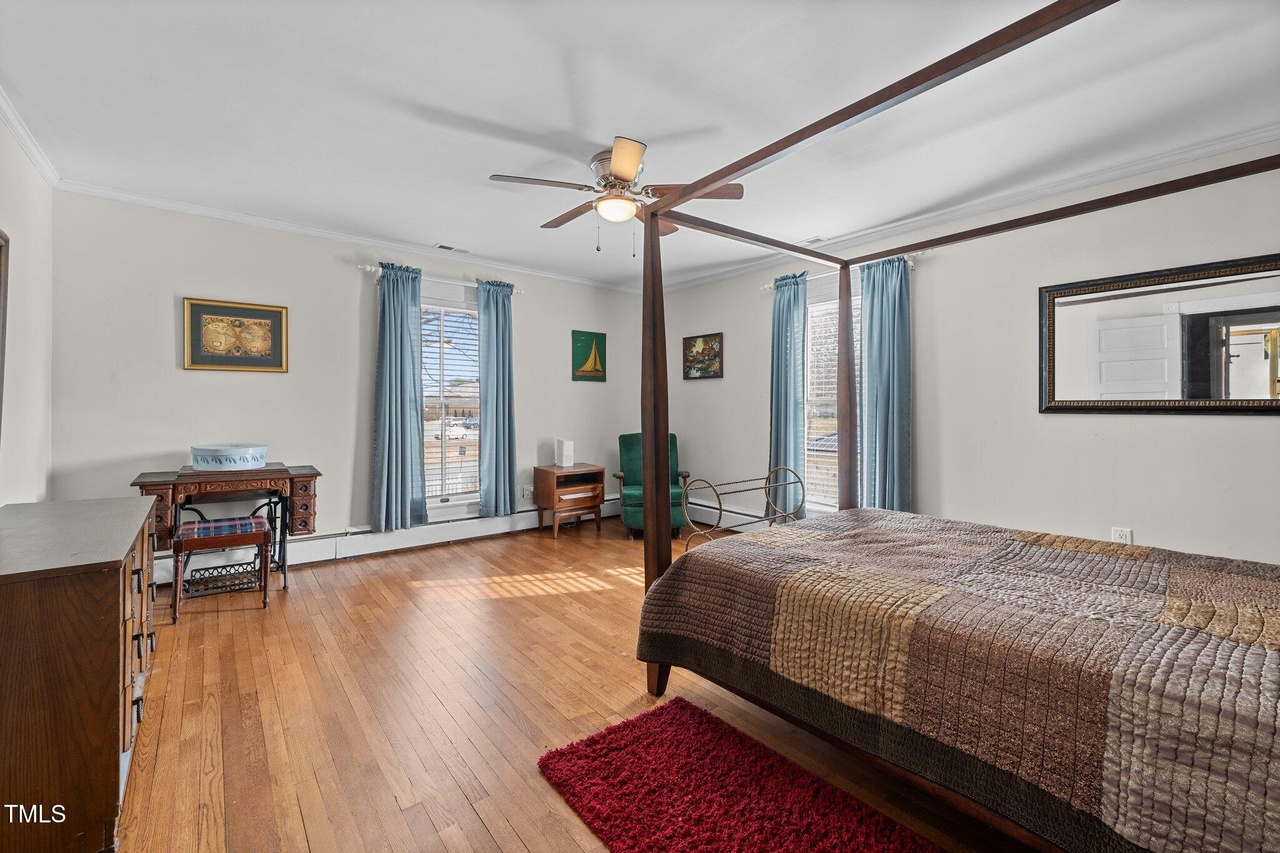
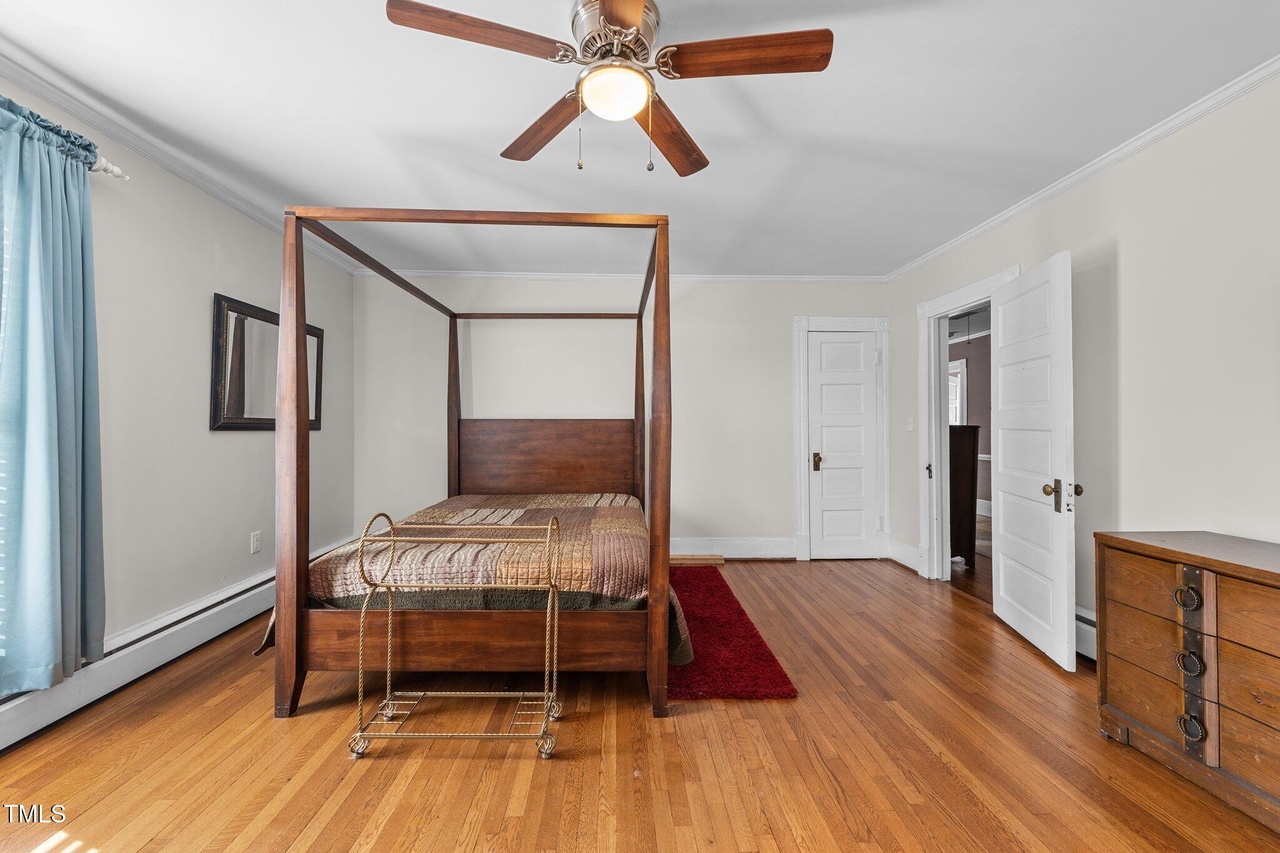


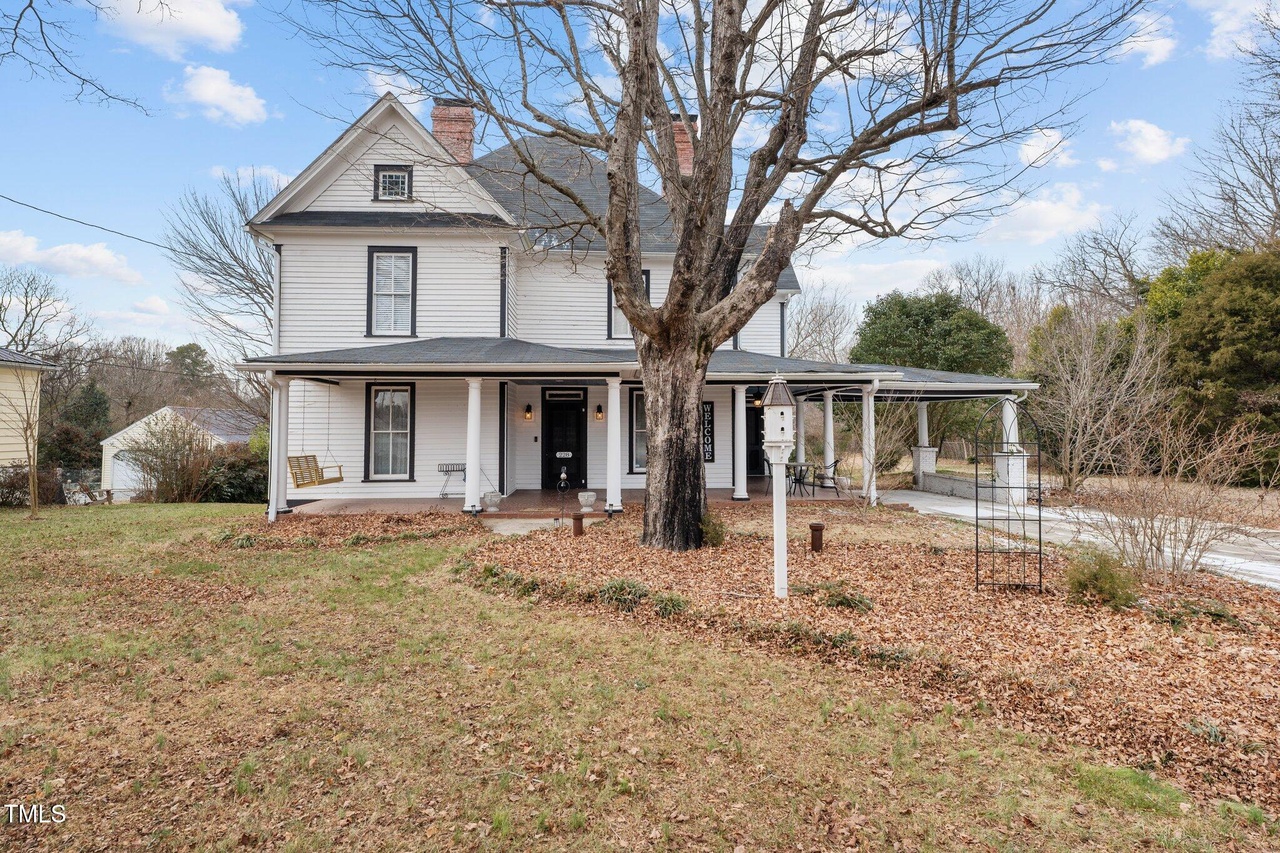

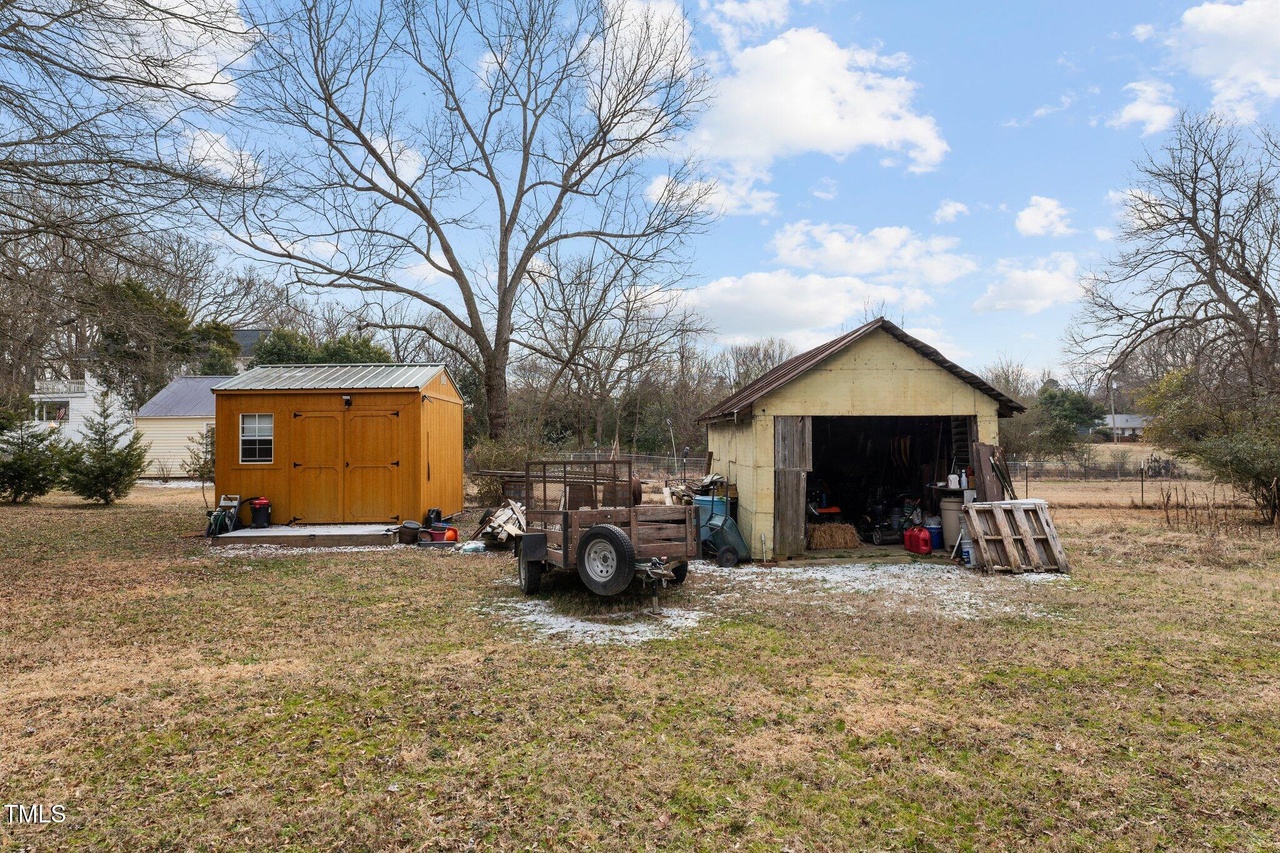
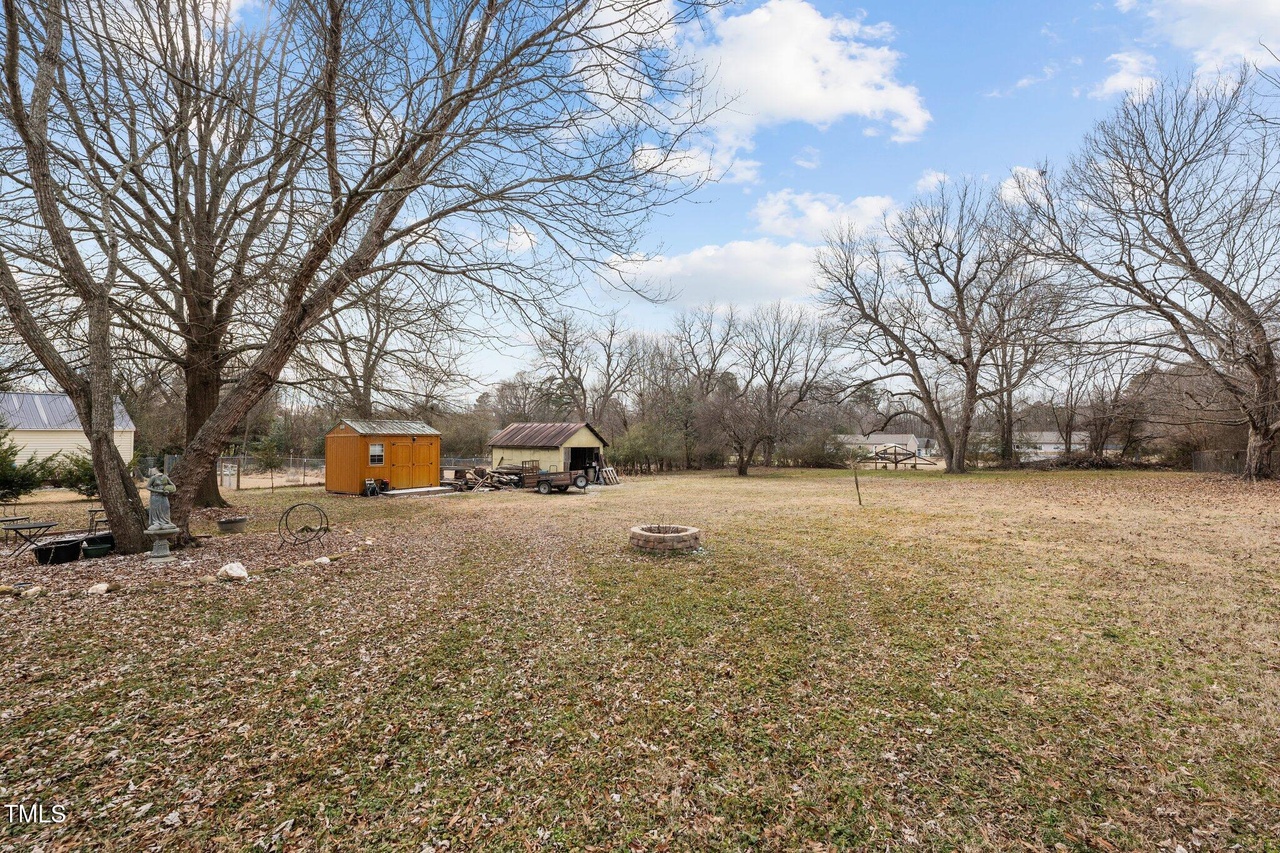

228 S. Fayetteville Street, Liberty, Randolph County
The W.T. and Beulah Gilliam House
- Sold for $372,500 on April 30, 2025 (listed at $400,000)
- 4 bedrooms, 2 bathrooms, 2,436 square feet, 0.92 acre
- Price/square foot: $153
- Built in 1905
- Listed January 24, 2025
- Last sales: $242,500, December 2020; $240,000, June 2017
- Neighborhood: Liberty Historic District (NR)
- Previous listing: “Featured in a major motion picture …” The Internet Movie Database lists these movies that were filmed in Liberty. If the listing referred to one of those, it was stretching the meaning of “major.”
- District NR nomination: “The W.T. and Beulah Gilliam house is an excellent example of an upright-and-wing, two-story, frame residence. It has a high-pitched hipped roof with a large pedimented dormer at the south comer.
- “Its one-story irregularly shaped porch has a hipped-roof and wraps a portion of the upright bay at the south end of the fayade and terminates in a porte-cochere at the north end. A polygonal bay window is present at the south elevation and block-glass inserts decorate the front and side-facing gables at the attic level.
- “Elaborately corbeled, interior, masonry chimneys are also present. It is sheathed in weatherboard.”
1503wiltshire
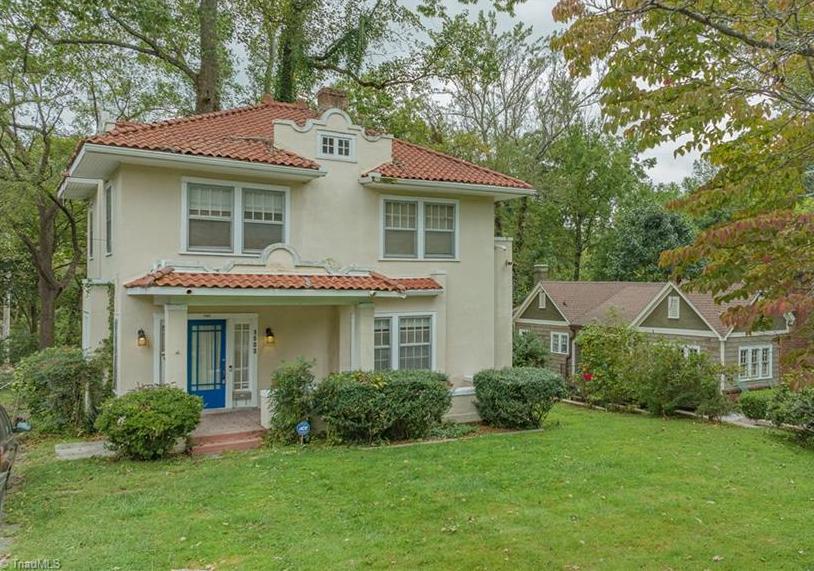
1503 Wiltshire Street, High Point
- Sold for $238,720 on April 29, 2025 (originally $270,000)
- 4 bedrooms, 2 bathrooms, 1,871 square feet, 0.23 acre
- Price/square foot: $128
- Built in 1933 (per county but probably a couple years earlier; see note)
- Listed September 22, 2023
- Last sale: $195,000, September 2021
- Note: The property first appeared in the city directory in 1930 under its original address, 1427 Wiltshire. The house was built by insurance agent C.G. Burrows and his wife, Ethel M. Burrows. They used it as a rental property until losing it to foreclosure in 1939.
- Dr. Louis L. Wilkinson (1899-1991) and Cozy Byrd Windham Wilkinson (1899-1995) bought the house when they moved to High Point in 1943 and lived in it until 1953. Louis was born in Suzhow, China. He was an emergency room physician at High Point Memorial Hospital. Louis and Cozy lived in High Point until their deaths.
1024tobacco
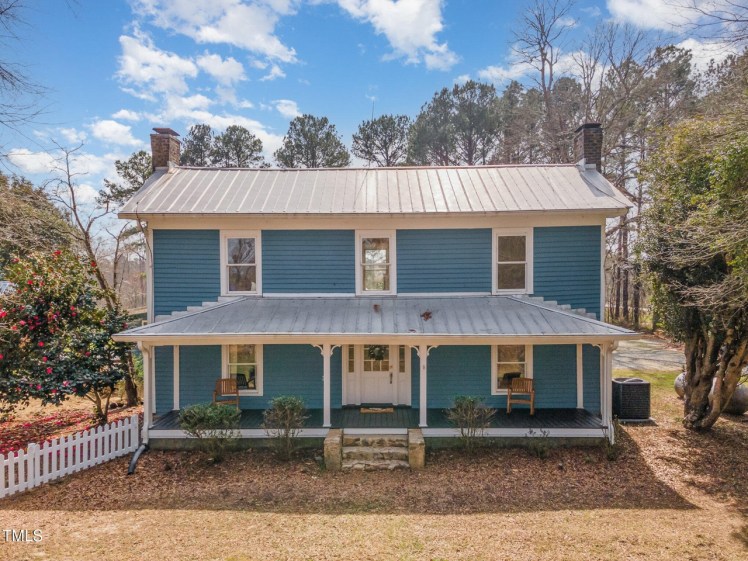



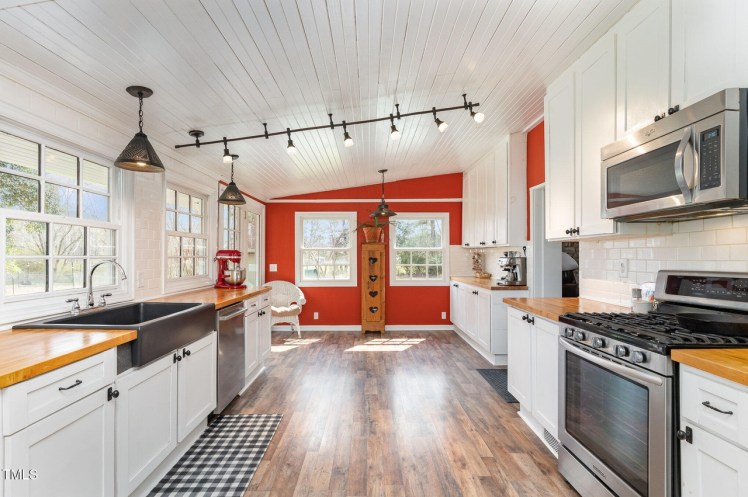





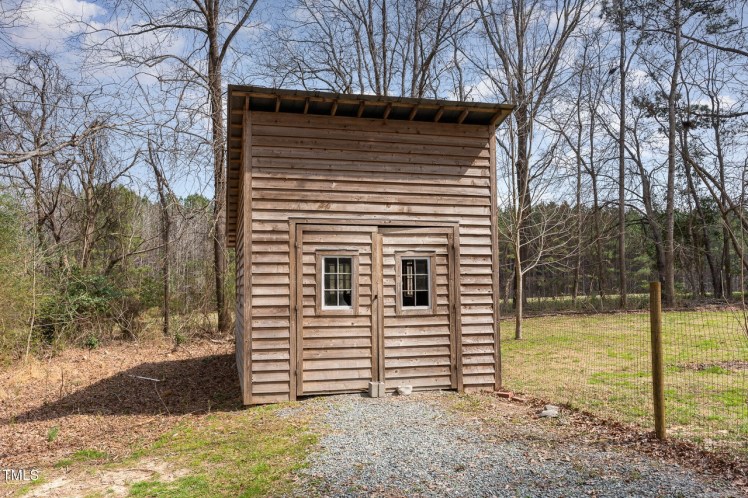


1024 Tobacco Road, Chatham County
The Britten-Norwood House
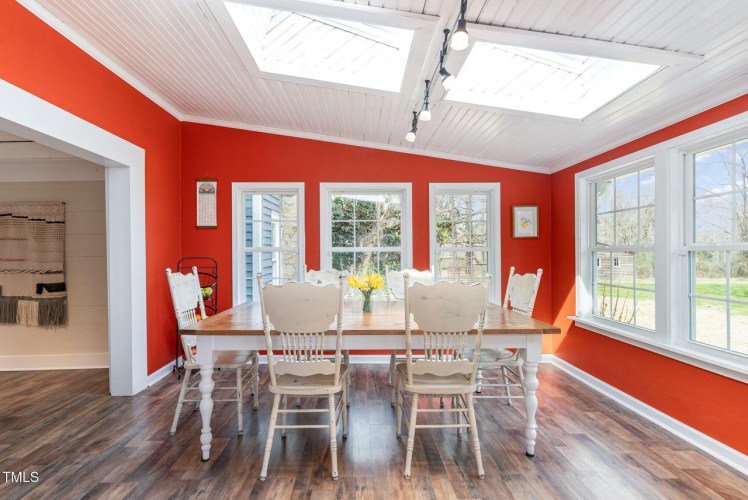
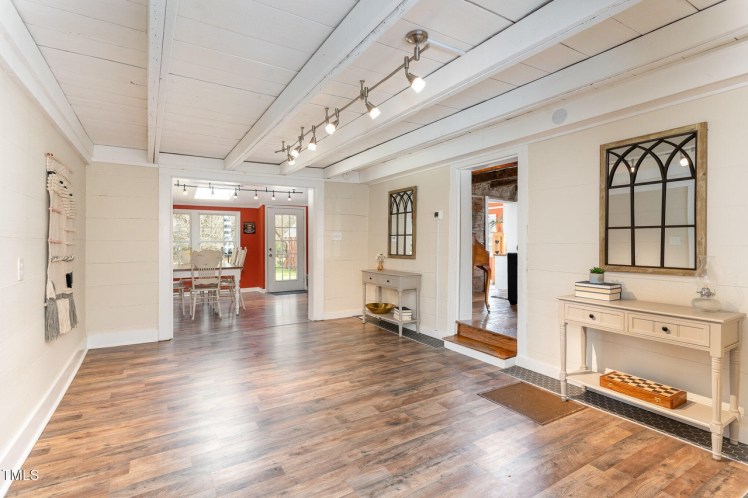
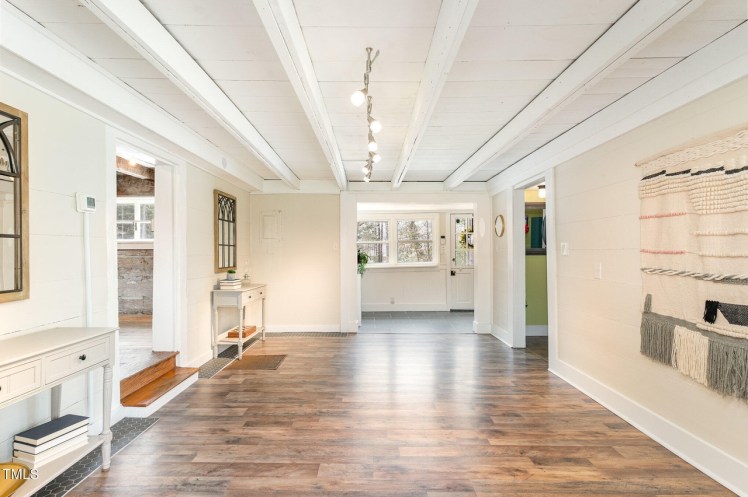
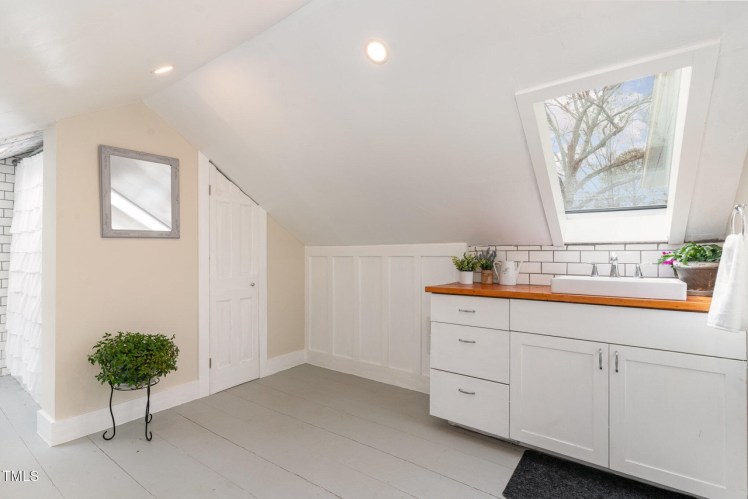
- Sold for $680,000 on April 28, 2025 (listed at $649,000)
- 3 bedrooms, 3 bathrooms, 2,408 square feet, 3.42 acres
- Price/square foot: $282
- Built in 1870 (see note)
- Listed March 18, 2025
- Last sale: $535,000, December 2022
- Neighborhood: Located about 10 1/2 miles north of Pittsboro. The house has a Pittsboro mailing address.
- Note: County records show a 1900 date, but other sources are consistent with 1870.
- Historical photo from DigitalNC: “More information about this photograph can be found on page 182-183 of the book The Architectural Heritage of Chatham County, North Carolina written by Rachel Osborn and Ruth Selden-Sturgill.”
- Chatham County Historical Association, Architectural Update, 2019-2012: Greek Revival; wood siding; stone foundation; two story; metal roof; hip roof front porch with four posts and modest brackets; three stone and brick chimneys (one on each end of the main house and one off the rear ell).
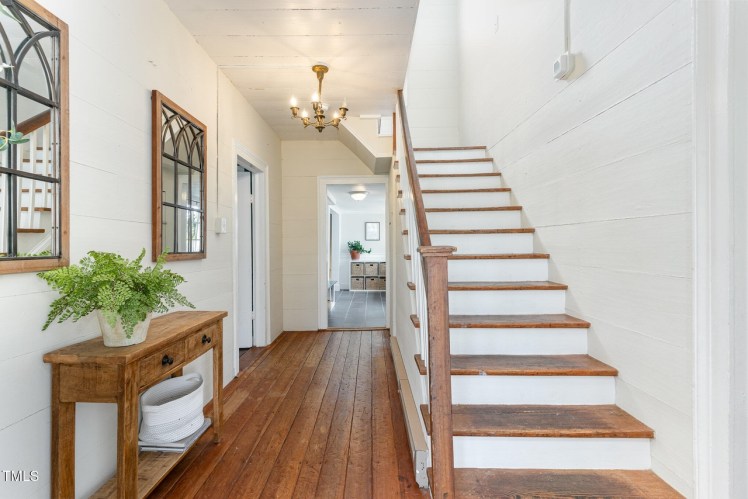
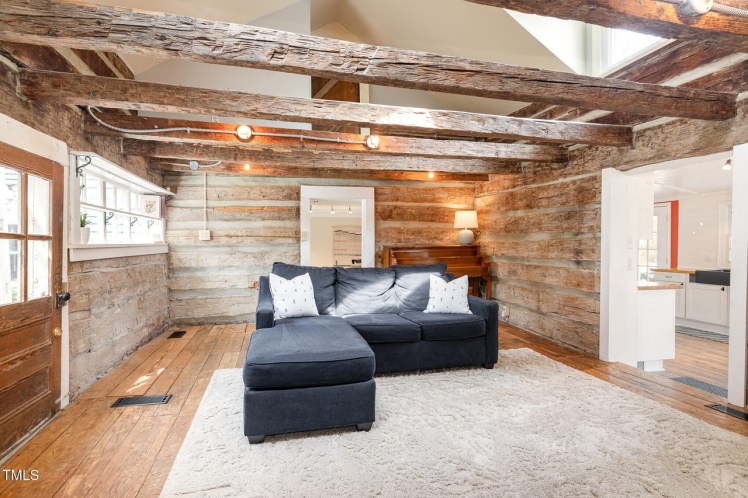
- “A picket fence surrounds portions of the home. There are several small outbuildings on the property. There is a deck off one side of the home. The front door has sidelights. Log is visible on the interior of the rear ell. The rear ell has a Dutch door on one side.
- “The front porch posts are not the originals, nor is the front door. Former owner David Hansen had a professional with knowledge of log cabins estimate the log building (now part of the rear ell) to c.1840.”
- Grady P. Norwood (1891-1970) and Lou Pearl Mann Norwood (1903-1962) bought the property in 1943, as part of a much larger tract, from Abner Benton Pope (1891-1959) and Vera Ludy Pickett Pope (1898-1990). Grady and his brothers Harry and Lewis opened a grocery store in Pittsboro in 1931. Lou Pearl was active with the Chatham County home demonstration clubs.
- In 1955, Grady and Lou Pearl gave the house to their sons Harry Ross Norwood (1929-1997) and James Franklin Norwood (b. 1931). James transfered the deed to Ross in 1969. Ross had sold it by 1982.
1100reatkin


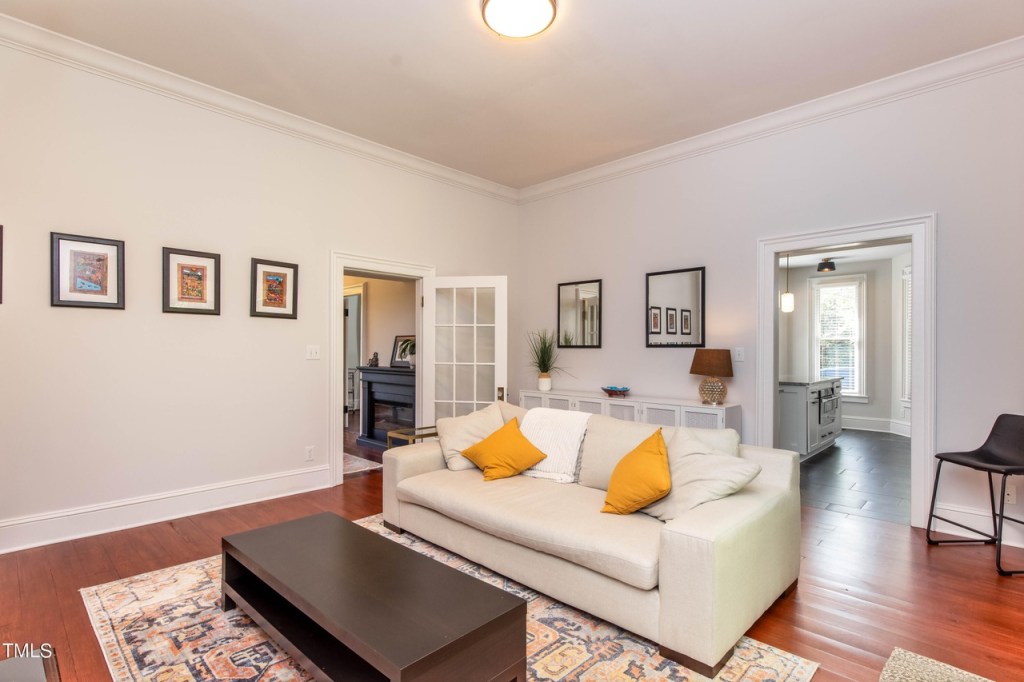


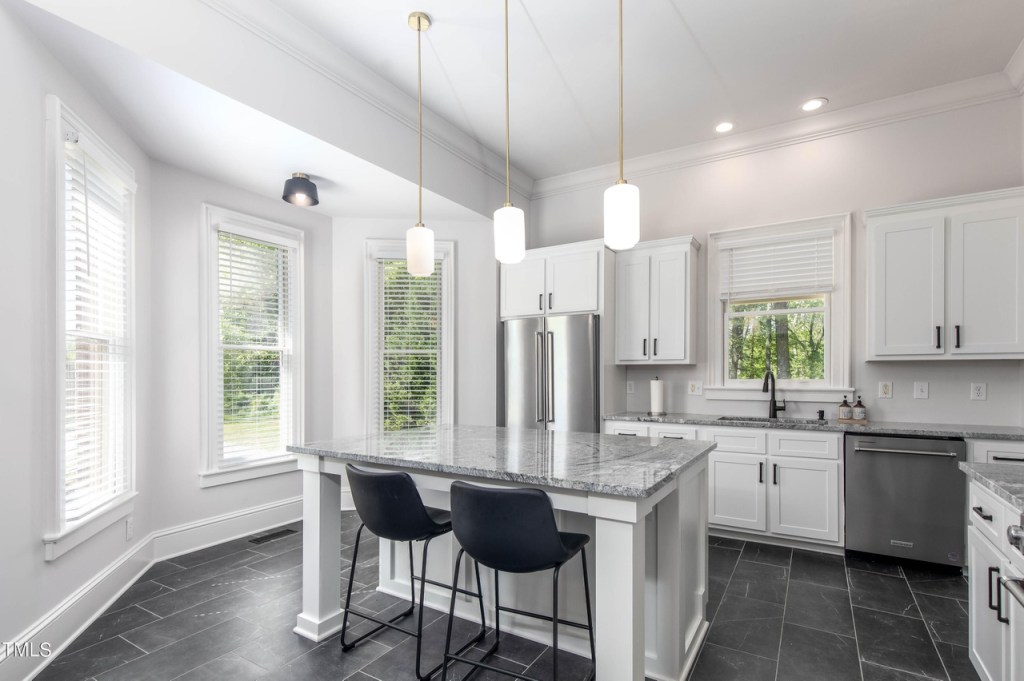

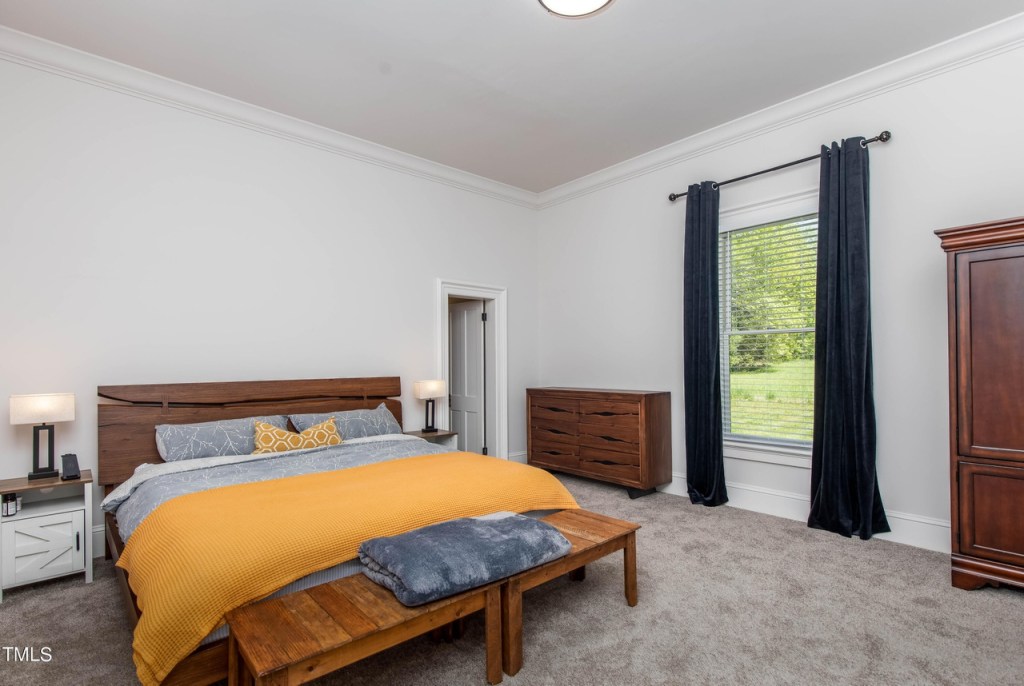
1100 Reatkin Lane, Swepsonville, Alamance County
The Quackenbush House
- Sold for $655,000 on April 28, 2025 (originally $699,900)
- 4 bedrooms, 2 1/2 bathrooms, 3,180 square feet, 1.47 acres
- Price/square foot: $206
- Built in 1850
- Listed April 19, 2024
- Last sale: $475,000, September 2023; before that — land, March 1950, price not recorded on deed; house, mid-1990s, price and exact date unknown (see note).
- Note: When the house was sold in September 2023, it was in very good condition. Now it costs $225,000 more, almost a 50 percent increase. Click here to compare pictures from the 2023 listing.
- County records and for-sale listings show the date as 1998. Other records document its history since before the Civil War.
- Architectural Inventory of Alamance County: “This house is a two-story, Italianate I-house with a ‘Triple-A’ roof line. Relatively unaltered, the house is three-bay wide, single-pile with a one-story rear-ell.
- “The house has a full-height projecting center front gable bay, paired by drop pendant brackets at the eaves, returns in the gable ends large six-over-six windows [now, regrettably, one-over-one replacements] with unusual curved surrounds and a hip roof porch carried by pairs and triples of chamfered posts on brick plinths.
- “The long rear ell may have been an earlier c. 1850 Italianate dwelling, remodeled and joined to the later Italianate house.”
- The Architectural Inventory states that “the house was owned by the Quackenbush family from before the Civil War up until the 1990s.” Ownership can be traced online back to David Vance Quackenbush (1886-1962) and Lelia Ruth Dark Quackenbush (1888-1986). David was the proprietor of Graham Lumber Company.
- Census records indicate he was born in Chatham County, where his father apparently lived his entire life, so he didn’t inherit or buy the house from his father, William Jacob Quackenbush. Deeds show David buying three properties from a possible relative, W.B. Quackenbush, in 1916 and 1918 (as well as at least 15 properties from other owners around the same time). Identifying the exact locations is essentially impossible because the deeds’ obsolete descriptions of the properties reference adjoining property owners and long-gone stones and other markers rather than street names and addresses. The county’s online database of deeds doesn’t appear to document ownership of the house (or any other property in Alamance) by members of the Quackenbush family in the 19th century.
- The home’s original address was 1205 S. Main Street in Graham. “In October 1996 it was moved 3 1/2 miles to its current location, just off N.C. 54 north of the village of Swepsonville,” the Architectural Inventory says. That survey gives the original location as “on West Moore Street,” but a 1994 document from the State Historic Preservation Office shows it as 1205 S. Main, now the location of South Graham Medical Center. That letter references an upcoming road project, the construction of which may have prompted the moving of the house two years later.
- The buyers of the house in 1996 were Jerry Mack Cox (1944-2015) and Susan Coble Cox, who owned the property at 1100 Reatkin Lane to which the house was moved. Jerry’s parents, Kindred Mack Cox (1908-1984) and Clara Bivins Cox (1913-1993), had bought the land in 1950, and it has remained in the family ever since.
- The 1994 letter asserts the opinion of the State Historical Preservation Office that the house was eligible for the National Register (it most likely wouldn’t be eligible now because it has been moved). That view wasn’t shared by the Federal Highway Administration, which, presumably, was keen to see the house torn down. The preservation office did note that the house had undergone significant changes, including the loss of two interior chimneys and the replacement of the front porch.
- The document also says that, as of 1994, the house retained both “its original wood siding” and the “highly unusual — one-of-a-kind in Alamance County — curved window surrounds.” It did have wood siding, but it seems unlikely to have been original. The Architectural Inventory, published in 2014, has an undated photo that shows the house with wood siding, painted white.

2225maplewood


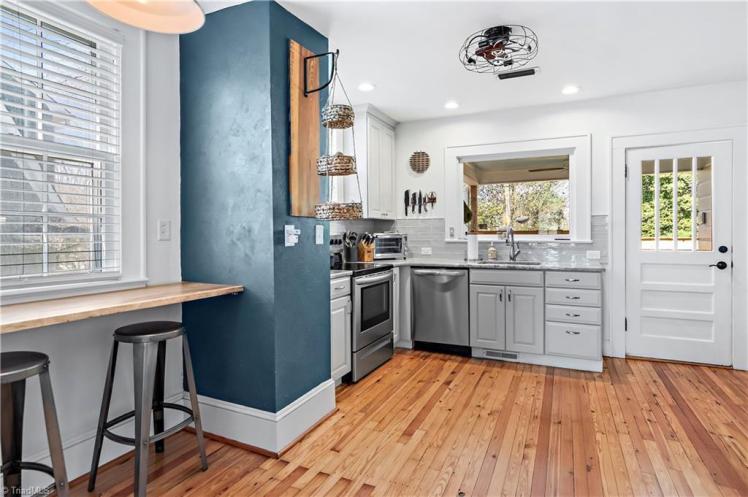
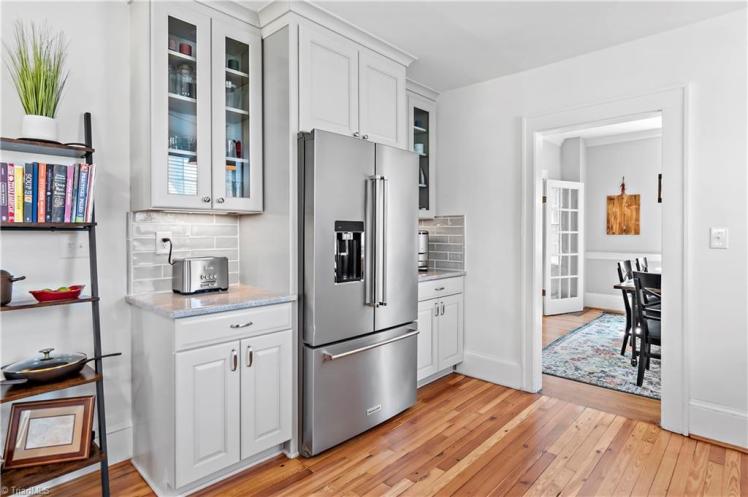
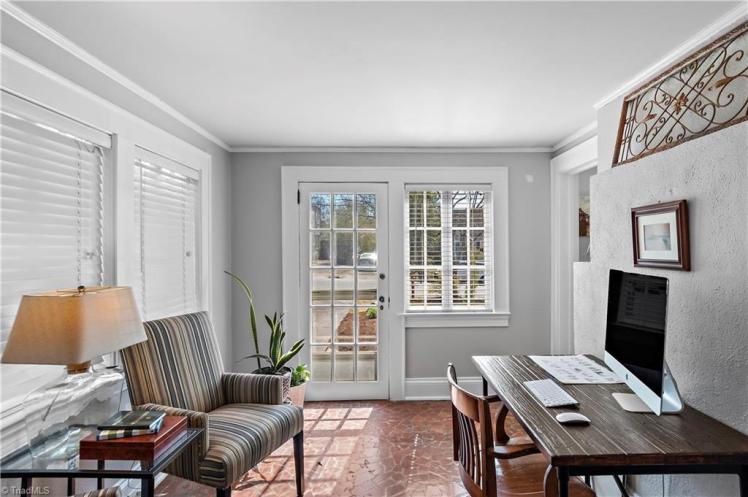


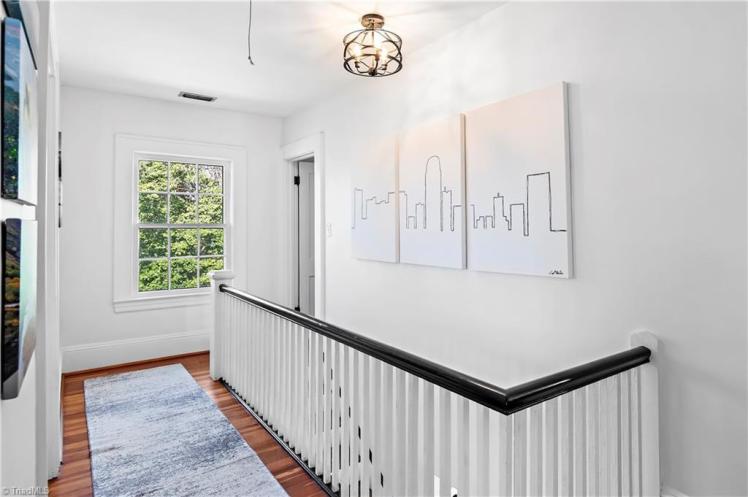


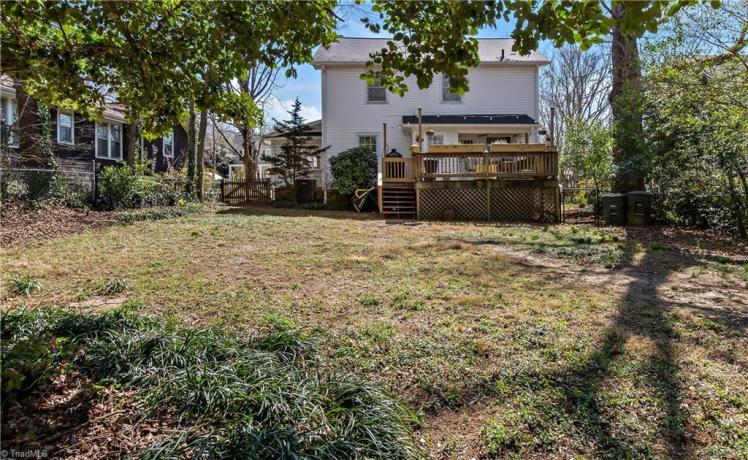
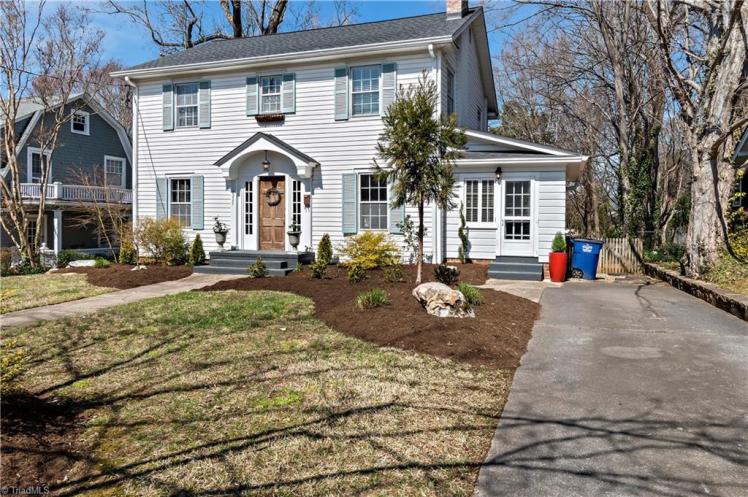
2225 Maplewood Avenue, Winston-Salem
- Sold for $506,500 on April 25, 2025 (listed at $500,000)
- 3 bedrooms, 2 1/2 bathrooms, 2,017 square feet, 0.24 acre
- Price/square foot: $251
- Built in 1925
- Listed March 21, 2025
- Last sale: $335,000, March 2021
- Neighborhood: Ardmore Historic District (NR)
- District NR nomination: “Colonial Revival. Two story; side gable; front-gable hood with arched opening on consoles at entry; vinyl siding; six-over-six, double-hung sash. 1925 CD: Joseph and Rose Tucker, construction engineer at R.J. Reynolds Tobacco Company”
417ford
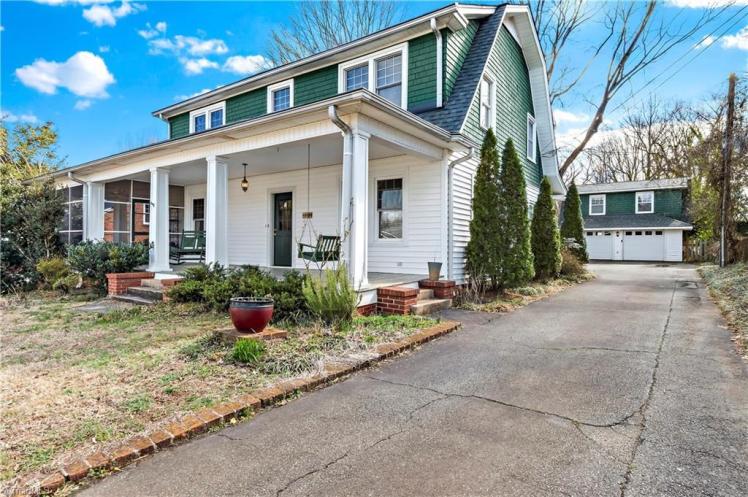


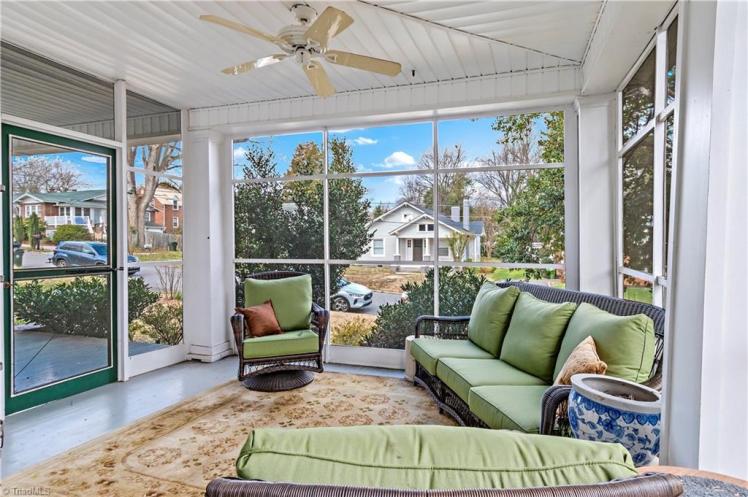


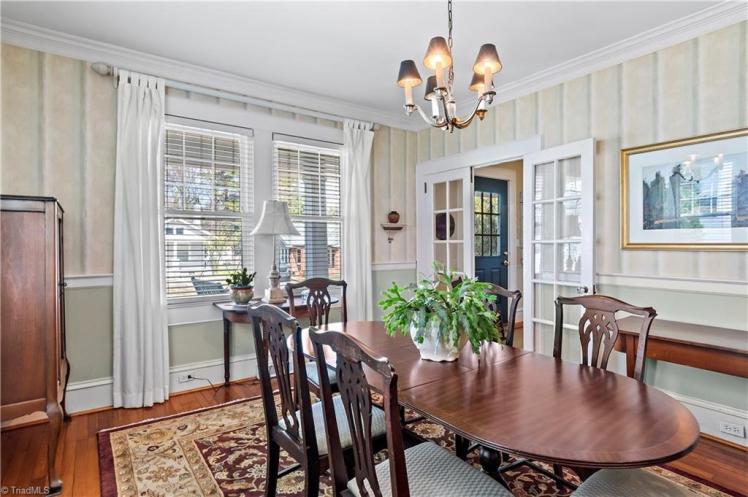
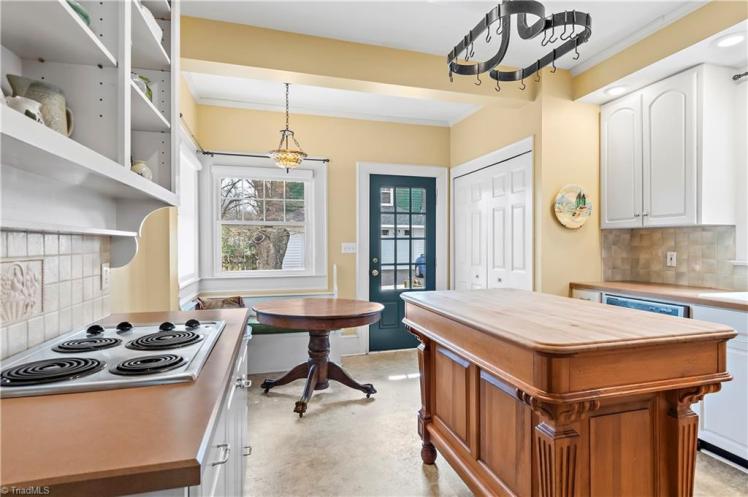
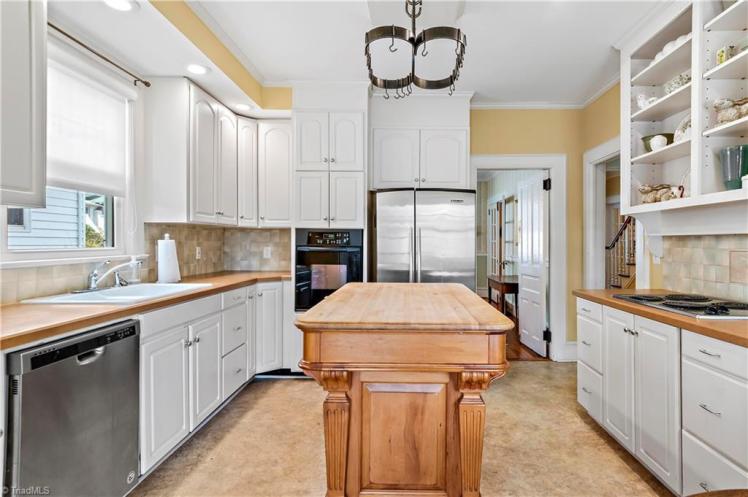

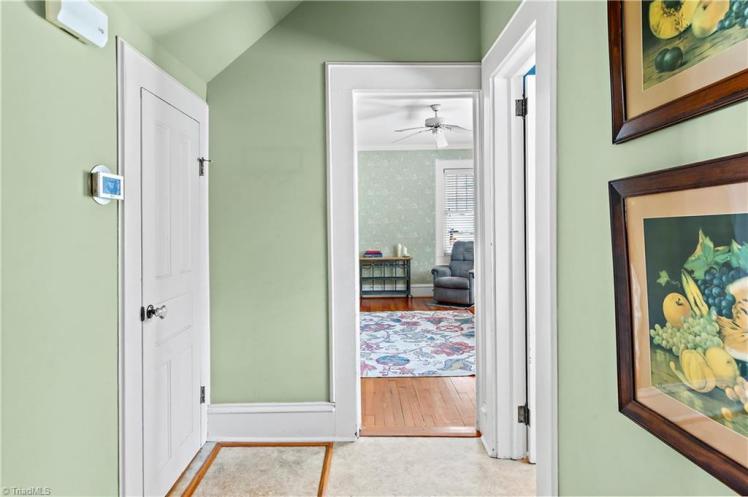


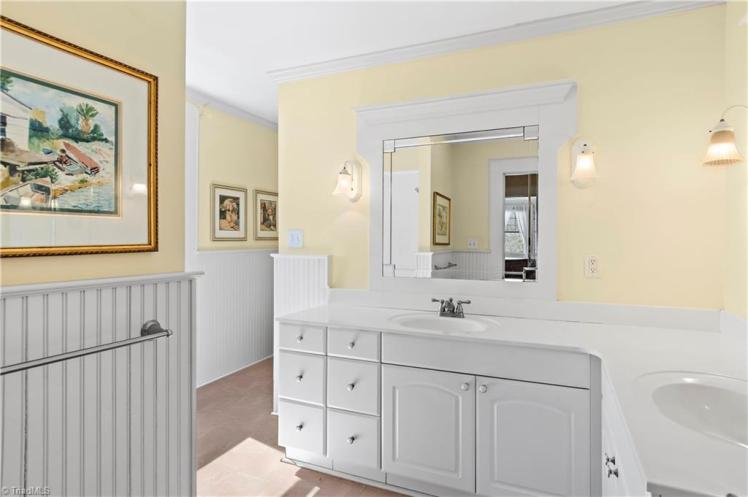
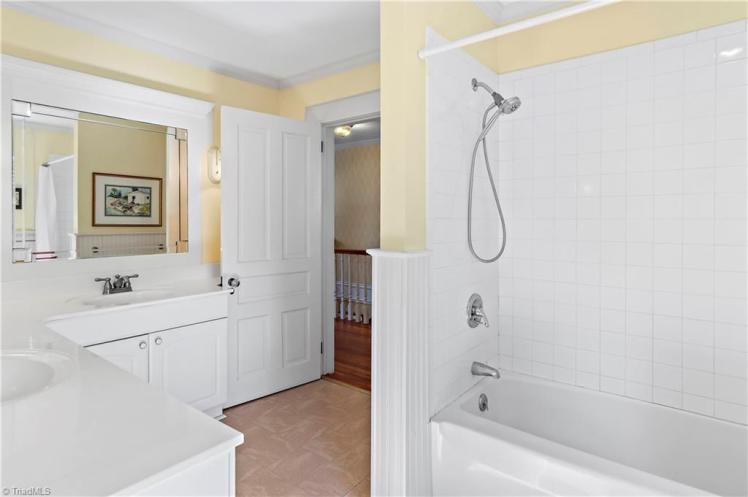


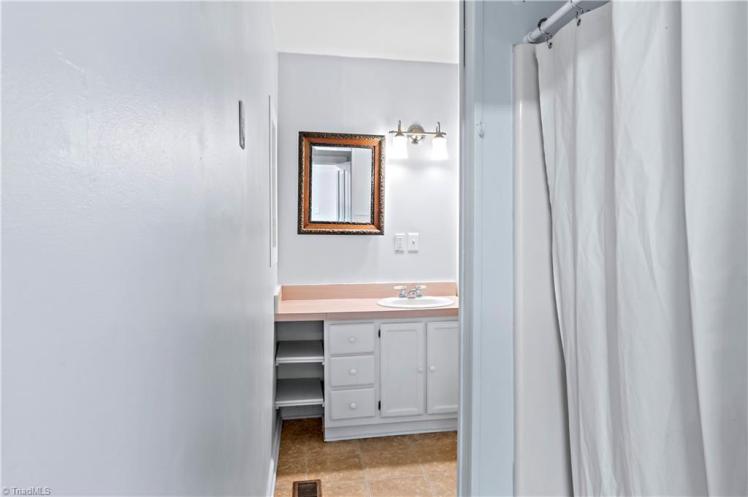


417 Ford Street, Lexington, Davidson County
- Sold for $305,000 on April 17, 2025 (listed at $299,900)
- 3 bedrooms, 2 bathrooms, 2,366 square feet, 0.36 acre
- Price/square foot: $129
- Built in 1923
- Listed March 14, 2025
- Last sale: $153,000, April 1999
- Neighborhood: Lexington Residential Historic District (local and NR)
- Note: The property includes a detached garage with an efficiency apartment.
- District NR nomination: “Two-story gambrel-roofed Dutch Colonial Revival with full-width shed dormers across the façade and rear elevation; partially-screened, hip-roofed front porch supported by square paneled posts spanned by a wood railing; 9/1 sash, brick interior chimney, vinyl siding on the first story and wood shingles on the second story.
- “The house appears on the 1929 Sanborn map and was occupied by H. Calvin and Maggie S. Miller in 1937. Mr. Miller was the president of the Parker-Miller Company, Inc. (a jewelry store).”
- Garage, ca. 1927: “Small version of the house, two stories with two roll-up garage doors and two bays above.”
7115th


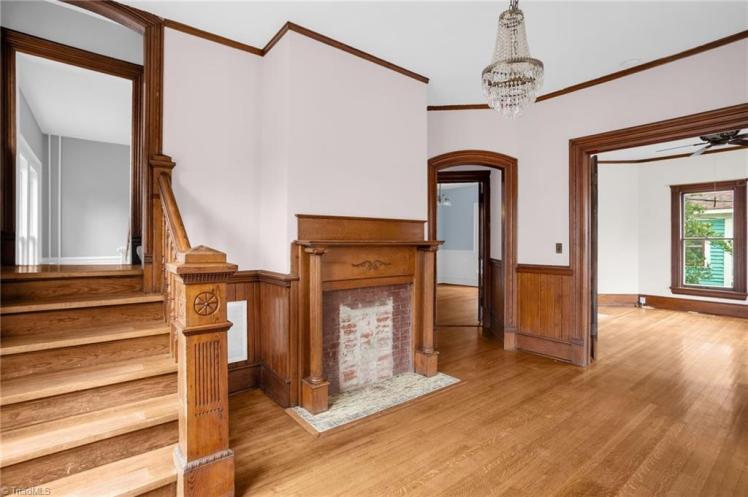


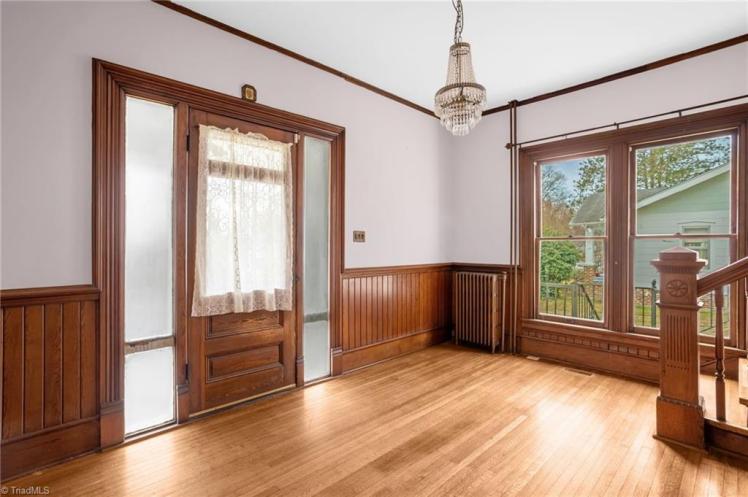


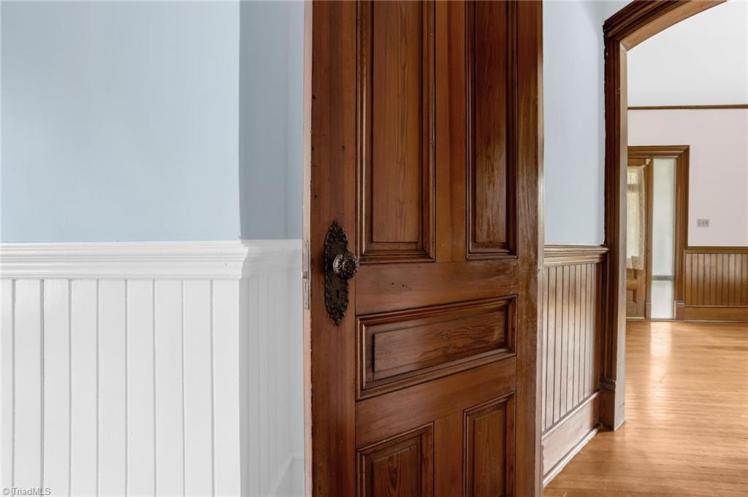
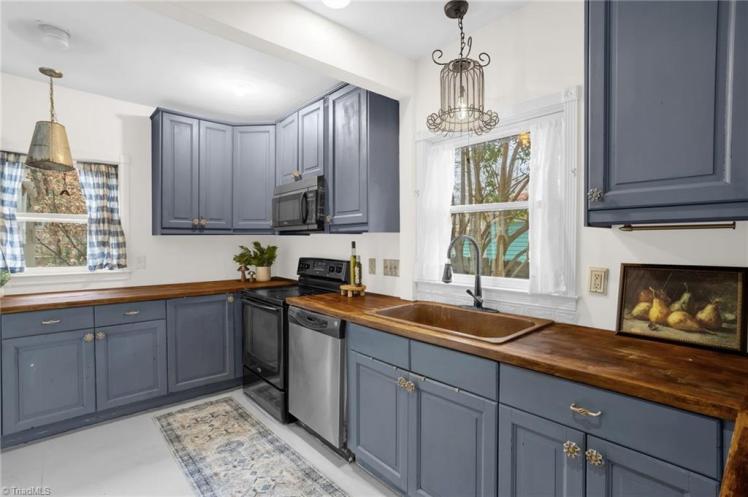

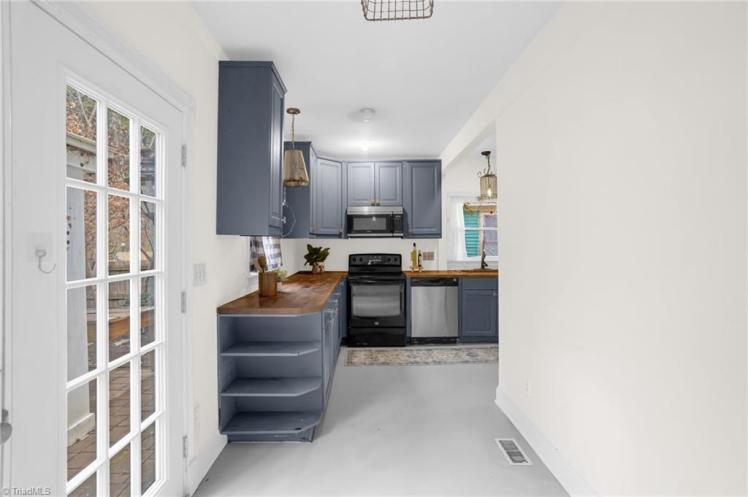


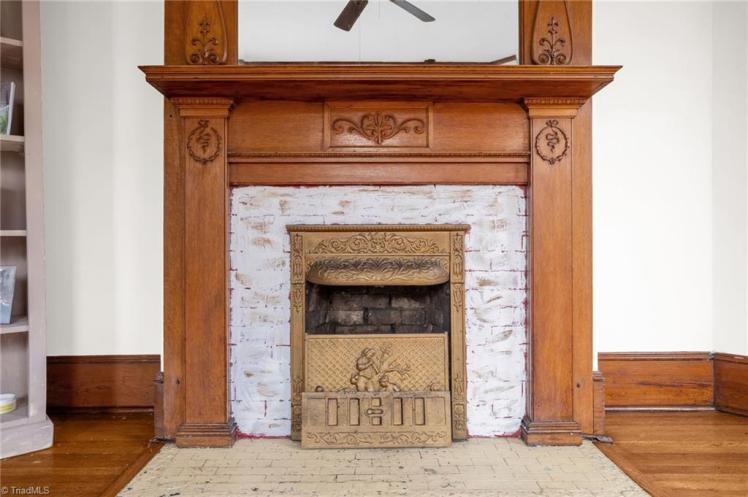
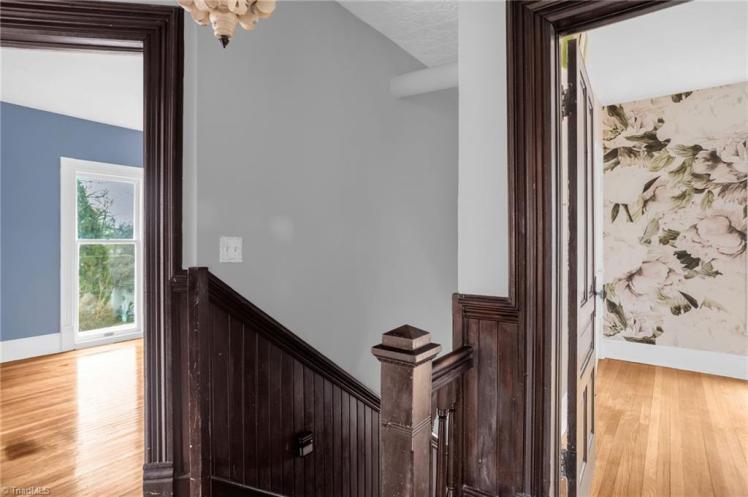


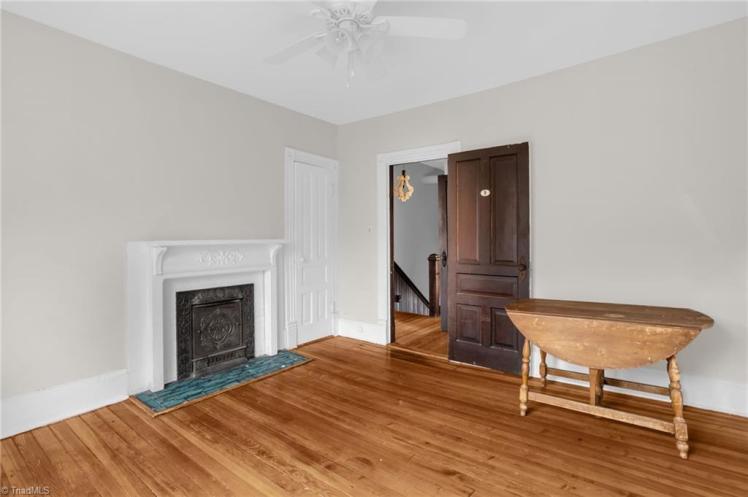
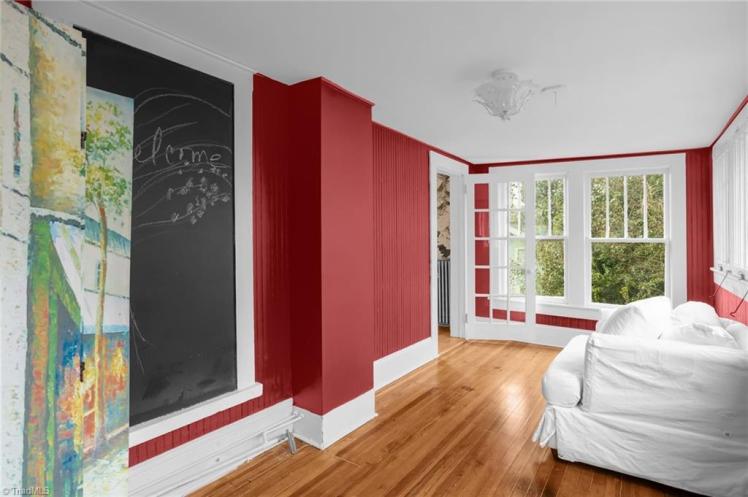


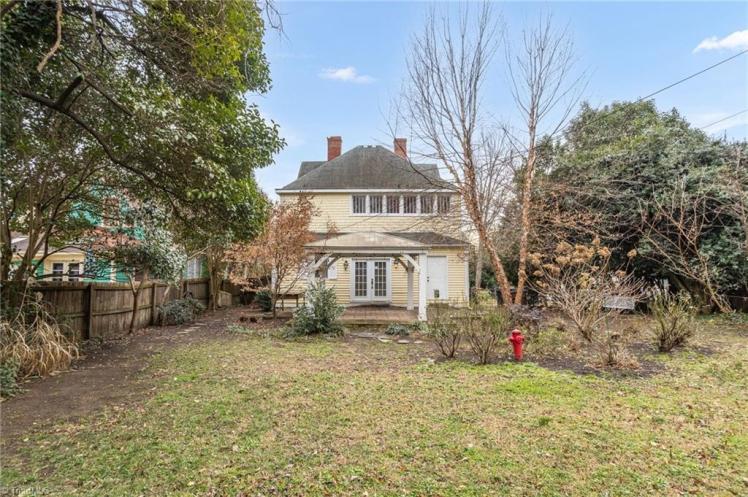

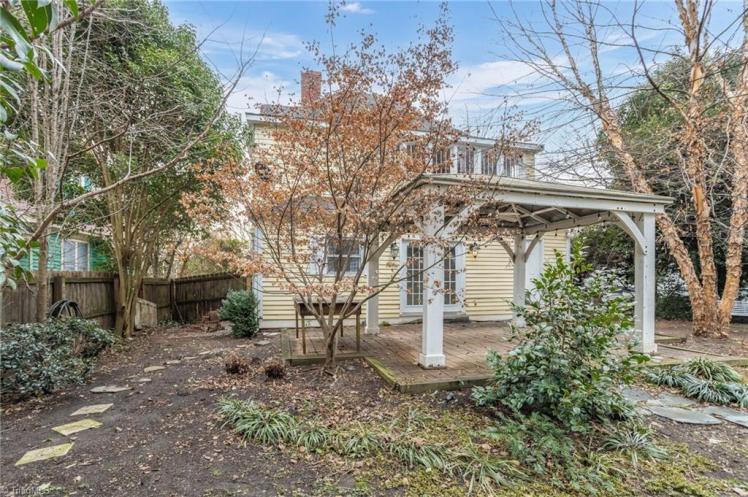
- Sold for $402,000 on April 15, 2025 (listed at $425,000)
- 4 bedrooms, 1 1/2 bathrooms, 2,470 square feet, 0.42 acre
- Price/square foot: $163
- Built in 1903 (per county, but probably a couple years earlier; see note)
- Listed February 4, 2025
- Last sale: $215,000, November 2015
- Neighborhood: Dunleath Historic District (local), Summit Avenue Historic District (NR)
- Note: A lot of unpainted woodwork distinguishes the interior.
- District NR nomination: “[W]eatherboards sheathe the first story of this dwelling, it is clad in shingles above; dentils adorn its wide friezeboard.”
- The house apparently was built as a rental by Cesar Cone and Jeanette Cone, who bought the property in 1895 from the North Carolina Steel & Iron Company. It first appeared in the city directory in 1901, listed as vacant under its original address, 709 5th Avenue (it became 711 around 1929). The Cones sold the house in 1905 to J.H. McNeill and Minnie McNeill (dates unknown for both). They owned it for 10 years and continued to rent it out.
- Around 1905 the house was occupied by Ernest Henry Fagge (1636-1916) and Catherine H. Stahl Flagge (1843-1926) and two of their sons, Walter S. Flagge (1878-1962) and Dr. Phillip Wesley Flagge (1876-1955). Ernest and Walter were farmers. Phillip was a physician.
- From around 1907 to 1913, Charles E. McLean (dates unknown) rented the house. He was co-owner of a grocery store. He was followed by three brothers — John Lee Heath (1879-1953), James Talton Heath (1891-1972) and Jasper “Cecil” Heath (1893-1965). They operated an advertising distribution firm, Heath Brothers. Their widowed mother, Margaret Jemima Busick Heath (1860-1939), was living with them by 1915.
- In 1915, the house was bought by Seth Gerdie Rudd (1884-1951) and Mary Janice Partin Rudd (1888-1976). Seth was a clerk at the Proximity Mercantile Company. They moved into the house and lived with the Heath brothers and their mother until 1919.
- That year, William Henry Hall (1872-1945) and Caroline Bonner Hall (1879-1963) bought the house to live in, and it remained in their family for 87 years. William was a grocery clerk. By 1938, their son and daughter-in-law, William B. Hall (1901-1979) and Mary Lee Watson Hall (1900-1982), were living in the house. William B. was a police officer; he retired in 1956 as captain of the traffic division. He and Mary lived in the house for the rest of their lives.
- After Mary died, their son, William B. Jr. (1927-2011), owned the house until selling it in 2006. William worked for Weiman Furniture Company. He had studied music at Guilford College and played the violin with Randolph Strings and the Greensboro Concert Orchestra. He also was a pilot and volunteered with the Civil Air Patrol.
1108trinity
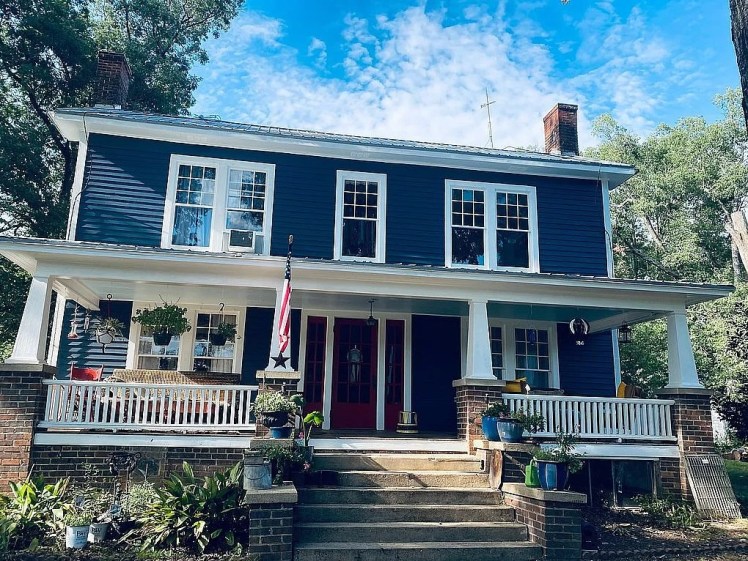

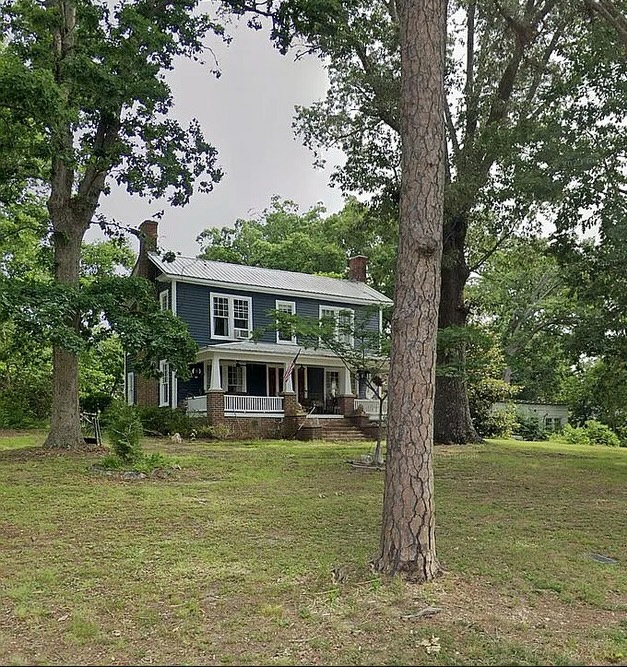


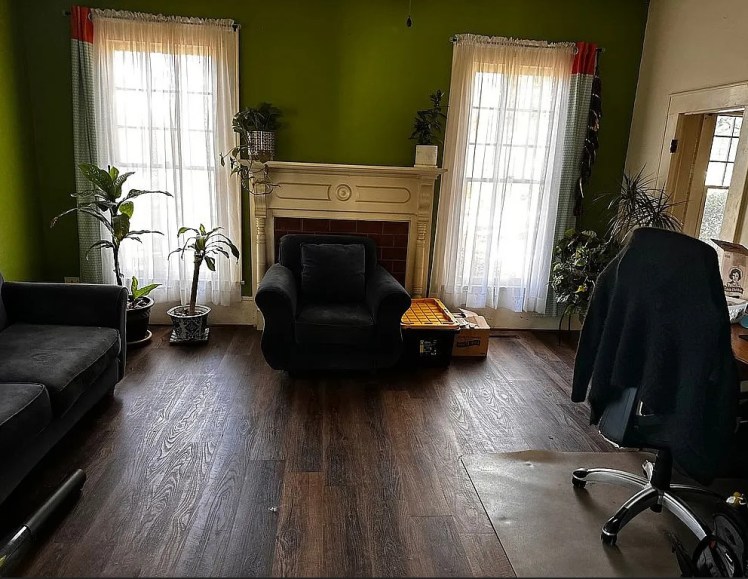


1108 Trinity Street, Thomasville, Davidson County
Collett Farm
- Sold for $238,000 on April 15, 2025 (originally $249,000)
- 3 bedrooms, 1 bathroom, 2,913 square feet, 2.63 acres
- Price/square foot: $82
- Built in 1895 (per county, but likely earlier; see note)
- Listed November 17, 2024
- Last sales: $135,000, June 2019; $33,000, March 1976
- Note: For sale by owner
- Thomasville, North Carolina: 2004 Comprehensive Architectural Survey: “More traditional house forms stand outside downtown in areas that were beyond the original city limits but which have been annexed in the last several decades. The two-story single-pile, weatherboard-clad house at the center of the Collett Farm (DV 713) at 1108 Trinity Street dates to 1892. The largely intact dwelling with a two-story rear ell features a single-leaf entry with sidelights, nine-over-one windows with window screens hinged at the top of the window trim, and a brick chimney occupying each gable end of the main block.
- “John Collett and his wife Elizabeth, who moved to Thomasville from Randolph County, had the house built on the ninety-two acres where they farmed tobacco and raised livestock.” They also grew wheat; they reported a hefty 887 1/2 bushels harvested in 1892.
- The 2004 architectural survey reported that “the farm complex has a full array of support buildings including a smokehouse, chicken house, two tobacco barns, a shed, and a hay barn — all sided in weatherboard — and a log barn.” The listing suggests one or all may remain, showing “a barn in need of repairs, structures suitable for a chicken coop, additional storage, and a potential workshop.”
- John Collett (1835-1898) had something of a high profile in the county, and his long period of ill health and subsequent death were well reported. “The News regrets to learn that John Collett is very ill again, the Davidson County News reported on June 2, 1898, three days before his death at age 63. The next week, The Dispatch in Lexington put the sad news in context:
- “After months of suffering, Mr. John Collett was relieved by death Sunday night at 11 o’clock. His condition has been precarious for quite a while. … A strange fatality seems to cling to this family. For 3 successive years a male member of this family has been taken, all robust men in the full promise of health. To the bereaved family we entrain the sincerest sympathy. The decree is inexorable and submission is hard, but he is no longer ‘tossed by contending waves of fate,’ and his rest is sweet after his suffering.”
- For what it’s worth, an internet search finds no source for the quote “tossed by contending waves of fate.”
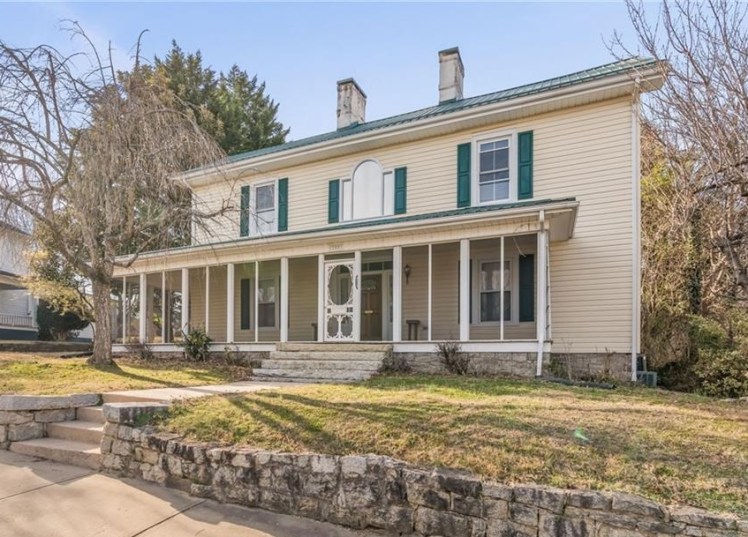
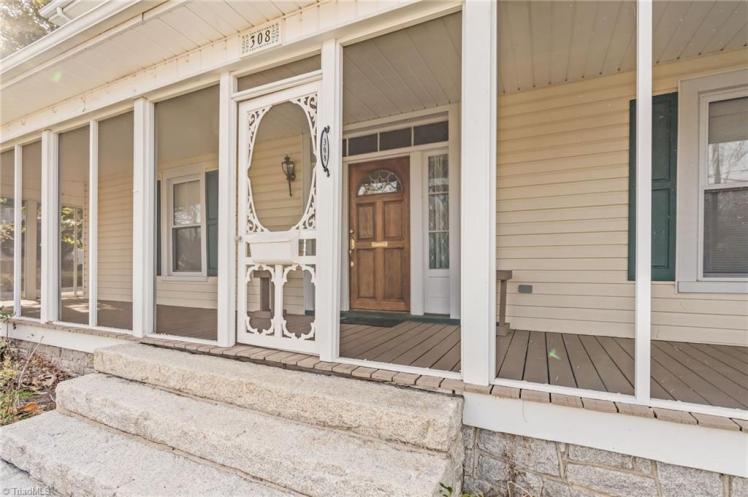


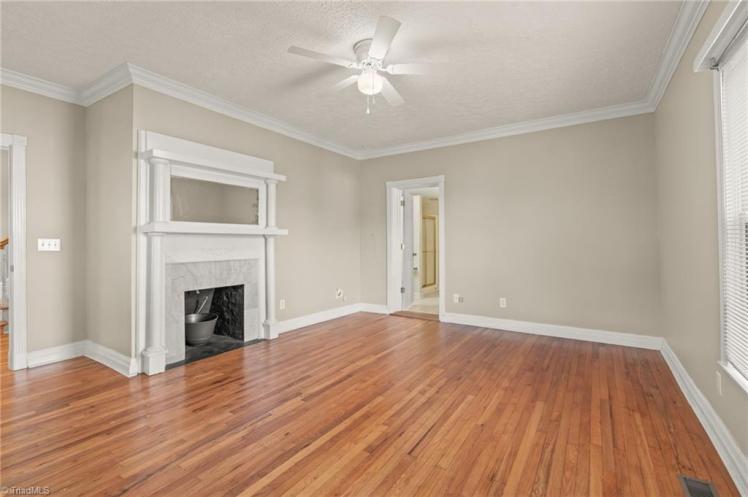
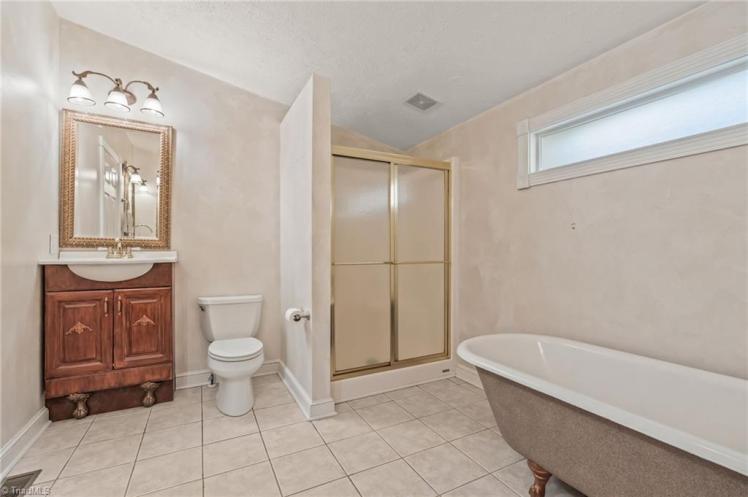

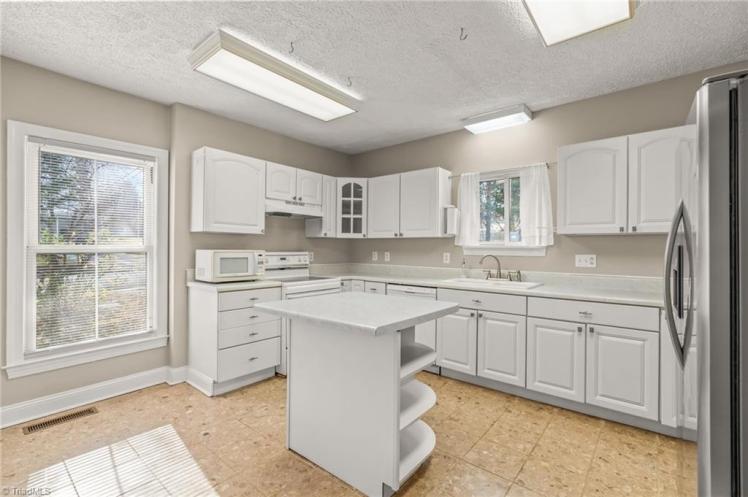


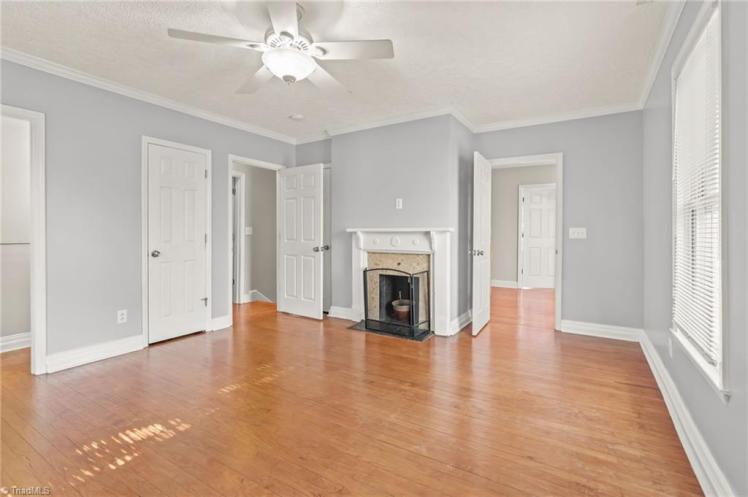
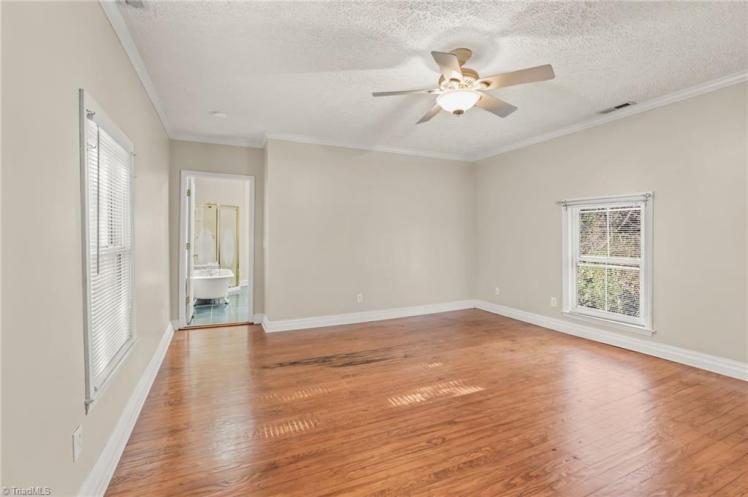

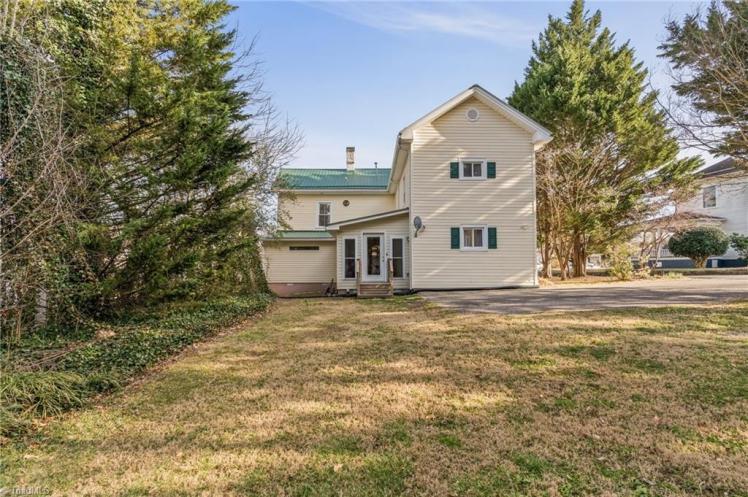


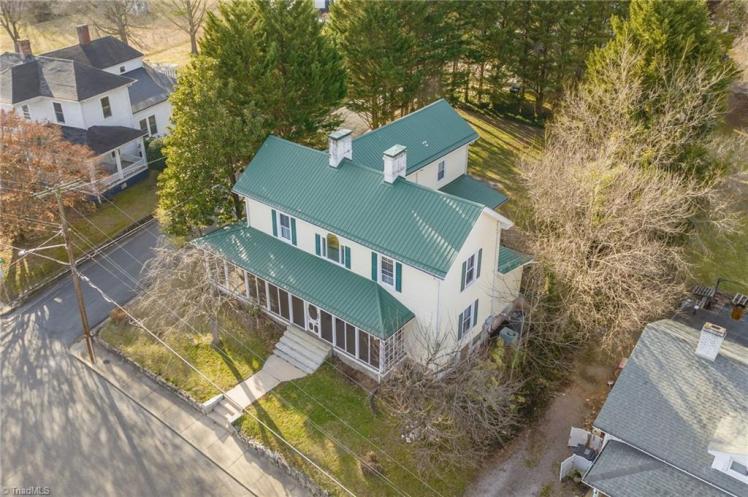

- Sold for $300,000 on April 14, 2025 (originally $399,900)
- 4 bedrooms, 2 full bathrooms, 3 half-bathrooms, 3,360 square feet, 0.28 acre
- Price/square foot: $89
- Built in 1885
- Listed February 22, 2024
- Last sales: $380,000, August 2023; $267,000, May 2019
- Neighborhood: Mount Airy Historic District (NR)
- Note: Much of the historic character has been stripped away — vinyl windows and siding, plank boards on the porch. The 2019 listing said all the interior walls were torn out and replaced in a 1996 renovation.
- District NR nomination: “The two-story one-room-deep form, side-gable roof, and symmetrical three-bay façade of this frame house suggest it dates to the end of the nineteenth century, as do the sidelights and transom that frame the front entry.
- “The one-story wraparound porch on the front and south gable end, though an early or original feature, has modern screening and supports. The front entry has a transom, sidelights, and a wood panel door.
- “The foundation is granite and the parged interior chimneys are probably brick.
- “Other features include a two-story rear wing, novelty vinyl siding, modern metal roofing, and replacement windows including a Palladian arrangement in the center of the second story. A low granite retaining wall extends along the sidewalk.
- “G.C. Welch lived here in 1913, followed by James W. Barker in 1949.” George Calvin Welch (1852-1927) was vice president of the Bank of Mount Airy and a member of the Board of Aldermen. He also operated a dry-good store on South Main Street and was co-proprietor of Welch & Mitchell, retail and wholesale general merchandise store on North Main Street.
- By 1928, the house was listed as vacant. William Joseph Jones (1882-1955) and Annie Jane Marshall Jones (1881-1970) lived in the house in 1931. He was a mechanic with the Carolina Button Corporation. James Wesley Barker (1884-1966) and Maude Ethel Rule Barker (1888-1857) were listed as residents in 1949. He was manager of The Canteen, a restaurant at 45 S. Main Street.
746park
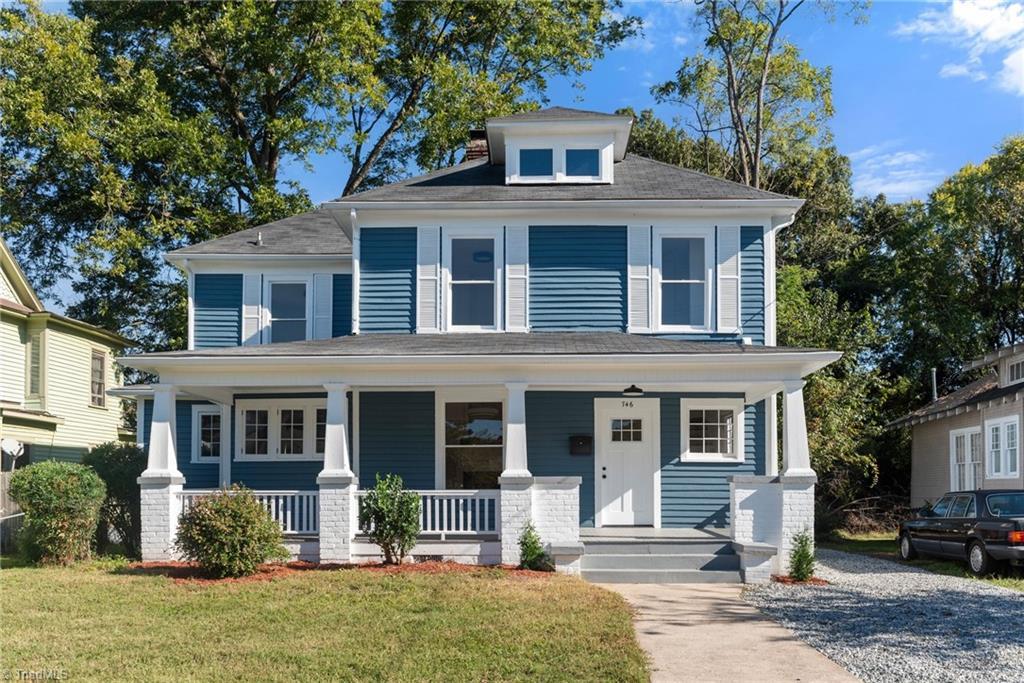
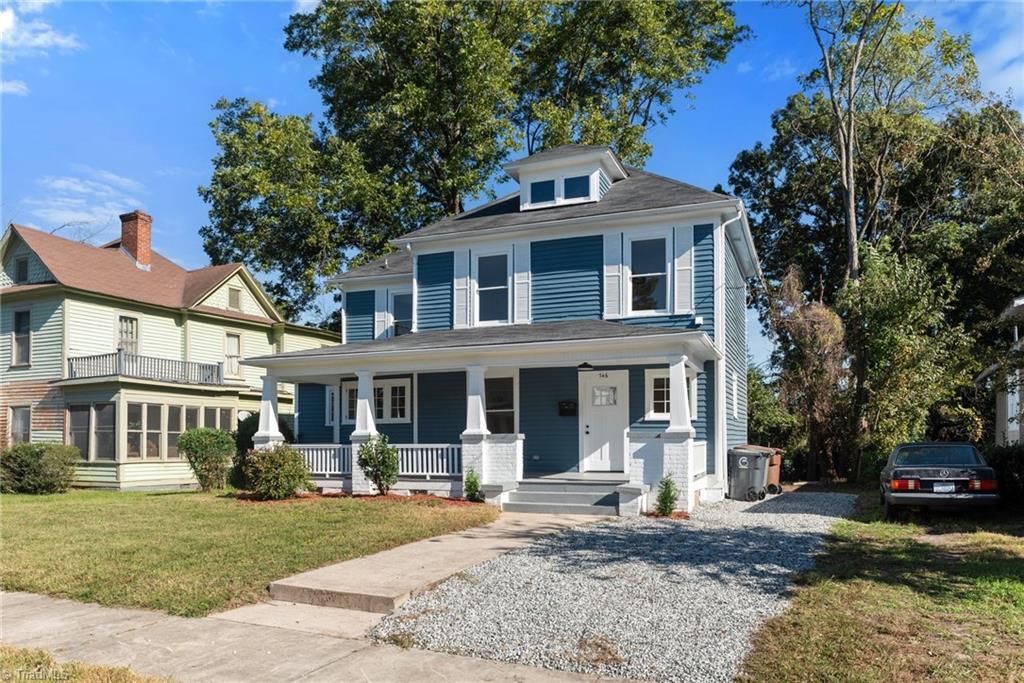
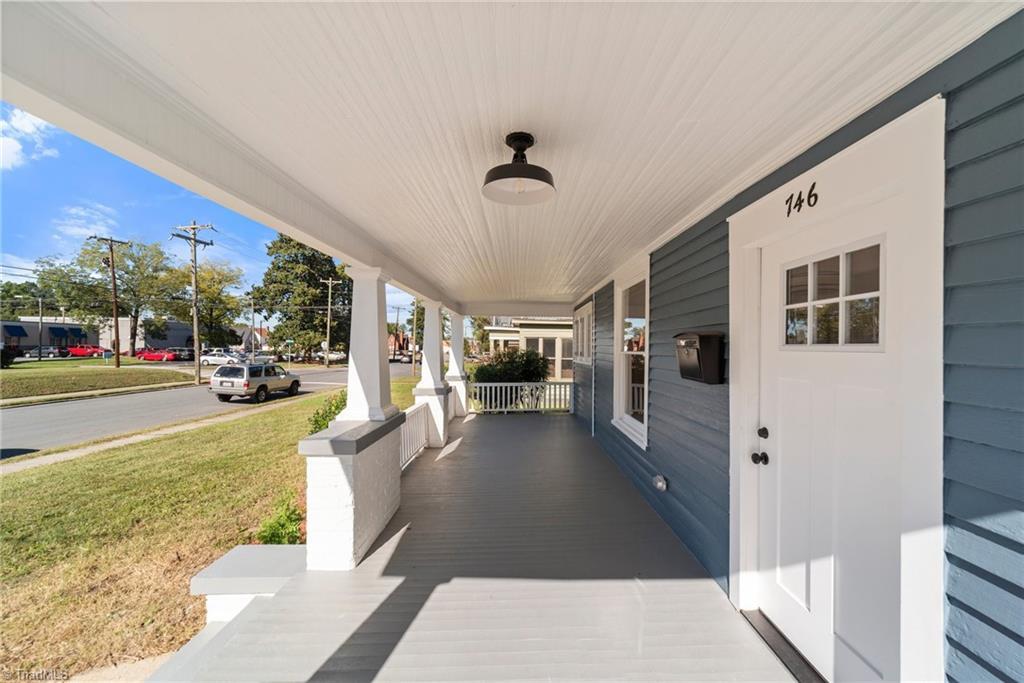

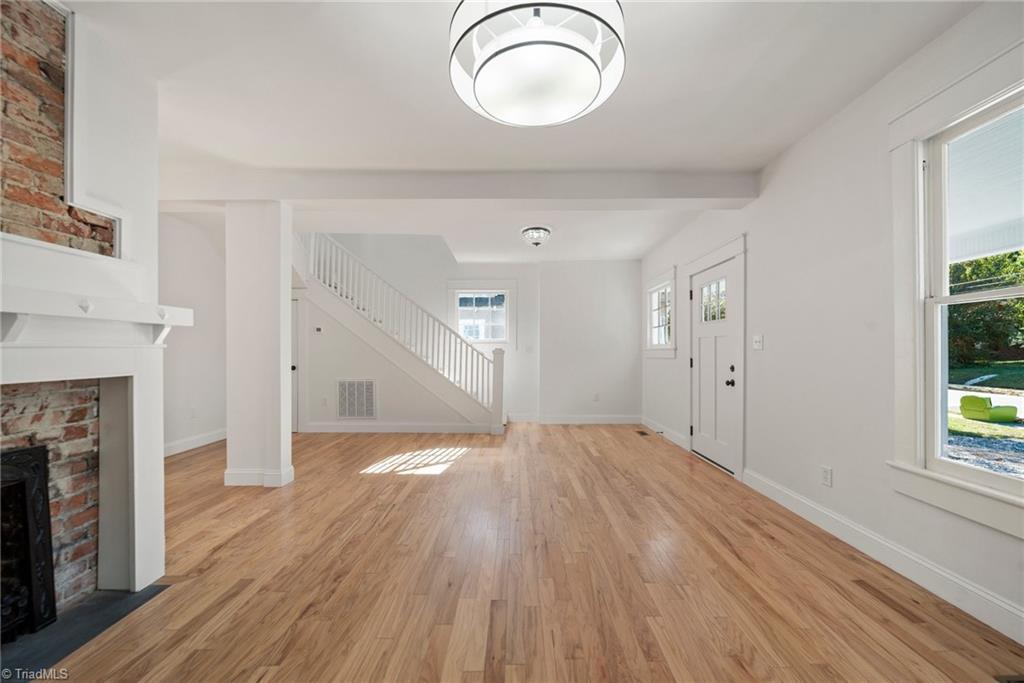
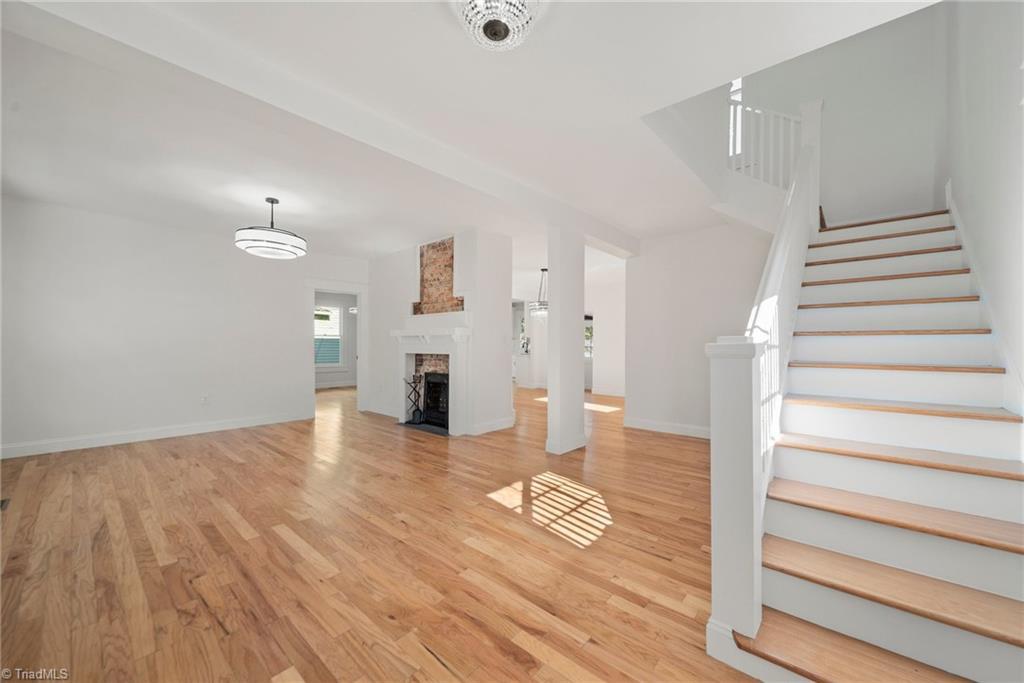


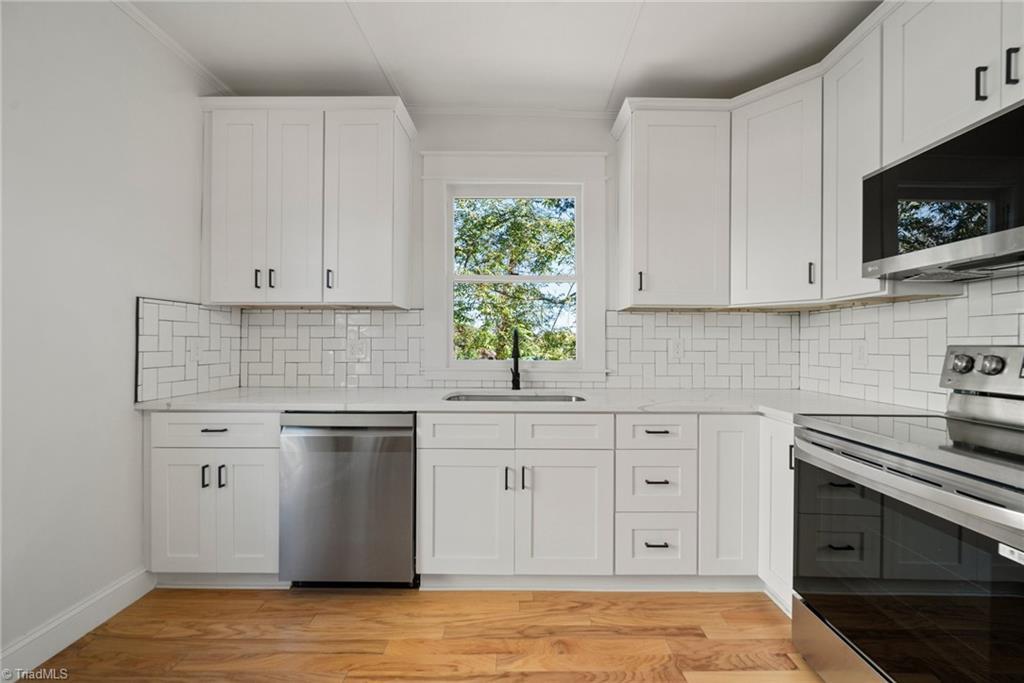

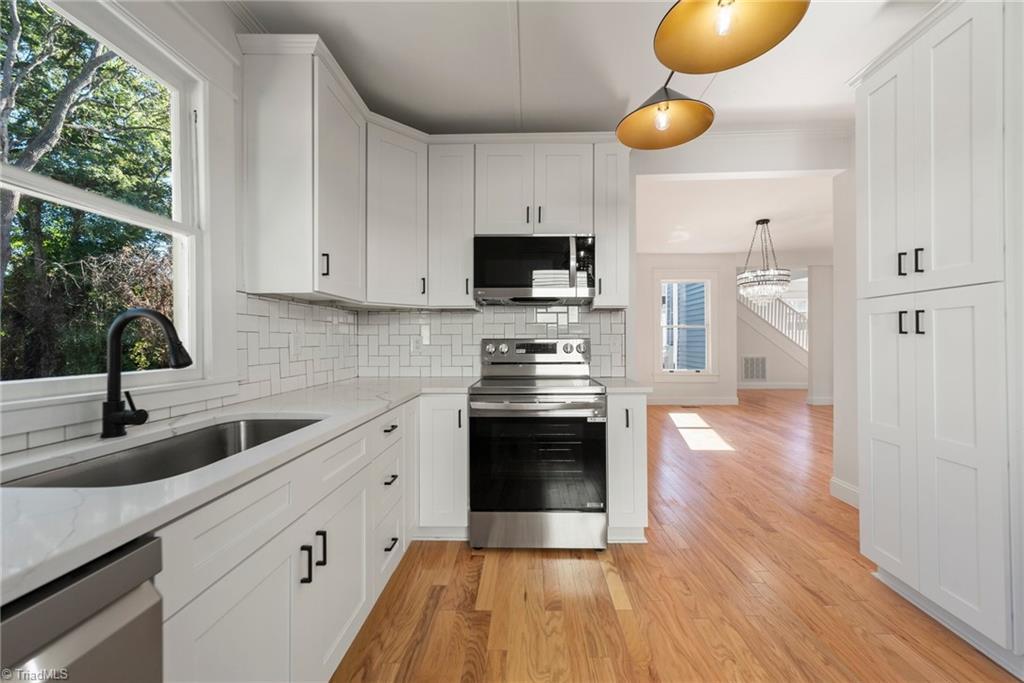

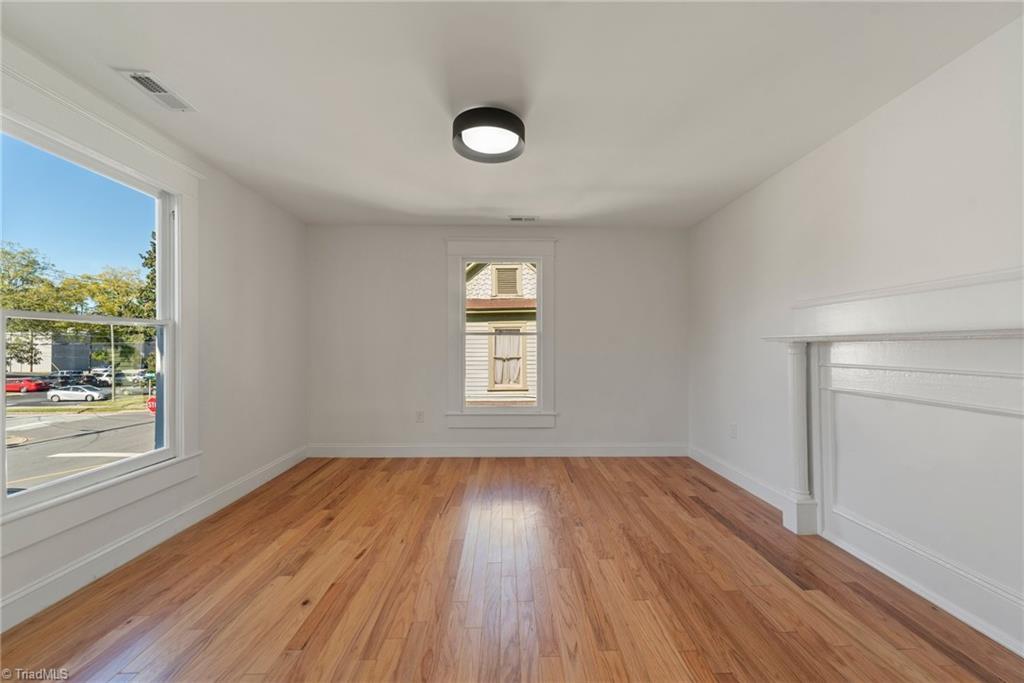
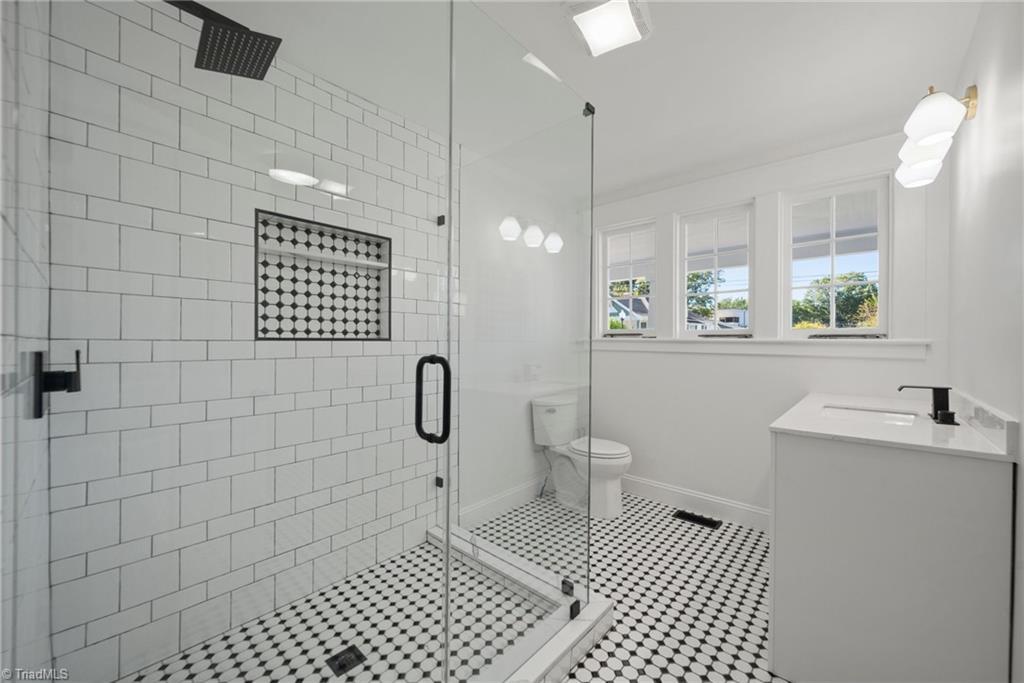
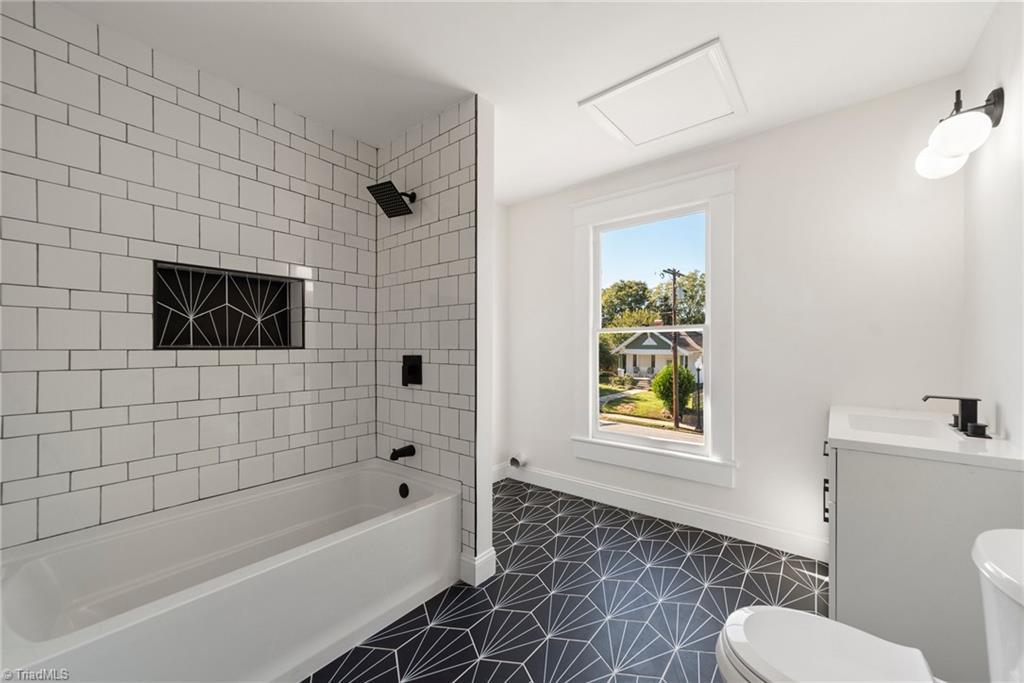


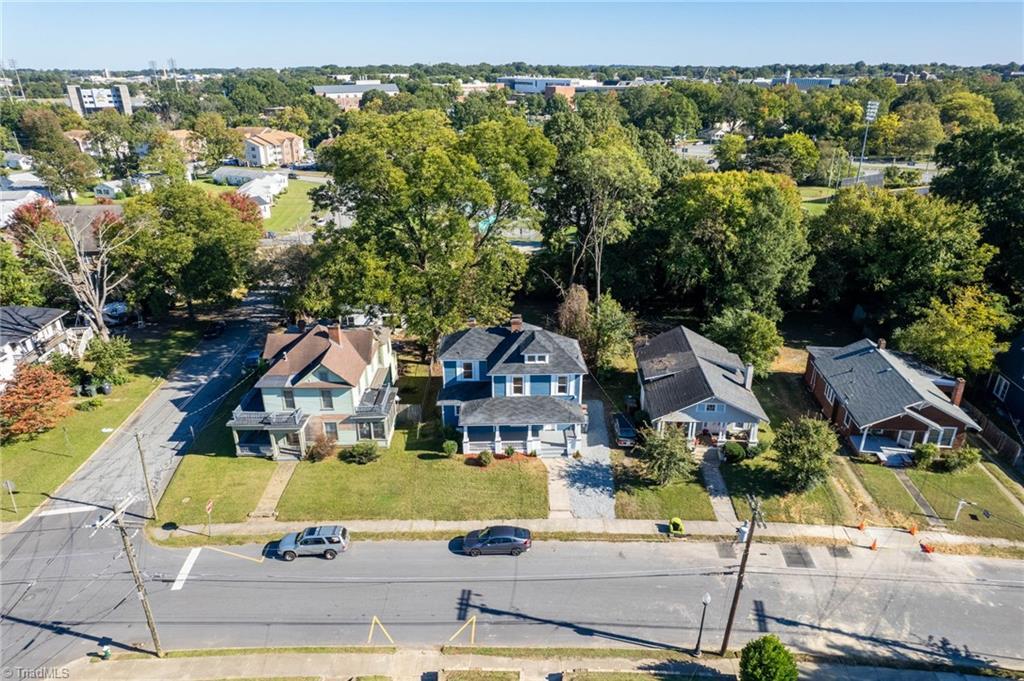
746 Park Avenue, Greensboro
The William and Espie Forbis House
- Sold for $349,000 on April 11, 2025 (originally $399,000)
- 3 bedrooms, 2 bathrooms, 2,152 square feet, 0.19 acre
- Price/square foot: $162
- Built in 1915 (per county, put probably a bit earlier; see note)
- Listed October 18, 2024
- Last sales: $194,481, November 2023 (auction); $38,000, February 1980
- Neighborhood: Dunleath Historic District (local), Summit Avenue Historic District (NRHP)
- Note: Flipped house. Caveat emptor.
- District NR nomination: “Foursquare, Residence, 1910-15”
- The first owner was William Vance Forbis (1879-1950). William bought the property from the Summit Avenue Building Company in 1912. The address first appeared in the city directory in 1913. The house remained in his family until 1960. William was a furniture salesman. Ownership passed to his wife, Espie Blanche Shepherd Forbis (1987-1954) upon his death and then to their son Lynn V. Forbis (1917-1966), who sold the house in 1960.
405wdavis
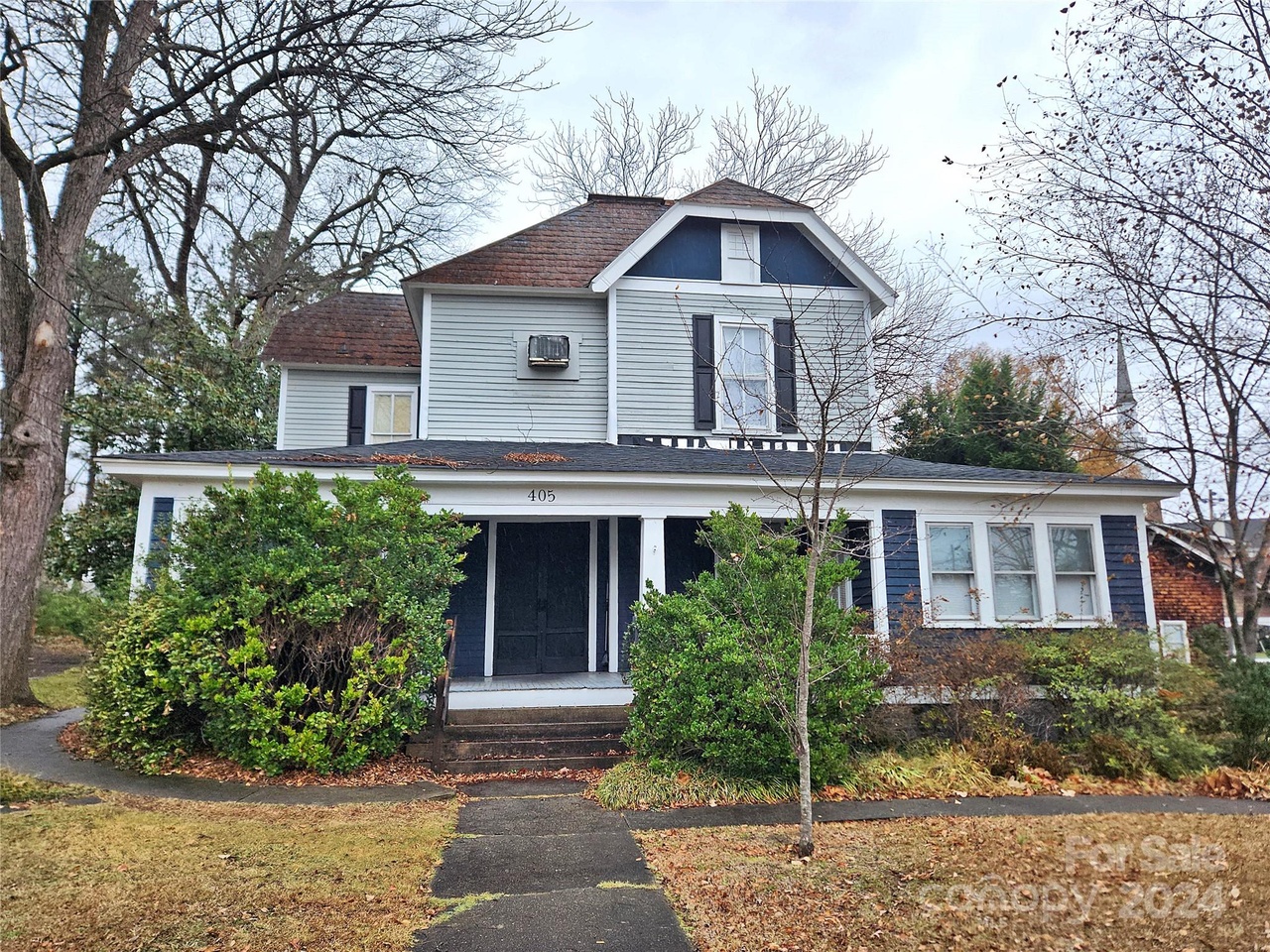
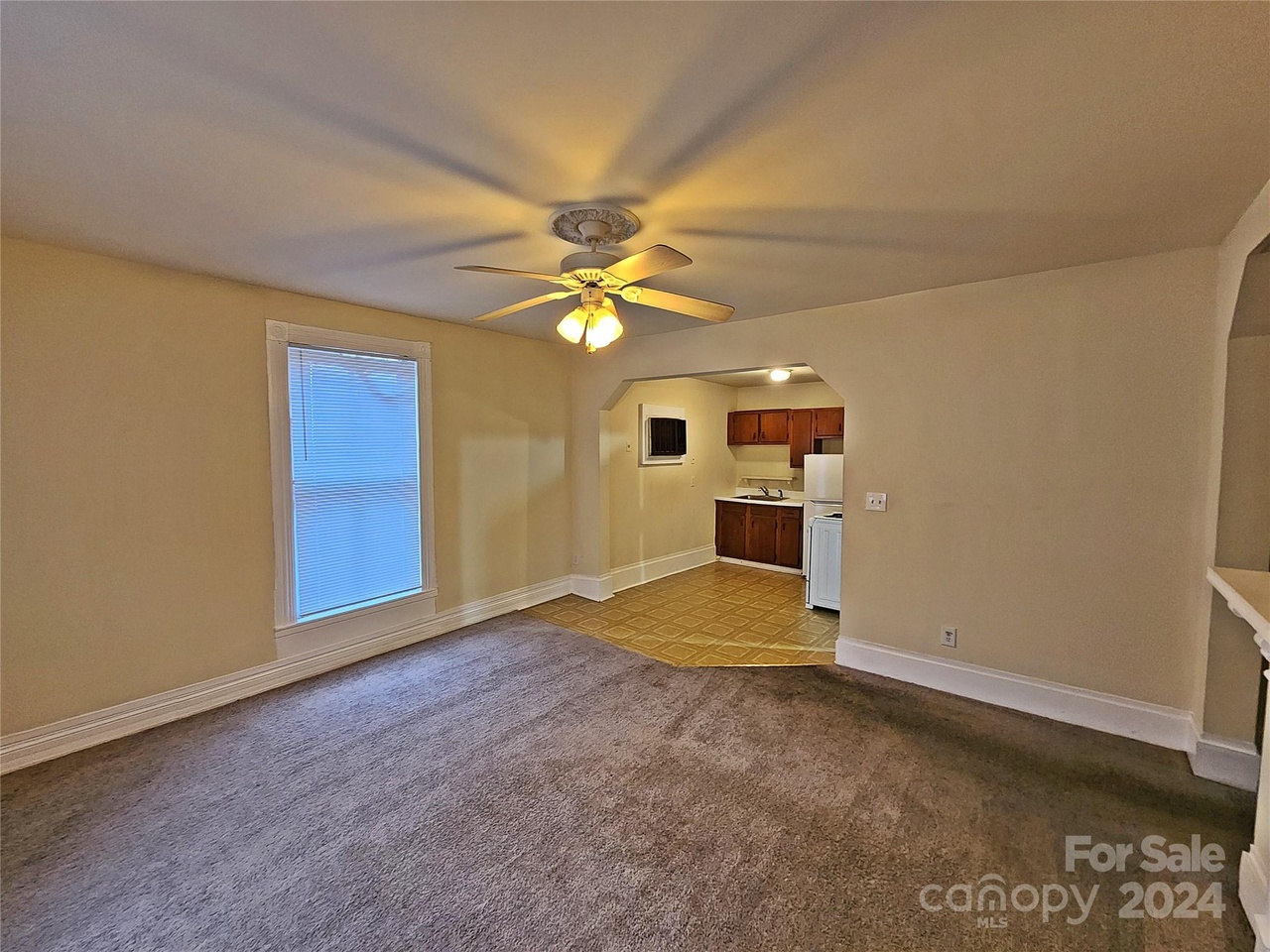
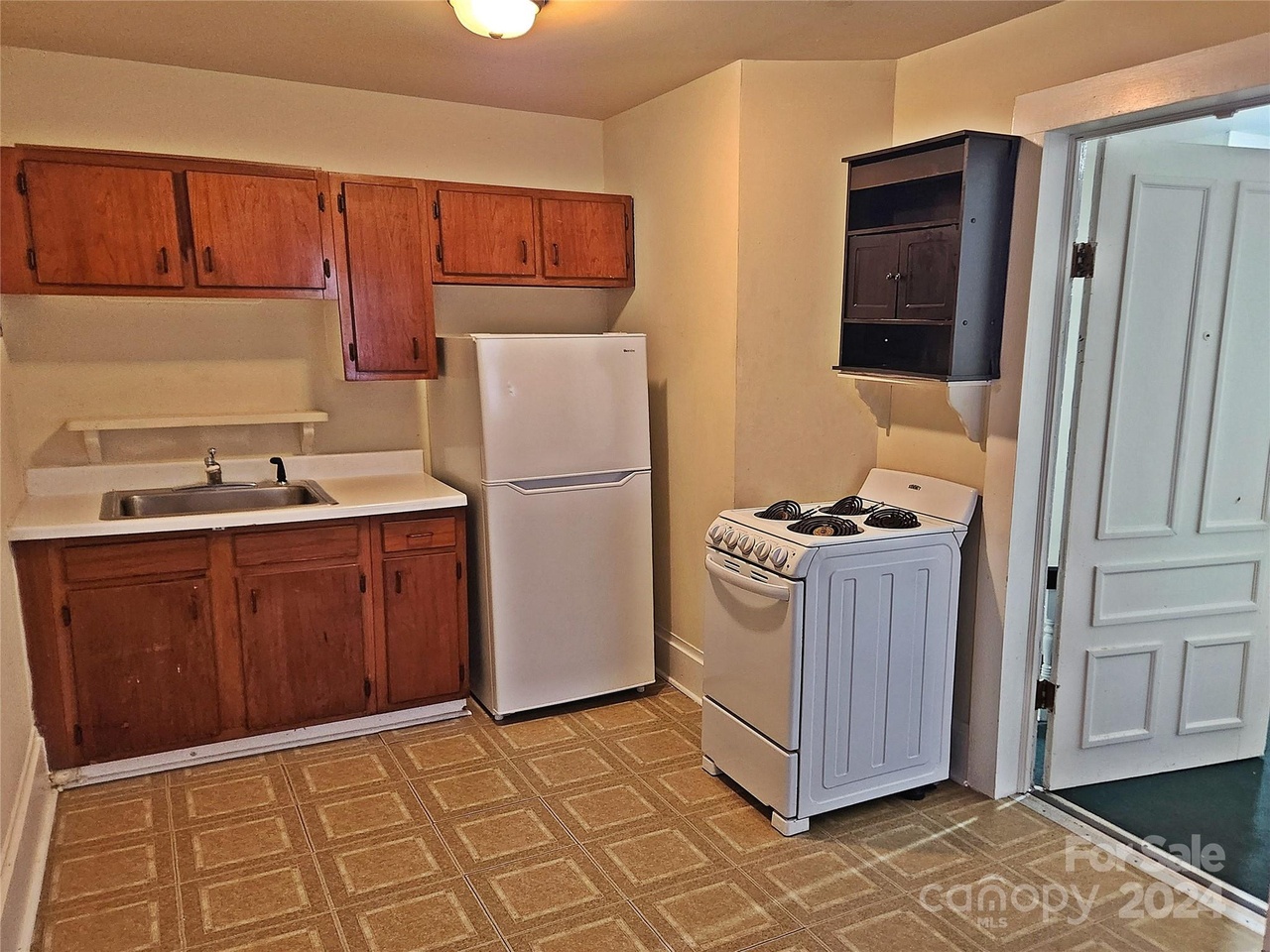
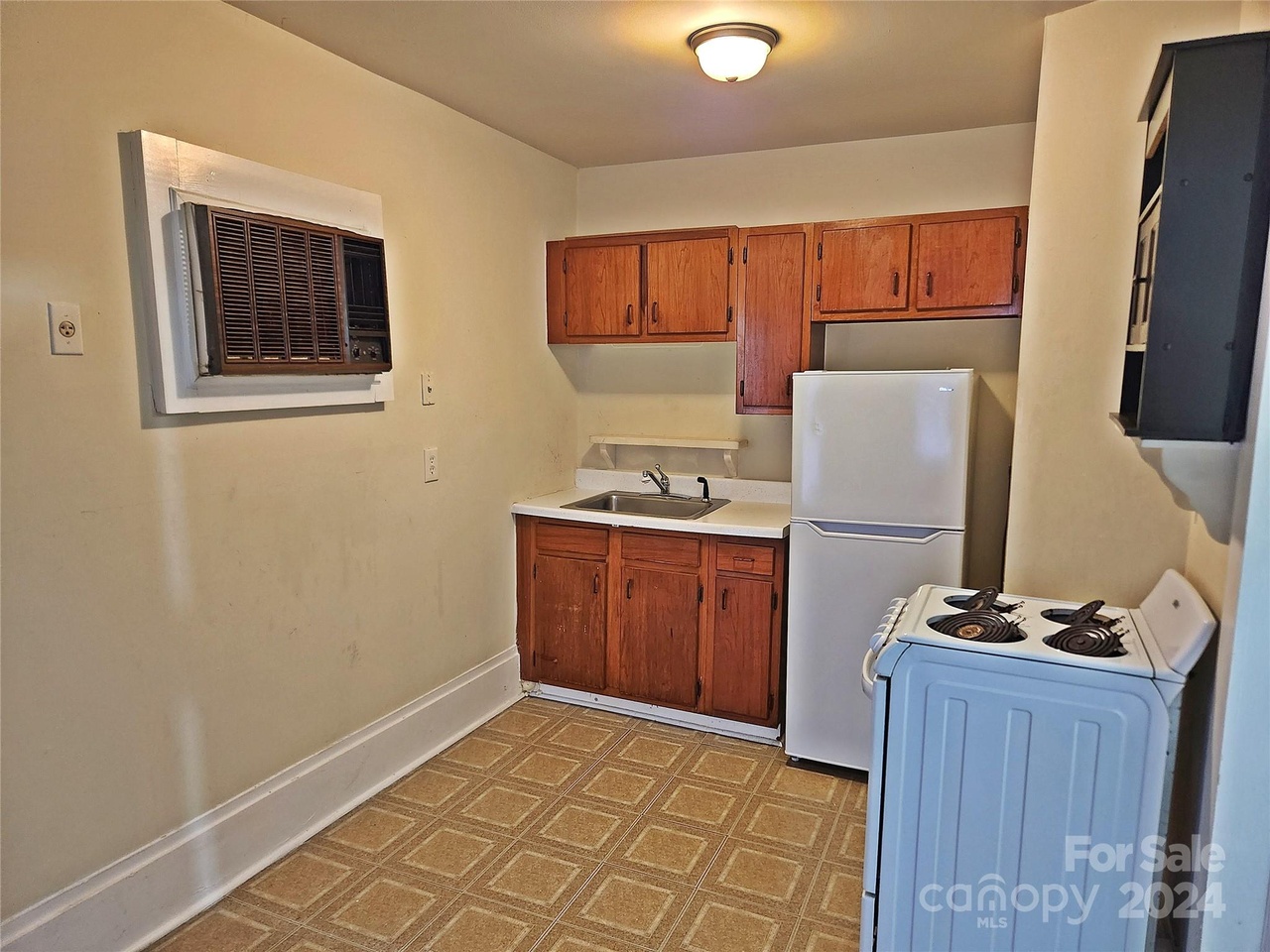

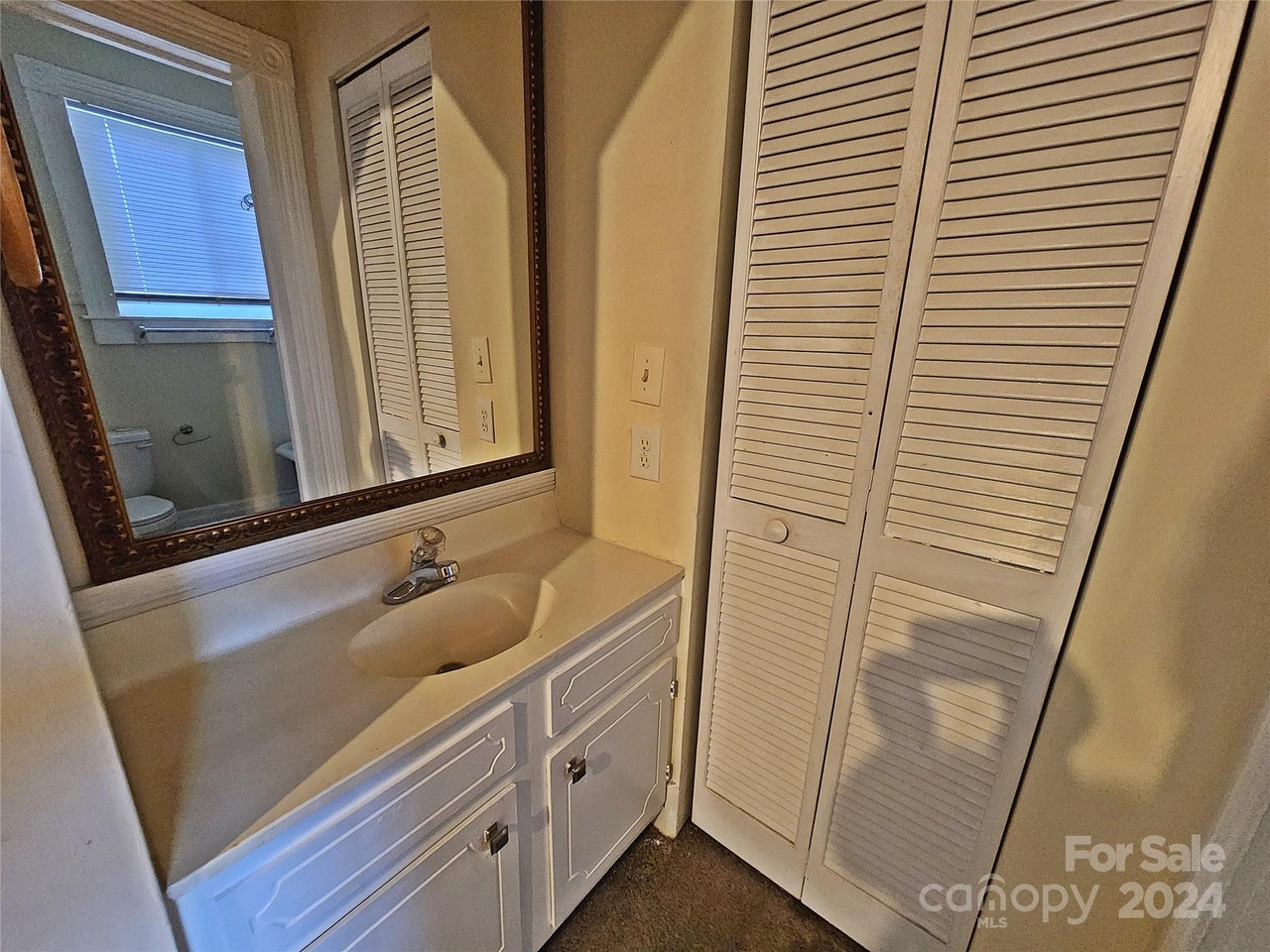

405 W. Davis Street, Burlington, Alamance County
- Sold for $450,000 on April 10, 2025 (originally $750,000)
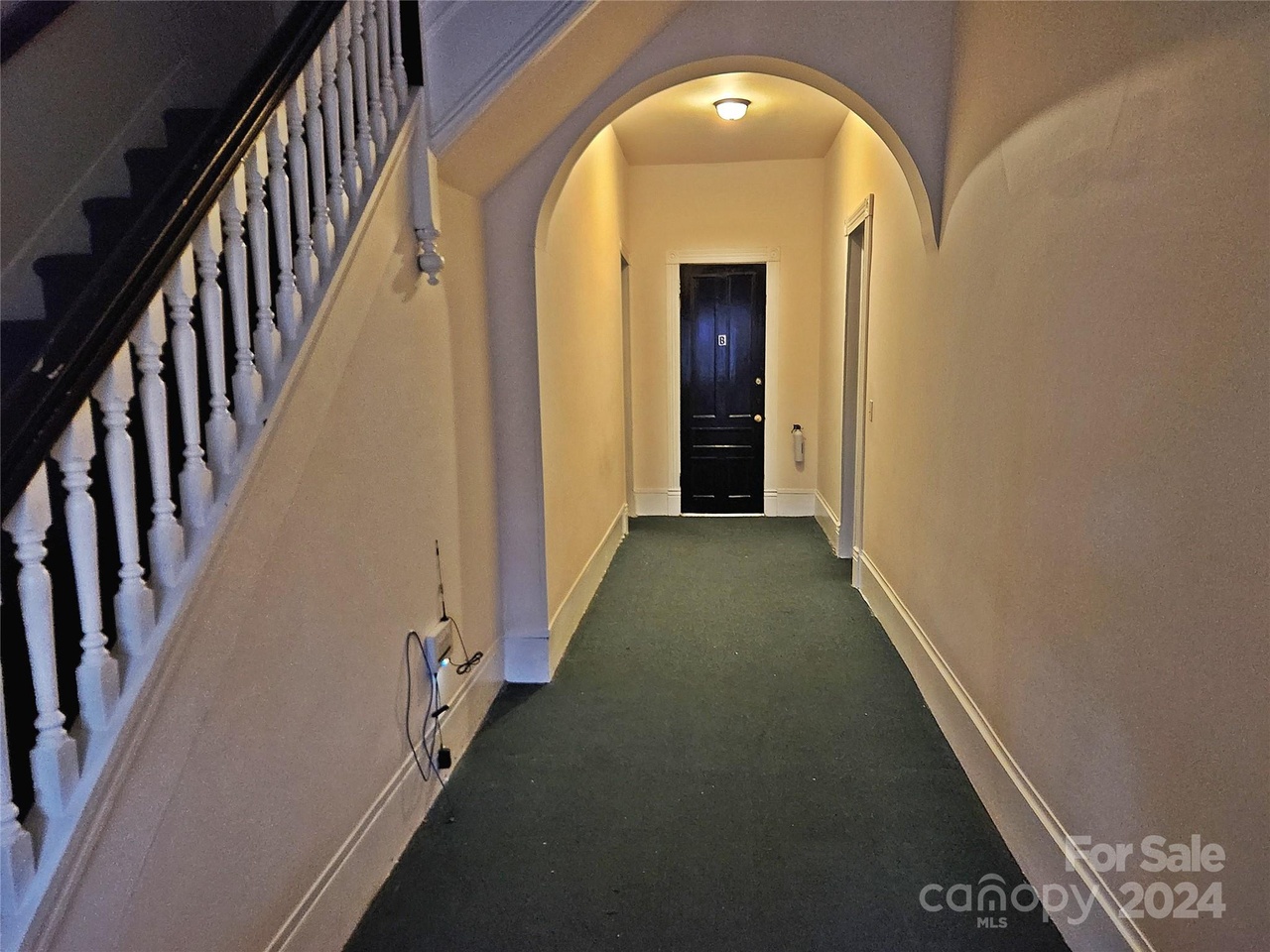
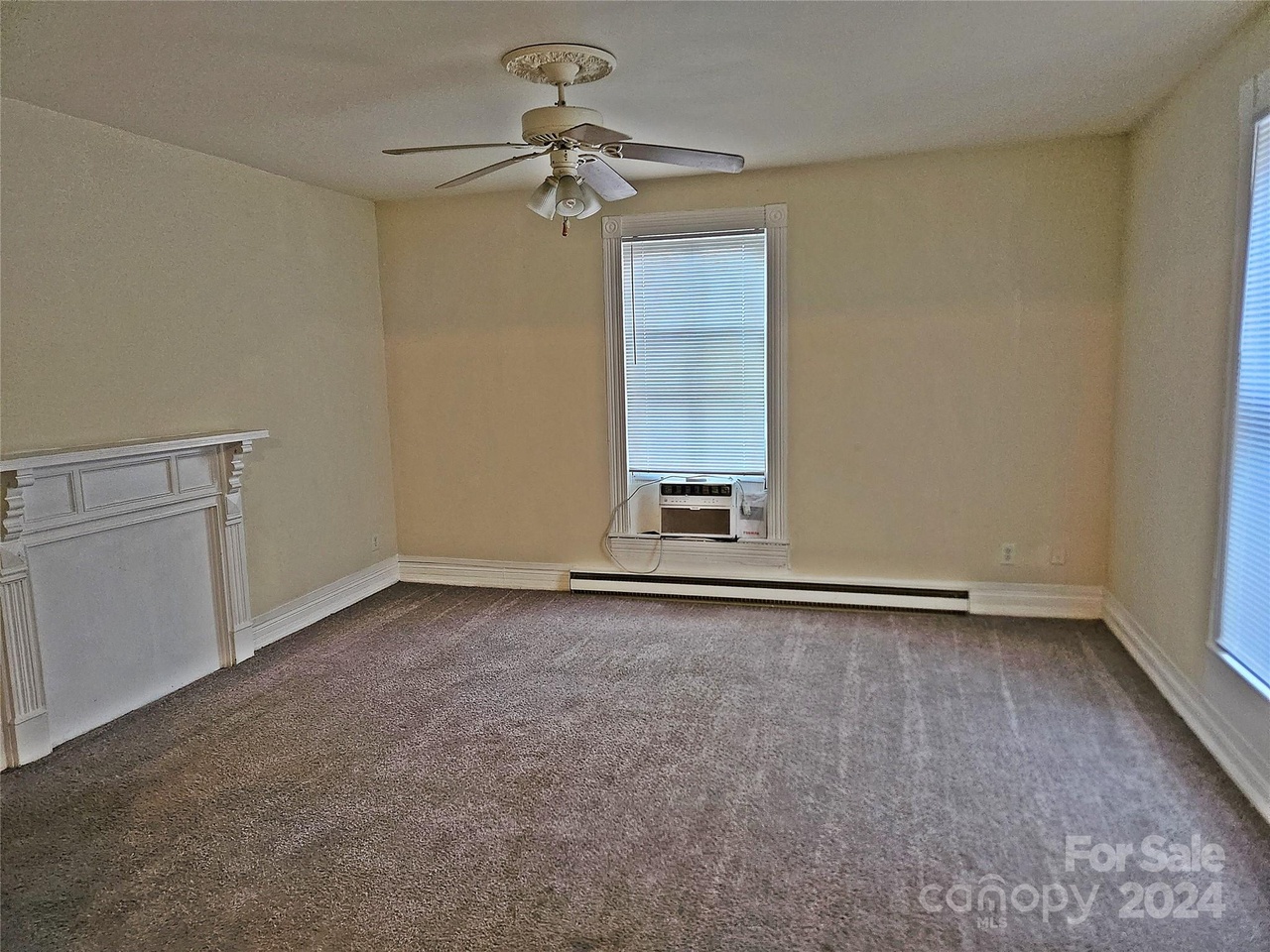
- Originally a single-family home, now divided into six studio apartments, 3,427 square feet, 0.39 acre
- Price/square foot: $131
- Built in 1910
- Listed May 4, 2023
- Last sale: $105,000, September 2020
- Neighborhood: West Davis Street-Fountain Place Historic District (local and NR)
- Note: No central air conditioning
- Even with the lowered price, this is a pretty remarkable money-grab.
- District NR nomination: “This late Victorian, two-story frame dwelling was moved to this site from its original location on West Front Street in the early 1920s. It has served for many years as a multi-family dwelling, first as a boarding house and more recently as apartments.
- “The structure features a high hip roof extending to clipped gables with simple bargeboards over projecting front and side bays. The sides of the one-story wraparound porch have been closed in, leaving a two-bay porch with a tapered post on brick pier and a simple balustrade leading to double-leaf glazed door.”
216state
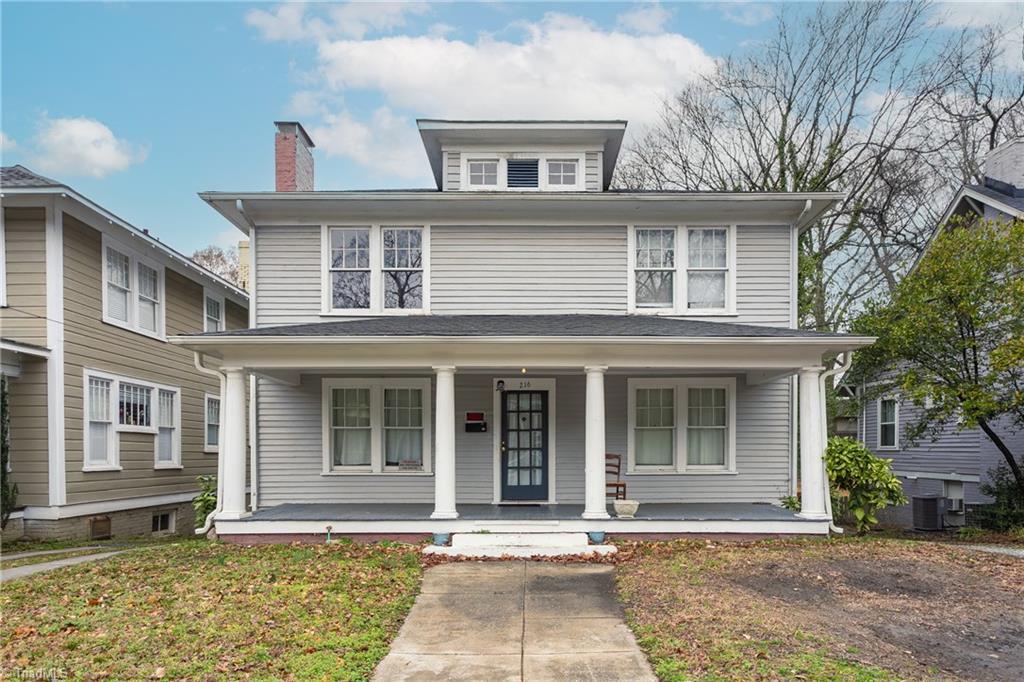
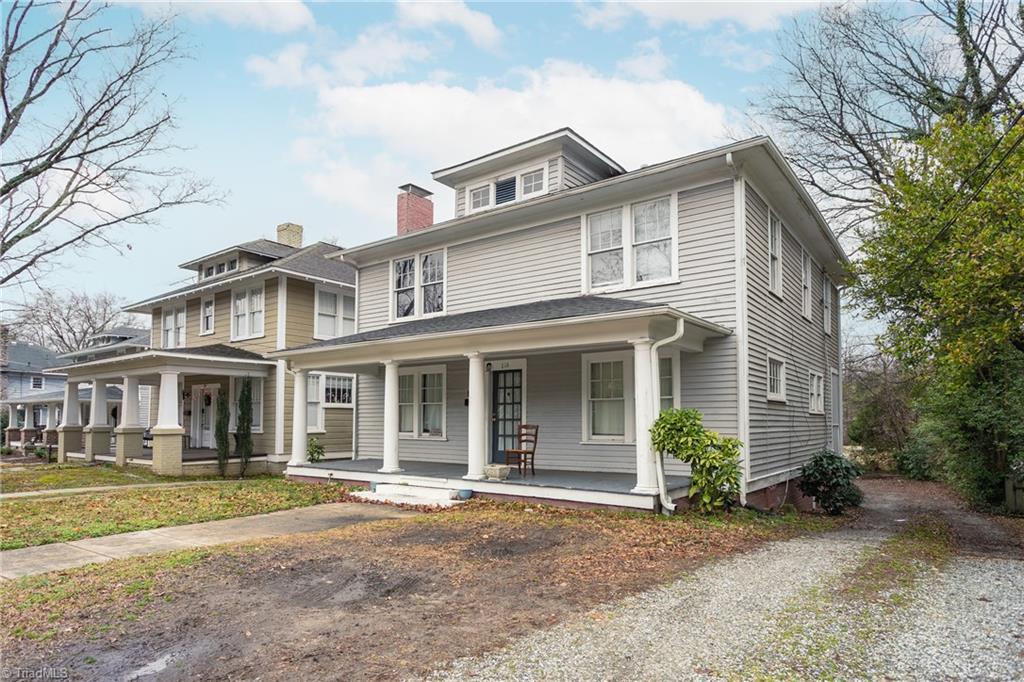
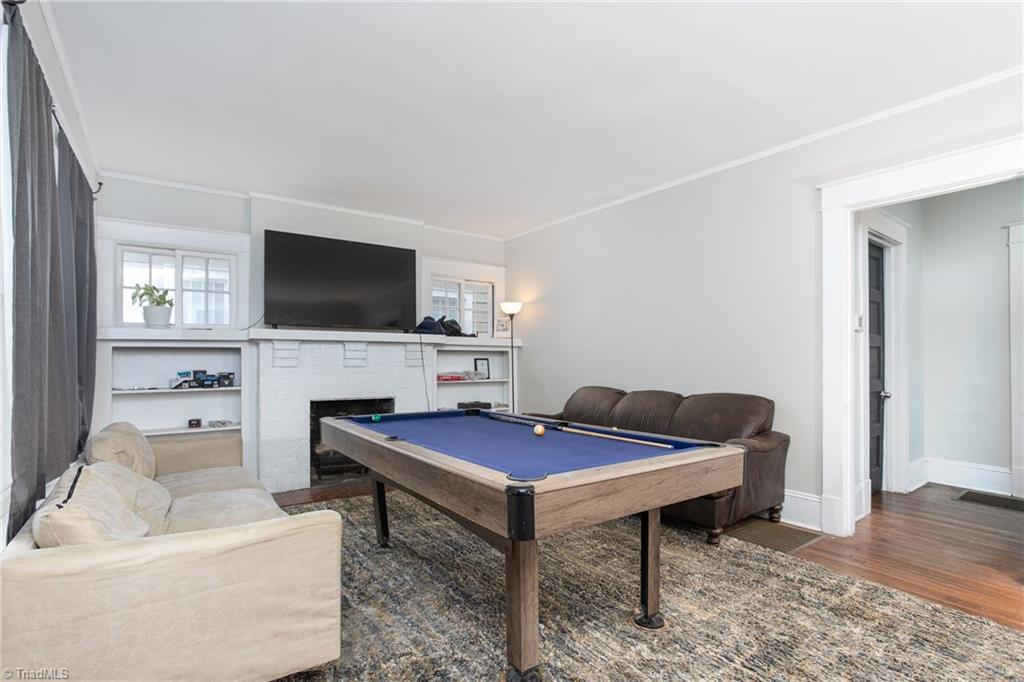

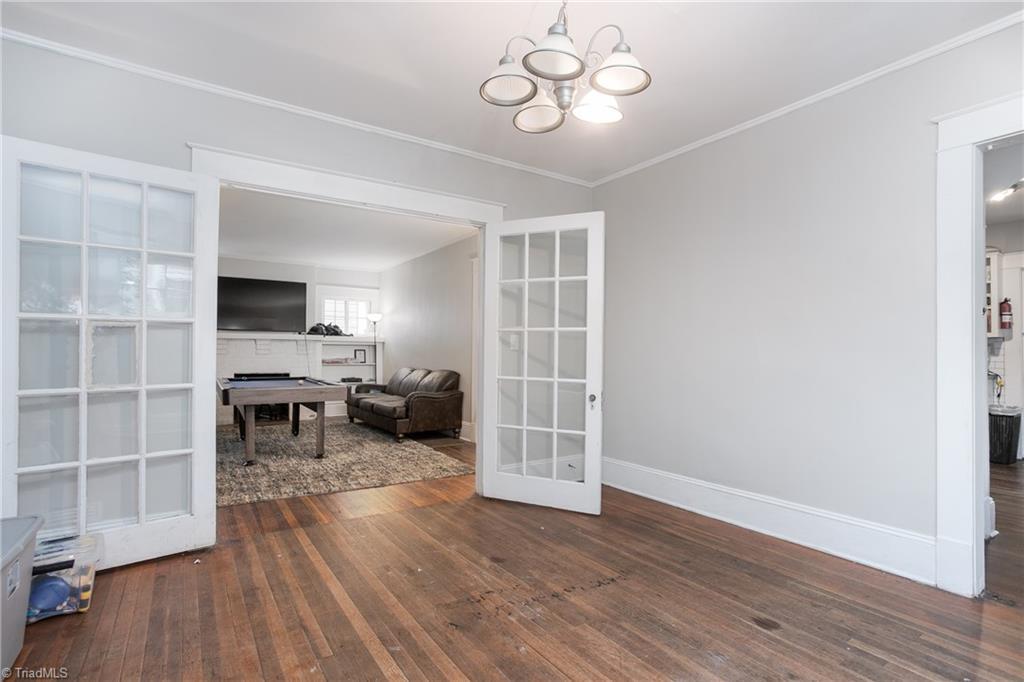


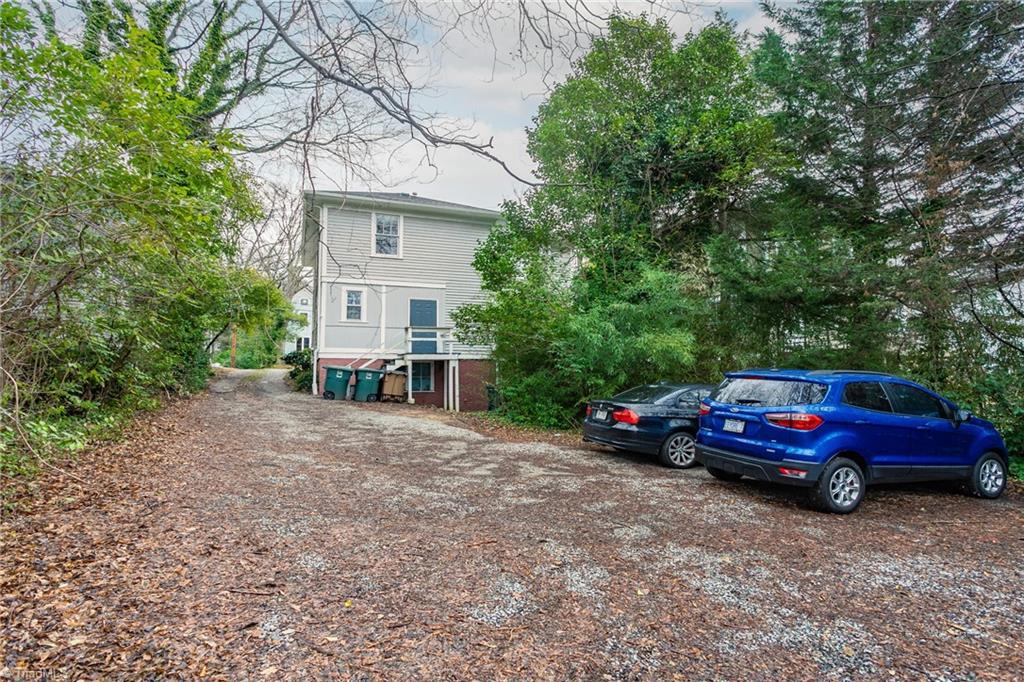
216 S. Tate Street, Greensboro
- Sold for $345,000 on April 4, 2025 (originally $429,000)
- 5 bedrooms, 2 bathrooms, 1,970 square feet, 0.17 acre
- Price/square foot: $175
- Built in 1923
- Listed November 16, 2023
- Last sale: $205,000, March 2019
- Neighborhood: College Hill Historic District (local and NR)
- Note: Longtime rental property, one block from UNCG
- Greensboro limits occupancy of single-family residences to no more than four unrelated residents.
- District NR nomination: “Col Rev foursquare, Residence, 1925-30”
- The address first appears in the 1925 city directory with the residents identified as Charles Lewis Walters (1869-1945) and Mary Maude Dick Walters (1882-1971), who bought the property in 1924. Charles was advertising manager for National Realty and Auction. They sold the house in 1927.
- After a couple of additional sales and a foreclosure, the house was bought in 1939 by Juliette “Julia” Ballinger Dwiggins (1896-1983) and Charles Wade Dwiggins (1893-1969). They and their children owned the house until 1985. Charles was a mechanic with North State Chevrolet.
310summit
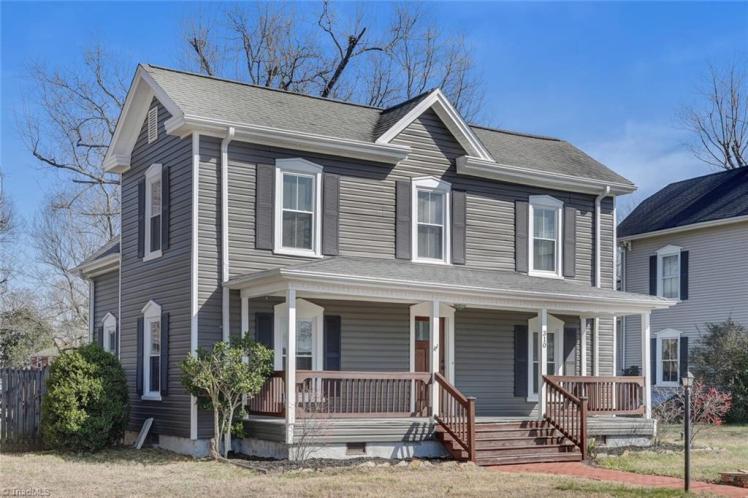


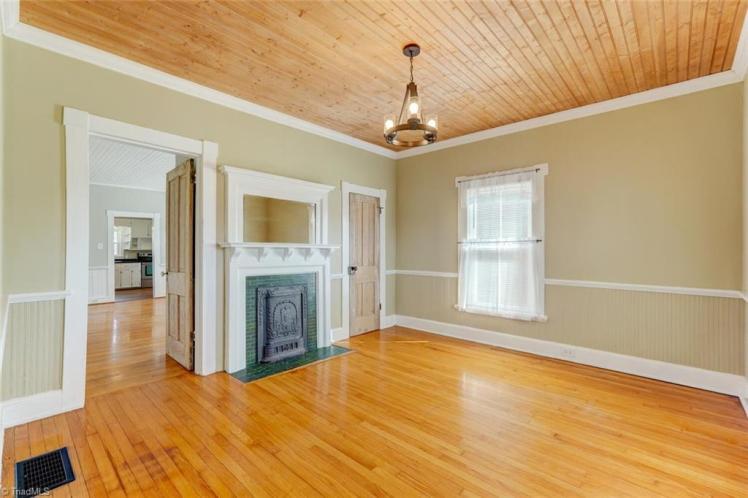

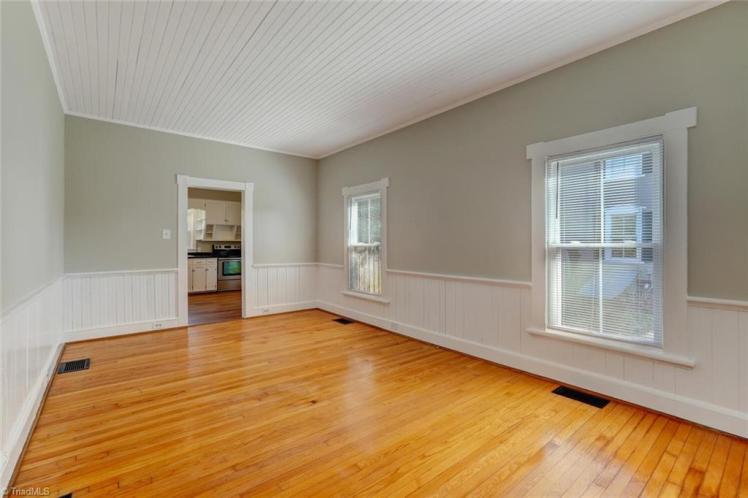
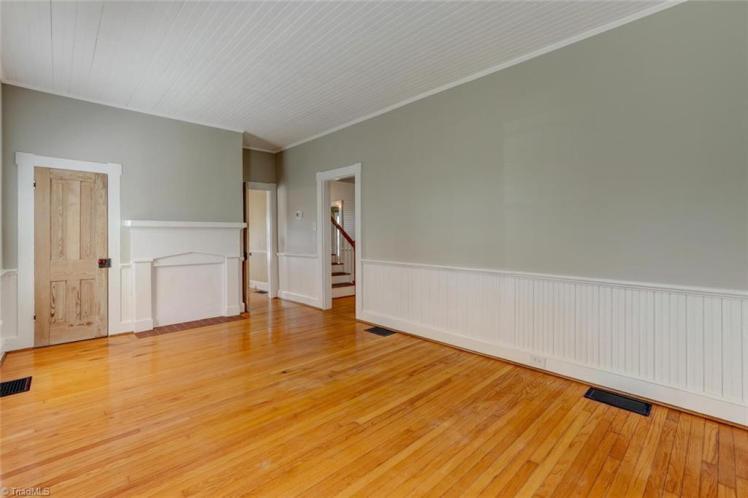

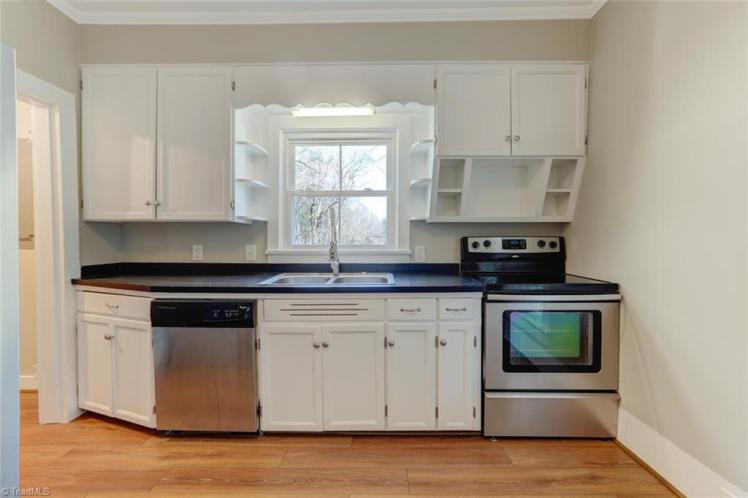


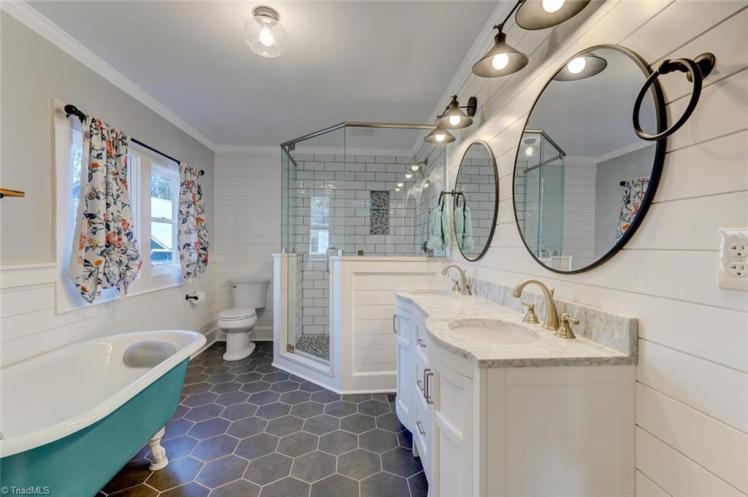

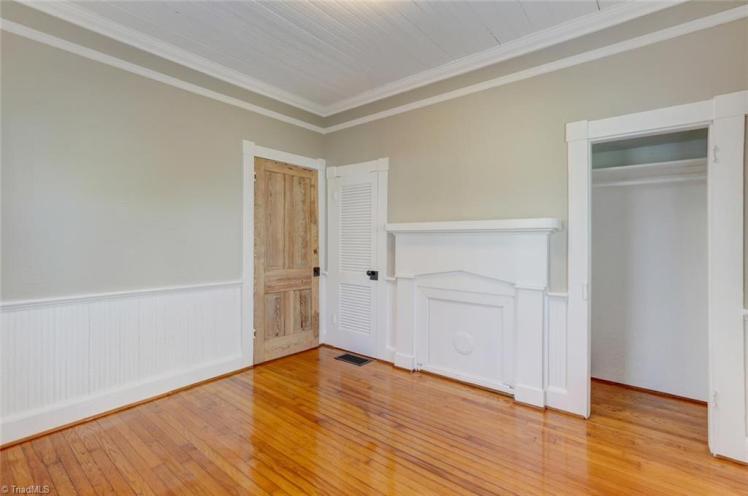


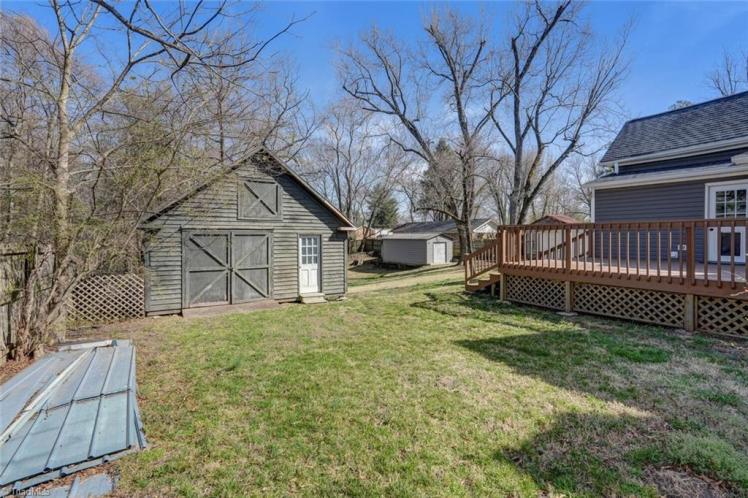

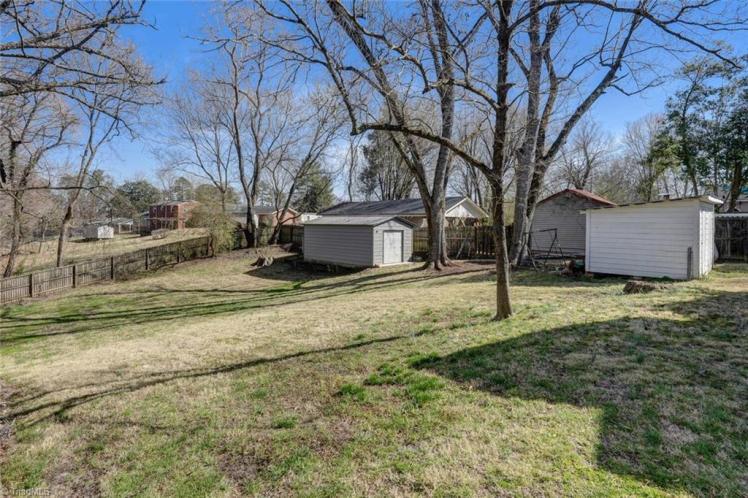


310 Summit Street, Walnut Cove, Stokes County
The Cahill-Fulton-Cates House
- Sold for $265,000 on April 4, 2025 (listed at $250,000)
- 4 bedrooms, 1 1/2 bathrooms, 1,693 square feet, 0.44 acre
- Price/square foot: $157
- Built between 1875 and 1900 (see note)
- Listed March 15, 2025
- Last sale: $165,000, October 2020
- Note: County records give the date as 1910. The 1989 Stokes County Historic Inventory dates the house to “the last quarter of the 19th century.” B.M. Cahill Jr. owned the property in the 1890s, selling it in 1899; since his name is attached to the house, it was likely built before he sold the property.
- The inventory mentions “houses of simple but handsome Italianate influence … built in Stokes County during the last quarter of the nineteenth century. Located primarily in the towns, these houses made use primarily of gabled roofs with overhanging eaves and bracketed cornices, pedimented door and window surrounds, and fancy porches with chamfered posts and sawnwork brackets and balustrades. These houses were usually two stories in height, though various configurations and plans were used.” It cites the Cahill-Fulton-Cates House as an “excellent example.”
- The property was sold in 1899 by B.M. Cahill Jr. (dates and full name unknown) to Joel Henry “Dick” Fulton (1867-1948) and Susan Elizabeth Vaughn Fulton (1874-1922). Joel served as sheriff of Strokes County and was a merchant.
- The Fultons sold the house in 1910 to Nathaniel Oliver Petree (1858-1944), a lawyer in Danbury who most likely didn’t live in it.
- Petree sold the house in 1919 to Lou Claudia Dicks Cates (1870-1958). After her husband died (Oliver Jackson Cates, 1855-1929), Lou moved to Greensboro and lived with two of her daughters. In 1932, Lou passed ownership of the house to them, Minnie Waddell Cates (1900-1992) and Willie Mae Cates (1904-1993). They both worked for Jefferson-Pilot and were members of the Daughters of the American Revolution. The house was sold after Willie Mae’s death in 1993.
406highland

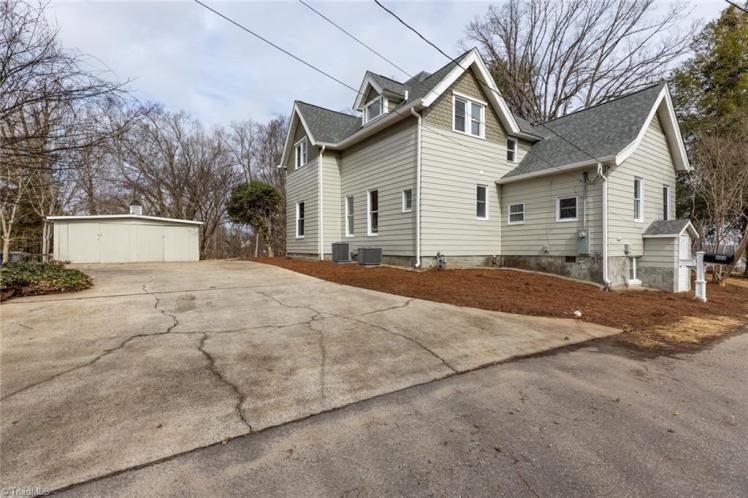


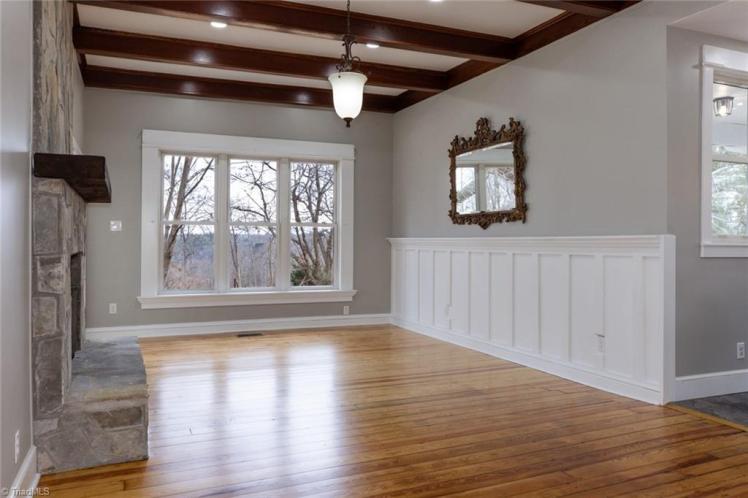





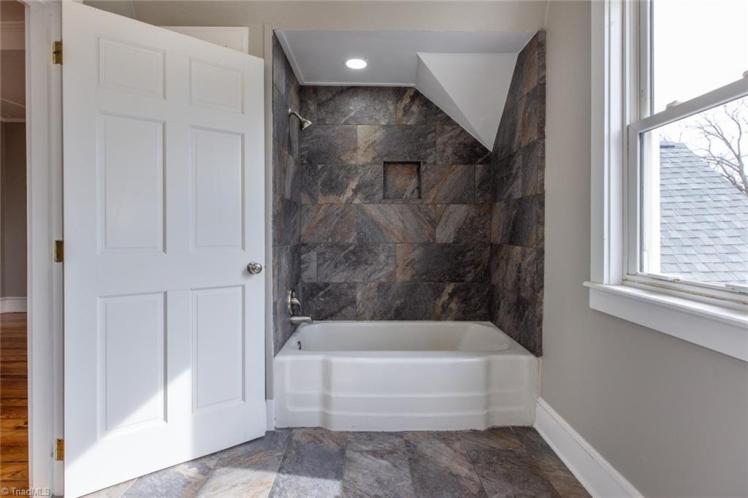

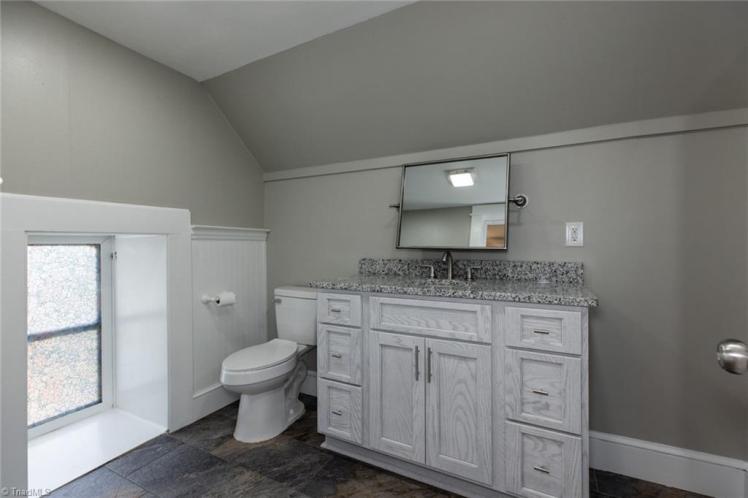


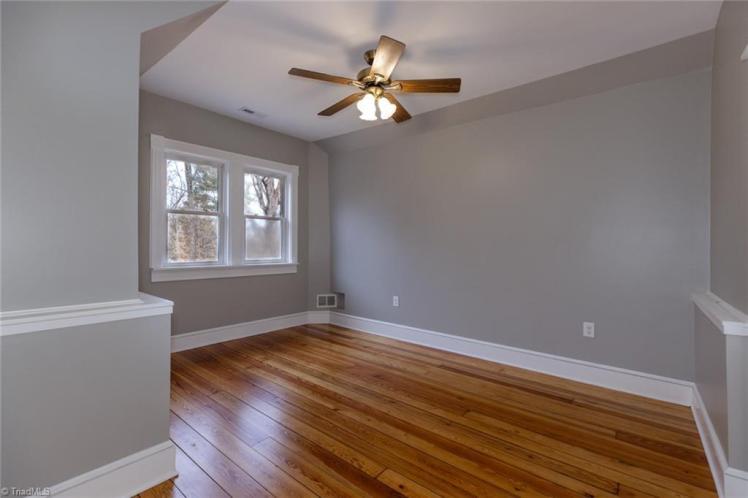
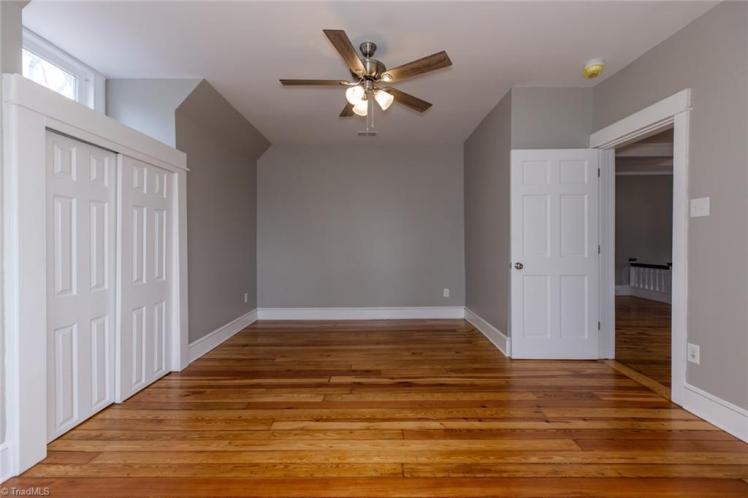

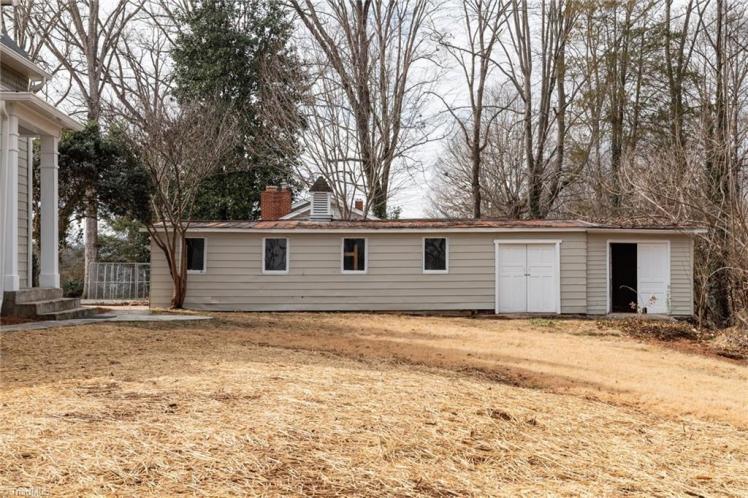

406 Highland Street, Wilkesboro, Wilkes County
The Hemphill-Lowe House
- Sold for $520,000 on March 31, 2025 (listed at $549,000)
- 4 bedrooms, 2 bathrooms and 2 half-bathrooms, 2,584 square feet, 1.22 acres
- Price/square foot: $201
- Built in 1903
- Listed February 14, 2025
- Last sales: $125,000, August 2024; $149,000, April 2008
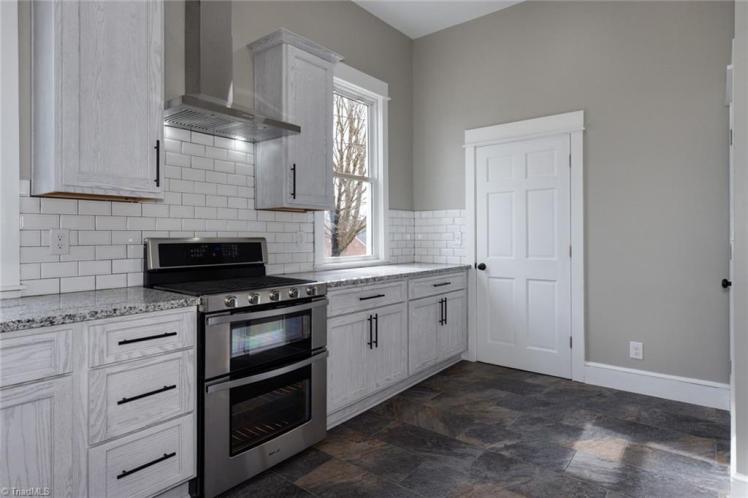
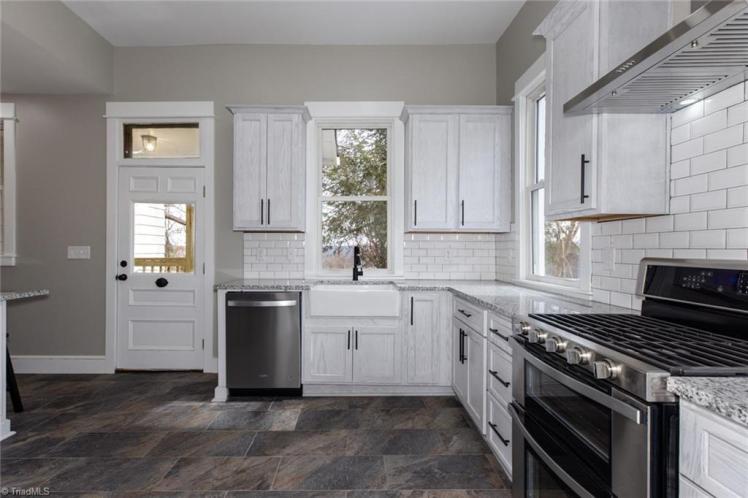
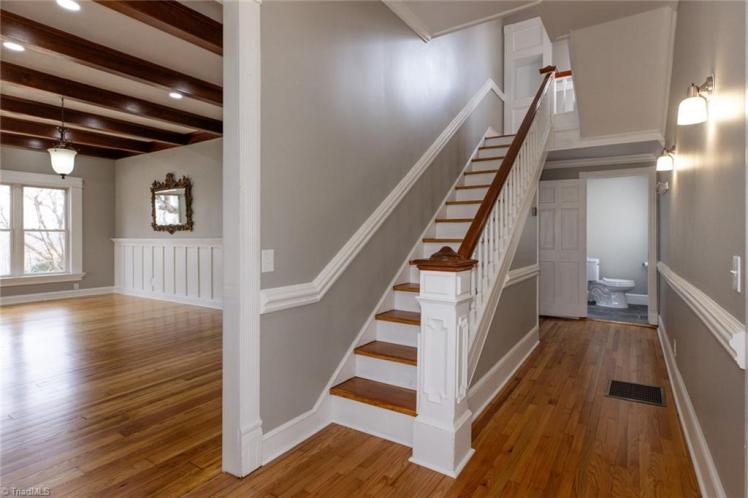
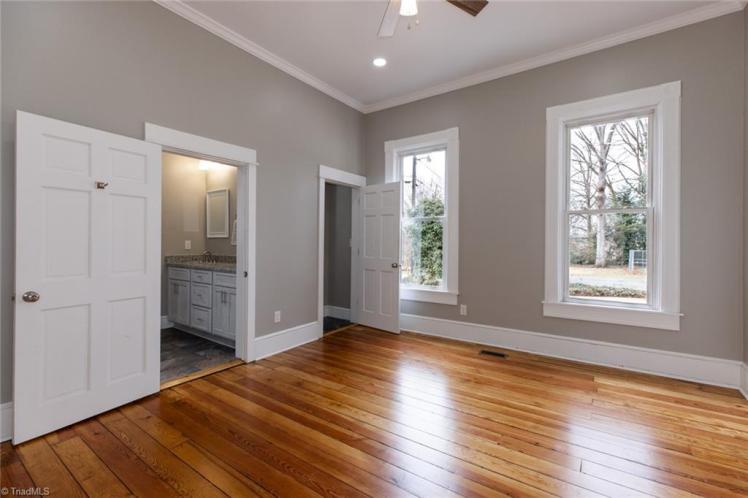
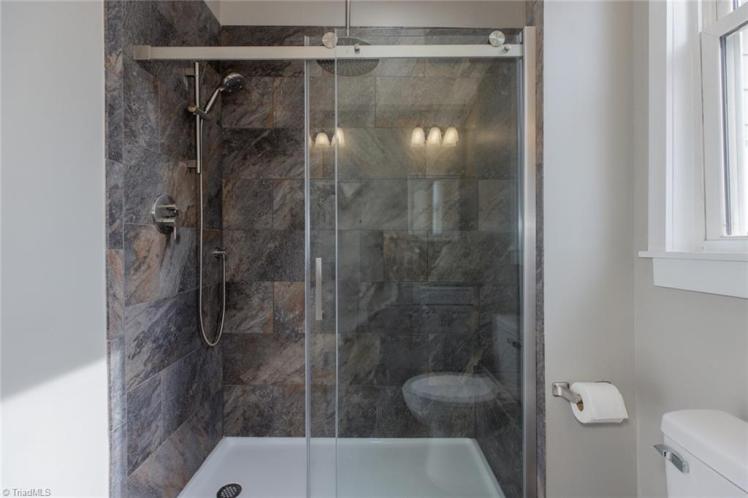
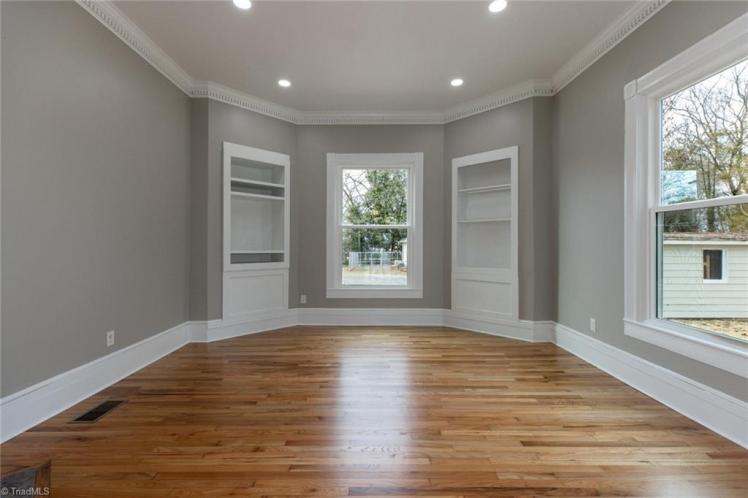
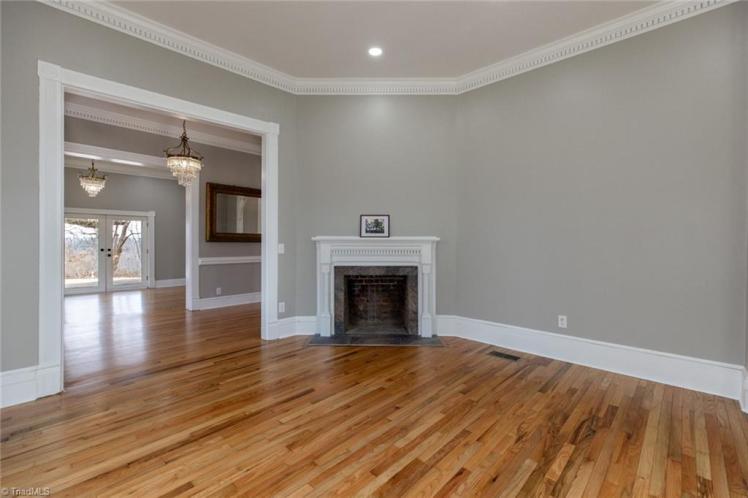
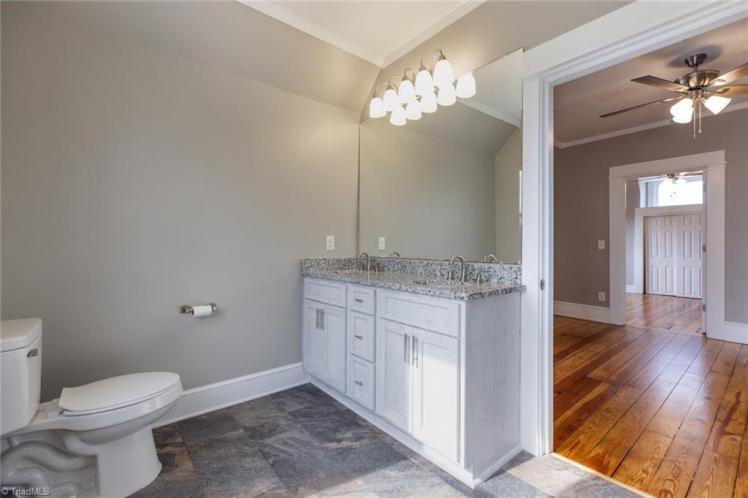
- Note: Caveat emptor — quickie flip job, priced more than four times higher than its August 2024 sale price. For that kind of mark-up, they really should have restored the porch. The house looks so odd without it.
- Not to be confused with the nearby Lowe-Hemphill House, which is on the National Register.
- Oddly, the back of the house faces the street.
- For photos from the 2024 listing, click here.
- A massive Tyson chicken-processing plant is about a block away, for now at least (an August 2024 announcement of job cuts said, “Due to increasing demand … fewer positions will be required in the facility.” That kind of double-talk is never a good sign for workers or the community (based on my 12 years experience in corporate public relations).
304oakwood
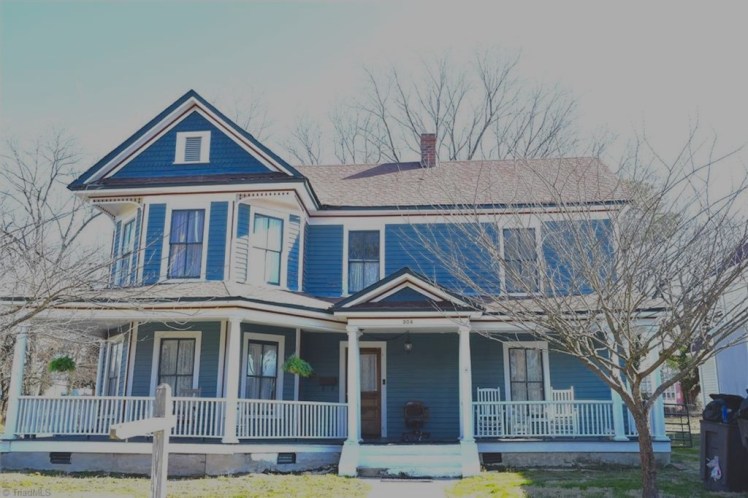


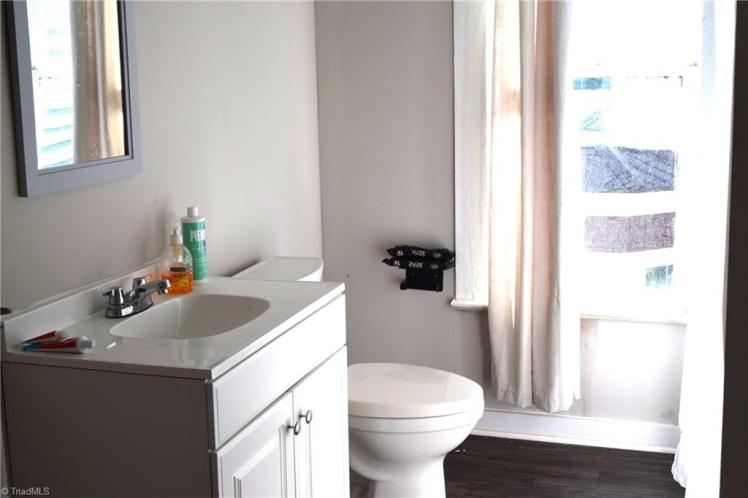


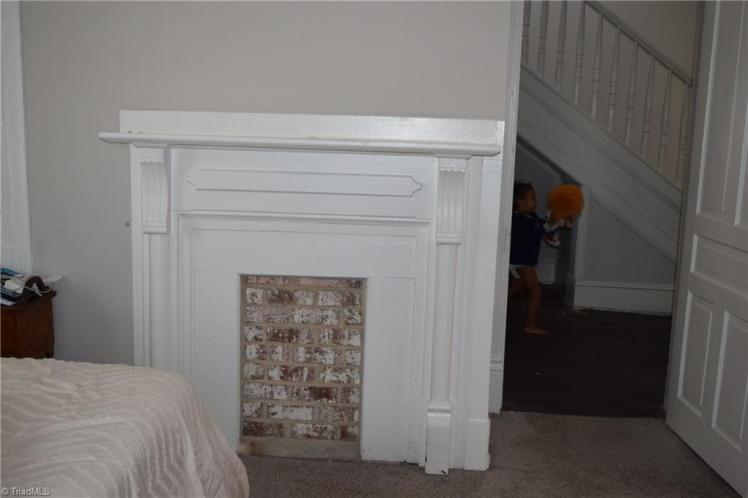
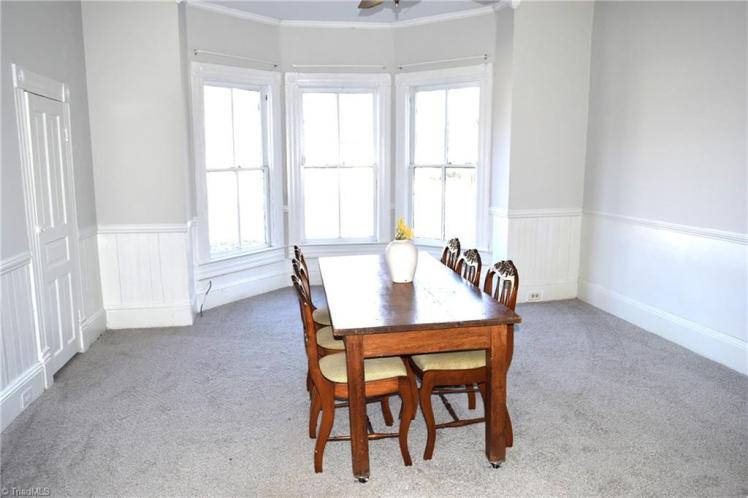
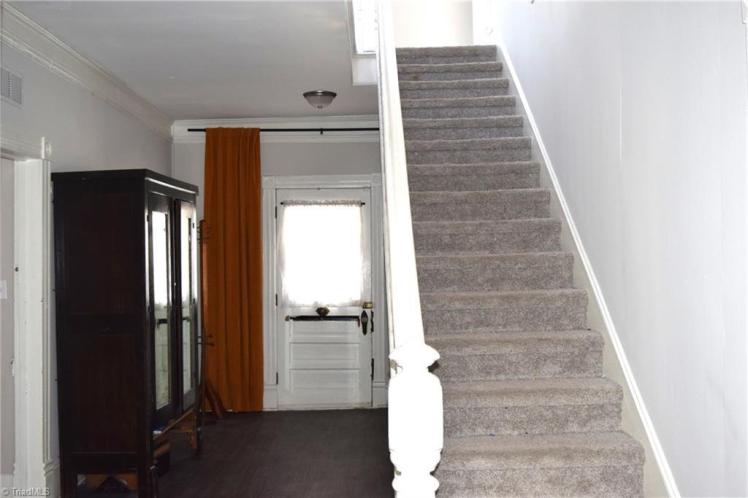


304 Oakwood Street, High Point
- Sold for $249,000 on March 31, 2025 (listed at $249,000)
- 4 bedrooms, 3 bathrooms, 2,582 square feet (per county, 0.24 acre)
- Price/square foot: $96
- Built in 1904
- Listed February 25, 2025
- Last sales: $215,000, April 2022; $99,000, August 2020; $115,000, July 2007
- Neighborhood: Oakwood Historic District (NR)
- Note: The house was divided into three apartments, possibly as far back as 1938. It has been returned to single-family. It was a rental property for most of its existence.
- The original address was 204 Best Street, then 304 Best. The street wasn’t renamed Oakwood Avenue until around 1960.
- District NR nomination: “Queen Anne style house; L-shaped frame with wooden shingle accent in gables; three-sided end bay on main facade capped with attic pediment; full-facade front porch”
803madison
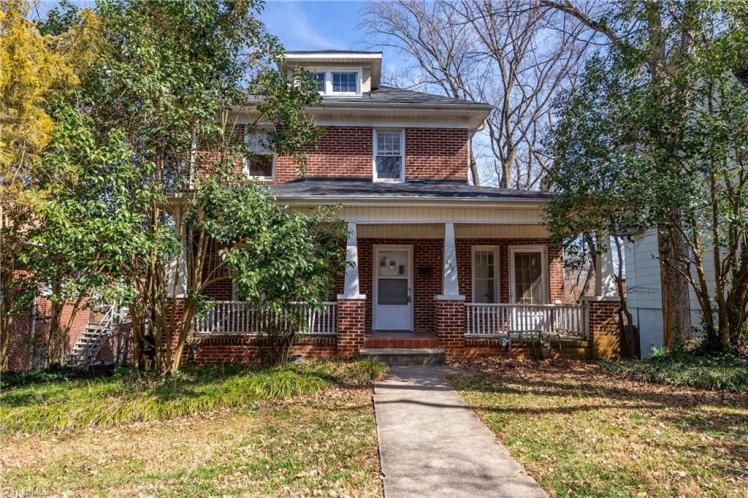
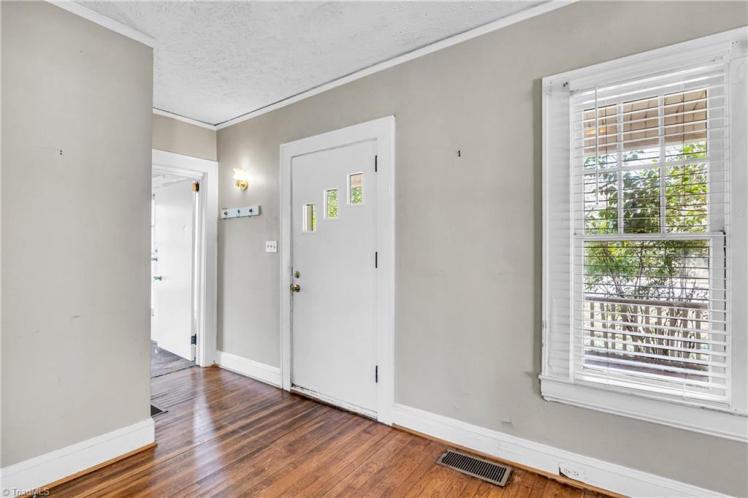

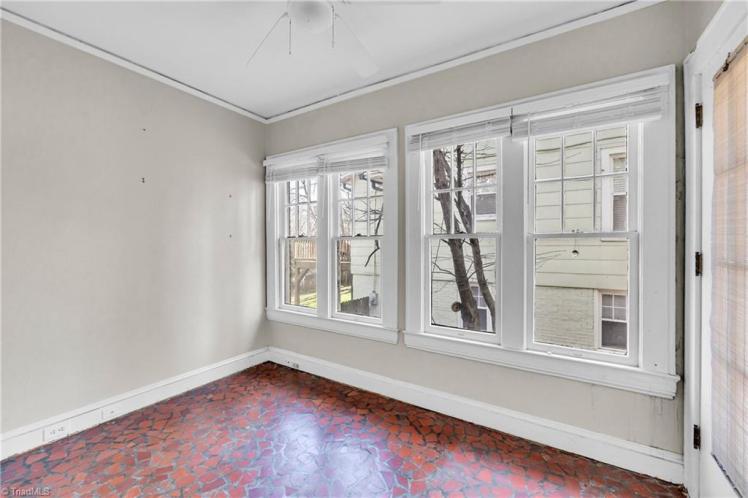
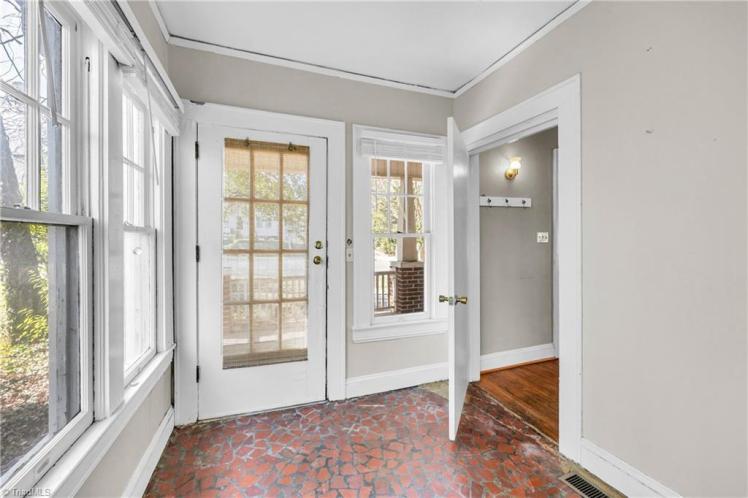

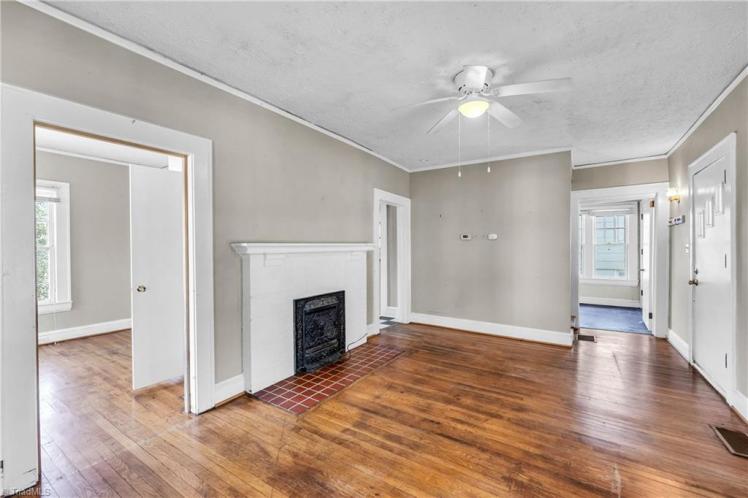

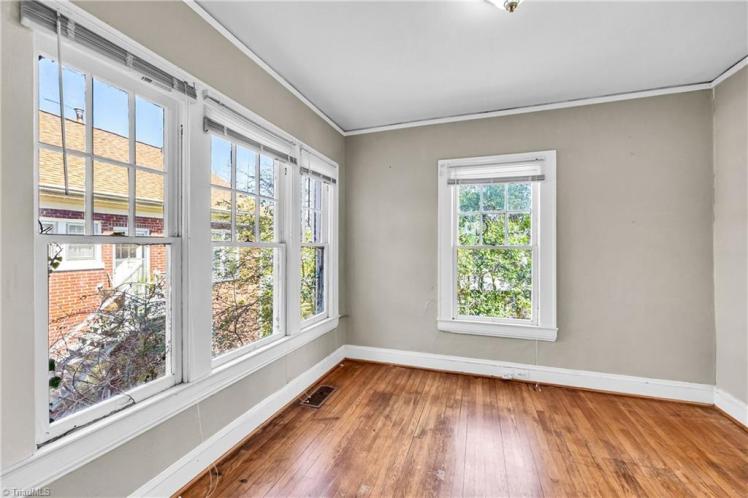
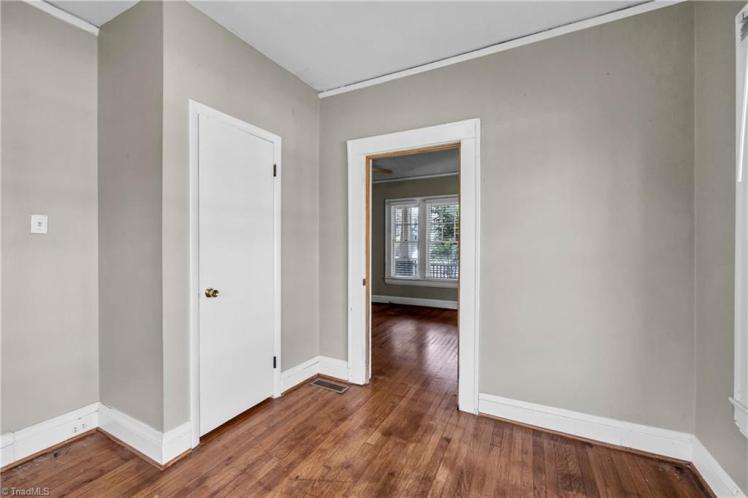

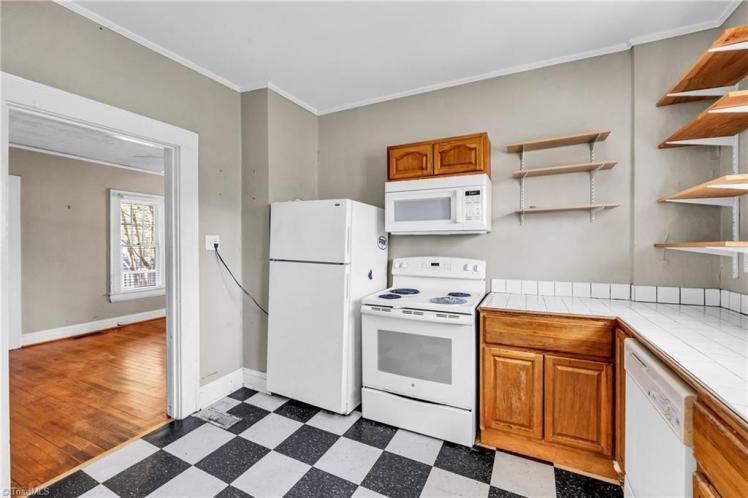
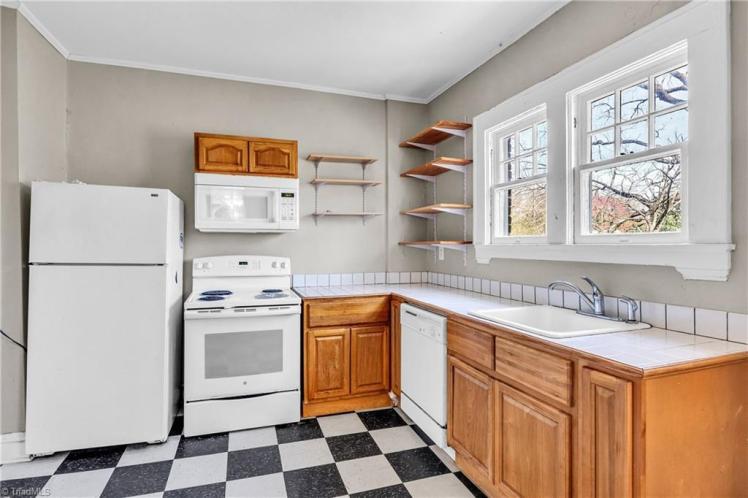
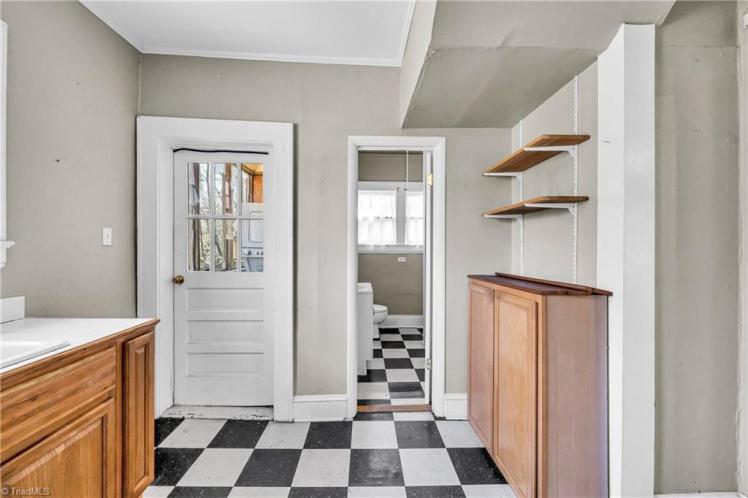


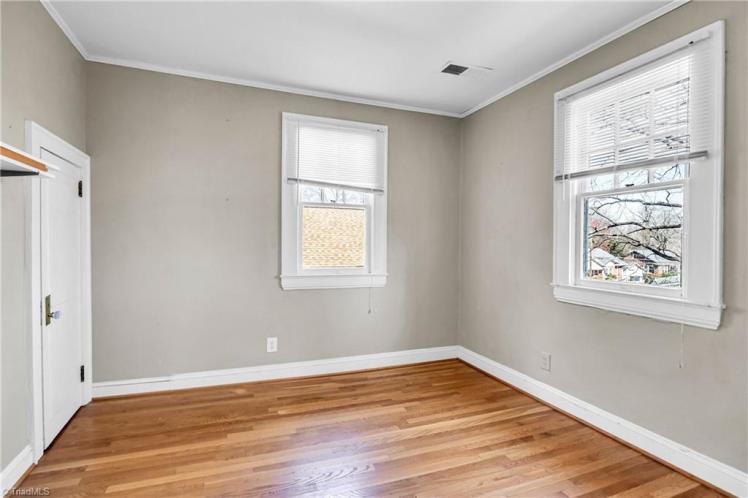


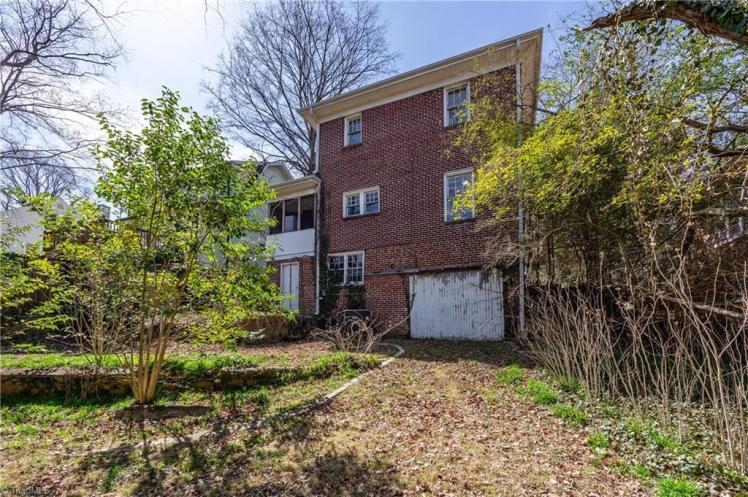
803 Madison Avenue, Winston-Salem
- Sold for $208,000 on March 21, 2025 (listed at $270,000)
- 3 bedrooms, 2 bathrooms, 1,336 square feet, 0.15 acre
- Price/square foot: $156
- Built in 1928
- Listed March 14, 2025
- Last sale: $100,100, November 2006
- Neighborhood: Ardmore Historic District (NR)
- Note: The property appears to have been a rental for at least 19 years.
- District NR nomination: “Foursquare. Two story; hip roof; brick; hip-roof dormer; six-over-one, double-hung sash; hip-roof porch; battered posts on brick piers.”
- The house was apparently a rental in its earliest days, with different residents listed when it wasn’t vacant.
- The address first appears in the city directory in 1930 with Helen “Hulda” Goodman Pakula (1877-1938) and two of her five sons, Harry and Lewis (dates unknown for both). Hulda was born in Germany, as was her late husband, Lipman Pakula (1860-1922), a traveling salesman. They were living in Raleigh when he died. Harry and Lewis were both clerks. It was the only year they were listed on Madison Avenue and the only year Hulda was listed in Winston-Salem. By 1931 she had moved back to Raleigh, where she operated a dress shop.
663ruritan
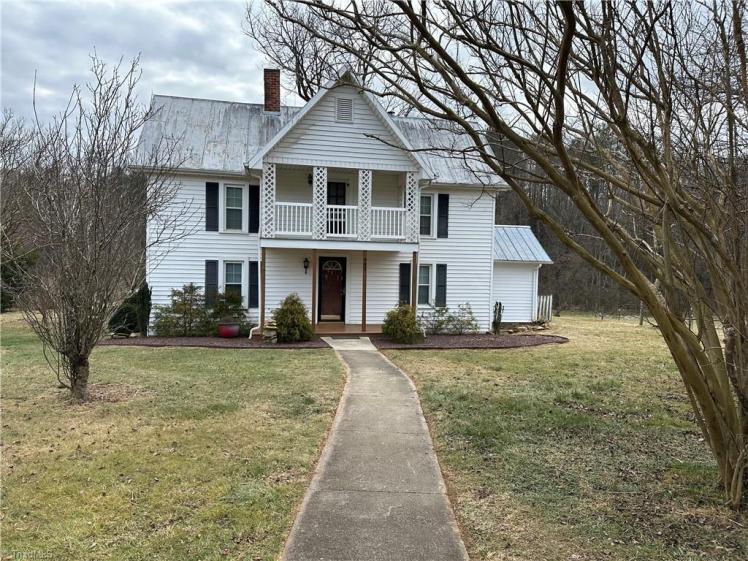


663 Ruritan Road, Roaring River, Wilkes County
- Sold for $290,000 on March 18, 2025 (listed at $299,900)
- 4 bedrooms, 2 bathrooms, 1,708 square feet, 13.1 acres
- Price/square foot: $170
- Built in 1892
- Listed January 31, 2025
- Last sale: $128,500, May 1999
- Neighborhood: Located 12 miles west of Elkin
- Note: County records show only one bathroom.
93broad


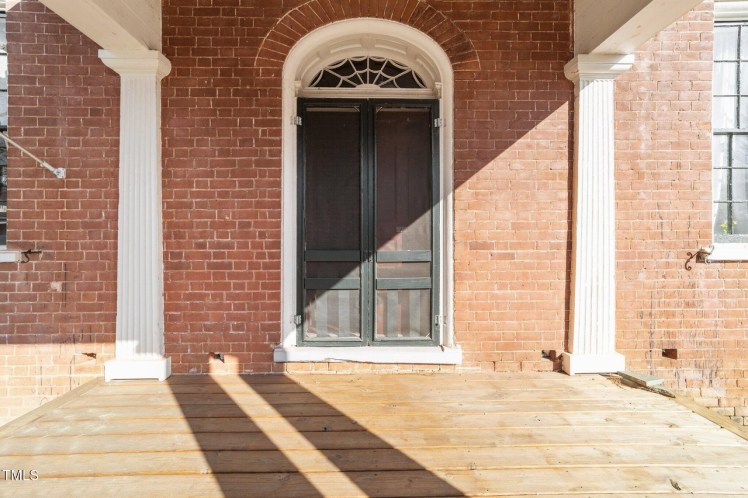


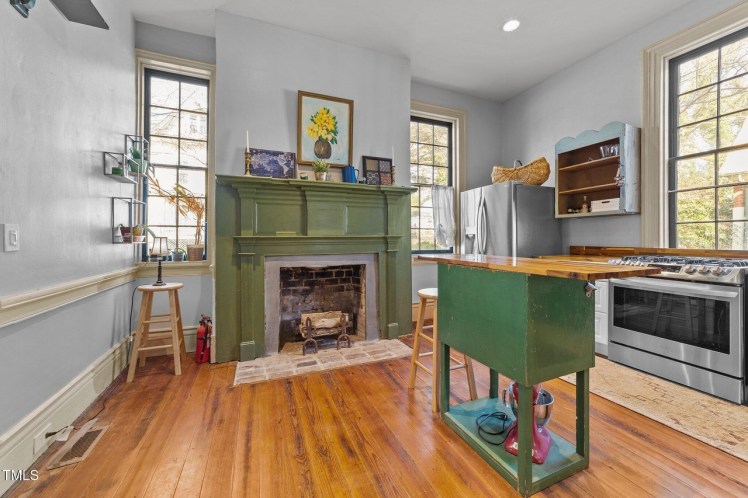
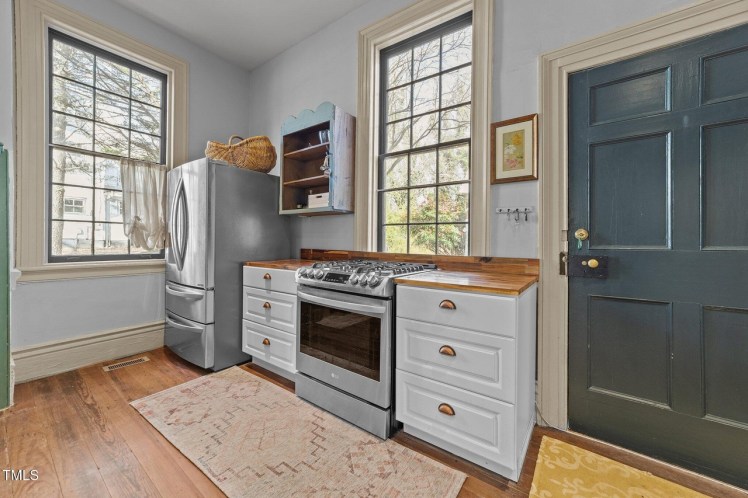
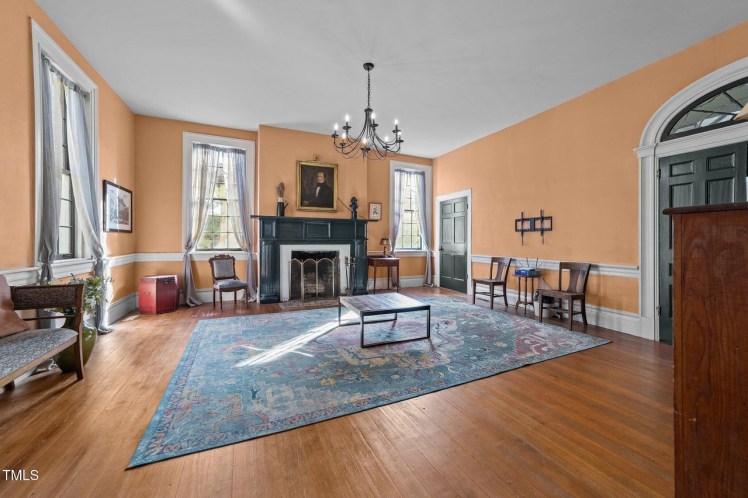


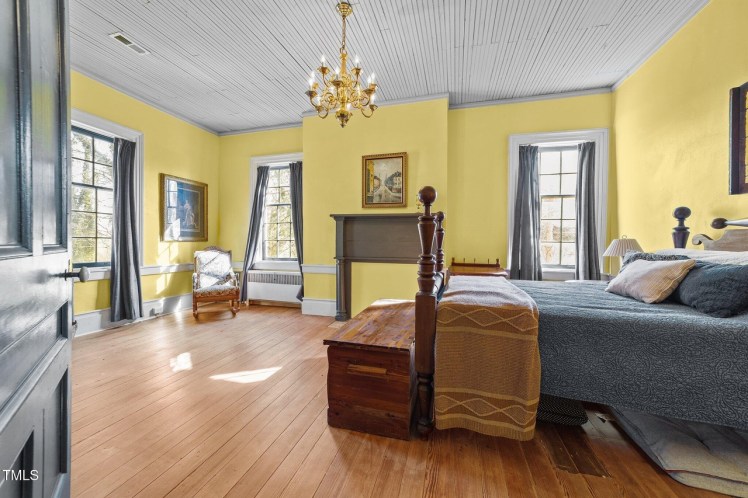












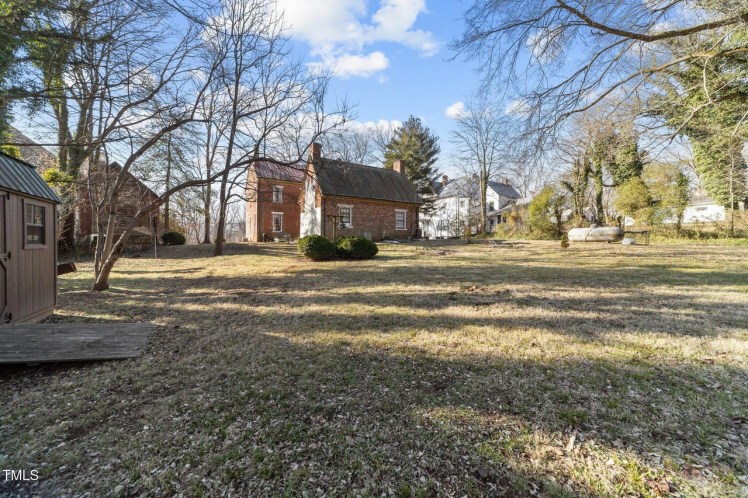

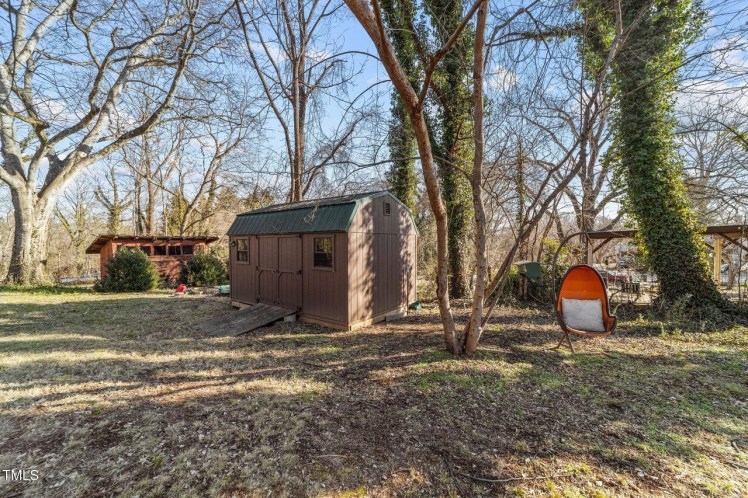

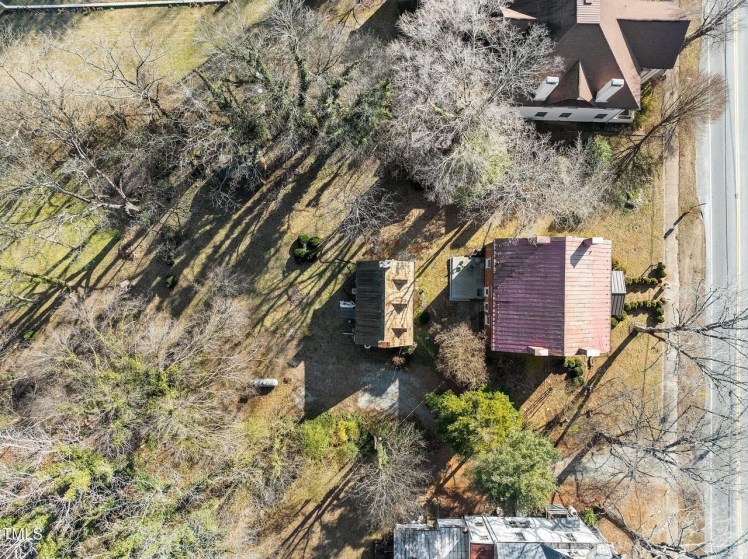
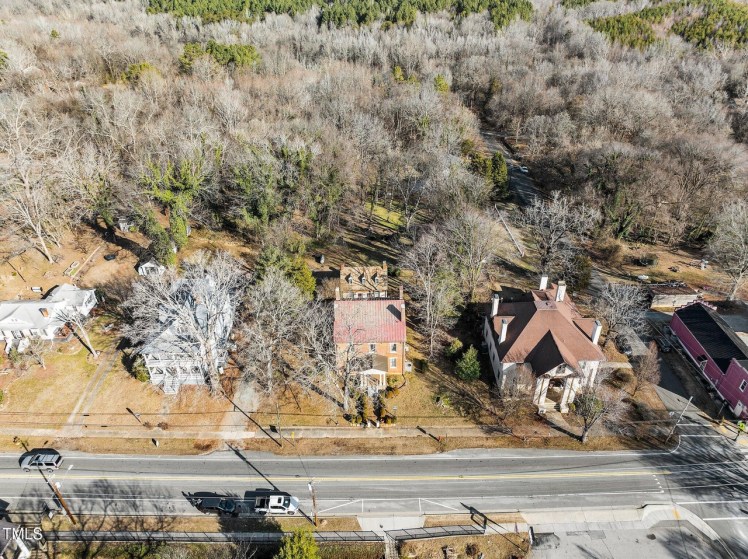
93 Broad Street, Milton, Caswell County
The Wilson-Winstead House
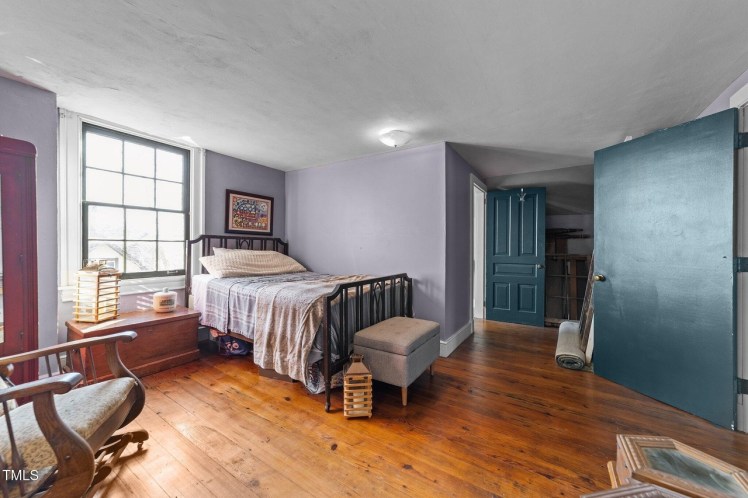
- Sold for $440,000 on March 17, 2025 (listed at $450,000)
- 5 bedrooms, 2 1/2 bathrooms, 3,472 square feet, 0.87 acre
- Price/square foot: $127
- Built in 1835
- Listed February 13, 2025
- Last sale: $100,000, April 2020
- Neighborhood: Milton Historic District (NR)
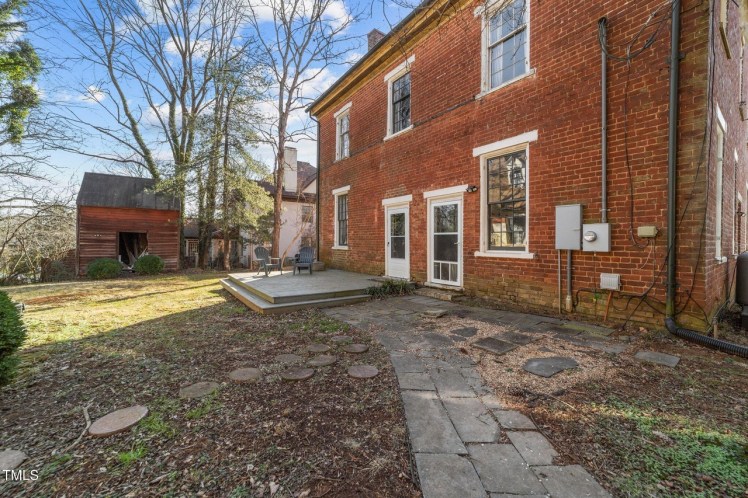
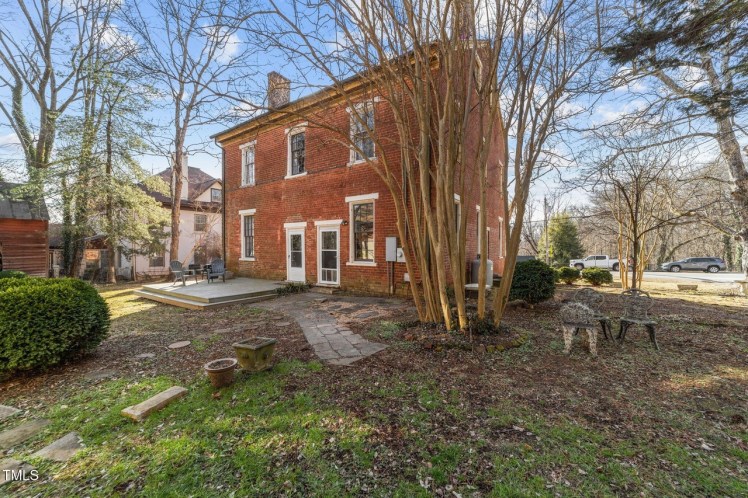
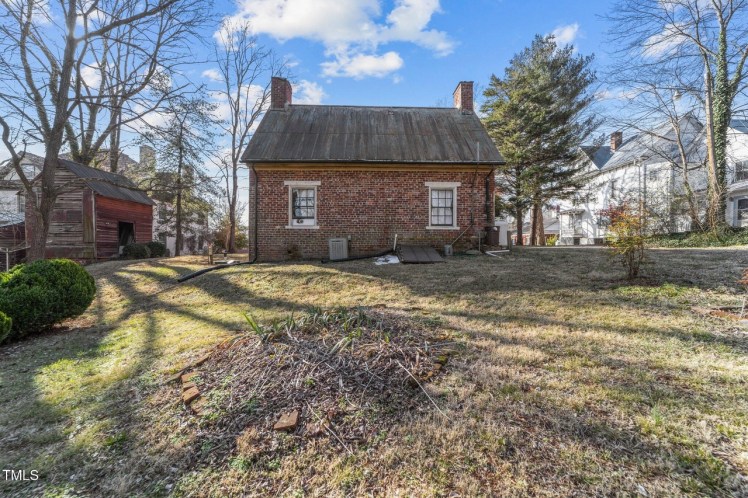
- Note: The original, detached brick kitchen still stands behind the house, now converted into a short-term rental with a kitchen and two second-floor bedrooms and a frame smokehouse at the rear.
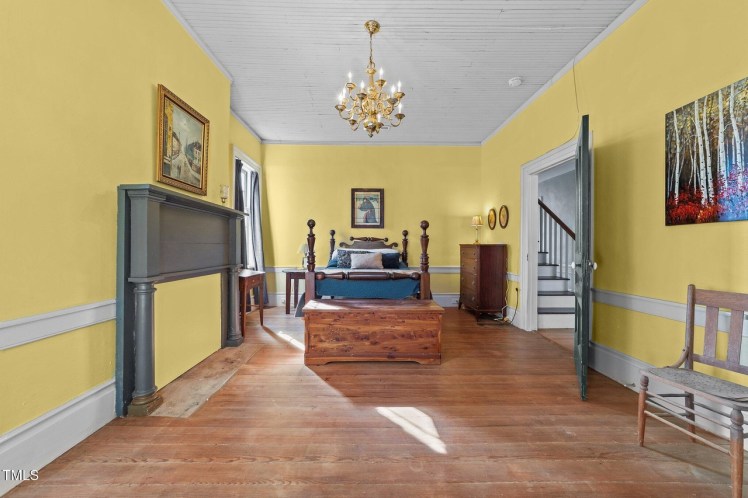
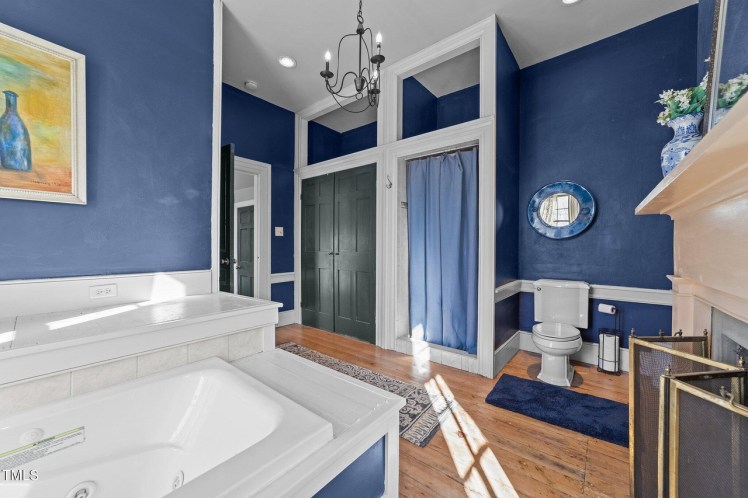
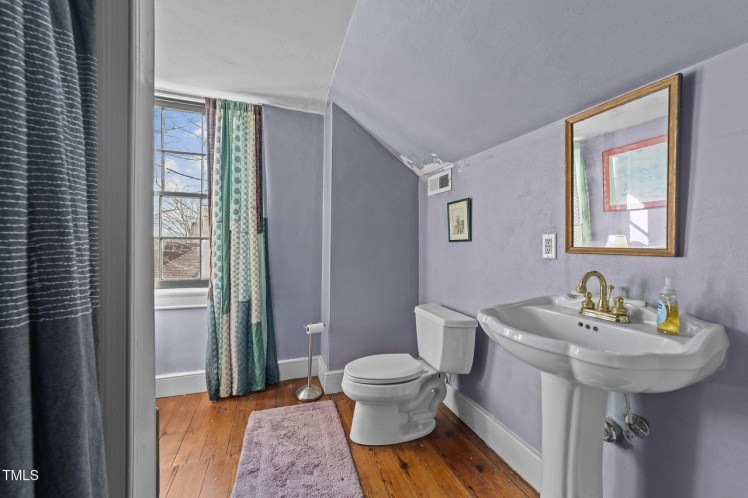
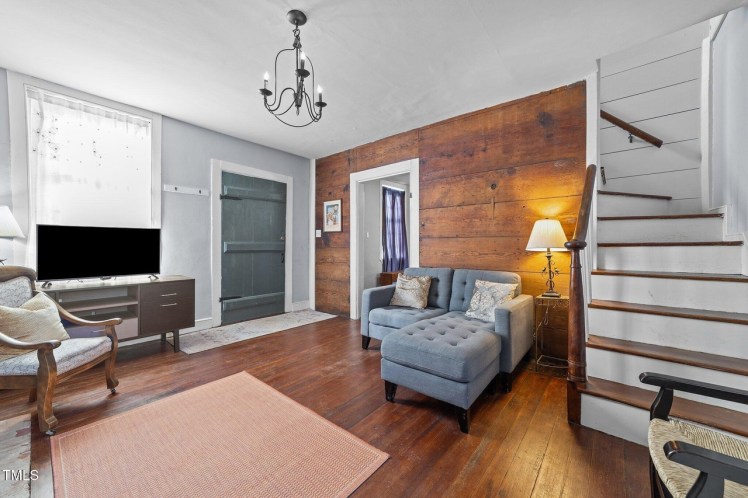
- The restoration of the house by its current owners was recognized with an award from Preservation North Carolina in 2024. The restoration included the removal of a 20th-century double front porch. The project also returned the house to single-family occupancy; it had been divided into apartments.
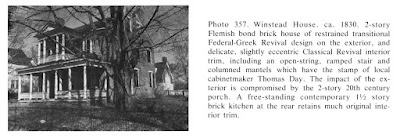
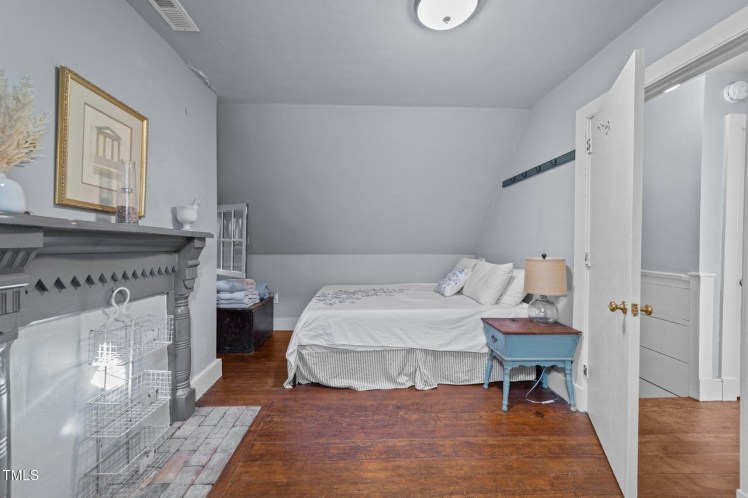
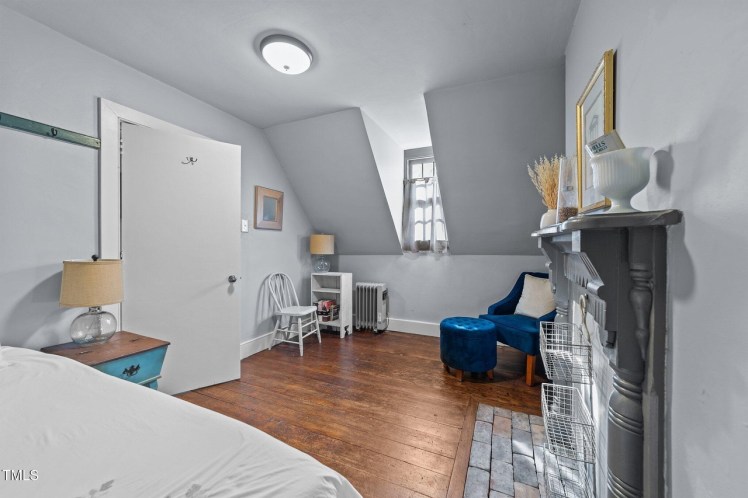
- “2-story Flemish bond brick house of retrained transitional Federal-Greek style Revival design on the exterior, and delicate, slightly eccentric Classical Revival interior trim, including an open-string ramped stair and columned mantels which have the stamp of local cabinetmaker Thomas Day. … A free-standing contemporary 1 1/2 story brick kitchen at the rear retains much original interior trim.” (An Inventory of Historic Architecture: Caswell County, North Carolina, by Ruth Little-Stokes and Tony P. Wrenn, 1979, p. 222)
- District NR nomination: “The Winstead House, on the north side of Main Street [now Broad Street] beside Talton’s Alley, is a two-story brick house with a gable roof. It exhibits Federal form and detail but heralds the emerging Greek Revival style in the bold simplicity and large scale of its execution.
- “The entrances have fanlights, ovolo moldings enframe the openings, and raised-paneled corner blocks ornament the window sills.
- “Behind the house is the brick kitchen and quarters with a steep gable roof punctuated by pedimented dormers. E.D. Winstead, a later owner of the house, was a very successful businessman who operated the largest tobacco factory in Milton in the late nineteenth century.”
- Oddly, the National Register nomination doesn’t mention the original owner of the house, John Wilson. “Around 1830, John Wilson built on Broad Street in Milton, North Carolina, what has become known as the Winstead House. Apparently, the house is remembered more for the family of its second owner, Edward D. Winstead (1852-1925), who owned a tobacco factory, roller mill, and cotton gin, all in Milton. His son, Colin Neblett Winstead (1885-1956) also lived in the house.” (Caswell County North Carolina blog)
- John Wilson Sr. (1796-1875) was born in Norfolk. He was a merchant and planter. John had three wives and 13 children. He outlived all of his wives and at least eight of his children. One son who outlived him was Dr. John Wilson Jr. (1828-1892), a physician and educator. His very prominent home next door at 77 Broad Street is also for sale.
2258us70
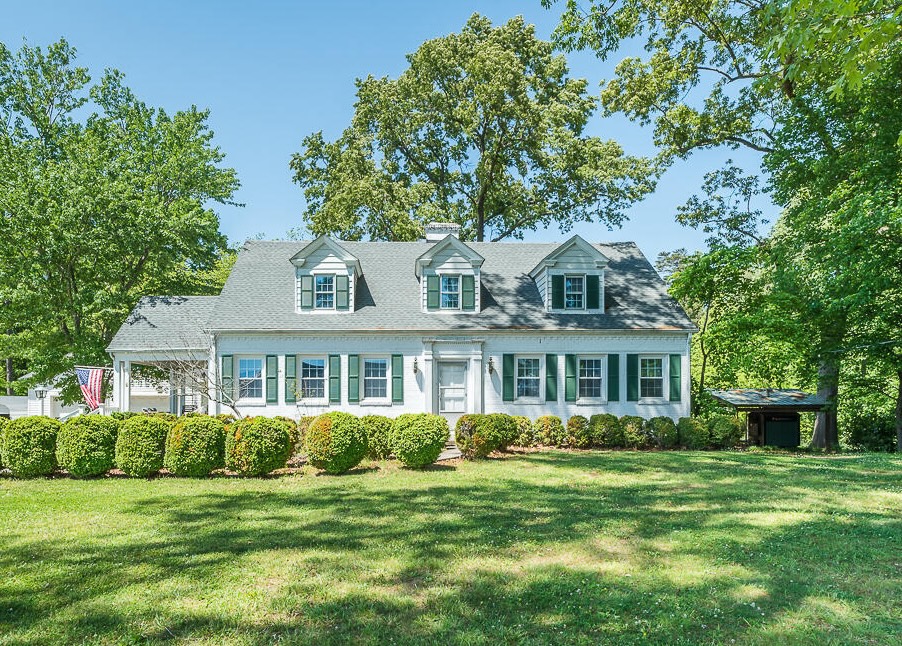
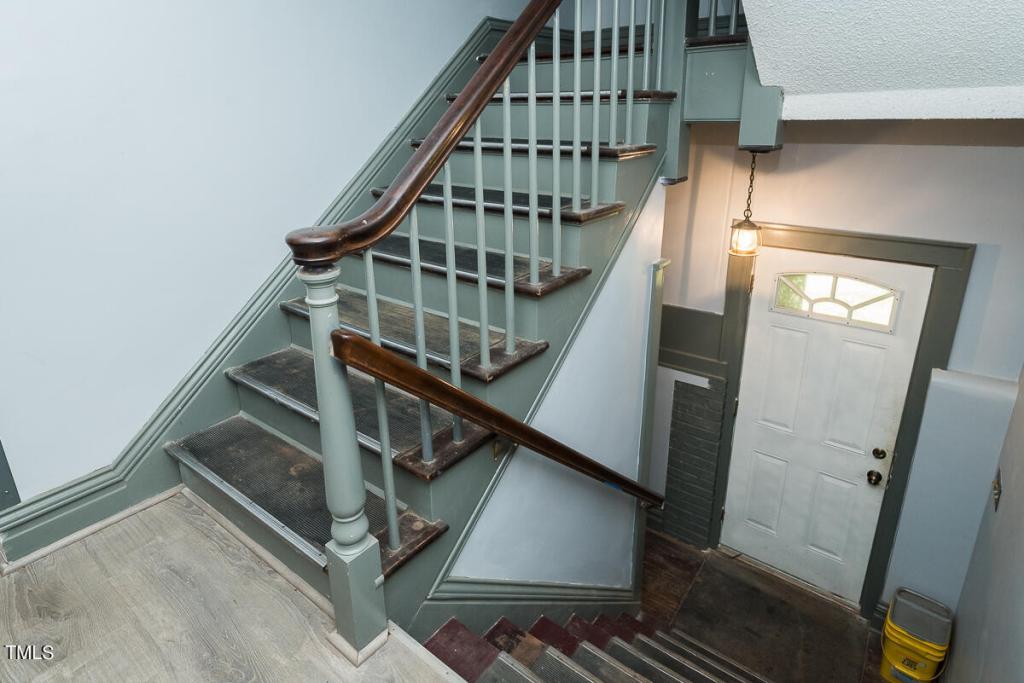
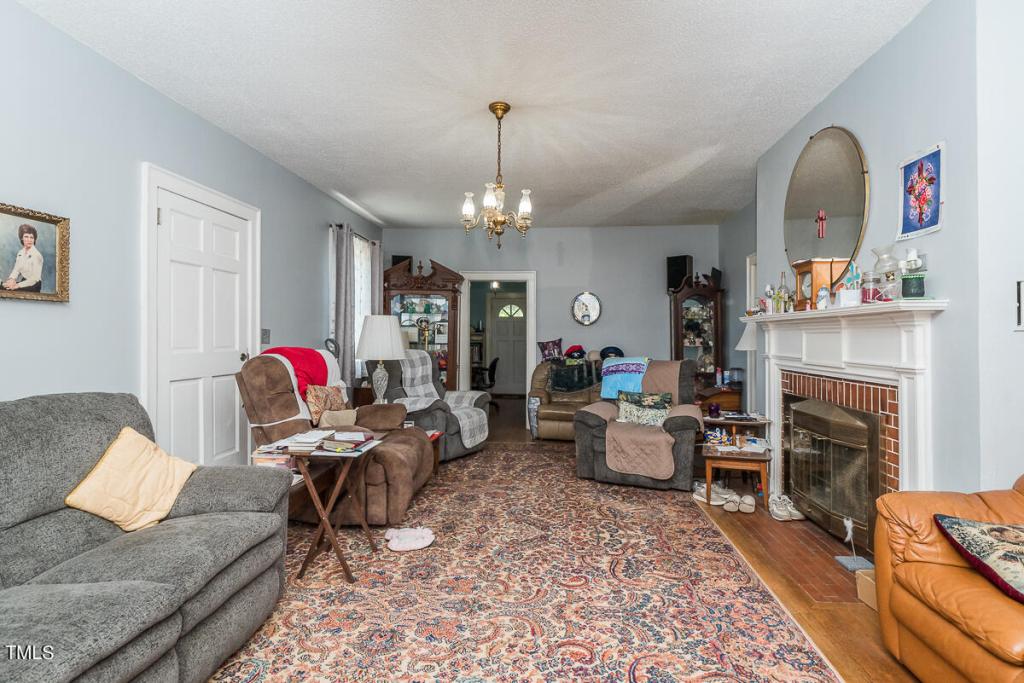
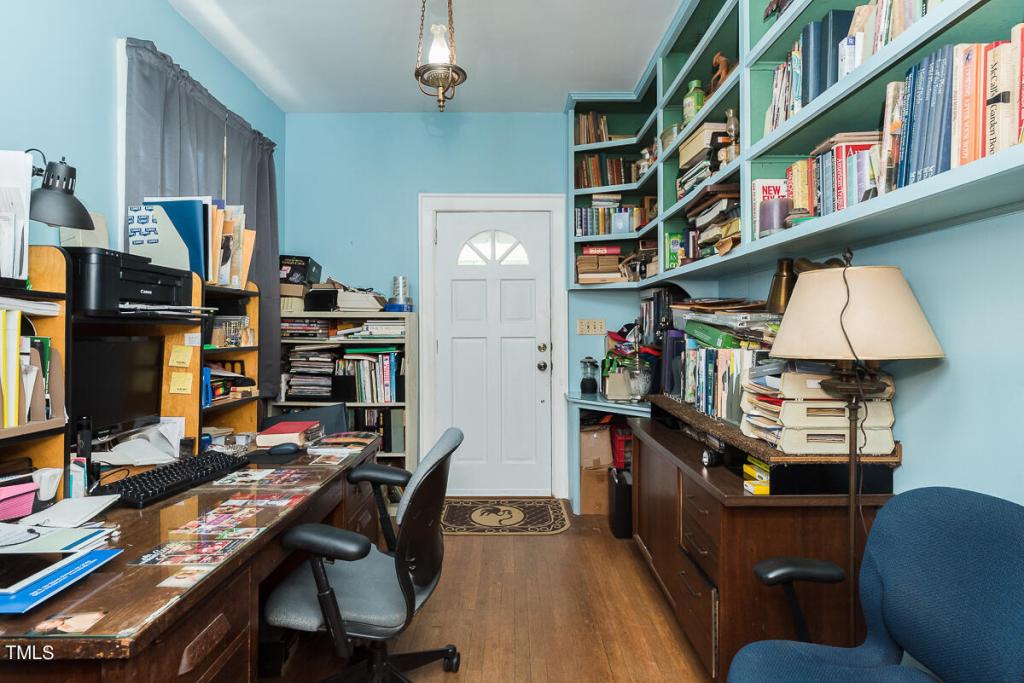
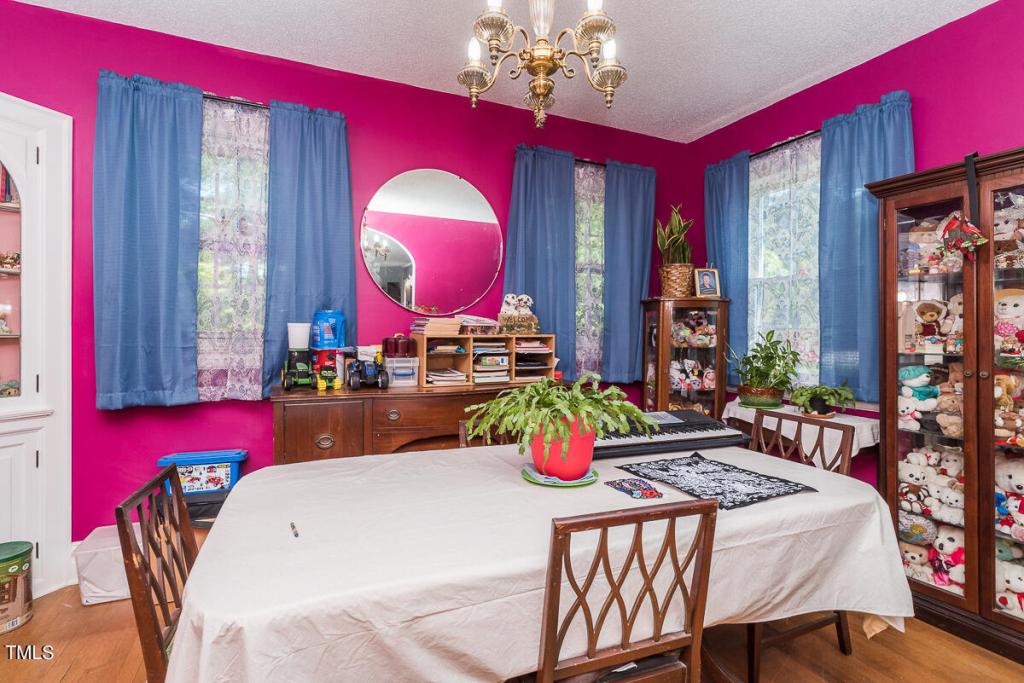
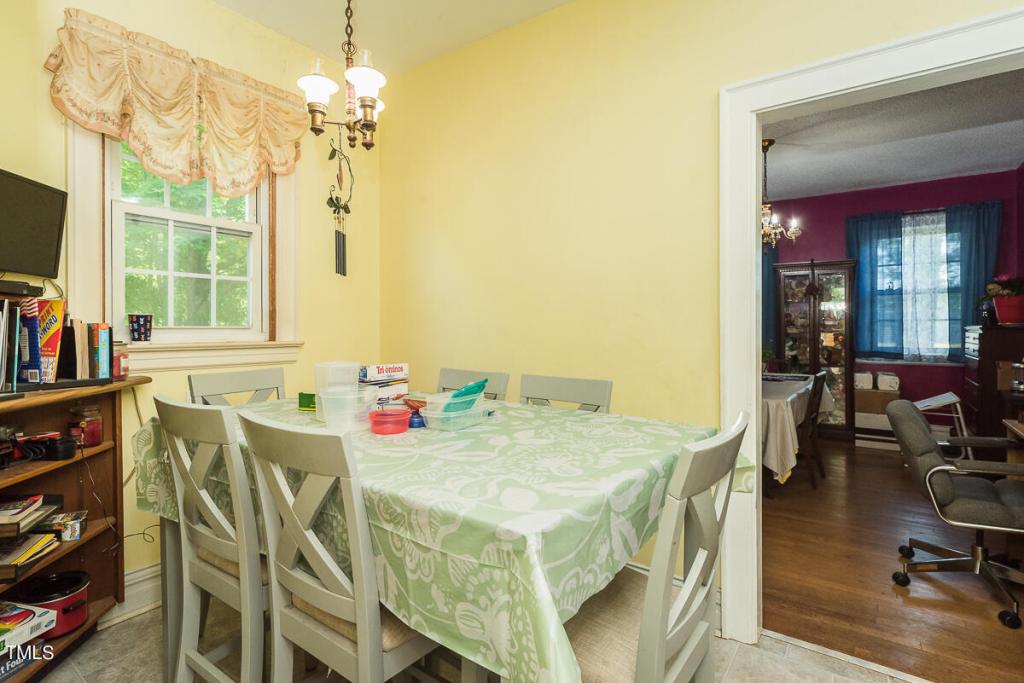
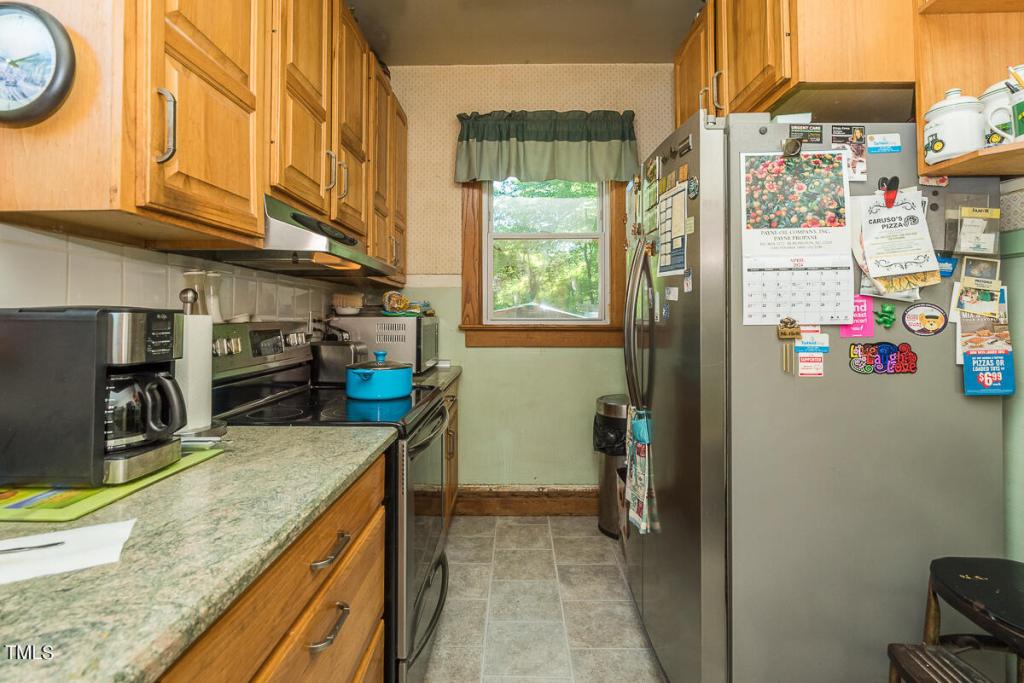
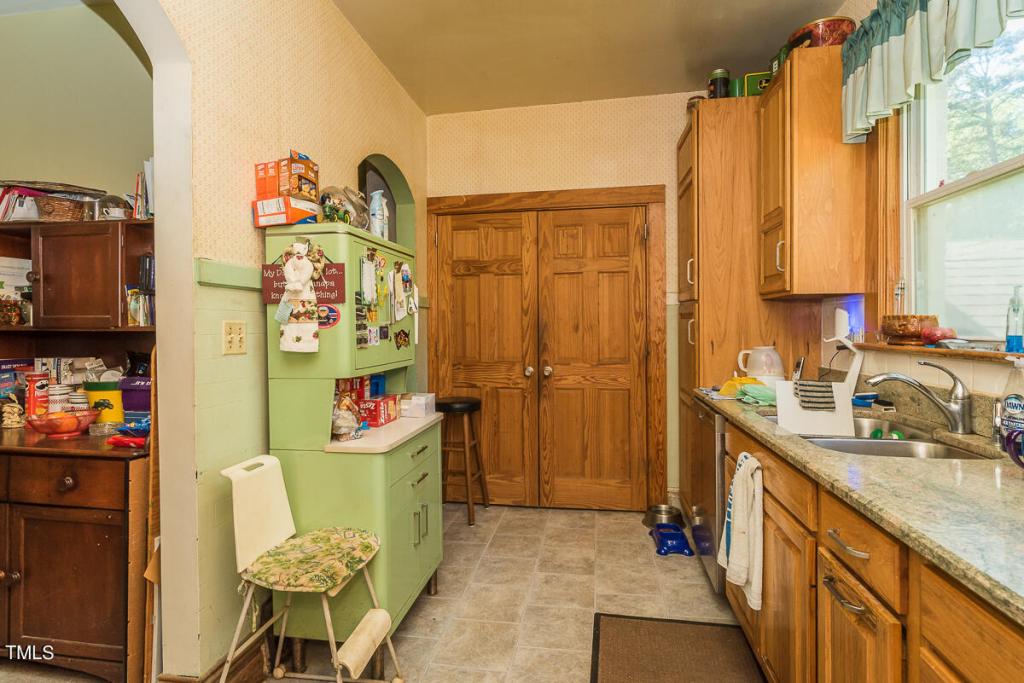
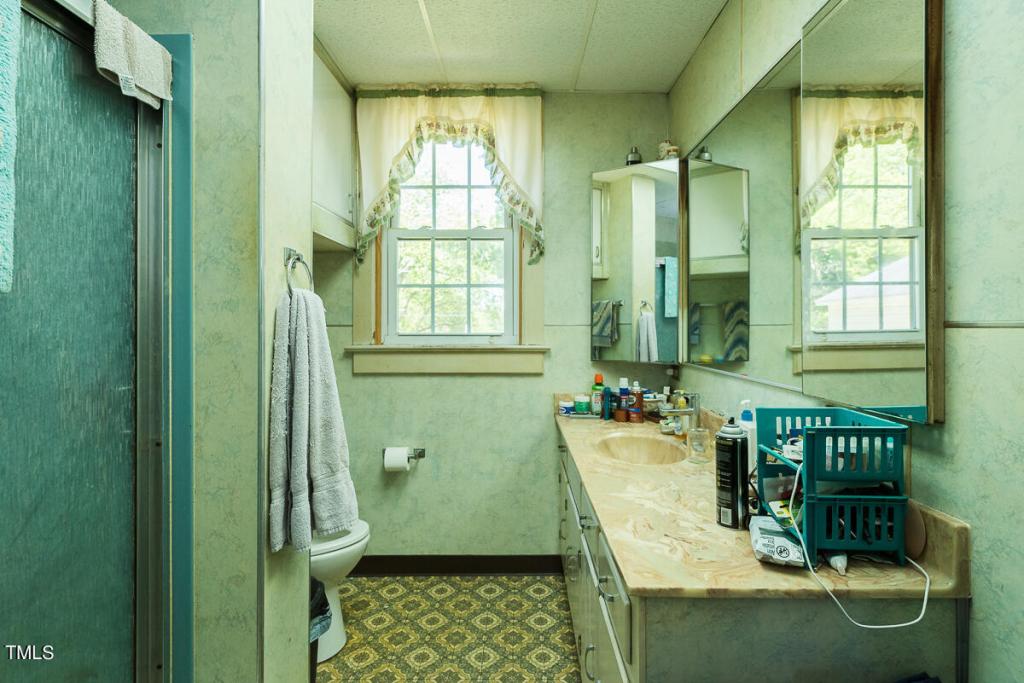
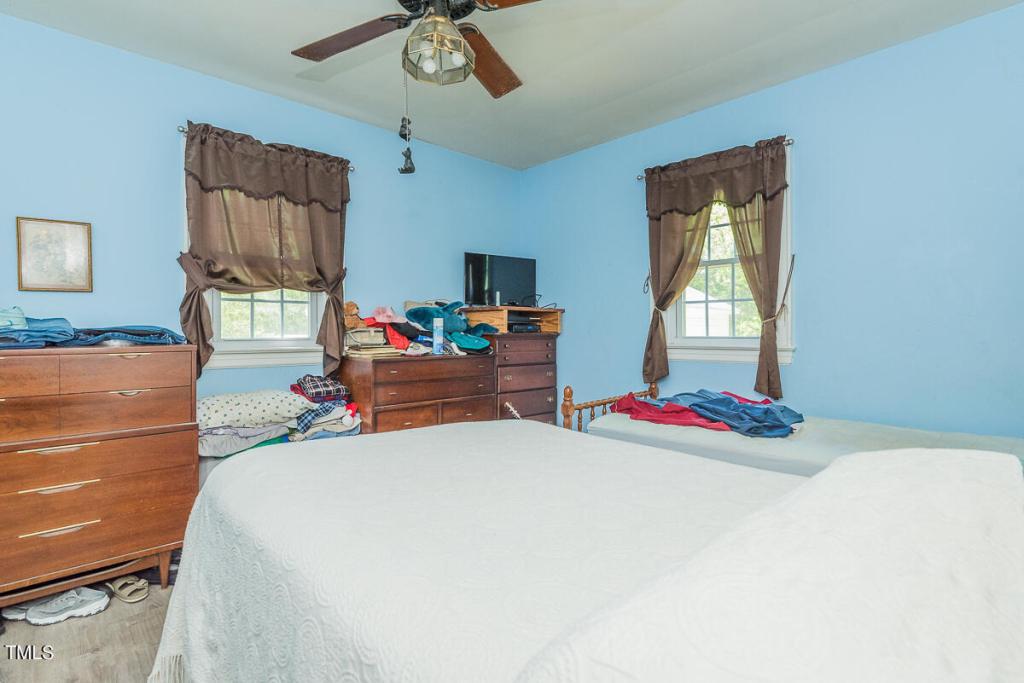
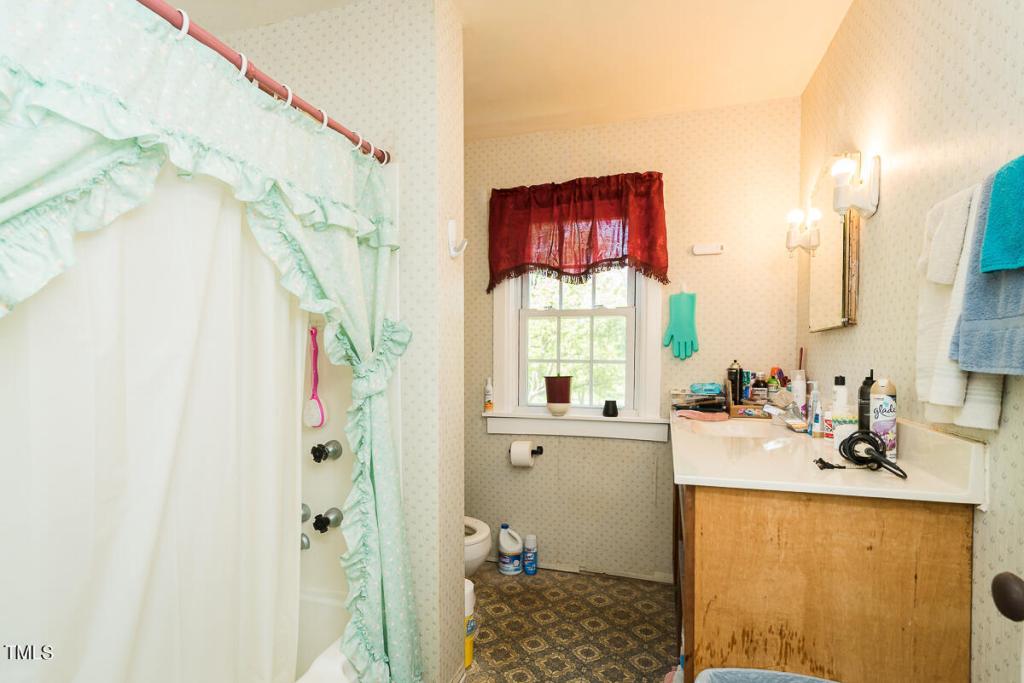
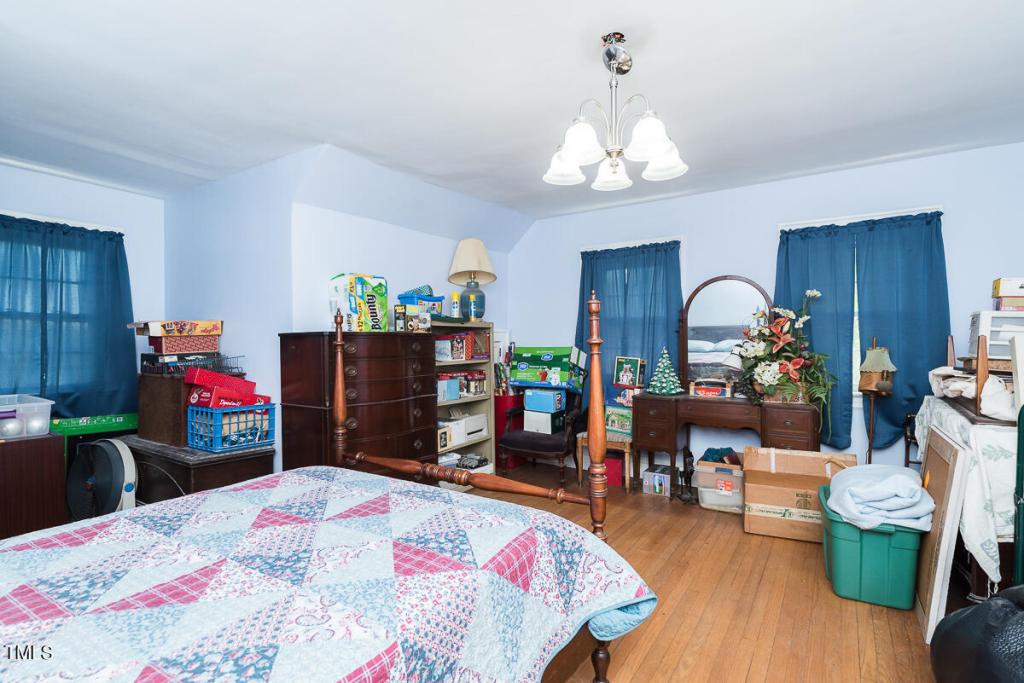
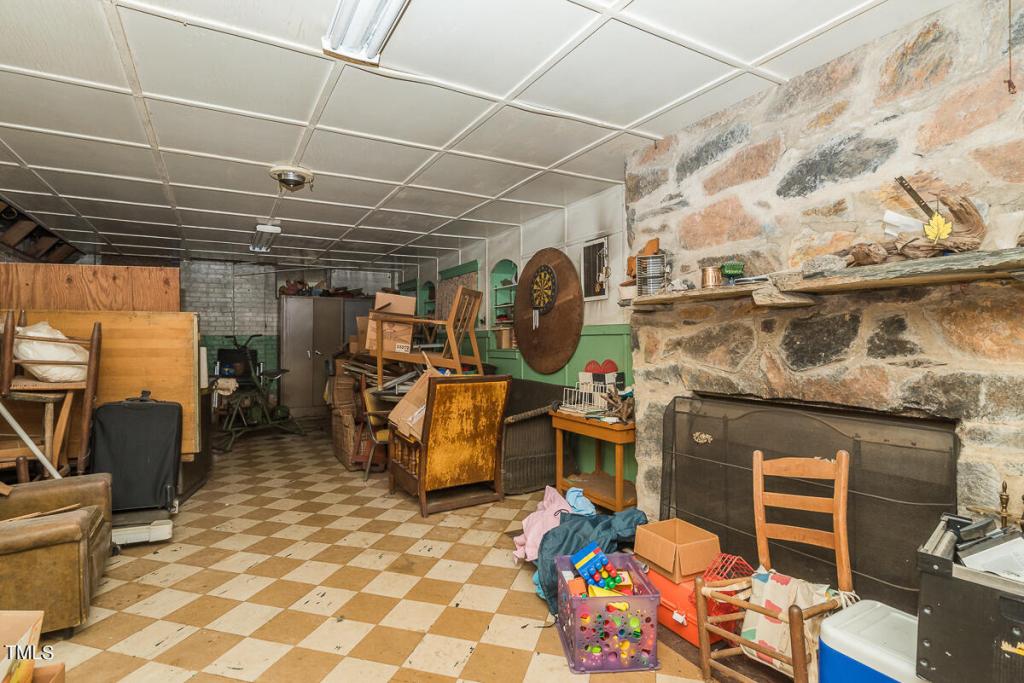
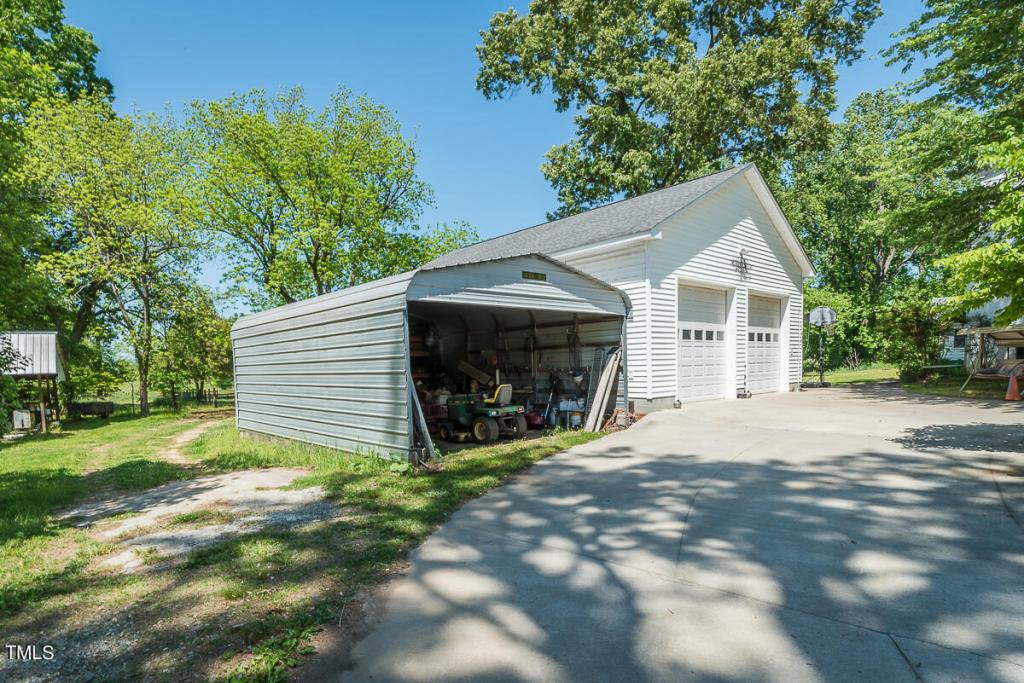
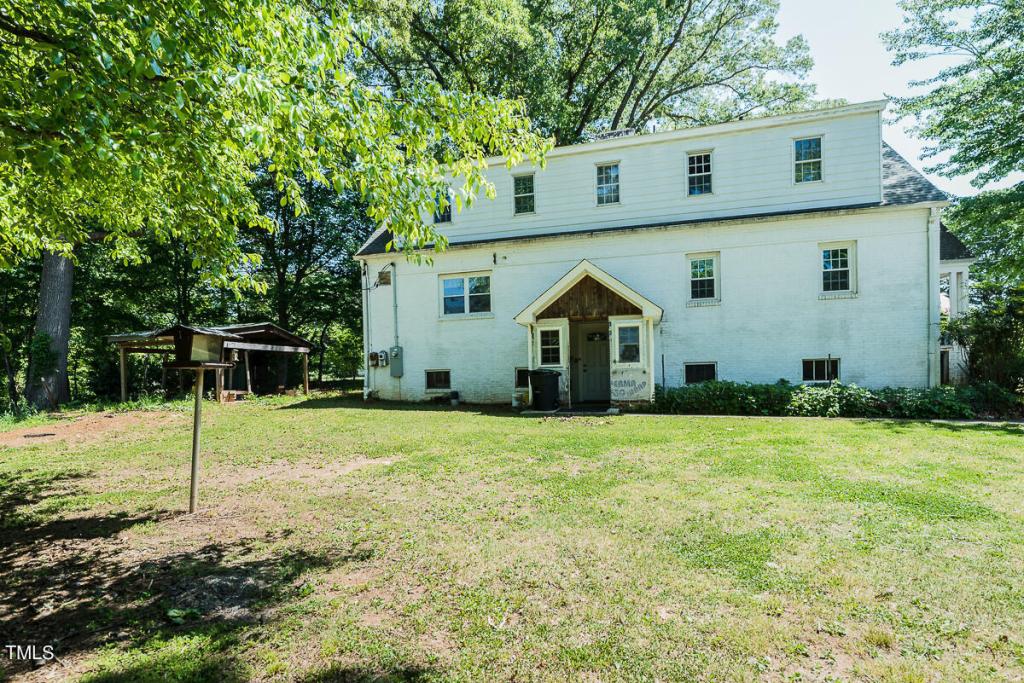
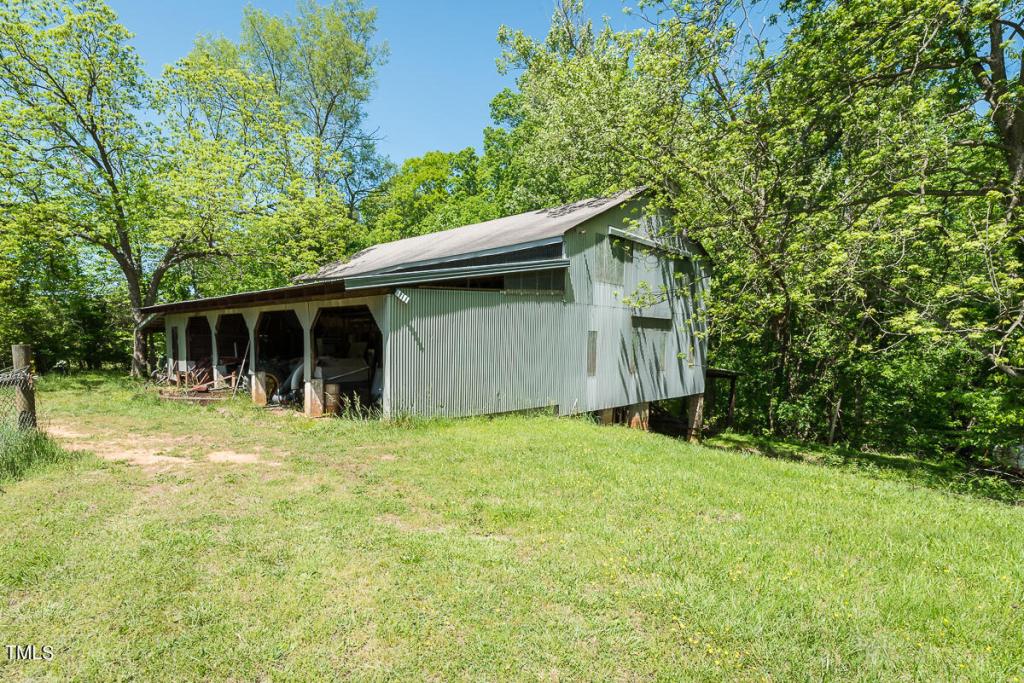
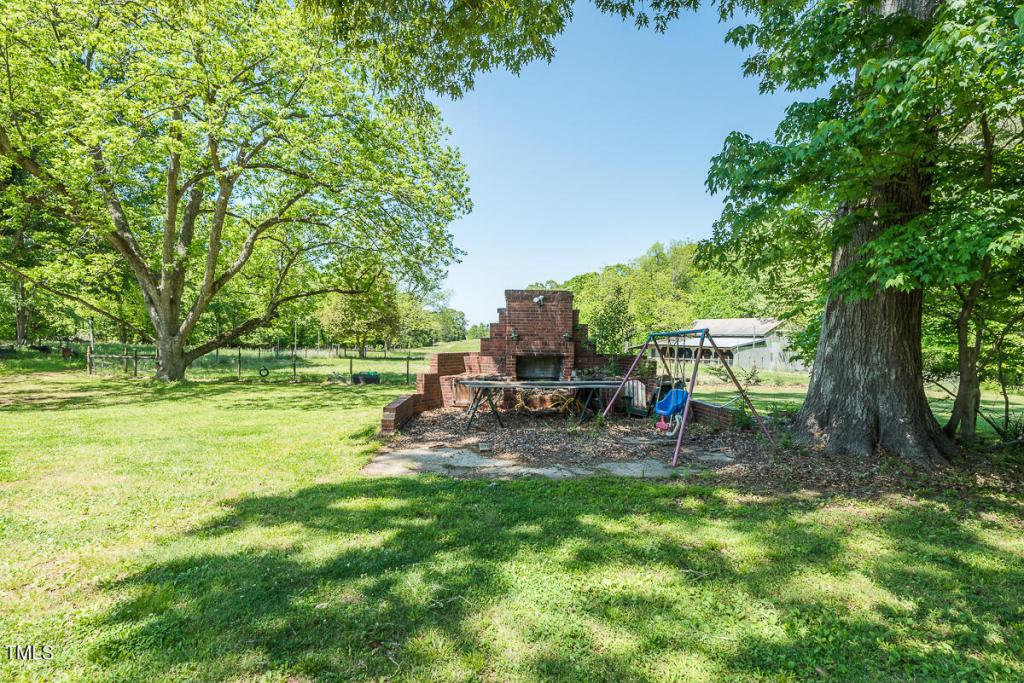
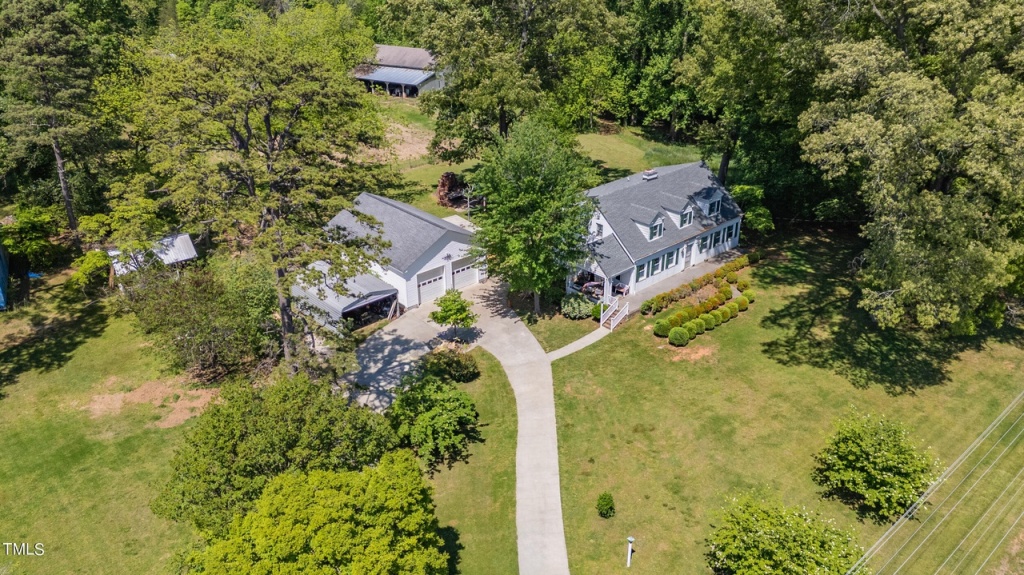
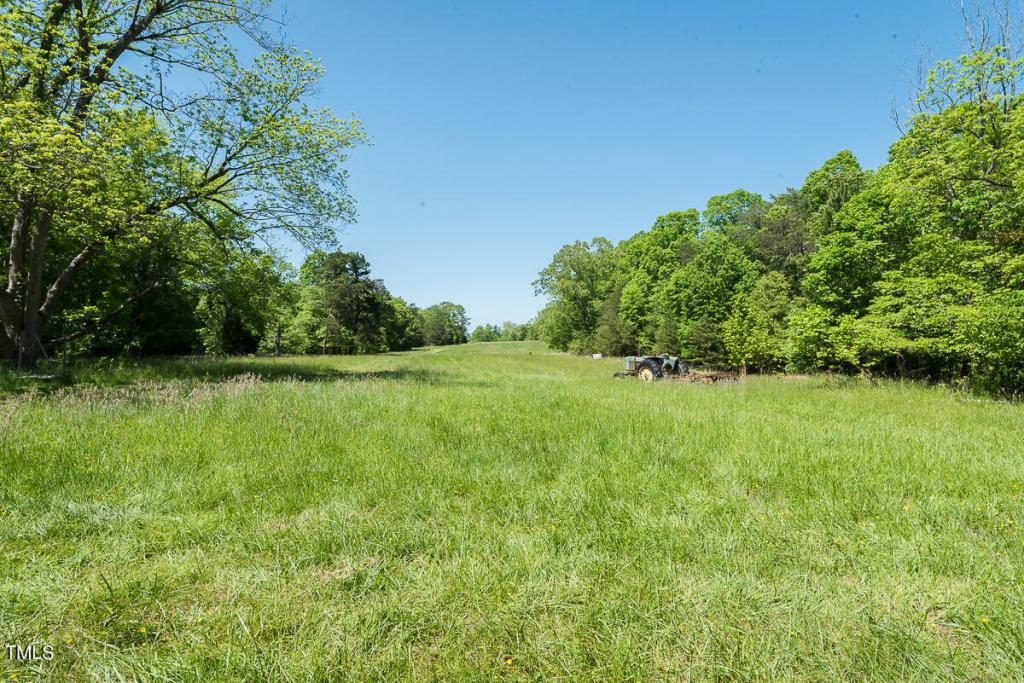
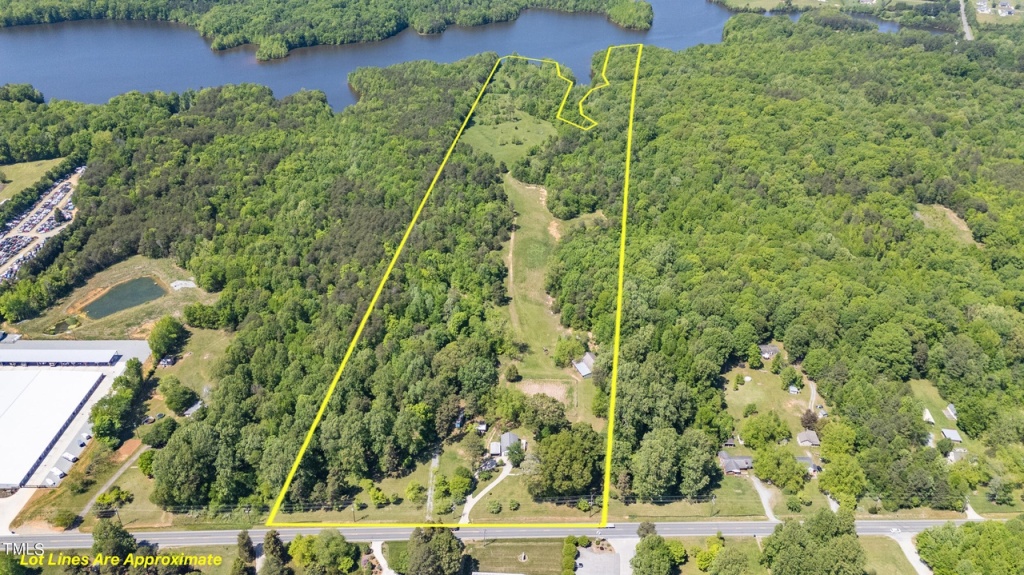
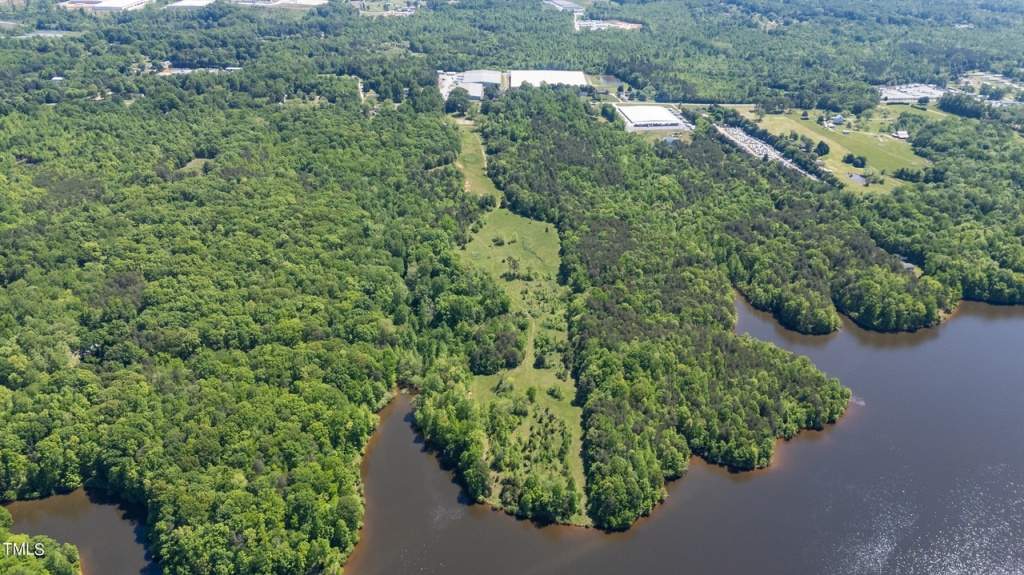
2258 U.S. 70, Mebane, Alamance County
- Sold for $950,000 on March 11, 2025 (originally listed at $1.2 million)
- The buyer is Mebane RV and Storage LLC.
- The lower price may have something to do with this.
- Put those two facts together and you have to wonder whether this house has a future ahead of it.
- 3 bedrooms, 2 bathrooms, 2,400 square feet, 52 acres
- Price/square foot: $396
- Built in 1936
- Listed May 3, 2024
- Last sale: Three tracts bought in separate transactions between 1936 and 1958.
- Neighborhood: Between Mebane and Haw River on U.S. 70
- Note: The property extends from U.S. 70 to Graham Mebane Lake. It’s located across the street from Fifth Street Books and other businesses.
- The house was built by Marcel W. Breitmeier (1903-1960) and Audrey B. Breitmeier (1903-1980). Marcel was a project engineer for Lorillard in Greensboro. They left the property to their sons, John Baker Breitmeier (1939-2022) and James Breitmeier, who is now selling it. John worked at Western Electric before becoming Alamance County’s first EMS director. He worked for over 50 years with Alamance County Rescue.
532shamilton

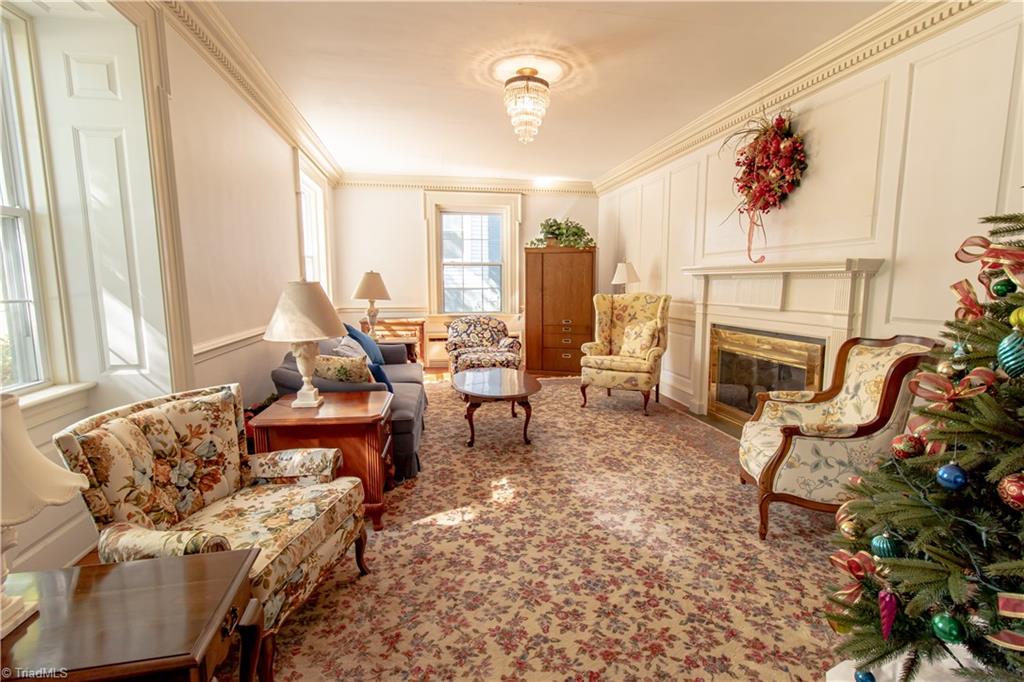


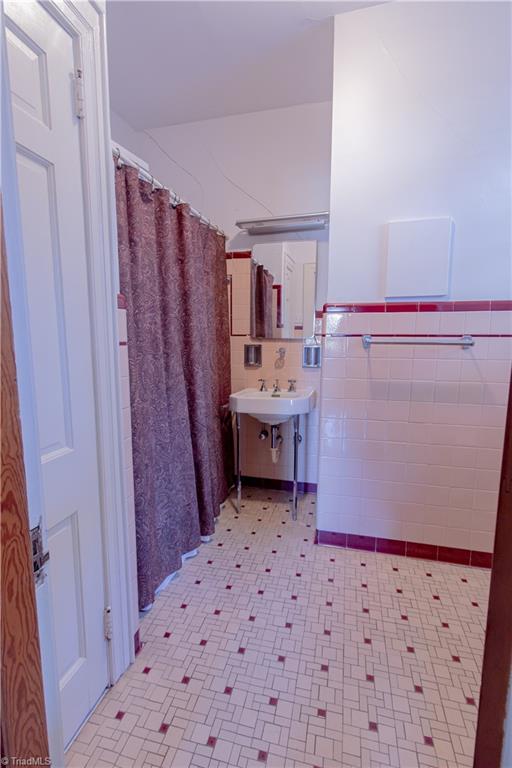
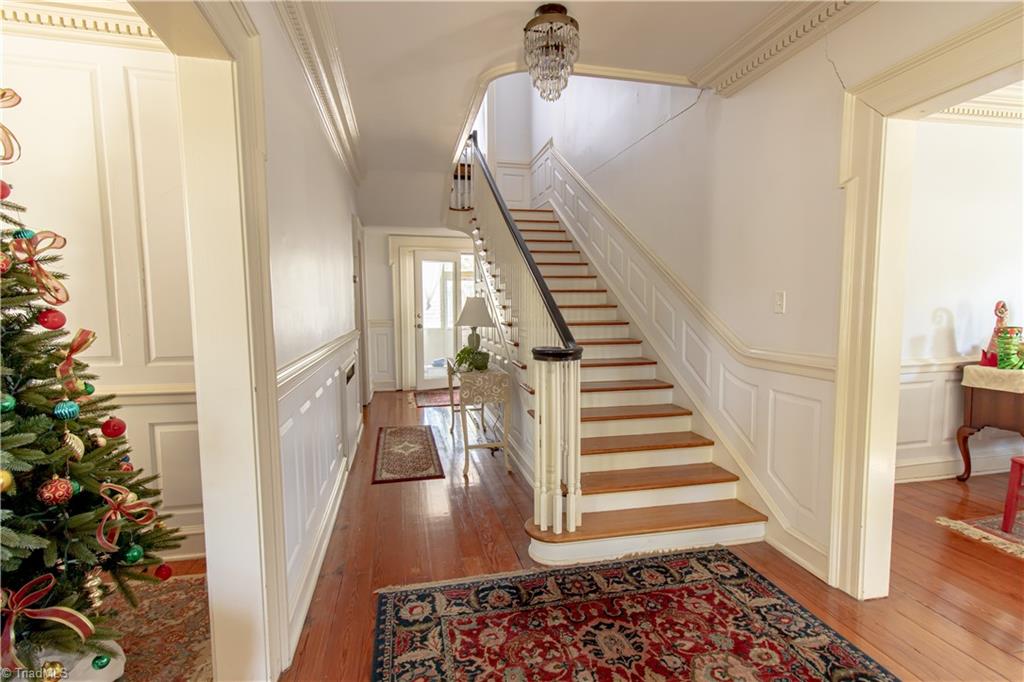

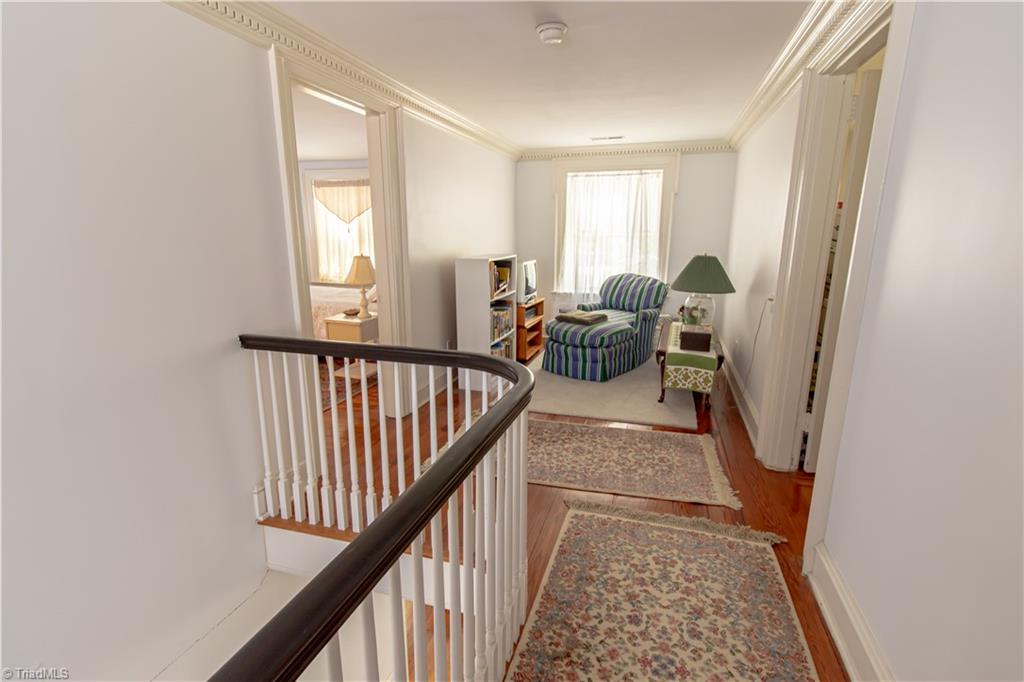


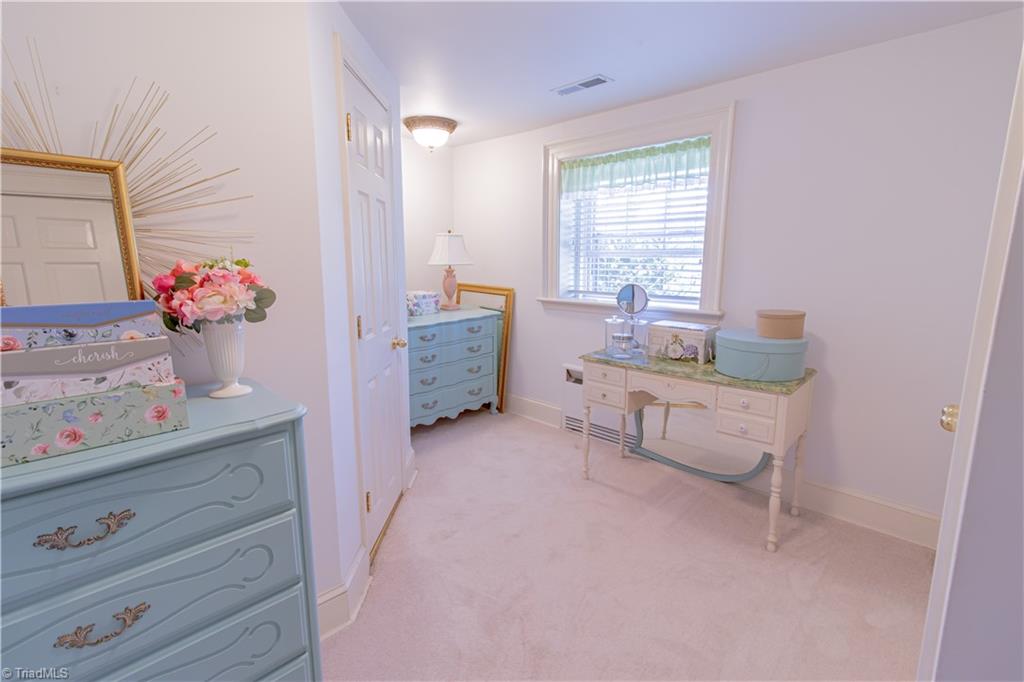


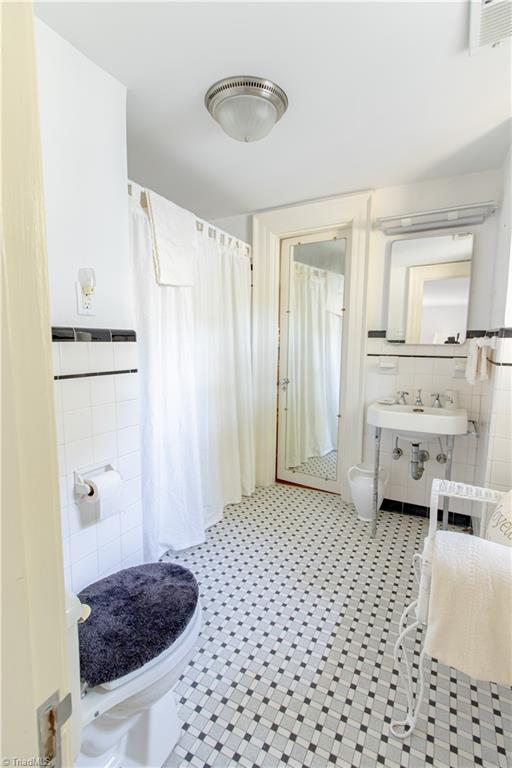
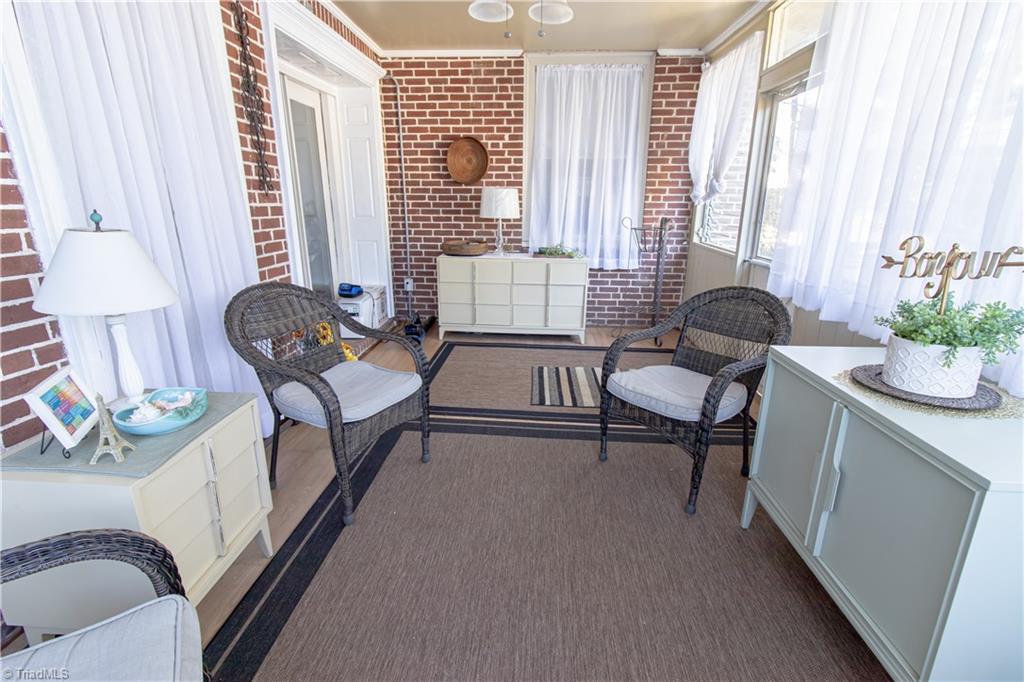


532 S. Hamilton Street, Eden, Rockingham County
The A.B.J. Martin House
- Sold for $279,000 on March 11, 2025 (listed at $289,900)
- 3 bedrooms, 3 bathrooms, 3,050 square feet, 0.54 acre
- Price/square foot: $91
- Built circa 1900 (per NR nomination)
- Listed October 15, 2024
- Last sale: $176,000, May 2007
- Neighborhood: Central Leaksville Historic District (NR)
- Note: The property includes an in-ground pool and a pool house/garage/workshop, previously used as a rental property.
- County records give the date as 1930.
- District NR nomination: “When it was originally constructed c. 1900 for tobacconist Anthony B.J. Martin, this two-story, three-bay, double-pile hip roof house was stuccoed and scored to look like stone. In the early 1940s, local contractor/designer J.W. Hopper, remodeled the house for druggist Jim Chandler in a carefully detailed symmetrical Colonial Revival style. Brick veneer was applied to the elevations and one-story wings, topped with a Chippendale balustrade, now flank the main block. The eaves are ornamented with dentils. Eight-over-eight sash windows are topped by flat arches. The main entrance is slightly recessed, flanked by sidelights, set in a handsome pier-and-lintel surround and further defined by a dentilled cornice.”
4150shattalon
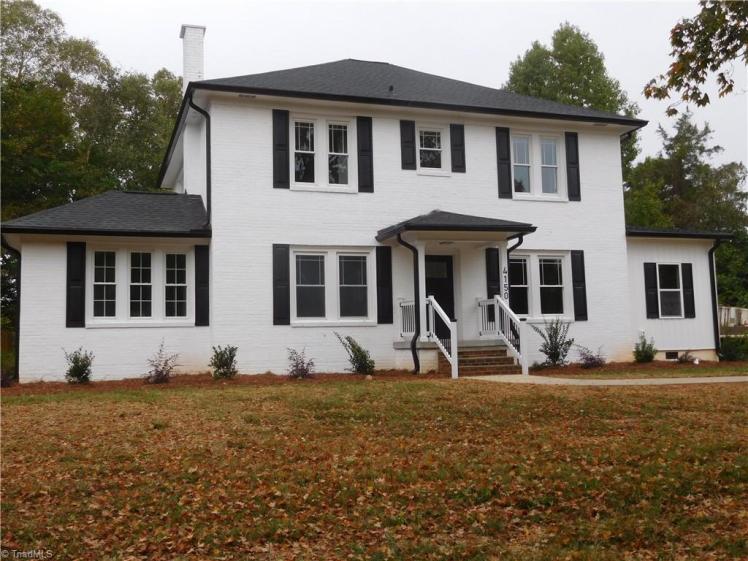

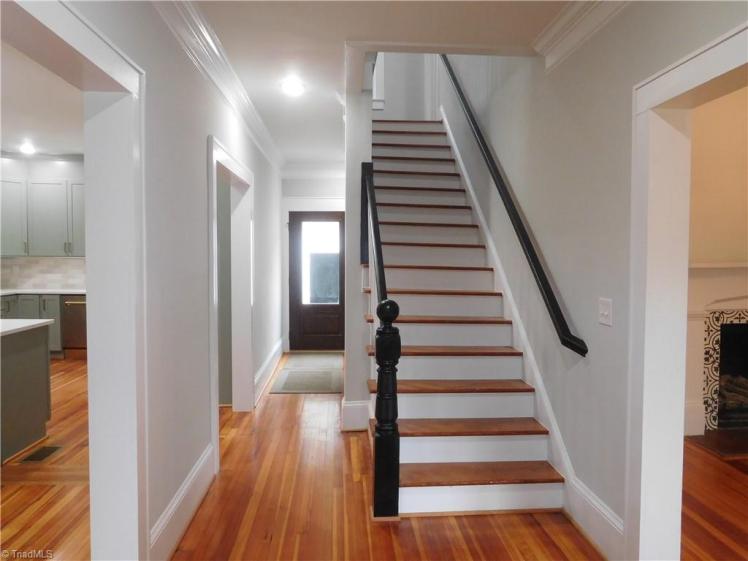
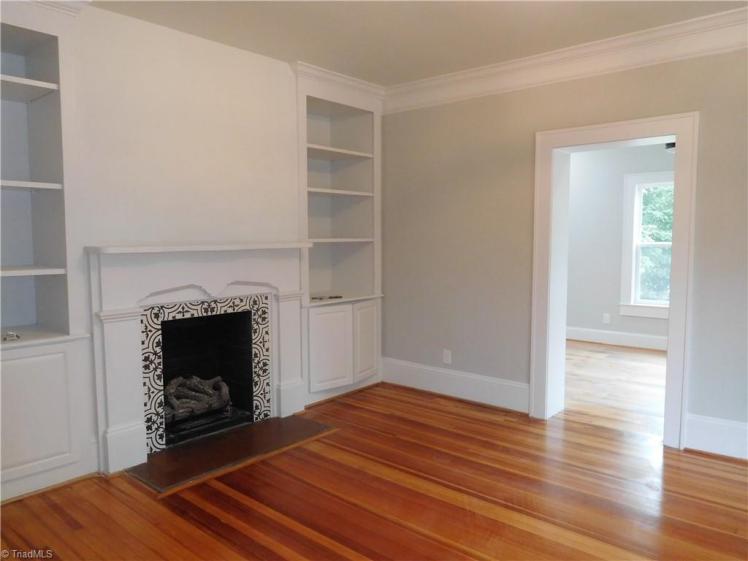


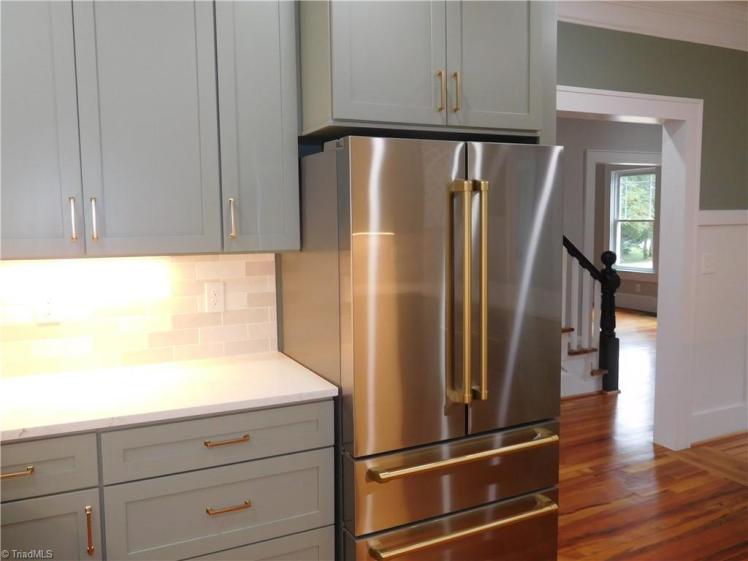


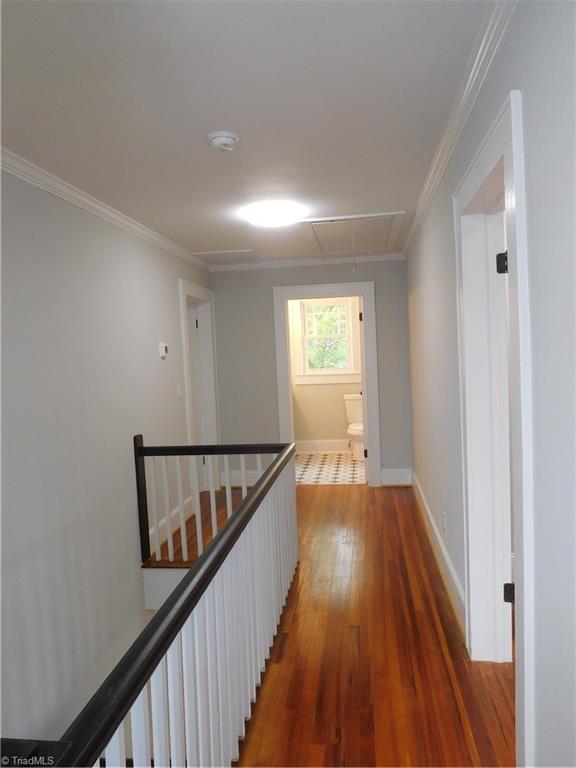

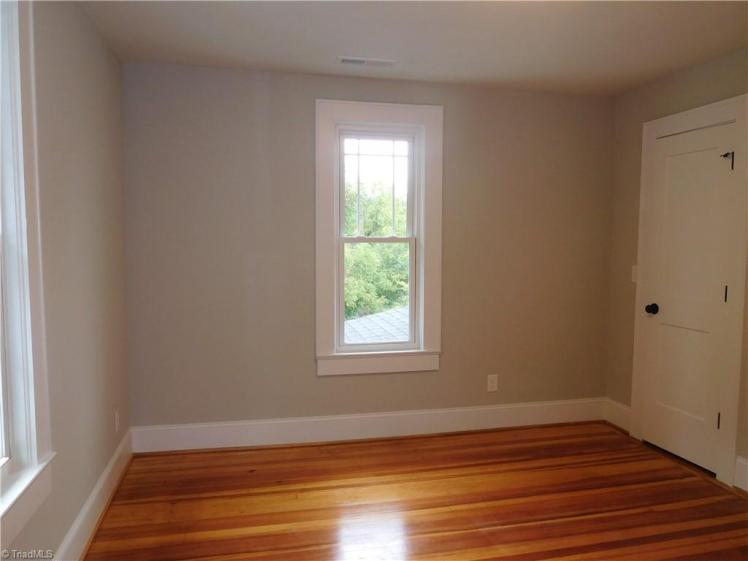

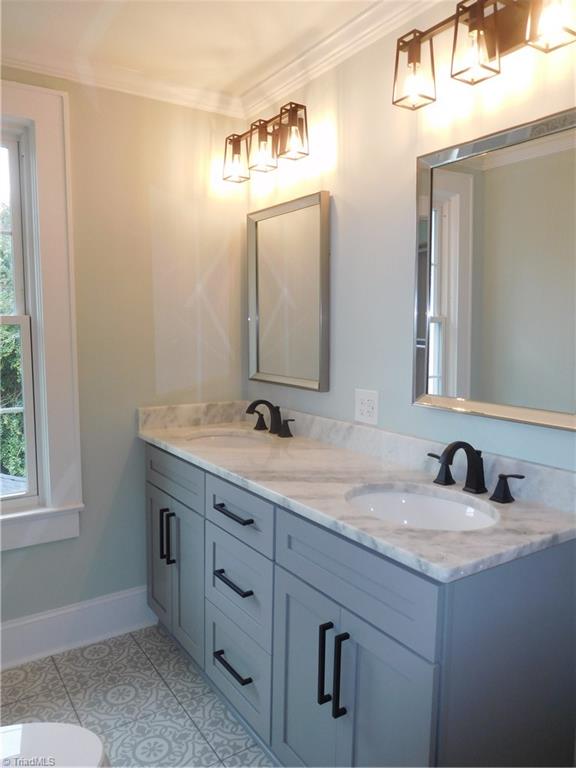
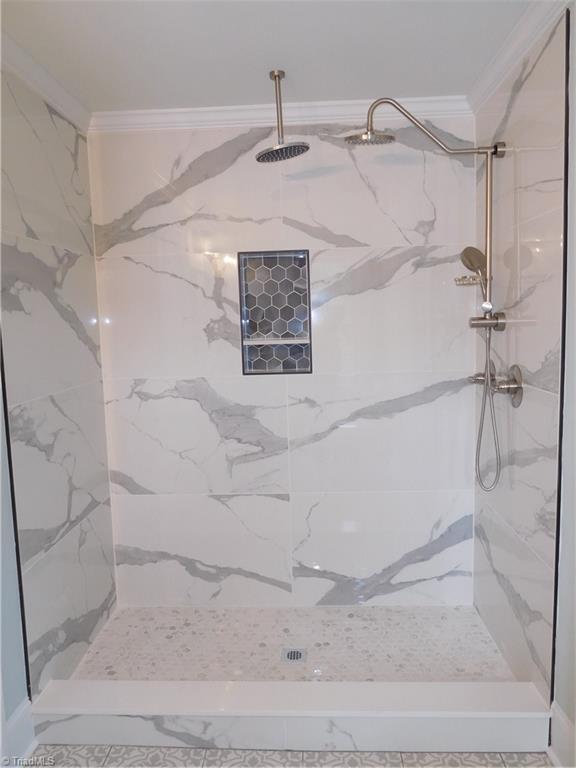
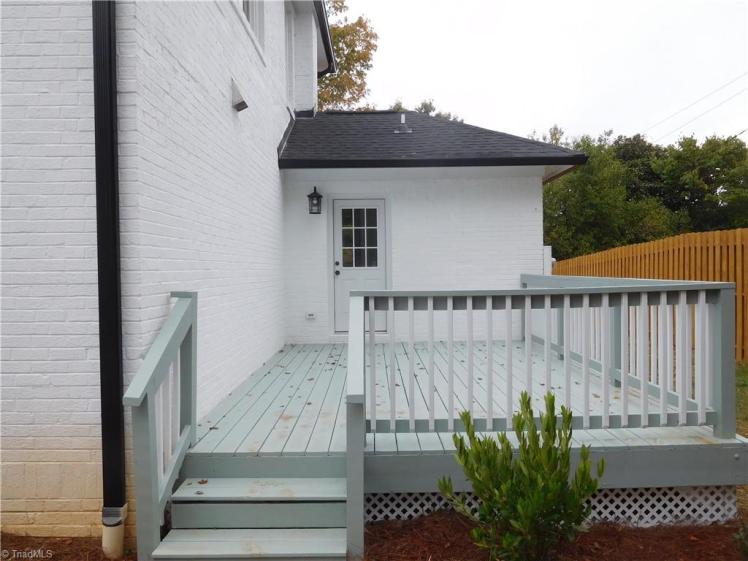
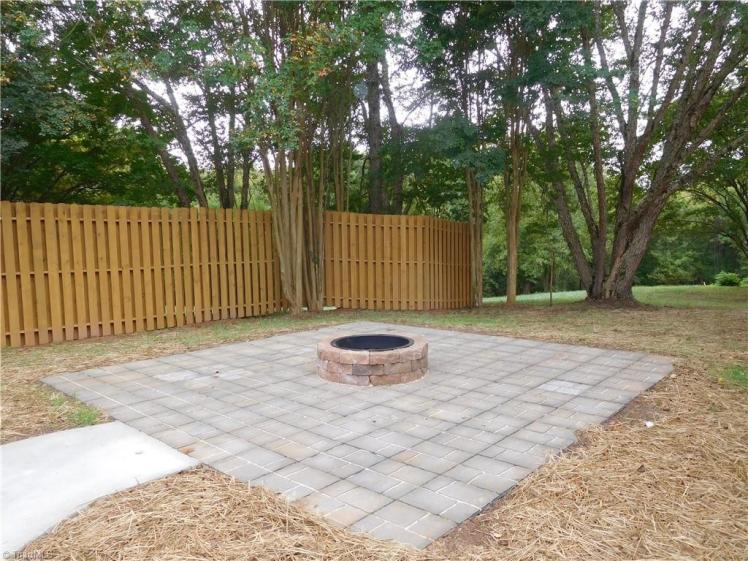


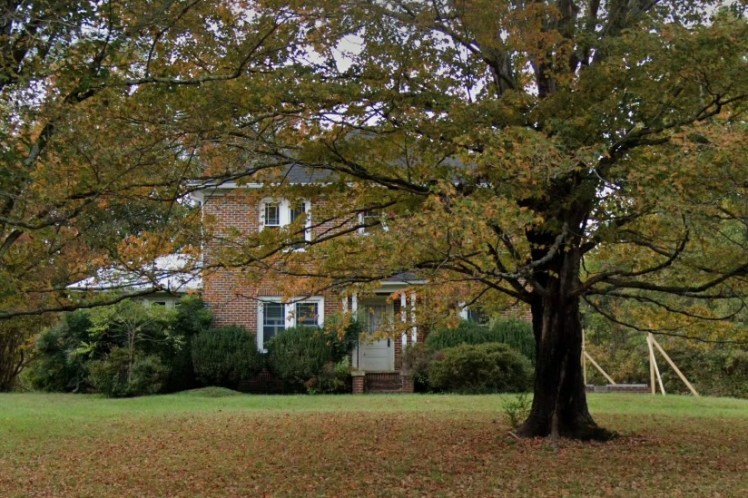
4150 Shattalon Drive, Winston-Salem
The Thomas and Lillian Brown House
- Sold for $625,000 on March 5, 2025 (originally $749,900)
- 4 bedrooms, 3 1/2 bathrooms, 2,678 square feet, 1.26 acres
- Price/square foot: $233
- Built in 1935
- Listed September 23, 2024 (1.26 acres)
- Last sale: $500,000, March 2022.
- Note: The house is on a 5-acre property. The seller previously had an additional listing for the house and the entire 5 acres for $1.05 million, but that listing has been withdrawn.
- The property includes a detached three-car garage.
- The original owners appear to have been Thomas Henry Brown Sr. (1900-1956) and Lillian West Brown (1901-1999), who bought the property in October 1929. Thomas was a farmer and operated the Pic N Pay grocery store. Lillian worked for ARA Food Service at Wake Forest University. The house was in the family for three generations.
- Thomas Henry Brown Jr. (1921-1978) and Elizabeth Morgan Brown (1926-1999) inherited the house. Thomas was a dairy farmer. Ownership passed to their son, Thomas Morgan Brown (1952-2017), and daughter-in-law, Harriet Cameron Harris Brown.
- Thomas Morgan Brown received a degree in architecture from N.C. State University and served in the Army and Army Reserves. He worked for Frank L. Blum Construction Company for 29 years. Cameron sold the house in March 2022.
706mlk
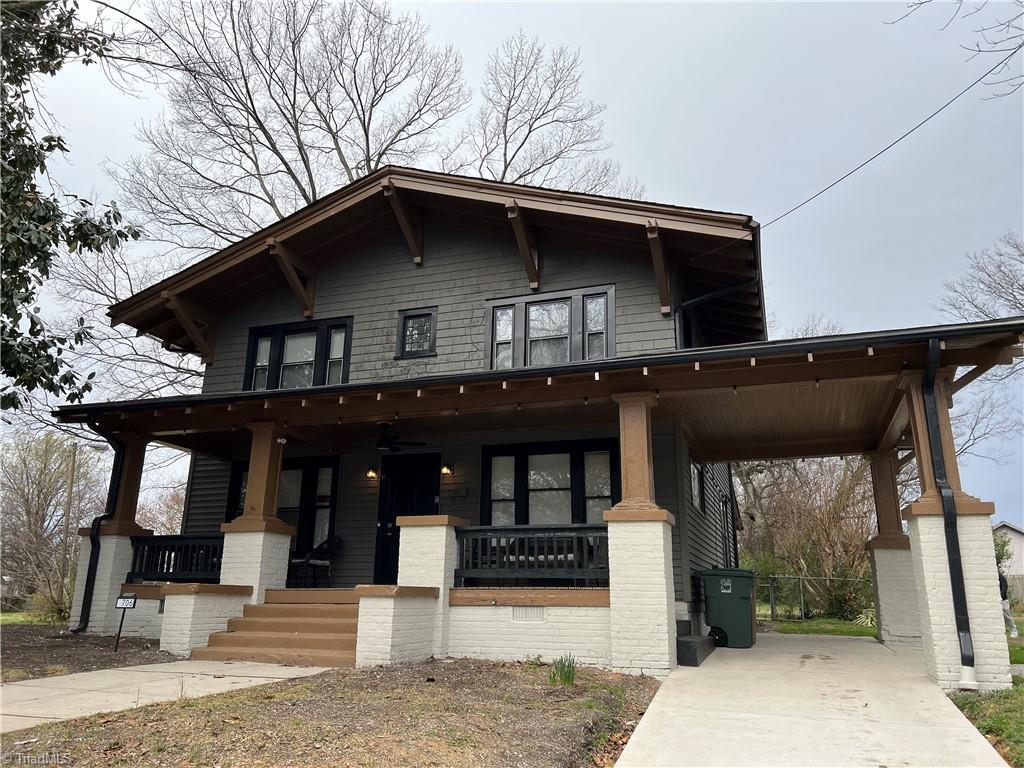
706 Martin Luther King Jr. Drive, Greensboro
The Nettie Coad House
- Sold for $275,000 on March 4, 2025 (listed at $275,000)
- 4 bedrooms, 3 1/2 bathrooms, 2,034 square feet, 0.18 acre
- Price/square foot: $135
- Built in 1920
- Listed May 9, 2023
- Last sale: $100,000, July 2022
- Neighborhood: Asheboro Community
- Note: Caveat emptor — fix-and-flip job. Sold without being relisted 21 months after the listing was withdrawn in March 2023.
- “Fully updated” with disrespect for the historic character of the house — vinyl siding, vinyl floors, replacement windows.
- The early history of the house is unclear. The 600 block of Asheboro Street, its original name, must have been renumbered at some point; 605 Asheboro Street doesn’t appear in the city directory until 1959, when it was identified as a grocery store. None of the owners in county records appear to have lived in the 600 block of the street, so it was likely a rental property for decades.
- The house was owned by the Asheboro Street Baptist Church, a block away, from 1955-1965.
- It was condemned and in 1984 was sold by the Redevelopment Commission to Nettie Mae Lewis Coad (1936-2012) in 1984. Her heirs sold it in 2015.
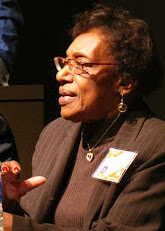
- “Mama Nettie” was born in Anderson, South Carolina. She graduated from Dudley High School and Guilford Technical Community College. She worked for Sears for 23 years, starting out as a packer in the catalog distribution center and retiring as an assistant manager. She and her husband, Willie Rufus Coad Jr. (1934-2003), were married for 49 years and had three children, all sons.
- Nettie found her calling as an inspirational and influential social activist and anti-racist community organizer. She is listed along with Sojourner Truth, Harriet Tubman, and Rosa Parks among 12 “Pearls of Inspiration” by the Black Pearls Society, a national political organization of Black women.
- In more than 30 years as a community activist, her accomplishments included serving as a founding member and executive director of The Partnership Project, an anti-racism educational, organizing and support group; co-founding the Greensboro Health Disparities Collaborative, Ole Asheboro Street Neighborhood Association and St. Paul Baptist Church; bringing The People’s Institute for Survival and Beyond to Greensboro; and co-chairing the Guilford County Democratic Party and serving as a delegate to the 1988 Democratic National Convention.
- Nettie was particularly active in the field of health disparities. She was a longtime community partner with the UNC-Chapel Hill Center for Health Promotion and Disease Prevention and co-author of several academic papers. She gave presentations to numerous professional conferences, speaking before the American Public Health Association several times, the National Institutes of Behavioral and Social Sciences Research Lecture Series, and the N.C. Society for Public Health Education, among others.
- Her many awards and honors included the Sojourner Truth Award from the National Association of Negro Business and Professional Women’s Clubs, the Outstanding Service Award from the Moses Cone-Wesley Long Community Health Foundation and the Levi Coffin Award for Outstanding Leadership in the Field of Human Relations and Human Rights from the Greensboro Chamber of Commerce. The city converted a former school into apartments at 503 Martin Luther King and renamed it the Nettie Coad Apartments (more here).
- “I have seen both good transformation and destruction in my neighborhood. I think we must understand what is dividing us and the underlining causes of neighborhood destruction before we can redirect and rebuild. My passion for preserving Ole Asheboro comes from a drive to have those in power understand these dynamics and apply equity in decisions making. I feel rich, and to me, rich is to be understood and feel safe in a city where everyone is cared for and respected. I care so much about Ole Asheboro because it is a historical neighborhood that should be preserved and because I care about all of our city.”
- How the house looked in January 2023:

263providence
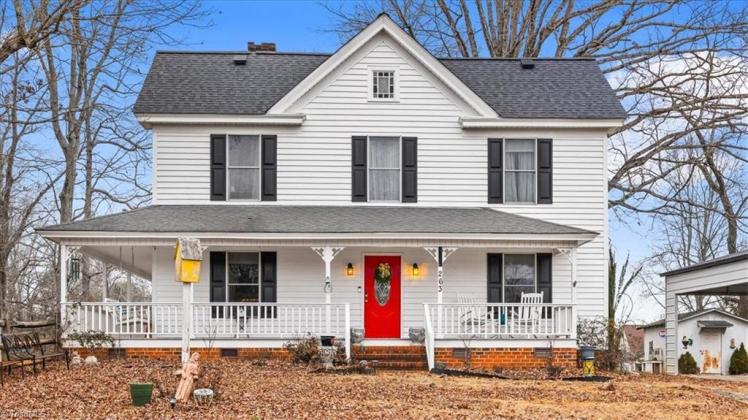
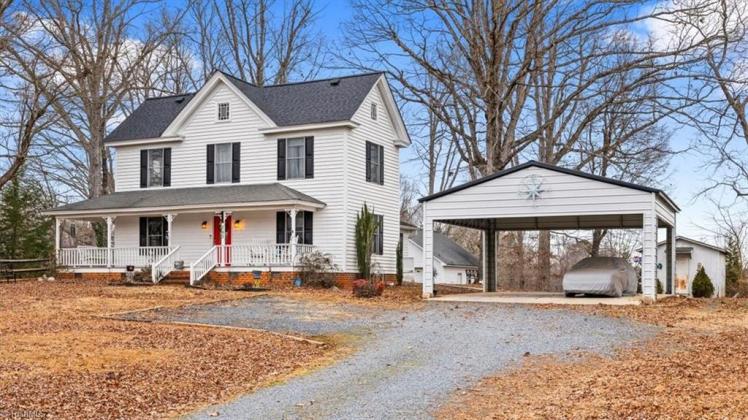


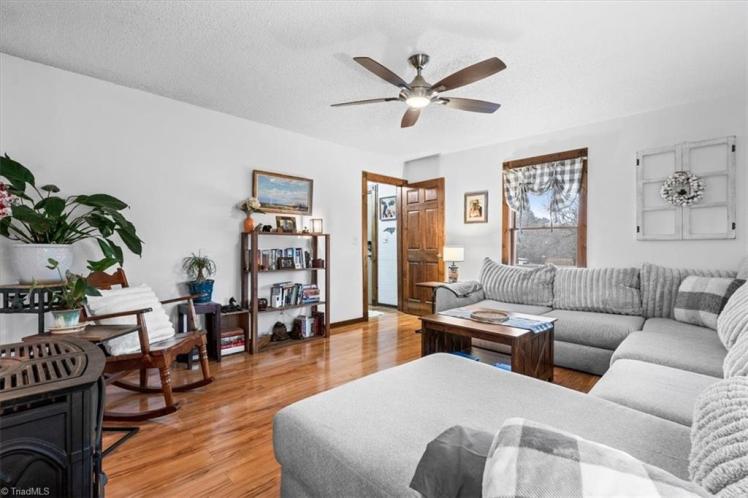
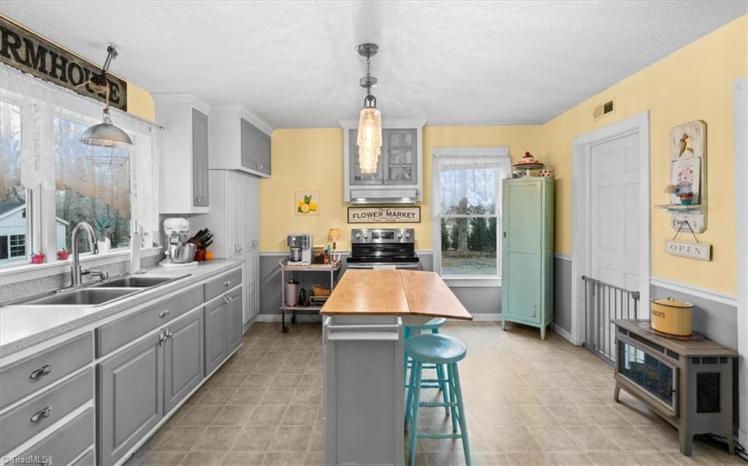

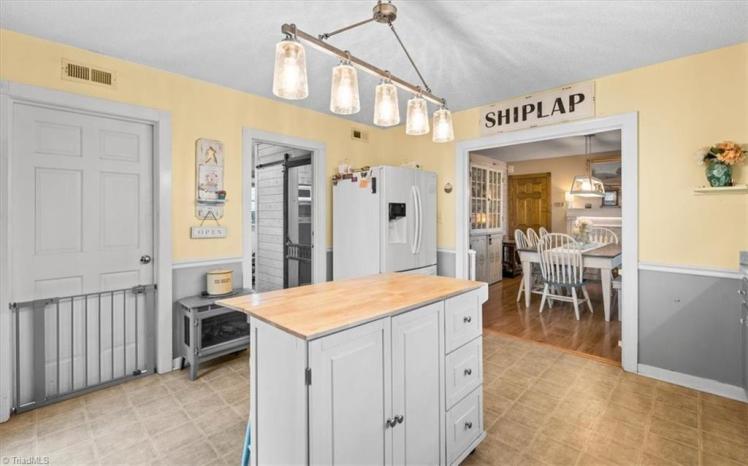


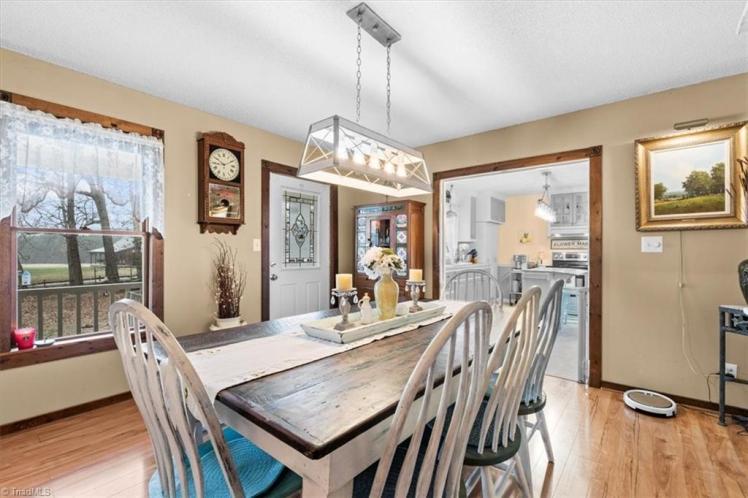
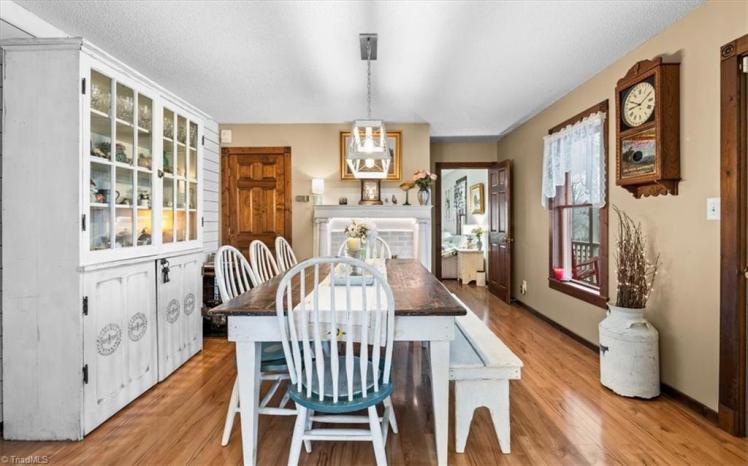


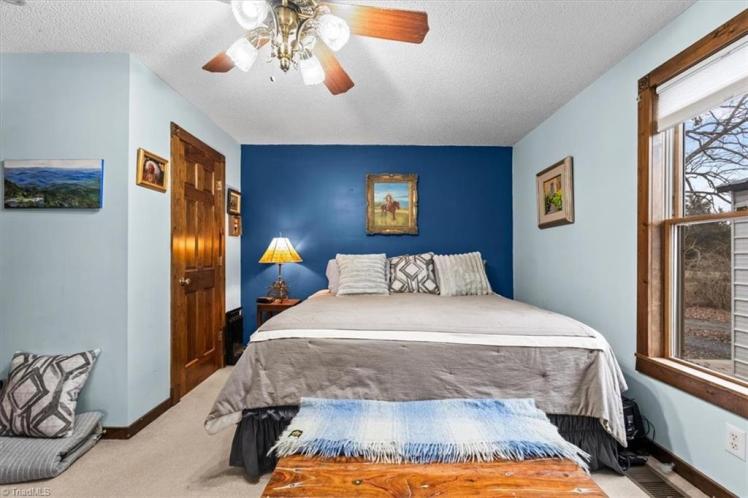
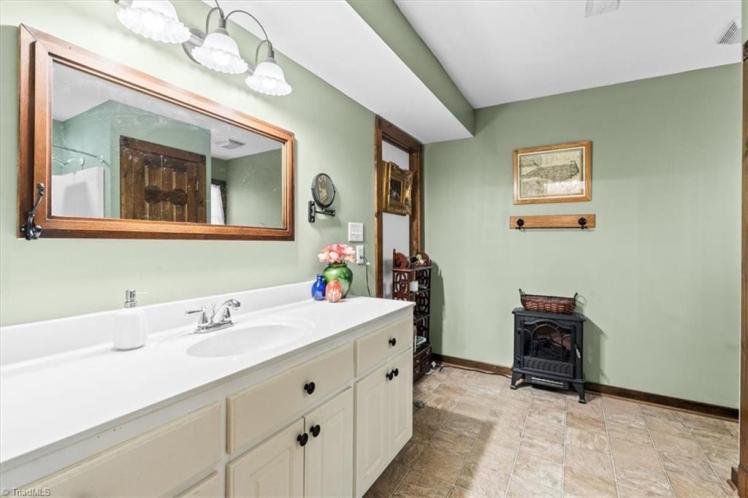

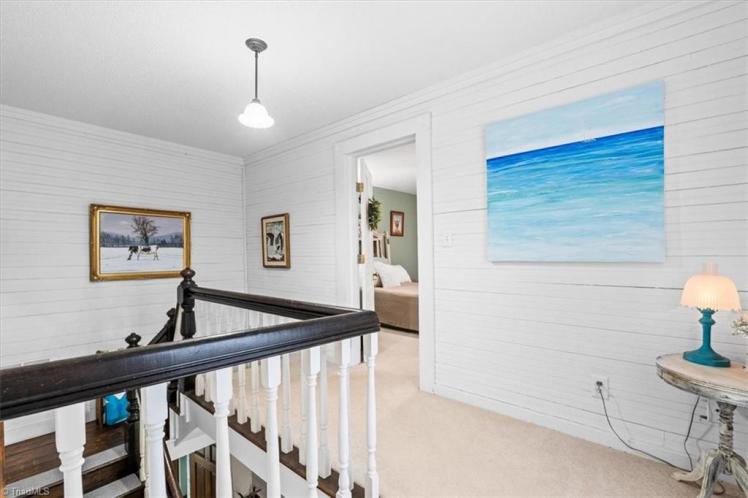


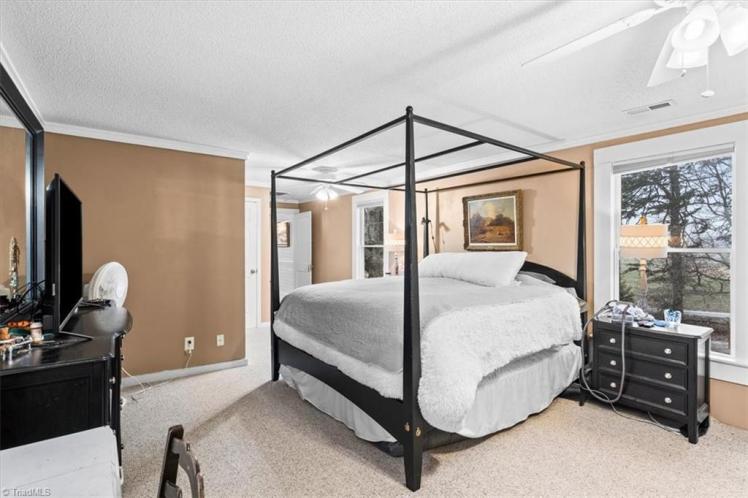


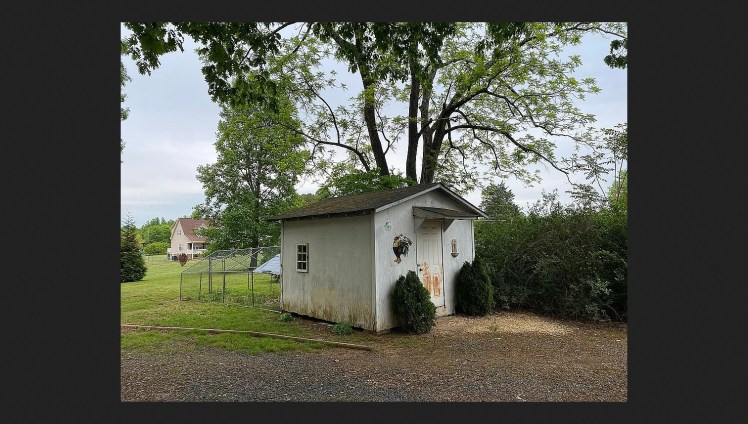
263 Providence Church Road, Randleman, Randolph County
Sale pending February 3, 2025
- Sold for $380,000 on March 3, 2025 (originally $399,000, later $420,000)
- 3 bedrooms, 2 1/2 bathrooms, 2,368 square feet (per county), 1.49 acres
- Price/square foot: $160
- Built in 1900
- Listed December 10, 2024
- Last sale: $289,000, June 2021
- Neighborhood: Located just off Business 220 about 2.6 miles north of Randleman and 15 miles south of Greensboro.
- Note: Originally listed as for sale by owner. The 2021 sale was a FSBO deal, too.
- The property includes a garage and two-car carport and a “large chicken run with huge hen house.”
216w2nd
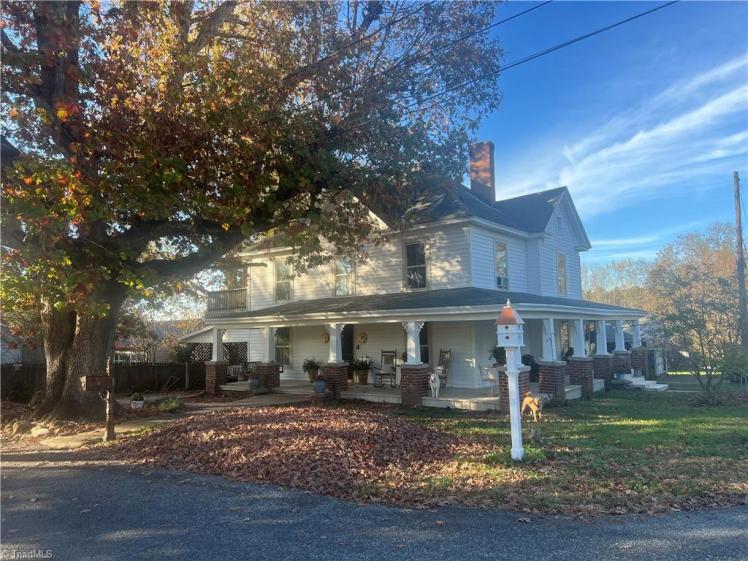


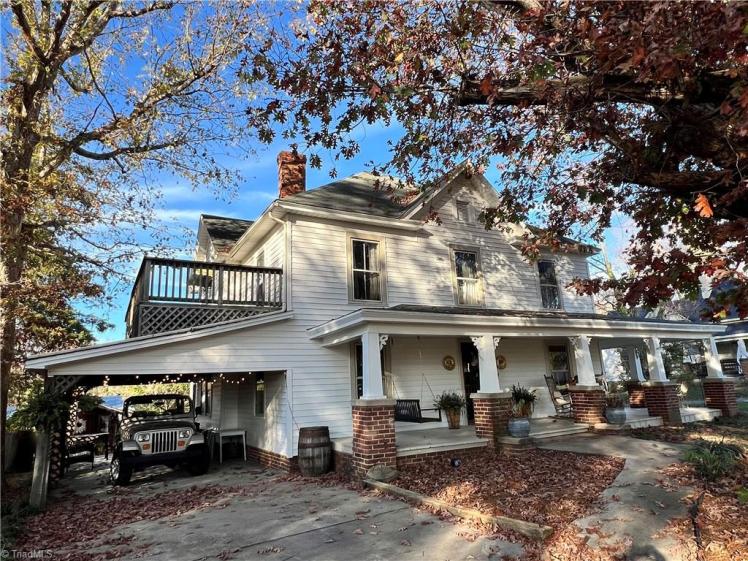

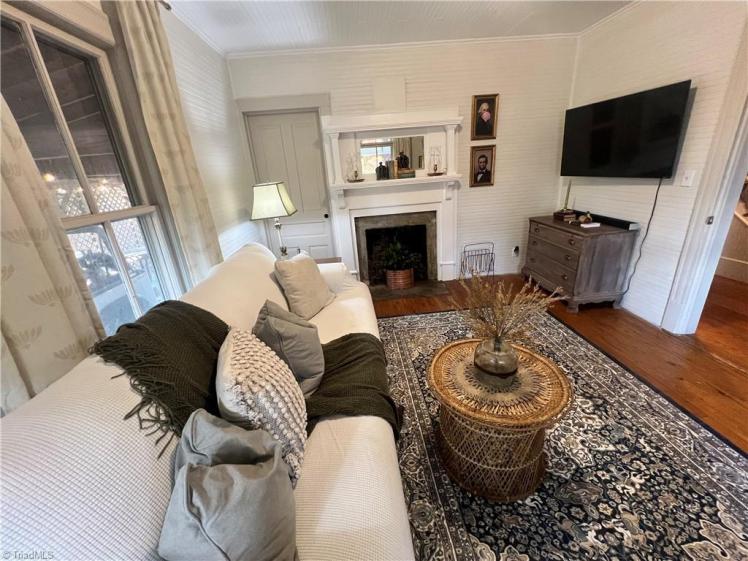

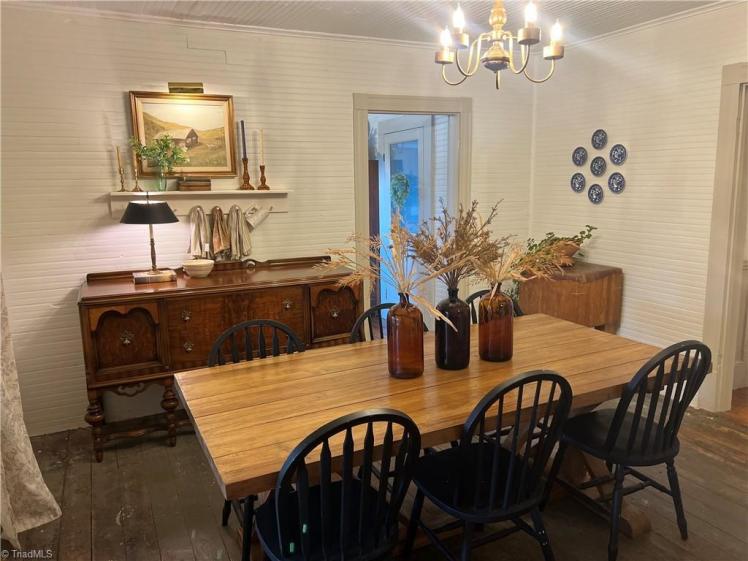
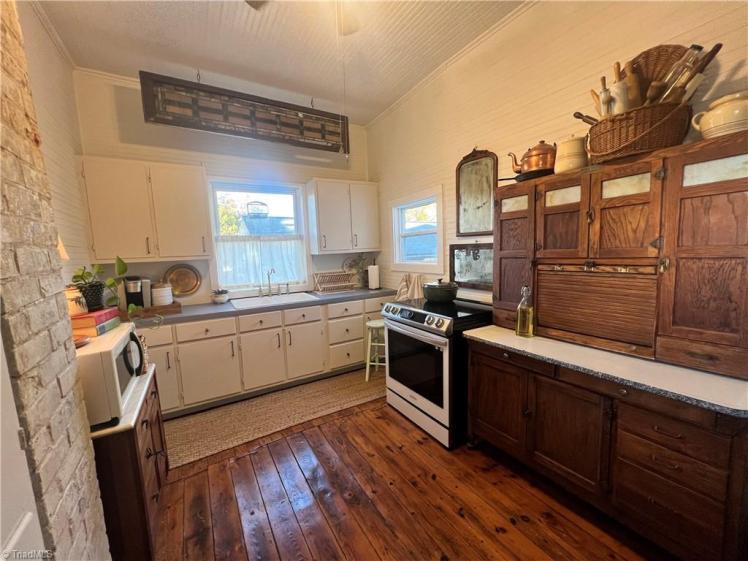

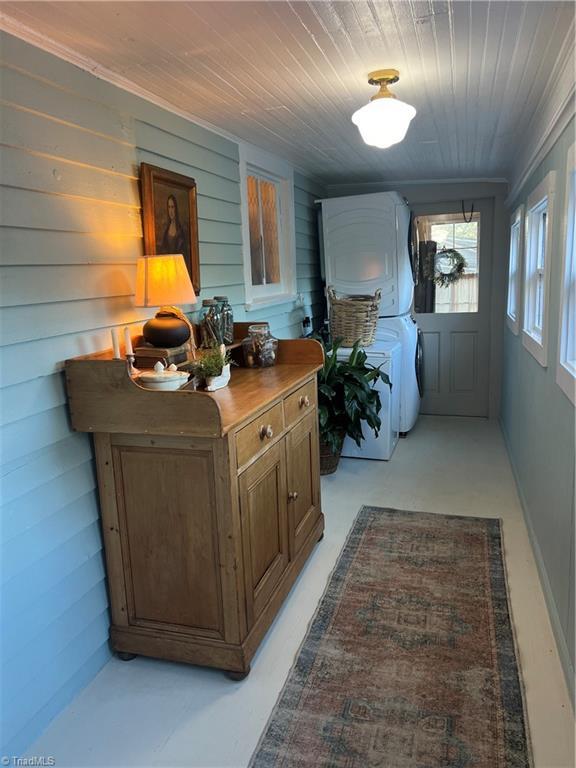




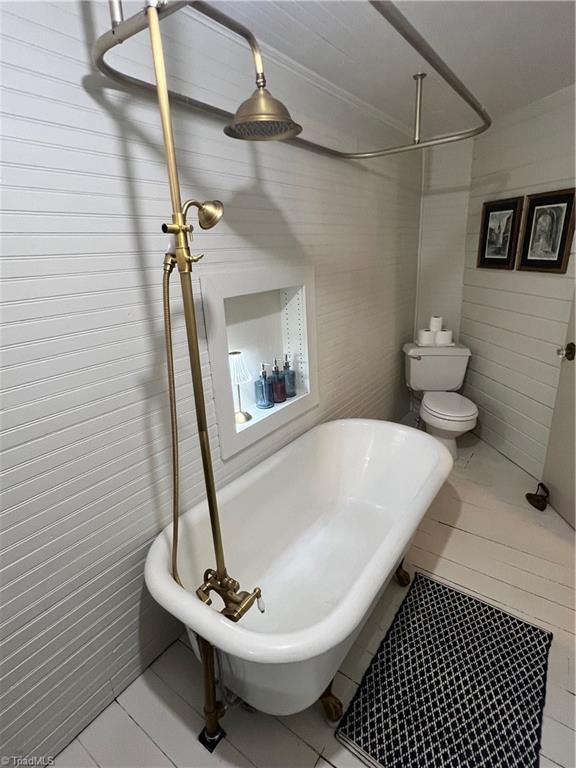


216 W. 2nd Street, Denton, Davidson County
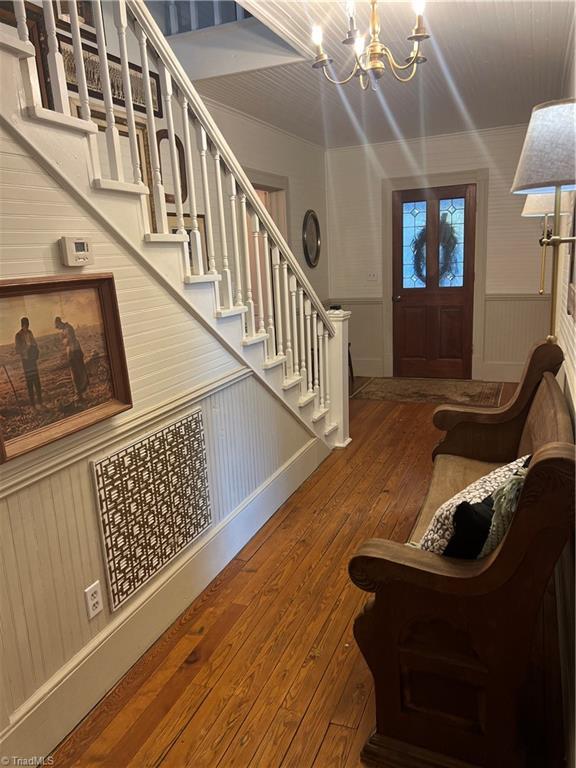
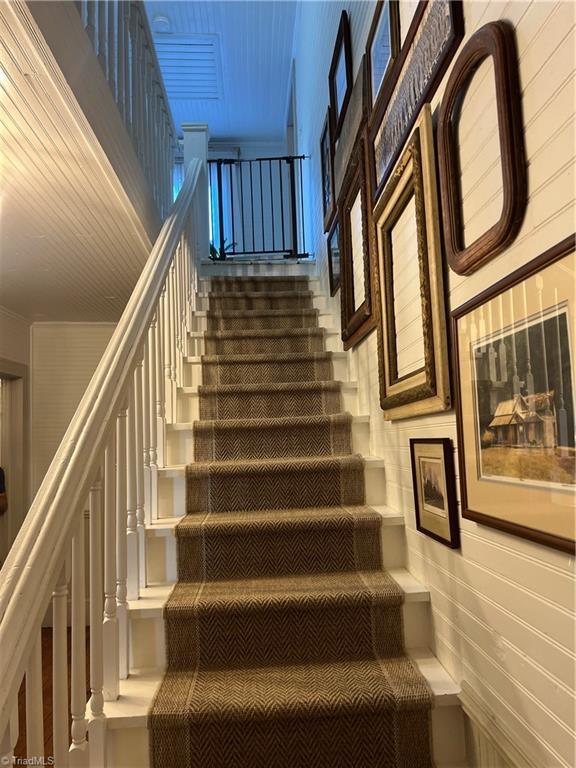
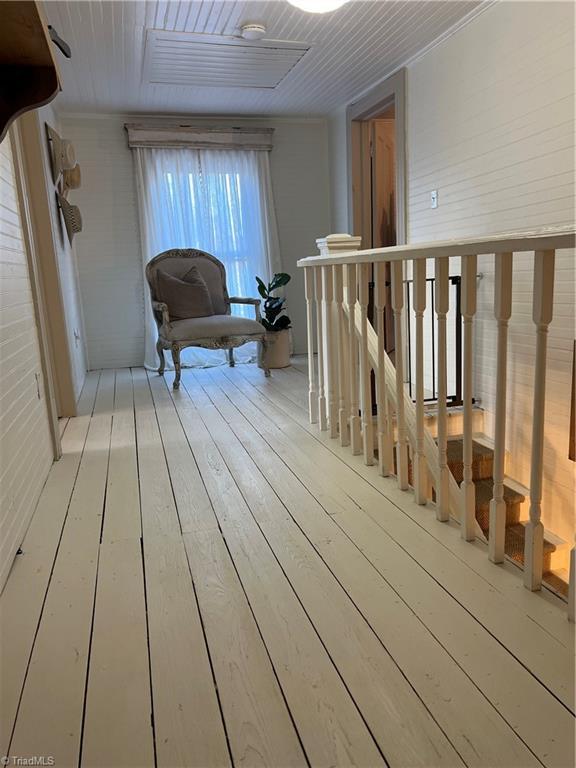
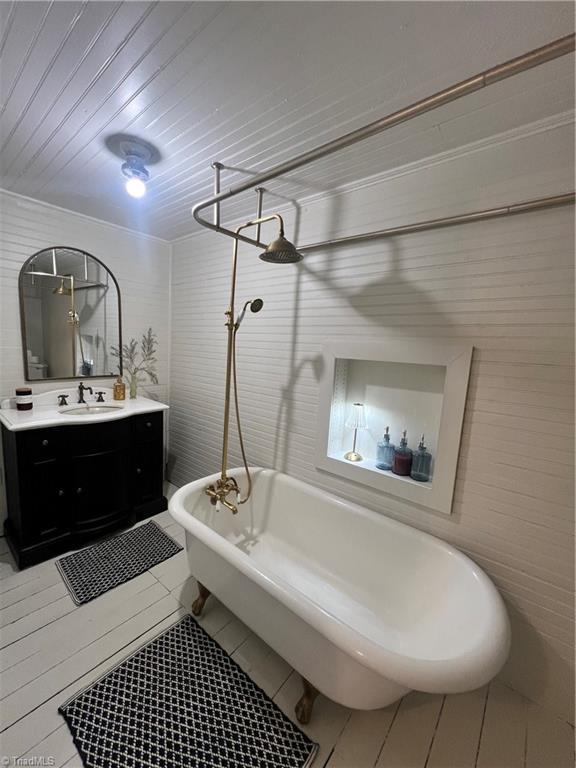
The Autie and Mary Morris House
- Sold for $265,000 on February 27, 2025 (listed at $259,900)
- 2 bedrooms, 2 bathrooms, 2,270 square feet (see note), 0.22 acre
- Price/square foot: $117
- Built in 1900
- Listed November 10, 2024
- Last sales: $185,000, November 2023; $50,000, July 2013
- Note: The listing shows 2,410 square feet. County records show 3,564 square feet — 2,270 heated and 1,294 non-heated.
- Online listings call it the “Audie Morris House.”
- Autie Ray Morris (1895-1982) was a business owner and local government official. He was operating a grocery store in 1934 when he and a partner founded the Mor-Val Mill, a hosiery manufacturer. It mainly produced men’s socks. Autie soon became sole owner, and in 1945 he started a second mill. He also served as a member of the Davidson County Board of Commissioners and the Denton town board.
- Autie and his wife, Mary Eugenia Hill Morris (1897-1985), had three children. Sadly, Autie outlived two of them, and Mary, all three.
- Autie was a member of the Junior Order of United American Mechanics, a nationwide fraternal order that flourished in the 1920s. It operated two orphanages, one in Ohio and one in nearby Lexington. It was founded in 1853 as a nativist and anti-Catholic organization. Although its membership has dwindled, it still exists, espousing vaguely right-wing sentiments.
- The architecturally significant Mor-Val Hosiery Mill, built in 1936, is the only National Register property in Denton.
2383cedar


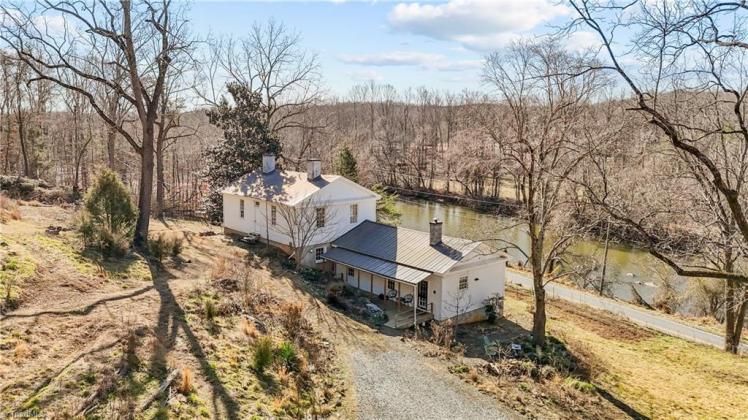


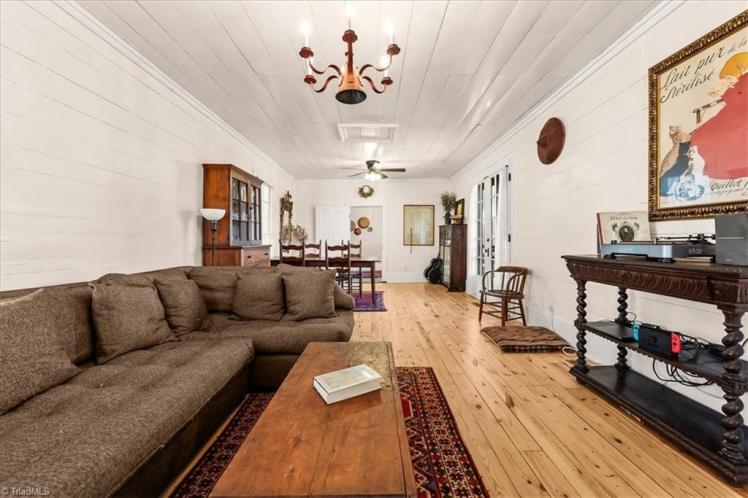

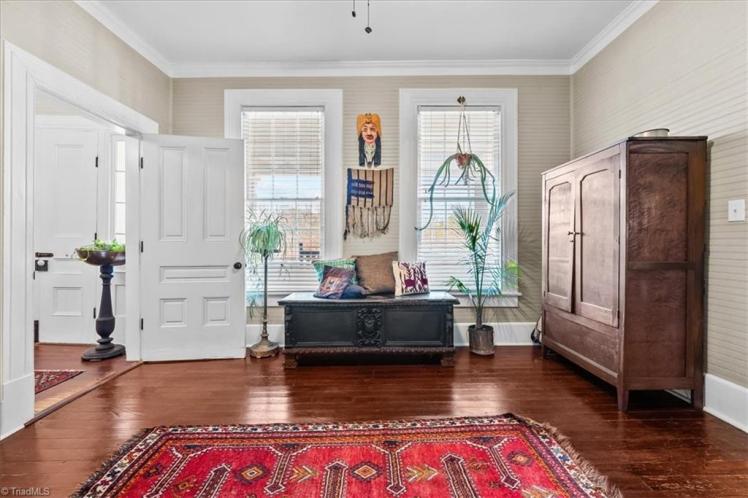






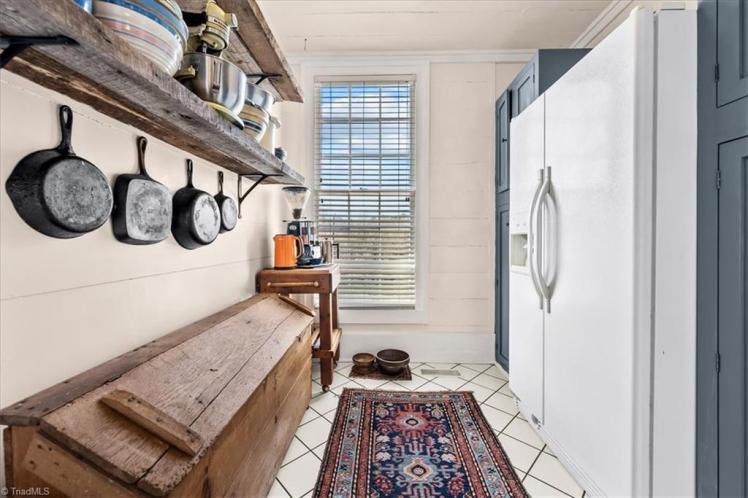


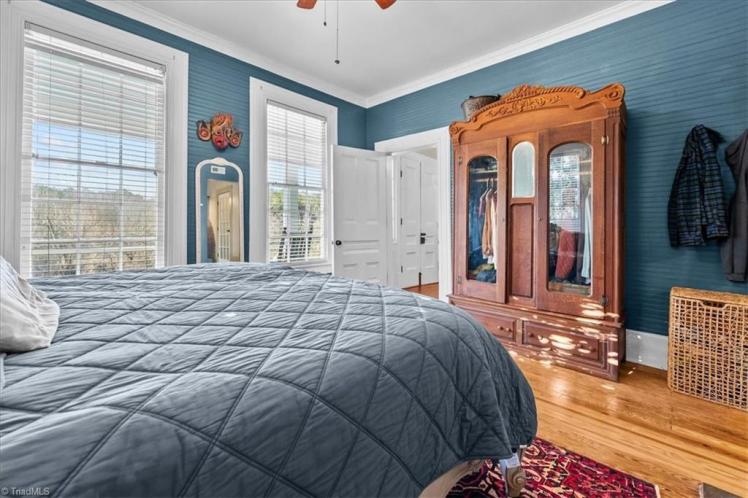
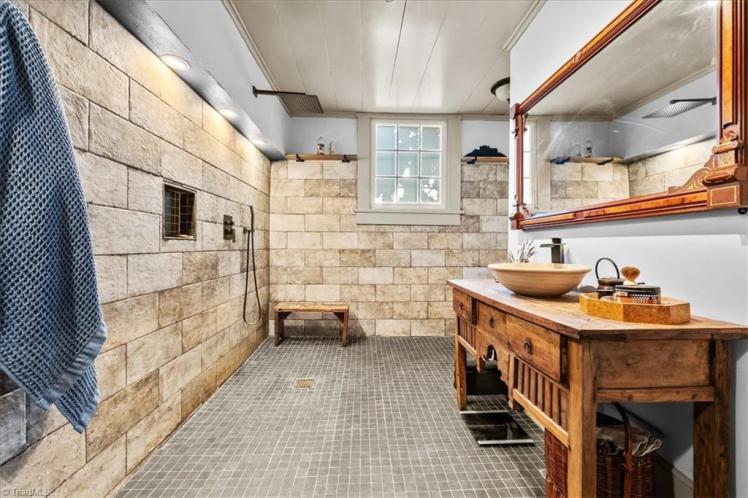


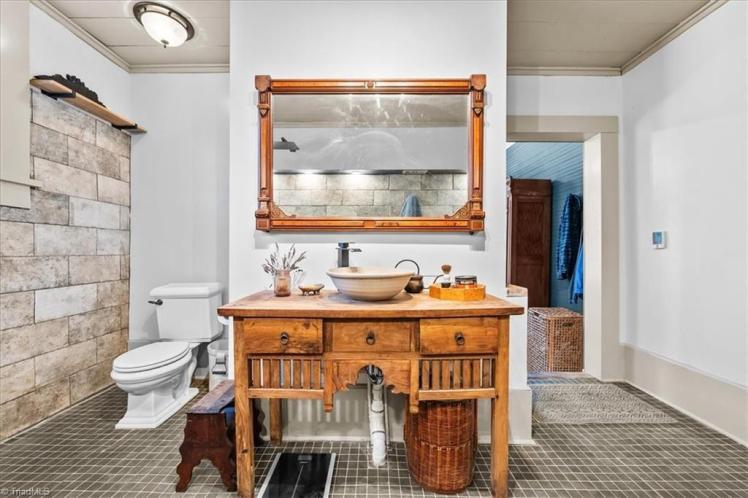

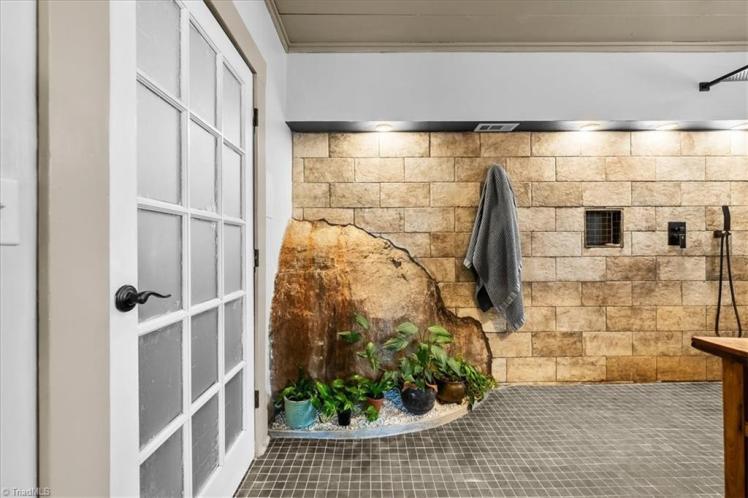
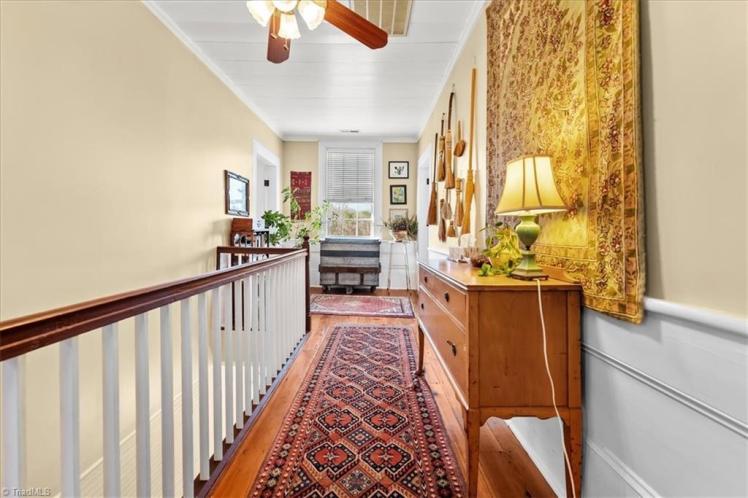


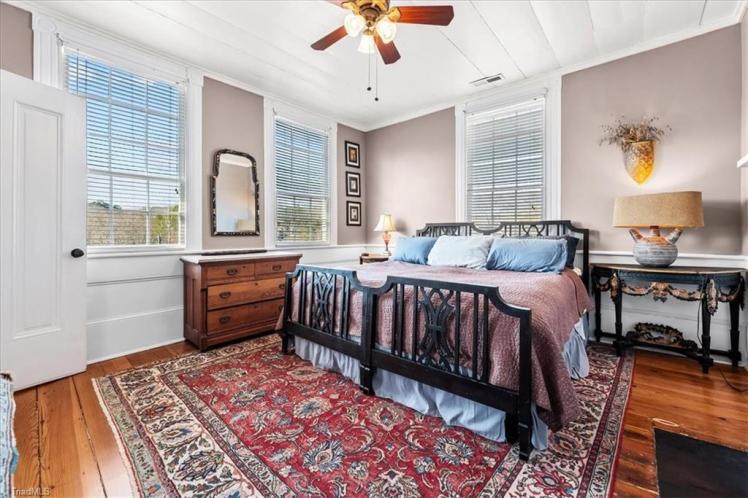
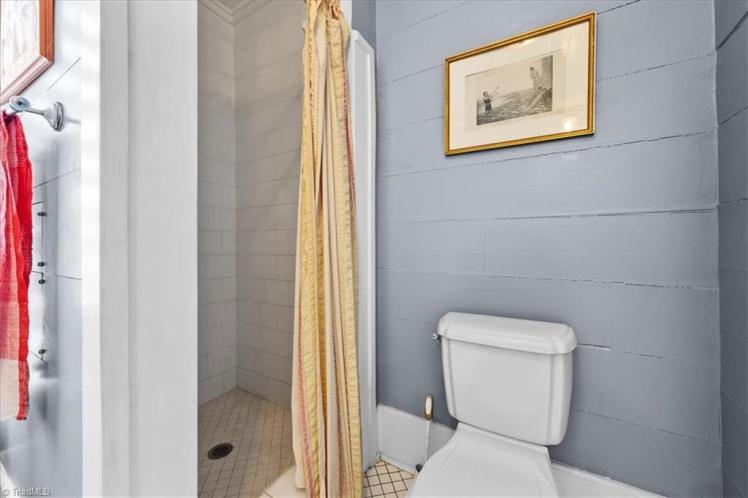

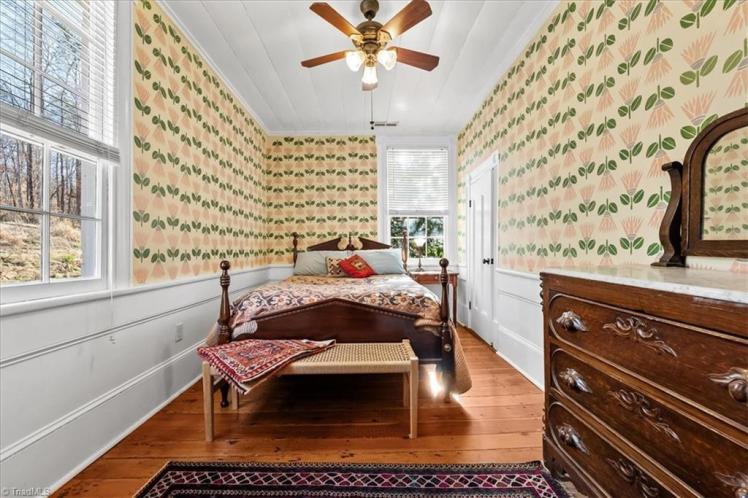


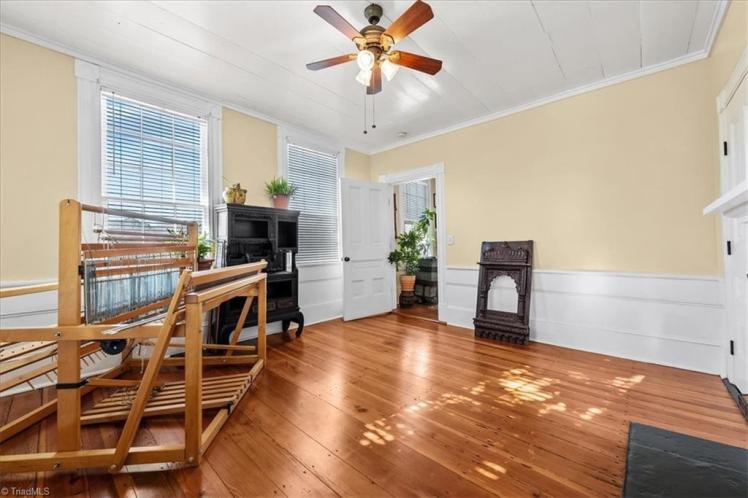


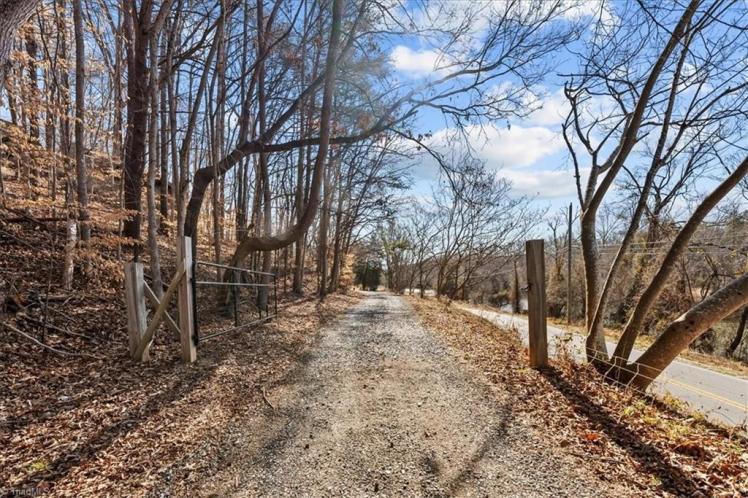


2383 Cedar Falls Road, Cedar Falls, Randolph County
The Austin Lawrence House (also known as the Wrenn House)
- Sold for $400,000 on February 25, 2025 (listed at $400,000)
- 3 bedrooms, 3 bathrooms, 2,668 square feet, 5.57 acres
- Price/square foot: $150
- Built in 1848
- Listed February 11, 2025
- Last sales: $220,000, February 2019; $39,000, August 2002; $34,000, December 2000
- Neighborhood: Located about 6.25 miles northeast of Asheboro and 2.5 miles west of Franklinville. The property has a Franklinville mailing address.
- Note: The property has been designated a Randolph County Historic Landmark.
- The Cedar Falls community was initially settled around 1754. A mill operated there from the 1830s until the 1990s. The mill building now houses the American Textile Technology Collection, established by the Randolph Heritage Conservancy. In recognition of the factory’s historic significance, a line of socks named Cedar Falls is produced by the North Carolina-based Farm to Feet brand.
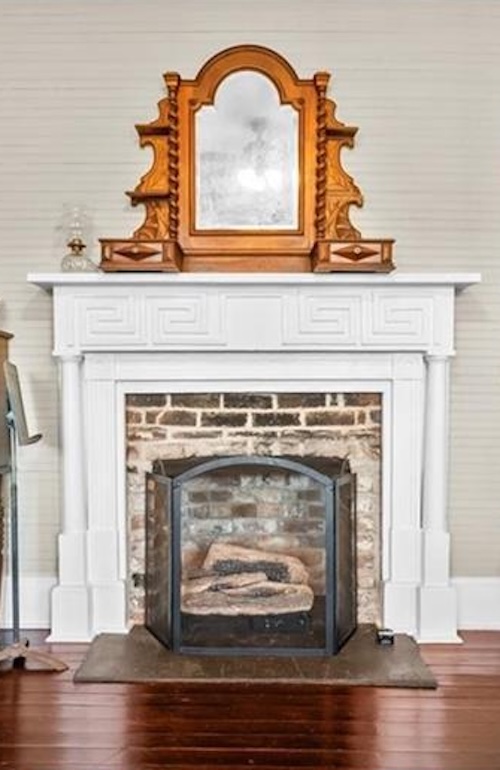
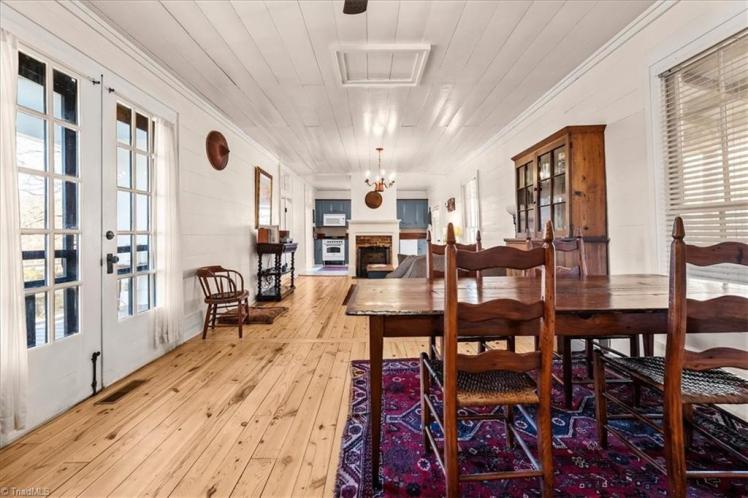
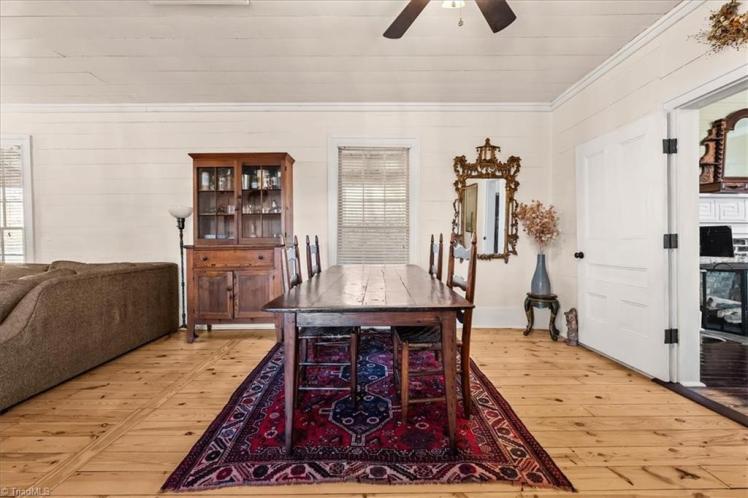
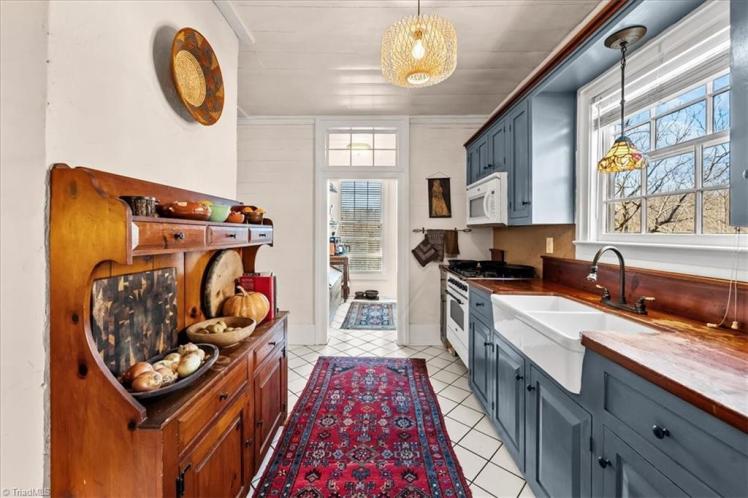
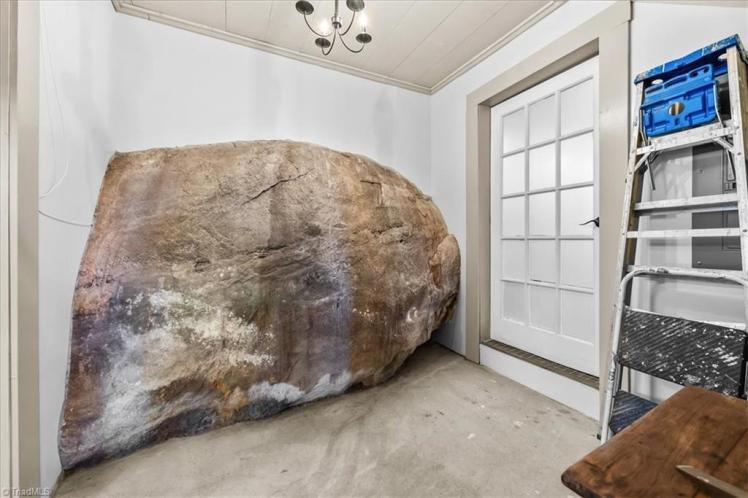
- Local Landmark Designation Report: The house is “built on a rock outcropping on a steep hillside overlooking the Deep River. Its first owner was Austin Lawrence [dates unknown], a mill manager from New England who came to Randolph County with his family to work in the burgeoning textile industry. The solidly built house has woodwork and moldings made from the Greek Revival classical designs by architect Asher Benjamin (1773-1845) in his pattern books that were widely circulated in the first half of the nineteenth century. After the Lawrence family moved away around 1855, the Cedar Falls Mill Company owned the house and it was rented to various tenants for over 100 years.”
- In 1999, the Randolph Heritage Conservancy acquired the house from Sapona Manufacturing Company. It sold the house in 2000.
- From The Architectural History of Randolph County North Carolina: “This ca. 1850 dwelling is one of the landmarks of the Greek Revival style in Randolph County. The builder of the two-story center-hall plan house drew inspiration for the decorative trim work from a well-known, widely used builder’s guide, The Practical House Carpenter, by Asher Benjamin.” Two mantels in the house are adapted from Benjamin’s book (Plate 51), a traditional “post and lintel” form with a Greek key design decorating the frieze. “The local artisan’s rendition of the mantel is somewhat crude and two-dimensional when compared to the Asher Benjamin design, but it is important to find that Randolph County craftsmen tried to imitate published examples of their work.
- “The house has a great deal of additional high-quality work. The molded cornice is carried across the gable to form a classical pediment; the gable is covered with sheathed siding as is the area sheltered by the Doric gallery across the facade. The double-leaf entrance is framed by sidelights in a symmetrically molded architrave with beveled corner blocks. The house is built into the hillside so that the read facade displays only a single story; the central door on the rear facade is set in a crossetted architrave with transom. Nine-over-nine double-hung sash are used on the ground floor, with 9/6 sash on the upper story. The house also features interior chimneys, molded two-panel doors and an open-string staircase with turned newel post and square balusters.”
709mayflower


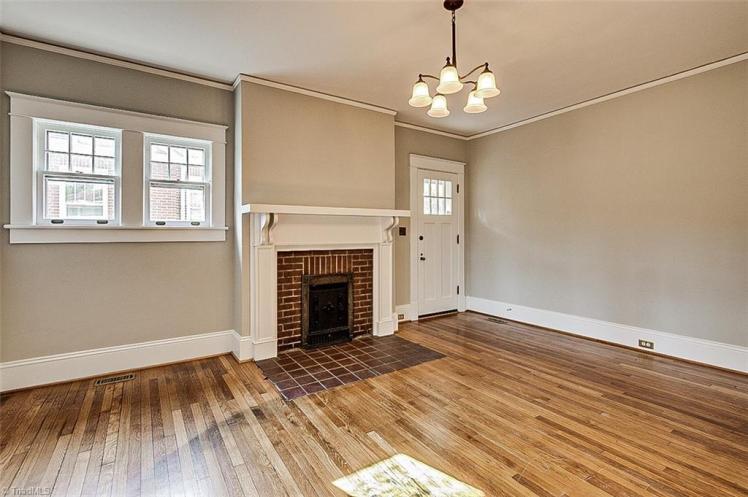
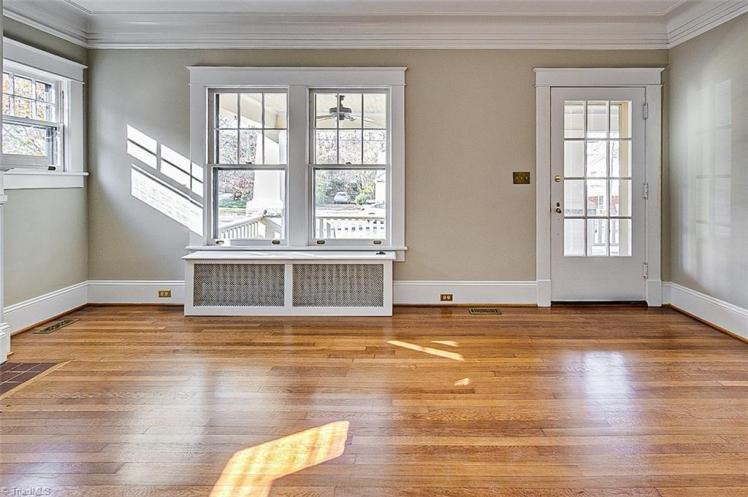
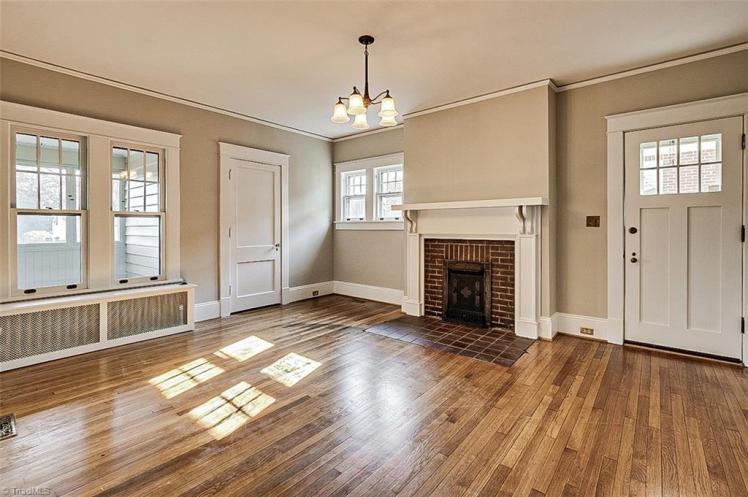

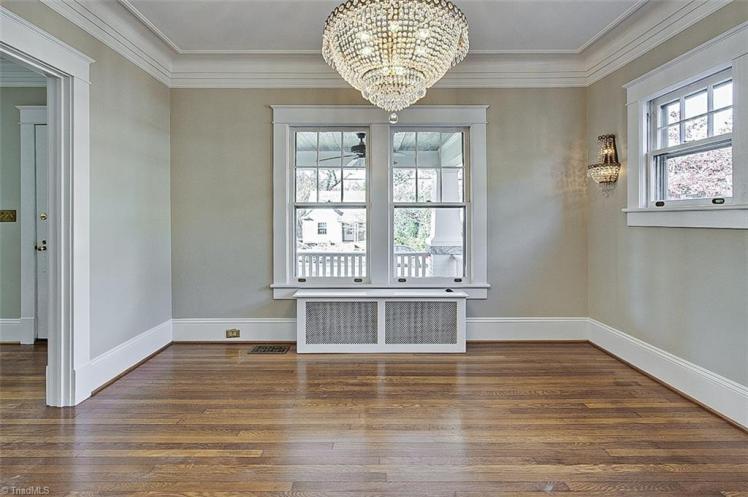
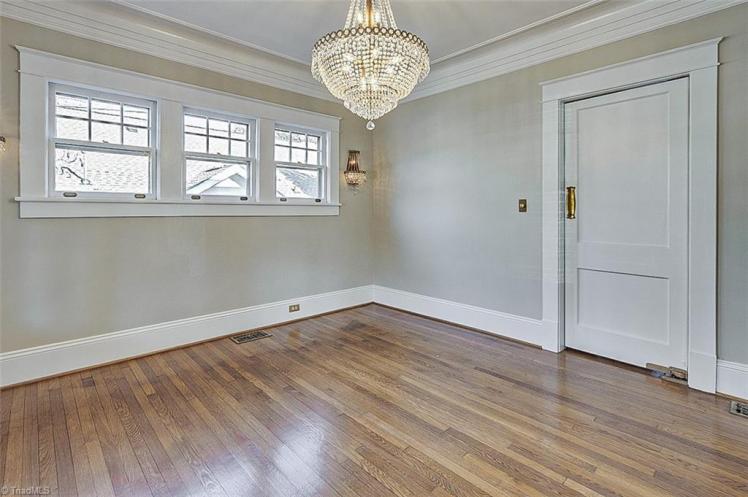


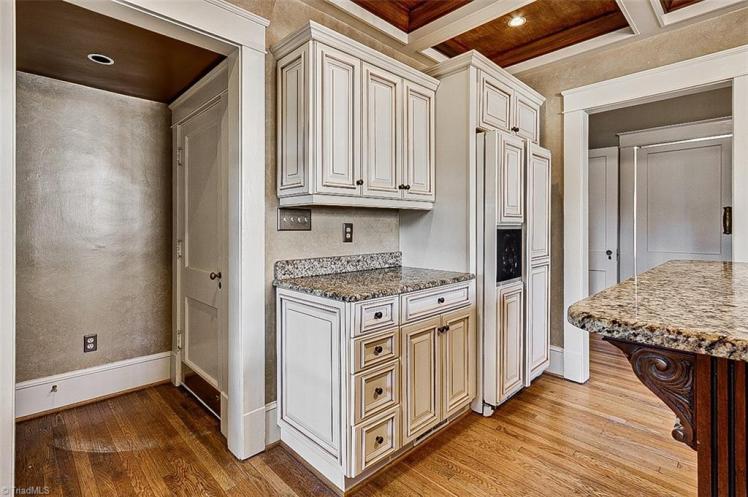

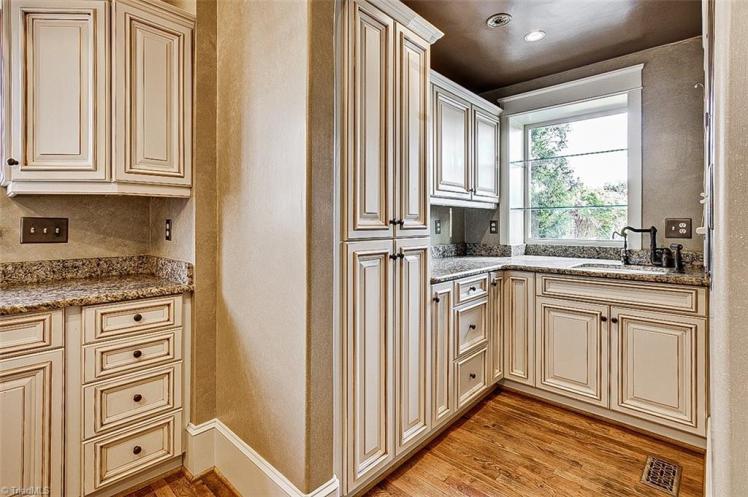


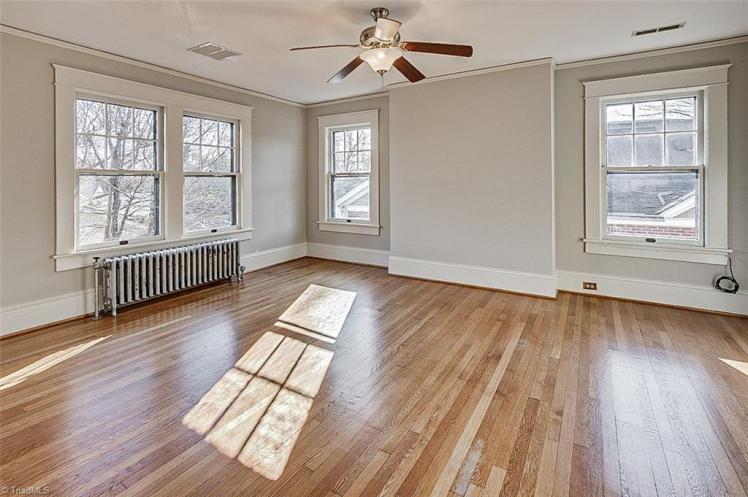


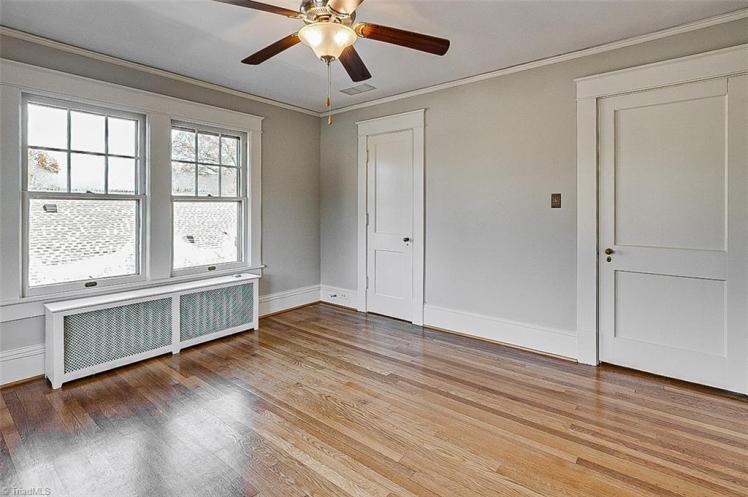


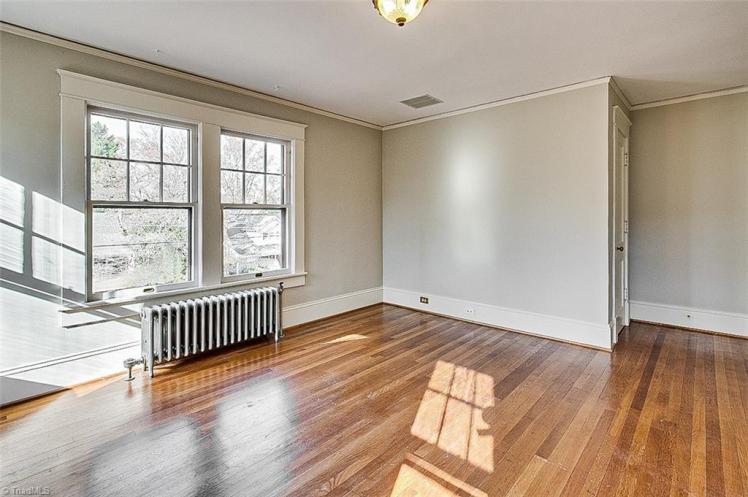


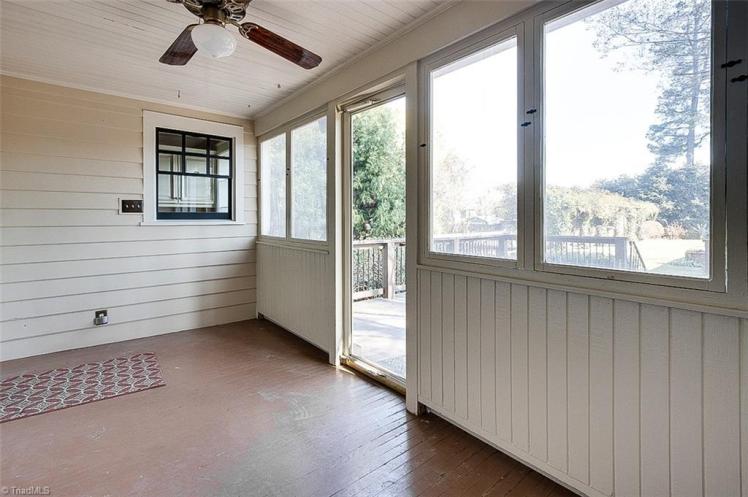
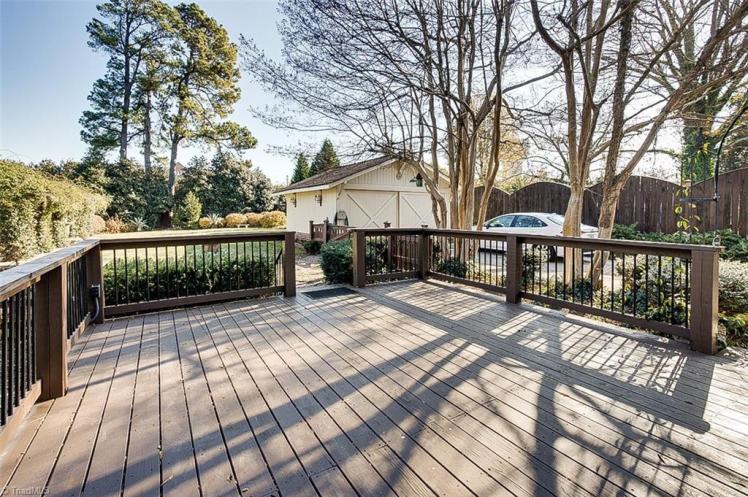
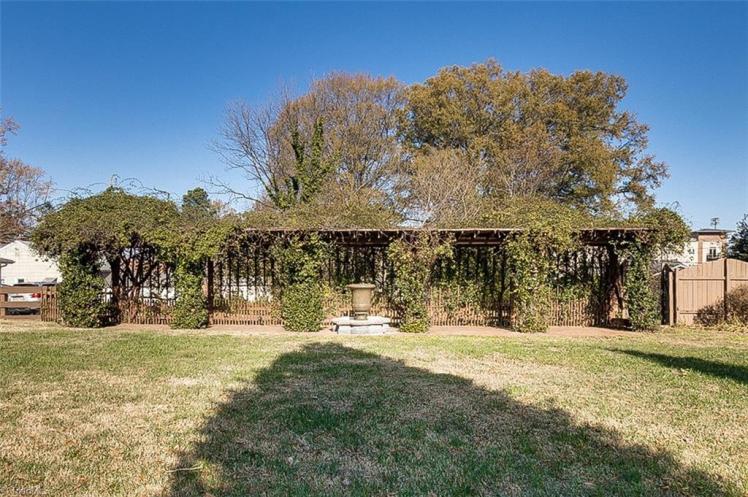

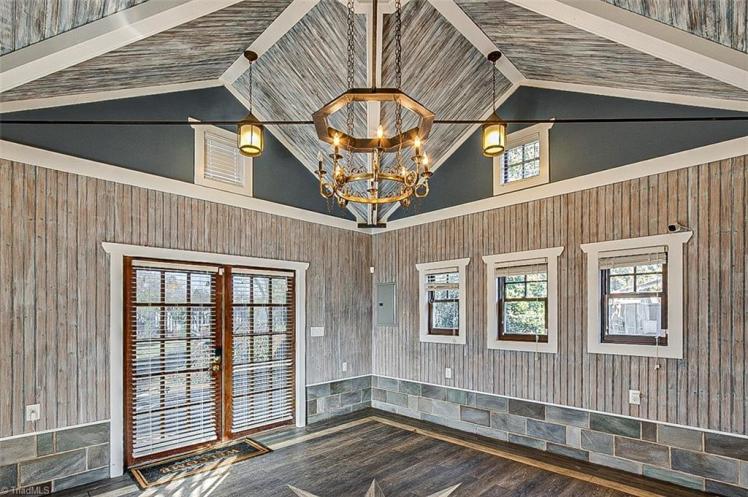
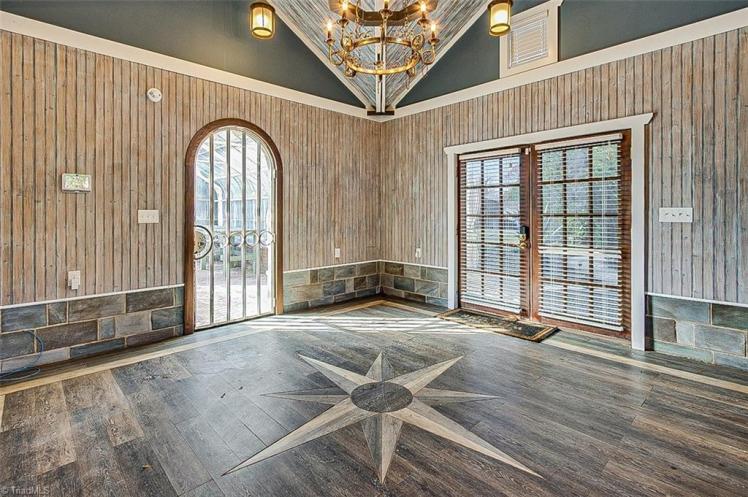
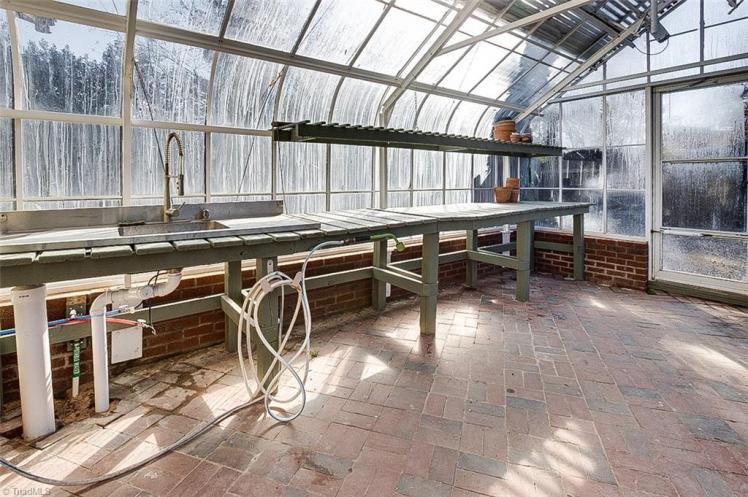
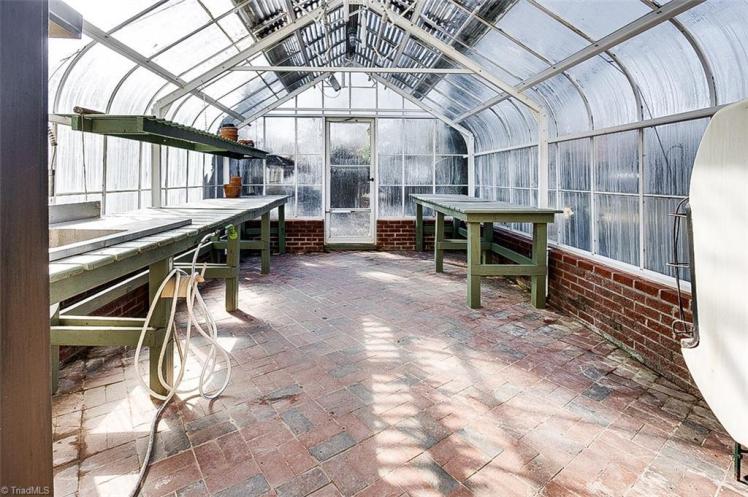

709 Mayflower Drive, Greensboro
The Albert and Mary Waynick House
- Sold for $450,000 on February 24, 2025 (originally $560,000)
- 4 bedrooms, 2 bathrooms, 2,120 square feet, 0.34 acre
- Price/square foot: $212
- Built in 1927
- Listed January 4, 2025
- Last sale: $146,000, June 2000
- Neighborhood: Brice Street
- Note: The house is a little out of place. It’s on block where more than half of the houses are rentals. It’s three doors down from a Burger King, and a Walgreens is behind it. A few blocks north on Mayflower, across Walker Avenue in College Park, you’ll find houses like this one.
- The property includes a back-yard pergola, fountain, garage and an office-greenhouse.
- The original owners were Andrew Bernard “Albert” Waynick (1890-1979) and Mary Sue Holden Waynick (1895-1970). Andrew was a Southern Railway engineer for 50 years. They lived in the house for 34 years, selling it in 1961.
515park


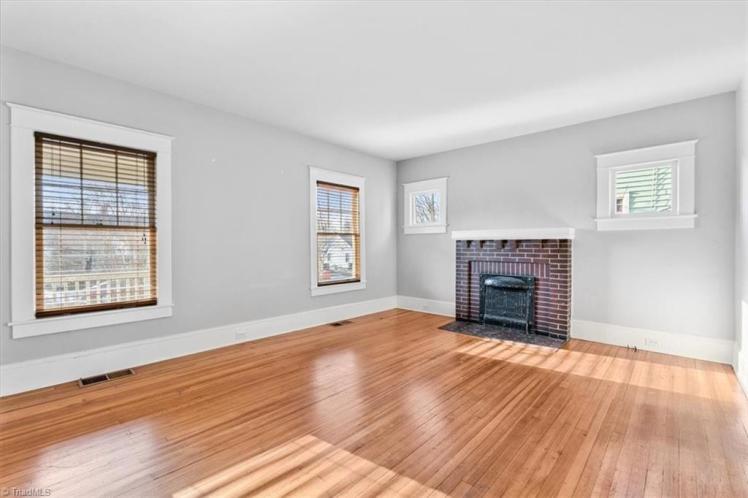
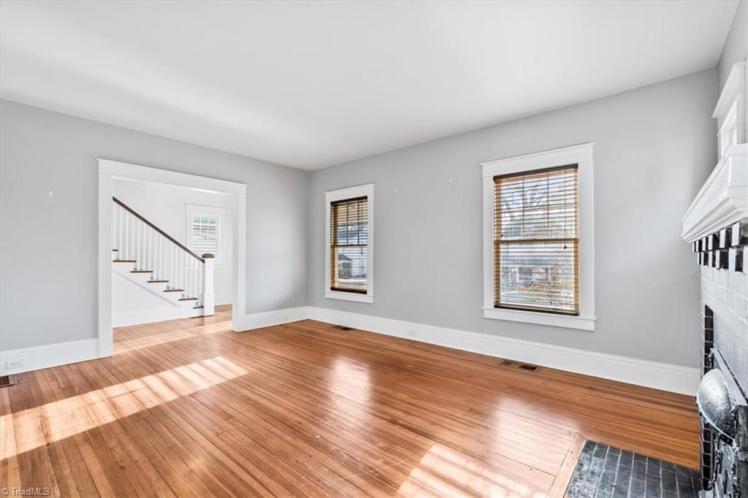

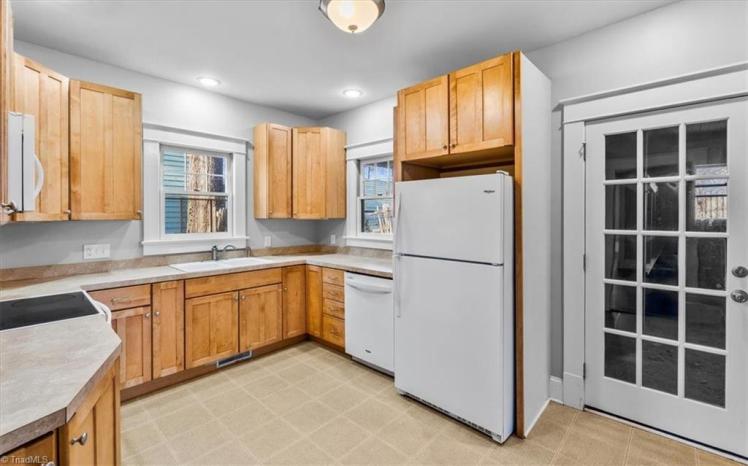
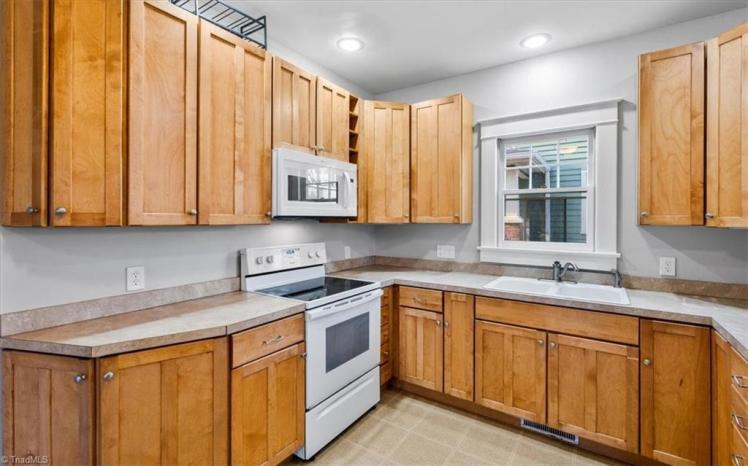



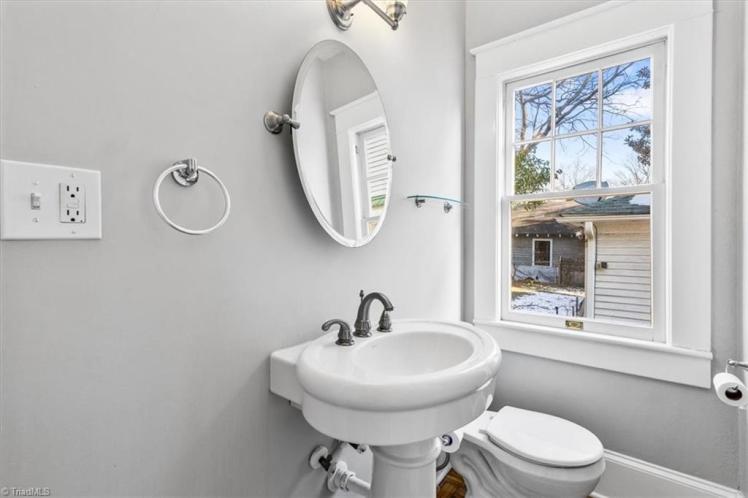


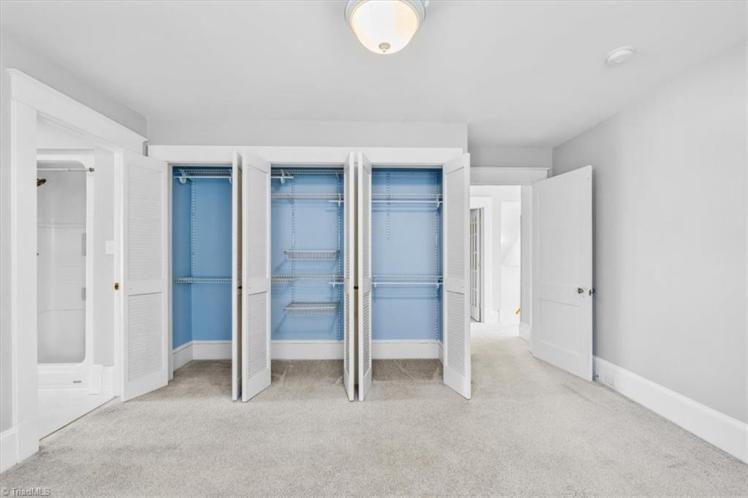


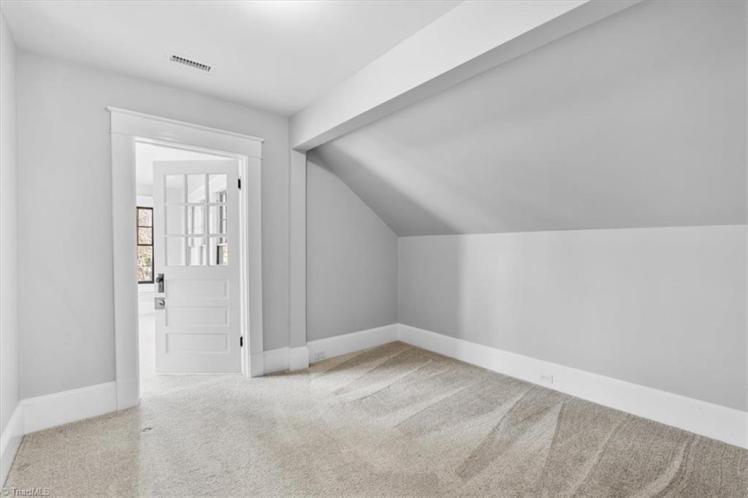
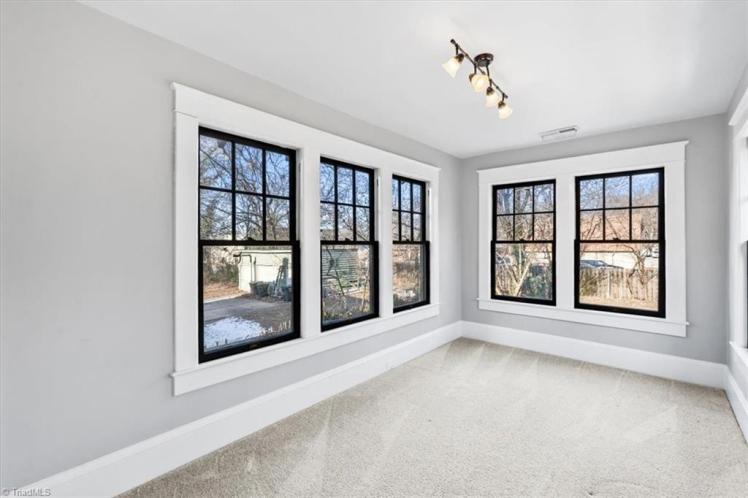
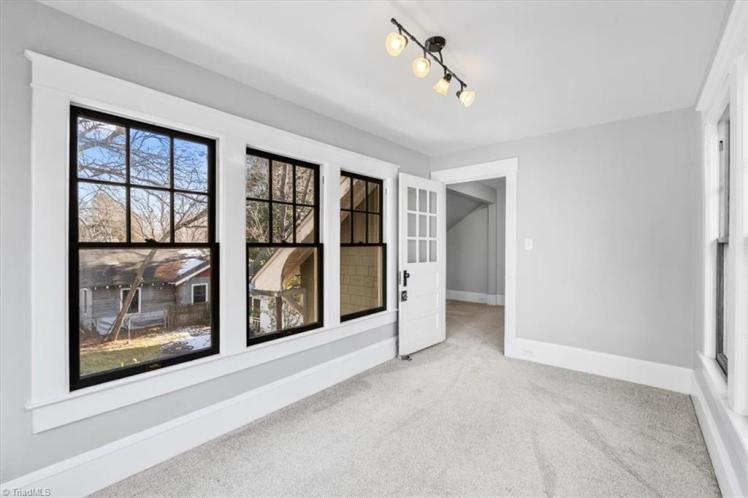


- Sold for $369,000 on February 24, 2025 (listed at $369,000)
- 3 bedrooms, 2 1/2 bathrooms, 1,680 square feet (per county), 0.16 acre
- Price/square foot: $220
- Built in 1935 (per county, but probably much earlier; see note)
- Listed January 17, 2025
- Last sales: $80,000, March 2005; $15,000, January 1975
- Neighborhood: Dunleath Historic District (local), Summit Avenue Historic District (NR)
- Note: The listing shows 2,269 square feet, an uncommonly large discrepancy from county property records (35 percent).
- District NR nomination: “Craftsman gable-front, Residence, 1920-25”
- Both the National Register and county records appear to miss the date of the house by several years. William H. Osborn (dates unknown) bought the property in 1912, the first year the address appeared in the city directory. Osborn was president of Cunningham Brick Company and of the Keeley Institute. Keeley was a sanitarium for alcoholics, selling a snake-oil cure containing gold and a variety of secret ingredients. The Greensboro location was one of 200 in the United States and Europe. It occupied Blandwood Mansion for about 60 years.
- Osborn, who lived at the institute, used this house as a rental property. He sold it 1919 to Lydia Fredrika Anderson Guel (1849-1934). Lydia, a widow, was a native of New Orleans. She came to Greensboro in 1919 to live with her adult son and daughter on North Cedar Street. She sold the house in 1920 to Edward B. Mastin and Gertrude Mastin, who lived on the same block. Edward was a telegraph operator with Southern Railway.
- In 1922 the Mastins sold the house to its first owner-occupants, Julia Maud Fox (1884-1976) and her sisters Emma Claudia Fox (1886-1983) and Mabel Clair Fox (1892-1969). Maud was a teacher; Claudie and Mabel were stenographers. They sold the house in 1927.
501lindsey

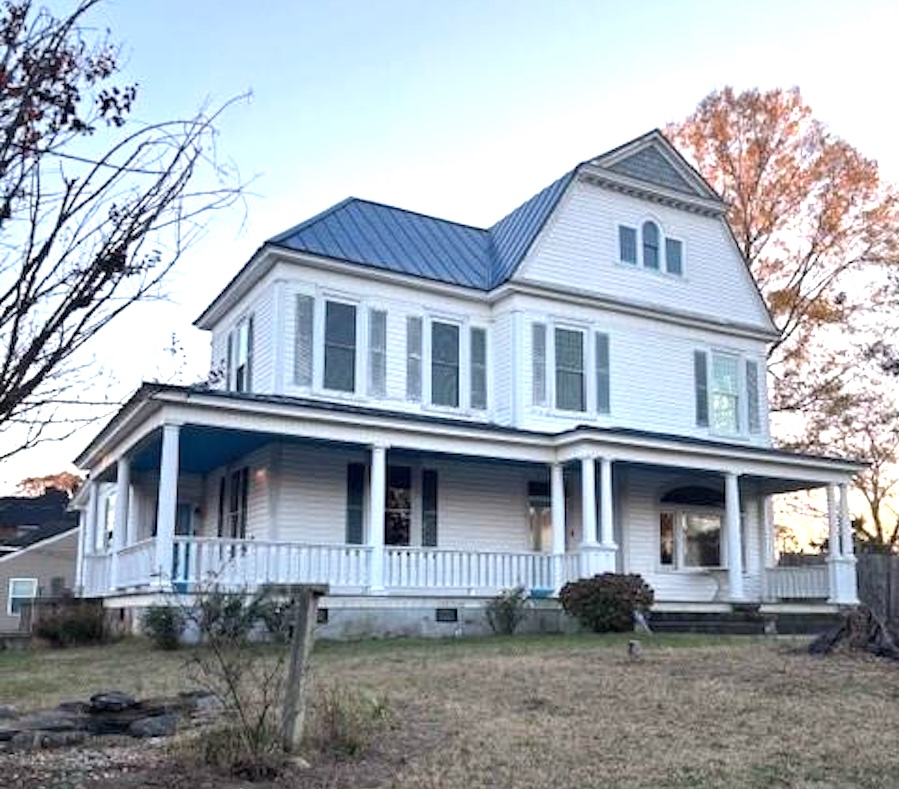
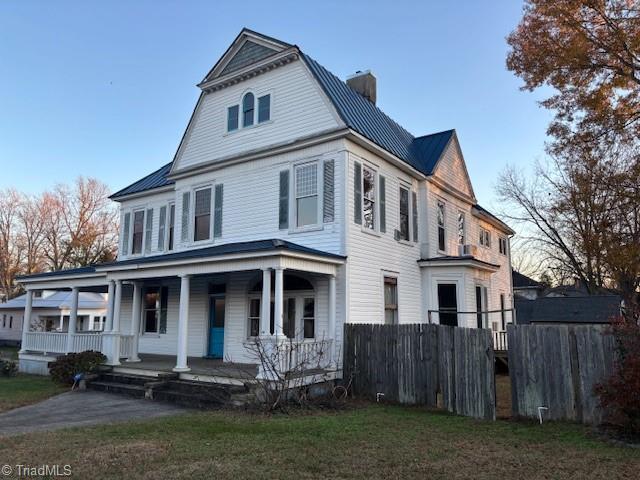
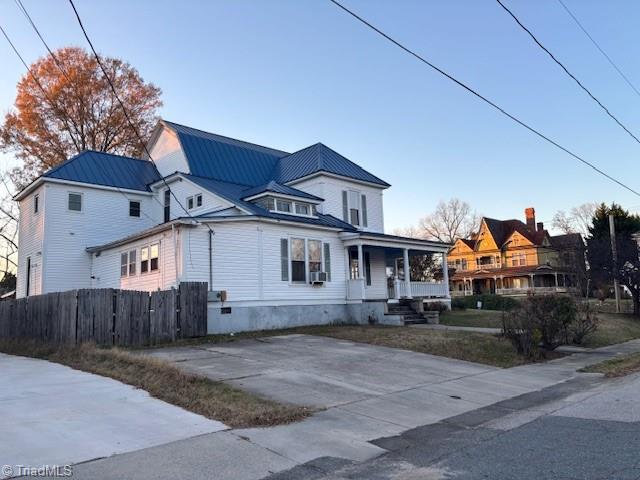
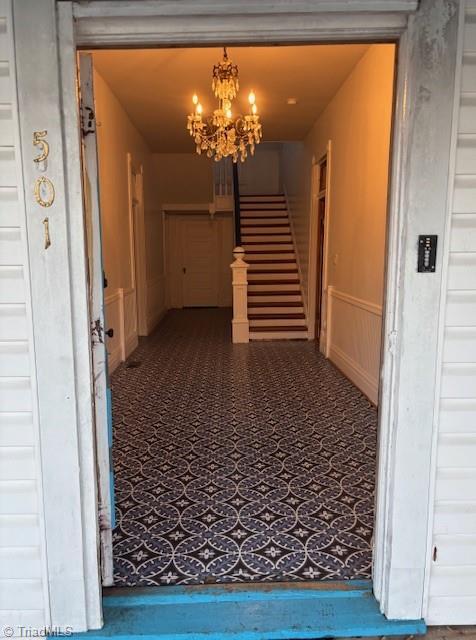
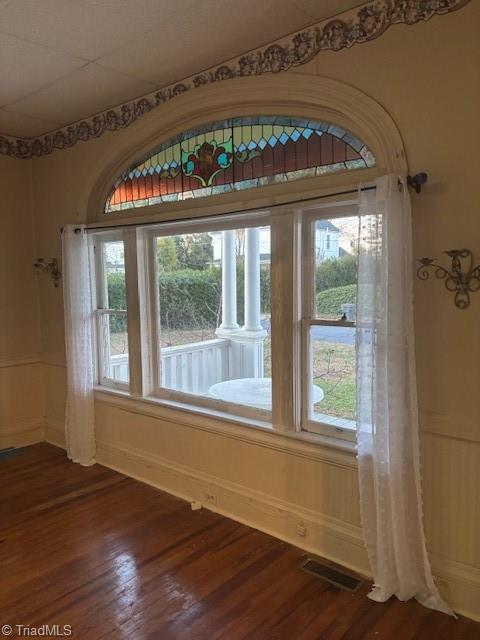


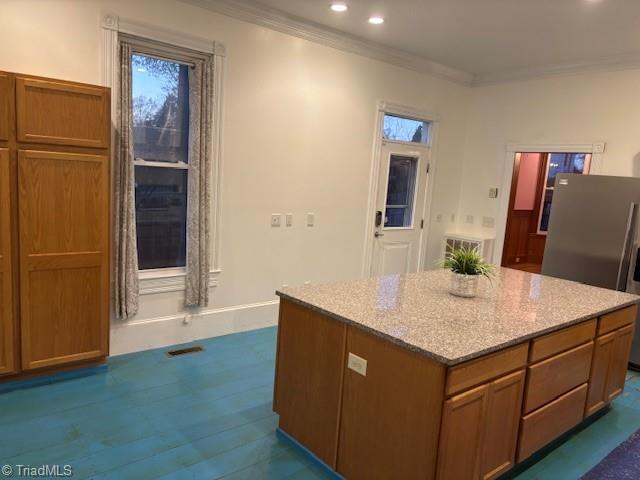
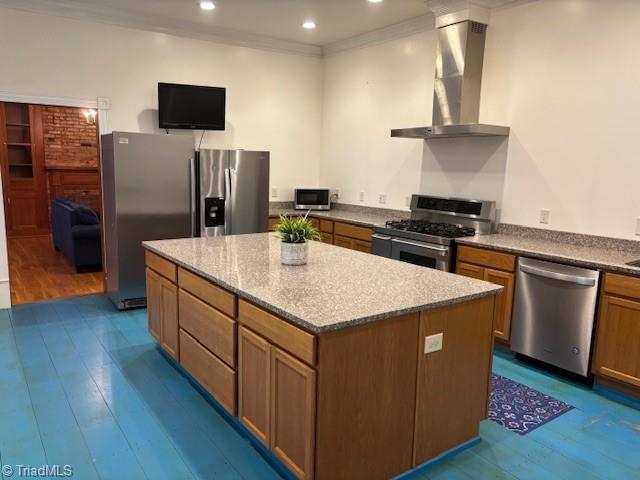


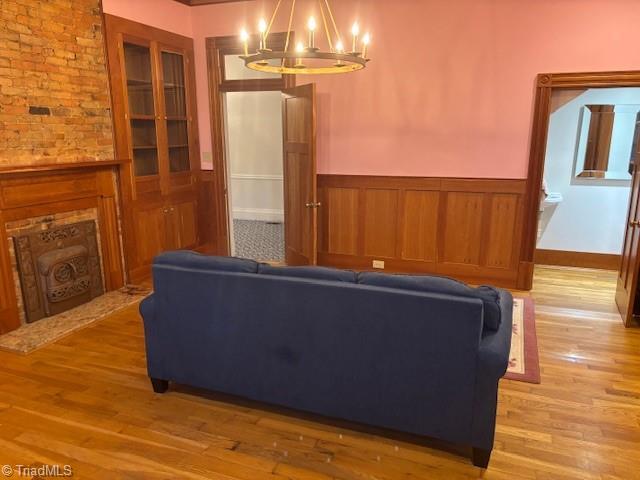
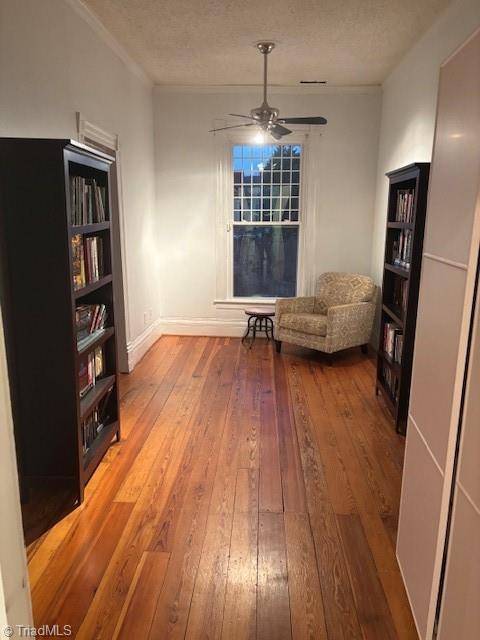


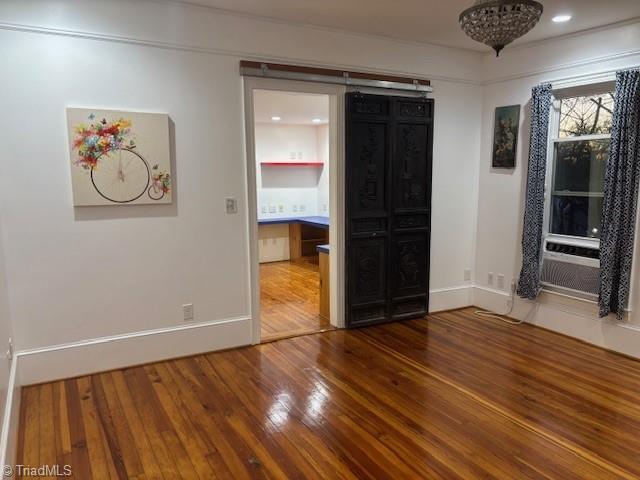


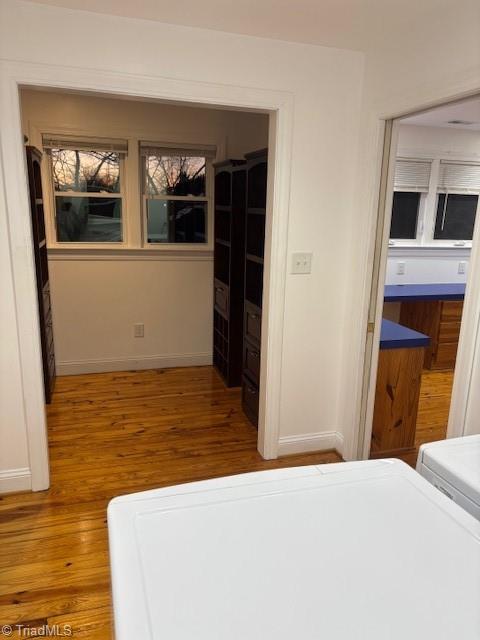
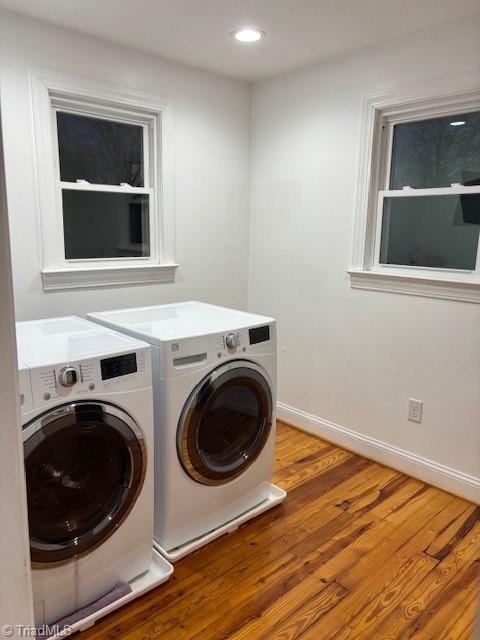


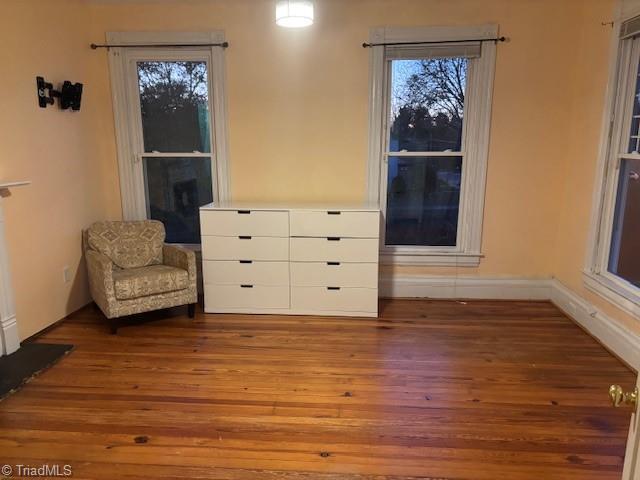


501 Lindsey Street, Reidsville, Rockingham County
The William and Anna Womack House
- Sold for $220,000 on February 21, 2025 (listed at $220,000)
- 3 bedrooms, 3 1/2 bathrooms, 2,948 square feet, 0.25 acre
- Price/square foot: $75
- Built in 1914 (per country, but probably earlier; see note)
- Listed December 4, 2024
- Last sales: $180,000, December 2023; $139,900, July 2021; $58,000, July 1996
- Neighborhood: Old Post Road Historic District (local), Reidsville Historic District (NR)
- Note: County records show the date of the house as 1914; the city’s historic walking tour guide says 1900.
- Reidsville historic walking tour guide: “Colonial Revival with unusual mansard roof, 1900”
- William Nathaniel Womack (1859-1907) had been an assistant postmaster and by 1914 was a tobacco dealer. He was married to Anna Judith Wray Womack (1862-1949).
- District NR nomination (August 1986): “A low stone retaining wall extends along the Lindsey and Irvin street sides of the corner lot on which leaf tobacco dealer William N. Womack built his very unusual two-story Colonial Revival house, soon after his 1900 purchase of the tract …
- “Exhibiting an extremely complex plan, the house has a quantity of one- and two-story sections, projecting bays, ells and additions. The main impact of the house is that of a double-pile gambrel-roofed block facing Lindsey Street, with a slightly projecting pedimented bay and bay window on the west elevation, and two-story hipped roof wings on the rear and east elevations.
- “All of the various roof sections are sheathed in standing seam tin. Embellishments include a small palladian window in the front gambrel end which projects beyond the wall surface below and is sheathed with wood shingles.
- “A one-story porch with Tuscan columns and a simple balustrade follows the angles of the stepped facade and continues along the east elevation. On the first floor of the gambrel block is a large tripartite window with an elliptical stained glass transom. The body of the house has been covered with light brown asbestos siding [now removed].”
- William Womack died in 1907 at age 48 after undergoing an operation for appendicitis. “Mr. Womack was taken sick at Youngsville about a week ago and his condition was alarming from the beginning,” his obituary said.
- Twelve years later, Anna (1862-1949) sold the house to W.S. Windsor, who operated a credit clothing store. Since that time, the house has passed through several ownerships and has been divided into apartments.”
- Since the nomination was written in 1986, the house has been restored as a single-family home.
804wdavis

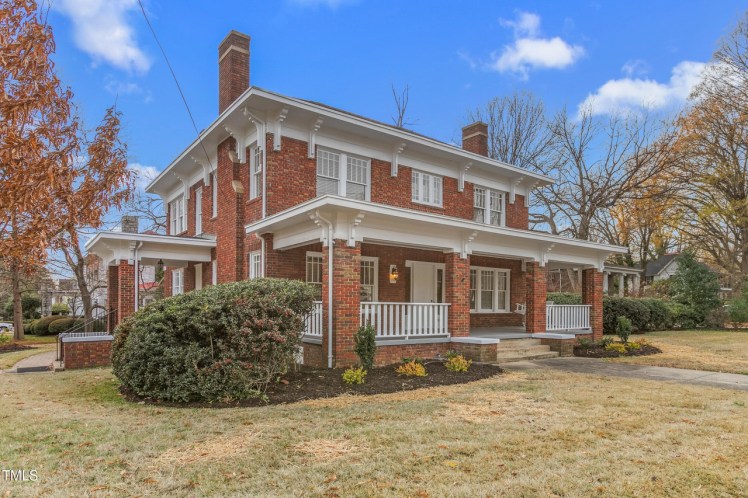
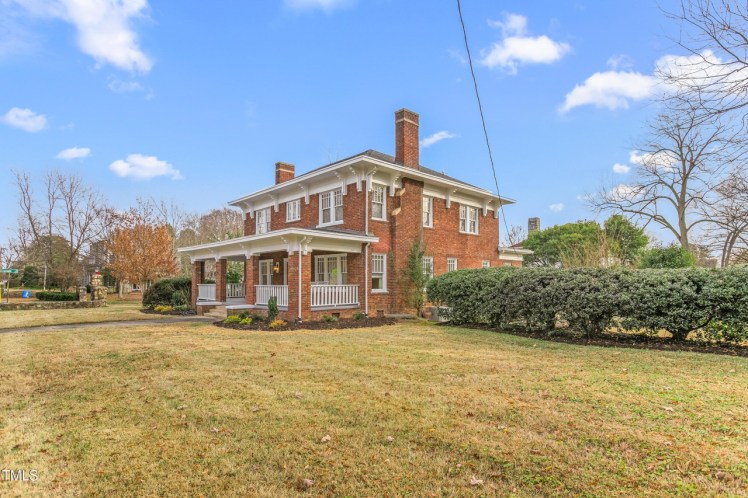
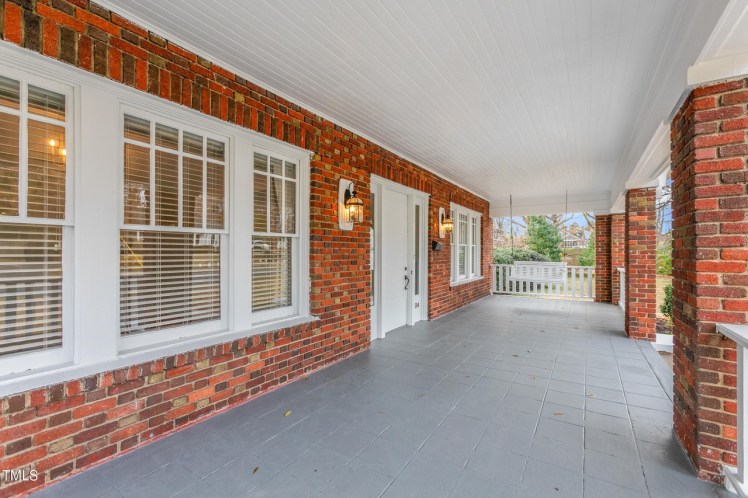


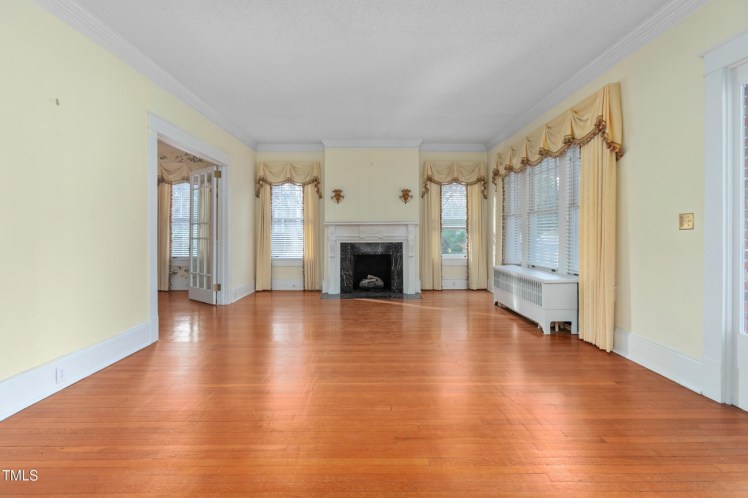


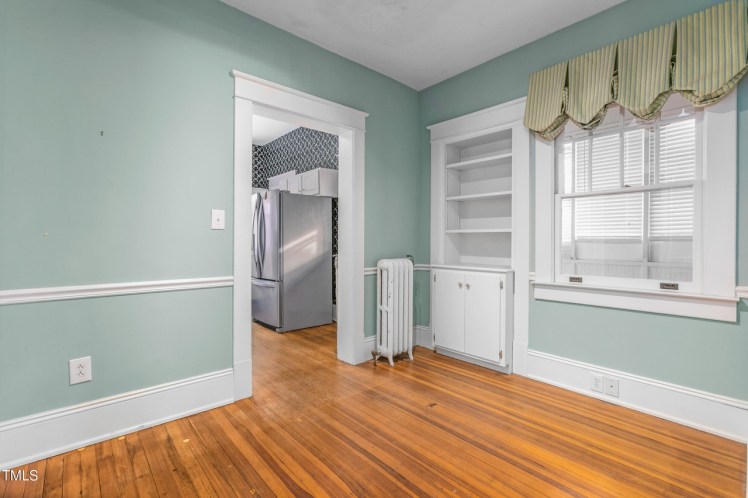

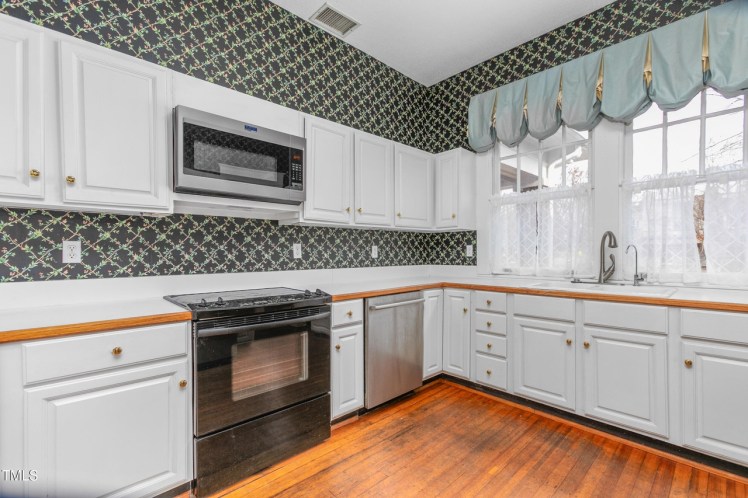


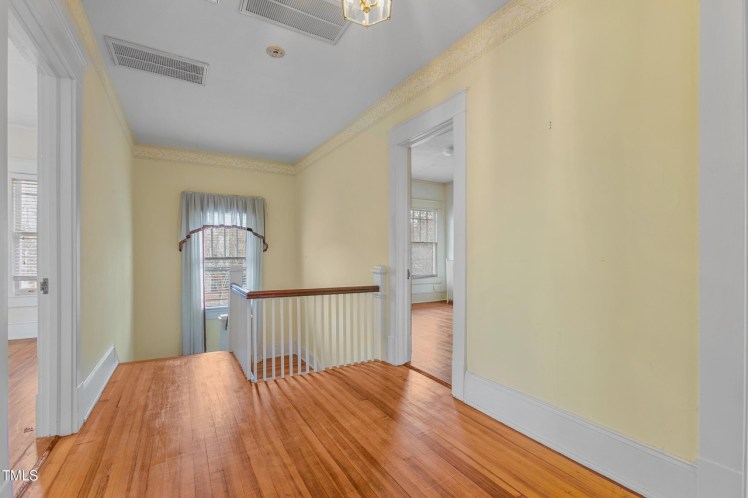

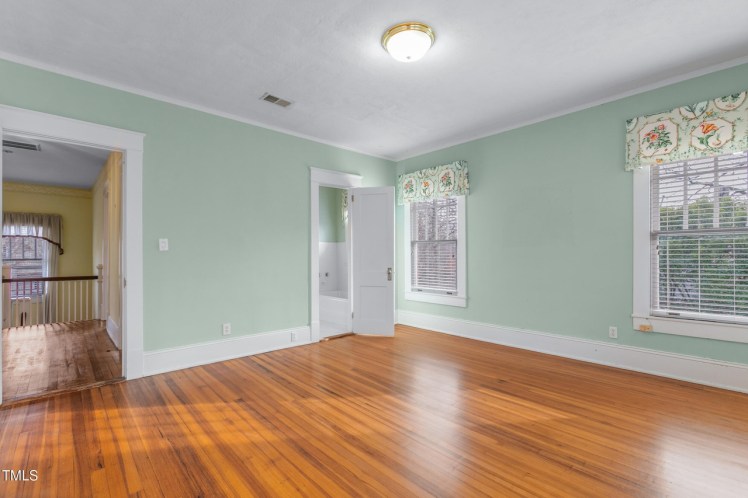
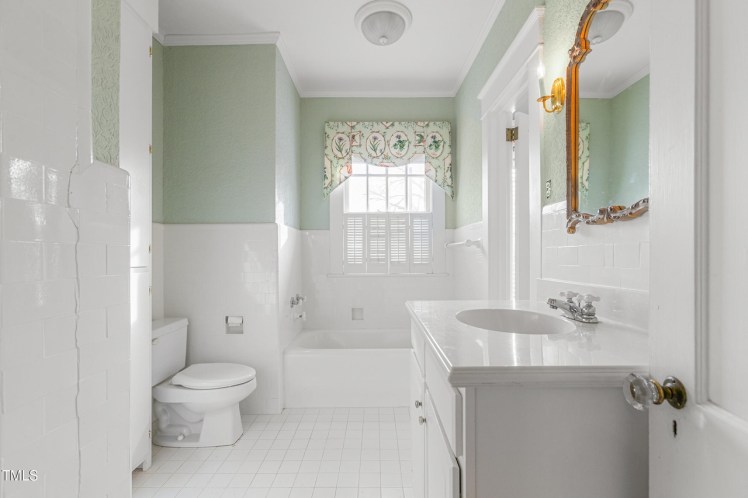

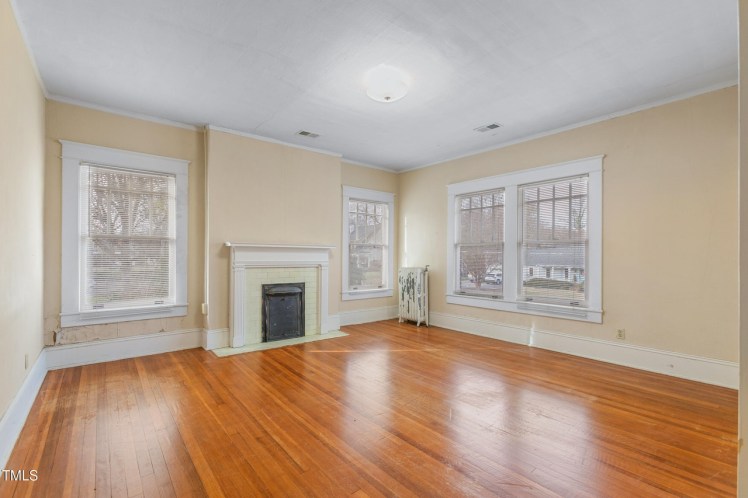
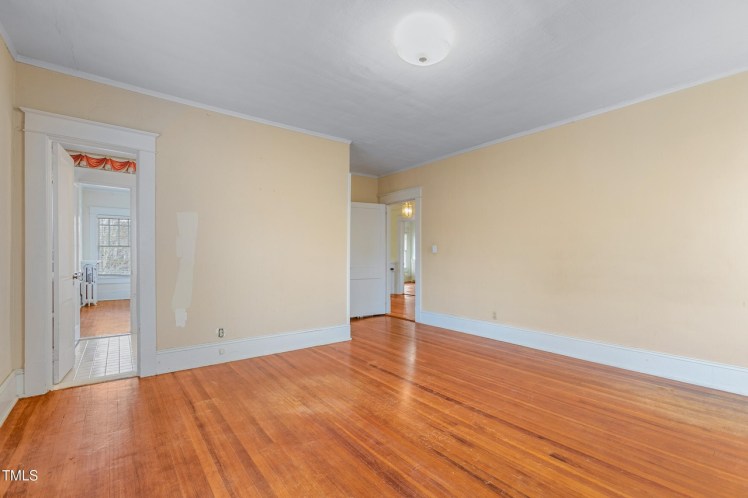
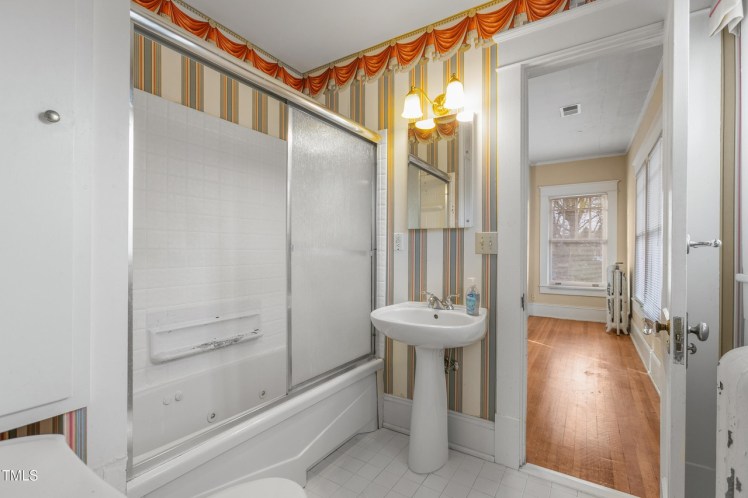


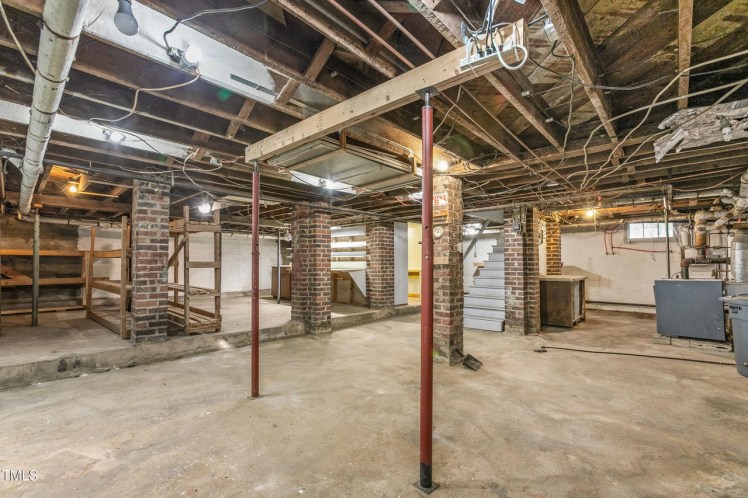


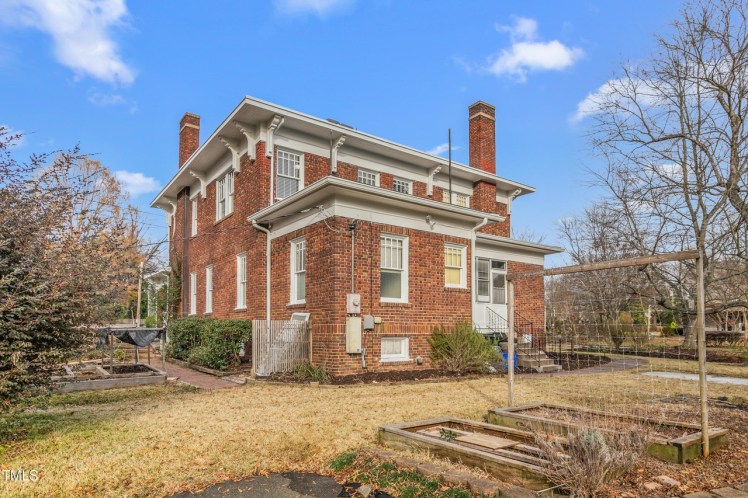

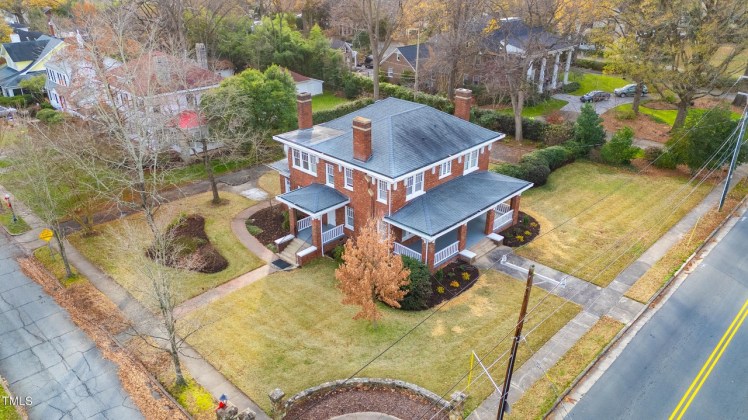

804 W. Davis Street, Burlington, Alamance County
The Ernest and Eleanor Sellars House
- Sold for $395,000 on February 19, 2025 (listed at $400,000)
- 4 bedrooms, 3 bathrooms, 3,072 square feet, 0.43 acre
- Price/square foot: $129
- Built in 1910
- Listed January 16, 2025
- Last sale: $47,000, November 1979
- Neighborhood: West Davis Street-Fountain Place Historic District (local and NR)
- District NR nomination: “Typical of the Foursquare type of residential construction with Colonial Revival accents, this two-story brick veneer structure was built in 1923 for D. Ernest Sellers.” He founded the Sellers Hosiery Mill in 1907 with his brother, Charles V. Sellers. Ernest also served for many years as president of the Morris Plan Industrial Bank.
- “This house, at the prominent intersection of West Davis Street and Fountain Place, features the hallmarks of the style — the symmetrical two-story configuration with flanking end chimneys, the medium-pitch hip roof, and the entrance with sidelights and simple surround. The structure also features a one-story porch across the three-bay facade supported by solid brick piers with a simple wooden balustrade and heavy wooden eave brackets, which gave it a bungalow accent.”
- Note: The house has had only three owners. The original owners were David Ernest Sellars (1863-1944) and Eleanor Juanita “Nita” Hall Sellars (1874-1963). Although they spelled their last name with an “a” (as seen on their gravestone), one of their sons apparently changed it to “Sellers,” and later records have both spellings. The National Register, for example, has it as Sellers, as quoted above. Ernest’s published obituaries have it both ways, varying from one newspaper to another.
- After Nita’s death, the house was sold to John W Finger Jr. and Mary P. Finger (dates unknown for both). John was an engineer with Western Electric. They sold the house to the current owners in 1979.
- The buyers in 1979 were John David Thompson (1942-2023) and Mary E. Thompson. John earned a degree in math and physics from Catawba College and taught those subjects at Western Alamance High School. He left to take up surveying for the rest of his career.
1475lillys
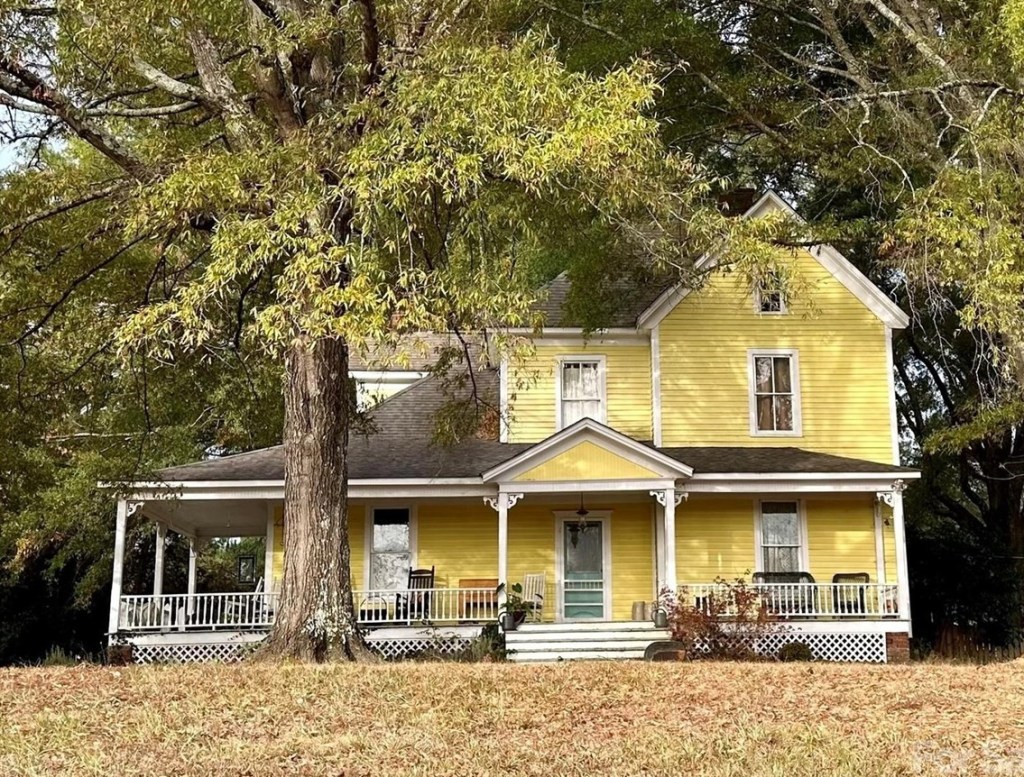
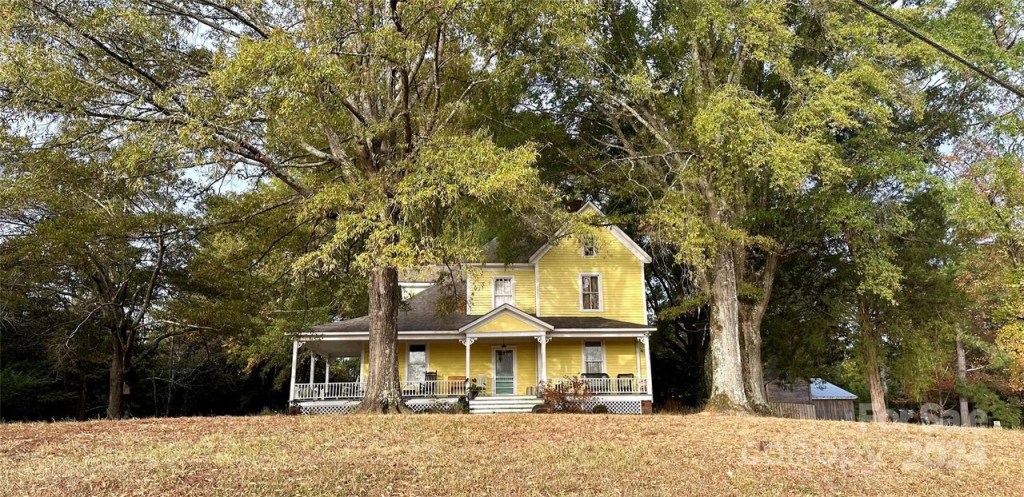

1475 Lillys Bridge Road, Mount Gilead, Montgomery County
- Sold for $275,000 on February 6, 2025 (originally $350,000)
- 4 bedrooms, 1 1/2 bathrooms, 3,224 square feet, 0.96 acre
- Price/square foot: $85
- Built in 1895 (per listing; see note)
- Listed November 16, 2024
- Last sale: $160,500, June 2016; $84,000, June 1998; $75,000, August 1991;
- Neighborhood: Located 5.2 miles northwest of Mount Gilead
- Note: County records give the date as 1905.
- The property was bought in 1972 by Samuel Alexander “Shorty” McRae (1926-2023) and Mildred Catherine Eudy McRae (1930-2022). Shorty was the ninth of 10 children in his family, eight of whom survived childhood. He was the owner of McRae Roofing and Siding Company in Asheboro. The property was one of nine, totaling more than 20 acres, sold by MAC Enterprises to the McRaes. Most were in the Fairway Shores development. They sold the house in 1991.
220wchurch

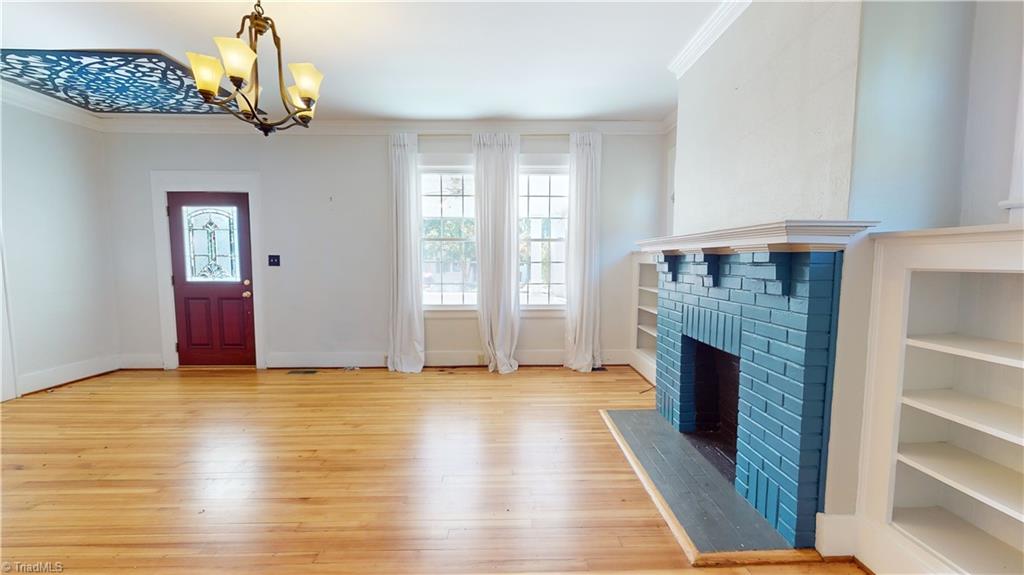


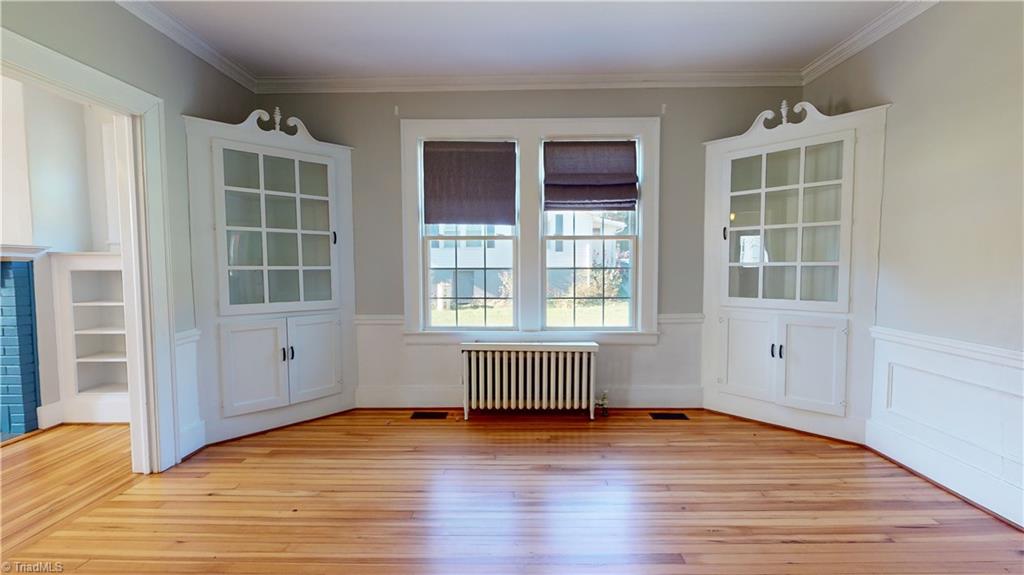

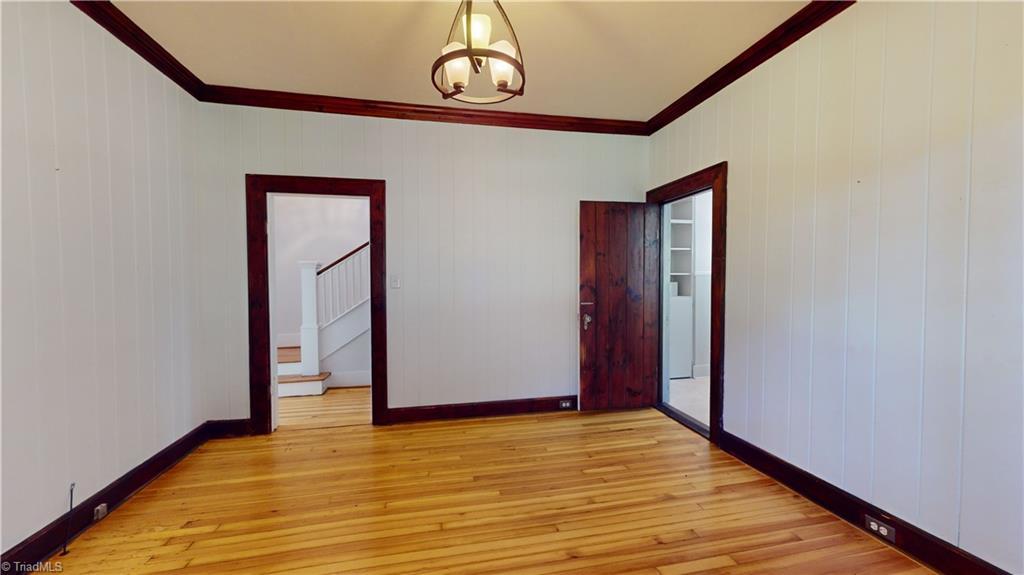

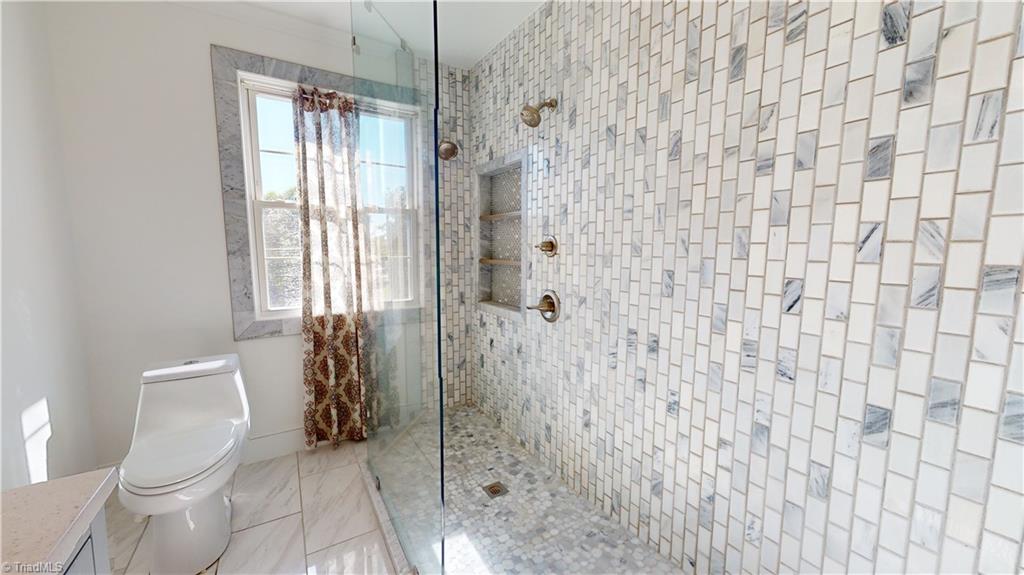
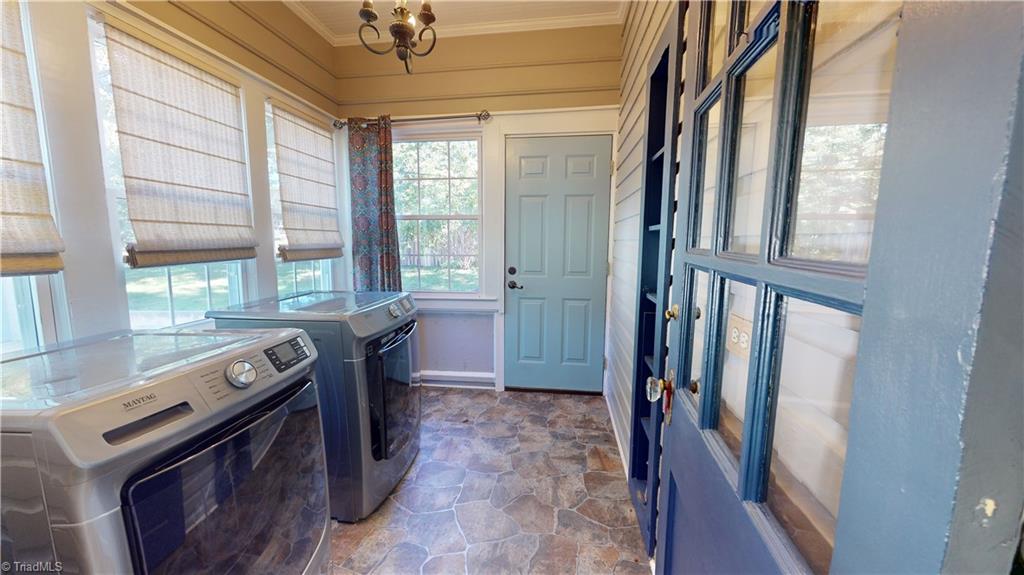

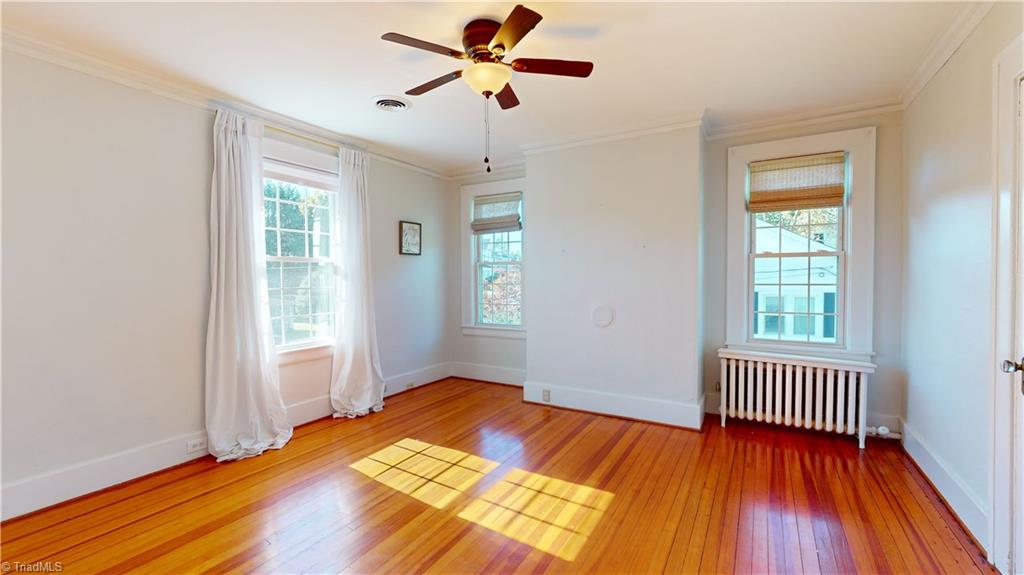


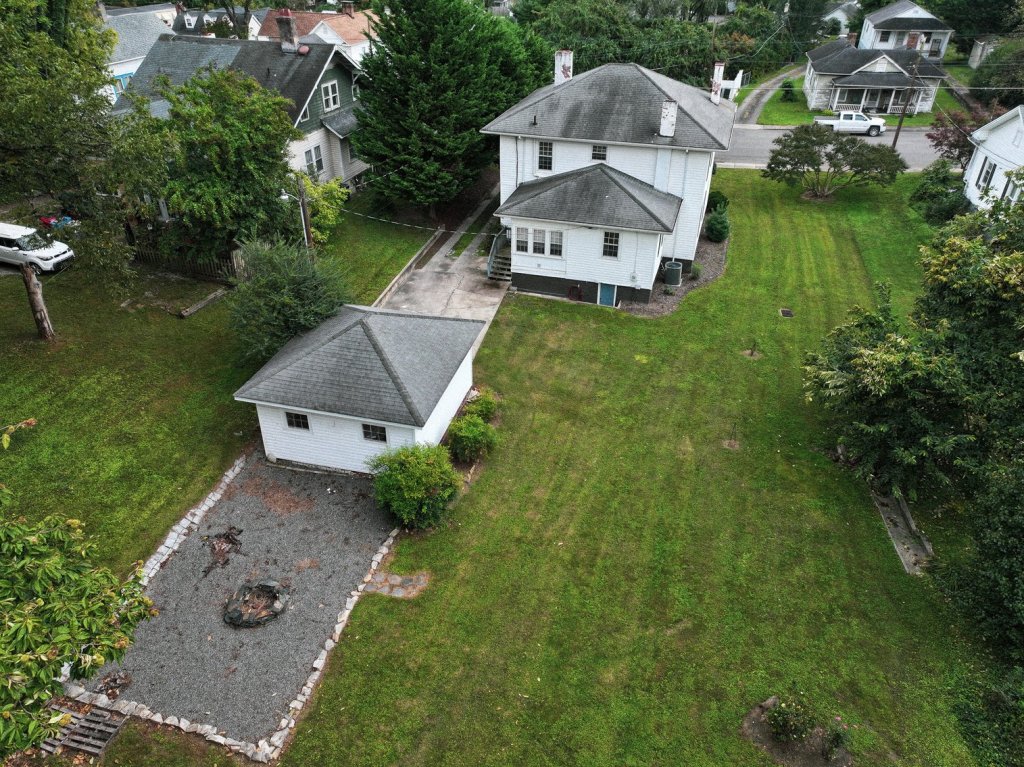


220 W. Church Street, Mount Airy, Surry County
The J. Weldon Parker House
- Sold for $317,000 on February 3, 2025 (listed at $339,900)
- A previous online auction didn’t result in a sale.
- 5 bedrooms, 2 bathrooms, 3,199 square feet, 0.33 acre
- Price/square foot: $99
- Built in 1923
- Last sale: $350,000, October 17, 2022
- Neighborhood: Mount Airy Historic District
- District NR nomination: “Two-story boxy house of novelty vinyl-sided frame construction with an asphalt-shingled hip roof. On the front of the roof is a hipped dormer. The one-story front porch has replacement fluted square wood columns in twos and threes on a solid railing. The granite porch steps have brick cheeks.
- “Other features include two interior chimneys, replacement windows, a replacement front door, a brick foundation, and a one-story rear wing. A concrete tire strip driveway leads to a back garage.
- “The address was formerly 185 W. Church. J. W. [Weldon] Parker was listed at the address in 1928, according to a city directory of that year.”
- James Weldon Parker (1899-1966) was a partner at W.E. Merritt Hardware, where he worked for 50 years. He was living in the house when he died. His wife, Nell Irene Saunders Parker (1899-1983), was a secretary and bookkeeper for the store.
522shawthorne

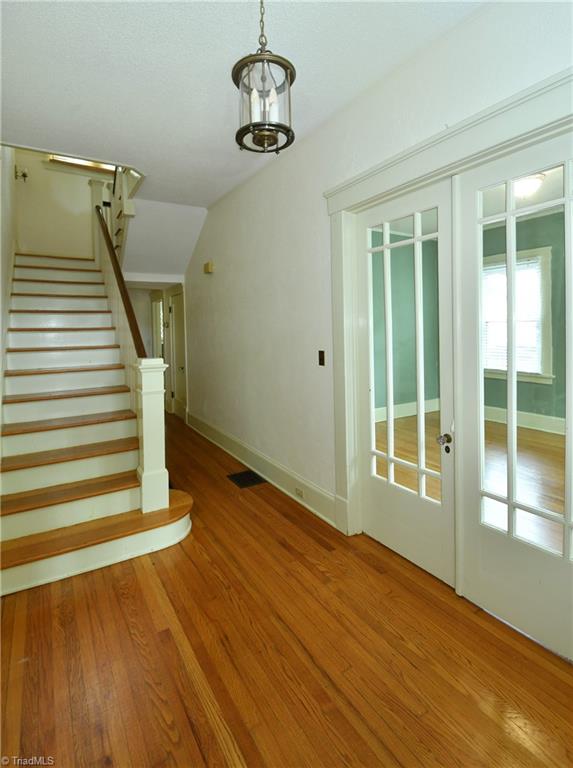

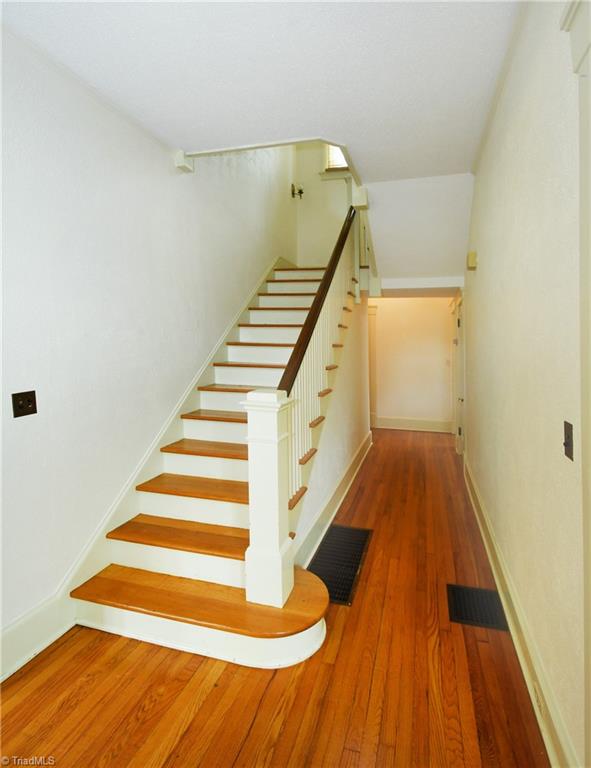
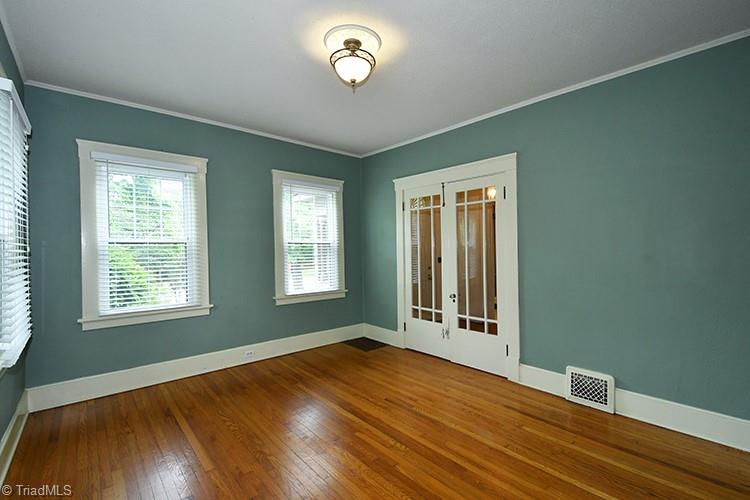
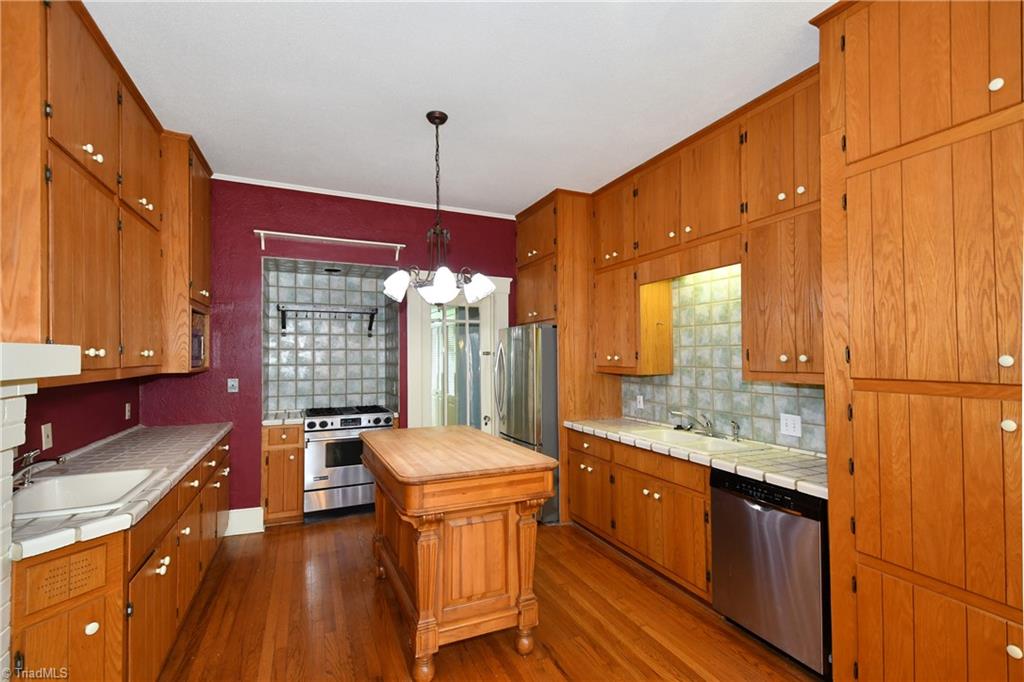


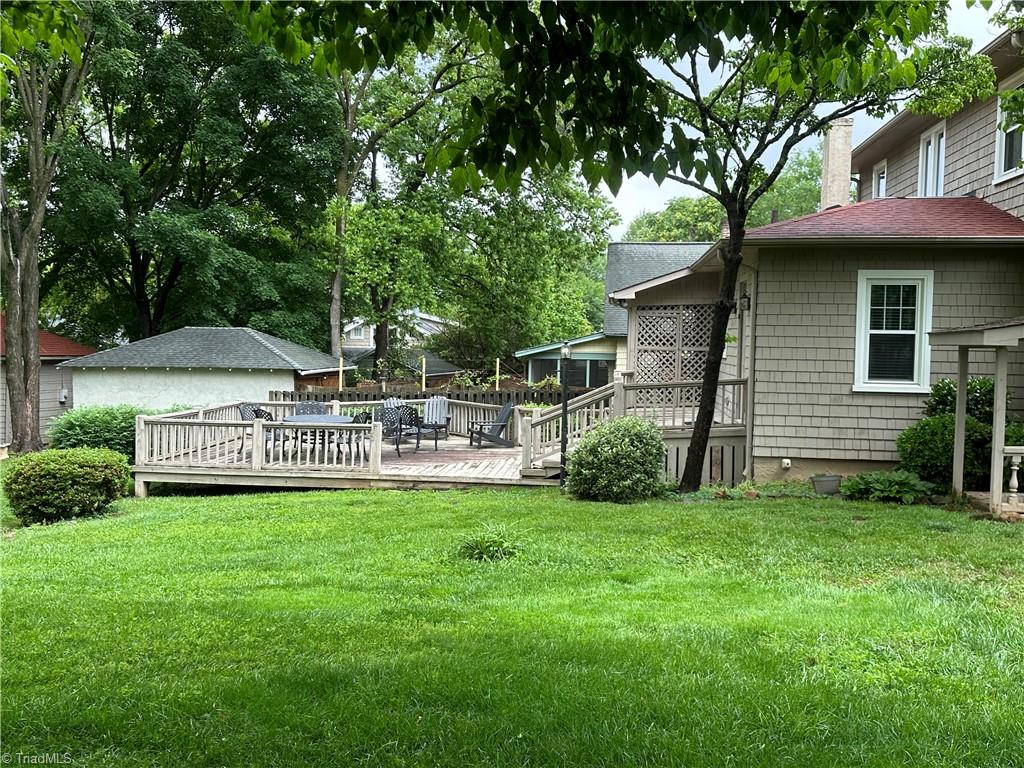
522 S. Hawthorne Road, Winston-Salem
- Sold for $330,000 (per deed) on January 31, 2025 (originally $429,900)
- 3 bedrooms, 3 1/2 bathrooms, 2,716 square feet (per county), 0.28 acre
- Price/square foot: $122
- Built in 1920
- Listed May 11, 2024
- Last sale: $255,000, April 2005
- Neighborhood: Ardmore Historic District (NR)
- Note: The listing shows only 2,260 square feet.
- The house is owned by the Salem Congregation.
- District NR nomination: “Colonial Revival. Two story; gable-on-hip roof; wood shingle siding; six-over-one, double-hung sash; gable-roof entry porch with arched opening; shingle-sheathed posts with turned posts; fanlight; stone retaining wall.”
161ndudley
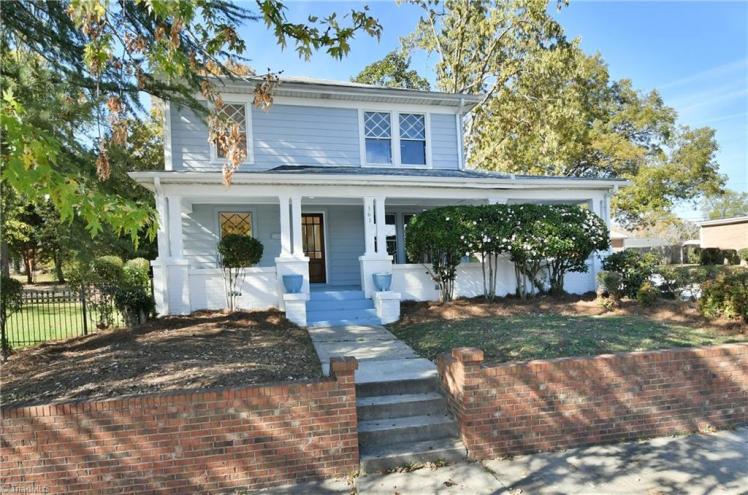


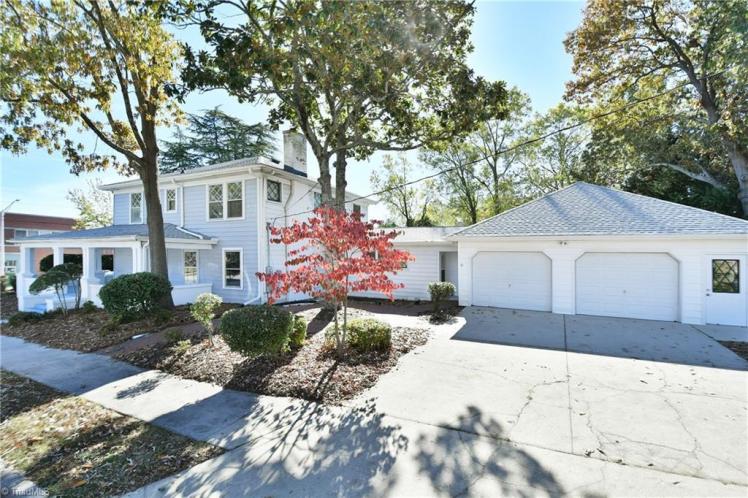


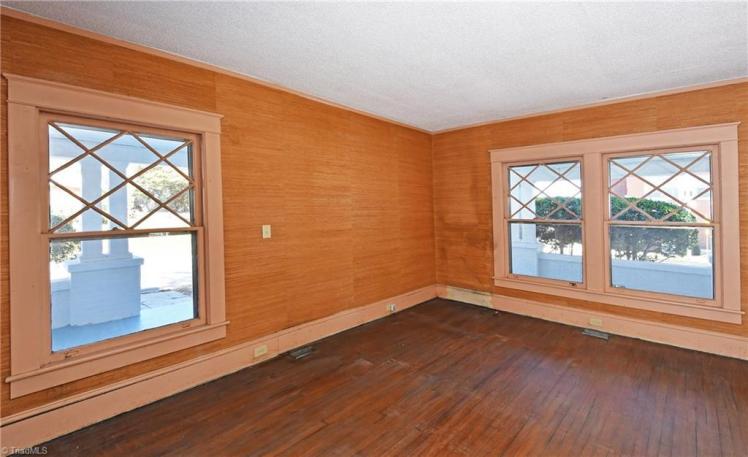
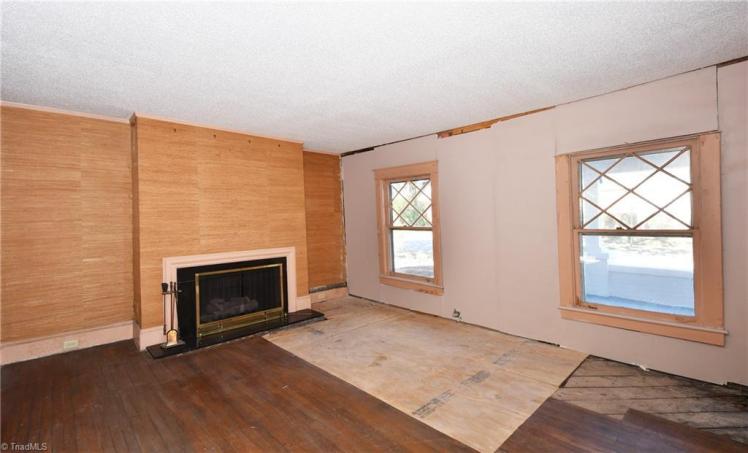


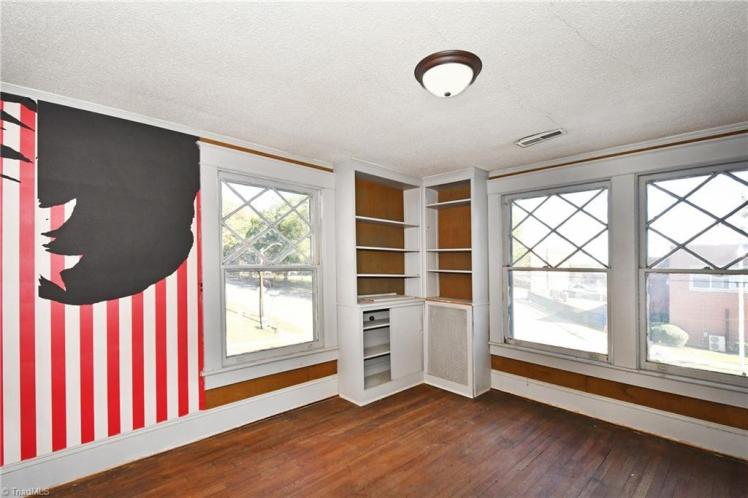


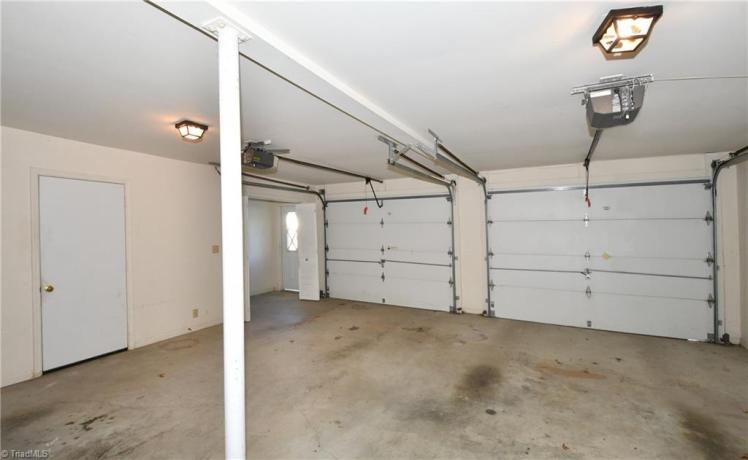


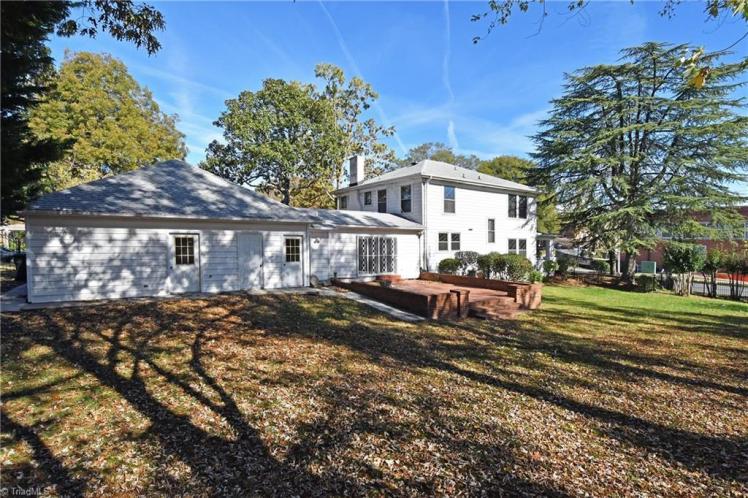

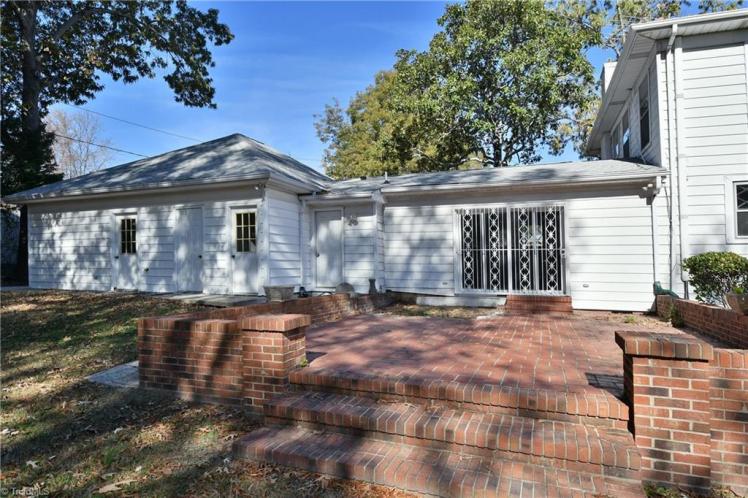

161 N. Dudley Street, Greensboro
The George and Anna Simkins House
- Sold for $277,500 on January 27, 2025 (listed at $360,000)
- The buyer’s listed address is in Sandy Springs, Georgia.
- 3 bedrooms, 2 1/2 bathrooms, 2,518 square feet, 0.43 acre
- Price/square foot: $110
- Built in 1923
- Listed November 22, 2024
- Last sale: September 1922, price not recorded on deed
- Neighborhood: Cumberland
- Note: The house is across the street from N.C. A&T State University.
- The house needs significant interior work. Online listings show no photos of the kitchen.
- The address first appears in the 1923 city directory, listed as vacant, which may be an error. Dr. George Christopher Simkins Sr. (1880-1958) and Anna Guyrene Tyson Simkins (1900-1992) had bought the property in 1922 and were listed at the address in 1924. After their deaths, their son, George Jr. (1924-2001), and daughter-in-law, Anna Oleona Atkins Simkins (1926-2011), inherited the house. His estate is now selling it.
- George Sr. was a dentist. He graduated from Claflin College and the Howard University school of dentistry. He began practicing in Greensboro in 1918 and continued for 40 years until shortly before his death at age 78. He served as president of the Old North State Medical Society and was a member of its executive board for many years. He served on the management committee of the Hayes-Taylor YMCA, the Greensboro Housing Commission and the board of trustees of the Palmer Memorial Institute in Sedalia. In 1930 he was a founding member of the Greensboro Men’s Club.

- George Jr. was a major figure in the civil rights movement in Greensboro and was the lead plaintiff in a landmark civil rights case that integrated the nation’s hospitals. Like his father, he was a dentist. He led the Greensboro chapter of the NAACP for 25 years and was deeply involved in local politics. He worked to integrate Greensboro’s public golf course, tennis courts and swimming pools. He was active in the Greensboro Citizens Association, which is now the Dr. George C Simkins Jr. Memorial Political Action Committee.
- The Simkins vs. Cone lawsuit has been said to have been as instrumental in integrating hospitals as Brown vs. Board of Education was in integrating schools. After Moses Cone Hospital and Wesley Long Hospital denied admittance to one of his patients, Simkins sued the institutions, arguing that they were subject to the equal protection clause of the U.S. Constitution because they had received federal construction funding. Previously, federal courts had ruled that government agencies were covered by the equal protection clause, but private groups and institutions were free to discriminate on the basis of race. Simkins lost in U.S. District Court but won on appeal. In 1963 the U.S. Supreme Court declined to hear the case; Attorney General Robert F. Kennedy wrote an amicus brief supporting Simkins.
- “He’d go to any length to make sure people had equal opportunities,” Yvonne Johnson, Greensboro’s mayor pro tem and later mayor, said. “Though he was behind the scenes, his power was out front. There was a respect and awe people held for him.”
- Local historian Hal Sieber called Simkins the “preeminent African-American leader in Greensboro during the 20th century.”
400wmain


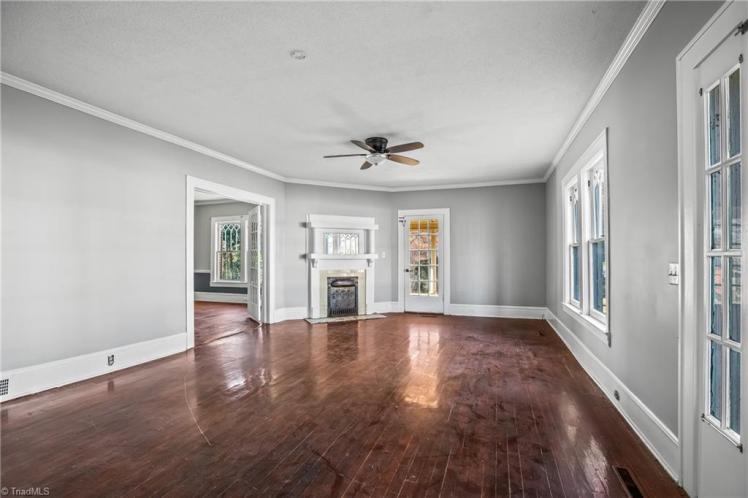
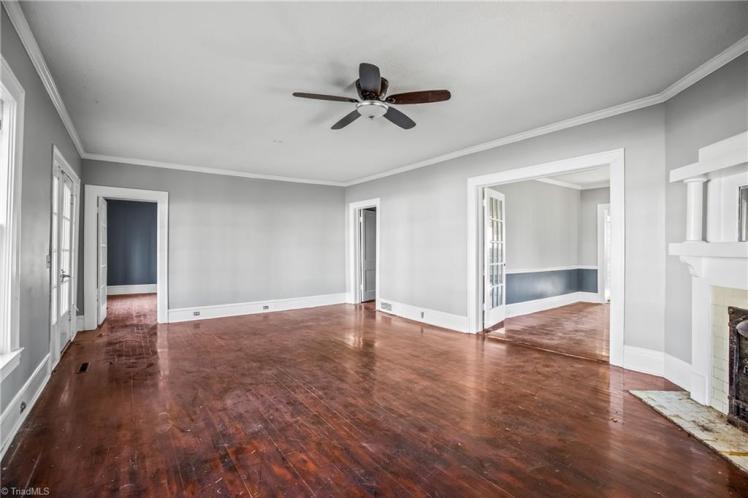
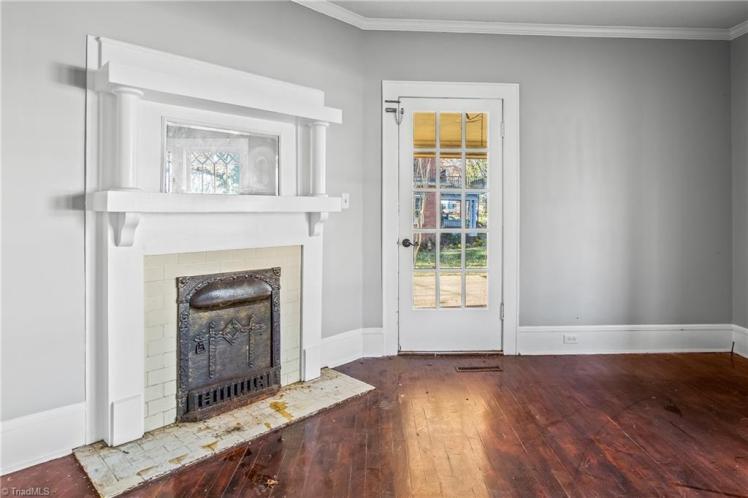


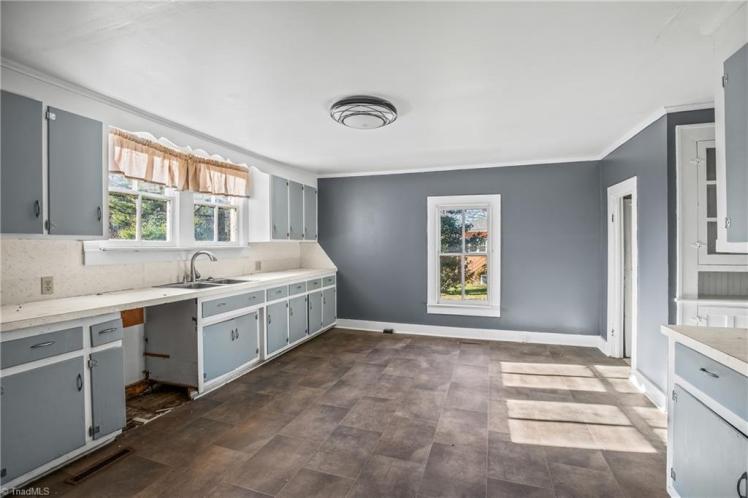


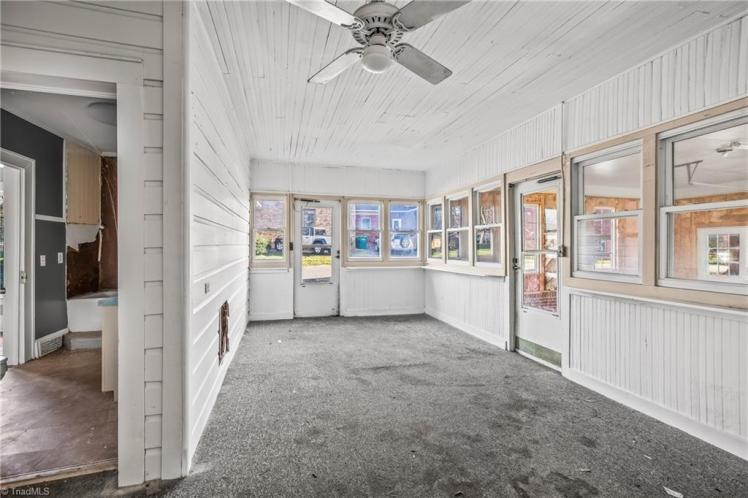
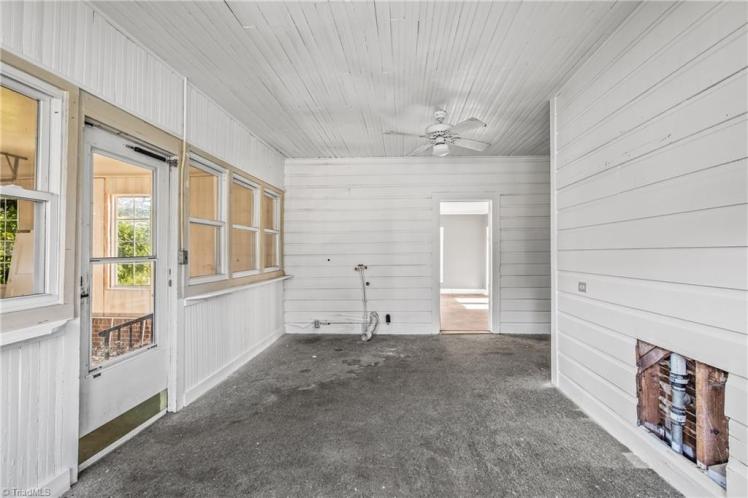


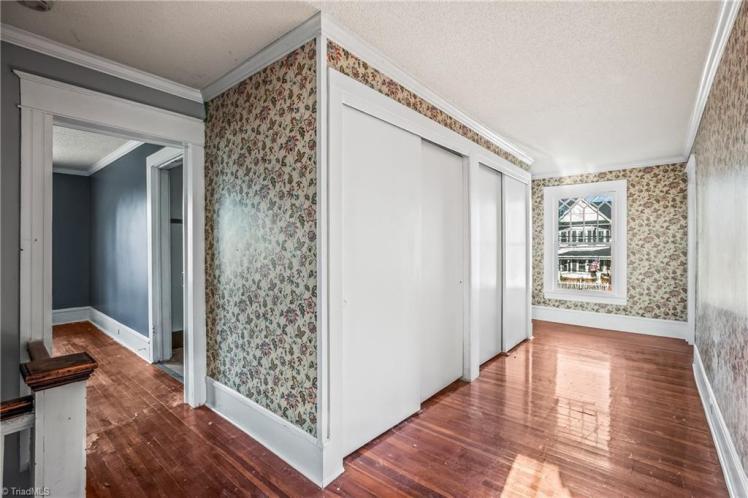
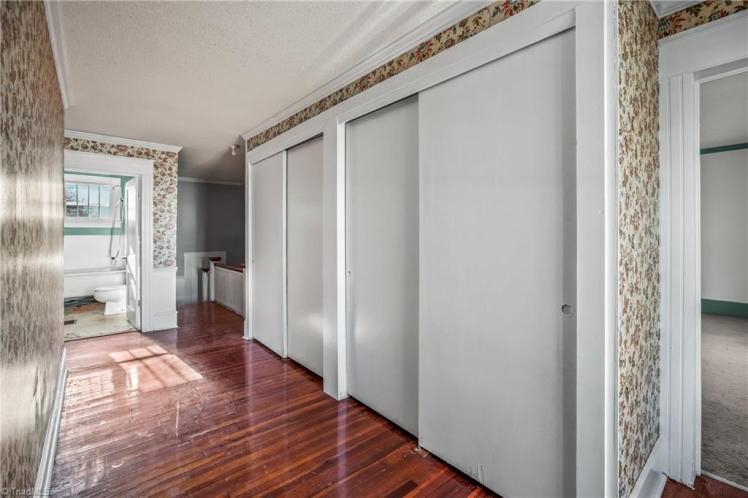
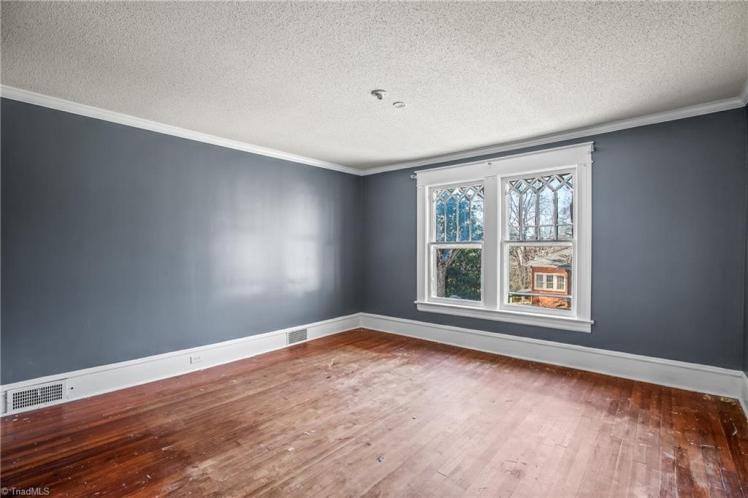

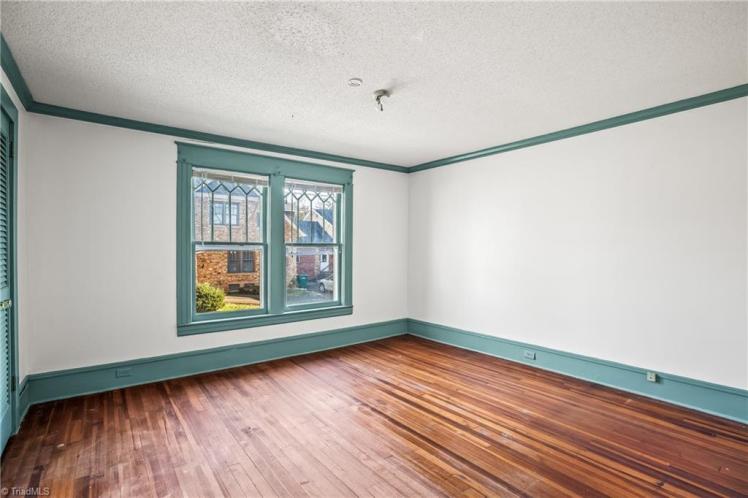
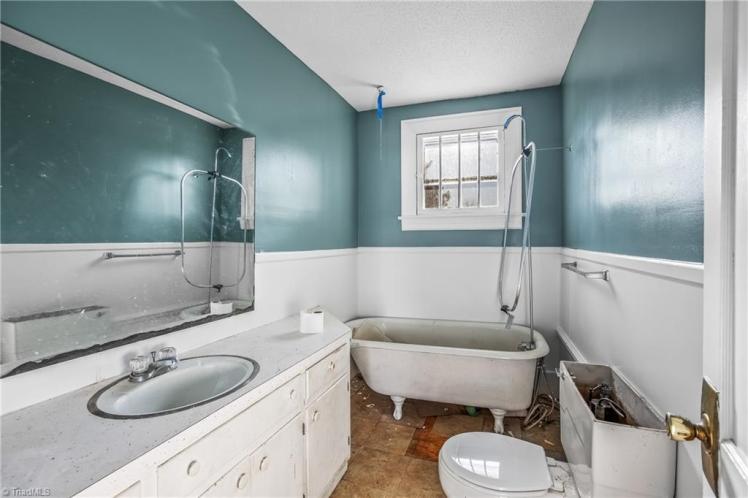


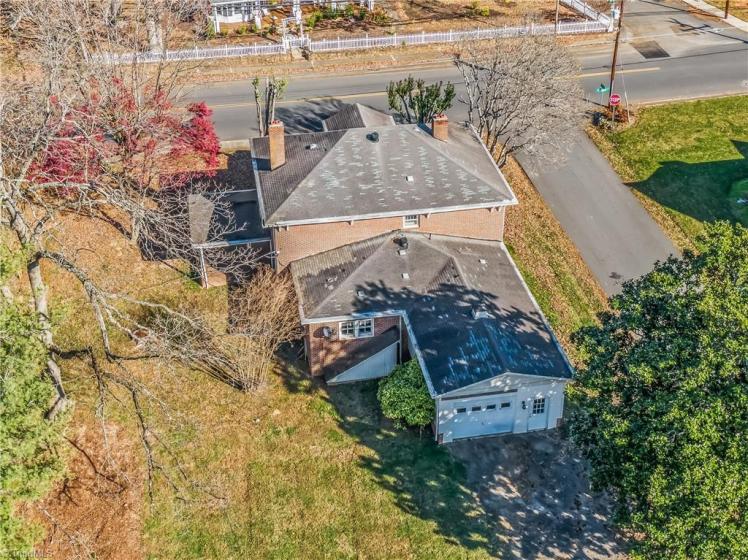

400 W. Main Street, Pilot Mountain, Surry County
- Sold for $208,000 on January 23, 2025 (listed at $222,999)
- 5 bedrooms, 2 bathrooms, 3,075 square feet (per county), 0.35 acre
- Price/square foot: $68
- Built in 1900
- Listed December 6, 2024
- Last sale: $120,000, February 2010
- Neighborhood: Downtown
- Note: The low price reflects the sad condition of the floors, kitchen and bathrooms
- The history of the house is somewhat uncertain because the oldest deeds available online are hand-written and largely illegible and other sources aren’t clear. It does appear, though, that the Stephens-Boyles family owned the property from before the house was built until 2010. While ownership is relatively clear, dates and identities of who actually lived in the house aren’t well documented.
- John Francis Stephens (1834-1909) and Lucinda Boyles Stephens (1844-1925) were earliest known owners. John, also known as Jack and Jackson, was a pioneer of the Pilot Mountain community, “having built the house his family now occupies long before any town or railroad was ever thought of being built here,” The Charlotte Observer said upon his death in 1909. That reference is probably not to this house but to the 1890 house at 308 N. Main known as the John Francis Stephens House (the State Historic Preservation Office doesn’t identify this house with a name).
- At some point — the date on the deed is illegible — John and Lucinda sold this property to their daughter Flora Etta Stephens Boyles (1869-1952) and her husband, William Wade Boyles (1859-1940). They, too, may have owned the property before the house was built; it’s not clear when they owned the property or whether they ever lived in the house. Various records place them in Surry County when they married in 1888, High Point in 1890, Greensboro in 1892, High Point again in 1900 and Roanoke by 1920, where they lived for the rest of their lives.
- In another illegible deed, Flora Etta and W.W. passed ownership to Flora Etta’s nephew Walter Franklin Boyles (1882-1965) and Mary Frances Venable Boyles (1889-1984). Walter was a longtime storekeeper in Pilot Mountain. Although they owned the house, Walter and Mary Frances may not have lived in it, either. There’s a house in Pilot Mountain called the W.W. Boyles House, but it doesn’t appear to be this one.
- (Irrelevant but something you don’t see very often from the 1880s: According to ancestry.com, Walter’s parents had several children together, but there’s no record that they ever married. The father eventually married someone else. Walter and his mother’s other children took her name.)
- In 1974, Mary Frances and their eight children agreed to pass ownership to daughter Johnnie Mae Boyles (1923-2008). Johnnie worked for the Social Security Administration and served as financial secretary of First Baptist Church. She was the last surviving sibling when she died in 2008. Her estate sold the house in 2010 to an LLC associated with the current owner.
1406emain


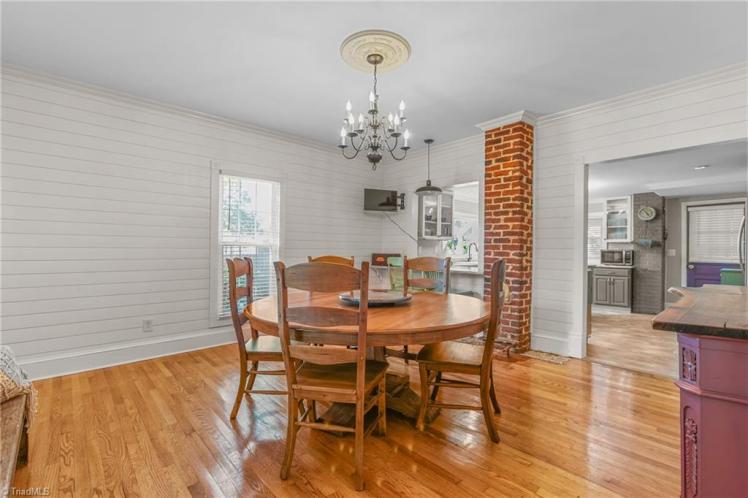
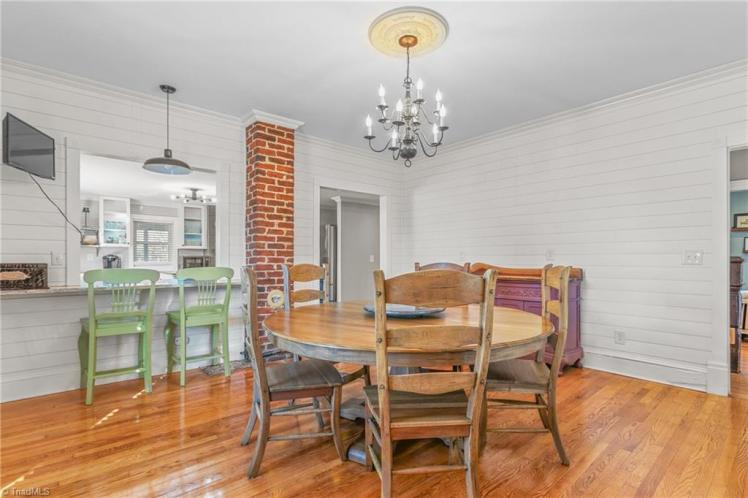

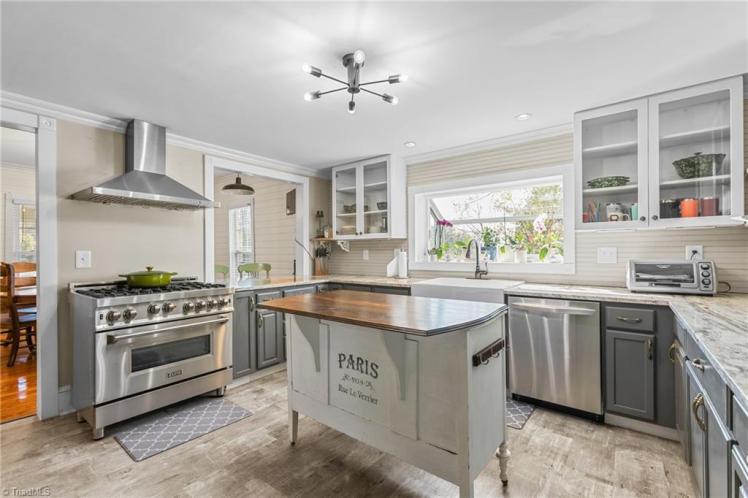


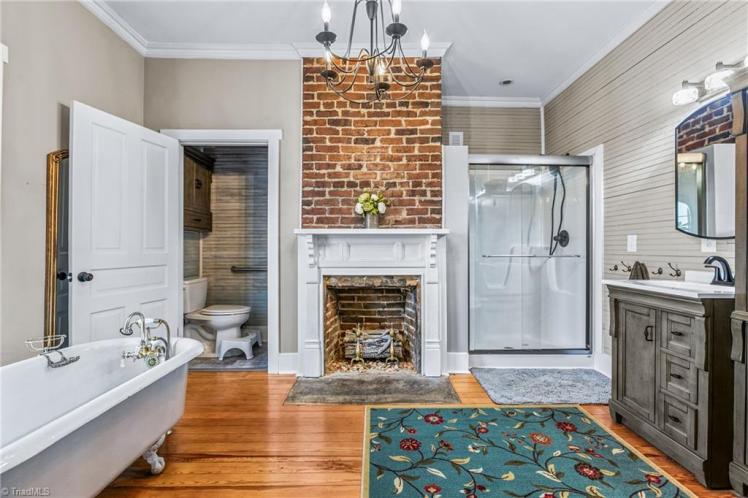


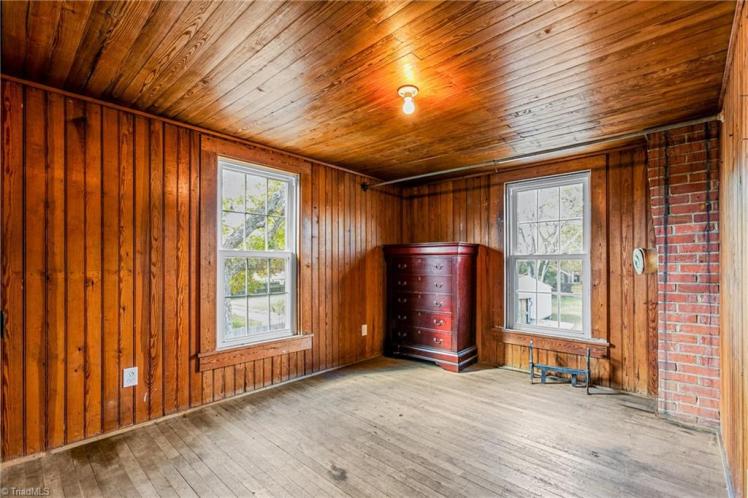


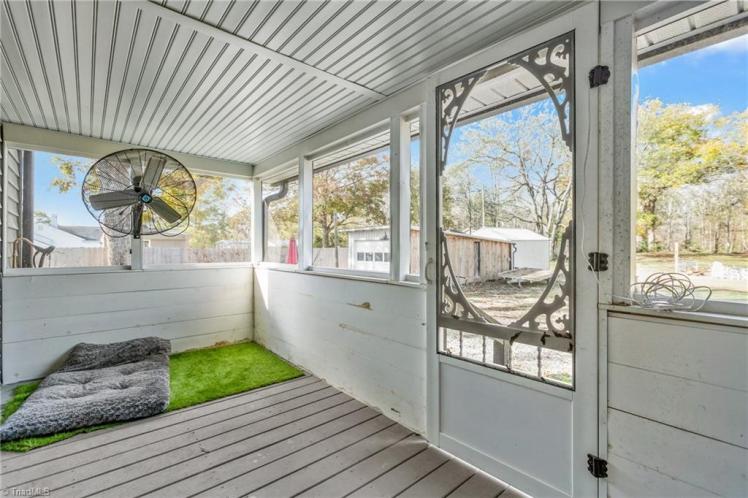


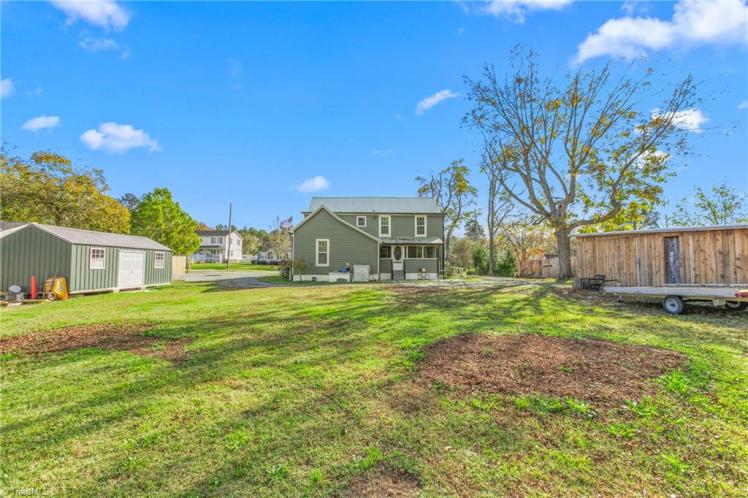


1406 E. Main Street, Swepsonville, Alamance County
- Sold for $440,000 on January 22, 2025 (listed at $475,000)
- 4 bedrooms, 2 1/2 bathrooms, 2,584 square feet, 1.95 acres
- Price/square foot: $170
- Built in 1910
- Listed November 12, 2024
- Last sale: $65,000, February 2016
- Note: Little or nothing is known of the earliest owners. In 1905, Johnson Baker and M.A. Baker sold the property to a company called Long & Hurdle. By 1914, J.M. Cranford or Crawford and Mary J. Cranford or Crawford (hand-written and nearly illegible deed) owned the house. They sold it that year to brothers Charles Maynard Horner (1875-1951) and Thomas Jefferson Horner (1889-1939) and Needham Walsie Sparrow (1886-1966).
- Charles Horner had operated a general merchandise store in Burlington and was a founder of the Pearson Remedy Company (its two most popular products were Baseball Liniment and Indian Blood Purifier). He also served on the Burlington school board for 15 years. His Burlington home is on the National Register.
- Thomas Horner worked for Pearson as well until leaving to spend 20 years with the state Department of Revenue. Needham Sparrow operated a grocery store in Elon.
- In 1918 they sold the house James Polk Teer (1844-1930) and Mary Jane Clendennin Teer (1842-1924). James may have been related to Needham Sparrow’s wife, Fannie Teer Sparrow (1885-1970). James was operated a store in Swepsonville for 50 years.
- The Teers’ children sold the house in 1938 to Rev. John Andrew Tharpe (1886-1969) and Anna Brown Tharpe (1893-1965). The reverend was a Methodist minister. In 1948 the Tharpes sold house to Thomas N. Thompson (1907-1993) and Ruth C. Thompson (1908-2000).
- The Thompsons sold the house in 1948 to Harry William Brady (1906-1968) and Mildred Marshall Brady (d. 1998). It remained in their family for 68 years. Harry was a construction superintendent. After his death, Mildred continued to live in the house with their son Harry Jr. (d. 2015) until her death. Harry Jr.’s heirs sold the house to the current owners in 2016.
1010wmcgee
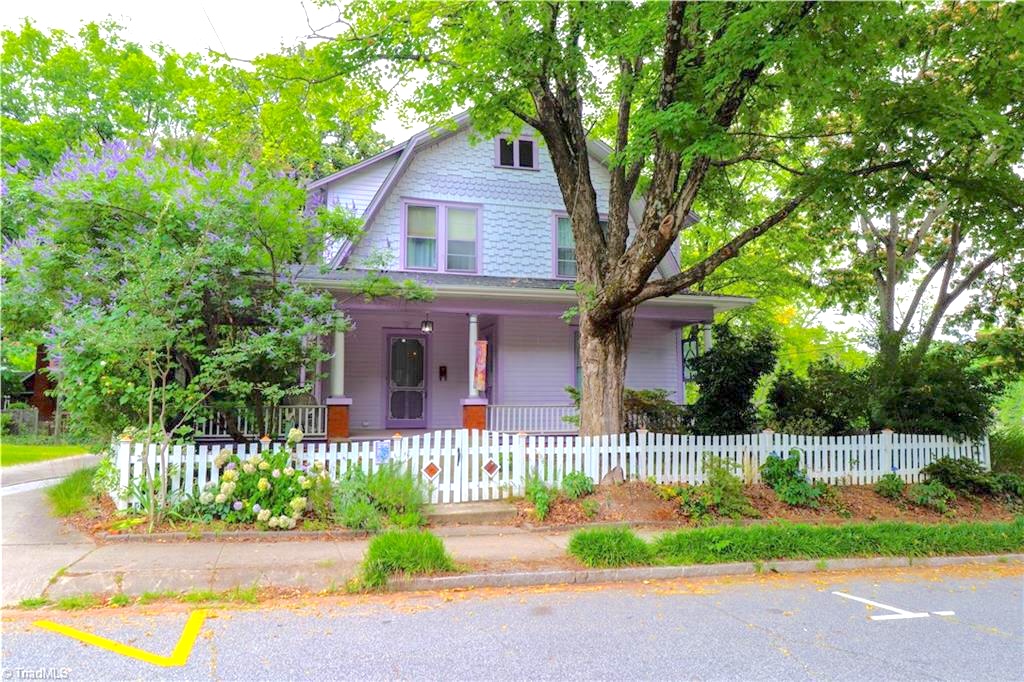
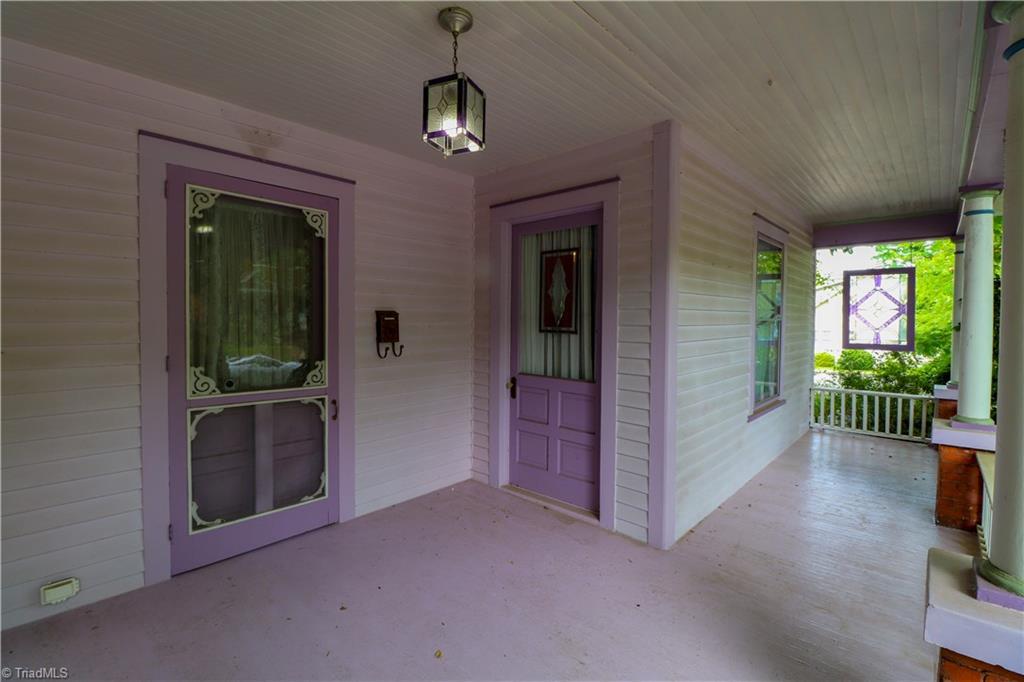

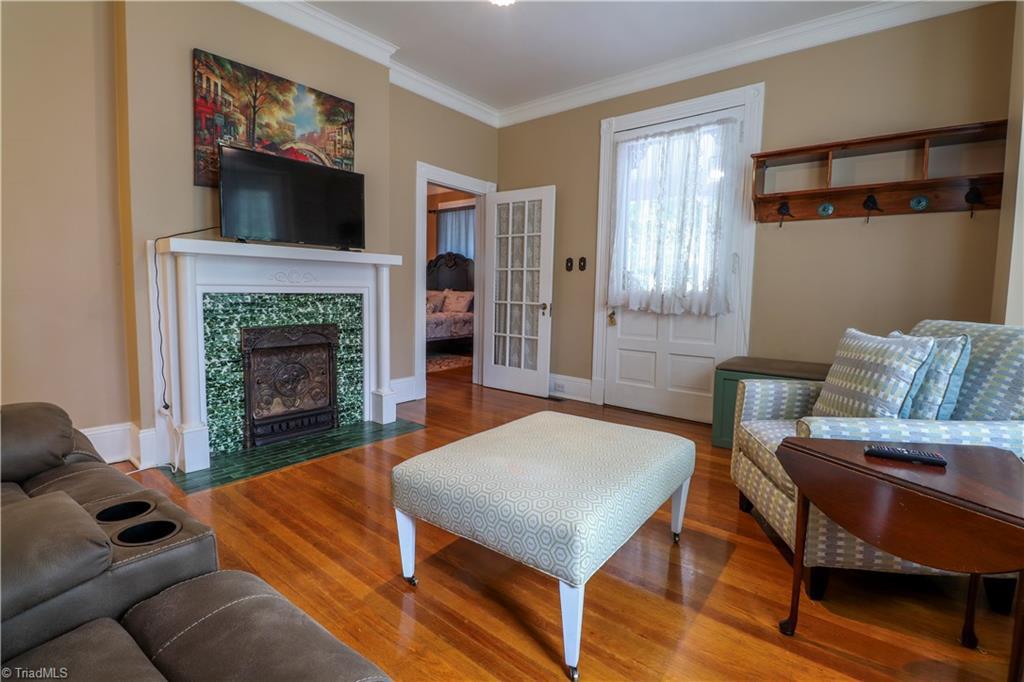

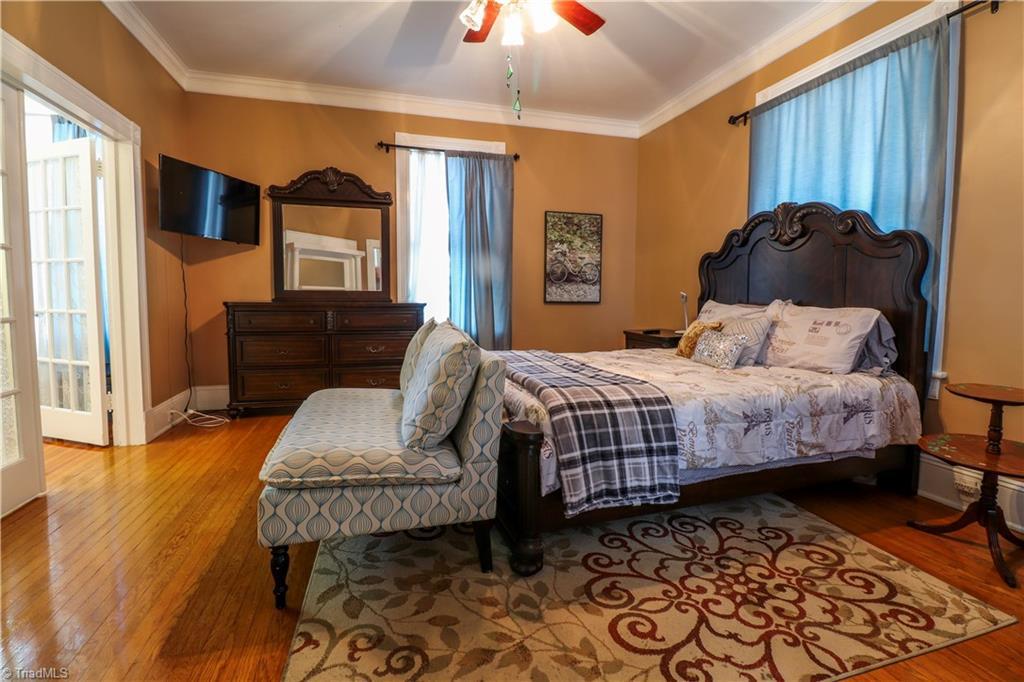


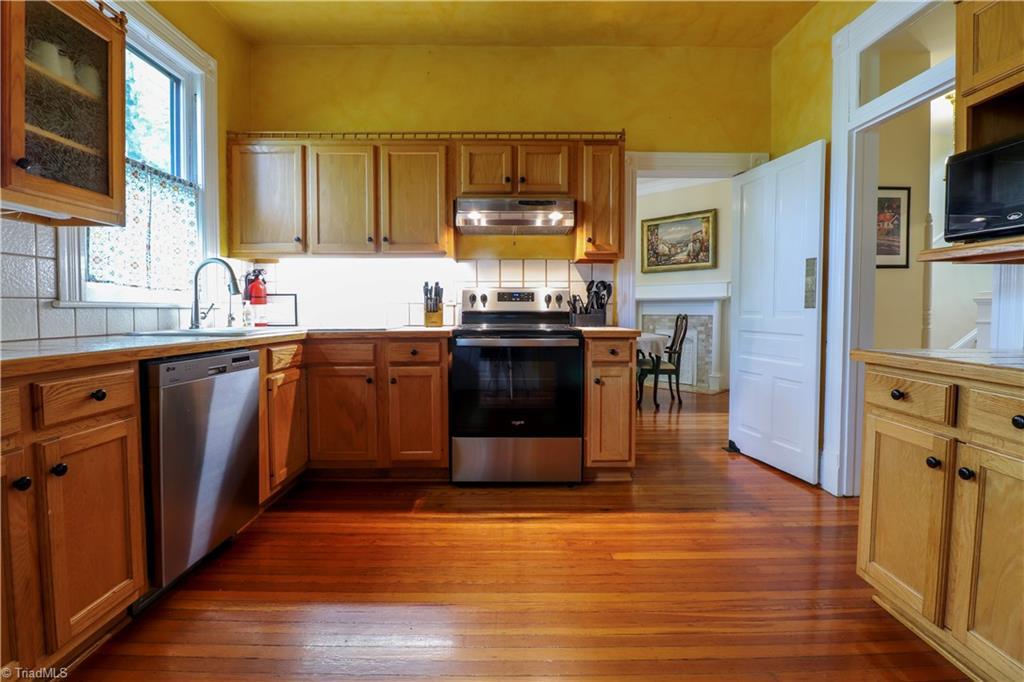





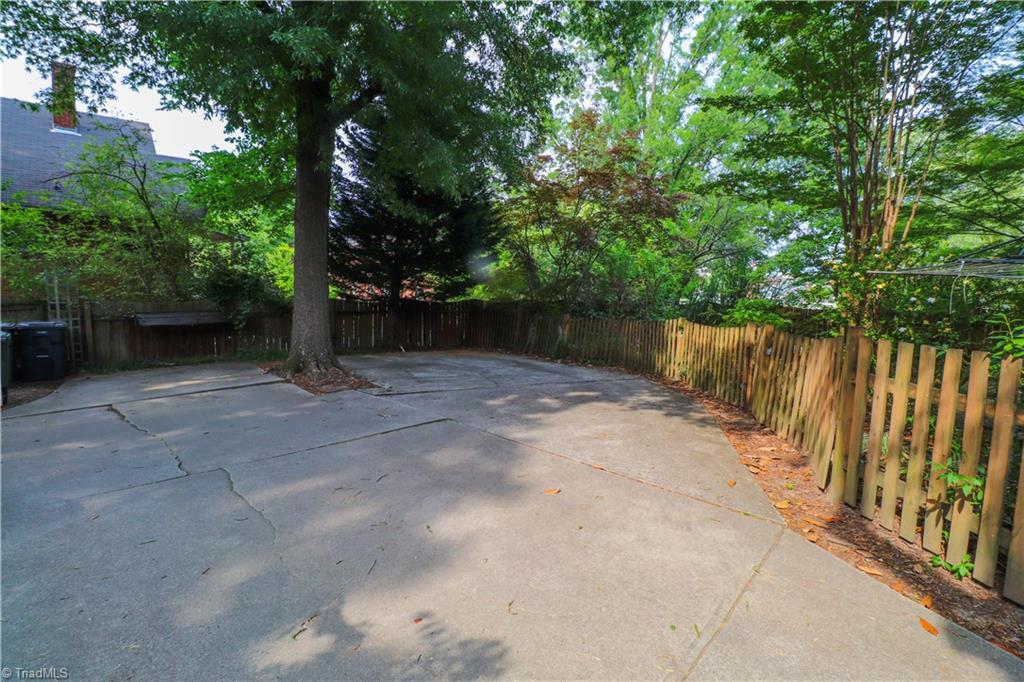
1010 W. McGee Street, Greensboro
The Everett Byerly House
- Sold for $485,000 on January 13, 2025 (listed at $490,000)
- 5 bedrooms, 2 bathrooms, 2,325 square feet
- Price/square foot: $209
- Built in 1911
- Listed June 17, 2024
- Last sales: $375,000 on July 1, 2021; $108,000, June 1993
- Neighborhood: College Hill Historic District (local and NR)
- Note: The house is next door to Greensboro College. The current owner has used it as a short-term rental.
- The house has had only four owners in 113 years. Everett Byerly (1883-1962) and Alice Fritz Byerly (1884-1982) bought the property in 1909, and it was in their family for 76 years. He was a clerk for the Railway Mail Service. Their children sold the house in 1985.
- One of their sons, Everett Grant Byerly, graduated from Durham High School while attending the Duke University School of Music. He later was a member of the big bands of Les Brown, Johnny Long and others.
- He also served as an officer of the Buccaneer Club of Greensboro, which the Greensboro Daily News described in the 1930s as “for several years a leading contributor to social life in Greensboro’s younger set.” Organized in 1931 by male graduates of Greensboro High School (now Grimsley), it lasted until its members went off to war in the ’40s.
2685williams

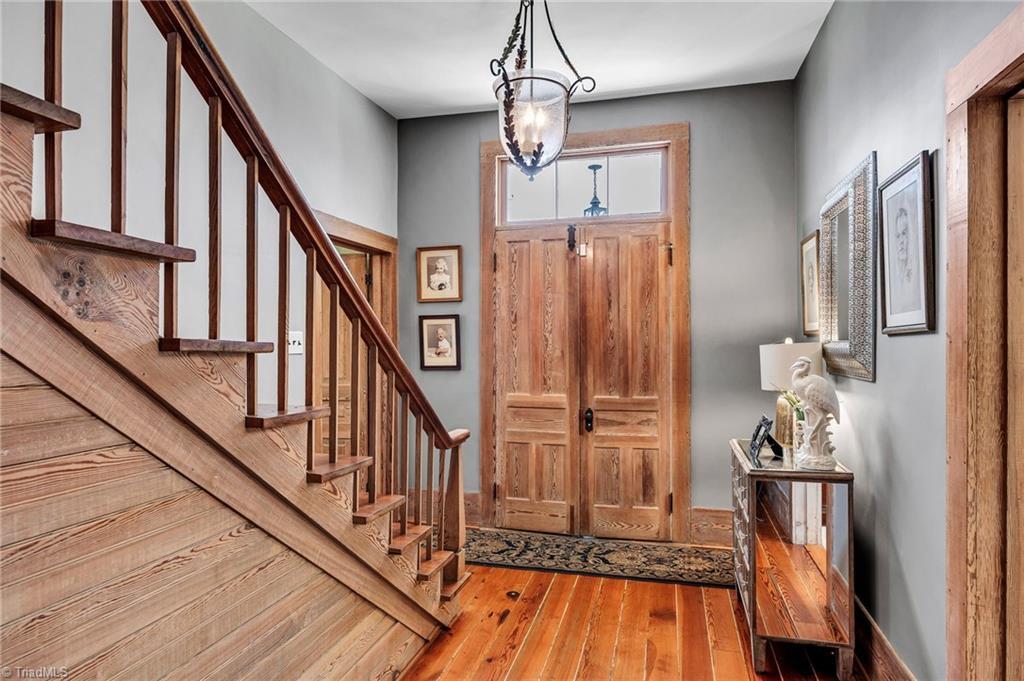


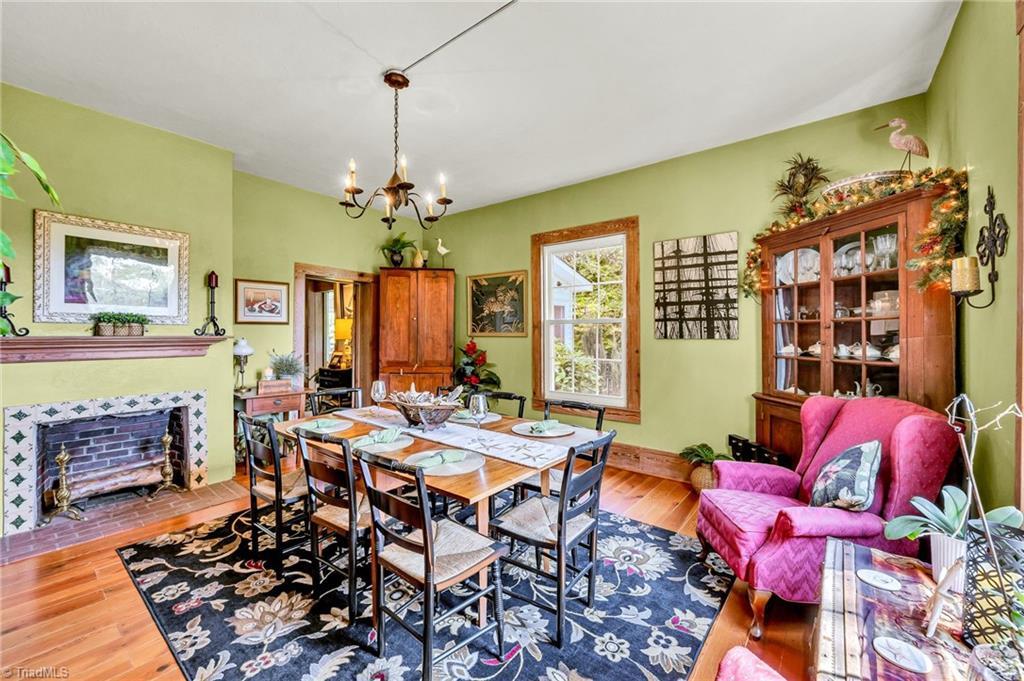


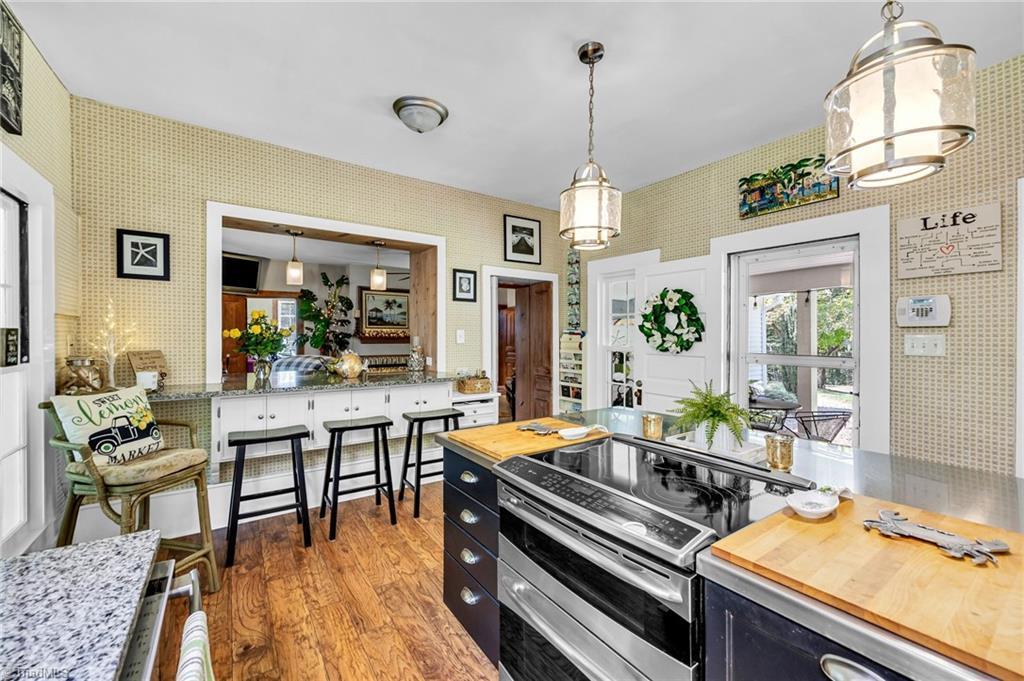
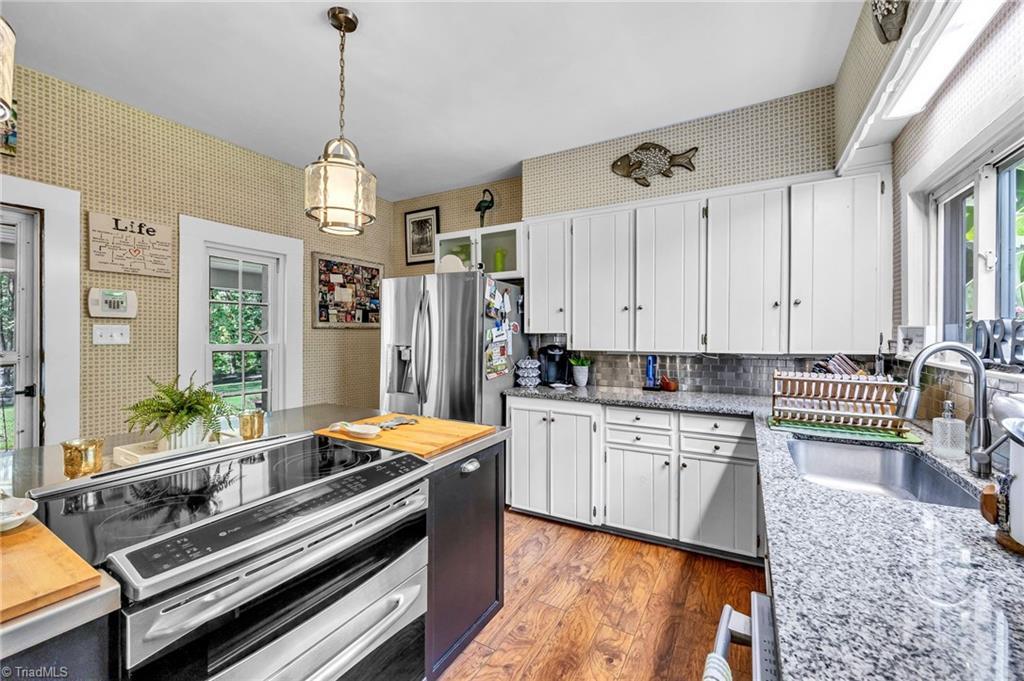


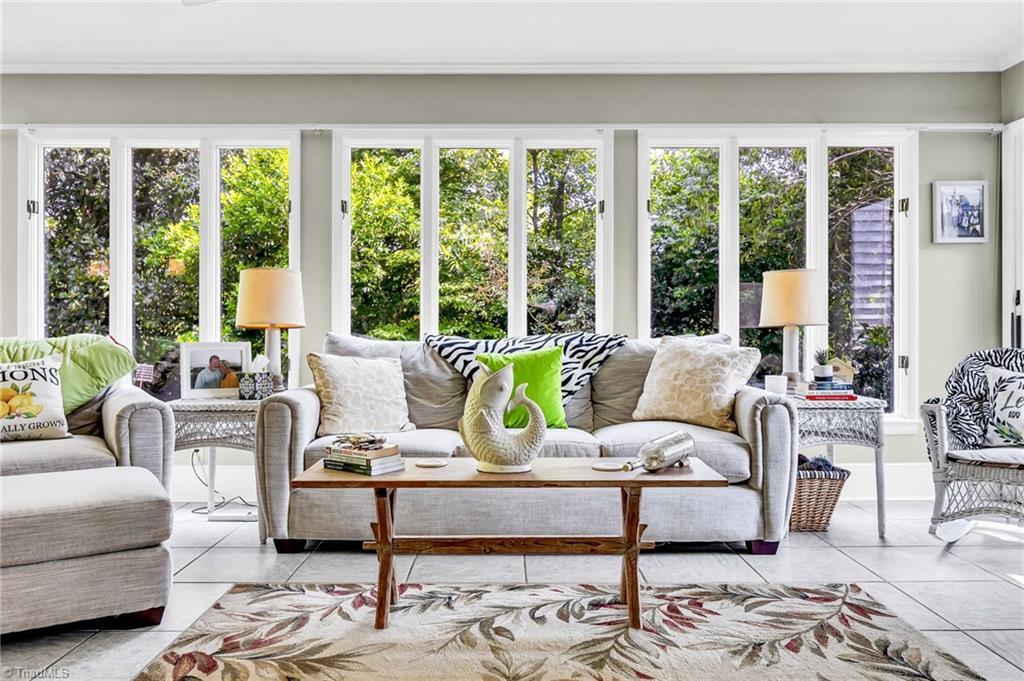
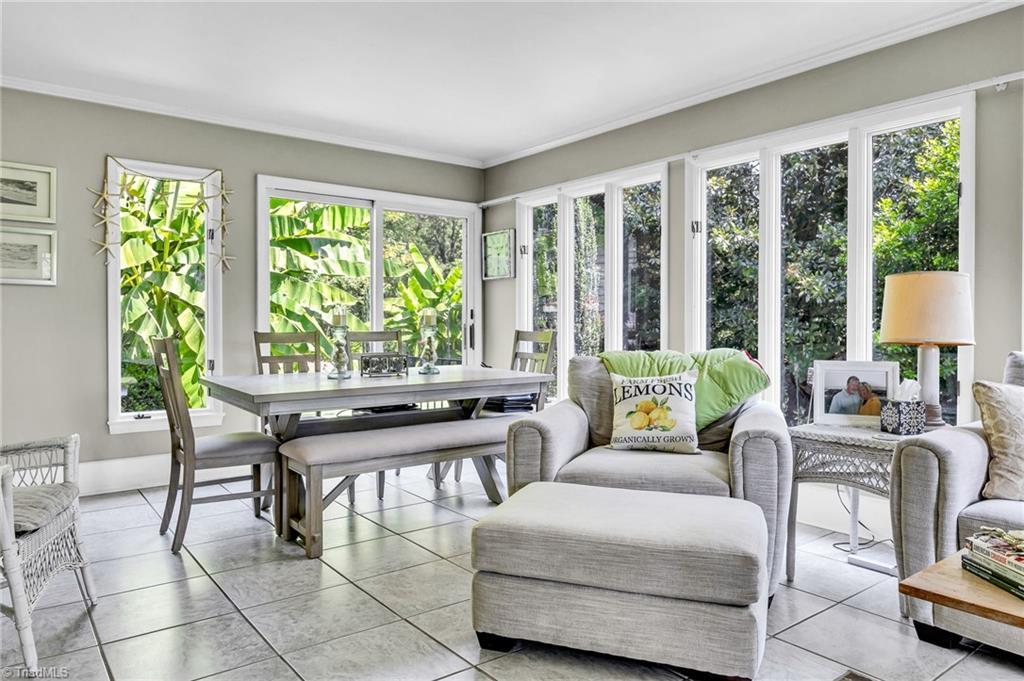


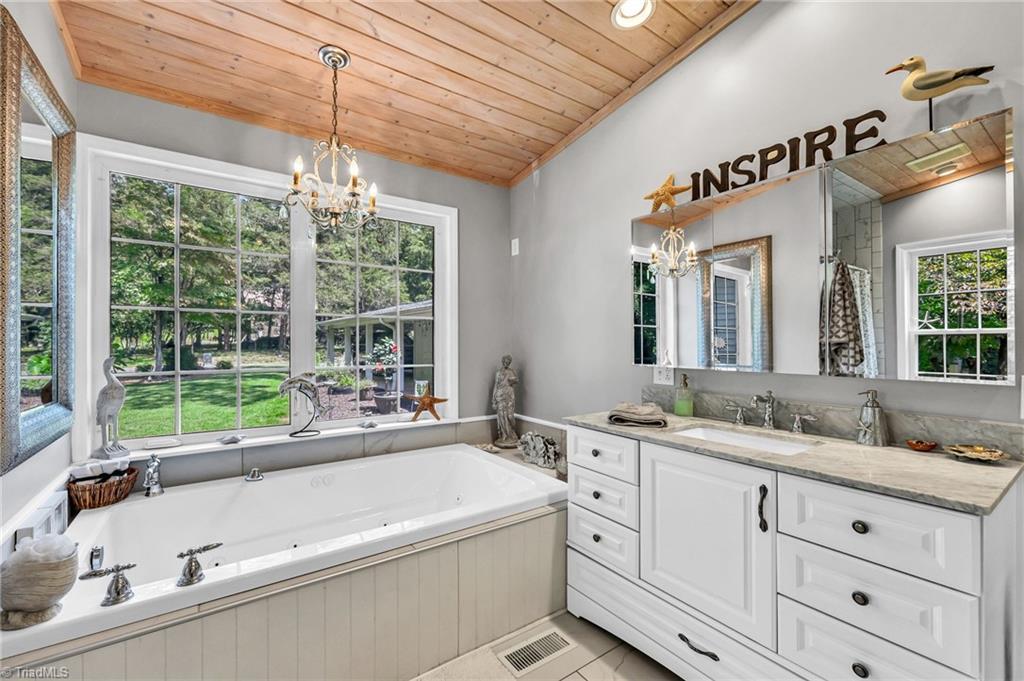
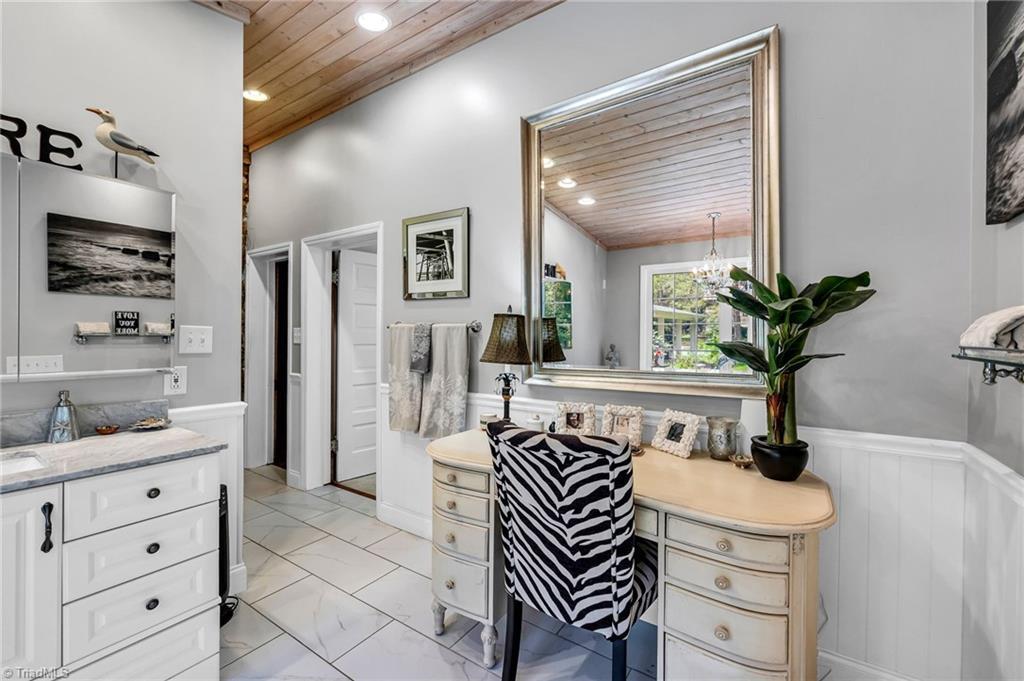


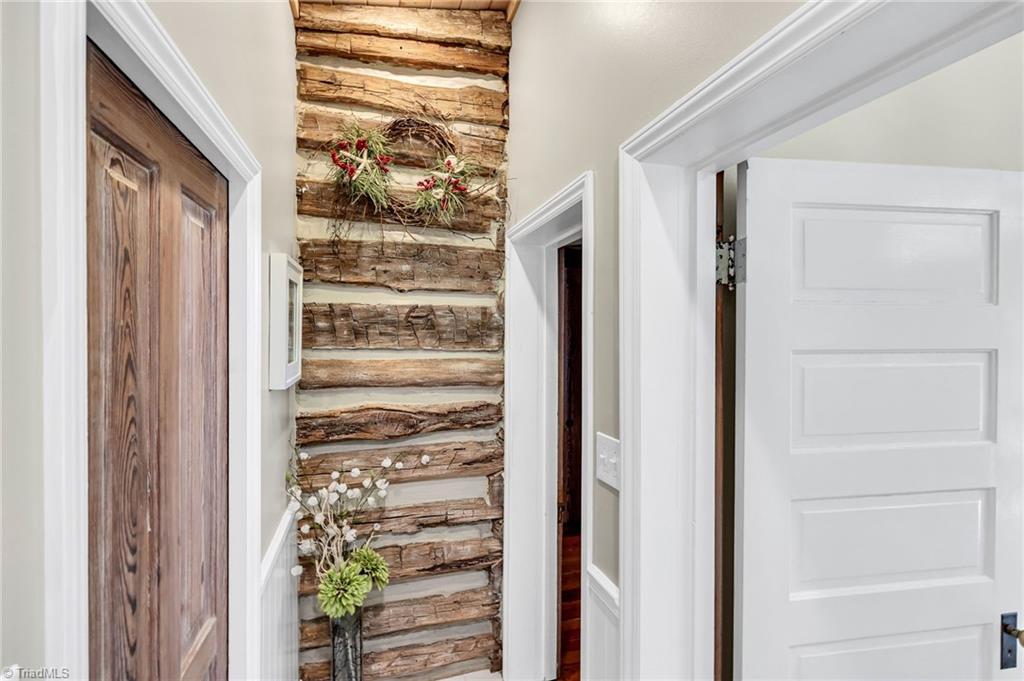
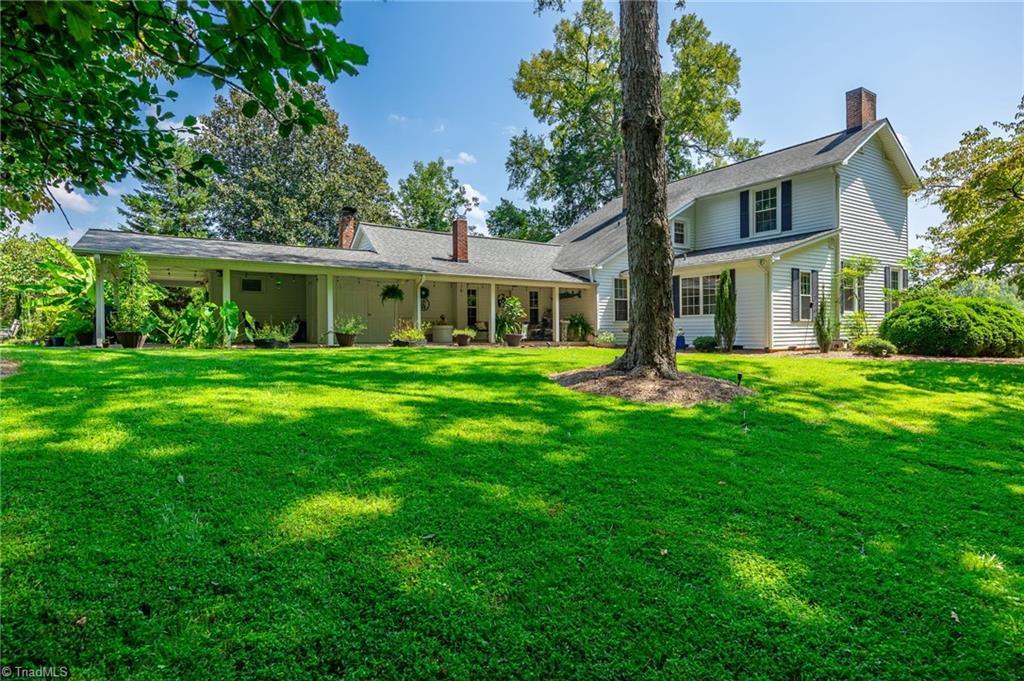
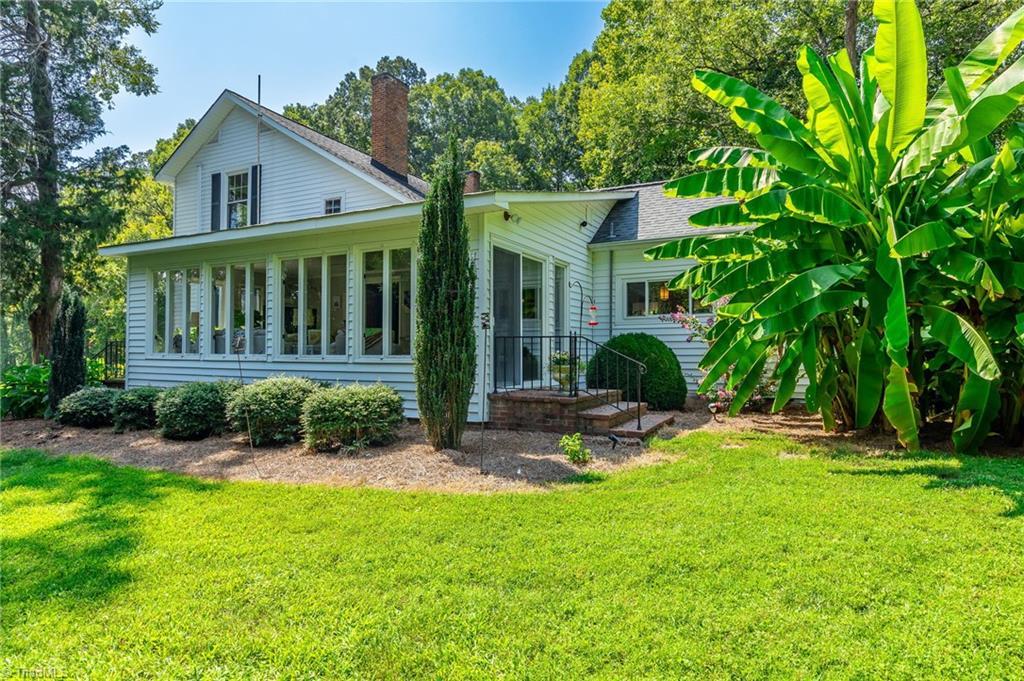
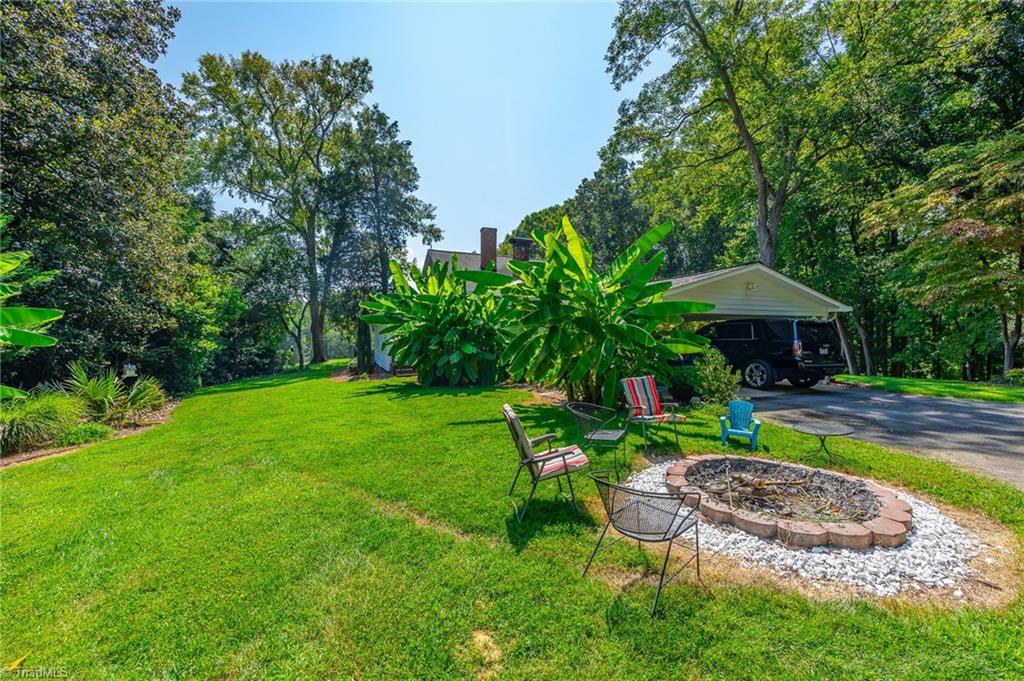
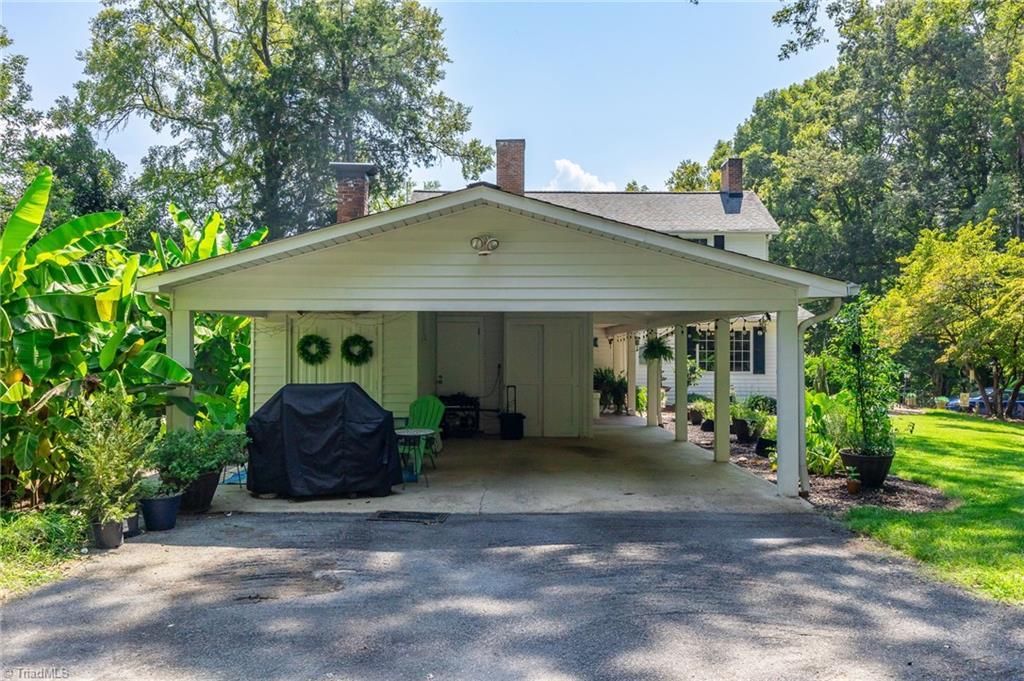
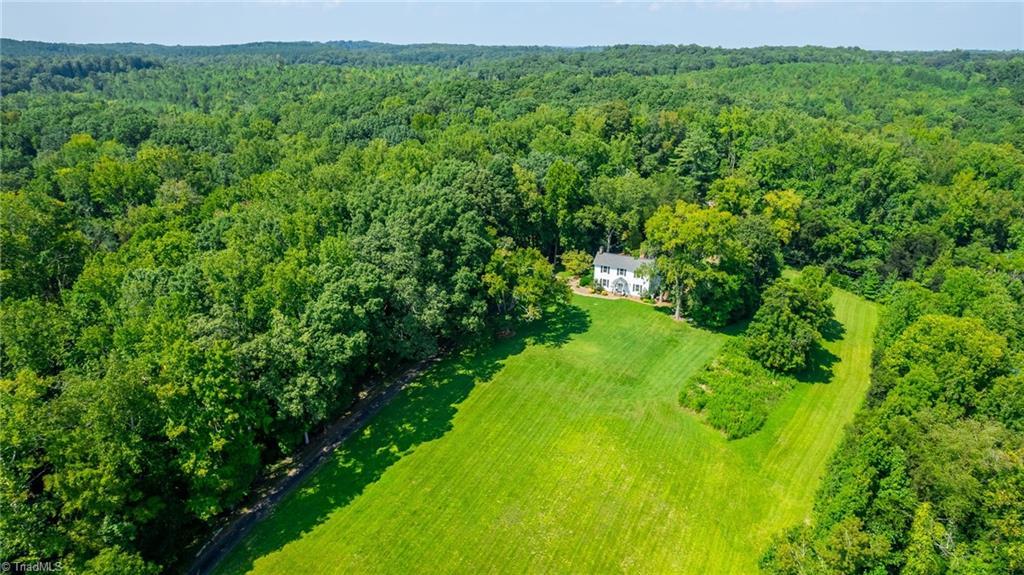
2685 Williams Road, Lewisville, Forsyth County
- Sold for $650,000 on January 10, 2025 (originally $749,900)
- 3 bedrooms, 2 bathrooms, 3,039 square feet, 19.9 acres
- Price/square foot: $214
- Built in 1903
- Listed July 11, 2021
- Last sale: $100,000, October 2012
- Listing: The house was originally built as a log cabin.
- Most of the properties in the immediate area, including this one, are owned by members of the Williams family.
- The colorful Nicholas Glen Williams Sr. (1865-1913) may have been the home’s original owner. Deeds indicate he owned the land, but he could have passed the property on to one of his children before the house was built. Glen was a prominent Yadkin County farmer whose 1,500 acres apparently crossed the river into this area of Forsyth County. He raised corn and put it to use himself. He had been a fourth-generation distiller — all named Glen Williams — when North Carolina enacted prohibition in 1903. The Old Nick Williams Whiskey brand was nationally known. Glenn had been active in Democratic politics, but walked away from politics after the law’s passage. He subsequently was engaged in a long-running dispute with the state over some 15,000 gallons of Old Nick still left in his warehouse.
- The News & Observer, never one to miss an opportunity to rehash a scandal,* took the occasion of Glen’s passing in 1913 to recall a particularly unfortunate lapse of judgment. “Ten years ago Williams created a sensation in this city by assaulting District Attorney A.E. Holton with a horsewhip,” it reported in a dispatch from Winston-Salem. The attack actually occurred in 1902 when Glen accosted the prosecutor in a hardware store. It appears to have been provoked by a longstanding grudge that resulted from Holton making insulting remarks about Glen while arguing a lawsuit in court. “The gentlemen have not been on speaking terms for a number of years,” The Winston-Salem Journal reported at the time, discreetly noting that “the wounds inflicted by Mr. Williams caused quite a change in Mr. Holton’s appearance.” The newspaper gave no indication of why, after a matter of years, Glen had chosen that particular moment to assault Holton (perhaps he had been taste-testing a batch of Old Nick). Glen ended up being fined $400 in that case, which at the time was some serious money.
* I know because I was an editor at The N&O for several years. It was 75 years after these events, but the newsroom’s take-no-prisoners spirit was undiminished.
1123virginia

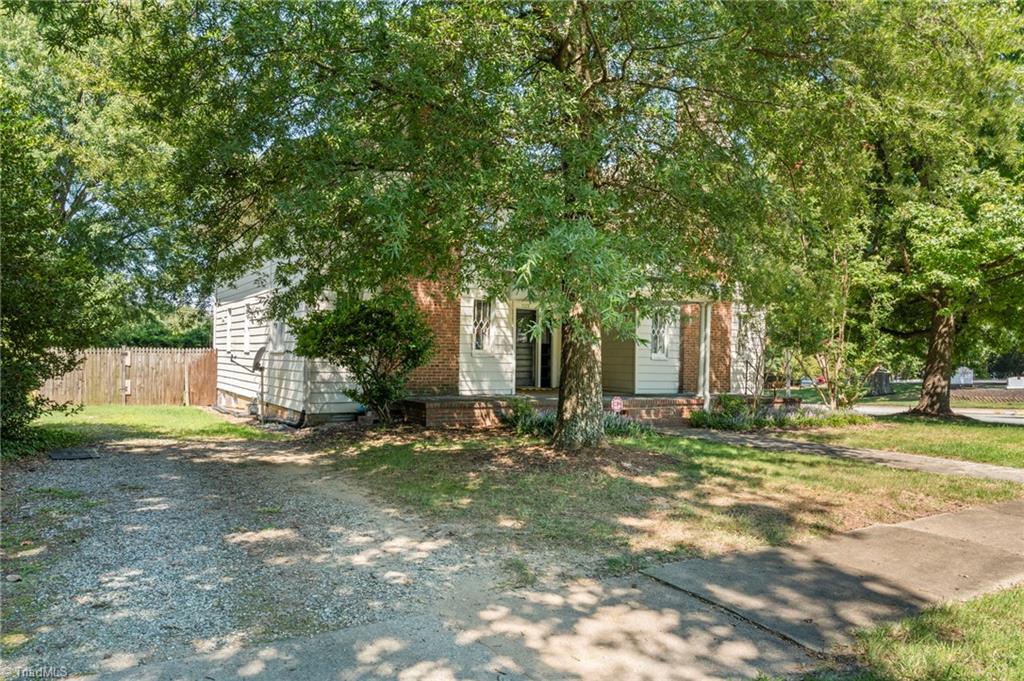
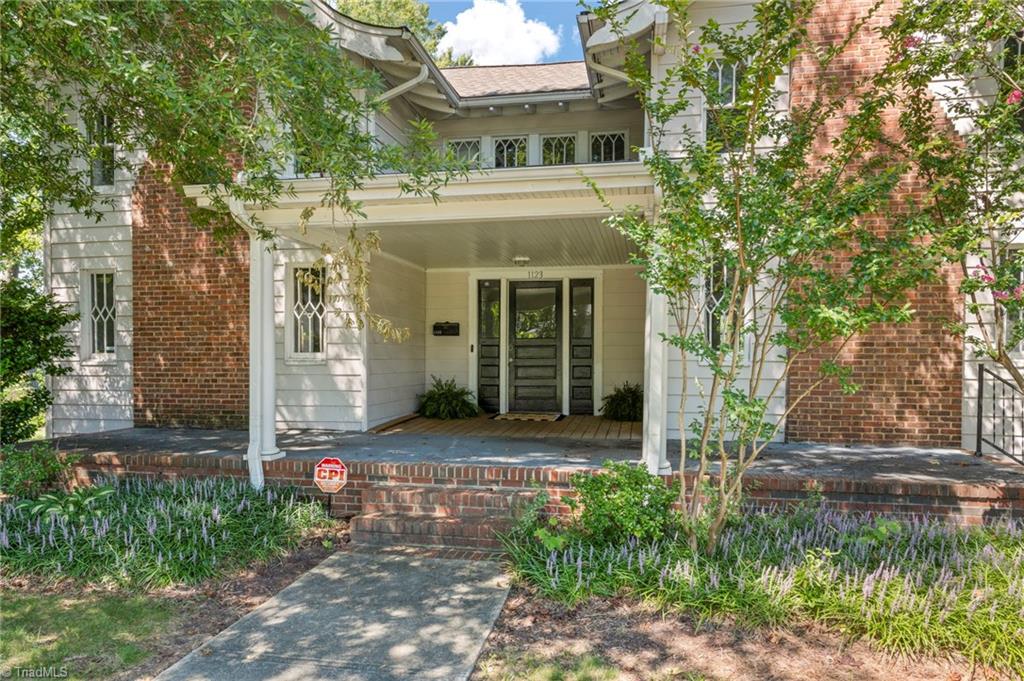
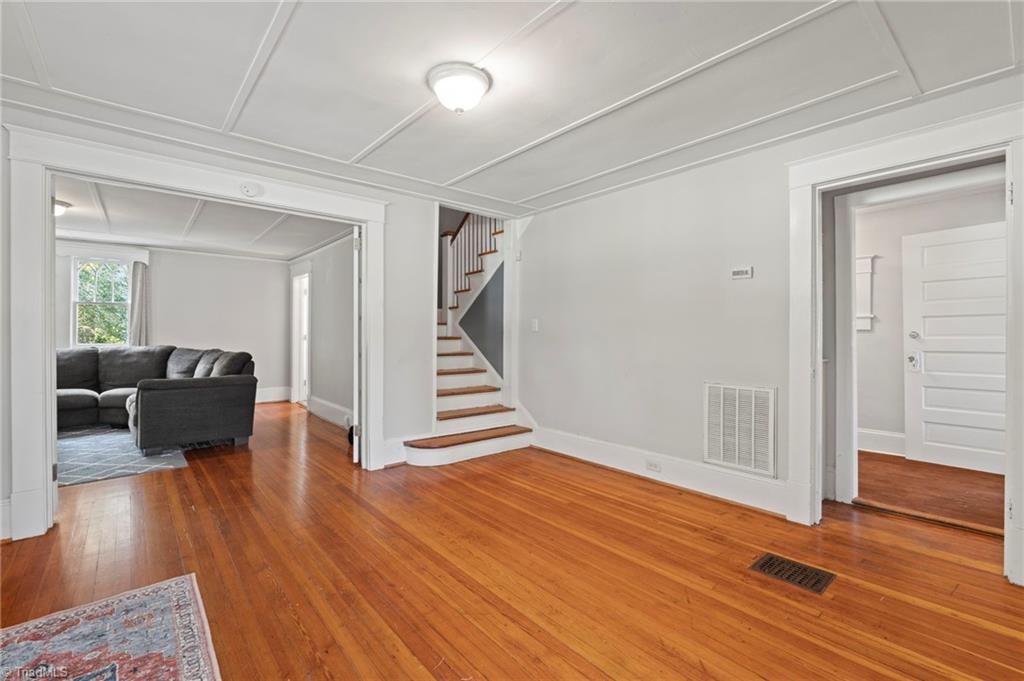


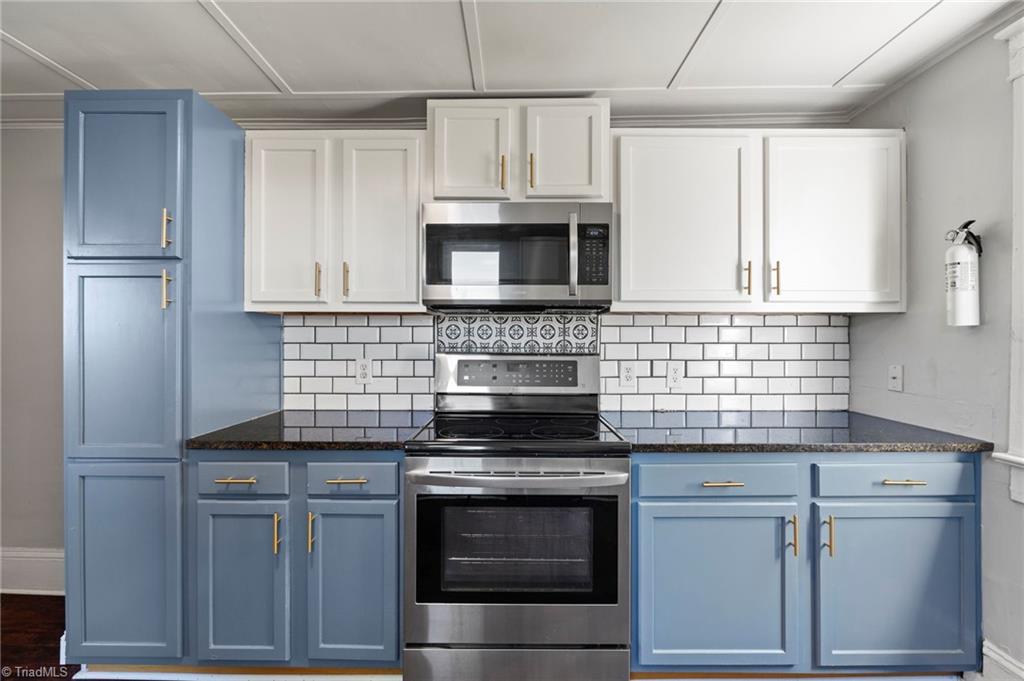

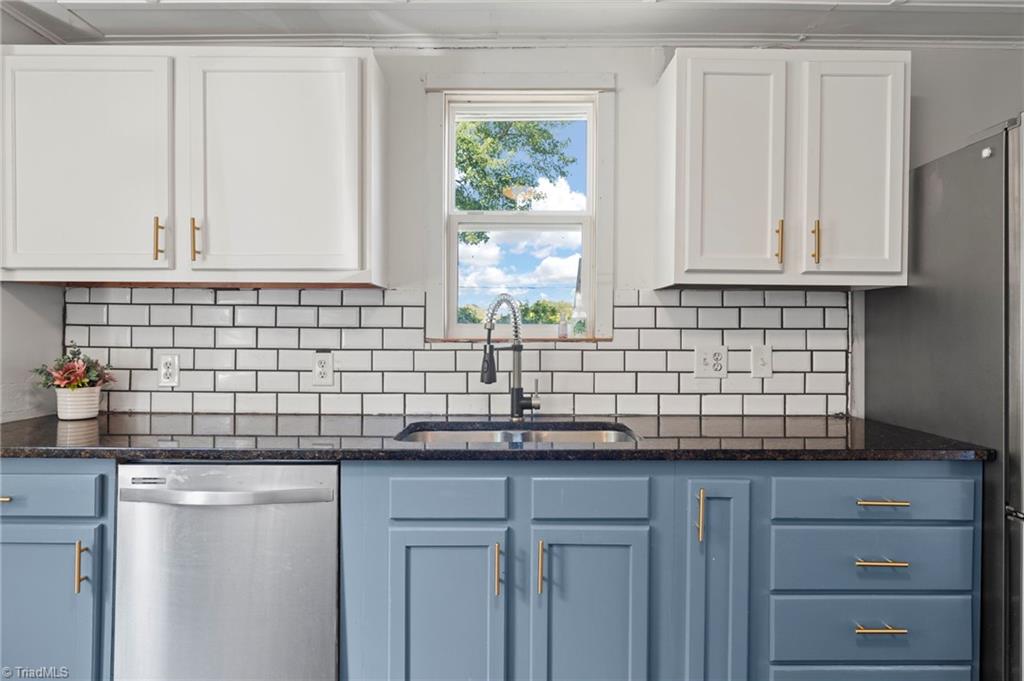


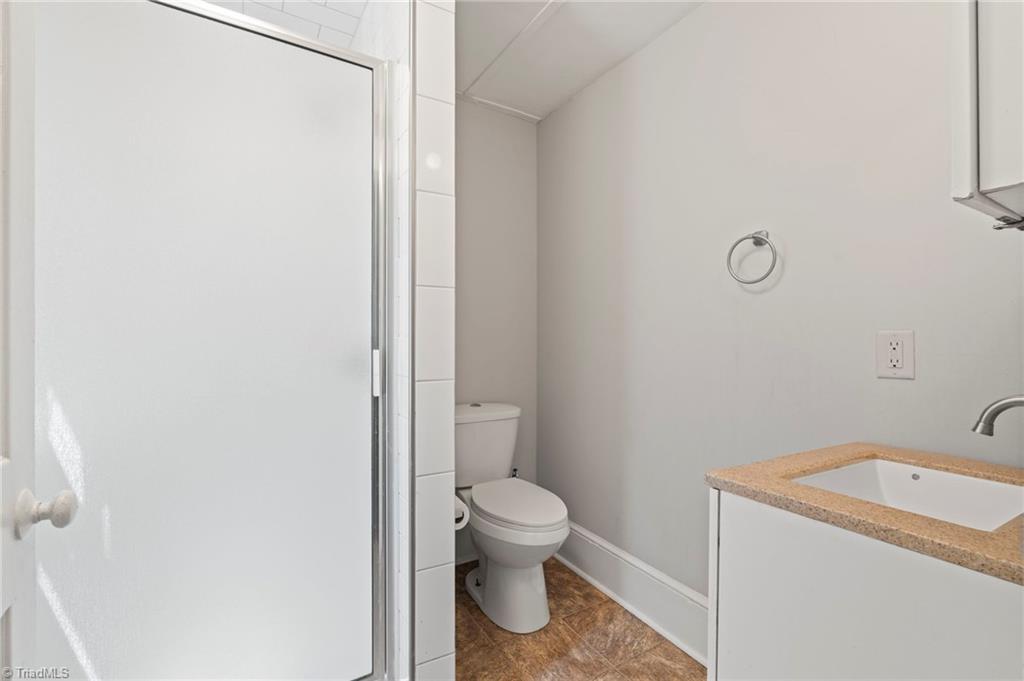


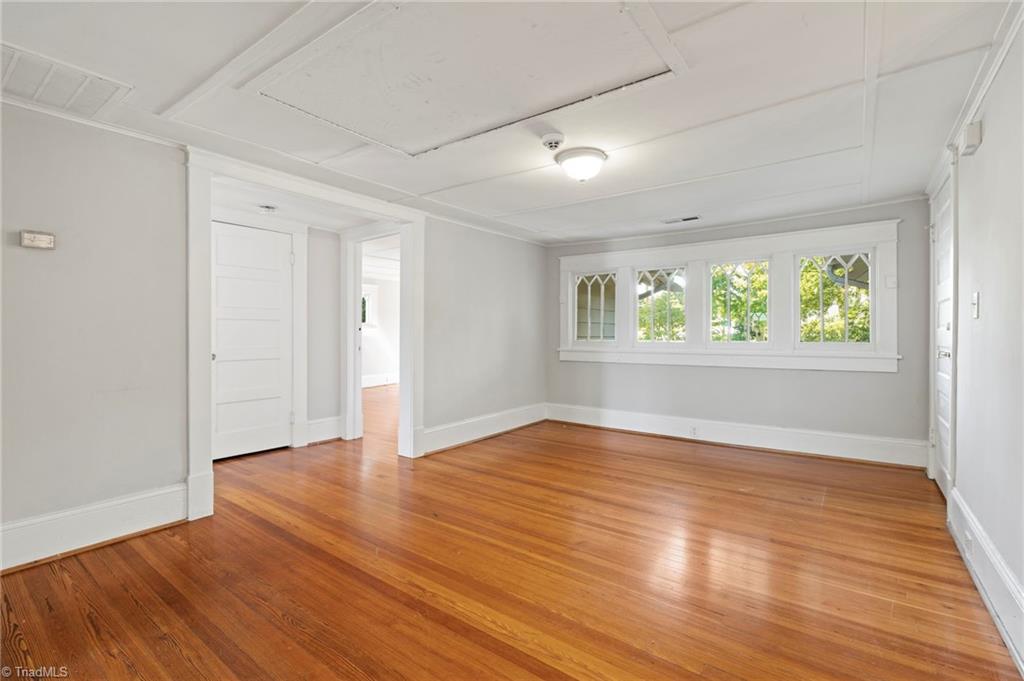
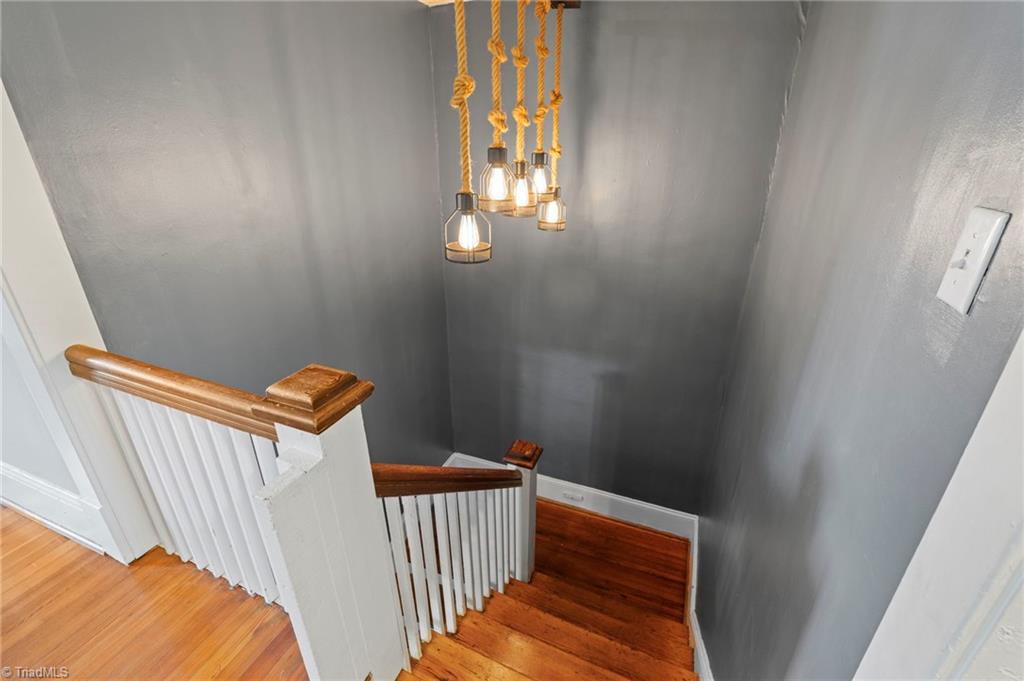
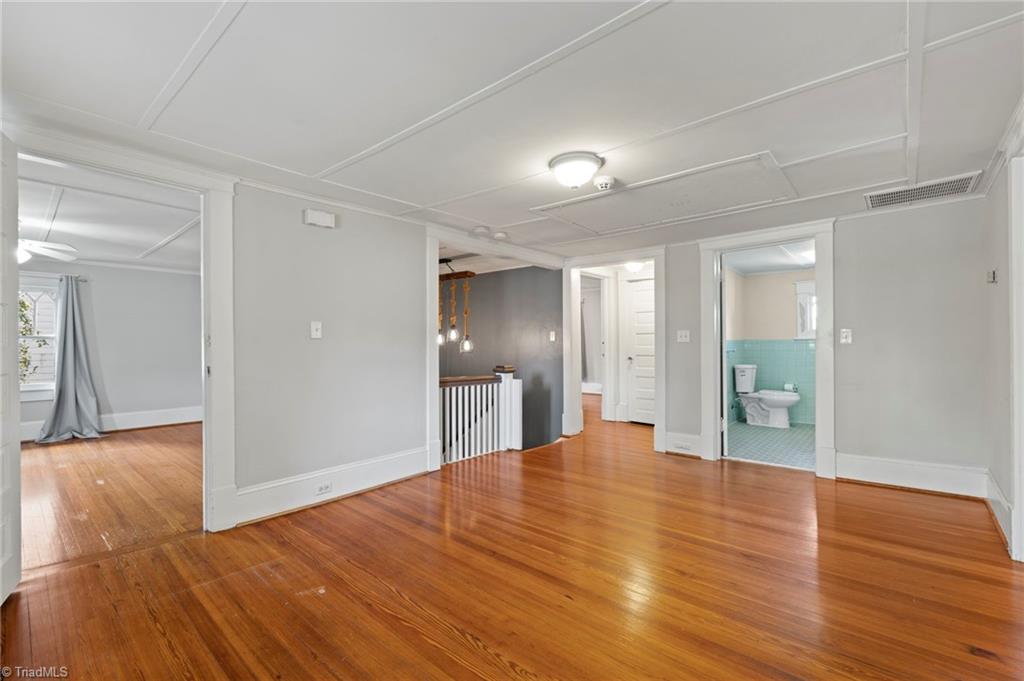


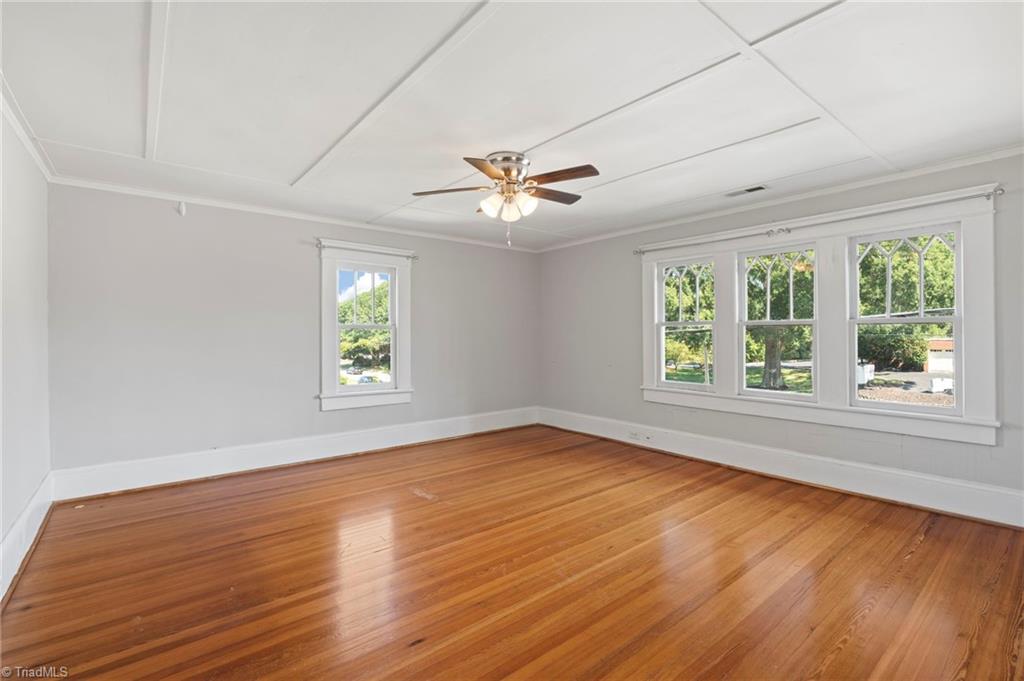
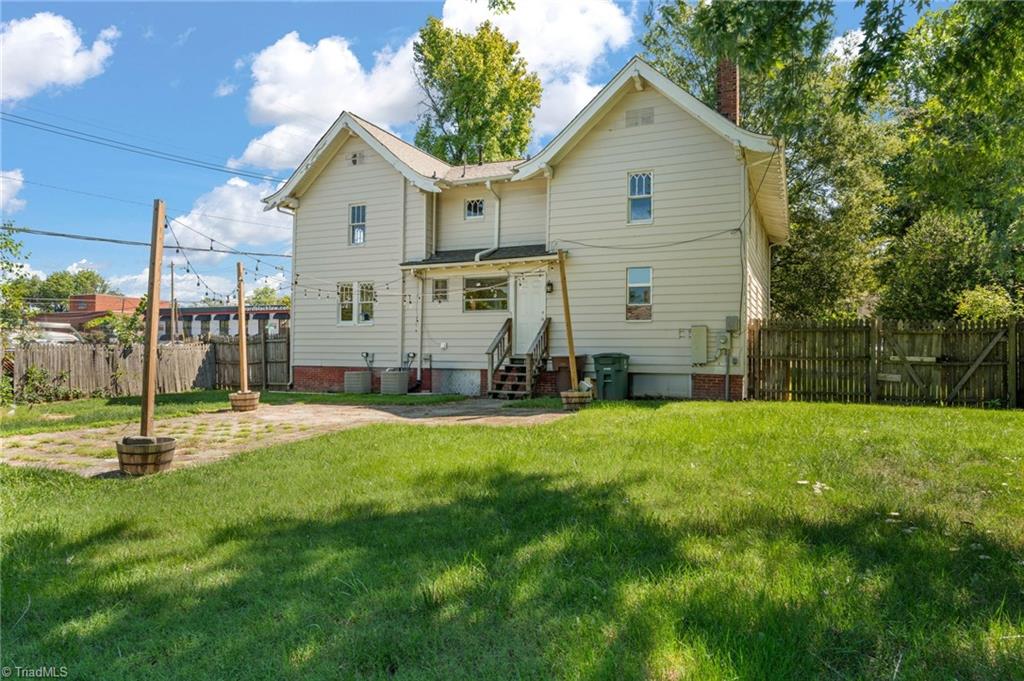
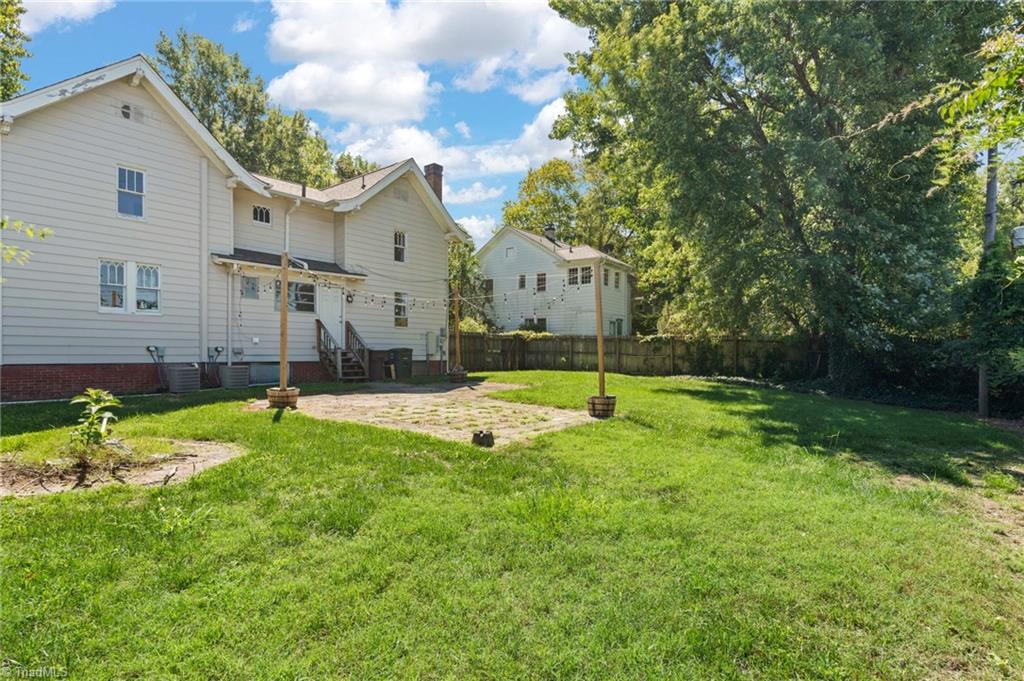

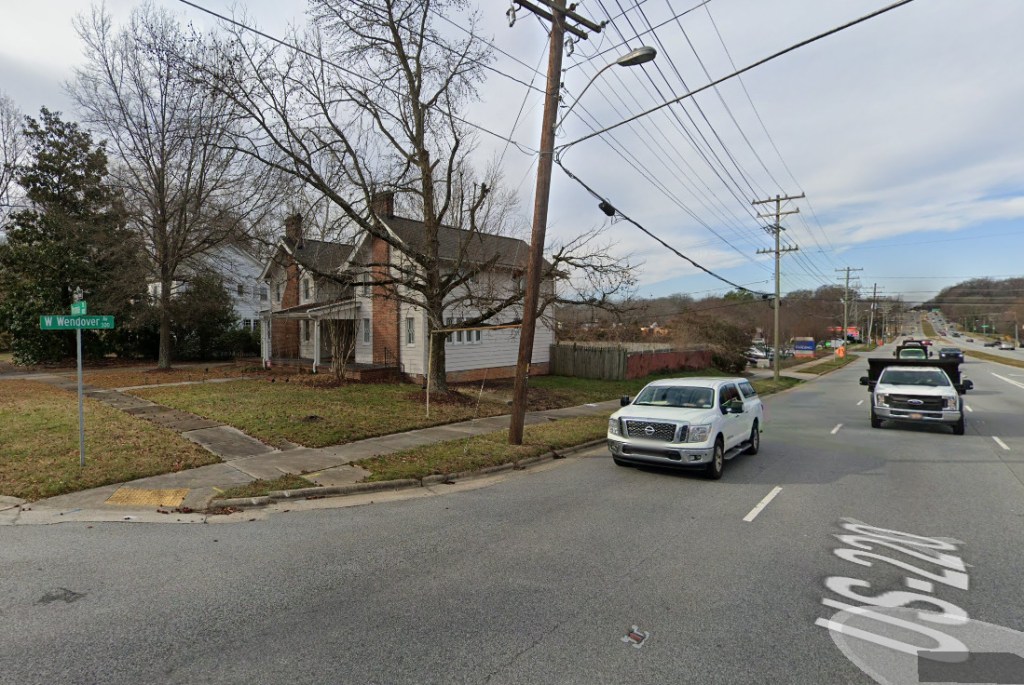
1123 Virginia Street, Greensboro
- Sold for $320,500 on January 10, 2025 (originally $325,000)
- 4 bedrooms, 2 bathrooms, 2,808 square feet, 0.23 acre
- Price/square foot: $114
- Built circa 1922
- Listed August 22, 2024
- Last sale: $225,000, December 2020
- Neighborhood: Fisher Park Historic District (local and NR)
- Note: The relatively low price is attributable to its location at the corner of Virginia Street and Wendover Avenue, a major east-west, six-lane divided thoroughfare.
- District NR nomination: “H-shaped cottage w/Germanic or Swiss Chalet influences; recessed central front & back bays; 2 projecting bays at front to either side of entry have pronounced flairs to their gables, notched rakeboards & rafter ends, and front chimney stacks; narrow windows feature diamond or triangular lights.”
- County records date the house to 1928; the National Register nomination says ca. 1919. The address first appears in the city directory in 1922 with Jasper Lee Russell (d. 1949) and Hallie B. Russell (1890-1964) listed as the residents. Jasper was a superintendent and later a construction engineer. The lived in the house until 1925.
607woodland

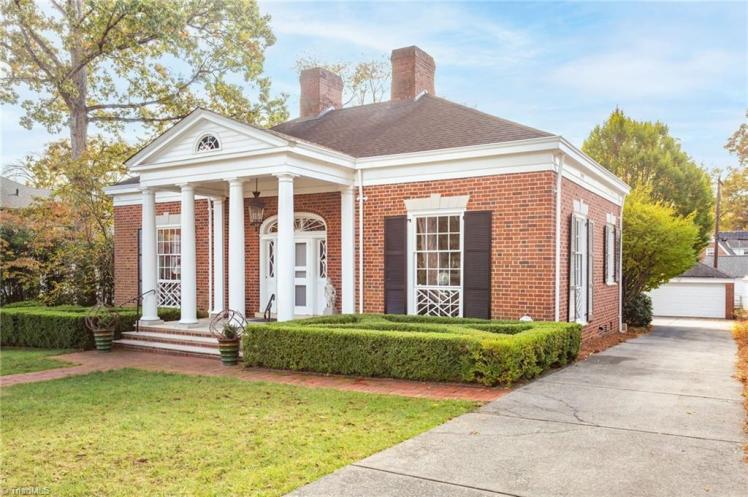
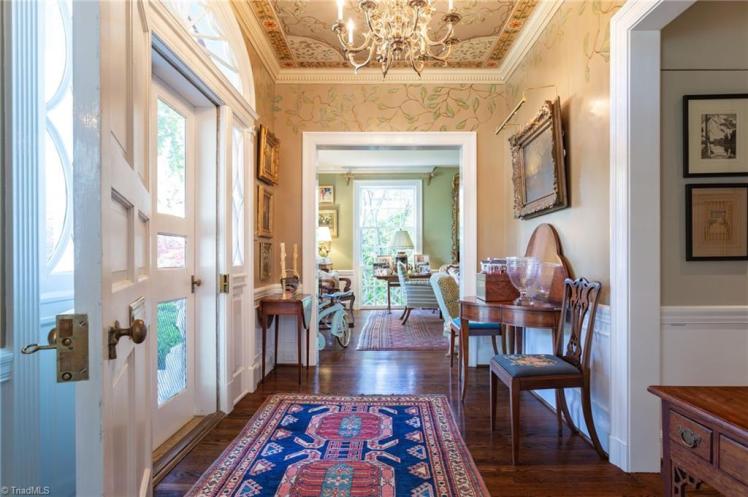

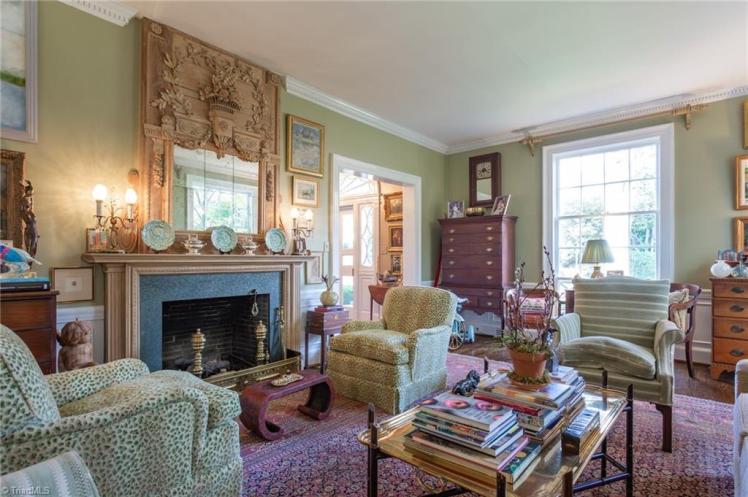


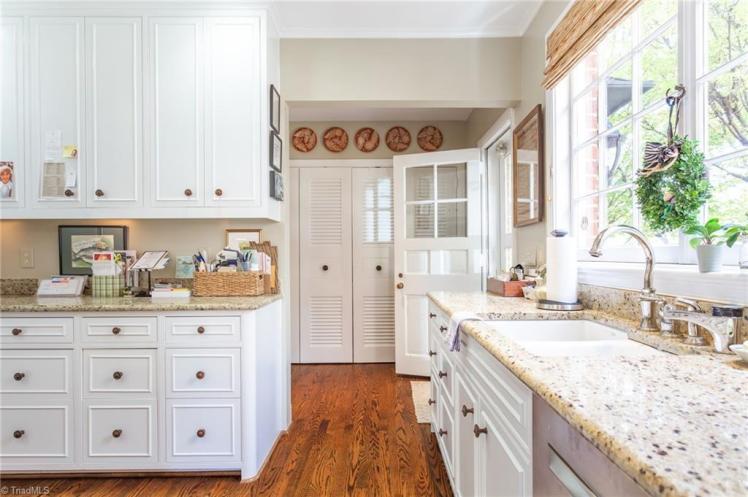
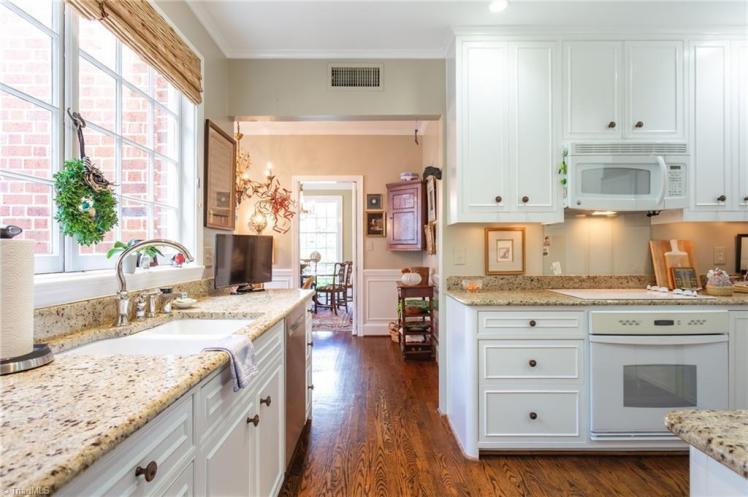
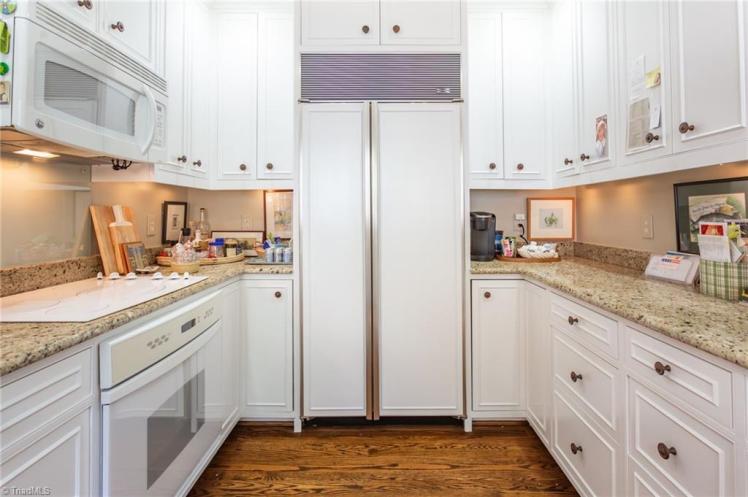

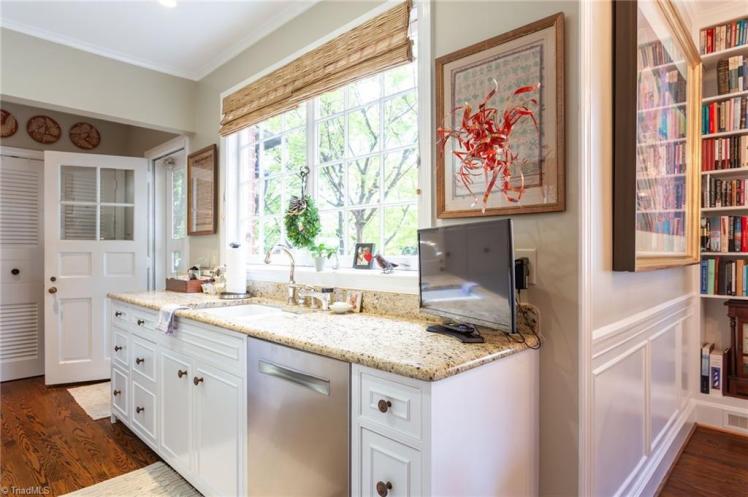
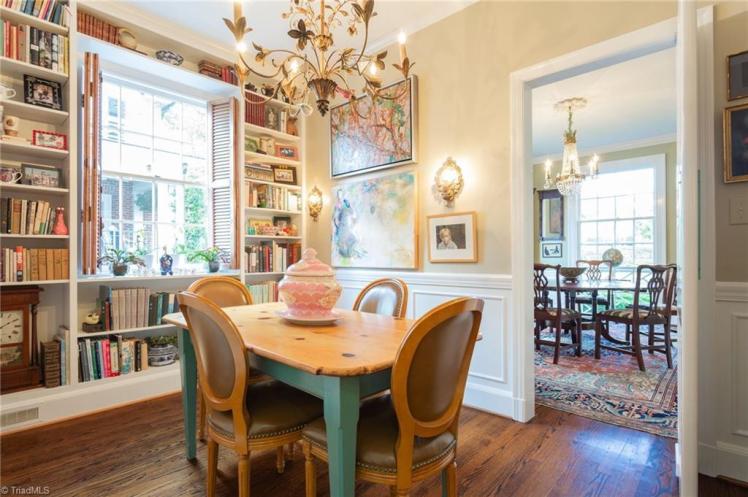
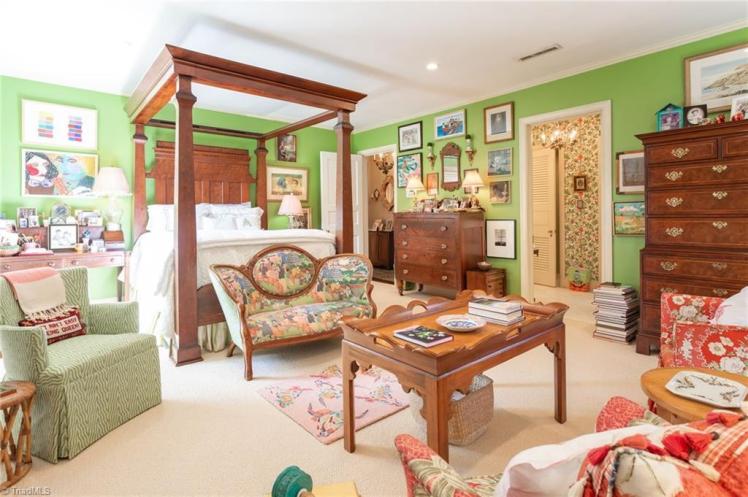


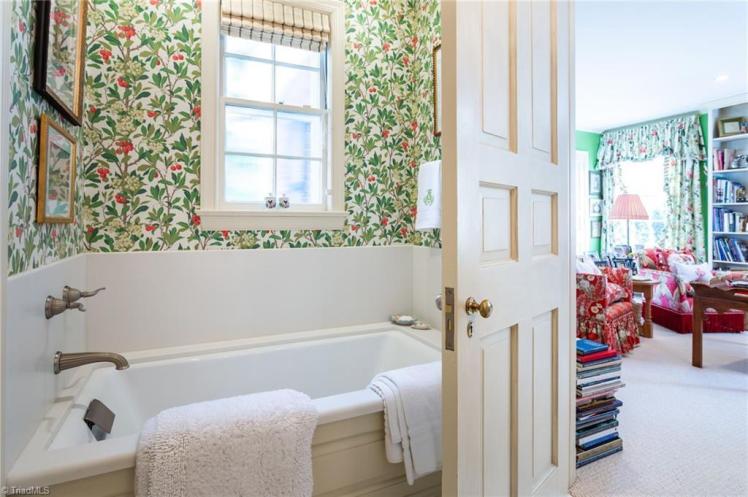


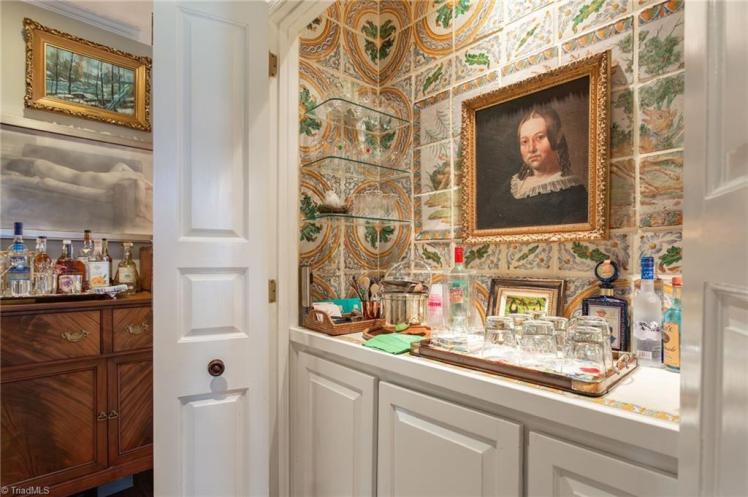


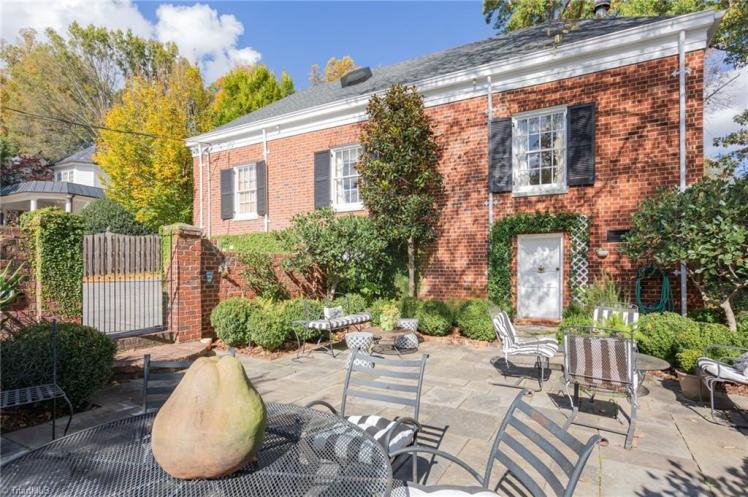
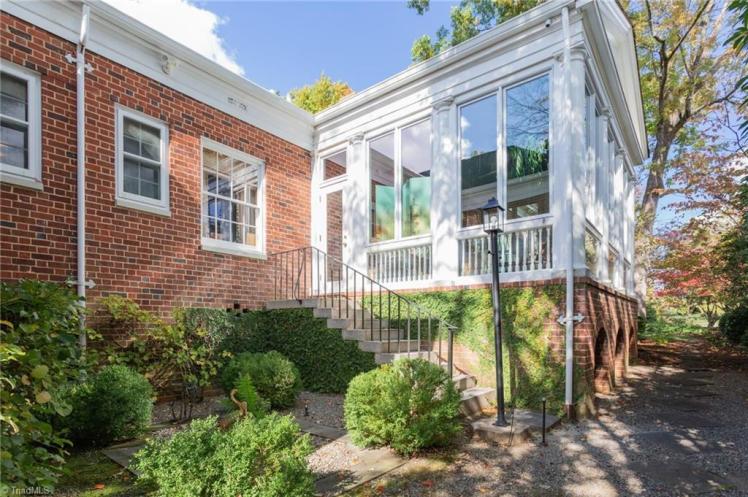
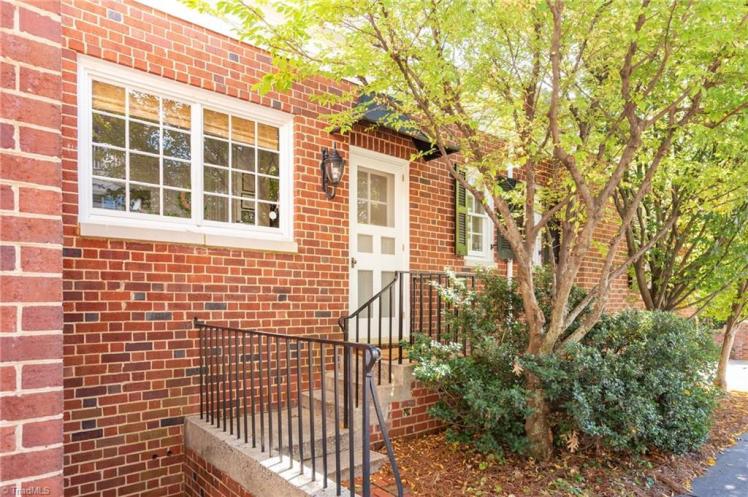

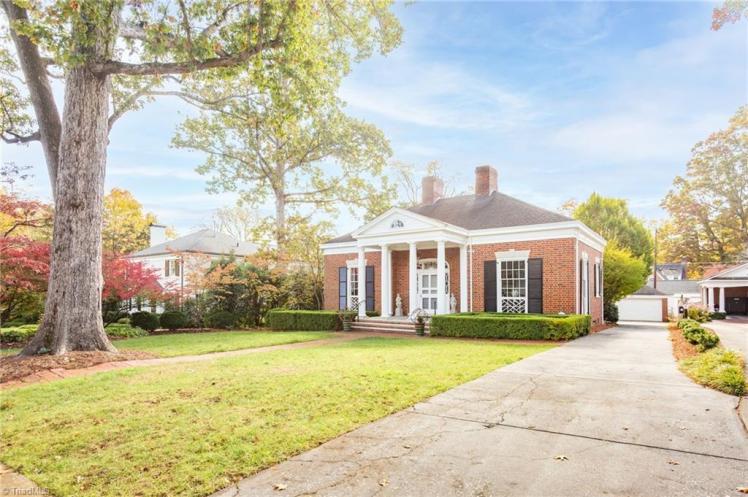
607 Woodland Drive, Greensboro
The Woodroof House
- Sold for $1.8 million on January 9, 2025 (listed at $1.8 million)
- 4 bedrooms, 3 1/2 bathrooms, 2,844 square feet, 0.32 acre
- Price/square foot: $633
- Built in 1940
- Listed November 22, 2024
- Last sales: $999,000, May 2017; $640,000, May 2002
- Neighborhood: Irving Park
- Note: The original owners were Albert C. Woodroof (1895-1986) and Mary Gilbert Rosser Woodroof (1899-1986). The property remained in their family for 63 years. They bought the lot in 1939 and were reported to be building the house in the summer of 1940. The address first appeared in the city directory in 1941.
- Albert was an architect; he may designed the house himself. He designed residences, schools and several Greensboro churches, including First Baptist, Holy Trinity Episcopal, College Park Baptist and First Friends Meeting. His son, Albert Jr., also was an architect. He worked as a draftsman for his father and later was a partner in Albert Sr.’s firm before starting to practice on his own.
- Albert Jr. (1920-1991) and Joan CarrIngton Price Woodroof (1936-2001) inherited the house. It was sold by Joan’s estate in 2002.
1371union

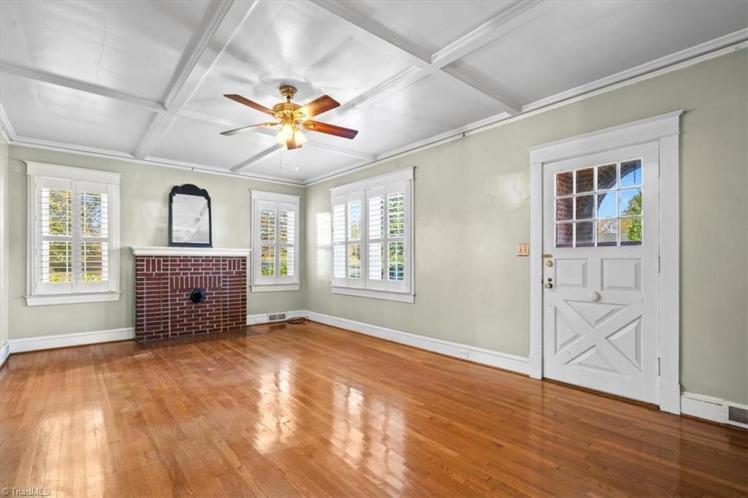


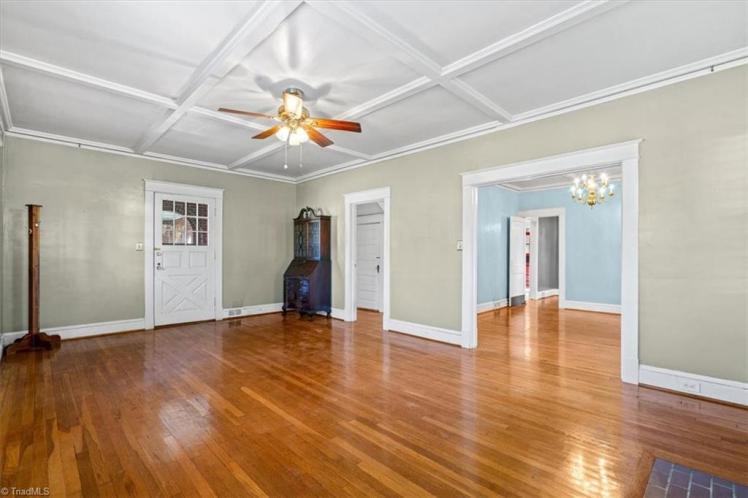

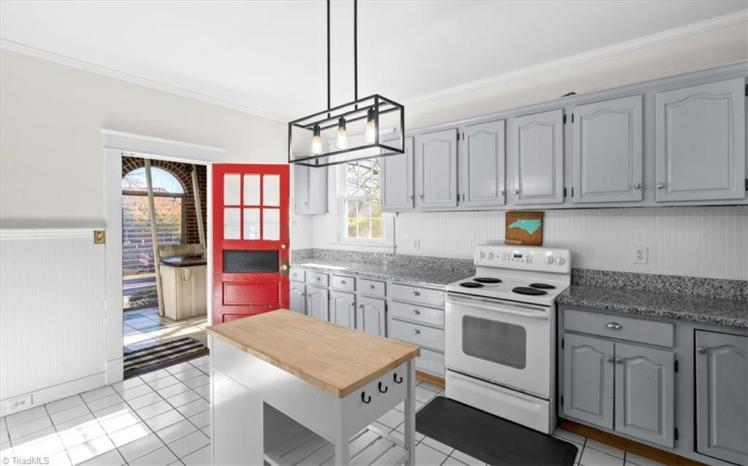

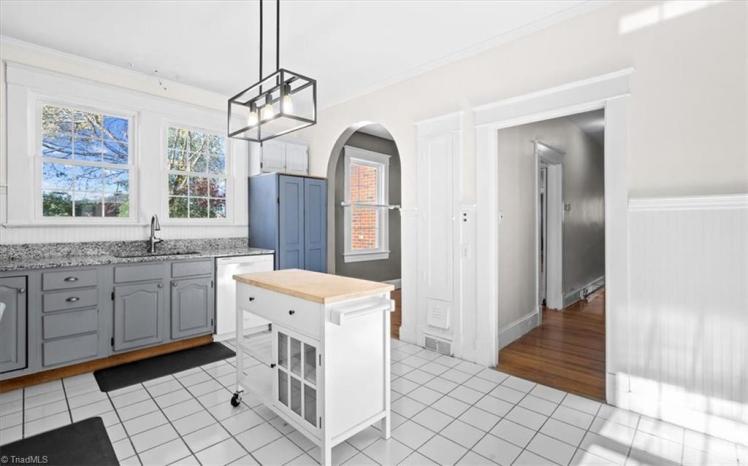


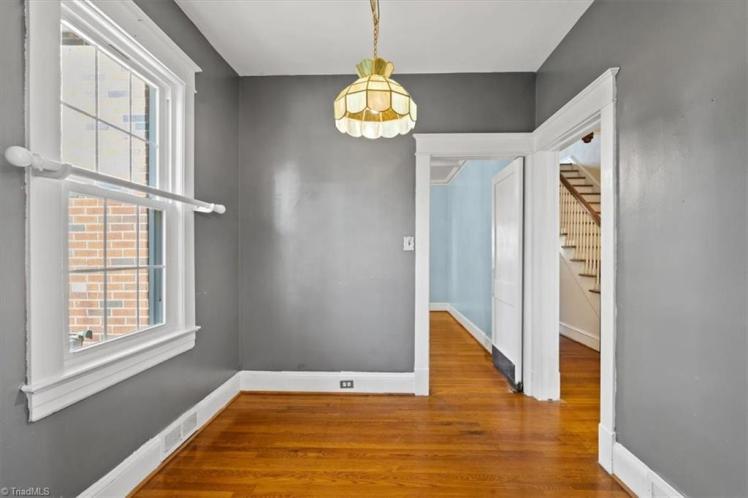


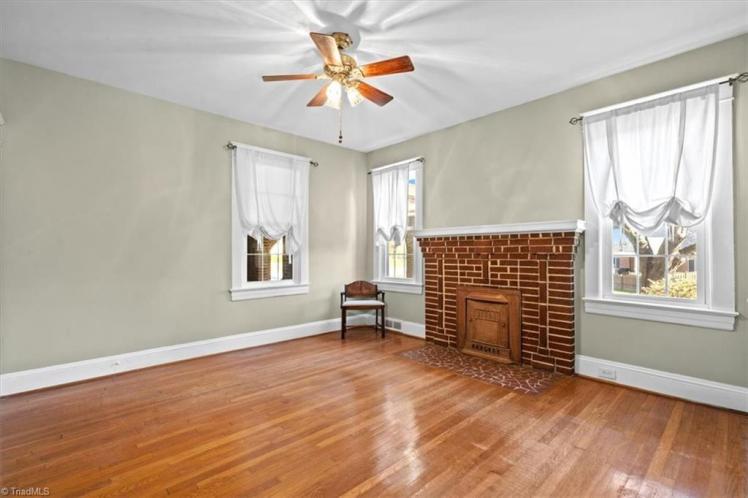


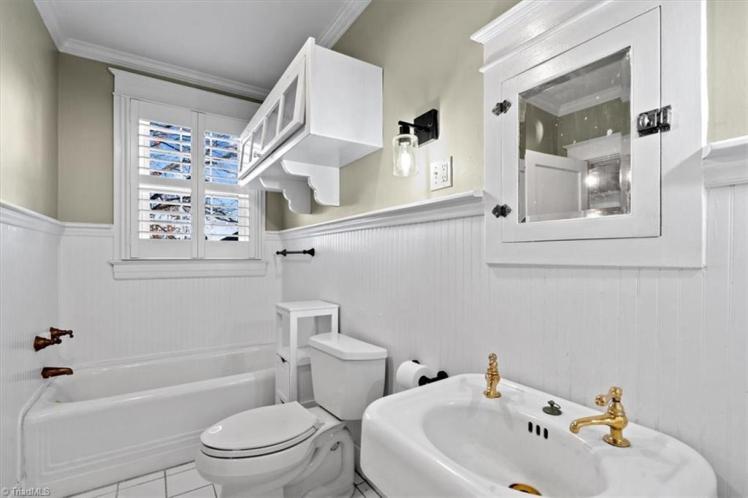

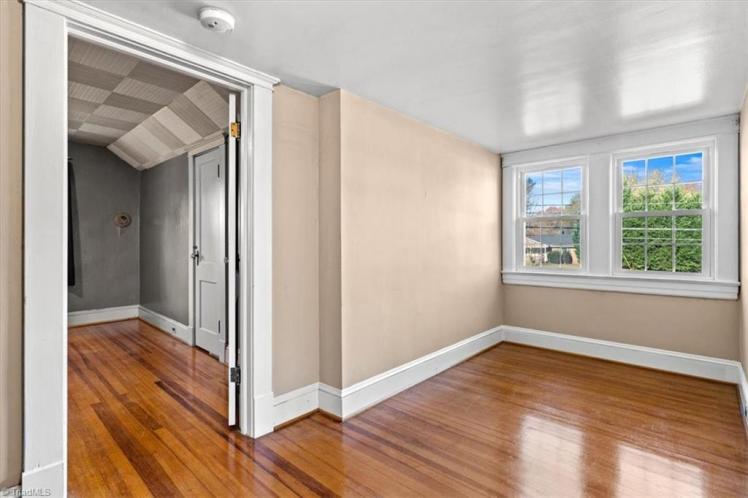
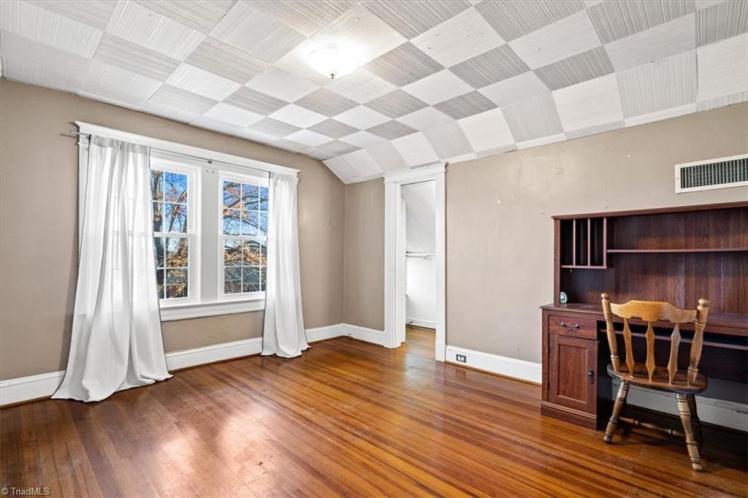

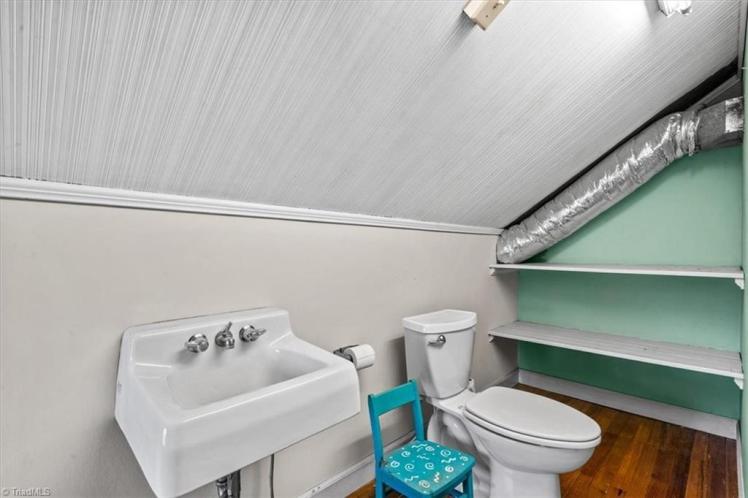
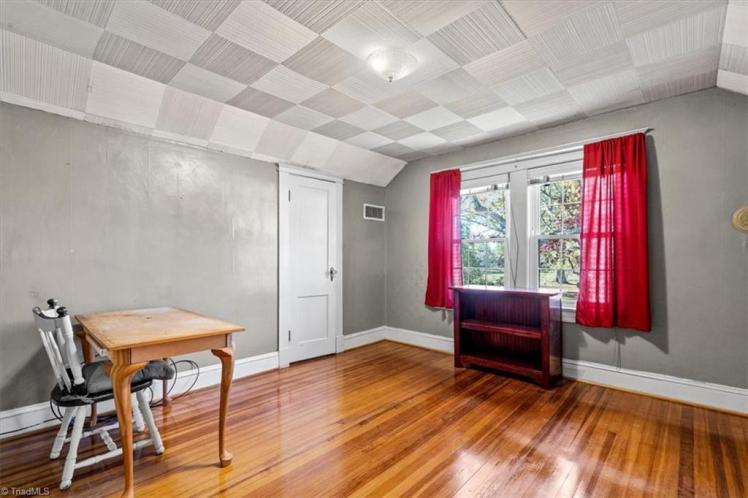


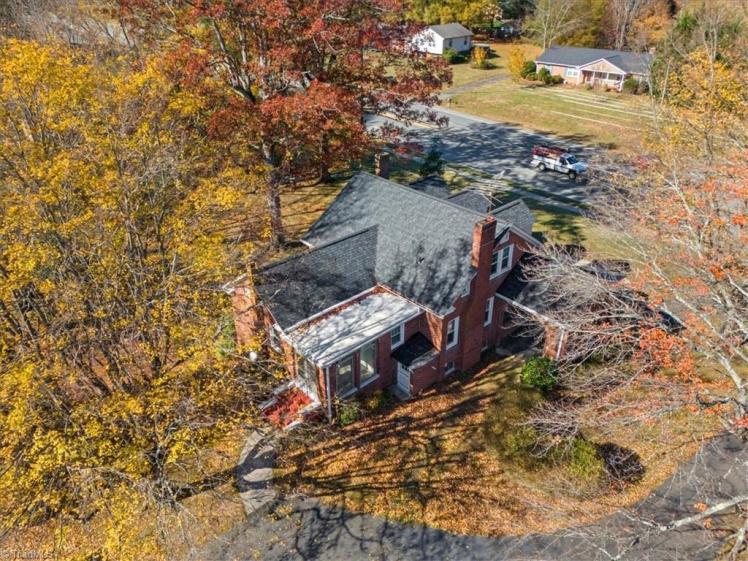
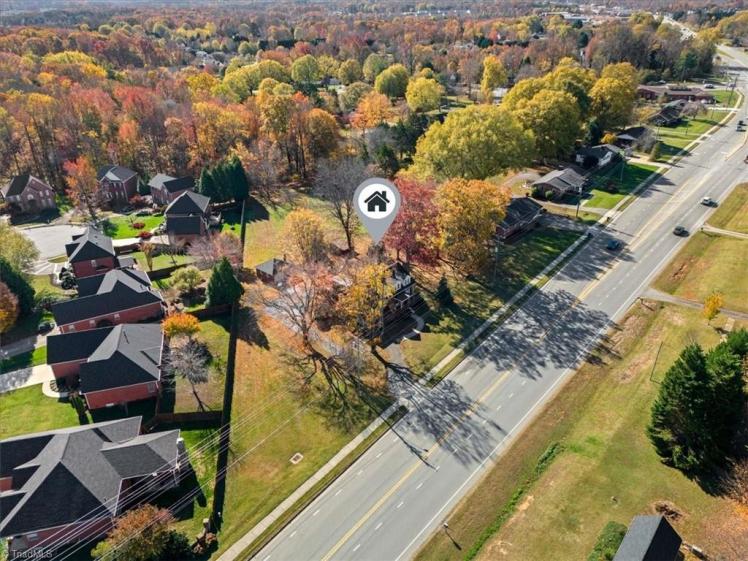
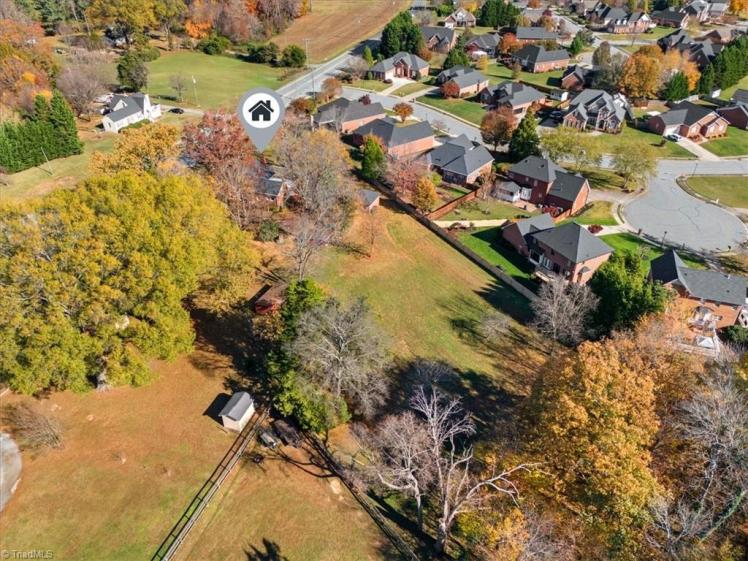

1371 Union Cross Road, Forsyth County
- Sold for $280,000 on January 6, 2025 (listed at $275,000)
- 3 bedrooms, 1 1/2 bathrooms, 1,873 square feet, 1.56 acres
- Price/square foot: $149
- Built in 1935
- Listed December 7, 2024
- Last sale: $130,000, May 1996
- Neighborhood: Located in eastern Forsyth County, about 2.8 miles south of Kernersville.
916smain

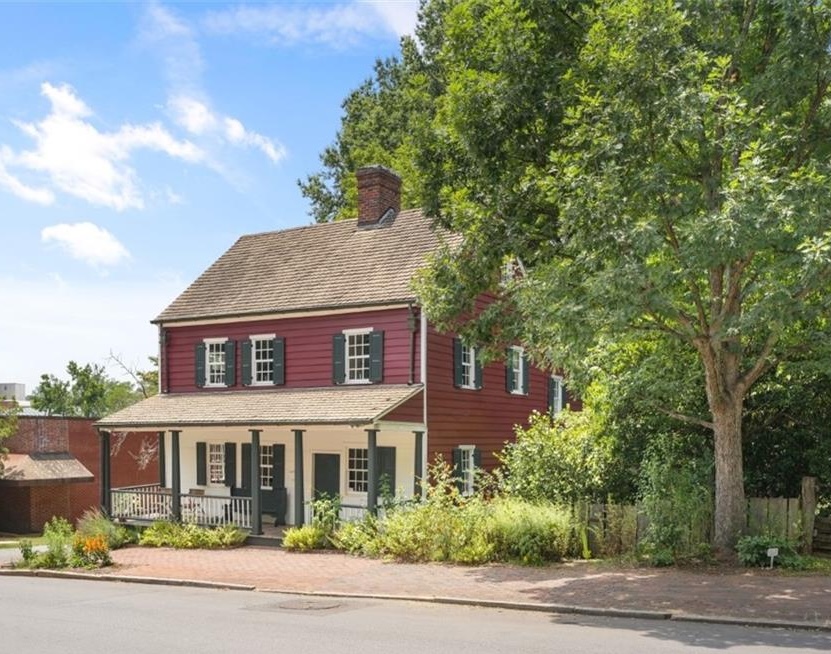
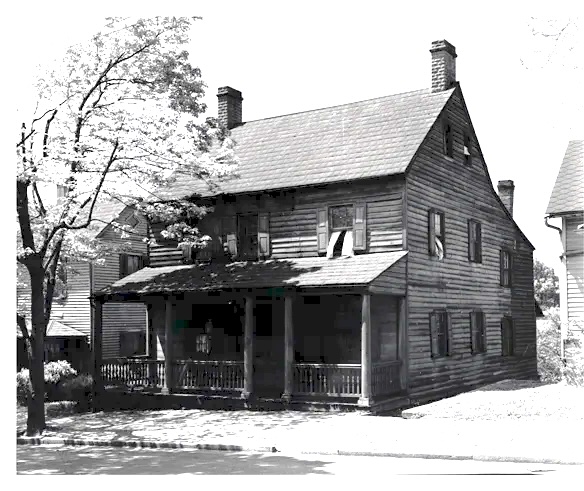


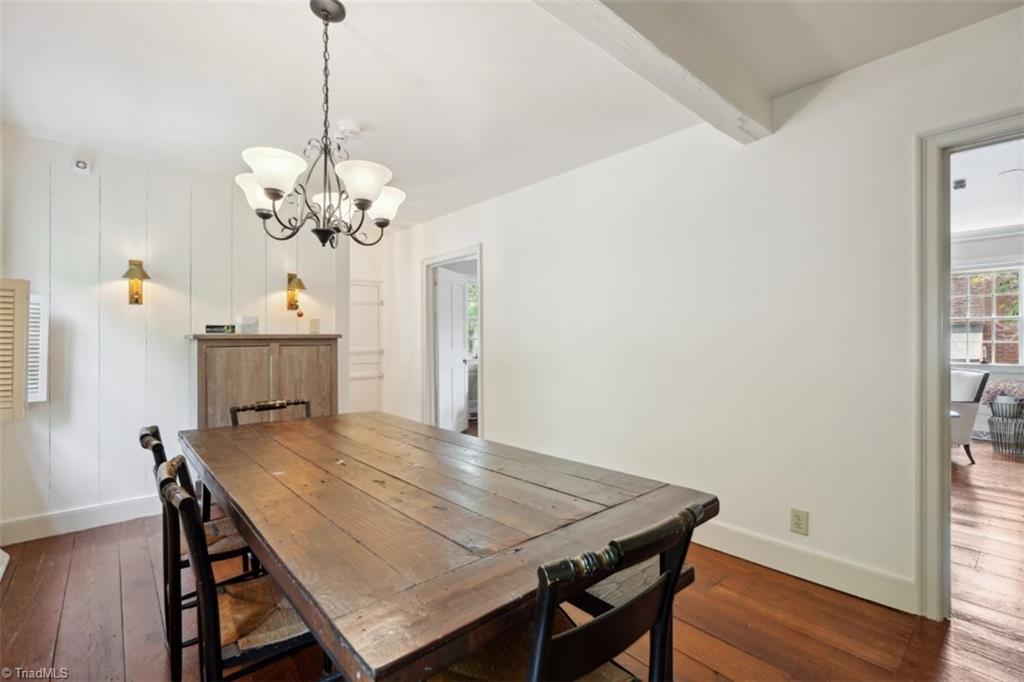
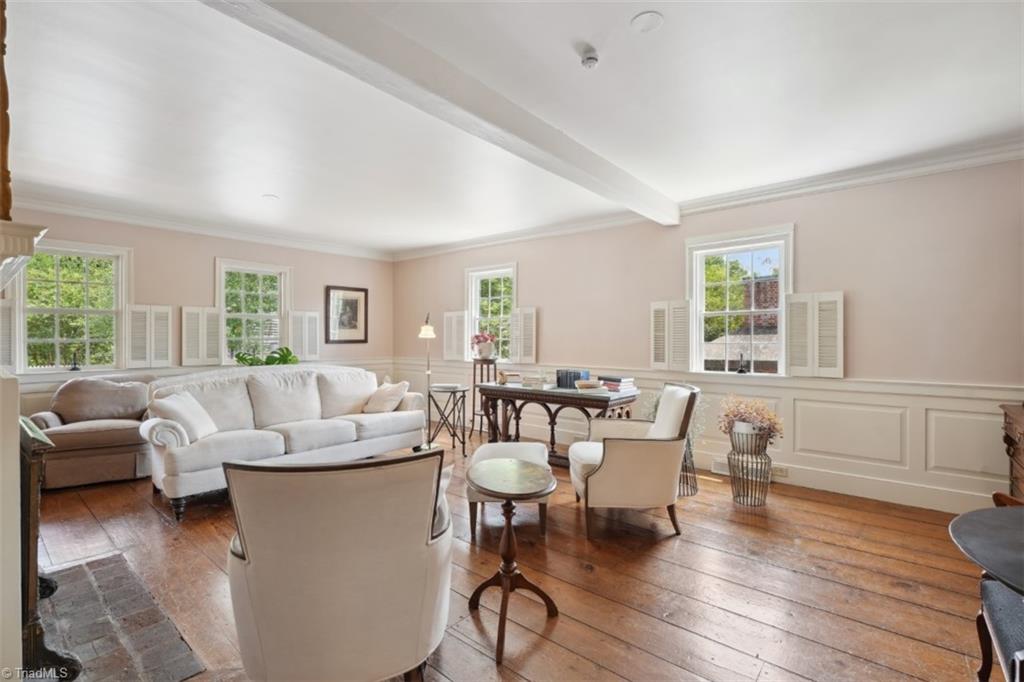

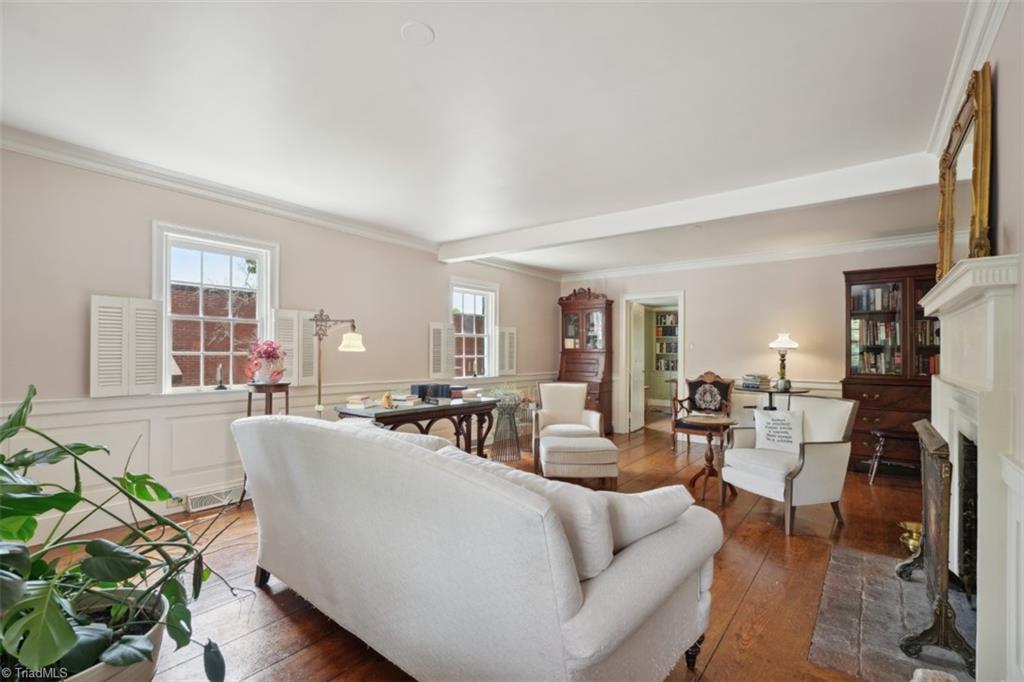


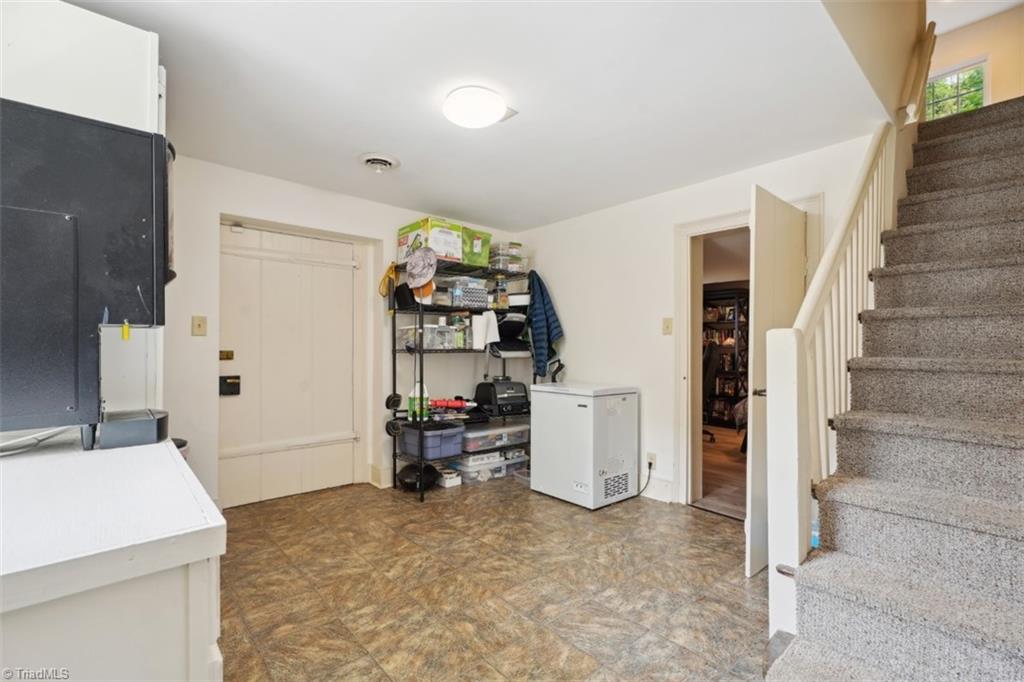


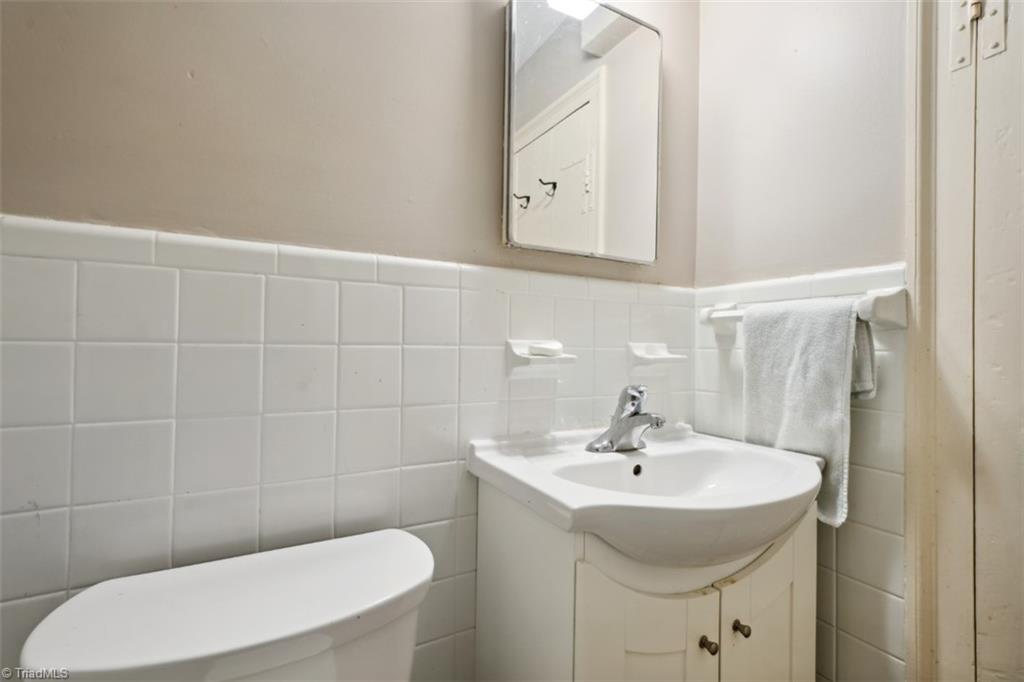
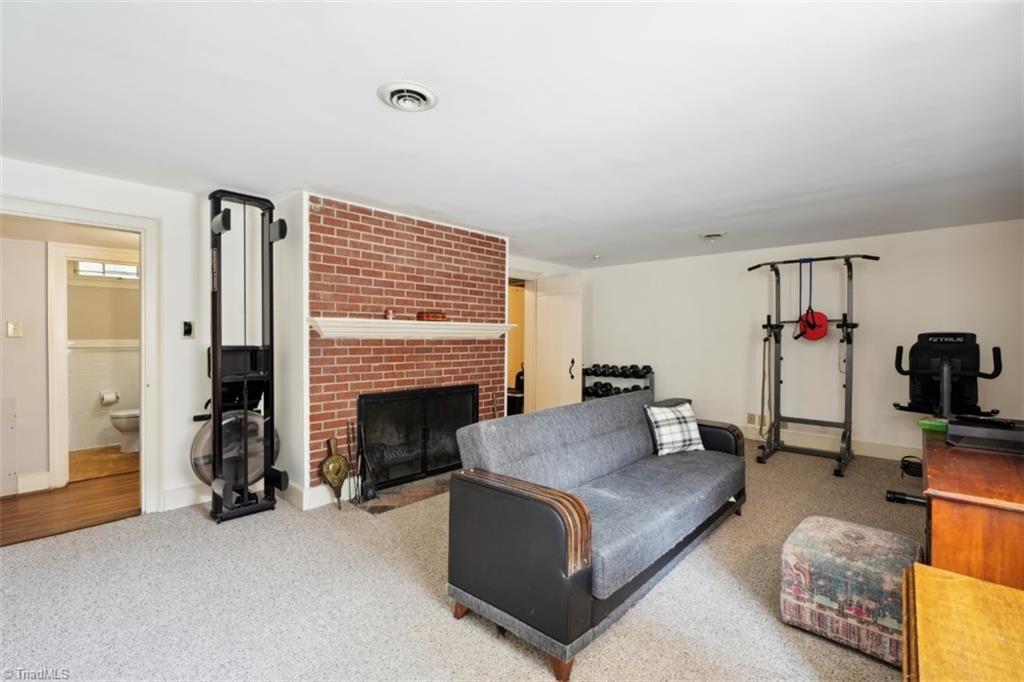


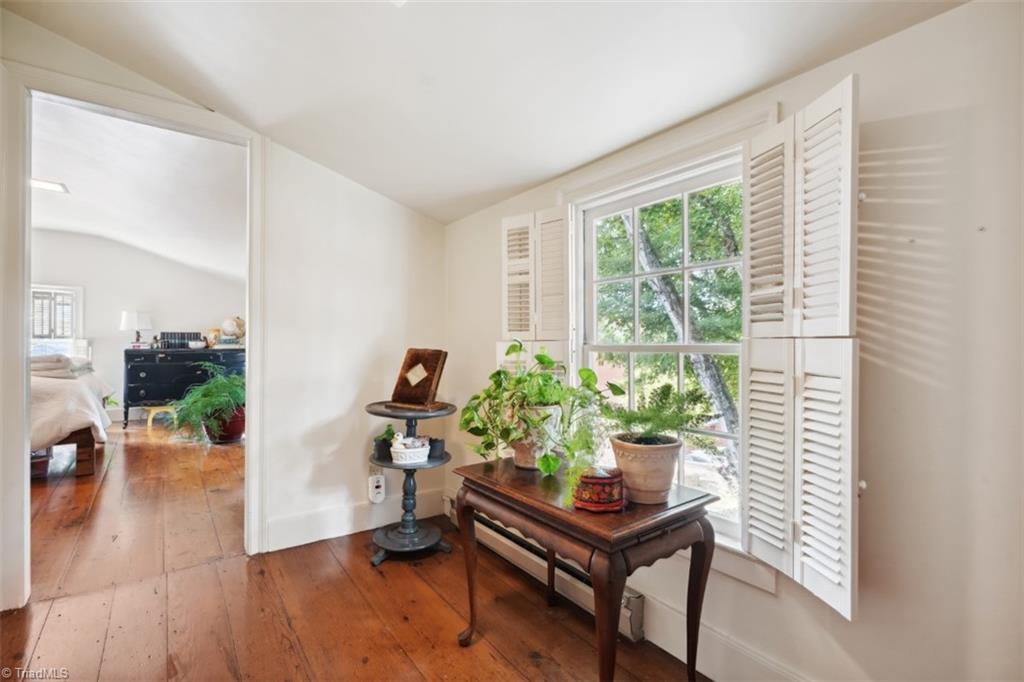

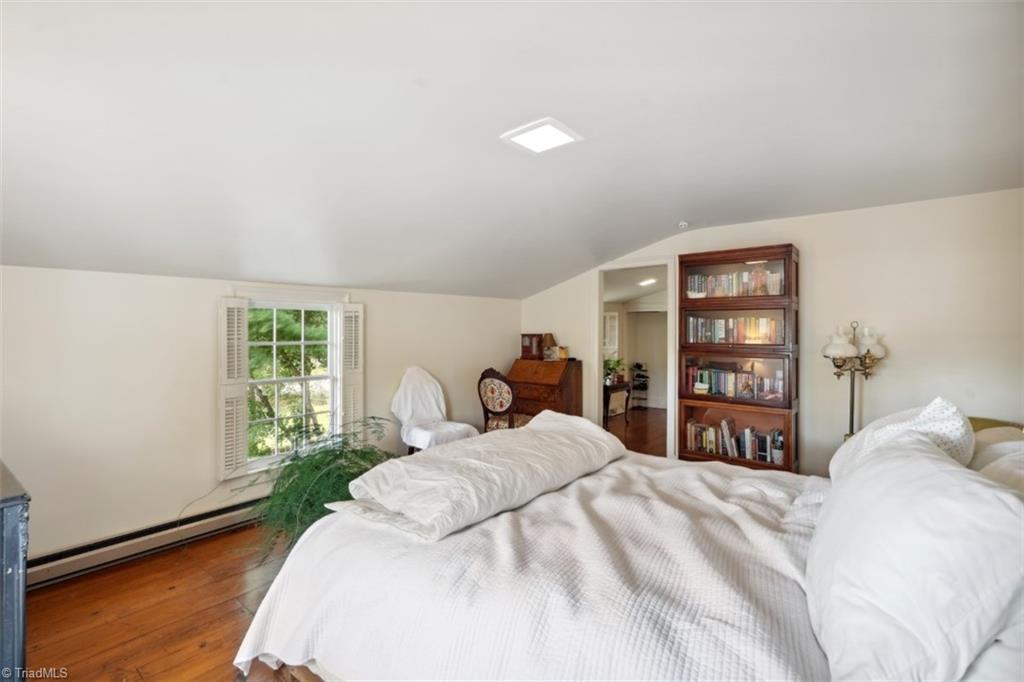
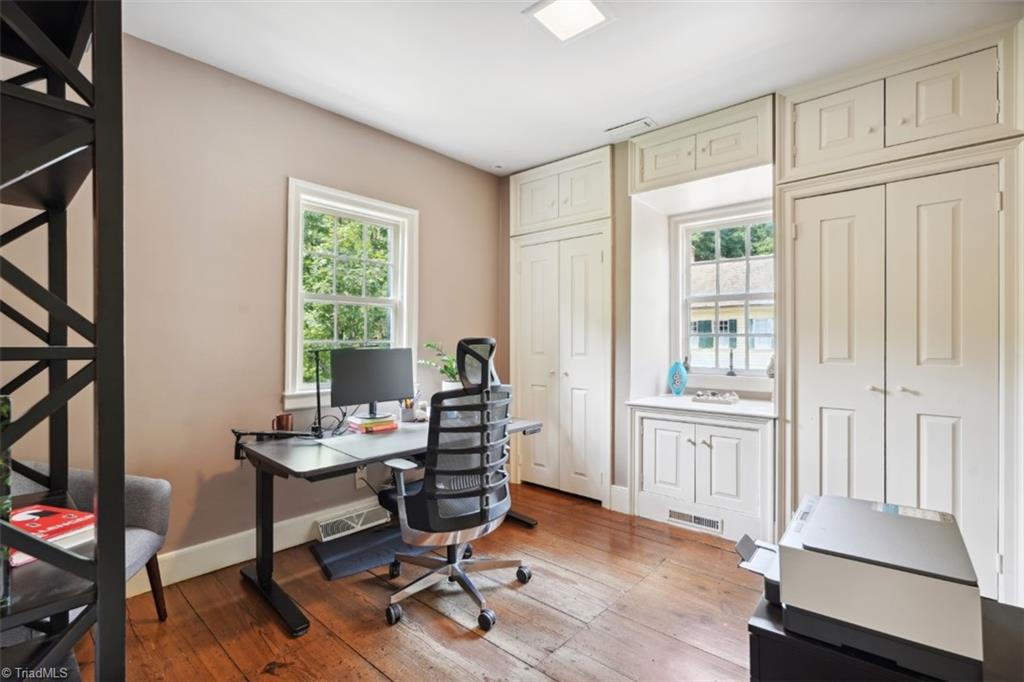
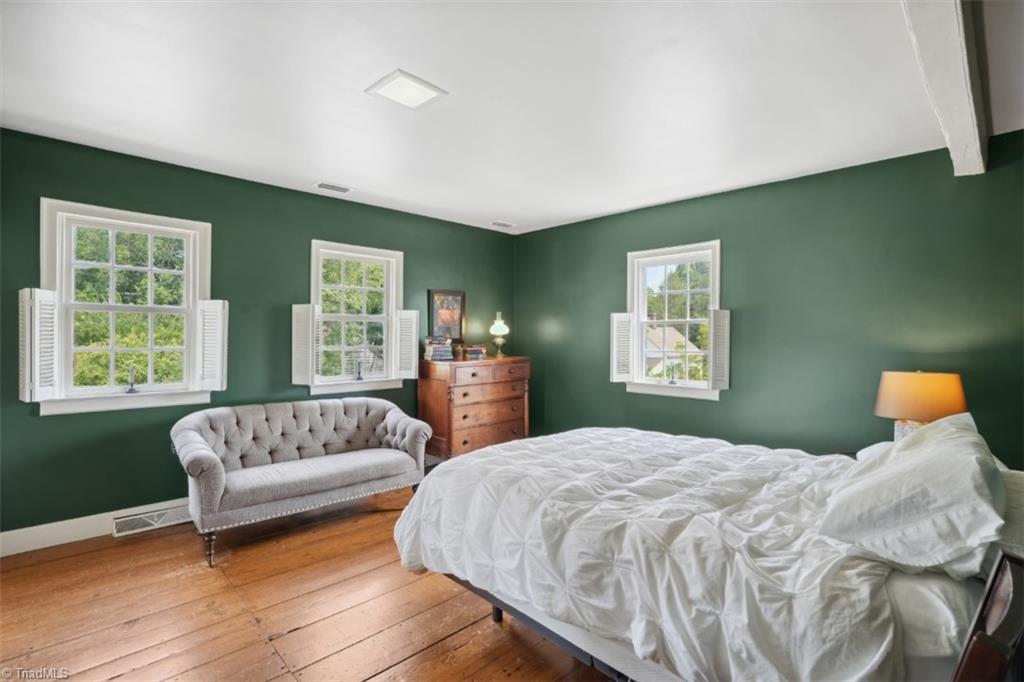
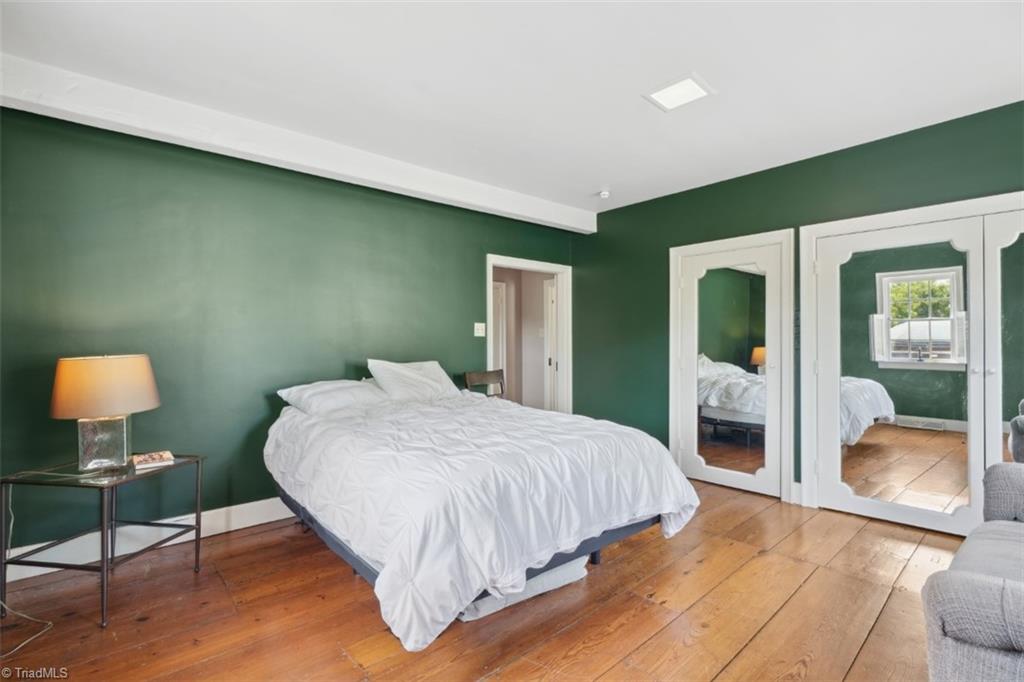
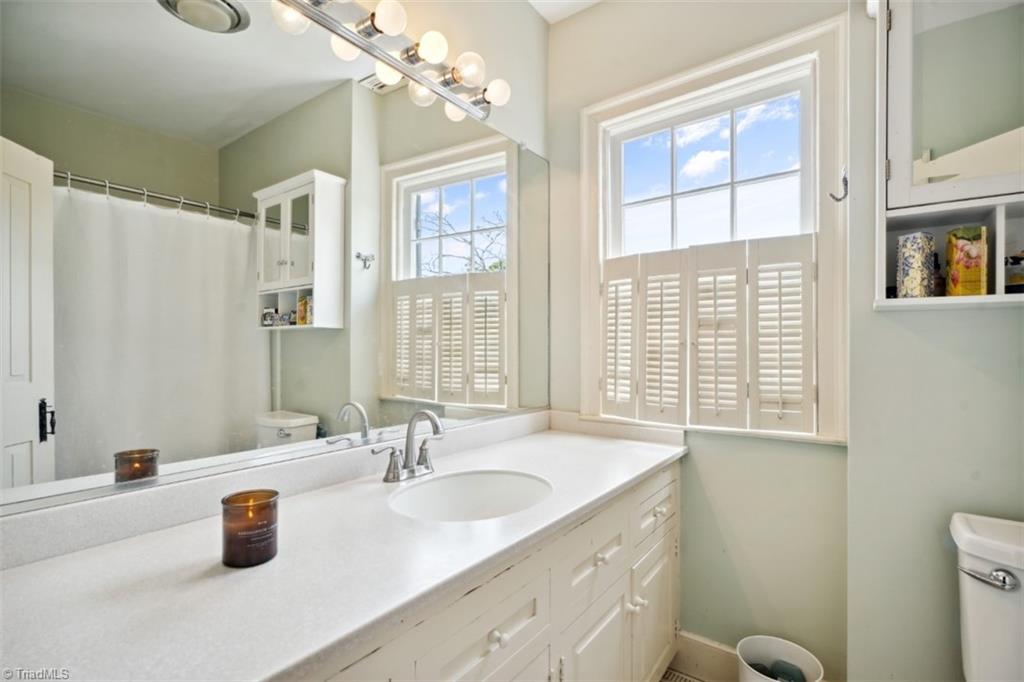
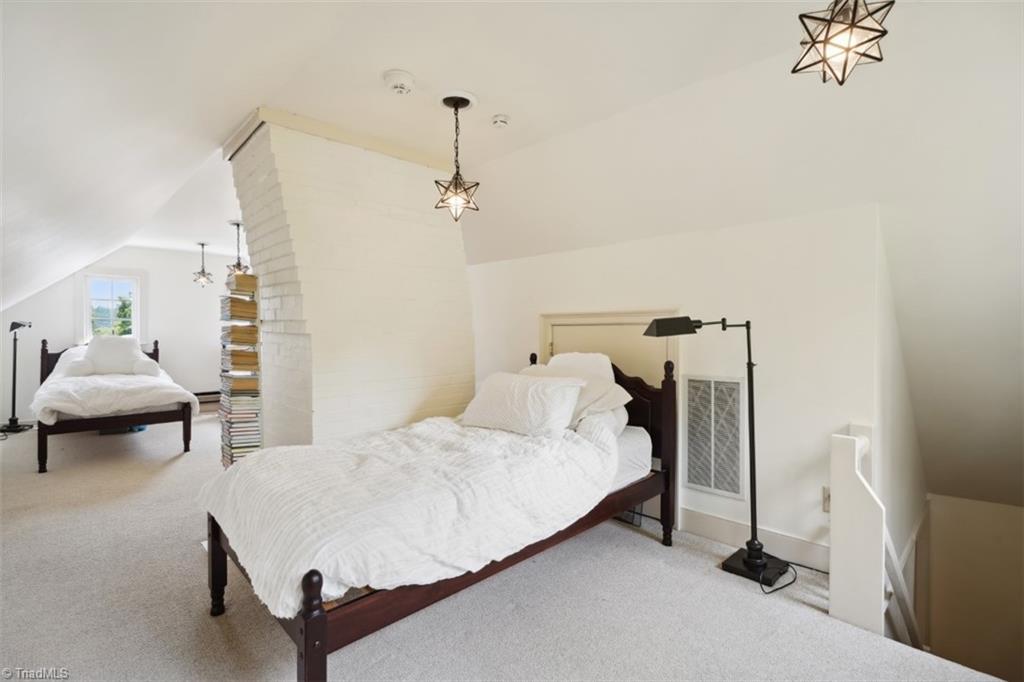
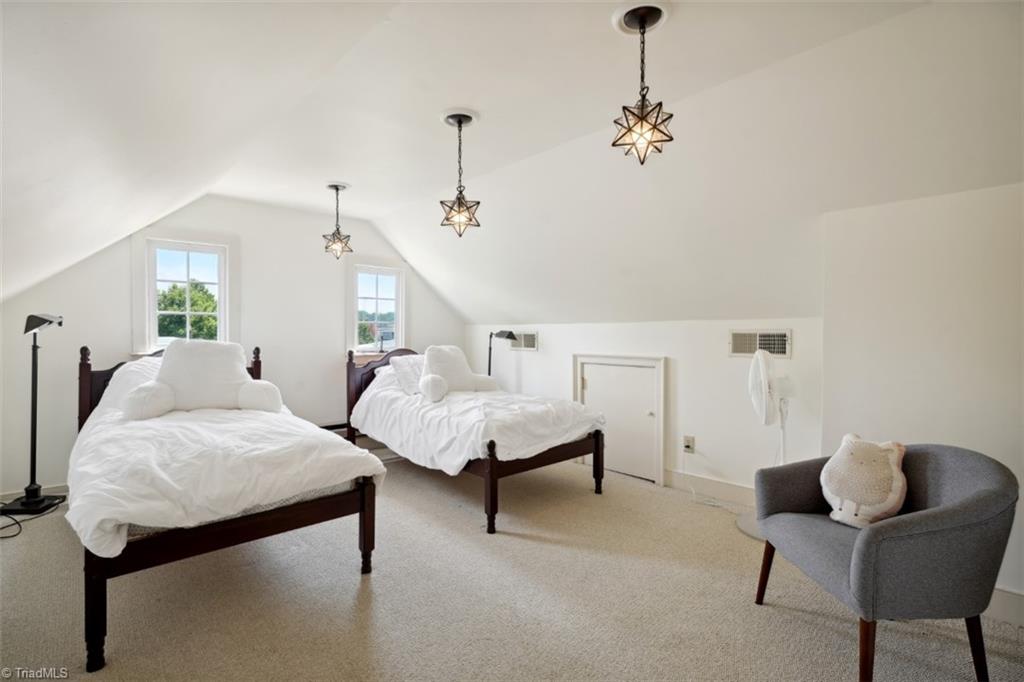
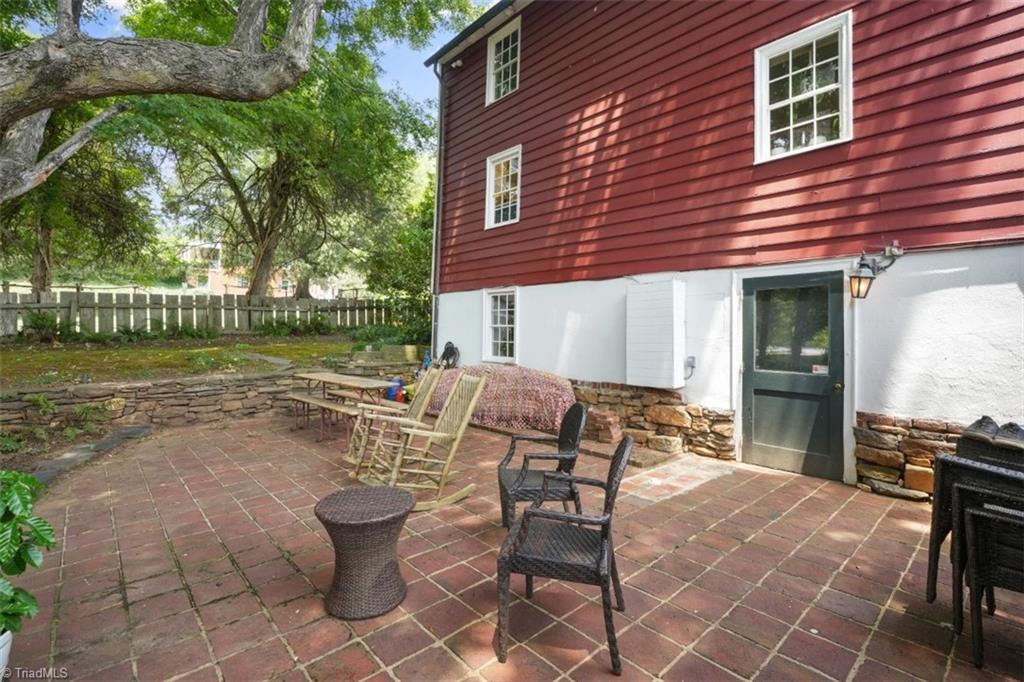


916 S. Main Street, Old Salem, Winston-Salem
The Johannes Voltz House, Lot 96
- Sold for $665,000 on January 3, 2025 (originally $729,000)
- 4 bedrooms, 3 1/2 bathrooms, 2,262 square feet, 0.14 acre
- Price/square foot: $294
- Built in 1816
- Listed March 9, 2020
- Last sales: $410,000, January 2021; $225,000, December 1990
- Note: Designated a Forsyth County Historic Landmark
- “A barn, removed from its original location near Idol’s Dam on the Yadkin River, was placed to the rear of the property in 1970.” (Forsyth County Historic Resources Commission)
- Owned by by Salem Academy & College 1990-2021
- 1950 photo above (black and white) from Old Salem Museum and Gardens Collection, via Digital Forsyth (exposure increased to bring out detail)
- District NR nomination: “The Volz House introduced to Salem the full front porch on a private residence and was the first house to sit back from the sidewalk. … At the time of construction, the Volz House lay somewhat beyond the core area of the town, as lots had not yet been surveyed that far south when the retired farmer Johannes Volz [d. ca 1821] applied to build his house. Johannes Volz had been the farm manager of the former Stockburger Farm from 1796 until his retirement in 1815 when he requested a lot in the southern part of the town for his retirement home.
- “The two-story frame (weatherboard) house with a side gable roof (concrete to simulate wood shingle) has flush ends and a box cornice. The building is on a stuccoed stone foundation and there is a central chimney with corbelled cap. The three-bay house has a side hall plan. It sits back from the sidewalk the width of a full façade shed roof front porch with five Tuscan columns and a simple balustrade on a stone foundation.
- “The porch is one step above sidewalk grade at the entry bay, located at the right end of the three bay façade, where a herringbone Dutch door abuts a six-over-six sash window. Two additional six-over-six sash windows are on the façade under the porch, where there is flush board sheathing; there are three windows on the second floor facade. Other elevations have six-over-six sash windows and all are hung with double panel shutters. Two six-light casements are in each upper gable end at the attic level. Doors and windows have molded casings.
- “A two-story engaged lean-to is across the rear elevation. The lot slopes to the west, exposing a full story cellar at the rear with door and windows. A board fence surrounds the house lot.
- “Volz lived in his house for only five years until his death. His widow and their son, George Volz (1798-1871), a gunsmith, continued to live in the house, and George built a small gun shop on the lot. …
- “By the early twentieth century, Lot 96 had been subdivided, the Volz gunshop was gone, and there were two houses north of the Volz House and south of Walnut Street. The Volz house central chimney had been removed and interior end chimneys installed at some point. The house and lot were purchased by Old Salem, Inc. in 1963, the twentieth century houses were removed, and the Volz house was restored.”
805magnolia


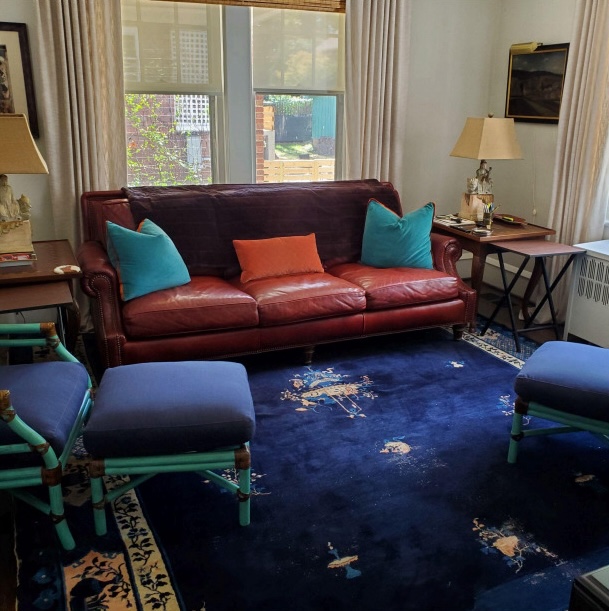
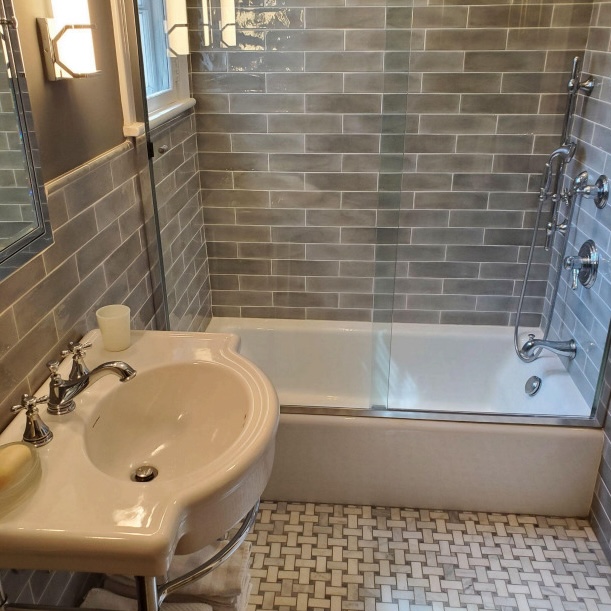


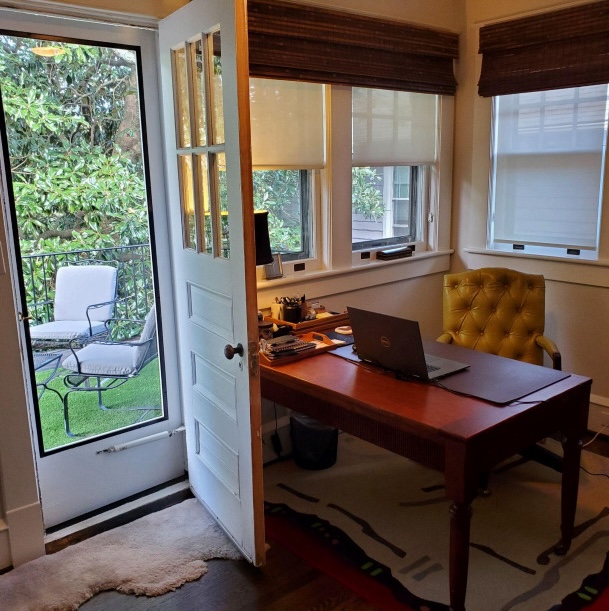


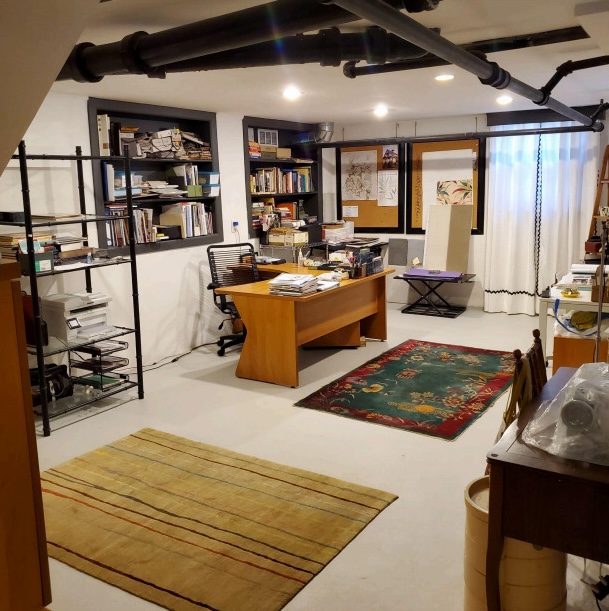

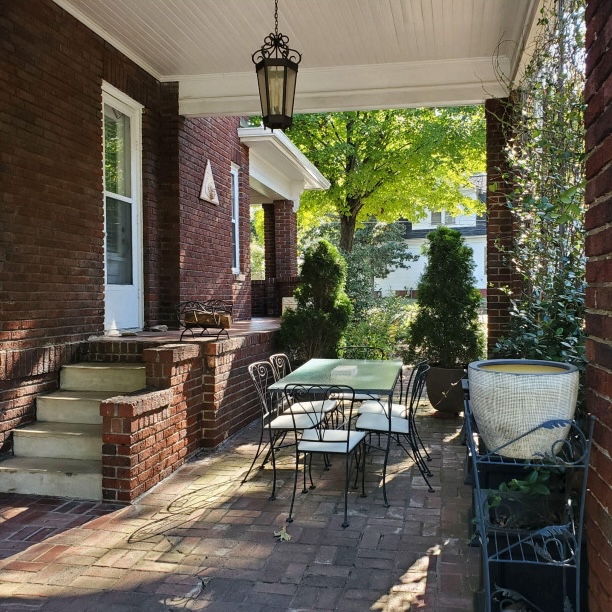


805 Magnolia Street, Greensboro
The Wolff-Reece House
- Sold for $865,000 0n January 2, 2025 (listed at $865,000)
- 4 bedrooms, 2 1/2 bathrooms, 3,180 square feet (per county), 0.22 acre
- Price/square foot: $272
- Built in 1926
- Listed September 7, 2024
- Last sales: $329,000, June 2015; $83,000, April 1984
- Neighborhood: Fisher Park Historic District (local and NR)
- Note: For sale by the owners, an interior decorator and an engineer
- The house was featured in the Fall 2020 issue of Seasons magazine (page 38).
- It has its original slate roof, a second-floor roof deck accessible from a bedroom, a basement studio with its own entrance, and permanent stairs to a finished room in the attic.
- The property includes a two-car garage.
- The owners have created a remarkably detailed brochure (click here or on the link above).
- District NR nomination: “Boxy brick-veneered structure; brick columns at full-facade front porch and porte cochere; wide overhanging hipped roof; L-shaped brackets at eaves extend into facade, same brackets as porch”
- The house has had only four owners. Dr. Denis Roscoe Wolff (1896-1941) and his wife Sanford Thomas Wolff (1900-1993) bought the property in 1923. Denis was a physician and surgeon. He was a graduate of Jefferson Medical College in Philadelphia and served in the Army during World War I. He was declining health in 1941 when he, Sanford and their son made a winter trip to St. Petersburg, Florida, for his health. He died there at age 44. Sanford outlived him by 52 years and never remarried. She passed the house on to their son, George Thomas Wolff, in 1954. He sold it in 1964.
- Milton Ernest Reece (1931-2011) and Jane Hockett Reece (1931-2015) bought the house in 1964 and owned it for 20 years. Milton was head of the education department at Greensboro College, where he taught physical education, coached basketball and golf, and served as athletic director. Before working at the college for 24 years, he taught and coached in the Greensboro public schools. Jane also taught in Greensboro. They retired to Caswell Beach, where they worked with the Caswell Beach Sea Turtle Program for 21 years.
 Piedmont Historic Homes