2843bitting
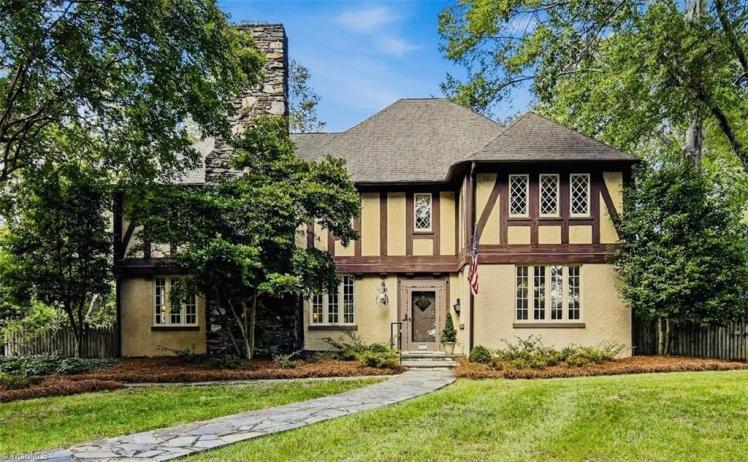
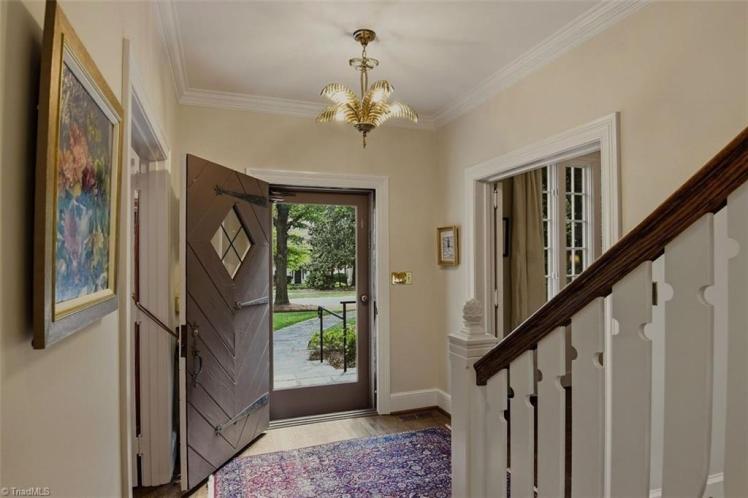
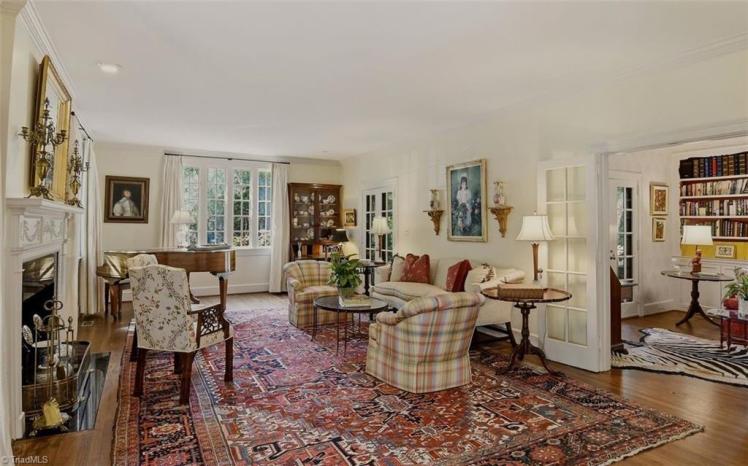
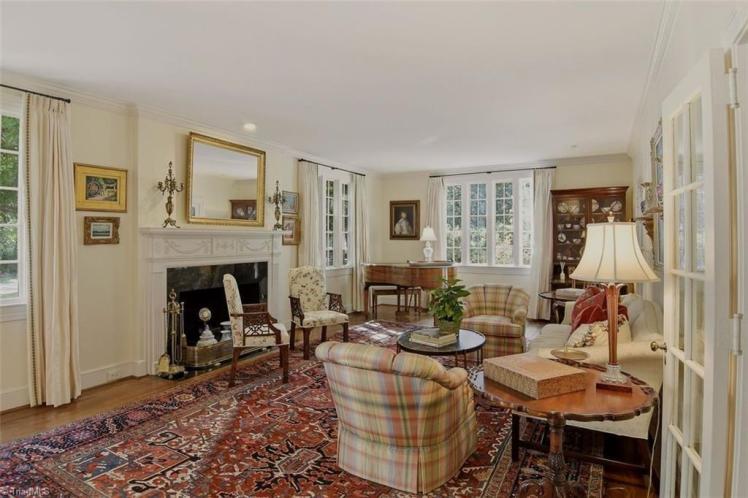
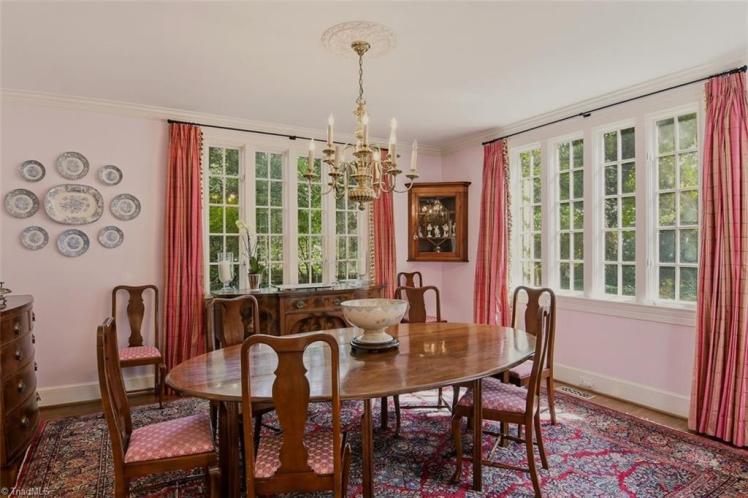
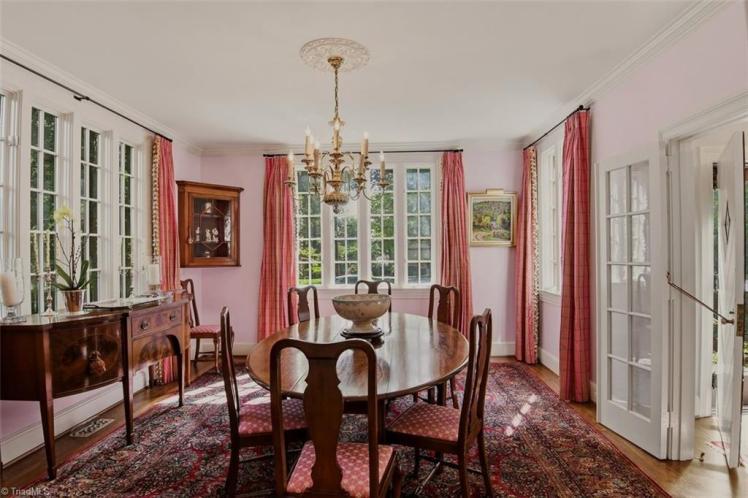
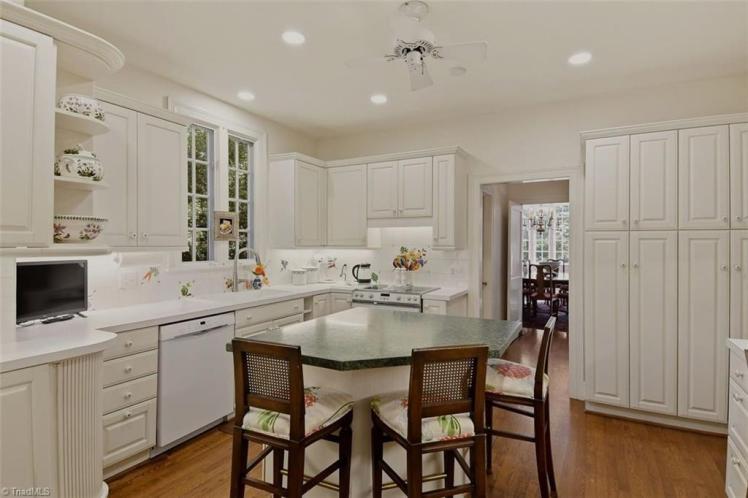
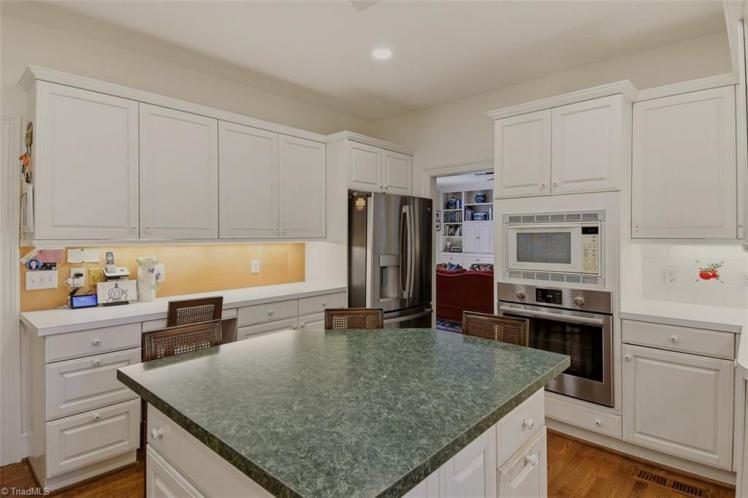
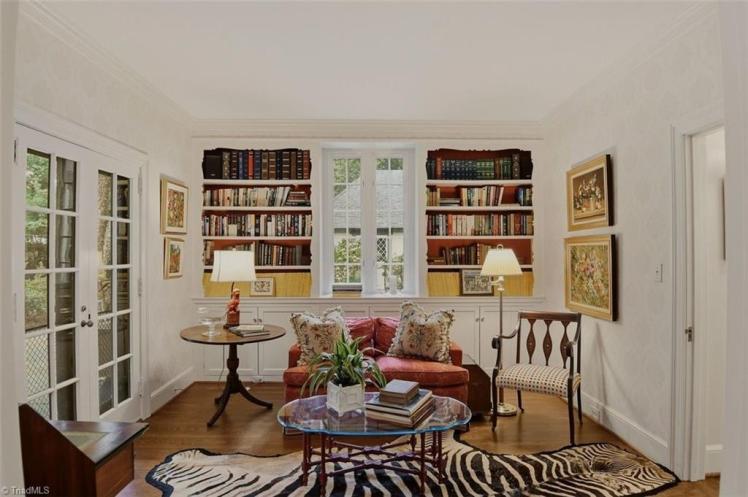
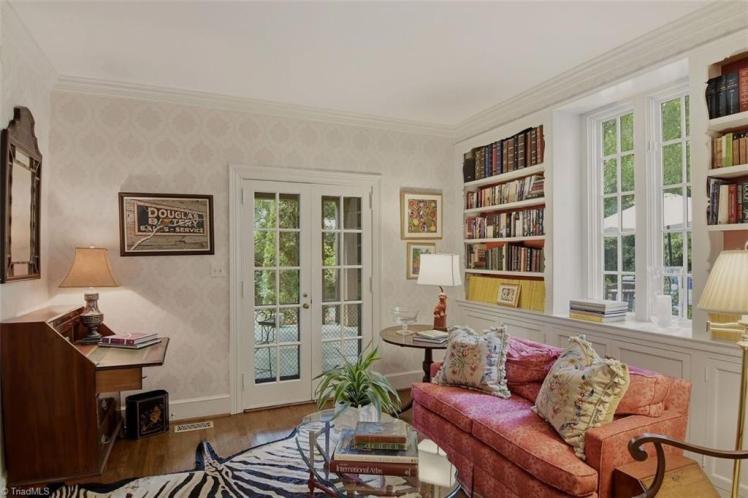
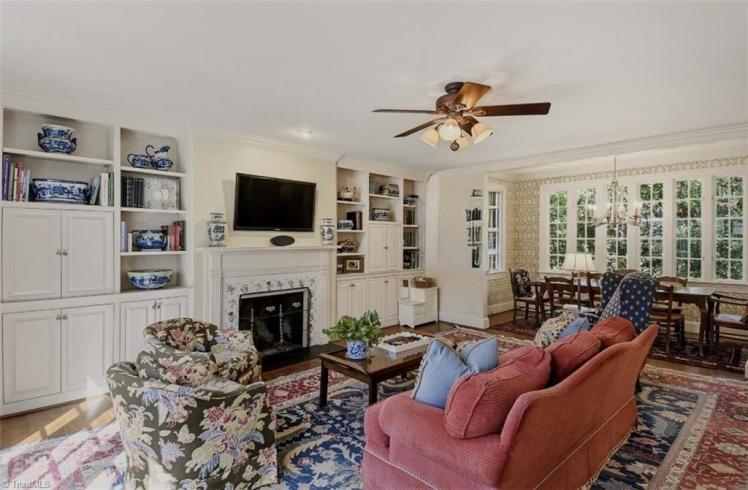
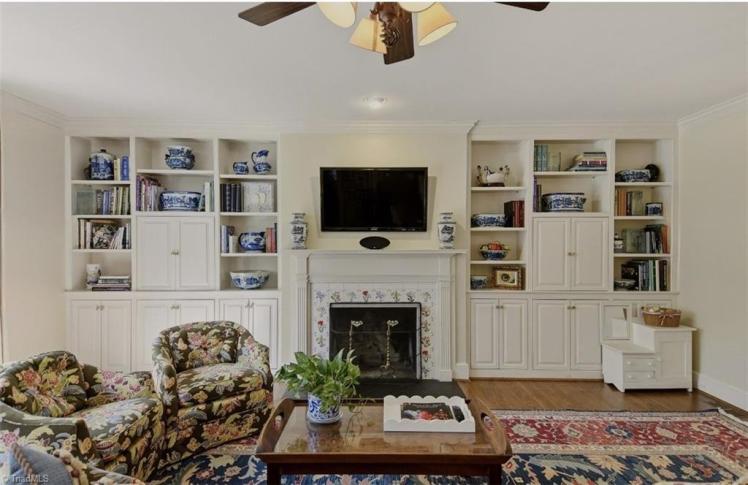
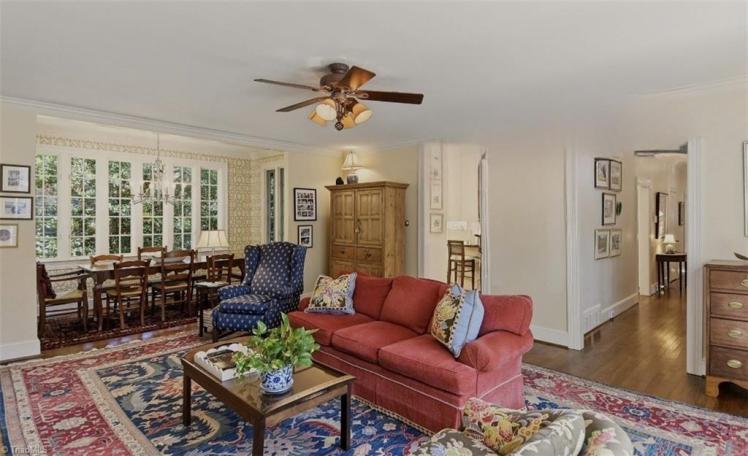
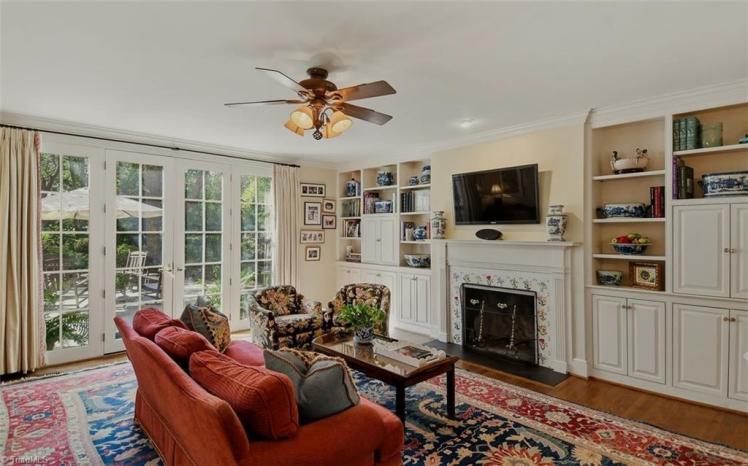
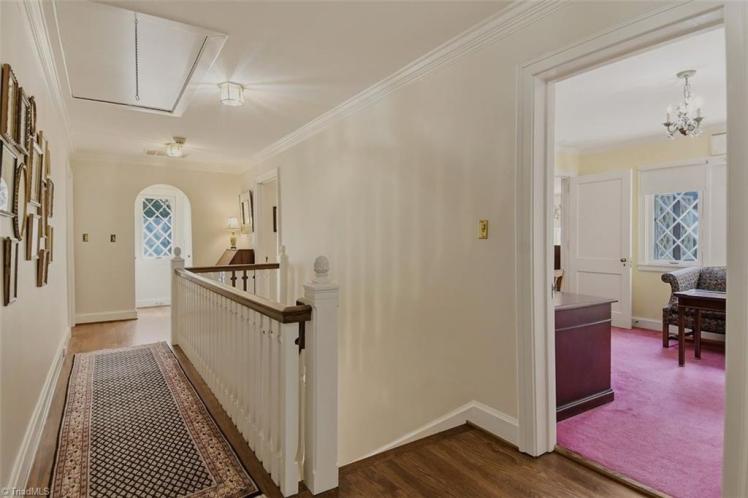
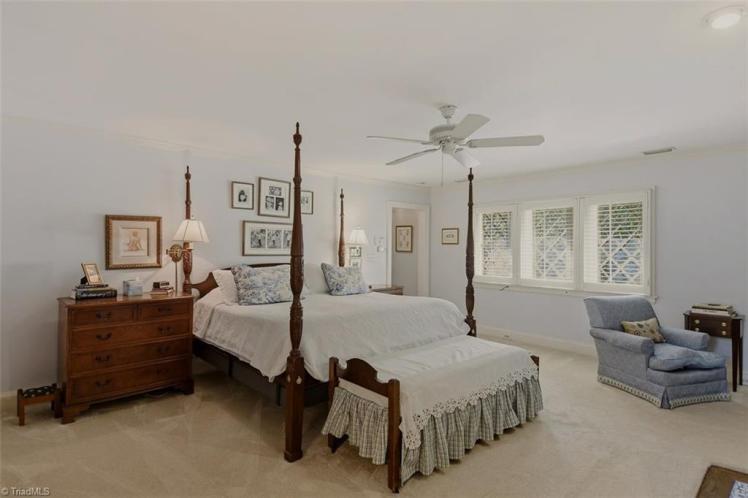
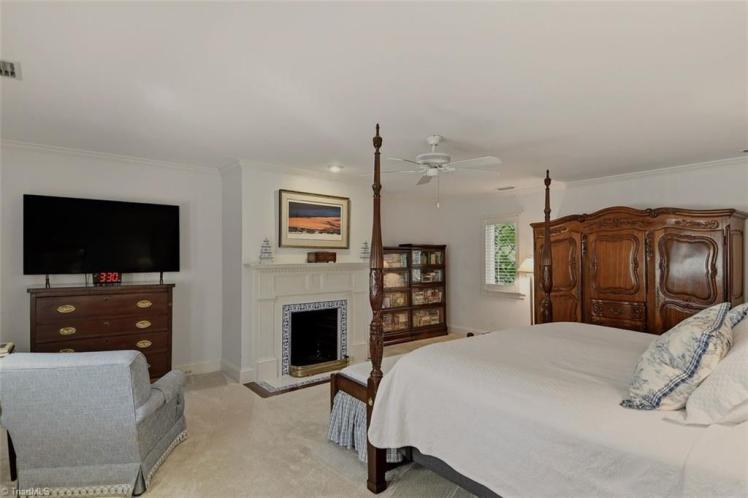
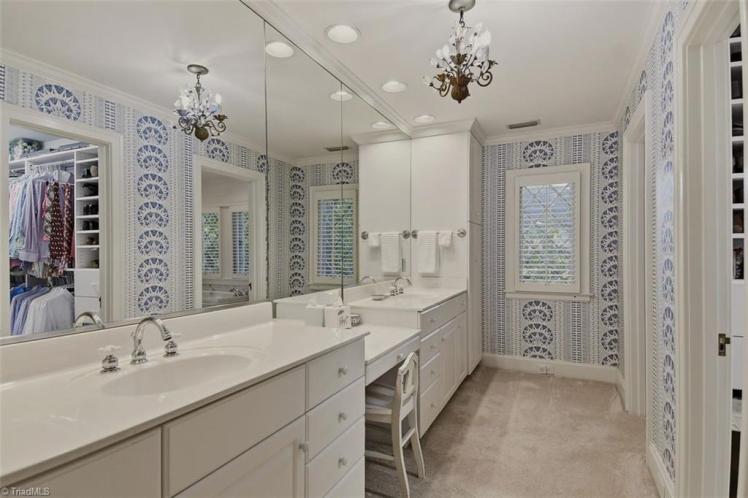
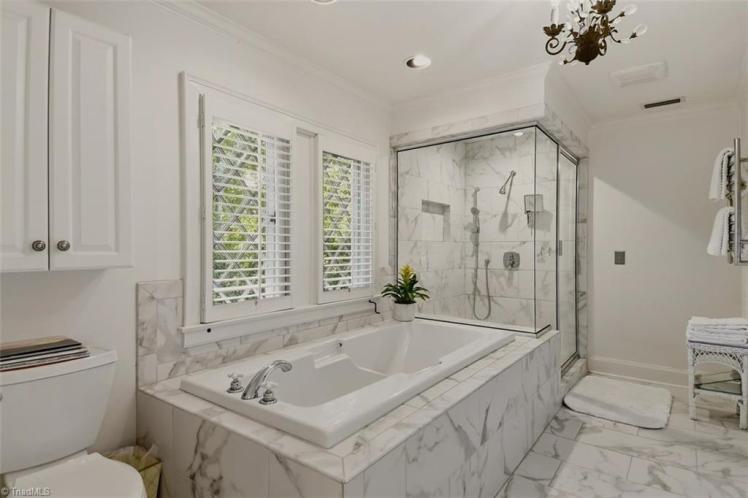
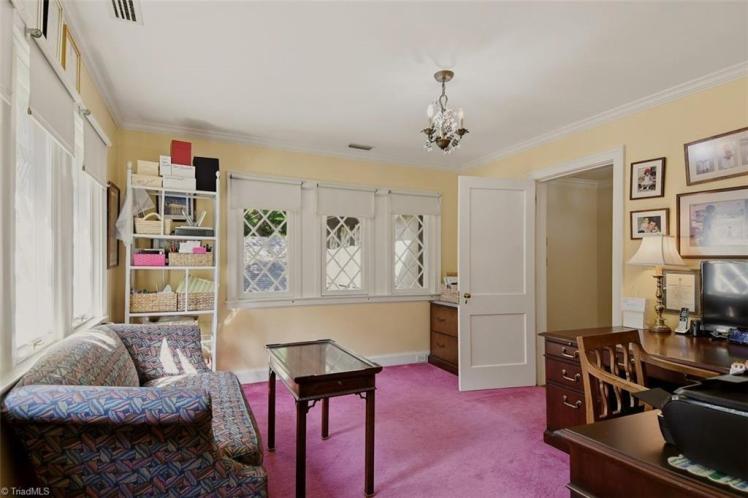
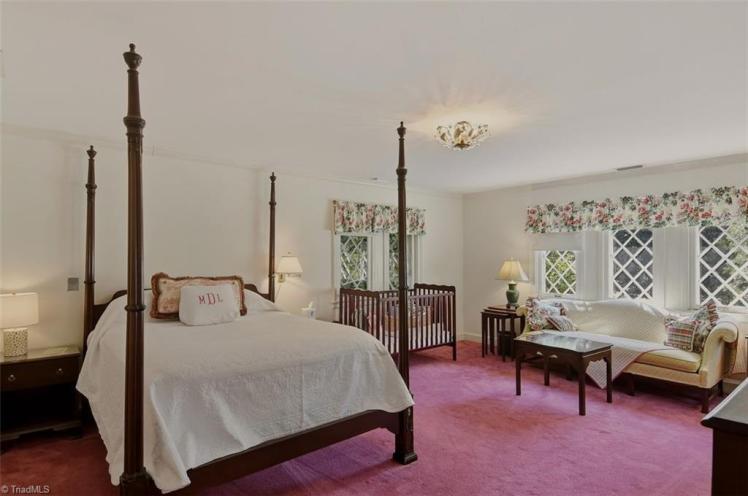
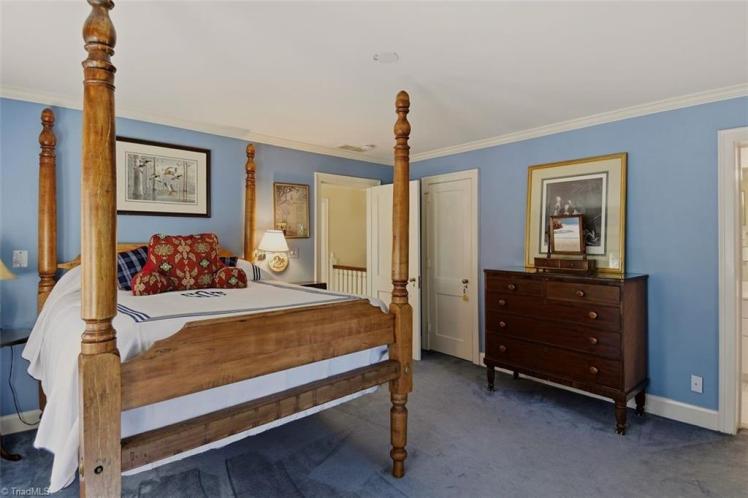
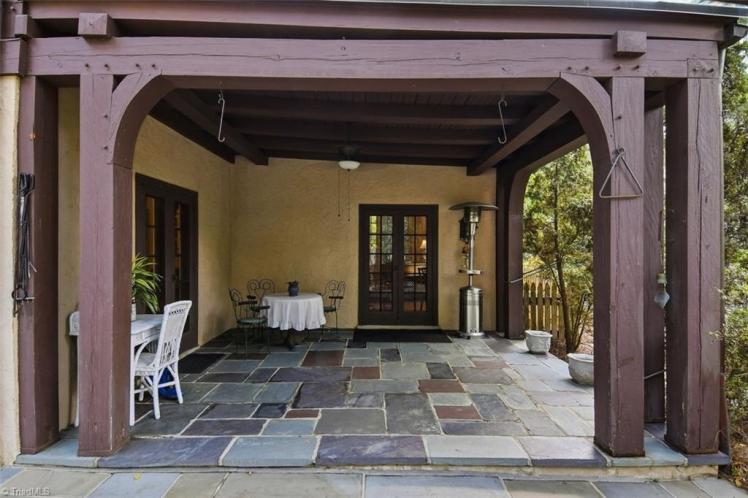
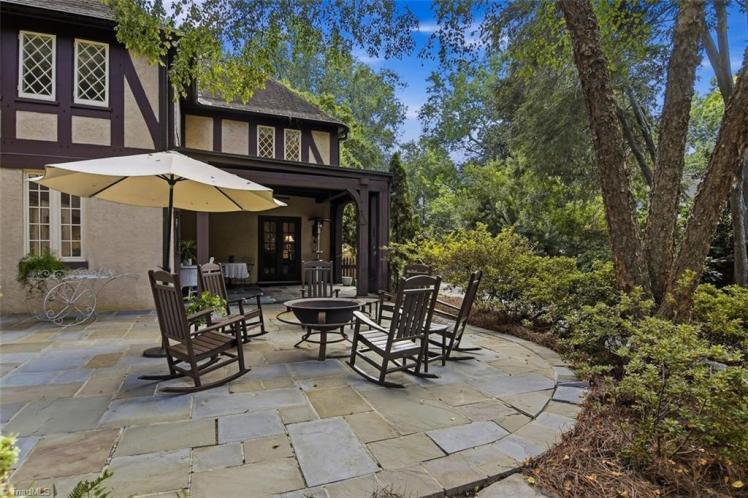
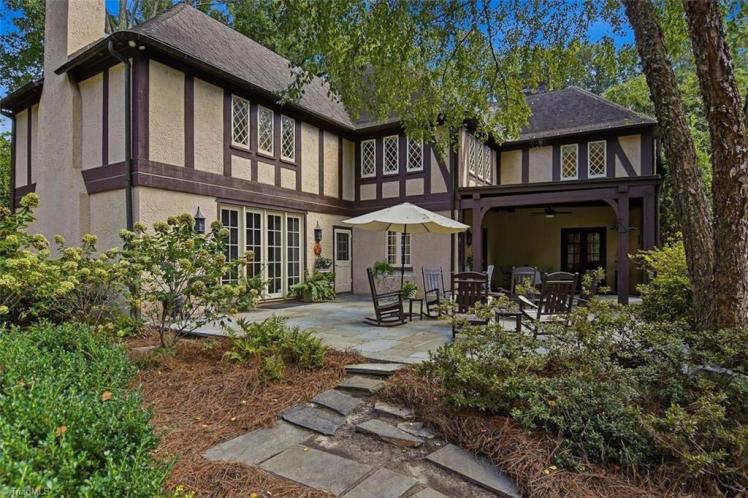
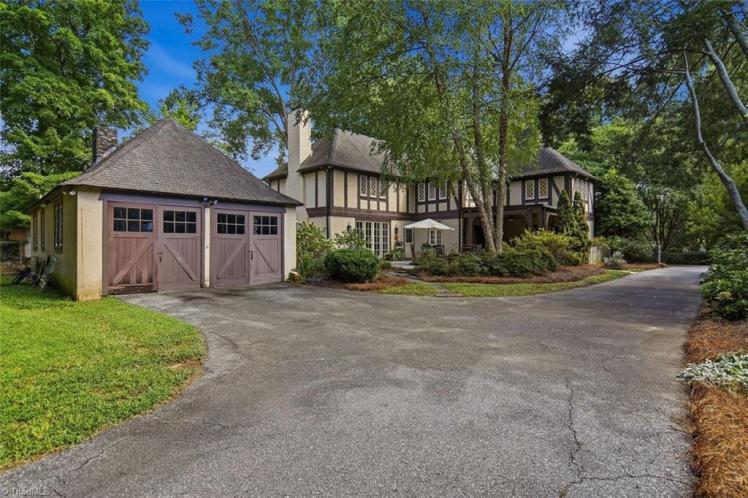
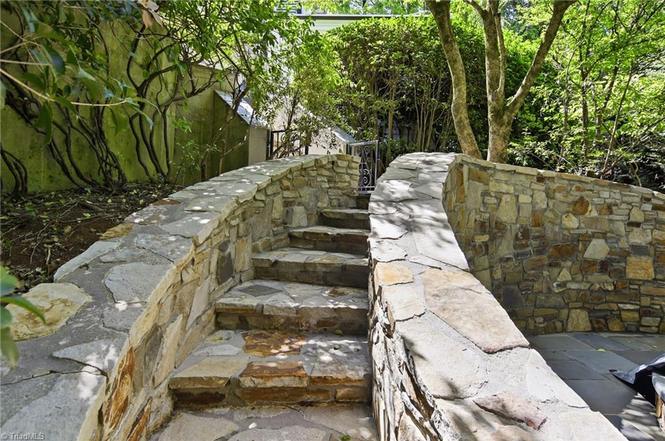
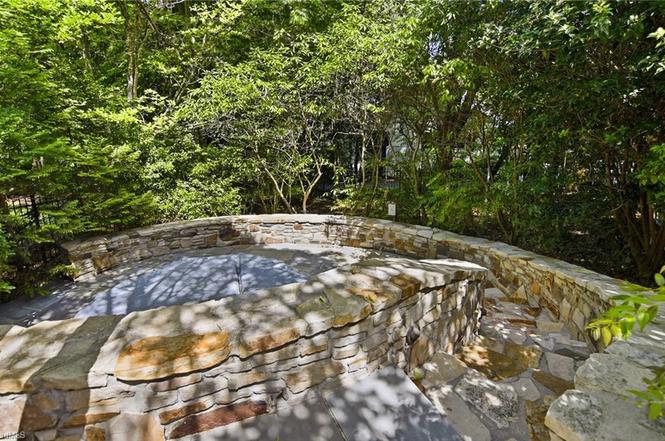
2843 Bitting Road, Winston-Salem
The Frank and Frances Lunn House
- Sold for $1.225 million on October 22, 2026 (listed at $1.25 million)
- 3 bedrooms, 3 1/2 bathrooms, 3,898 square feet, 0.50 acre
- Price/square foot: $314
- Built in 1928
- Listed September 22, 2026
- Last sale: $290,000, March 1993
- Neighborhood: Westview
- Note: The original owners were Frank Haliburton Lunn (1892-1974) and Frances Turnbull Lunn (1901-1994), who bought the property from William Neal Reynolds in 1927. Frances sold the house to the current owners in 1993.
- Frank was a pharmacist, a 1913 graduate of the UNC School of Pharmacy. He was president of Thompson Drug Company and United Retail Drug Store. He was still a practicing pharmacist at his death at age 82.
- Bitting was the maiden name of William Neal Reynolds’s wife, Kate.
2810club
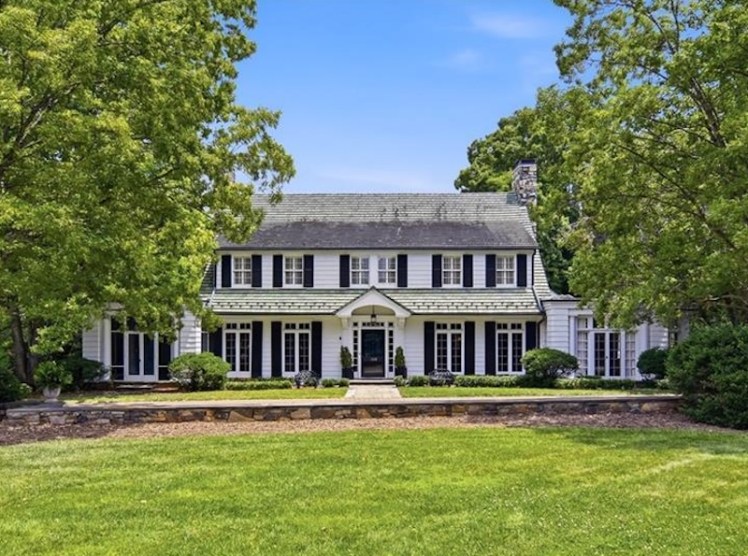
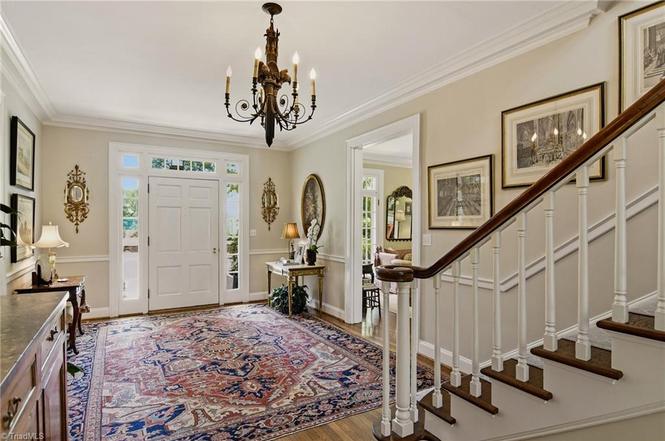
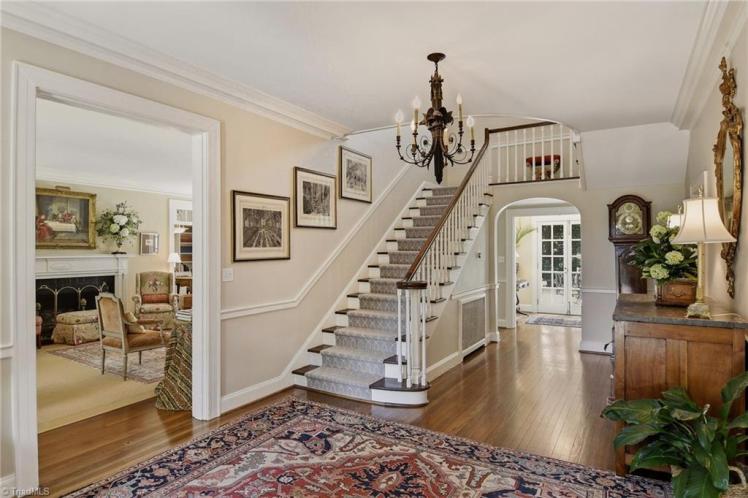
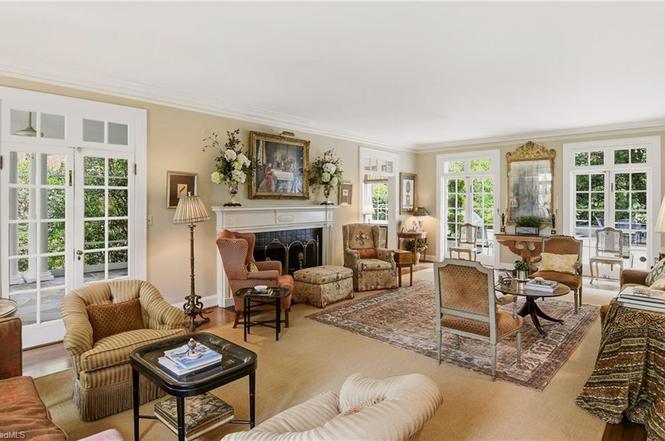
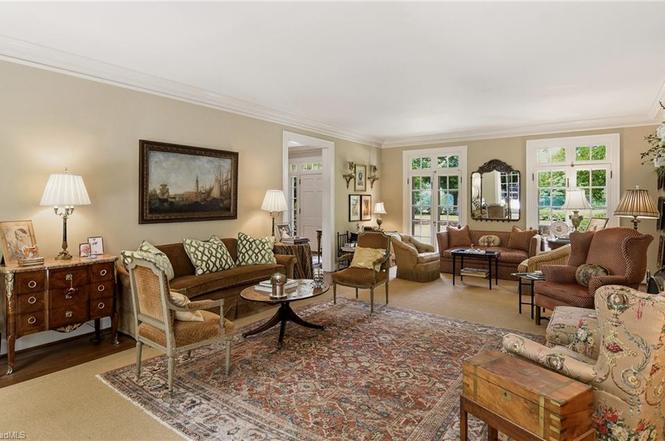
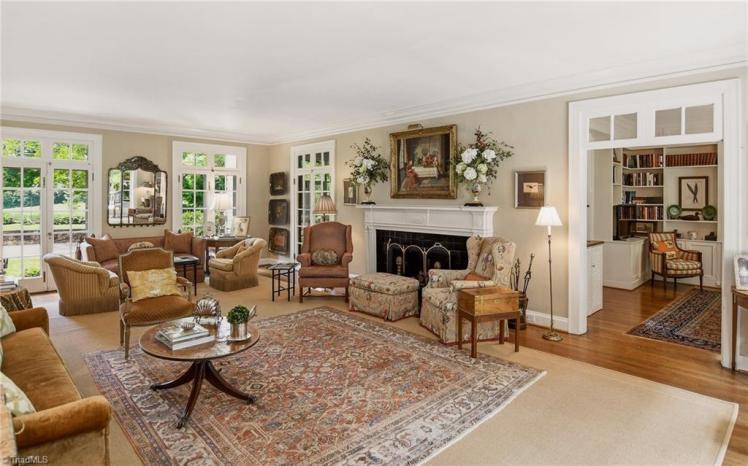
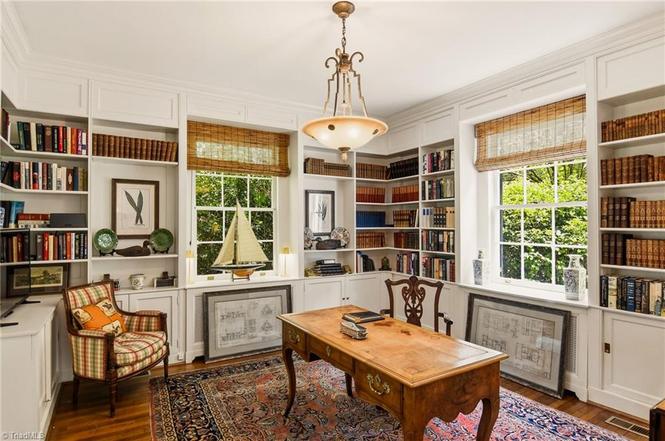
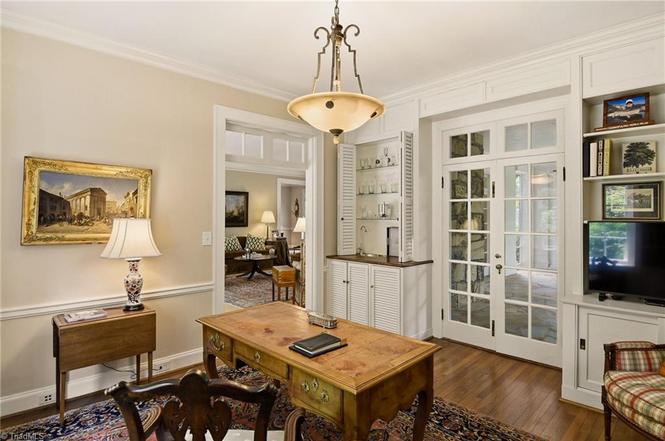
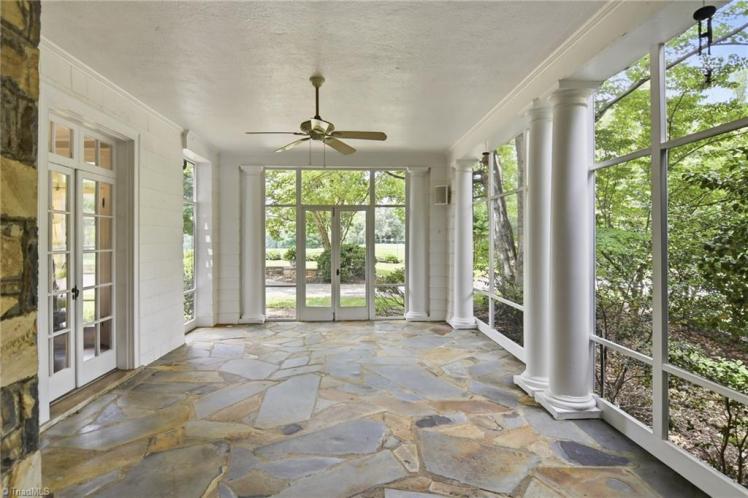
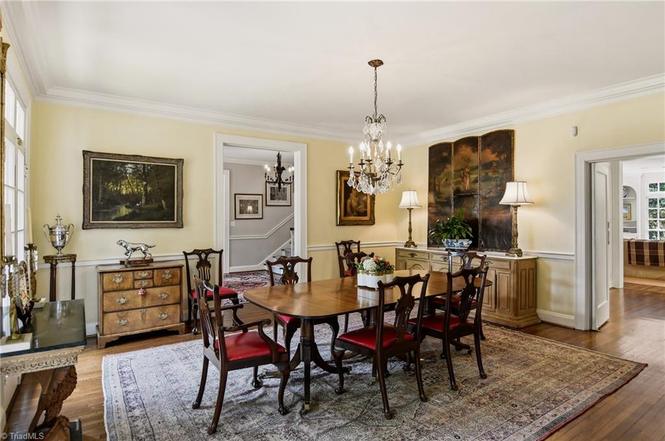
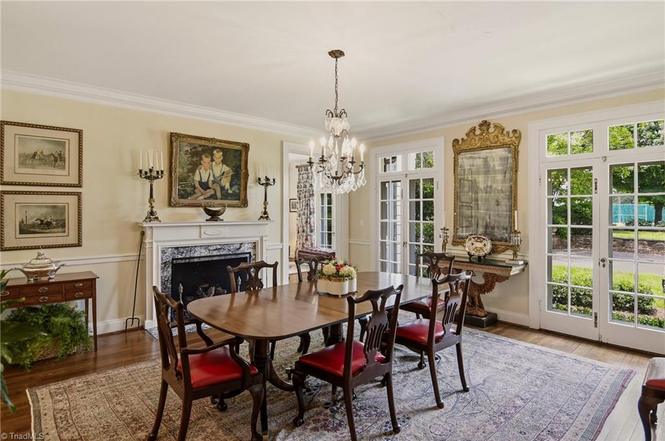
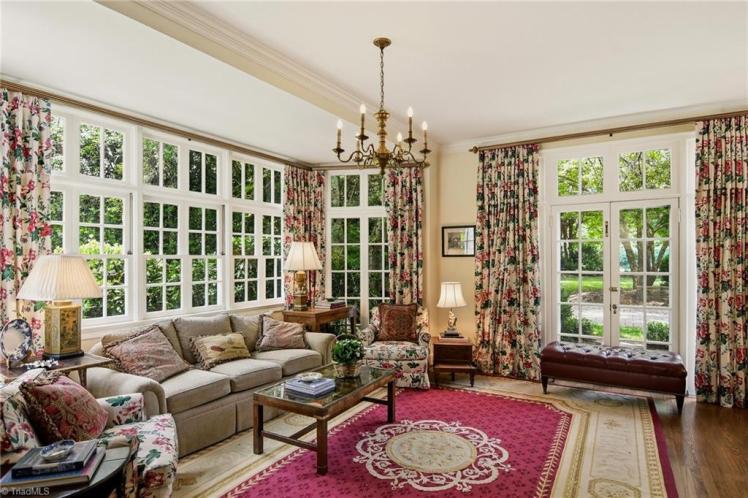
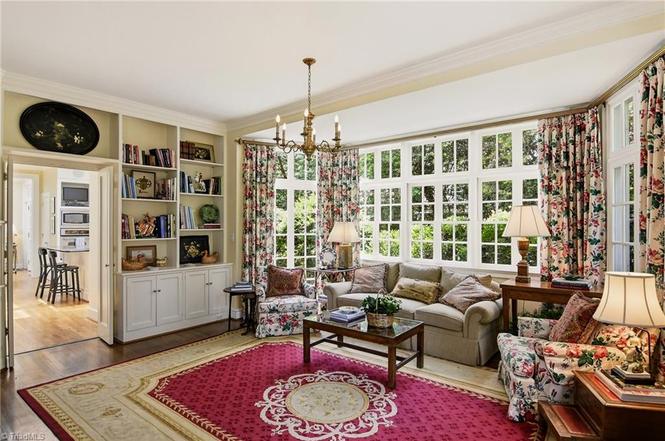
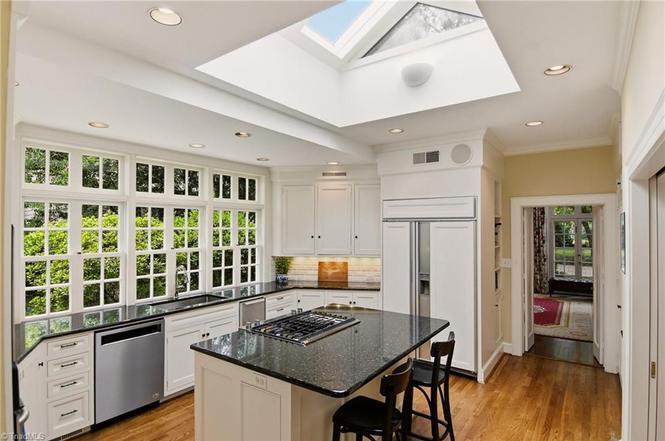
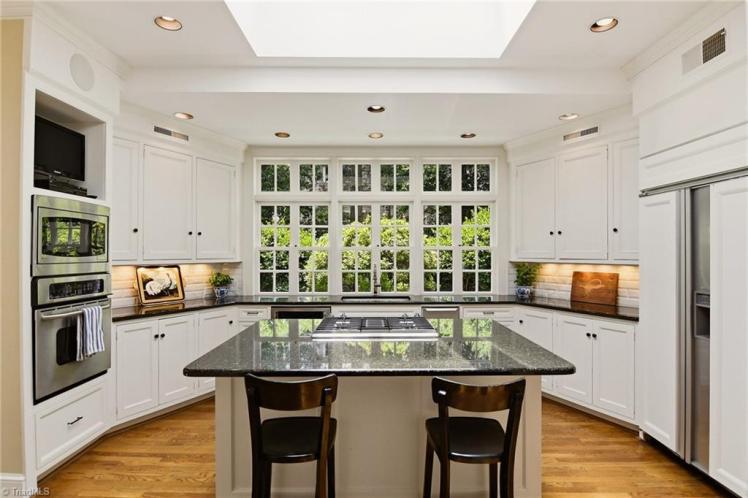
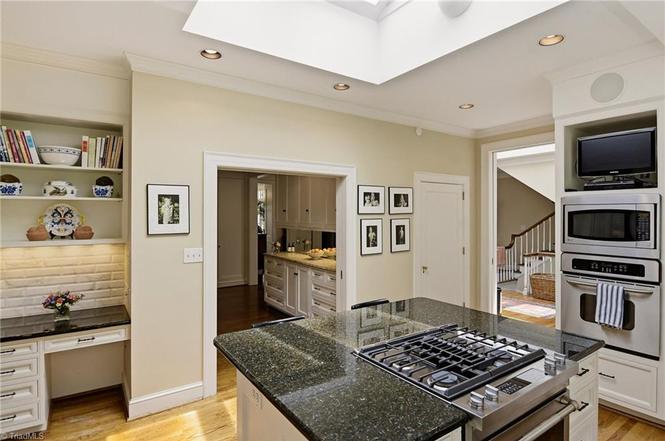
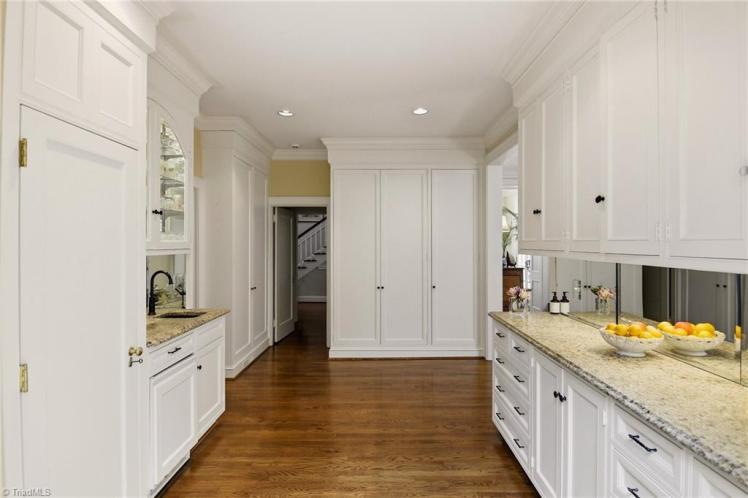
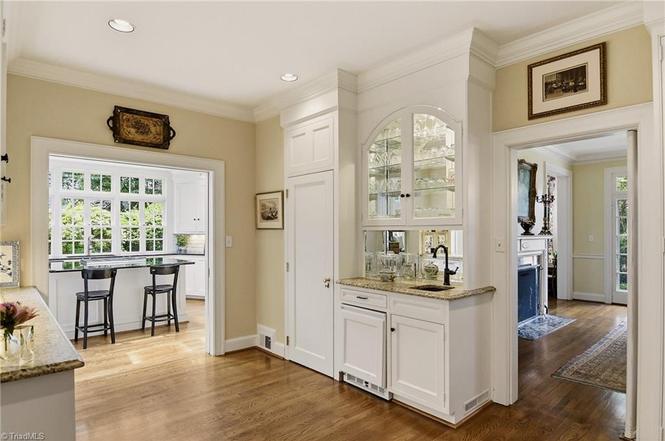
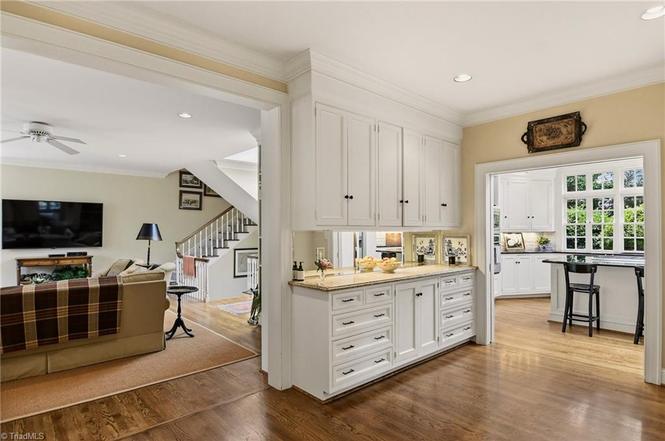
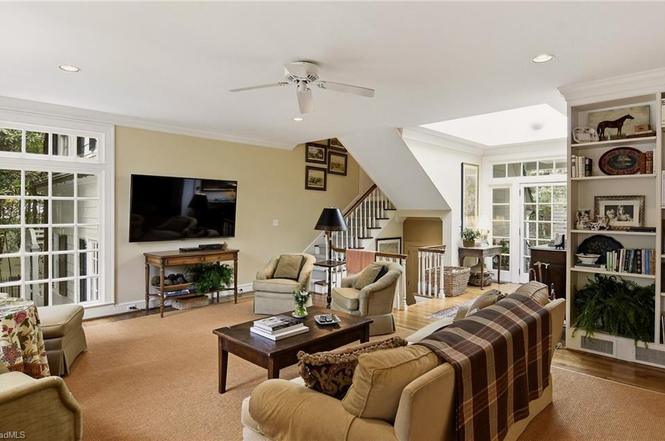
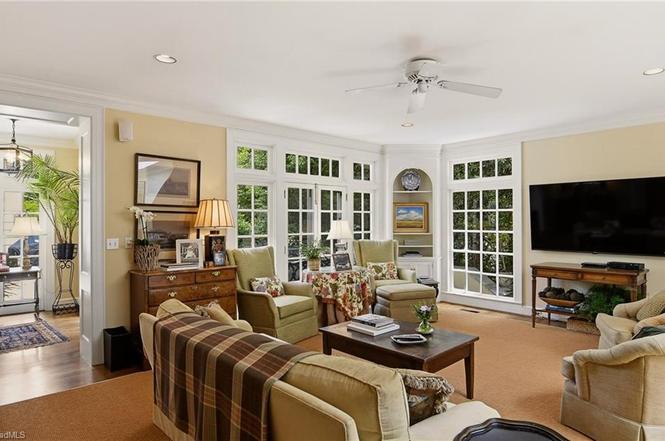
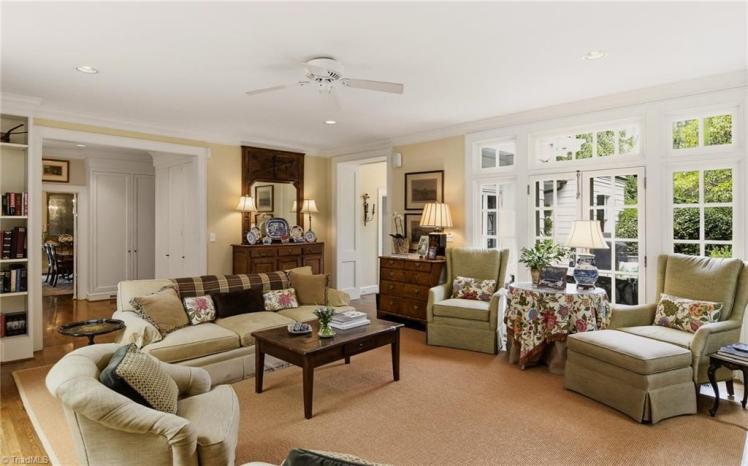
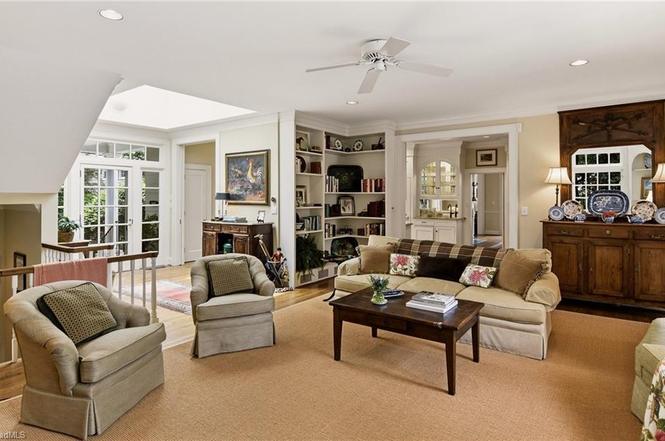
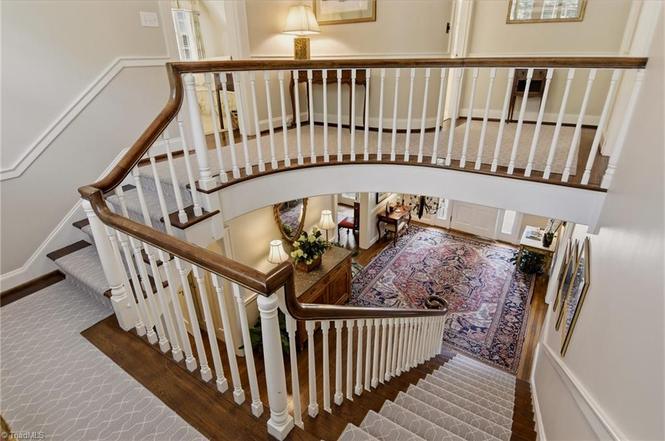
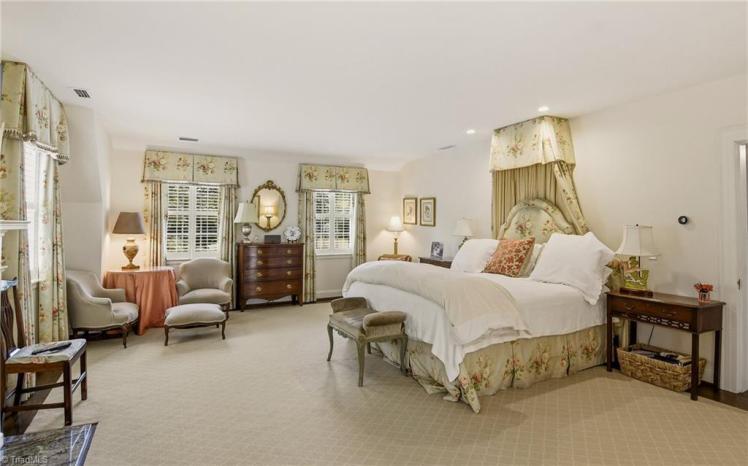
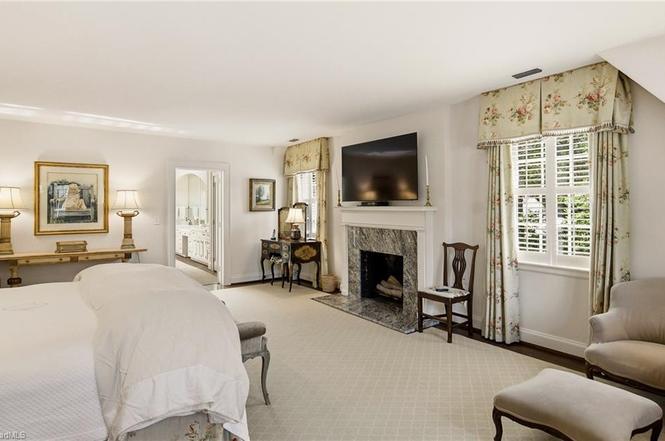
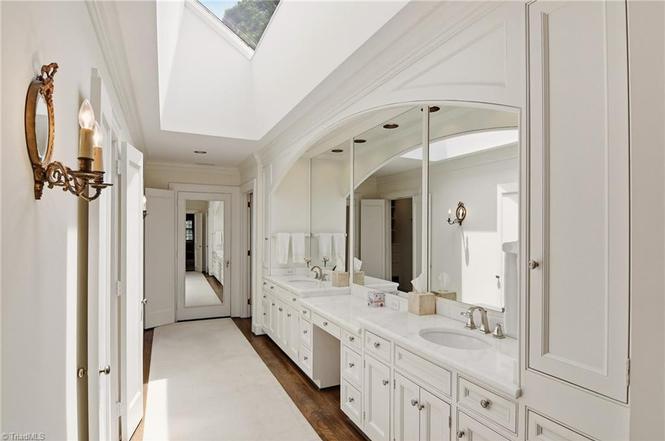
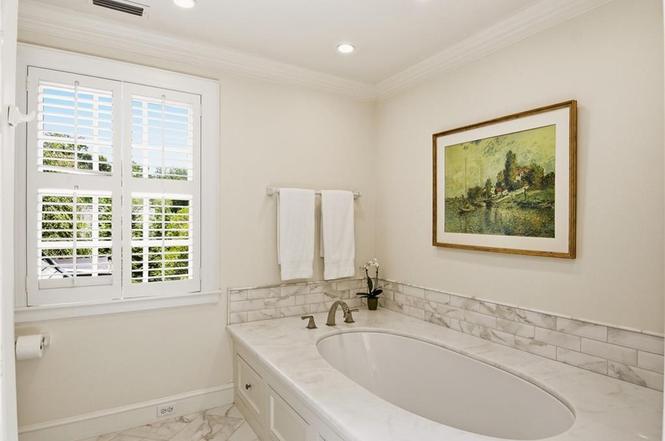
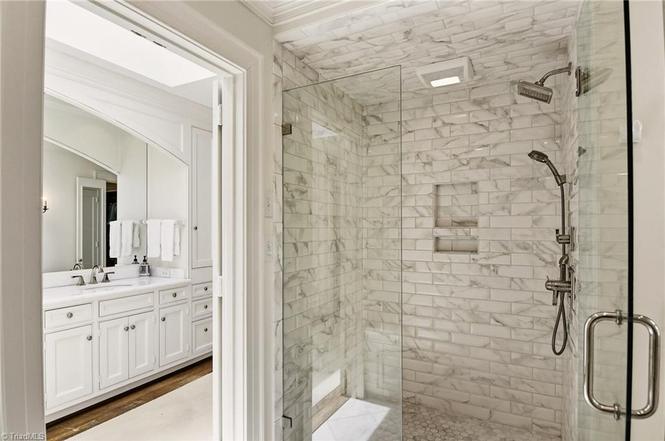
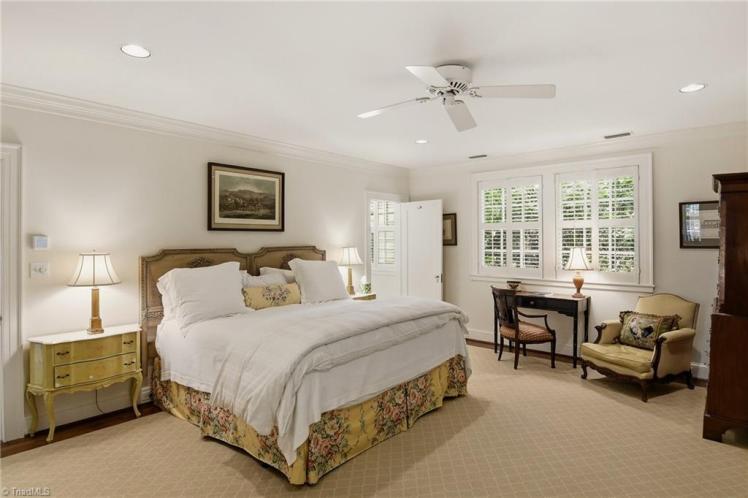
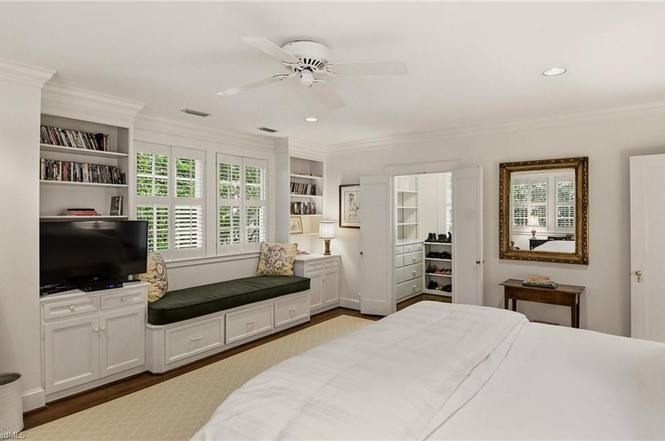
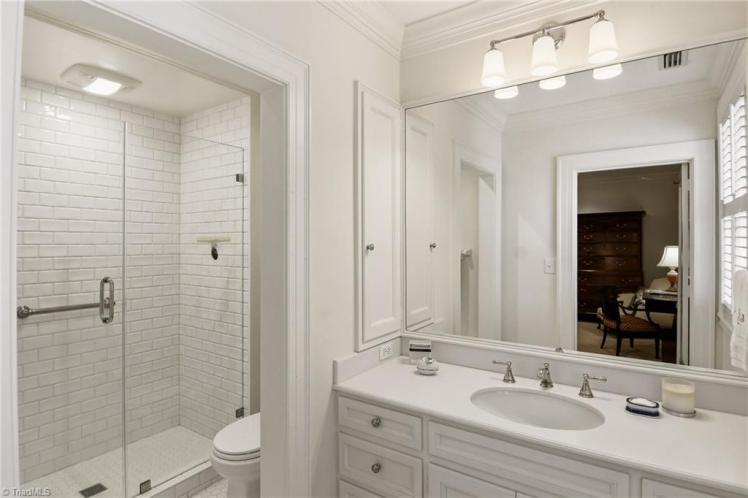
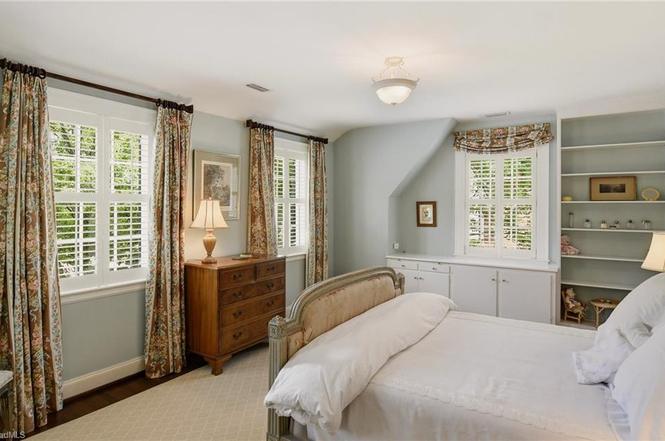
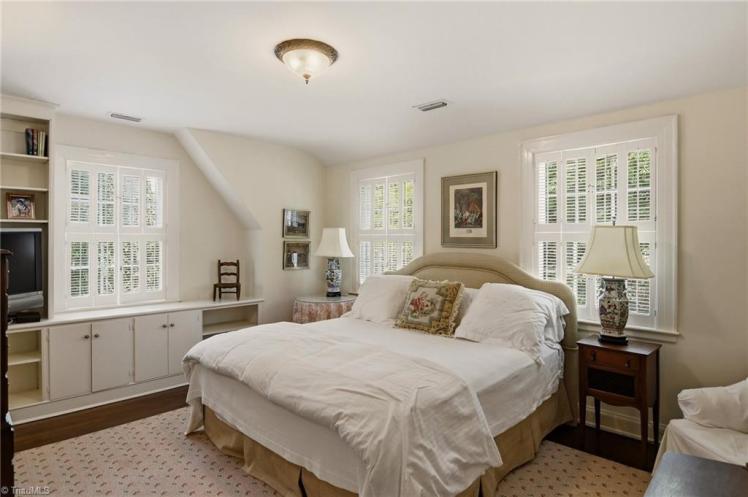
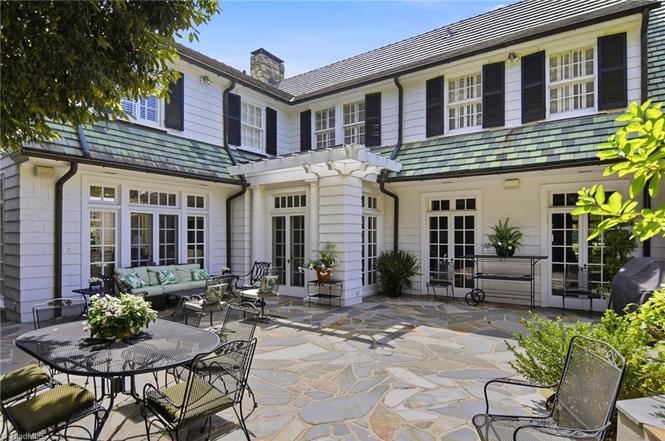
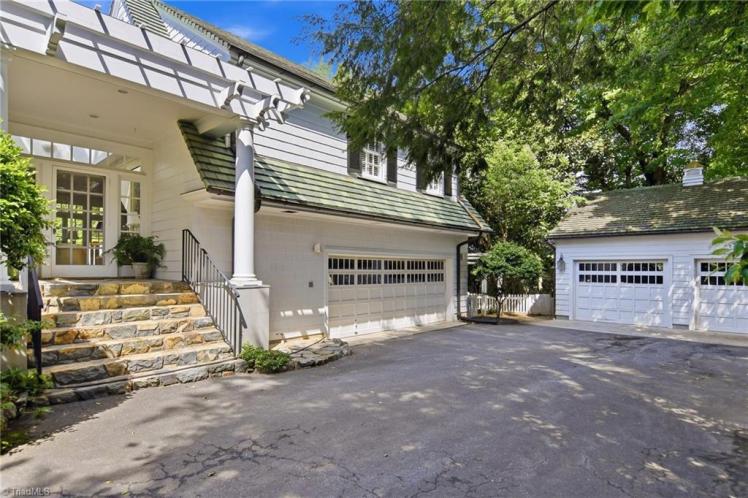
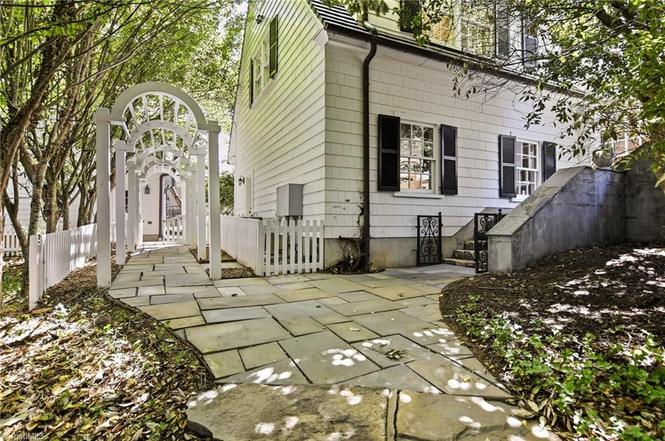
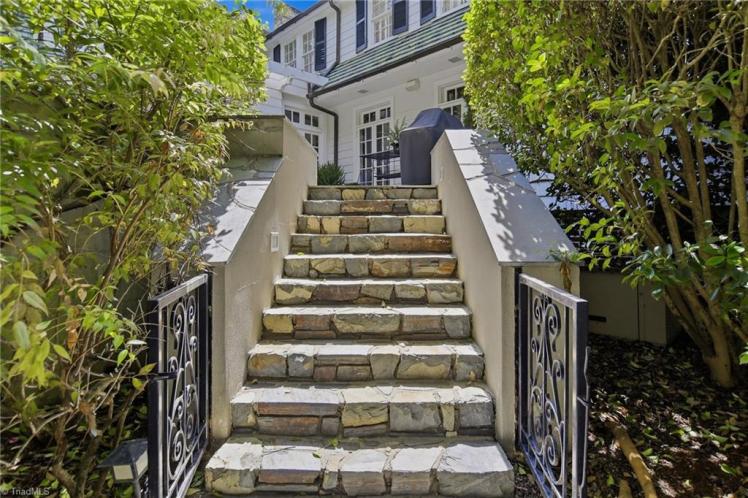
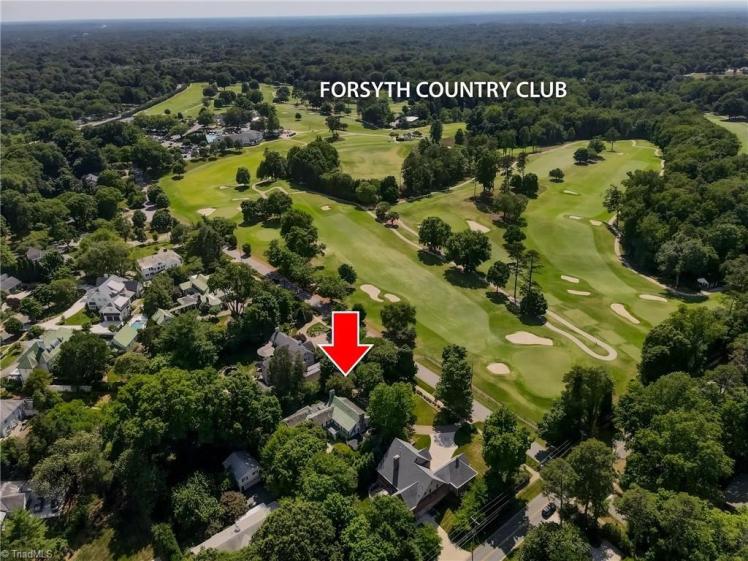
2810 Club Park Road, Winston-Salem
The Frederick and Elsie DeTamble House
- Sold for $2.075 million on September 22, 2026 (listed at $2.1 million)
- 4 bedrooms, 4 1/2 bathrooms, 5,765 square feet, 0.63 acre
- Price/square foot: $360
- Built circa 1928 (see note)
- Listed June 25, 2026
- Last sales: $1.159 million, July 2016; $1.075 million, May 2014; $1.9 million, July 2004 (pre-housing bubble); $1.2 million, July 1999
- Neighborhood: Westview/Buena Vista
- Note: The property overlooks the Forsyth County Club. It includes two garages that can accommodate four vehicles.
- County records show the date as 1938, but the original owners were listed on Club Park Road (without a house number) by 1928.
- The original owners were Frederick James DeTamble (1886-1961) and Elsie Elliott DeTamble (1888-1961). They bought the property around 1926 from William Neal Reynolds and Kate B. Reynolds.
- “Winston-Salem architects Northup and O’Brien’s design for Twin City Motor Company president Frederick J. DeTamble and his wife Elsie’s house at 2810 Club Park Road … manifests the ongoing influence of the bungaloid form and green-and-white color scheme popularized by [Charles Barton] Keen’s Reynolda House design. The DeTamble residence features full-width shed dormers, a pent roof over the first story’s French doors, a pedimented central entrance hood, and one-story, flat-roofed flanking sunporches with Tuscan columns. A green Ludowici-Celadon tile roof and stone end chimneys with tall stacks add texture and color.” (Winston-Salem’s Architectural Heritage)
- [I can’t believe the author used the word “bungaloid.”]
- Frederick was a native of Toronto. He was raised in Indianapolis and graduated from Detroit University. In 1908 he joined his father in an automobile manufacturing venture in Anderson, Indiana. It lasted only three years. He became a salesman for Ford, took a district manger position in Charlotte, and in 1916 acquired the company’s Winston-Salem dealership. He was the proprietor of Twin City Motor Company, the local Ford, Lincoln, Lincoln-Zephyr and Fordson truck and tractor dealer, for 37 years. He also served on the city wrestling commission.
- When he retired in 1953, he said he had heard there was still a DeTamble car being driven in Georgia.
- Elsie was a native of Detroit. When she died, eight months after Frederick, she left an estate of $2.4 million, the Winston-Salem Journal reported in a front-page article. The two largest bequests went to First Presbyterian Church, $915,000, and Father Flanagan’s Boy’s Town in Nebraska, $674,000.
- The lead headline in the paper that day, November 30, 1962, was, “Chimp Safe After Twice Orbiting Earth; Glenn Is Selected For Orbital Flight.”
333echestnut


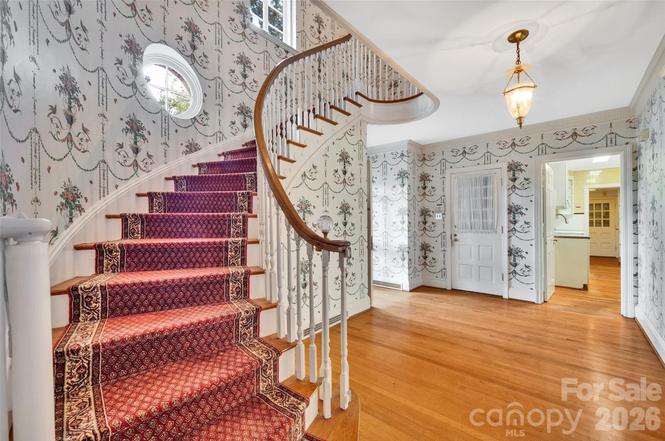


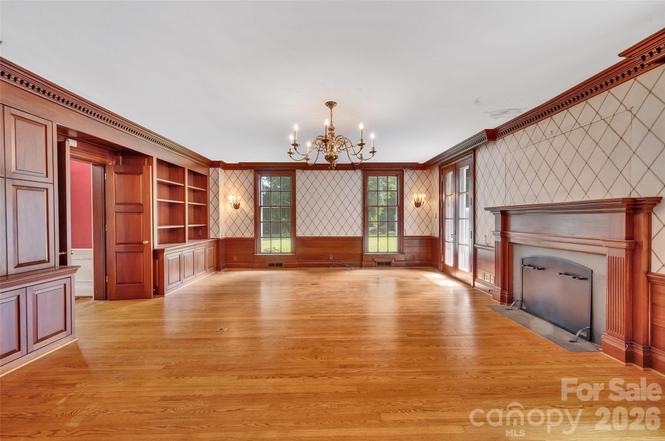


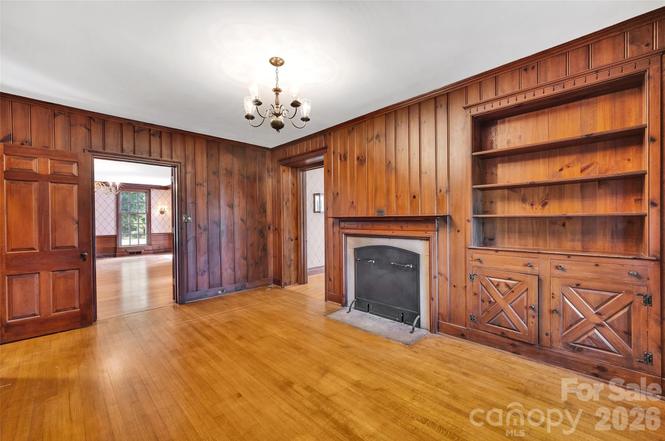


333 E. Chestnut Street, Troy, Montgomery County
The Harris-Capel House
- Sold for $459,000 on September 11, 2026 (listed at $459,000)
- 5 bedrooms, 6 bathrooms, 4,651 square feet, 1.62 acres
- Price/square foot: $99
- Built in 1938
- Listed July 1, 2026
- Last sale: $30,750, November 1959
- Note: Designed by Charlotte architect Charles W Connelly. The listing calls the house “Georgian-inspired,” although its rambling, asymmetrical design doesn’t immediately suggest that description.
- The house still has a slate roof.
- The primary bedroom is a 1985 addition.
- The house has had only two owners. Dr. William Thomas Harris (1900-1953) and Sarah Louise Tomlinson Harris (1906-1982) built the house. William was a physician. He served as a member of the Board of Trustees of the University of North Carolina. One of the fireplaces bears a caduceus, the symbol of medicine.
- In 1959 the house was bought by Jesse Smith Capel (1932-2023) and Julianne Boone Capel (1935-2024). Jesse was a graduate of N.C. State University in textile management. He served a hitch in the Army before returning home and joining the family business, Capel Rugs. After the death of his father, company founder A. Leon Capel, Jesse and his two brothers became co-owners of the company. Jesse was in charge of production and overseas purchasing. He also served as a director and chairman of FirstBancorp of Troy; his father had served on the bank’s board when it was still the Bank of Montgomery.
- Julianne Boone Capel was born in Waynesville and was said to have been a direct descendant of Daniel Boone. She was a co-author of several community cookbooks, a gardener and beekeeper. She had a home apiary and led the Montgomery County Beekeepers Association.
11741nc150


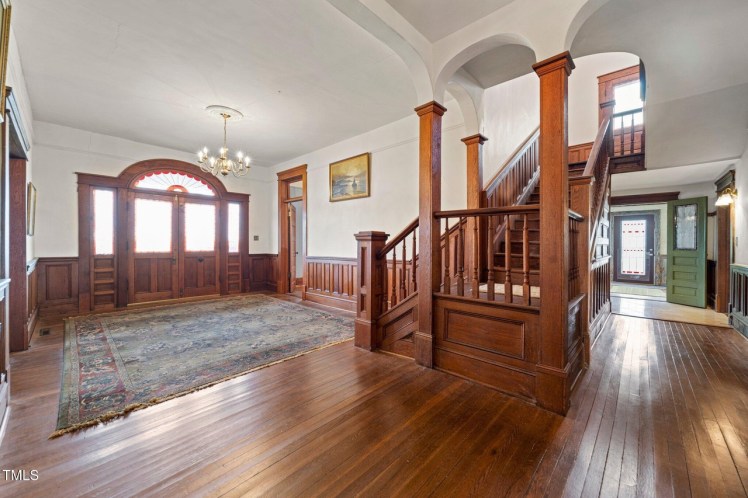


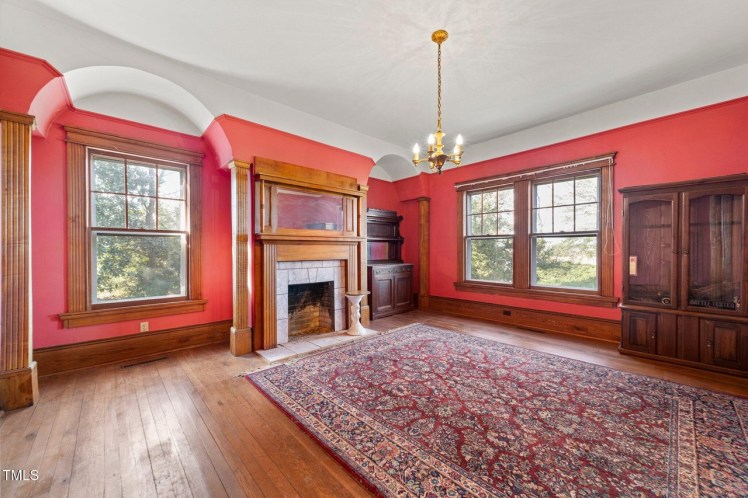






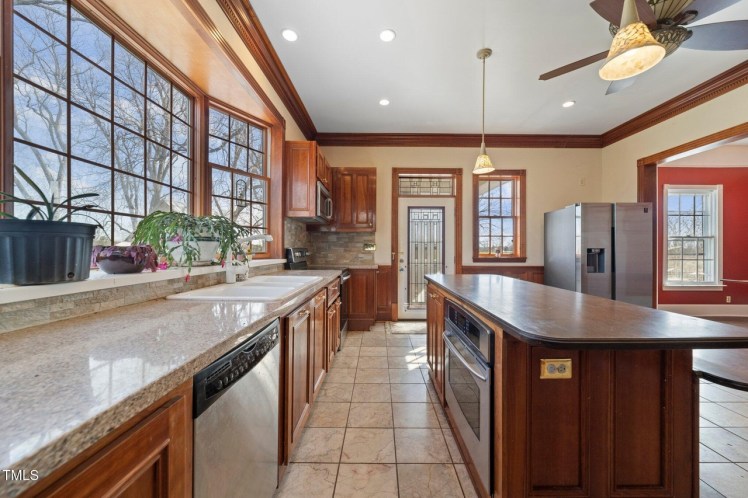


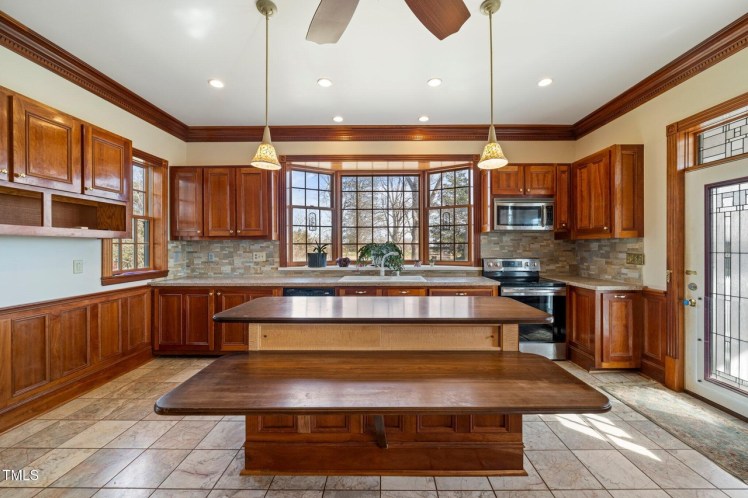
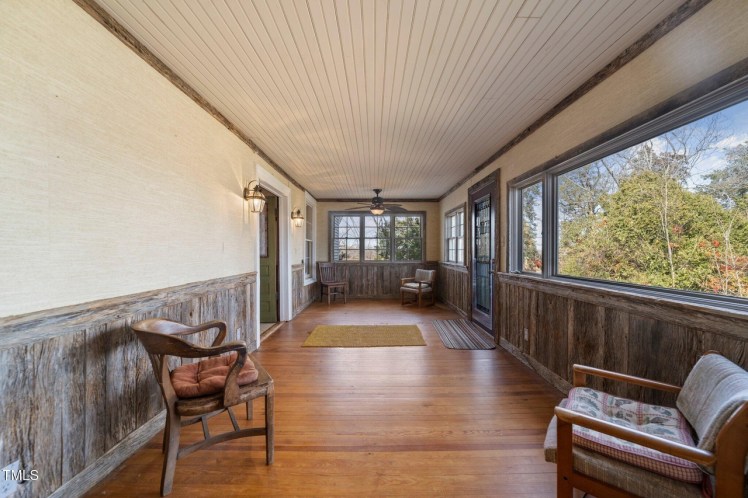

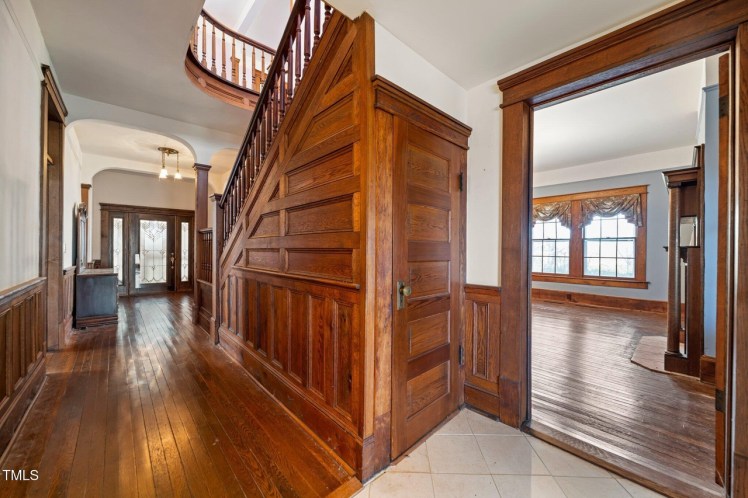


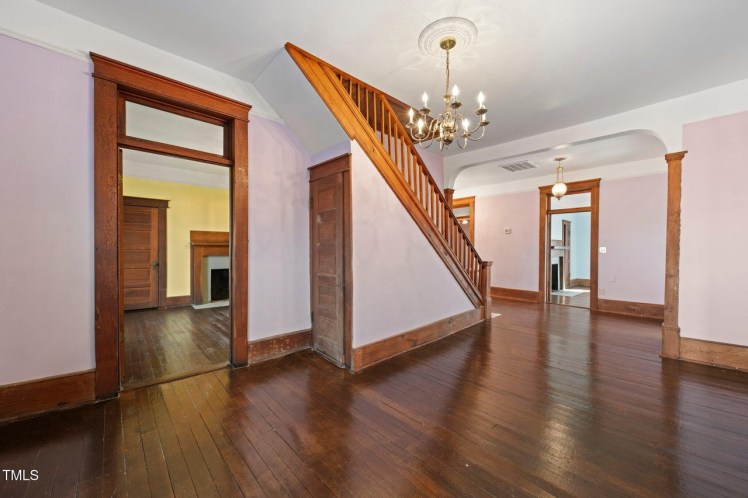
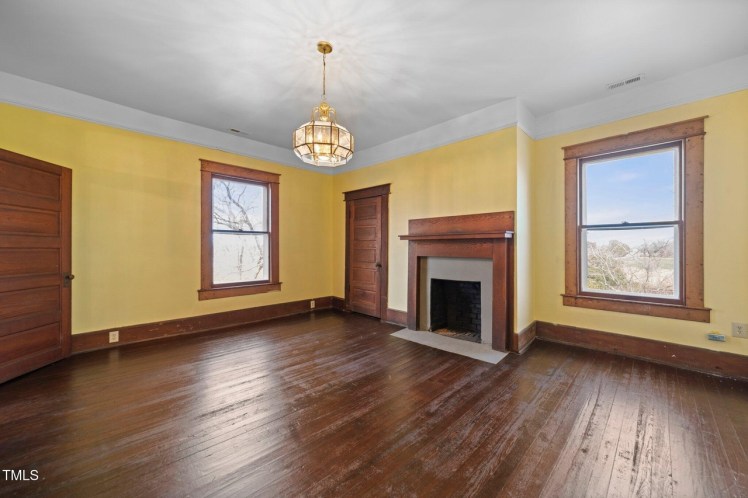
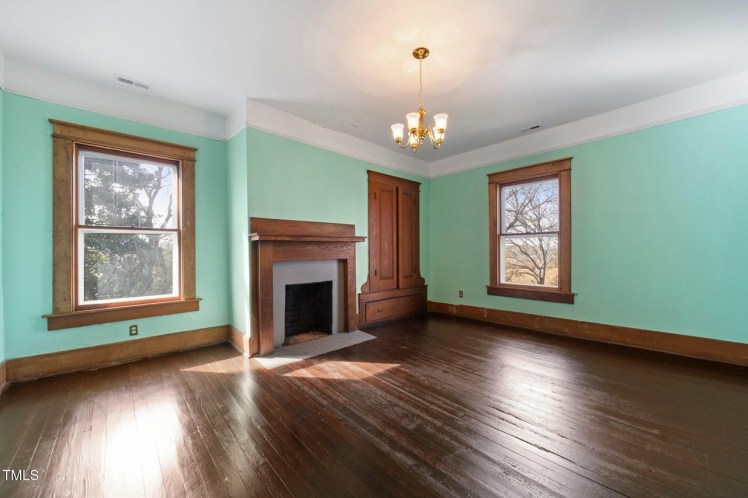

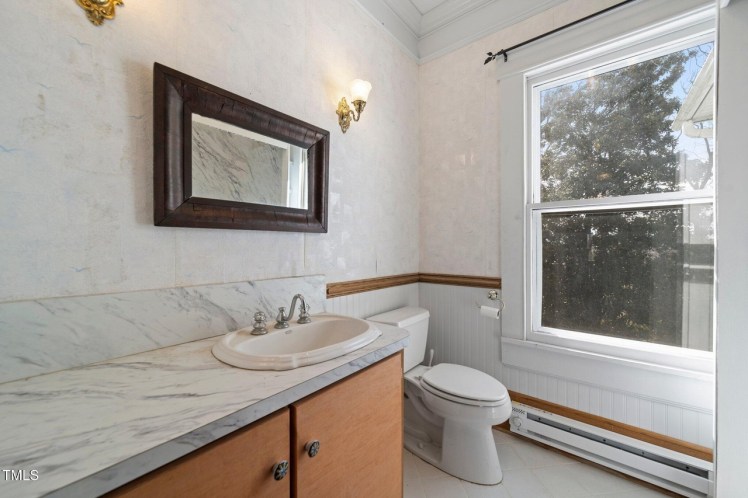







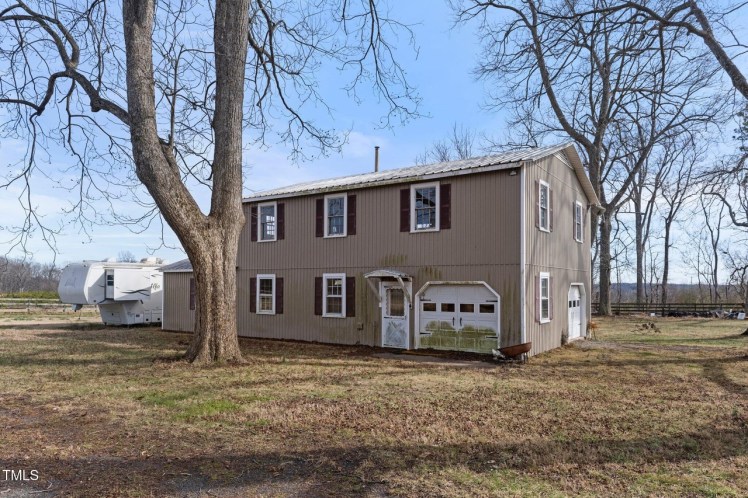
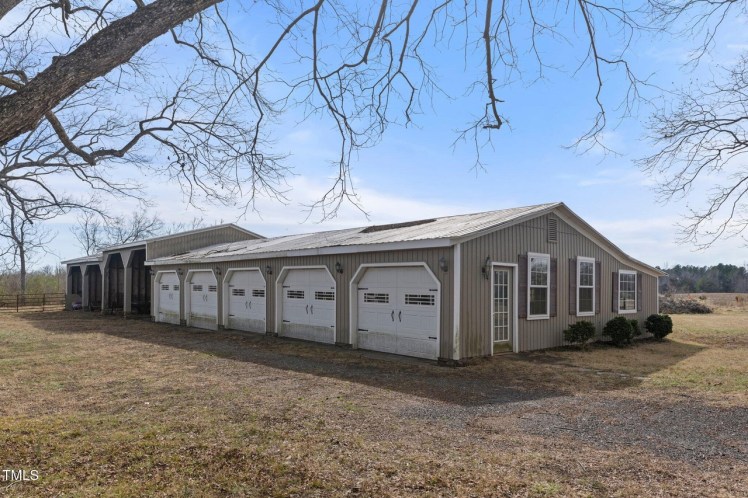

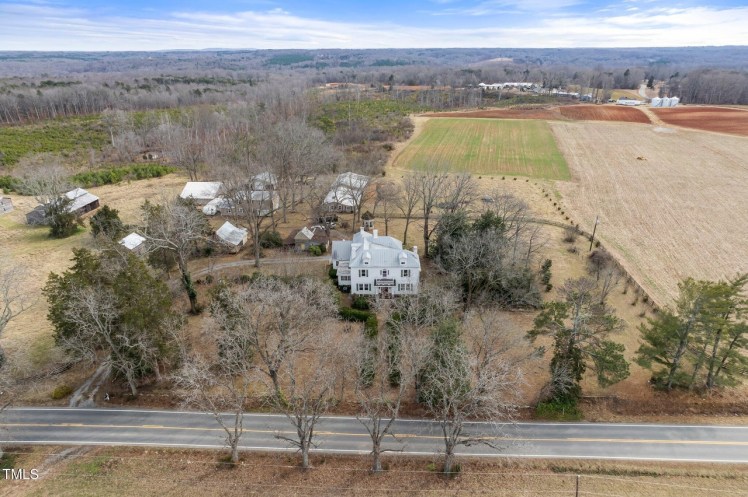


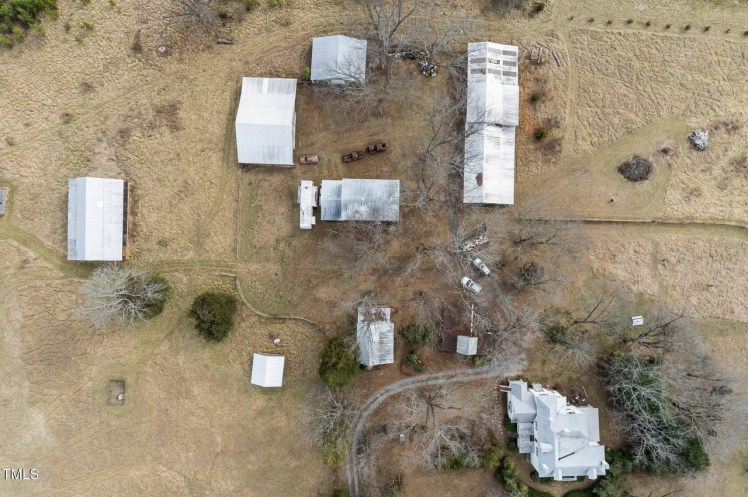

11741 N.C. Highway 150, Caswell County
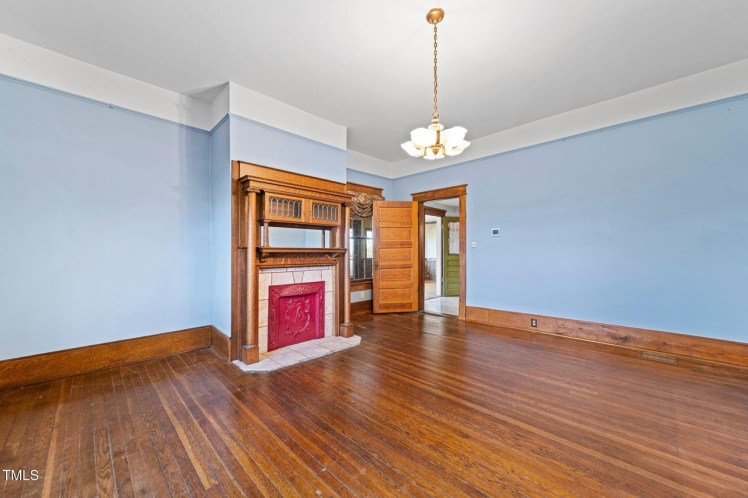
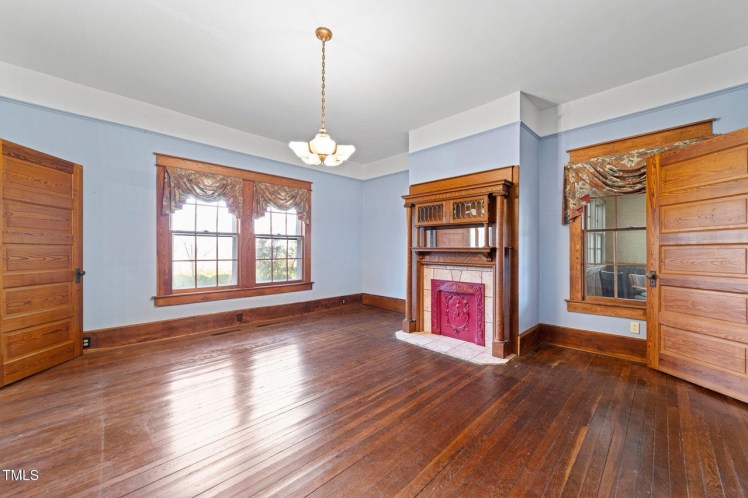
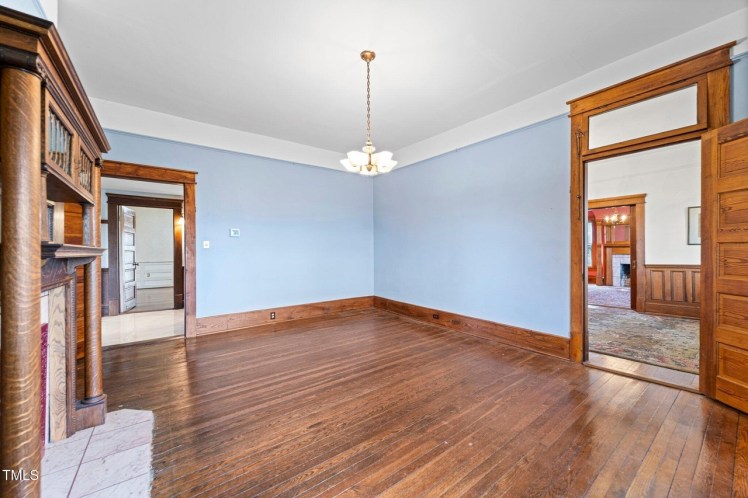
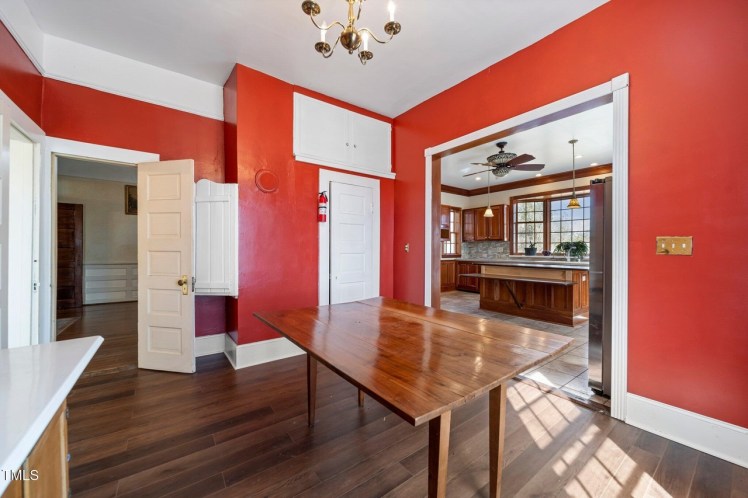
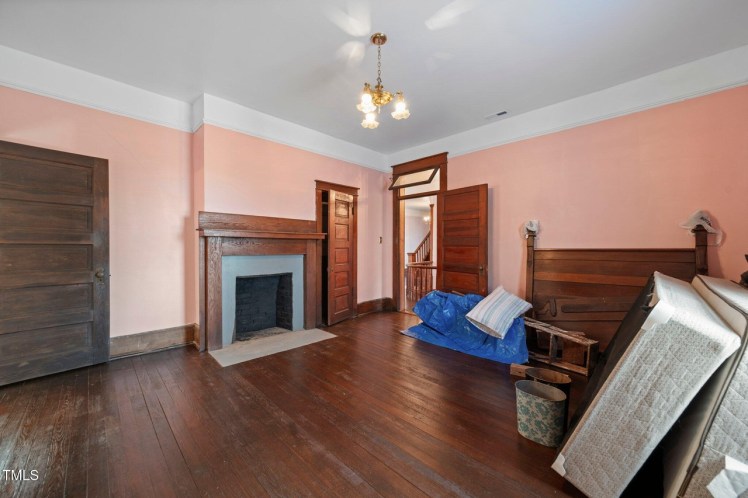
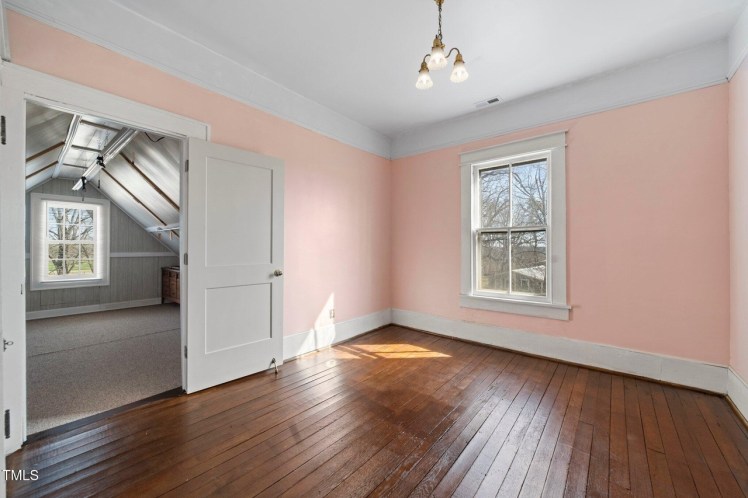
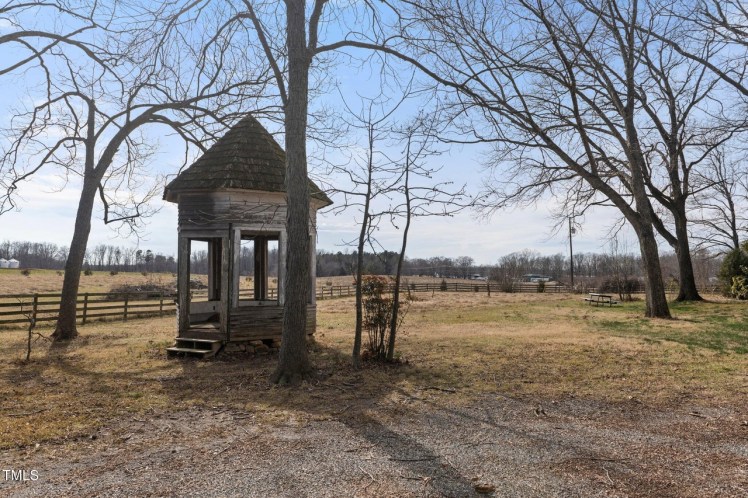
The Ansel Ware House
- Sold for $552,500 on July 28, 2026 (originally $850,000)
- 5 bedrooms, 3 full bathrooms and 2 half-bathrooms, 4,274 square feet, 6.84 acres
- Price/square foot: $129
- Built in 1858 (per listing; see note)
- Listed February 17, 2025
- Last sale: $283,500, July 2020
- Neighborhood: Stony Creek Township, near the Ashland community. The property has a Reidsville mailing address.
- Note: County records date the house only to 1907 (it’s common for county records to fail to reflect the actual age of historic structures). The architecture of the house suggests an earlier date, but, oddly, it’s not documented in records of the State Historic Preservation Office or in An Inventory of Historic Architecture, Caswell County, North Carolina. A trove of historical documents are reported to have been auctioned off in 2020 to a buyer from New York.
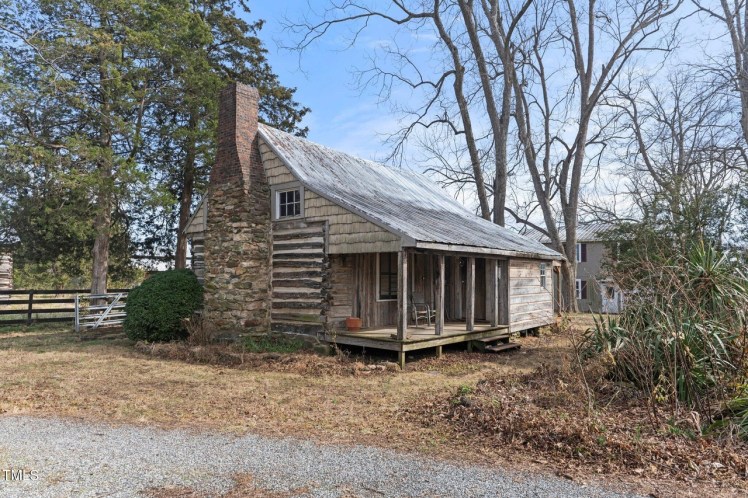
- Listing: “This is an historic property that has buildings on it that were present on the property during the Revolutionary War.”
- There’s plenty of lore surrounding the house. The property’s log cabin is said to have sheltered Continental soldiers after the Battle of Guilford Courthouse. Interior woodwork — much of it unpainted — is attributed to master craftsman Thomas Day of Milton. Jesse James is said to have lived in the house for a time (and, yes, there actually does appear to be evidence that James visited North Carolina). There’s a lot more digging to be done on this one.
- The original owner appears to have been Ansel Ware (1802-1872). The property remained in the Ware-Matlock-Griffin family until 2019. Ansel was a farmer and, as of 1860, owner of 14 slaves. His will left the 230-acre property to his son, Joseph Talbot Ware (1850-1927). Deeds refer to the property as the J.T. Ware home place. He was a farmer and “one of the best known and most highly respected citizens in his county,” the Greensboro Daily News reported in his obituary. Joseph passed the property to his children.
- In 1945, Joseph’s son Dr. Sterling Ansel Ware (1875-1962), a physician in Atlanta, and daughter Lucy Alice Ware Waynick (1880-1976) of Greensboro sold it to their sister Annie Miller Ware Matlock (1885-1972).
- Annie sold the house in 1969 to her daughter Una Matlock Griffin (1914-2003) and son-in-law John Earl Griffin Sr. (1915-1992). They lived in Greensboro from 1942 to the early 1970s. Una was a nurse. John held a variety of sales jobs and operated Griffin Finance Company and similar firms in High Point. He was very active in the Odd Fellows, serving as Noble Grand Master of the Greensboro lodge and Grand Master of North Carolina. He also served as chairman of the Odd Fellows’ World Eye Bank and Visual Research Foundation. John and Una lived in Greensboro’s College Hill neighborhood and were members of the College Place United Methodist Church.
- Una was still living in the house at her death in 2003. The property, then totaling 200 acres, passed to their son, John Earl Jr. (d. 2019, age 75). He was a professor of architecture and mechanical engineering and also was a farmer. He was an accomplished woodworker and furniture maker. He apparently didn’t marry or have children. His estate sold the property in 2019.
705woodland
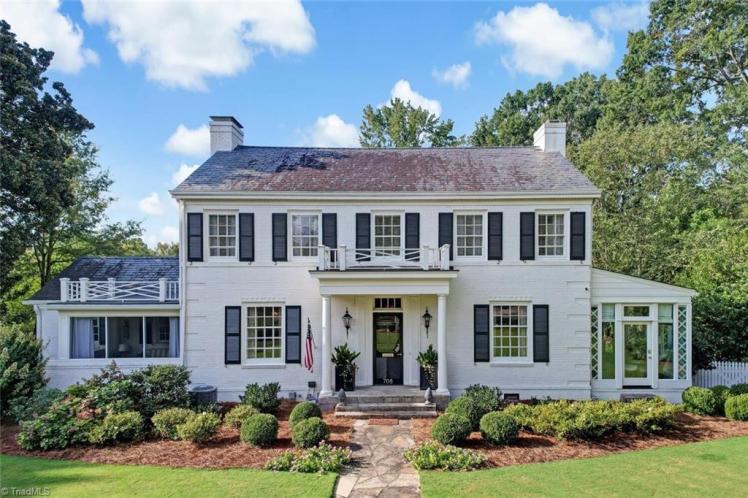
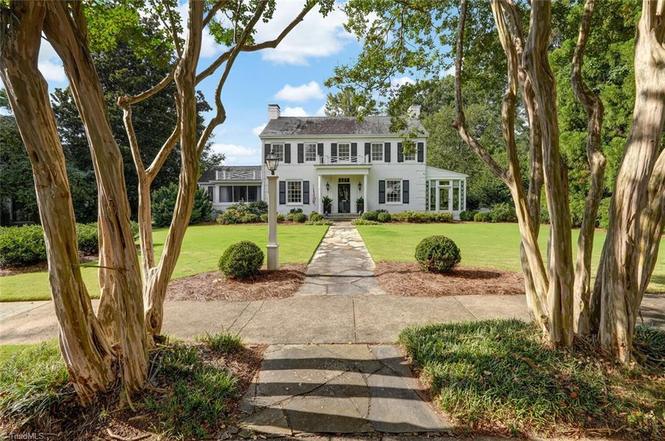
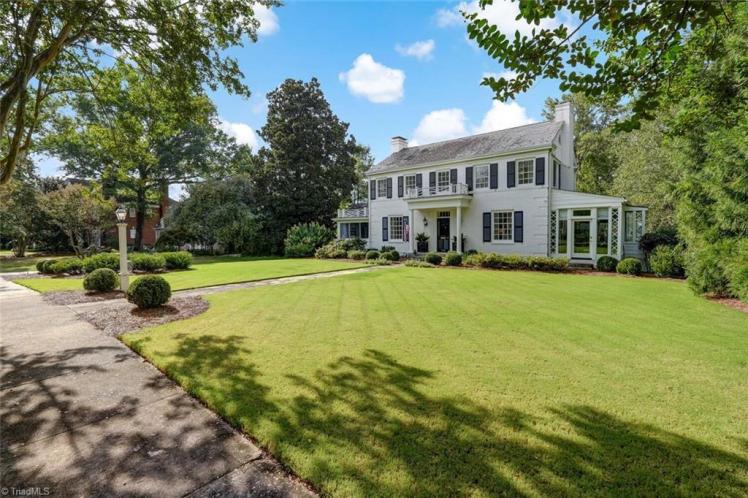
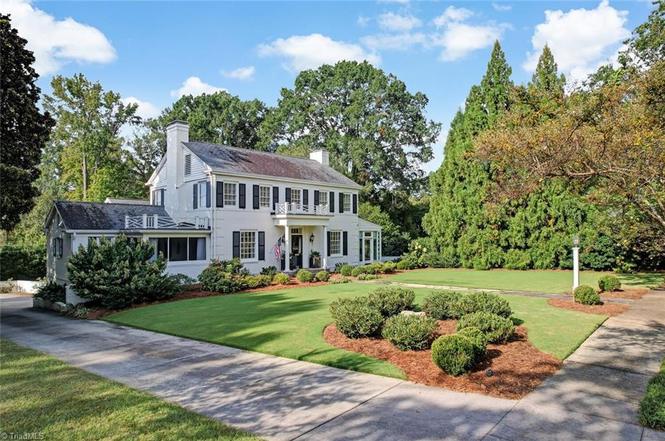
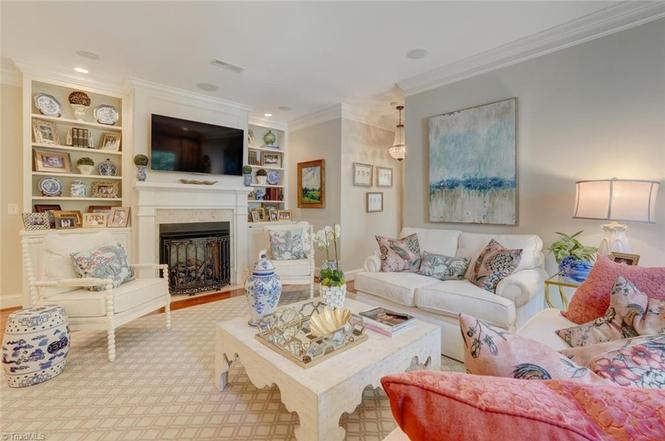
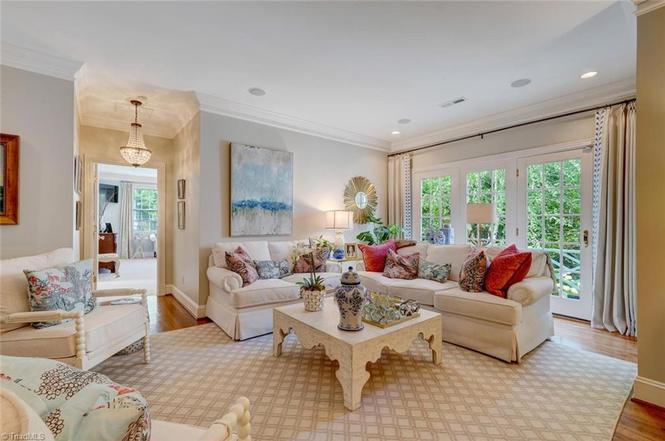
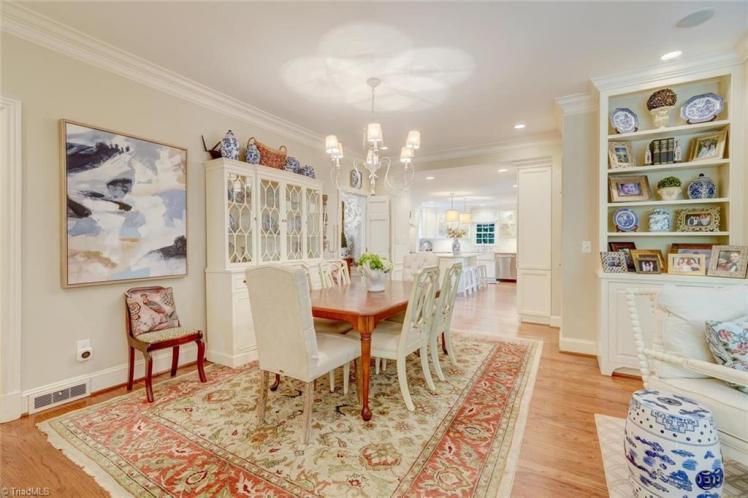
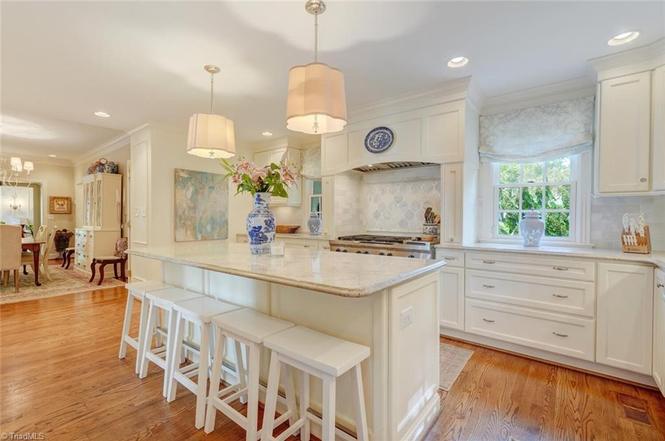
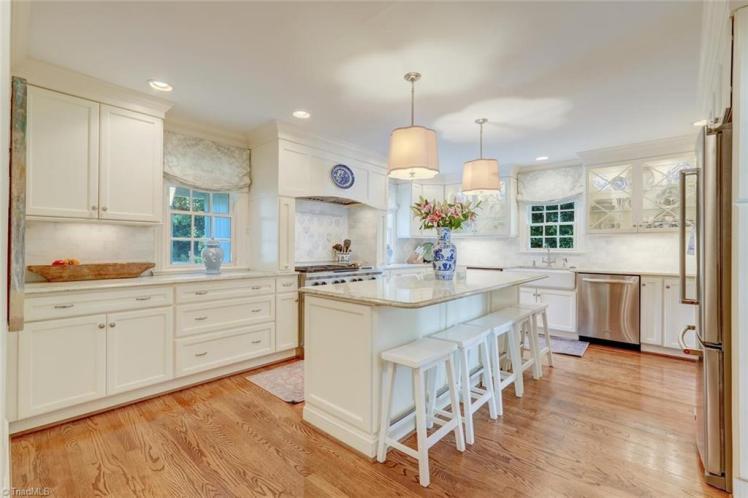
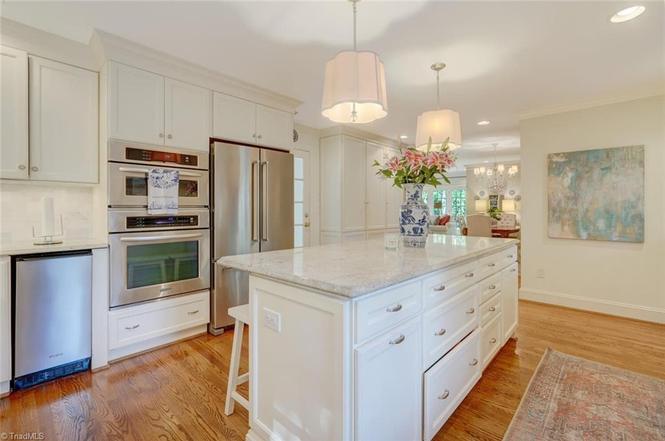
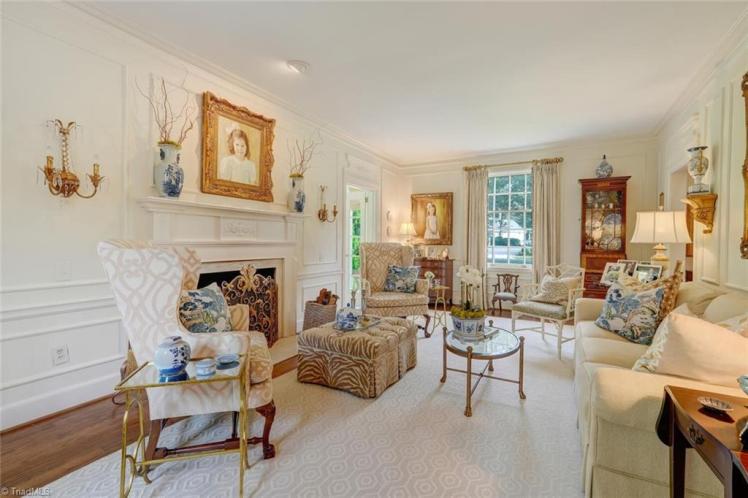
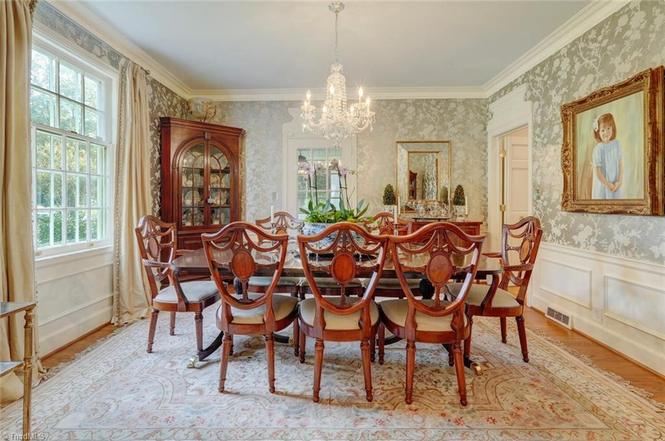
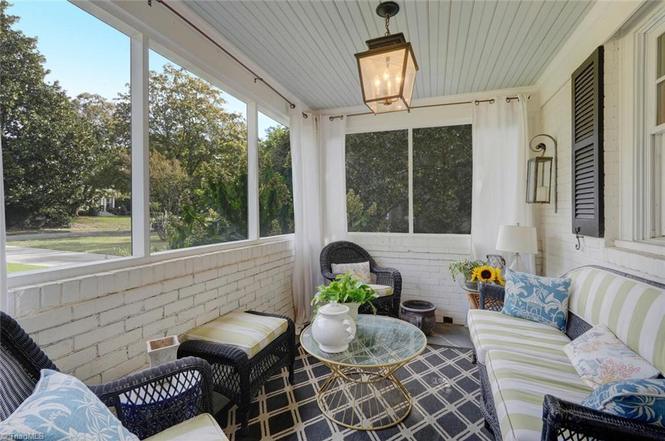
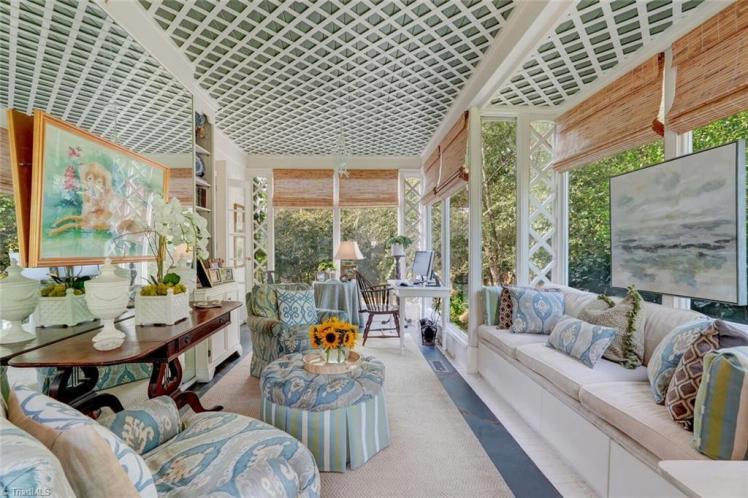
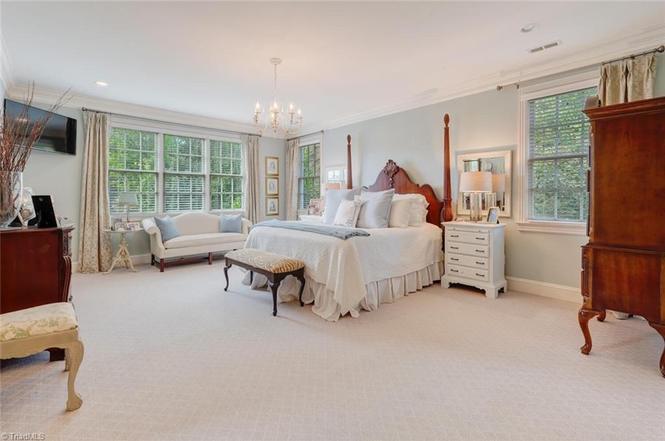
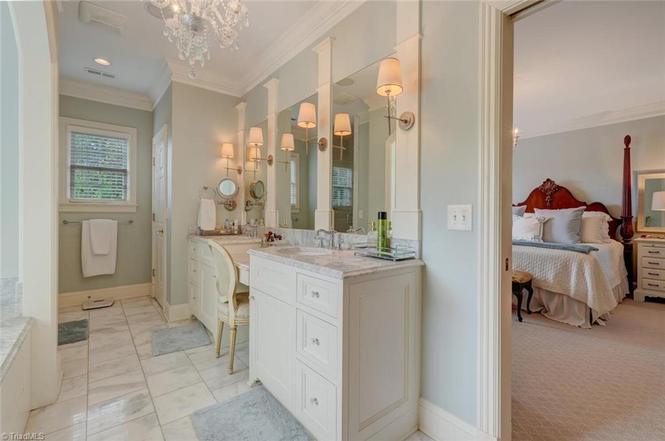
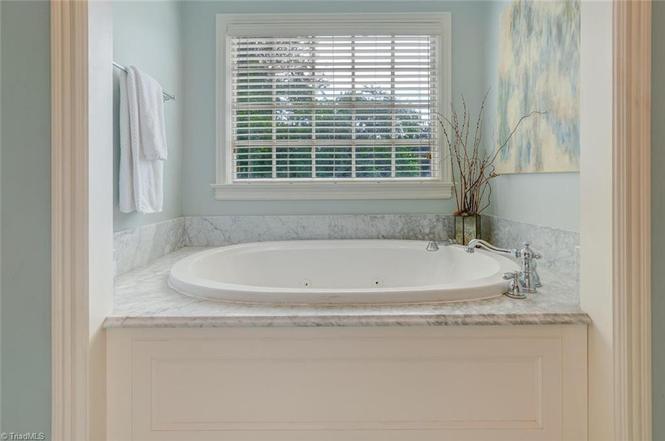
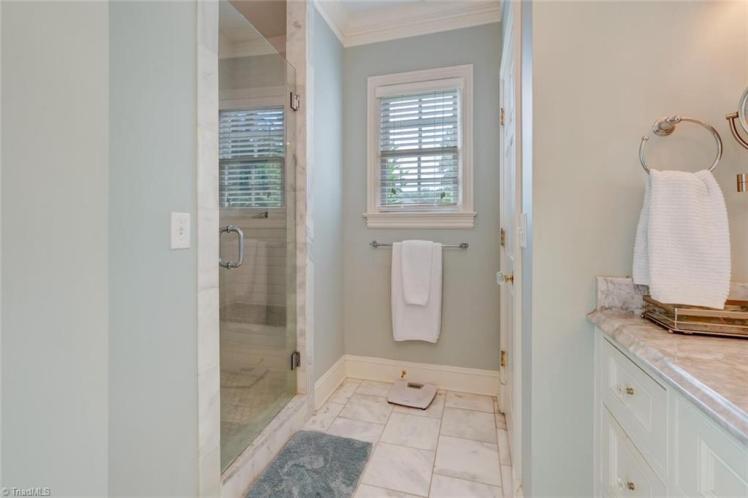
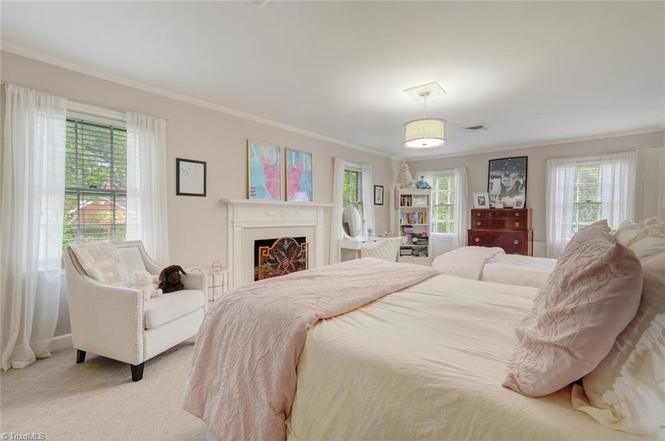
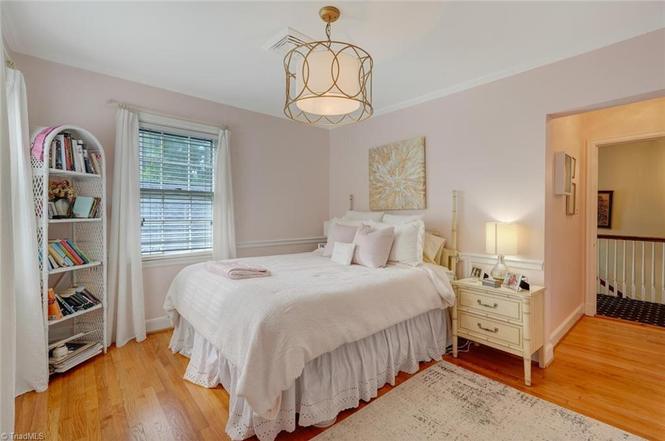

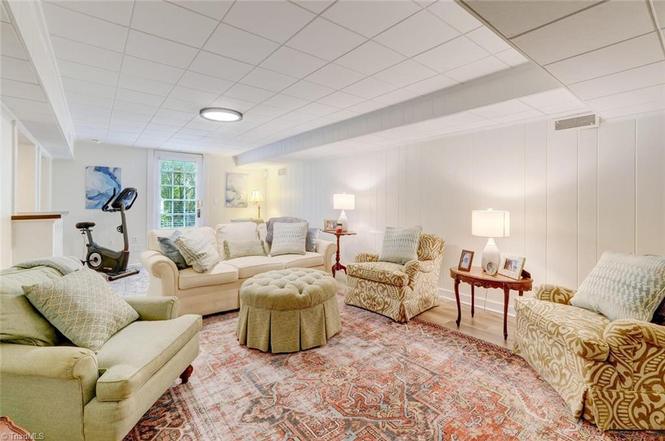
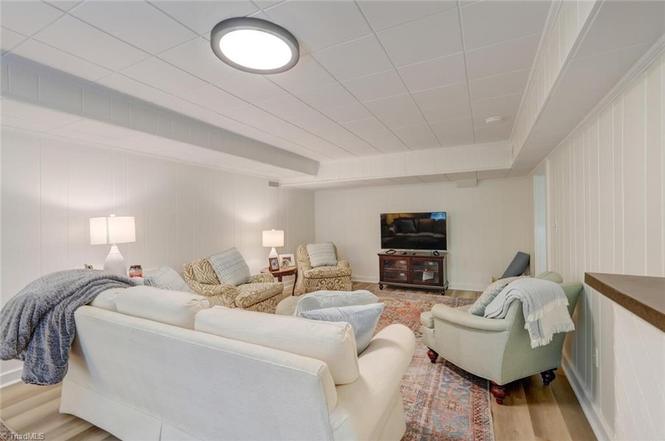
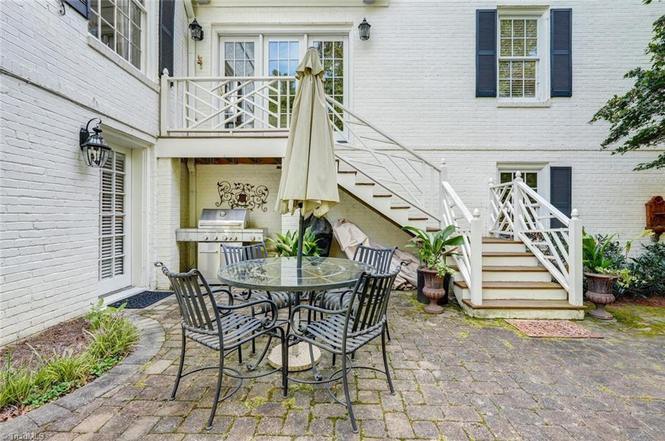
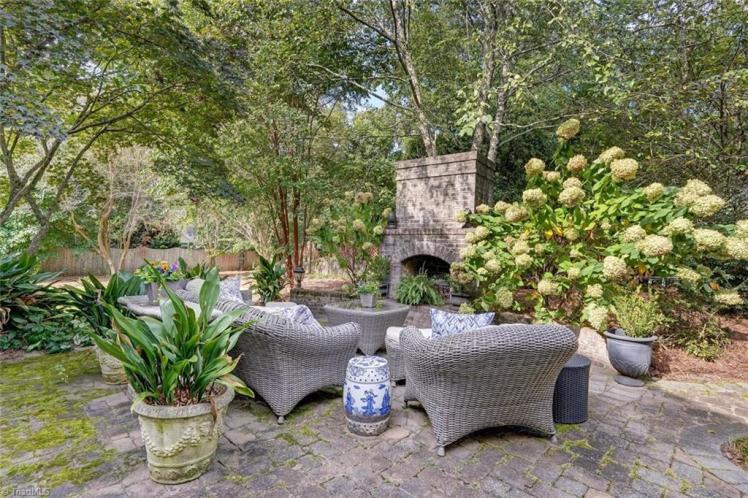
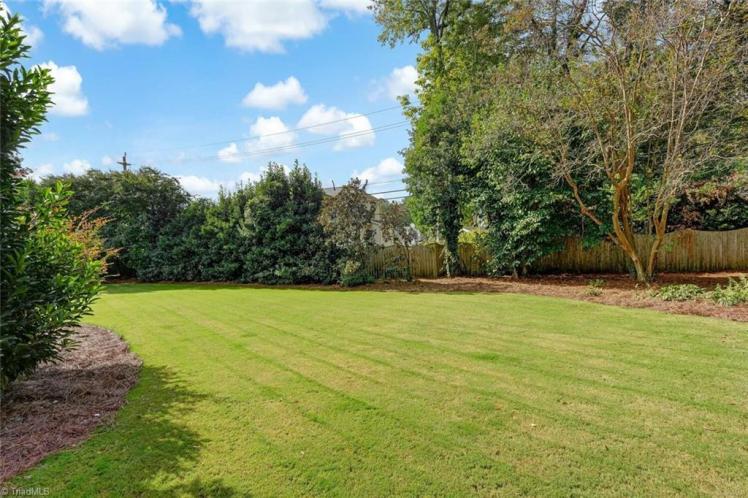
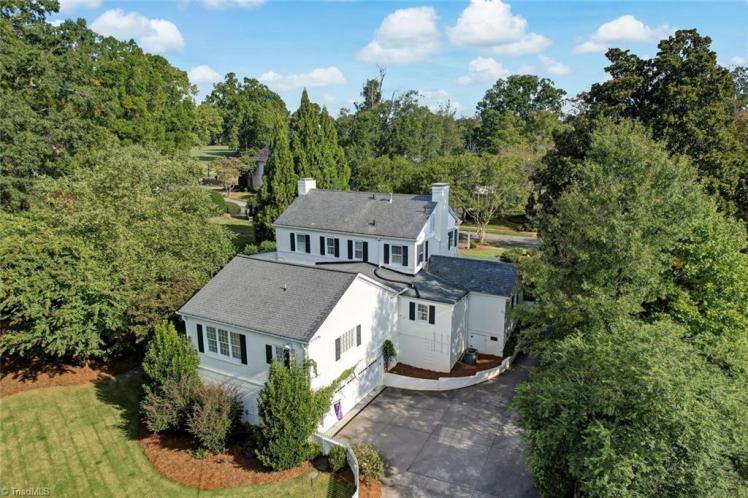
705 Woodland Drive, Greensboro
The Charles and Betty Strandberg House
- Sold for $1.625 million on July 20, 2026 (originally $1.825 million)
- 4 bedrooms, 3 1/2 bathrooms, 4,037 square feet, 0.50 acre
- Price/square foot: $415
- Built in 1935 (per county, but probably a few years later; see note)
- Listed December 30, 2025
- Last sales: $750,000, June 2013; $495,000, September 1998
- Neighborhood: Irving Park
- Note: Charles F. Strandberg (1899-1949) and Betty Battle Cooper Strandberg (1900-1961) bought the property at the end of 1937; the address first appeared in the city directory in 1938. Charles came to Greensboro in 1935 as an agent of the Internal Revenue Bureau. He joined A.M. Pullen & Company as an accountant in 1937 and ultimately became a senior partner.
- Ownership passed briefly to their sons and then to son Charles Jr. (1926-2010) and daughter-in-law Martha Y. Strandberg (1926-2015). Charles Jr. was a graduate of Duke and a World War II veteran of the Navy. He founded a number of businesses, including Strandberg Engineering, which manufactured process controls for the textile industry and other manufacturers. Martha sold the house in 1970.
514wbanner
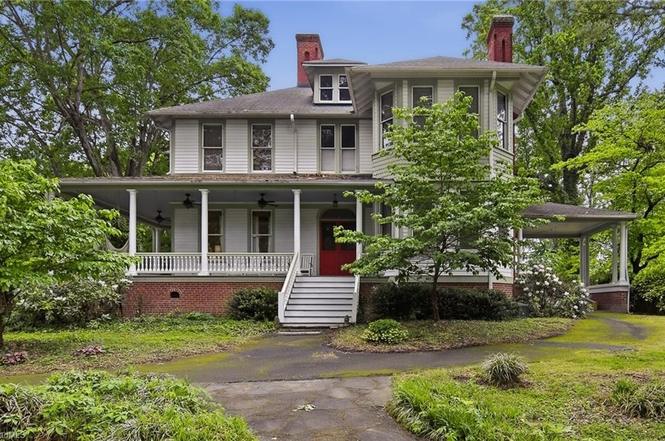
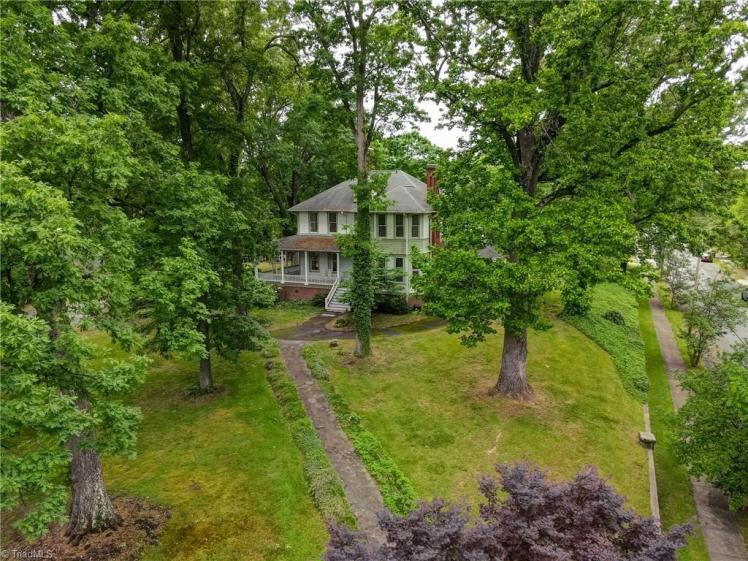
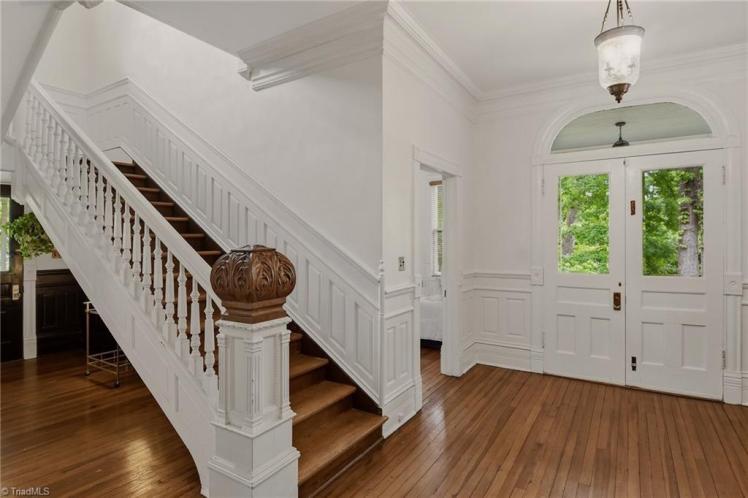
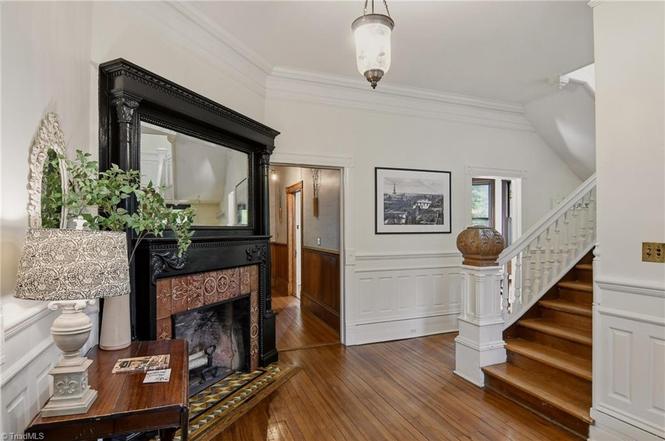
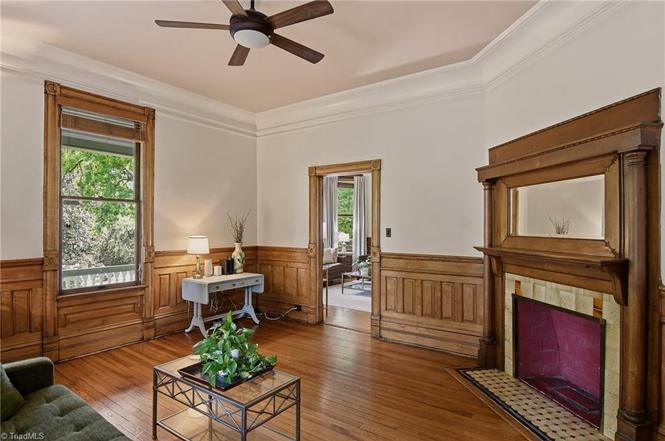
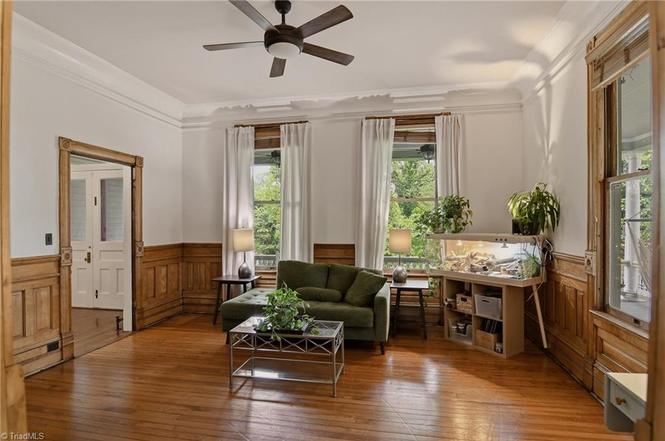
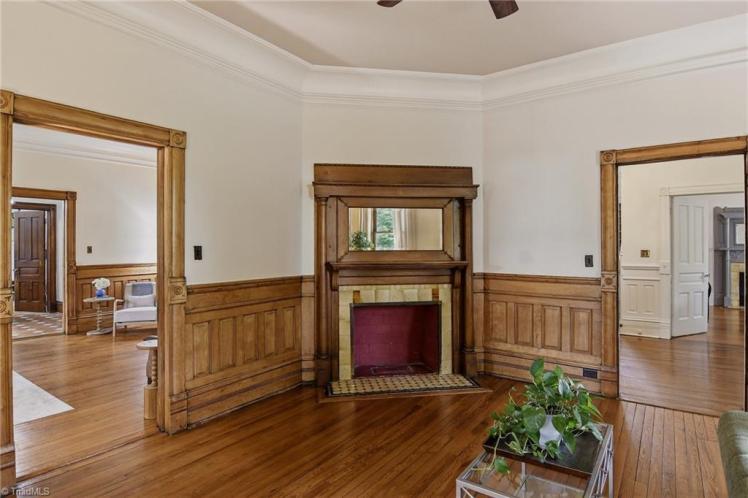
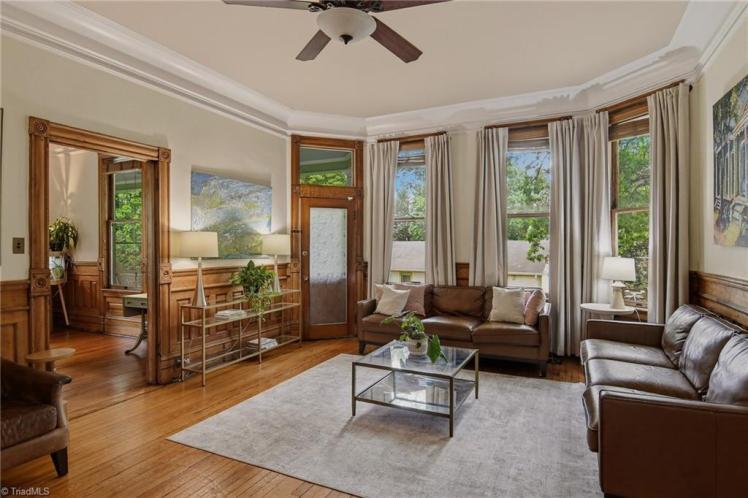
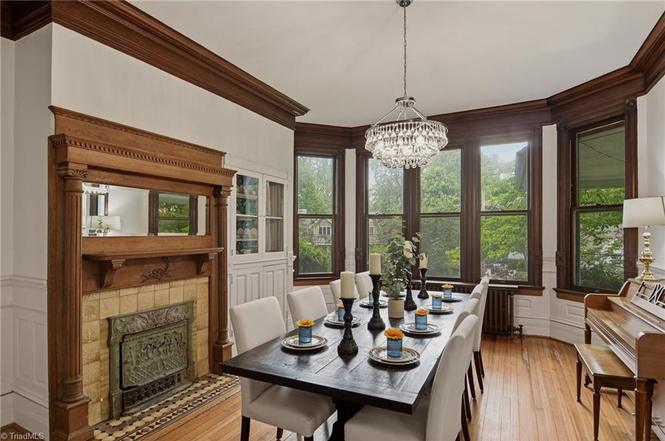
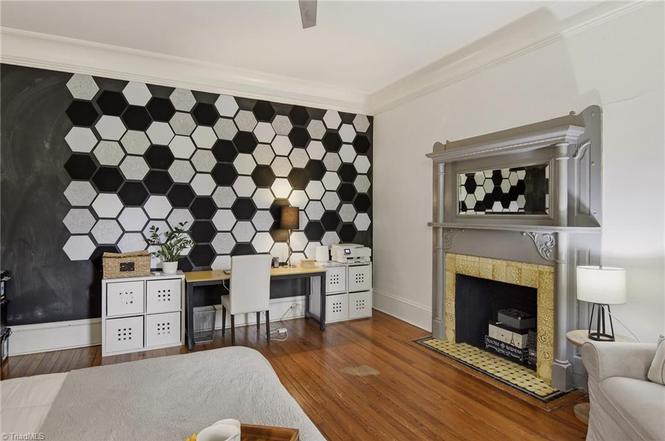
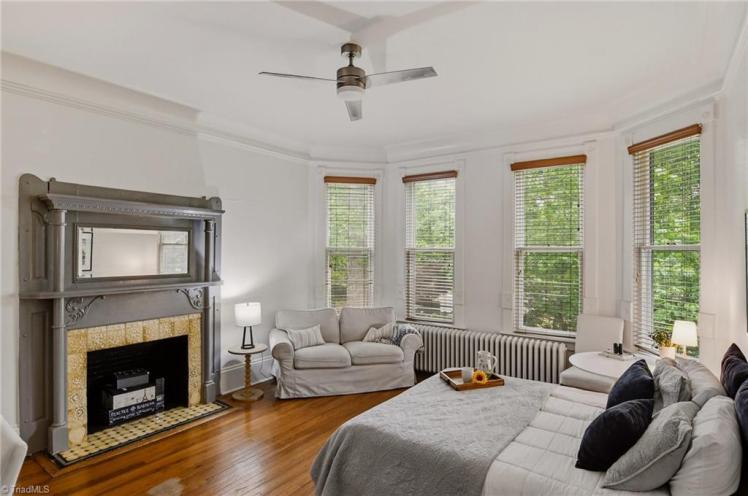
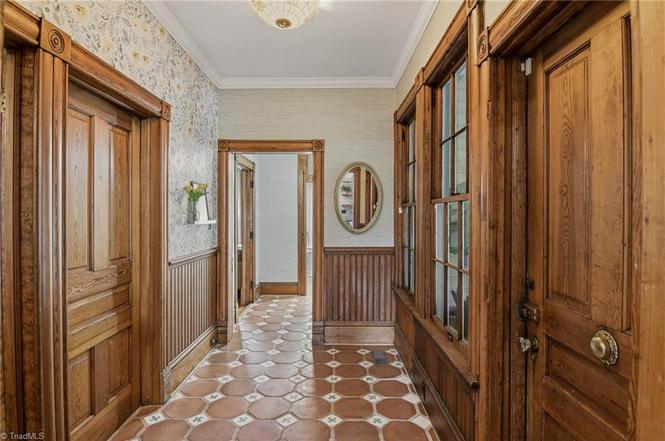
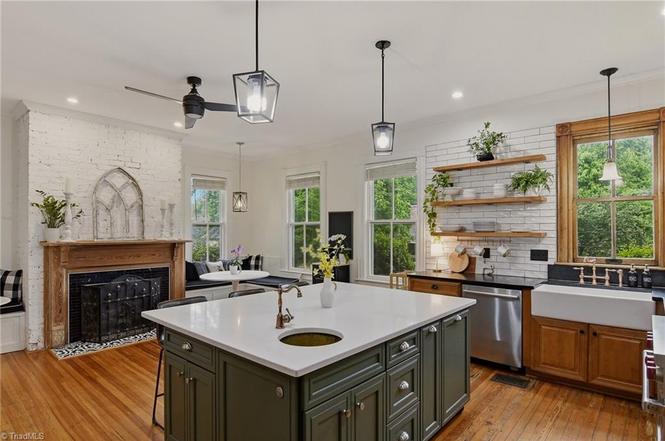
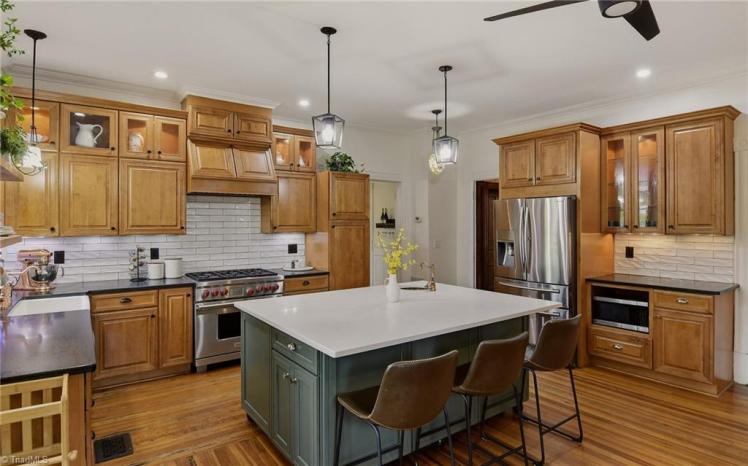
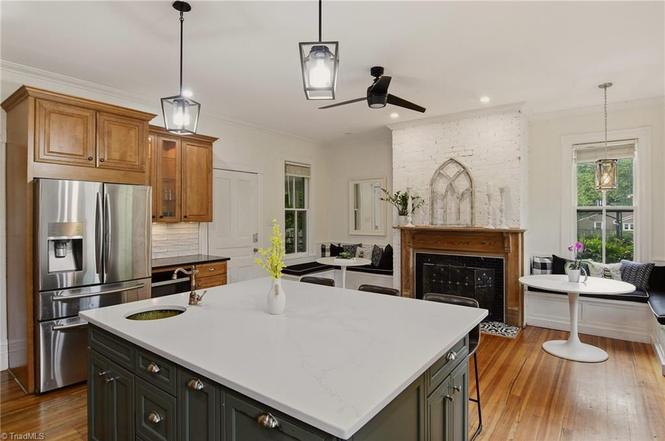
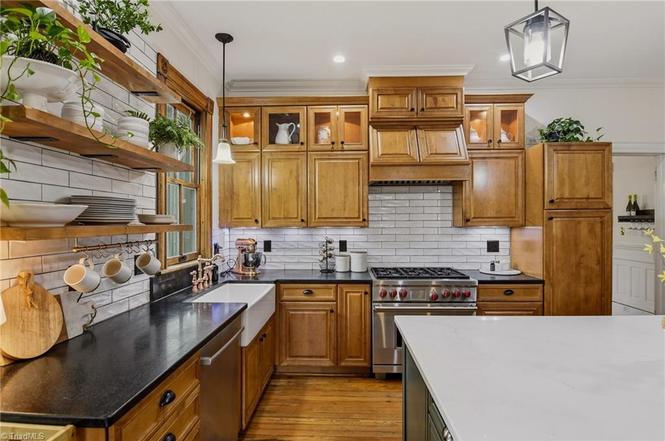
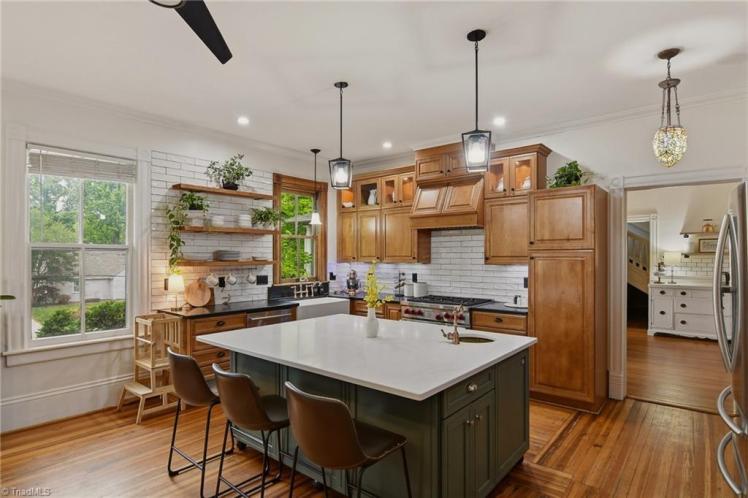
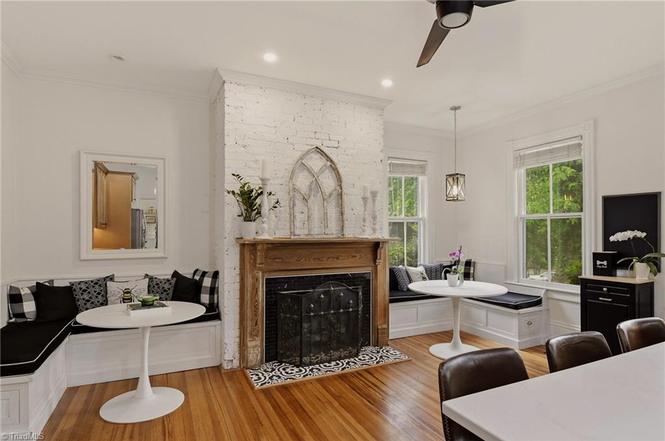
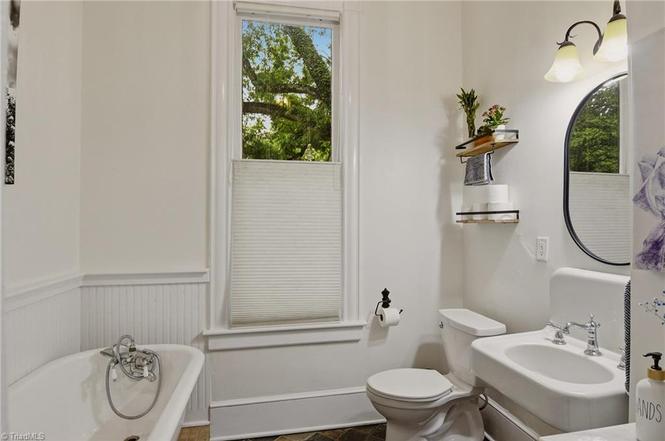
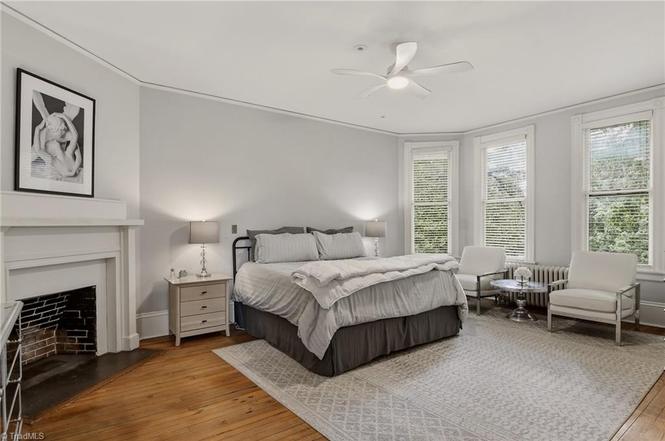
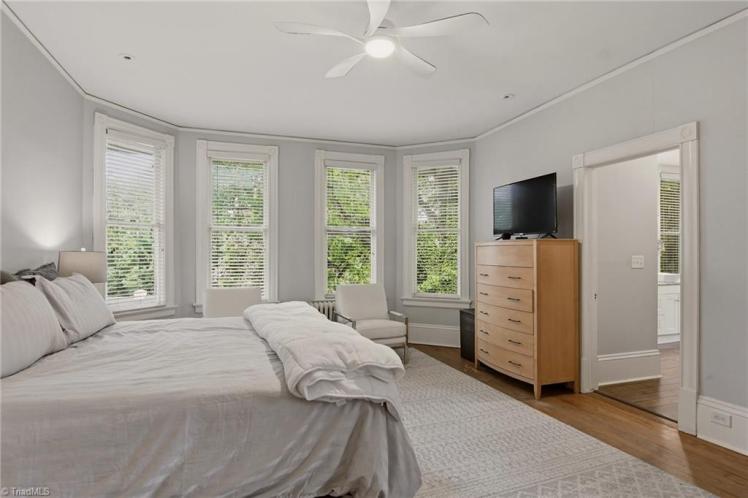
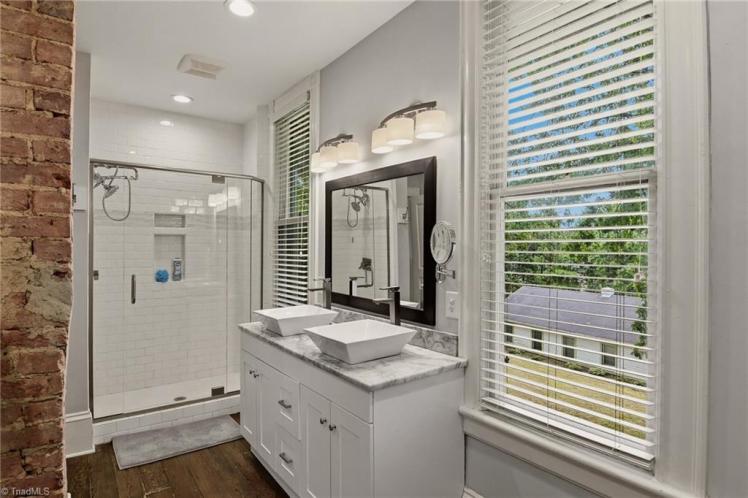
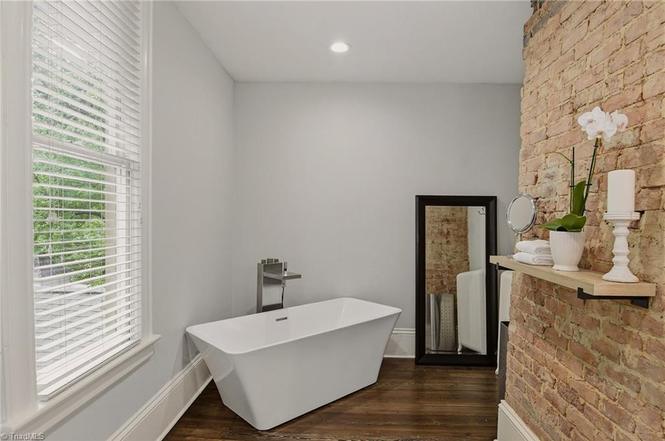
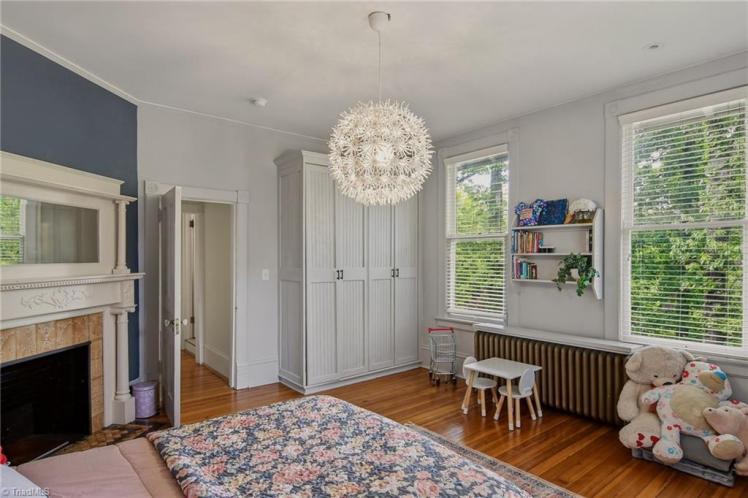
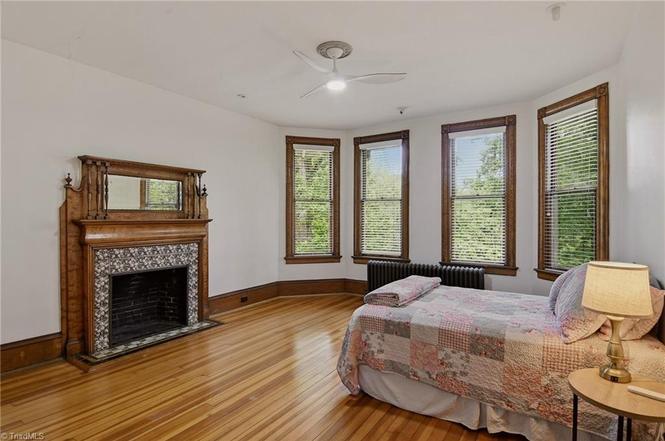
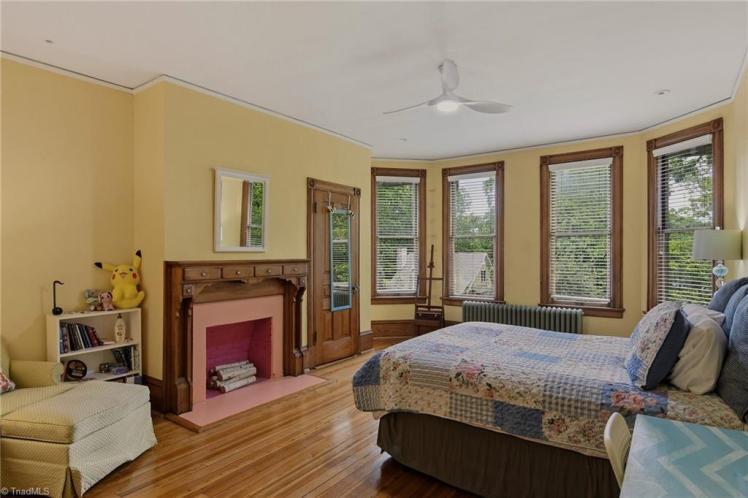
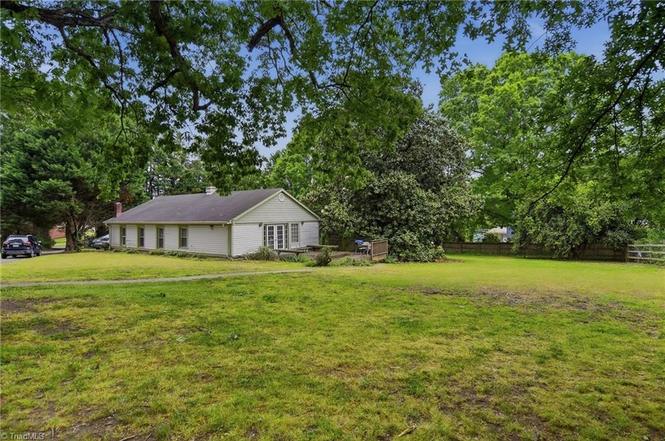
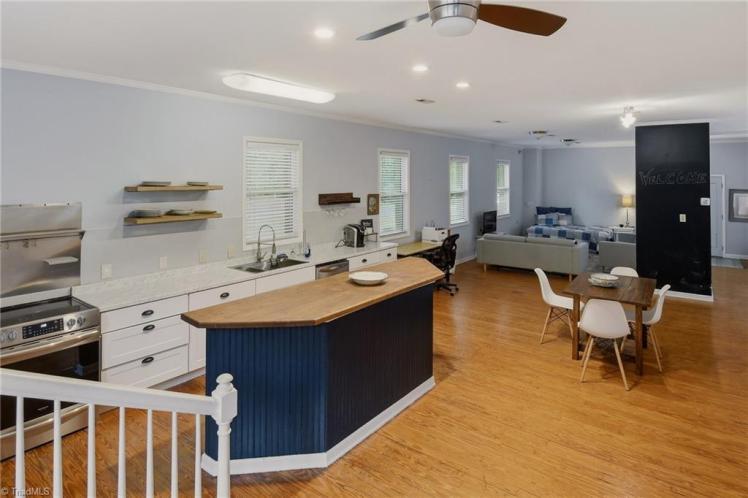
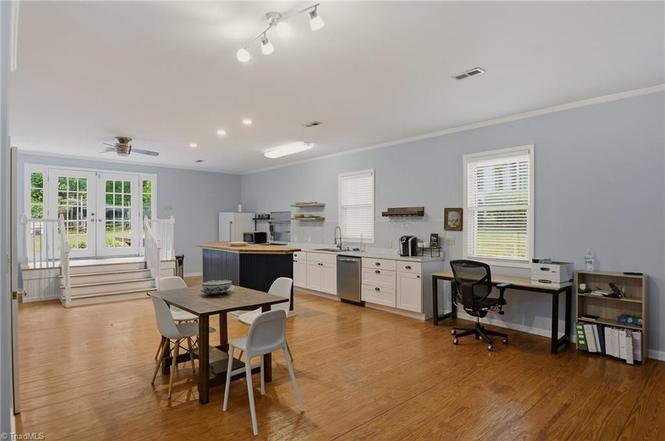
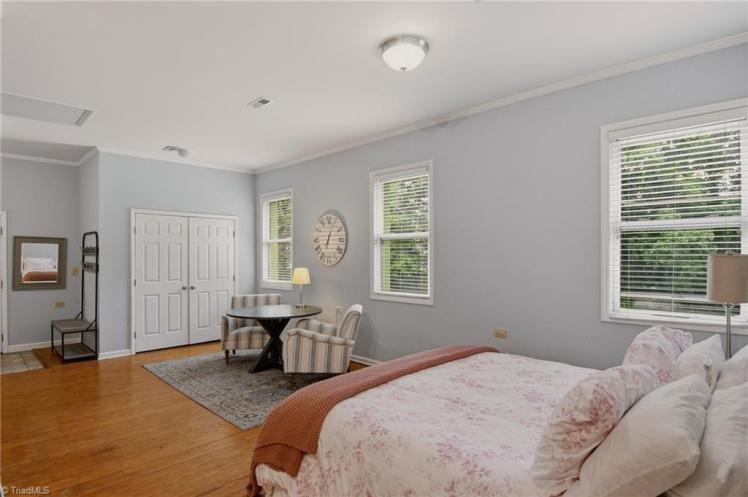
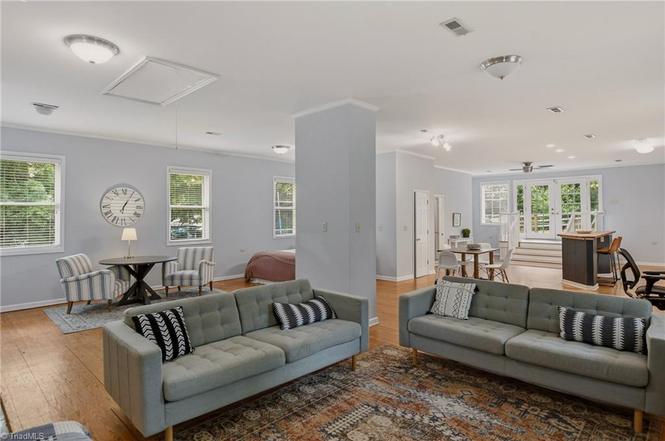
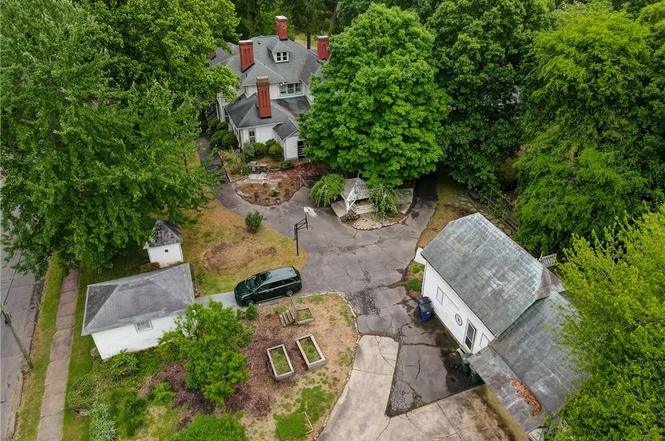
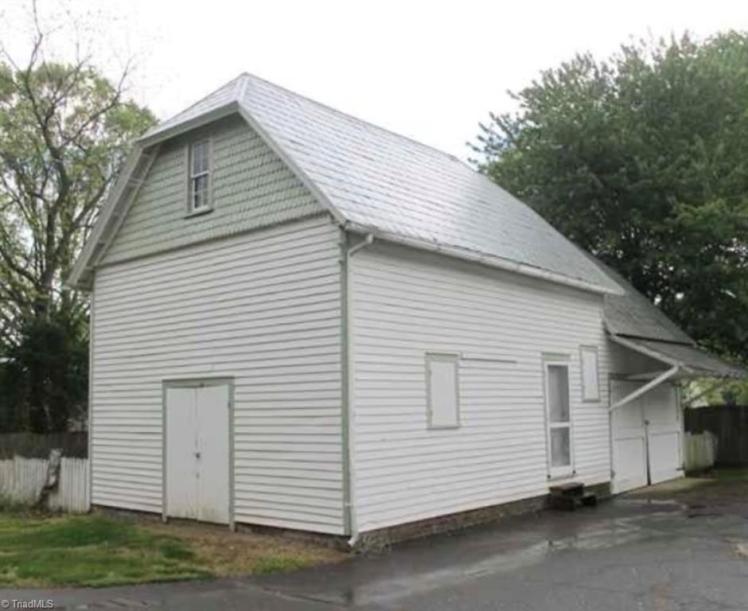
514 W. Banner Avenue, Winston-Salem
The Christian and Emma Fogle House
- Sold for $900,000 on June 29, 2026 (listed at $1.09 million)
- 5 bedrooms, 4 bathrooms, 5,971 square feet, 1.44 acres
- Price/square foot: $151
- Built in 1898
- Listed May 1, 2026
- Last sale: $600,000, June 2014
- Neighborhood: Washington Park Historic District (NR)
- Listing: “The home was the center of the original family farm with four additional buildings on the property; the one and a half story barn is the only barn still existing in the Washington Park Historic District.”
- Note: The property includes a detached guest house of 1,450 square feet.
- The house was built by Christian Fogle (1846-1898), co-founder of Fogle Brothers, the cities’ major local lumber and building firm for 60 years. Sadly, he died before the house was completed. Christian’s early death at age 51 was not unusual in the family. His two brothers, both younger, also died young — Charles at age 42 and John at 55 (their half-brother Ernest lived to be 65. Ernest was 41 years younger than Christian and four years younger than Christian’s son, Frederick). Frederick died at age 56; his sister Agnes lived to be only 29.
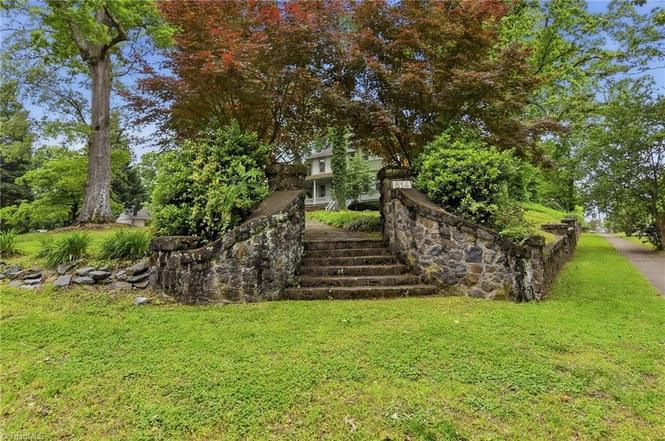
- District NR nomination: “On Cascade and Banner avenues, the Gilmer estate (centered at 605 Cascade) and the Fred Fogle estate (centered at 514 Banner) sold off subdivided parcels. These were bought by developers who built small speculative houses on land that had remained open pasture, meadows, orchards and lawns through so many decades of the neighborhood’s prime development. Thus some of the district’s largest and most prominent houses are today surrounded by smaller houses of the early 1950s. …
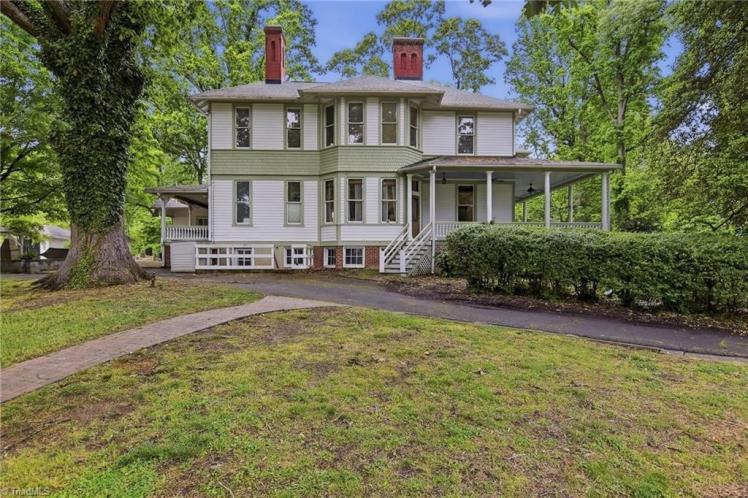
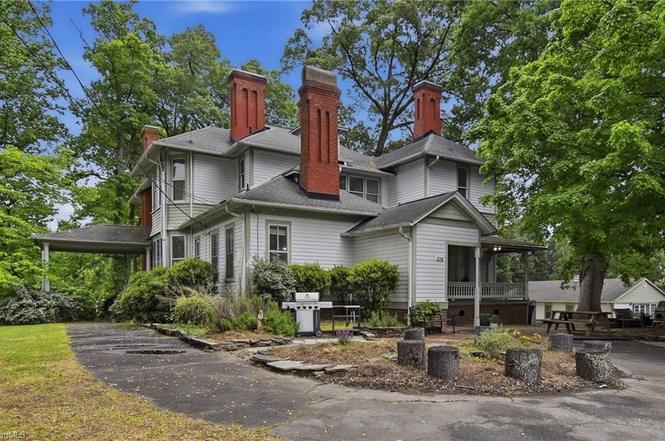
- “On large tree-shaded hilltop; large frame Queen Anne style house with classical details and decorative use of shingles between levels; early version of German-type siding. Hipped roof is a pre-World War II replacement of the original, more complex Queen Anne roof with turrets etc. (early documentary photo shows original roof).
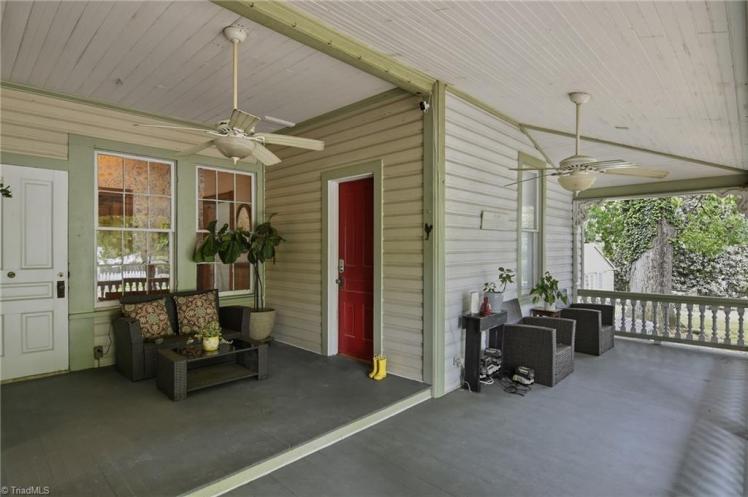
- “Front of house faces east towards Freeman Street. 1/1 sash. Large semi-octagonal bay at northern end of front facade; one-story porch wraps at south side. Back porch supported by turned posts with sawn brackets. Hipped dormer at front, hipped roof over front projecting bay, numerous one- and two-story hipped projections at rear.
- “Projecting from northern side is porte-cochere on classical columns. Five tall brick chimneys, corbelled and with blind inset panels; one is partially exposed, others are interior. Bathroom added 1937; in the same year a building permit was received to ‘remove wood shingles’ at a cost of $50.
- “Behind the house are four outbuildings, including the only barn remaining in the Washington Park neighborhood. Stone retaining wall on Banner Avenue side. House built roughly 1896-1898 by Christian Fogle and his wife Emma [Emma A. Reich Fogle, 1851-1932]; Christian died before completion, Emma moved here from their house on Belews Street.
- “Built by Fogle Brothers Lumber Co., of which Christian Fogle was a founder. Fogle Brothers was founded in 1871 and with Miller Bros. Lumber Co., benefited from the post-Reconstruction building boom. Company ledgers reference Mrs. Emma A. Fogle’s “farm” in 1898; also references in 1896, ’97, and ’98 to supplies of oak, varnishing, tile, glass, cement, screens, and grass seed. House had acres of fields and pastures where cattle grazed.
- “Emma Fogle lived in the house until 1932; it then went to Fred Fogle [their son, Frederick Augustus Fogle, 1883-1940].
- “After his death, the property was divided into lots and sold in a 1951 auction, which led to subsequent development in 1952 and 1953 of many small houses in the immediately surrounding streets.”
308smain


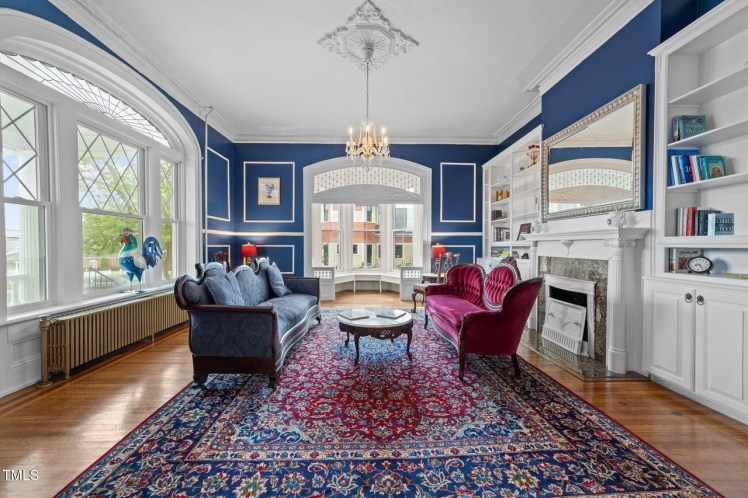

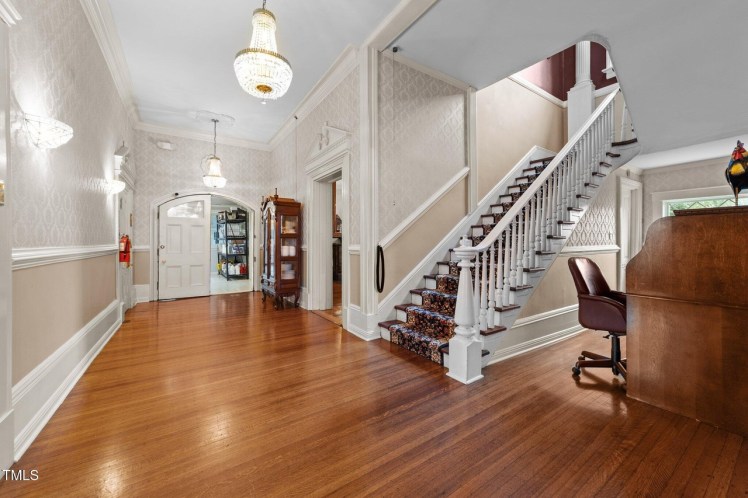


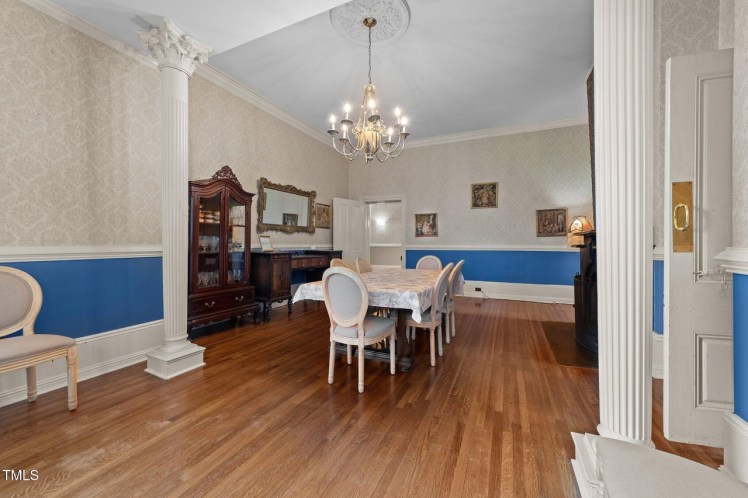
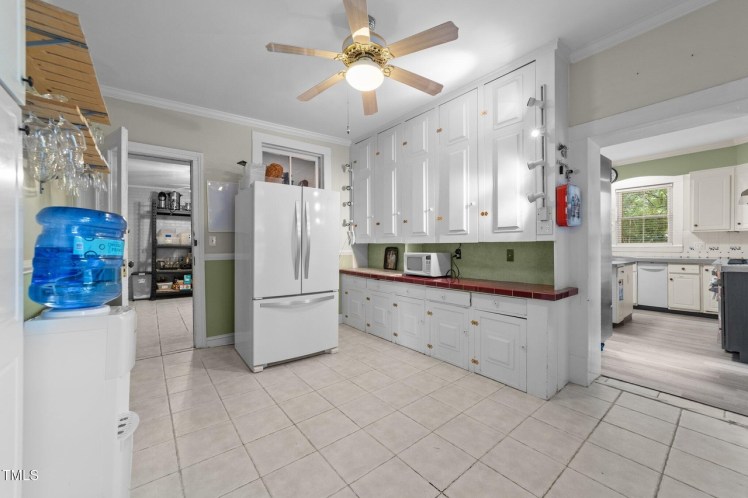

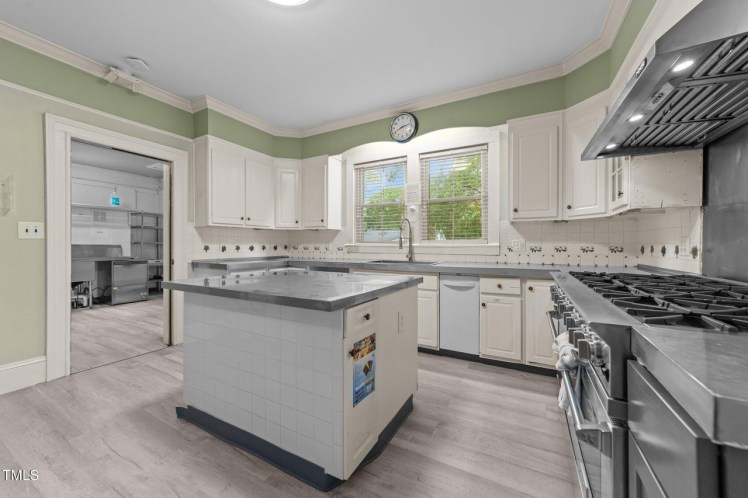
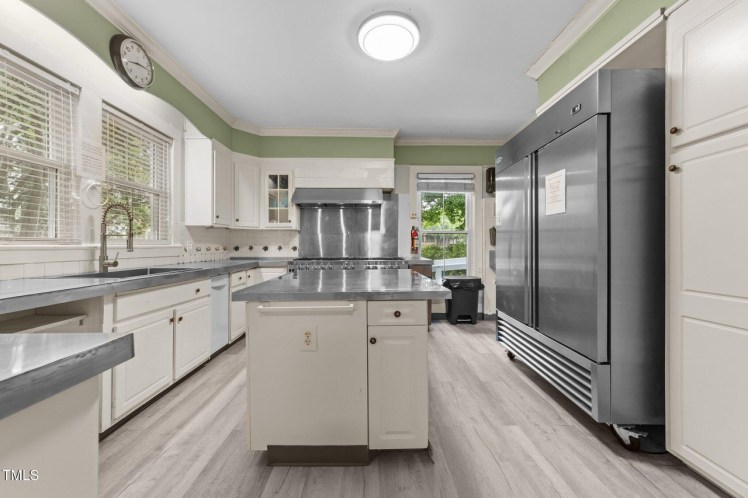


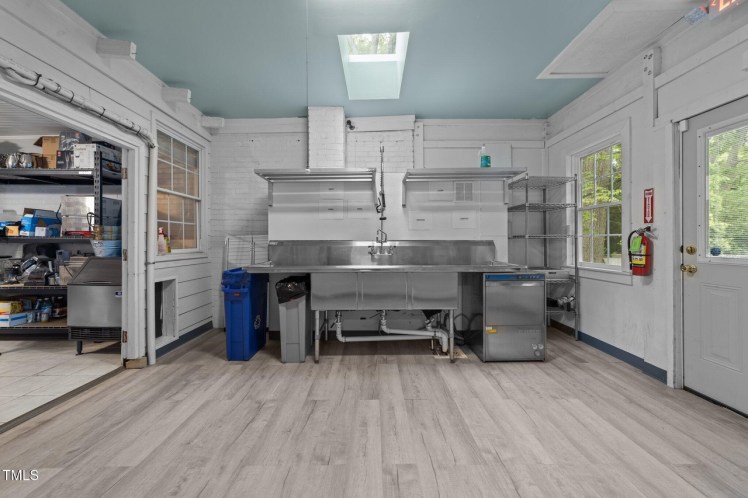


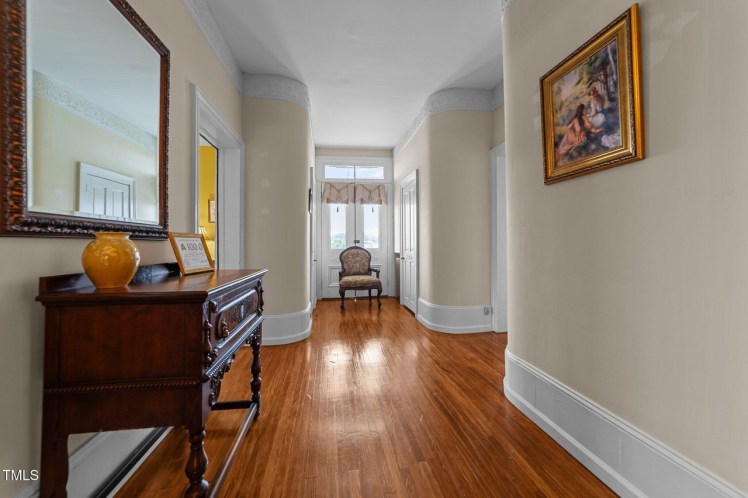


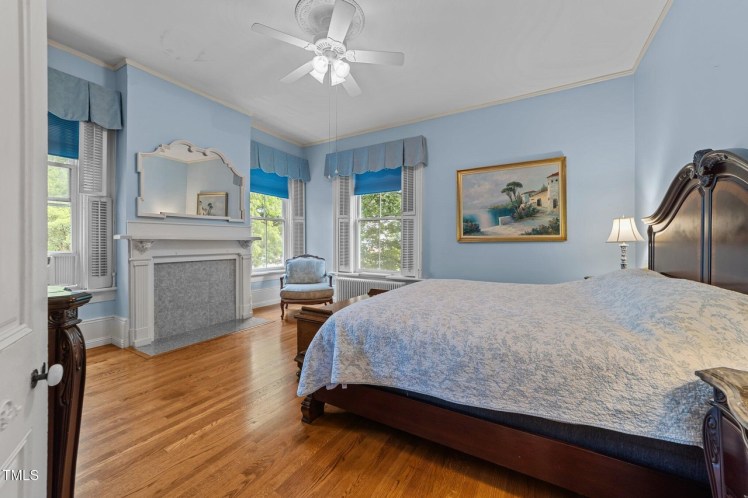

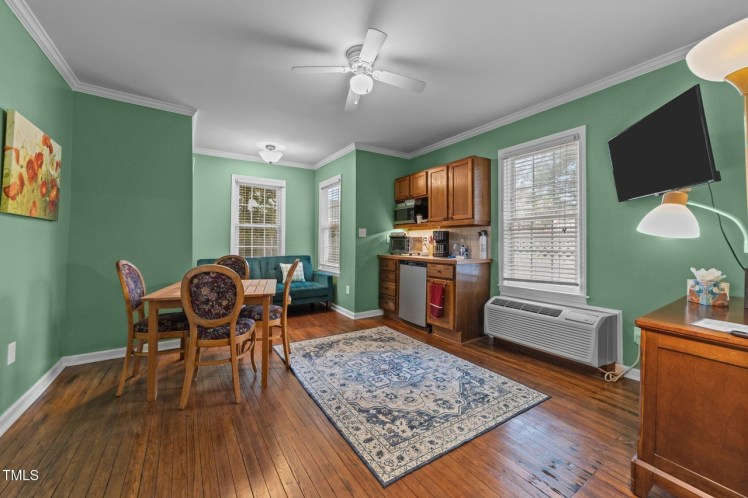


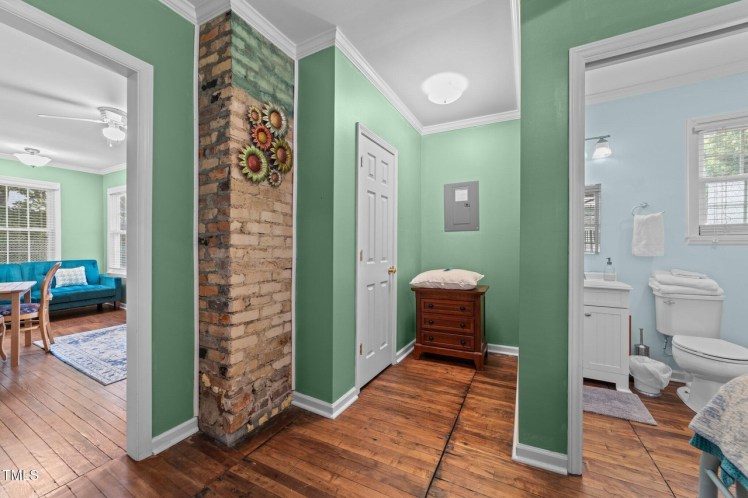
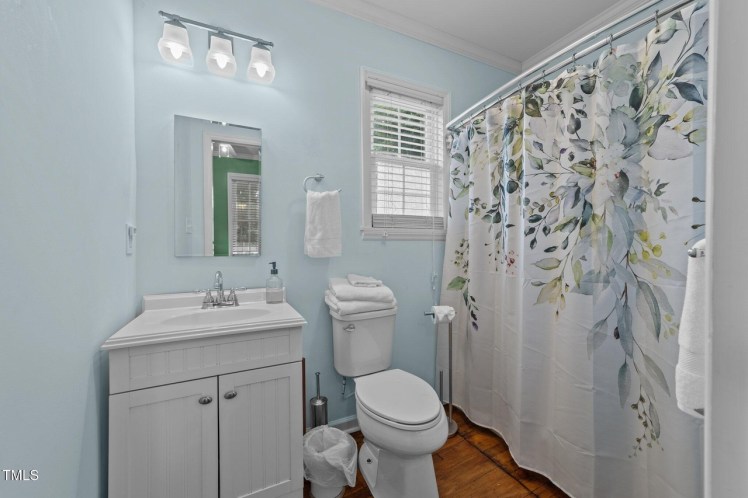
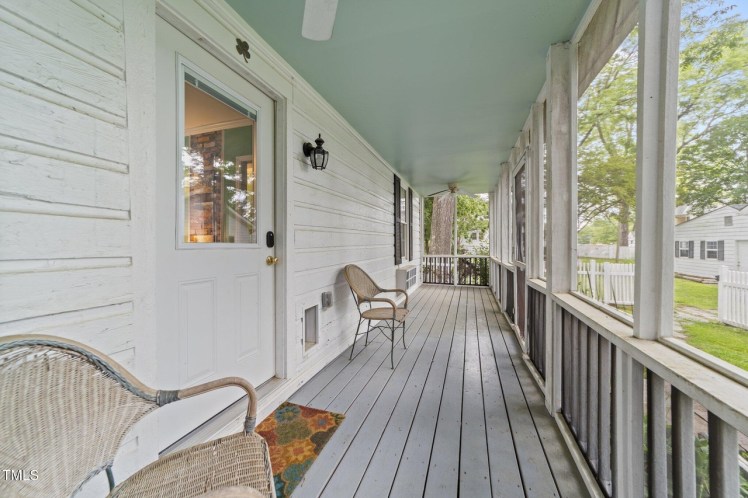
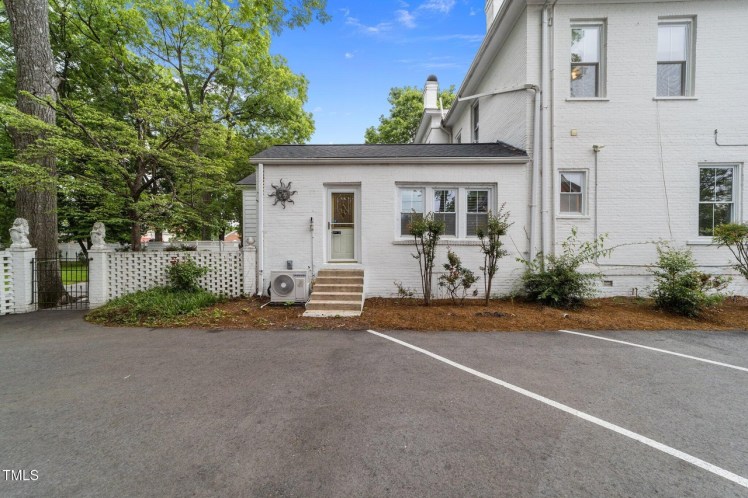


308 S. Main Street, Reidsville, Rockingham County
The William Lindsey House
Blog post (2021) — The William Lindsey House: A Grand 1870 Mansion Built by One of Reidsville’s Early Business Leaders
- Sold for $460,000 on June 15, 2026 (originally $649,000)
- 5 bedrooms, 3 1/2 bathrooms, 5,205 square feet, 0.91 acre
- Price/square foot: $88
- Built in 1868
- Listed June 5, 2025
- Last sales: $445,000, May 2021; $322,000, August 2002
- Neighborhood: Reidsville Historic District (NR)
- Note: The current owners operated a bed-and-breakfast in the house for four years.
- The listing says Elizabeth Taylor once stayed there when she was married to Sen. John Warner. Warner is said to have been a friend of William’s Lindsey’s grandson-in-law.
- The property includes a pool house “with a premium Michael Phelps swim spa.”
- District NRHP nomination: “Because of both its historical associations and its architectural distinction, the William Lindsey House is a pivotal building in the Reidsville Historic District.”
- The house is “a two-story, single-pile brick Italianate dwelling with a three-bay facade, one-story bays on the side elevations, and a one-story brick ell spanning the rear of the main section. The hip-roofed house features elaborate Italianate trim, including deep paneled and bracketed eaves, decorative hoods over slender paired windows on the second floor, segmental arched window and door openings on the first, and paneled interior chimneys.
- “Early in the 20th century, a new porch was constructed across this facade, in the Neo-Classical Revival style. It consists of a one-story, full-facade porch supported by corinthian columns which are repeated in monumental fashion in the central projecting two-story pedimented portico. Heavy turned balusters line the porch and the central balcony, from which a double-leaf door, similar to the main entrance, opens to the second floor. The earlier porch appears to have spanned only the entrance bay, with a second porch on the south elevation.” As late as the mid-1980s, there were large magnolia trees in the front yard.
- “William Lindsey (1829-1889) is believed to have moved to this area of Rockingham County from Virginia in 1852 and opened a tobacco factory in the late 1850s …. In the early 1880s, he built a large brick factory on the west side of N.W. Market St., where he produced the following brands: ‘Johnnie Reb,’ ‘Our Statesman,’ ‘Edna Lindsey,’ ‘Lindsey’s Leader,’ and ‘Our Level Best.’
- “In partnership with H.K. Reid, he operated a general store, and he was a founder of many local businesses. Lindsey owned several hundred acres of land in the new town of Reidsville, and his name appears on many land transactions as the town grew.
- “He was married to Sarah Holderby [1833-1893], daughter of Joseph Holderby [1803-1875], who was prominent in the early development of Reidsville. The Lindseys first lived in the early 19th century home of Reuben Reid (demolished) which was at this location until they built a new home and moved the earlier house to a site on nearby Lindsey Street.
- “Occupied for many years by the Lindseys’ daughter, Edna [1868-1961], and her husband, tobacconist Eugene Watt [1868-1941], the house remains [as of August 1986] in the Lindsey family, occupied by his granddaughter, Sarah Watt [1901-1990] and her husband, William C. Stokes [1900-1986].”
- Bonus Reidsville history: “Reuben Reid of Hogans Creek moved his family, including wife, Elizabeth Williams Settle, and son, David Settle Reid, to a 700-acre farm on the ridge between Wolf Island and Little Troublesome creeks in May, 1814. He became a successful farmer, operated a store and a public inn maintained in a private home and served the county as a constable and justice of the peace.
- “The family secured a post office, aptly named Reidsville, in 1829. 16-year-old David Settle Reid was appointed its first postmaster. He would later become a State Senator (1835-42), a U.S. Congressman (1843-47), Governor of North Carolina (1850) and a U.S. Senator (1854).”
- H.K. Reid, William Lindsey’s business partner, was another son of Reuben Reid.
206sunset
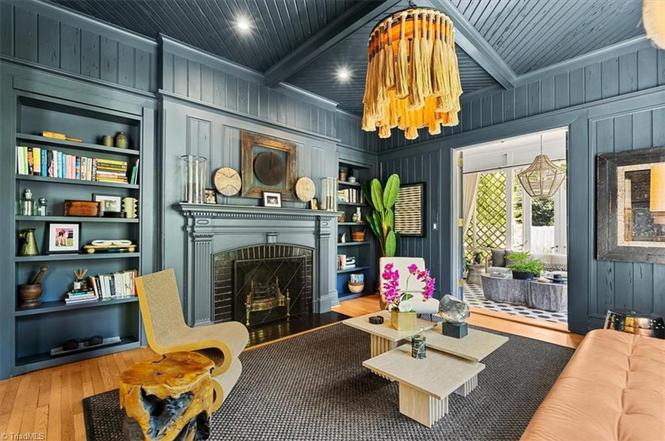
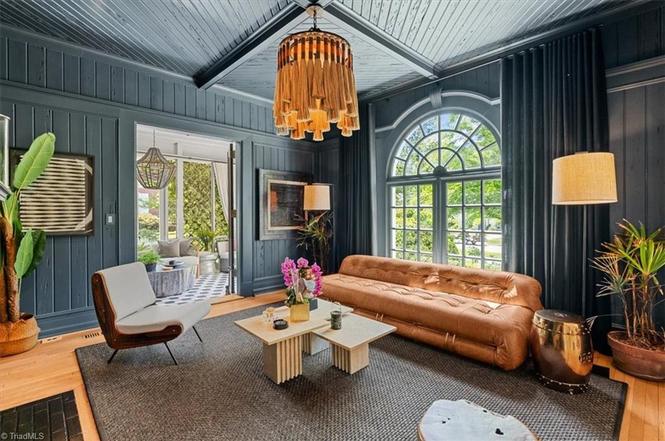
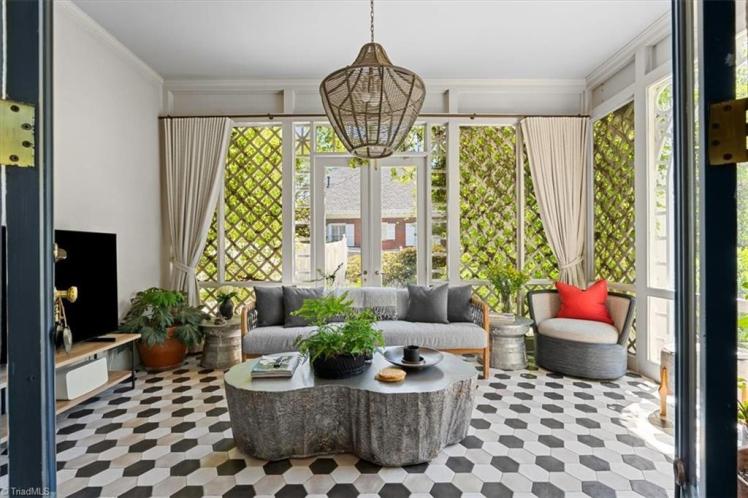
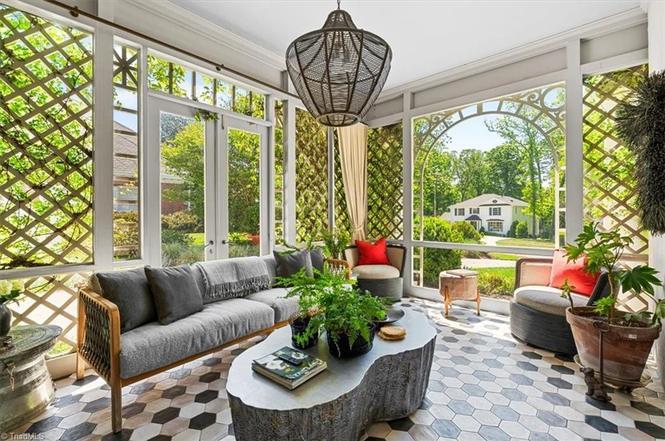
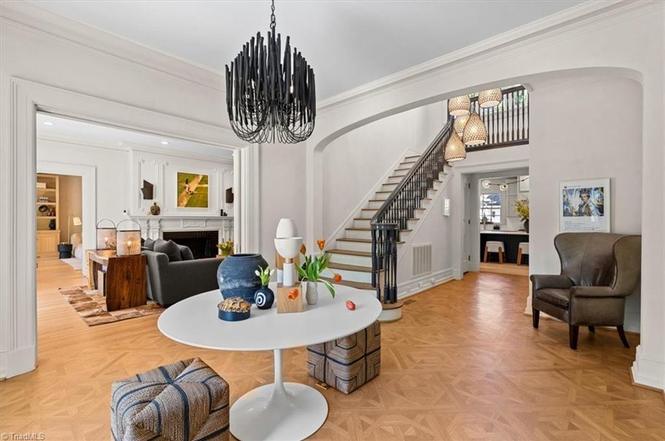
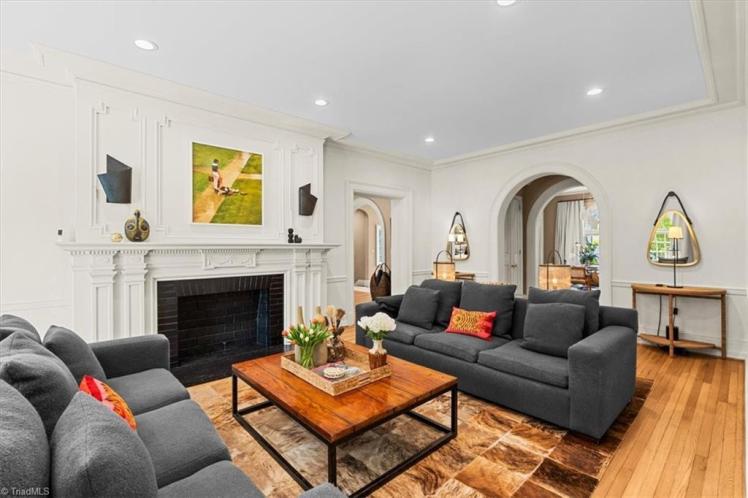
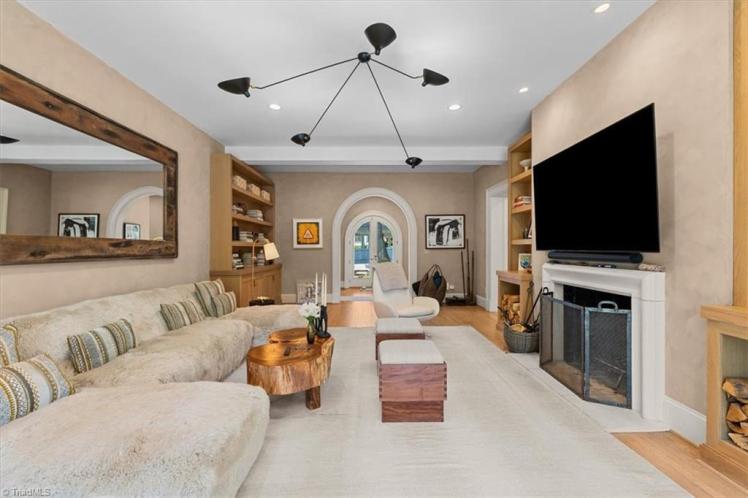
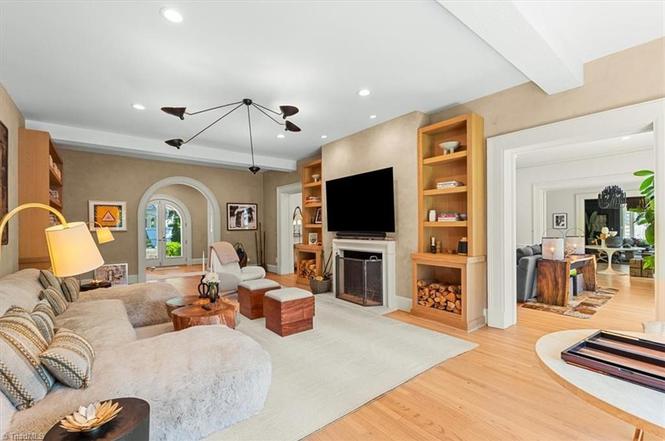
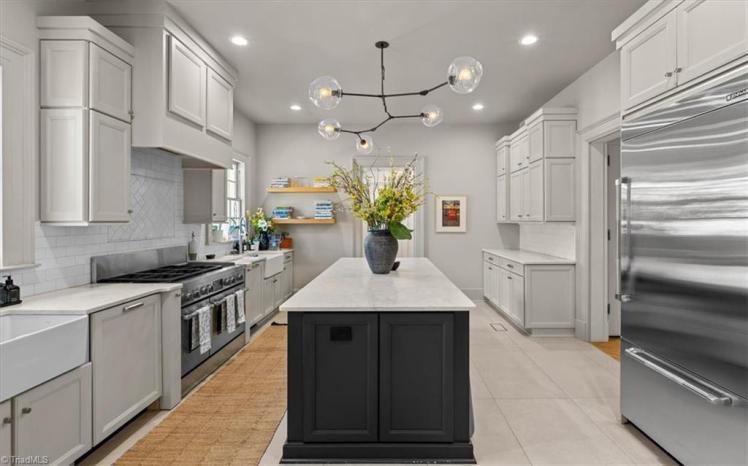
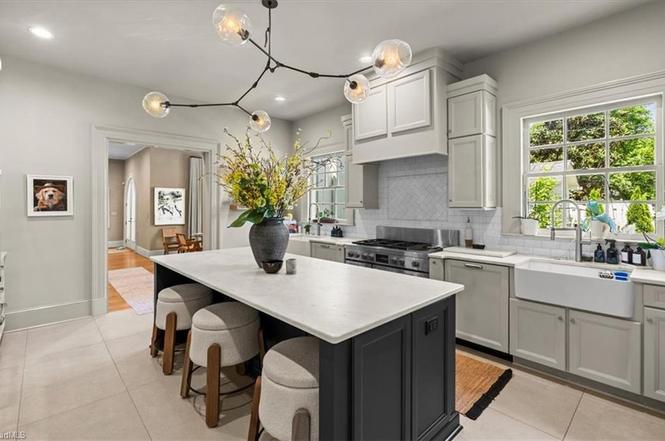
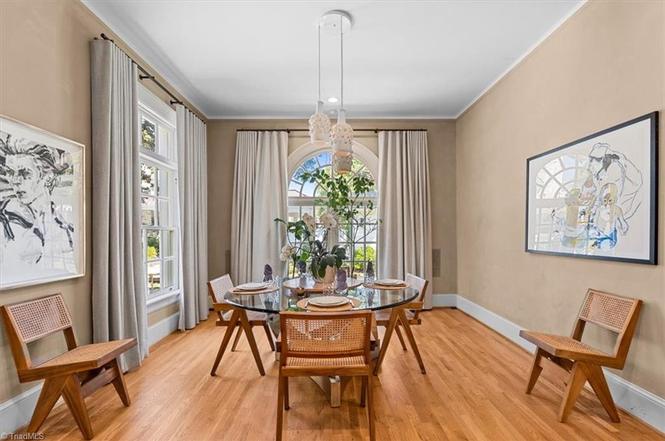
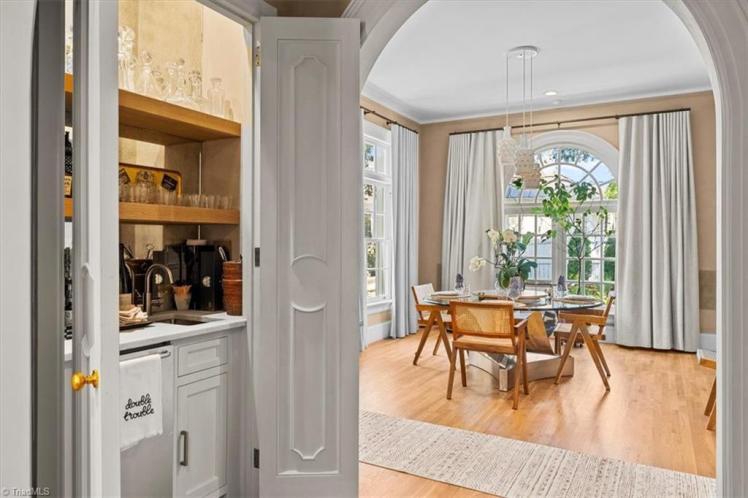
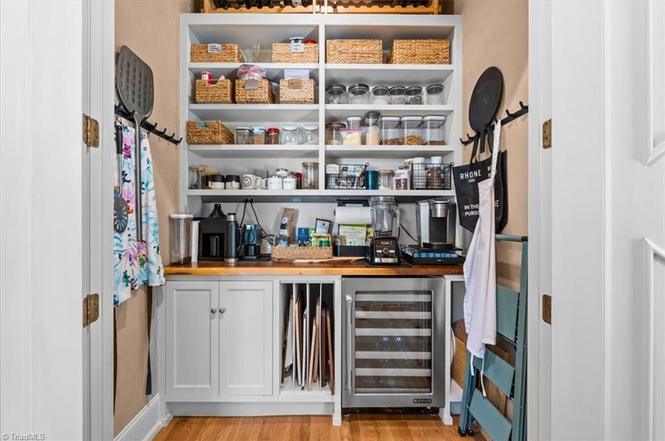
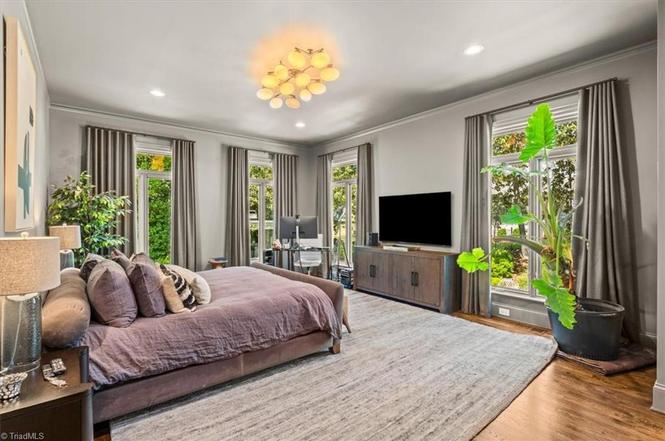
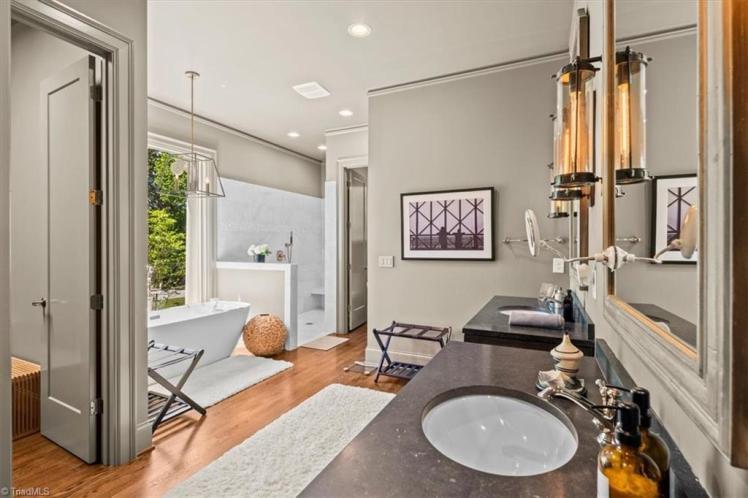
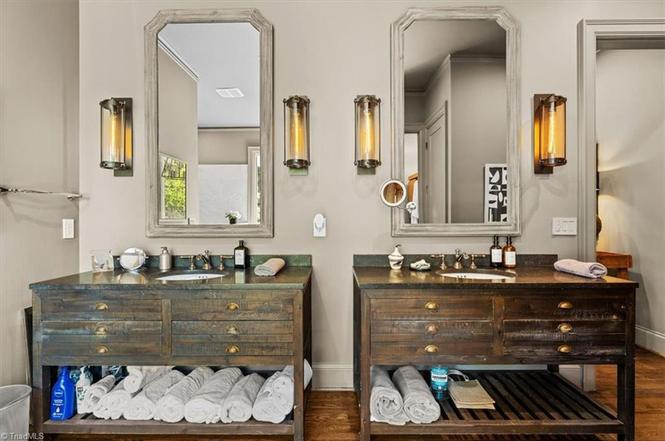
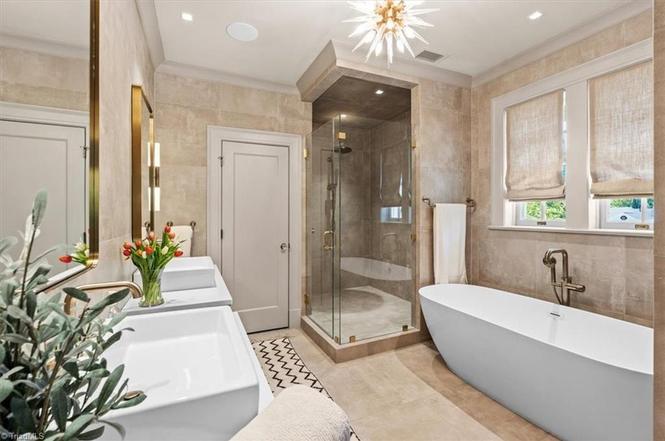
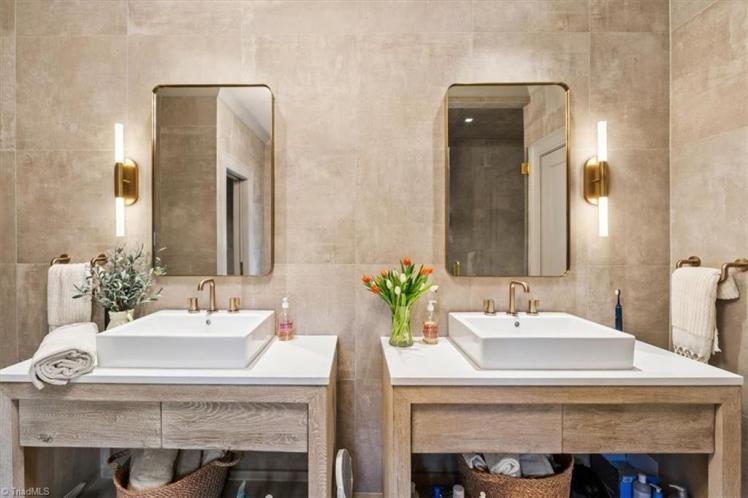
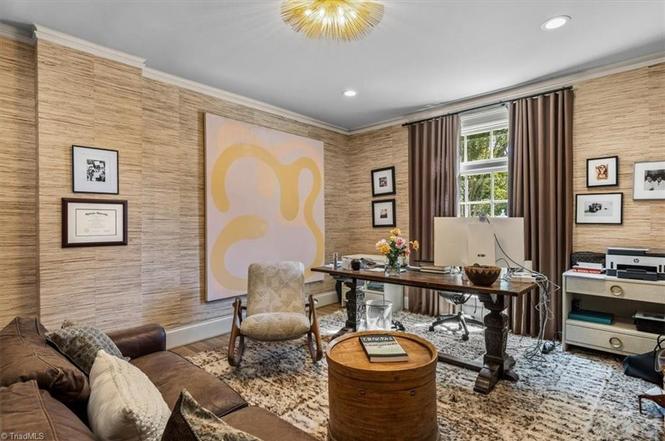
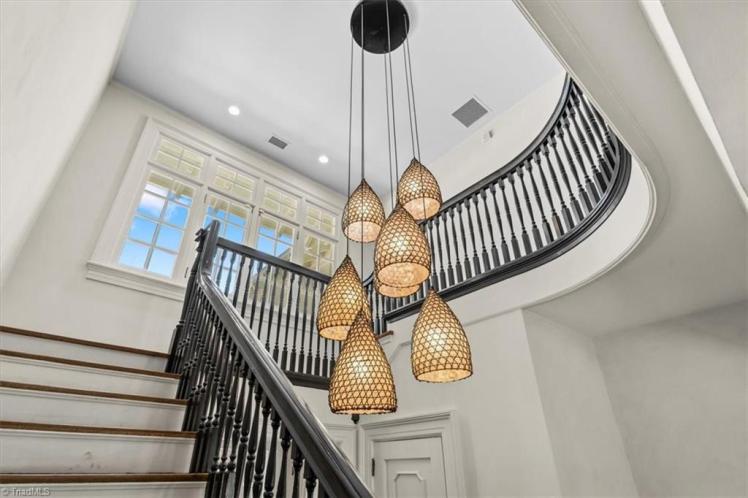
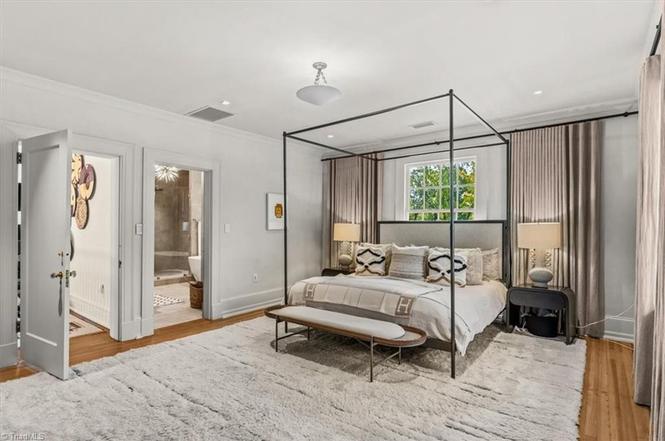
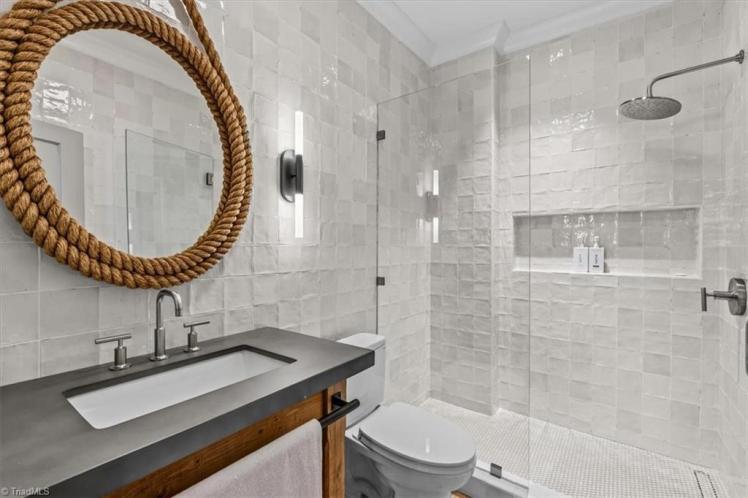
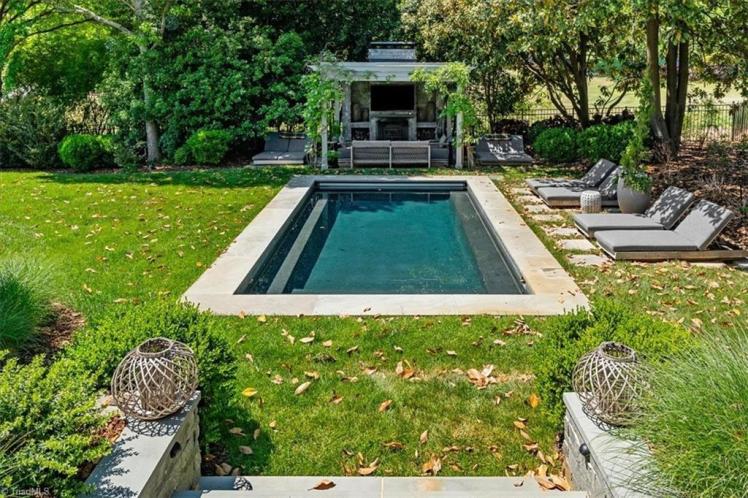
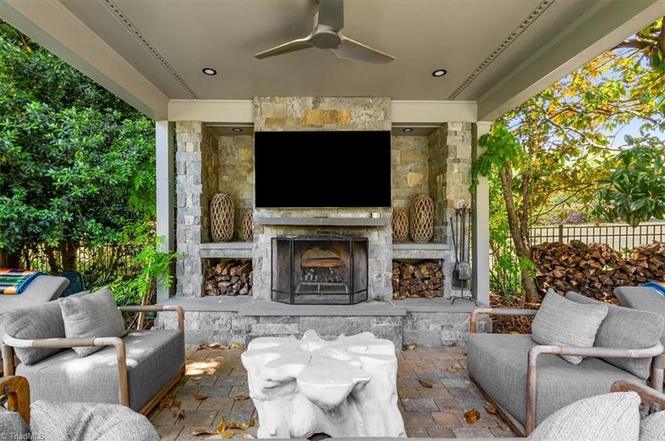
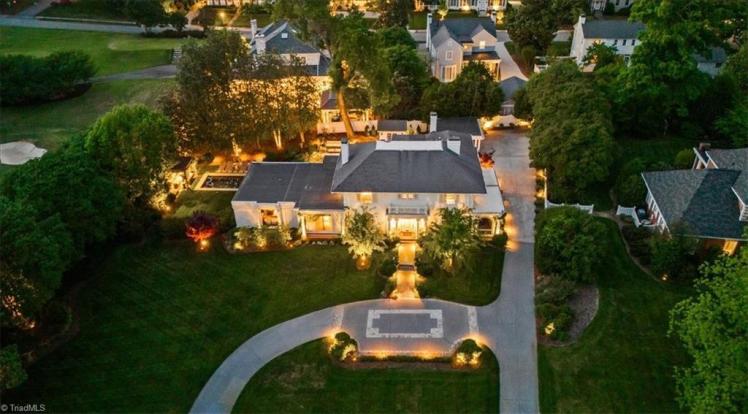
206 Sunset Drive, Greensboro
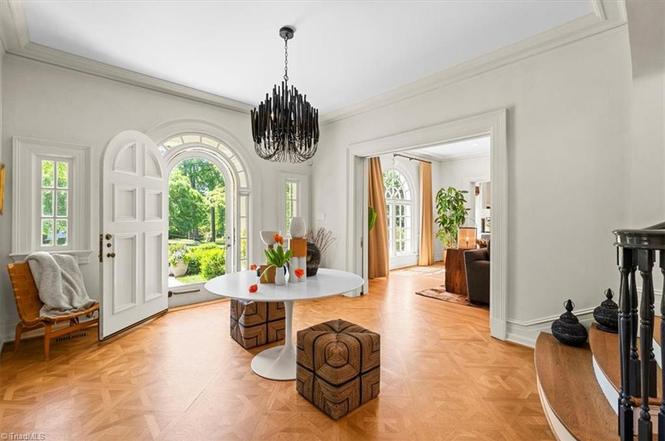
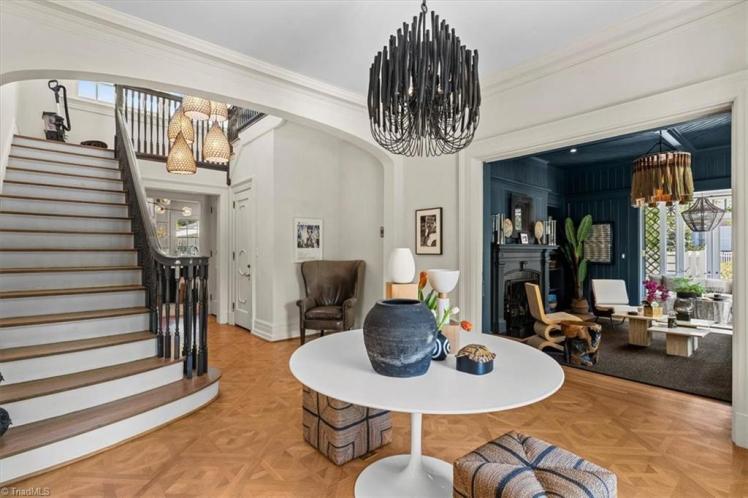
The Jarboe-Orr House
- Sold for $3 million on June 12, 2026 (originally $1,828,300)
- 4 bedrooms, 5 1/2 bathrooms, 6,144 square feet, 0.6 acre
- Price/square foot: $488
- Built in 1915
- Listed March 26, 2024
- Last sale: $1.55 million, September 2021
- Neighborhood: Irving Park historic District (NR)
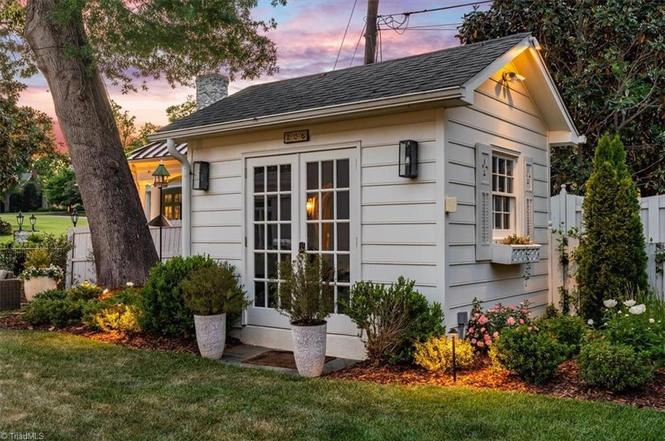
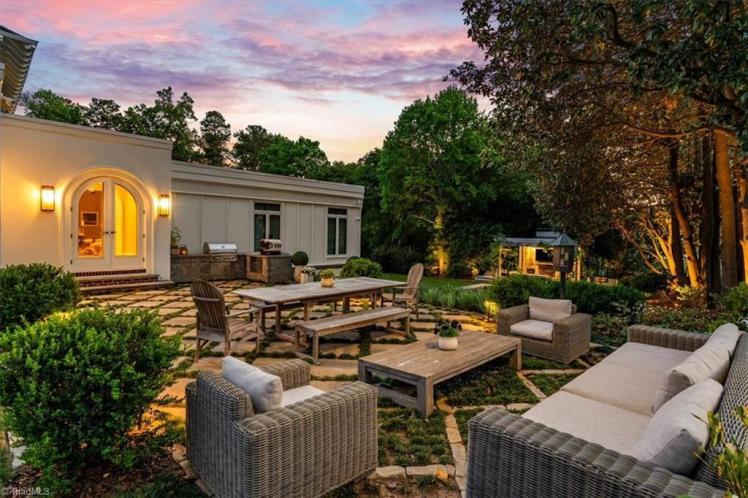
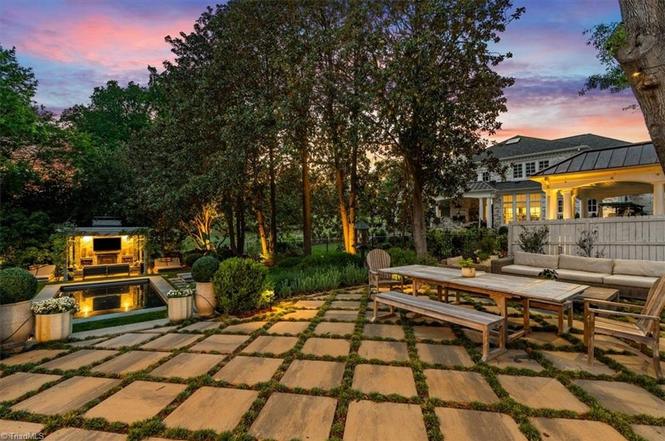
- Note: The house is on the 14th green of Greensboro Country Club.
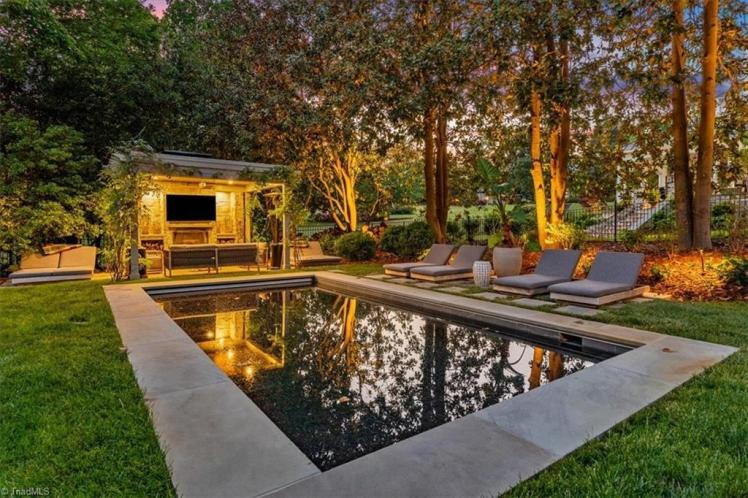
- The property includes a gazebo and outdoor fireplace. Previous listings mentioned a koi pond, which seems to have been replaced with a small (non-swimming) pool.
- After 53 years of ownership by the Orr family, this would be the home’s fifth sale in 19 years. The previous sale prices were $1.525 million in 2007, as the housing bubble was building; $945,000 in 2012, after the bubble burst; $1.05 million in 2015; and $1.55 million in 2021.
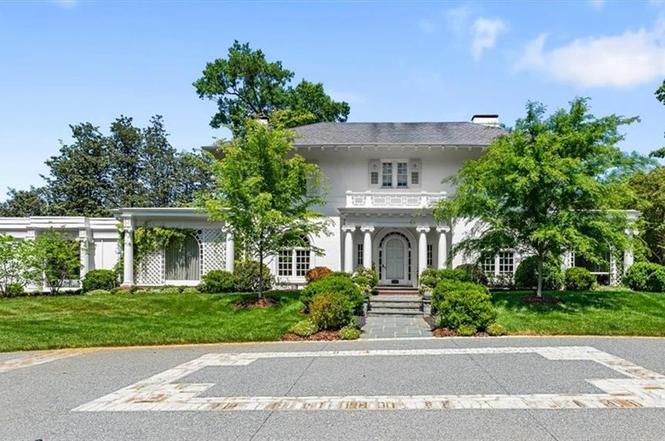
- Greensboro: An Architectural Record — “The cleanly articulated Mediterranean Revival-style villa, designed by Raleigh James Hughes, was erected for Dr. Jarboe in the mid-teens. Its elegant entry is marked by a round-arched door and transom and an Ionic portico topped by a Chinese Chippendale balustrade. Round arches and Ionic columns are repeated at its flanking first-story bays and latticed end pavilions. Its second story features shutters with fleur-de-lis cutouts, its roof curvilinear exposed brackets.”
- Dr. Parren Jarboe (1882-1935) and his wife, Lucille Payton Jarboe (1886-1934), owned the house until 1934. She died after a short illness not long after they moved to Fisher Park Circle. Dr. Jarboe was senior surgeon at St. Leo’s Hospital. He was a fellow of the American College of Surgeons and a major in the National Guard. He died in a car wreck the next year.
- The house was owned for 53 years by two generations of the Orr family, major figures in the textile industry. In 1953, Burlington Mills executive Douglas M. Orr bought the house. He served as secretary and general counsel as it became the world’s largest textile company. Douglas also served as president of the United Arts Council, United Way, Greensboro Symphony, Weatherspoon Gallery Association and Greensboro Country Club. He and his wife, Charlotte Regnas Orr (1915-1962), owned the house for 29 years, selling it to his son Donald in 1982. Donald, also a textile executive, owned the house for 24 years.
- The current seller is the CEO of Tanger Outlet Centers.
1931buena
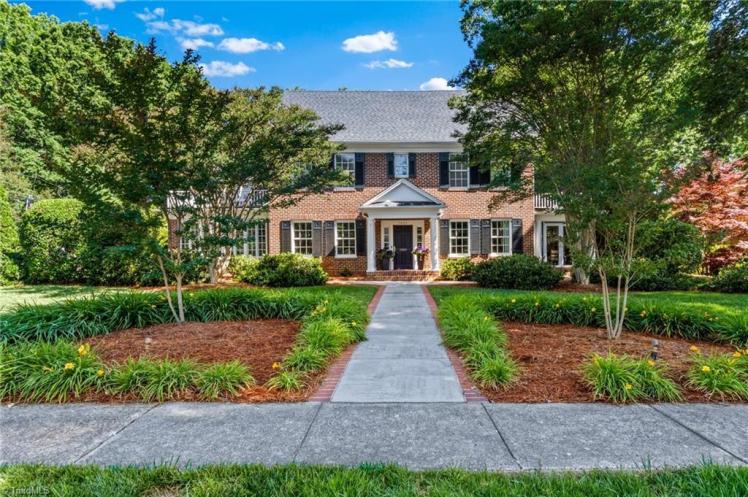
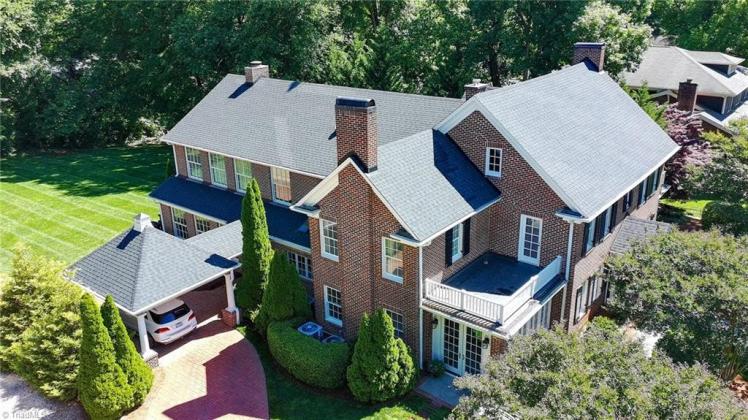
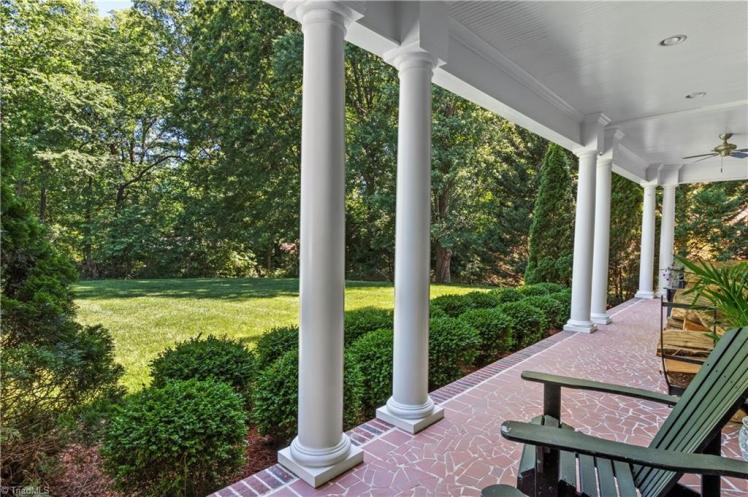
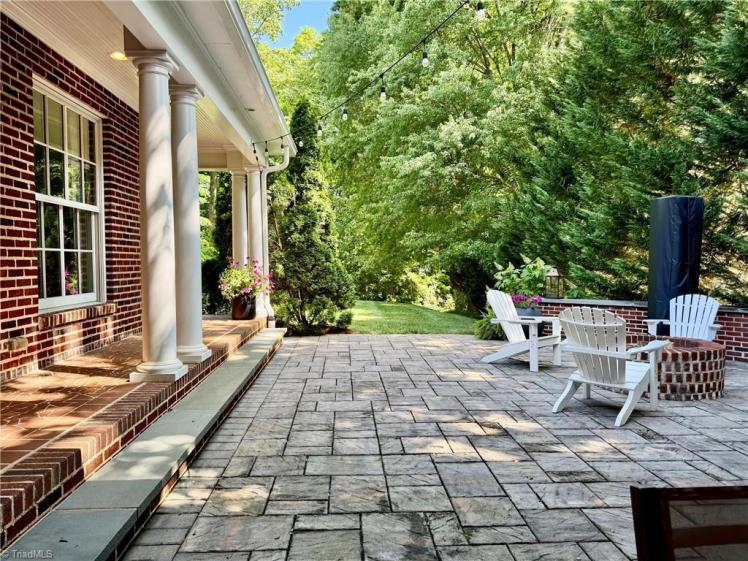
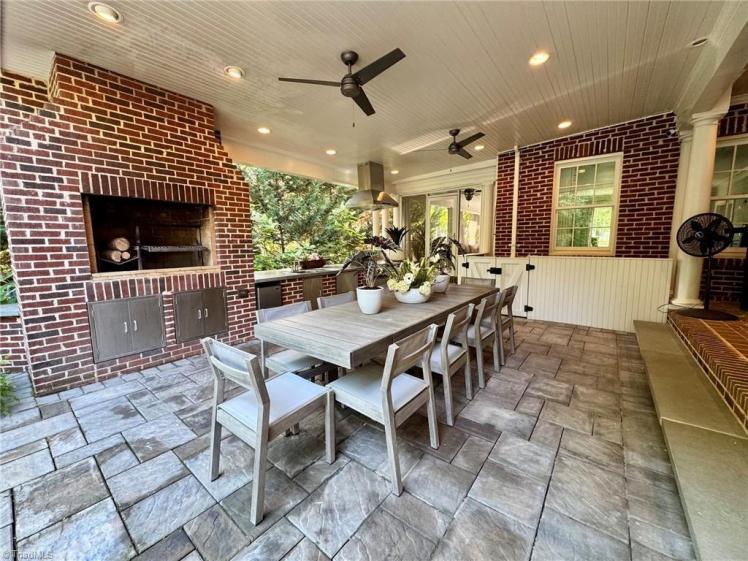
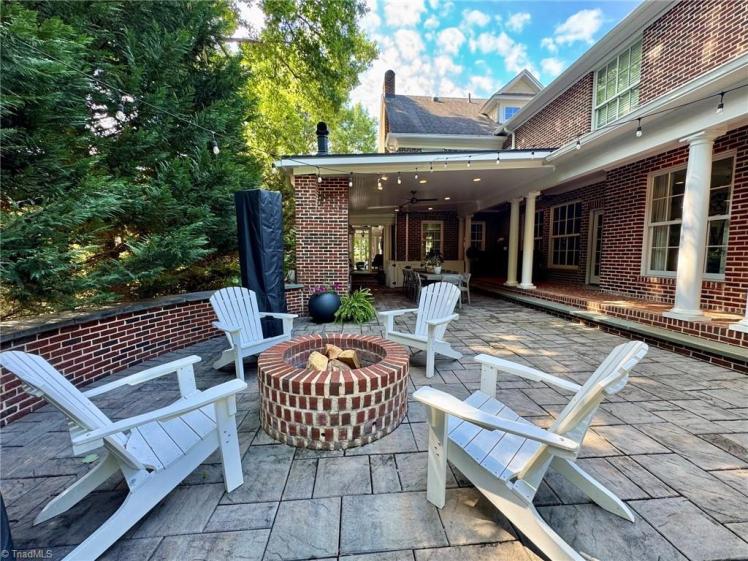
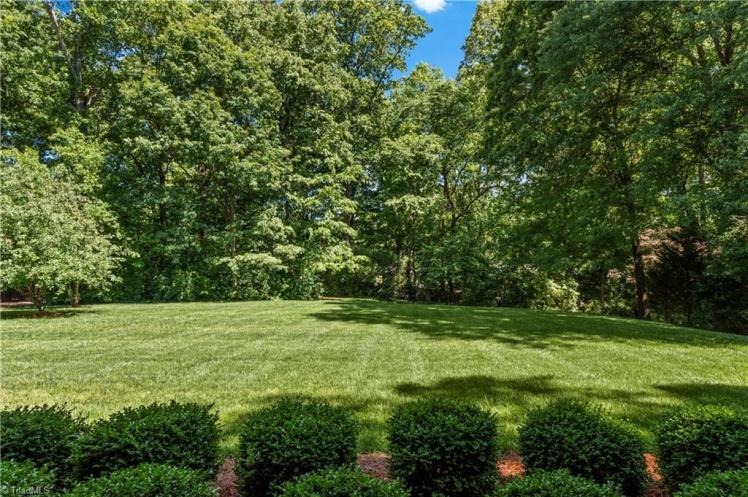
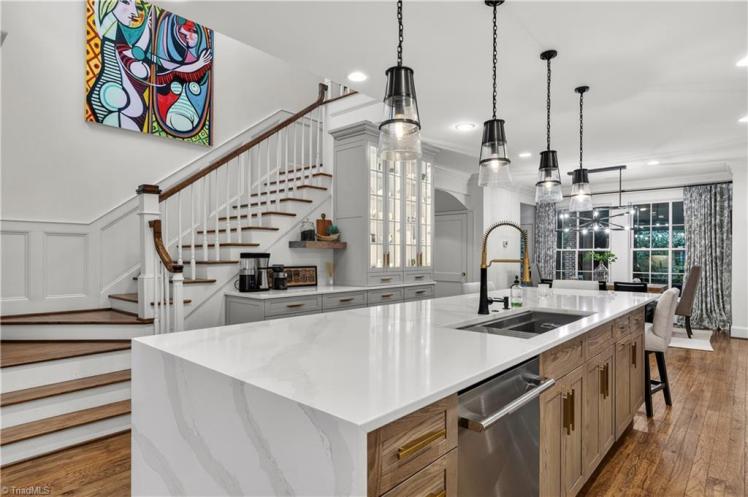
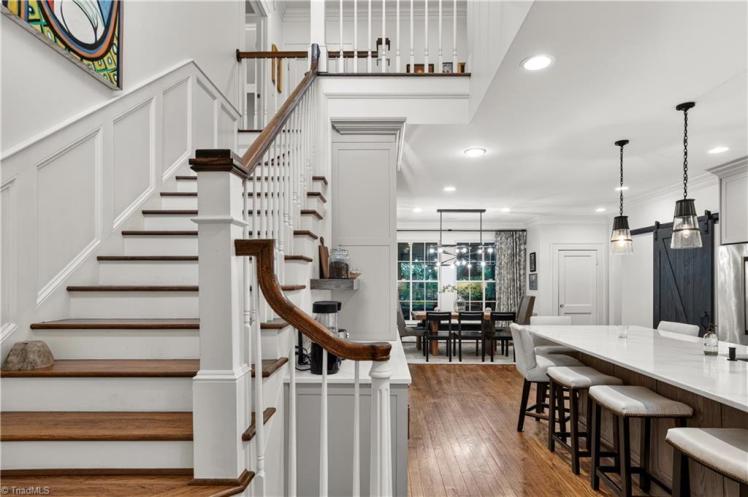
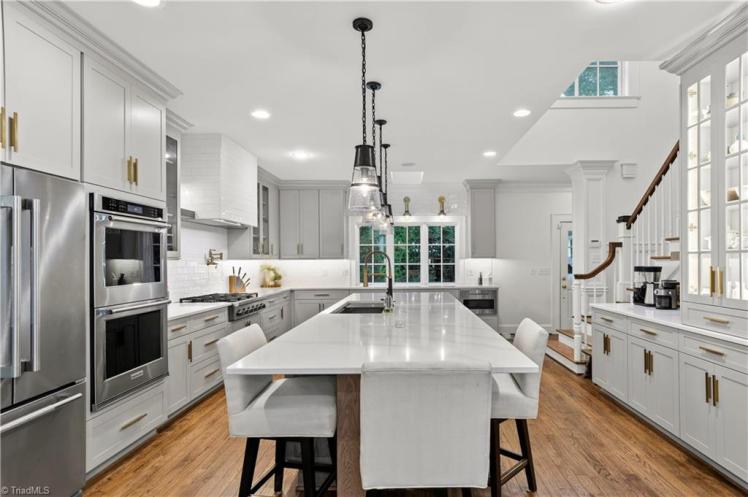
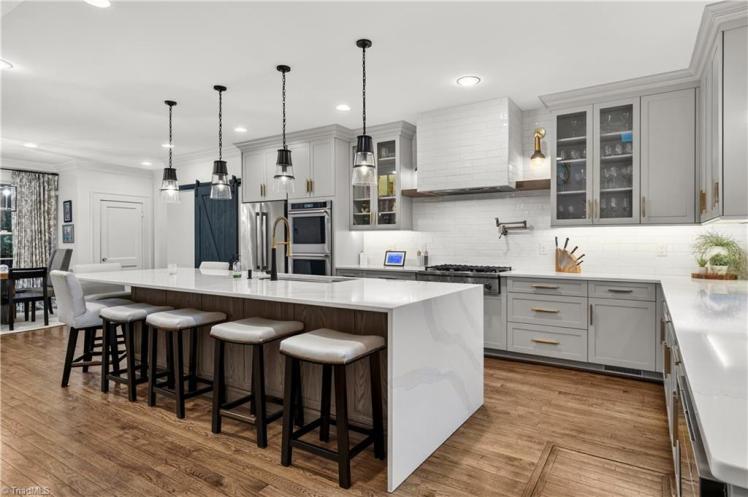
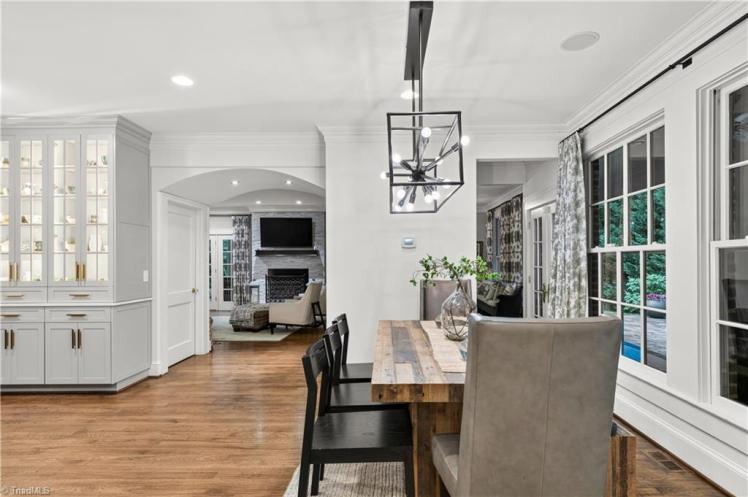
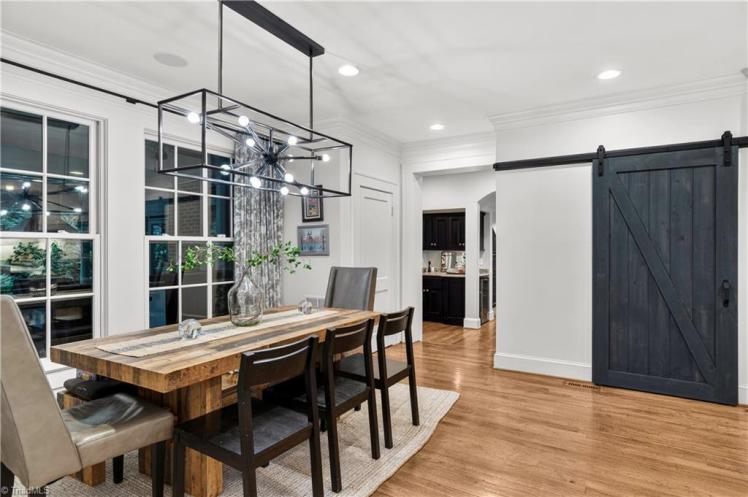
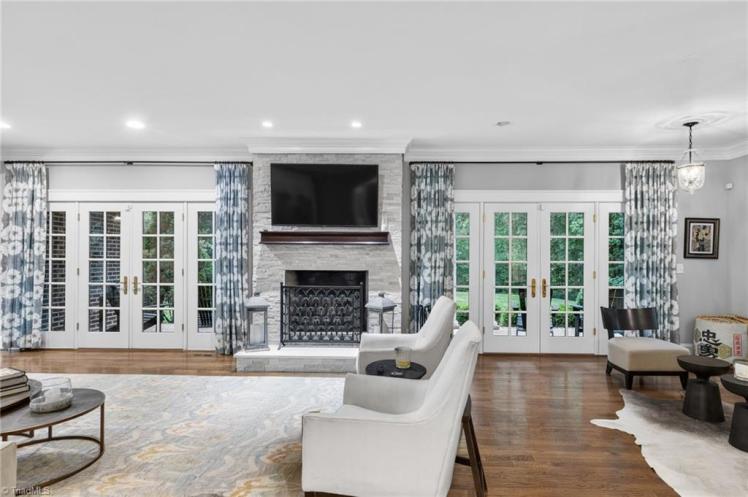
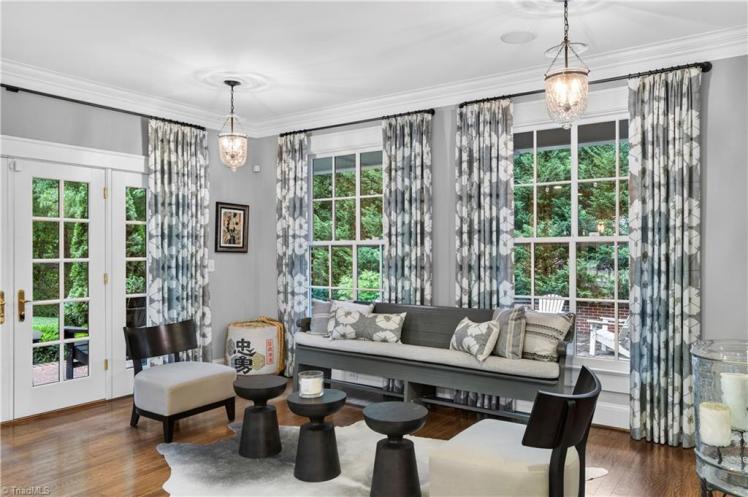
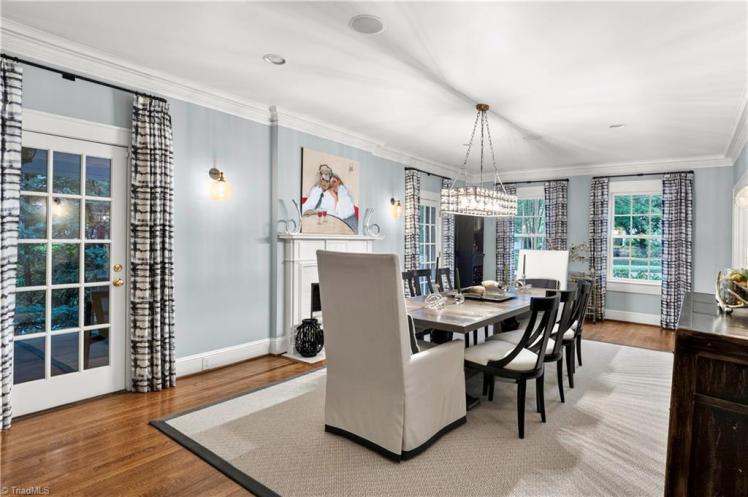
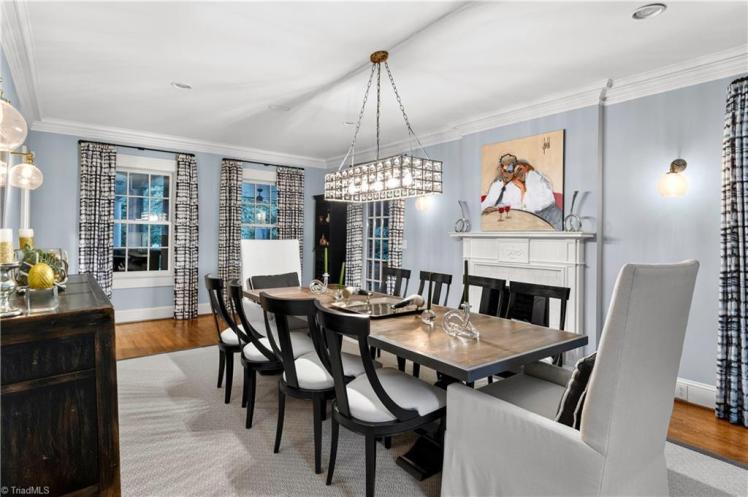
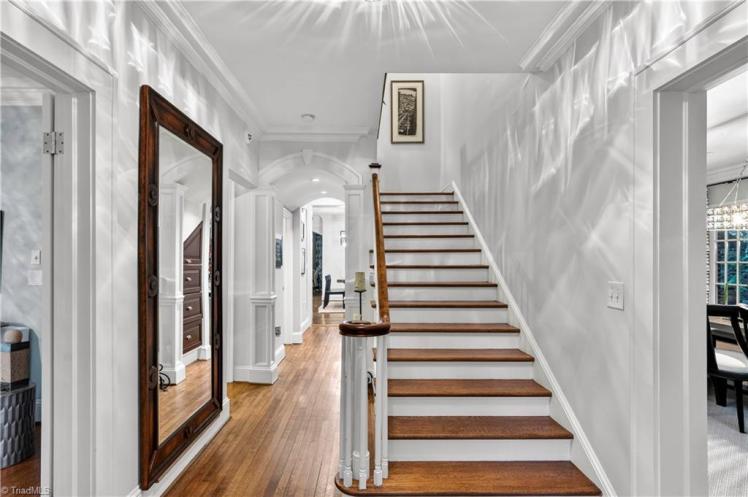
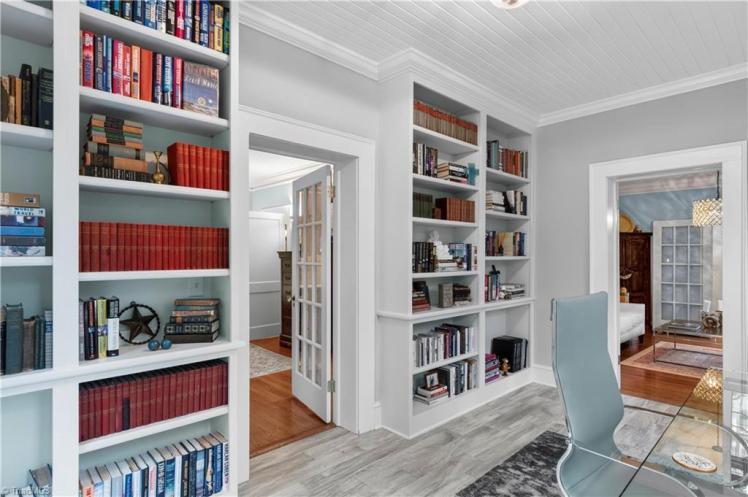
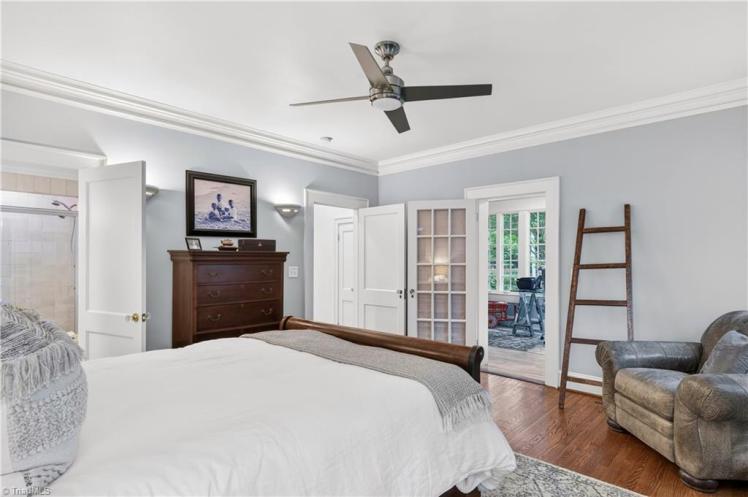
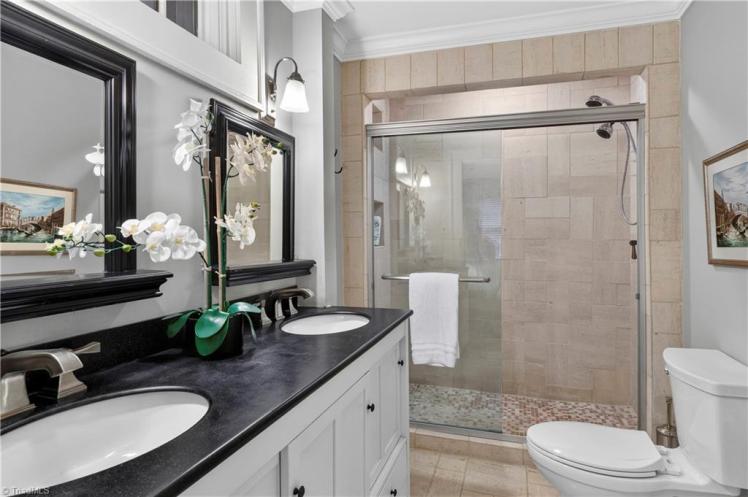
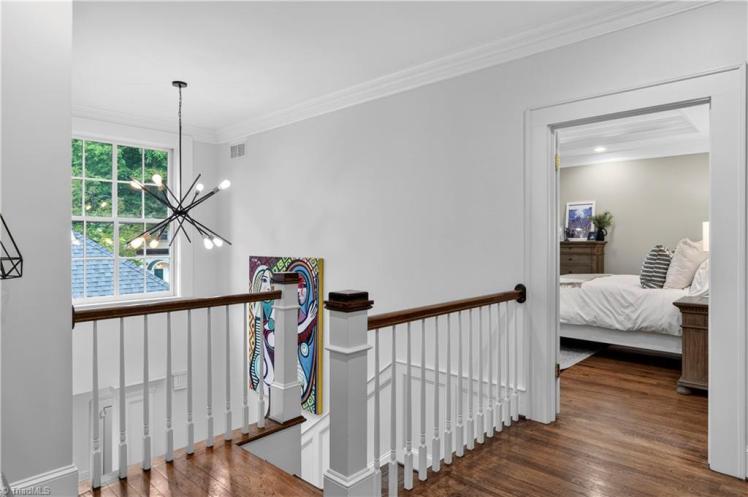
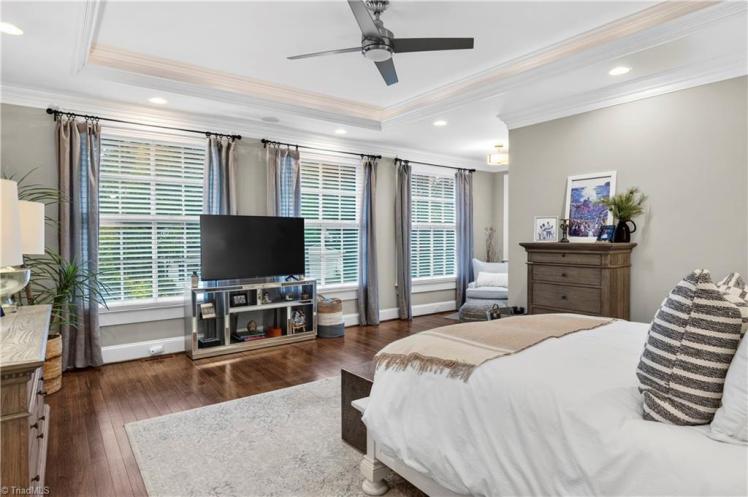
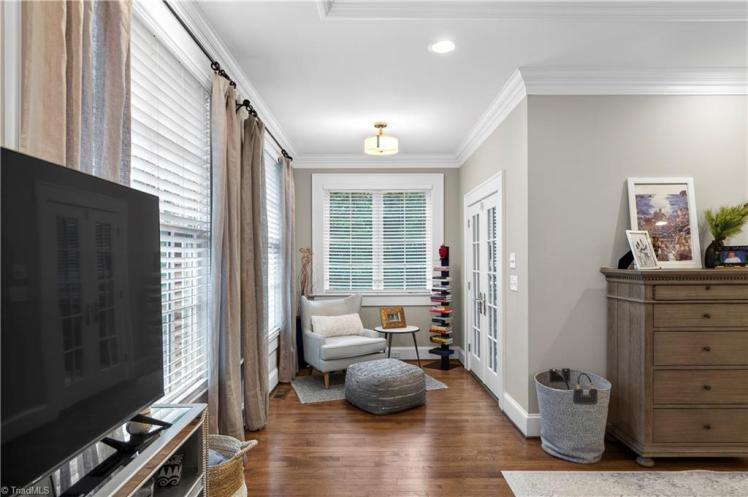
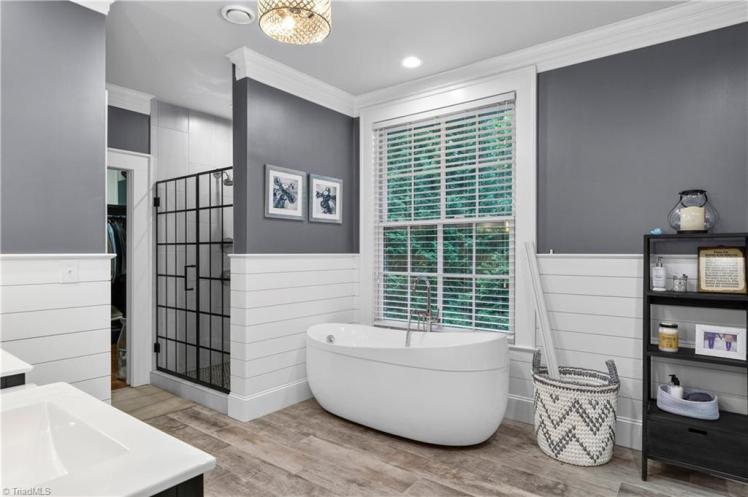
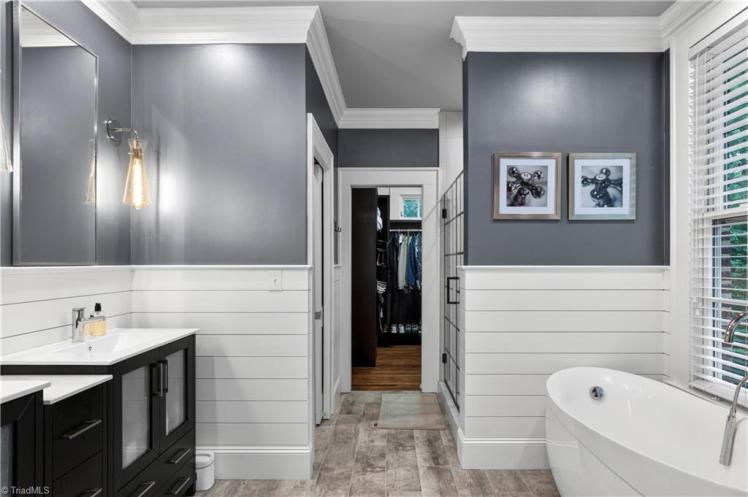
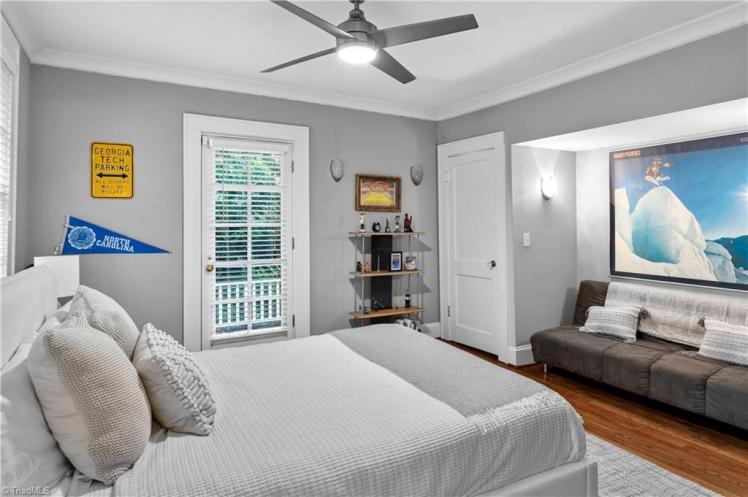
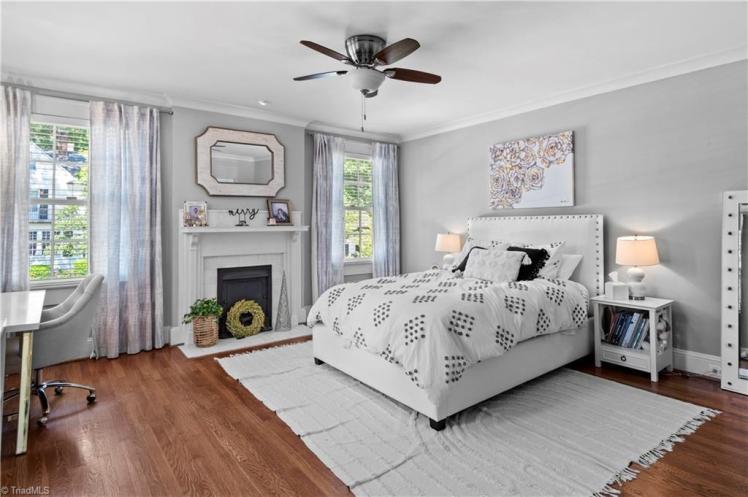
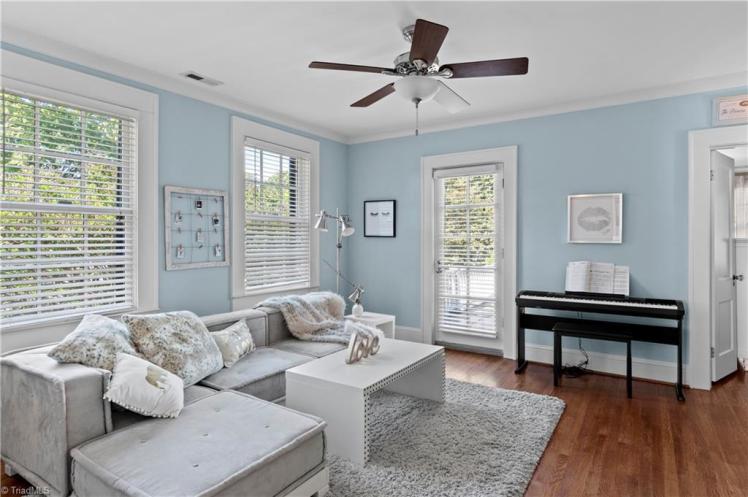
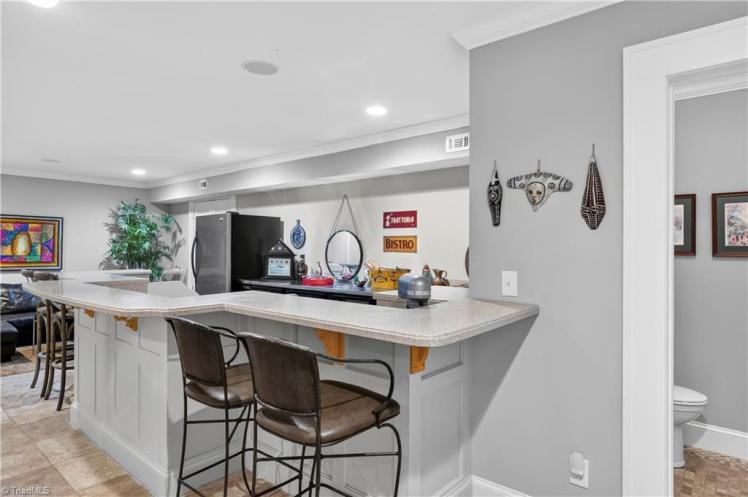
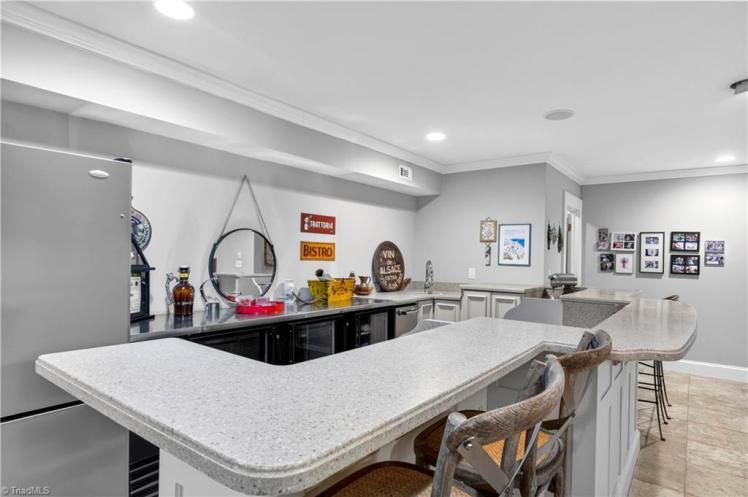
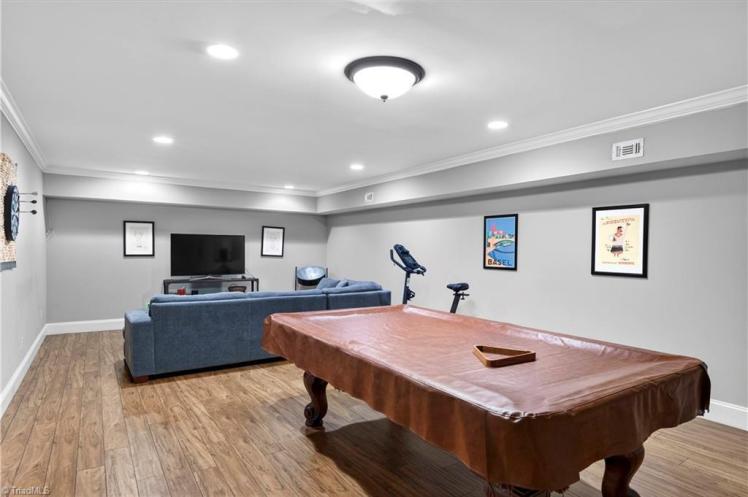
1931 Buena Vista Road, Winston-Salem
- Sold for $2.25 million on June 8, 2026 (originally $2.25 million)
- 7 bedrooms, 6 full bathrooms and 2 half-bathrooms, 6,276 square feet (per county), 0.81 acre
- Price/square foot: $359
- Built in 1925
- Listed May 20, 2026
- Last sale: $1.05 million, June 2017
- Neighborhood: Buena Vista
- Realtor hype” “A home for a discerning buyer wanting it all”
- Note: The listing says the house is 7,337 square feet, but their property taxes are based on 6,276.
- The original owners were Oscar Crump Harris (1872-1953) and Cora Elizabeth Fletcher Harris (1876-1976). The house remained in their family for 82 years. Oscar spent 30 years with Southern Railroad. In 1918 he became second vice president of Fletcher Brothers, a business headed by Cora’s brother Joseph, which manufactured overalls and pants.
- After Oscar’s death, Cora lived in the house with their daughter, Nancy Ann Harris Greenfield (1912-2006) and later Nancy’s husband, Dr. Alfred M. Greenfield (1902-1983). Nancy graduated from Salem College at age 19. She was a longtime piano teacher and led the local production of Handel’s Messiah for 72 years. She founded the local Professional Piano Teachers Association, served on the board of the Civic Music Association and was a charter member of the Winston-Salem Symphony.
- Nancy and Alfred met in 1958 when he came to Winston-Salem as guest conductor of the Messiah. They married in 1970. Alfred was an internationally known conductor. He also was chairman of the music department at New York University for 30 years and director of the NYU Glee Club for 43 years.
- Nancy’s estate sold the house in 2007.
349arbor
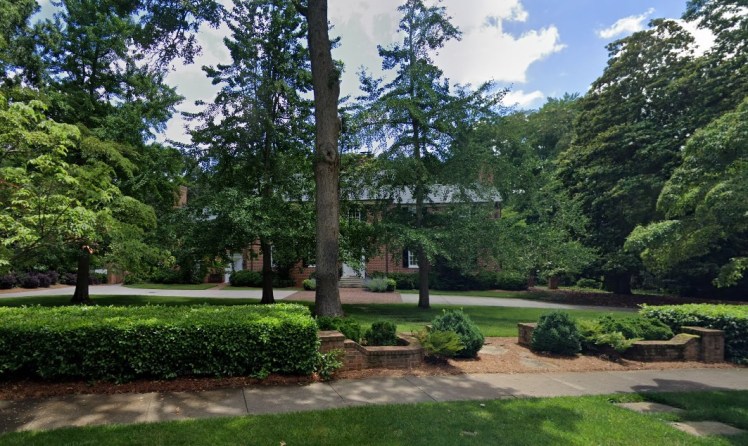
349 Arbor Road, Winston-Salem
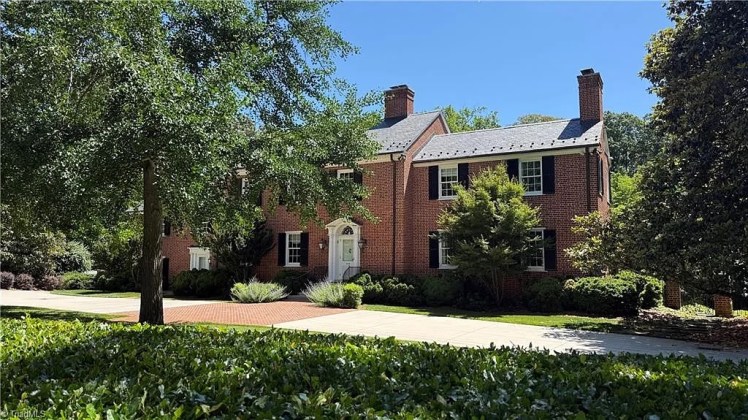
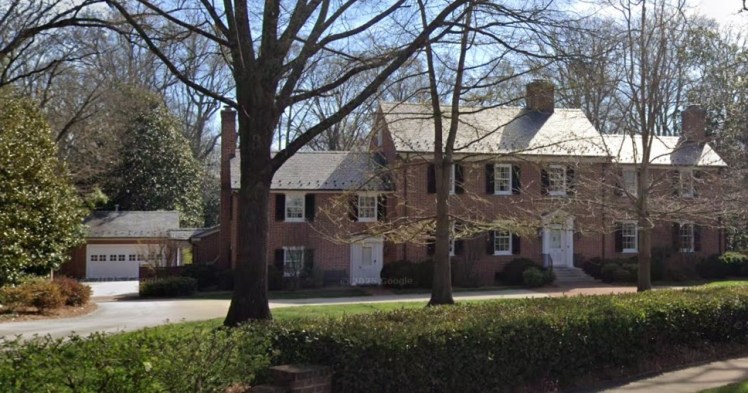
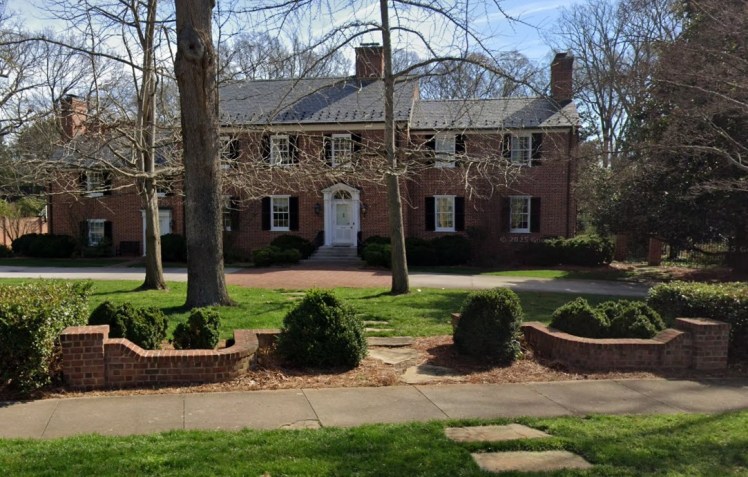
The Thomas and Rosalie Moore House
- Sold for $4.0 million on June 1, 2026 (not listed publicly for sale)
- 5 bedrooms, 7 1/2 bathrooms, 6,728 square feet, 1.71 acres
- Price/square foot: $595
- Built in 1939
- Not listed on MLS
- Last sale: $1.95 million, October 2008
- Neighborhood: West Highlands
- A note on the price: In the past eight and a half years, this is one of only two historic homes in the Piedmont Triad that have sold for $4 million or more, and at an astronomical $595 per square foot, it’s the third-highest price per square foot in that time (at least, among the 3,900-plus home sales tracked on this website).
- Note: Designed by Luther Lashmit, designer of Graylyn and Merry Acres and one of the state’s most prominent architects of the era.
- The home’s bricks were handmade by renowned local brick maker George H. Black (1879-1980), whose bricks were used in many local homes and major buildings. In 1930, he went to Colonial Williamsburg to make bricks for a number of buildings there. He was in his 90’s when President Richard Nixon sent him to Guyana to teach brick making.
- The original owners were Thomas O. Moore (1900-1976) and Rosalie Hazen Hanes Rice. They sold the house in 1963. Thomas was a lawyer and executive with P.H. Hanes Knitting Company, for which he served as vice president, general counsel and chairman of the board. He also served as the first chairman of the board of Forsyth Memorial Hospital.
- Rosalie had the good fortune to be born a granddaughter of Pleasant Huber Hanes. She was a major benefactor to Old Salem. She funded the reconstruction of the historic Levering House, which included demolishing a 1938 apartment house that had been built of the home’s lot. She later lived in the house. Rosalie served as president of the Junior League, the Twin City Garden Club and the Winston-Salem Debutante Committee.
- The house was included in the 1948 statewide Garden Club Tours: “Though modern, the Thomas Moore home on Arbor Road has a feeling of antiquity. The architecture is Georgian, and the brickwork, Flemish bond. All of the first floor woodwork came from the Alex Gaston house in New Bern, which was built in 1780 and which served as … a branch of the Bank of Cape Fear in 1804. The original Gaston doorway and bits of the woodwork are of old New Bern in Winston-Salem.” (Photo, Winston-Salem Journal, April 4, 1948)
702woodland34
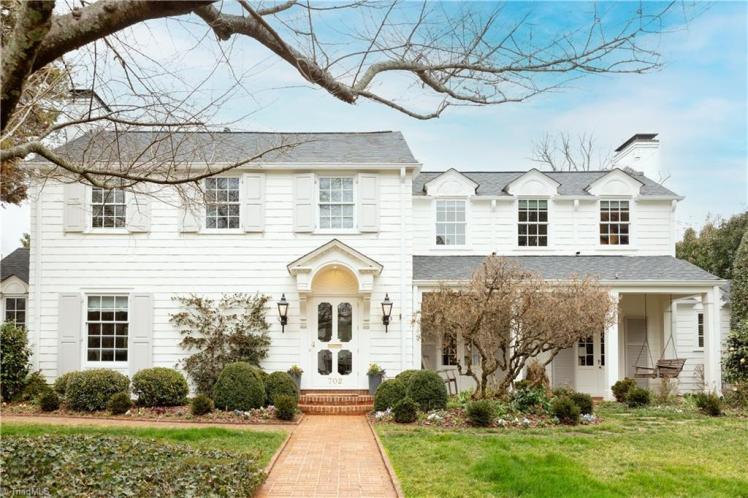
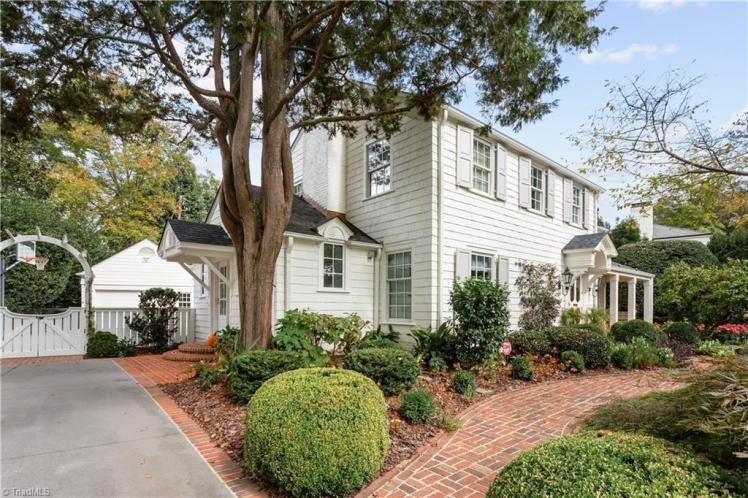

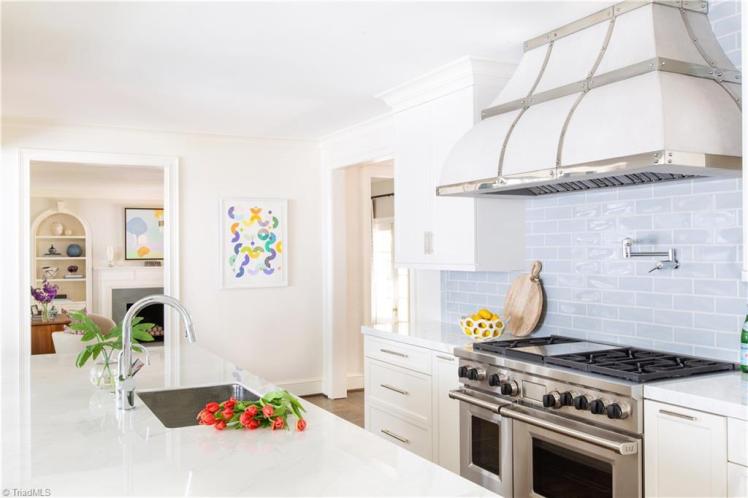
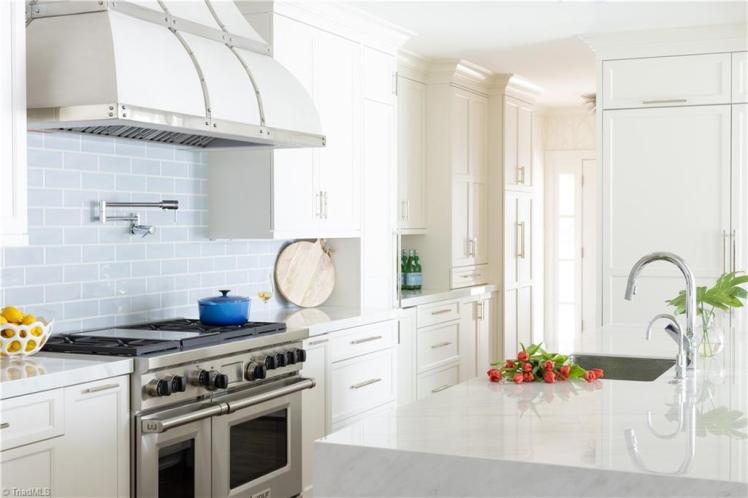
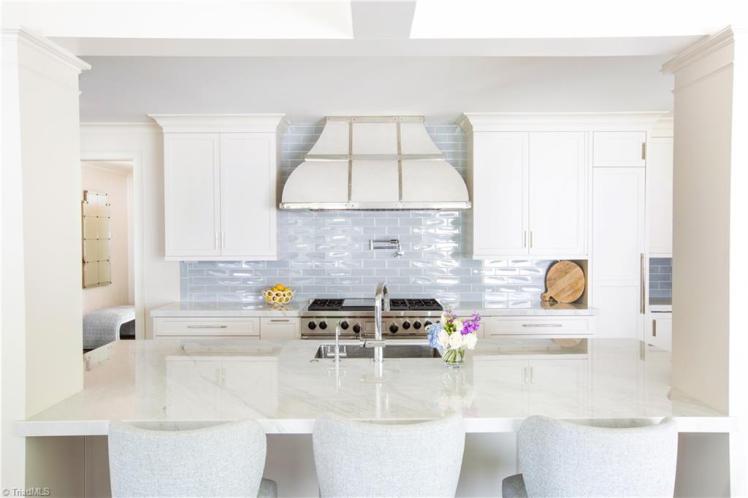
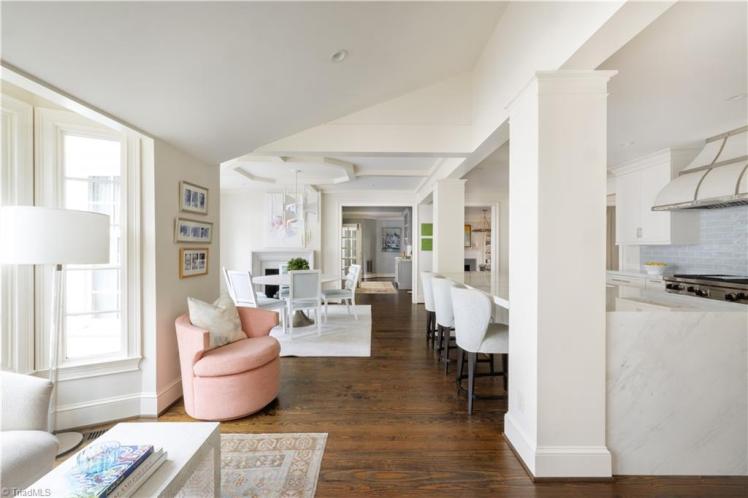
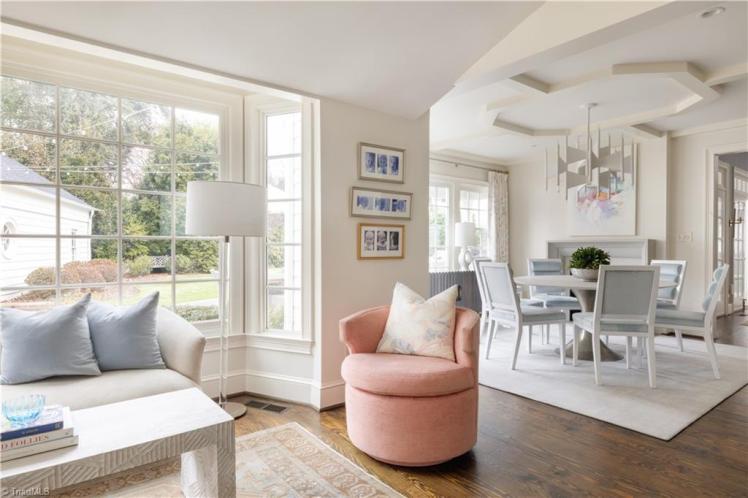
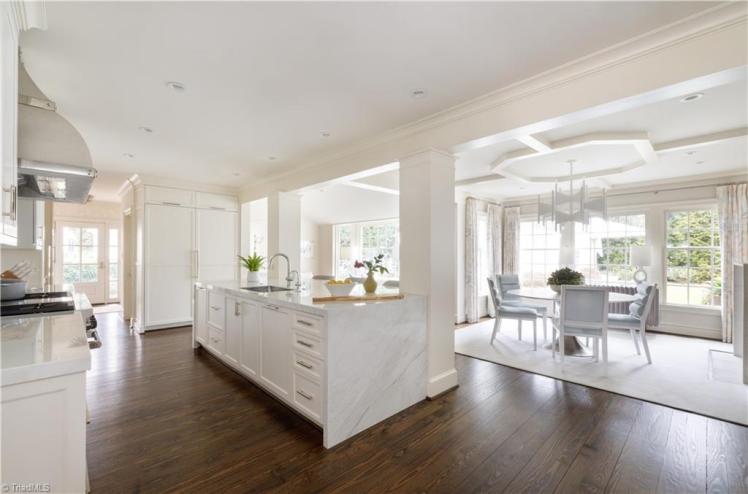
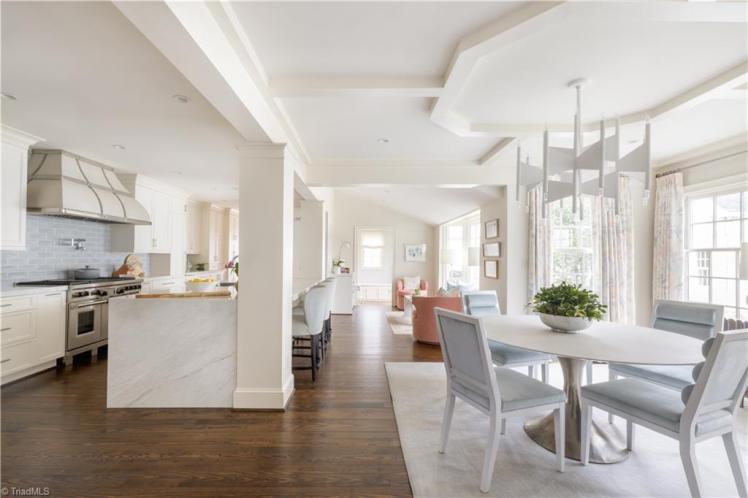
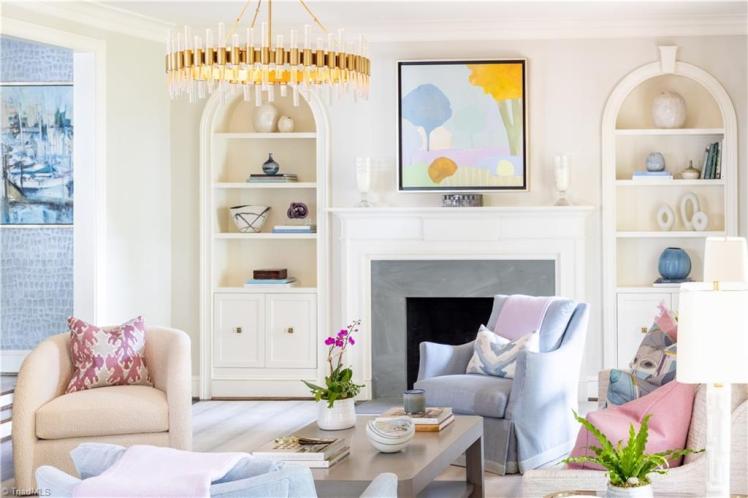
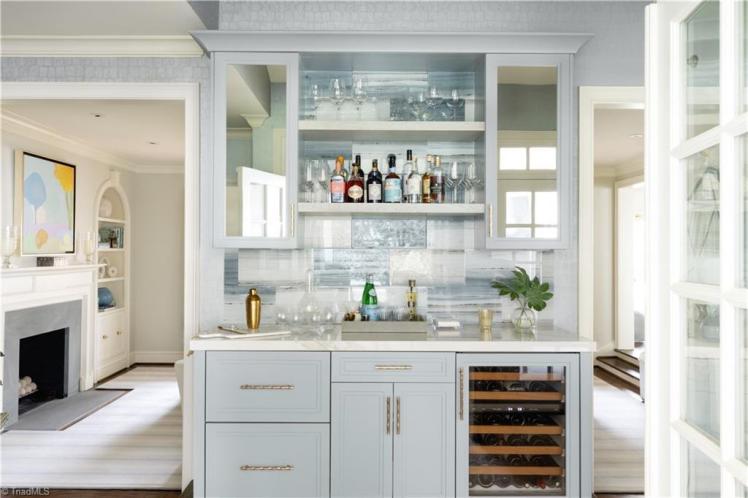
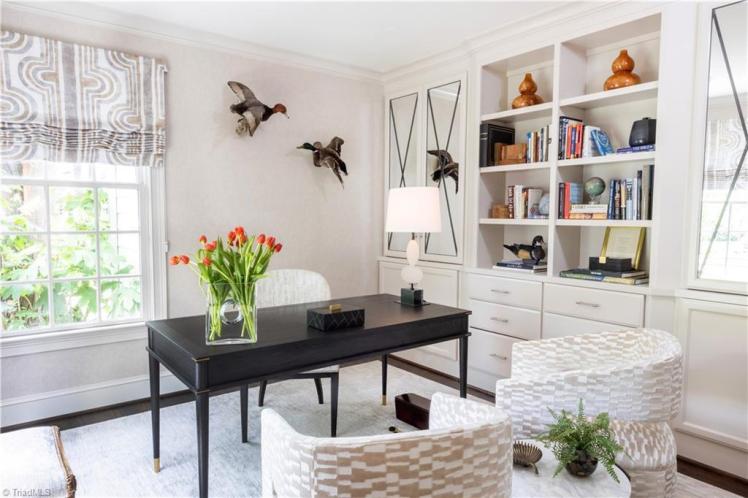
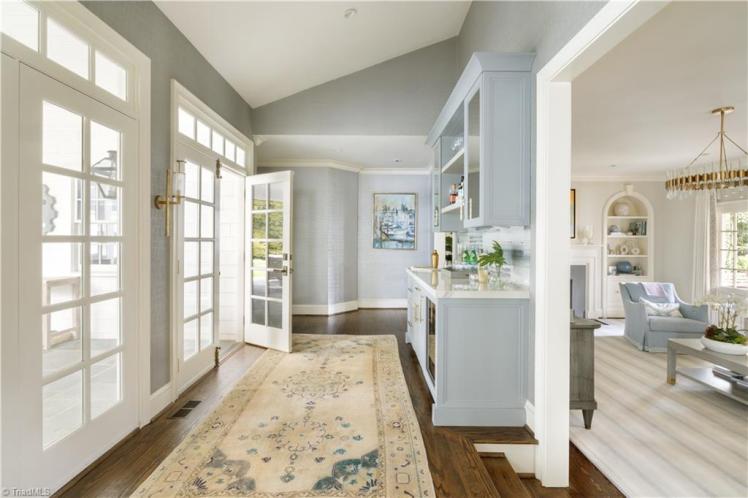
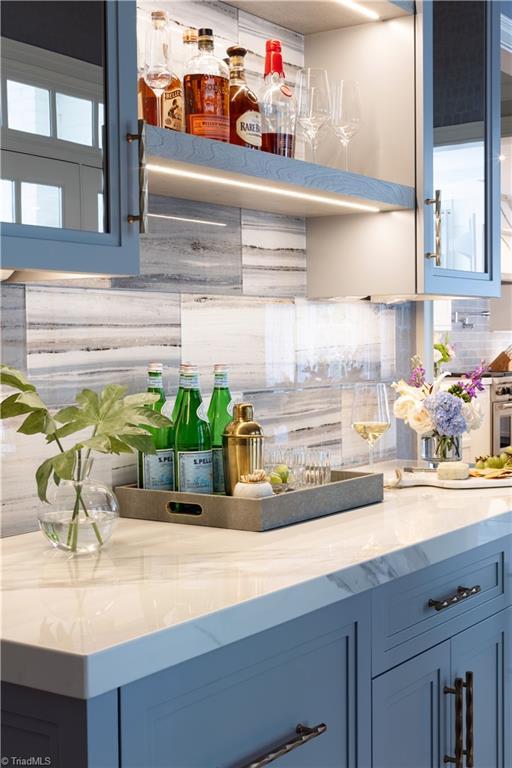
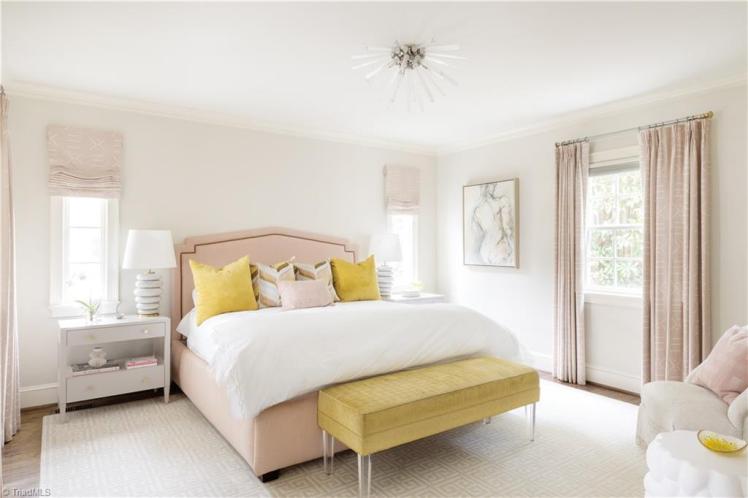
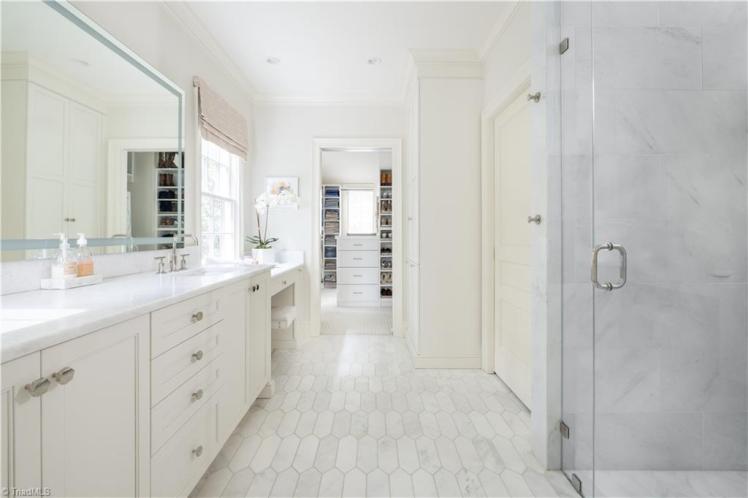
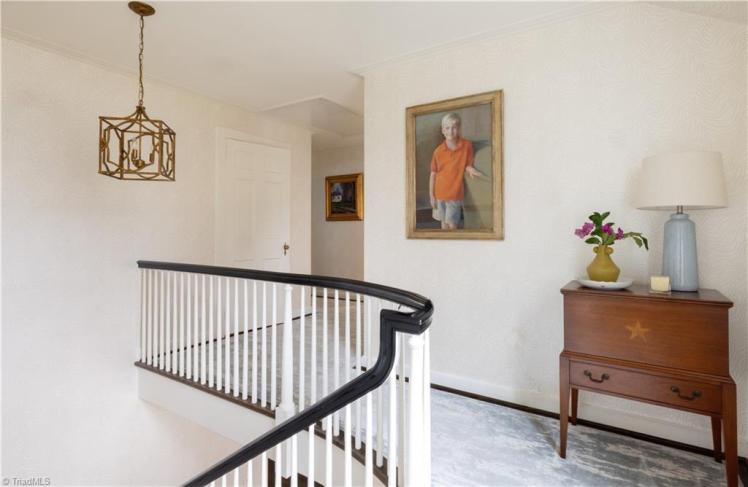
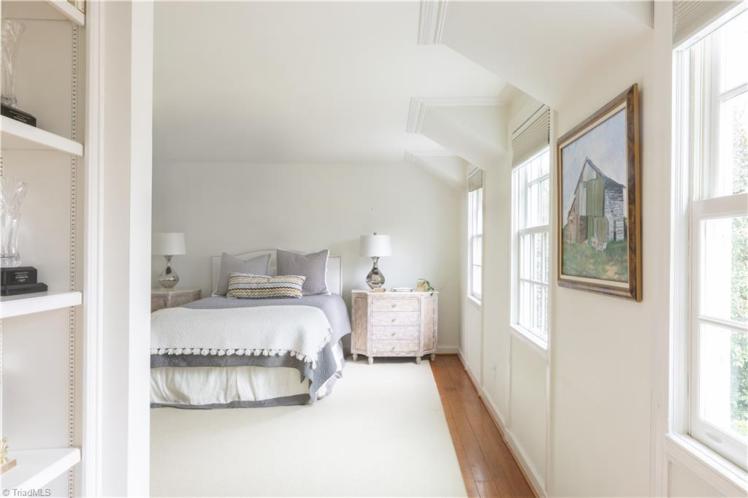
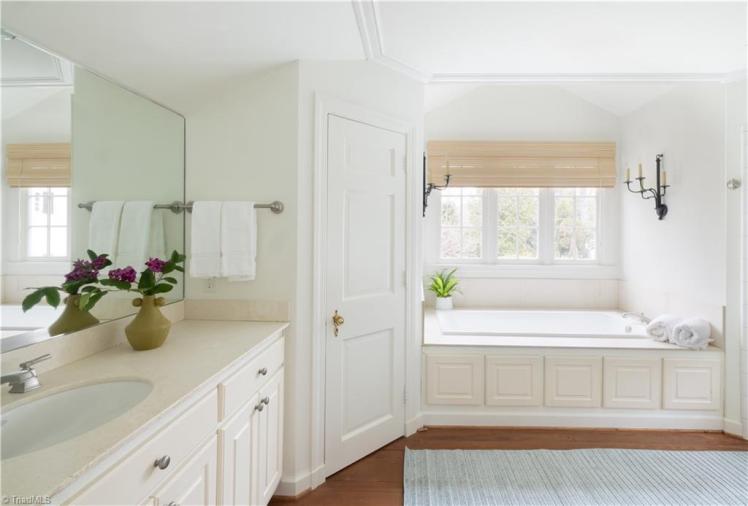
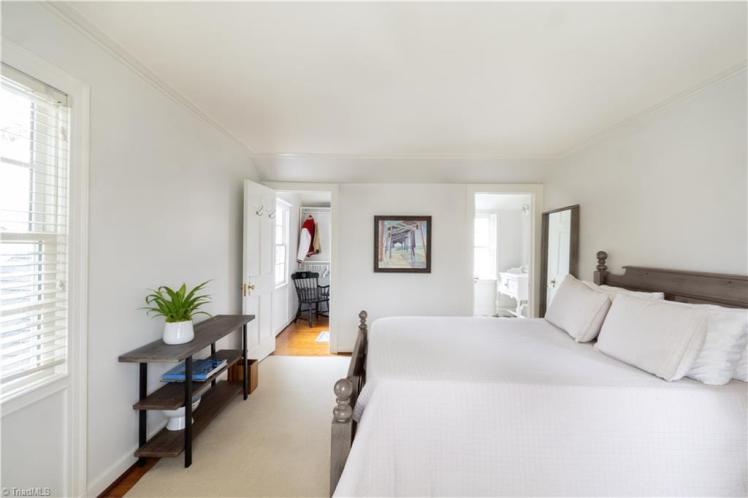
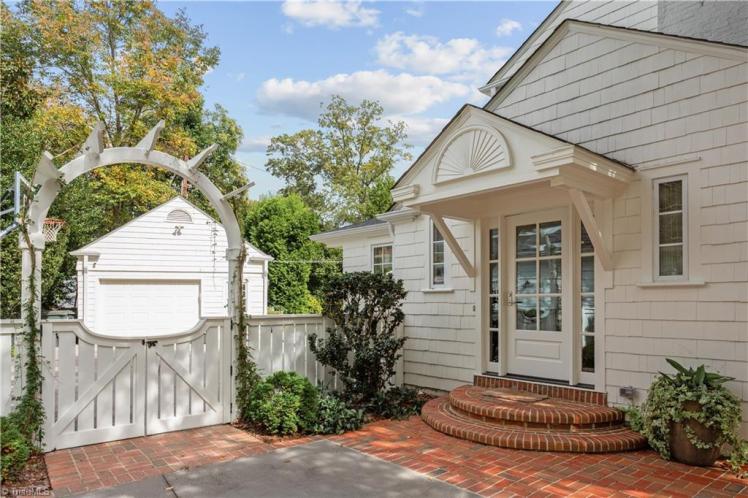
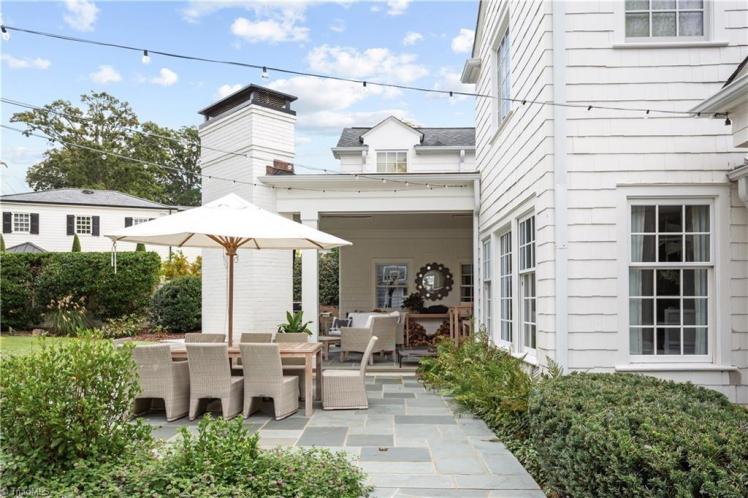
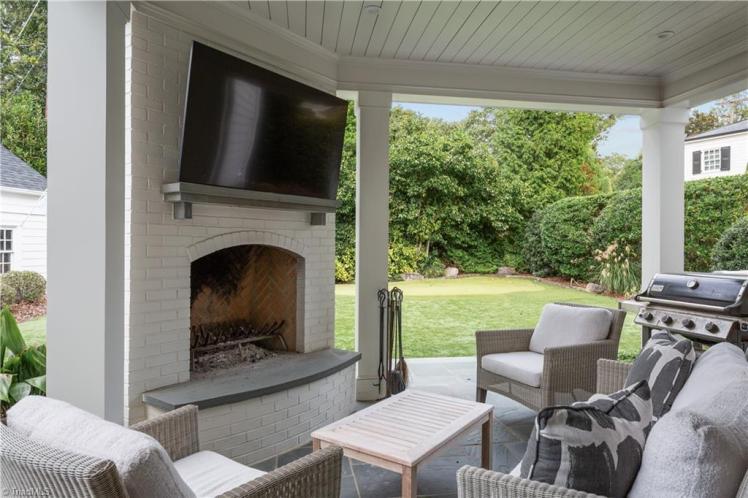
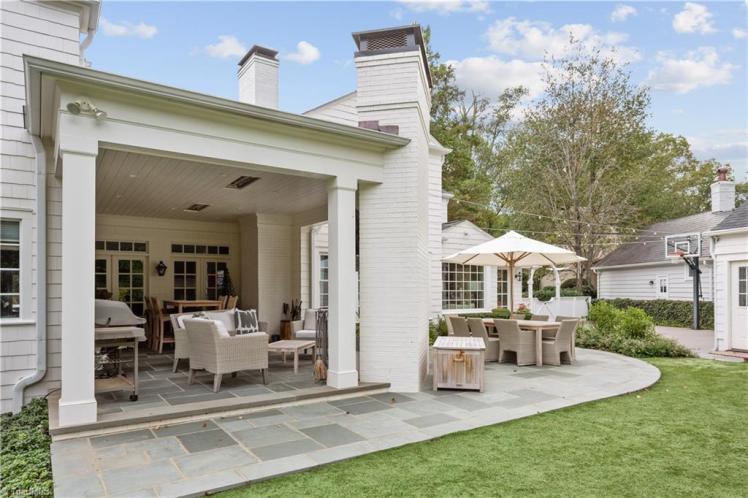
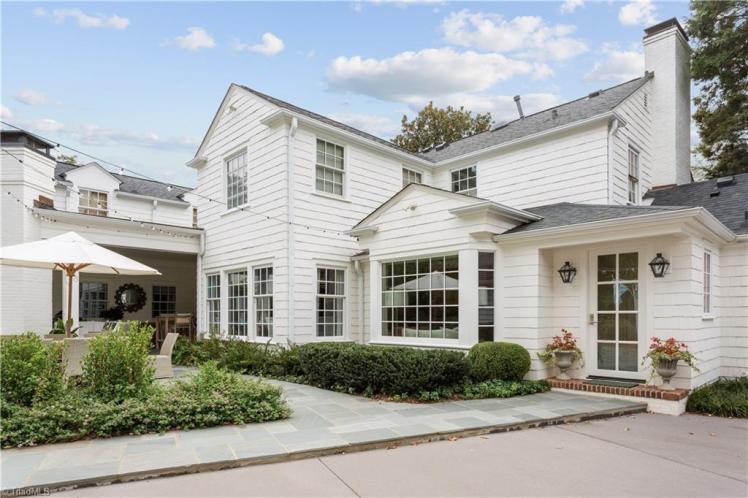
702 Woodland Drive, Greensboro
- Sold for $1.7 million on May 20, 2026 (originally $1.975 million)
- 4 bedrooms, 4 1/2 bathrooms, 4,778 square feet (per county), 0.42 acre
- Price/square foot: $356
- Built in 1934 (per county, but probably a bit later; see note)
- Listed January 15, 2025
- Last sale: $835,000, June 2015
- Neighborhood: Irving Park
- Note: The garage includes a 300 square-foot guest room with bathroom.
- The address first appears in the city directory in 1936. The original owners appear to have been Thomas Campbell Darst Jr. (1907-1981) and Mary Berton High Darst (1912-1997). Thomas was secretary-treasurer of Oscar Burnett & Co., an investment firm. They sold the house in 1938.
- In 1945 the house was bought by Dr. William Blount Norment (1899-1980) and Katherine Lee “Dusty” Williams Norment (1913-1999). They owned it for 53 years. William was a gynecologist, surgeon and for decades a major figure in the Greensboro medical community. He was a member of the medical board of Wesley Long Hospital from 1932 to 1976. After the death of founder John Wesley Long, William was among a group of 12 doctors who bought the hospital and expanded it. He also invented the hysteroscope, an optical device to detect uterine tumors. His pioneering medical-journal articles from the 1940s to 1970s brought the device into wide use.
207hillcrest

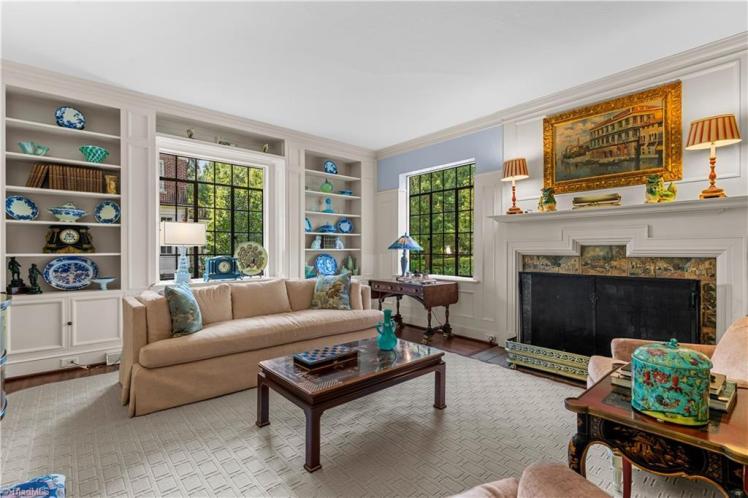
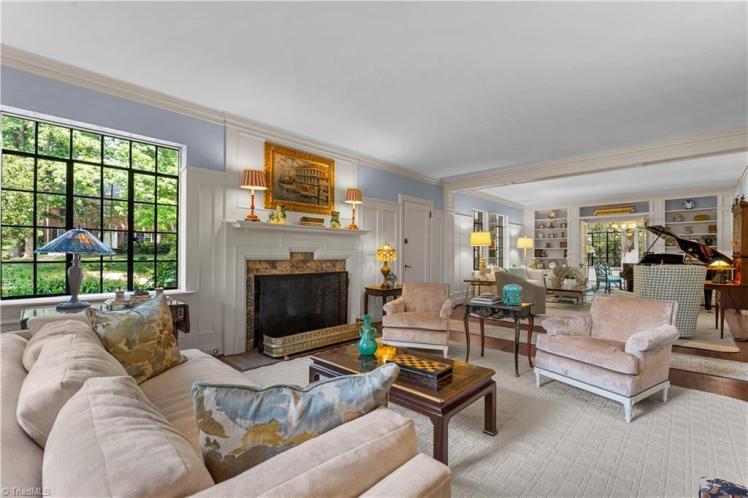


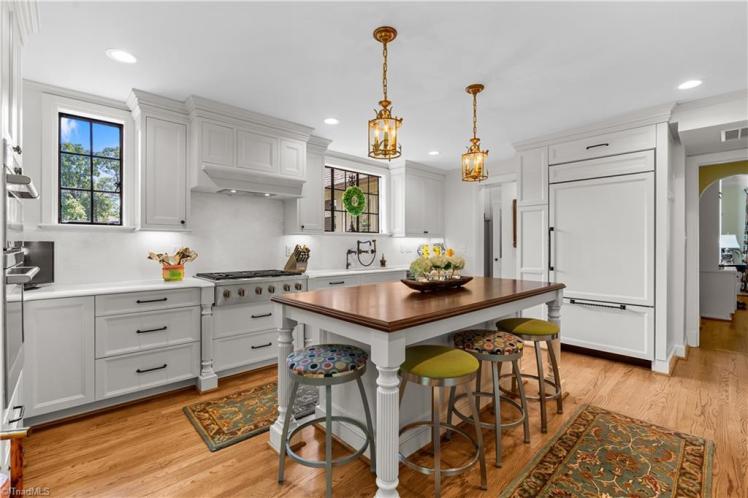


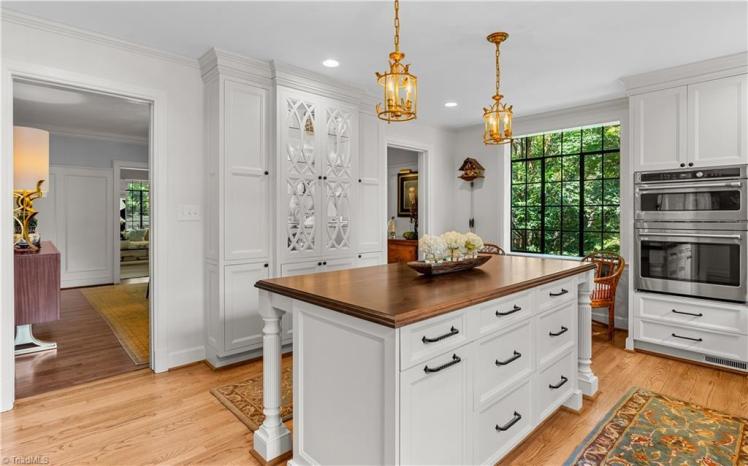


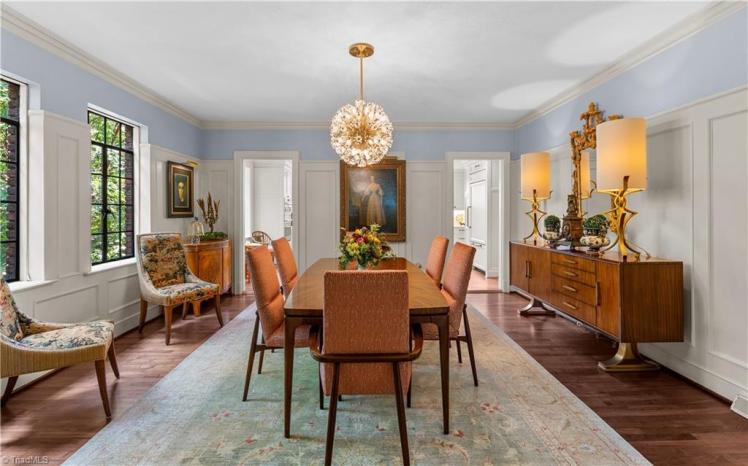
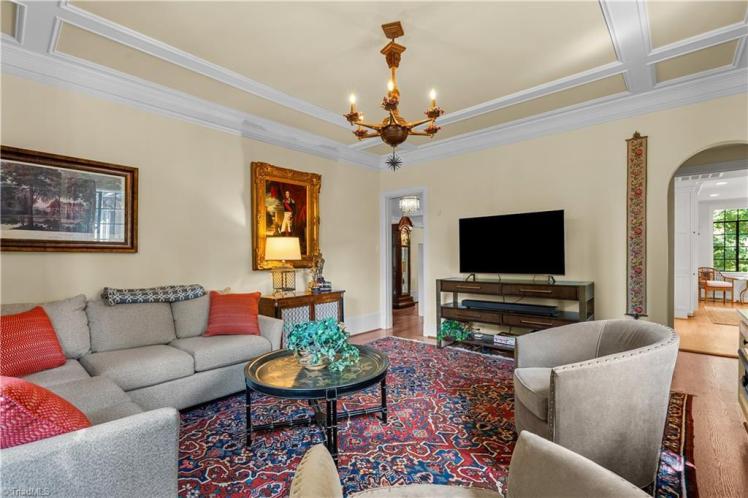
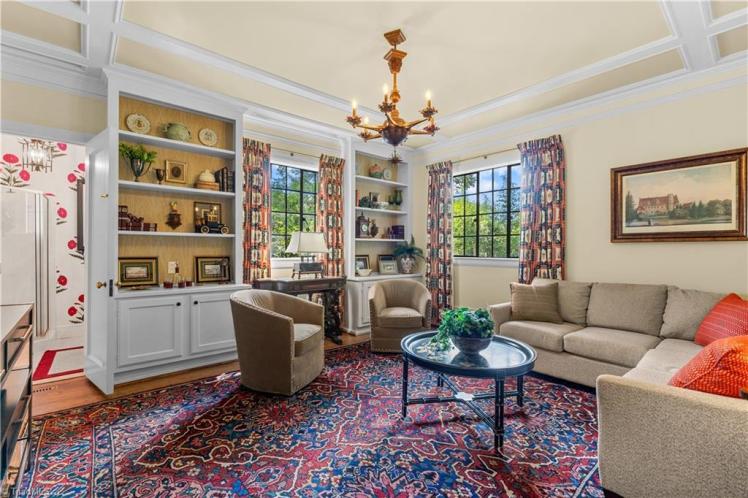
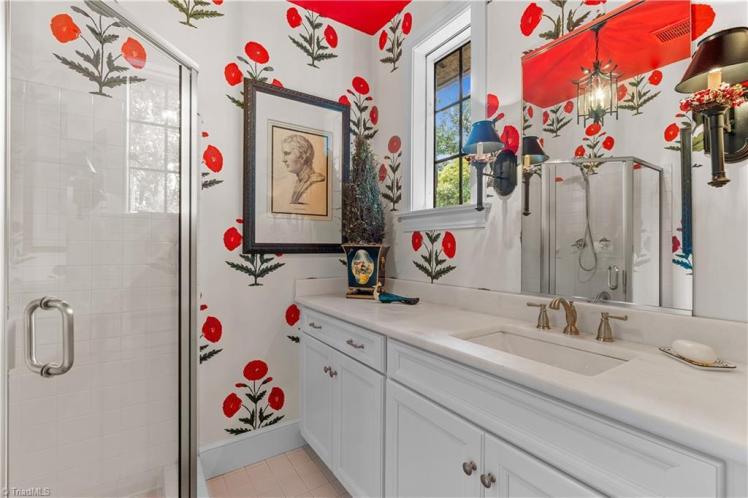


207 Hillcrest Drive, High Point
The Kenneth and Alva Denny House
- Sold for $990,000 on May 18, 2026 (originally $1.195 million)
- 4 bedrooms (per county), 5 1/2 bathrooms, 4,355 square feet (per county), 0.30 acre
- Price/square foot: $227
- Built circa 1928
- Listed August 30, 2025
- Last sales: $660,000, November 2022; $265,000, November 1990
- Neighborhood: Emerywood, Uptown Suburbs Historic District (NR)
- Realtor Babble from the 2022 listing: “A once in a lifetime opportunity … !”
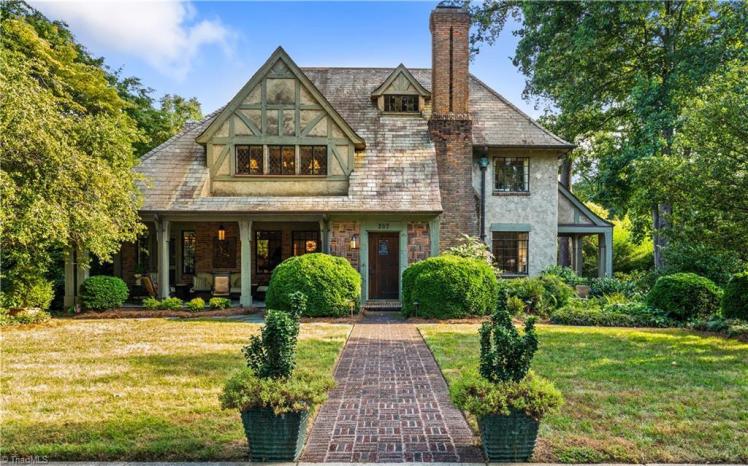
- District NRHP nomination: “This one-and-a-half-story, truncated-hip-roofed, Tudor Revival-style house has a steeply-pitched slate roof that extends down to the first-floor level on the facade and left (east) elevation.
- “It has stuccoed exterior with brick veneer around the entrance and at the inset porch, and faux half-timbering in the dormers. It has a wide, partially inset gabled dormer on the left end of the facade and smaller, partially inset dormers on the right (west) end of the facade and on the left elevation.
- “The house has metal casement windows with rough-hewn lintels. Windows in the large front-gabled dormer are paired, diamond-light casement windows.
- “The decorative brick chimney with double flues rises to the right of the entrance, a batten door with strap hinges in a basketweave brick surround.
- “An inset porch across the left half of the facade is supported by rough-hewn posts with slender braces. A one-story, shed-roofed porte-cochere on the right elevation has matching supports and faux half-timbering in the gables.”
- The address first appeared in the 1928-29 city directory with Kenneth C. Denny (1887-1940) and Alva Weedon Denny (1891-1987) as residents. Kenneth founded Denny Veneer Company in High Point. He moved it to Rocky Mount in 1934.
417hillcrest
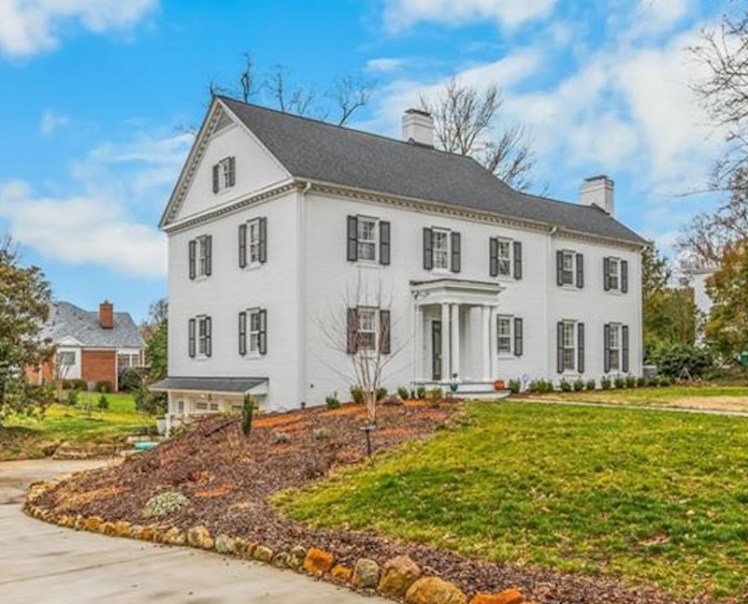
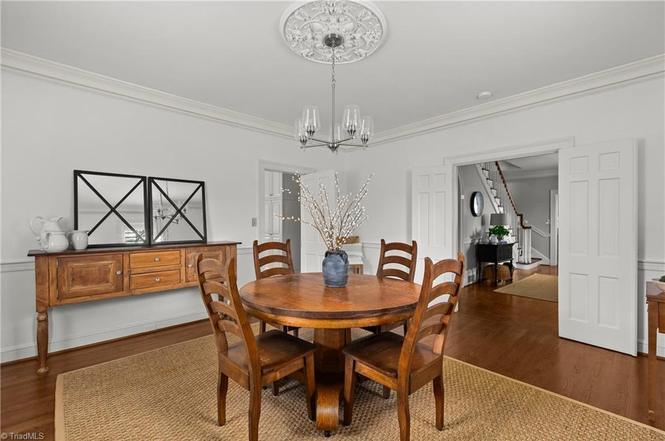
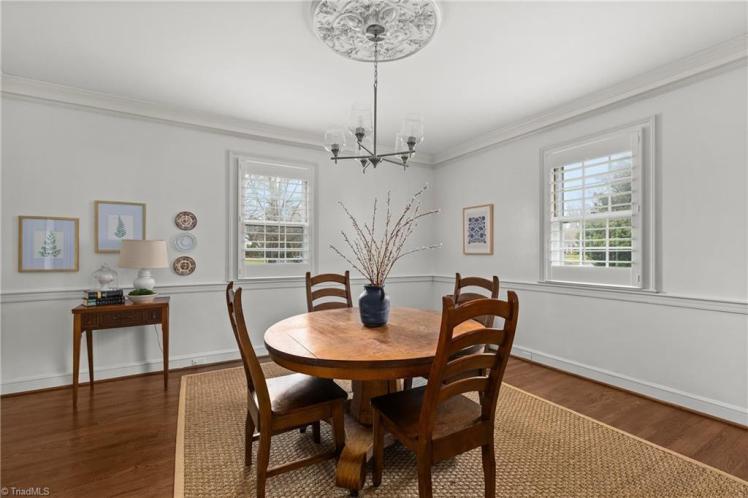
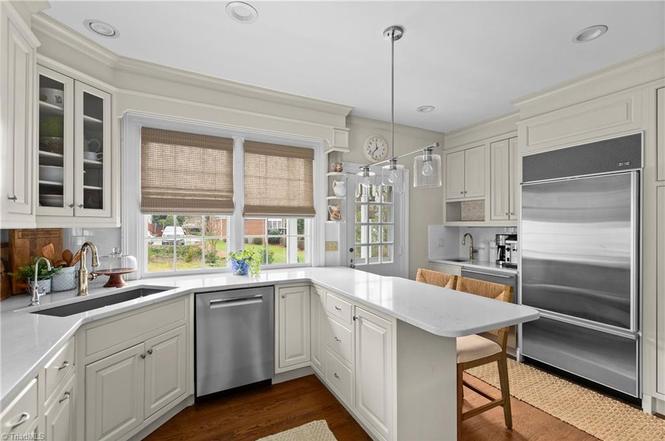
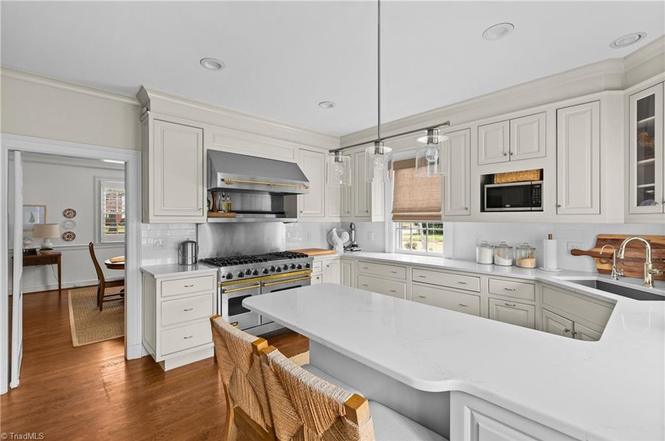
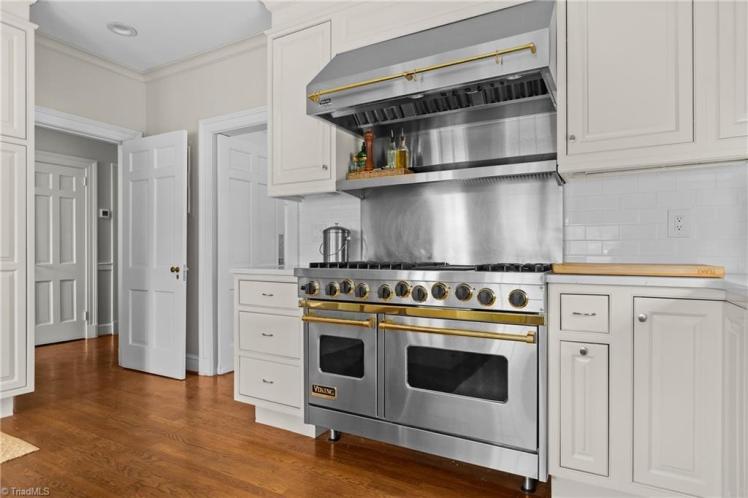
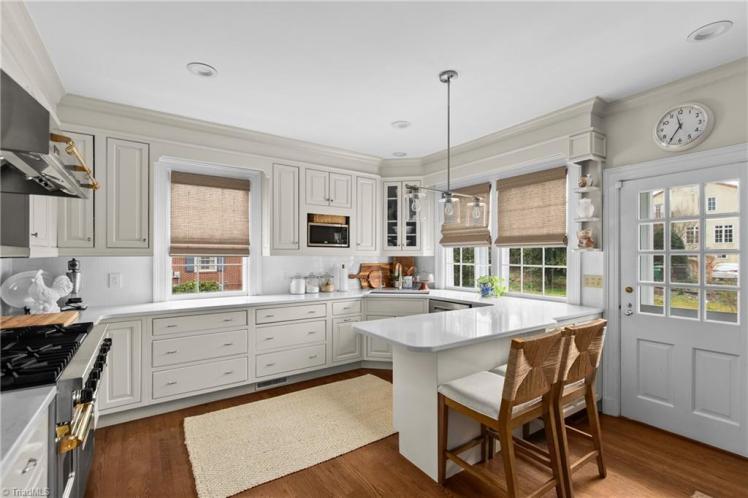
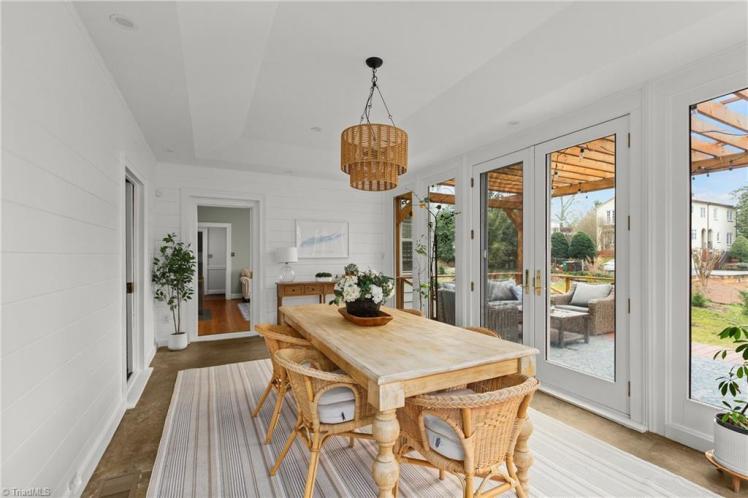
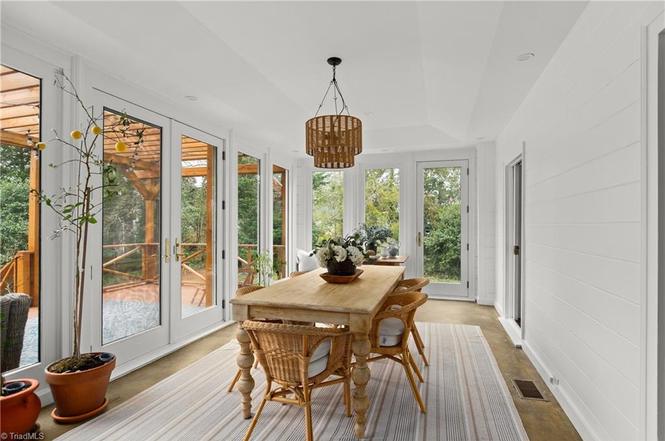
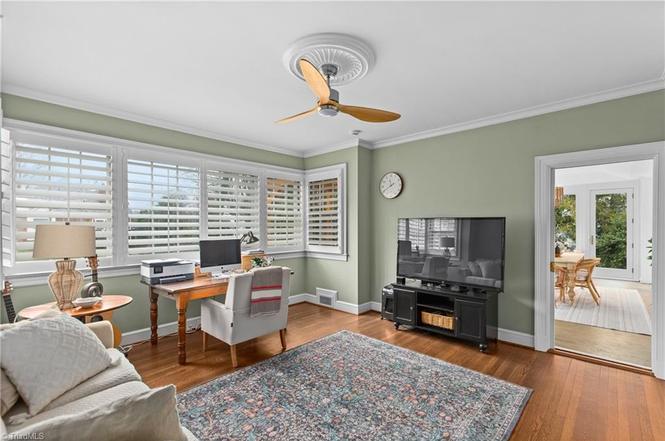
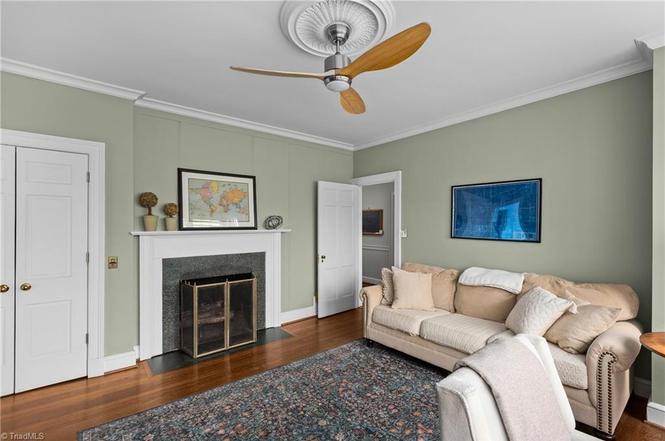
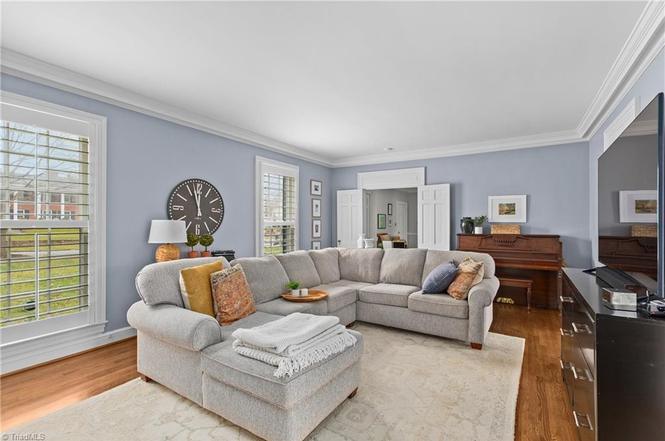
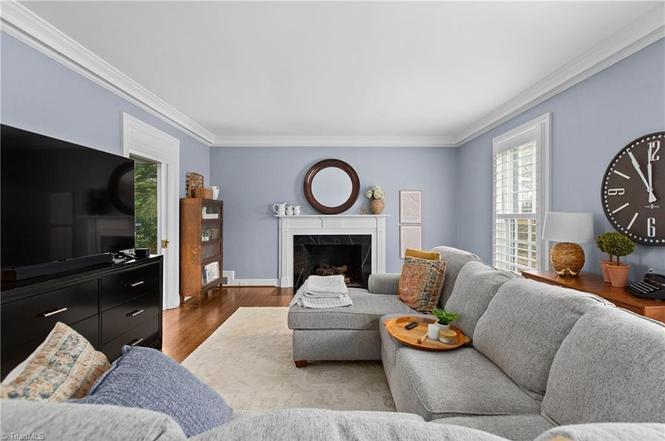
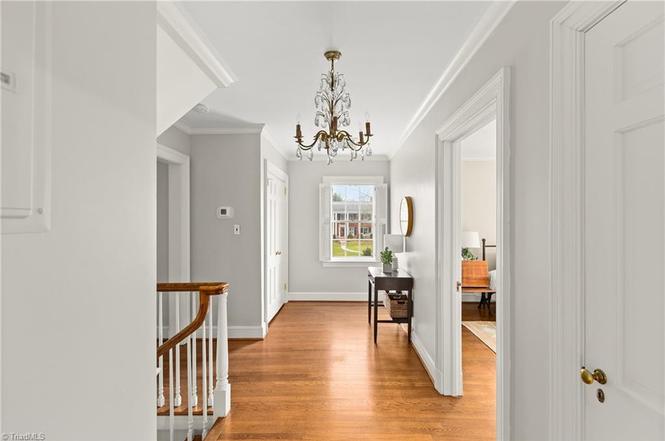
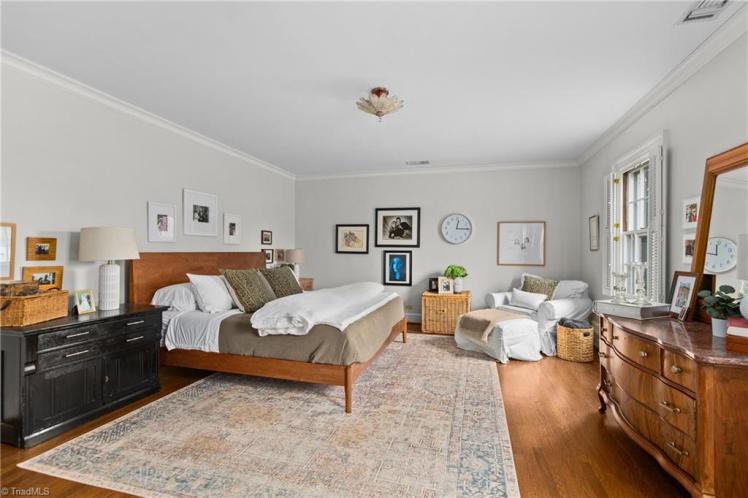
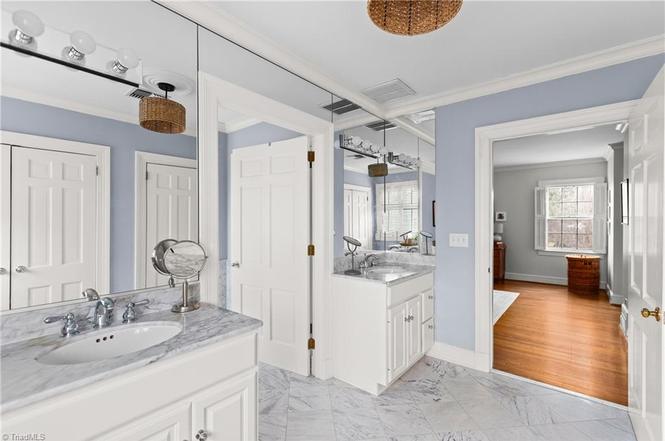
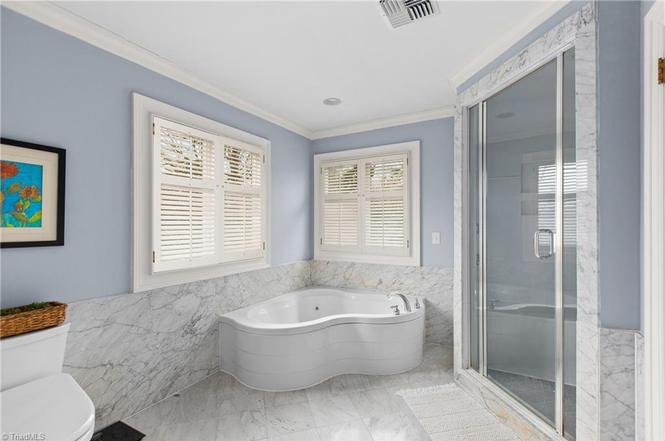
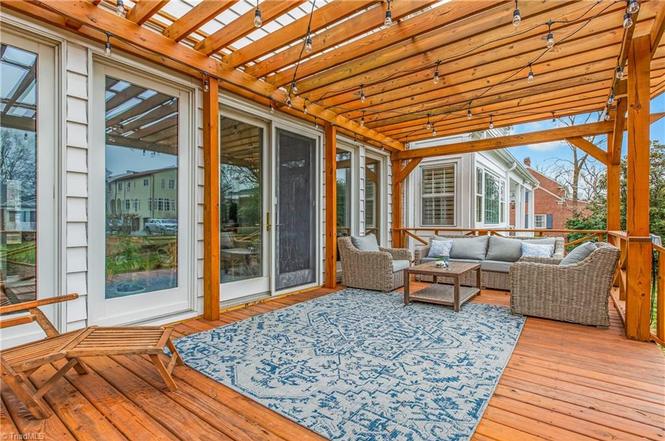
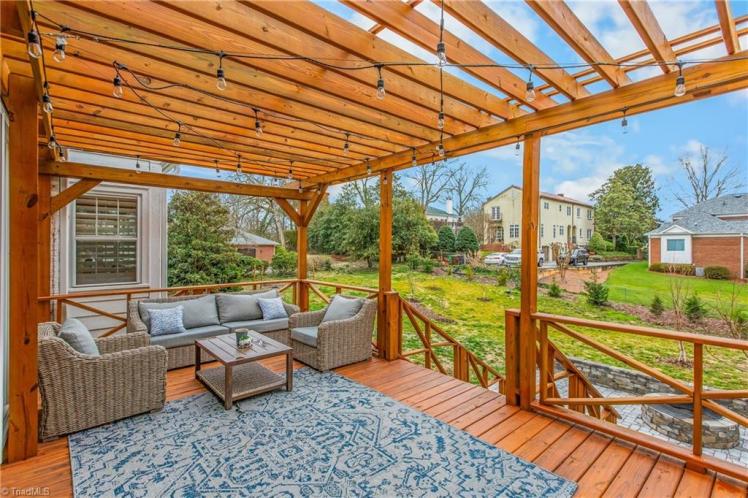
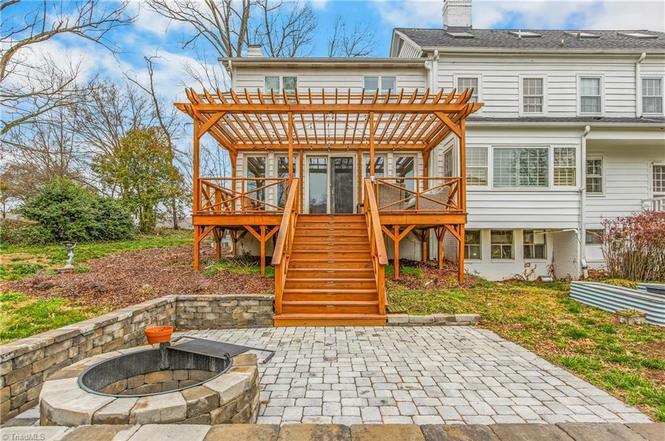
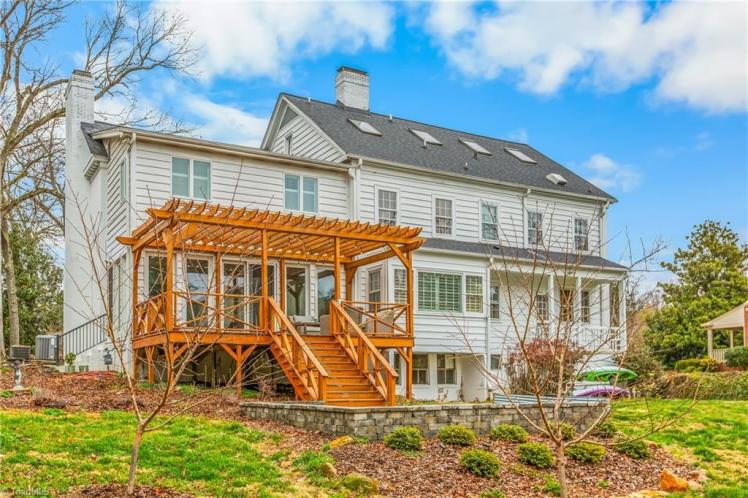
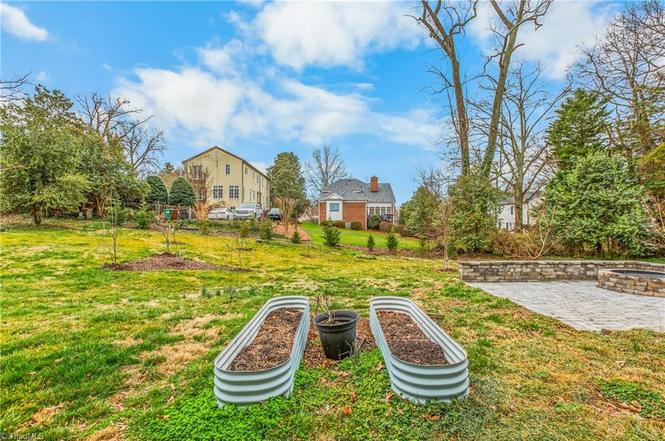
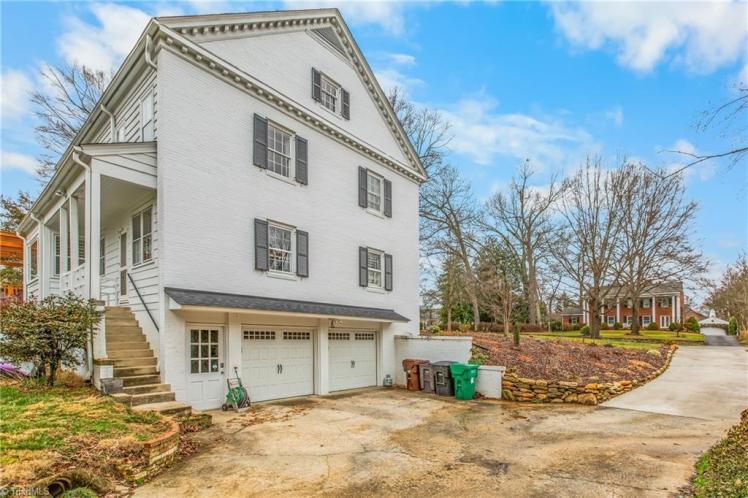
417 Hillcrest Drive, High Point
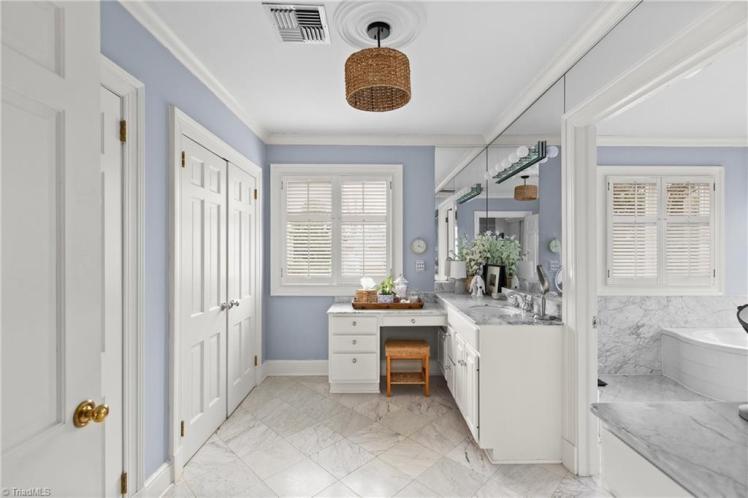
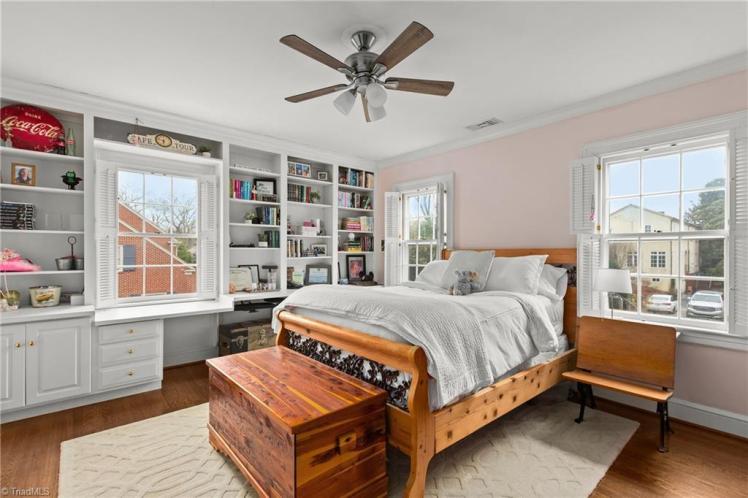
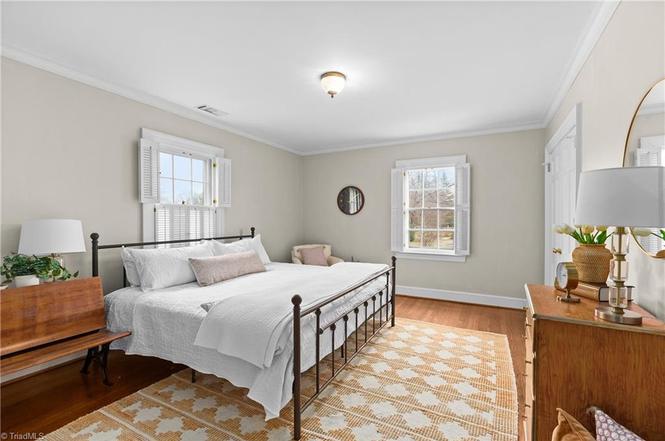
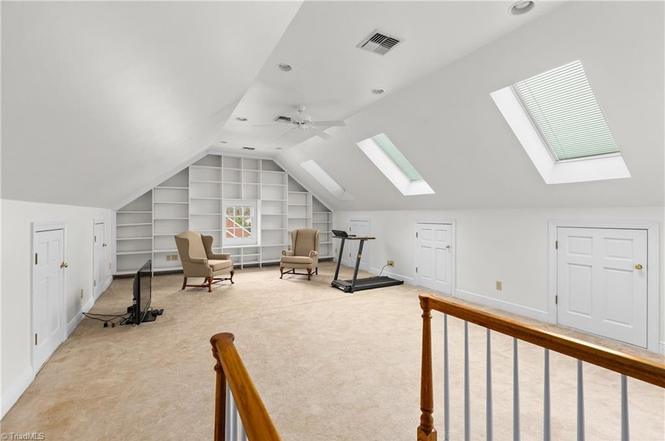
The Percy and Lillian Idol House
- Sold for $910,000 on May 12, 2026 (listed at $930,000)
- 4 bedrooms, 4 1/2 bathrooms, 4,061 square feet (per county), 0.66 acre
- Price/square foot: $224
- Built in 1941 (per county, but probably about 10 years later)
- Listed March 3, 2026
- Last sales: $730,000, May 2023; $5,500, November 1949
- Neighborhood: Emerywood
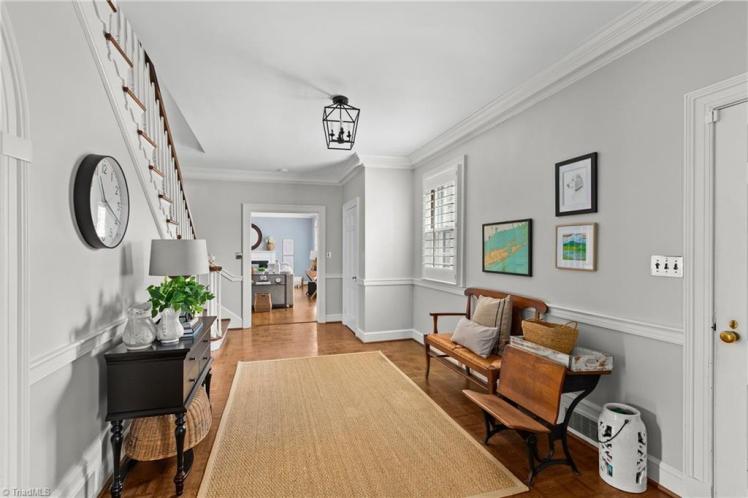
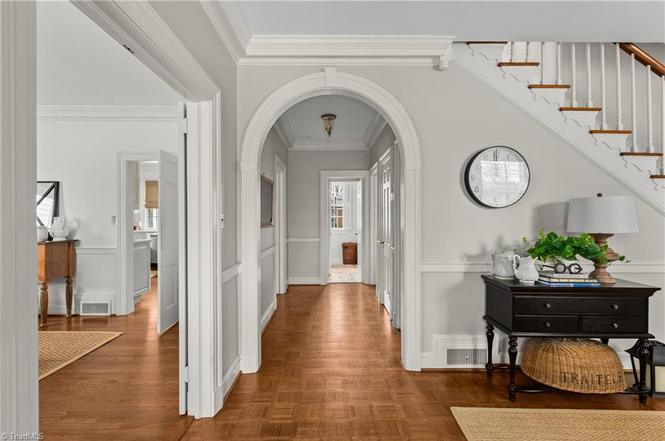
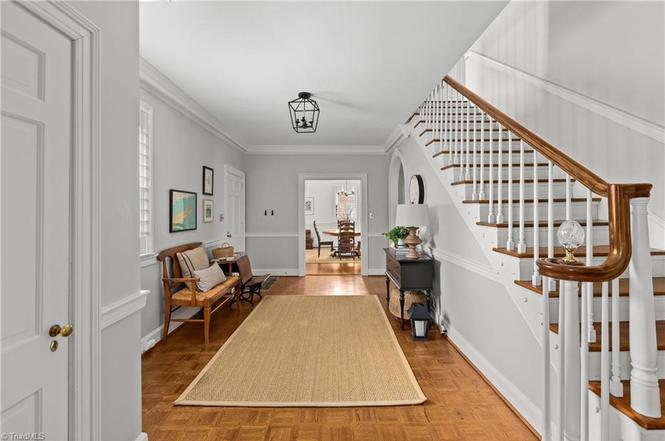
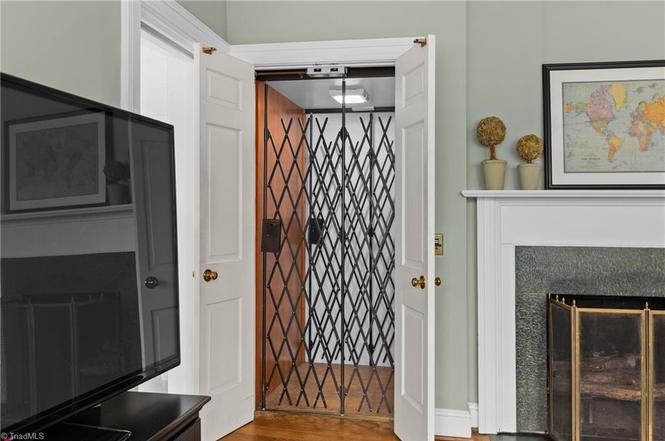
- Note: The house has an elevator. It also has a two-car garage in the basement.
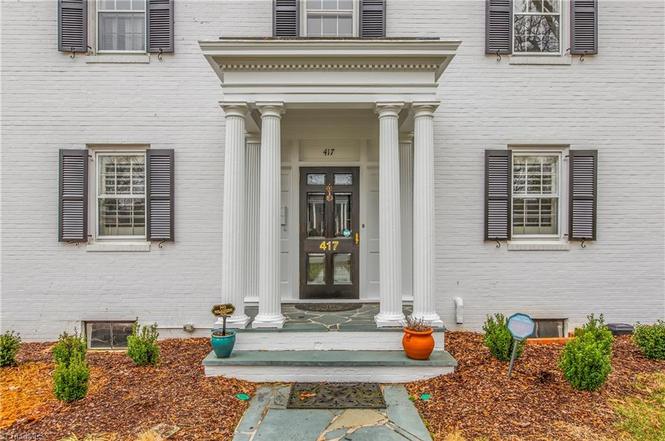
- District NR nomination: “This two-story, side-gabled, Colonial Revival-style house is five bays wide and double-pile with a painted brick veneer, interior brick chimney, and modillion cornice.
- “It has six-over-six, wood-sash windows and the six-panel door has a paneled surround and is sheltered by a flat-roofed porch supported by grouped, fluted columns.
- “Full returns on the end gables have a modillion cornice and a single window in the gable. The right (west) two bays have a slightly lower roofline, nine-over-nine windows on the first story, an exterior end brick chimney, and a two-story, shed-roofed, frame section at the rear.
- “There is a basement-level garage on the left (east) elevation and a one-story, shed-roofed frame porch at the left rear (southeast).”
- Percy C. Idol (1910-1997) and Lillian Grandy Idol (1918-1998) bought the property in 1949 and were listed at the address in 1951, the first year it appeared in the city directory. Percy was a salesman for Adams-Millis.
- Percy joined Adams-Millis in 1934 and spent his career there, retiring in 1974. During World War II, he spent four years serving as an intelligence officer in the Coast Guard.
- Along with hundreds of other “white citizens of High Point,” Percy signed a full-page ad in the High Point Enterprise in October 1963 calling on local business owners to end segregation and promising to continue to patronize business that did so.
- Their son, David Harrison Idol (1946-2020) inherited the house. It was sold in 2023 by his heir.
419smain


419 S. Main Street, Kernersville, Forsyth County
The Gibson House Inn
- Sold for $565,000 on May 11, 2026 (listed at $565,000)
- 5 bedrooms, 5 1/2 bathrooms, 4,442 square feet (per county), 0.65 acre
- Price/square foot: $127
- Built in 1837
- Listed March 5, 2026
- Last sales: $497,000, May 2023; $238,000, February 2019
- Neighborhood: South Main Street Historic District (NR). Incredibly, the district’s 1987 National Register nomination doesn’t even mention the house, one of the oldest in the district.
- Note: The property is next door to Korner’s Folly.
- Online listings position the house “as a private residence, luxury rental, or event-focused property.”
- The inn’s website says the house was built by innkeeper Doughty Stockton (1776-1855) and Elizabeth Perkins Stockton (1798-1858). If the 1837 construction date is accurate, Doughty must have been in the trade for almost 30 years by the time they built this house.
- An obituary in The People’s Press said, “While his long useful and laborious life for the last forty-seven years was devoted to serving the public as a Landlord, with the noblest impulses and with a sensibility alive to the tenderest wishes of the weary traveller, his influence was ever exerted to render them comfortable and happy. He always discharged his duties with a dignity and propriety of conduct, which conciliated the regard and secured for him the love and esteem of all who knew him.”
- The house apparently stayed in the Stockton family, with great-granddaughter Agnes C. Stockton Gibson (1877-1910) and her husband, Edward Hiram Gibson (1865-1926), taking ownership in the early 20th century. Their son, Edward Hiram Gibson III (1900-1973) sold the house in 1963. He was a history professor at Appalachian State University.
- The house became an antiques store in the 1960s, then a mission church for Holy Cross Catholic Church from 1969-1982 and then an antiques store again. It became an inn once more after it was bought in 2019.
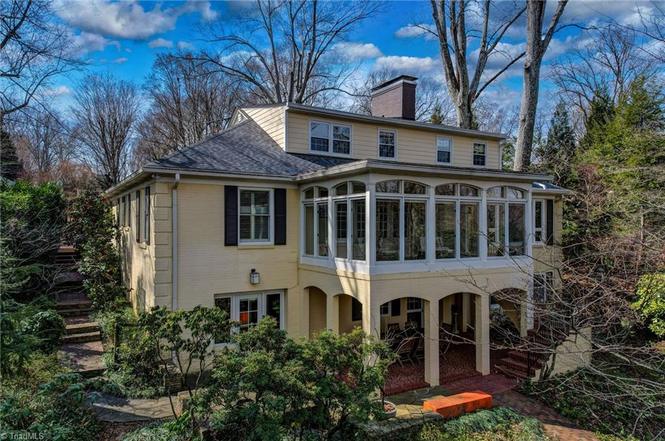
202kemp
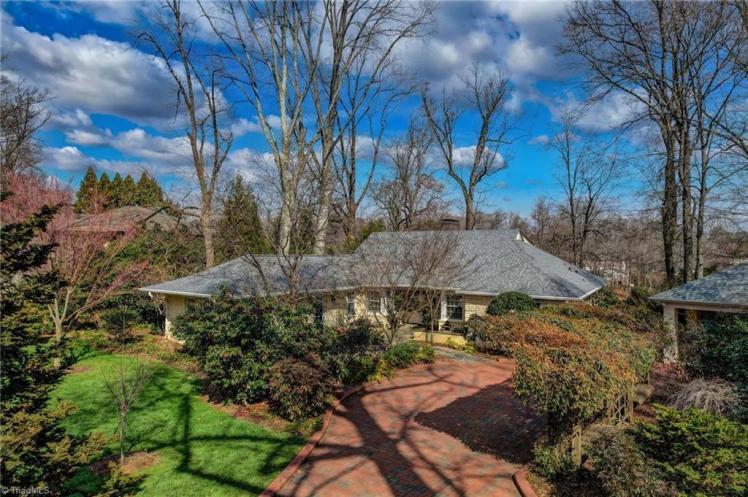
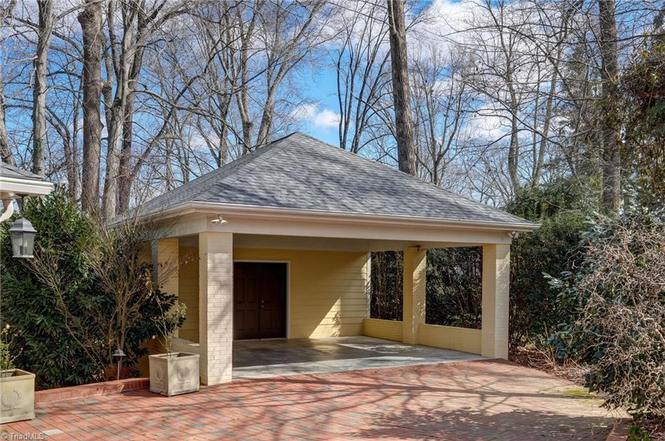
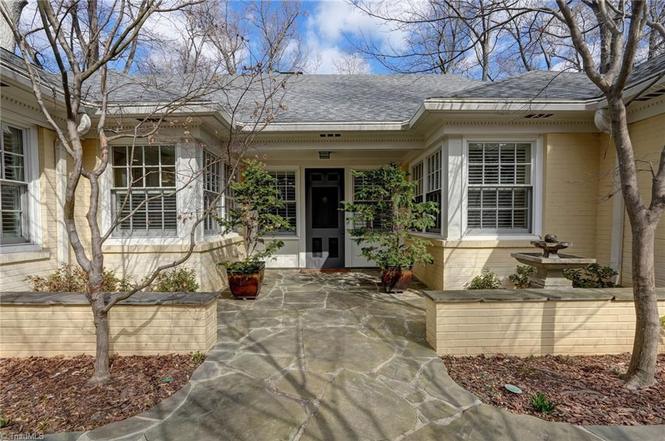
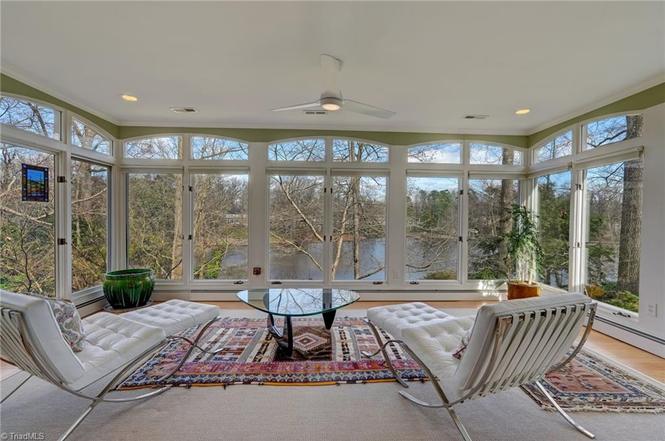
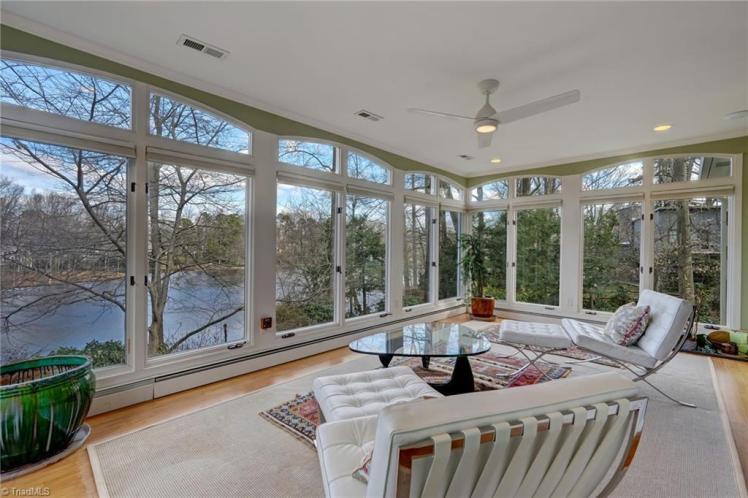
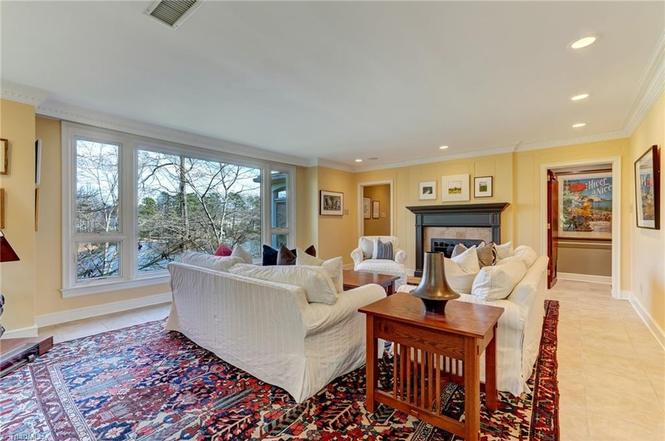
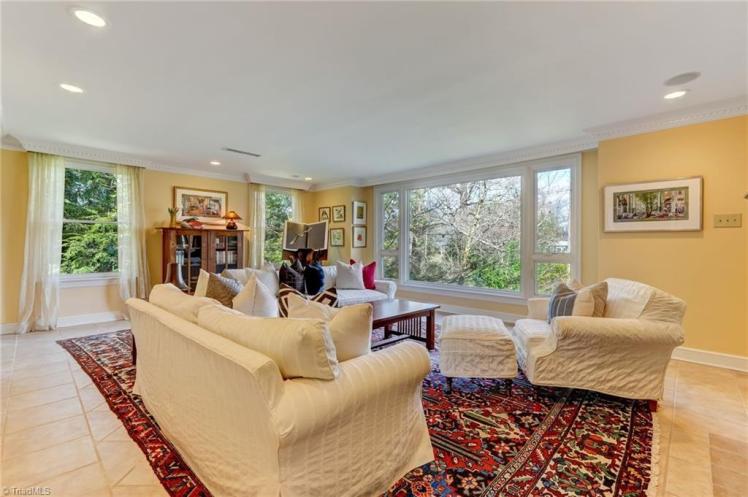
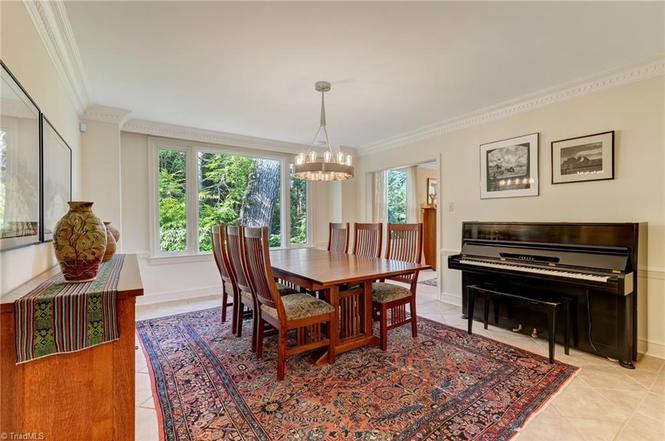
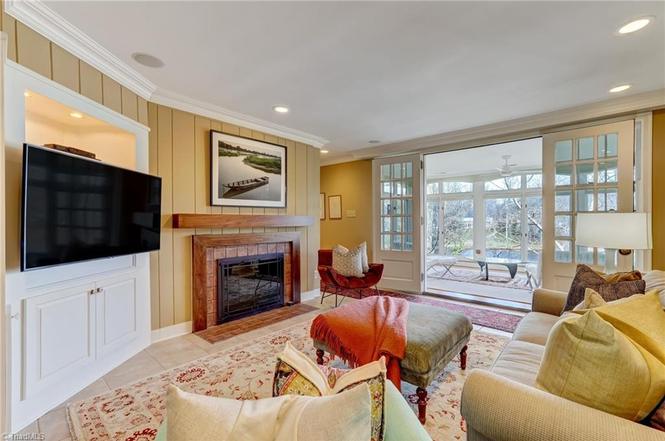
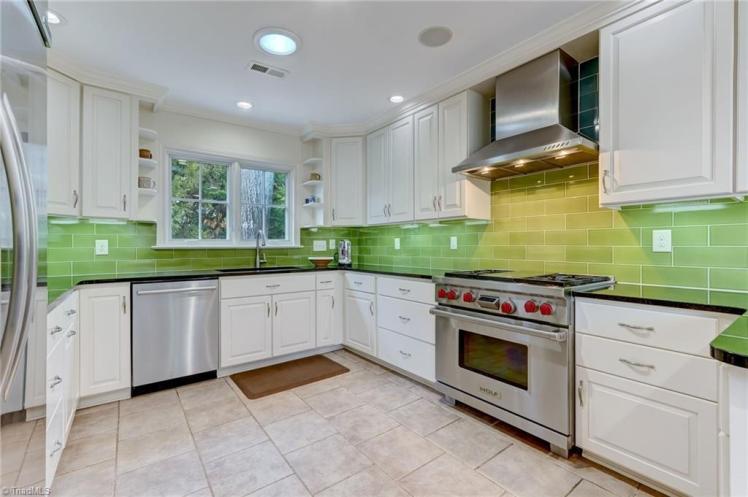
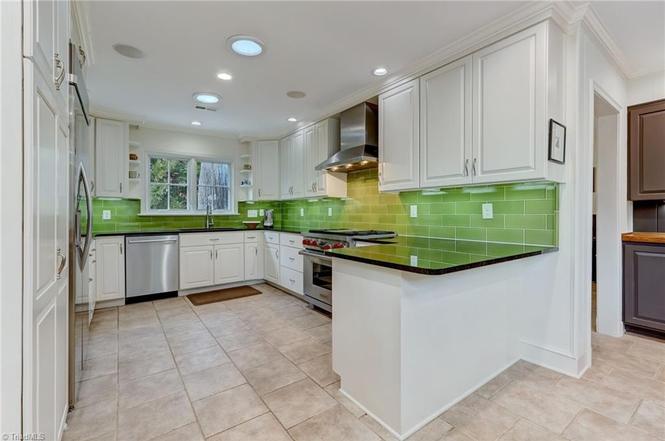
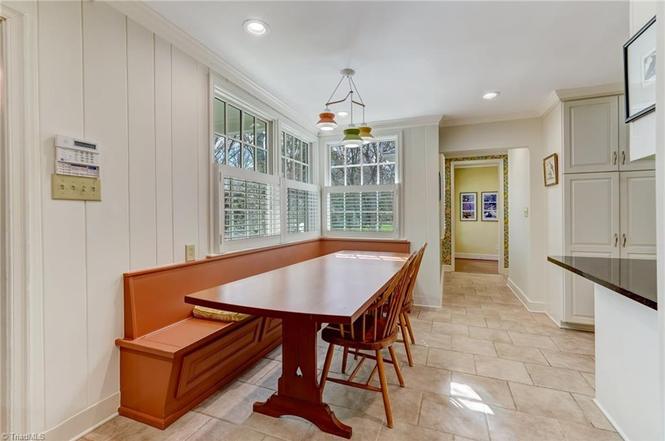
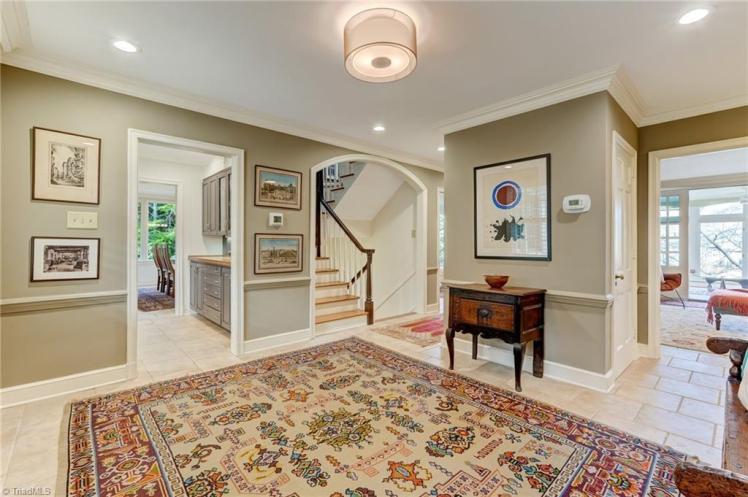
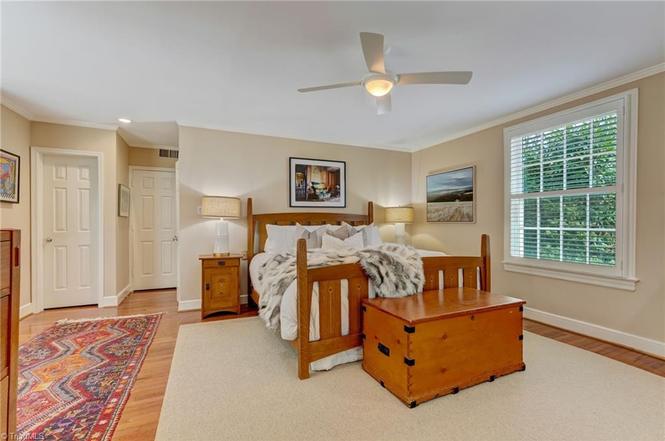
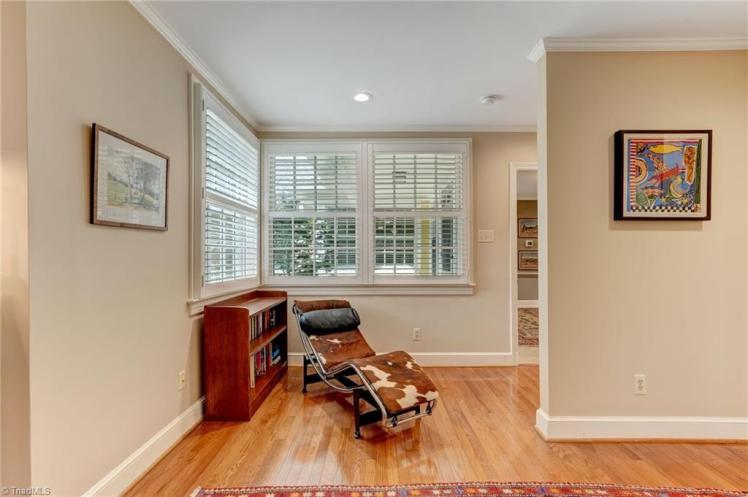
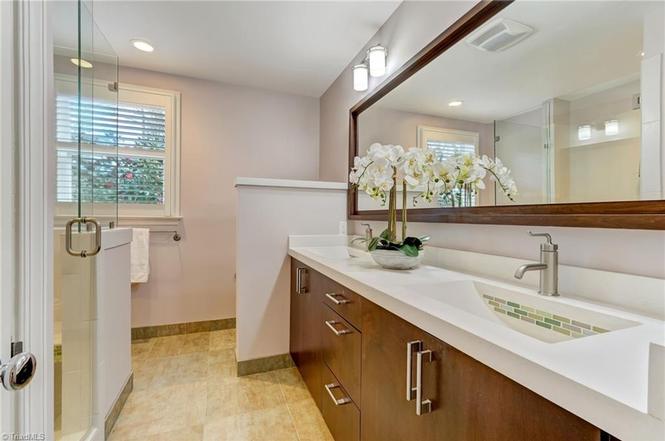
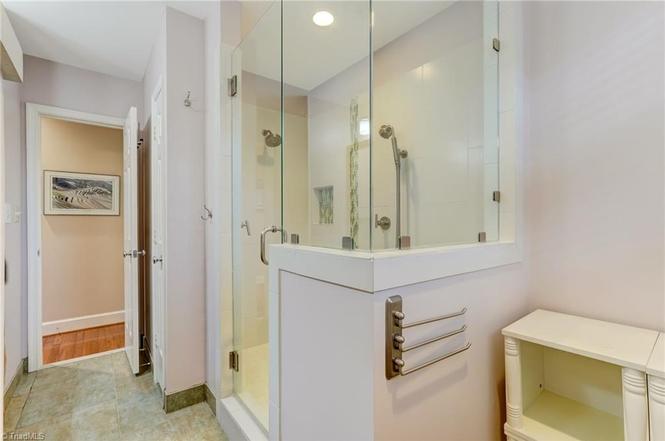
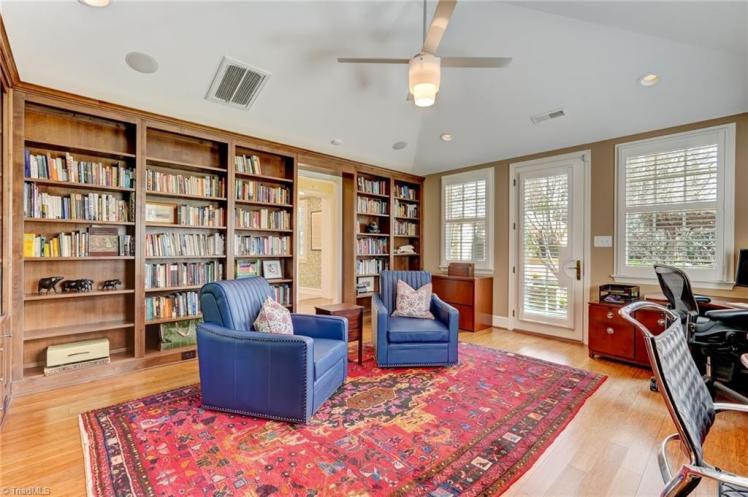
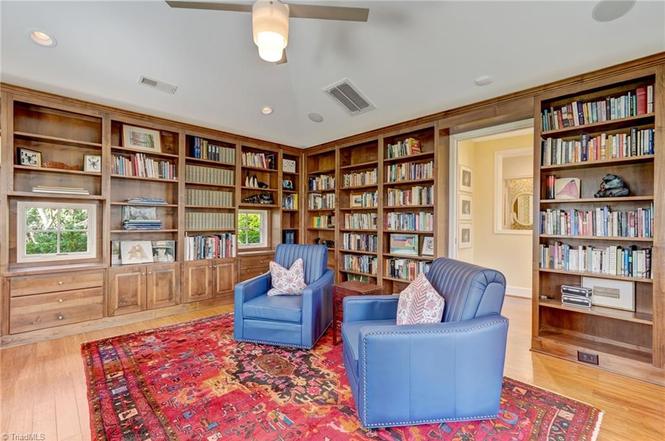
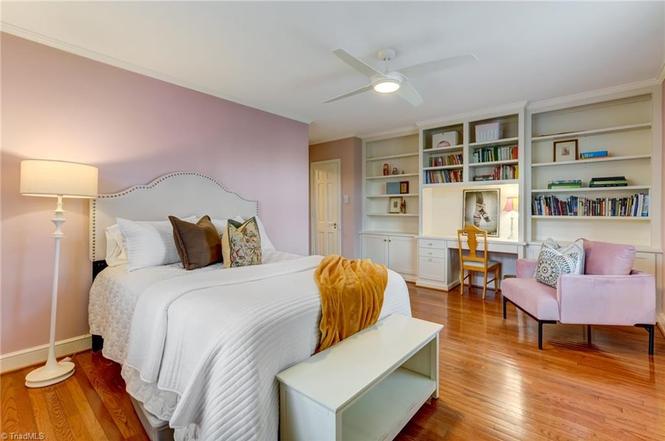
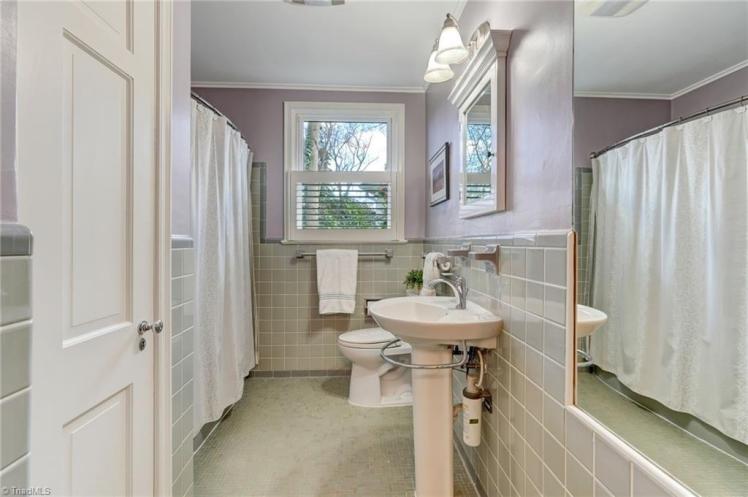
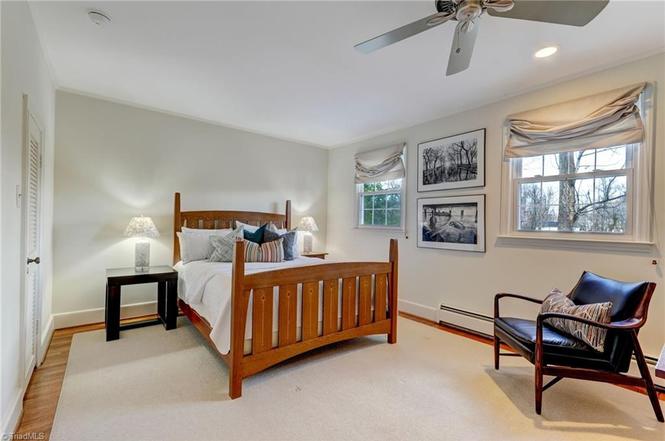
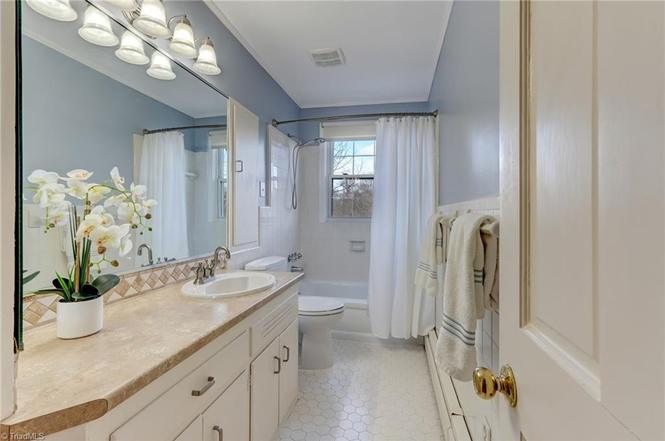
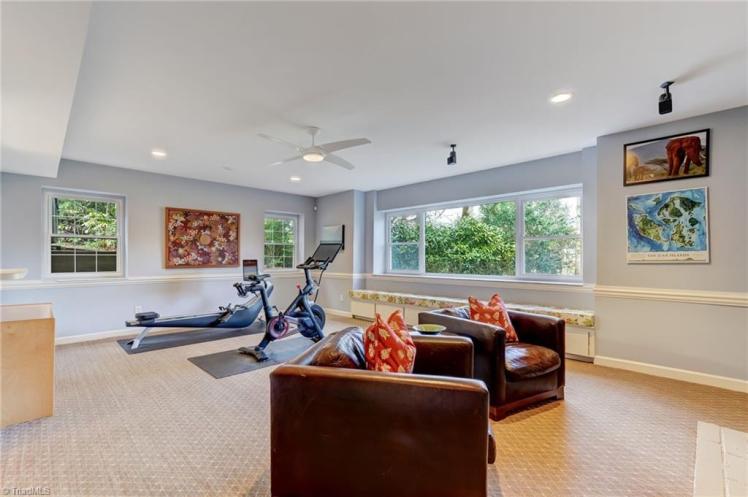
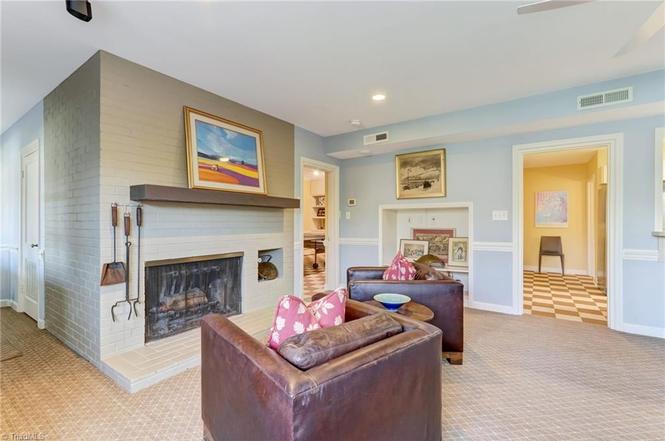
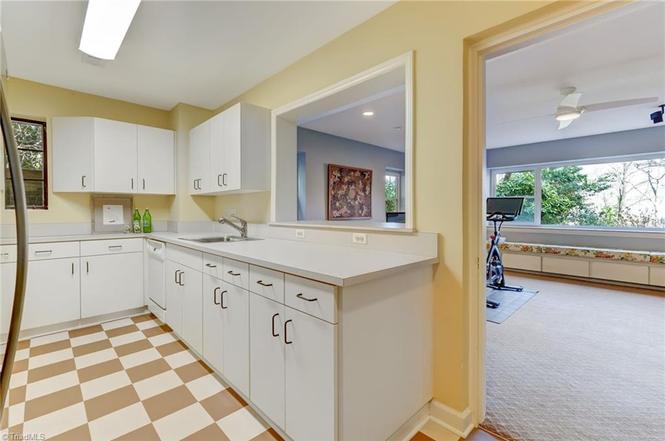
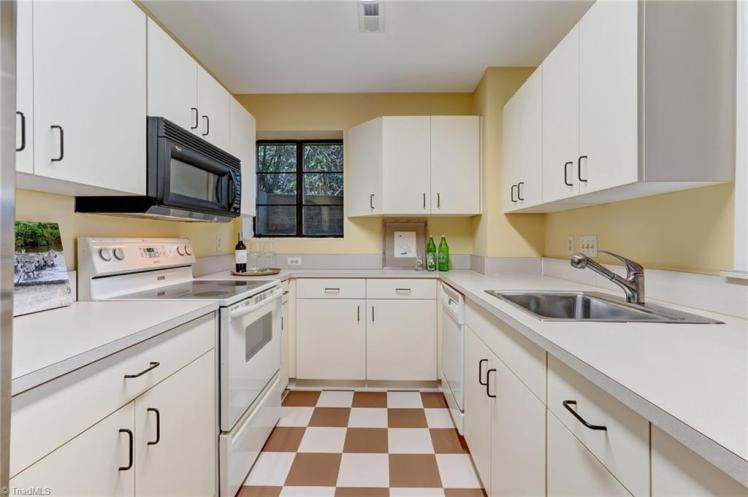
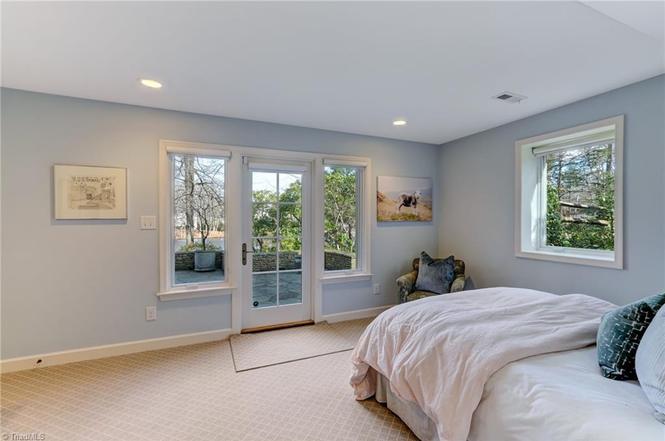
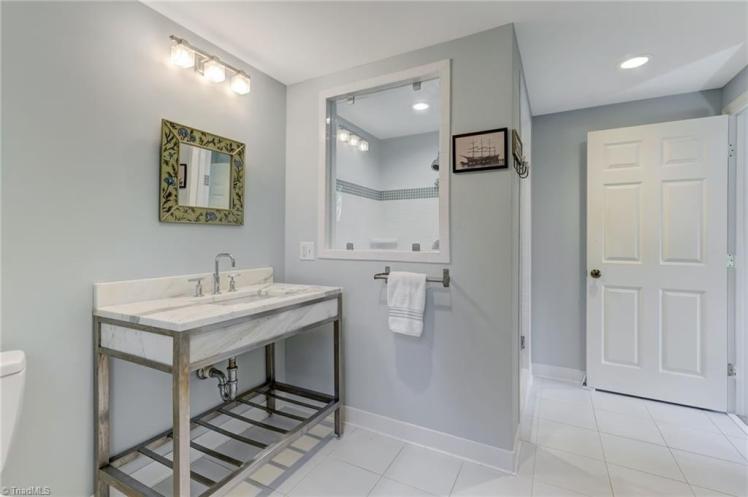
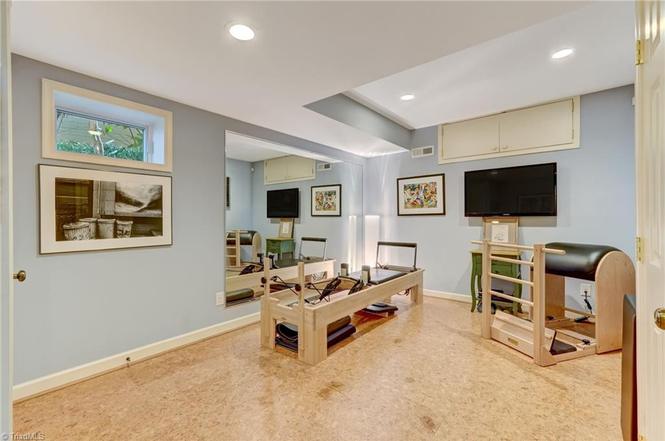
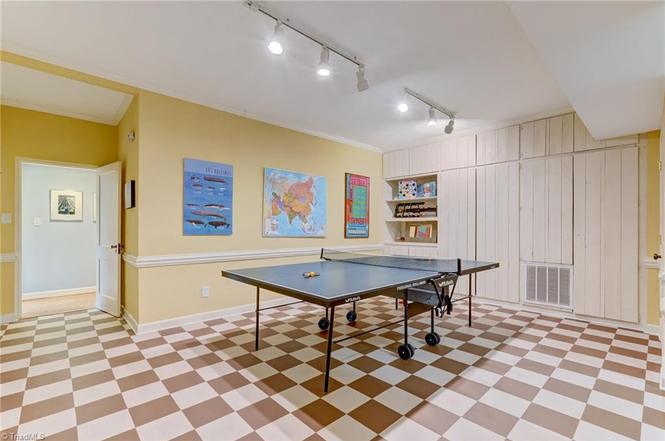
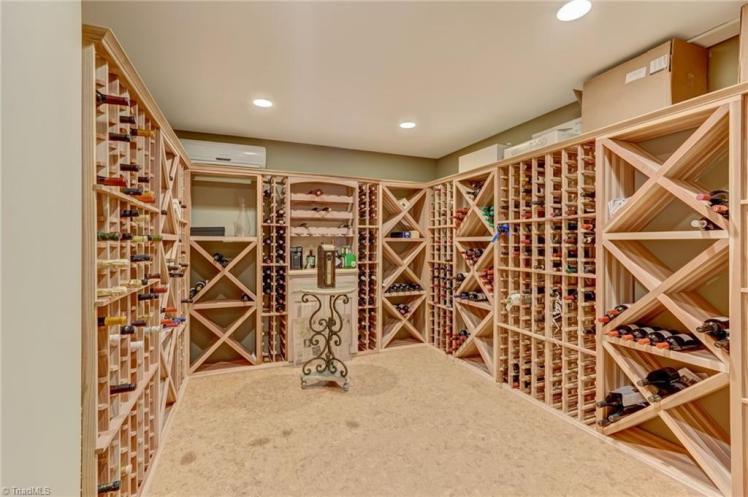
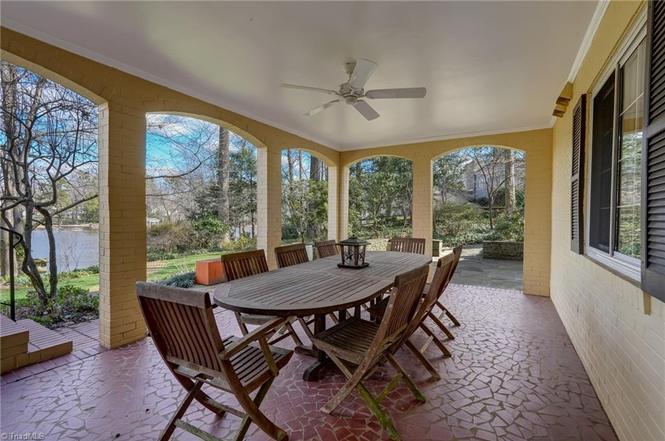
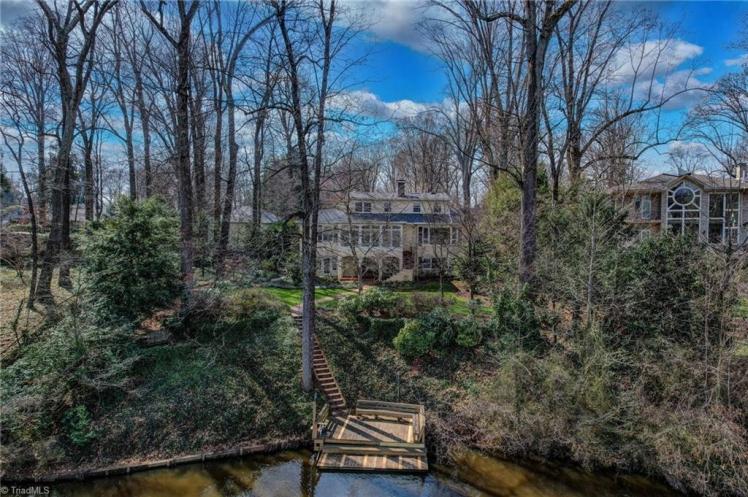
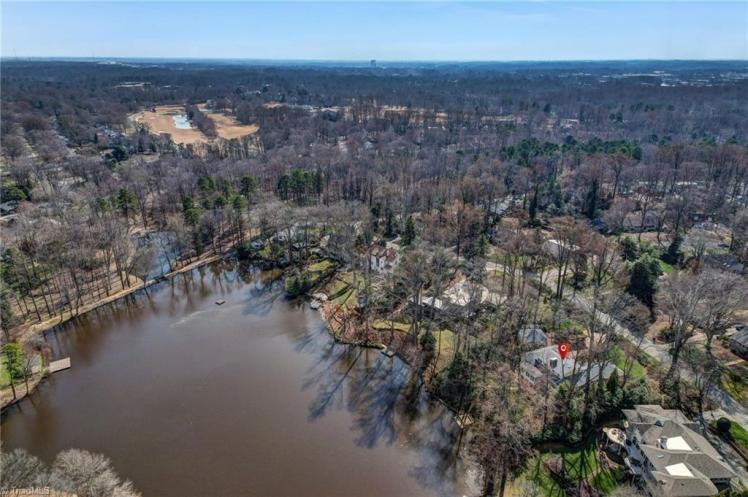
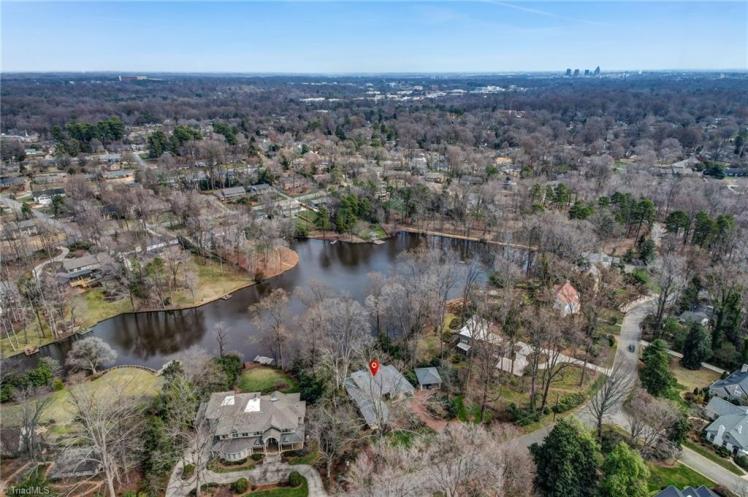
202 Kemp Road West, Greensboro
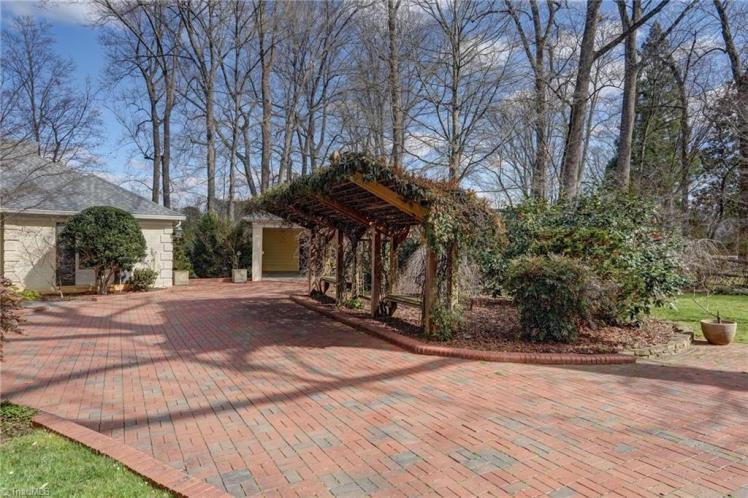
The Andrews-Morrison House
Sale pending March 16, 2026
- Sold for $1.275 million on April 22, 2026 (listed at $1.295 million)
- 5 bedrooms, 4 full bathrooms and 2 half-bathrooms, 5,201 square feet, 0.69 acre
- Price/square foot: $245
- Built in 1950
- Listed February 28, 2026
- Last sale: $685,000, June 2010
- Neighborhood: Hamilton Lakes
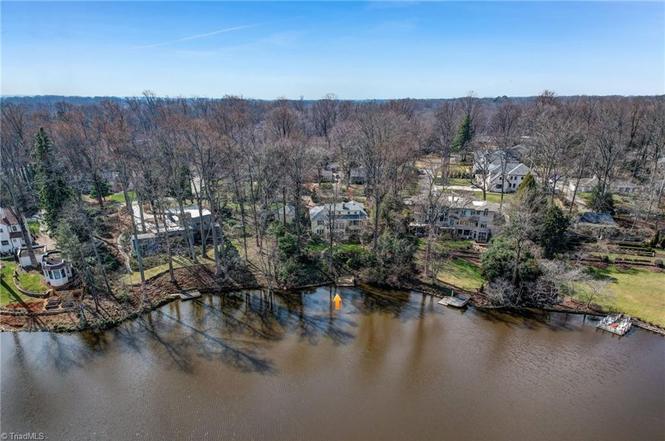
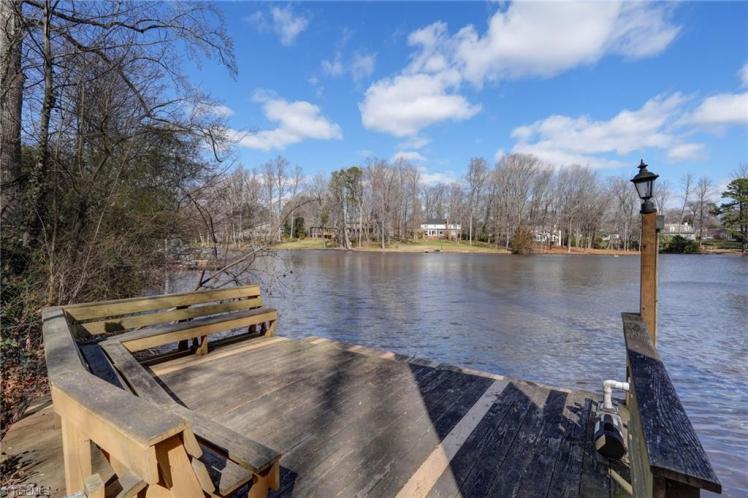
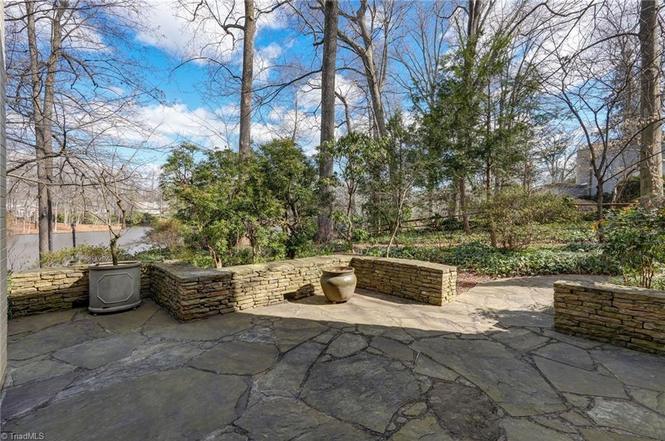
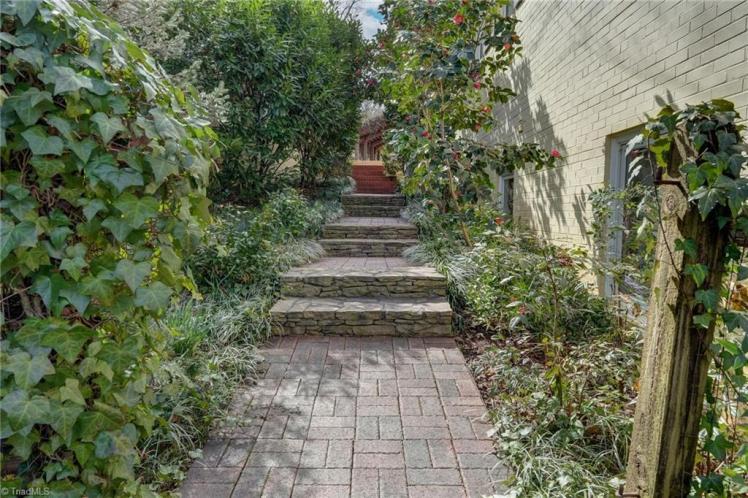
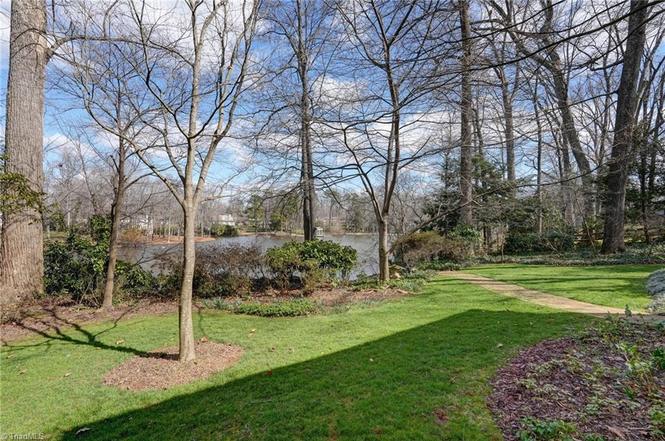
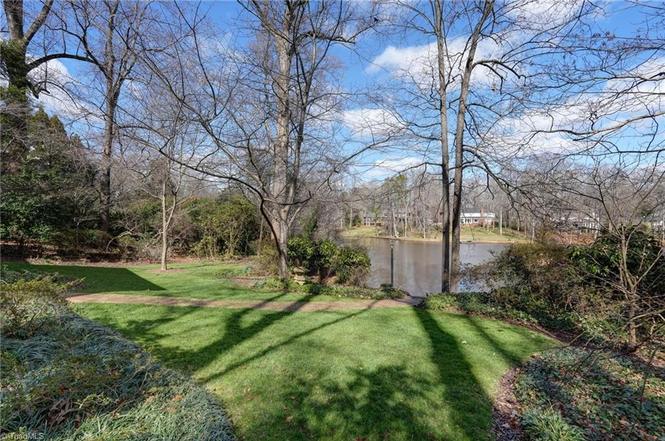
- Note: The house overlooks Lake Euphemia.
- John William Andrews (1896-1966) and Louise Boren Andrews (1896-1989) bought the property in 1948 from the Starmount Company. They were listed on Kemp Road West in the 1953 city directory. William was a buyer for Pomona Terra Cotta. Louise sold the house in 1969.
- William H. “Moon” Morrison (1926-2010) and Joy Culbreth Morrison (1928-2013) bought the house in 1969 and lived there for 31 years. Moon was a graduate of Georgia Tech in electrical engineering. After serving in the Navy and working for Duke Power and Southern Electric, he founded Electric Service and Sales in Greensboro. The company appears to still exist as a unit of Tencarva Machinery Company.
2801country
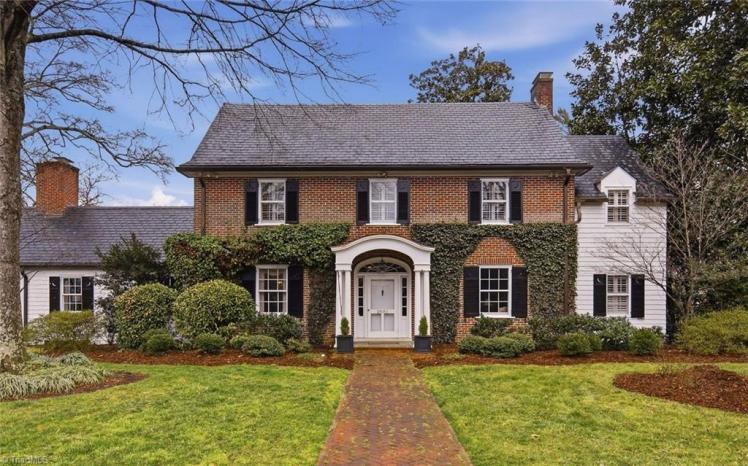
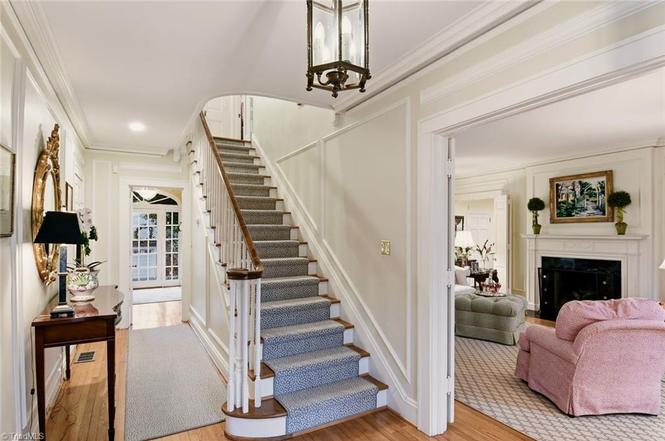
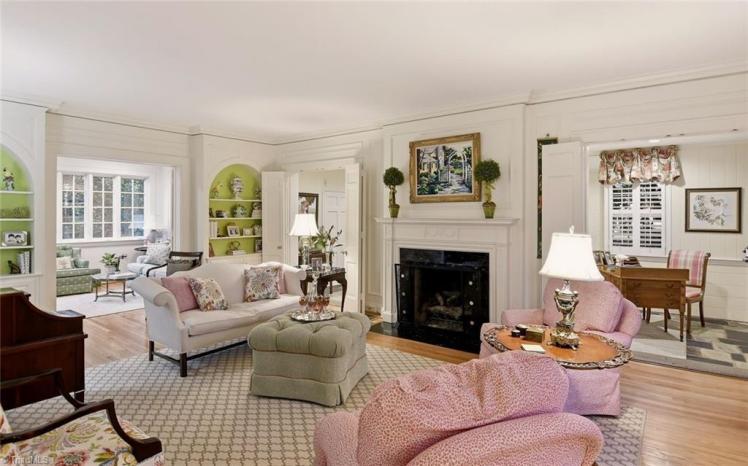
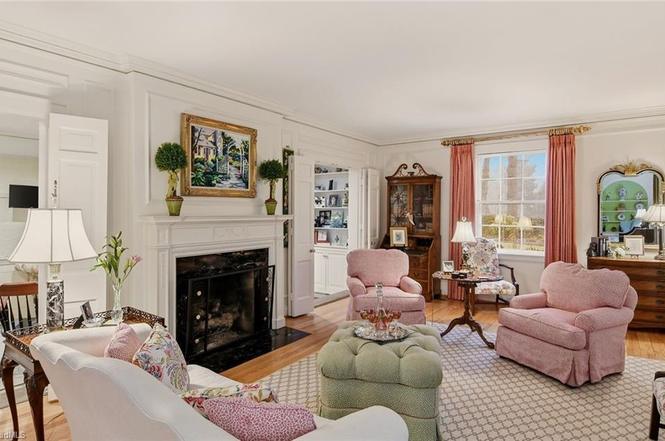
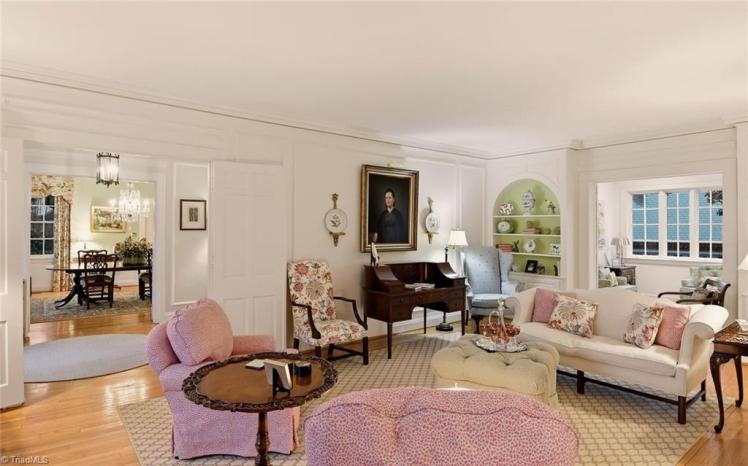
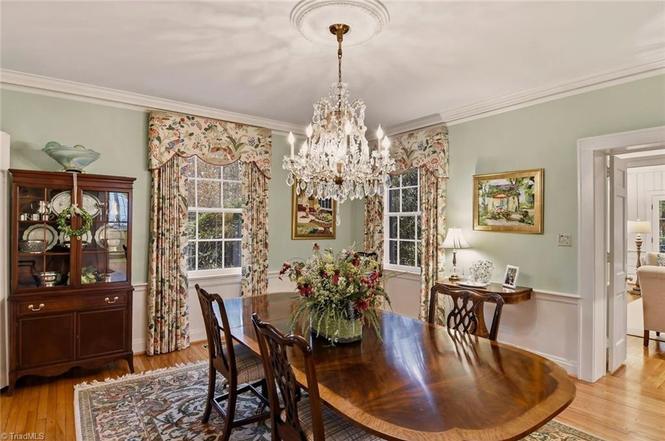
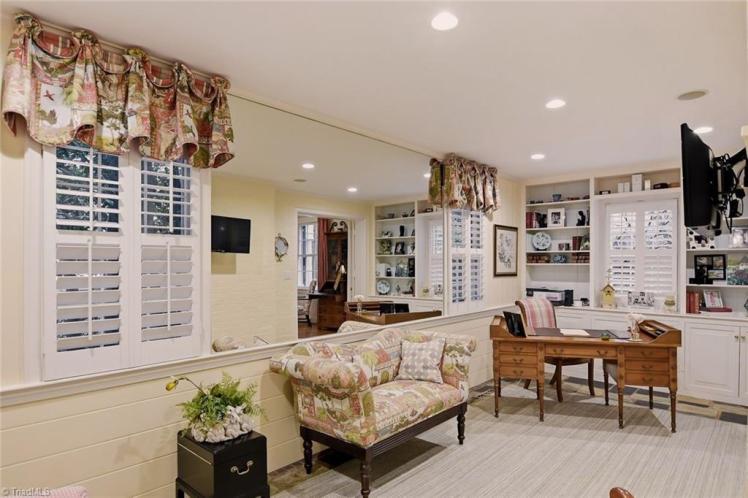
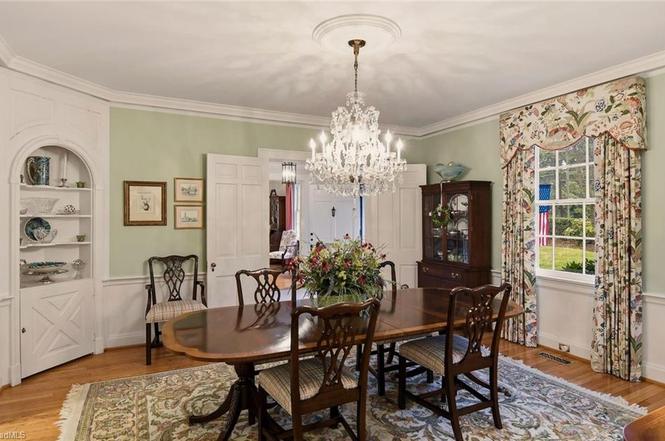
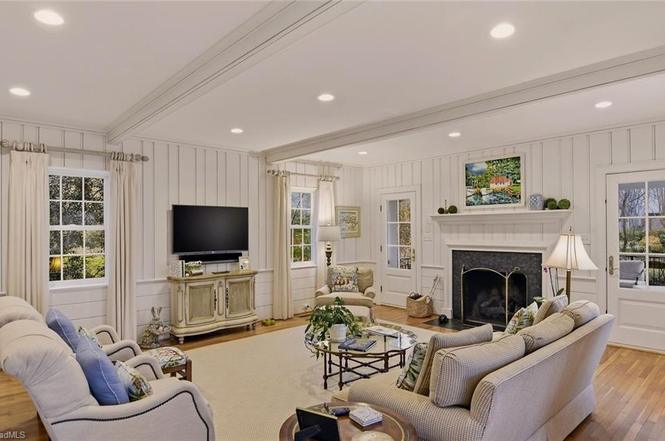
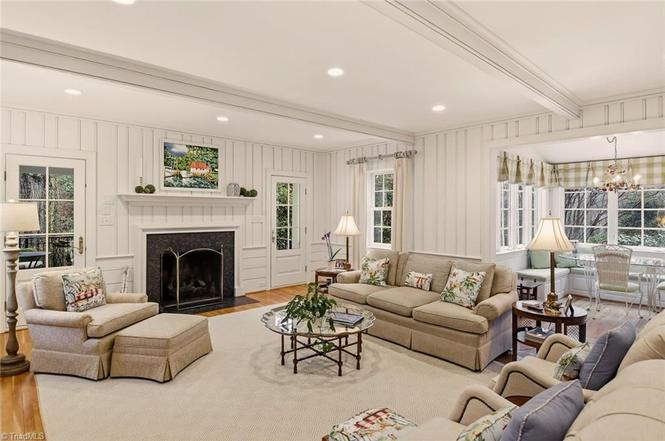
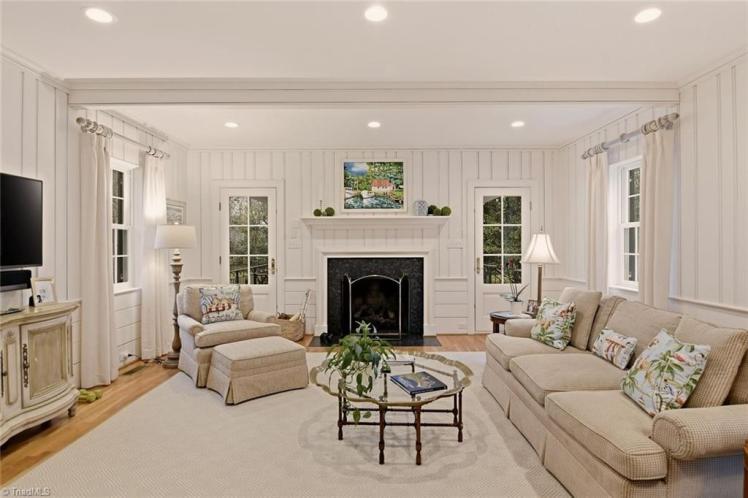
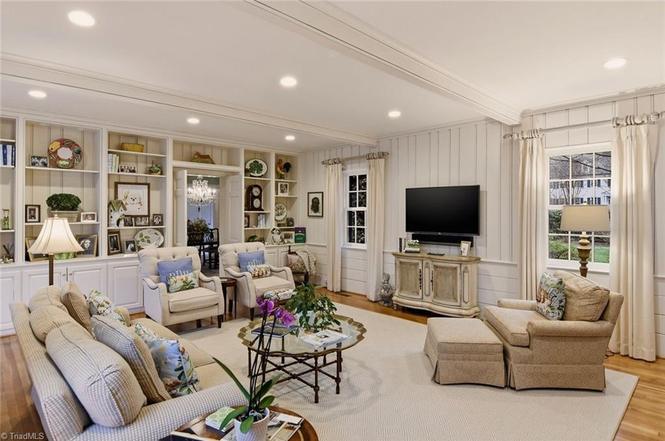
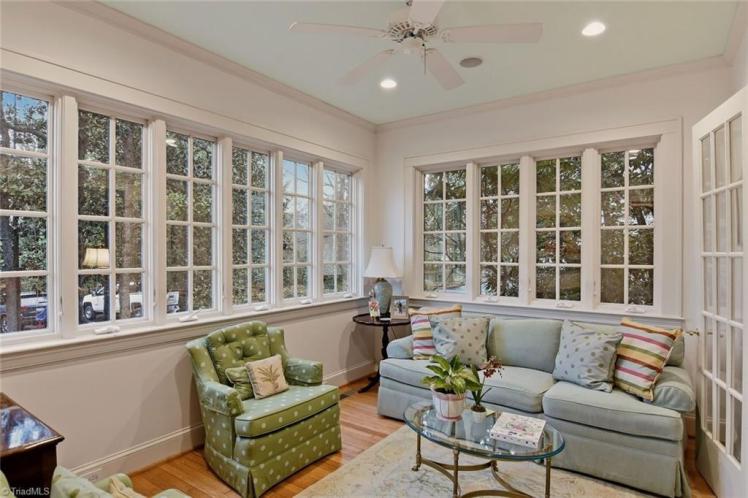
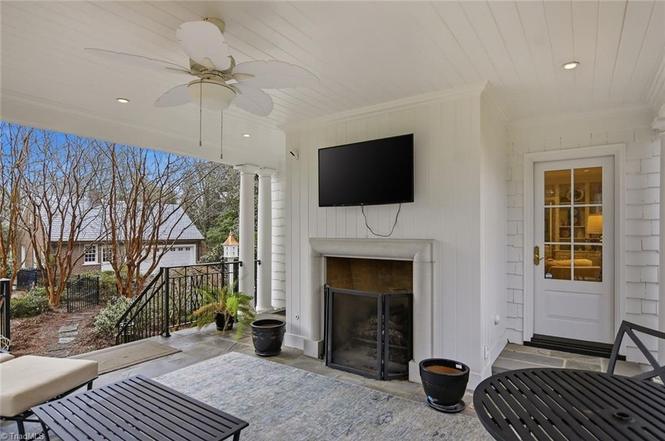
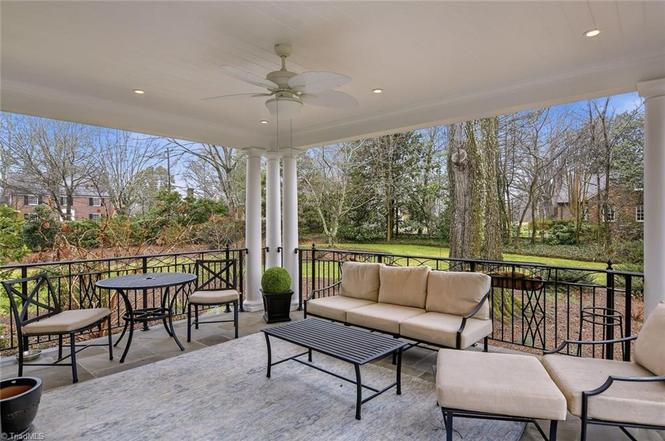
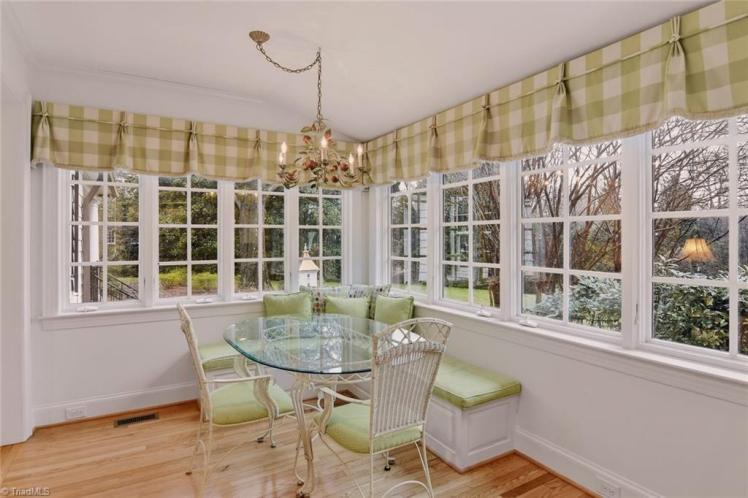
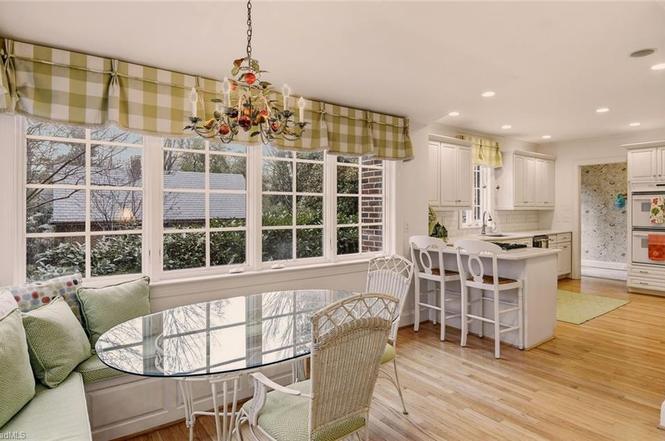
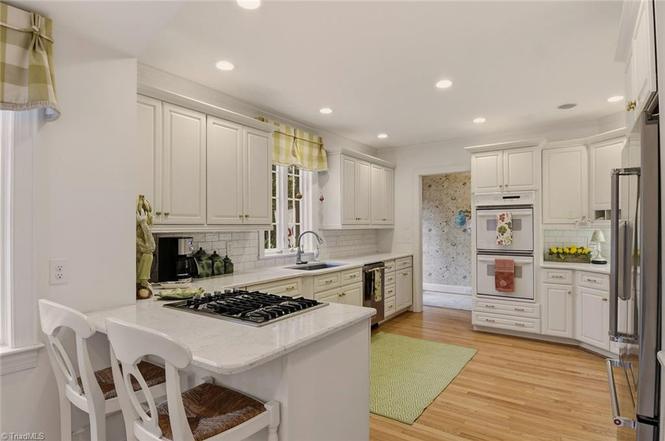
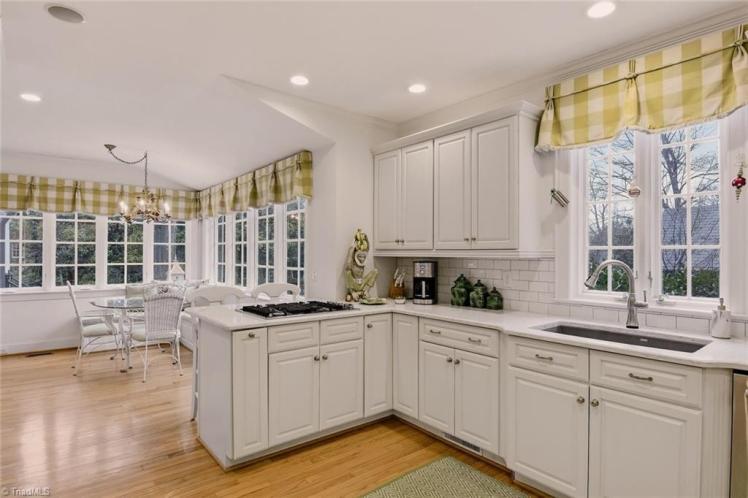
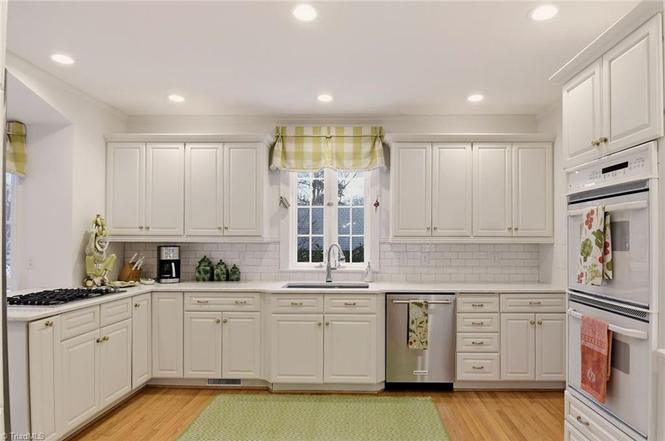
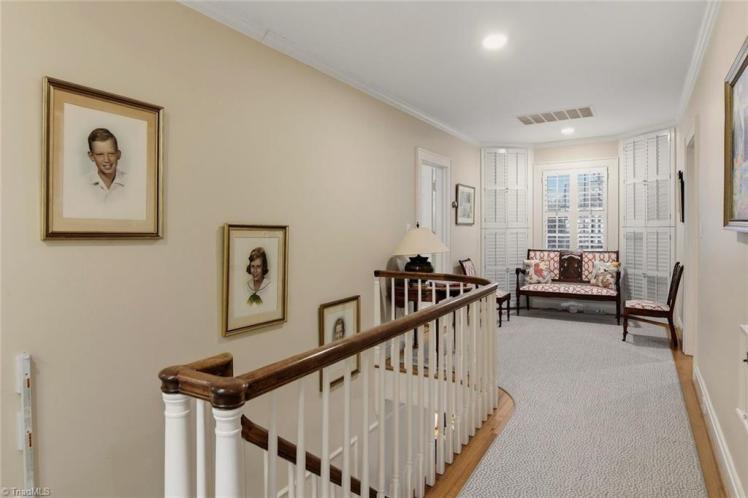
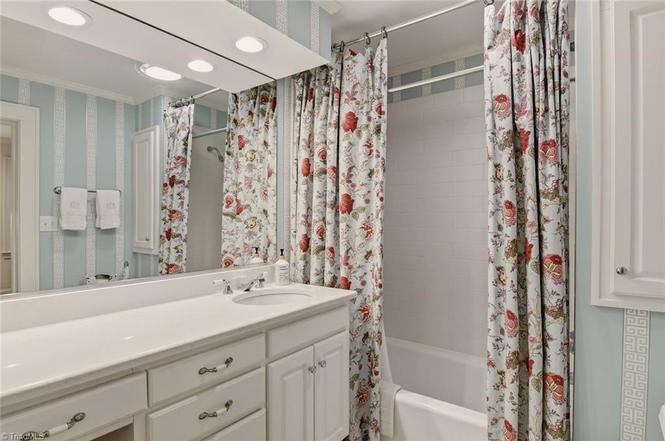
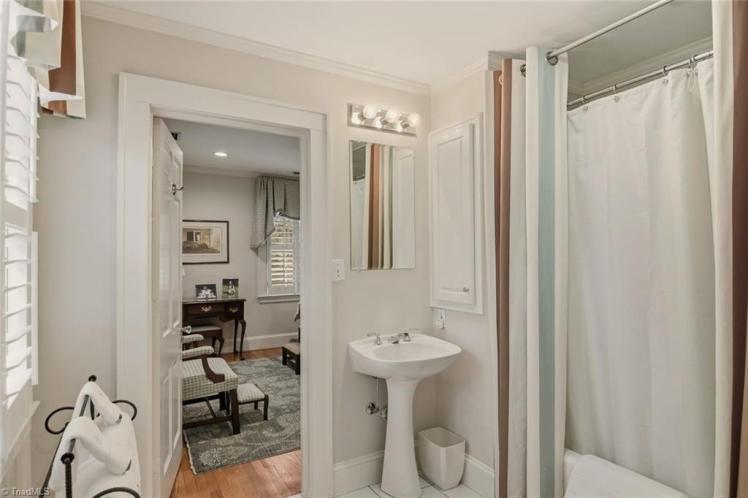
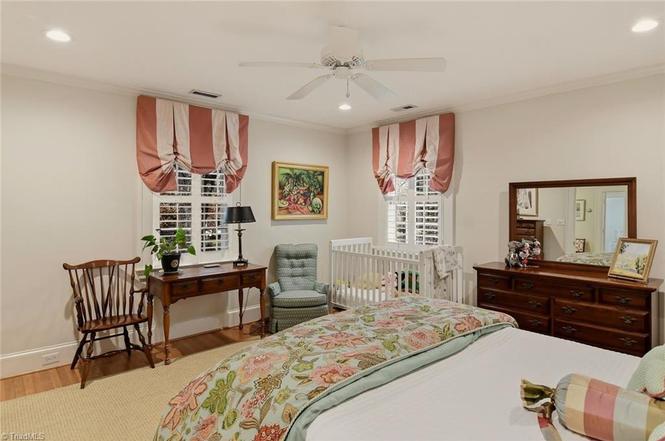
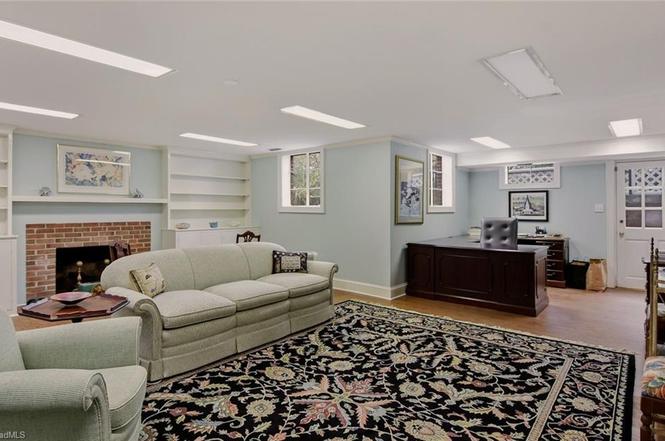
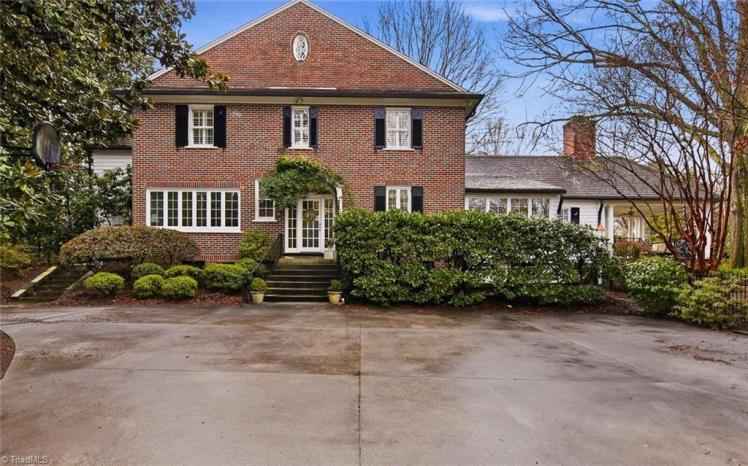
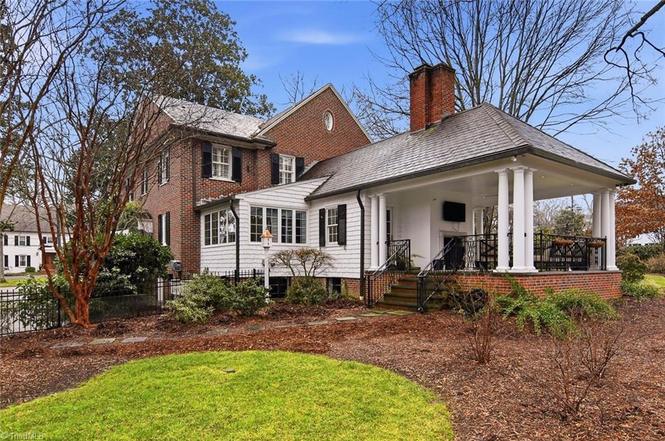
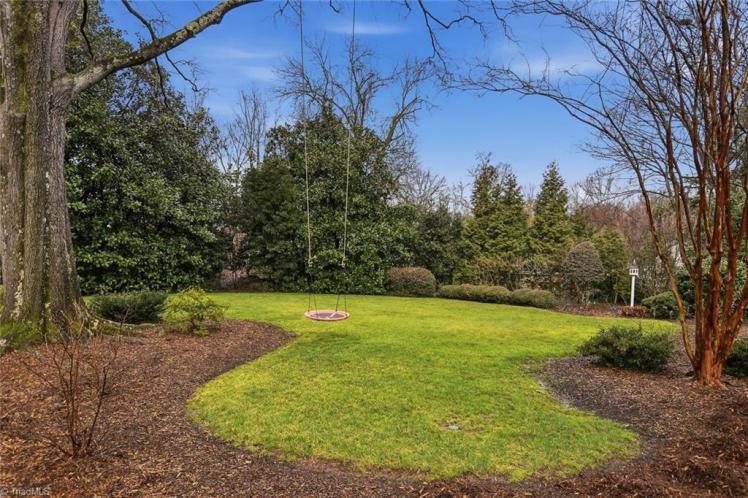
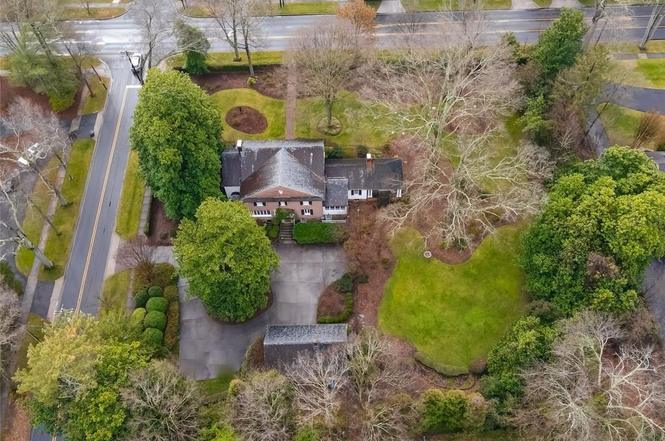
2801 Country Club Road, Winston-Salem
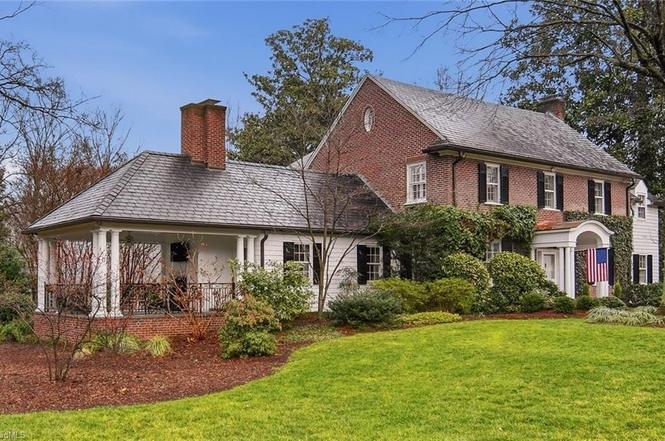
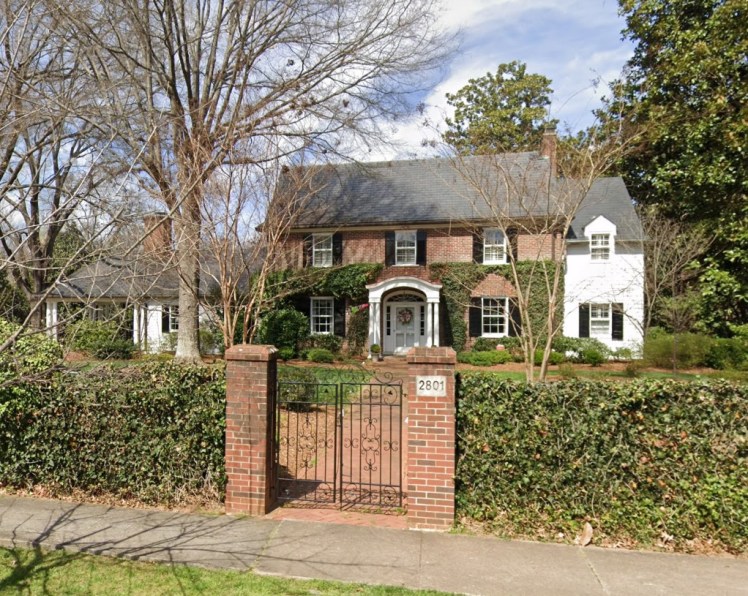
The Dalton-Trotman House
- Sold for $1.68 million on April 6, 2026 (listed at $1.75 million)
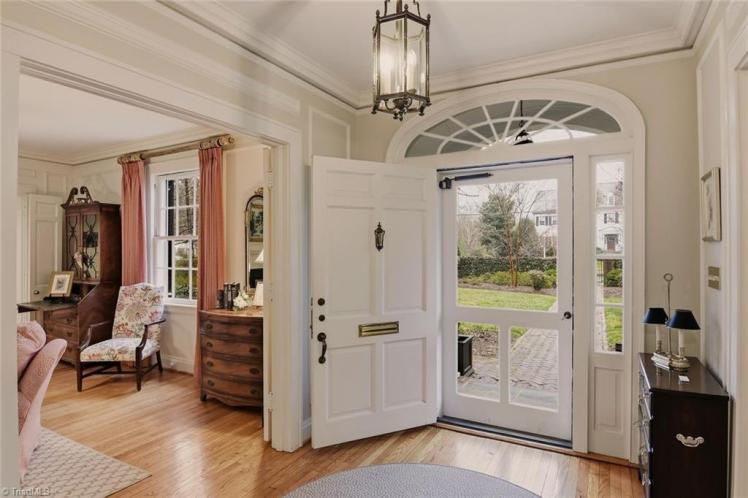
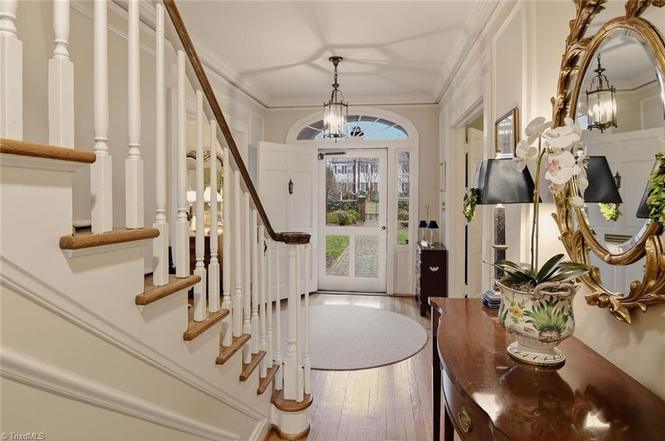
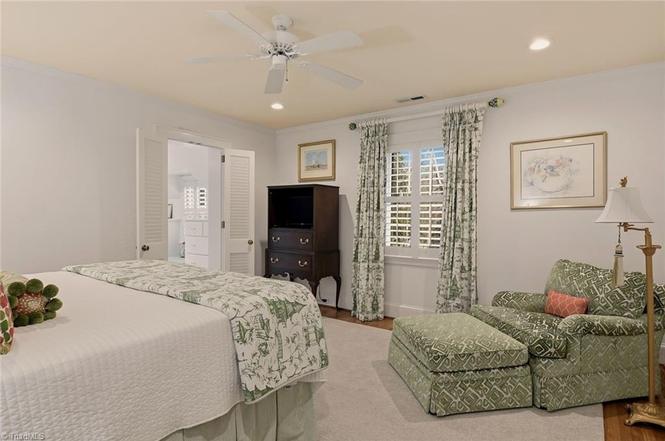
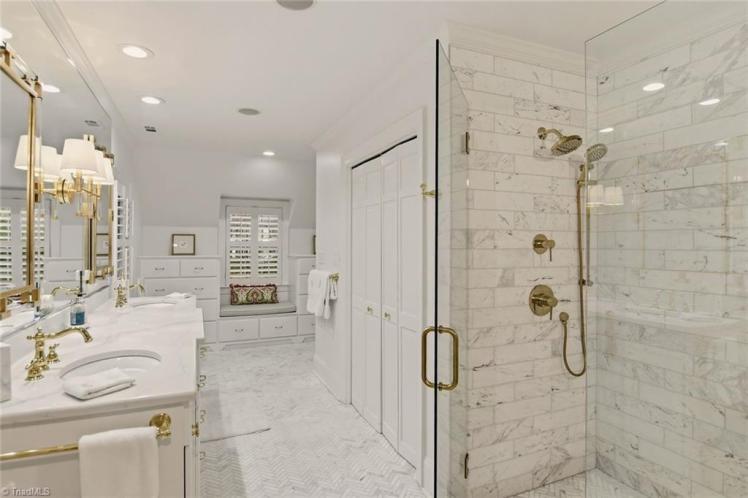
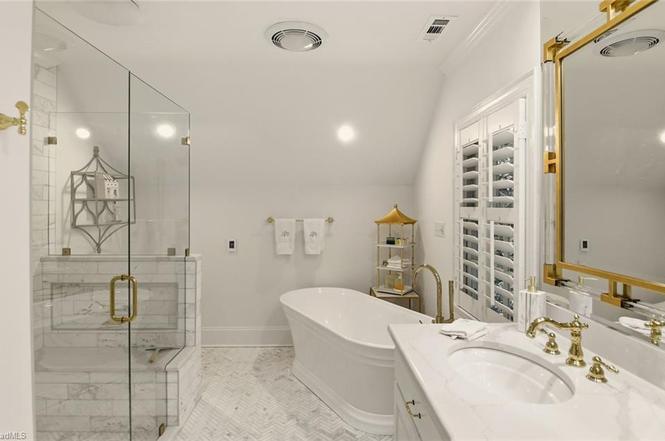
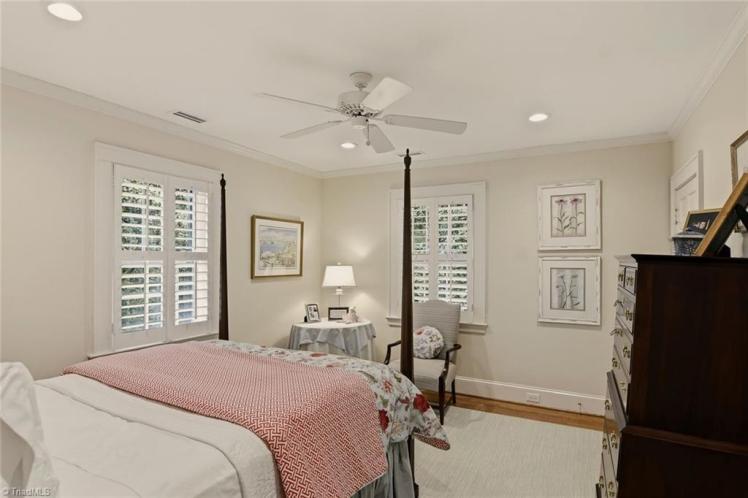
- 4 bedrooms, 4 bathrooms, 3,950 square feet (per county), 1.2 acres
- Price/square foot: $425
- Built in 1927 (per county, possibly a few years later; see note)
- Listed February 23, 2026
- Last sale: $500,000, December 1996
- Neighborhood: Buena Vista
- Note: The listing shows 4,727 square feet, an unusually large deviation of 20 percent from the square footage they’re paying taxes on.
- The house still has its slate roof.
- The house has had only three owners.
- The original owners were Rufus W. Dalton (1893-1982) and Louise Vogler Dalton (1896-1966). They bought the property in 1928, but the address didn’t appear in the city directory until 1930. Rufus was a trust teller* at Wachovia, where he worked for 43 years, retiring in 1958. Louise was a graduate of Salem College. She served as president of the Thursday Morning Music Club and on the board of the Civic Music Association. She was a soloist at Home Moravian Church for many years.
- The Daltons sold the house in 1948 to Marion Jackson “Jack” Trotman (1921-2010) and Dorothy D. Schriver Trotman (1922-1991). Jack sold the house in 1996. He, too, spent his career at Wachovia. Dorothy was a graduate of Randolph Macon Women’s College. She served as a board member and officer of the Junior League, the Philocalian Book Club and the Winston-Salem Debutante Committee.
*Or the trust teller. How many trust tellers would a bank have?
2840reynolds


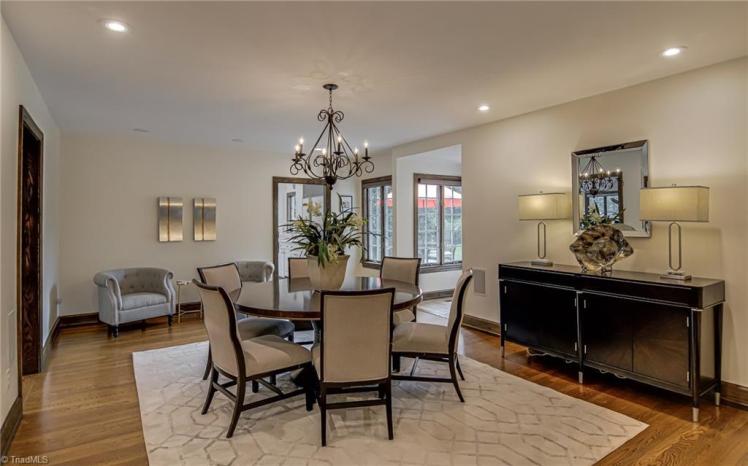

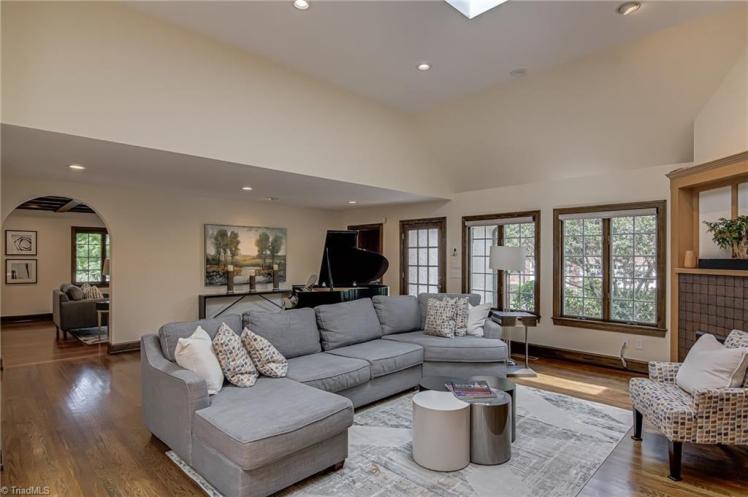
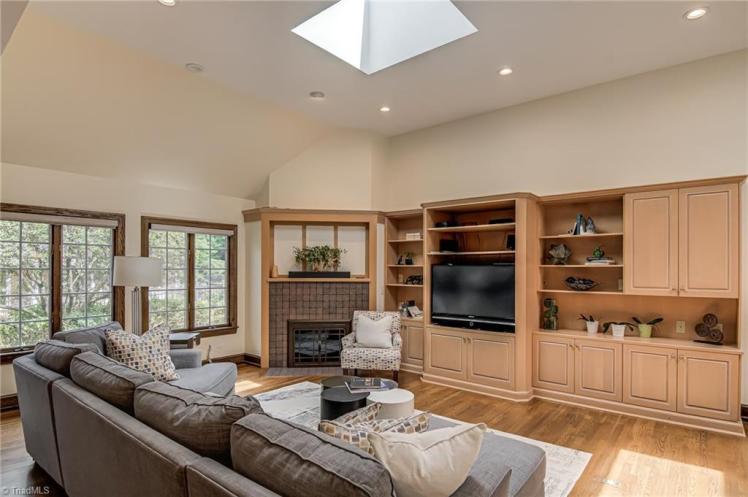

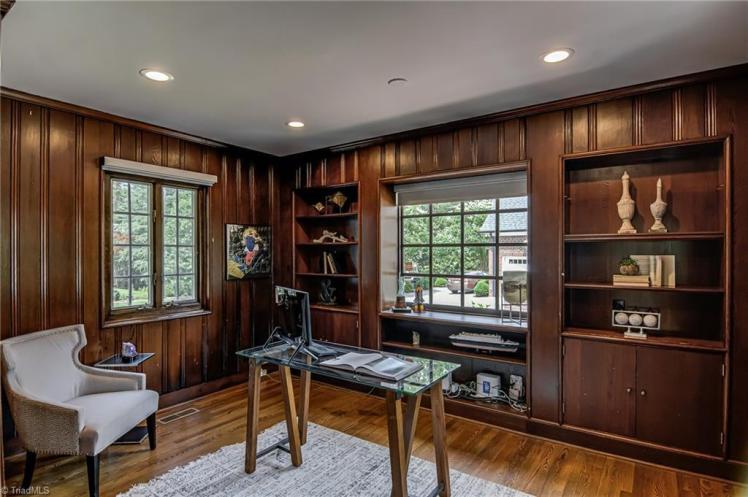


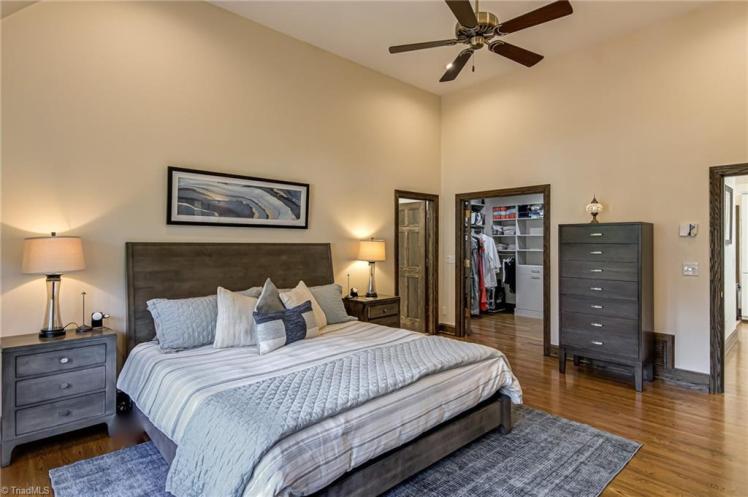
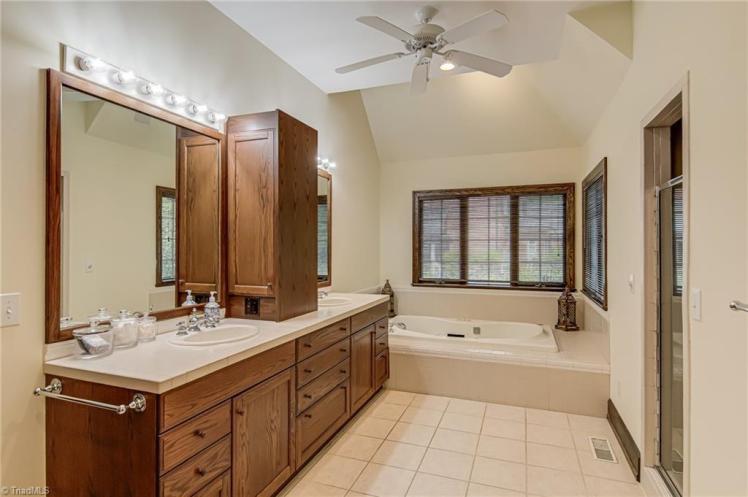


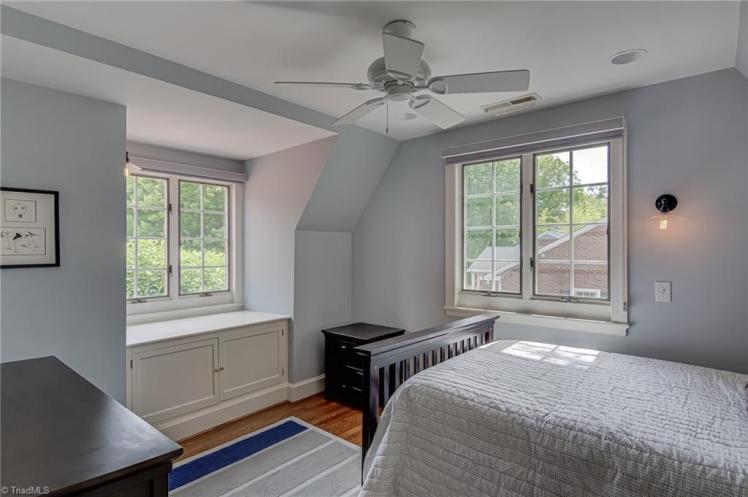

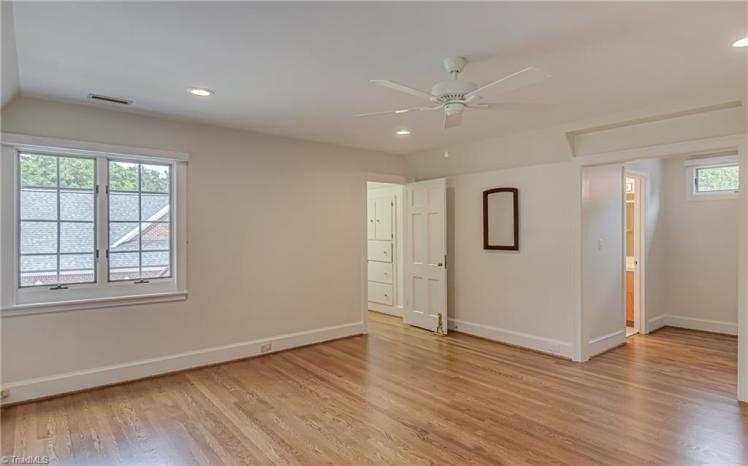

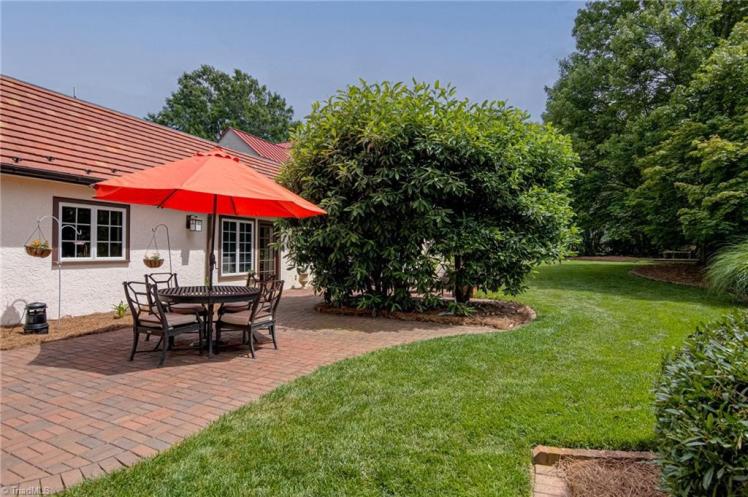
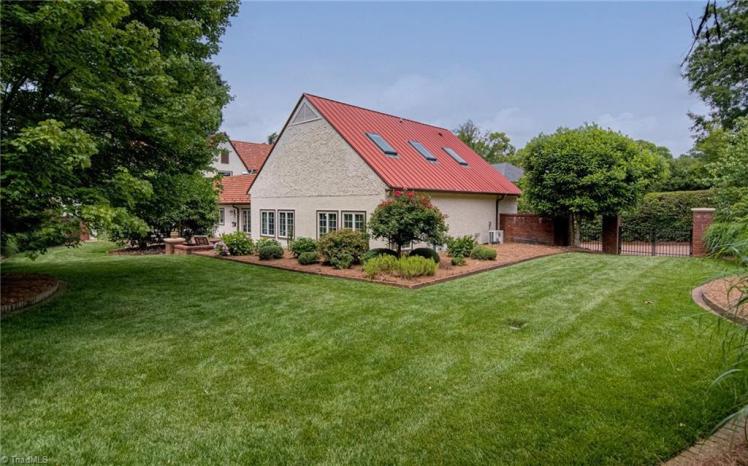
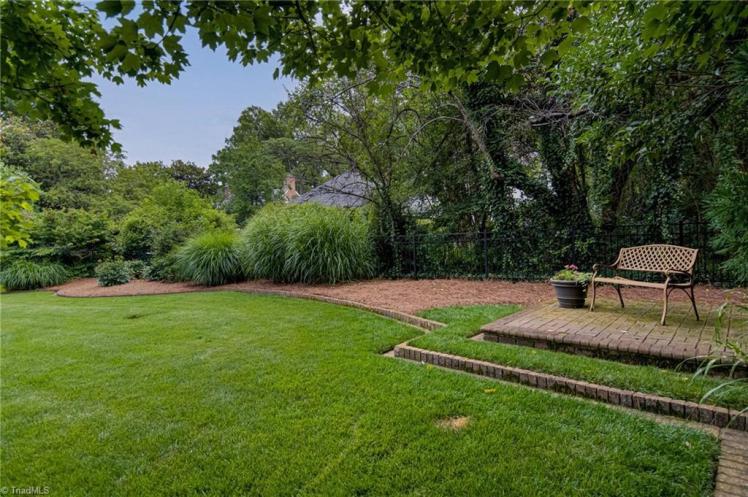

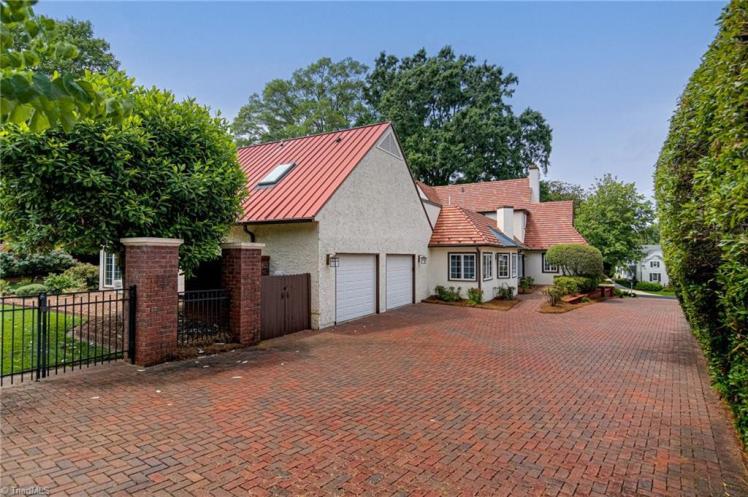
2840 Reynolds Drive, Winston-Salem
The Leet and Nancy O’Brien House
- Sold for $1.525 million on March 26, 2026 (originally $1.695 million)
- 4 bedrooms, 4 full bathrooms, 2 half-bathrooms, 4,838 square feet, 0.55 acre
- Price/square foot: $315
- Built in 1929
- Listed June 16, 2025
- Last sale: $939,000, March 2011
- Neighborhood: Westview/Buena Vista
- Note: Designed by Northup and O’Brien, “one of the most prolific and distinguished architectural firms in North Carolina during the first half of the 20th century,” according to N.C. State’s Architects & Builders: A Biographical Dictionary. Most likely by partner Leet O’Brien.
- Red Ludowici tile roof
- The original owners were Leet Alexander O’Brien (1891-1963) and Nancy Lee Simmons O’Brien (1890-1953). O’Brien went to work for Willard Northup as a draftsman in 1907. They established their architectural partnership in 1916. O’Brien’s most notable works include the library at the Women’s College of the University of North Carolina, the state government office building in Raleigh and the medical school and Hospital at UNC-CH.
- Their son, Leet Alexander “Alex” O’Brien Jr., owned the house after Leet Sr. retired and moved to Florida. He was in sales in the insurance and hotel industries. Alex had sold the house by 1971.
110wchurch


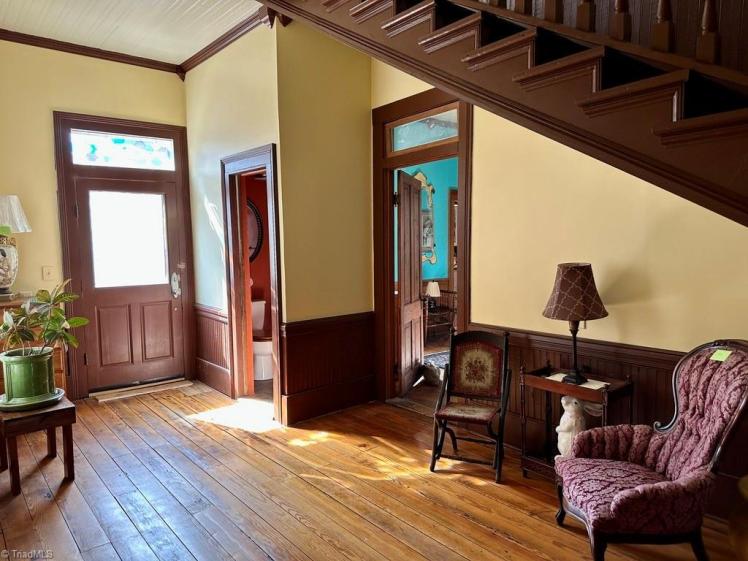
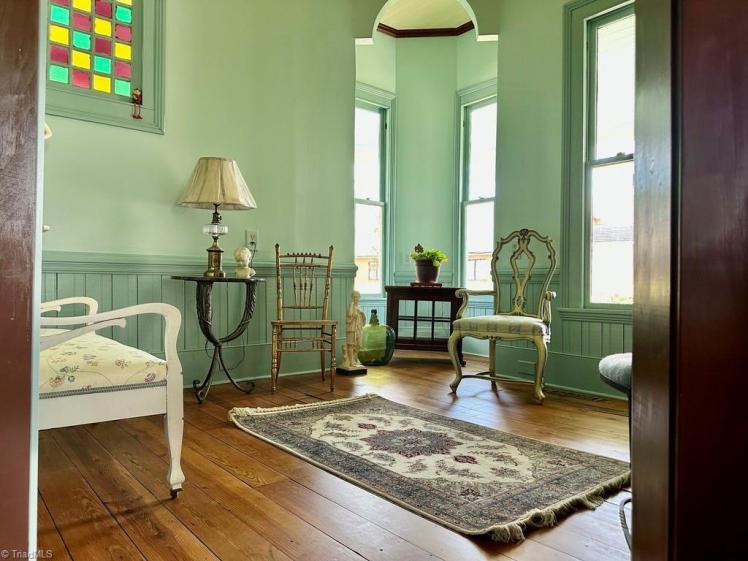

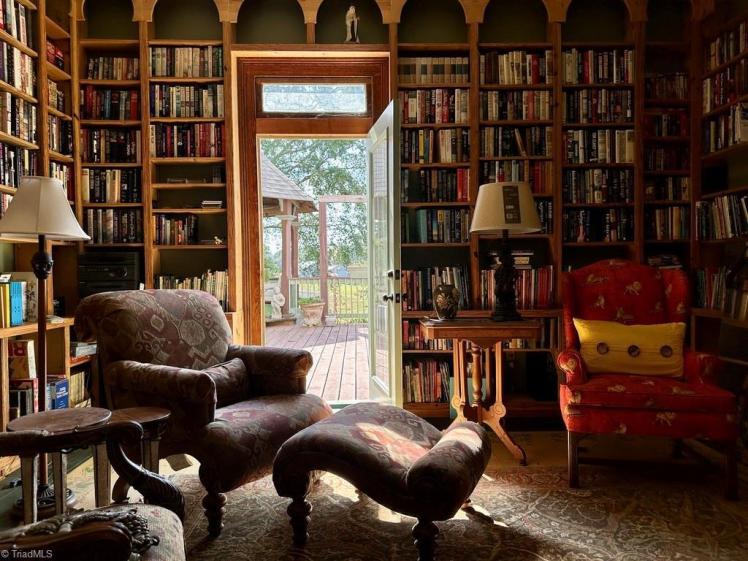

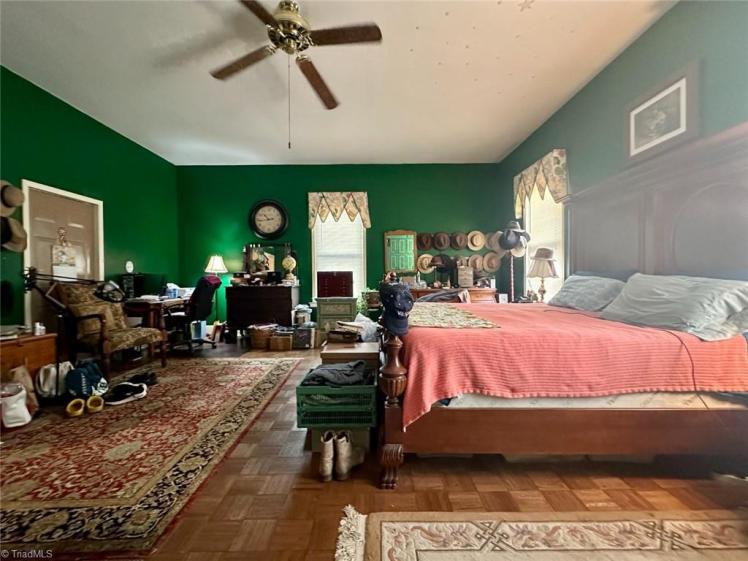


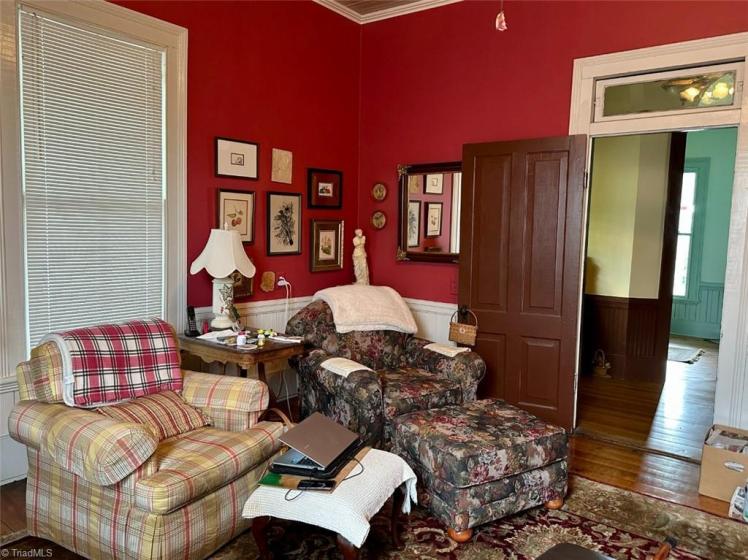


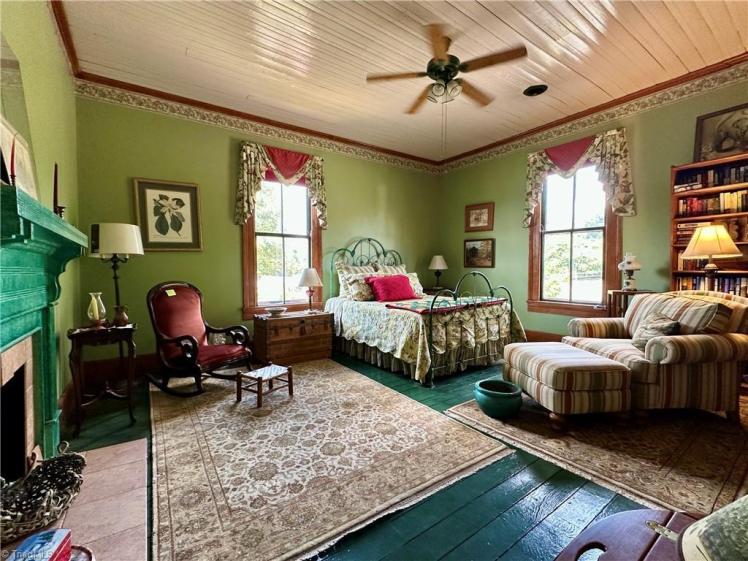

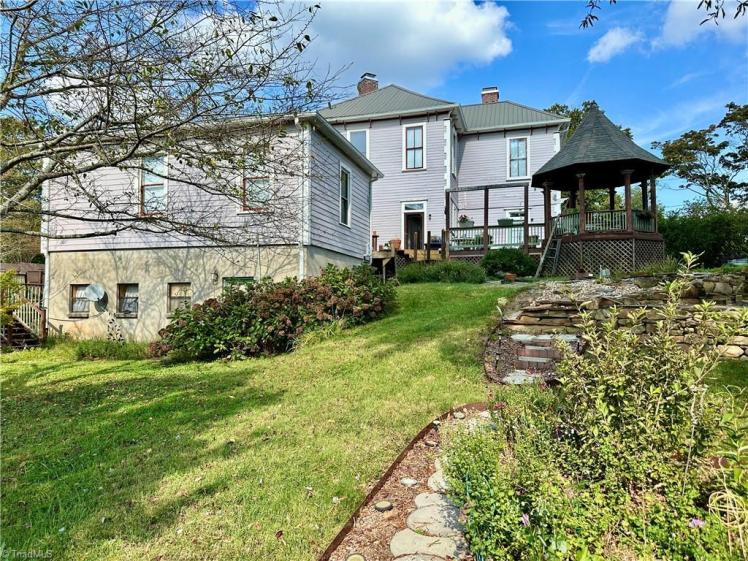


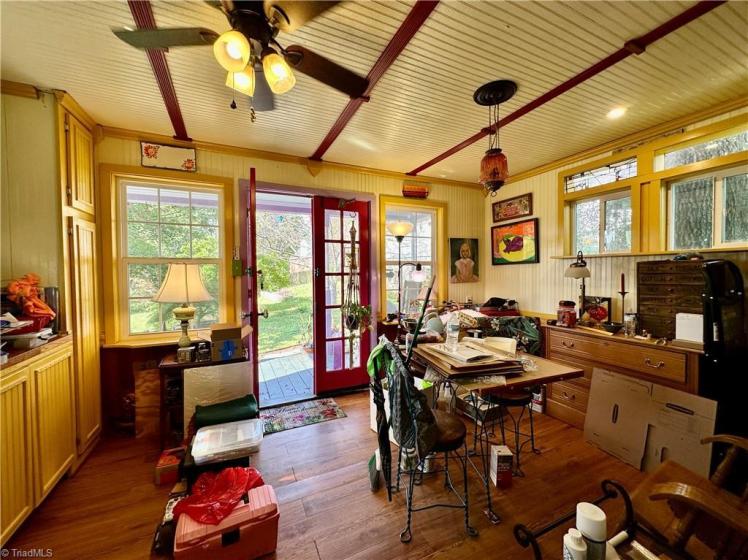
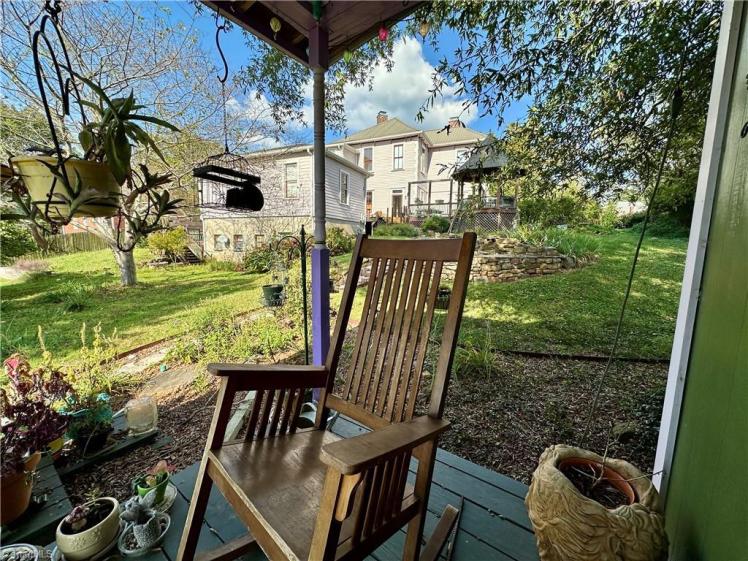
110 W. Church Street, Mocksville, Davie County
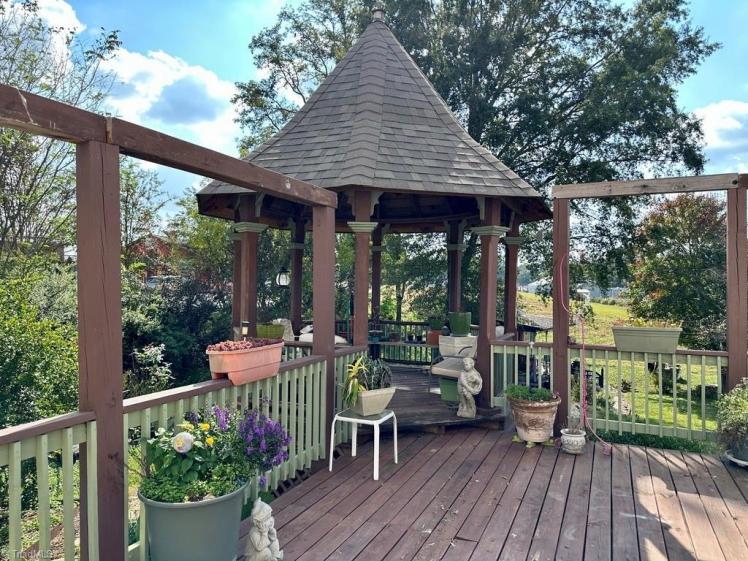
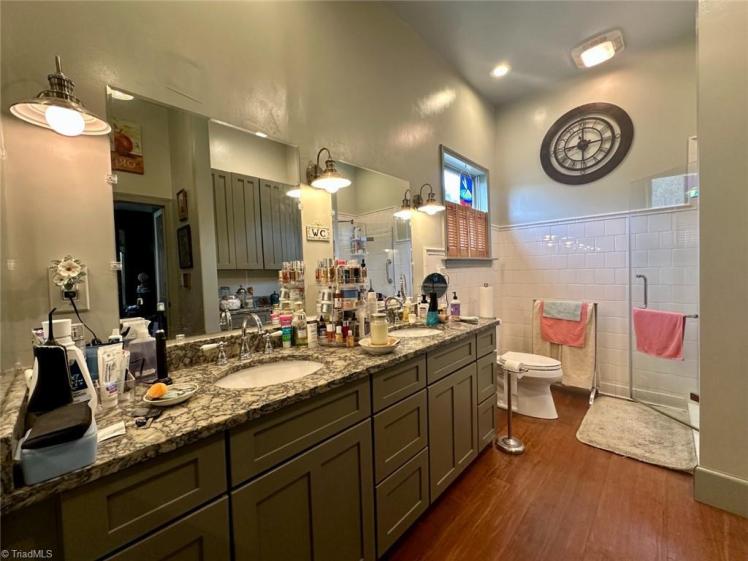
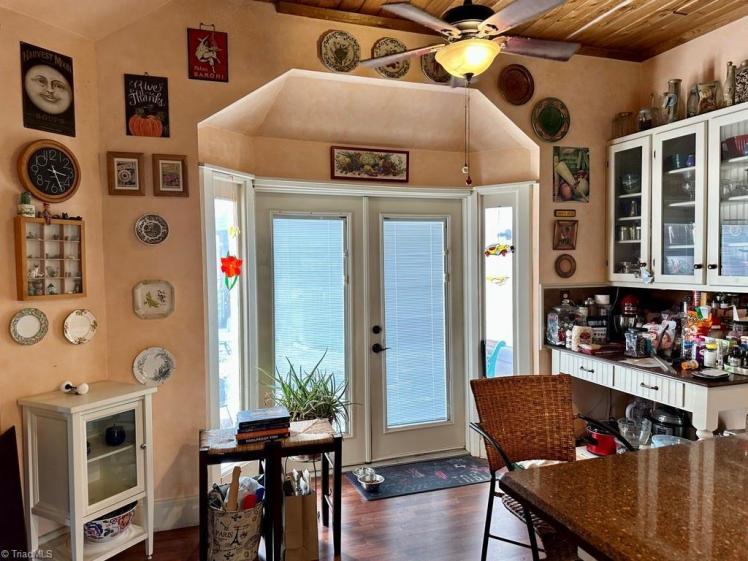
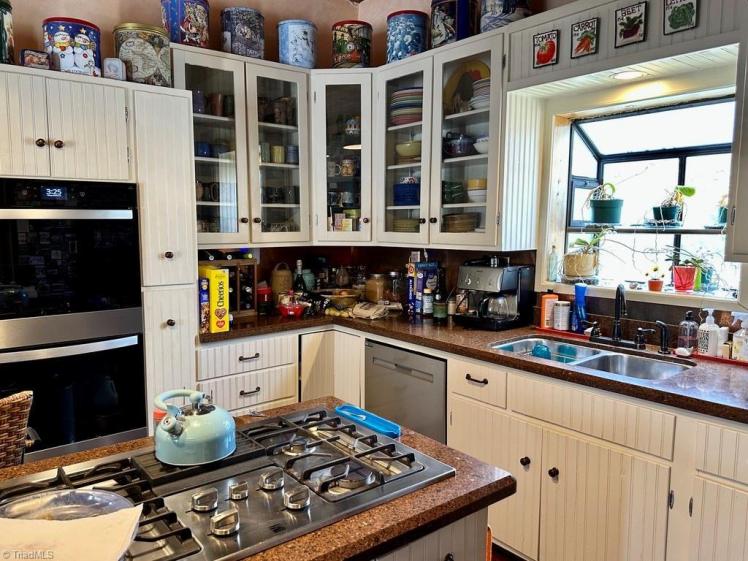
The Hawkins-Thompson House
- Sold for $430,000 on March 26, 2026 (listed at $469,000)
- 4 bedrooms, 4 1/2 bathrooms, 3,988 square feet (per county), 0.43 acre
- Price/square foot: $108
- Built in 1888
- Listed September 30, 2025
- Last sale: $24,500, April 1987
- Neighborhood: North Main Street Historic District (NR)
- Note: The neighborhood’s historic-district nomination dates the house to 1895.
- District NR nomination: “substantial frame transitional Italianate/Queen Anne style house with complex plan; main two-bay hipped front pavilion intersected by side hipped pavilion; narrow octagonal tower at northeast corner with faceted conical roof; hipped porch across front curves around side, has tapered, chamfered posts with brackets, stick frieze; sheathed in German siding with quoins; small brackets in eaves; interior chimneys with decorative caps; two-over-two and one-over-one sash; front door with stained glass, panelled reveal; rear shed wings; one-story, jerkin-headed wing on west elevation; stuccoed concrete block addition; local tradition says was residence of a Captain Hawkins, one of the first railroad conductors in Mocksville; purchased by Charles L. Thompson (1875-1953) in 1913.”
- Few details about Captain Hawkins are available; his full name is among the missing information. Newspaper reports say he lived in Mocksville until October 1899, when he moved to Winston.
- Hawkins sold his house to the Rev. James Monroe Downum (1853-1940). In 1909 Downum became registrar at Appalachian State Teachers College, a position he held for 30 years, retiring at age 86.
102kemp

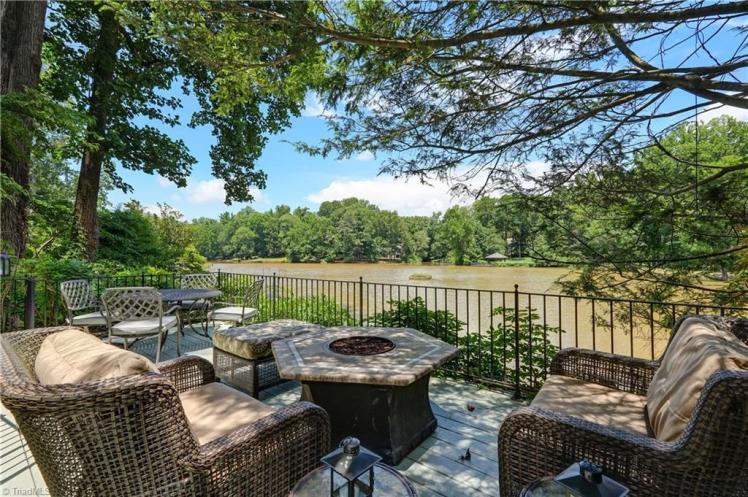
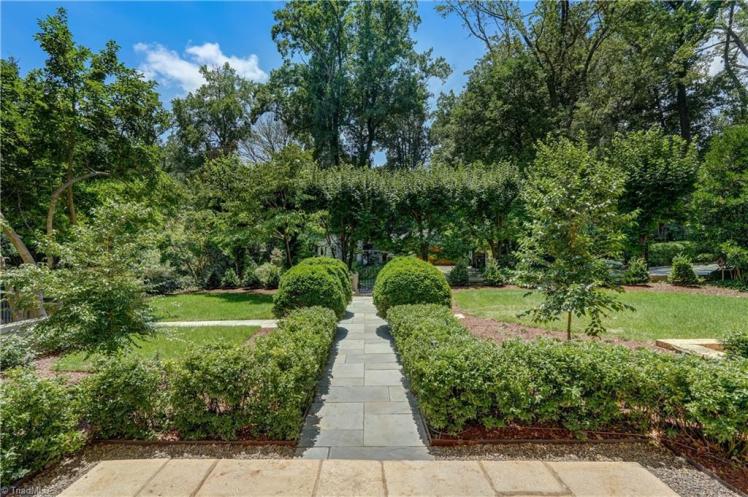


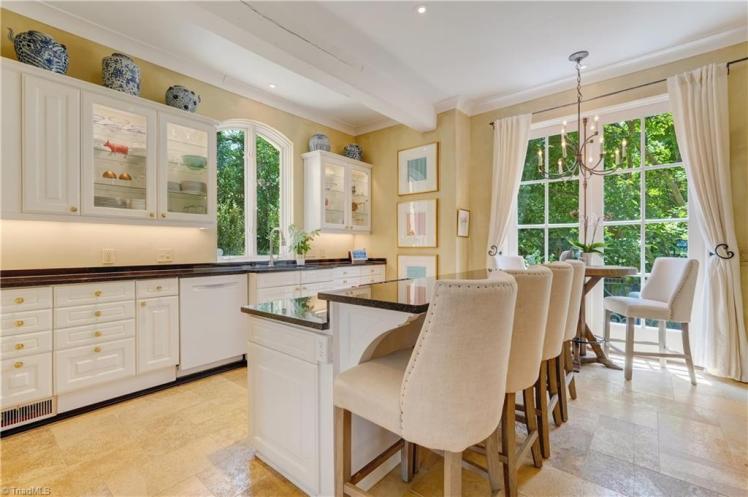

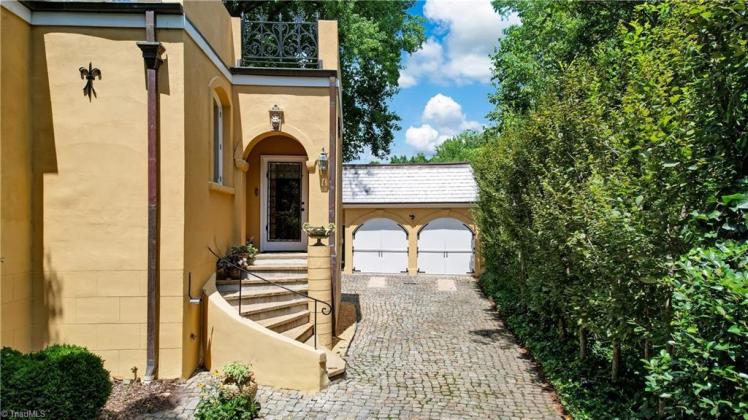
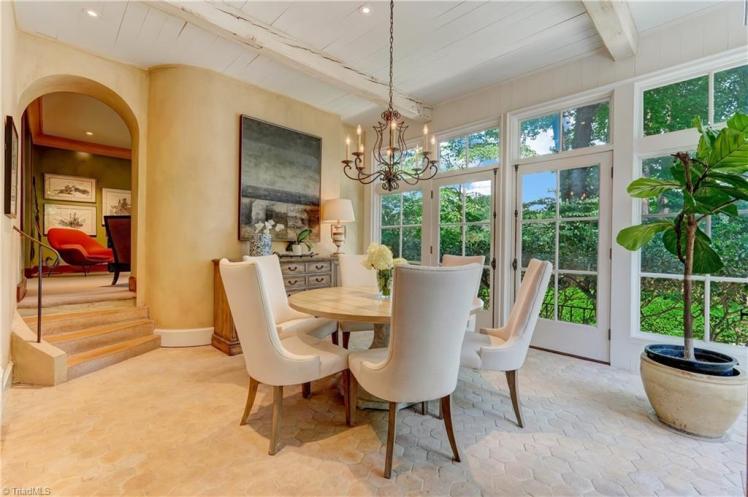
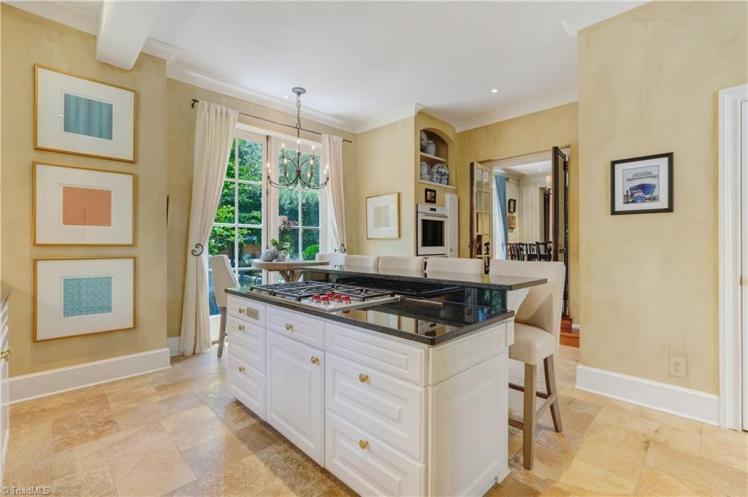
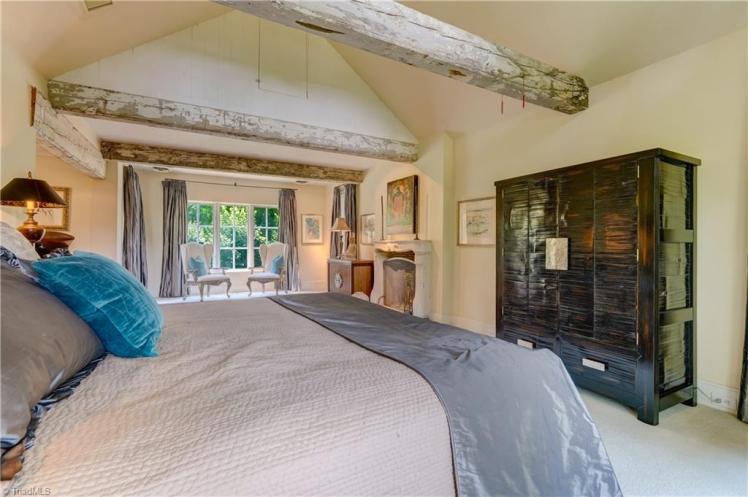
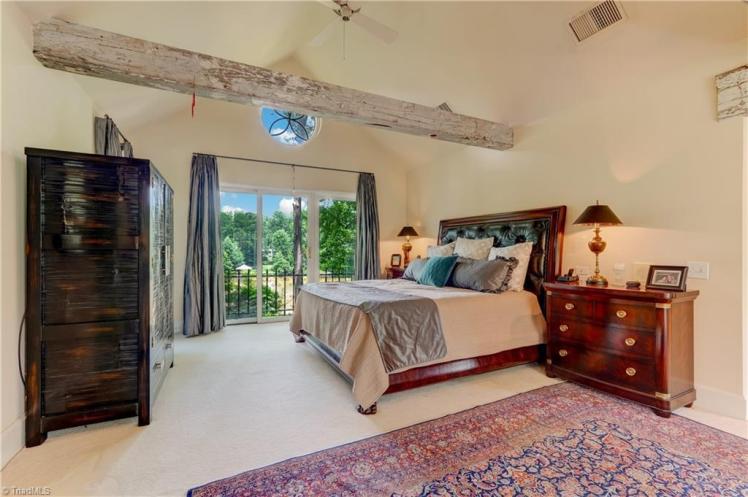

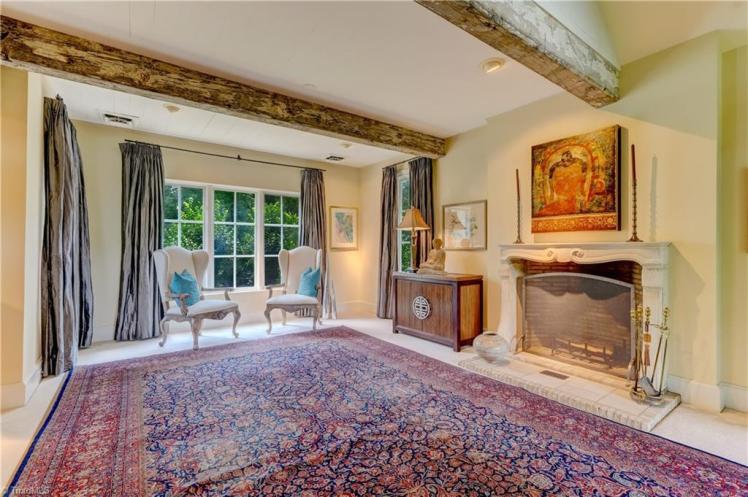


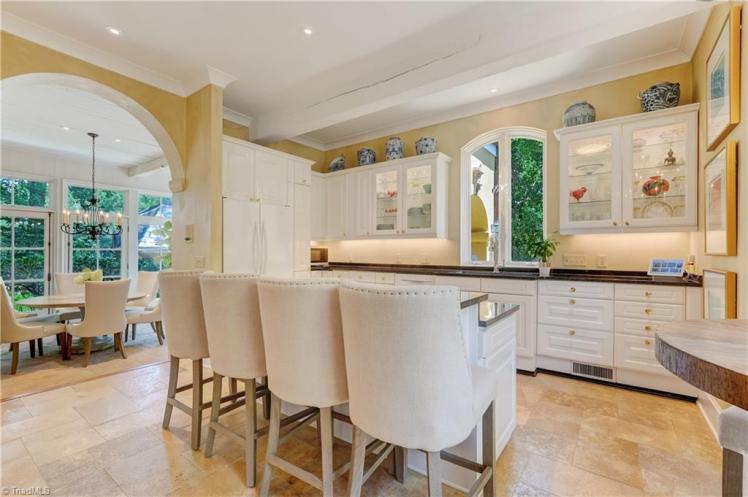


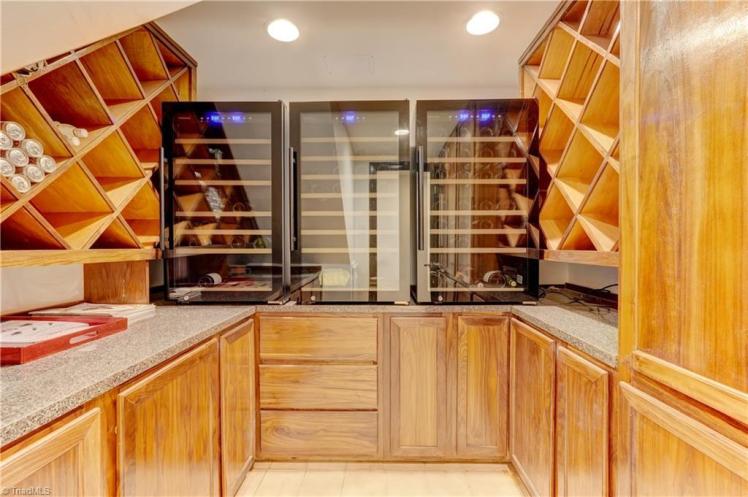




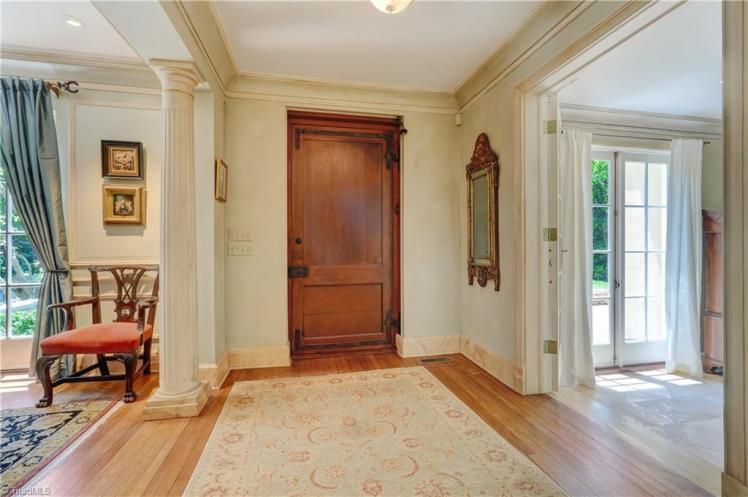


102 Kemp Road West, Greensboro
The Cyrus McMichael House
- Sold for $1.4 million on March 11, 2026 (originally $1.75 million)
- 4 bedrooms, 4 1/2 bathrooms, 4,594 square feet, 0.47 acre
- Price/square foot: $305
- Built in 1928
- Listed July 26, 2025
- Last sale: $1.23 million, May 2012
- Neighborhood: Hamilton Lakes
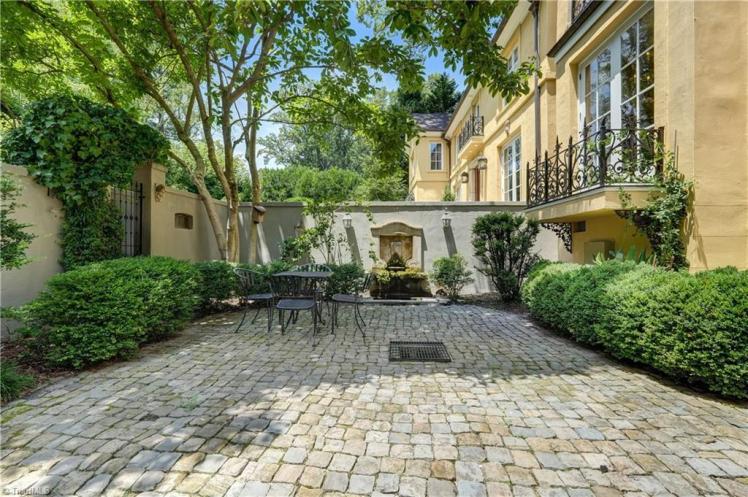
- Note: The house is located on Lake Euphemia.
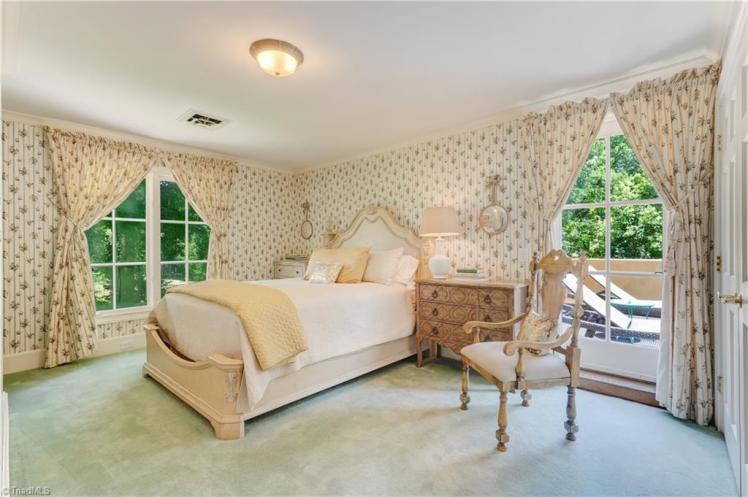
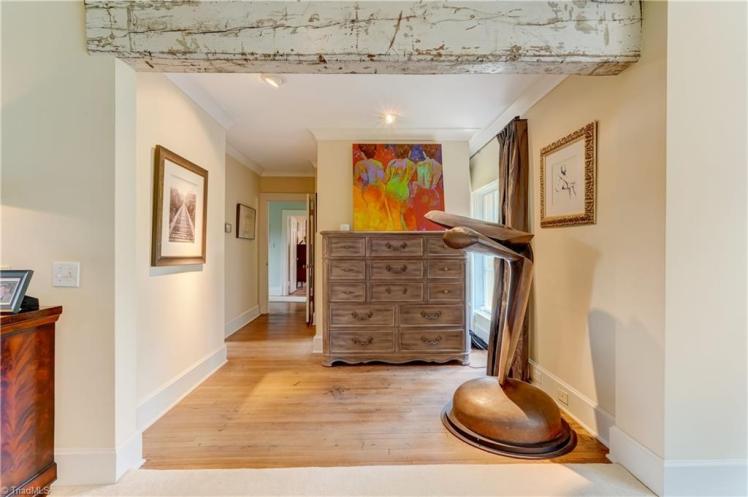
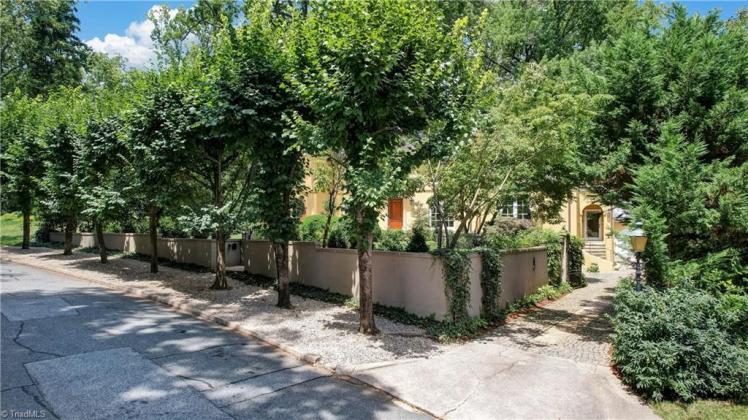
- “This cleanly articulated stuccoed Mediterranean Revival-style house was built about 1927, one of a handful of dwellings erected when the community of Hamilton Lakes was first established. McMichael, a building contractor, may have constructed as well as first occupied it.” (Greensboro: An Architectural Record)
- Cyrus Johnson McMichael (1871-1948) and Daisy Crawley McMichael (1888-1938) bought the two lots in 1926 and 1927 from Hamilton Lakes Inc. By 1928, the city directory listed the address. Daisy was a clerk at the Ellis Stone Department Store. Apparently a victim of the Depression, Charles was identified as a carpenter in 1934. They sold the house in 1935.
- Charles Spurgeon Thacker (1903-1980) bought the house in 1935. He owned a restaurant, Thacker’s, at 108 W. Market Street. He sold the house in 1941. It has eight owners since then.
1020wkent
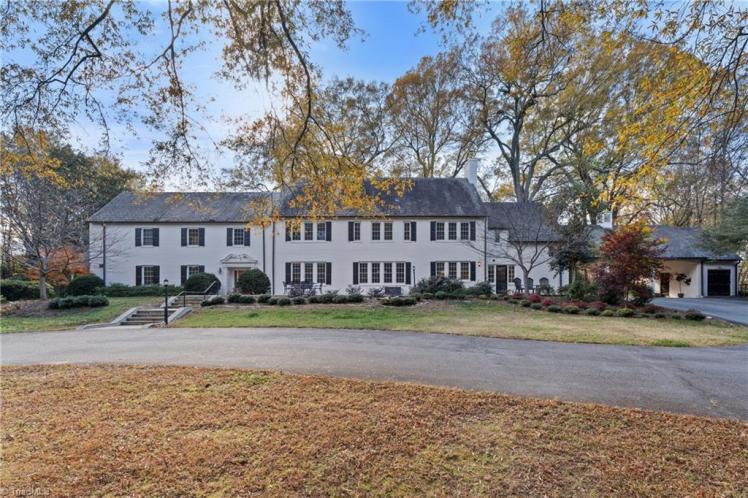
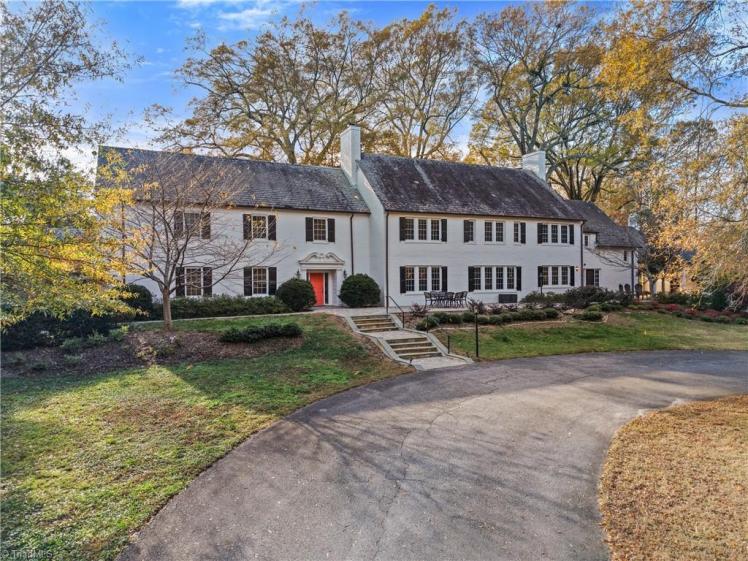


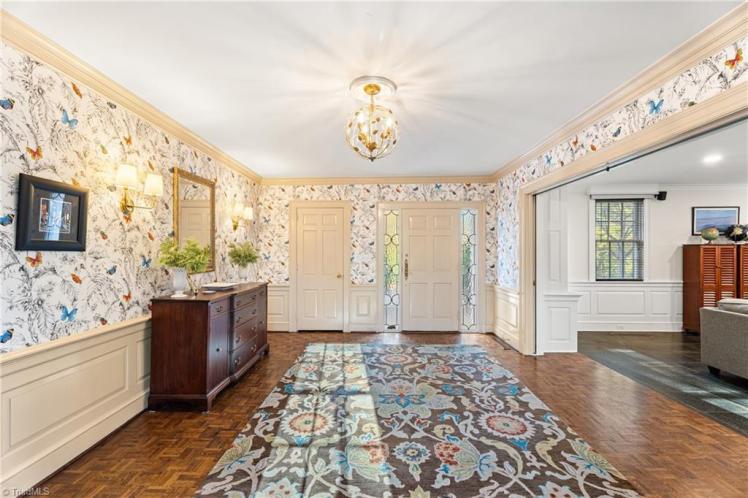

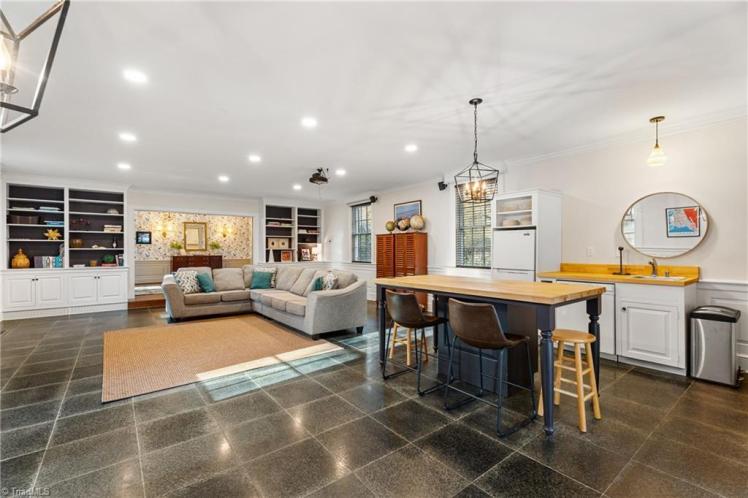
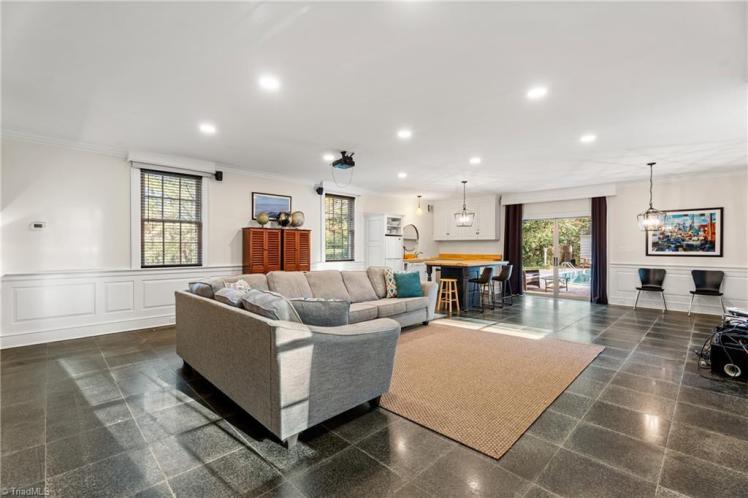


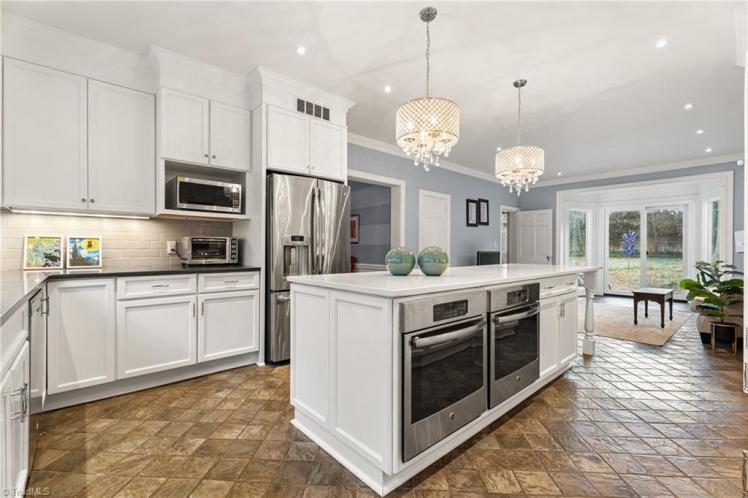


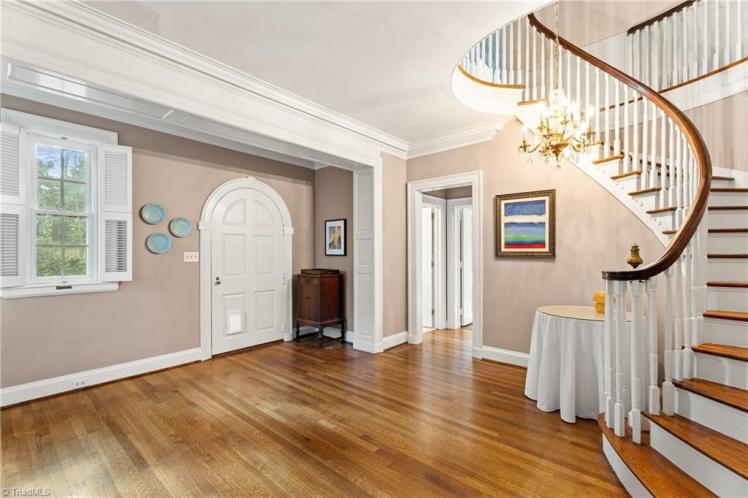


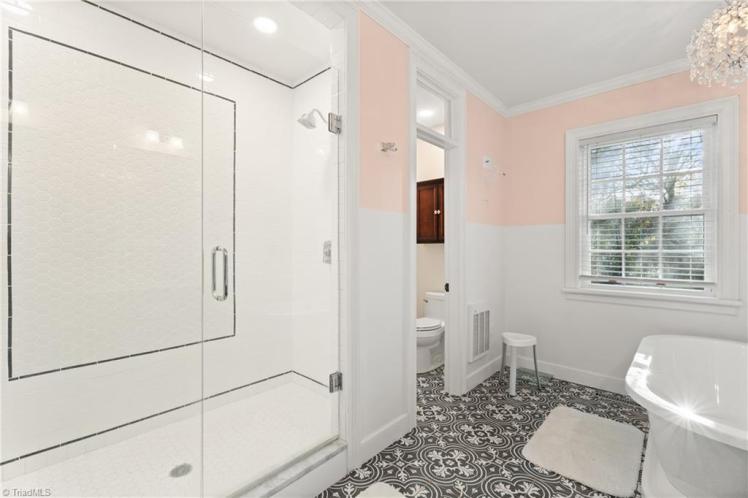
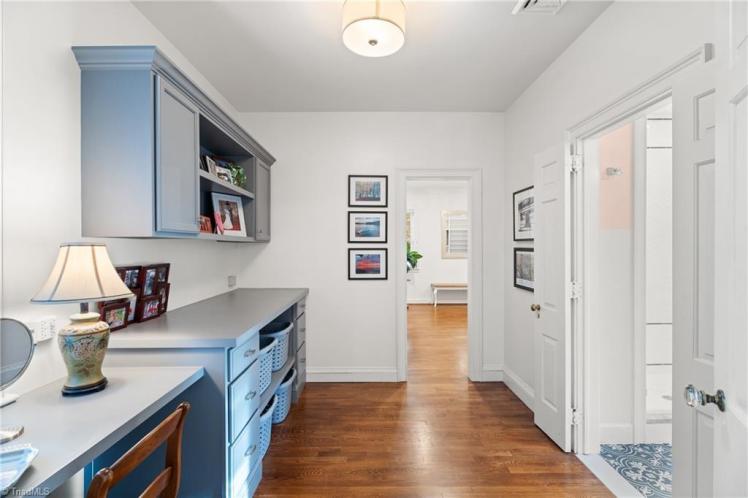
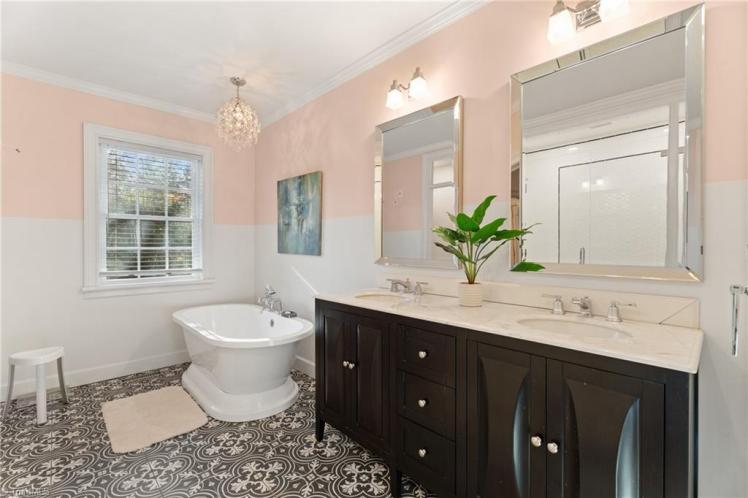
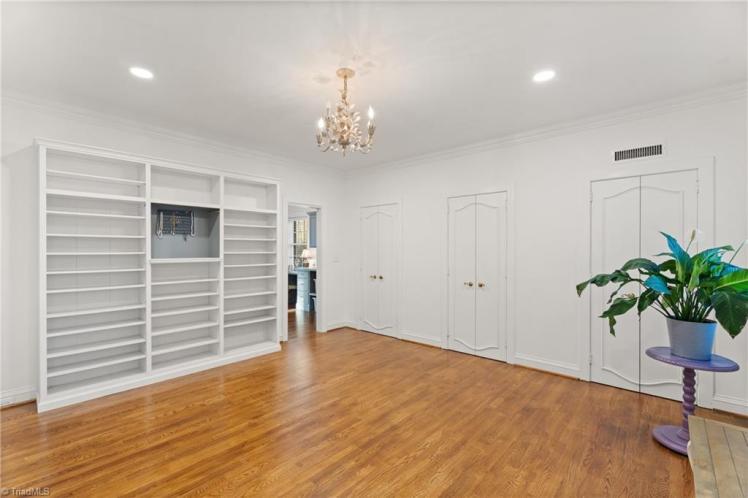
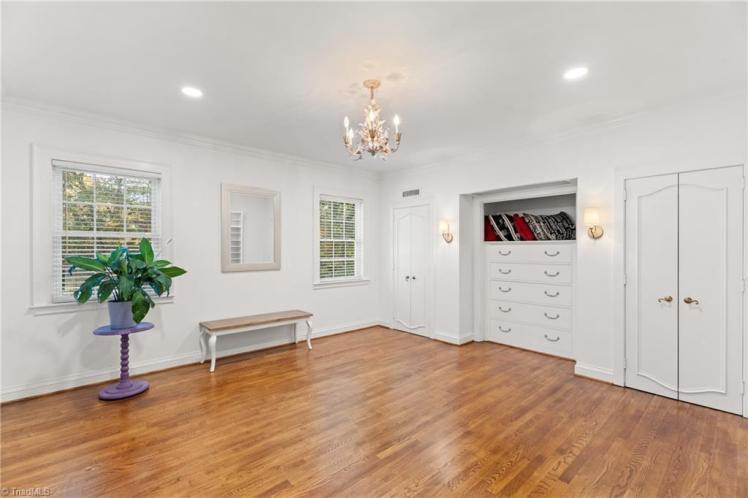

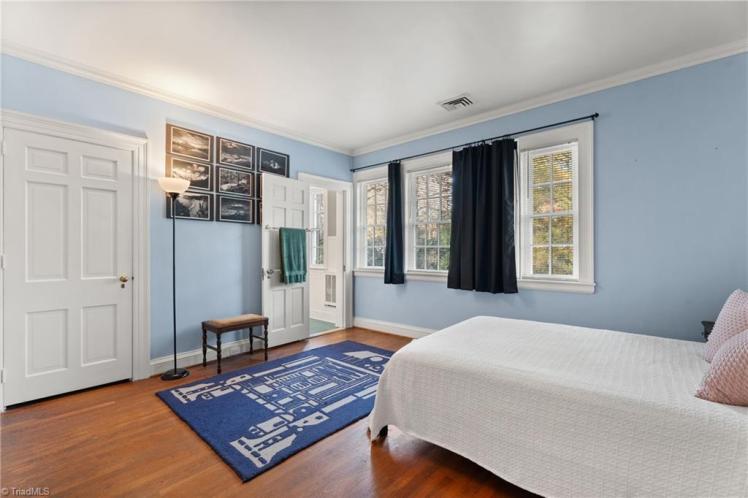


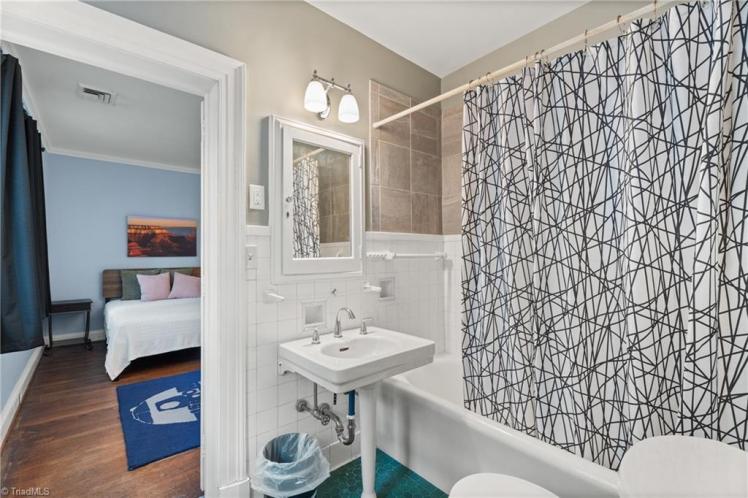
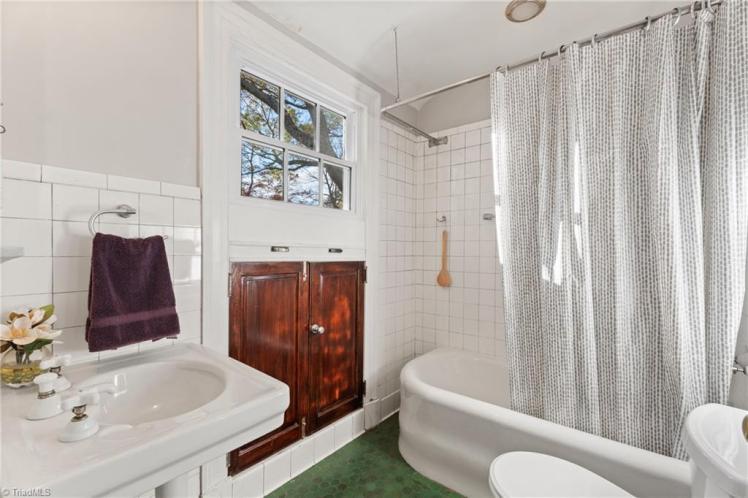
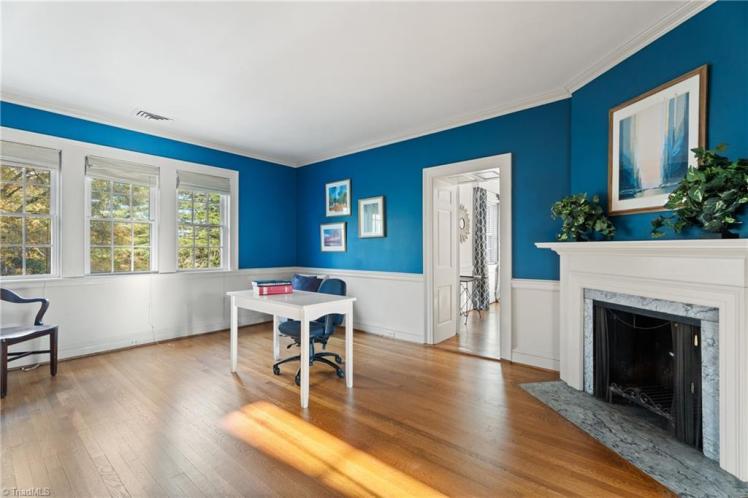


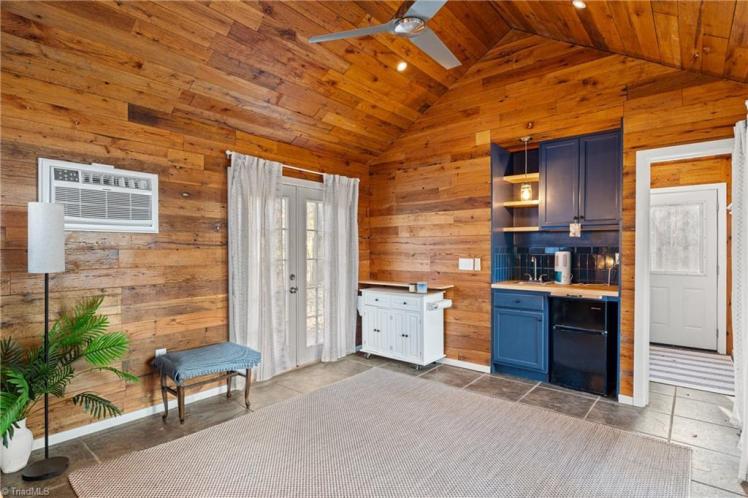
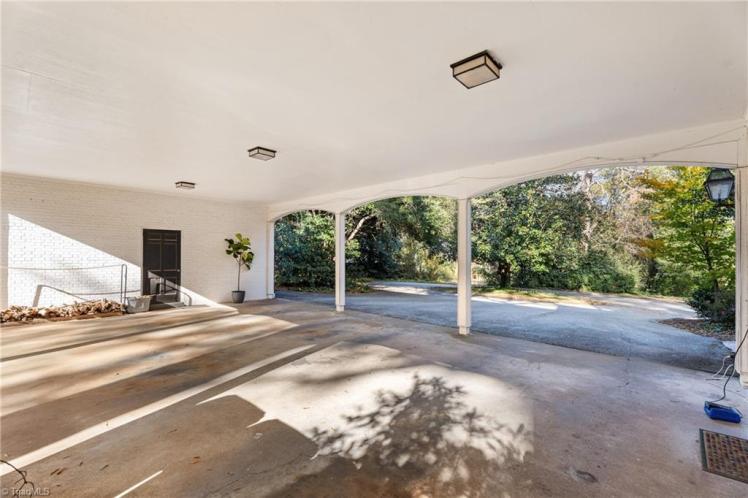
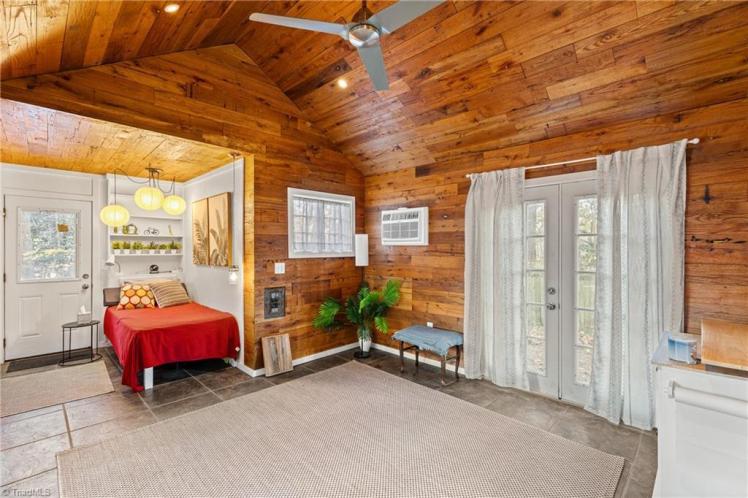

1020 W. Kent Road, Winston-Salem
The Richard and Hortense Stockton House
- Sold for $1.4 million on March 10, 2026 (listed at $1.8 million)
- The house was demolished by its new owner, Reynolda Development Group, an LLC associated with a personal-injury lawyer.
- 6 bedrooms, 7 1/2 bathrooms, 6,653 square feet, 2.33 acres
- Price/square foot: $210
- Built in 1927 (per county; see note)
- Listed November 19, 2025
- Last sale: $590,000, February 2012
- Neighborhood: Reynolda Park
- Note: Designed by Charles Barton Keen (1968-1931), the architect of Reynolda House, R.J. Reynolds High School and many other prominent homes and buildings in Winston-Salem and the Piedmont.
- The house was built by Fogle Brothers and completed in October 1926, according to Winston-Salem’s Architectural Heritage.
- The house essentially has two front sides. The original address was 1001 Reynolda Road; the side toward Reynolda is Tudor Revival. The side facing West Kent Road is Georgian.
- The property includes a swimming pool.
- The original owners were Richard Gordon Stockton (1892-1960) and Hortense Haughton Jones Stockton (1893-1969). Richard was the second of seven children in his family; his older brother was Norman Stockton, whose menswear store is still in business in Winston-Salem.
- Richard originally was a lawyer, joining the bar in 1912. He served with the Army’s advocate general’s office during World War I. He joined Wachovia in 1922 as secretary and trust officer and rose to become chairman of the board and chairman of the executive committee (online listings mistakenly identify him as an R.J. Reynolds executive). He also served as president of the Methodist Children’s Home and the N.C. Foundation for Church-Related Colleges.
- Hortense was a graduate of St. Mary’s College in Raleigh. She was initially a school teacher and later served as president of the Community Council, commissioner of the Girl Scouts, president of the Juvenile Relief Association and chair of the Community Nursing Service. She sold the house in 1961.
1609st.andrews
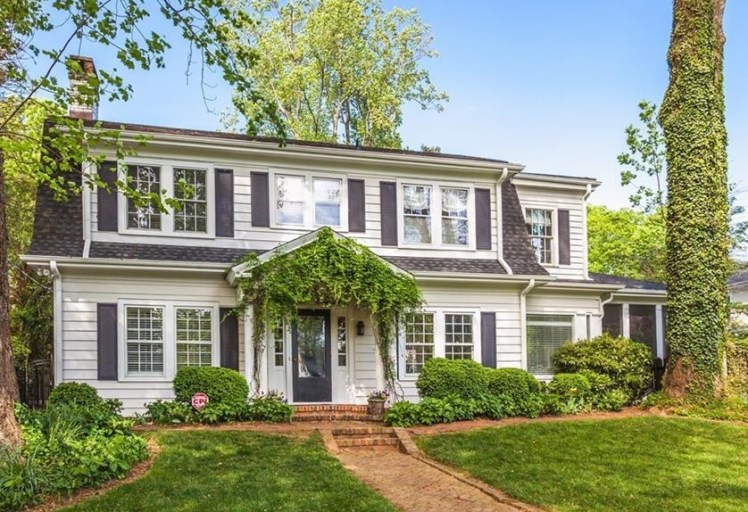
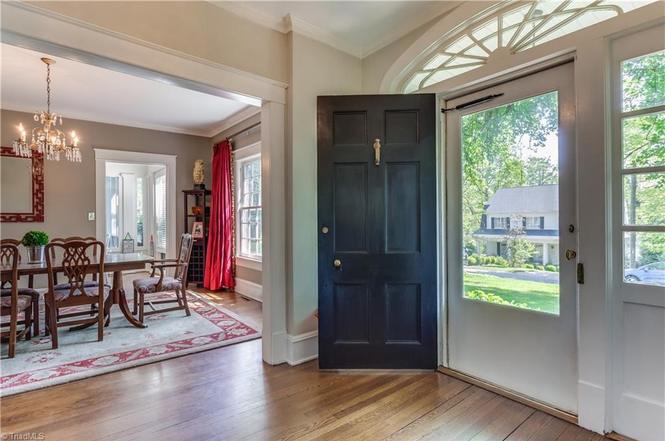
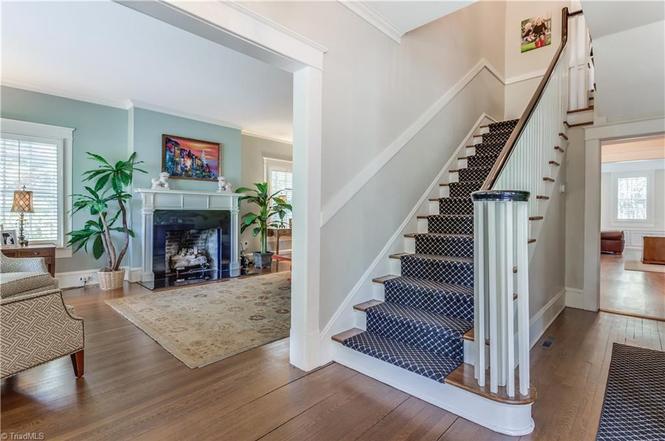
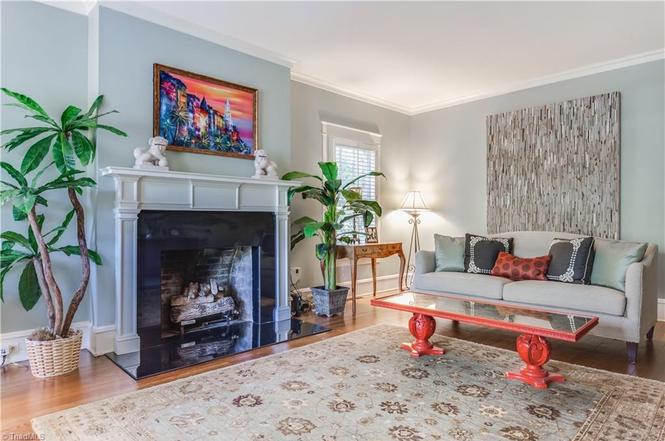
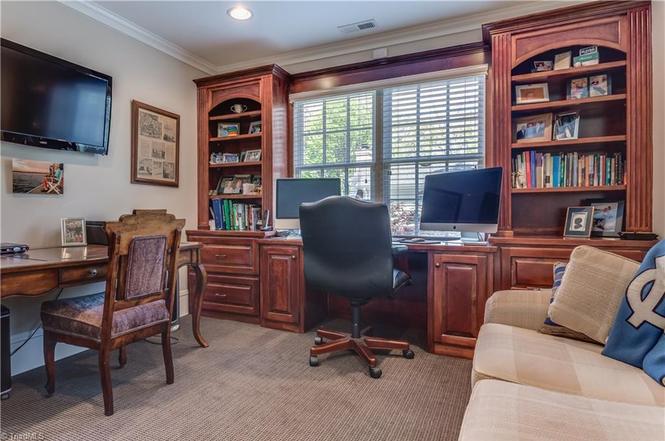

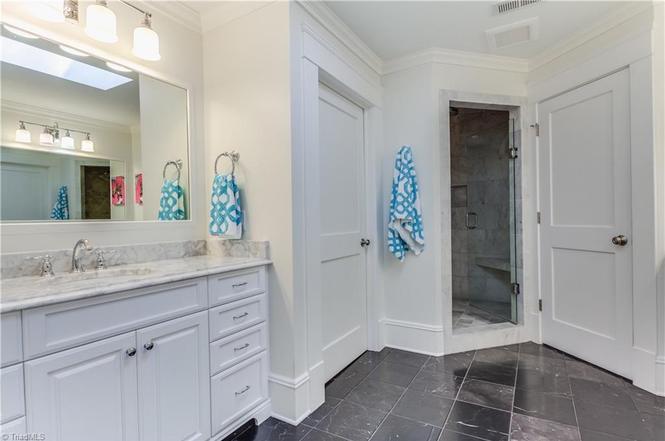
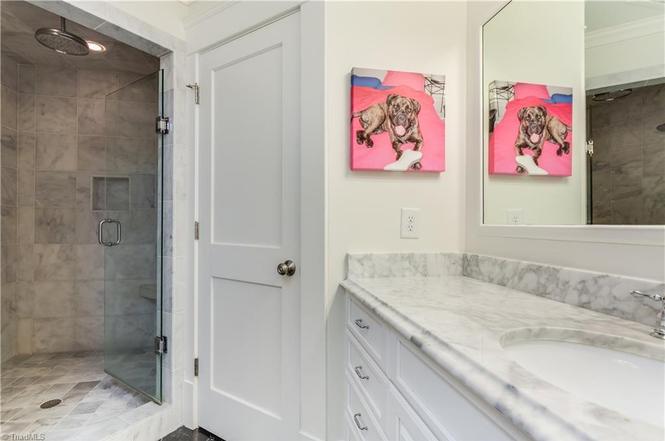
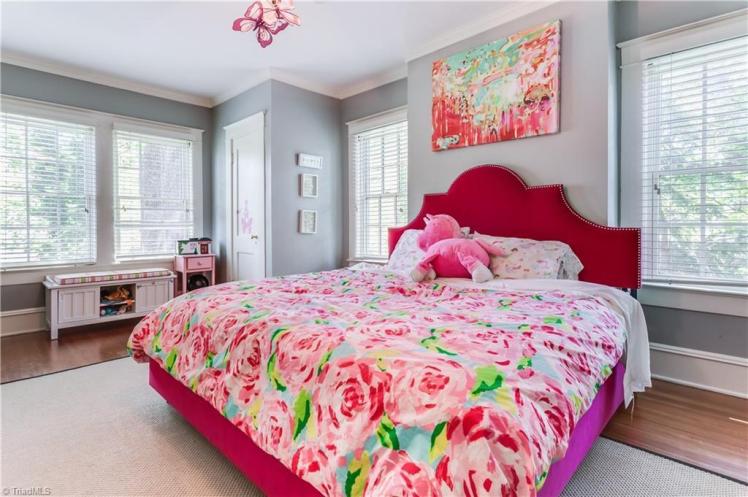

1609 St. Andrews Road, Greensboro
The Rossell-Watson House
- Sold for $1.55 million on February 2, 2026
- 5 bedrooms, 3 1/2 bathrooms, 4,156 square feet, 0.34 acre
- Price/square foot: $373
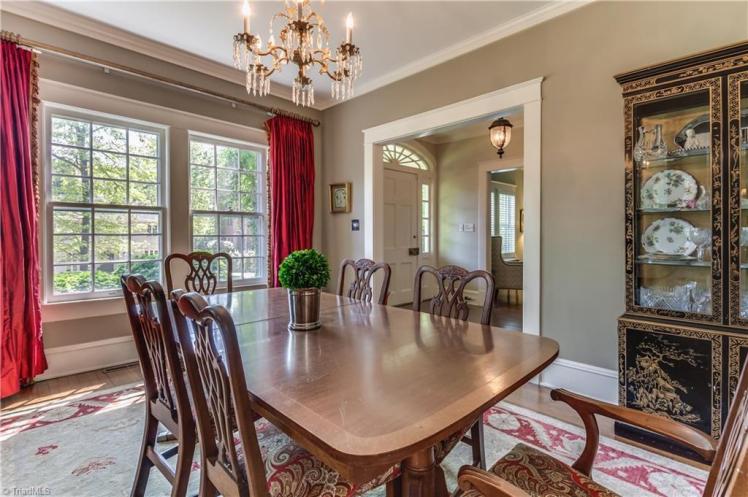
- Built in 1929 (per county, but probably several years earlier; see note)
- Not listed publicly for sale
- Last sale: $865,000, November 2016
- Neighborhood: Irving Park
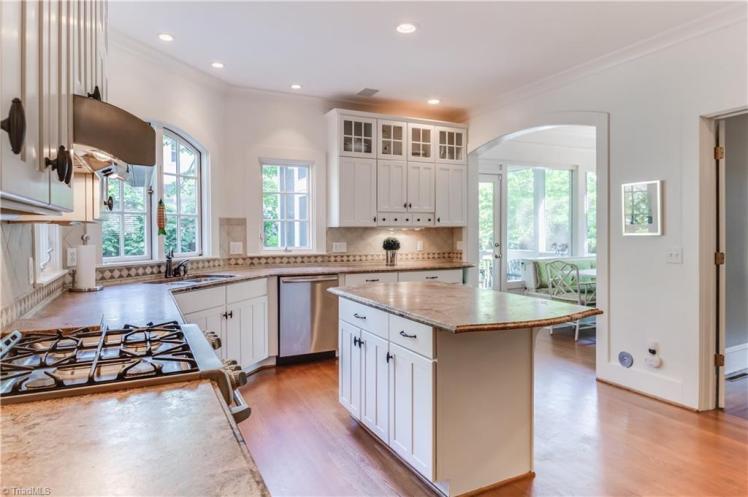
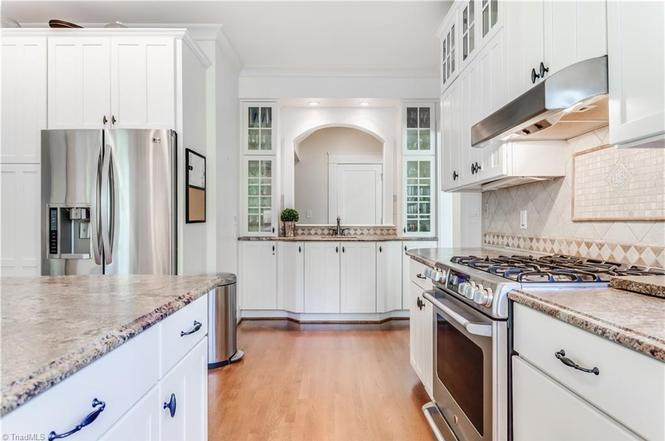
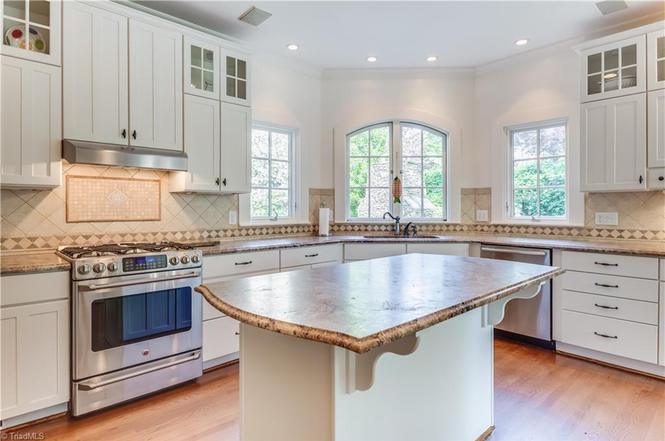
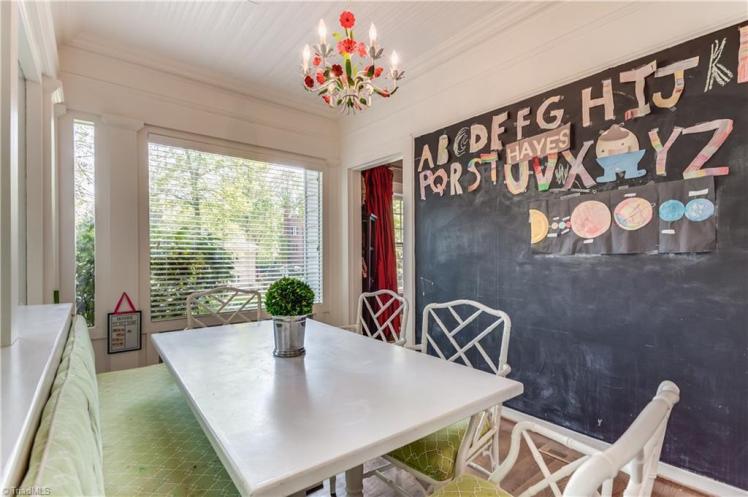
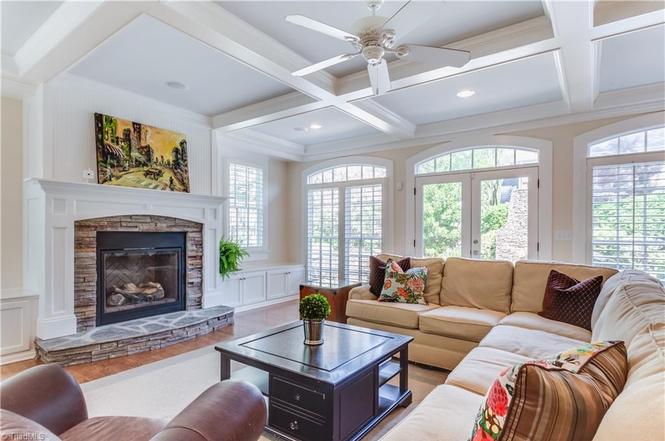
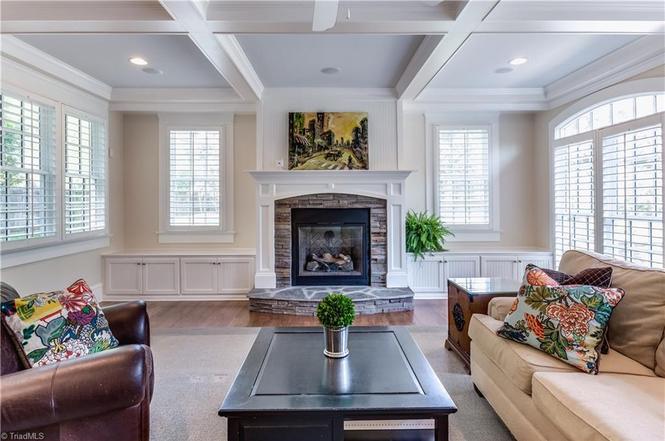
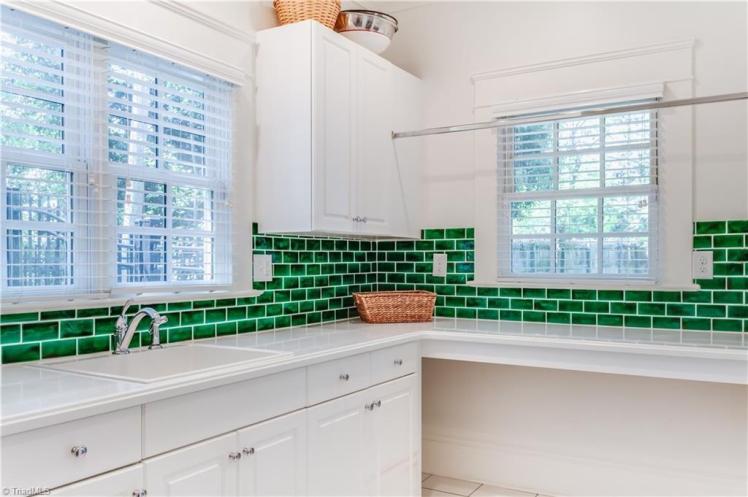
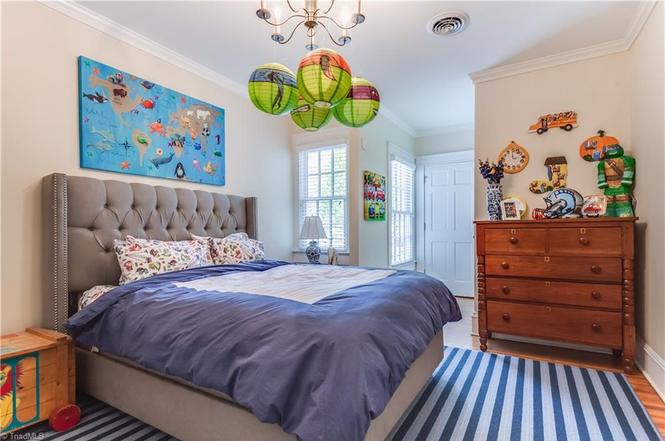
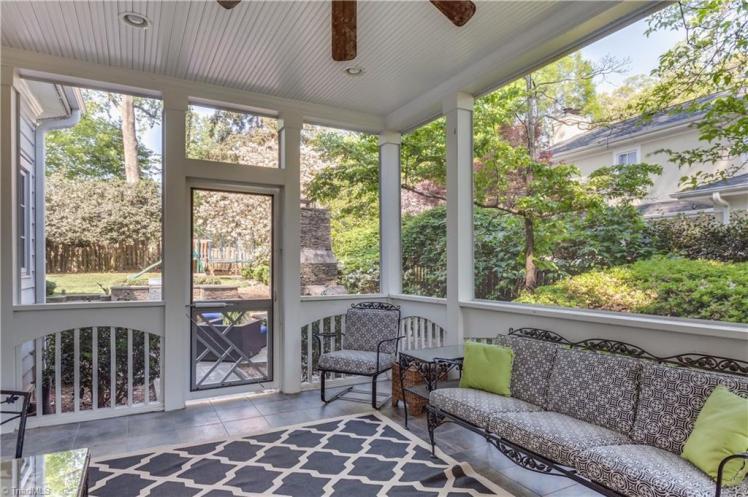
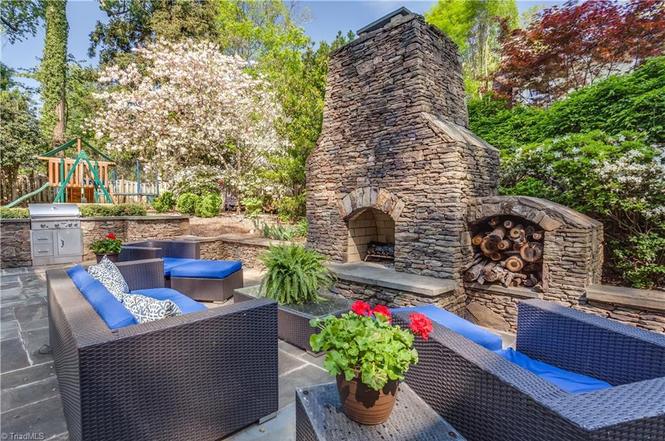
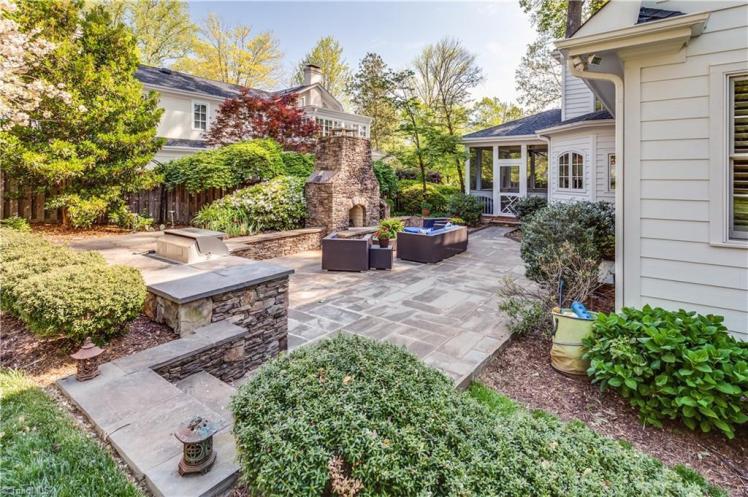
- Note: The pictures above appear to be from the 2016 listing.
- District NR nomination: “J.E. Rossell was the first known owner of this two-story frame gambrel-roofed house which is very similar to his earlier house at 1607 Carlisle Rd. Though it has been sheathed with aluminum siding, it retains is essential stylistic features. In addition to its gambrel roof, the house features a gambrel end chimney, a shed dormer across the front, and a three-bay facade with a classical central entrance. The one-story porch on the north side is an addition.”
- John Ellis Rossell Sr. (1894-1939) and Cora Galloway Mebane Rossell (1893-1976) bought the property in 1927, although they had been listed on St. Andrews Road since 1923 and in Irving Park (with no specific address) since 1920. John was vice president and treasurer of Mebane-Rossell-Cress, the local dealer for Dodge cars and Graham trucks.
- He graduated from West Point and served as a major with the expeditionary force that searched for Pancho Villa in Mexico. After leaving Greensboro, John Sr. died of a heart attack at age 45 at their home in New Brighton, N.Y. He’s buried at West Point.
- John was a son of a brigadier general. Their son, John Jr. (1918-1984), also graduated from West Point. He served in the field artillery in World War II and retired after a career in the Army as a lieutenant colonel.
- The Rossells sold the house in 1930. It changed hands four times before it was bought in 1944 by Dr. Hugh Alfred Watson (1904-1974) and Almeria Russ Watson (1914-1993). They owned the house for 34 years. Hugh was a surgeon who practiced in Greensboro from 1941 until he died. Almeria was a pianist and organist who taught music as a volunteer in the Greensboro public schools.

