Updated April 1, 2026
Condos in historic buildings are found in Greensboro, Winston-Salem, High Point, Mount Airy and other towns. Some buildings originally were apartments; others are in repurposed industrial or commercial buildings, often with ultra-modern interior design. Six of the buildings are on the National Register of Historic Places.
Buildings with current listings are marked with an asterisk below.
Greensboro
High Point
Winston-Salem
The Mill at Tar Branch (NRHP)*
Asheboro
Eden
Kernersville
Lexington
Mount Airy
North Wilkesboro
Reidsville
Saxapahaw
Thomasville
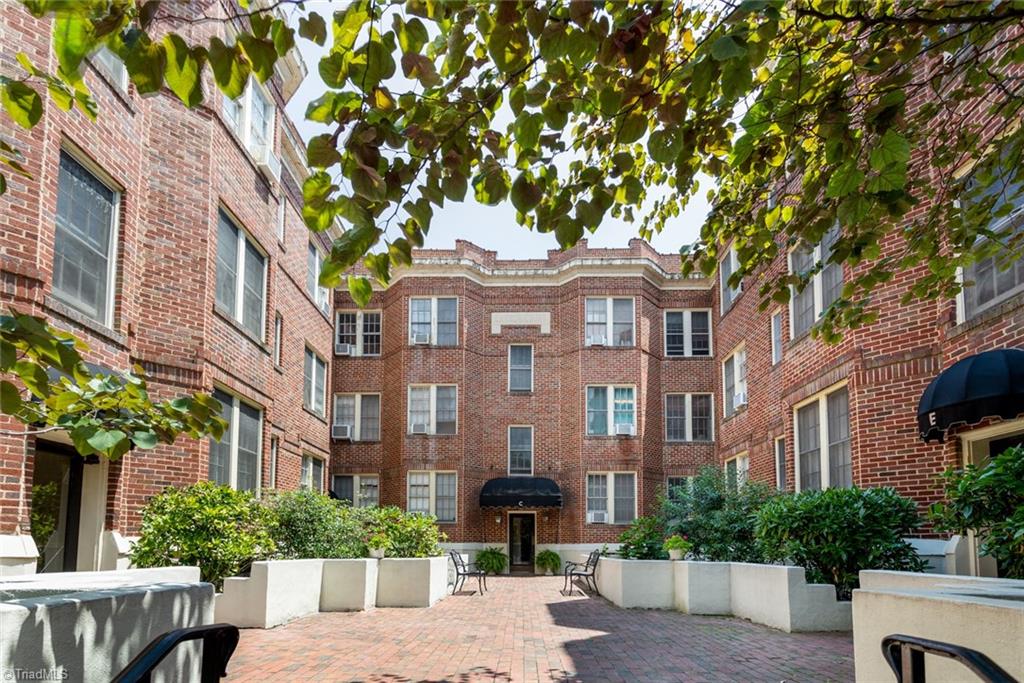
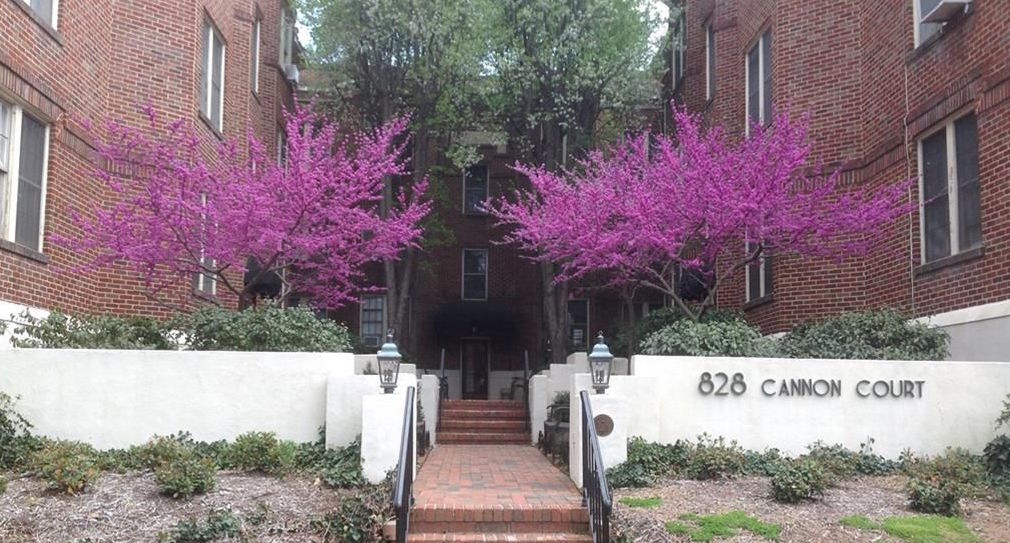
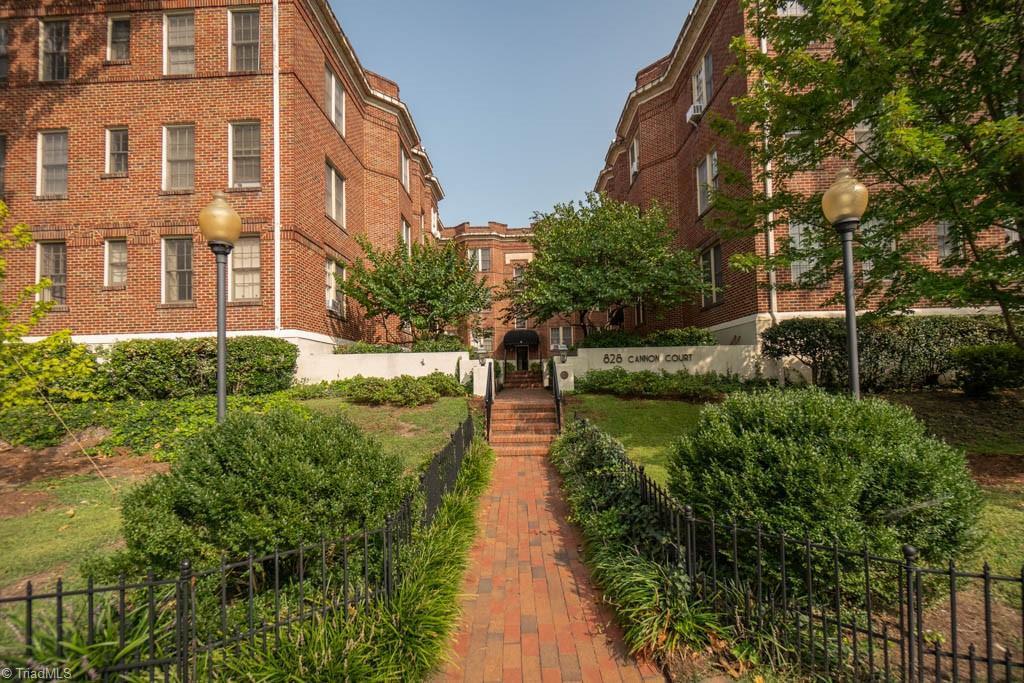
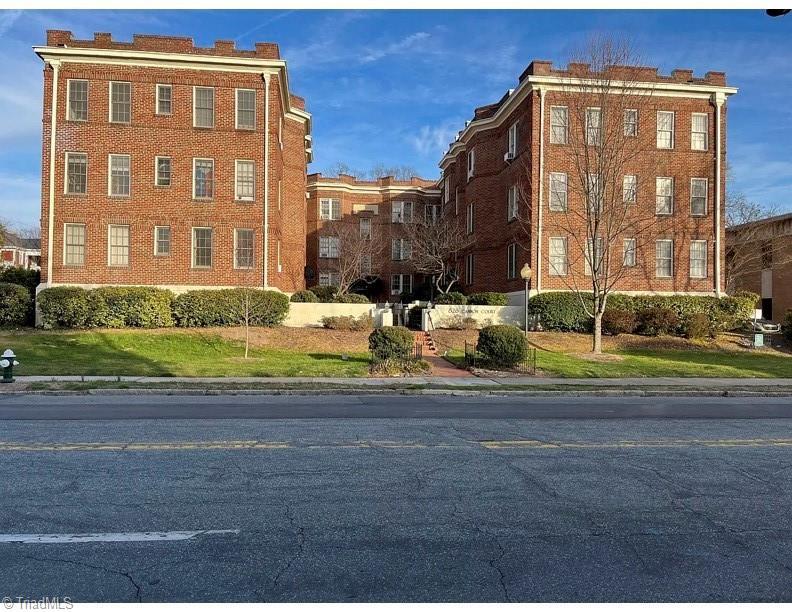
Cannon Court Apartments, Greensboro
828 N. Elm Street
828 N. Elm Street, Apartment E4, Greensboro
Sale pending February 16, 2026
No longer under contract March 13, 2026
- $199,900
- 2 bedrooms, 2 bathrooms, 1,179 square feet
- Price/square foot: $170
- Built in 1924
- Listed January 25, 2026
- Last sale: 160,000, April 2023
- HOA: $443/month
- Neighborhood: Fisher Park Historic District (local and NR)
- Note: Rental property
Designated by Guilford County as a Historic Landmark.
Fisher Park Historic District NR nomination: “The 1920s saw the introduction to [Fisher Park] of significant buildings other than houses, most notably apartment buildings, two churches, and a synagogue. Reflecting the rapid growth of the city during the decade, the middle-class nature of much of the neighborhood, and the suburb’s location near downtown and many white collar jobs, more apartment buildings were built in Fisher Park than in any other neighborhood in the city.
“Generally three-story, brick, Colonial Revival style buildings, they were raised on or near North Elm street and Bessemer and Fisher avenues, the district’s three major thoroughfares. They include the Cannon Court Apartments at 828 North Elm Street and the Vance, Shirley, and Fairfax Apartments at the northeast corner of Magnolia Street.”
The 30 apartments became condos in 1984.
Country Club apartments



1700 N. Elm Street, Greensboro
No current listings
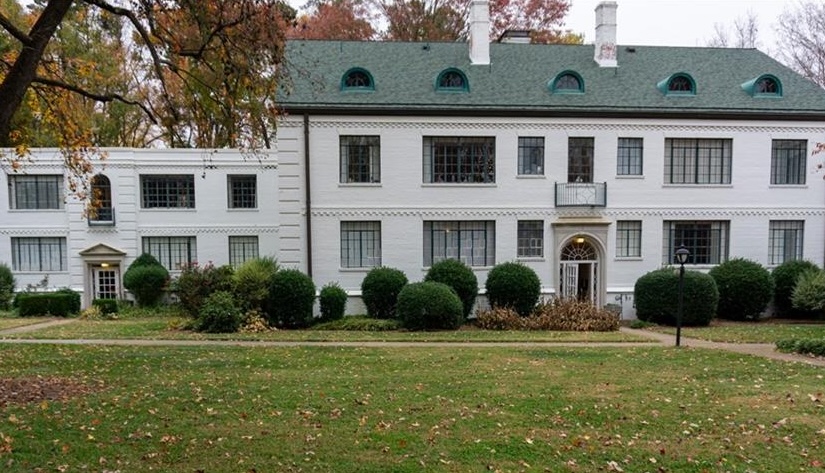
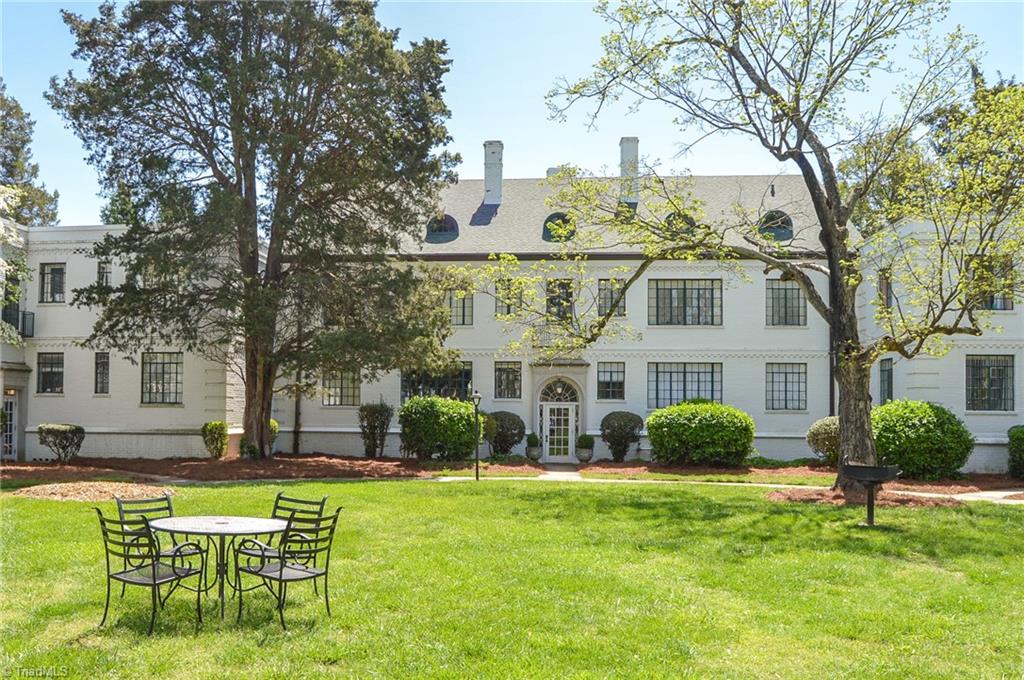
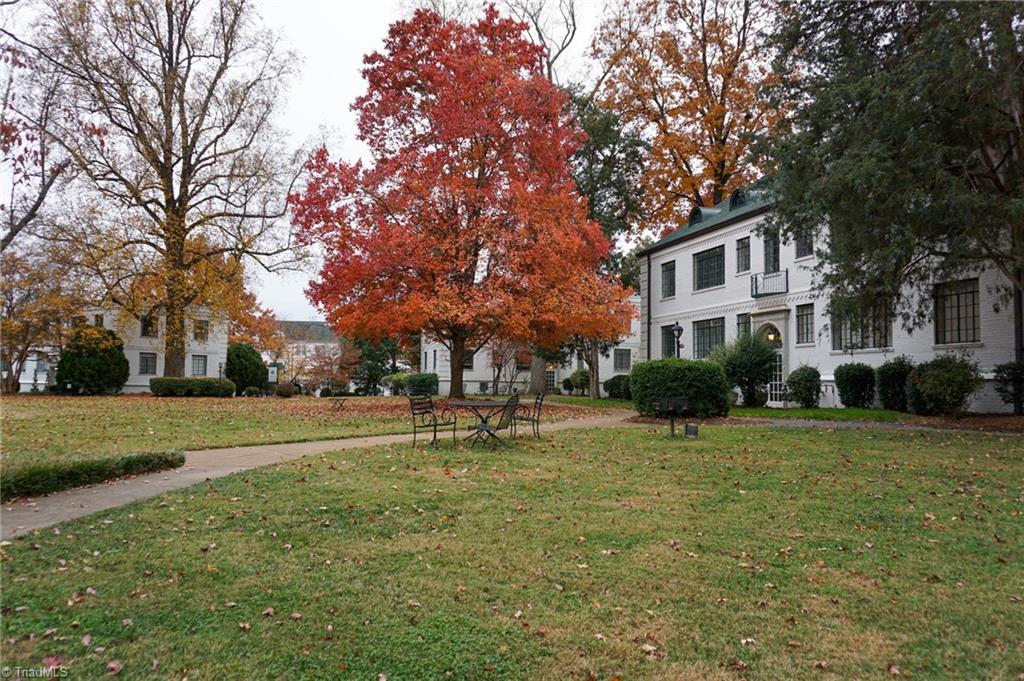
The complex is a Guilford County Historic Landmark: “The Country Club Apartments were the first ‘garden-style’ apartments in Greensboro. Designed by Charles C. Hartmann, the apartments were completed in 1938, employing the Colonial style for a horseshoe-shaped arrangement of two-story apartment buildings that included 86 housing units. Details include white brick with stylized quoins at building corners, dentil banding and cornices, steel casement windows, and balconies with delicate wrought ironwork. Windows and doors, particularly those on the ground floors or above entryways, are often round-headed. Interiors were pragmatic and durable, with terrazzo tile corridors, tiled bathrooms, and kitchens equipped with metal cabinets, electric stoves, and electric refrigerators.”
The Irving Park Historic District NR nomination describes the complex as “architecturally distinctive in utilizing a combination of classical and modern design features. The eighty-five apartments [or maybe 86] are arranged in three separate white brick structures, which are themselves arranged in a number of projecting and receding sections to prevent visual monotony.
“Most sections have a modern flat roof, but these are interrupted by sections with more traditional gable roofs with chimneys and dormers. All sections have casement windows, classical stone entrance surrounds, corbeled brick cornices and string courses, and brick corner quoining.
“The buildings are arranged around a park-like inner court with sidewalks, benches, trees, and other plantings. Sunset Circle loops around the outside of apartment buildings, connecting at N. Elm Street with Sunset Drive and Meadowbrook Terrace.”
The apartments were converted to condos in 2008. The property is 2.5 acres.
Dolley Madison Apartments, Greensboro


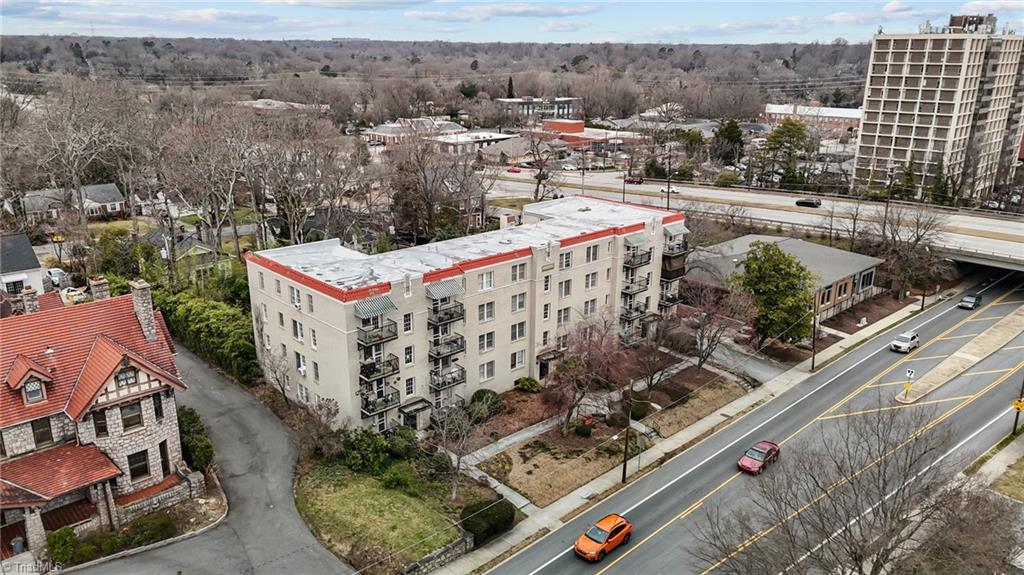

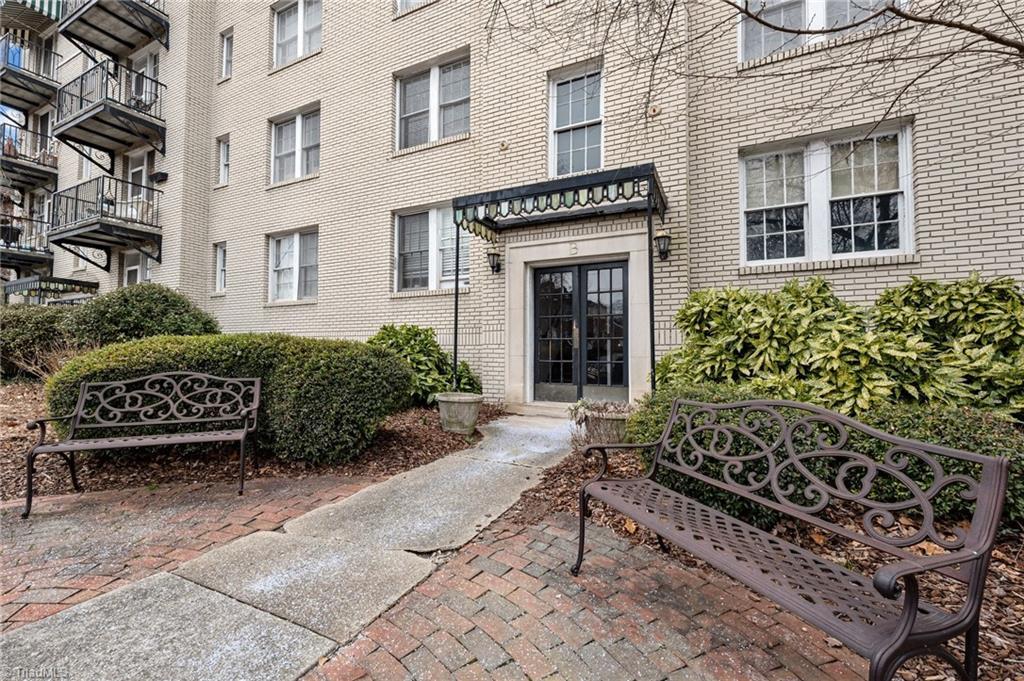

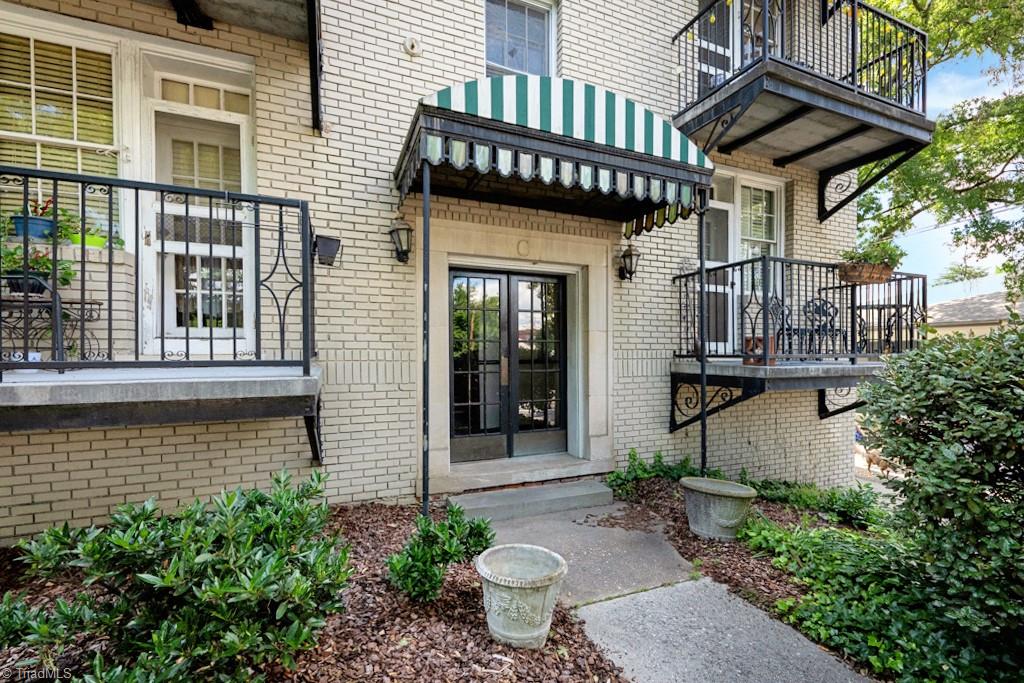

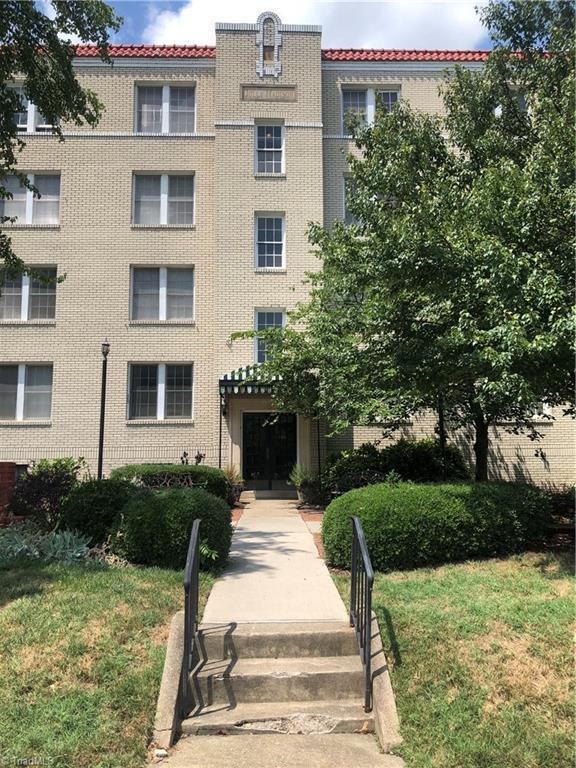
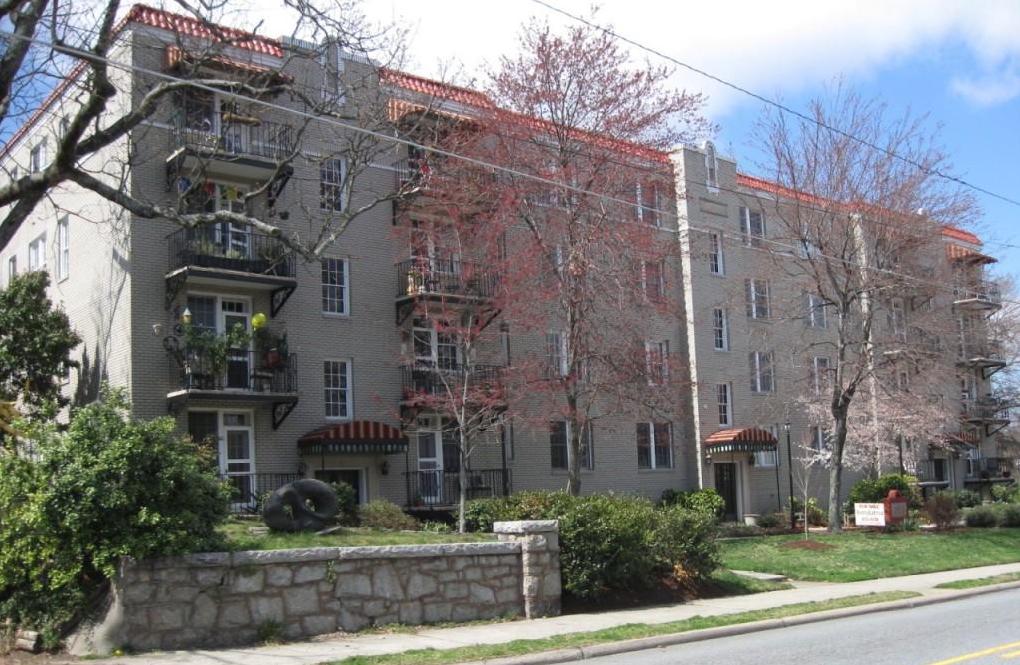
1013 N. Elm Street
1013 N. Elm Street, Apartment C6, Greensboro
- $179,000 (originally $189,000)
- 2 bedrooms, 1 bathroom, 1,174 square feet (per county)
- Price/square foot: $152
- Built in 1930
- Listed July 22, 2025
- Last sale: $155,000, December 2022
- Neighborhood: Fisher Park Historic District (local and NR)
- HOA: $442/month
1013 N. Elm Street, Apartment A2, Greensboro
- $172,500 (originally $177,500)
- 2 bedrooms, 1 bathroom, 862 square feet
- Price/square foot: $200
- Built in 1930
- Listed March 7, 2026
- Last sales: $104,000, August 2021; $70,000, December 2005
- Neighborhood: Fisher Park Historic District (local and NR)
- Note: “Units A2 and B6 can be sold together as a discounted price.”
- HOA: $378/month
1013 N. Elm Street, Apartment B6, Greensboro
Listing withdrawn September 25, 2023
Relisted March 9, 2026
- $144,900 (originally $160,000)
- 1 bedroom, 1 bathroom, 616 square feet
- Price/square foot: $235
- Built in 1930
- Listed August 17, 2023
- Last sales: $80,000, April 2021; $67,000, September 2007
- Neighborhood: Fisher Park Historic District (local and NR)
- Note: “Units A2 and B6 can be sold together as a discounted price.”
- HOA: $340/month
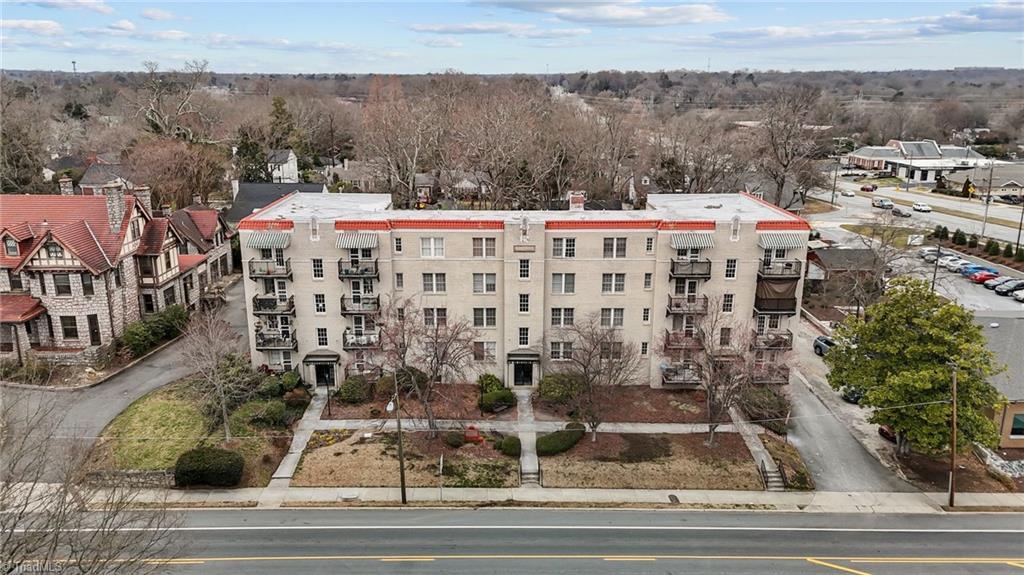
Fisher Park Historic District NR nomination: “The Dolley Madison Apartments, built at 1013 North Elm Street in the late 1930s [city records say 1930], is a large, stripped-down, gray-brick building with flat wall surfaces, recessed paired windows, plain iron balconies, and a fringe of green tiles [now red] canted down from a flat roof.”
The building has 24 units. They became condos in 1984.
Dolley Madison (1768–1849) was the wife of President James Madison and stands as a figure of historic significance herself. She was born in Guilford County, although she disavowed her birthplace after the family moved back to its original home in more fashionable Virginia and then to Philadelphia.
Ellis Stone Condominiums

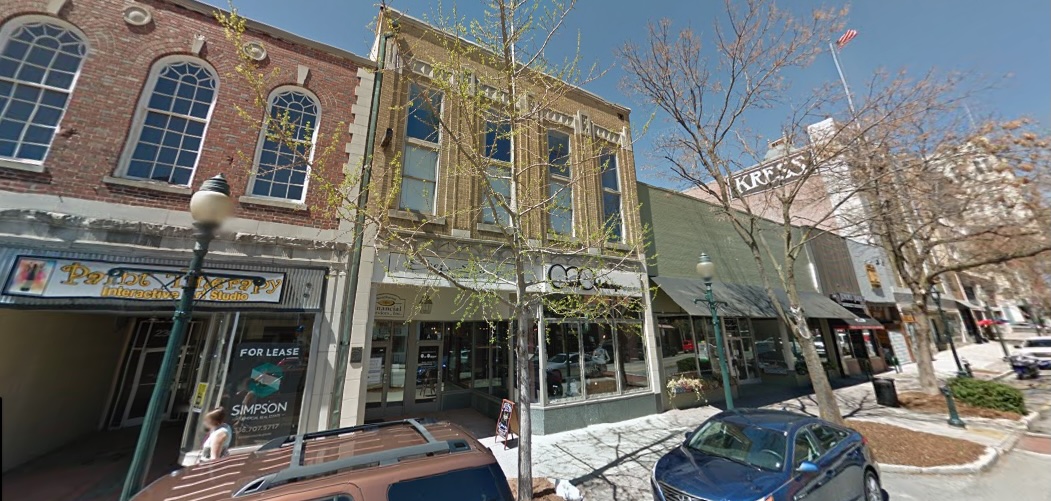
226 S. Elm Street, Greensboro
No current listings
Seven-unit condo building with two commercial condos on the first floor and five residential units upstairs. The building was converted to condos in 2002. Oddly, four of the units have never been sold by the condo developer. The last time a residential unit was sold was 2017.
Built in 1906, it was the longtime home of the Ellis, Stone & Company dry goods store (later department store) until it moved in 1949 to a new building on the same block.
Downtown Greensboro Historic District (NR): “The Ellis-Stone Building represents a good example of changing architectural styles in the downtown area. Originally constructed as the Ellis-Stone Department Store in 1906 with a modernistic Italianate facade. Sometime during the 1920’s and 1930’s however, a new simplified Art Deco facade of yellow brick was installed. This new facade exhibits interesting geometrically derived ornamentation. The storefront is contemporary with the present facade. The building was occupied by Ellis-Stone until construction of its new building at 201-207 South Elm in 1949.”
Hartmann at the Flatiron, Greensboro


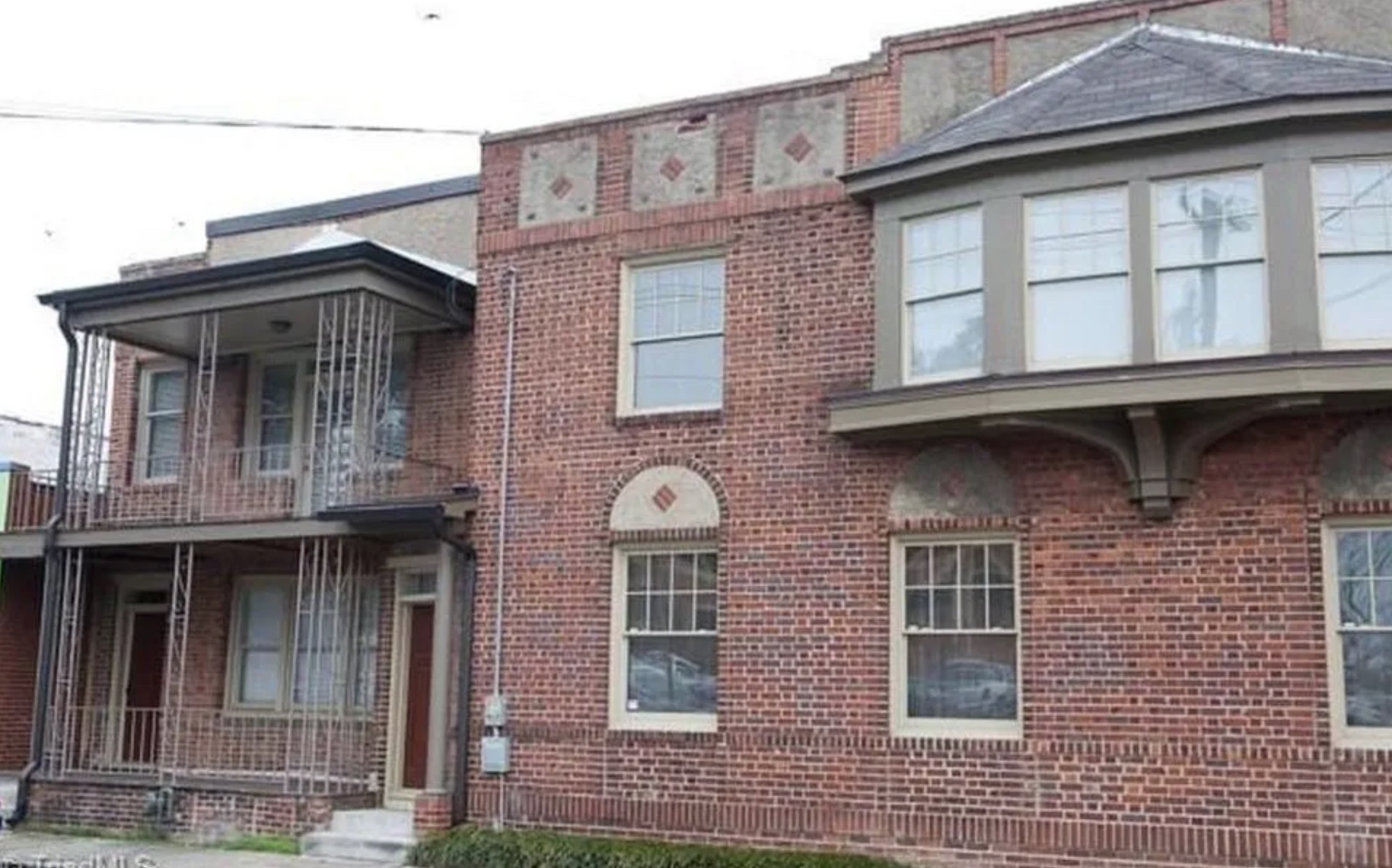
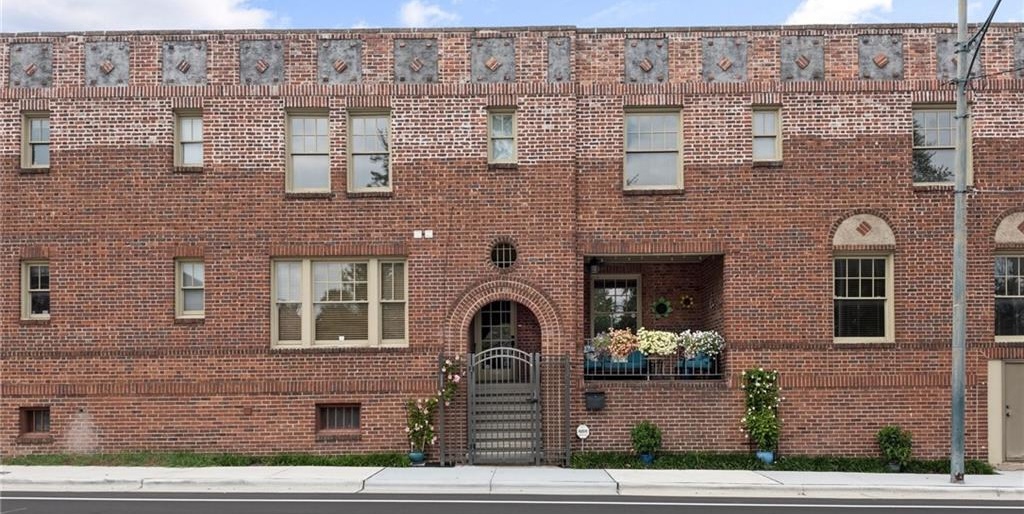
300-308 Church Court
201-207 Summit Avenue
No current listings
This eight-unit apartment building was built in 1922 and converted to condos in 2009. It was originally called the Kaplan Apartments and later the Flatiron.
McGee Lofts, Greensboro


121 W. McGee Street
No current listings
A four-unit condo building in the Downtown Greensboro Historic District. It was originally the General Greene Hotel. The undated photo above show it probably in the 1920s or ’30s, courtesy of the Greensboro History Museum.
District NRHP nomination, describing how the building originally looked: “A three-story brick structure erected ca. 1915. Four intact, simple wooden storefronts at street level, including hotel entrance. Upper floors have six-bay divisions with course of rusticated stone trim running under the sills on each floor. Flemish bond brickwork on front facade, common elsewhere. Mock wooden balustrades flank hotel sign above third floor.”
Historic photograph courtesy of the Greensboro History Museum.
Powhatan Apartments, Greensboro
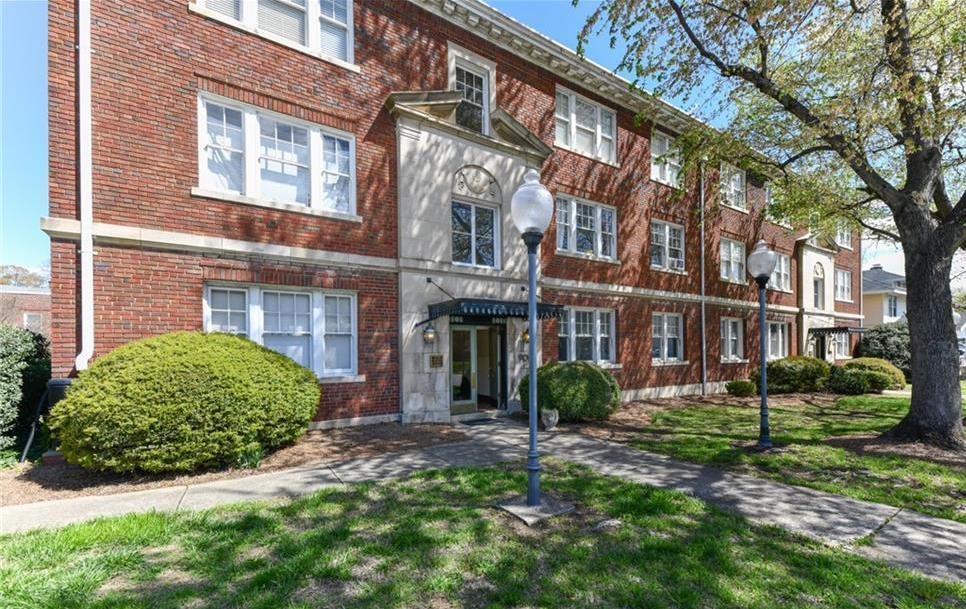
904-906 W. Market Street
No current listings
The condos at 904 and 906 W. Market Street are the only properties on the north side of Market Street that are included in the locally designated College Hill Historic District. They aren’t included in the National Register district. The 12 apartments were converted to condos in 1984.
Preservation Greensboro: “The Powhatan Apartments were completed in 1927 at 904 West Market Street in College Hill. The elegant three-story brick building was an investment of Thomas A. Armstrong, who lived nearby at 841 West Market Street.
“Armstrong commissioned architect Harry Barton to design the initial 12-unit complex [it was actually six units] for a second phase to the west, which was completed in 1929. The expansion contained six units that were larger than the first phase.
“The entire complex is united beneath a variegated red and beige tile roof, and includes limestone entryways and trim, and a heavy modillion cornice.
“Powhatan was the Native American father of legendary princess Pocahontas.”
Wafco Mills, Greensboro


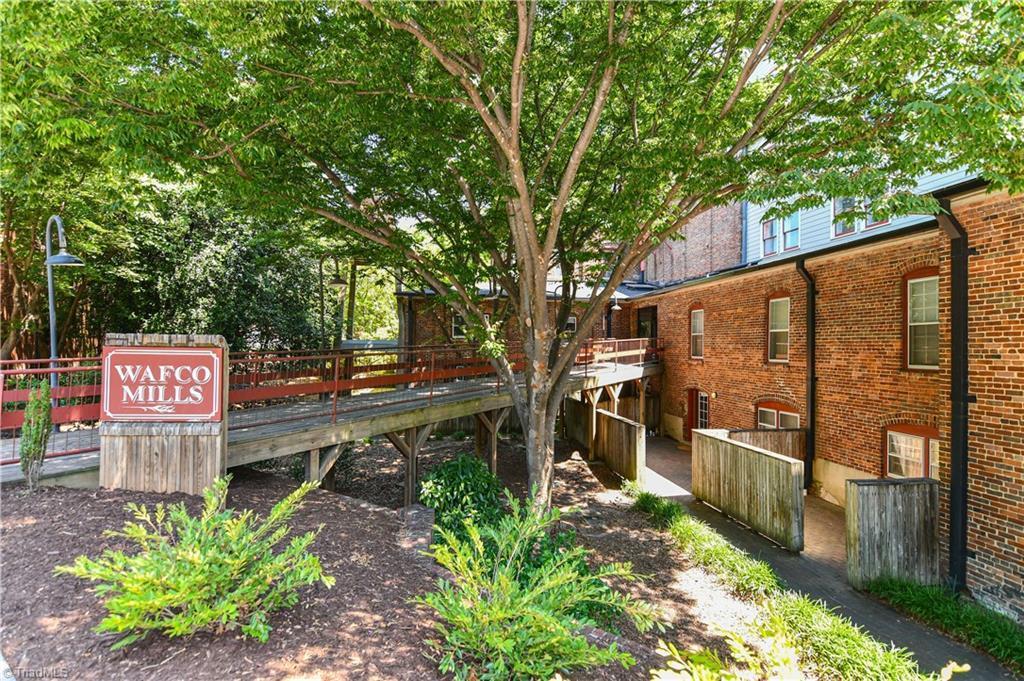
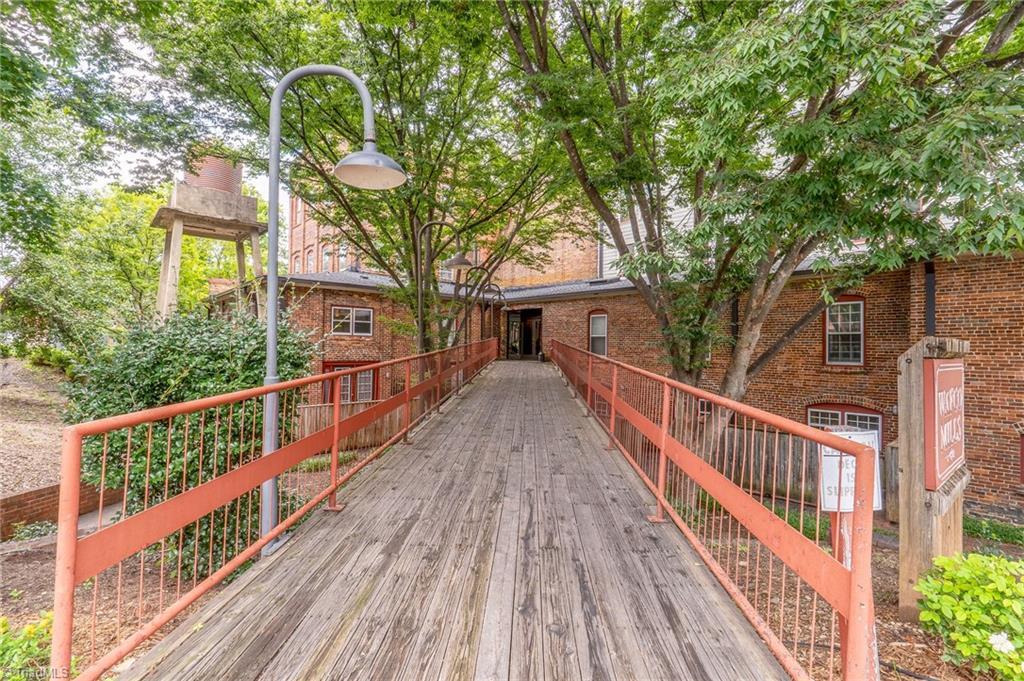
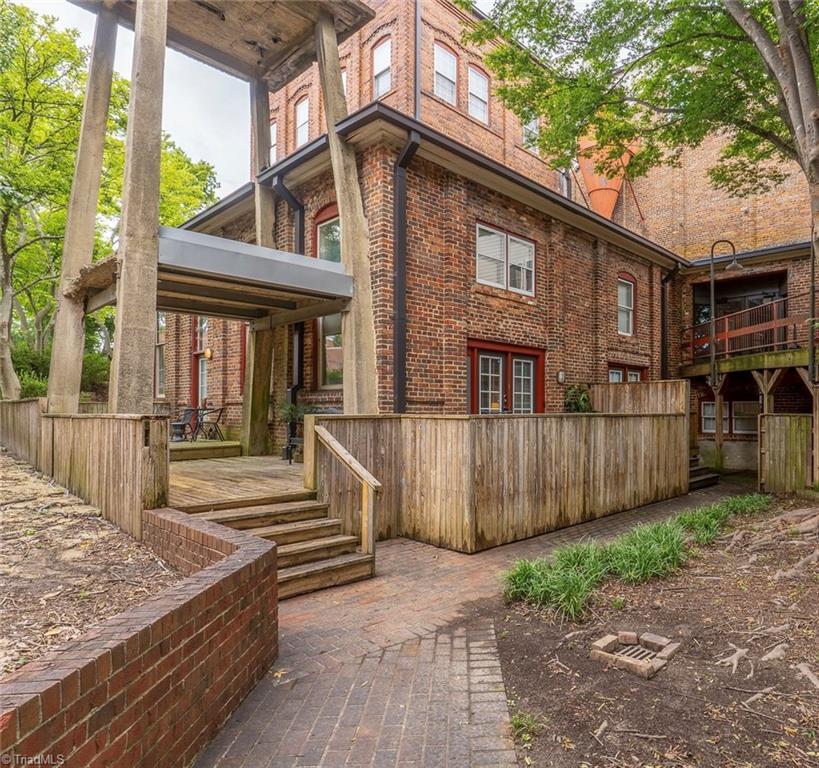
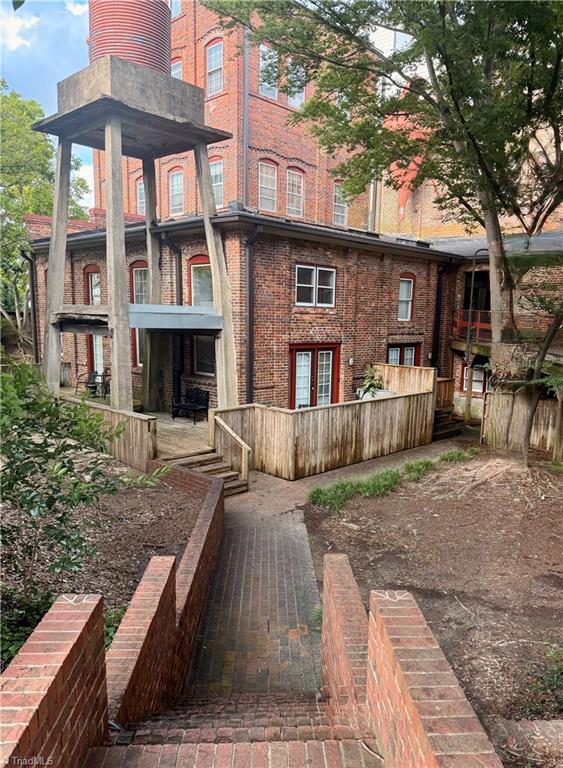


801 W. McGee Street
801 W. McGee Street, Unit 16, Greensboro
Sale pending March 21, 2026
- $174,900
- 1 bedroom, 1 bathroom, 609 square feet (per county)
- Price/square foot: $287
- Built in 1905
- Listed March 19, 2026
- Last sale: $122,500, March 2022
- HOA: $288/month
- Neighborhood: College Hill Historic District (local and NR)
- Note: Rental property
Listed on the National Register of Historic Places: Wafco Mills in Greensboro is representative of an institution crucial to the development of local industries — the small industry owned and operated by a single family and handed down from one generation to the next. Its life spanned almost eighty years, during which the mill survived five wars and two major depressions. Credit for its durability and success must be given to the Watson family who established the company in 1893 and managed it through all of its active years.
The Wafco Mill is representative of late-nineteenth and early twentieth century industrial building techniques through the presence of the three principal stages of its construction. Because the mill retains the majority of its milling machinery, it is an excellent example of the mill industry and the technology that it employed. North, Watson, and Company, who established the mill, were also mill builders, and the complex is a notable example of their work.
While W.A. Watson, Sr. and his son were instrumental in establishing the mills, the driving force during the formative years was [son-in-law/brother-in-law] T. P. North who operated the Greensboro Roller Mills for four years. North succeeded in putting the mill on a sound financial footing through the introduction of a brand of flour to appeal to each segment of society. The names clearly established the relationships — Purity, A High Trade Patent; Star, A Fine Family Flour; Charm of Greensboro, The Poor Man’s Friend.
The mill complex was converted to condominiums with 28 units in 1982.
220 W. Market Street Condominiums, Greensboro

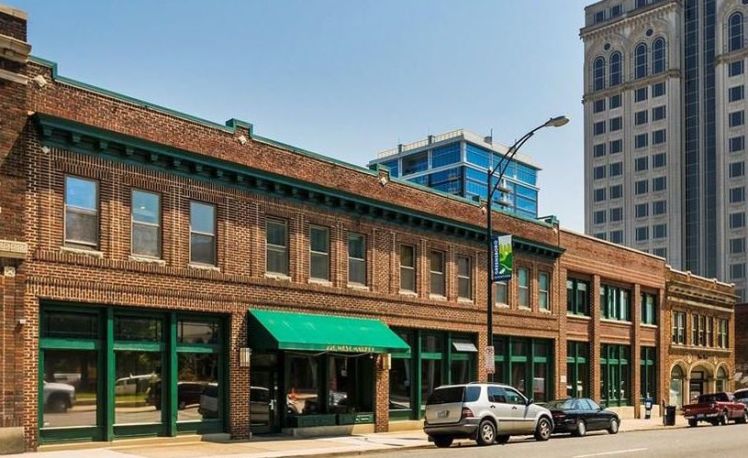


220 W. Market Street
220 W. Market Street, Unit 103, Greensboro
Sale pending April 1, 2026
- $129,000
- 1 bedroom, 1 bathroom, 665 square feet
- Price/square foot: $194
- Built in 1926
- Listed January 29, 2026
- Last sale: $65,000, April 2021
- Neighborhood: Downtown Greensboro Historic District (NR)
- HOA: $285/month
The former retail and office building was converted to 33 condos in 2007. Condos in this building often are sold without being publicly listed.
District NR nomination: “This two-story, brick commercial building was constructed as two adjacent buildings, but was converted to condos in 2007 resulting the replacement of original storefronts with fixed windows to eliminate all but one of the street-facing entrances to the building.
“The west portion of the building (originally 224-230 West Market) was completed by 1929 and is listed as the Patton Building in city directories. It is four bays wide, though an earlier three-bay-wide building to the right (east) has been incorporated into the building with matching replacement storefronts. The storefronts of the main building are all divided into three bays with wood-framed display windows on paneled bulkheads on concrete curbs. Above each window is a nine-light Craftsman-style transom.
“The second bay from the left retains the only entrance on the façade, a one-light wood door with narrow sidelights and a one-light transom. It is inset at the left end of the bay with two typical storefront windows to its right (east) with paneled planters in front of the windows. The entire bay is sheltered by a fabric awning. The second story is twelve bays wide with replacement one-over-one windows framed with stretcher- and soldier-course brick, with granite sills, and with continuous bands of soldier-course brick above the lintels and below the sills. A modillion cornice spans the façade, above which there is a second soldier course and a stepped parapet with metal coping.
“The building to the east was constructed about 1925, appears on the 1925 Sanborn map, and is listed as the Ham Building in city directories. It is three bays wide with fixed wood-framed windows on both stories, separated by brick pilasters supporting three courses of soldier-course brick at the bottom of the parapet.
“The 1931 city directory lists the Ham Building with the Great A&P Tea Company as the primary tenant with eight offices above. A 1969 publication by the Greensboro Chamber of Commerce, “An Ideal Location for Office Complexes,” notes that the Ham Building (by then called the May Building) was renovated in 1963.”
The building took its names from its owners, Ernest and Leon Ham from 1924-39, and then the May Building, after its owner from 1940 to 1983, Louise May.
The buildings were occupied by a variety of retailers, including the A&P grocery store in the 1930s, a Harley-Davidson dealership (at 222), a cafe, a drug store, the U-Save-It food store and dealers in appliances, musical instruments, paint, rugs and other merchandise. Office tenants upstairs included finance and mortgage companies, many lawyers and real estate agencies, photographers, surveyors and a justice of the peace.
205 Wilson Street, Greensboro
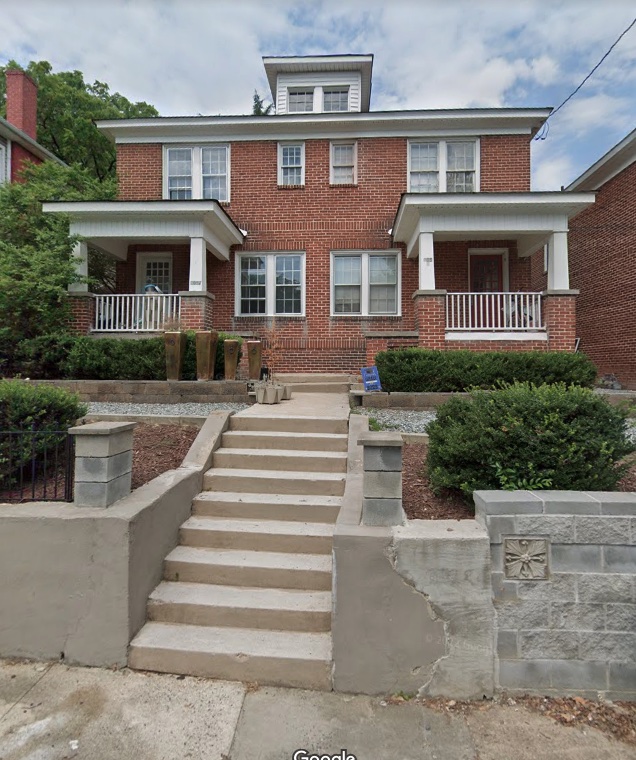
205 Wilson Street, Greensboro
No current listings
This duplex was converted into condos in 2023.
The property was bought in 1915 by Mary Lavina Irvin Martin (1962-1963); she had the duplex built about 10 years later. It was sold by Mary’s heirs in 1976. She and her husband, Harden Thomas Martin (1867-1936) owned the spectacular mansion immediately behind this property on North Mendenhall Street, now called Double Oaks, listed on the National Register.
207 Wilson Street, Greensboro
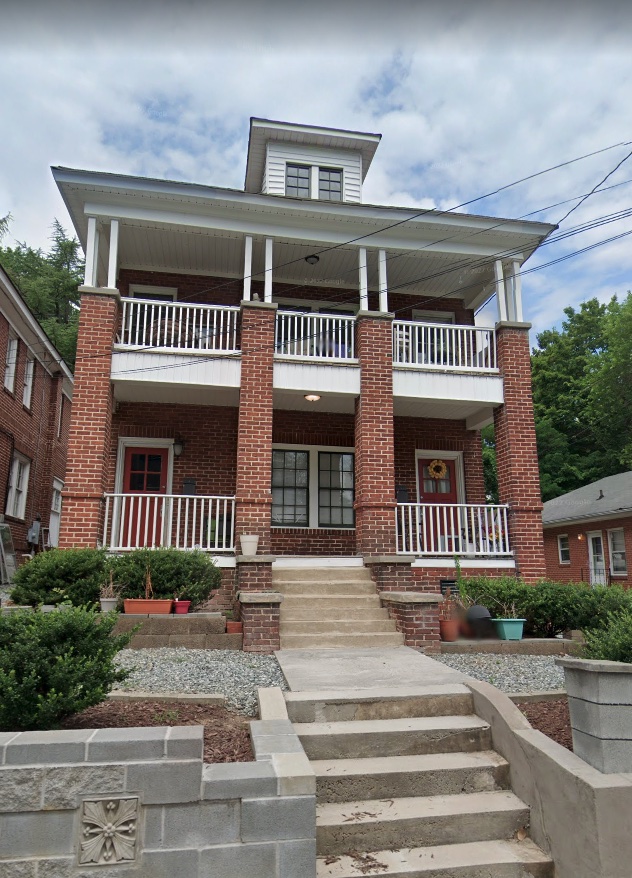
207 Wilson Street, Greensboro
No current listings
This duplex was converted into condos in 2023.
The property was bought in 1915 by Mary Lavina Irvin Martin (1962-1963); she had the duplex built about 10 years later. It was sold by Mary’s heirs in 1976. She and her husband, Harden Thomas Martin (1867-1936) owned the spectacular mansion immediately behind this property on North Mendenhall Street, now called Double Oaks, listed on the National Register.
Albert Hall, Winston-Salem
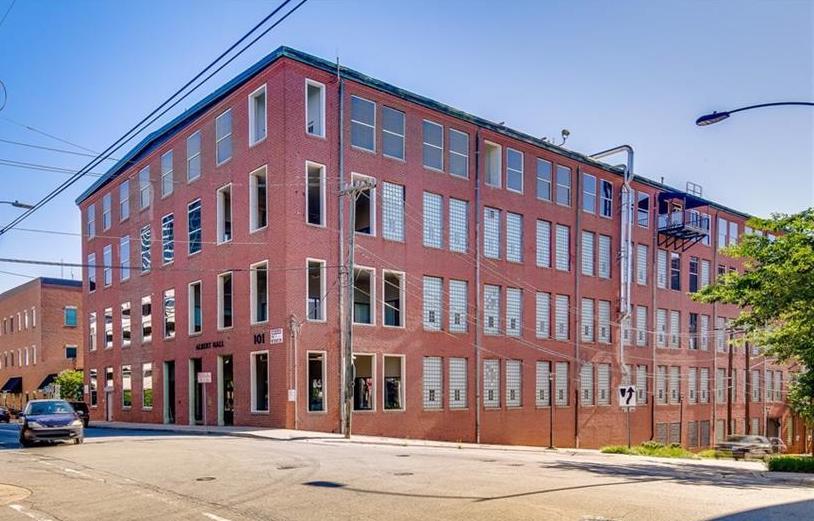

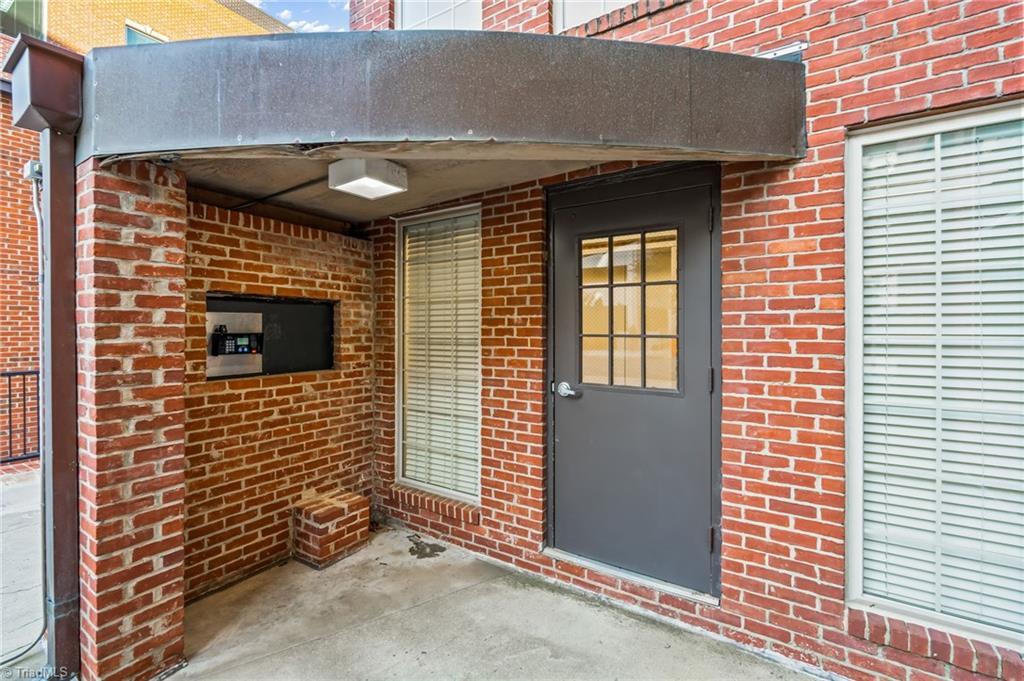


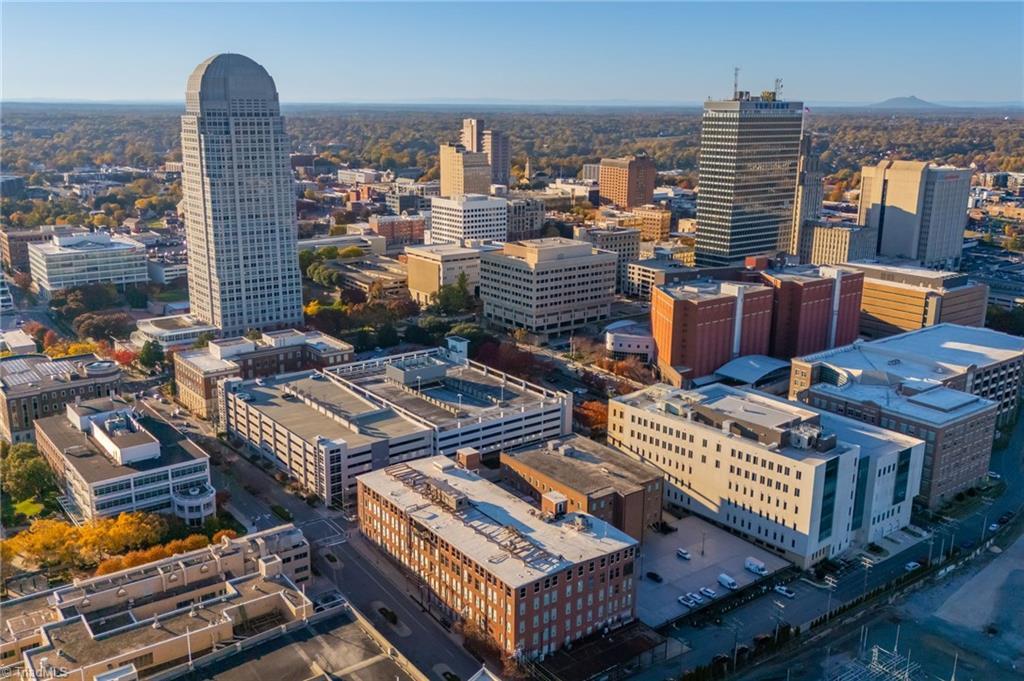
101 N. Chestnut Street
101 N. Chestnut Street, Apartment 7, Winston-Salem
- $275,000 (originally $285,000)
- 1 bedroom, 1 bathroom, 967 square feet (per county)
- Price/square foot: $284
- Built in 1915
- Listed February 4, 2026
- Last sale: $71,000, January 1998
- Neighborhood: Innovation Quarter
- Note: Out-of-state owner
Eighteen residential condos are located atop this former R.J. Reynolds factory in the Innovation Quarter downtown. It was built in 1915.
“Albert Hall was reconstructed after a 1998 fire into office space for technology firms, with the top floor housing loft-style residential condominiums.” (Emporis)
The Exchange at Oak Street, Winston-Salem
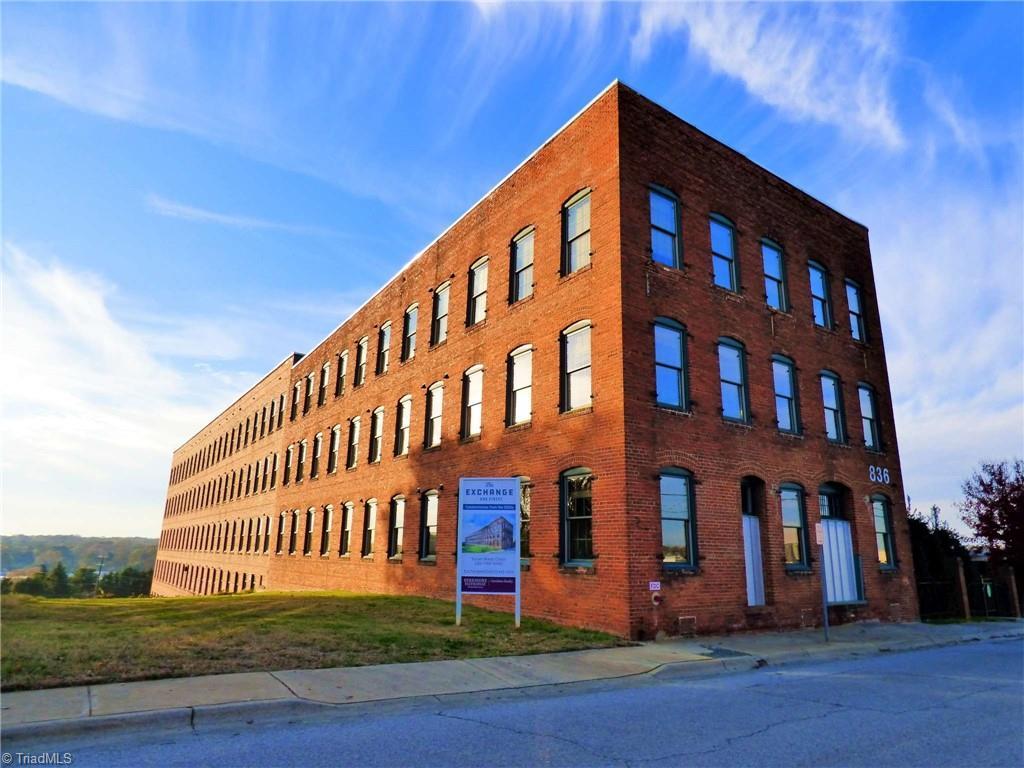

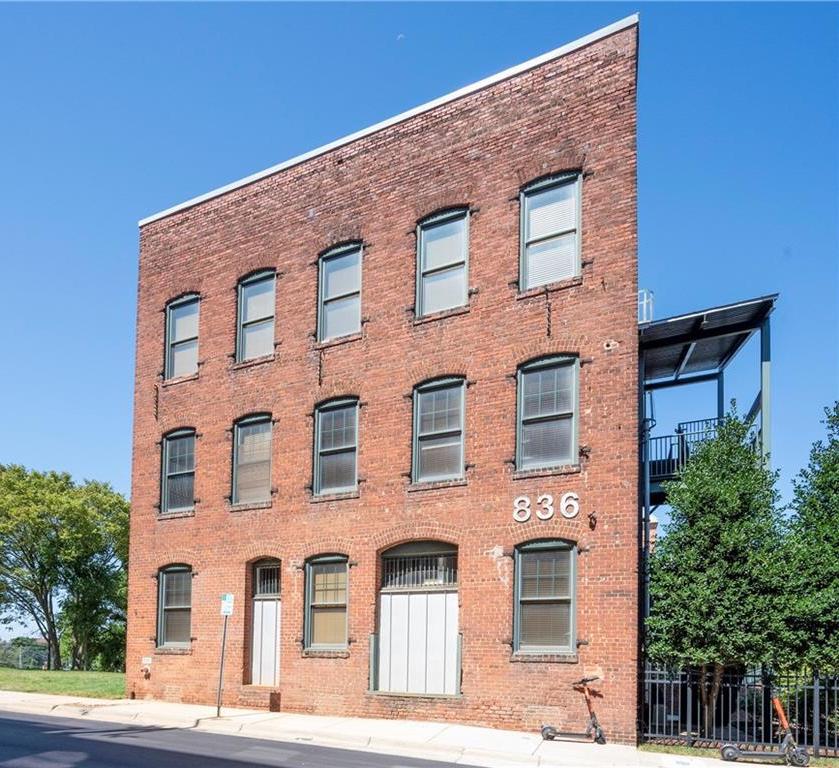
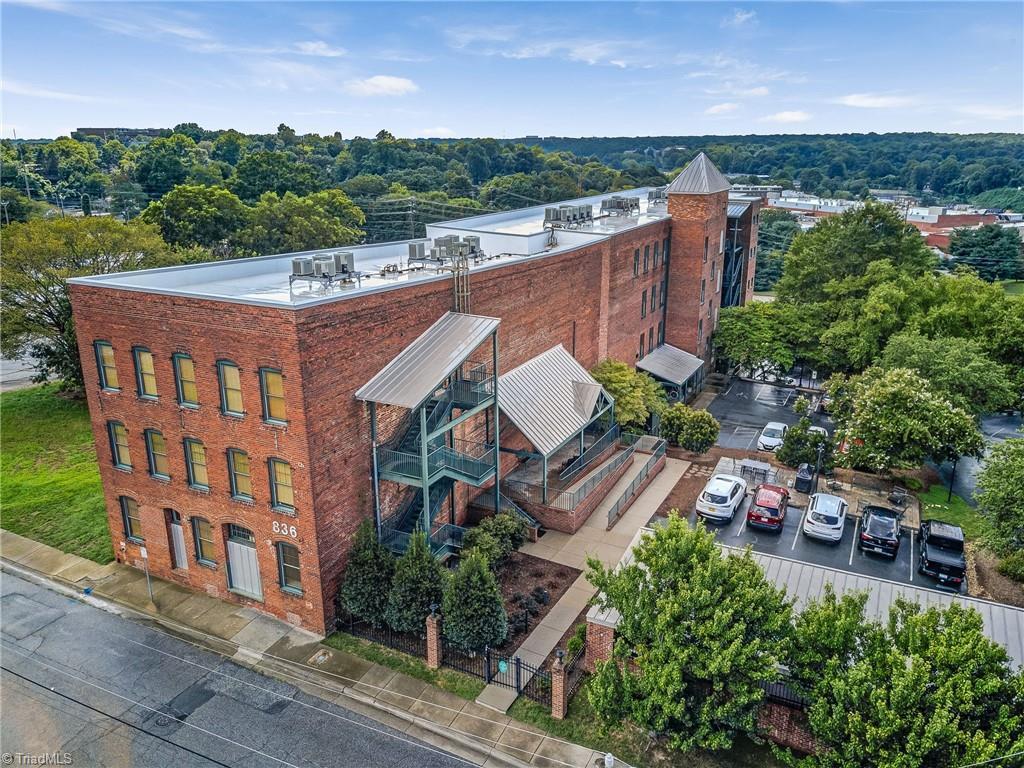

836 Oak Street
No current listings
The building was originally the J.G. Flynt Tobacco Company, built in 1920. It was converted to 30 condo units in 2017.
Glade Street Condos, Winston-Salem

1201-1221 Glade Street
No current listings
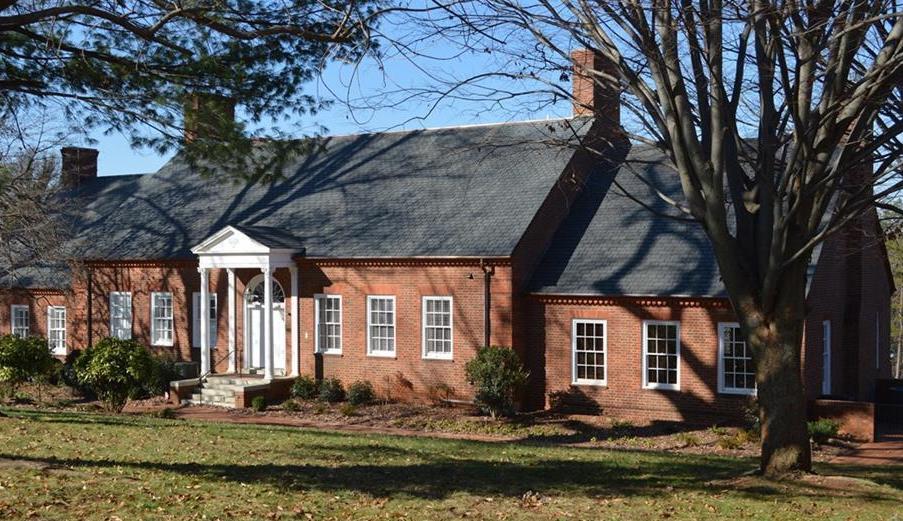
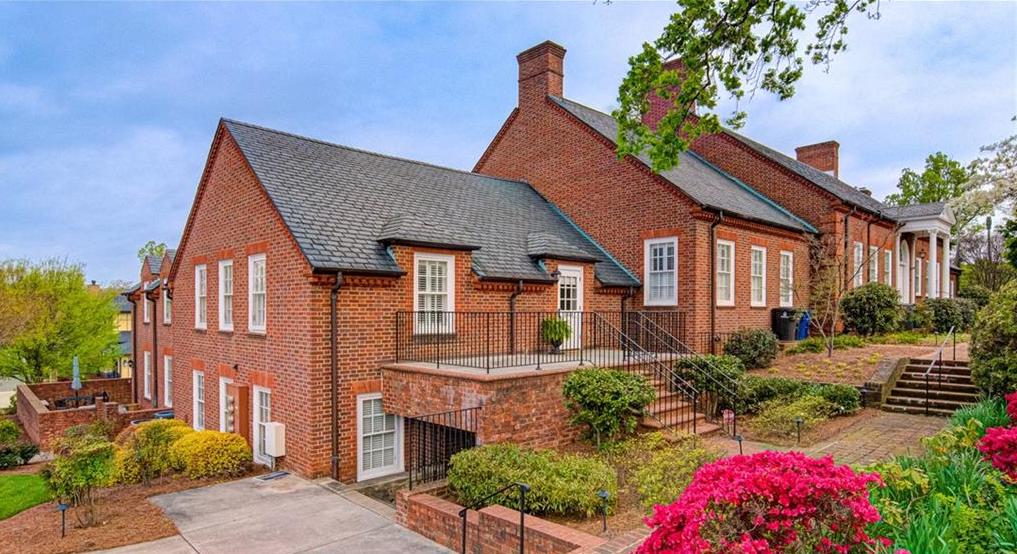
Local Historic Landmark Program: The former YWCA Administration Building on Glade Street was the home of the organization from 1942 to 2007. The Gray family donated land for the building, and J.G.Hanes chaired the fundraising committee. Local brickmaker George Black constructed the Glade Street Administration Building using hand-molded bricks. Architect Harold Macklin specifically requested George Black’s services for the project. African-American brickmaker Black worked at Colonial Williamsburg during the early years of restoration. He lived in Winston-Salem from 1934 until his death in 1980 at the age of 101.
The architect designed the building in the Colonial Revival style using Flemish bond brick pattern. Macklin utilized symmetrical massing and incorporated six-over-six wooden windows and a fanlighted door under a single-bay classical portico. From Glade Street, the building presents as a single-story façade, but a sloped grade allows for a two-story rear portion.
District NR nomination: “Located on an entire city block bounded by Glade St., Clover St., and West End Blvd., the Y.W.C.A. is a handsome one-story Colonial Revival building designed by local architect Harold Nacklin with bricks made by George Black.
“Giving the appearance of a large house, the building is rich in material and detail. It has a slate-covered gable roof with interior end chimneys, Flemish bond brickwork with quoined corners and a dentiled cornice, and a Federal Revival portico with slender Corinthian columns and full Classical entablature sheltering a double-leaf paneled entrance with a semicircular transom.
“While the facade appears to be one-story, the rear of the building is two-stories. … In 1957 a recreation building was erected behind the original structure … In 1984 a two-story brick Post Modern link designed by Winston-Salem architect Edwin E. Bouldin, Jr. connected the two earlier buildings.”
The Mill at Tar Branch, Winston-Salem


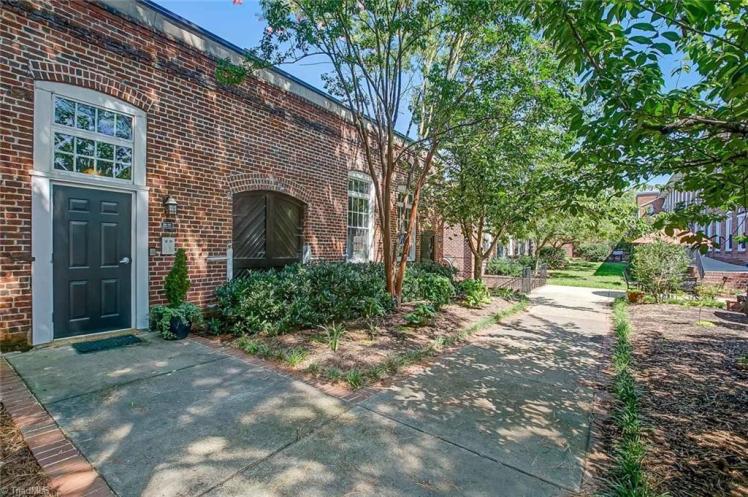
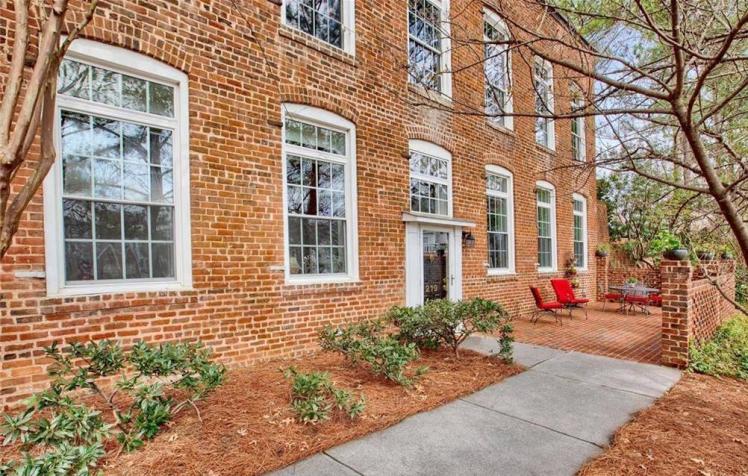

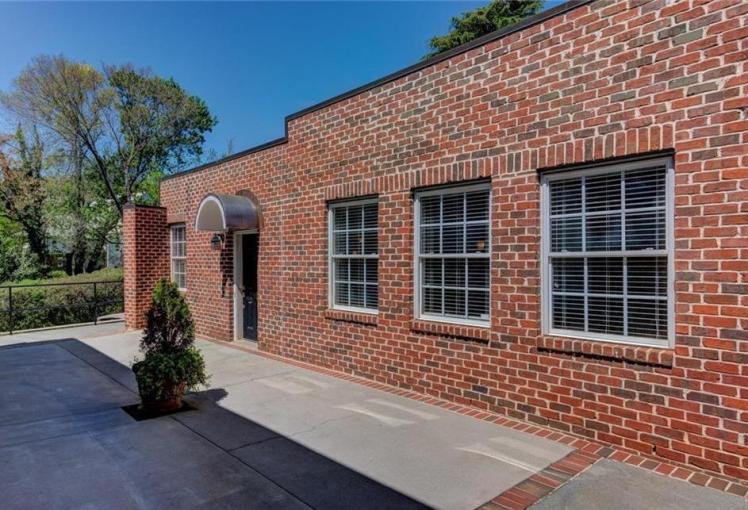

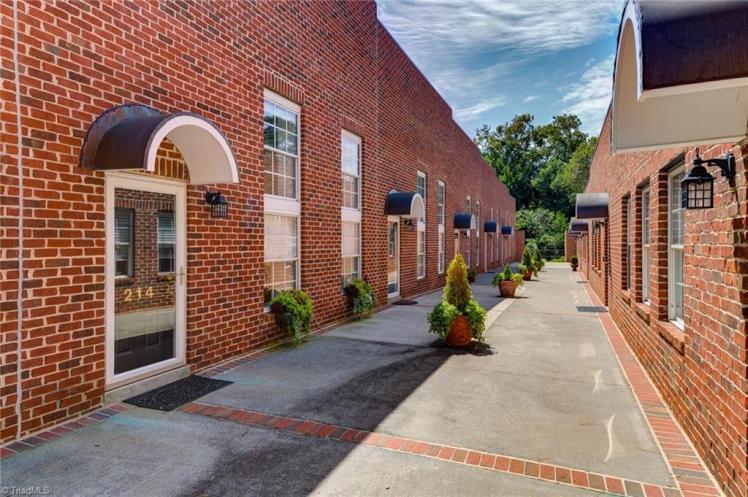
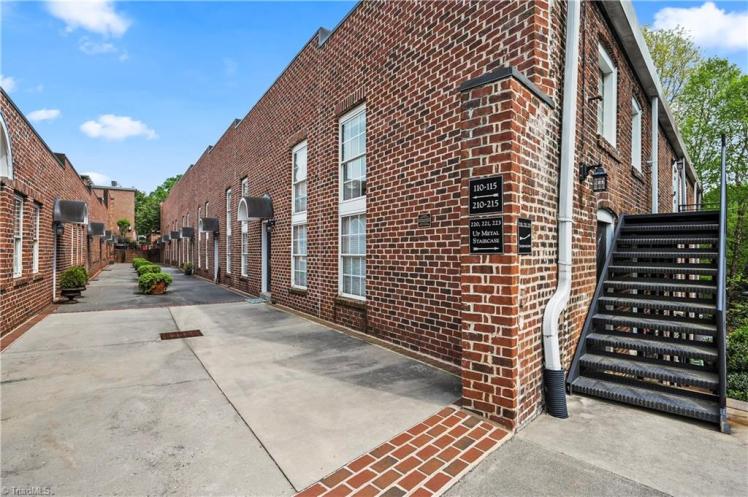
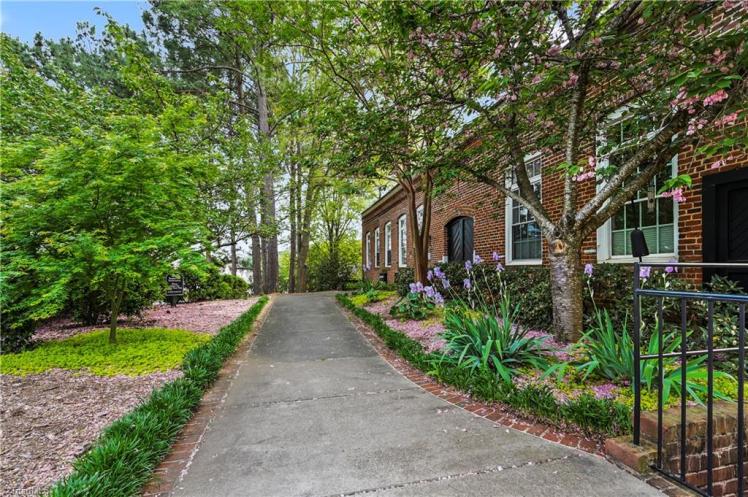
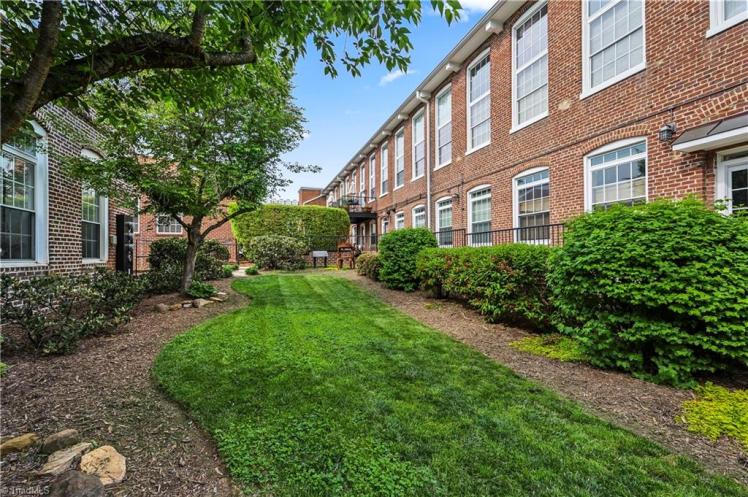


Indera Mill Court and Tar Branch Court
National Register of Historic Places
220 Tar Branch Court, Winston-Salem
- $465,000
- 2 bedrooms, 2 bathrooms, 1,534 square feet
- Price/square foot: $303
- Built in 1910
- Listed March 5, 2026
- Last sale: $367,500, January 2021
- Note: The second bedroom has a built-in Murphy bed.
Some of the condos in this complex are among the largest and most expensive you’ll find in a historic structure in the region, ranging up to 3,800 square feet and more than $750,000. The complex is adjacent to Old Salem to the east and the West Salem Historic District to the west.
Indera Mills, Nation Register of Historic Places: “The Indera Mills complex, located at the southwestern comer of Wachovia and South Marshall Streets, was part of the broad textile industry development that occurred in Winston-Salem in the early years of the twentieth century. Specifically, Indera Miills, along with its predecessor Maline Mills, was a component of the small industrial center that developed from around 1880 until around 1915 between the towns of Salem to the south and Winston to the north.
“Many of the enterprises in this vicinity were associated with the Fries family of Salem and F.H. ‘Colonel’ Fries in particular. While the tobacco industry and families like the Reynolds have for many years dominated the industrial history of Winston-Salem, the textile industry of the late nineteenth and early twentieth centuries was extremely important to the early industrial development of the city. Colonel Fries, already involved with several textile enterprises, founded Maline Mills around 1900. Maline Mills evolved from another young company Twin City Knitting Mill and later consolidated with Wachovia Knitting Company which had begun construction on the mill complex … in 1904. …
“In 1914, Colonel Fries and his nephew W.L. Siewers founded another knitwear company, lndera Mills, to produce knit slips, and knee and elbow warmers. Indera Mills began production in a small rented space in one of the Maline Mills buildings. By the mid-1920s, the demand for Maline Mills’ ladies’ knit vests was fading. Indera took over the entire mill complex in 1926. lndera Mills occupied the complex until 1998, continuing to utilize the coal-fired boiler for heat. This long-term use was an important factor in maintaining the high level of historic integrity that is visible throughout the complex today.”
Piedmont Leaf Lofts, Winston-Salem


401 E. 4th Street
No current listings
National Register of Historic Places
Converted to 34 condos in 2006. Located in the Winston-Salem Tobacco Historic District (NR).
Forsyth County Local Historic Landmark Program: “The Brown Brothers Tobacco Prizery is one of the few remaining buildings from Winston’s late 19th century tobacco industry. … a six-story, brick, Second Empire-style building, complete with mansard roof. The building features multiple window styles, including double-hung sash topped by brick segmental arches. The mansard roof is sheathed in alternating fish scale and straightedge slate shingles.”
“The building is Winston-Salem’s only remaining industrial example of the Second Empire style and one of only three examples of the style remaining in the city.”
District NR nomination: “The Piedmont Leaf Tobacco Company (N.R., 1978) is a two-building complex comprised of the W. F. Smith and Sons Leaf House at 406 East Fourth Street and the Brown Brothers Company building situated across the street at 401 East Fourth Street. Constructed in the late 1890s, both of these buildings served various purposes in the tobacco industry until they were unified under the Piedmont Leaf Tobacco Company in 1920 whence they continued to provide tobacco industry-related services.
“As indicated in Sanborn maps, by 1900 each was a tobacco ‘prizery’ or tobacco-packing house where dried tobacco was stored and packed into hogsheads. The buildings then changed hands a number of times during the first two decades of the twentieth century, however by 1920 Piedmont Leaf Tobacco Company (formerly Wright-Hughes Tobacco Company) acquired both buildings. The company specialized in buying, re-drying, and stemming leaf tobacco and retained its operations on East Fourth Street until 1976.”
Shenandoah Apartments, Winston-Salem


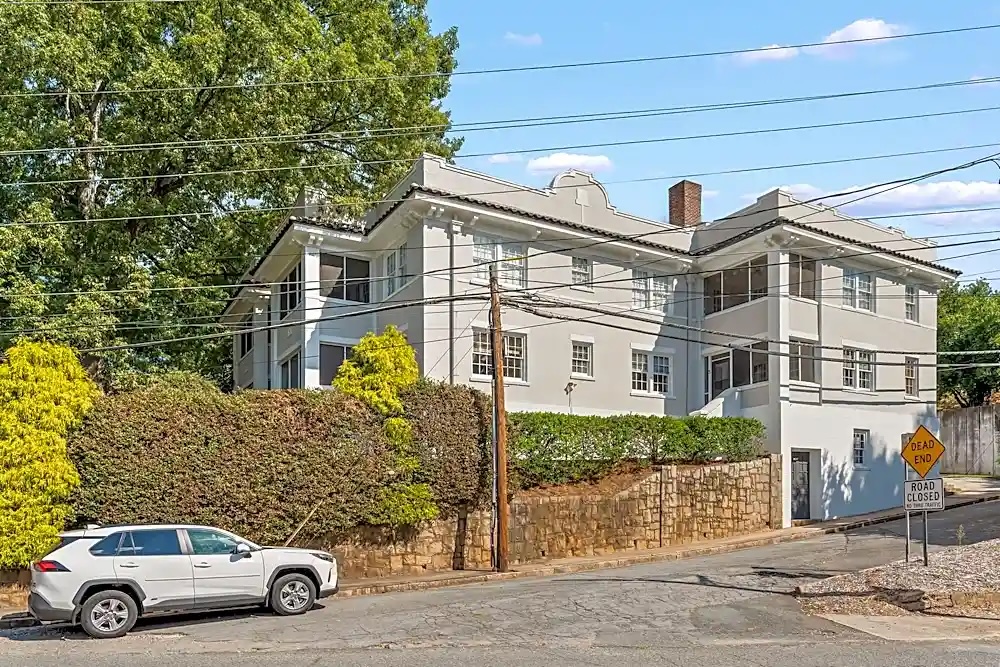


72 West End Boulevard
No current listings
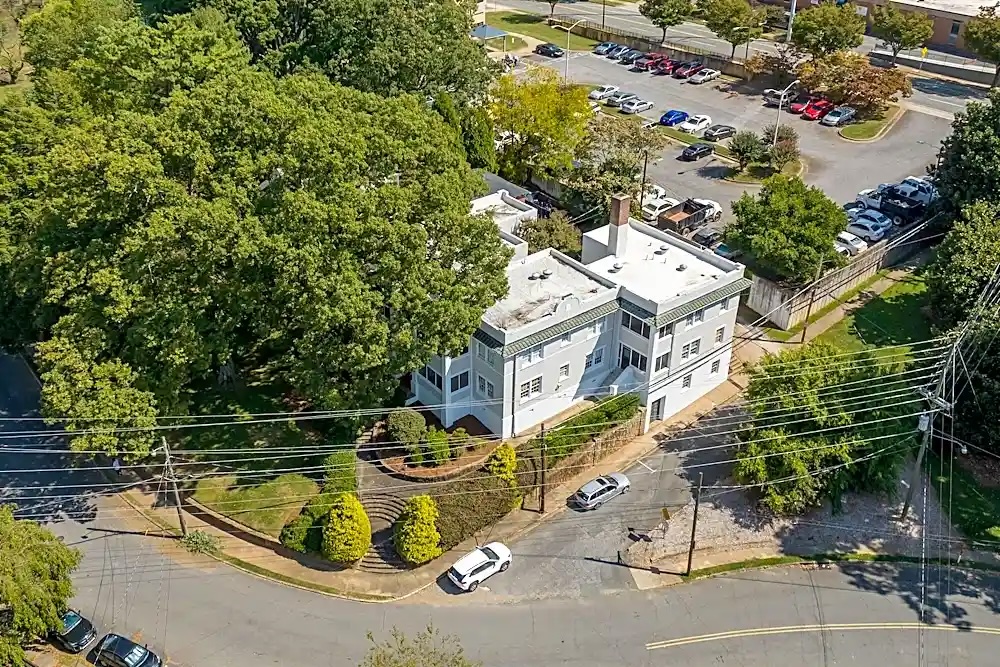
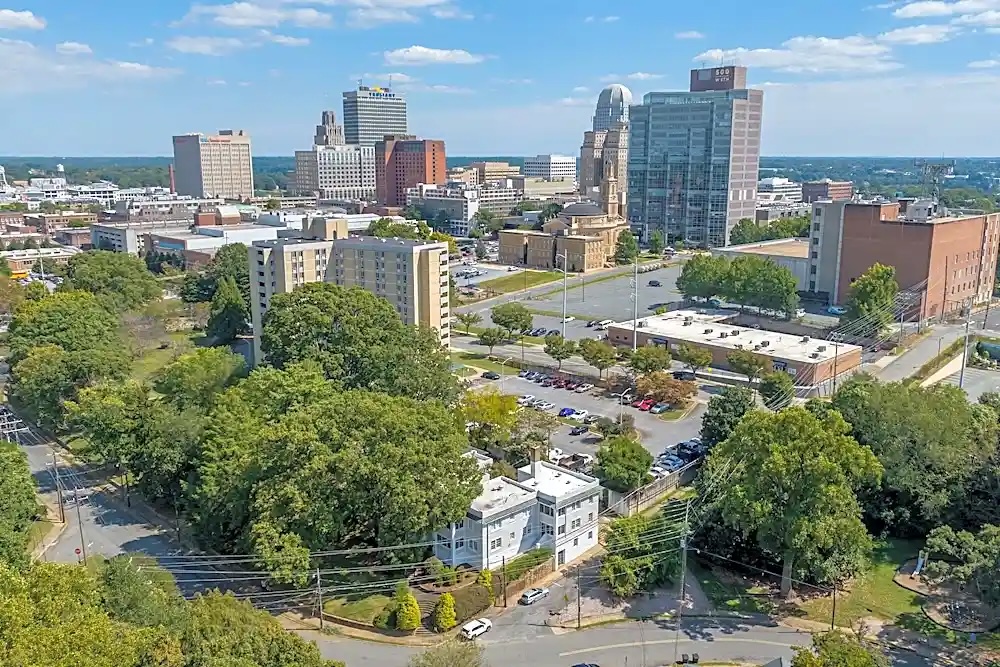
The building contains six condos. It was built in 1923 and was converted to condos in 2007. As of January 2025, all the units were rentals.
West End Historic District NR nomination: “This Mediterranean style apartment building is one of the most handsome of the early apartments in the West End.
“The two-story building is characterized by white stucco walls interrupted by paired windows, a green tile pent eave at the roofline with a shaped parapet above and groups of scrolled brackets decorating the soffit, and a round-arched balconied window above the central entrance.
“Contributing to the significance of this property are the granite retaining wall separating the elevated yard from the sidewalk and the three flights of curved granite steps which lead from the street corner to the building.
“The apartment building may have been erected by E. Wright Noble, who owned the property between 1923-1933 and lived next door.”
Spruce Street YMCA, Winston-Salem


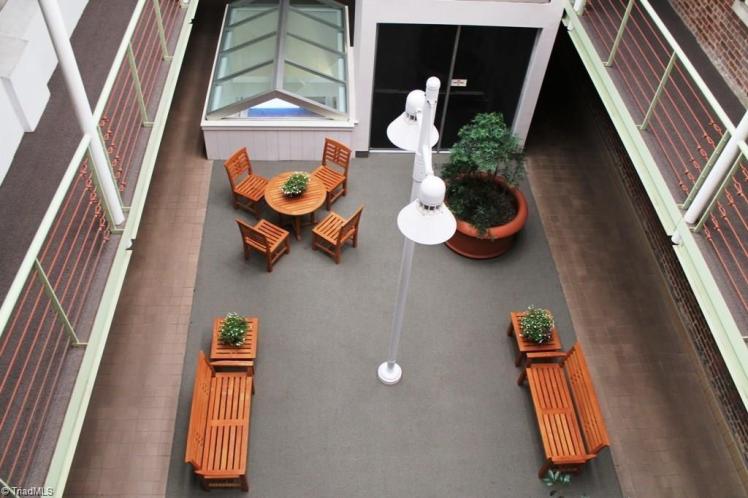

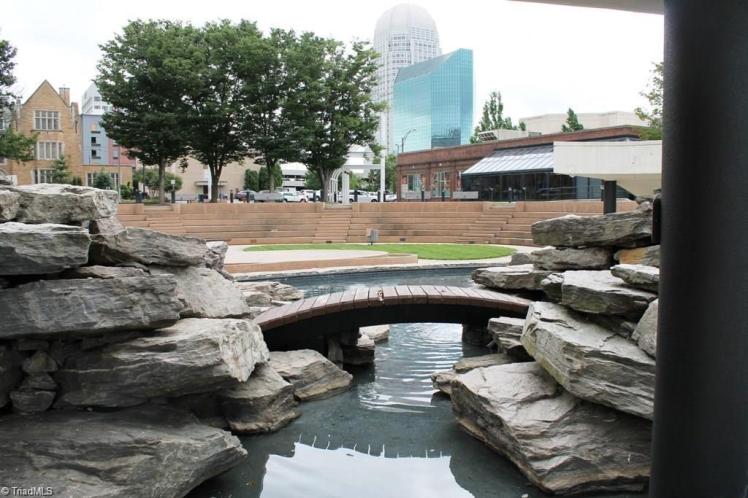
315 N. Spruce Street
315 N. Spruce Street, Apartment 304, Winston-Salem
- $299,000 (originally $314,900)
- 2 bedrooms, 2 bathrooms, 960 square feet
- Price/square foot: $311
- Built in 1924
- Listed November 21, 2025
- Last sale: $270,000, November 2023
- HOA: $304/month
315 N. Spruce Street, Apartment 106, Winston-Salem
- $269,000
- 1 bedroom, 1 1/2 bathrooms, 946 square feet (per county)
- Price/square foot: $284
- Built in 1924
- Listed March 19, 2026
- Last sale: $275,000, August 2025
- HOA: $315/month
315 N. Spruce Street, Apartment 509, Winston-Salem
- $230,000
- 1 bedroom, 1 1/2 bathrooms, 975 square feet (per county)
- Price/square foot: $236
- Built in 1924
- Listed March 26, 2026
- Last sale: $190,000, July 2022
- HOA: $331/month
315 N. Spruce Street, Apartment 301, Winston-Salem
- $227,500
- 1 bedrooms, 1 1/2 bathrooms, 870 square feet
- Price/square foot: $261
- Built in 1924
- Listed March 27, 2026
- Last sale: $139,000, June 2021
- HOA: $315/month
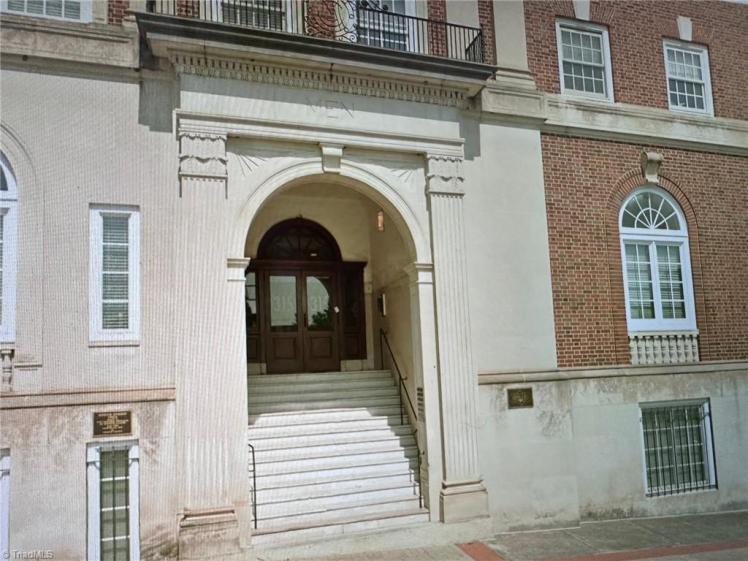
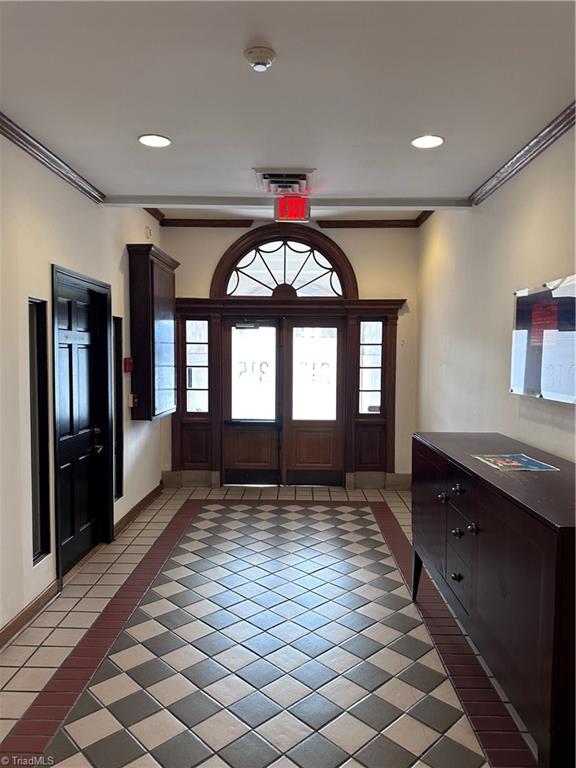
Converted to condos in 1984.
Listed on the National Register of Historic Places: “The former Spruce Street building of the Young Men’s Christian Association in Winston-Salem is a four-story Classic Revival structure designed by Winston-Salem architect Harold Macklin. It stands in the midst of the city’s downtown business district, and it served the men and boys of the community as the ‘Y’ from 1927 until 1976, when the new West End building was completed.
“In addition, for forty-nine years the Spruce Street YMCA served newcomers to Winston-Salem with its one hundred and sixteen dormitory rooms. The Spruce Street building remains from an era of ‘Y’ work in which a downtown location was emphasized to attract young men who were entering the business and professional world and who needed a place to stay until they obtained a financial foothold.
“The Spruce Street YMCA was built during the 1920s building boom in Winston-Salem when the tremendous wealth generated by tobacco, textiles and other industries enabled businessmen and others to finance and build substantial civic and commercial buildings. From its founding in October, 1888, the Winston-Salem YMCA has garnered the financial and volunteer support of the business and civic leaders of the community, and the Spruce Street building stands as a reminder of the longevity and importance of the ‘Y’ program and as evidence of the long-standing tradition of philanthropy in-Winston-Salem.”
1 W. 5th Street, Winston-Salem
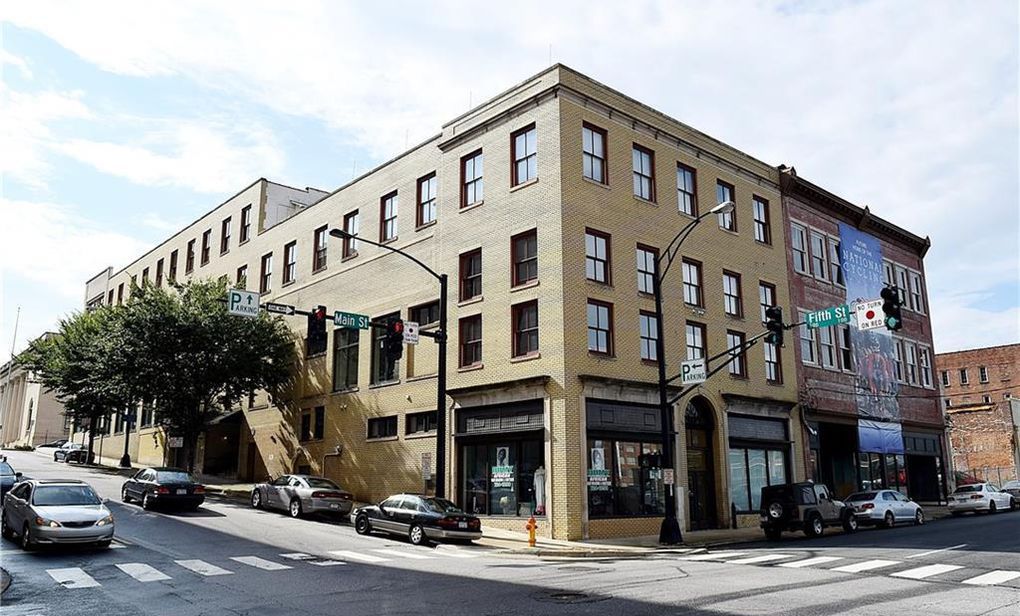
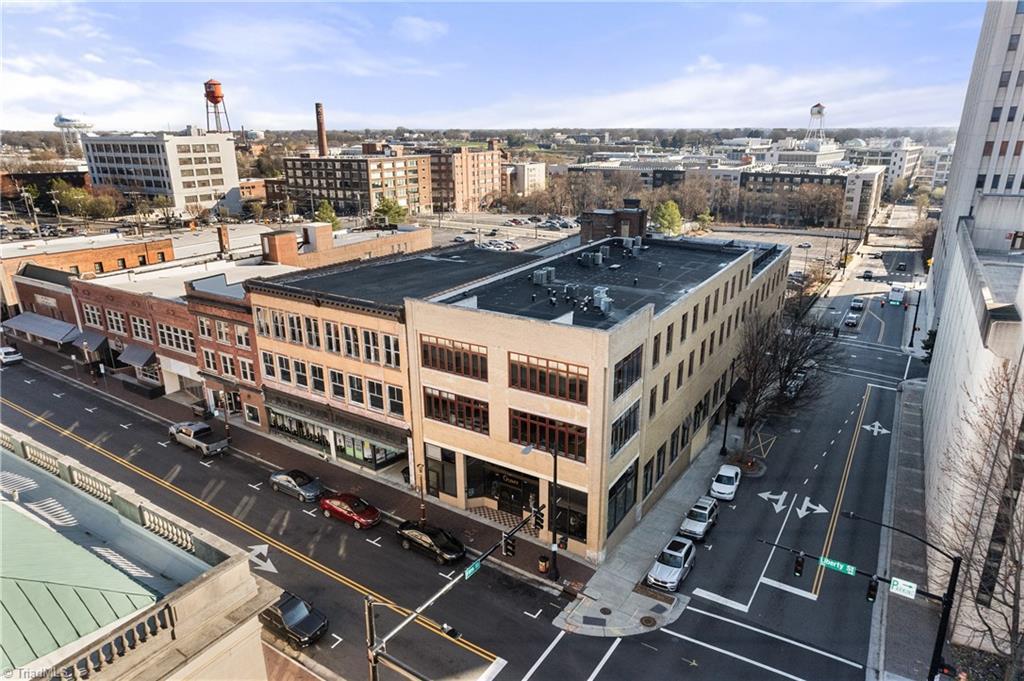
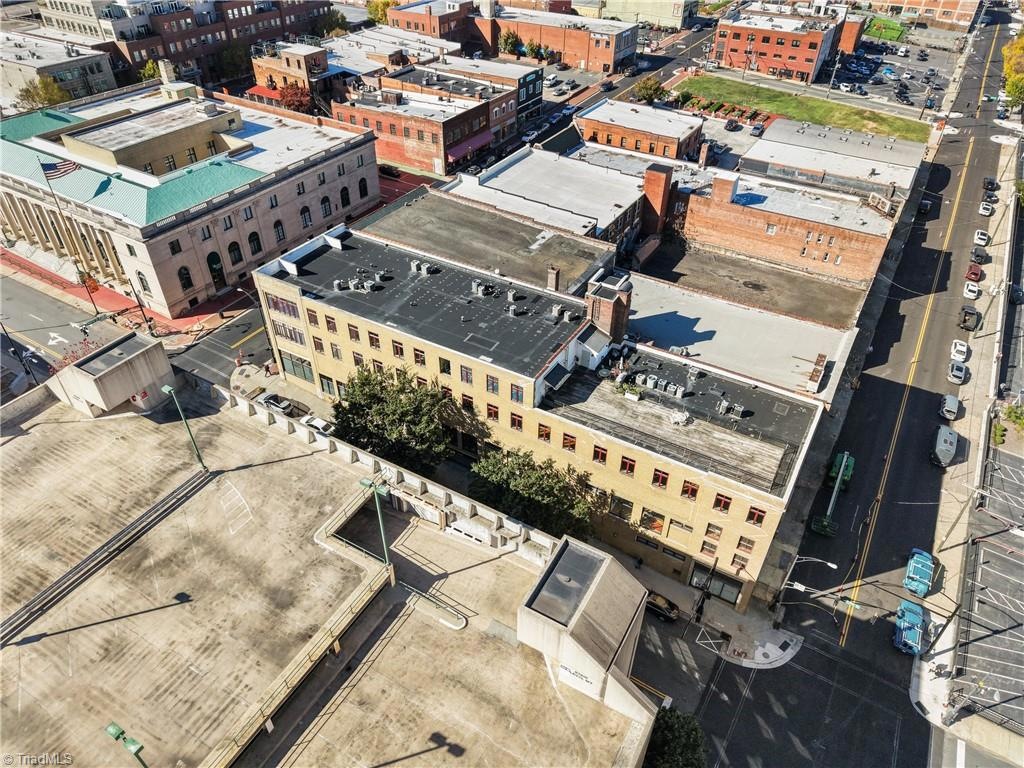
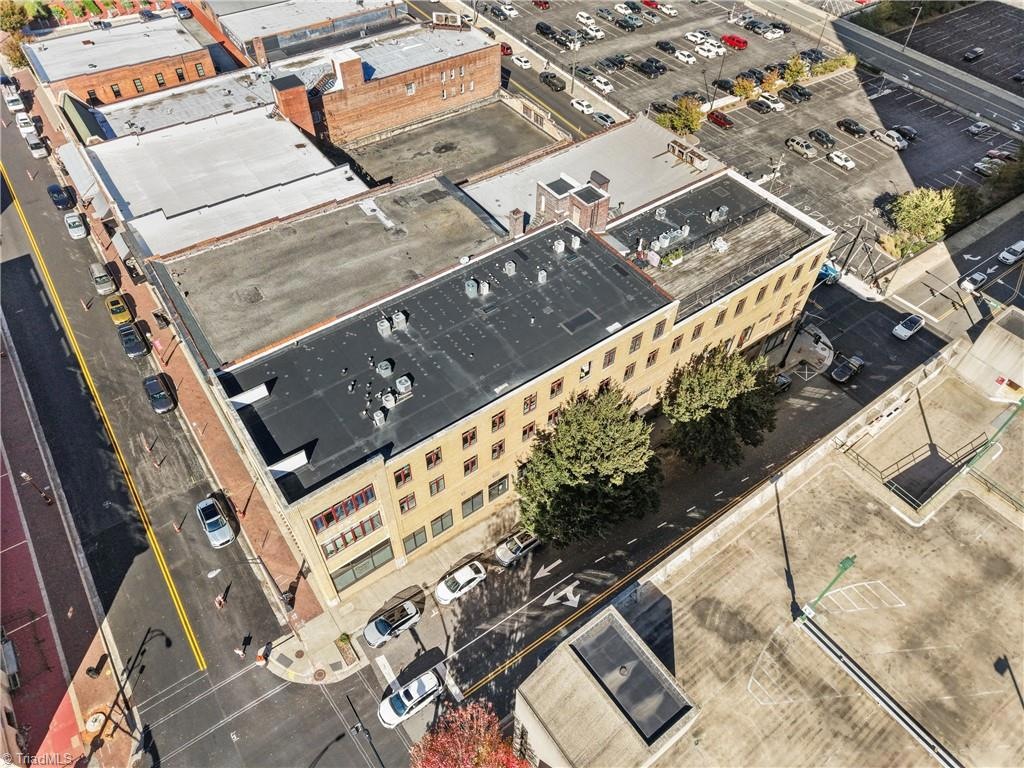
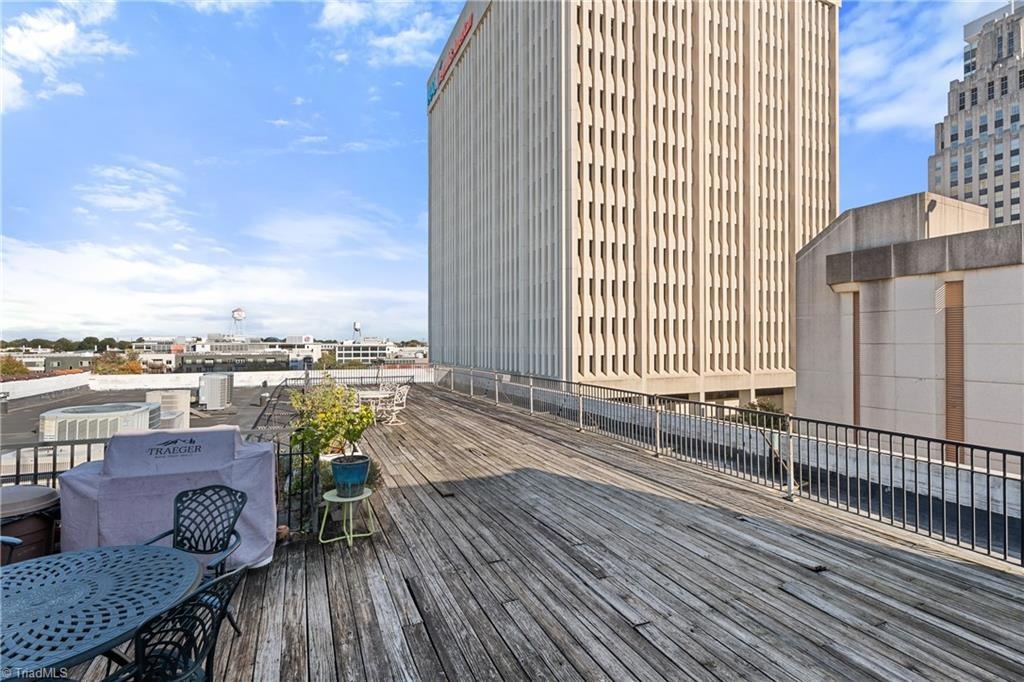
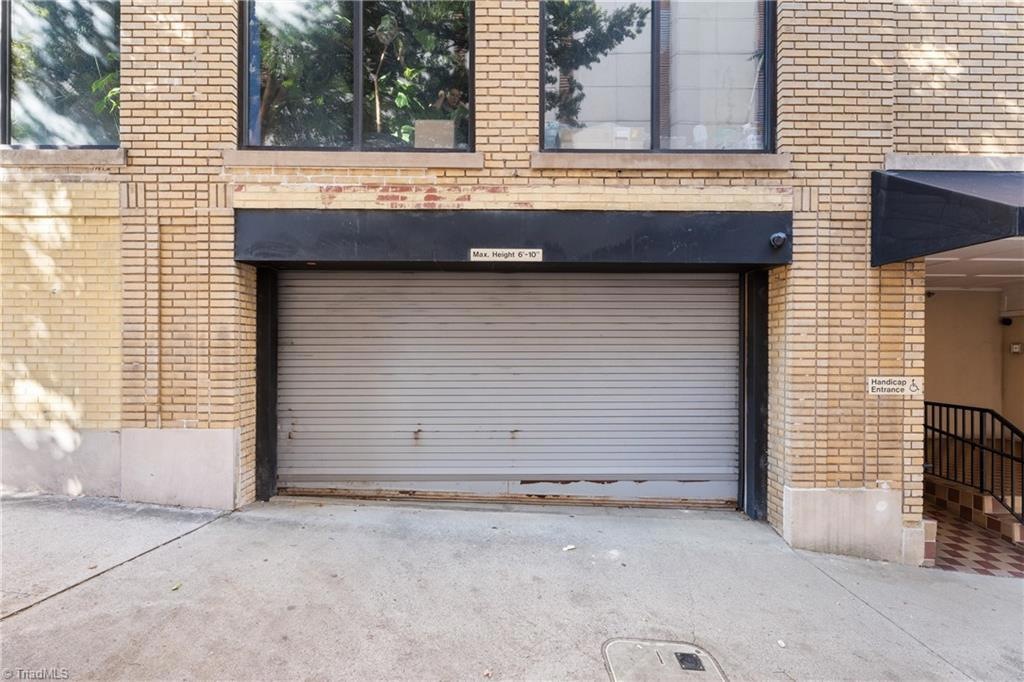
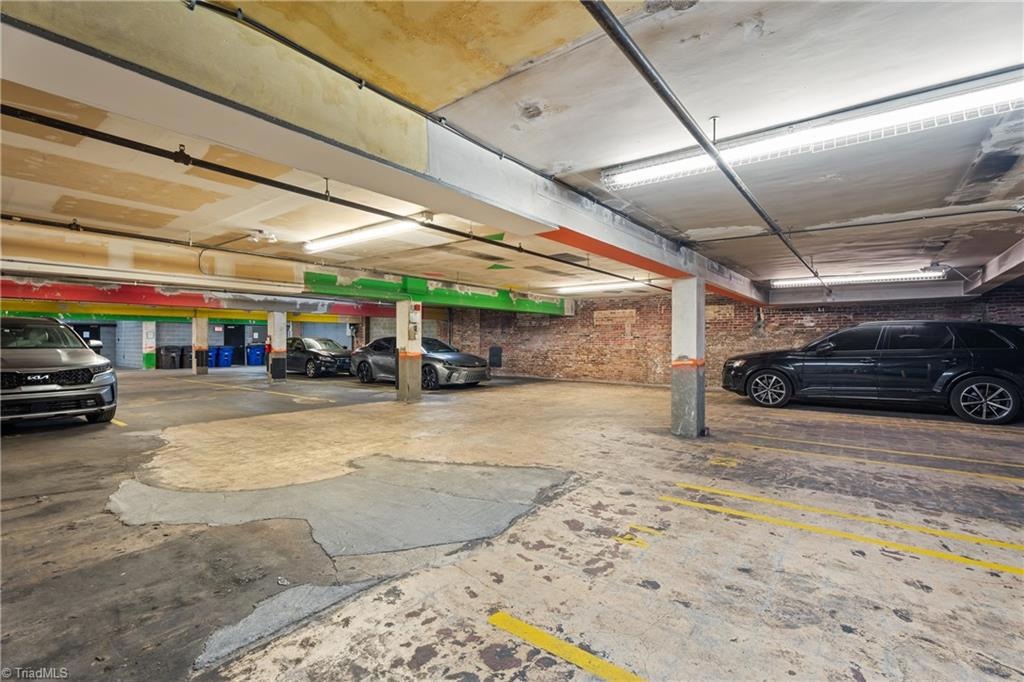
1 W. 5th Street
1 W. 5th Street, Suite 102, Winston-Salem
- $479,900
- 2 bedrooms, 3 bathrooms, 1,869 square feet (per county)
- Price/square foot: $257
- Built in 1925
- Listed March 12, 2026
- Last sale: $192,200, September 2003
- Neighborhood: Downtown North Historic District (NR)
- HOA: $614/month
- Note: The condos have had unusually stable ownership lately. This is the second unit to be listed this year, but before that the most recent sale occurred in October 2023.
The Charles Building extends through its entire block, facing both Liberty and Main streets with one long side of the building along 5th Street. The building contains 13 condos. It was built in 1925; the residences were converted to condos in 2003.
Downtown North Historic District nomination: “The Charles Store is a three-story yellow brick building that spans the block between Liberty and Main streets with primary facades at both ends.
“The Liberty Street facade is currently [i.e., in 2002] being rehabilitated to return it to its original appearance. The sheathing of large tiles added in the mid-twentieth century has been carefully removed, revealing the original brick shell with its simple, streamlined look achieved though subtle brickwork detailing and large open window areas nearly consuming the entire second the third floor levels. The first floor level retains its recessed entrance and large shop windows.
“The Fifth Street elevation continues the clean-cut look of the building with long rows of intact sash windows at second and third-story levels and a row of blind windows at first -story level. The Main Street facade was not remodeled in the mid-twentieth century and is remarkably intact. It continues, at third-floor height, the row of sash windows found on the Fifth Street elevation, but the second story is arranged with two rows of smaller sash windows.
“At the corner of the first-story level, shop windows and entrances with prism glass transoms and projecting cornices address both Main and Fifth streets. At the center of the Main Street elevation, a tall doorway with a fancy round-arched, ironwork fanlight provides entrance to the upper levels. North of the arched doorway is a loading door entrance, headed by the same cornice as found on the shop windows/entrances. The Main Street elevation is headed by a limestone cornice with a brick-paneled parapet.
“From 1906 to the 1980s, the property was owned by H.G. Chatham, A.H. Eller, and their heirs. The Charles Store was built in 1925, replacing smaller commercial buildings. During the early years of the building, Hutchins Drug Store was located at the Main Street side of the building.”
705 N. Main Street, Winston-Salem
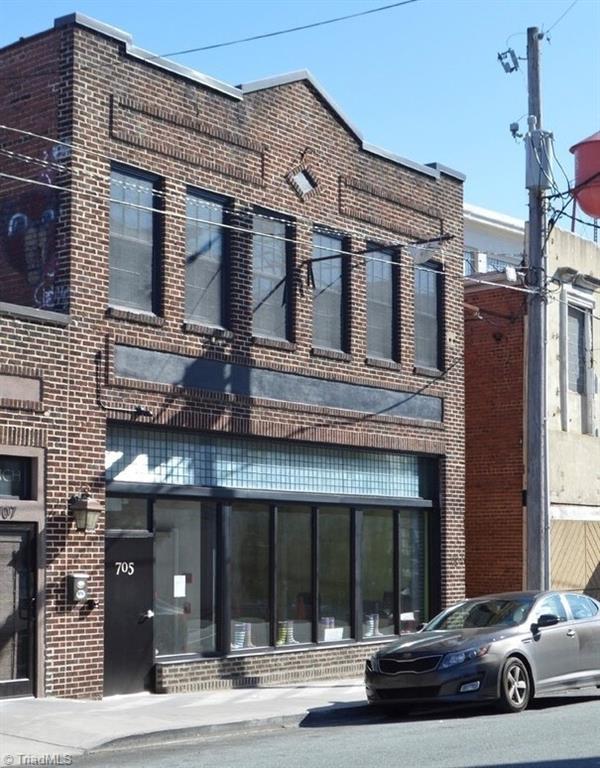
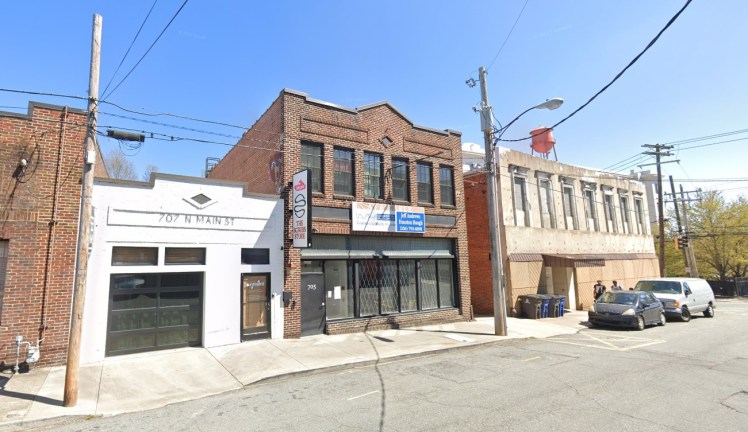
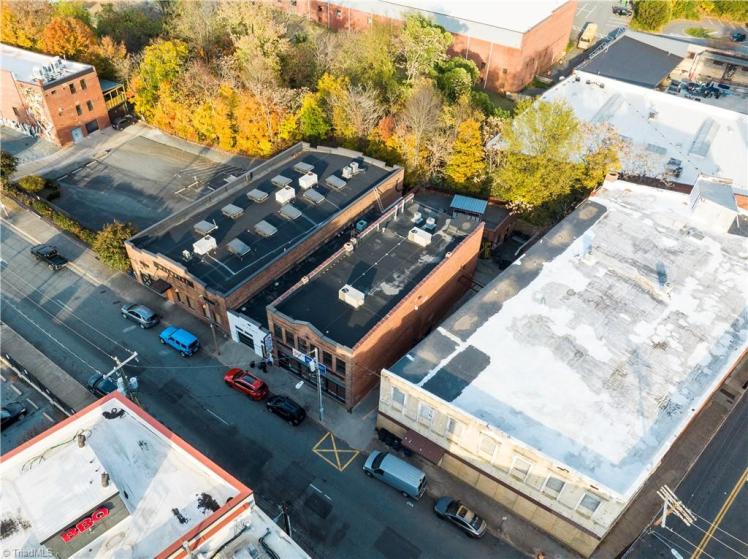
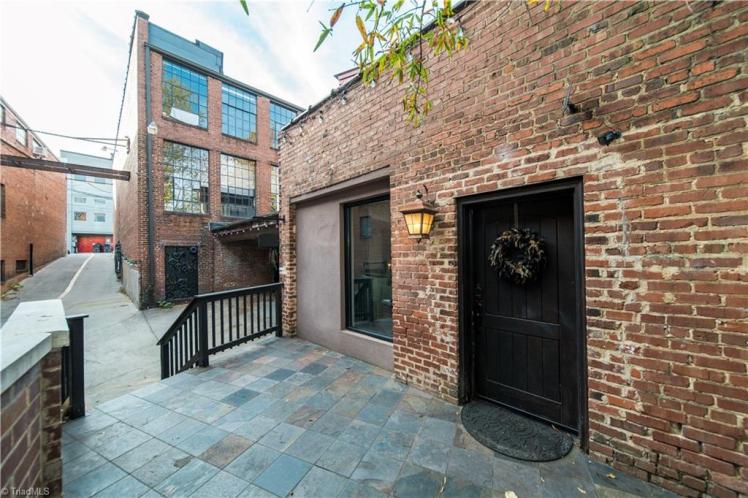
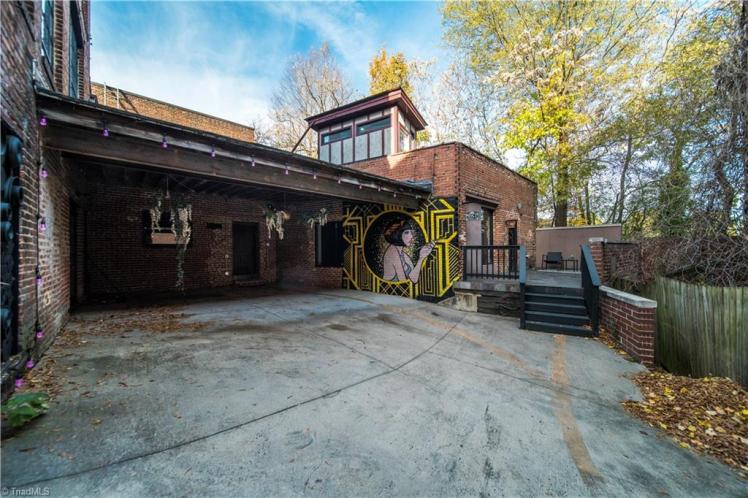
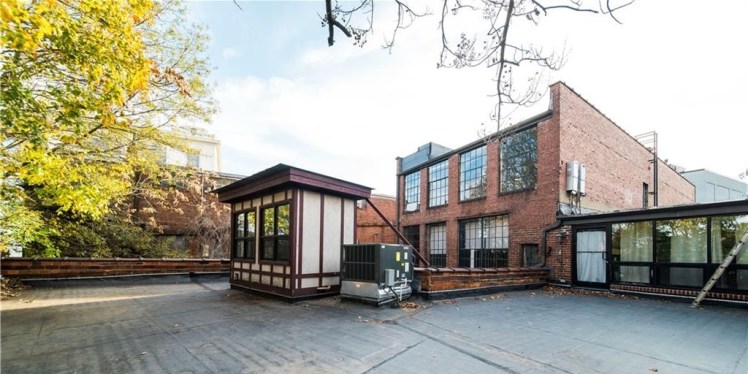
705 N. Main Street, Winston-Salem
705 N. Main Street, No. 101, Winston-Salem
- $595,000
- 1 bedroom, 2 bathrooms, 2,480 square feet (per listing; see note)
- Price/square foot: $240
- Built in 1913
- Listed February 17, 2026
- Last sale: $250,000, March 2014 (both units)
- Neighborhood: Downtown North Historic District (NR)
- Note: The descriptions and size of the units as listed in online listings are identical. There’s no clue about why No. 101 is priced $200,000 more than No. 201.
- It’s not actually a condo yet. The listing says the unit has the “potential to be upfitted into a private condo or live/work residence.”
- Forsyth County property records don’t break out units 101 and 201 separately. The entire building is shown as having 7,440 square feet. That figure doesn’t include the building’s third condo, which has a rear, ground-floor entrance and has been a condo for about 20 years.
705 N. Main Street, No. 201, Winston-Salem
- $395,000
- 1 bedroom, 2 bathrooms, 2,480 square feet
- Price/square foot: $159
- Built in 1913
- Listed February 17, 2026
- Last sale: $250,000, March 2014 (both units)
- Neighborhood: Downtown North Historic District (NR)
- Note: The descriptions and size of the units as listed in online listings are identical. There’s no clue about why No. 101 is priced $200,000 more than No. 201.
- It’s not actually a condo yet. The listing says the unit has the “potential to be upfitted into a private condo or live/work residence.”
- Forsyth County property records don’t break out units 101 and 201 separately. The entire building is shown as having 7,440 square feet. That figure doesn’t include the building’s third condo, which has a rear, ground-floor entrance and has been a condo for about 20 years.

The building’s first condo, Number 1, is entered through the back. It has been a condo since 2006. In 2026, the first and second floors of the building are being marketed as spaces that could be turned into condos.
Downtown North Historic District NRHP nomination: “The exterior of this two-story brick building is almost completely intact. It features shop windows across the first story headed by a prism-glass transom and a horizontal, brick-outlined panel. Six sash window carry across the second story, above which is a central lozenge flanked by brick panels. A shaped parapet caps the facade. City directories reveal that the building, indicated on the 1950 Sanborn map as a store, had multiple uses through the years.”
Unit 1 has previously been used as a spa and as an short-term rental. The building was first listed in the city directory in 1913 as the site of John A. Smith’s blacksmith shop. More recently, the storefront has been the home of the Alegria Shoe Shop, now located on Hanes Mall Boulevard; Lillybee LLC, which designed and produced “gameday gear for gals”; and Sockwell Socks.
Emerywood Court Apartments, High Point


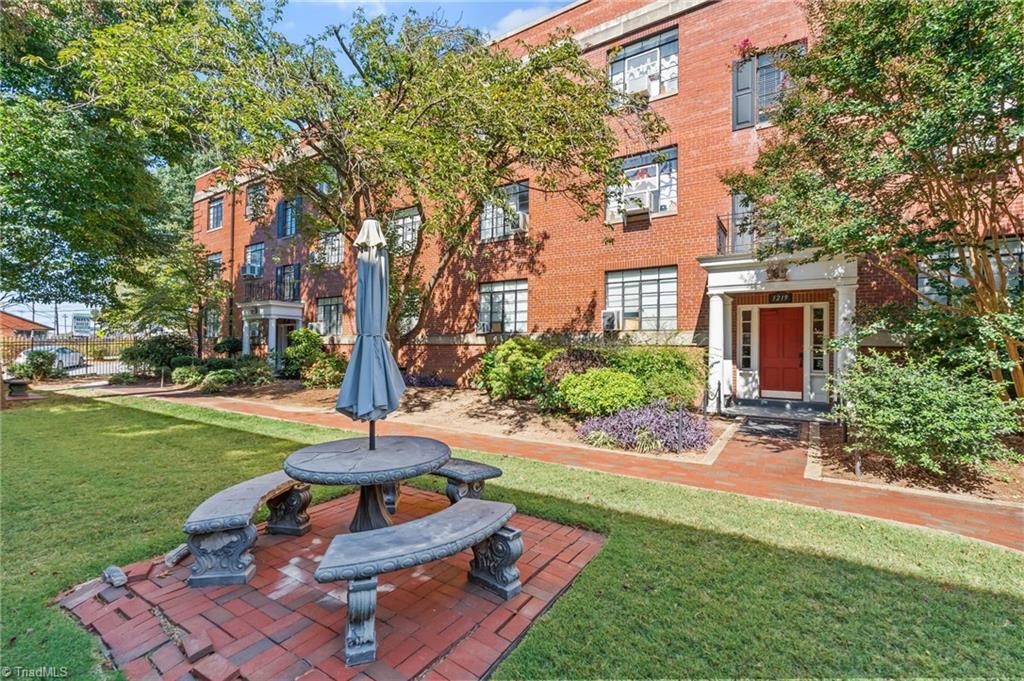





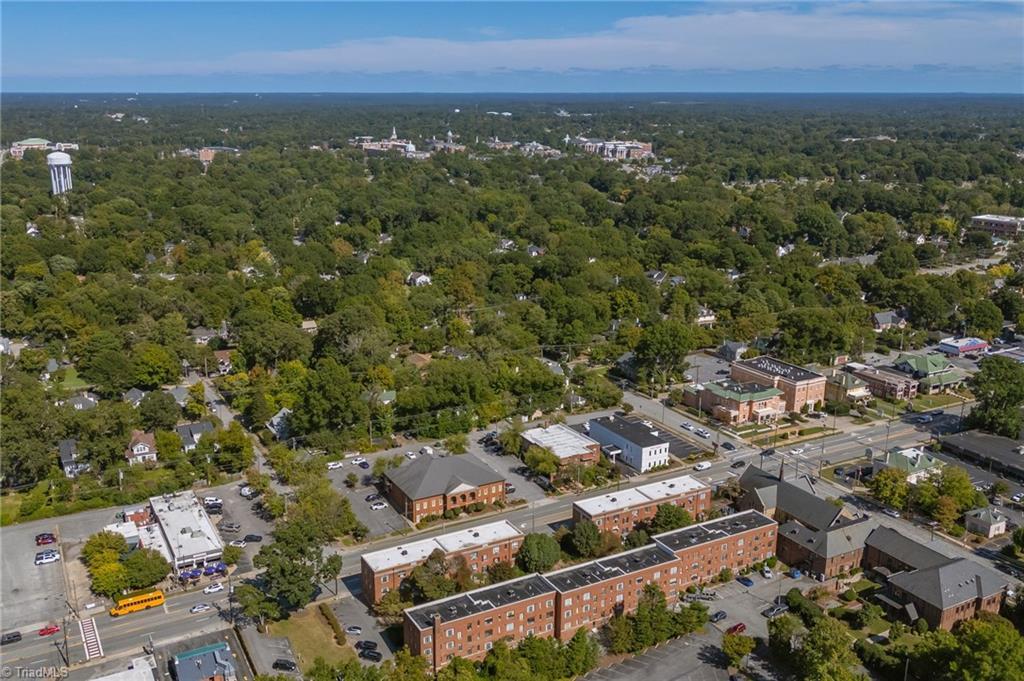
1203-1221 N. Main Street
No current listings
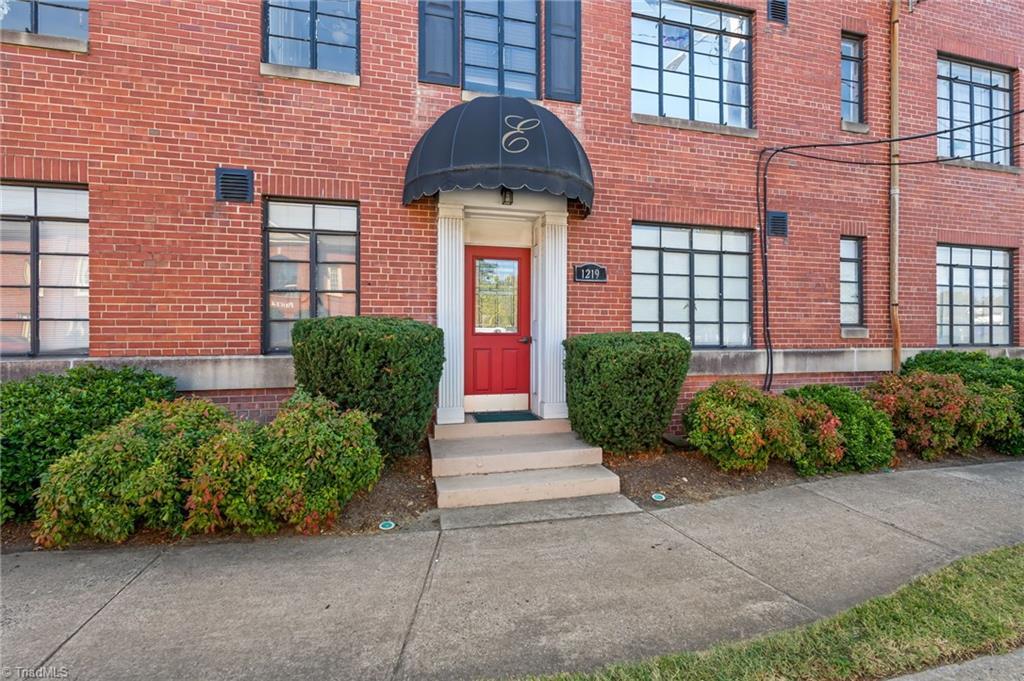
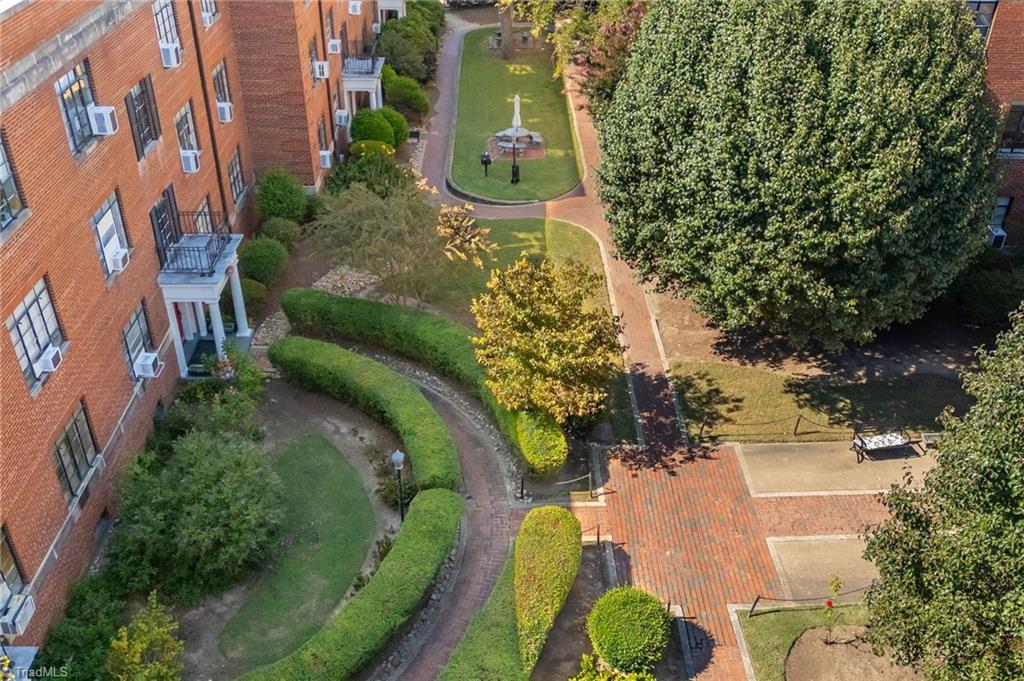
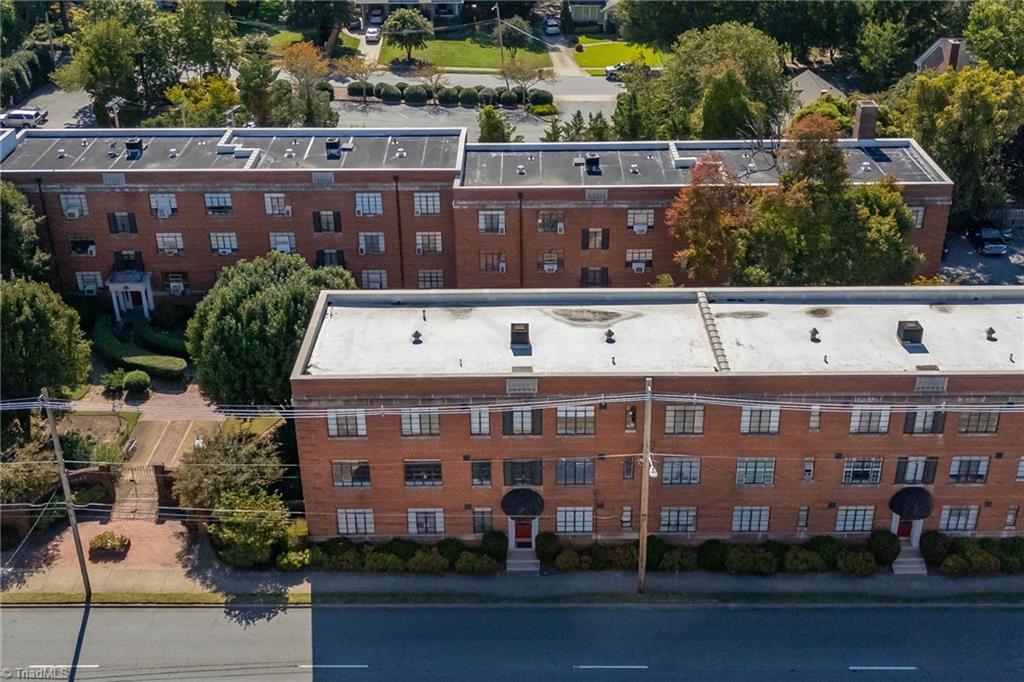
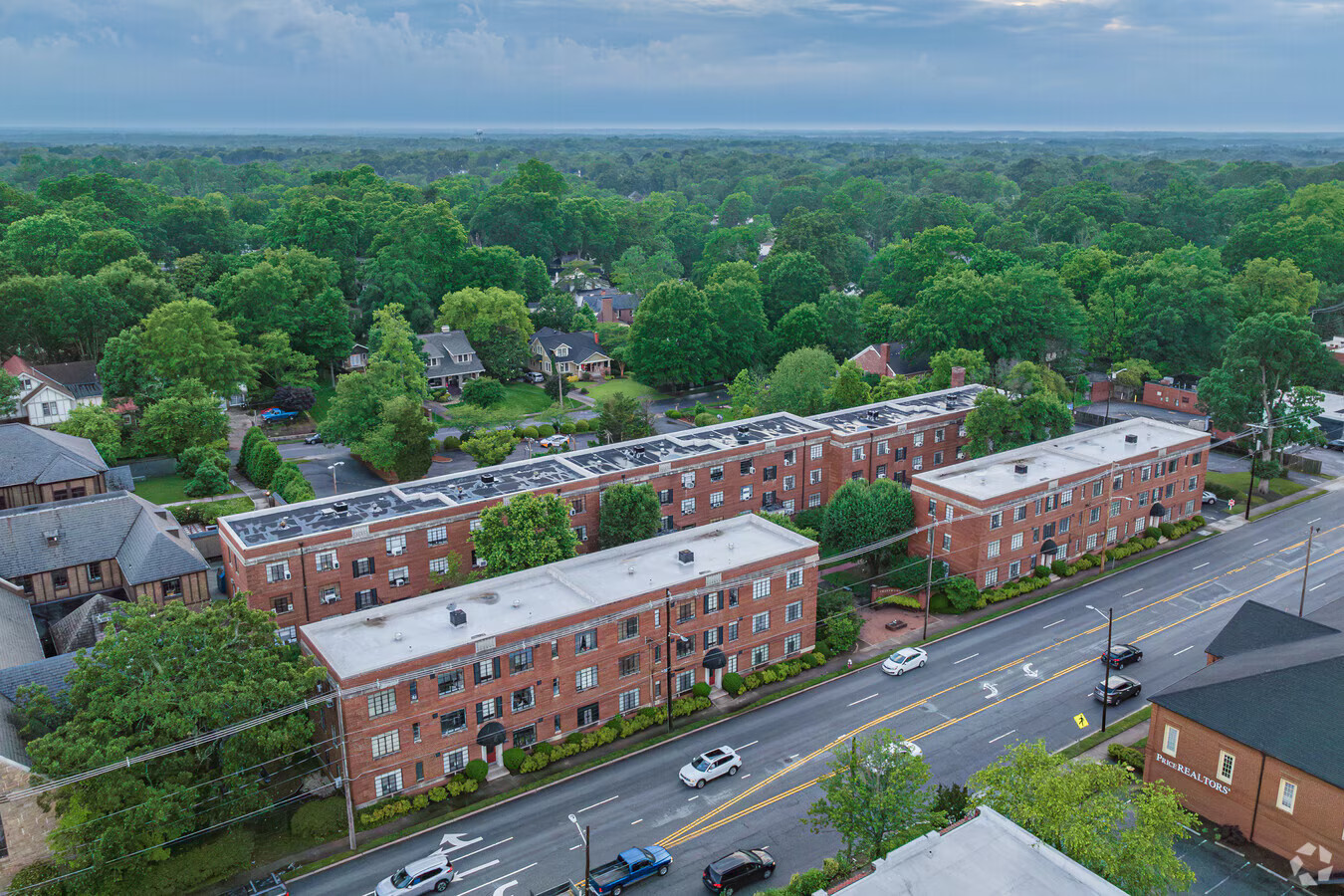
Uptown Suburbs Historic District NRHP nomination: “These five three-story apartment buildings have a stylized classical design and are arranged in rows with two buildings fronting on Main Street and joined by a curved brick wall with decorative metal entrance gates. The gates open to a courtyard that extends the full width of the two buildings with three adjoining buildings along the rear (west) of the courtyard and paved parking behind the buildings on Hillcrest Drive.
“The buildings feature brick veneers, flat roofs behind brick parapets, and metal casement windows. Each building is fourteen bays wide and double-pile with brick quoins, concrete water tables and window sills, a wide, two-part concrete band at the cornice, and a cast concrete panel with balustrade relief in the parapet above each entrance.
“Entrances facing Main Street abut the sidewalk and there placement doors are recessed slightly in paneled bays with classical surrounds and fluted pilasters. Entrances from the courtyard have six-panel doors with five-light-over-one-panel sidelights that are sheltered by small, hip-roofed entrance porches supported by columns with metal railings at the roofline. The courtyard features brick sidewalks and decorative plantings.
“The buildings are first listed in city directories in 1939 and [are] named for the adjacent neighborhood.”
The 54 apartments were converted to condominiums in 1980.
Maisons on Park, Asheboro

610 S. Park Street
No current listings
The Maisons on Park condos are in an eight-unit, brick apartment house built in 1941. The building was originally called the Carolina Apartments. It was converted to condos in 1985 by Gena Linburge Harris (1926-1998) and his wife, Dorothy Lee York Harris (1923-1996).
Gena Harris founded a jewelry store in Asheboro that grew to four locations. He later worked as a sales executive for two watch companies and operated a marketing firm. He was a founder of the Pinewood Country Club in Asheboro. Dorothy was assistant register of deeds for Randolph County and then worked in the family jewelry business. The Harrises had a second home in Myrtle Beach for 37 years. Gena served as president of the homeowners association of the Maisons-Sur-Mer condominiums.
627 Monroe Street, Eden

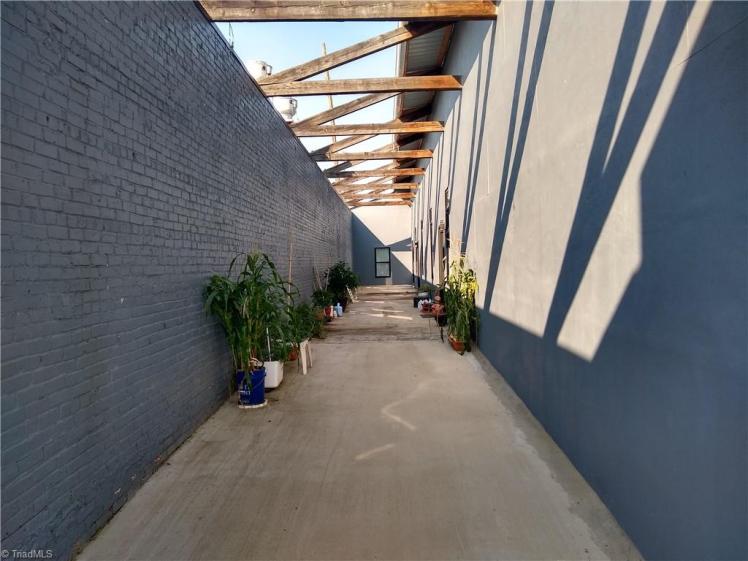


627 Monroe Street, Eden, Rockingham County
No current listings
Formerly a Duke Power office, the building was converted to three residential condo units and a store-front business unit in 2021. As of November 2024, two condos are owned by the developer. The building is built perpendicular to the street. A wellness business, Halo Salt & Yoga, occupies the front unit.
The Factory, Kernersville


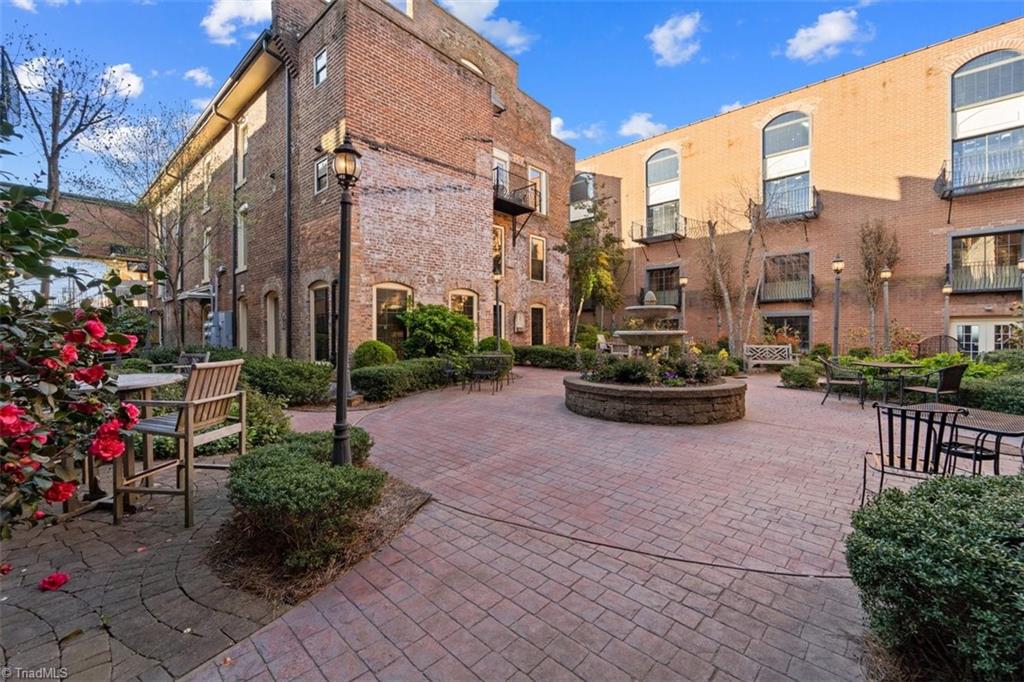

210 N. Main Street
No current listings
The Factory is a seven-building complex with condos, retail businesses and offices. It was originally a tobacco factory, then a textile mill and later a furniture factory. It also hosted a hotel from 1907-10, while it served as a tobacco factory and textile mill. Burlington Industries operated the plant from 1949 to 1964. Hooker Furniture used it from 1972 to 2003. The original section of the building was constructed in 1884. The 11 condominiums were established in 2007.
Commercial tenants include restaurants, hair salons and a law firm.
The undated historical photo above is from Kernersville! Magazine.
121 N. Main Street, Lexington


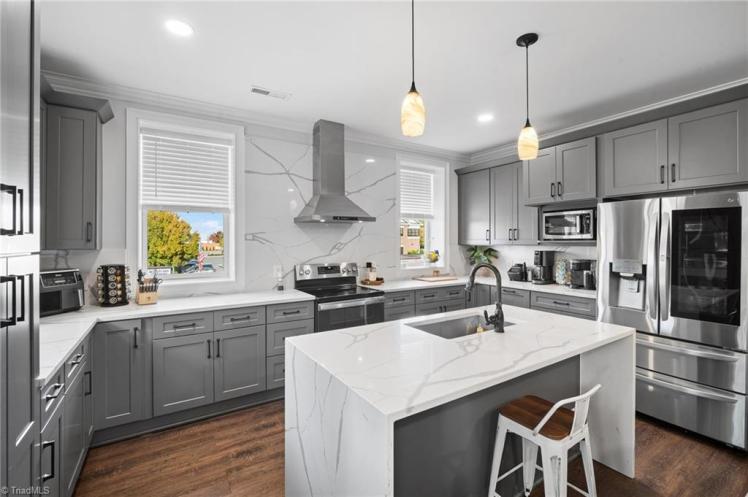


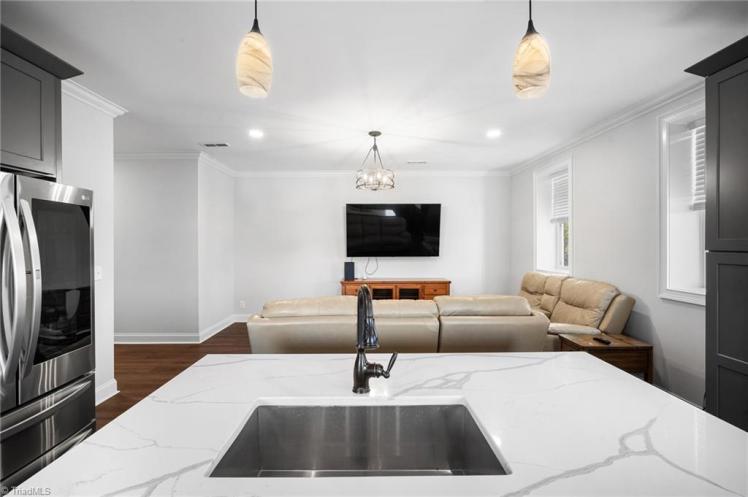
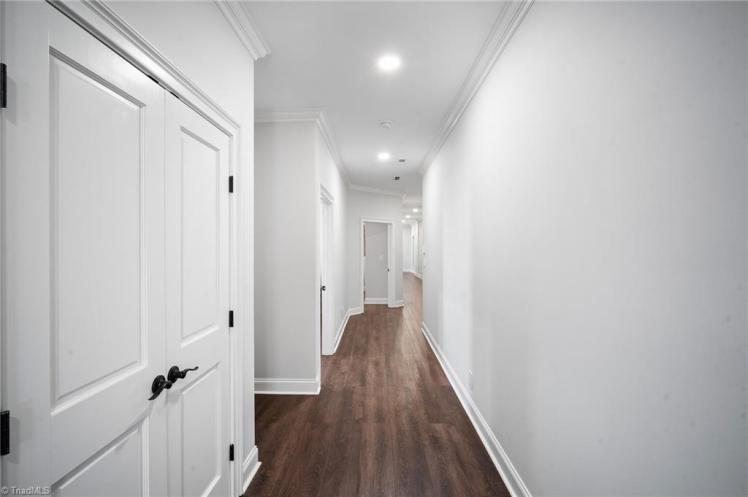
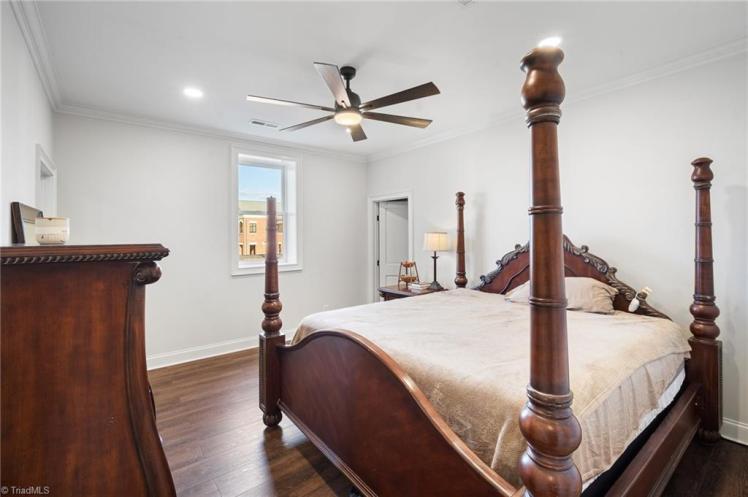

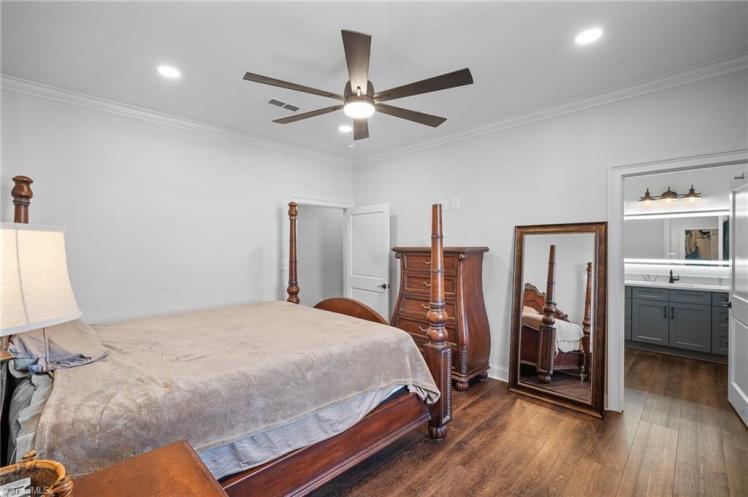
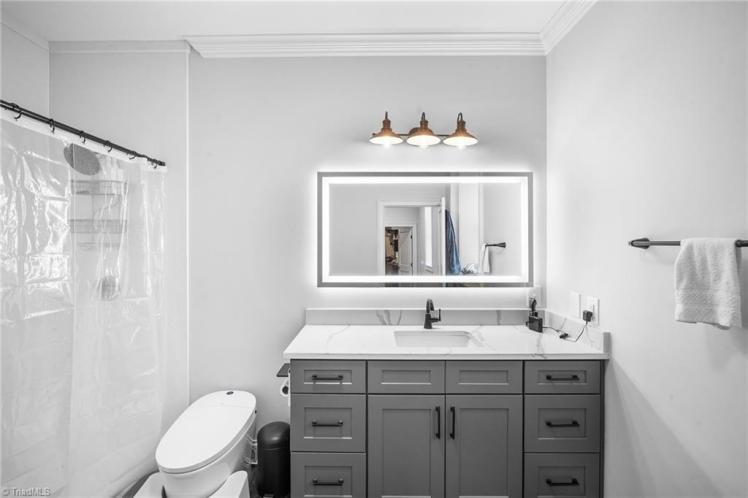


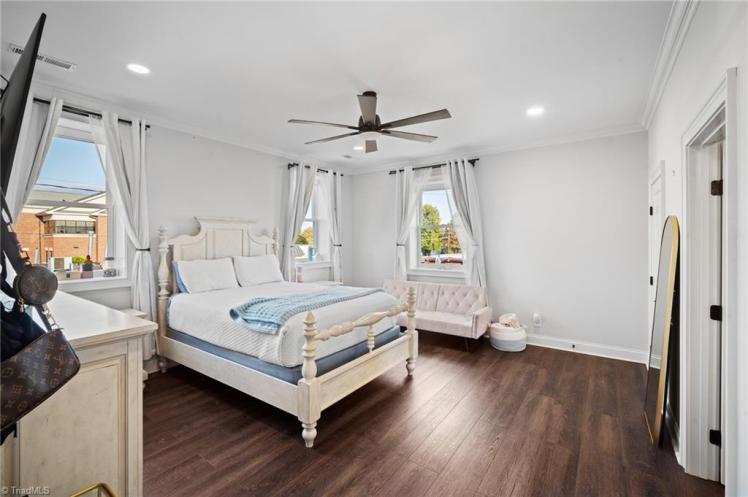
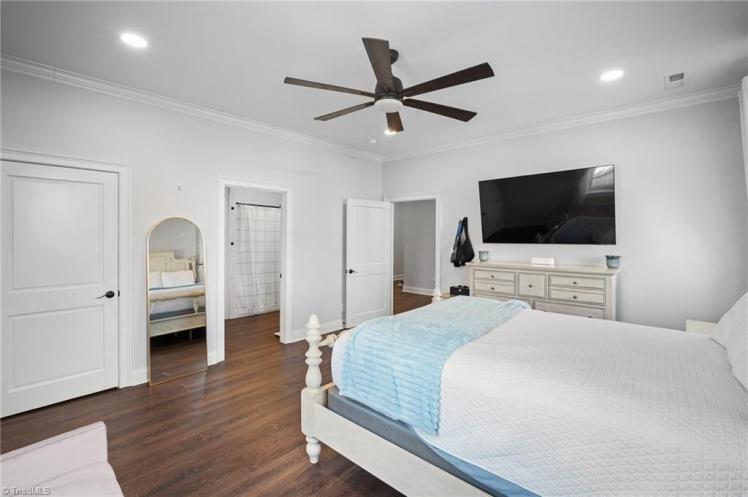
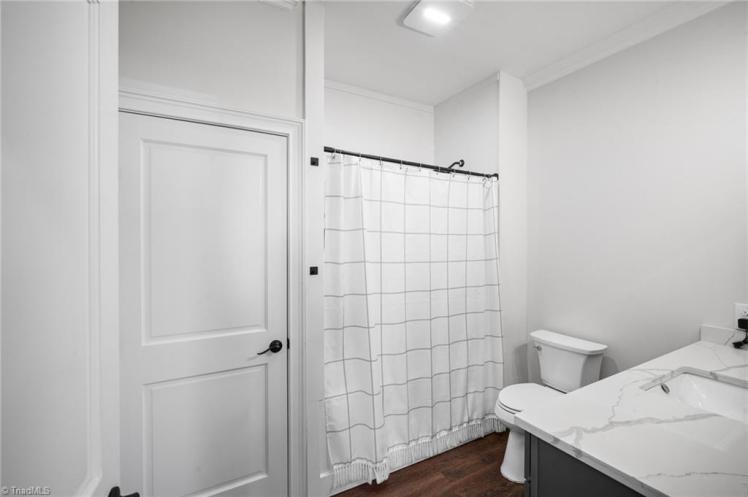


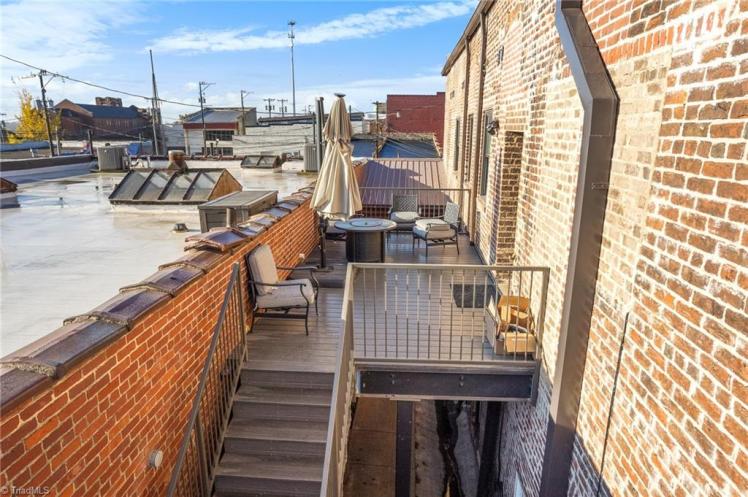
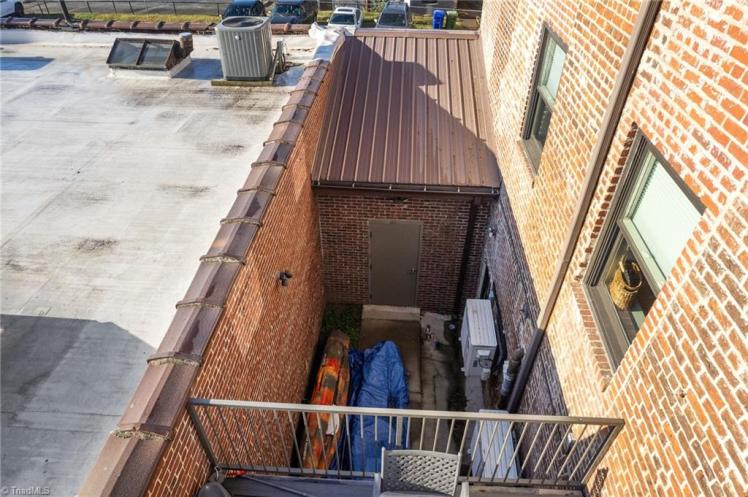


121 N. Main Street, Lexington, Davidson County
121 N. Main Street, Lexington
Blog post — A Huge Condo in a 1920 Building in Downtown Lexington, $535,000
Listing withdrawn May 1, 2025
Relisted March 19, 2026
- $525,000 (originally $600,000)
- 4 bedrooms, 3 bathrooms, 4,088 square feet
- Price/square foot: $128
- Built in 1920
- Listed November 13, 2024
- Last sales: $175,000, December 2016; $264,000, January 2015
- Neighborhood: Uptown Lexington Historic District (NR)
- Note: Second floor of a two-story commercial building on North Main at East 2nd Street.
- The condo has a street-level front entrance on Main Street and a gated, second-floor back entrance with a small deck off East 2nd Avenue.
- The unit has a dedicated parking space behind the building.
- There is also a private storage room in the adjacent alley.
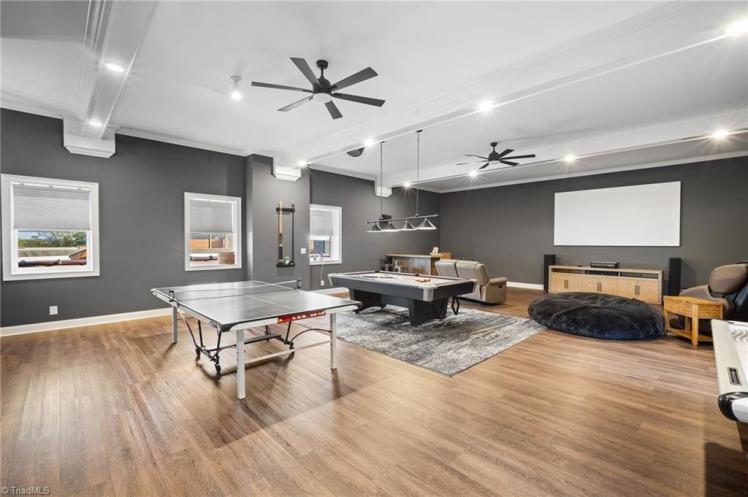
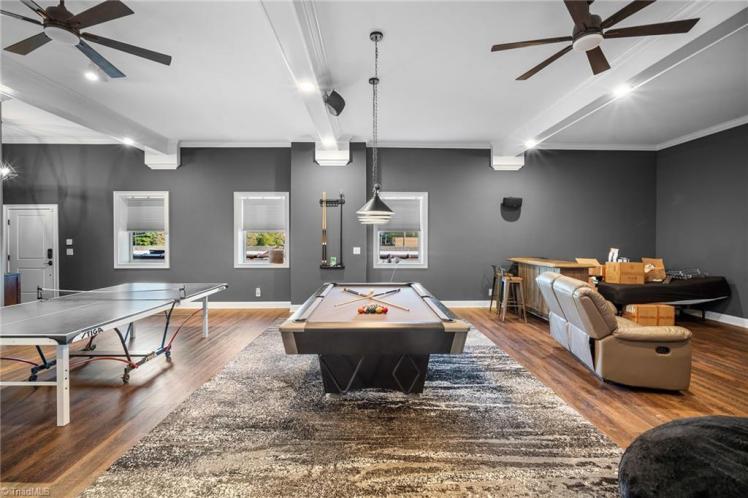
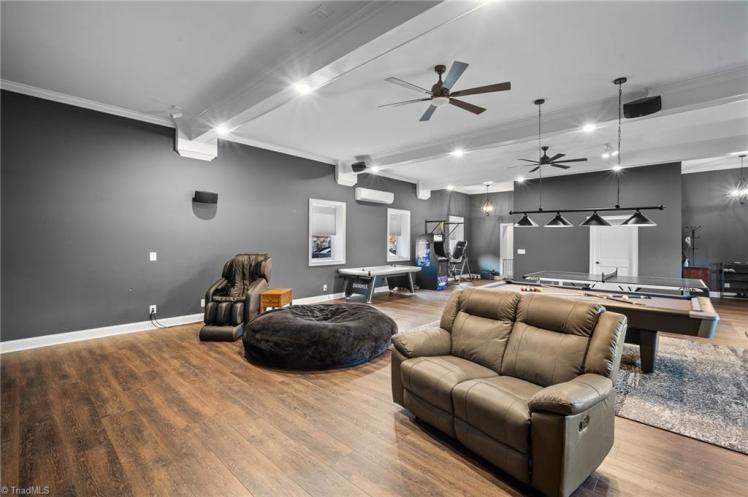
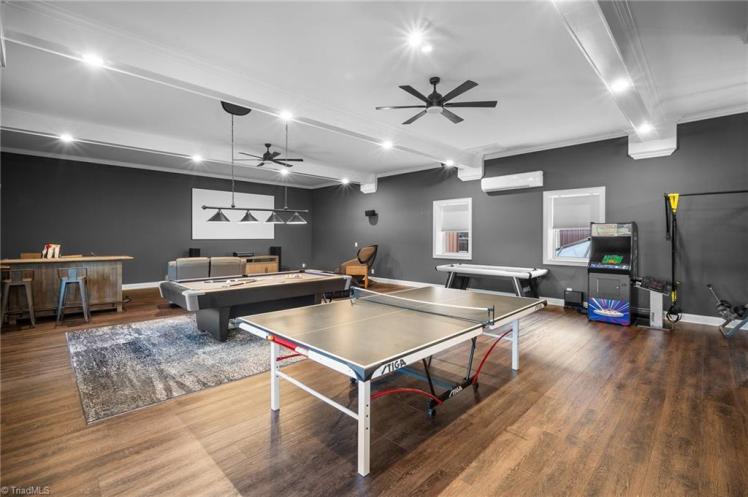
The most striking feature of the condo is a 1,300 square-foot space that previously was photographed with a home theatre, pool table, ping pong table, old fashioned stand-up arcade video-game machine, plenty of open space and more.
The intriguing Red Donut Shop is on the first floor. Its address is 117 N. Main Street. The second floor is numbered separately as 121.
District NR nomination: “Classical influence continued in the detailing of many of the district’s buildings from the late 1910s and 1920s. Focused around the doors and windows and on string courses and cornices, these details were often emphasized by the use of white stone or terra cotta against red brick walls. Excellent examples of this classical phase include … 121 N. Main Street …
“Although the Sanborn Maps indicate that a two-story store was located on this site from at least 1885, the present building appears to date from the 1920s. In fact, it was likely rebuilt or heavily remodeled between 1923 and 1929, because the 1929 map describes in detail — for the first time — its fireproof construction. Various businesses have been located here, including an auto parts wholesale business.
“The two-story corner building is distinguished by the use of red brick veneer accented by white blocked stone on the first story of the facade, along with stone garlands beneath the second-story windows, stone medallions above the windows, and a white string course and coped cornice.”
Renfro Lofts, Mount Airy
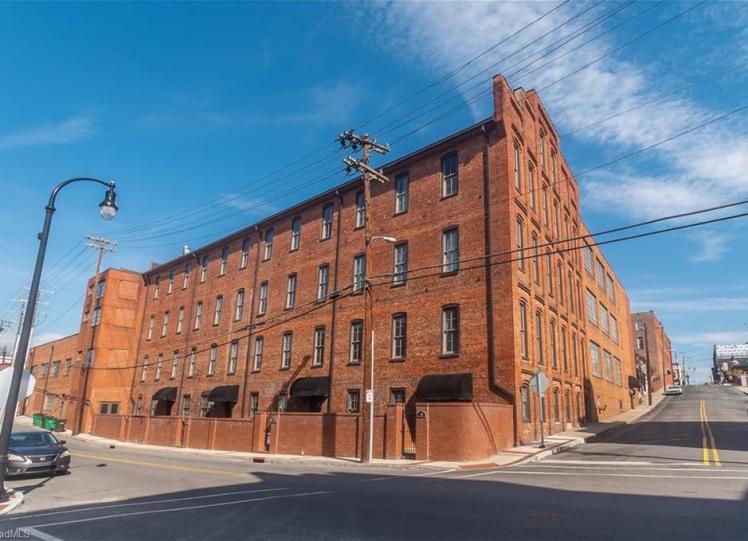


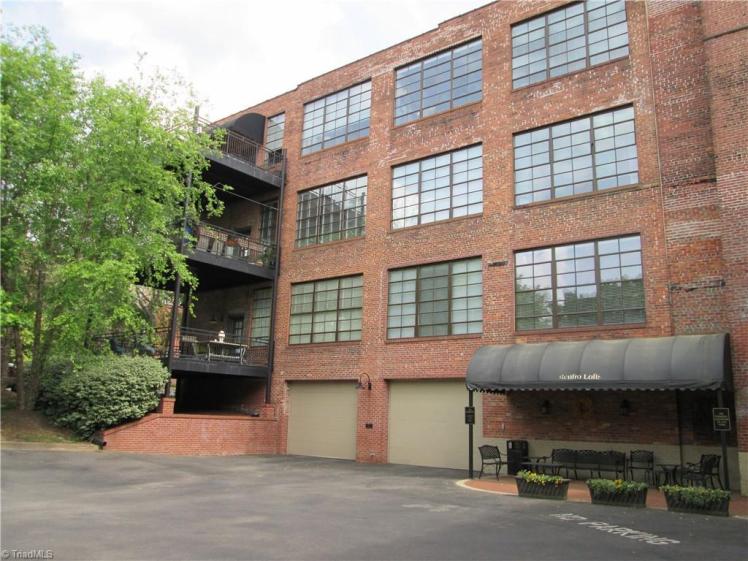
165 Virginia Street, Mount Airy, Surry County
165 Virginia Street, Suite 409 Mount Airy, Surry County
Sale pending March 12, 2026
- $259,900 (originally $285,000)
- 2 bedrooms, 2 bathrooms, 1,217 square feet
- Price/square foot: $214
- Built in 1923
- Listed December 3, 2025
- Last sale: $265,000, June 15, 2025
- HOA: $255/month
- Note: Top-floor condo, includes a deeded indoor parking space and interior storage unit.
Part of the building dates to the 1890s. The mill was converted to 37 condos in 2002.
Listed on the National Register of Historic Places: “Renfro Mill — initially the R. Roberts Leaf Tobacco House — is an excellent surviving example of the form of building typically used by the tobacco industry in Piedmont North Carolina for both factories and leaf houses during the late nineteenth century. These buildings, becoming increasingly rare, tend to be three-to-five story rectangular brick structures with stepped parapet gable ends, segmental-arched windows, and often decorative brickwork on the facade.
“Renfro Mill is also a prime example of the adaptation of a building from one industrial use to another. When small tobacco companies failed during the first two decades of the twentieth century because they could not compete with the big tobacco conglomerates, many of their buildings were taken over by other burgeoning industries. These buildings offered both good space and quality construction. In 1921 Renfro Mill, a new sock-making company, took over the former tobacco leaf house whose large open spaces served well the manufacturing needs of the company.
“Shortly after World War II, Renfro’s success demanded that it greatly expand its space. The additions to the original factory, still intact, specifically addressed the needs of the manufacturing processes used in the apparel industry. Renfro occupied its Willow Street plant until 1997. The Renfro company has been significant in the local economy for much of the twentieth century. When Renfro began manufacturing socks in 1921, it was the first real hosiery operation in Mount Airy.
“By the late 1990s, Renfro had become the nations’s largest sock manufacturer. Today, Mount Airy is a sock manufacturing center and the apparel industry as a whole is the largest branch of industry in town. Renfro Mill’s period of significance extends from ca. 1893 to 1947. It encompasses the building’s ca. 1893 date of construction as a tobacco leaf house, the date (1921) when the Renfro company, a sock manufacturer, purchased the building, and the date (1946-47) when the building was more than doubled in size so that all the company’s sock manufacturing processes could be consolidated in one location.”
Spencer’s Lofts, Mount Airy


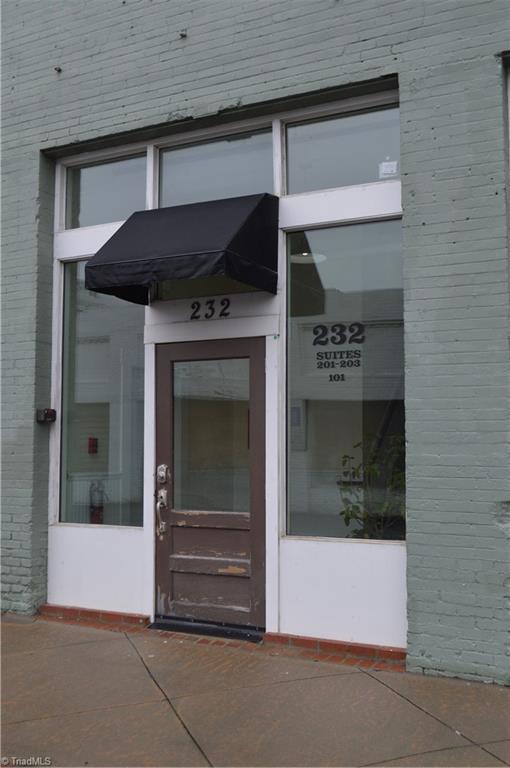

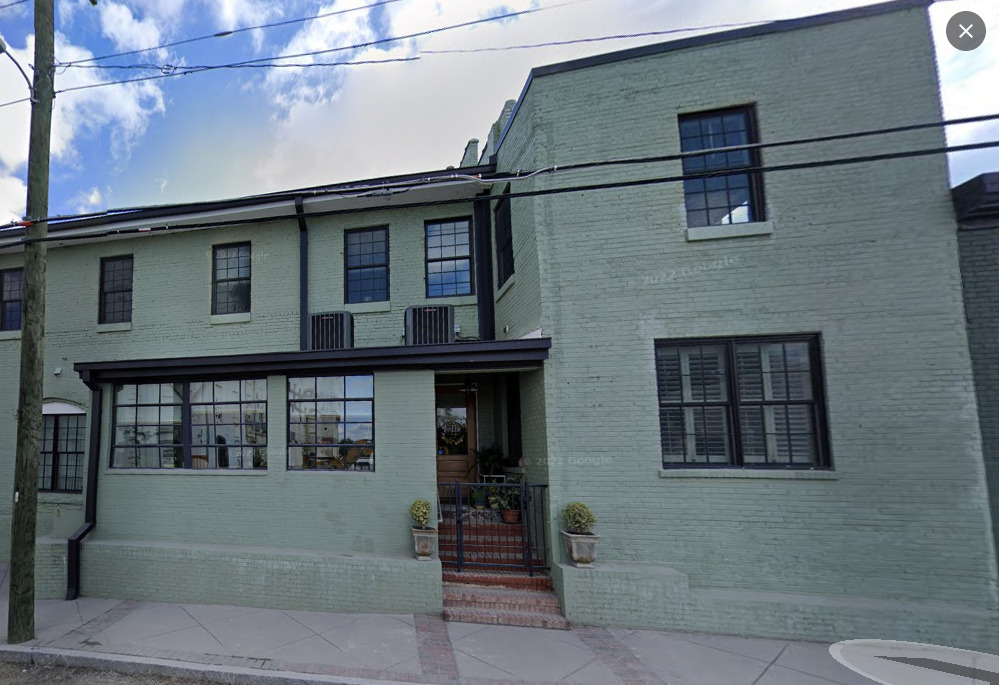
232-238 Willow Street
225-227 W. Oak Street
No current listings
Spencer’s Mill is a former apparel manufacturing complex in downtown Mount Airy. The buildings were converted to 16 condos in 2017. The complex received a 2019 North Carolina Main Street award for downtown revitalization.
Mount Airy Historic District NRHP nomination: “In 1926, J.H. Crossingham moved to Mount Airy from the Philadelphia area of Pennsylvania, where his father had established the Crossingham Knitting Mill in 1889 to produce ‘Dr. Spencer’s’ union suits. In Mount Airy, on July 8, 1926, the young Crossingham joined with W.E. Lindsey, John Banner, and F.L. Hatcher in establishing the Mount Airy Knitting Company. … J.H. Crossingham Jr. later became president, chairman of the board, and chief operating officer.
“Although the company initially manufactured union suits and other forms of underwear, this use evolved in the late 1940s. Seeing the opportunity presented by the baby boom after World War II, the company began to produce, almost exclusively, infants’ and children’s wear.
“In 1962, the company changed its name to Spencer’s Incorporated of Mount Airy, N.C., in honor of the ‘Dr. Spencer’s’ underwear the company had produced in its early days. For more than three quarters of a century, it prospered, with numerous expansions … until it became one of the largest and most respected producers of infants’ and children’s wear in the United States. The company that started in 1926 with only twelve employees grew to have some 2,000 employees, in Surry County alone, by the late 1980s. It closed in 2007.”
The Buchan Condominiums, North Wilkesboro
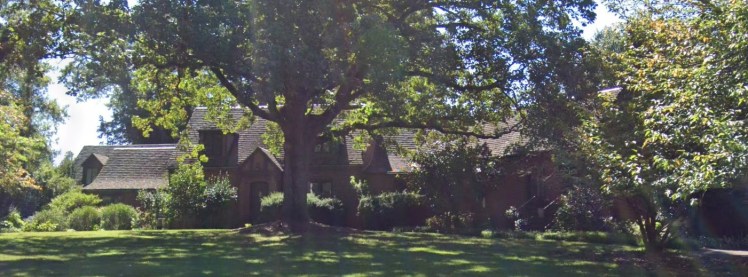

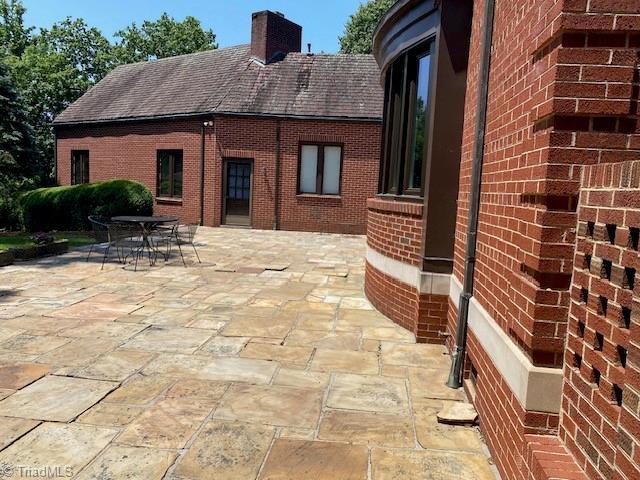

501 Finley Avenue, North Wilkesboro
No current listings
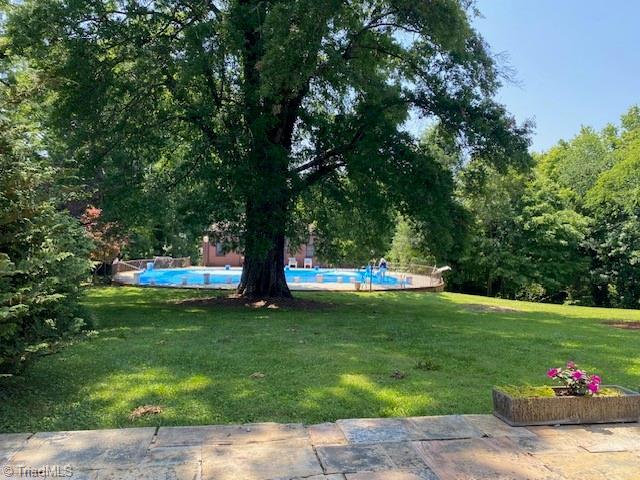
A grand 1949 mansion on 2.32 acres, converted into five condos around 1988.
H. Carl Buchan (1915-1960) and Ruth Lowe Buchan (1912-1994) were apparently the original owners. They were listed in the city directory as living on Finley Avenue by 1949. Carl had come back from Army duty in World War II and joined his brother-in-law James Lowe in operating the North Wilkesboro Hardware Store, founded by Lowe’s father in 1921. They shrewdly decided to capitalize on the post-war housing boom by concentrating on building materials and appliances. They also changed the name to Lowe’s. By 1952 Carl and James had a difference of opinion about expanding the business. Carl bought James’s share (and James founded a supermarket, also named Lowe’s and also now a chain). By the time of Carl’s fatal heart attack in 1960, Lowe’s had 26 stores. He was 44 years old.
Key City Loft Condos, North Wilkesboro



407 F Street, North Wilkesboro
No current listings
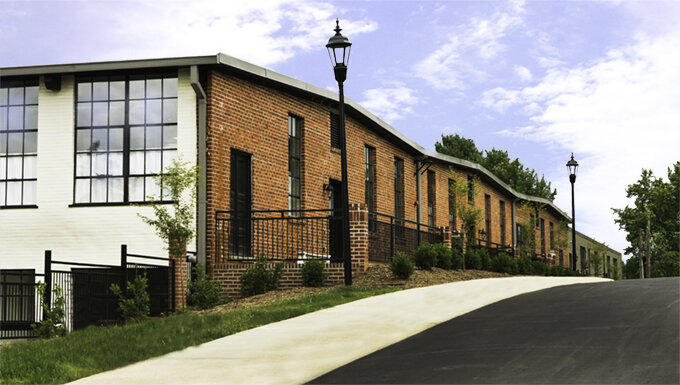
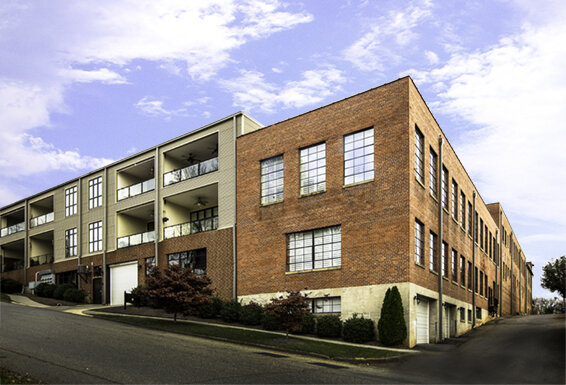
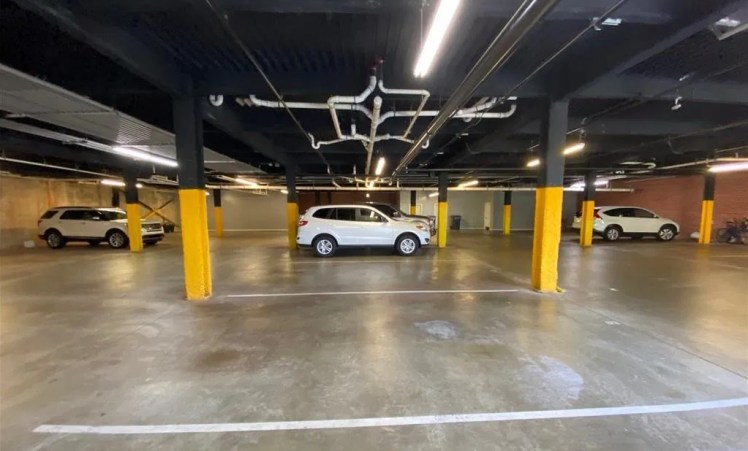
Originally Wilkes Hosiery Mills, built in 1923 with additions in 1927, two in 1929 and 1947. The historic mill was converted into 35 loft condominiums in 2010.
Listed on the National Register of Historic Places: “Still on its original site and in its original setting at the edge of a middle-class residential area, Wilkes Hosiery Mills grew from 1923 to 1947 to accommodate its ever-increasing need for more space. The additions, however, did little to change the sections of the mill that had come in earlier years. …
“Wilkes Hosiery Mills is an excellent, well-preserved, and rare representative in North Wilkesboro of the standard industrial design of the second quarter of the twentieth century. It displays the signature features of this construction in its solid brick perimeter walls, wood floors, wood ceilings laid on heavy, exposed wood joists supported by a grid of heavy wood posts with wood collars (the 1947 additions have concrete floors, steel I-beam ceilings joists, and no support posts), and outside walls lined with large industrial windows that remain exposed. Wilkes Hosiery Mills is rare in North Wilkesboro because it is the only pre-1950 textile mill that survives and, in fact, is one of the very few pre-1950 industrial buildings left standing from among the many that once were part of the town’s industrial landscape.
“The period of significance for Wilkes Hosiery Mills extends from 1923, the year in which the first section of the mill was built on F Street and business began to boom, to 1957, the year in which the company ceased to operate.”
226 Settle Street, Reidsville
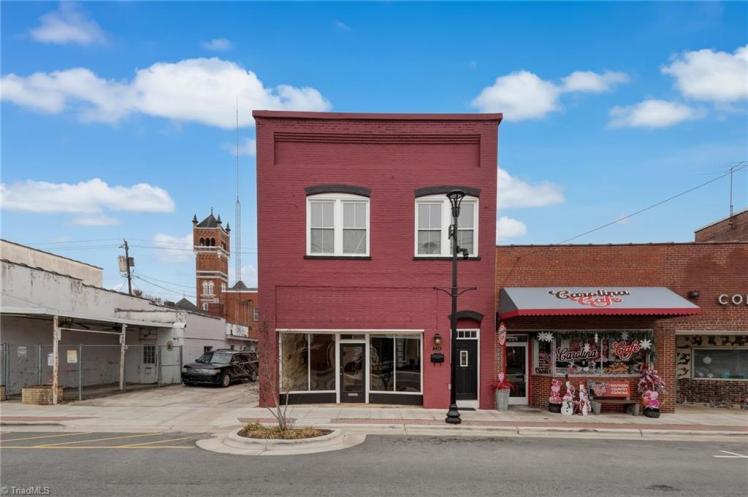
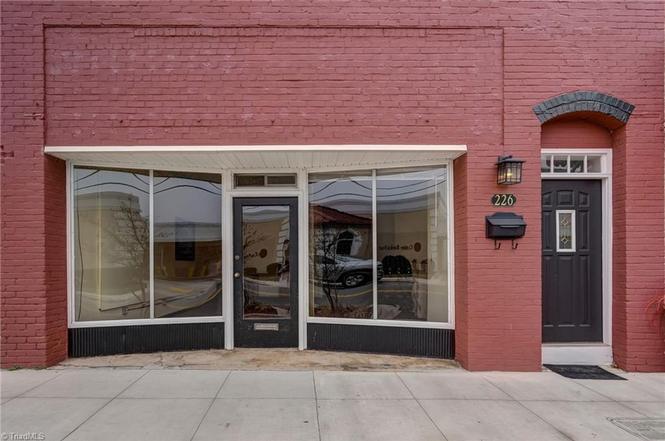
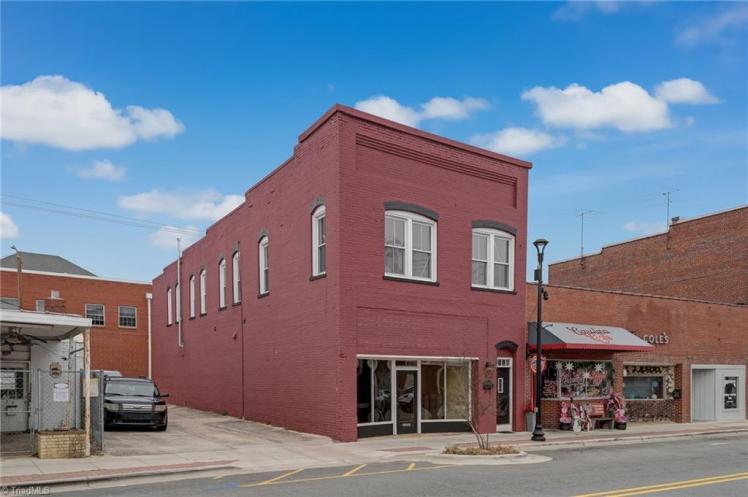
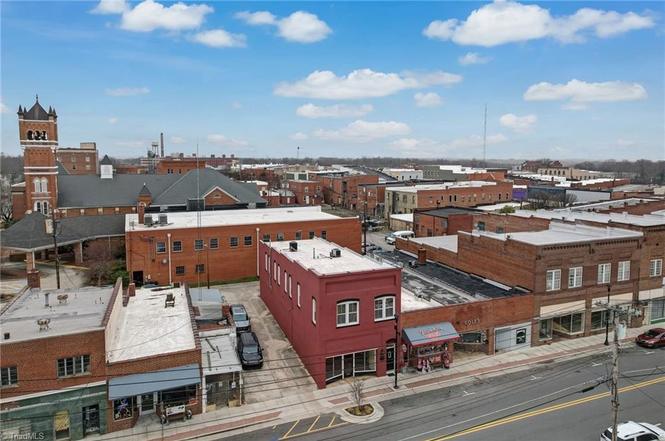
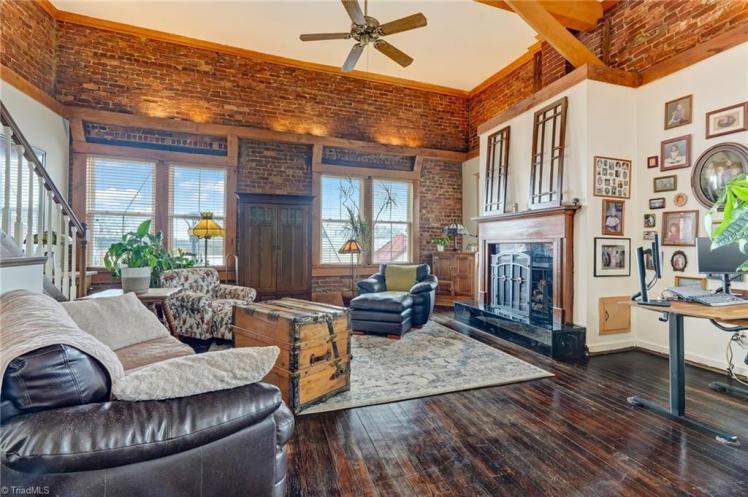
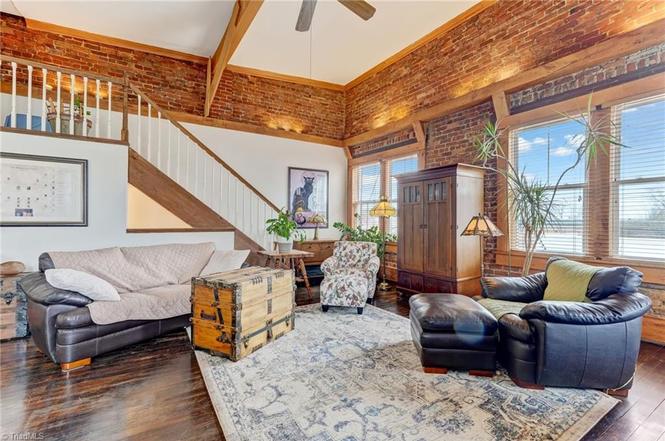
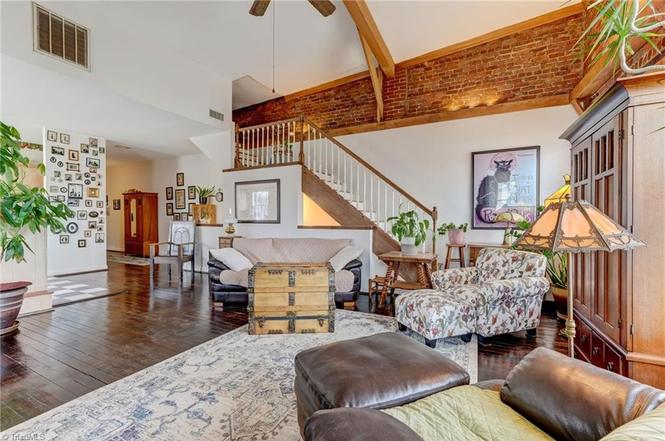
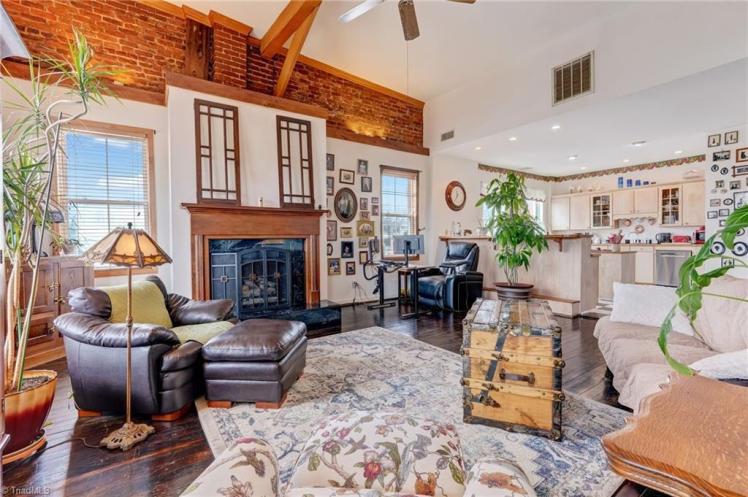
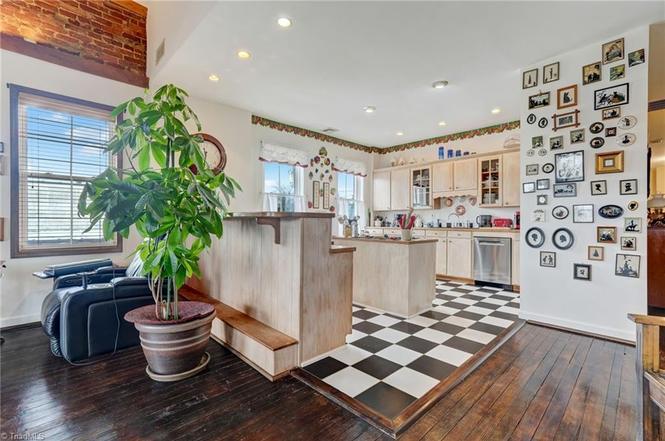
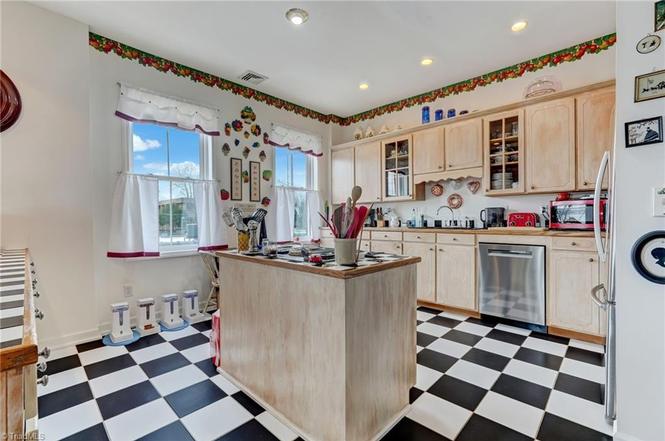
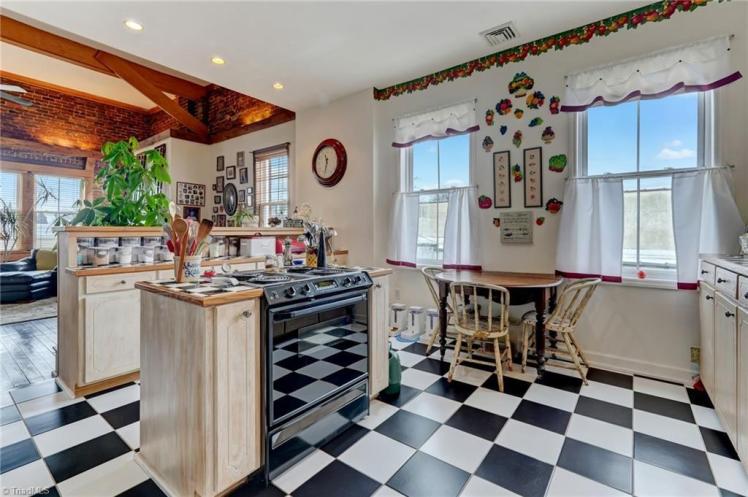
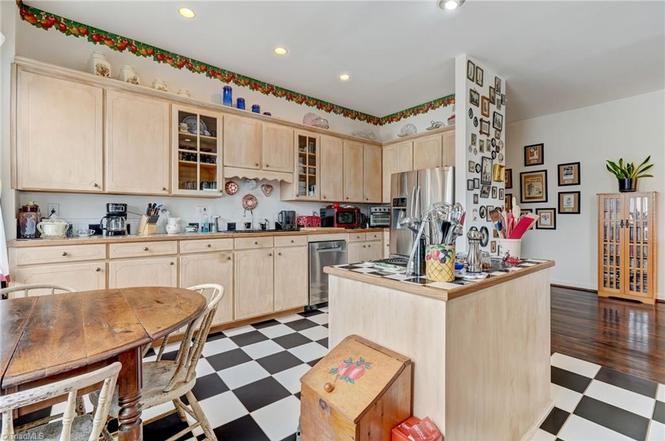
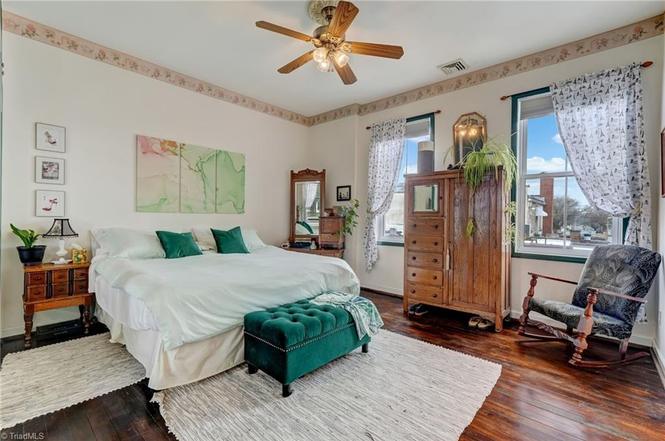
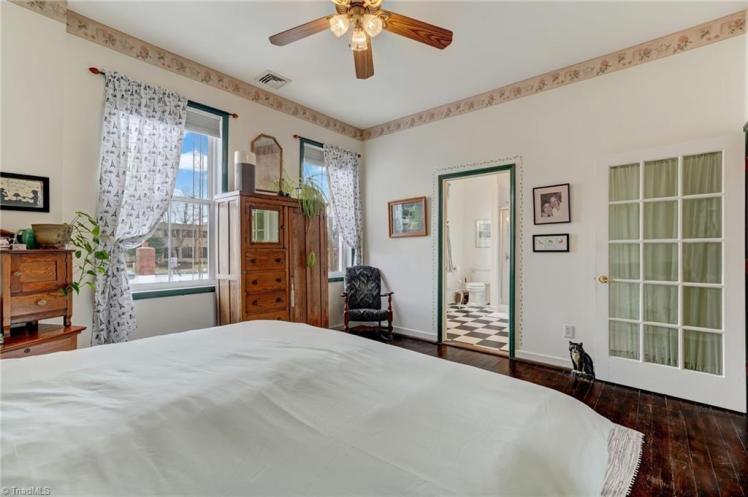
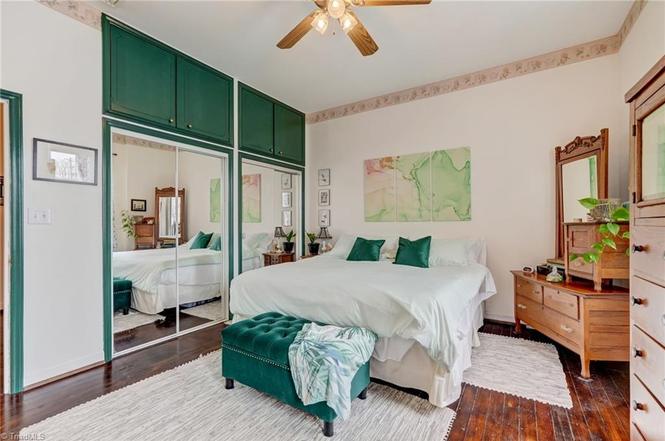
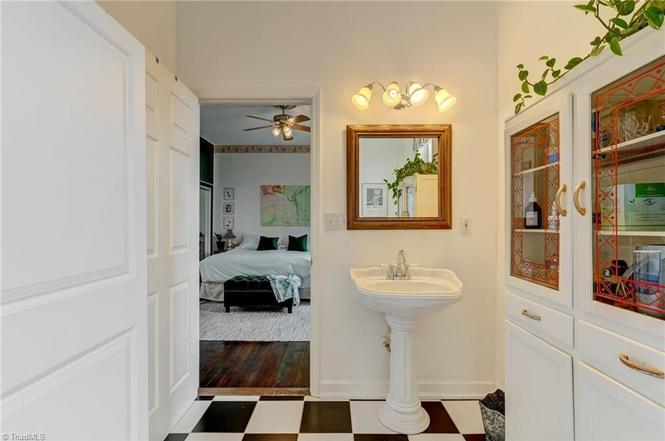
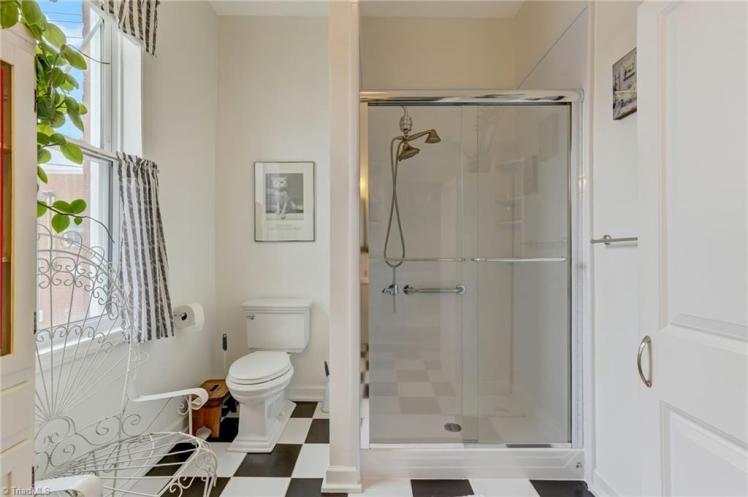
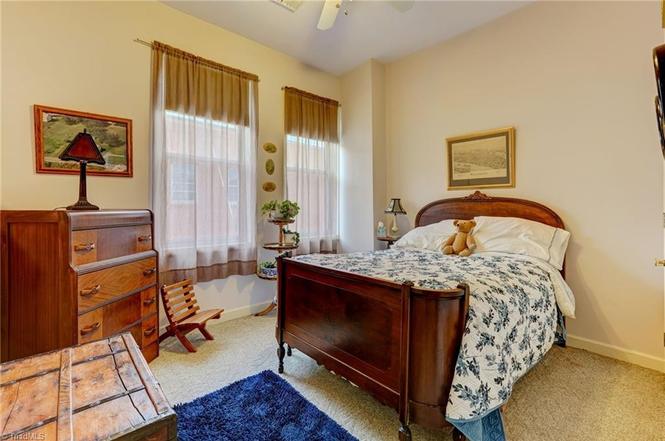
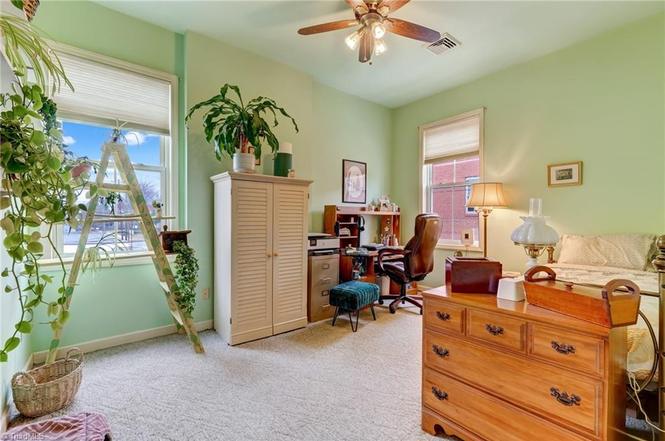
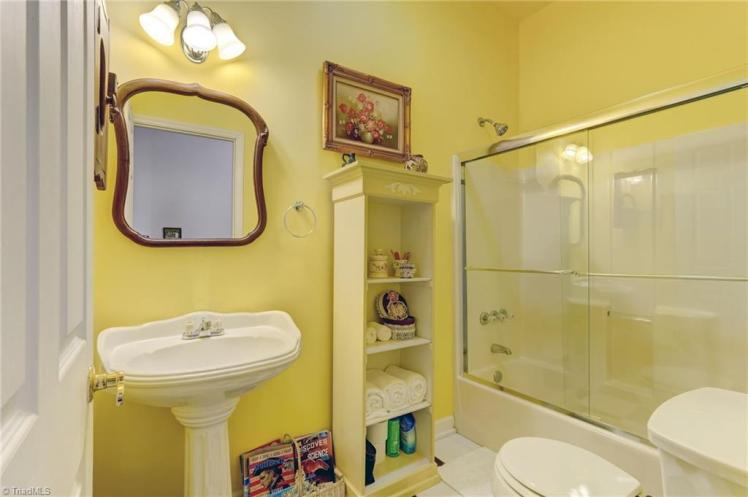
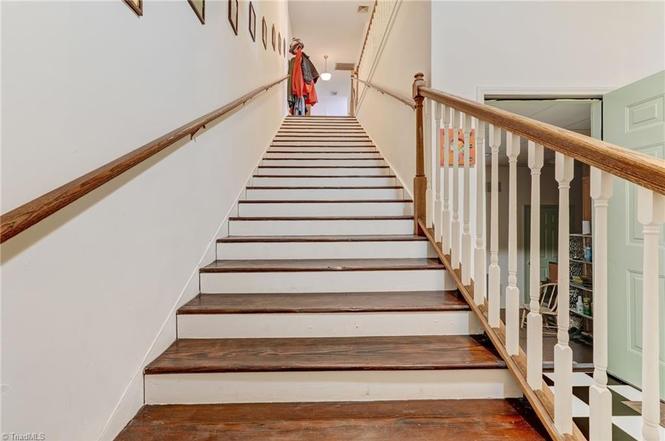
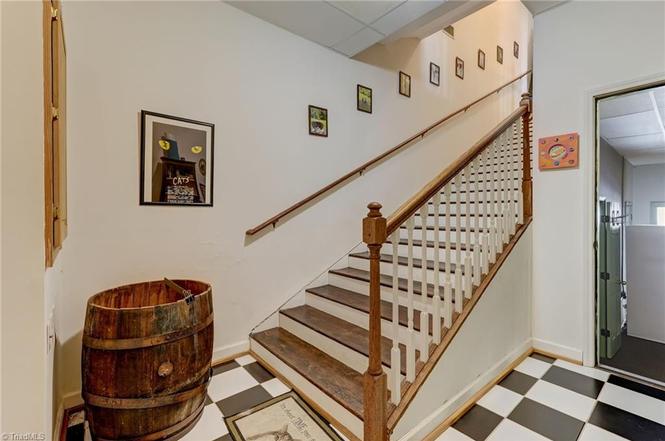
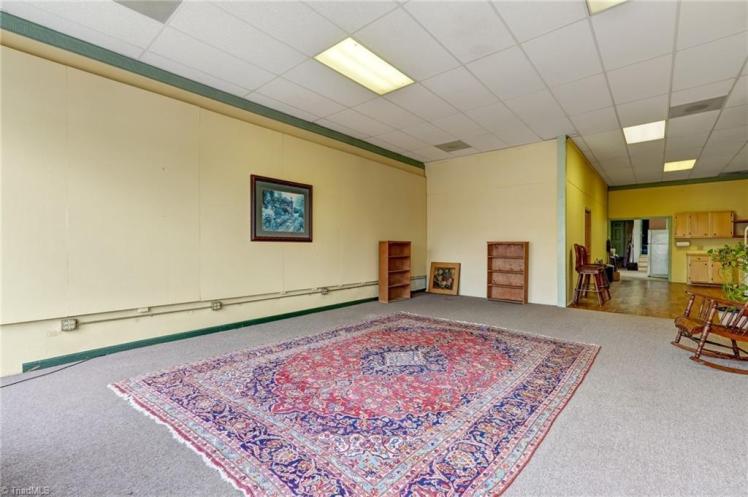
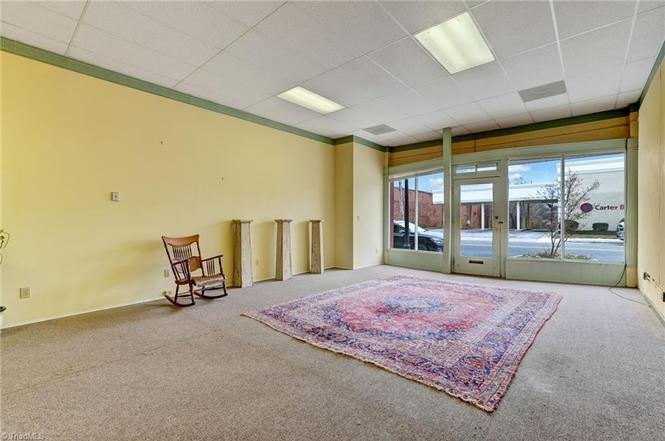
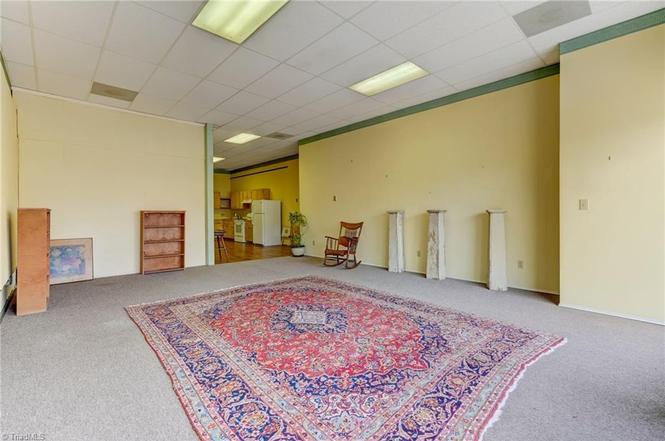
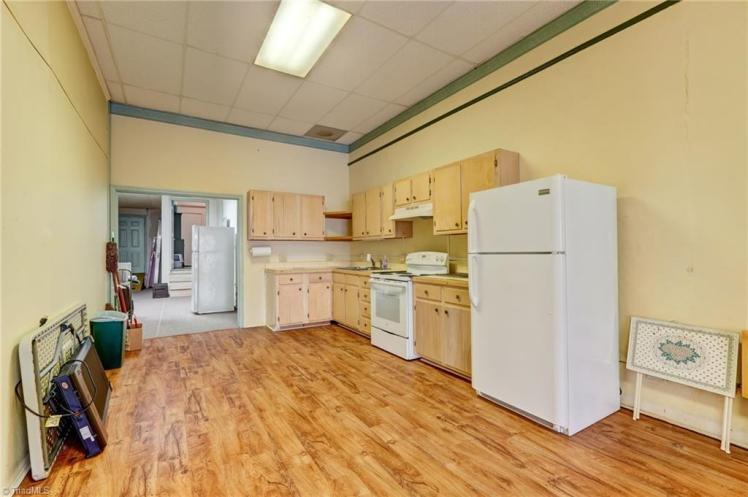
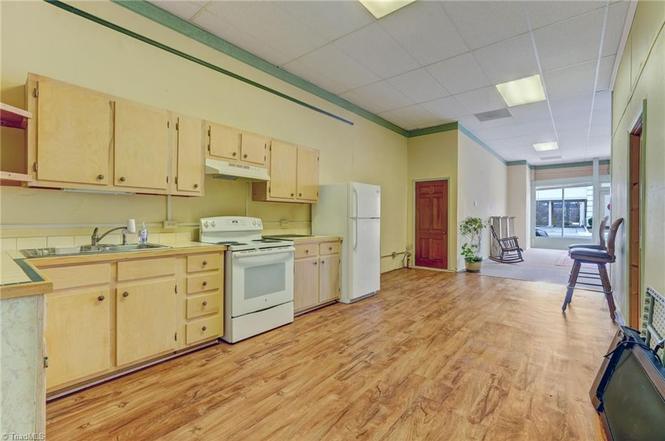
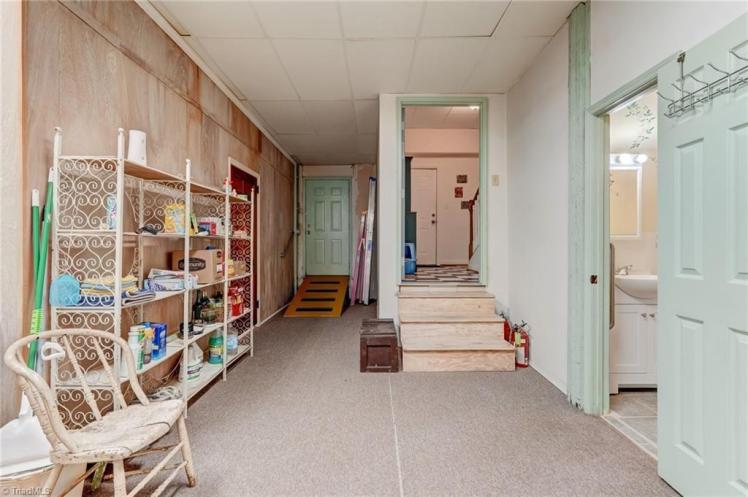
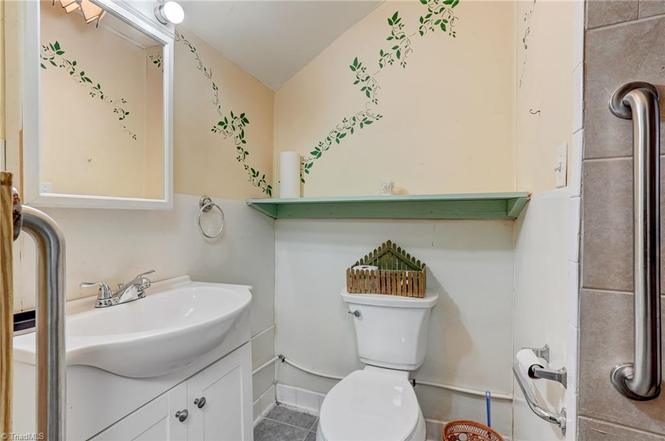
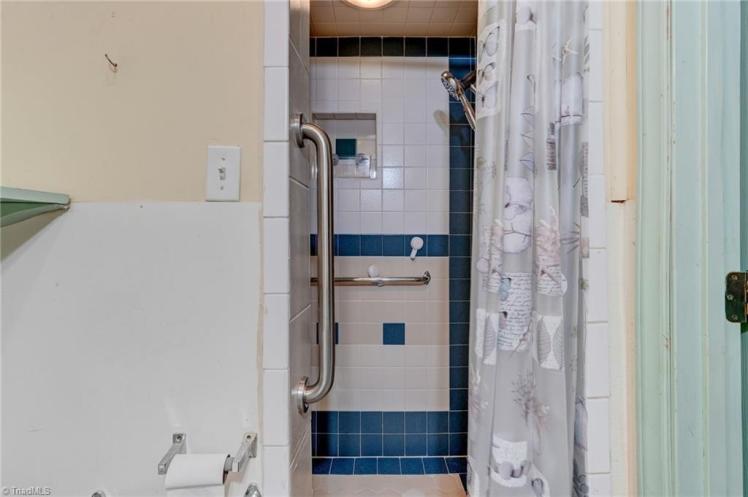
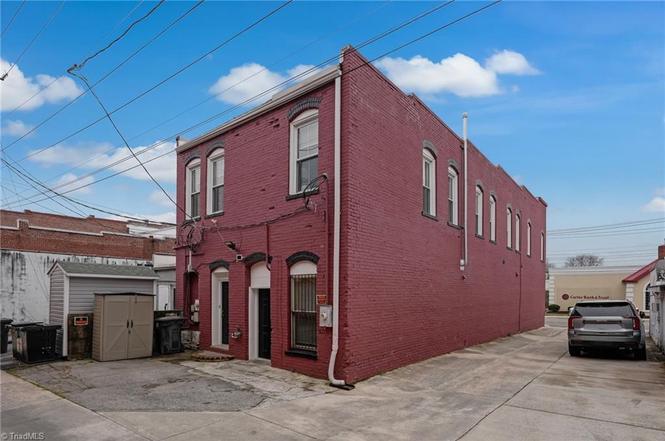
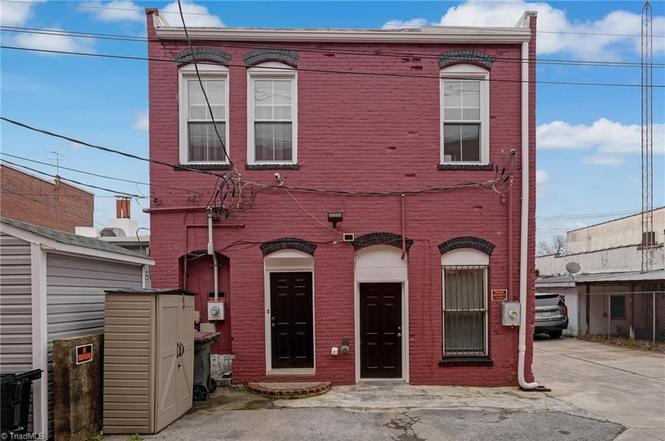
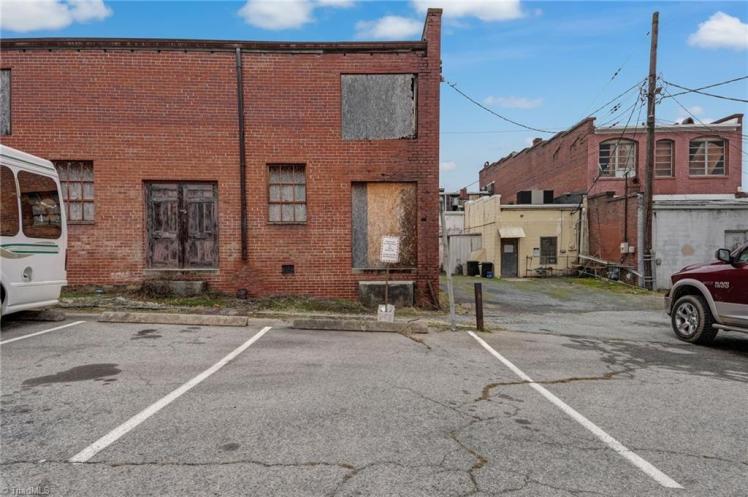
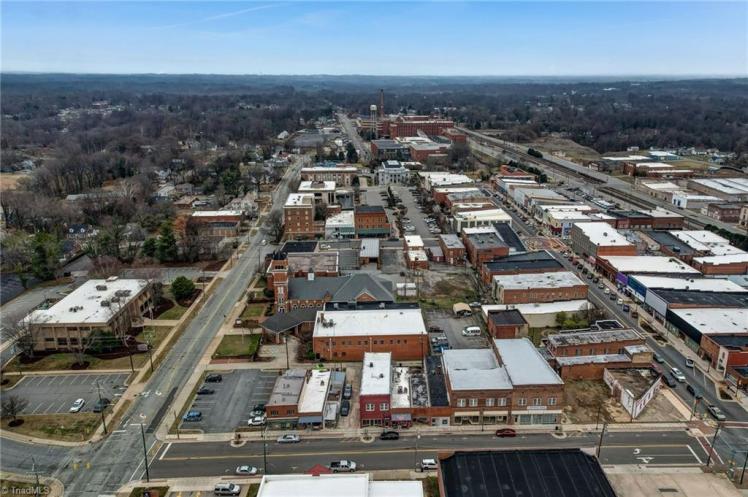
226 Settle Street, Reidsville, Rockingham County
Reidsville Produce Wholesalers Building
- $359,900
- 3 bedrooms, 3 bathrooms, 4,050 square feet, 0.05 acre
- Price/square foot: $89
- Built in 1922
- Listed March 4, 2026
- Last sale: $28,000, January 1996
- Neighborhood: Downtown, Reidsville Historic District (NR)
- Note: The second floor is a 3-bedroom, 2-bathroom living space. The first floor is commercial space with a kitchen and full bathroom. The listing covers both floors.
- District NR nomination: “This two-story brick commercial building was the location in 1929 of Reidsville Produce Wholesalers. The two-bay facade features paired one over one windows in broad segmental arch openings, above which is a recessed horizontal panel with corbeled top course.
- “The stepped west elevation has eight segmentally-arched one over one windows on the second floor and five chimneys rising above the roofline. Beneath a flat metal canopy shading the sidewalk are two large plate glass windows flanking a transomed entrance.”
- By 1935, the Lucky City Motor Company, the local Ford dealer, occupied the building. In 1958 it was a Duke Power office.
Sissipahaw Lofts, Saxapahaw
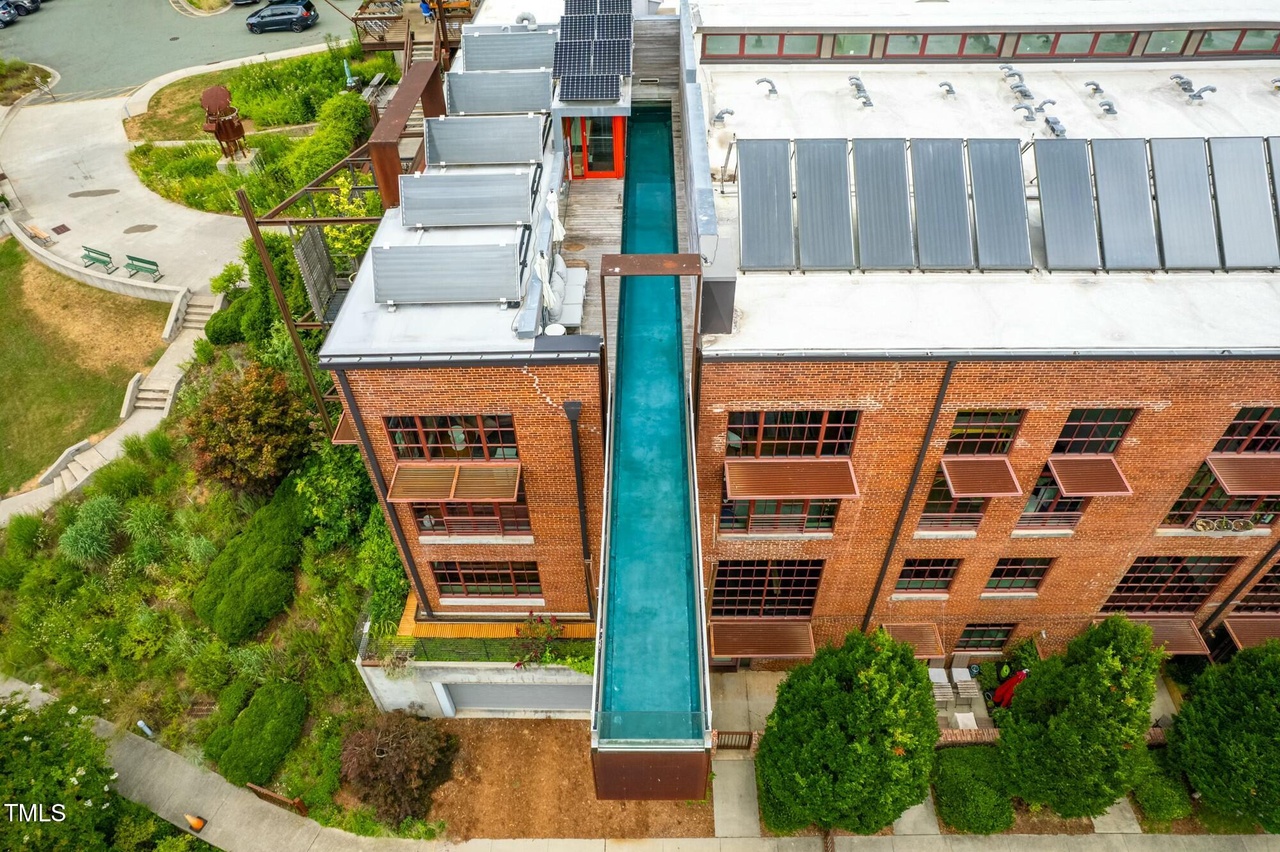
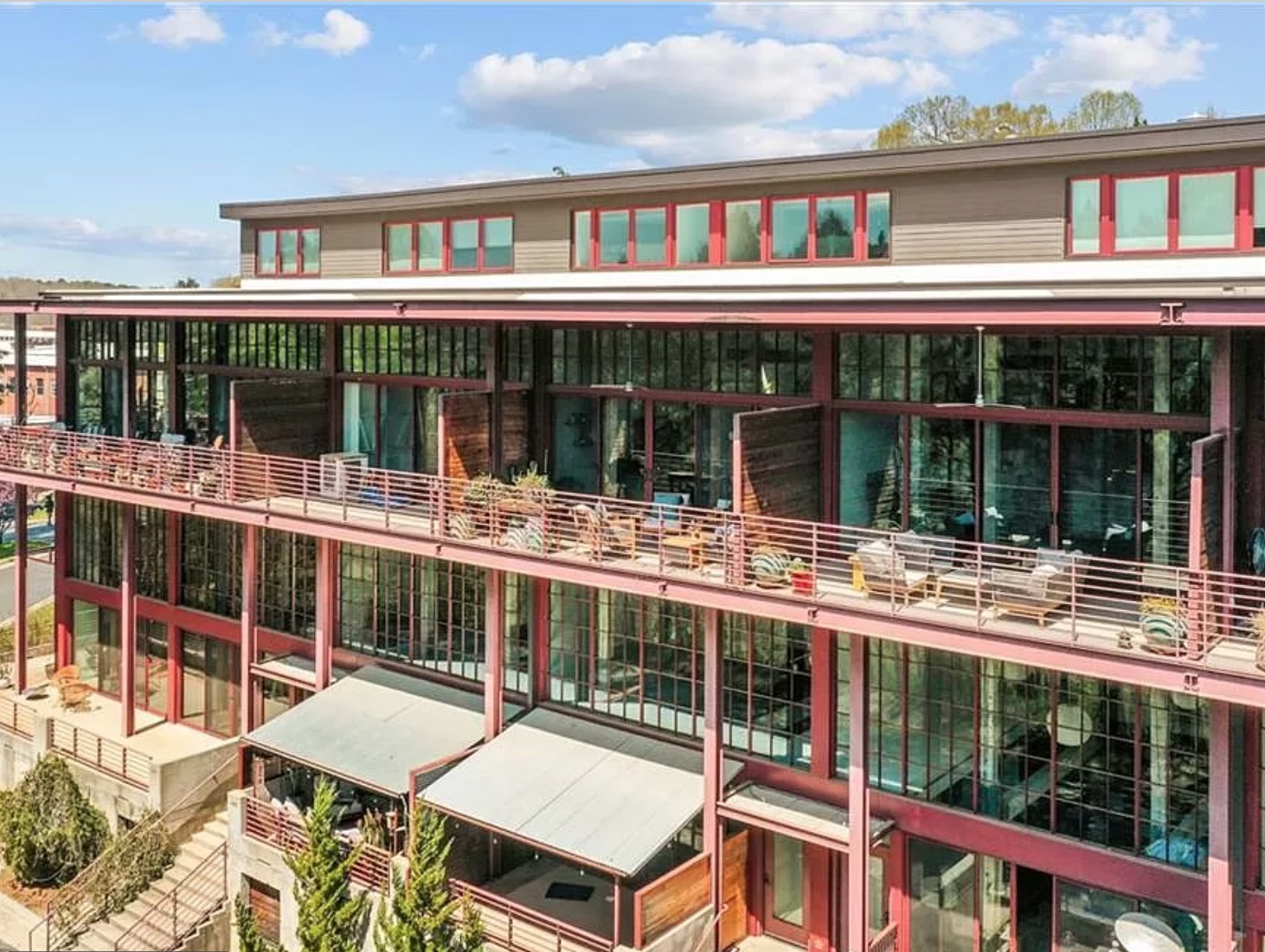


1860-1880 Sissipahaw Way
No current listings
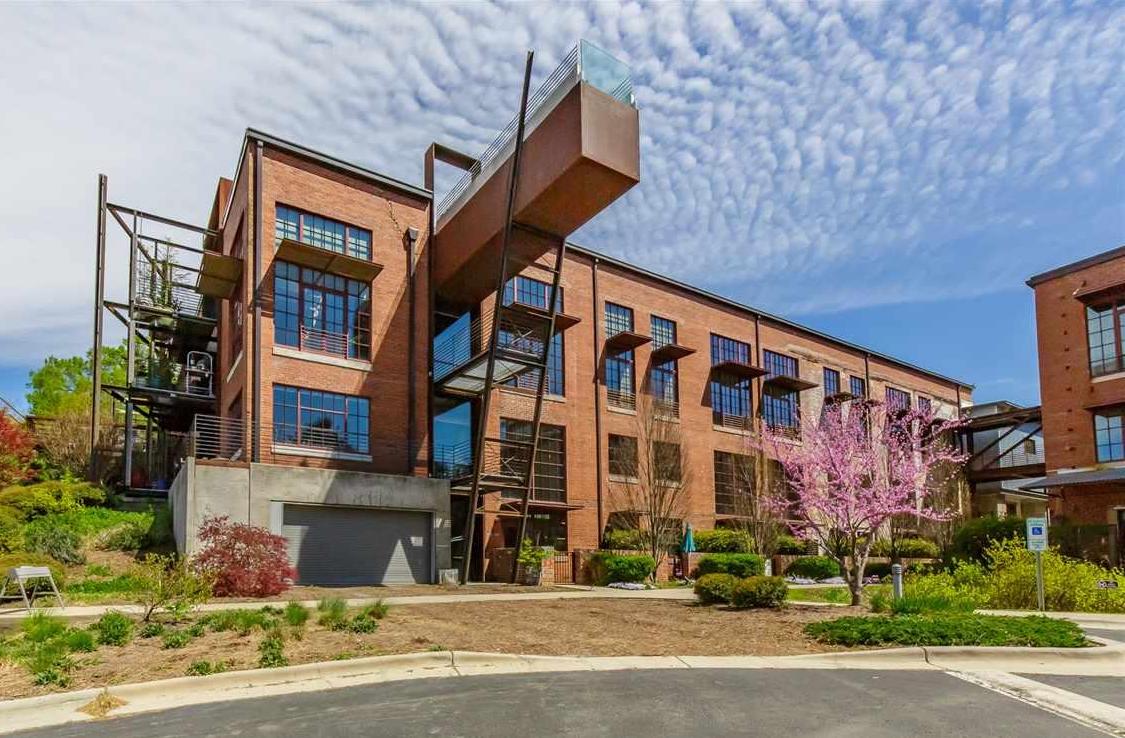
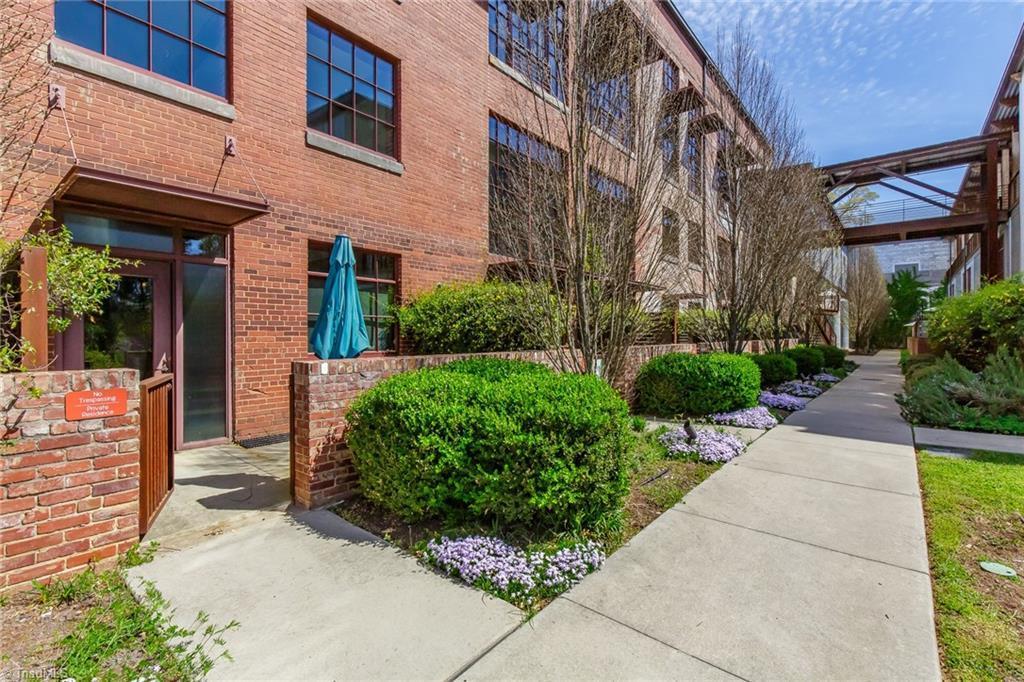
A 29-unit development on the Haw River in the Saxapahaw Cotton Mill and Dye House, founded in 1844. The mill closed in 1994; condos were being sold by 2013. The high prices reflect Saxapahaw’s proximity to Chapel Hill (16 miles).
The redevelopment of the mill site was part of the Saxapahaw Rivermill project, which received a Greater Triangle Stewardship Award in 2015:
“The Upper Mill Project an exceptional example of redevelopment that positively respected its pastoral rural setting. Features included:
- “maintenance of the existing building footprints (no new built-upon areas).
- “wooded interior timbers repurposed from the original mill or locally sourced from timbers from other former mills.
- “walking/hiking trails for residents and visitors as well as users of the Mountains to Sea and Haw River Trails.
- “an amphitheater for community gatherings constructed in the former coal pit.
- “a bioretention pond and a series of protective wetlands that clean runoff before it reaches the Haw River.
- “re-plumbing that will allow grey water to be used for toilet flushing in the future.
- “irrigation of landscaping with captured rainwater.
- “solar energy to heat water and buildings.”
West Main Condominiums, Thomasville


34-36 W. Main Street
No current listings
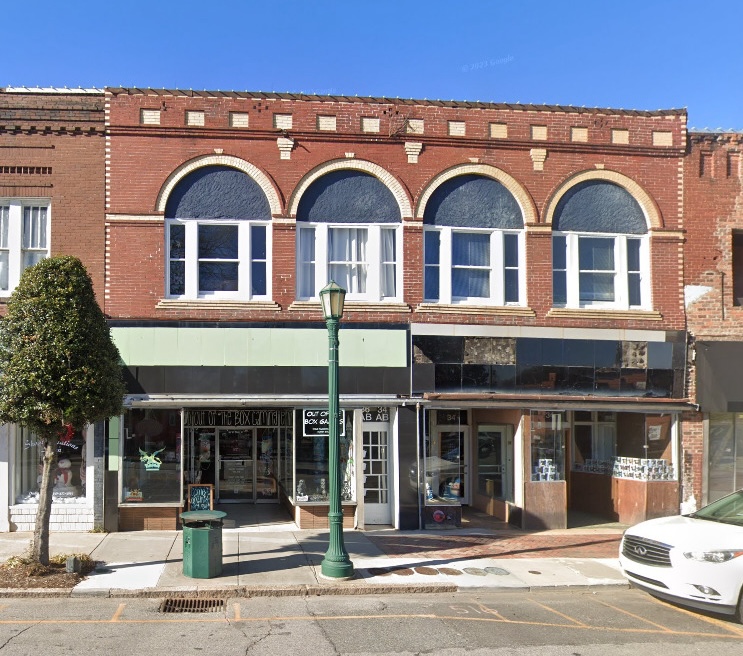
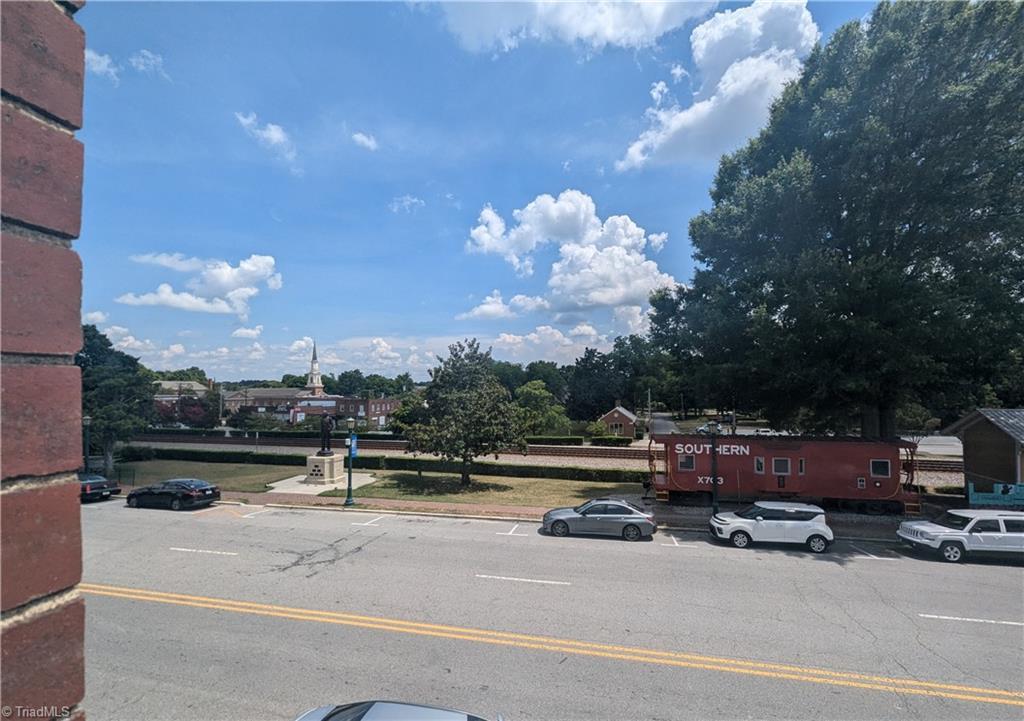
The building became condos in 2024.
District NR nomination: “The second-story detailing of the two-story brick building is enhanced by the use of contrasting red and yellow brick. The cornice is corbeled and has recessed blocks of yellow brick as well as three yellow-brick corbeled pendants.
“The second story has four oversized arched windows with yellow-brick arches, projecting red brick hood molds with yellow-brick keystones, yellow-brick corbeled sills, and brick pilasters between the windows that have red- and yellow-brick caps integrated into a belt course that crosses the entire facade. … At one time, pigmented structural glass — probably dating from the 1930s — partially covered the two storefronts, but most of is has been removed.
“Vinyl German siding covers the short wall beneath the display windows on the east storefront (34 ), while the same area on the west storefront (36) is sheathed in narrow bricks. Both storefronts feature metal-framed glass display windows and single-leaf recessed doors.
“The recessed entrance to 34 has a patterned-tile floor. A much smaller storefront, 34-A, is deeply recessed. Between 34-A and 36, a door opens to a narrow stair to the second floor.
“Windows on the rear elevation have arched heads. The store at 36 West Main Street retains its decorative pressed metal ceiling.
“Kress Dry Goods and Hanes Cafe occupied this building in the late 1920s. By mid century, Wagger Jewelry Company and Advance Stores Company, auto parts, were here.”
Members of the Kress family owned the building by 1940 and sold in 1988. Leon A. Kress (1880-1962) came to the United States from his native Lithuania in the early 1900s. He operated Kress Dry Goods in the building. Leon and Fannie S. Cohen Kress (1882-1968) built a remarkable home on Salem Street, one of only three examples of the Craftsman “airplane bungalow” in Thomasville.
34 W. Main Street was later owned by one of his sons, Lewis Charles Kress (1906-1987), who was in the commercial and residential real-estate business. Lewis was a member of the first graduating class at High Point College. Lewis’s estate sold the building in 1988.
 Piedmont Historic Homes