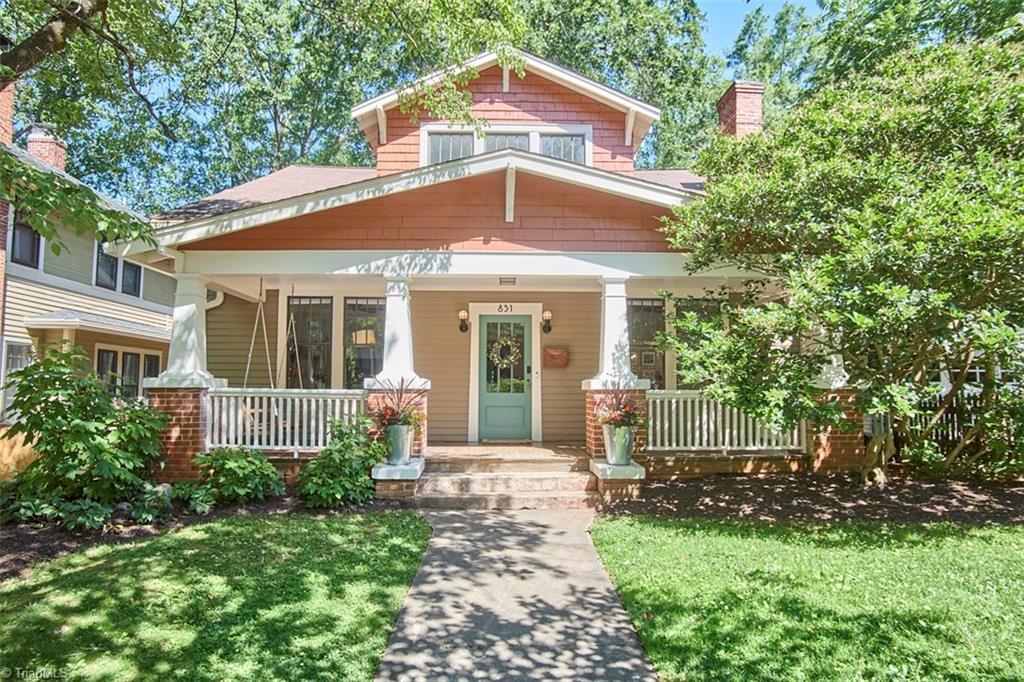
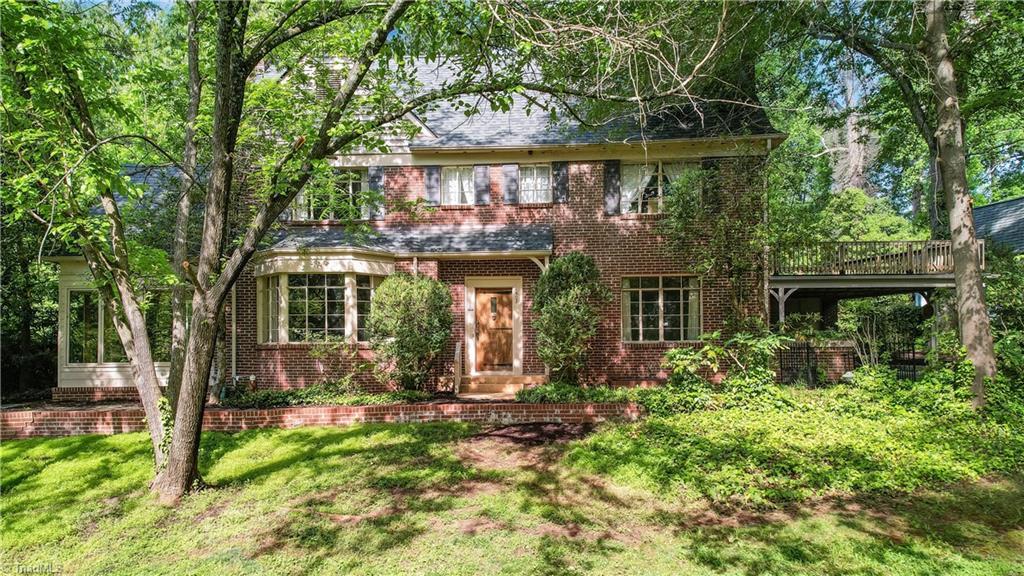
This Week’s Best: Two National Register Houses, a Sweet MCM in Asheboro and an 1875 House in Greensboro

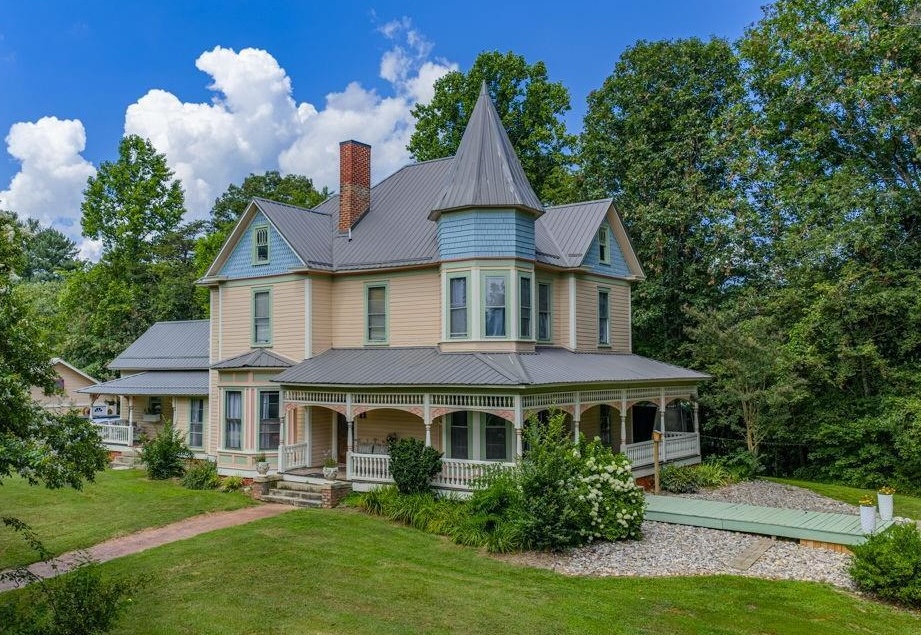
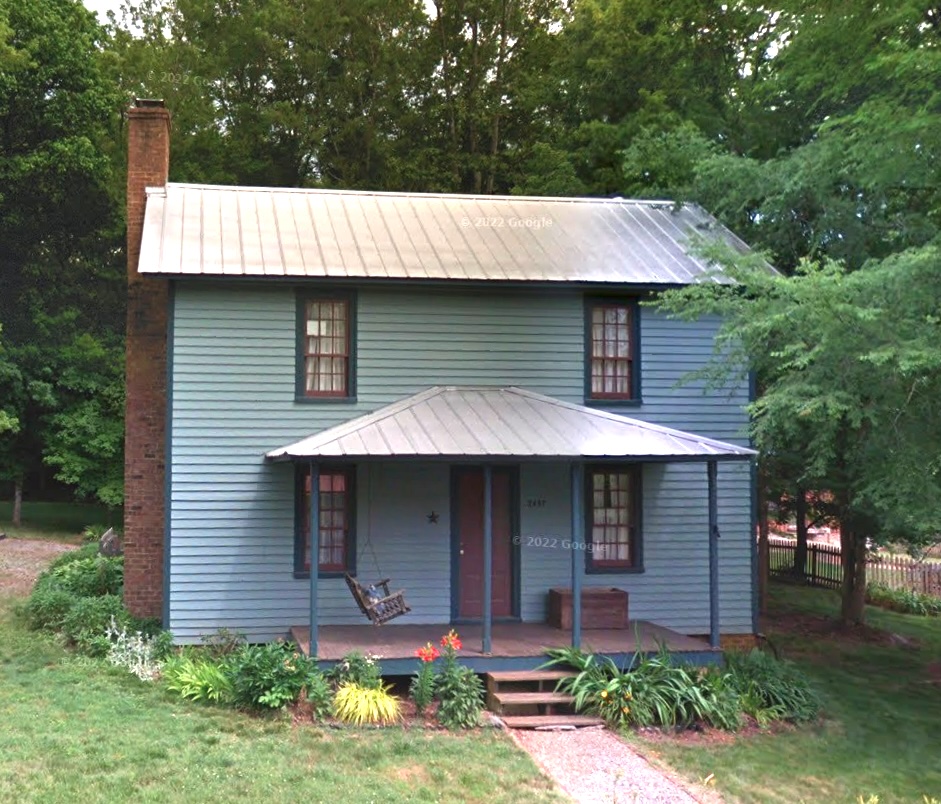
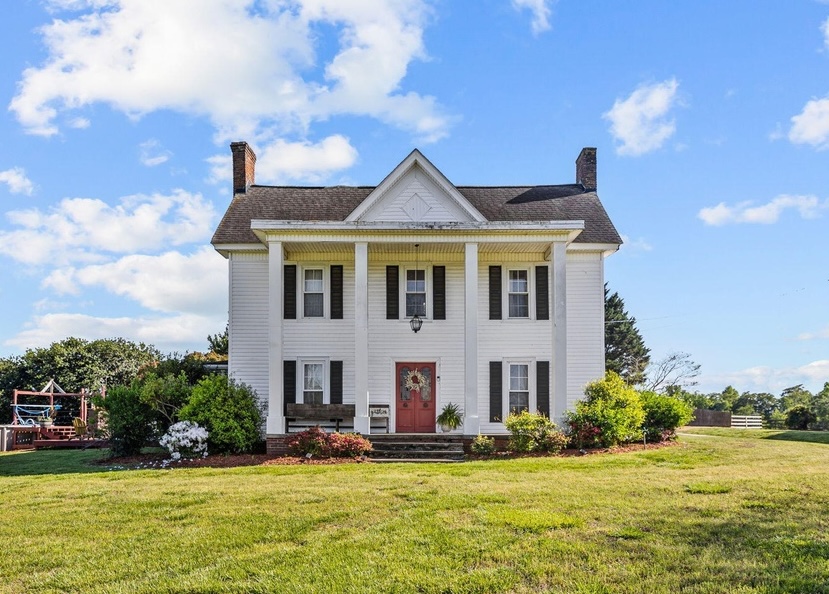
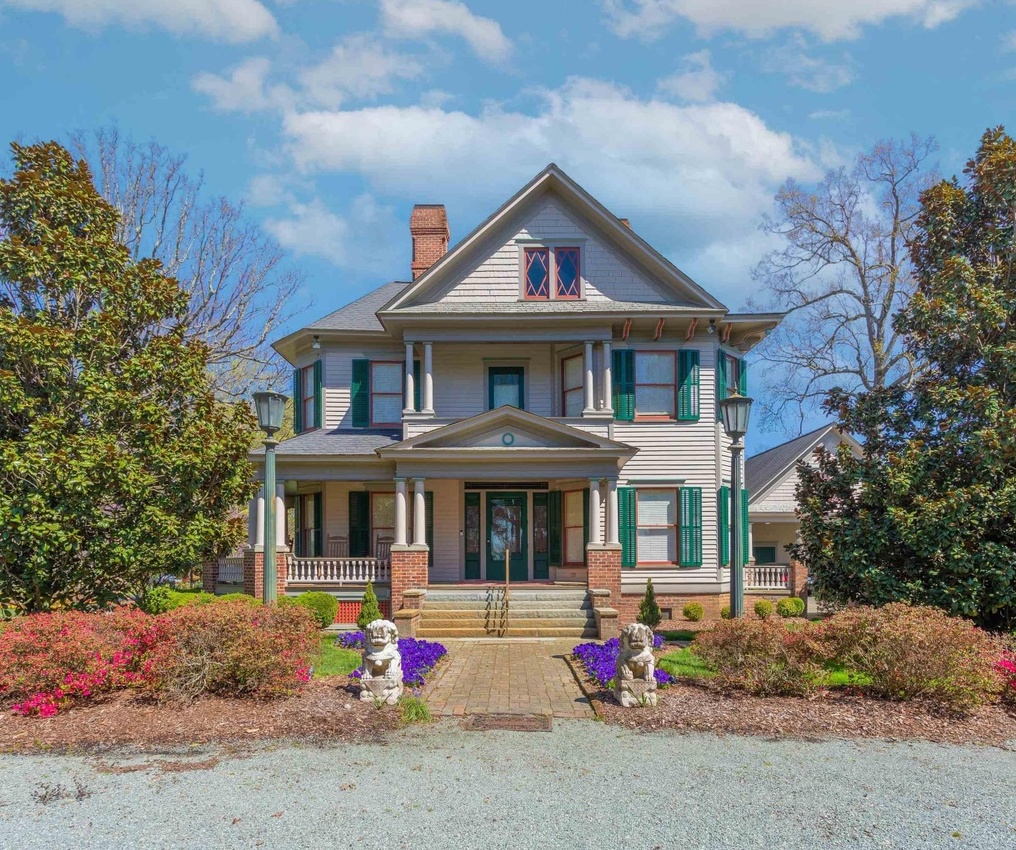
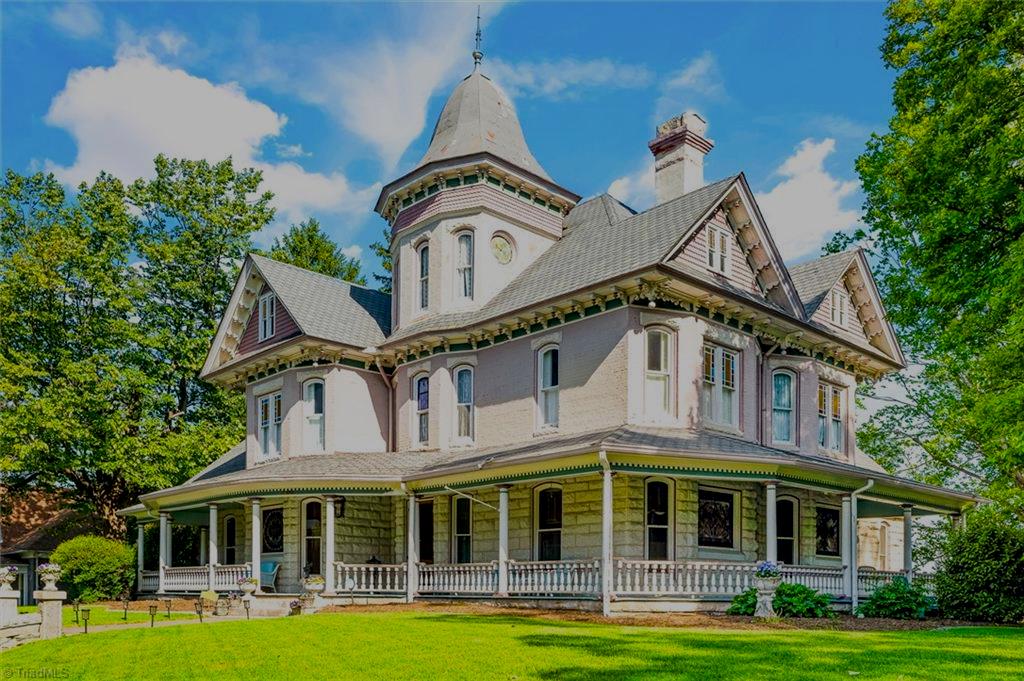
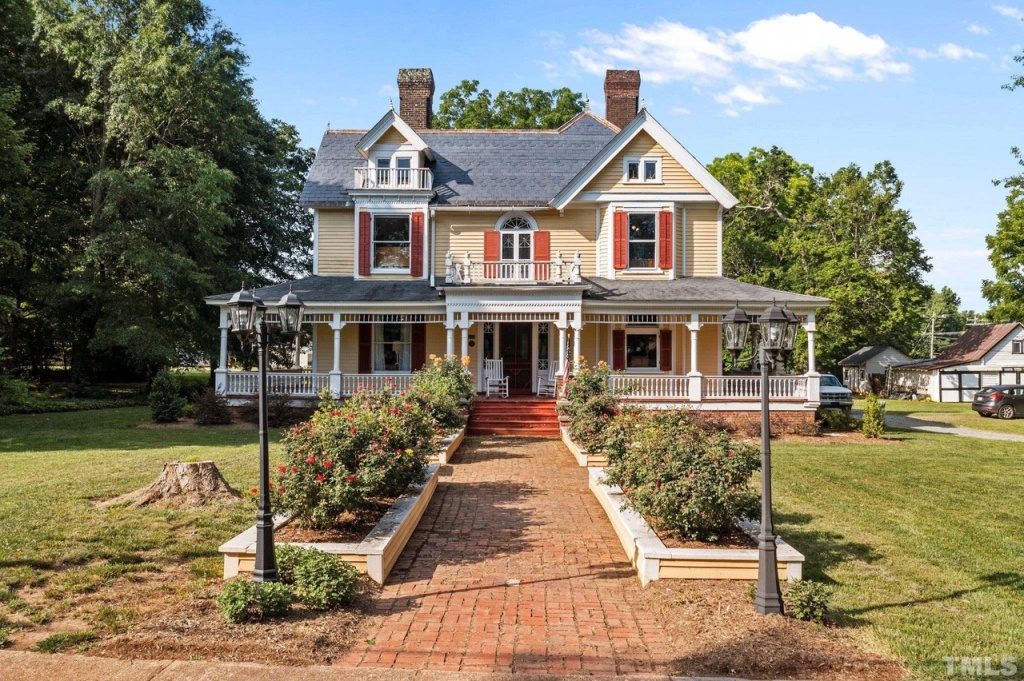
Two houses on the National Register were put up for sale this week. The John Randle House, circa 1800, on Lake Tillery near Norwood has 27 acres, a richly detailed history and a million-dollar price tag. The J.L. Hemphill House in Wilkesboro is an 1895 Queen Anne with just about the shortest National Register nomination you’ll ever see. Those things usually read like the writers got paid by the word.

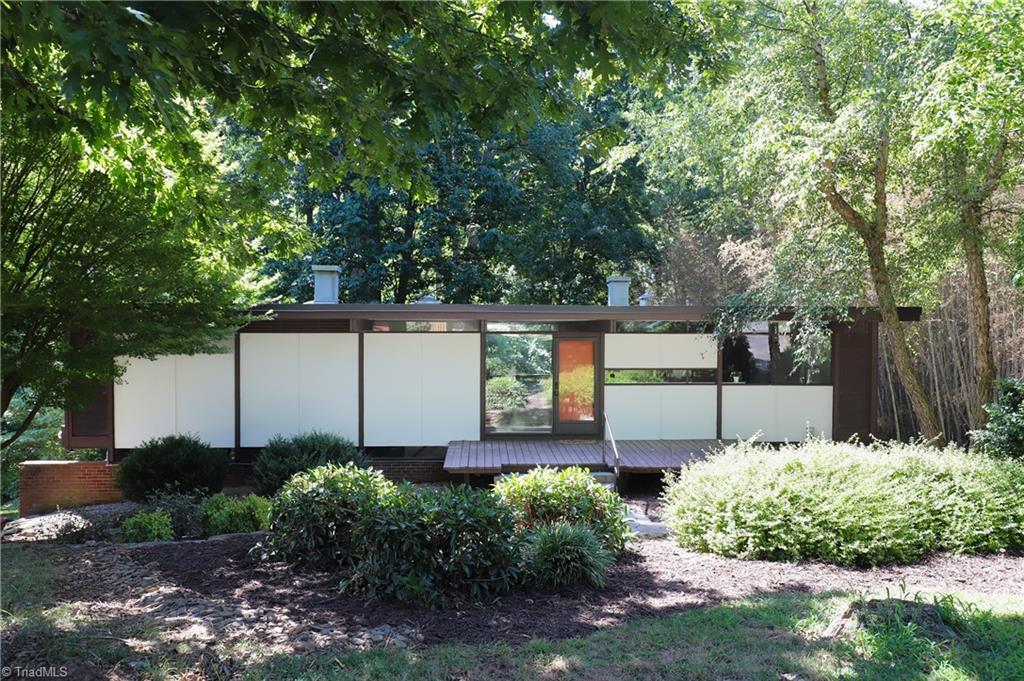
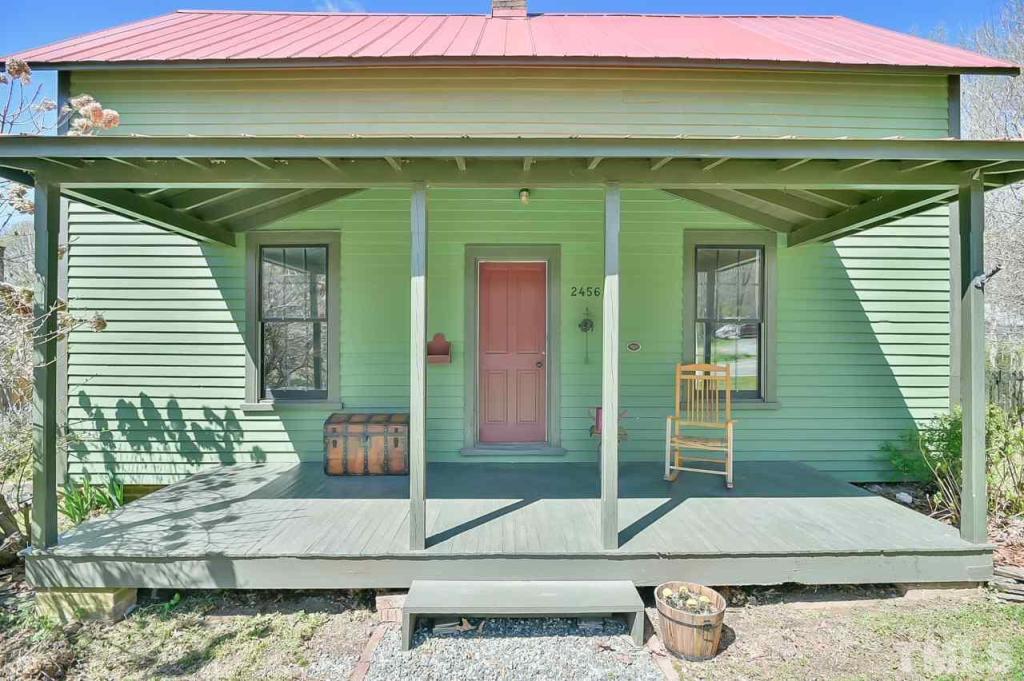
This 1979 Mid-Century Modern home in Asheboro is an outstanding example of the style, which isn’t too common in the region’s smaller towns but does keep popping up here and there, now and then.

Continue reading “This Week’s Best: Two National Register Houses, a Sweet MCM in Asheboro and an 1875 House in Greensboro”

A Huge Condo in a 1920 Building in Downtown Lexington, $535,000

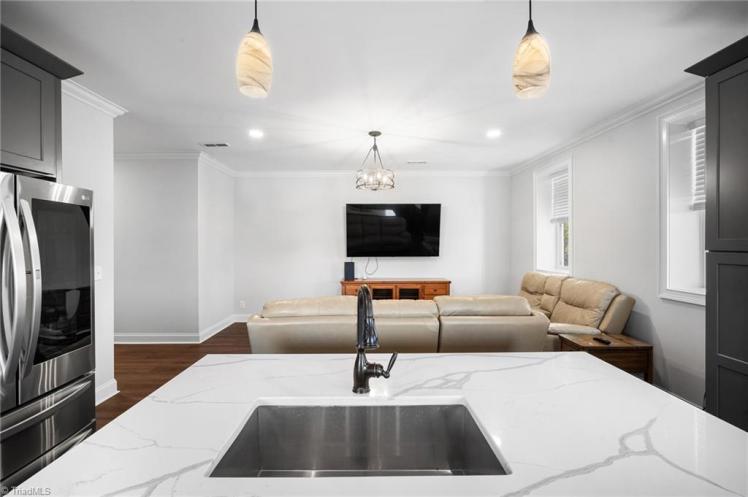
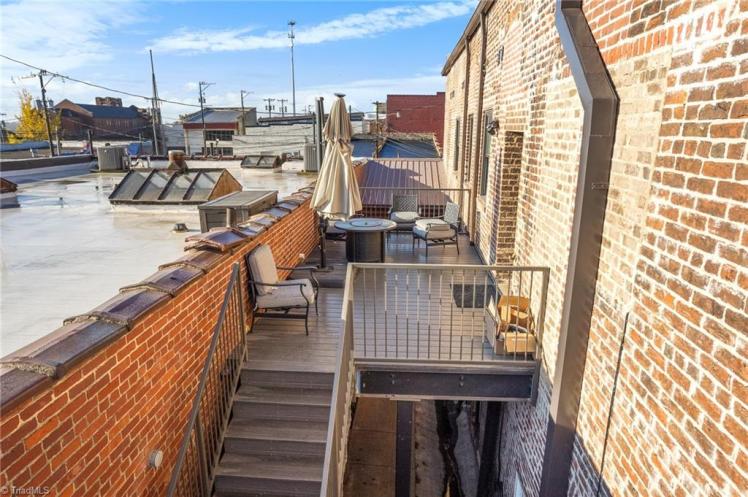
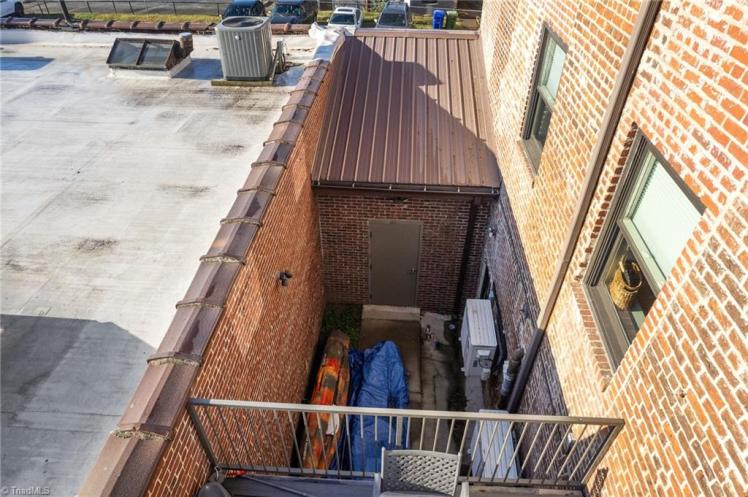
A 4,000 square-foot, $600,000 condo would be uncommon anywhere in the Piedmont. In downtown Lexington, it’s a unicorn. 121 N. Main Street is the second floor of a commercial building dating back to 1920 or so. The building itself is a small but attractive contributing structure to the Uptown Lexington Historic District on the National Register. It’s at the corner of North Main Street and East 2nd Avenue.

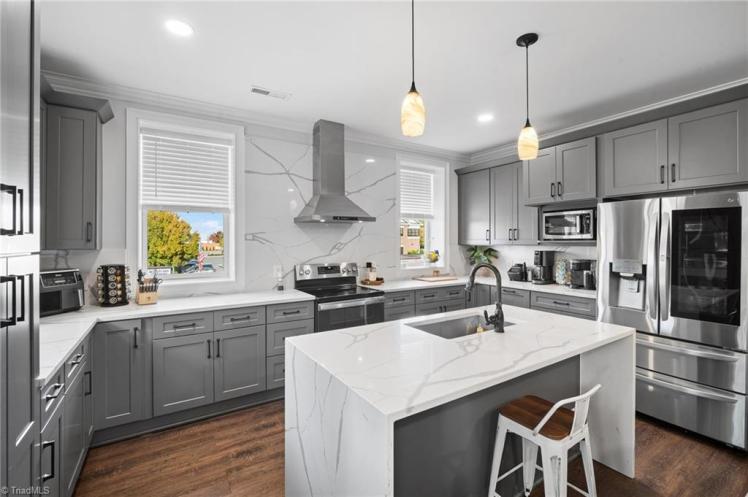
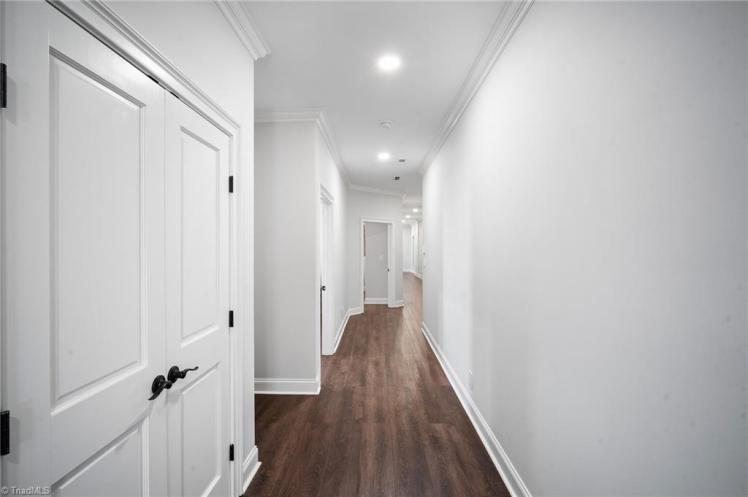
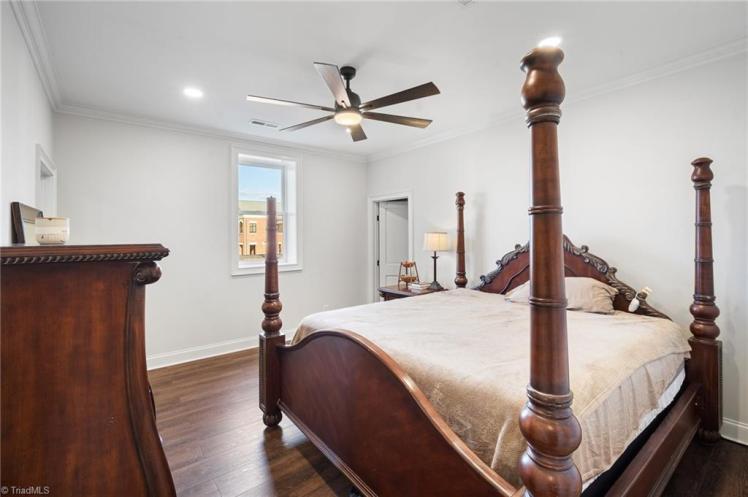
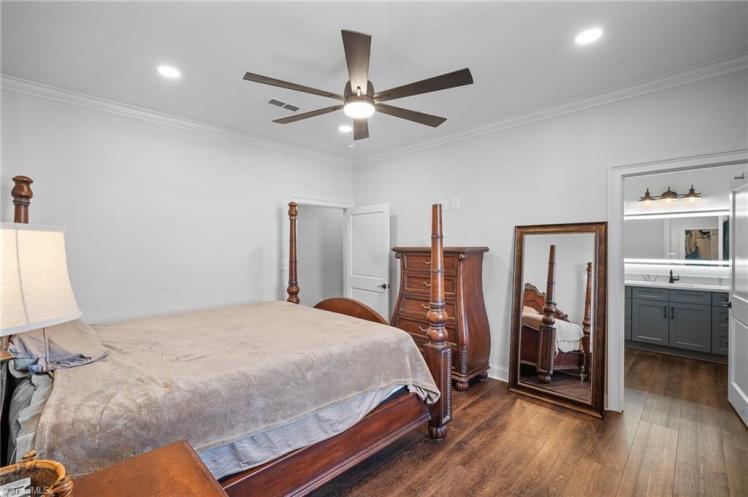
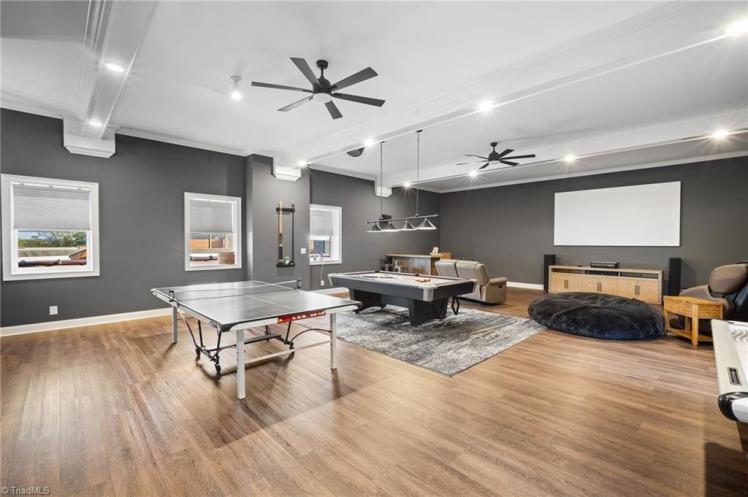
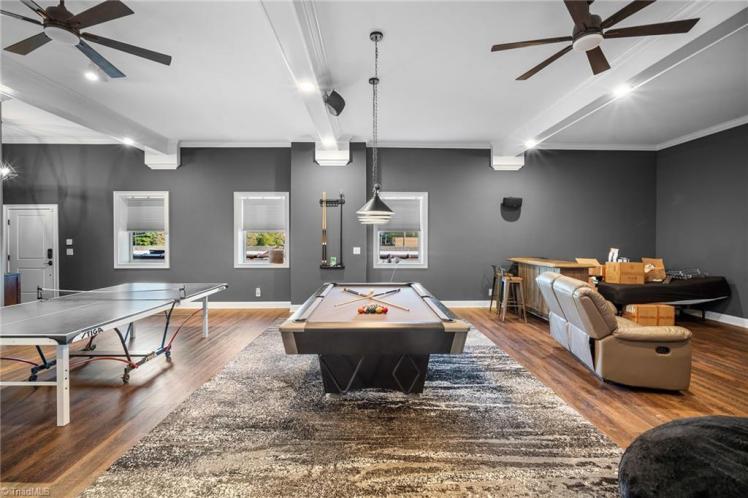
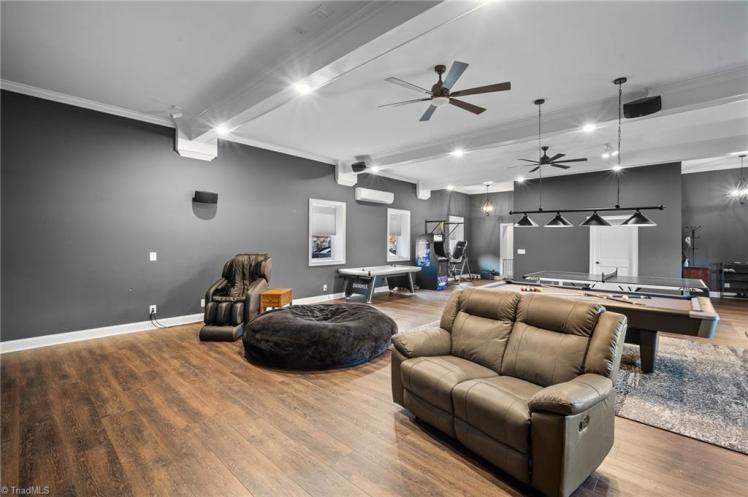
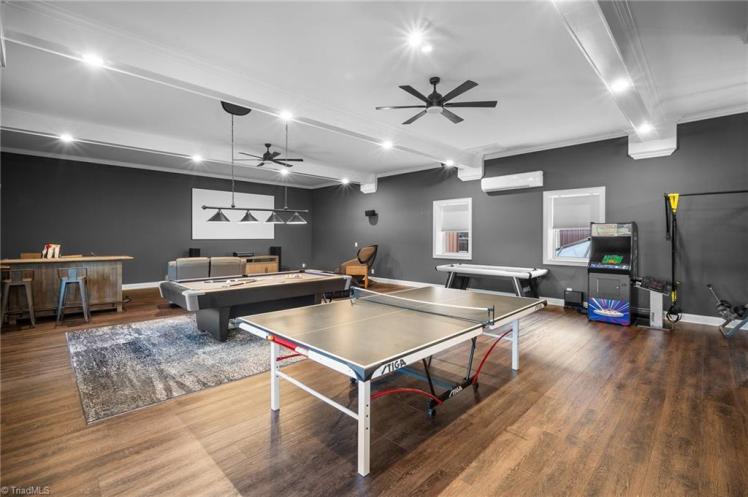
Condos over downtown retail spaces are familiar in larger cities, but why an owner would create one gigantic condo instead of two smaller and more affordable units is a mystery (the unit is owned by one of the condo’s developers). The condo is relatively new; the building was converted to a condominium in 2021. The interior is contemporary with no trace of historic character, not even an exposed brick wall. Its most striking feature is a 1,300 square-foot space that now contains a home theatre, pool table, ping pong table and arcade video-game machine (if you know a teen-age boy who can afford a $600,000 condo, pass this along).

Continue reading “A Huge Condo in a 1920 Building in Downtown Lexington, $535,000”

The 11 Most Interesting Homes Sold in July

July was a spectacular month for historic-home sales in the Piedmont (this month’s summary is a bit belated — lots going on, houses to visit, furniture to move around the house, four inches of rain yesterday). Two of the Piedmont’s most impressive National Register houses sold — a 1909 mansion in Greensboro and “the most ornate 19th-century mansion in Alamance County.” In Glencoe Mill Village, where few homes at all have come up for sale in recent years, four homes sold very quickly.

Add in a remarkable Mid-Century Modern by Edward Lowenstein in Sedgefield, a pair of 19th-century houses in Alamance and Yadkin counties, a 1935 mansion in Alamance (what a month for Alamance County!), and a 1940 Period Cottage in Wilkesboro, and the month’s sales provide a splendid cross-section of historic homes in the region.

Continue reading “The 11 Most Interesting Homes Sold in July”

The 6 Most Interesting Historic Houses Sold in April

A National Register mansion and the home of a renowned poet and novelist are among the most notable historic houses sold in the Triad in April. Others worth noting include the homes of a prominent 19th-century millwright, a Lexington orphan who became one of the town’s most successful businessmen, and a small-town theatre owner. In addition, a decrepit farmhouse was sold for the first time since it was built around 1800.

Continue reading “The 6 Most Interesting Historic Houses Sold in April”

Someone Really Needs to Save the O. Max Gardner House in Shelby

  • Photo by Mike Hensdill, The Gaston Gazette

(The first photo above is by Mike Hensdill of The Gastonia Gazette via The Shelby Star.)

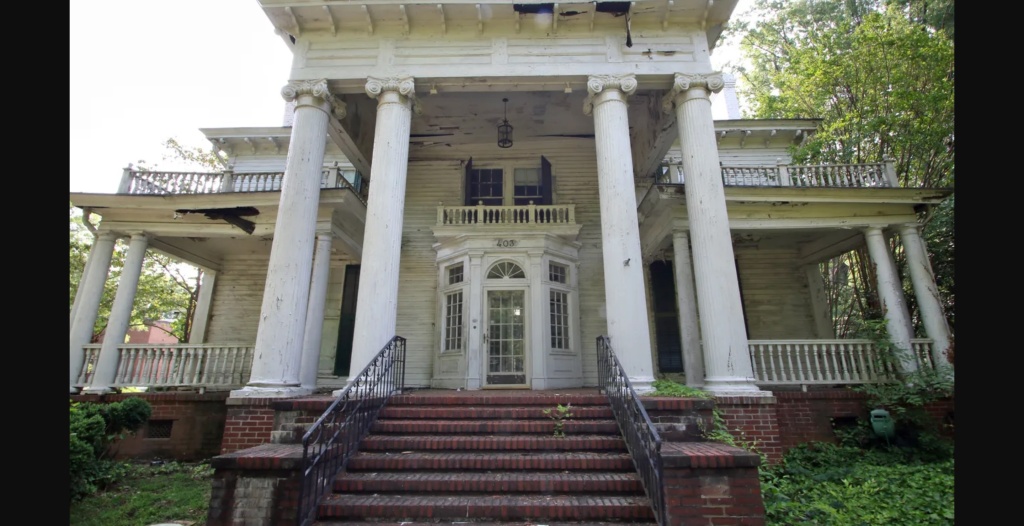
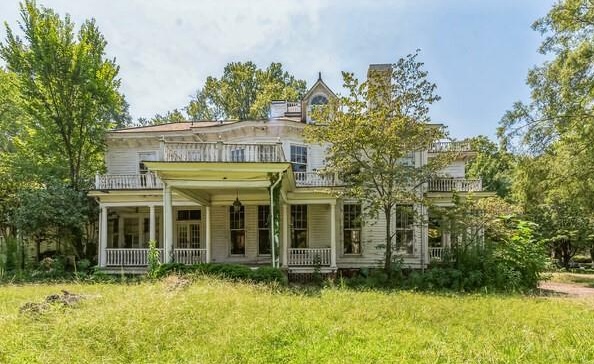
The home of one of North Carolina’s most prominent governors is in sad shape. Although it’s listed on the National Register, the mansion has fallen into disrepair. It’s for sale at $396,700, a lot of money but a reasonable $58 per square foot. It’s a landmark worth saving.

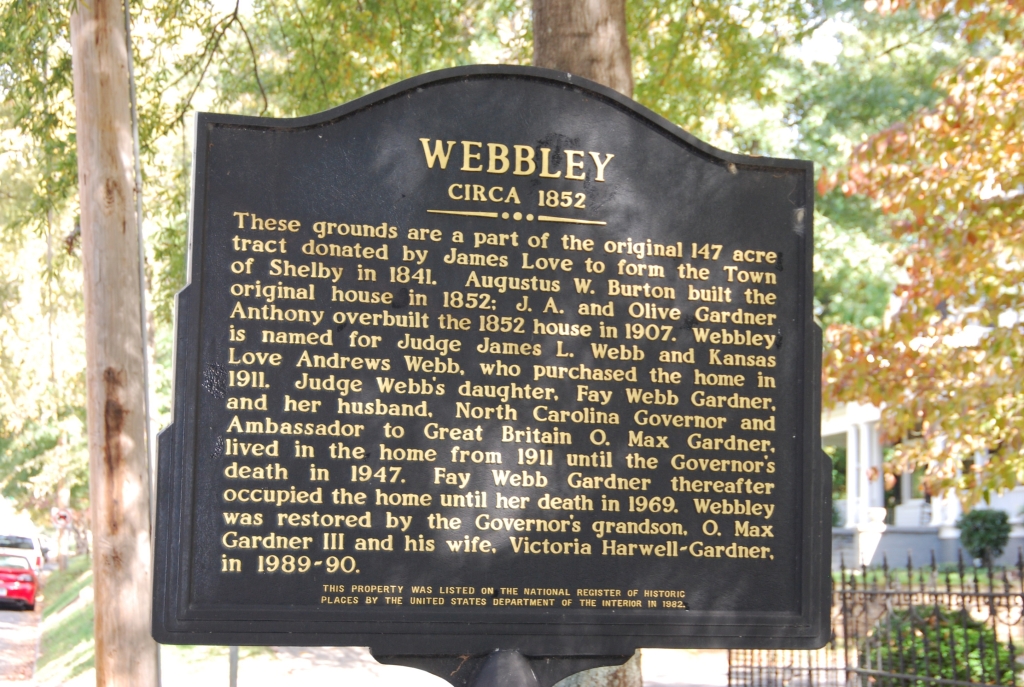
Oliver Max Gardner was one of the most significant governors of North Carolina in the 20th century, and the house “is one of the most distinguished residences in the town of Shelby,” its National Register nomination says. Built around 1850, it has 6 bedrooms, 8 full bathrooms and 1 half-bathroom in 6,813 square feet (per county records). It sits well back from the street on a large 2.43-acre lot. In addition to being on the National Register in its own right, it’s in the Central Shelby Historic District on the National Register.

“The house is an early twentieth century overbuilding of a mid-nineteenth century Italianate dwelling, and though remnants of the earlier structure can be seen in places, the house is of thoroughgoing Colonial Revival character … here fully developed in one of the most striking examples of the style in western North Carolina,” its National Register nomination says.

Continue reading “Someone Really Needs to Save the O. Max Gardner House in Shelby”

A Mayor’s Monumental 1894 Queen Anne in Mount Airy, $675,000

Update: The house sold for $615,000 on September 14, 2023.

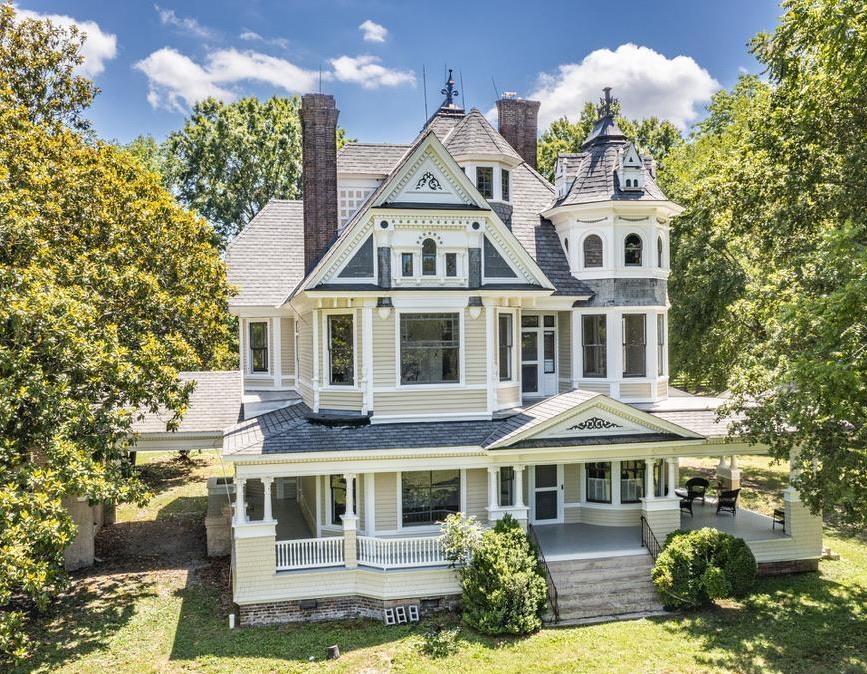
You never saw anything like this in Mayberry. Andy and Barney didn’t seem to have much to do with the fancier side of town, if there was one. In Mount Airy, though, there definitely is one, and when you see the James A. Hadley House, you know you’re there. The Hadley house is not only one of the most impressive in town, it’s one of the grandest Queen Annes in the region.

“A large two-story structure, the house displays a wealth of Queen Anne characteristics,” the National Register nomination for the Mount Airy Historic District says. “It is composed of a rich variety of materials, details and forms. The foundation, first story, and window sills and lintels are of granite, the second story and three-story bell-cast roof central tower are brick, the gables are sheathed in decorative wood shingles, and fancy wood brackets support the eaves.”

Continue reading “A Mayor’s Monumental 1894 Queen Anne in Mount Airy, $675,000”

National Register Property For Sale: Gibsonville’s ‘Most Stylish and Impressive’ Turn-of-the Century Home, $425,000

Update: The home was sold for $350,000 on February 28, 2023.

The number of historic homes for sale has contracted sharply in recent months, along with the rest of the market, but one still robust category is National Register properties in Guilford County. There are three for sale, and 204 E. Railroad Avenue in Gibsonville is by far the most affordable. At $425,000, the price comes out to a modest $120 per square foot.

“The Francis Marion Smith House, erected in 1898, is the most stylish and impressive residence in Gibsonville surviving from the 1890-1910 period that witnessed the town’s major growth,” its National Register nomination says. “The two-and-a-half-story frame house combines elements of the Colonial Revival and Queen Anne styles, including an elaborate program of classical trim and turned ornament.”

Not surprisingly, given its location and date, it’s associated with the Whitsett Institute and family, arguably the most prominent family of its day in eastern Guilford County. “It is one of three notable late nineteenth and early twentieth residences associated with the Whitsett Institute, a boarding secondary school and junior college in the Whitsett community near Gibsonville. The three houses (one of which has already been listed in the National Register) are among the finest houses combining Colonial Revival and Queen Anne style elements in eastern Guilford County.”

Continue reading “National Register Property For Sale: Gibsonville’s ‘Most Stylish and Impressive’ Turn-of-the Century Home, $425,000”

For Sale: “The Most Ornate 19th Century Mansion in Alamance County,” $2.4 Million

Update: The listing was withdrawn without a sale in March 2023.

The Holt family is one of the most prominent in the history of Alamance County and of North Carolina as well. Charles T. Holt was a third-generation member of the textile family, and the mansion he built is quite the monument to the Holts’ stature.

“The Charles T. Holt House, the most ornate nineteenth century mansion in Alamance County, is located in the town of Haw River overlooking the Granite Mills complex, on twenty-five acres of lawn, grazing pasture, and farm land,” the property’s National Register nomination states.

Continue reading “For Sale: “The Most Ornate 19th Century Mansion in Alamance County,” $2.4 Million”

New Listing: One of Greensboro’s Most High-Profile B&B’s, the Iconic 1909 Double Oaks, $1.795 Million

Update: The MLS listing was withdrawn on March 28.

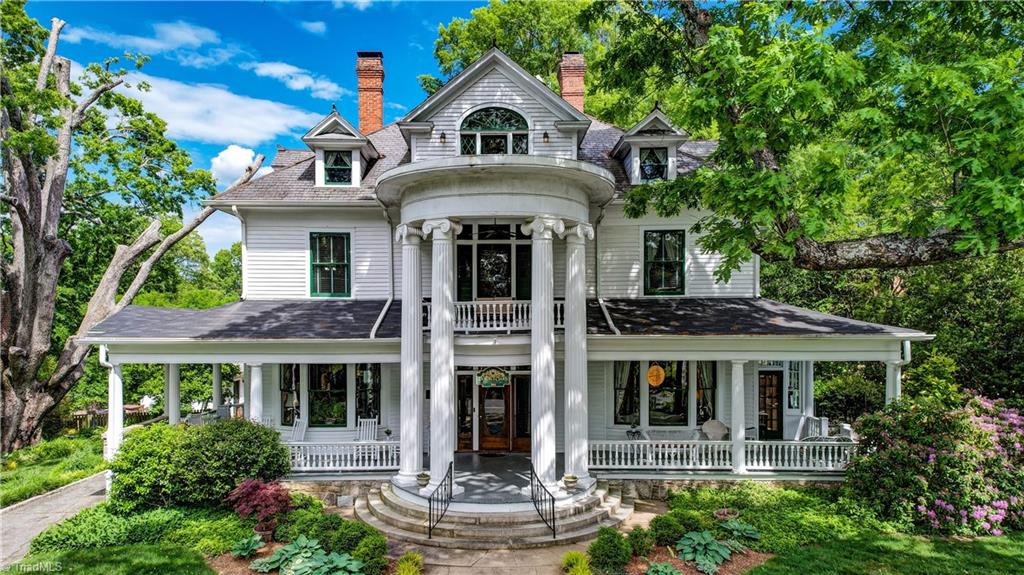
The owners of Double Oaks, the Harden Thomas Martin House, are selling it as a turnkey business, including the furnishings and fixtures. But if you need 6 bedrooms, 9 bathrooms and a commercial kitchen just for yourself and your family, it would serve quite nicely as a $1.795 million single-family residence.

The house has been impeccably restored. The interior is as attention-grabbing as the exterior. Originally operated as a B&B from 1998-2007, the current owners bought and reopened it in 2016. They’ve restored the formerly closed third floor and added extensive landscaping, making it an active venue for weddings and other events.

Continue reading “New Listing: One of Greensboro’s Most High-Profile B&B’s, the Iconic 1909 Double Oaks, $1.795 Million”

The 1798 Philip and Johanna Hoehns House: In Forsyth County, They Don’t Come Much More Historic Than This

If you don’t recognize the name, various members of the family also went by Hoenes, Höhns, Haenes, Haines and Haynes. Also Hanes, which is how it’s pronounced. Eventually, this particular branch of the family started spelling it that way, and that’s how the world knows them today. Philip Hoehns, a second-generation Moravian American, was the first of the family to move to North Carolina, bringing along his parents and siblings from Pennsylvania in 1774. A few years earlier, he had bought land in Wachovia, the large Moravian settlement that contained most of what is now Winston-Salem and Forsyth County. He ultimately accumulated 1,800 acres in the area.

In 1778, Philip (1752-1820) married Johanna Salome Frey (1760-1845). “Settling on land Philip had purchased, tradition claims they first lived in a hickory-pole hut, followed by a log house,” the home’s National Register nomination states. “In the winter of 1797-1798, they began construction of their last house, a commodious and sophisticated two-story, four-bay-wide, double-pile, Flemish-bond brick dwelling.”

Philip became a prosperous farmer and distiller, and after his death it was said that “his industry and economy were accompanied by the blessing of God in an evident manner.” The blessing is still evident, as that commodious and sophisticated house of his has come up for sale at $1.695 million.

Continue reading “The 1798 Philip and Johanna Hoehns House: In Forsyth County, They Don’t Come Much More Historic Than This”