Updated March 26, 2026
Piedmont Triad Region
Elsewhere in North Carolina
Recently Withdrawn
Piedmont Triad Region
bartlett














699 U.S. Highway 158 W., Yanceyville, Caswell County
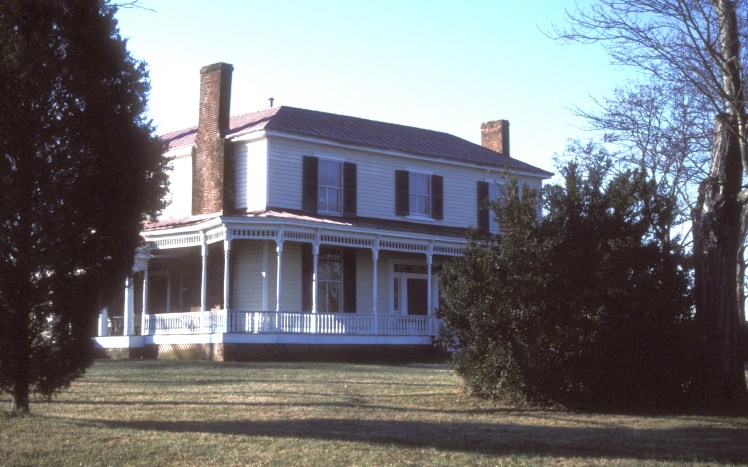
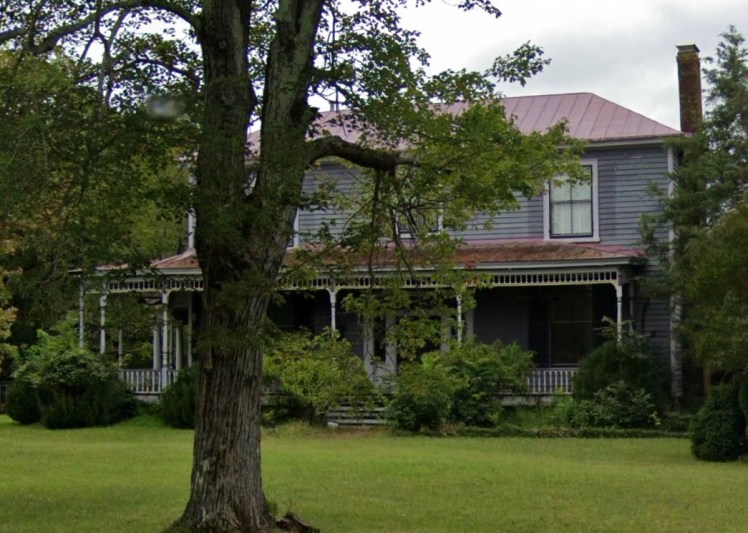
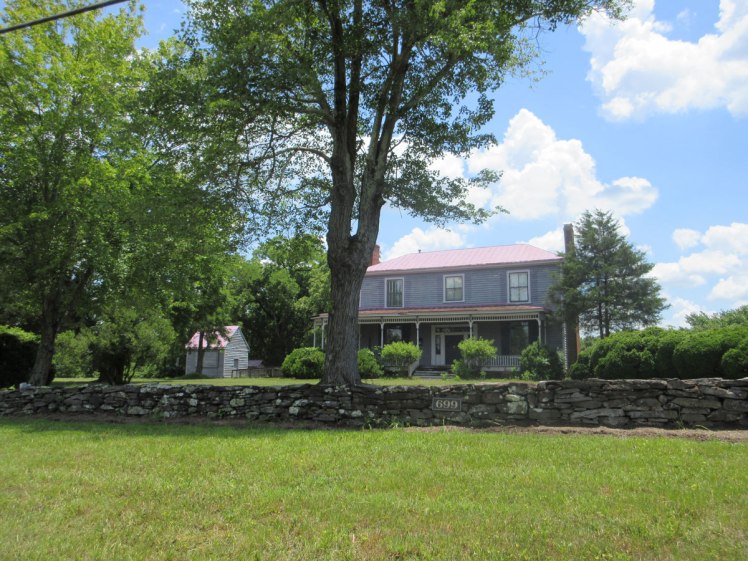
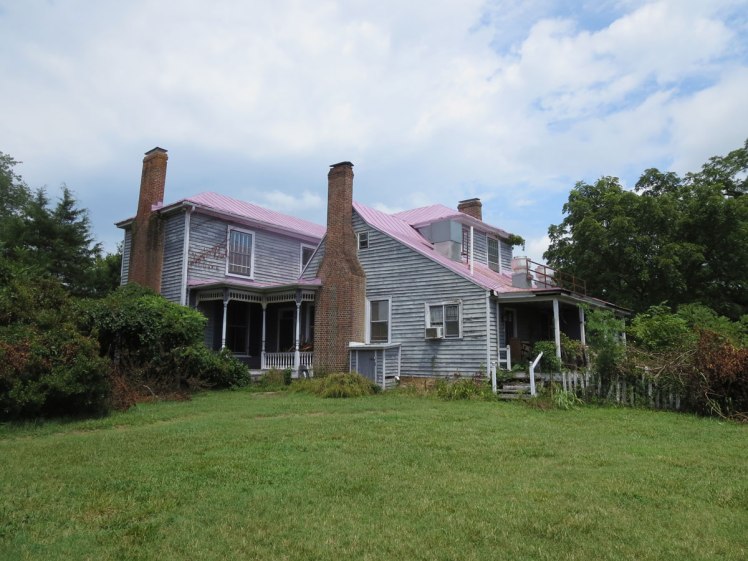
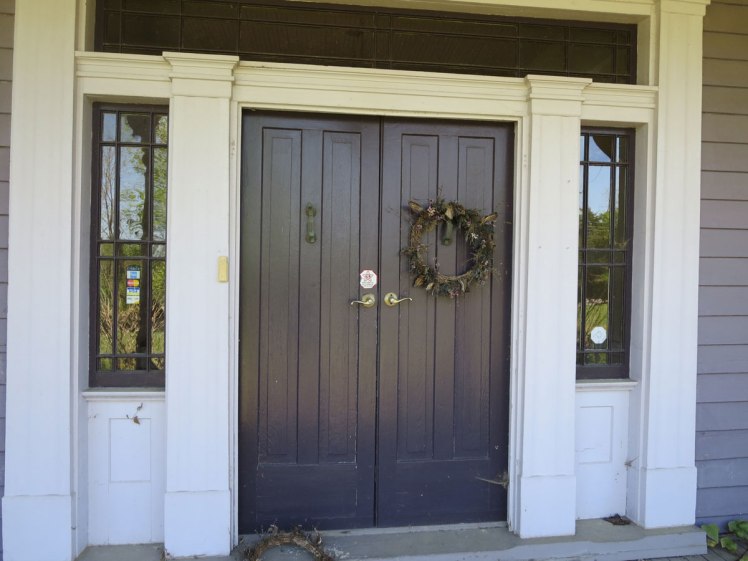
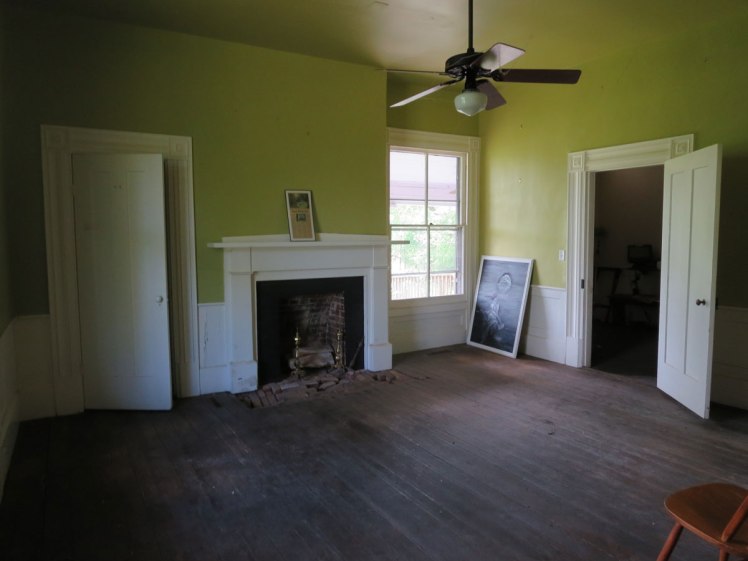
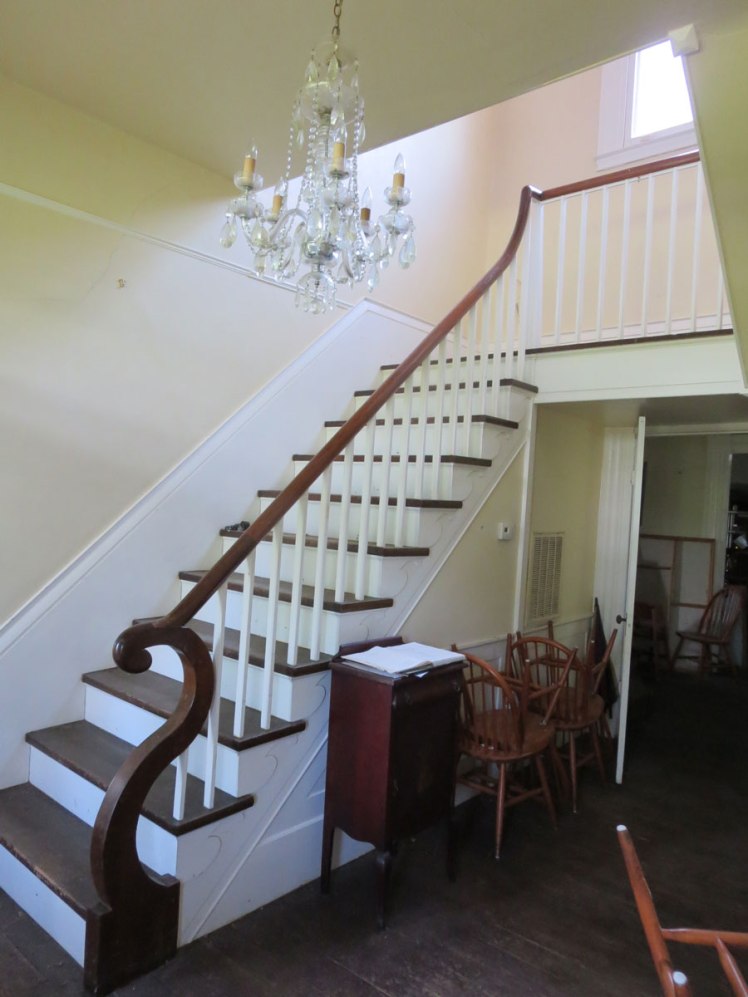
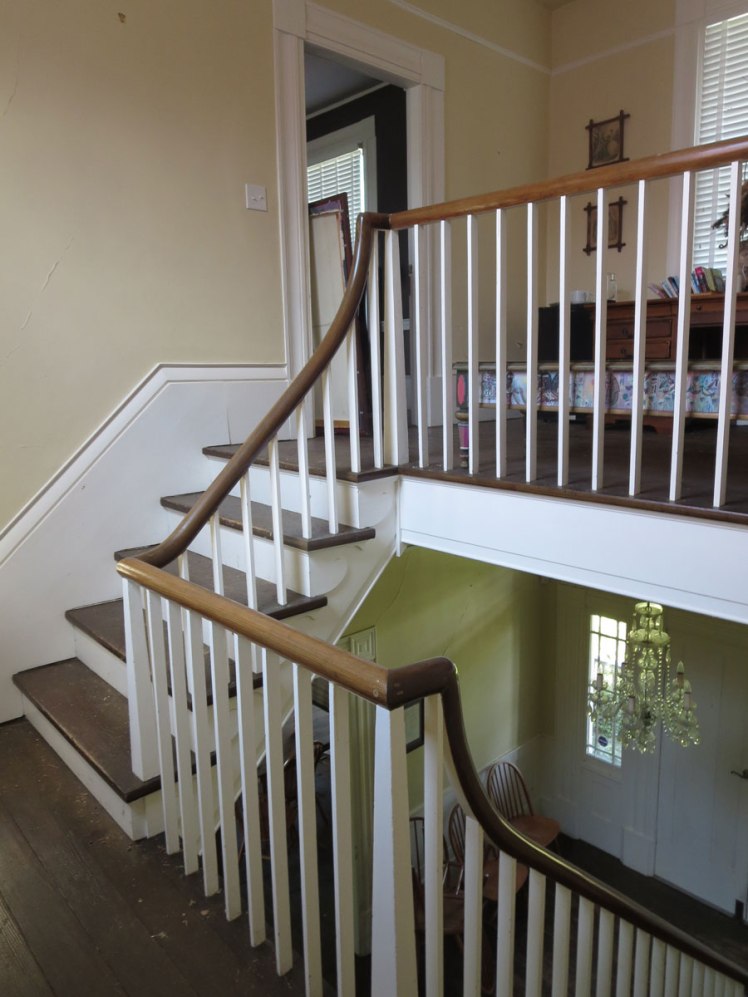
The Bartlett Yancey House
National Register of Historic Places
- Request for restoration proposals, deadline December 11, 2025.
- Preservation North Carolina is in negotiations with prospective buyer or buyers as of mid-February.
- “Preservation North Carolina is seeking qualified preservation-minded buyers for the purchase and restoration of the historic Bartlett Yancey House. … The proposal selection process will focus on the best preservation solution for the property. …
- “The property will require a complete rehabilitation including updates as needed to systems (HVAC, plumbing, electrical), porch repair, restoration carpentry, paint, cosmetic repairs, and updates to the kitchen and baths. Outbuildings will require stabilization and rehabilitation once the main house is completed.”
- The sale will include a historic preservation agreement held by Preservation North Carolina and a rehabilitation agreement.
- Bedrooms not specified, 2 bathrooms, 3,766 square feet (see note), 15.93 acres
- Built circa 1814, expanded in 1856
- Listed October 23, 2025
- Last sale: $260,500, May 2006
- Note: County records give the heated square footage as 2,224 and total square footage, including porches, as 3,702. The 3,766 figure is from Preservation North Carolina.
- The Yancey House Restaurant occupied the house from 2006 to 2012. The house apparently has been unoccupied since then. A larger development was planned in 2004 but didn’t happen.
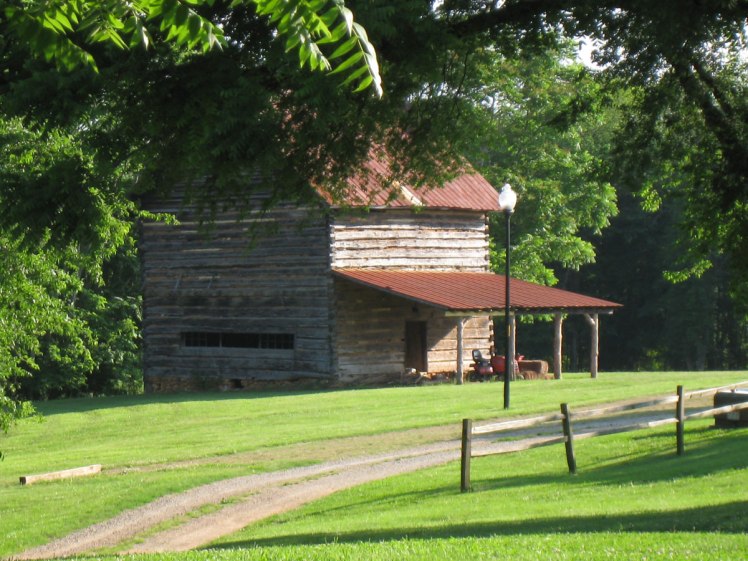
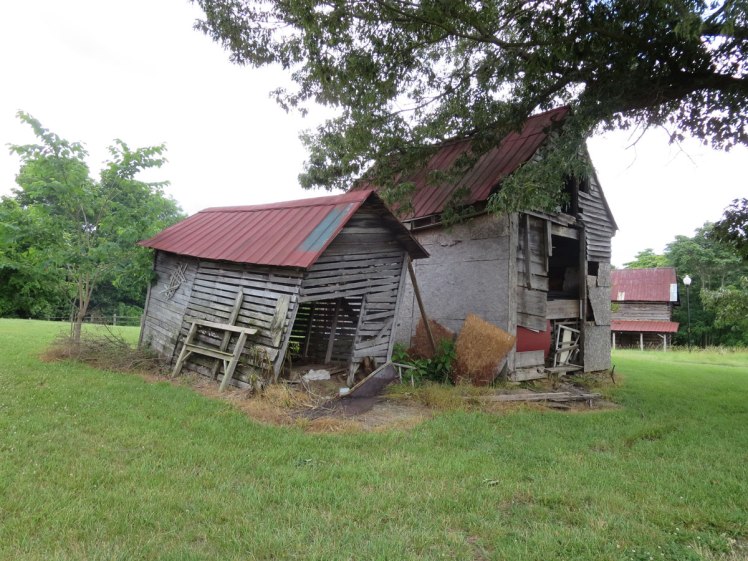
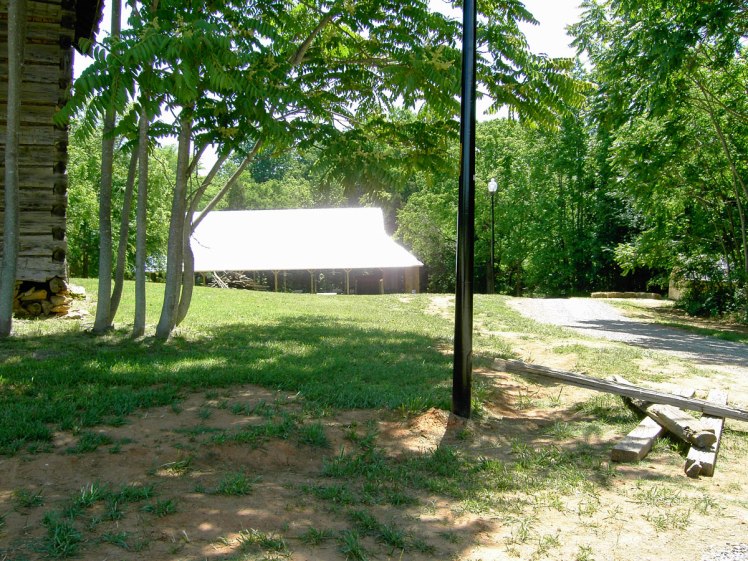
- Outbuildings include a smokehouse, tobacco packhouse, barn, remnants of the original law office and a modern event pavilion.
- The property also includes the Yancey family cemetery.
- Bartlett Yancey (1785-1828) was a lawyer and, by today’s standards, at least, a curiously unambitious politician. He was elected to Congress in 1812 and 1814, but in 1816 ran for the state Senate instead. He served 10 years, holding the office of Speaker of the Senate the entire time. In 1825, he declined President John Quincey Adams’s offer to become minister to Peru.
- Bartlett and Nancy Ann Graves Yancey (1786-1855), his wife and first cousin, began building the house after their marriage in 1808. “The earliest portion of the house retains important period details such as an enclosed stair, flat-panel doors with HL hinges, and nine over nine window sashes,” Preservation NC says. “The westernmost room is the most elaborate, featuring wainscot of raised vertical panels beneath molded chair rail, and a Federal period mantel featuring fluted Doric pilasters.
- “The stylish features of the earliest phase hold importance, but it is the decorative features of the 1856 portion of the house that have statewide, if not national, significance as having been created by the workshop of Milton-based cabinetmaker Thomas Day. Day’s biographers, Patricia Phillips Marshall and Jo Ramsay Leimenstoll, in their 2010 publication Thomas Day: Master Craftsman and Free Man of Color, cite the Yancey House for its architectural representation of his lifelong body of work. Distinctive details that are illustrative of Day’s work include casing and corner blocks, several mantels, the newel post, parlor trim, and the 1856 front porch.”
- Their daughter Anne Elizabeth Yancey Womack (1821-1900) commissioned Day to expand the house. She and Thomas Jefferson Womack (1831-1889) lived in the house for the rest of their lives.




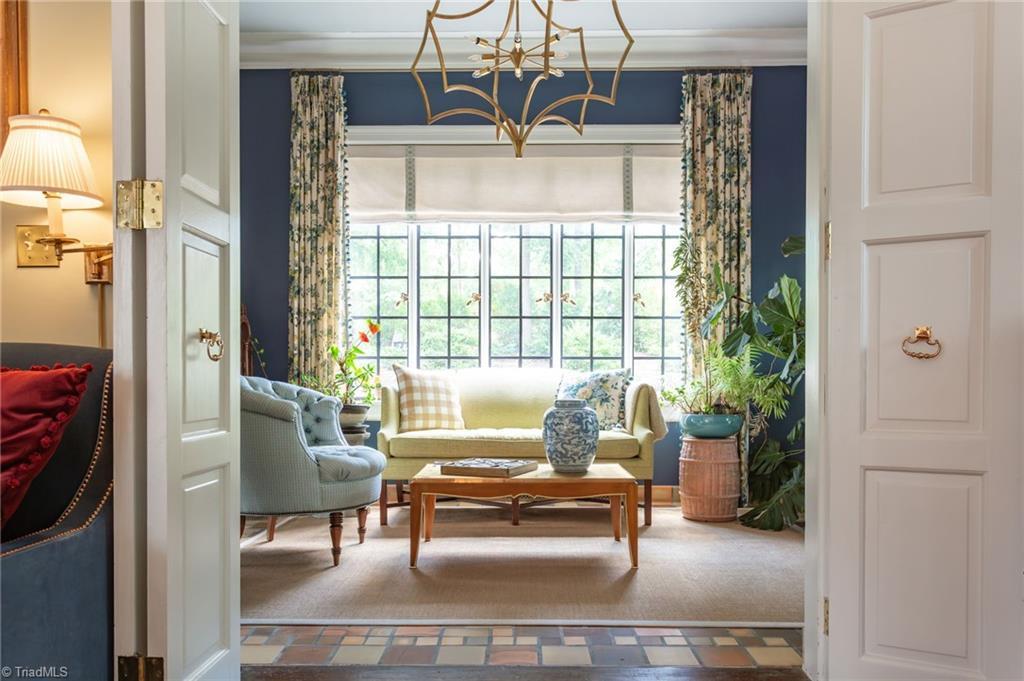


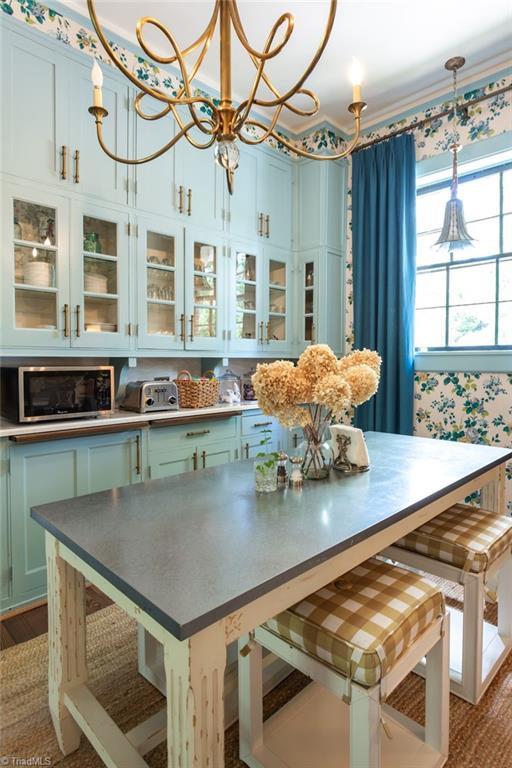


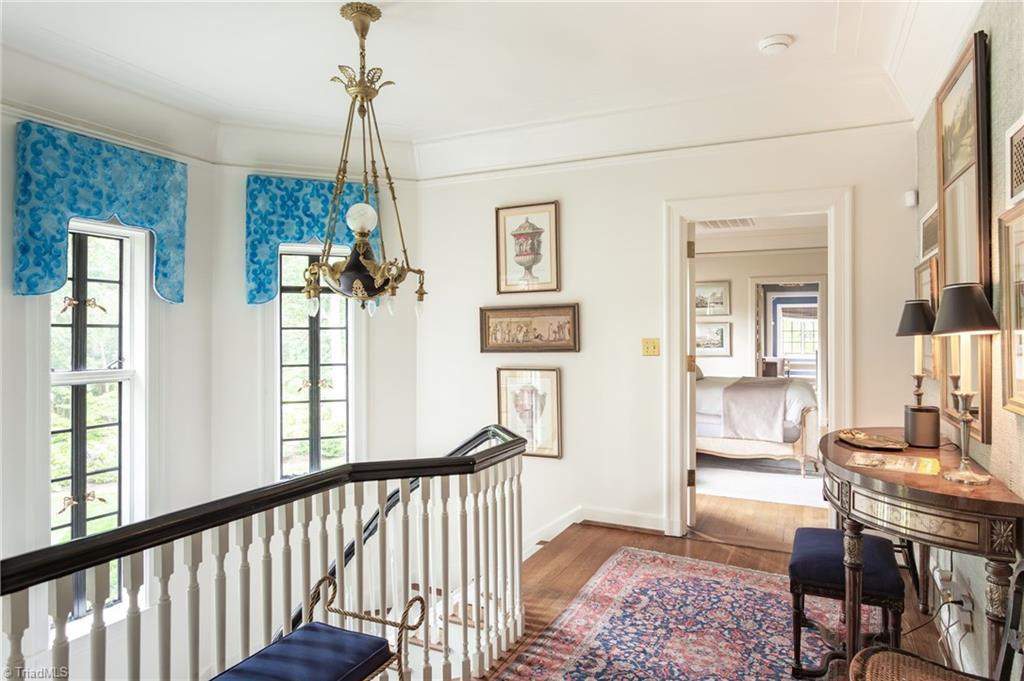

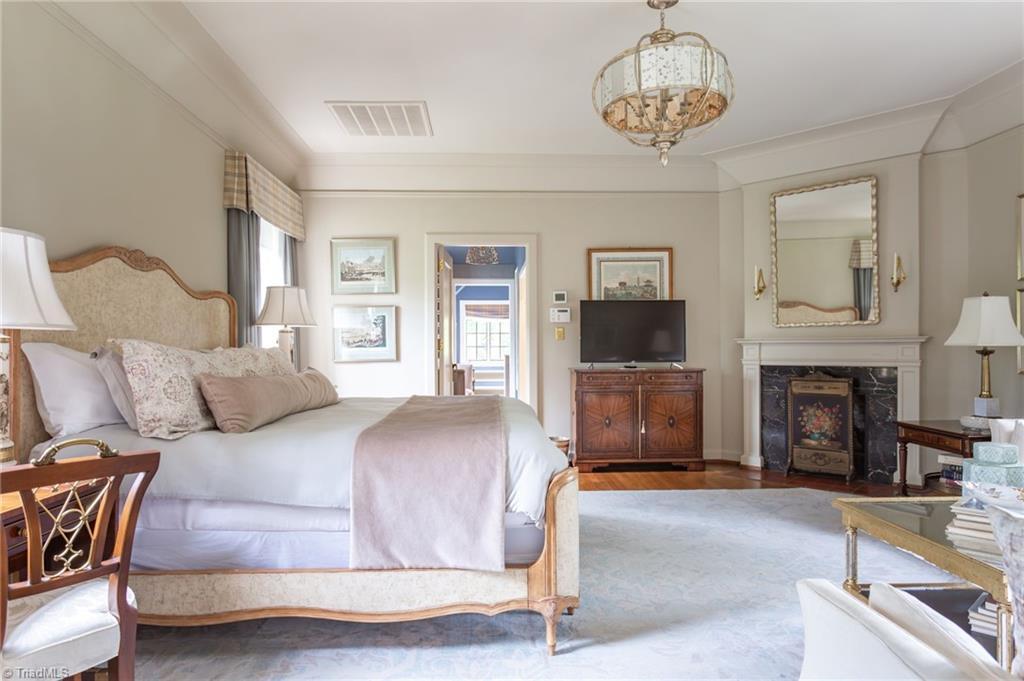







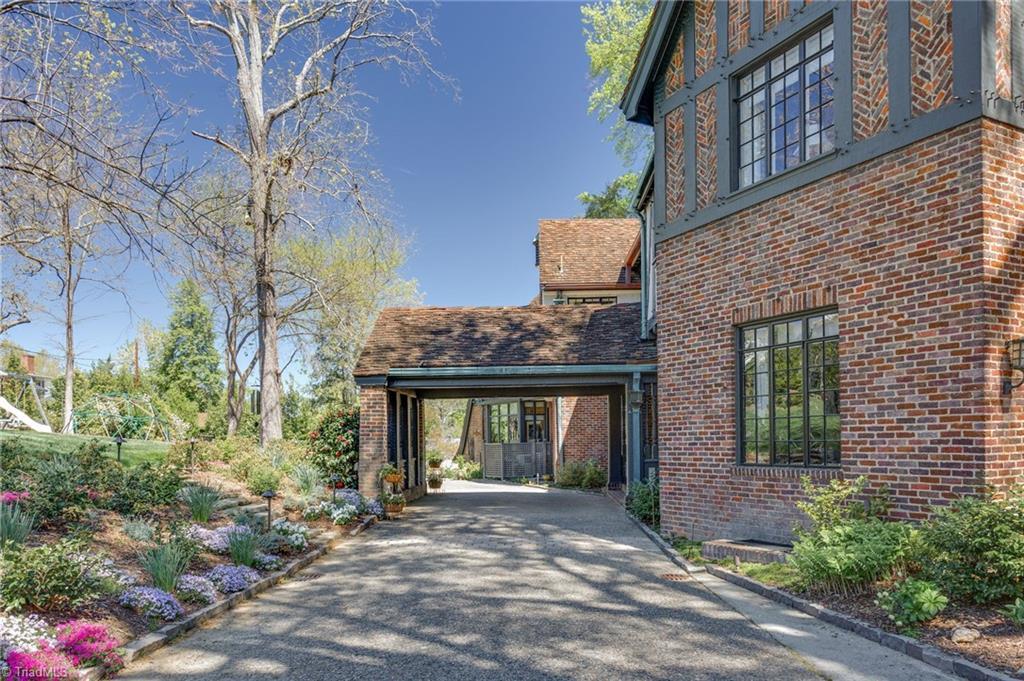

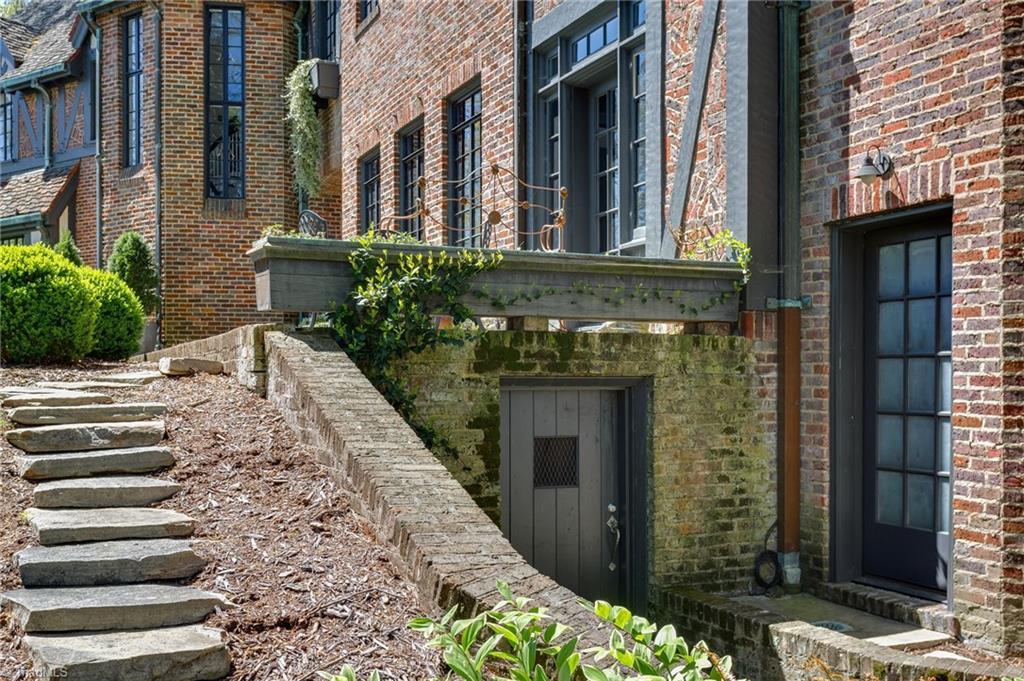
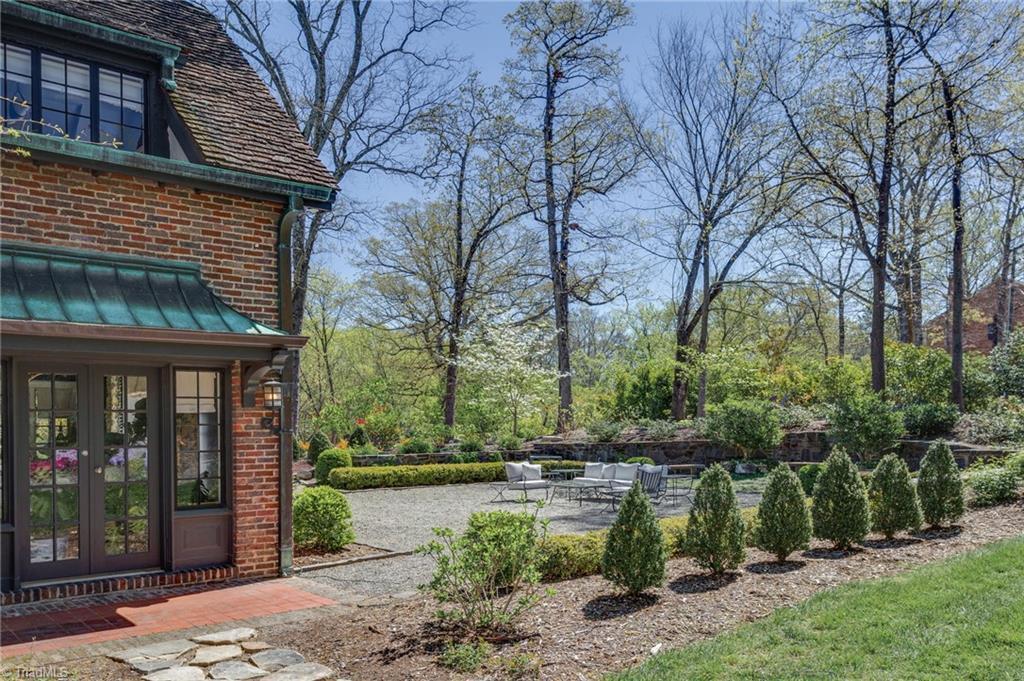

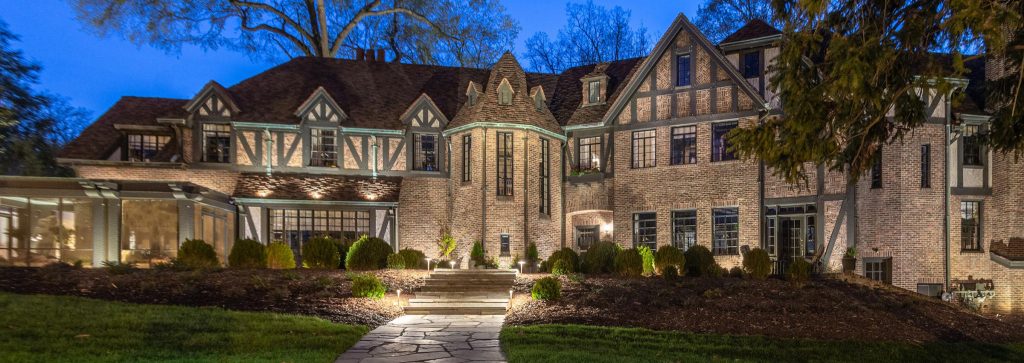
301 Fisher Park Circle, Greensboro
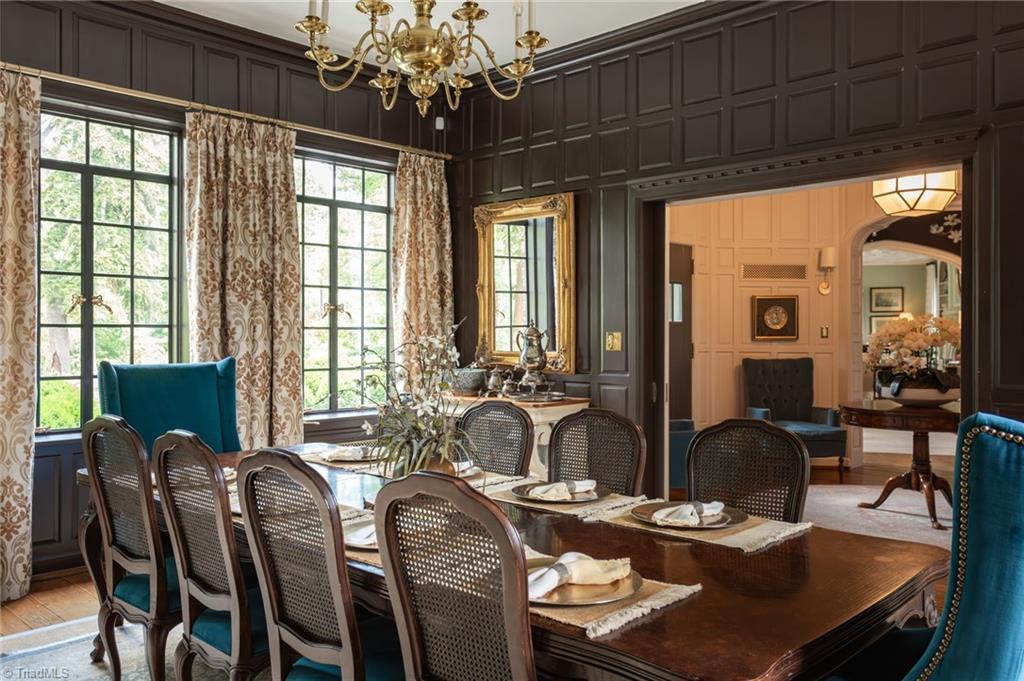
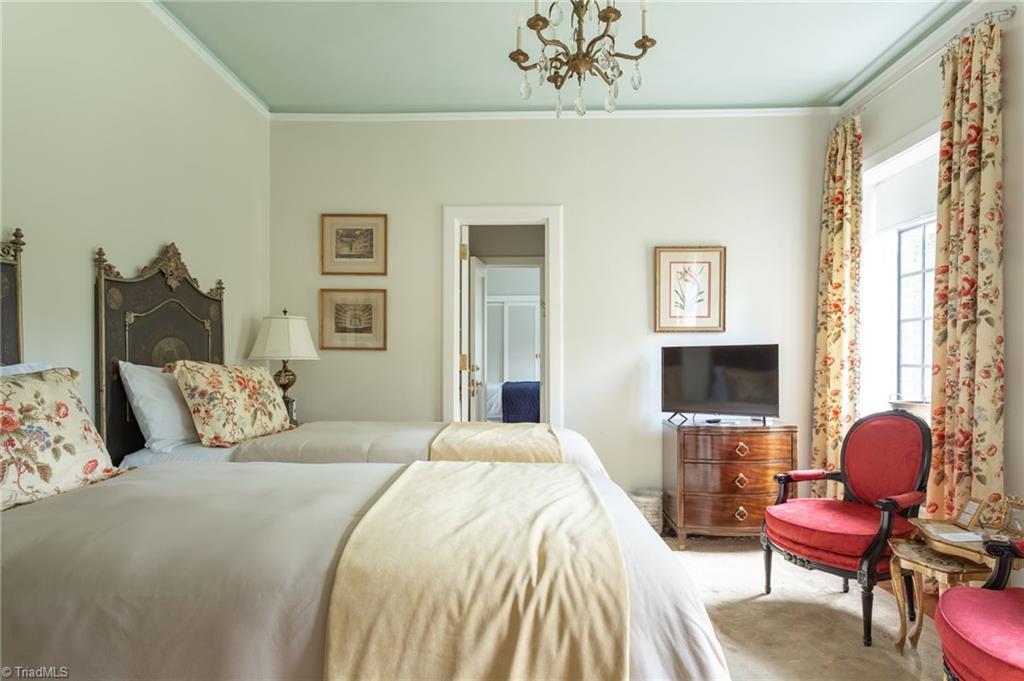
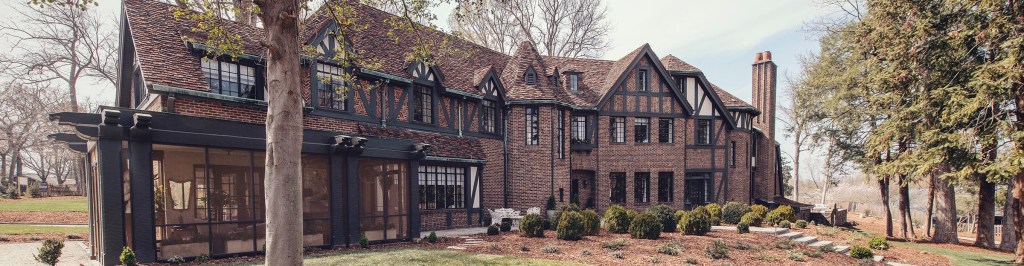
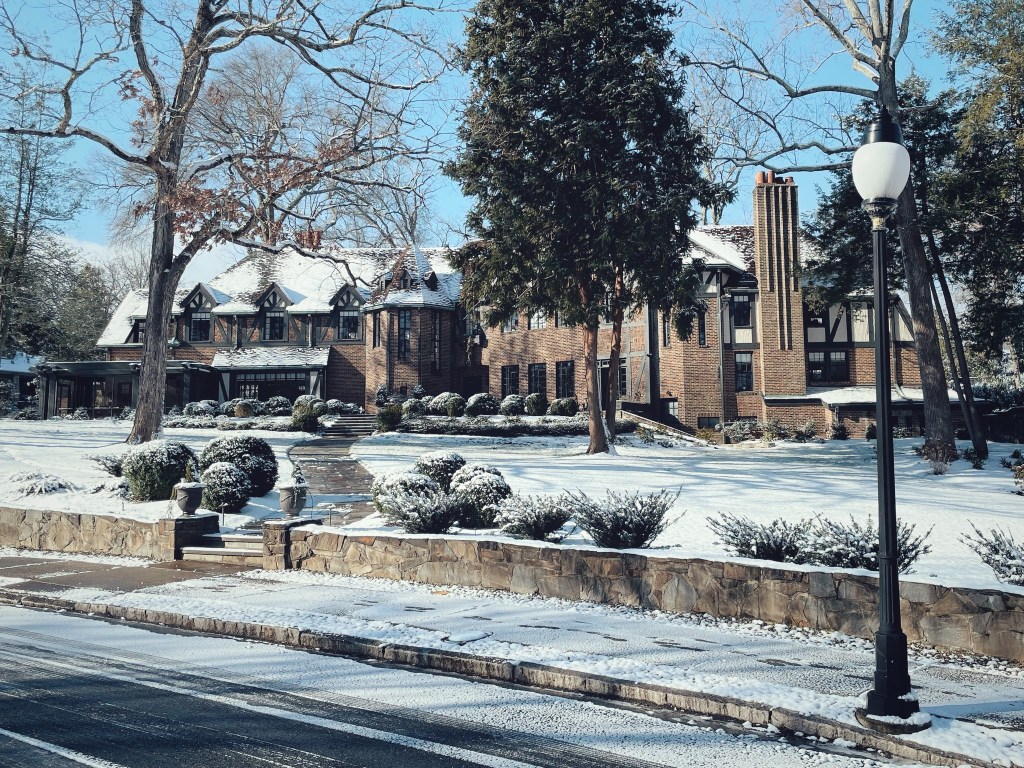
Hillside, the Julian Price House
The Storybook Transformation of the Julian Price House (Our State magazine, January 2024)
- $5.25 million
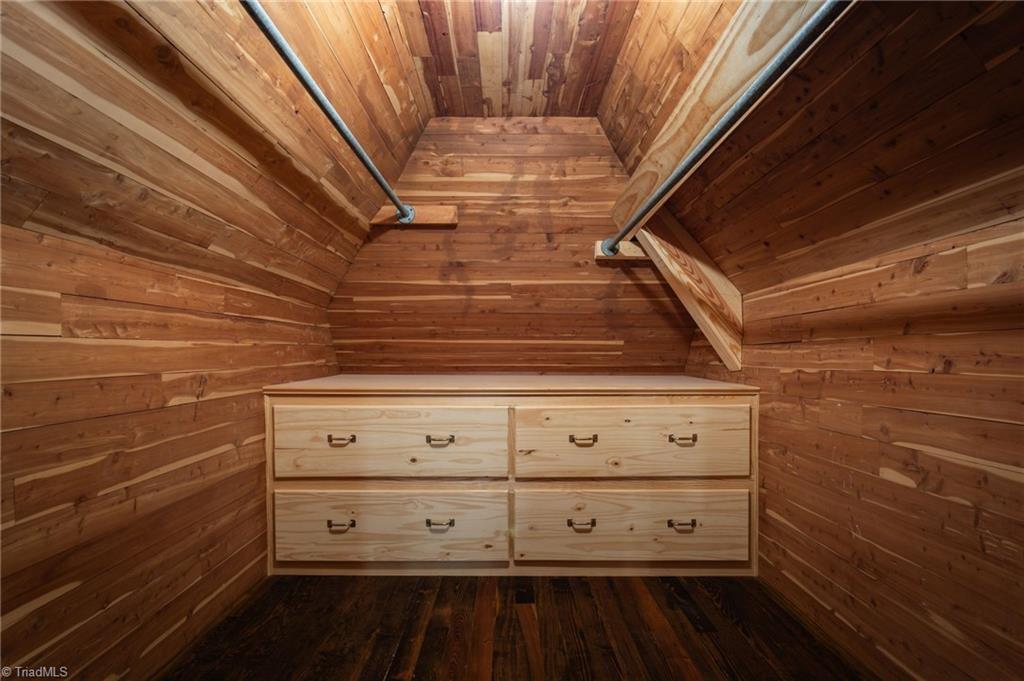
- 8 bedrooms, 6 full bathrooms, 2 half-bathrooms, 6,767 square feet (per county), 1.61 acres
- Price/square foot: $776
- Built in 1929
- Listed September 6, 2024
- Last sale: $415,000, September 2016
- Neighborhood: Fisher Park Historic District (local and NR)
- Note: The house has a Ludowici tile roof and copper gutters.
- Other sources put the square footage at 7,266.
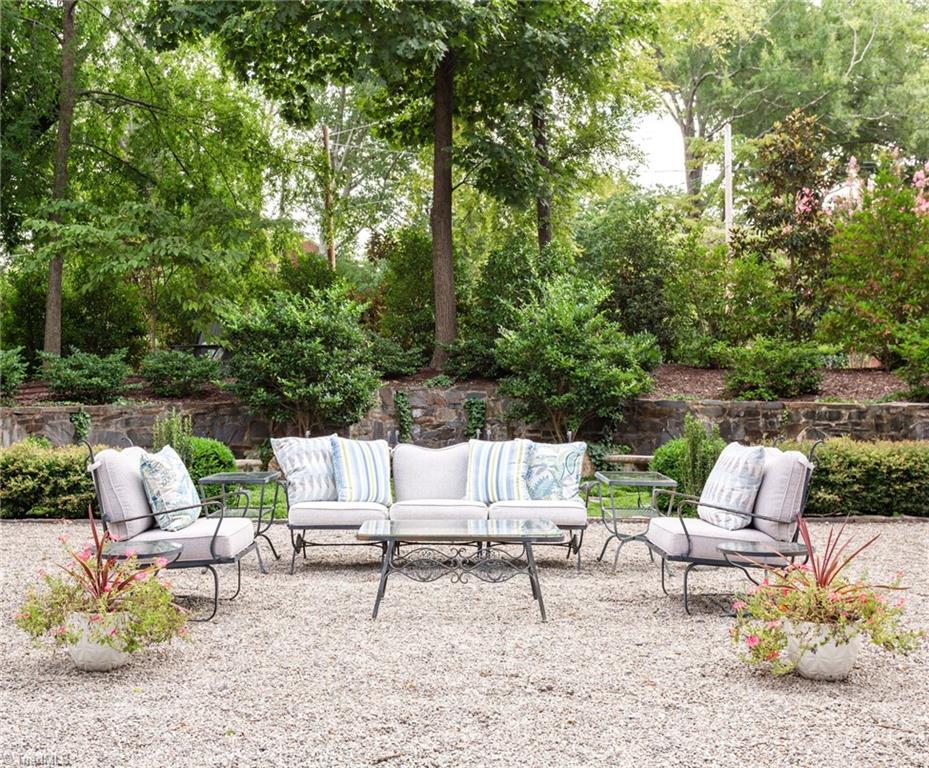
- The property includes landscaping designed by Chip Callaway, an irrigation system with a well, landscape lighting, a gardener’s cottage and a three-car garage.
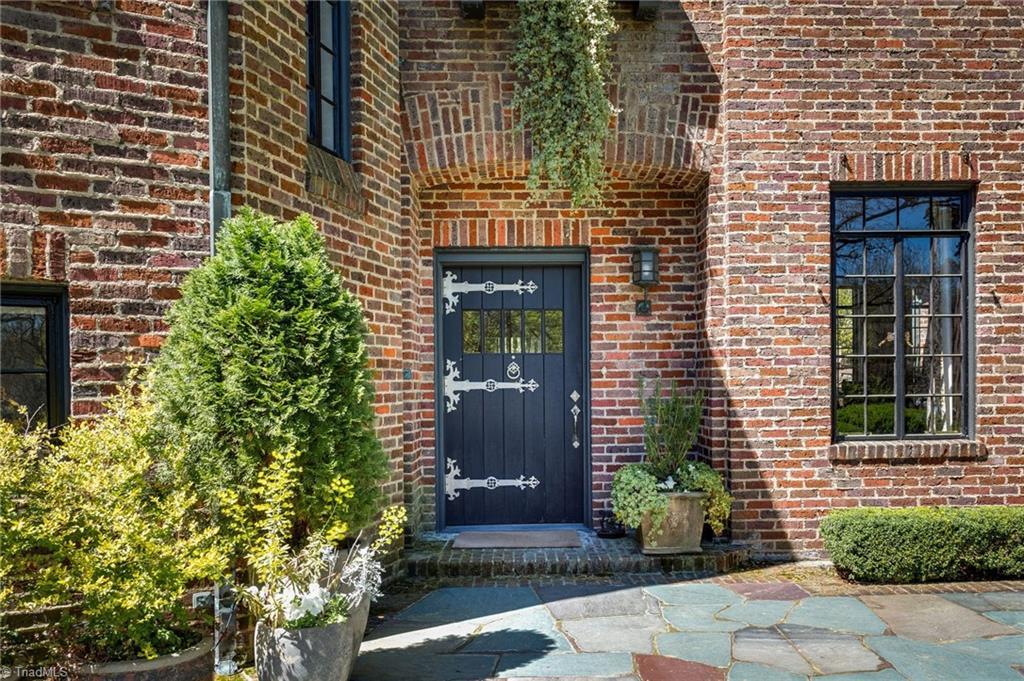
National Register nomination: “Hillside, the Julian Price residence at 301 Fisher Park Circle, like the neighborhood itself, is a visible symbol of the financial success that evolved in Greensboro in the decades following World War I. Greensboro architect, Charles C. Hartmann, designing for a client he already knew, created this spacious, elegant but intentionally unpretentious Tudor style mansion. By all accounts a complex personality, Mr. Price combined a ‘just home folks’ manner with brilliant financial acumen. The executive behind the expansion of the Jefferson Standard Life Insurance Company wielded a powerful influence in the development of Greensboro as a major commercial city. Hillside seems to
reflect the private aspect of Price just as Jefferson Standard Life Building (also designed by Hartmann) reflects Price’s public spirited qualities.”
Hillside “has the appearance of a mountain retreat, said to be the image Price wanted Hartmann to create,” the nomination says. “Hartmann’s ability as a designer is vividly illustrated in his success at making a thirty room, four story, 160 foot long house resemble a picturesque assemblage of forms that merge with nature. This effect is achieved by judicious use of elements derived from the English Tudor and Gothic Revivals and the American cottage tradition.
“Placed on the highest point of Fisher Park Circle, the house originally stood in a larger setting of informal paths, plantings, and trees, accented by a gazebo (demolished) and a rustic board and batten gardener’s cottage, which remains. A raised terraced and rock wall conceal the entire basement level with its driveway, and service entry diminishing the height of the house.”
The significance of Hillside is more than local. “The house represents a high level of design and craftsmanship and is a distinctive domestic type which has limited representation of this quality in North Carolina.”
Julian Price himself (1867-1946) was a figure of statewide significance. He worked for one of the companies that became Jefferson Standard Life Insurance in a 1912 merger. He was initially vice president and agency manager of the new company and in 1919 became president. In his 27 years leading the company, its assets grew from $9.7 million to $174 million and insurance in force grew from $81 million to $655 million.
Under his leadership, Jefferson Standard created a broadcasting division and in 1949 established North Carolina’s first television station, WBTV in Charlotte, which is now located at 1 Julian Price Place. He also served as president of the Atlantic and Yadkin Railway.
“During the administration of Governor Angus W. McLean (1924–28), Price, as head of the North Carolina Salary and Wage Commission, was instrumental in effecting a fair system of employment and pay for state employees,” NCpedia says. “He became Governor McLean’s most trusted financial adviser. Towards the end of McLean’s term Price was strongly mentioned throughout the state for governor on the Democratic ticket but refused to have his name placed in nomination.”
He was a notable philanthropist as well. As a memorial to his wife, he funded the construction of Our Lady of Grace Catholic Church in Greensboro. NCpedia relates a story of smaller-scale generosity told by granddaughter Kathleen Bryan Edwards:
“During World War II Guilford County was dry and this was hard on local Air Force base personnel. One officer inquired of the name of the local bootlegger and was told it was Price. He called Julian Price one Sunday afternoon and asked if he were the local source of liquor. Price asked what kind the captain wanted and when told, Johnny Walker, he asked the young officer, ‘Black or Red?’ ‘Black,’ replied the stunned officer, who was then told to drive up in back of the house. The captain could hardly believe his luck when he tried to pay, for Price said, ‘No, no, young man, nothing is too good for our boys in the service.'”










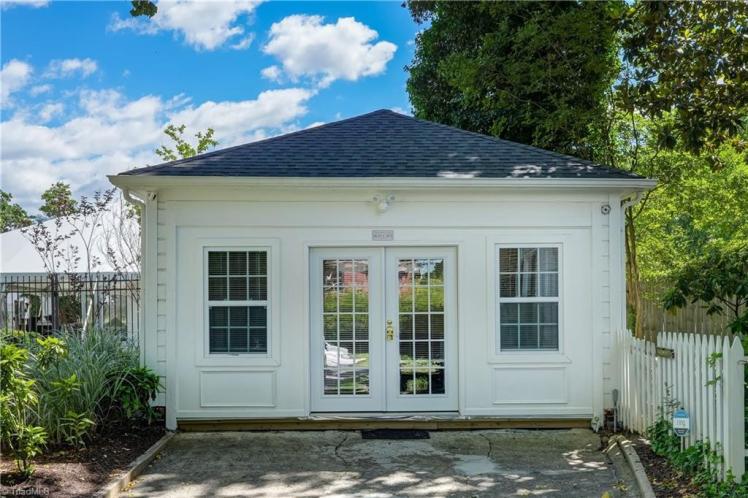
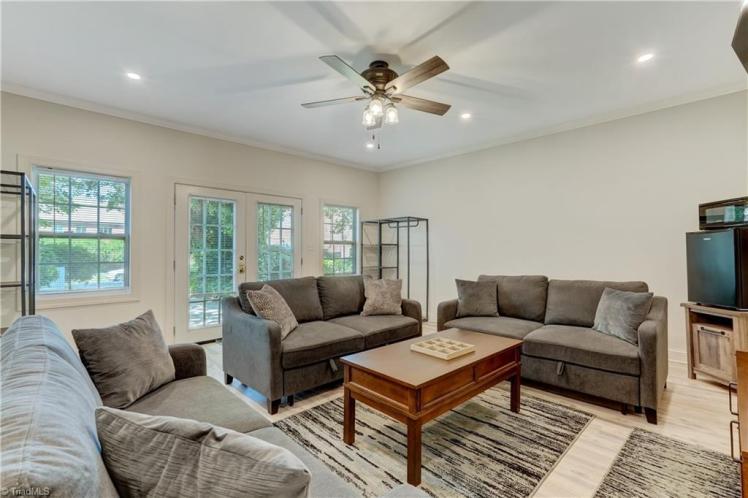

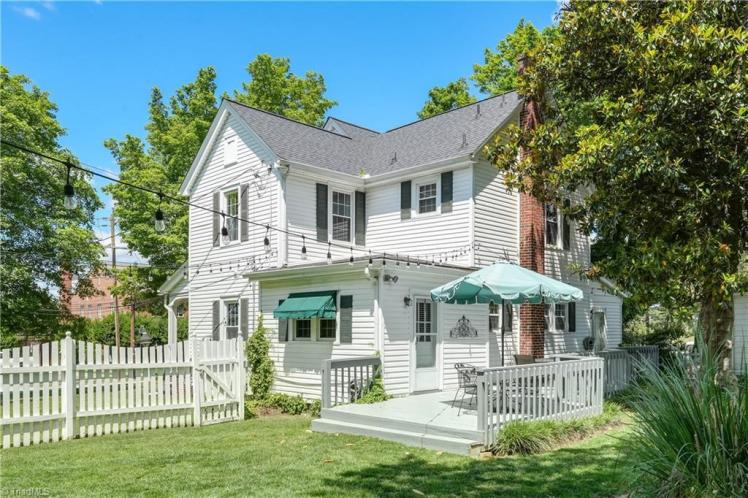
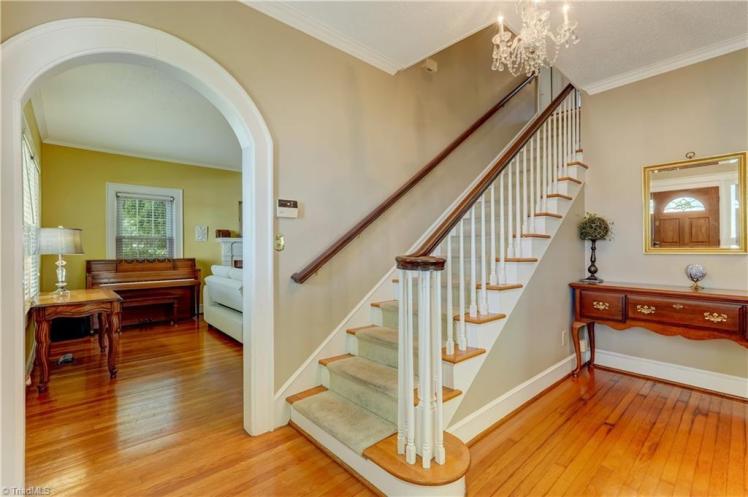
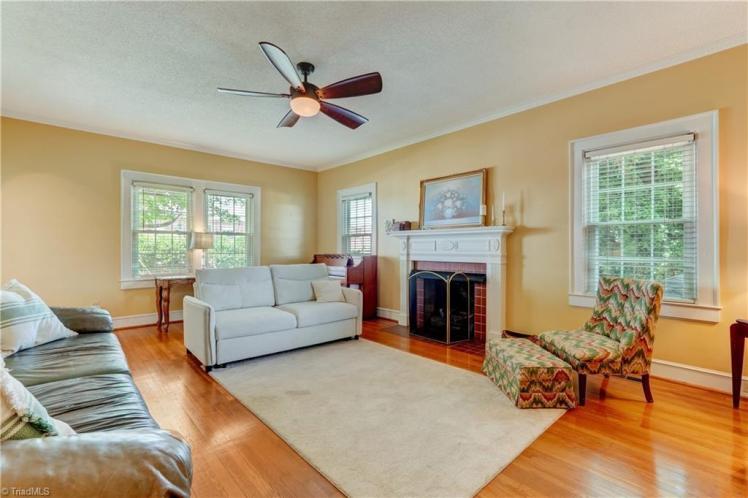
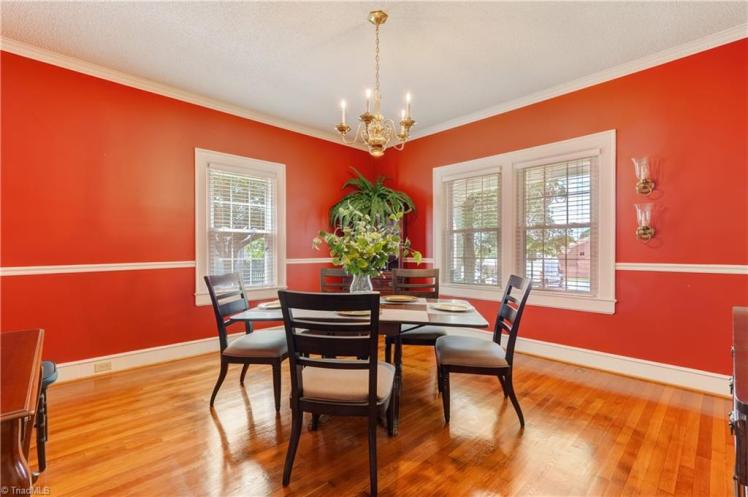


17 E. Main Street, Thomasville, Davidson County
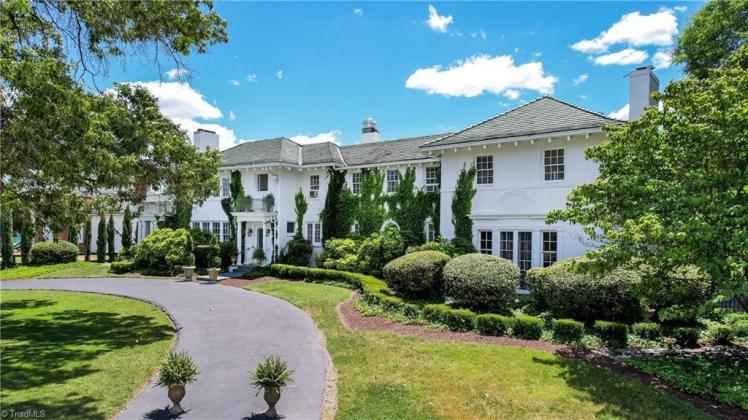
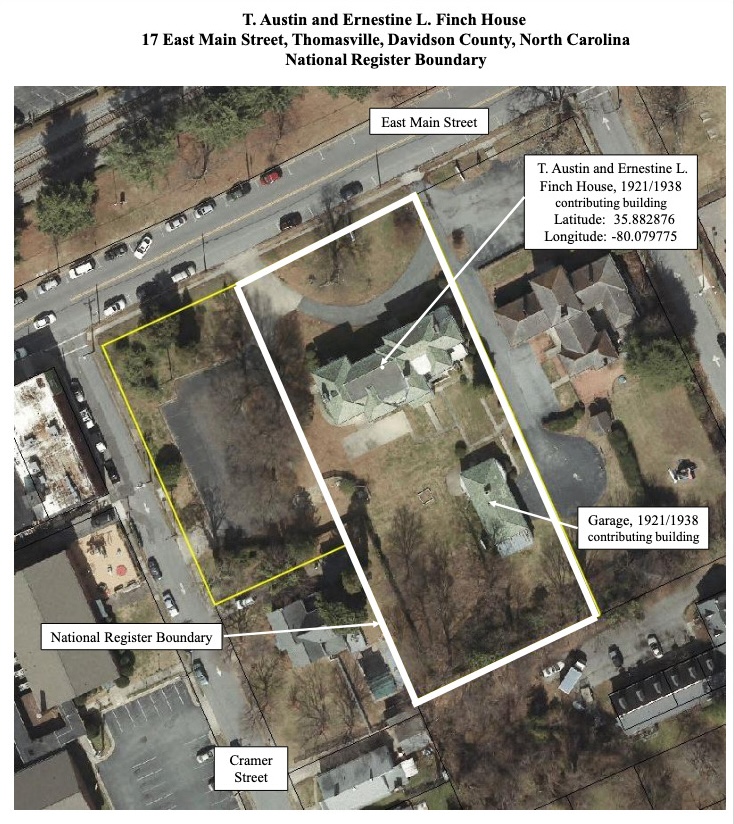
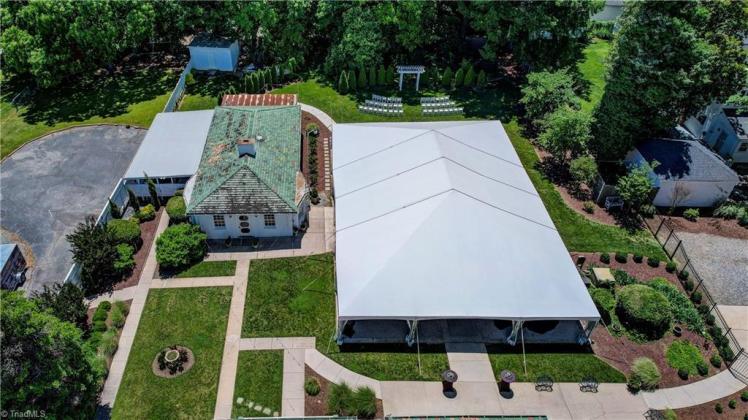
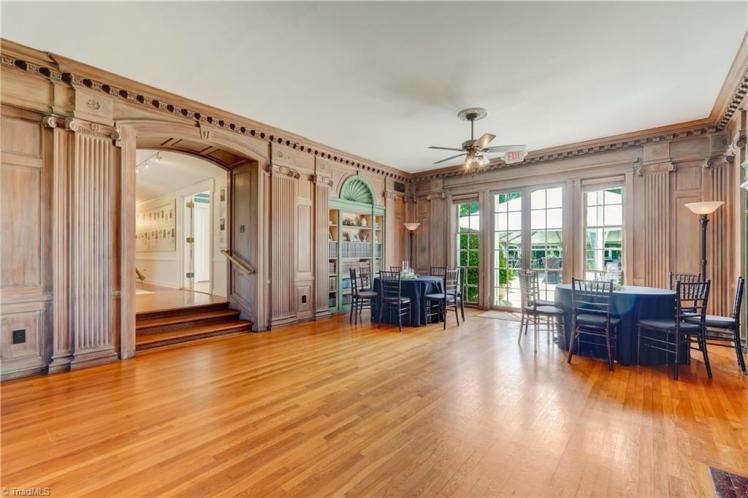
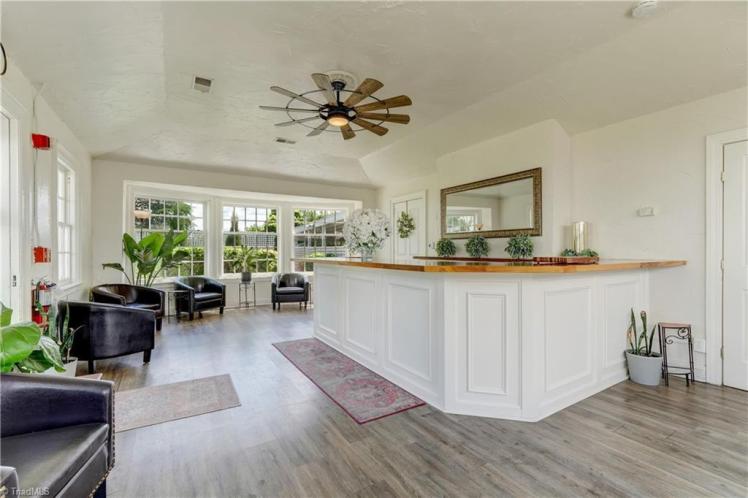
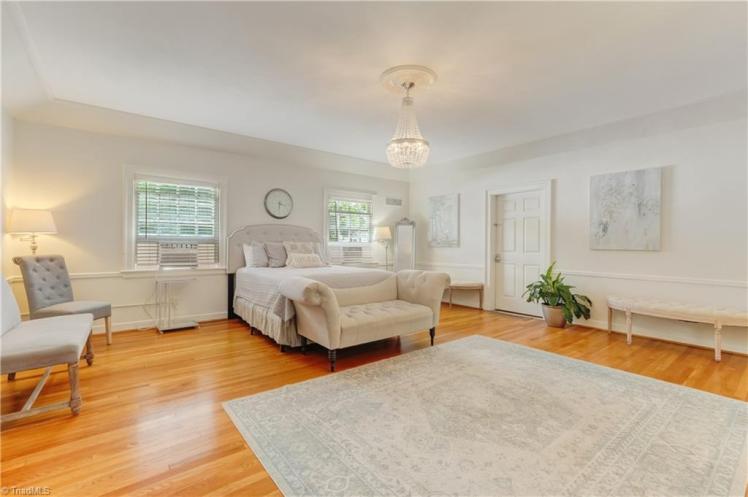
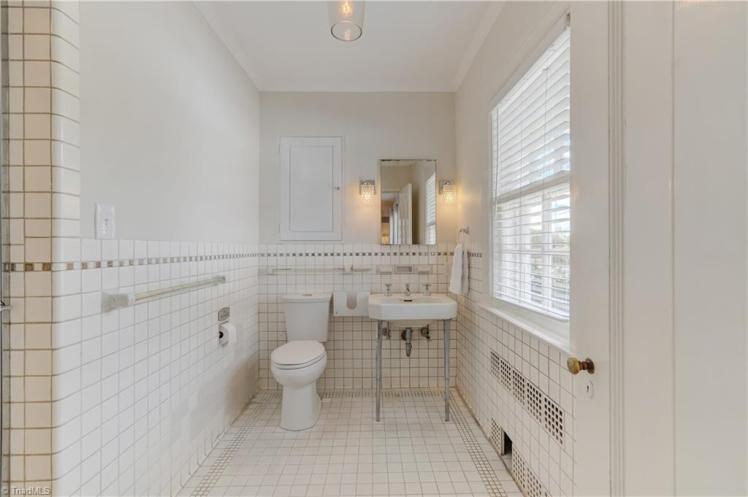
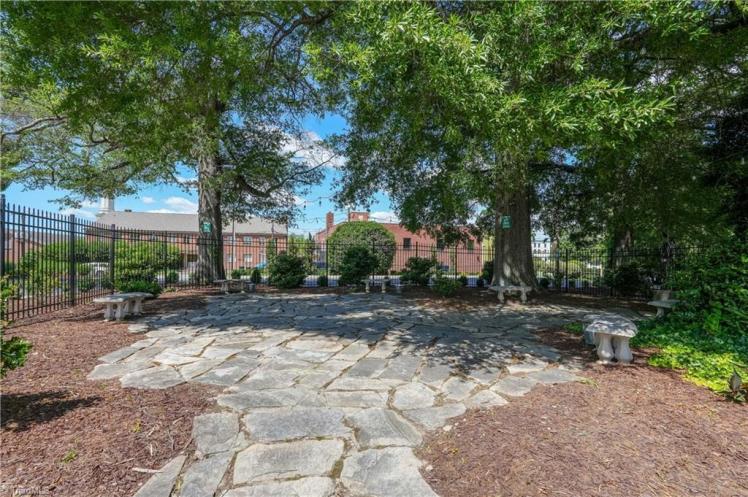
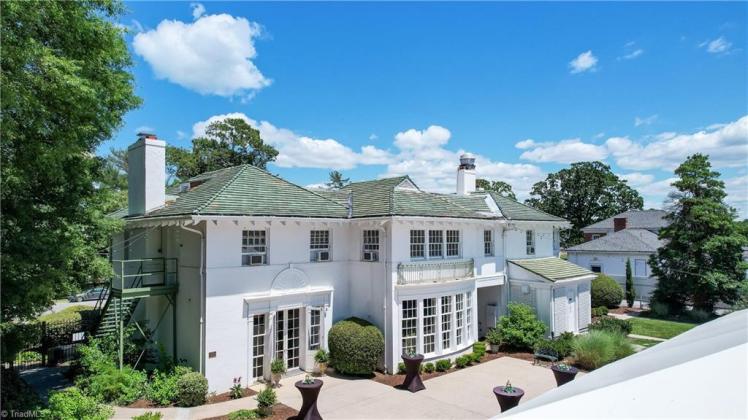
The Austin and Ernestine Finch House
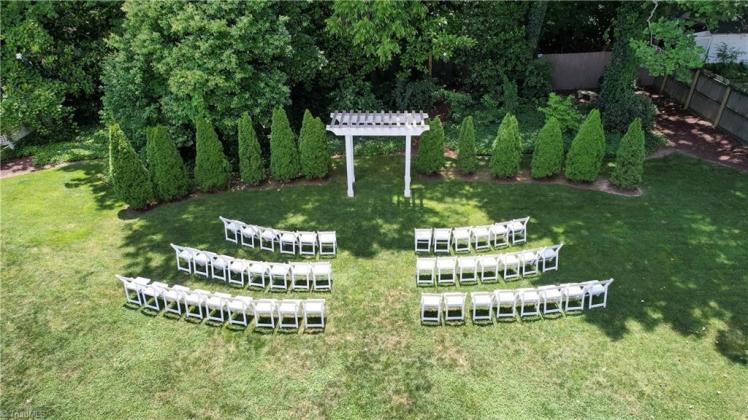
The Finch House (wedding and event venue)
NR nomination (2019)
- $2.5 million
- 11 bedrooms, 8 full bathrooms, 6 half-bathrooms, 6,593 square feet (per county), 1.7 acres (total of both lots, per county)
- Price/square foot: $236 (including the guest house and carriage house)
- Built in 1921
- Listed June 13, 2025
- Last sale: $195,000, October 2017; $212,000, March 1994; $148,000, January 1994
- Neighborhood: Downtown
- Note: Owned by an LLC in Greensboro
- The property is now a wedding and event venue. It “accommodates up to 185 guests and sleeps 25 overnight.”
- “This turnkey business is fully equipped and transfers with bookings into 2026.”
- The listing shows 7,000 square feet for the house, 2,700 for the guest house and 1,300 for the carriage house. The guest house is a 1936 home of 2,197 square feet (per county).
- The National Register designation doesn’t cover the parking lot or guest house.
NR nomination: “The Finch House conveys a refined, subtle sense of permanence and wealth. The expansiveness of the austere yet sophisticated edifice is unequaled in Thomasville’s 1920s and 1930s residential architecture. The green Ludowici-Celadon tile hip roof, deep eaves, and shaped rafter ends, and large multipane windows and French doors exhibit the influence of the Renaissance Revival style, a departure from the more popular period revival styles common in Thomasville during that period. The spacious two-story residence was erected in two phases: the original dwelling completed in 1921, and a 1938 west addition that doubled its size. …
“The 6,570-square-foot dwelling has a finely crafted but unpretentious interior. The 1921 first floor comprises an entrance vestibule, reception hall, living room, sunroom, stair hall, kitchen, and adjacent service areas. The 1938 addition’s first story includes a butler’s pantry, dining room, library, and two restrooms accessed from an east-west corridor. The 1921 dwelling was remodeled in conjunction with the 1938 addition’s construction. The formal public spaces—the reception hall, dining room, living room, and library — are embellished with classical cornices, door and window surrounds, wainscoting, chair rails, baseboards, and mantels. Single- and double-leaf raised-panel doors and multipane French doors retain original hardware. Smooth plaster walls and ceilings and tongue-and-groove oak floors are intact. …
“The T. Austin and Ernestine Lambeth Finch House, erected in 1921 and enlarged in 1938, meets National Register Criterion C for architecture as a remarkably intact and locally significant example of the Renaissance Revival style. The dwelling’s white stuccoed walls, green Ludowici-Celadon tile hip roof, and deep eaves supported by shaped rafter ends exemplify the style and unify the 1921 and 1938 sections. As was typical in such residences, the Finch House features wood casement and double-hung multipane windows and French doors. Finely crafted classical elements including Tuscan porch columns and Palladian library entrance surrounds contribute to the sophisticated aesthetic. Classical cornices, door and window surrounds, wainscoting, chair rails, baseboards, and mantels distinguish the reception hall, dining room, living room, and library. Although similar dwellings were constructed throughout the United States in elite subdivisions developed during the 1920s and 1930s, the Finch House is unique in Thomasville, where the wealthy favored Tudor, Georgian, and Classical Revival styles. The dwelling’s expansiveness and estate-like setting are particularly notable, as most of the city’s early- to mid-twentieth-century subdivisions contain modest bungalows, period cottages, and Minimal Traditional houses on small parcels. The stuccoed, green-tile-roofed, three-bay garage northwest of the house, built in 1921 and remodeled to match the house in 1938, is a rare survival.”
The 1919 marriage of Thomas Austin Finch (1890-1943) and Daisy Ernestine Lambeth (1898-1983) united two prominent North Carolina furniture-manufacturers: Thomasville Chair Company, owned by Thomas Jefferson Finch, and Lambeth Furniture. Ernestine was John Walter and Daisy Sumner Lambeth’s only daughter. She was a 1919 graduate of Greensboro College. T. Austin was the oldest of Thomas and Hannah Louise Brown Finch’s six sons. He had graduated in 1909 from Trinity College in Durham. His mother’s family had early connections with Trinity College, organized in 1838 at Brown’s Schoolhouse, a one-room log building on the Randolph County farm owned by John Brown, one of T. Austin’s great-grandfathers.
As T. Austin worked his way to the top of the family business, he served as a Thomasville City Council member from 1915 until 1917, was elected mayor in 1923 (he was succeeded by Ernestine’s brother) and was active in the local Democratic Party. He became president of the company after his father’s death in 1929. In 1930, the Finches and the Duke Endowment funded the construction of City Memorial Hospital. T. Austin died of a heart attack in 1944 at age 52. His brother Doak Finch became president of the company, followed in 1961 by T. Austin Finch Jr. Ernestine remarried in 1948 and continued to live in the house. The family sold it in 1984.


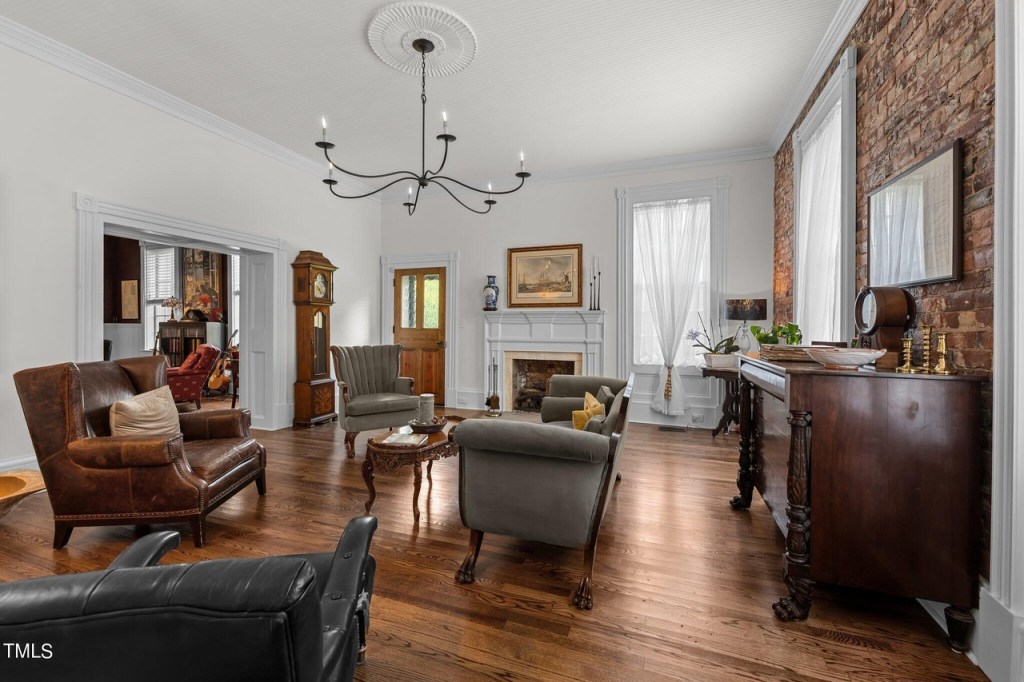
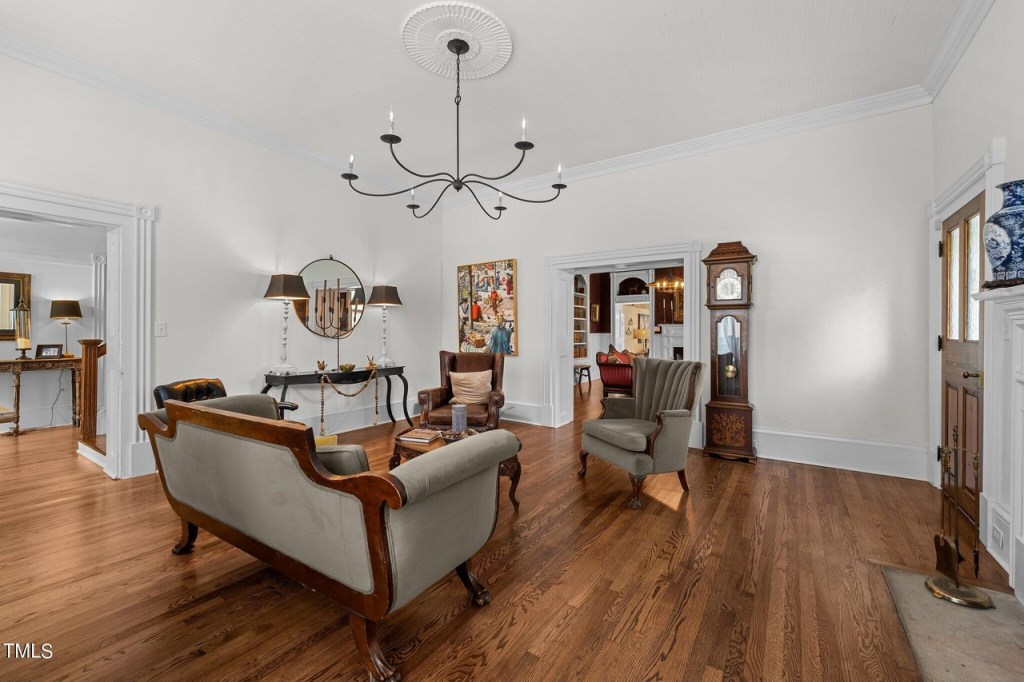













3542 Bason Road, Mebane, Alamance County
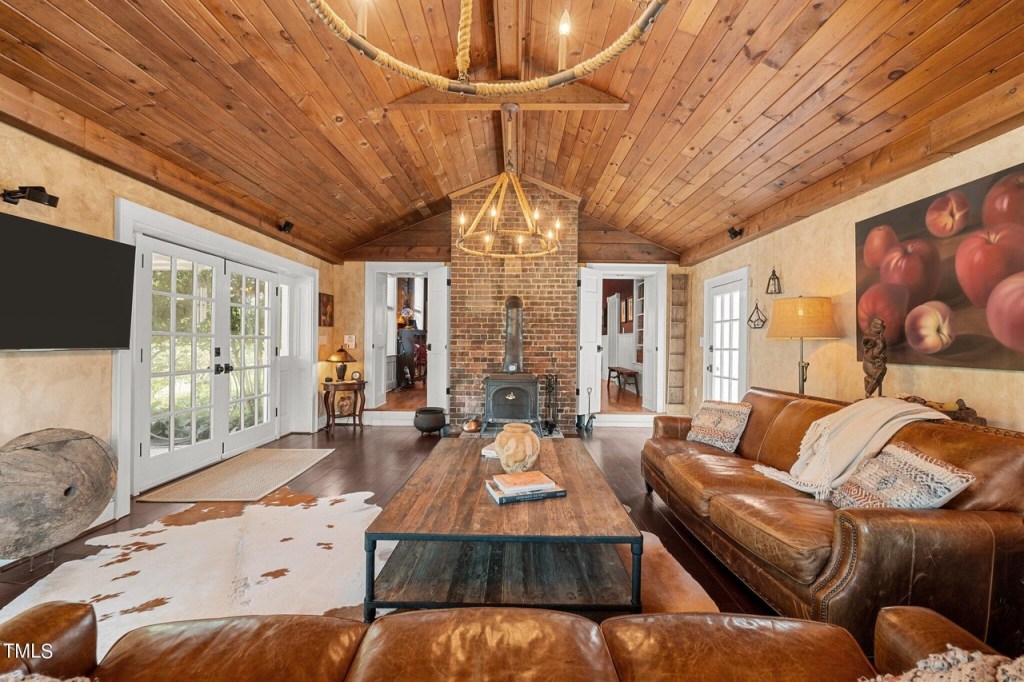
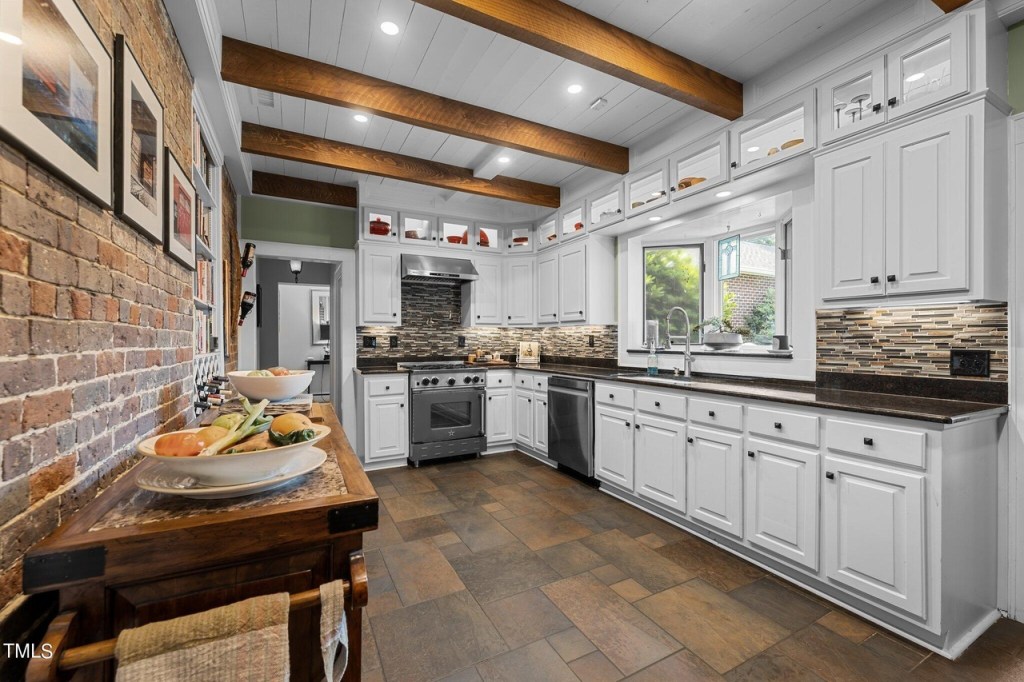
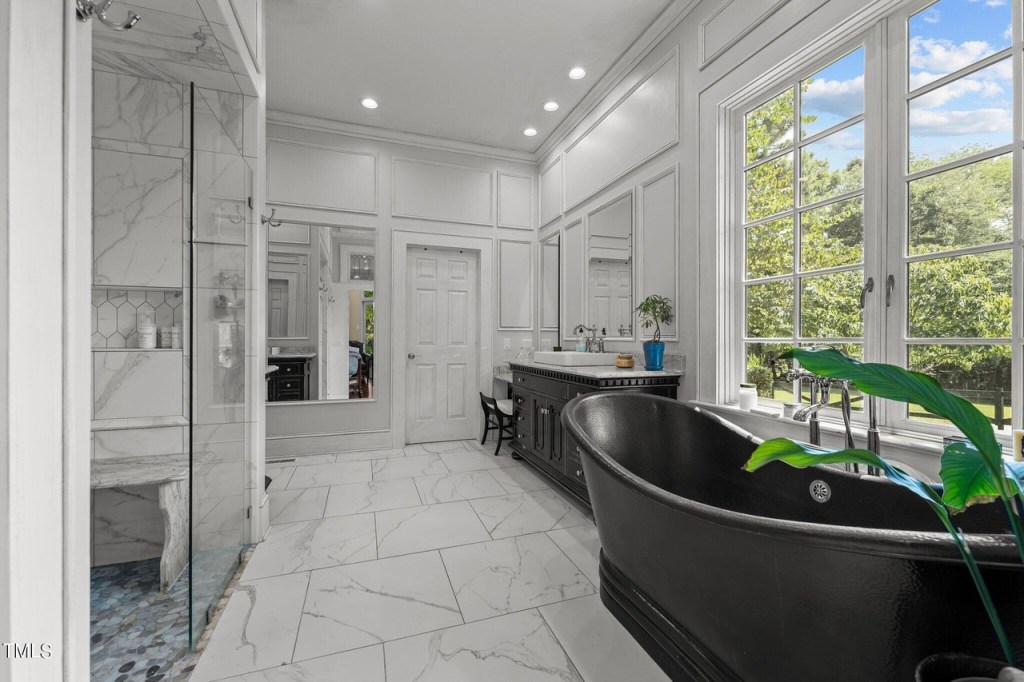
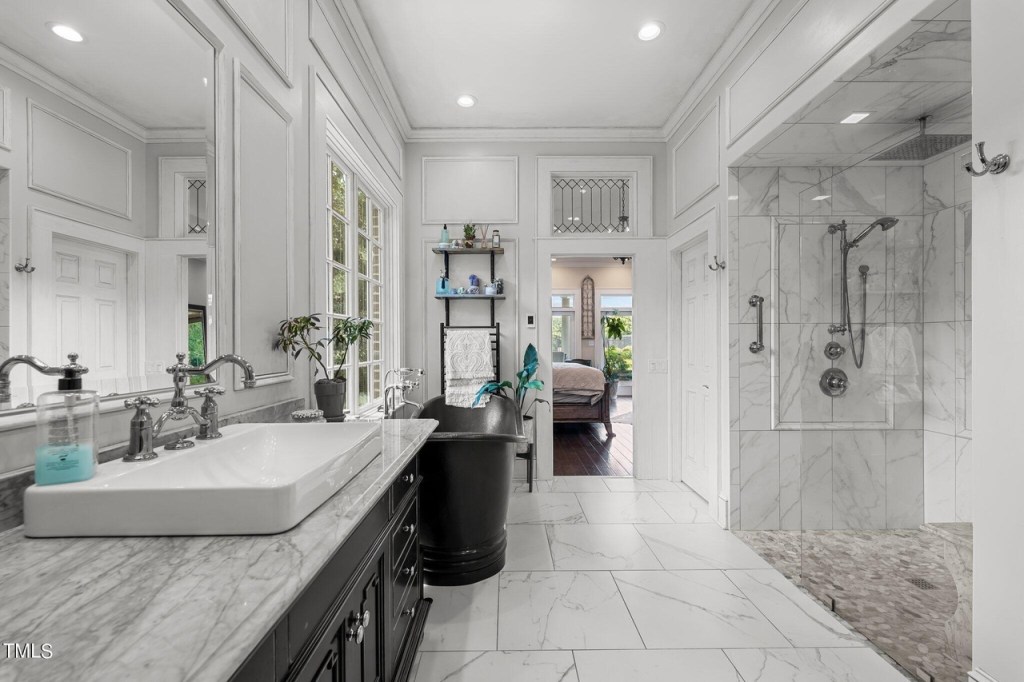
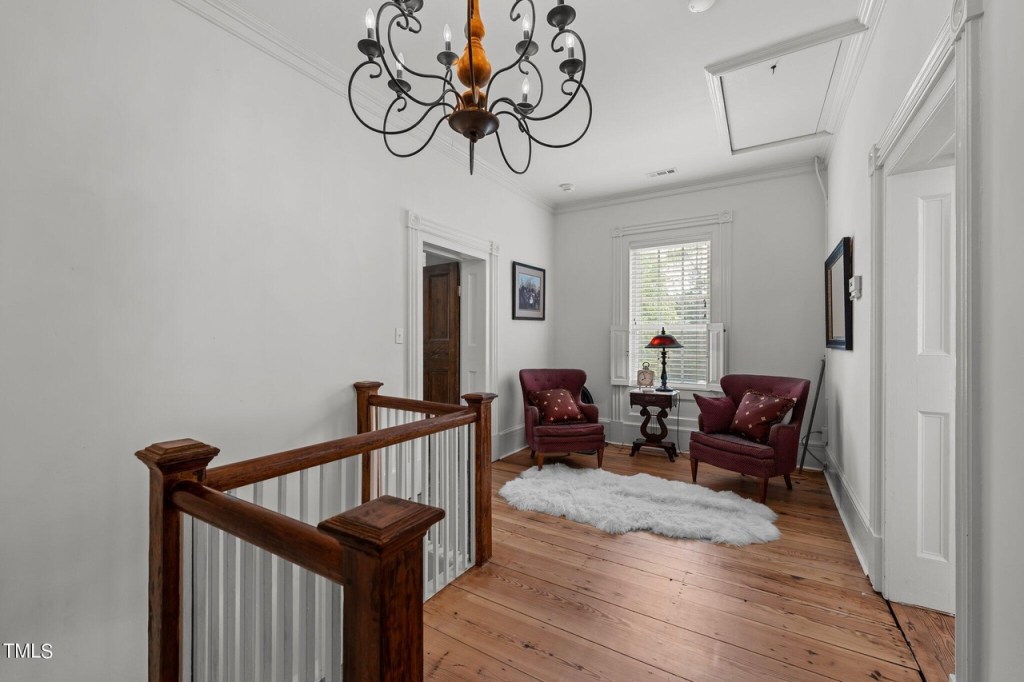
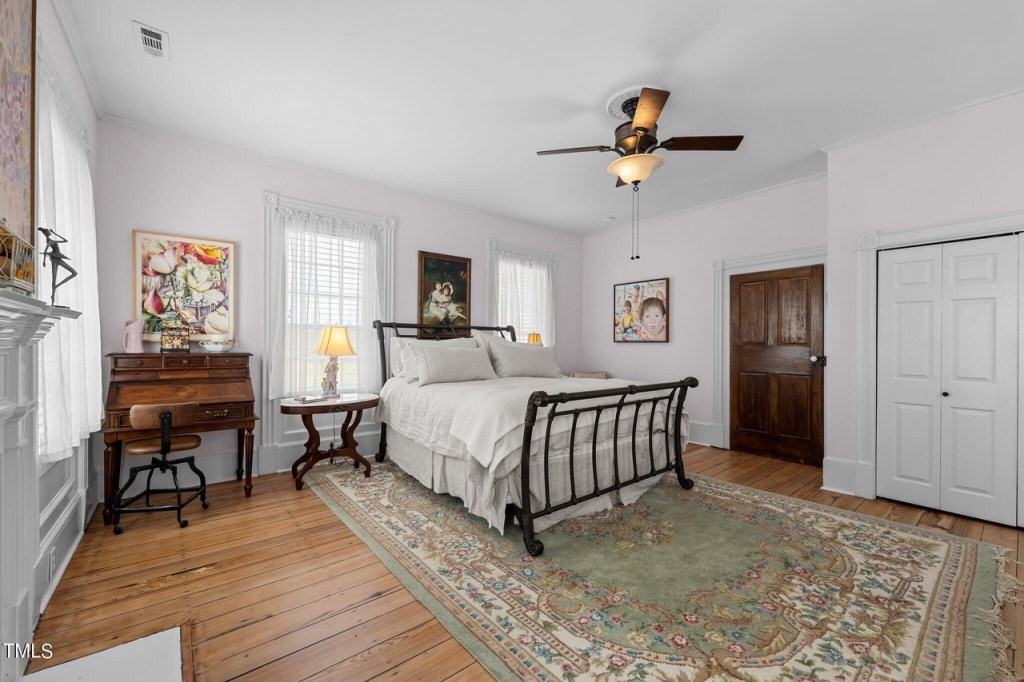
The Griffis-Patton House
Listing withdrawn August 23, 2024; relisted October 3, 2024
Listing withdrawn October 29, 2024; relisted April 16, 2025
Listing withdrawn January 1, 2026
Relisted January 7, 2026
- $2.2 million (originally $2.3 million)
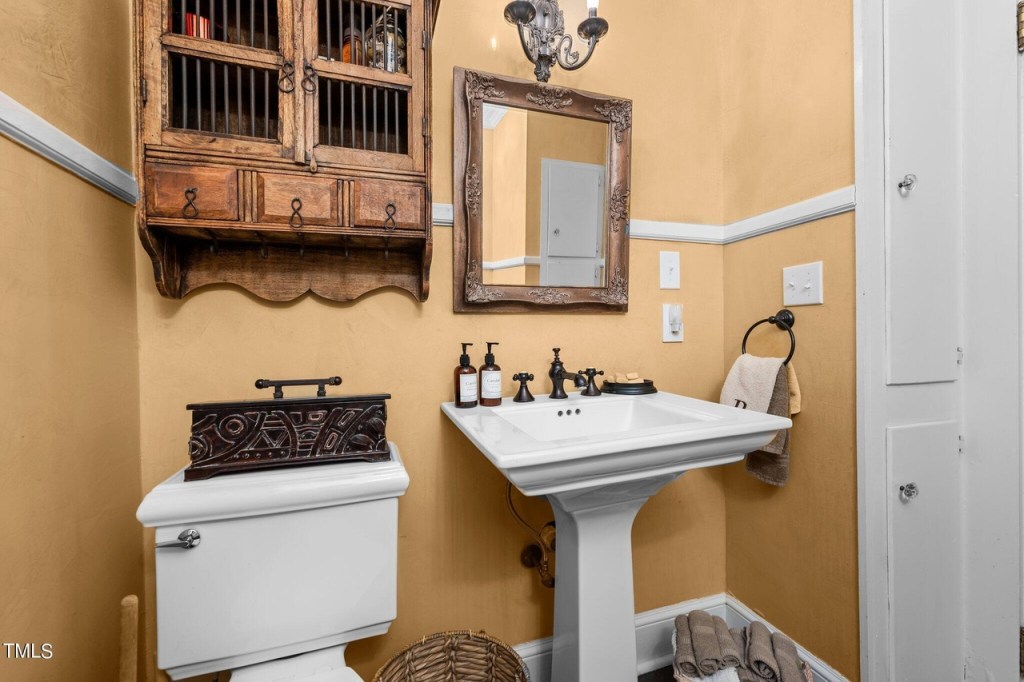
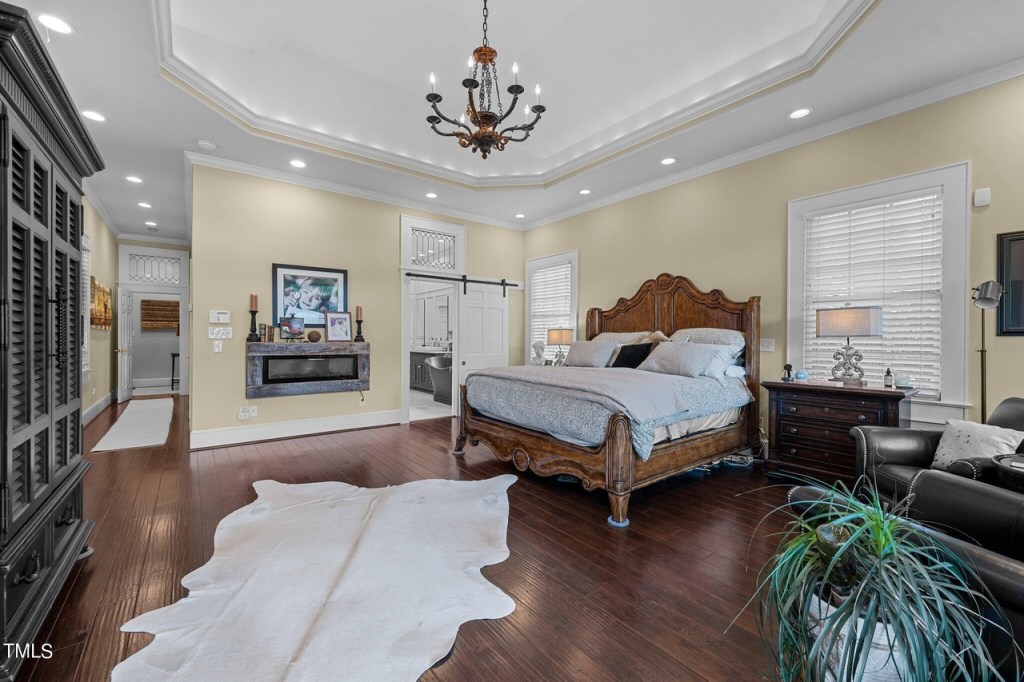
- 4 bedrooms, 4 bathrooms, 4,847 square feet, 9.49 acres (per county)
- Price/square foot: $454
- Built circa 1840
- Listed August 1, 2024
- Last sale: $709,000, August 2009
- Neighborhood: On Graham-Mebane Lake/Quaker Creek Reservoir, about 4 miles northwest of Mebane and 3 miles northeast of Haw River.
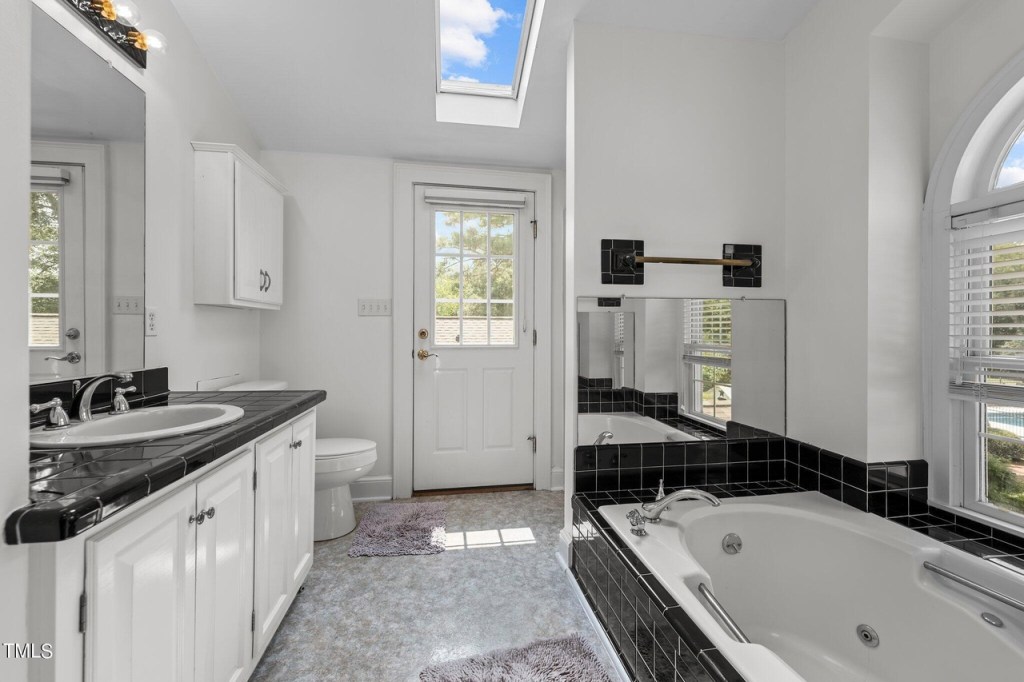
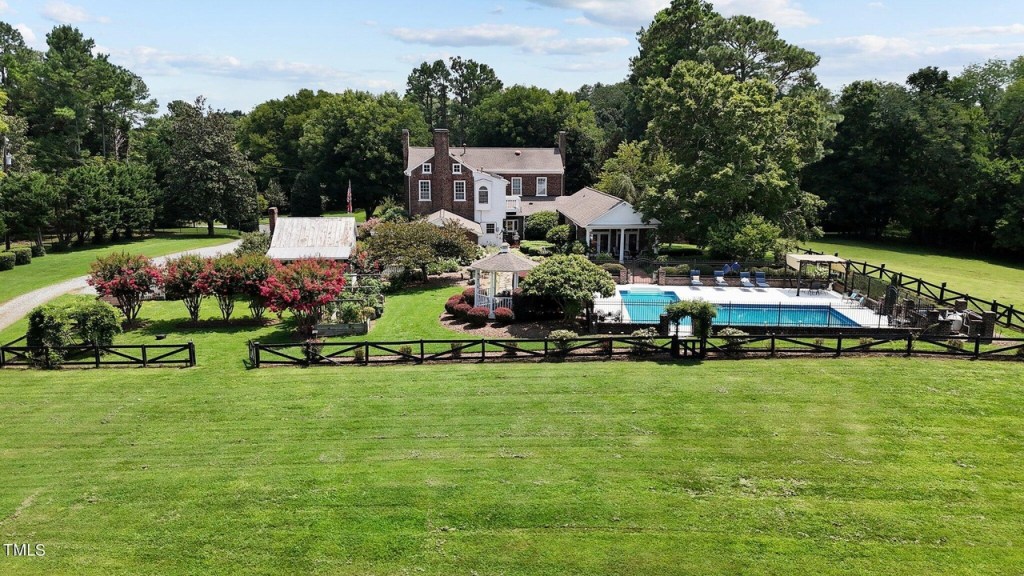
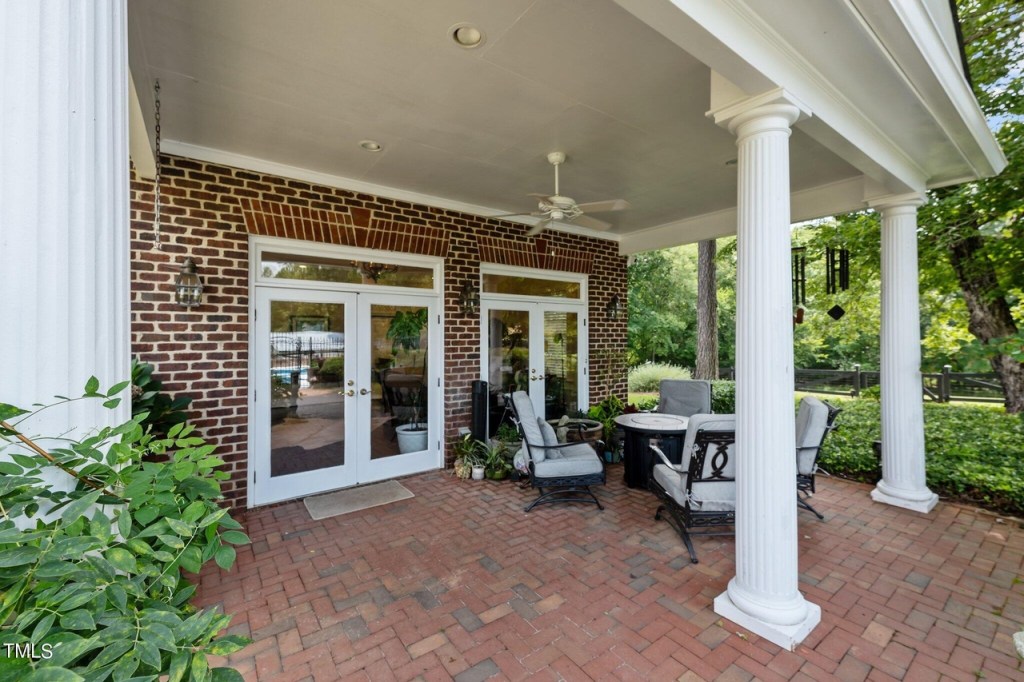
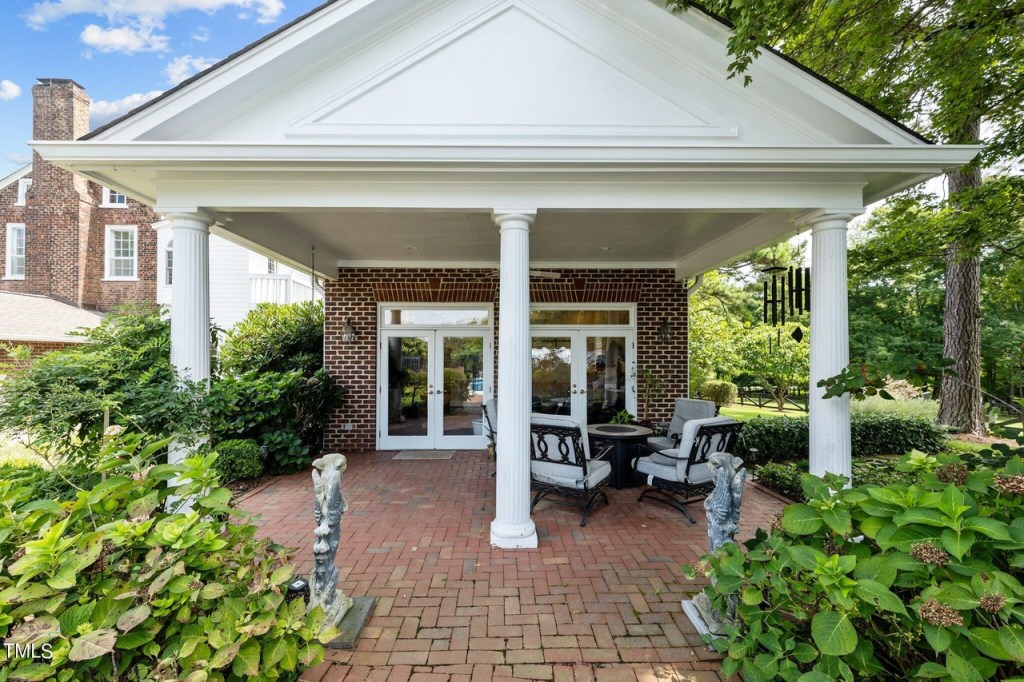
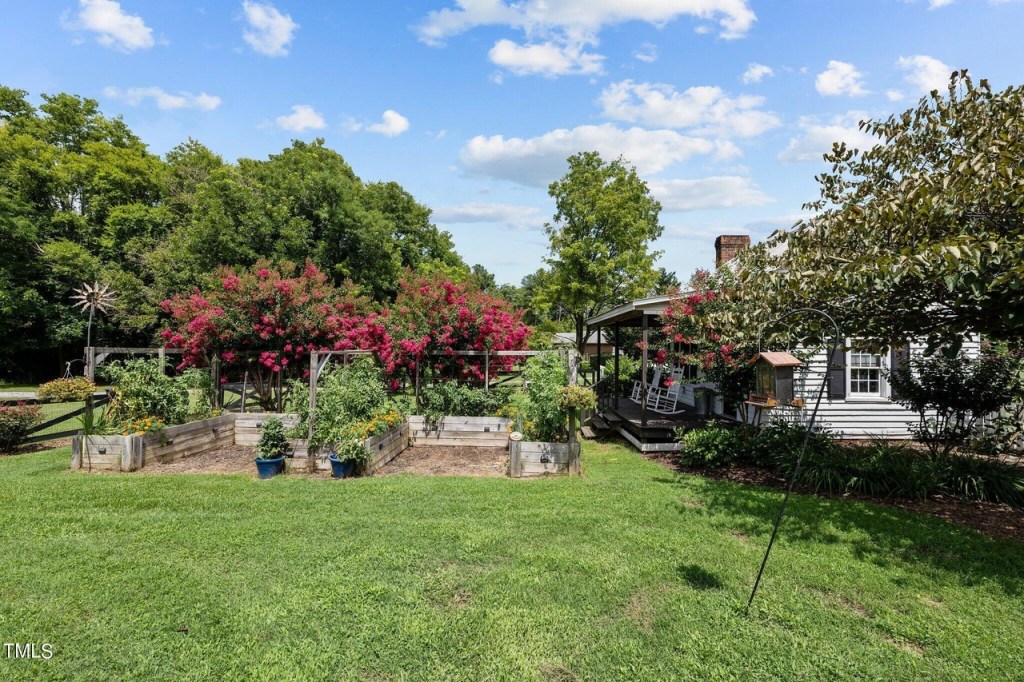
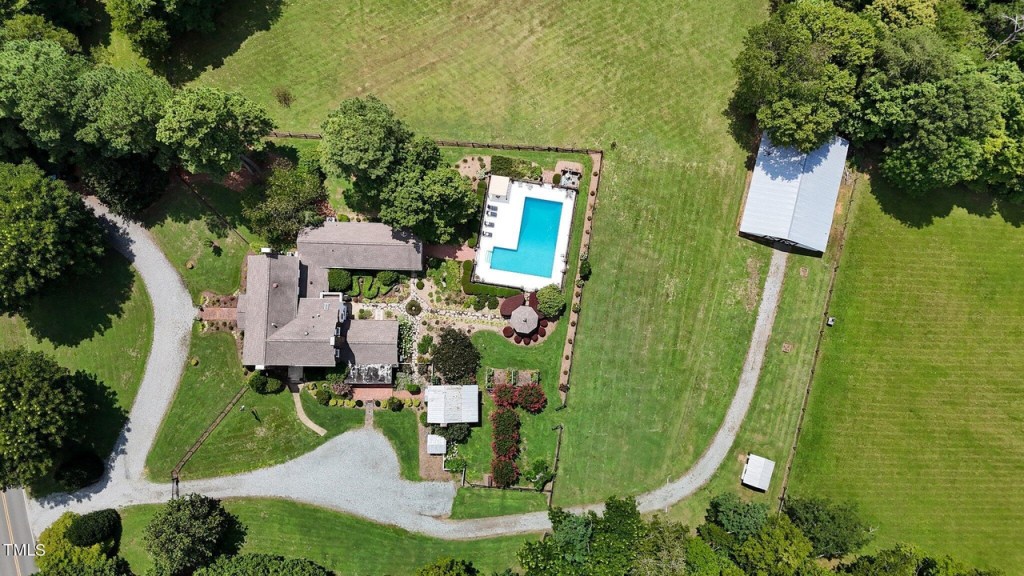
- Previous listing: “The entrance to the main property offers an electric gate which leads to a large parking area flanked on the left by the side entrance porch. The back covered patio off the primary bedroom leads to the L-shaped pool. The pool has a pergola and large area for lounging.
- “The formal established garden has roses, hydrangeas, flowing trees, spices, ornamental grasses, ivy, a large peony garden and a Wisteria-covered pergola. The garden is fully fenced with gates and additionally offers a raised vegetable garden, the original cook’s kitchen—which currently acts as an office/workout room, the historic well-house and gazebo.
- “Outside of this area is a second 5 ft barbed wire lined fence along with a garden house, a wood shed, a tree house (with electricity and internet) and a 5 stall barn and tack room.”
National Register nomination: “The Griffis-Patton House, built 1839-1840 on the west side of the Hillsborough and Haw River Road northeast of the village of Haw River, is a handsome two-story, five-bay brick plantation house of commanding presence. …
“In addition to its local historical significance the house possesses local (county) architectural significance as one of the county’s few antebellum brick plantation seats and the most intact member of that group. The wide five-bay front elevation of the house and the two-story rear ell raise the house to a status above the more usual three-bay brick house of the North Carolina Piedmont. Its exterior trim and interior finish, particularly the door and window surrounds, their paneled reveals, and mantels executed in a transitional Federal/Greek Revival manner are the work of a fine vernacular craftsman, possibly William P. Griffis himself.”
The house was built on land owned by William Griffis through purchases beginning in 1795 and eventually totaling more than 1,000 acres. It was first occupied by one of William’s three sons, William P. Griffis, a carpenter, and Mary Robbins Griffis. They lived there until 1859, when they and other members of the family moved to Texas.
Another son, Dr. Thomas E. Griffis (1820-1903), a physician, took ownership of the house, although he, too, moved to Texas with William and their mother and never lived in the house. It became a rental for more than 50 years, eventually owned by Thomas’s descendants. Various records show it to have been at various times a store, a stagecoach stop and a tenant house.
The house and its then 138 acres were sold in 1912 and then again in 1916, this time to Lonnie Lee Patton Sr. (1880-1920) and Mary Bason Patton (1880-1958). Lonnie was a prominent farmer. Although he died just four years later at age 39, the family occupied the house for 62 years.
“Both Lonnie Patton and Mary Bason were descendants of long established and well respected families in the Quaker Creek area. Their marriage brought together a heritage of successful farming and community prestige. The Patton occupancy returned the house to its antebellum status as the property and home of a prominent Alamance County family.”
One of the Pattons’ daughters, Ida Hazeline Patton Tickle (1917-2014) became owner of the house and 37 acres in 1936. She lived there until she sold it in 1982. Hazeltine lived to be 97; she had a sister who lived to age 104 and two brothers who died in early childhood.
Hazeltine sold the house to W. Eric Hinshaw and Patricia A.K. Hinshaw. Eric was CEO of Kingsdown in Mebane for 31 years. After he retired, he and the company exchanged a string of lawsuits (here’s an interesting one) in which the company accused him of various forms of self-dealing and evading the oversight of the company’s board, of which he was chairman, which he denied. The tears and recriminations eventually ended with an out-of-court, confidential settlement.* Patricia sold the house in 2006, and everything seems to have been pretty quiet since then.
* I actually couldn’t find anything on the internet about how it all ended, so I asked ChatGPT about it. The bot said it had been resolved out of court, which apparently means it was either settled out of court or the bot doesn’t know the answer and just made that up to amuse itself.

3550 Middlebrook Drive, Clemmons, Forsyth County (or here online link is broken)
The Philip and Johanna Hoehns (Hanes) House
Blog post — The 1798 Philip and Johanna Hoehns House: In Forsyth County, They Don’t Come Much More Historic Than This
Listing expired October 17, 2020; relisted January 6, 2021
Listing withdrawn April 11, 2022; relisted April 19, 2022
Listing withdrawn June 21, 2022; relisted September 2, 2022
MLS listing withdrawn July 20, 2023 (still listed with Preservation North Carolina)
- $1.699 million (originally $1.95 million, later $1.295 million)
- 5 bedrooms, 4 bathrooms, 2,839 square feet, 8.26 acres
- Price/square foot: $598
- Built in 1798 (per NRHP nomination)
- Listed August 12, 2020
- Last sale: $275,000, February 2014
- Note: The house was built by the Hanes family’s first ancestor in Forsyth County.
NRHP nomination: “In the late 1940s, the interior of the house was remodeled according to plans prepared by Winston-Salem architect William Roy Wallace. When the present owners renovated the house in 2014-2015, they restored some of the original features based on physical evidence, retained some of the 1940s features when there was no evidence of earlier treatments, and made a few changes based on personal taste. …
“Even with the alterations of the 1940s and 2014-2015, the house still strongly projects the feeling of a substantial and sophisticated dwelling from the turn of the nineteenth century in Forsyth County.”
The 2014-15 renovation included the construction of a one-story addition behind the house, connected to the original structure by a hallway.
“Although large, the one-story frame addition was designed and built to be as sensitive as possible to the historic character of the original house and to have the least impact on it. Among other things, the addition housed a new kitchen and two bathrooms, so that these facilities did not interrupt the original fabric of the house.” (NRHP nomination)
630 N. Patterson Avenue, Winston-Salem
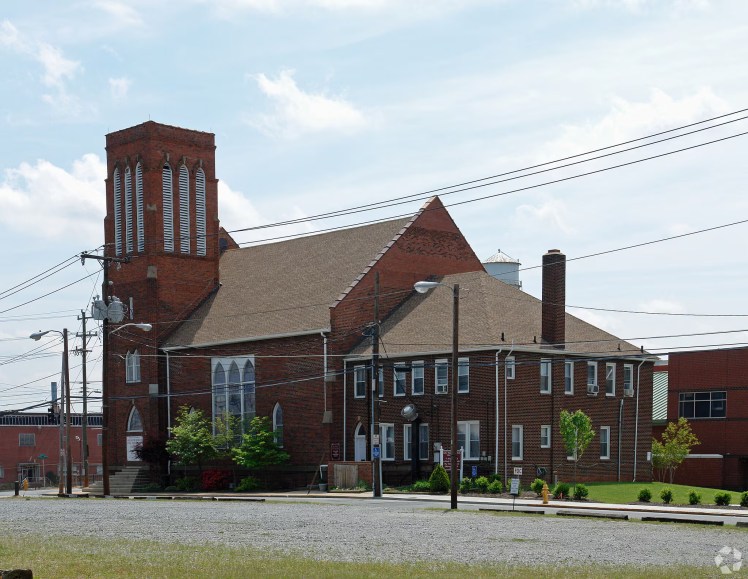
Goler Memorial AME Zion Church, “Old Goler”
National Register nomination
- $625,000
- 11,618 square feet, 0.25 acre
- Price/square foot: $54
- Built in 1919
- Listed June 24, 2025
- Last sale: The church has occupied the site since at least 1902.
- Neighborhood: Across the street from the Winston-Salem Tobacco Historic District
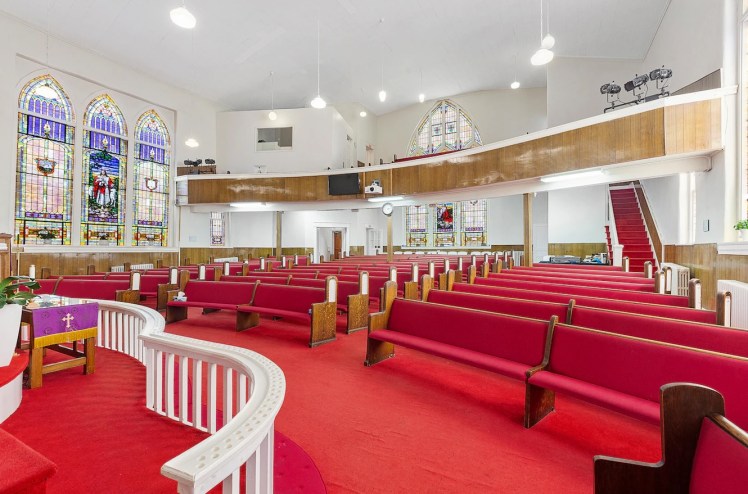
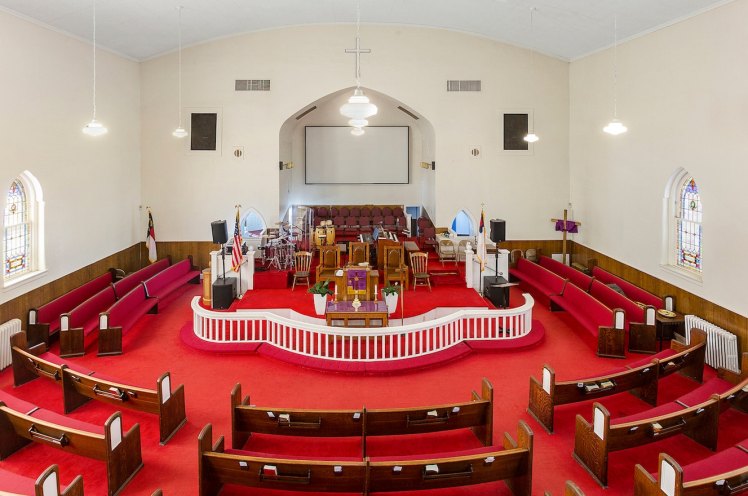
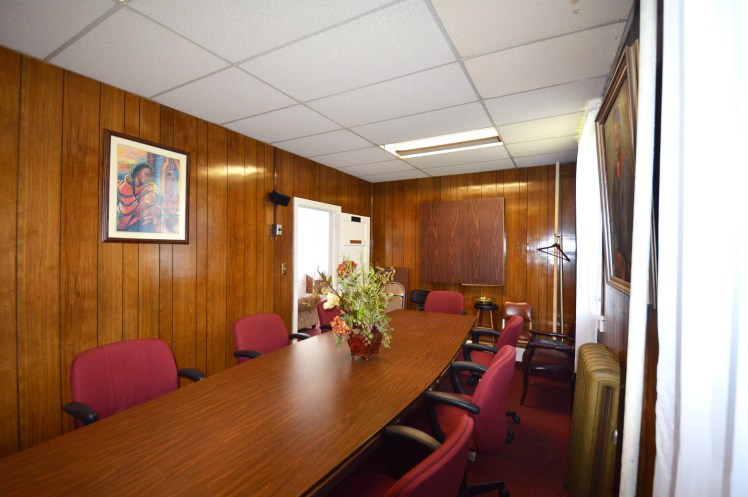
- Listing: “3 floors with 2 restrooms on each floor. Top floor features 6 private offices. The main floor features a large sanctuary with mezzanine level/balcony and A/V room, large stained-glass windows, and ample storage. The basement level was historically used as a fellowship hall with a performance area accessed from N. Patterson Avenue and a kitchen in the rear.”
- Note: The church originally occupied a 1.79-acre tract. In 2022 it sold 1.54 acres to an affiliate of Kaplan Early Learning Company. The tract has a 2007 building and a parking lot. The facility is now called the Kaplan Innovation & Education Center.
- After selling that piece of its property, Goler Memorial relocated to a new, 25-acre location about five miles away at 3894 Northampton Drive.
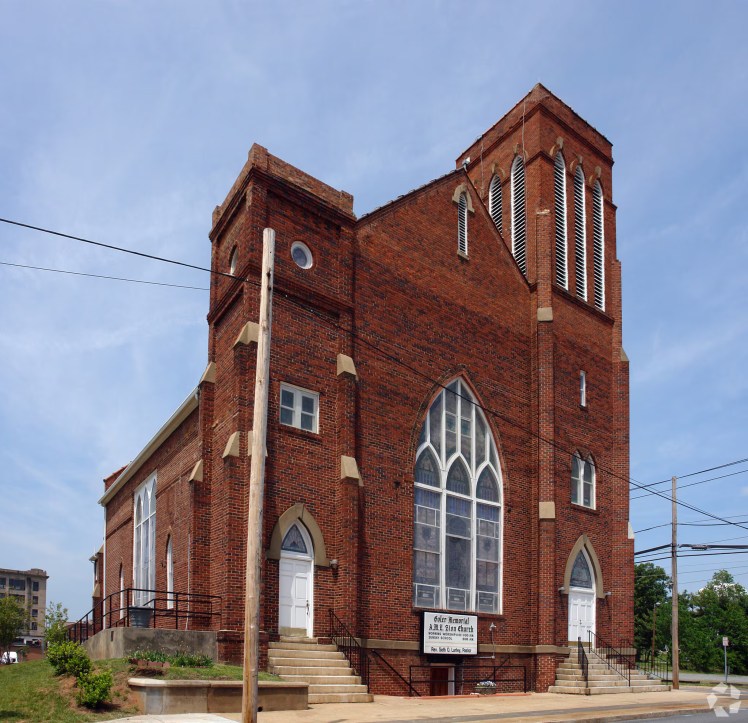
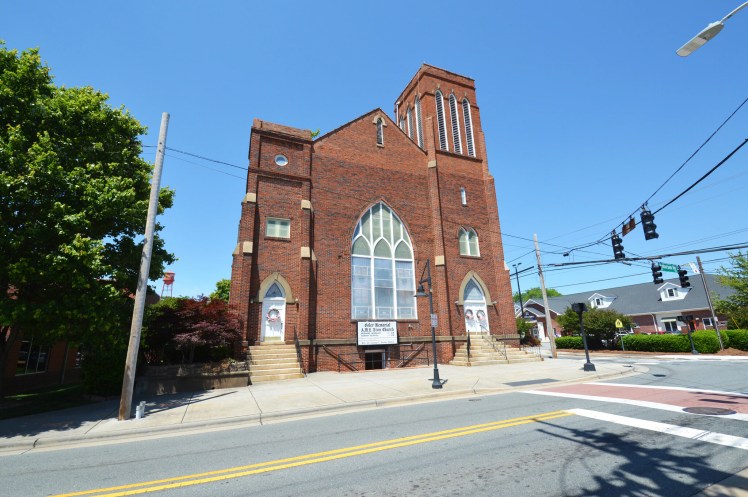
NR nomination: “Goler Memorial African Methodist Episcopal Zion Church, erected in 1918-1919, is probably the second church building erected on this site, and the congregation’s fifth place of worship. It is one of the principal African-American architectural monuments in Winston-Salem and the most prominent of the buildings remaining of the Depot Street neighborhood.
“Goler is the only remaining brick Gothic Revival church built originally for an African-American congregation in Winston-Salem today. Its congregation was established in 1881 as Winston Tabernacle African Methodist Episcopal Church, and met at the courthouse and three locations in the Depot Street neighborhood before moving to its present site and constructing its first brick church building with a corner tower and spire. In 1918 construction began on a new building on the site.
“The impressive late Gothic Revival-style church, built in 1918-1919, has a pair of corner towers flanking the gable-front facade, and a well-preserved array of elements of the style including pointed-arch windows with stained glass, buttresses, and overall form. In 1941 portions of the building were destroyed by fire and were rebuilt.
“Goler Memorial has been an institution active in the Depot Street neighborhood since 1881, only eight years after RJ. Reynolds built his first tobacco company in that area and drew large numbers of African-Americans to the then small town of Winston. Goler Memorial is representative of the rapid improvement of the Depot Street neighborhood and the frequent redeveloping that took place as its African-American residents became more affluent.
“It also reflects the ability, in the second decade of the twentieth century, of a group of African-American neighbors to build an imposing, dignified church building in a well-executed and up-to-date style. …
“Goler’s setting has changed due to the changes in the Depot Street neighborhood in the 1960s, 1970s, and 1980s. It is, therefore, an extraordinary reminder of the successful neighborhood that flourished until the 1960s, and represents the character of religious, social, and political life in that area where Goler, Lloyd Presbyterian, and so many of Winston-Salem’s other African-American churches were established. …
“Despite the fire of 1941, it retains great integrity of its architectural design, materials, workmanship, feeling, association and orientation to the street and sidewalk. The 1940s repair of the church and construction of a replacement back wing respect the original design, fabric, and scale of the church building.”
Dr. William Henry Goler (1846-1939) was born in Halifax, Nova Scotia. He was apprenticed to a masonry and plastering company at age 15. In 1873 he enrolled at Lincoln University in Pennsylvania. He completed his doctorate in 1880 and came to Greensboro’s St. Matthews Methodist Church. Later he moved to Winston’s Zion Methodist Church and St. Paul Methodist Episcopal Church. From 1894-1916 he served as president of Livingstone College in Salisbury.
“He invested in real estate and made much money out of such ventures,” the Salisbury Evening Post said in his obituary. “Dr. Goler built churches and houses in Winston-Salem, Greensboro and this city.”
2177 N.C. Highway 801 S., Advance, Davie County
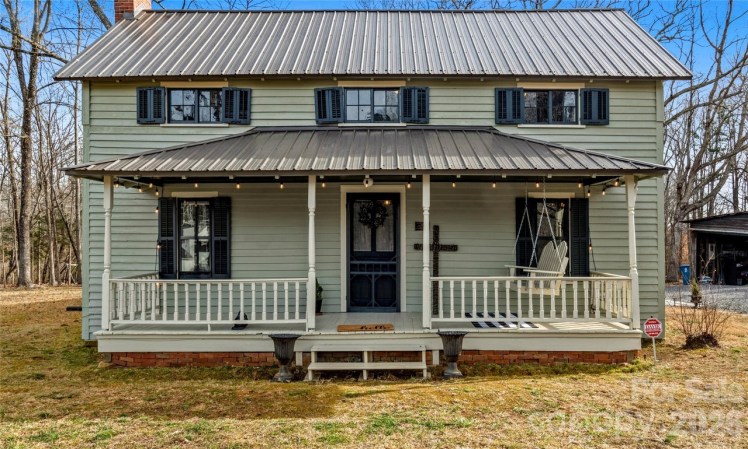
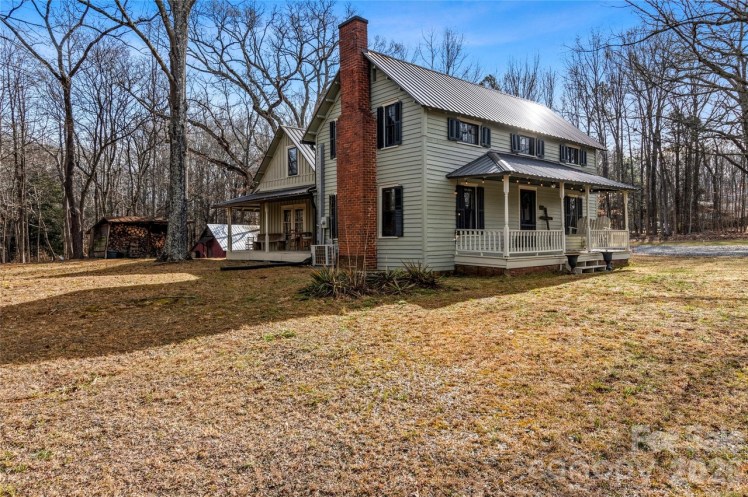
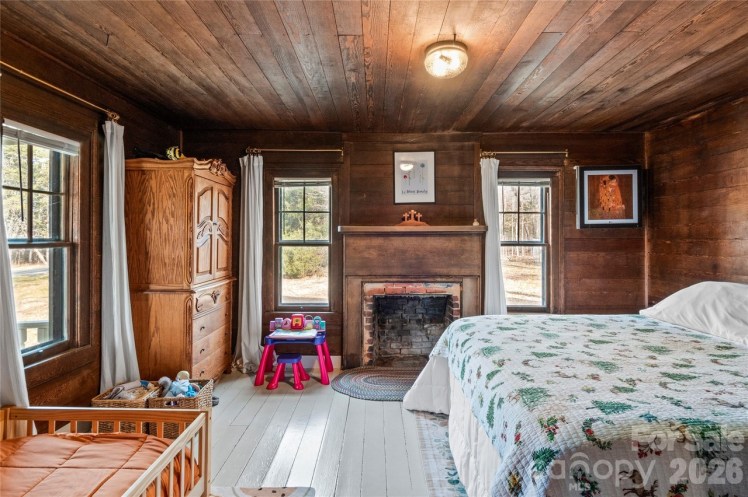
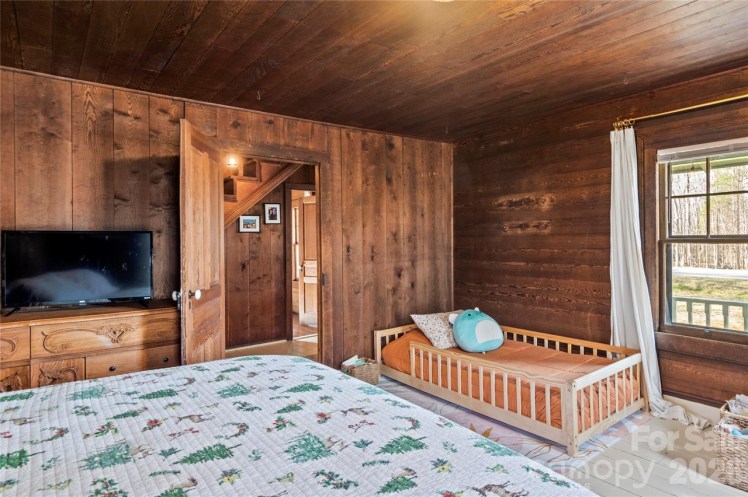
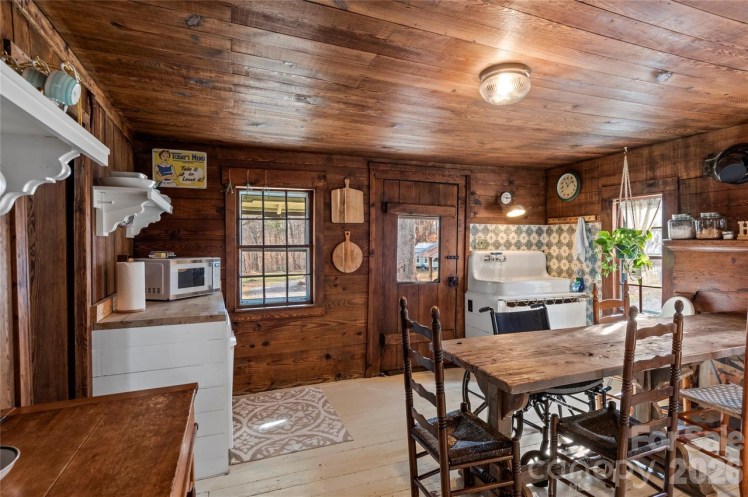
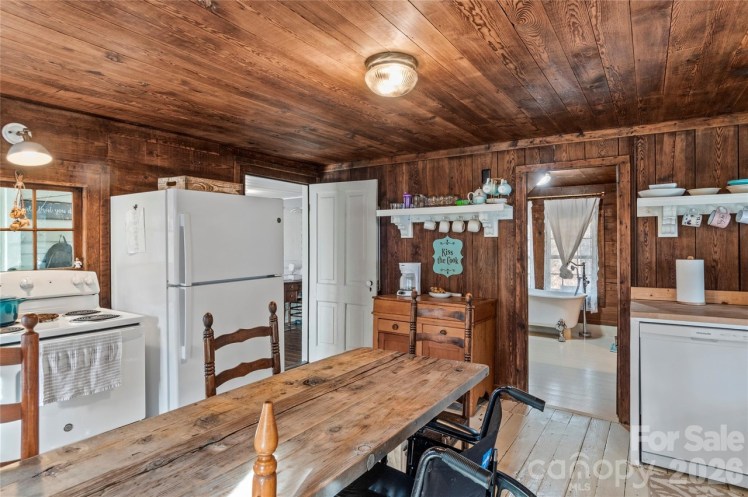
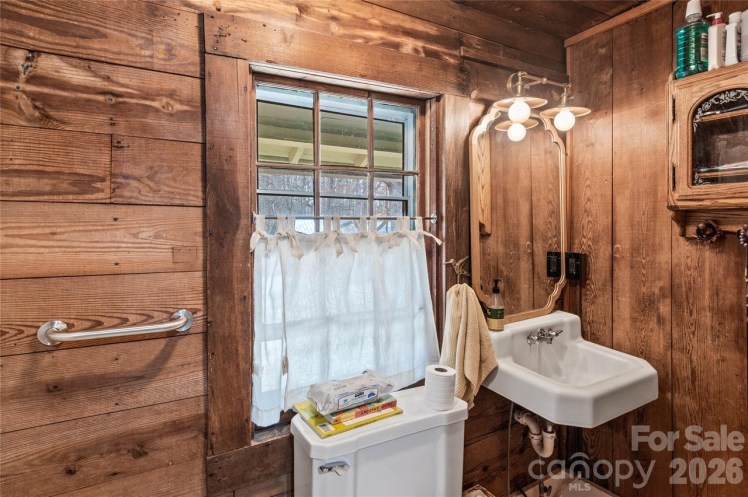
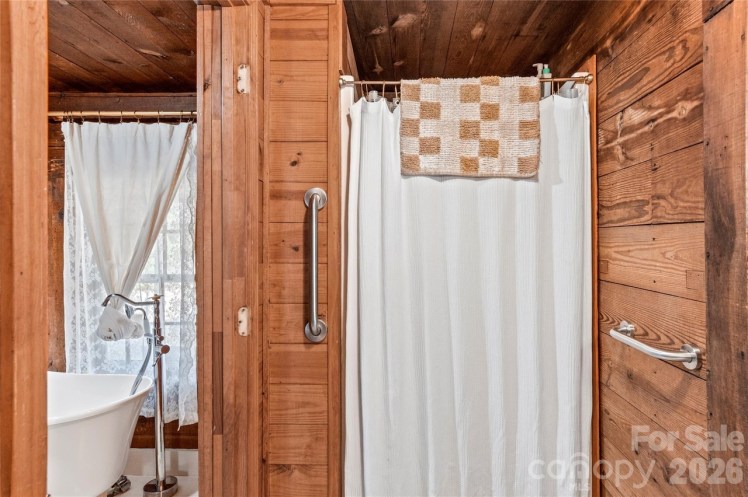
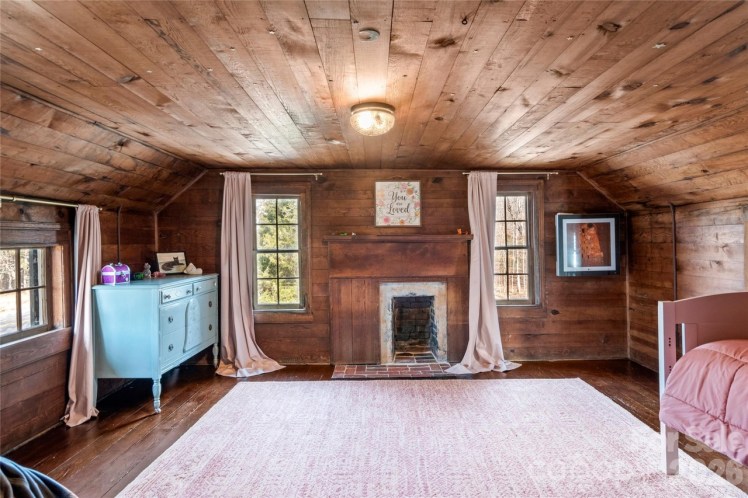
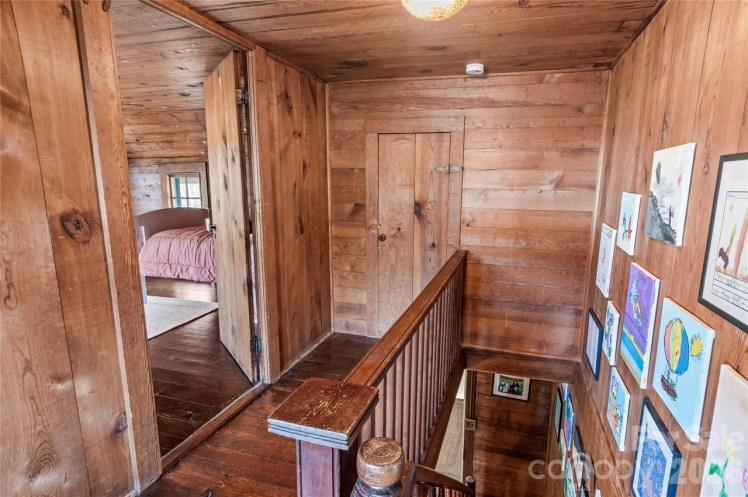
The John Edward Belle Shutt House
National Register of Historic Places
Listing withdrawn March 11, 2026
- $399,900
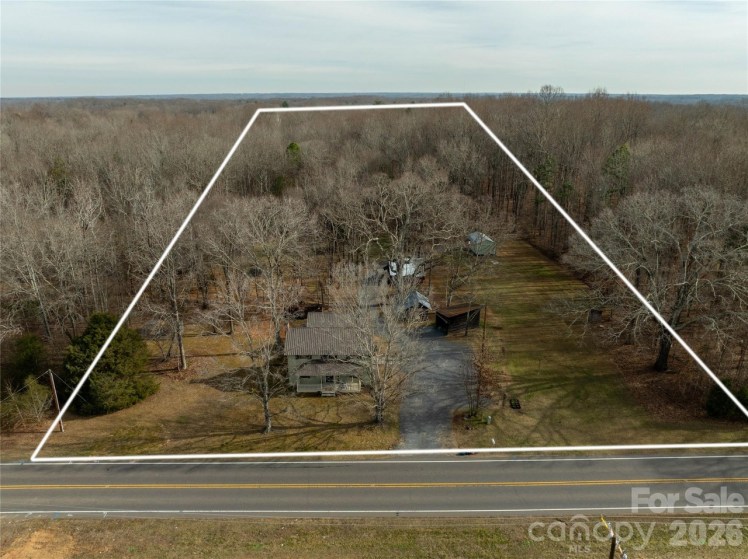
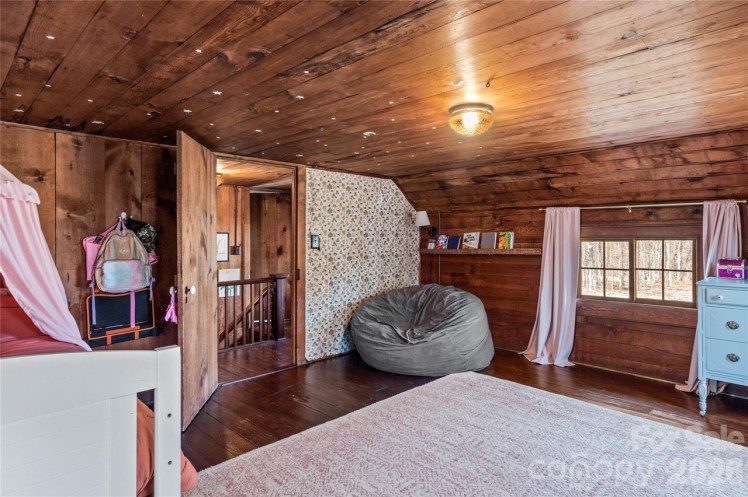
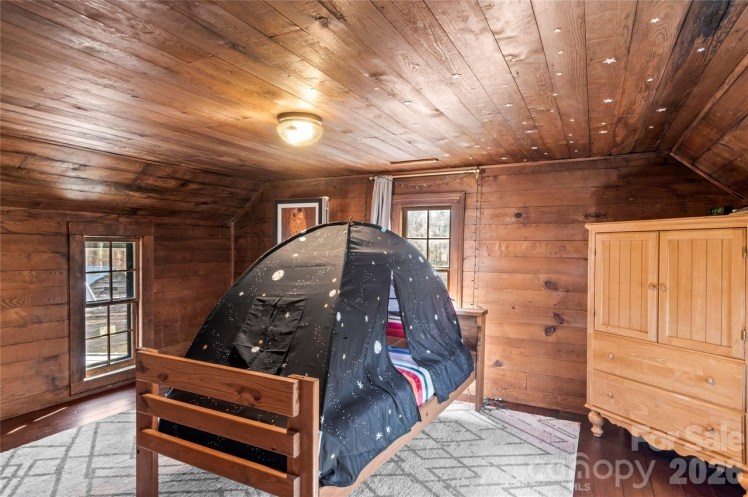
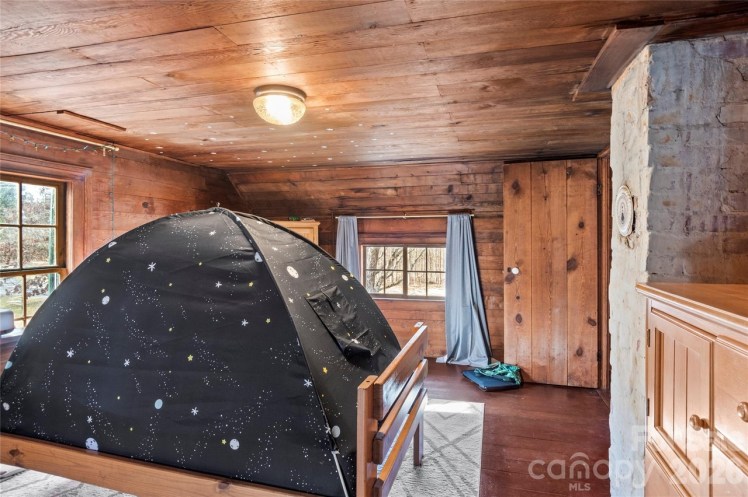
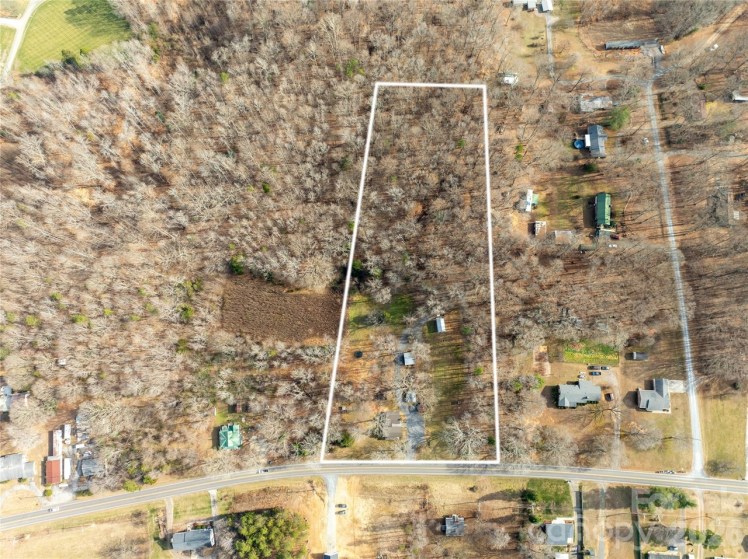
- 3 bedrooms, 1 bathroom, 1,526 square feet, 5.9 acres
- Price/square foot: $262
- Built in 1885
- Listed January 12, 2026
- Last sales: $256,000, December 2022; $200,000, July 2022
- Neighborhood: Located just south of Advance, 5.3 miles south of I-40, Exit 180.
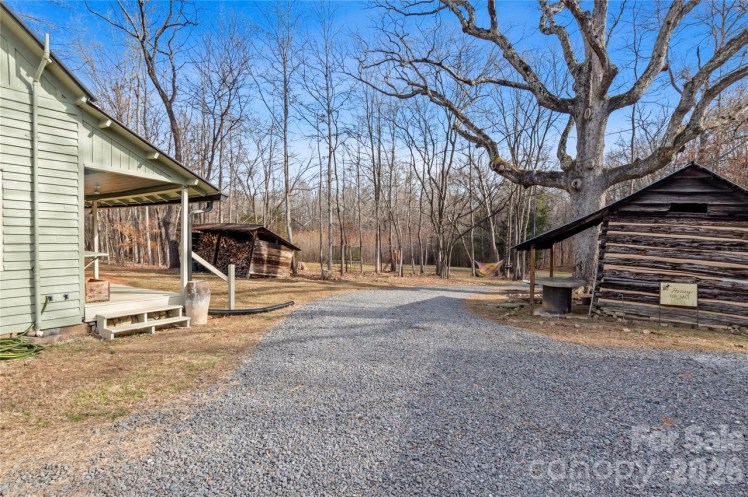
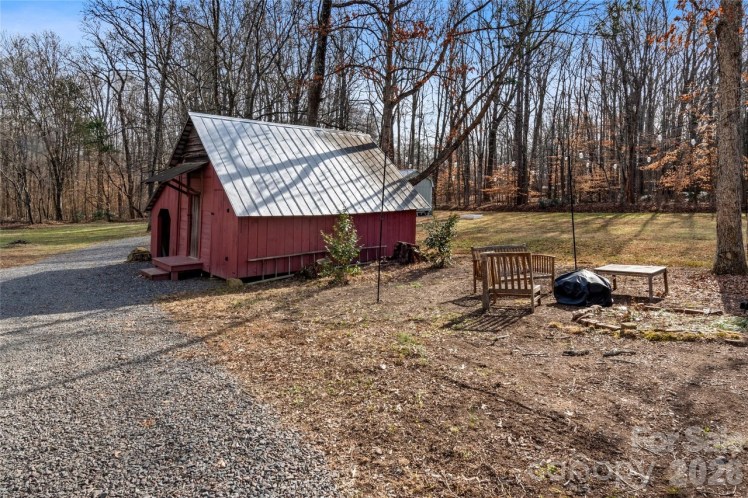
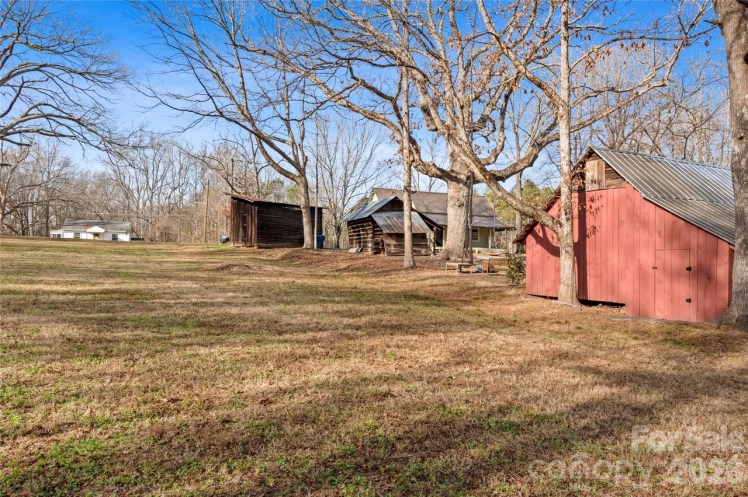
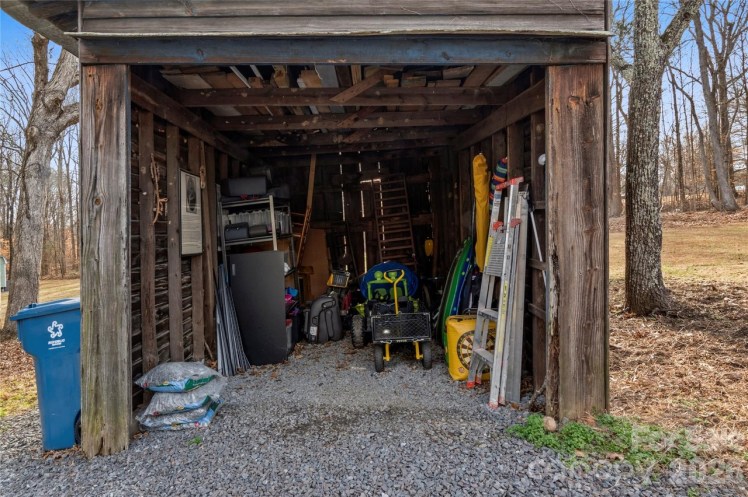
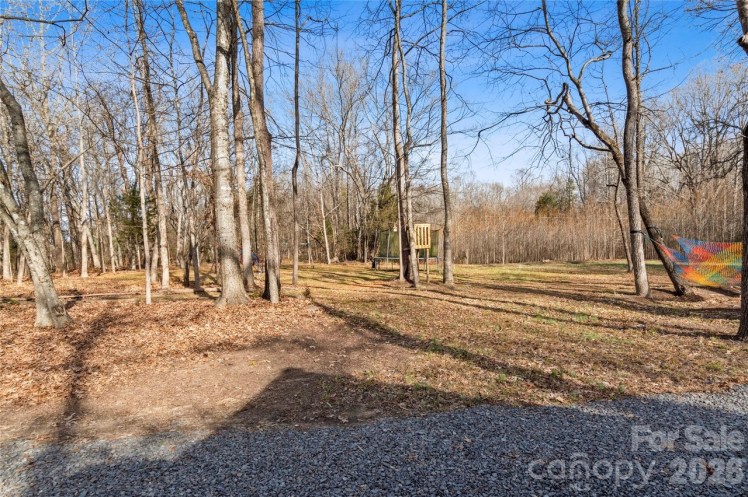
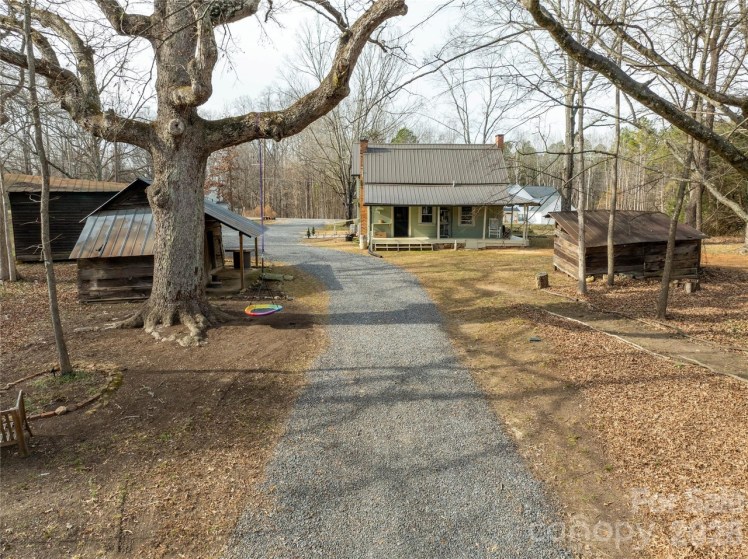
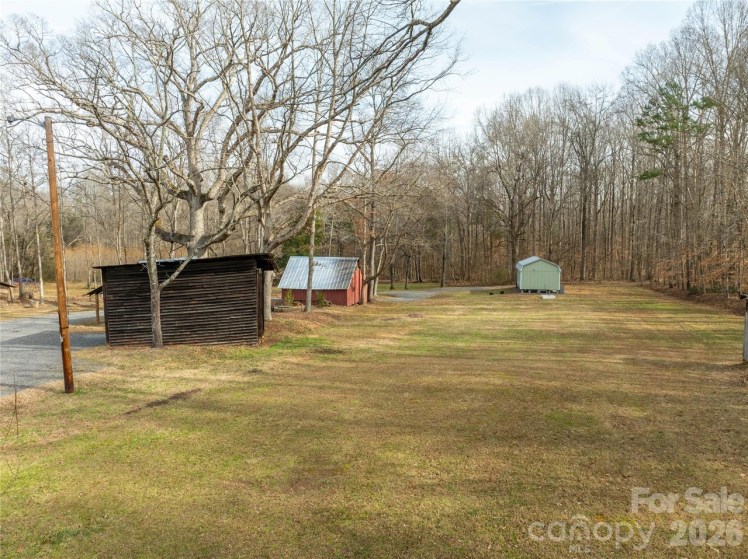
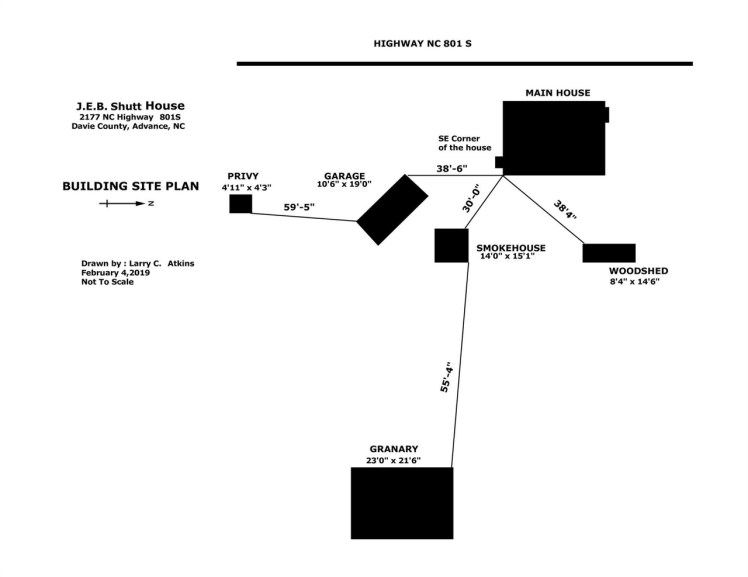
- Note: The property includes five outbuildings, fruit trees, a chicken run and coop and a small creek/branch.
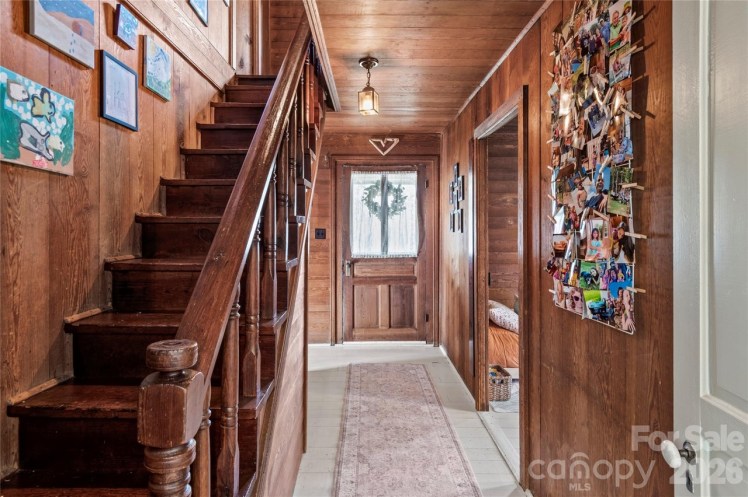
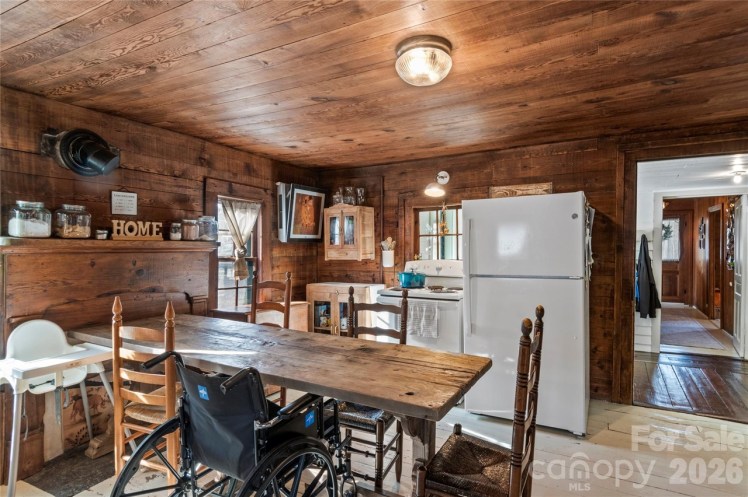
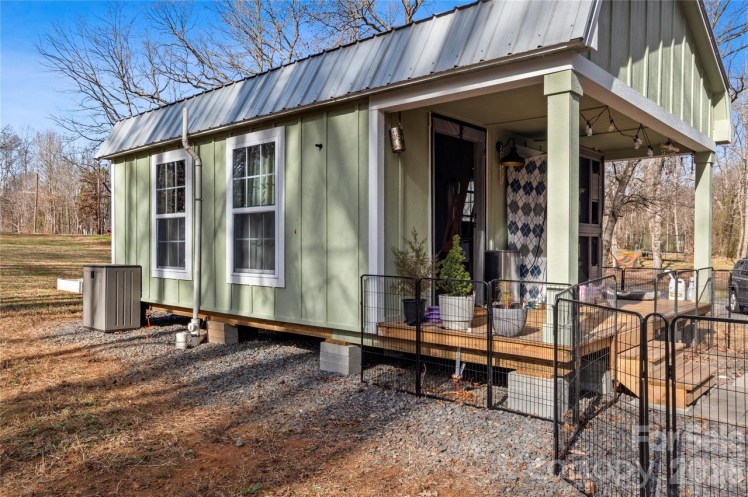
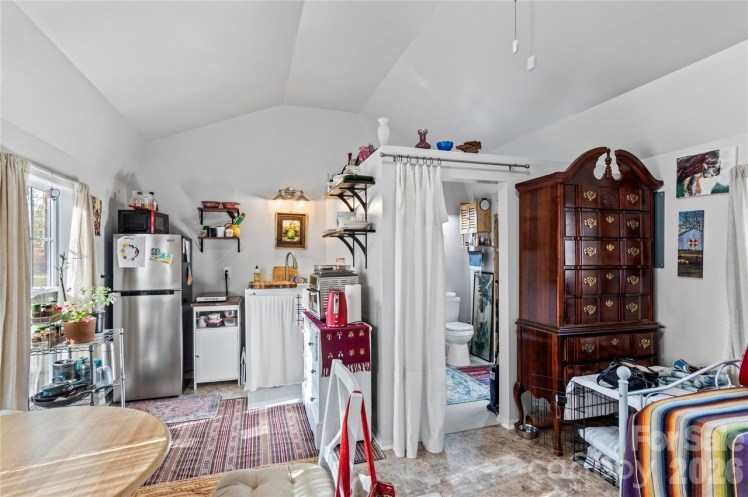
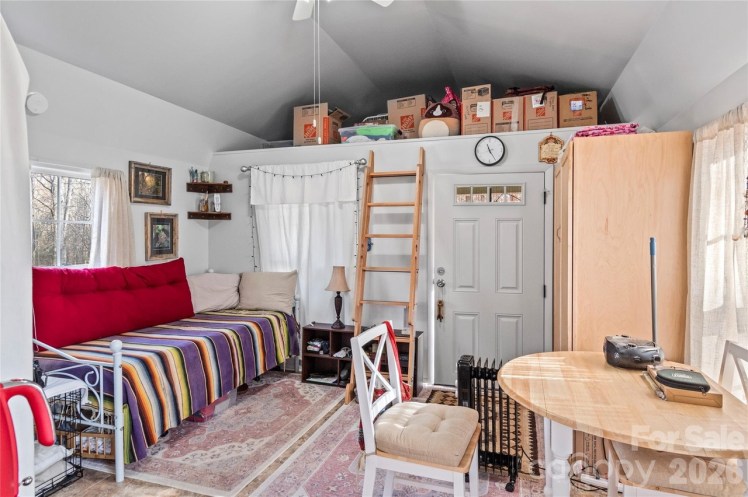
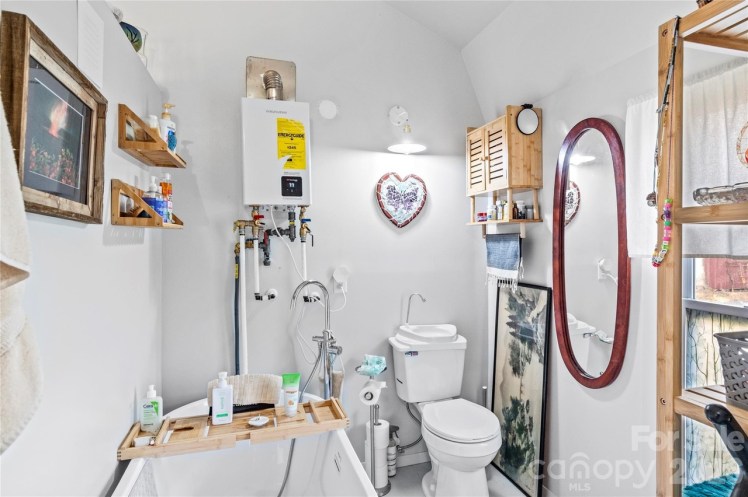
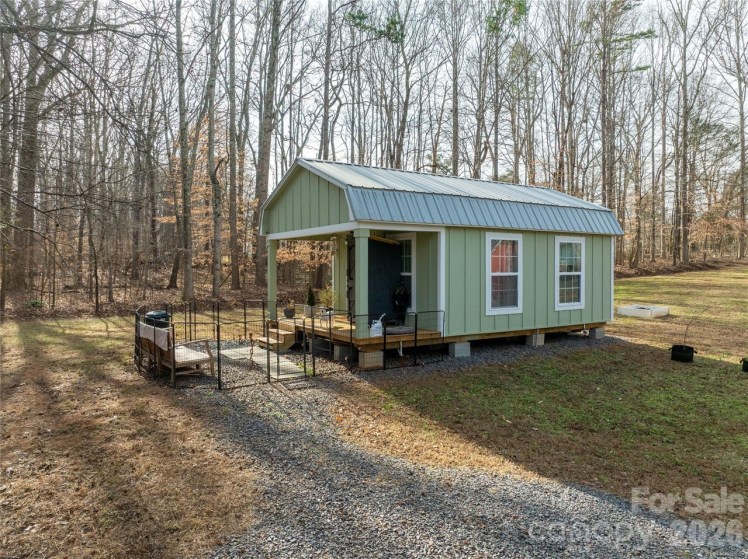
- “A fully furnished tiny home is included and permitted as an accessory building with its own septic tank, offering flexible guest or supplemental living space.12”
The Shutt family had owned the property since before the original house was built in 1885. Now the house is on the market again after being sold in July 2019 and July 2022.
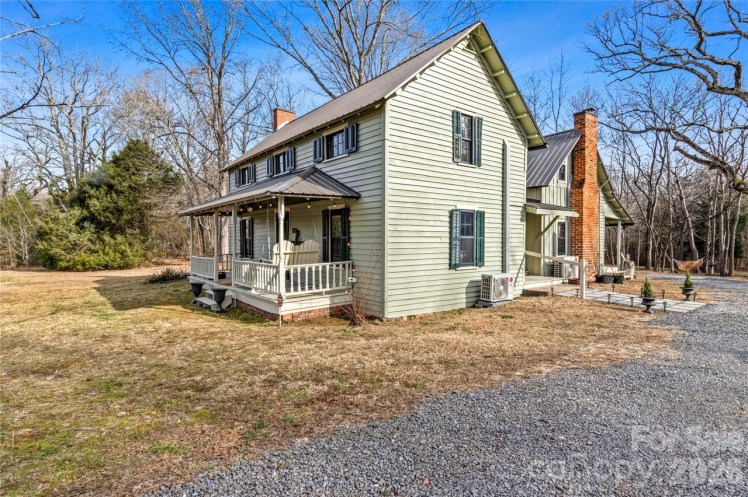
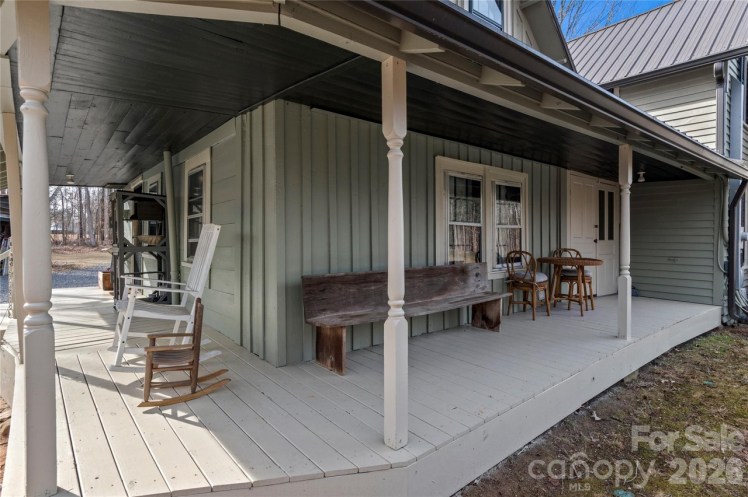
The original one-and-a-half story timber frame house was built in 1885; the larger three-bay-wide weatherboard story-and-a-half house was added in 1905. They’re connected by a breezeway, providing air circulation throughout the house.
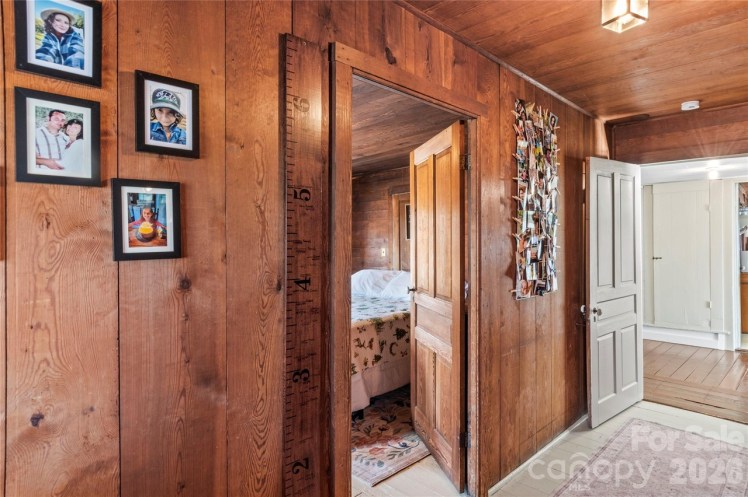
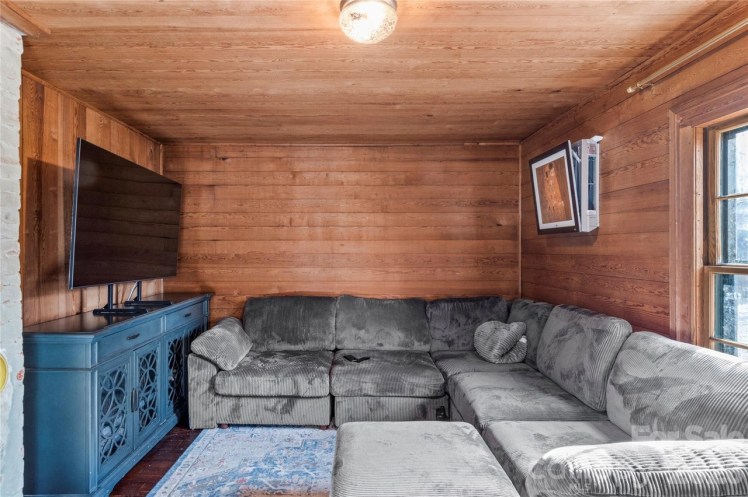
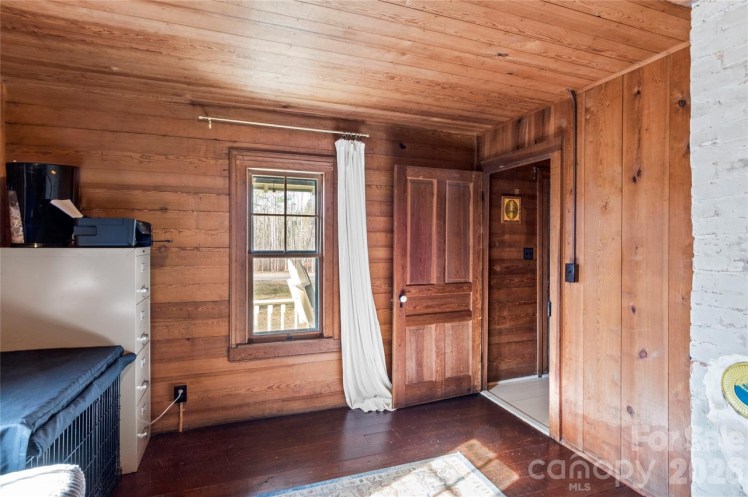
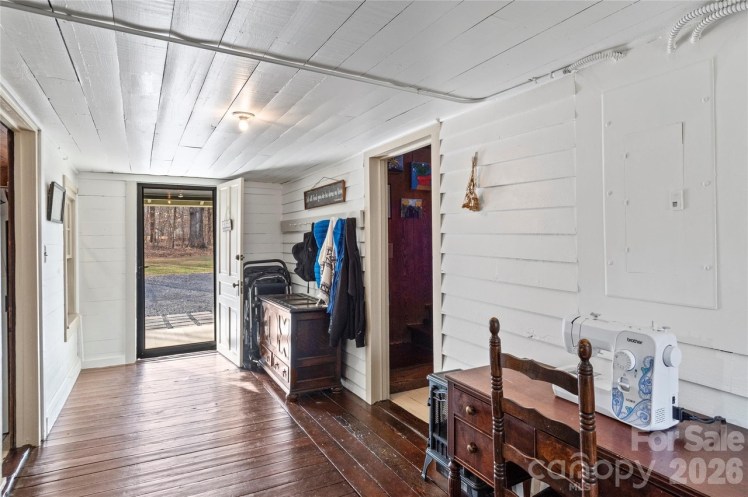
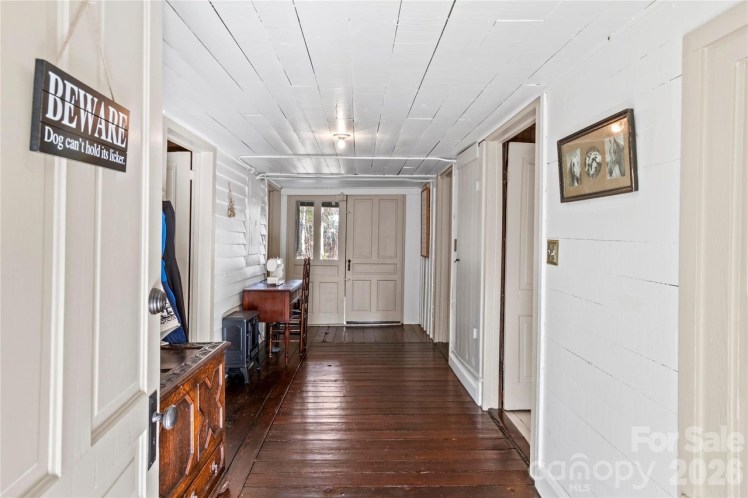
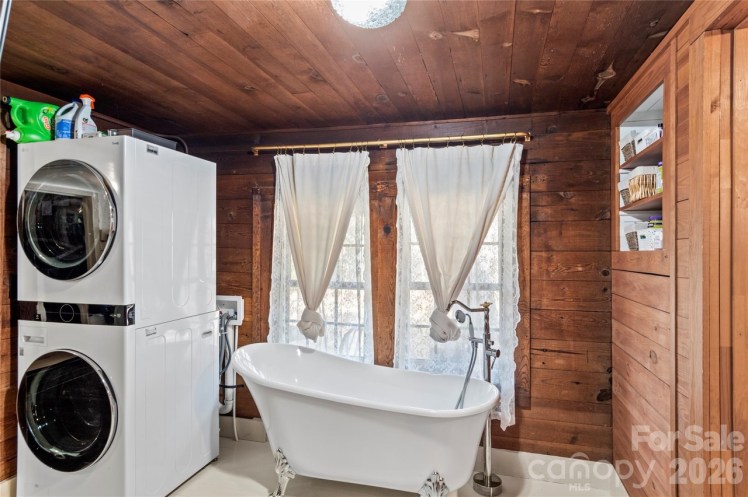
The listing says seven mini-split systems have been installed. How the interior components of the systems fit into the rustic look of the house is an intriguing question, but none are visible in the listing’s interior photos (a couple of the exterior photos show the outside units).
National Register nomination: “The J.E.B. Shutt House and outbuilding complex is an intact reminder of the emergence of a nineteenth-century, middle-class, subsistence-farm family who forged a successful business through inherent skills, careful management, and prosperous ventures. …
“During the late nineteenth and early twentieth centuries in Davie County, the Greek Revival style was being succeeded by the Italianate style which was followed by the Queen Anne style. Rarely did the rural house reflect the full expression of an architectural style but rather builders adapted details to traditional house forms.
“The post-bellum farmhouses in Davie County applied details of both Greek Revival and Italianate styles onto traditional house forms. The J.E.B. Shutt House form and simple stylistic details of both the 1885 block and the 1905 block are products of this post-war rebuilding era.
“The J.E.B. Shutt House, a typically conservative dwelling, blends delayed architectural details of Greek Revival and simple Italianate in the 1885 block with simple Queen Anne detail in the 1905 block. As such, the J.E.B. Shutt house personifies the traditional farmhouses of the late nineteenth and early twentieth centuries and relates to their characteristics in general form and detail.
“The house is also a reflection of J.E.B. Shutt’s craft in that while the 1891 extension of the Southern Railroad allowed more access to manufactured goods, including mass-produced millwork, he elected to produce the woodwork for his new addition in his shop.
“Although J.E.B. Shutt was not a trained architect, evidence shows he had some knowledge of the architectural fashions of the day. This is exemplified by the entrance hall staircase which reflects the craftsmanship of J.E.B. Shutt while conveying his effort to achieve style.
“J.E.B. Shutt demonstrates his independence from the pure Greek Revival and Italianate styles through several characteristics in design. While the existence of both paired and single doors reflect the Greek Revival and the Italianate styles, five-panel doors are predominant instead of the more traditional one, two, and four panel doors of the Greek Revival style. The large panes of the front door and north side breezeway double doors express the Italianate detail. The simple door and window surrounds deviate from the typically ornate Greek Revival and Italianate houses.
“Although the characteristics of the mantels deviate from the more ornate Greek Revival and Italianate styles, the basic post and lintel mantelpieces are indicative of that style. Similar to many houses in the area … the hip-roofed porch extends over most of the front elevation with four posts linked by a balustrade support. The turned post and balustrades feature J.E.B. Shutt’s artistry in decorative detailing which are typical in the Queen Anne houses.”
“Wood products, such as furniture, grain cradles, coffins, and building materials, were the domain of the Shutt family who operated wood shops for nearly a century. John Edward Belle Shutt [1860-1932], son of John Wesley Shutt (1823-1888) and Mahala (Mahaley) Jane Sidden (1827-1870), in addition to maintaining a subsistence and cash crop farm, continued the family craftsman tradition with the 1898 establishment of his woodworking shop in an outbuilding adjacent to his house. He expanded his business into a separate commercial building on an adjacent lot to the north around 1905. …
“He furthered his enterprise by combining his blacksmith skills with woodworking to repair farm equipment and build wagon wheels, and later added to his expertise that of a licensed undertaker and coffin and casket dealer.”
elsewhere
Elsewhere in North Carolina
318elkin
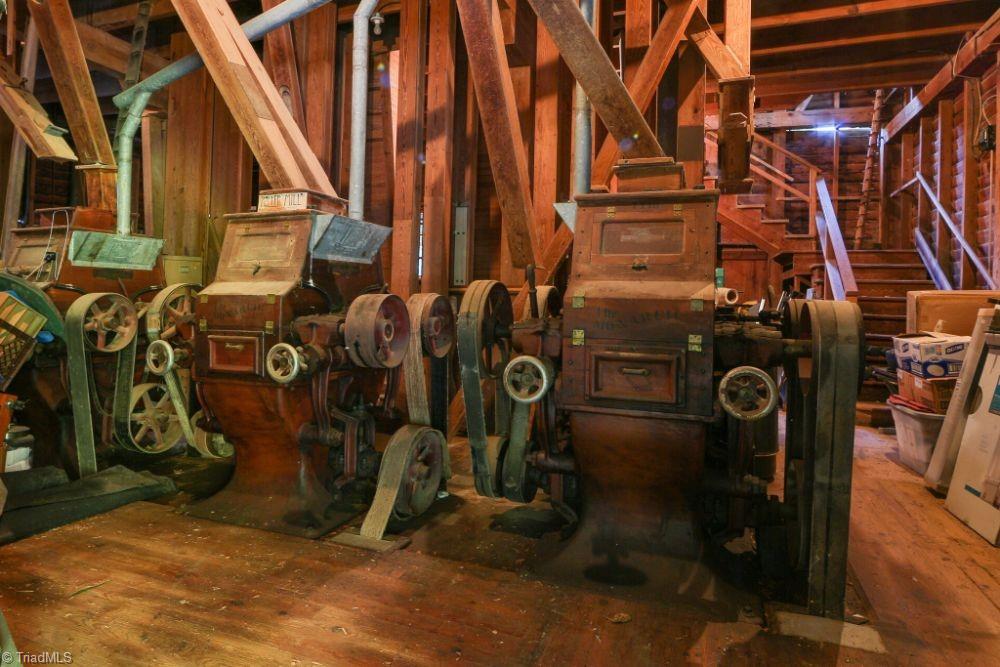

318 Elkin Mill Creek Road, Wilkes County
Elkin Creek Mill
- $2.35 million for the entire 38-acre property, including the mill and residence, a winery, vineyard, restaurant, barn/event space and four cabins (originally $3.2 million).
- … or $1.97 million for 28.5 acres, including the mill and residence, a winery, vineyard and restaurant.
- Video and commercial listing (PDF if online link is broken)
- A previous listing, $679,000 for the mill only, appears to be off the table as of February 14, 2025.
- 3 bedrooms, 3 bathrooms, 2,304 square feet, 3 acres
- Built in 1896
- Listed May 8, 2023
- Last sale: $1,206,500, May 2012
- Note: The mill, a residence since the 1990s, is on the National Register. The rest of the 38-acre property is not on the NR.
- Located in the Yadkin Valley AVA
- The property has an Elkin mailing address but is just across the county line, about 4.5 miles northwest of town.
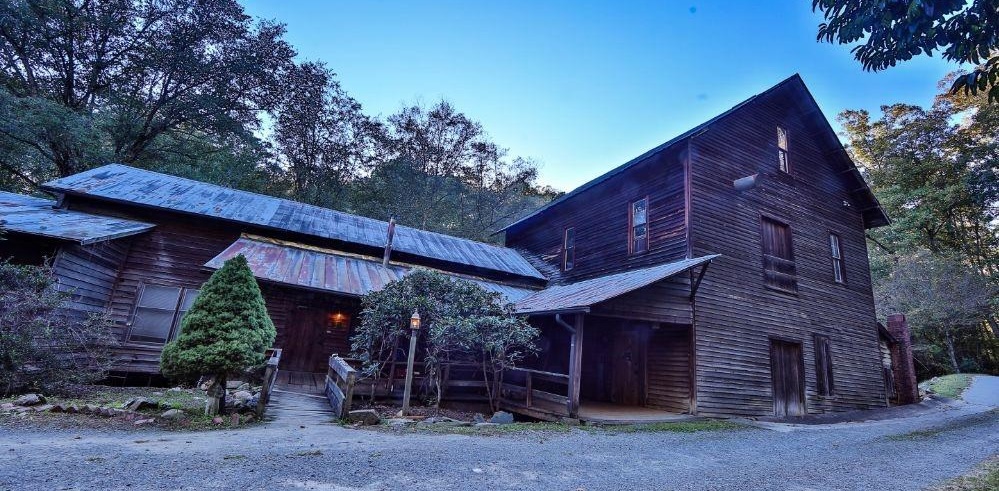
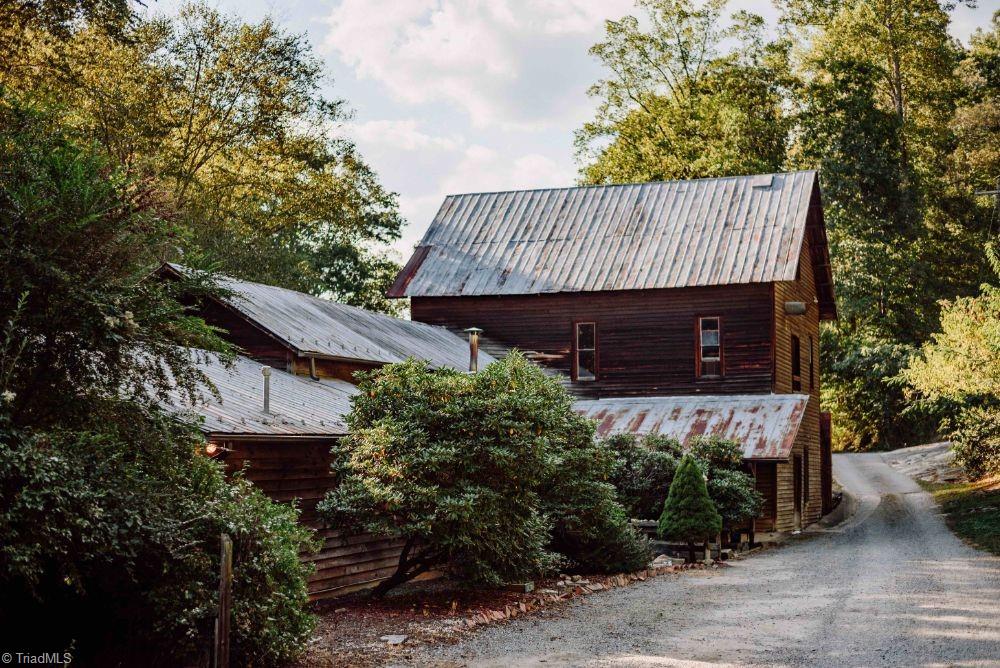
National Register nomination (1982): “Located in a wooded section of east Wilkes County, the Elkin Creek Mill survives intact as one of the best examples of a full-scale, water-powered milling operation in western North Carolina. The simple frame structure houses all of the equipment used in the production of flour cornmeal) and feed, most of it dating from the early years of the mill’s operation.
“Powered by three water-turbine power sources, the systems include three roller mills; a traditional millstone, a hammer mill, and a complex array of cleaners, sifters, mixers, and elevators used in the various processes.
“The mill was established in 1896 by L.T. Stimpson and John A. Butler, prominent industrialists of neighboring Iredell County, and operated continuously until 1970.
“Its last 32 years of activity were under the stewardship of Alexander County native Edward Jolly, who in retirement remains an authority on traditional milling processes.
“After several years of neglect, the mill may have a better future adapted as a restaurant now planned by its present owners.”
Lazarus Theophilus Stimpson (1843-1916) was “one of Iredell County’s most beloved citizens,” The Statesville Sentinel wrote upon his death. “Noted for his integrity in business as in other phases of his life,” he was still working when he died at age 72, operating a cotton mill, flour mill and store in Iredell County and serving as president of Merchants and Farmers Bank.
John A. Butler (1853-1904) had business interests in Iredell, Wilkes and Gaston counties. He died in Gastonia after suffering from dropsy, Bright’s disease and tuberculosis. “During his residence here he had won many friends by his gentlemanly bearing and cheerful disposition,”” The Gastonia Gazette reported.
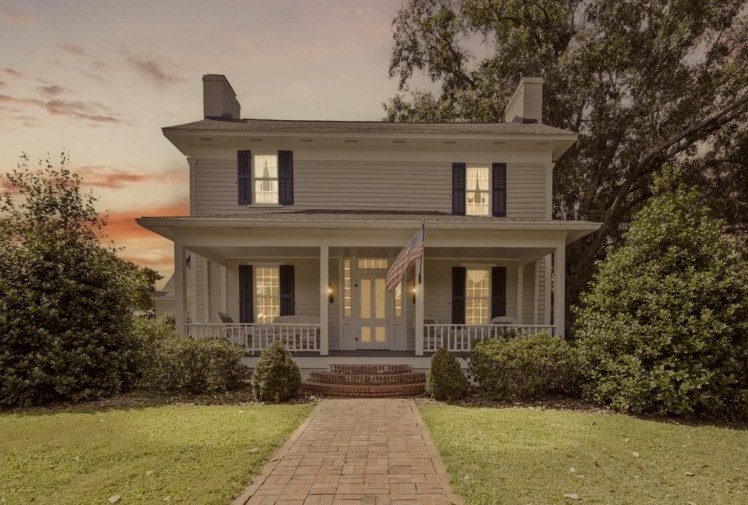
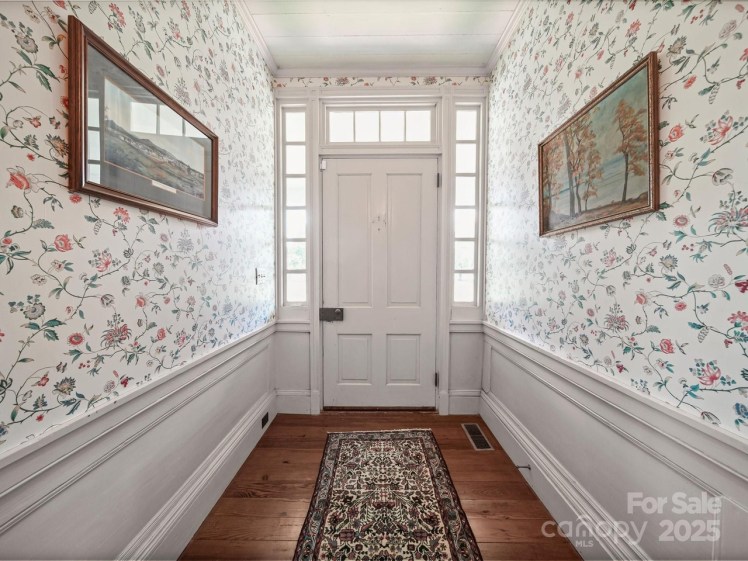


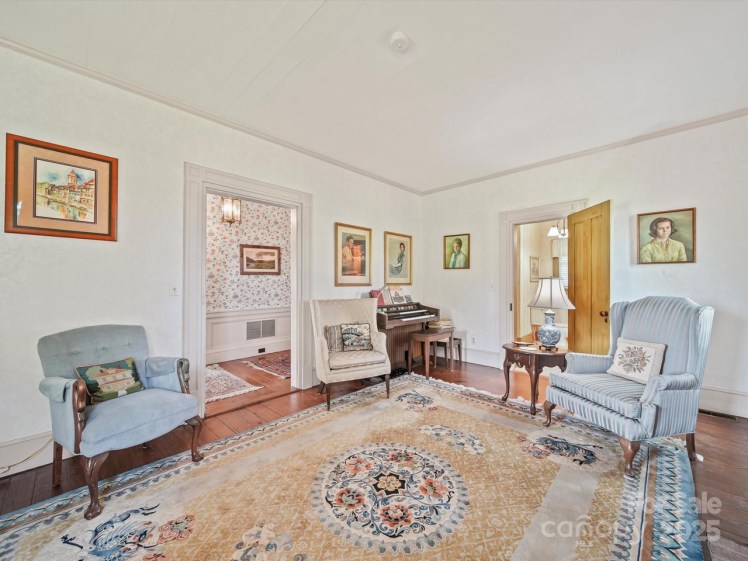
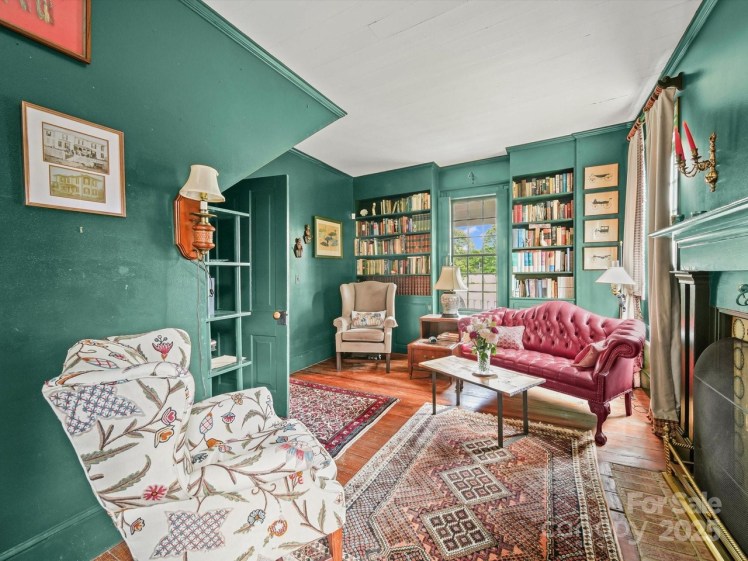


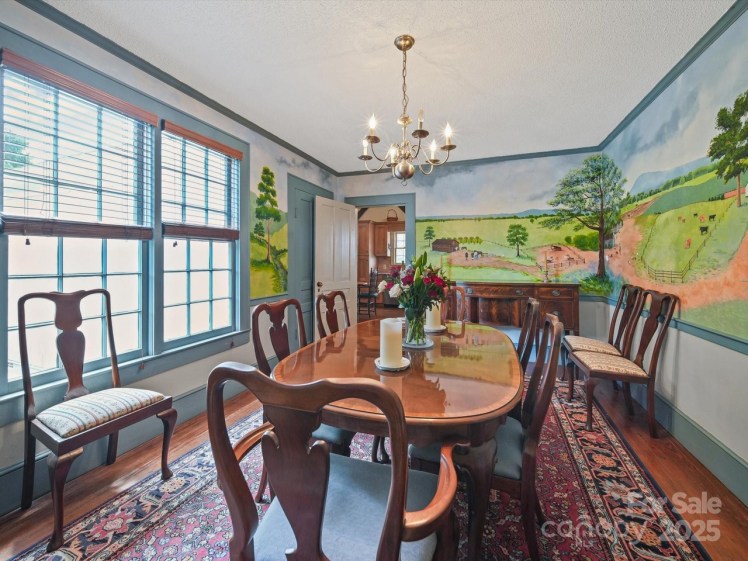
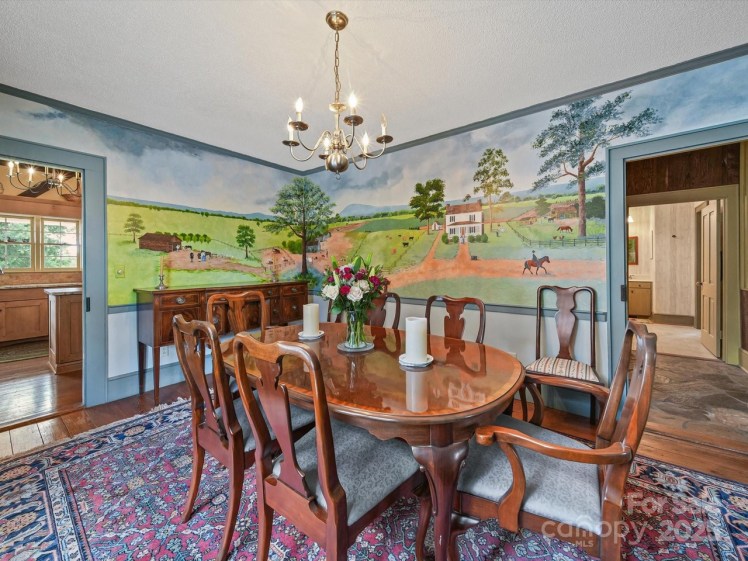


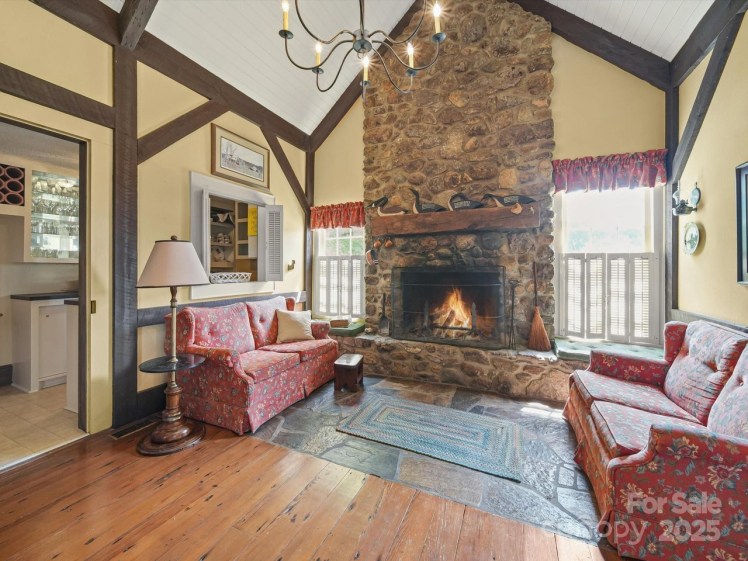


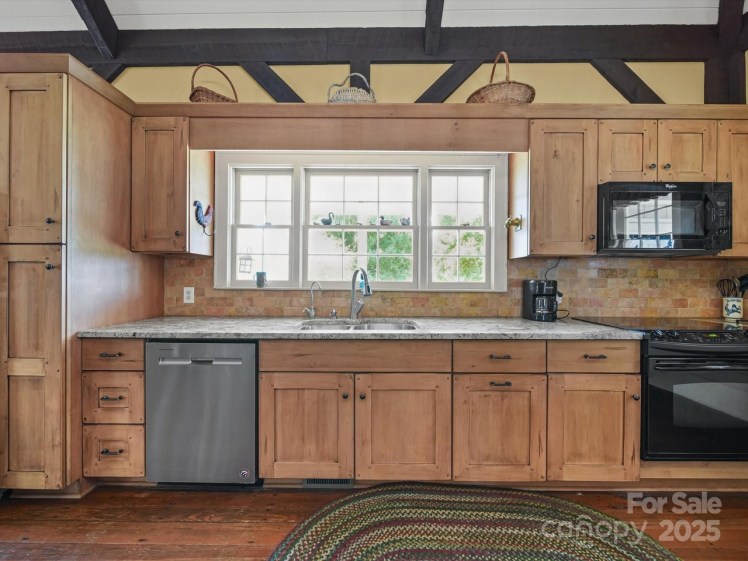
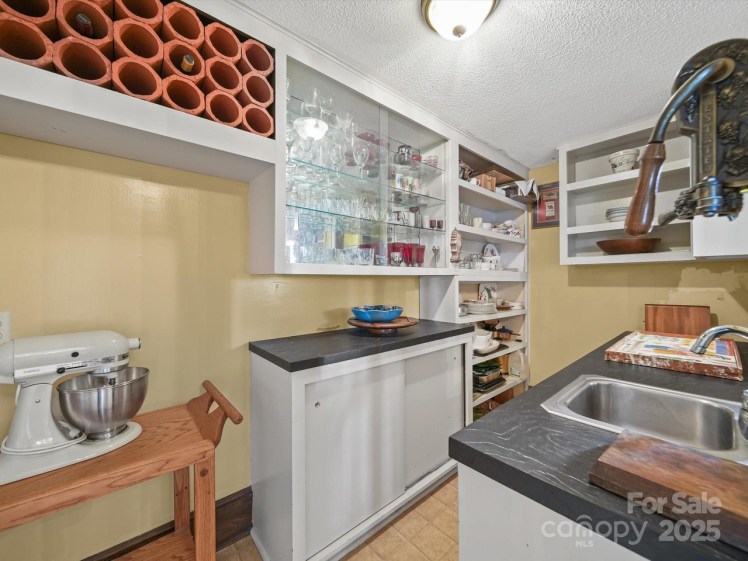
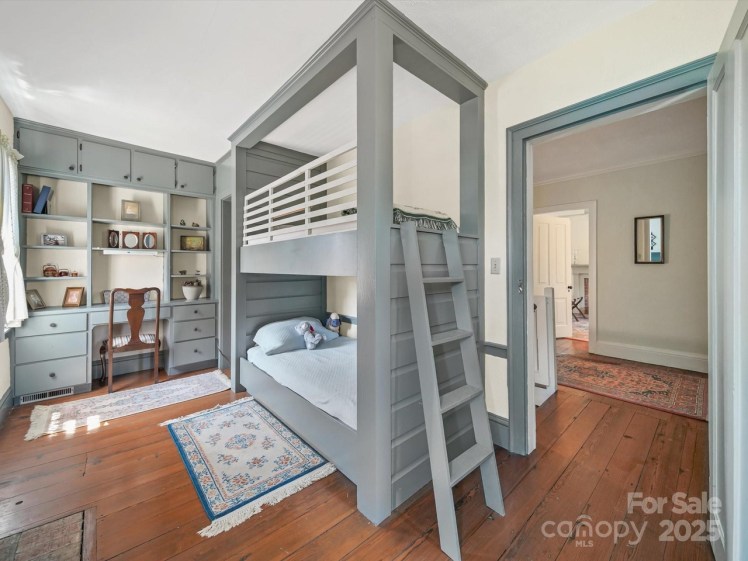
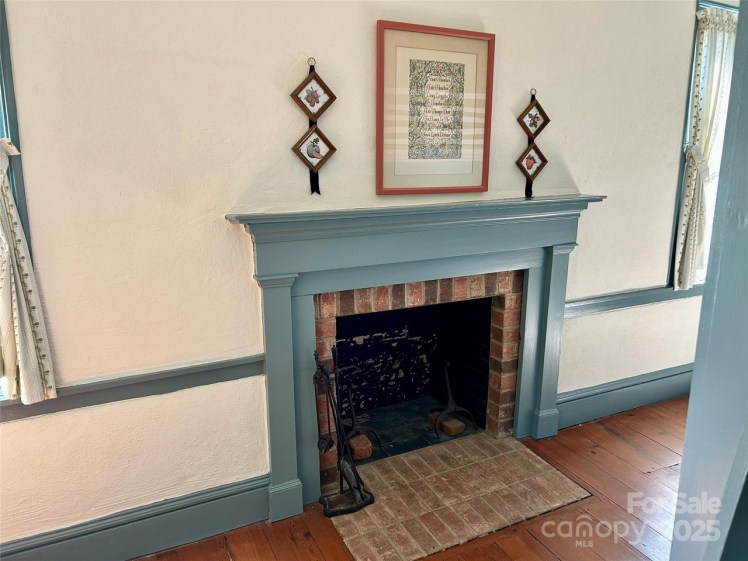

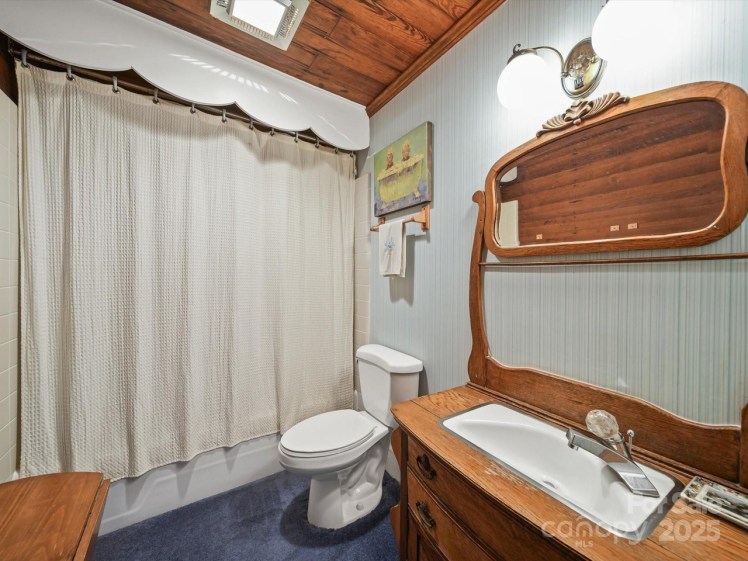
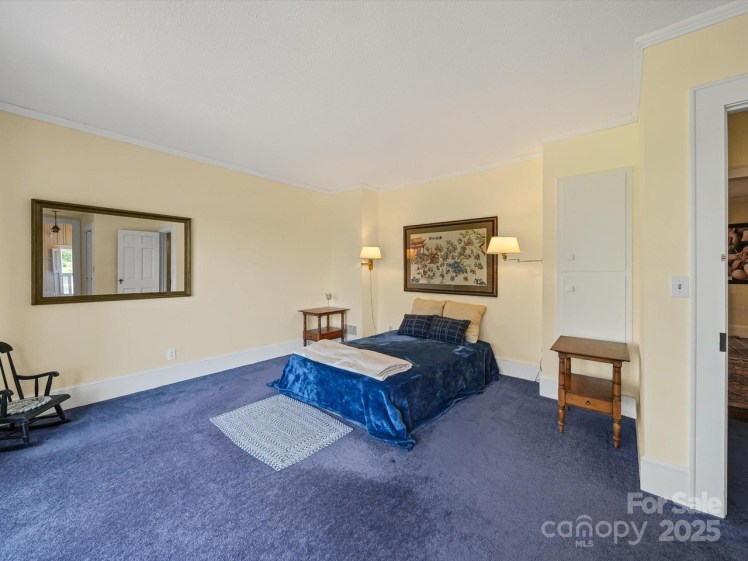

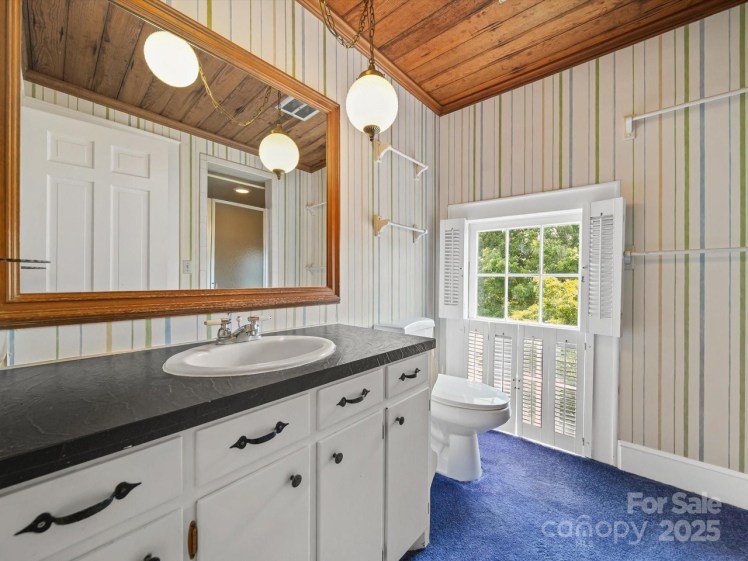
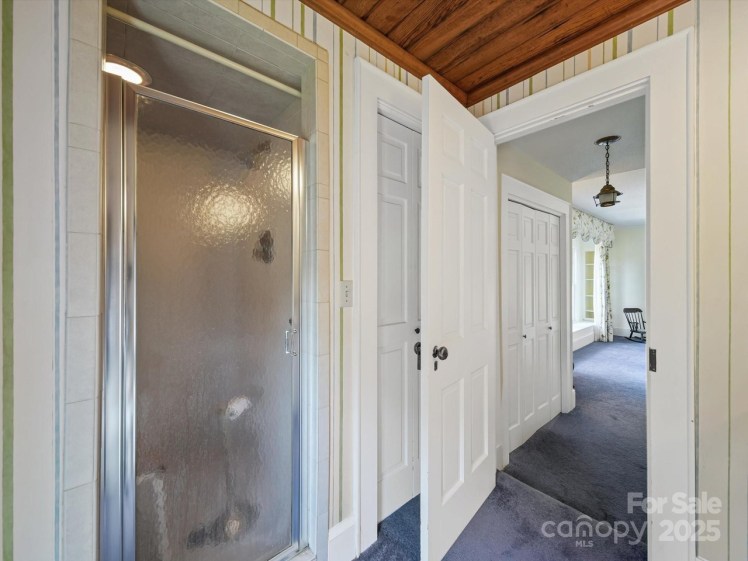





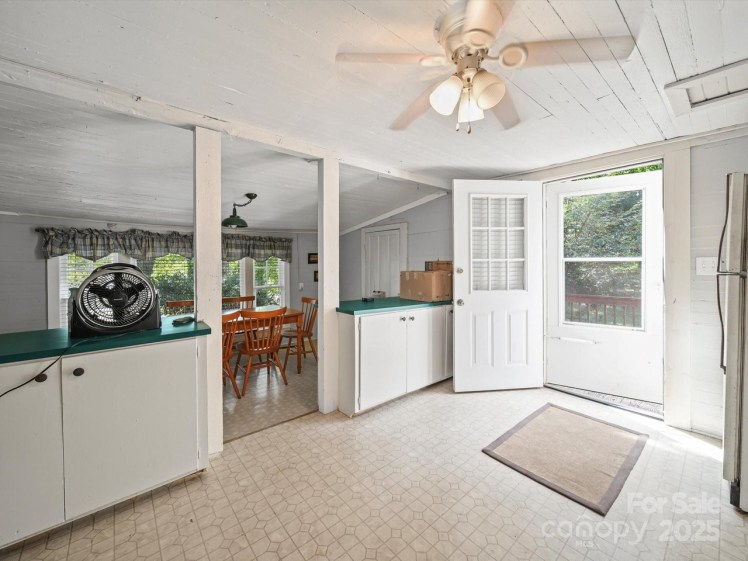
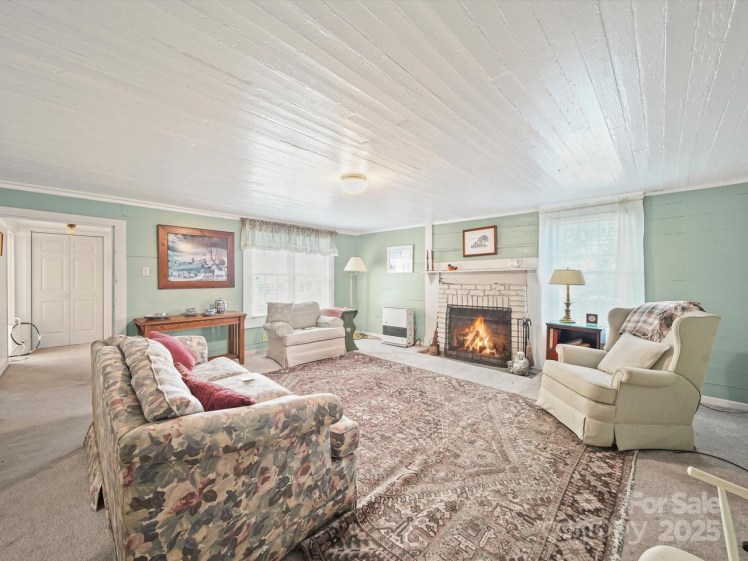

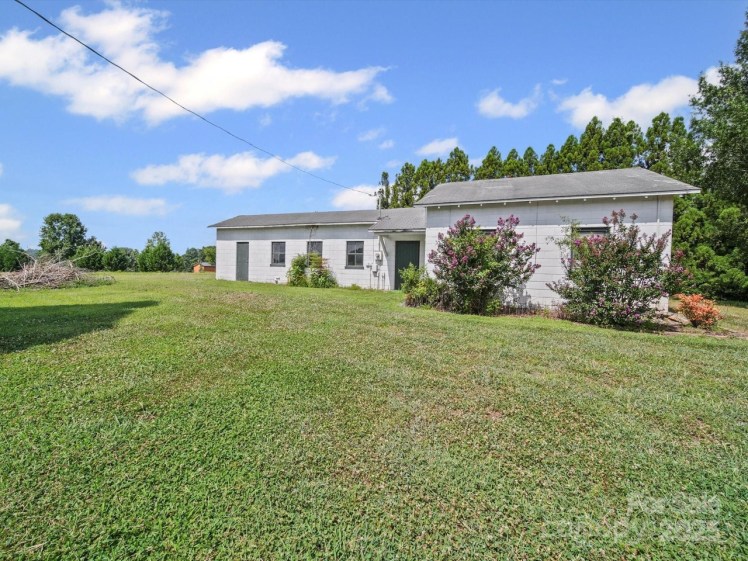

16801 Randalls Ferry Road, Norwood, Stanly County
The John Randle House
- $925,000 (originally $1.035 million)
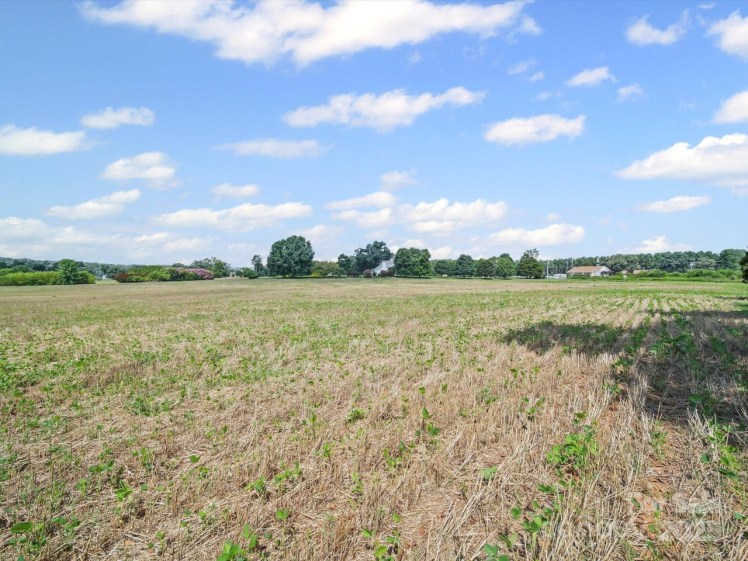
- 6 bedrooms, 4 bathrooms, 3,079 square feet, 27 acres (four lots)
- Price/square foot: $300
- Built in 1835 (possibly an overbuild of a home built some 40 years earlier; see note)
- Listed July 29, 2025
- Last sale: $219,000, two sales in 2001 and 2016
- Neighborhood: About 5 miles north of Norwood at Lake Tillery.
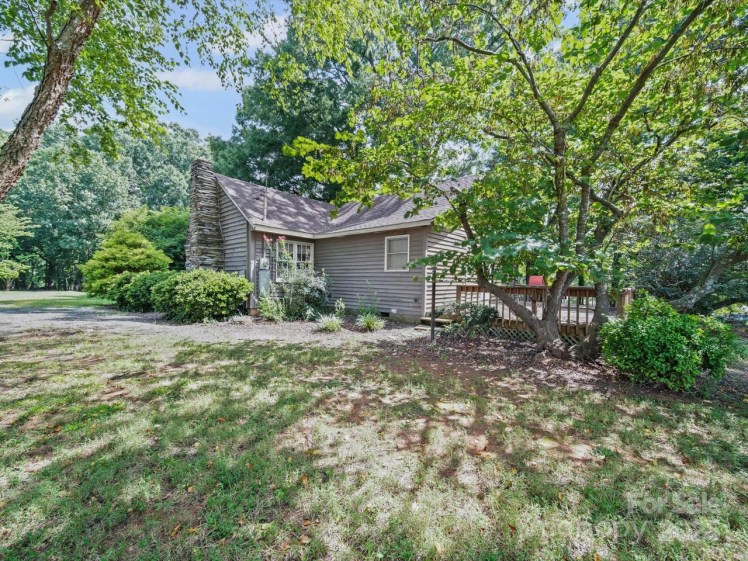
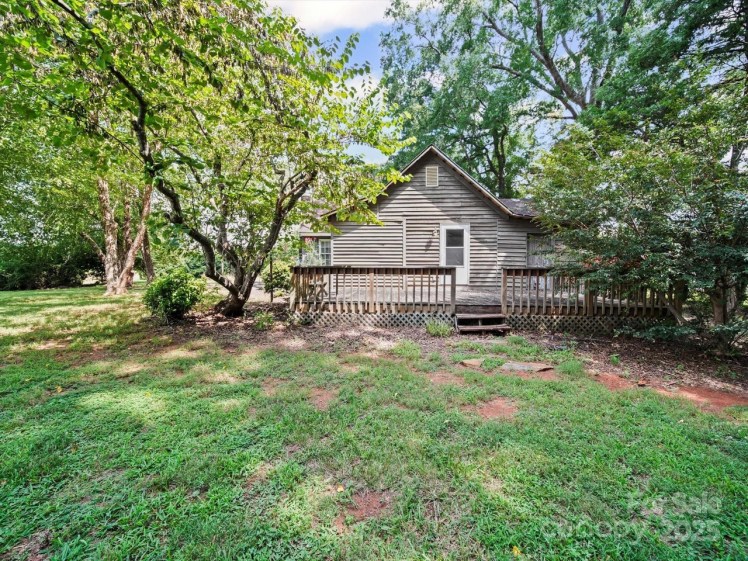
- Note: The property includes an original slave cabin (1,255 square feet), a 40×50 metal pole barn with 200-amp service and a former milking parlor, now an office/billiard room.
- The house is protected by a 2015 preservation agreement held by Preservation North Carolina.
- County records give a 1901 date for the house, which appears to be off by perhaps a century.
The National Register nomination says the family name evolved from “Randle” to “Randall” by the 20th century.
“The exact construction history of the Randle House is unclear,” the nomination says. It may have been built by the first John Randle (1742-1810?) known to have been in the area. He came from Virginia. In 1778, “Dumb John” or “Deaf John,” as he was known, bought 500 acres, including this property. He was a Methodist and in the 1780s hosted Bishop Francis Asbury and other traveling ministers, who preached in his house (In 1805, Asbury commented in his journal on the death of Randle’s wife). Randall by the River church, originally Randall’s United Methodist Church, is across the street on land donated by the family. It’s named for the family and traces its origin to the home.
John and his wife had no children; ownership passed to his nephew, also named John Randle (1784-1824), and his wife, Elizabeth (b. 1798). This second John Randle owned 850 acres. Like a later owner of the house, John served in the state Legislature.
“Tradition holds that ‘Dumb John’ built the four room, center passage block. Certain features such as the brick box beneath the west first floor hearth, unique in Stanly County but typical of his former environs, provide some support for this tradition. Other elements, particularly the flat-panel wainscoting in the first floor center passage and the enclosed staircase, are characteristic of late eighteenth and early nineteenth century houses and suggest a building date during John and Elizabeth Randle’s ownership. …
“The proportions, windows, and overall exterior and interior finish, however, strongly indicate construction or a complete overbuilding in the second quarter of the nineteenth century, after John Randle’s death in 1824. It is probable that Elizabeth allowed her brother-in-law, Frederick Randle, to occupy the Randle farm sometime after 1830. … This suggests the possibility that Frederick Randle constructed or completely overbuilt the house during his occupation in the 1830s.”
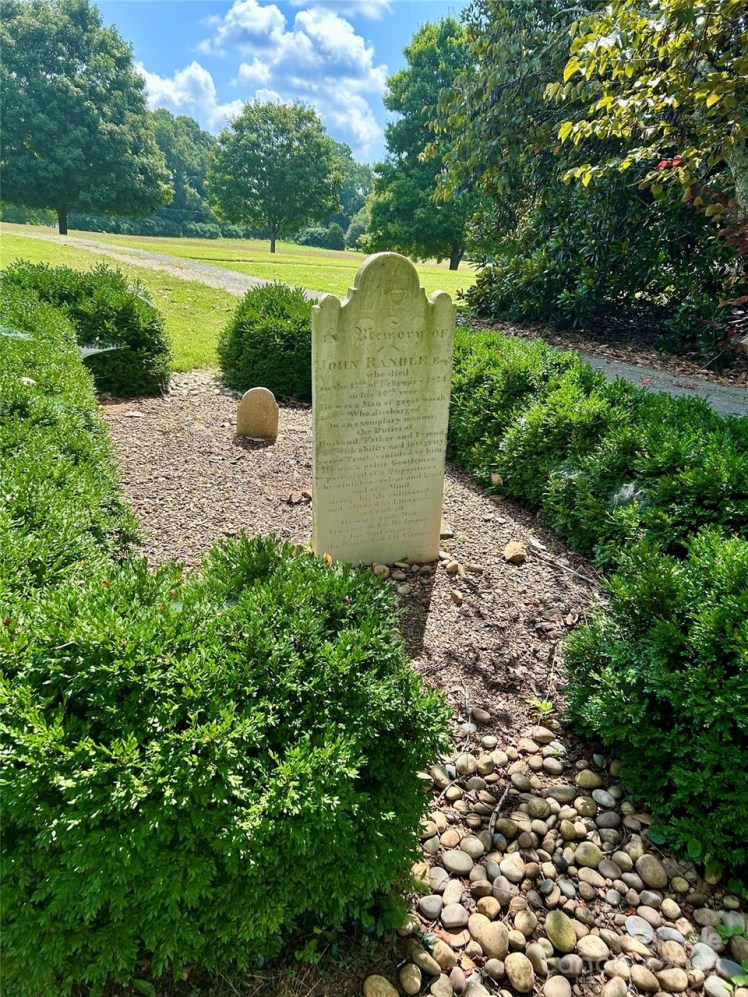
The property includes the second John Randle’s grave. “In the shadow of a gigantic magnolia tree in front of the Randle House lies the 1824 grave of John Randle, marked by a four-and one-half foot carved and signed headstone and a simple footstone.”
His rather lengthy epitaph:
“In Memory of John Randle Esq. who died on the 13th of February 1824 in his 40th year. He was a man of great worth, who discharged in an exemplary manner, the Duties of Husband, Father and Friend: and with ability and integrity, every Trust, confided to him. He was a polite Gentleman, possessed of a Disposition, cheerful, benevolent and kind; and of a Mind, strong, highly cultivated, and adorned by Literature; and with all He was a pious man; Trusting in his Redeemer, his Soul awaits the Reward of his Virtues.
“T. Walker
“Chston, S.C.”
From 1847 to 1970, the property changed hands several times, mostly being used as a farm. Carolina Power & Light owned the house for four years in the 1920s when it was creating Lake Tillery.
In 1970 Albemarle attorney Richard Lane Brown III (1940-2022) and Sara Benson Brown (dates unkinown) bought the long-abandoned house and 75 acres. They restored the residence, modified the slave/tenant dwelling and allowed a dairy farmer to grow crops on the land. They later sold much of the land.
Lane was elected to the N.C. House of Representatives three times; Dr. Craig Phillips called him one of the “top ten education legislators” in the history of North Carolina.
“On recommendation of the Stanly County Historic Properties Commission, the Randle House was designated a local historic property by the county Board of Commissioners in 1975.
“Current owners Mary Lou and Harold Harned purchased the farm with the remaining seventeen acres in 1986, adding another ten acres in 1989 for their nursery operation.” Mary Lou’s estate is now selling the property.
Harold Hewitt Harned (1925-1996) spent 30 years in the horticulture business, including ownership of Harned Nursery. He was a Navy veteran of World War II. Mary Lou (d. 2025, age 96) earned a degree in history from the University of Louisville and a master’s in Russian history from UNC Greensboro. She directed the Rockingham County Head Start program and later the Stanly County vocational center for workers with disabilities. She also taught high school civics and geography.
Regarding the slave quarters: “Tradition holds that the one-story frame, side-gabled dwelling approximately 600 feet east of the Randle House was built for slaves. … The structure now bears little resemblance to its antebellum appearance, so it is considered a non-contributing resource for this nomination.”
“The Randle House is a handsome frame house with restrained detailing in the transitional Federal/Greek Revival style. Facing north, it is a gable-roofed, weatherboarded I-house fronted by a hipped roof porch.
“Sometime after the main block was built, a gable-roofed ell was added to the east end of the south side, and later the two-room side kitchen/dining building was joined to the south end of the ell.
“An engaged and partially recessed porch wraps around the kitchen’s south and west sides. The roof of this wing is hipped with flared eaves at the west end and gabled at the east end.
“A second-story sleeping porch, later enclosed, extends from the west side of the ell, and a later bathroom addition underneath has been screened by a brick courtyard. Two large, single-shouldered brick chimneys flank the gable ends of the main block and another stands at the kitchen’s gable end.
“The two-story single pile main block rests on four twelve-inch square, hand hewn timbers, the corners mortised and tenoned and secured with wooden pins. These are supported on piers of handmade bricks. Limbed and debarked tree trunks at thirty-inch centers extend the full width of the frame as joists. A brick hearth box built under a first level fireplace remains.
“Joists above the second story are hand hewn beams four-and-one-half inches by eight inches by twenty feet. Roof rafters are logs five inches in diameter. The foundation enclosure of brick was built when the house was restored in 1970 after becoming quite deteriorated. A small, glassed cut-away in the weatherboarding on the rear elevation exhibits a section of the heavy timber frame construction. …
“The 1970 rehabilitation of the Randle House carefully restored the original portion of the house, as well as the later two-story ell with the exception of the installation of bathrooms. The only major changes are the remodeling of the kitchen/dining wing interior and the sunporch and bathroom additions next to the ell. Despite renovations and additions, the Randle House retains its salient architectural features, presenting the same facade that it did in the early nineteenth century.”
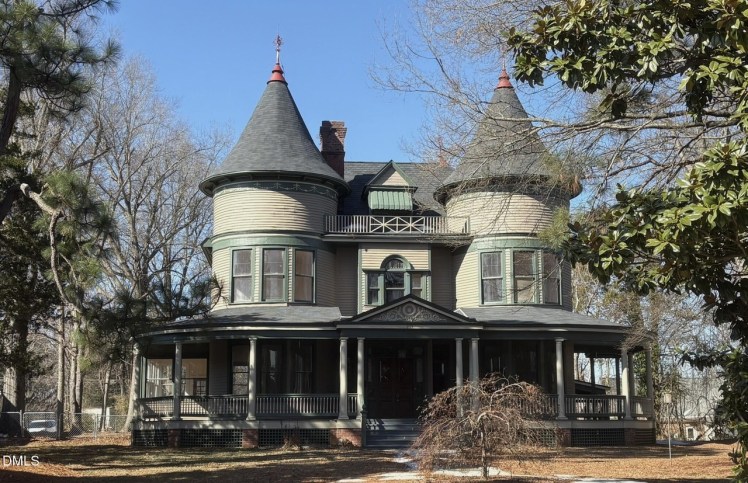
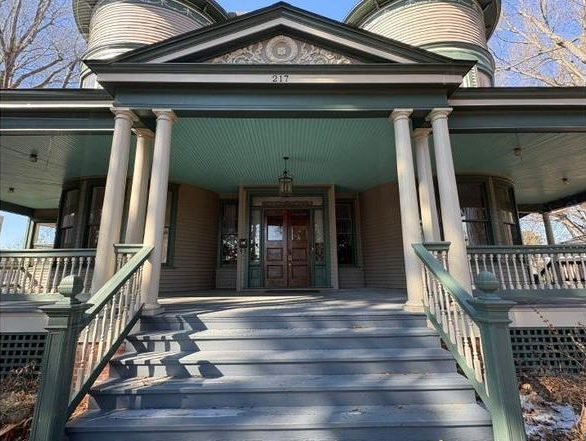


217 S. Main Street, Roxboro, Person County
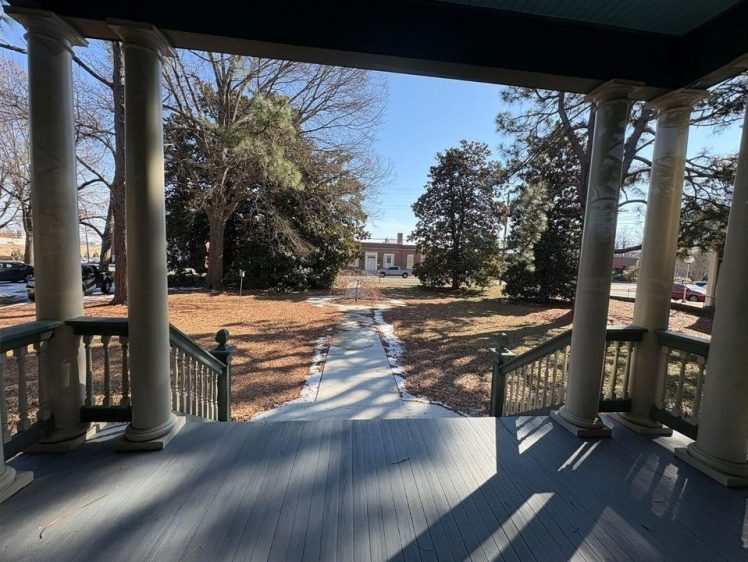
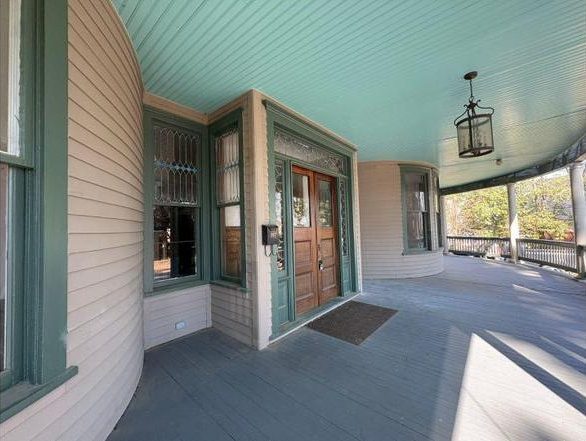
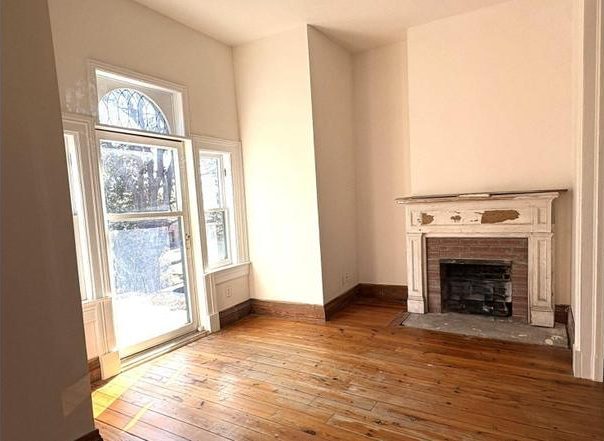
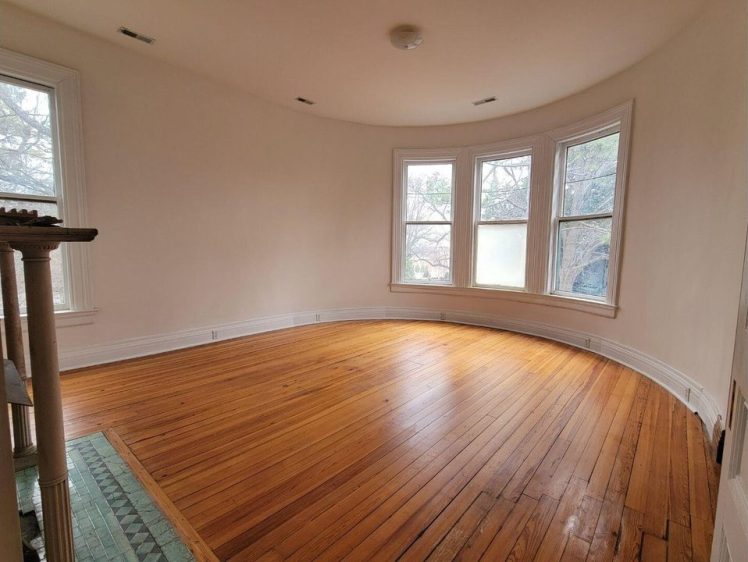
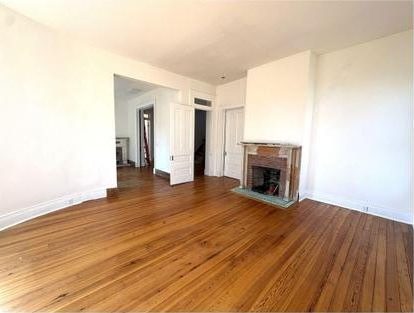
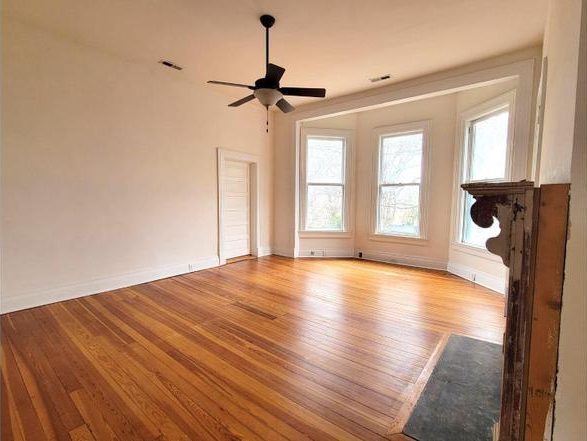
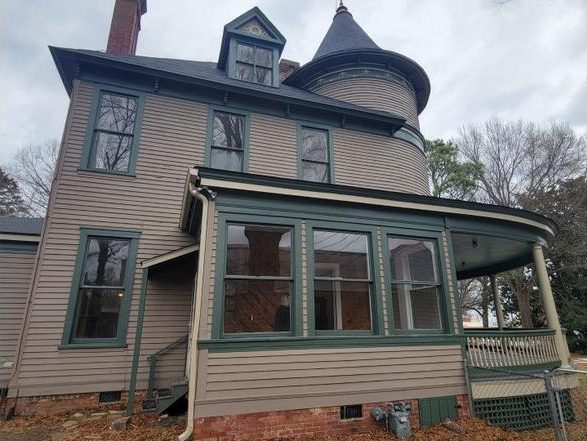
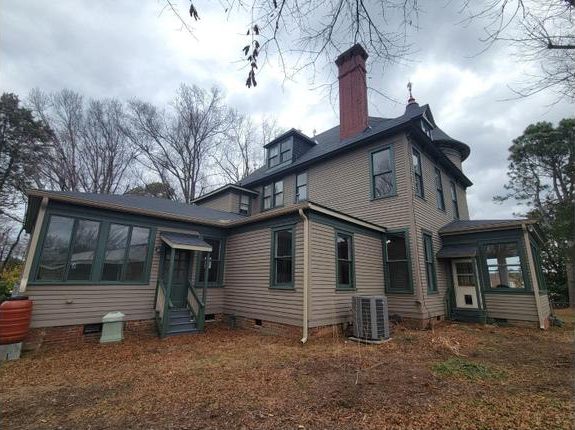
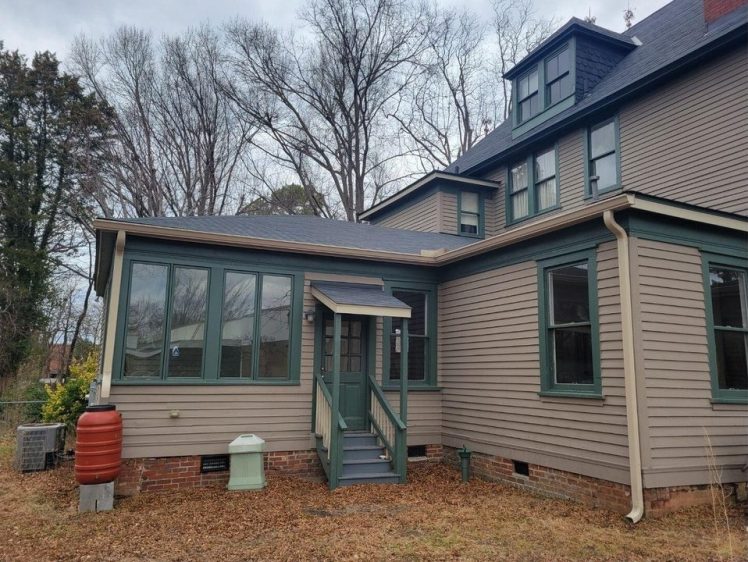
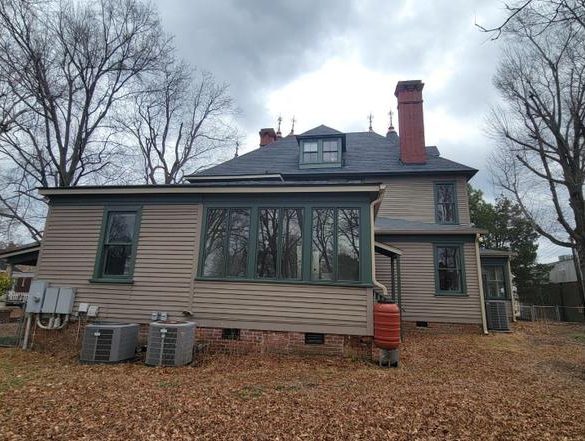
The James and Laura Long house
National Register
- $699,000
- 5 bedrooms, 4 bathrooms, 5,006 square feet (per county), 0.71 acre
- Price/square foot: $140
- Built in 1896
- Listed March 18, 2026
- Last sale: $82,000, August 2004
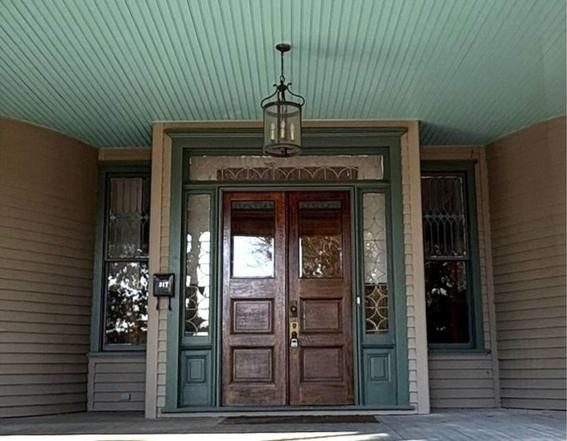
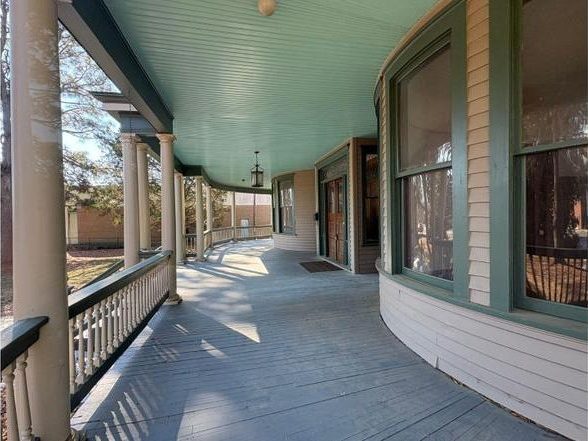
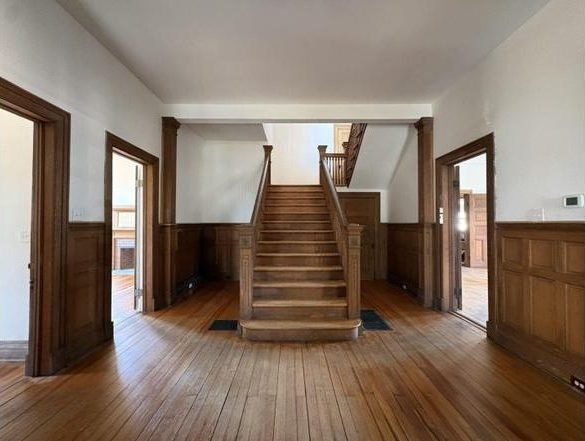
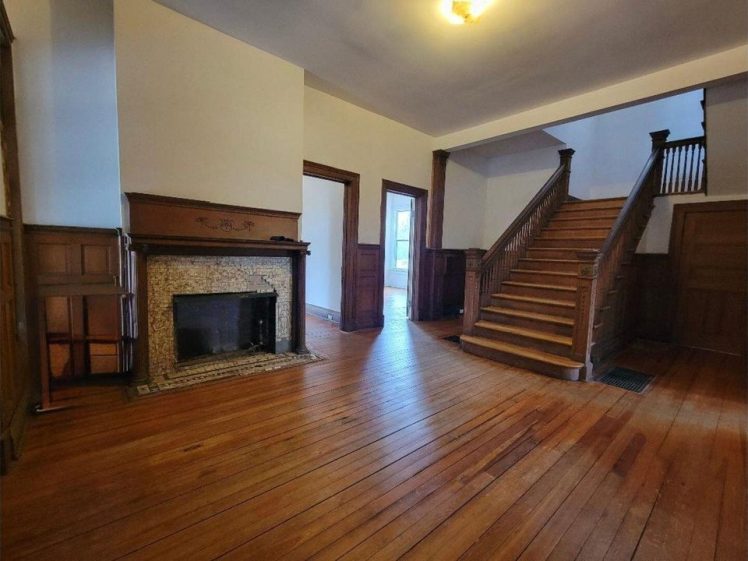
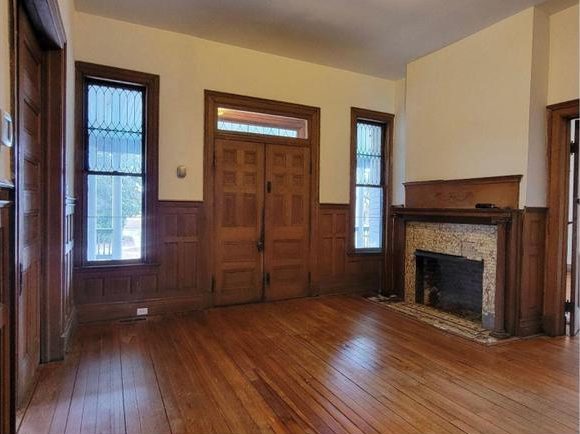
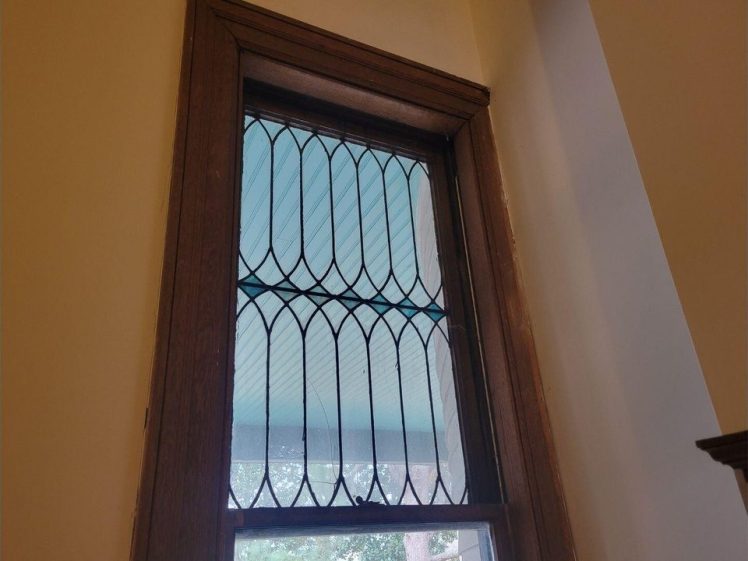
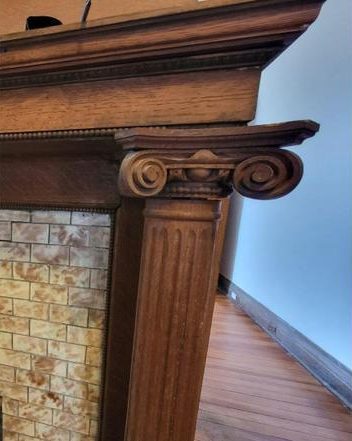
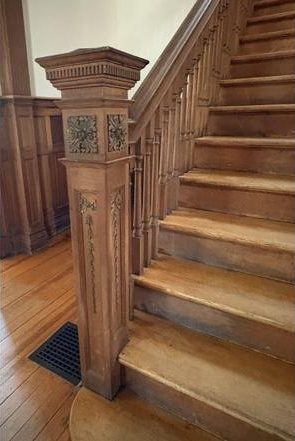
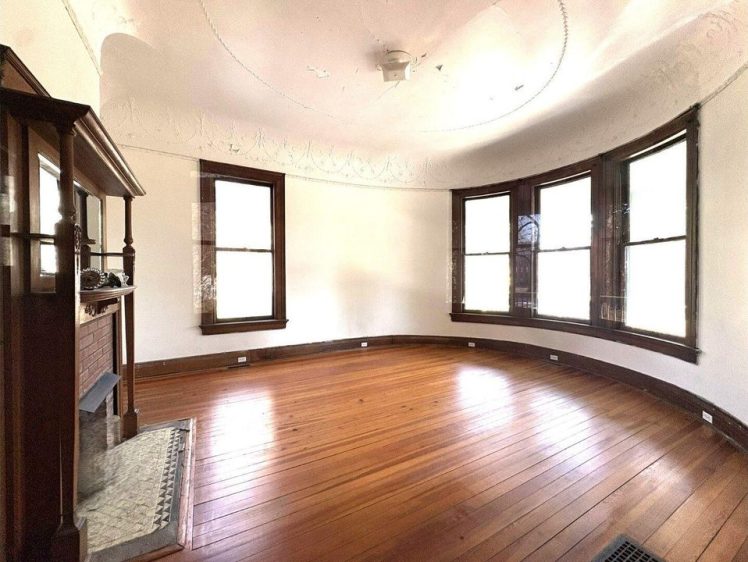
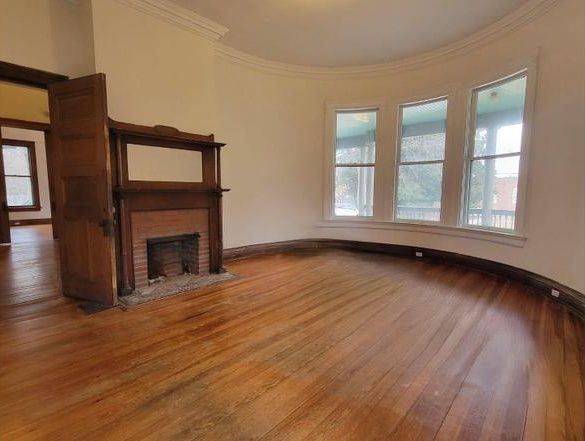
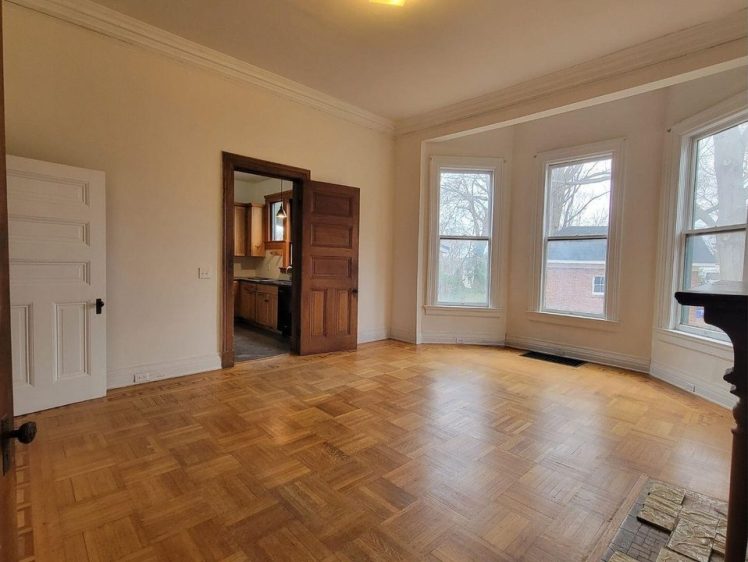
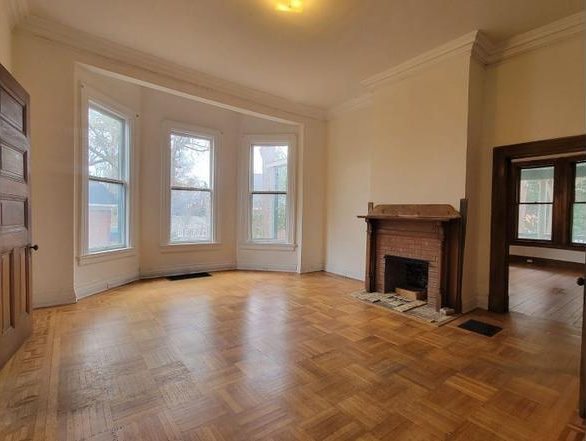
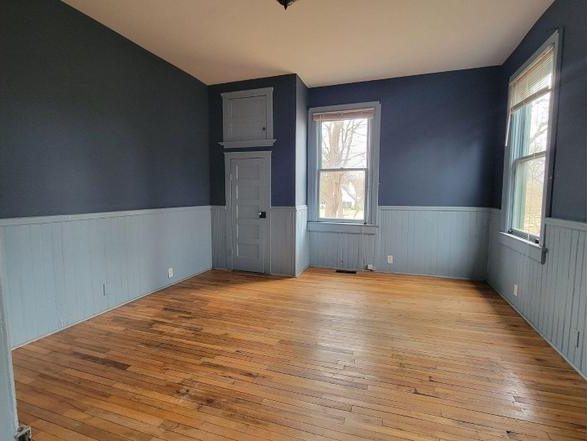
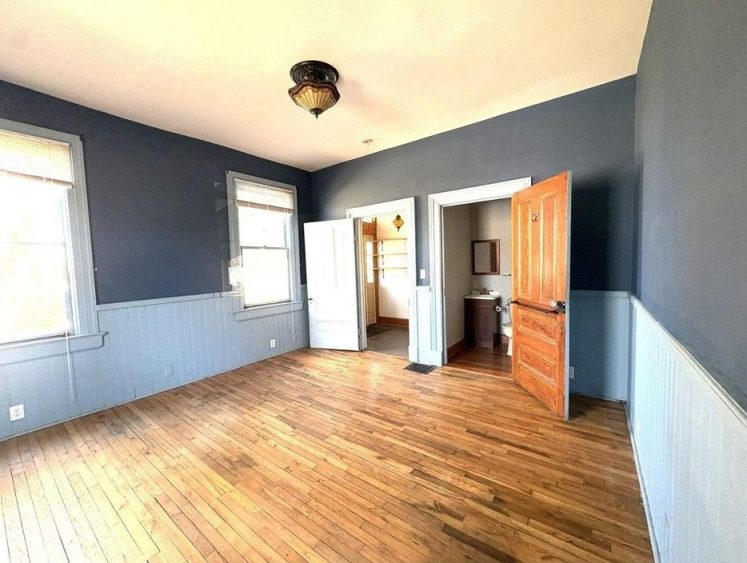
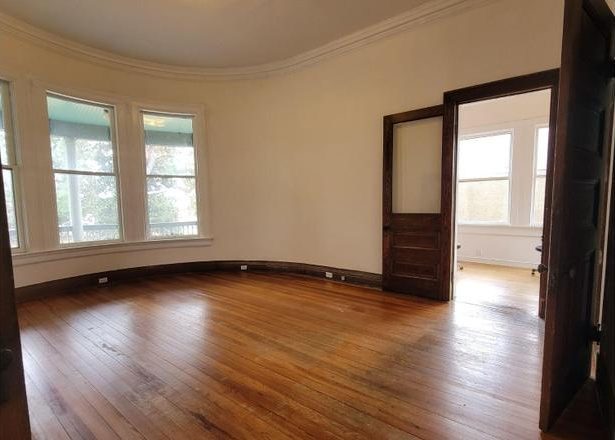
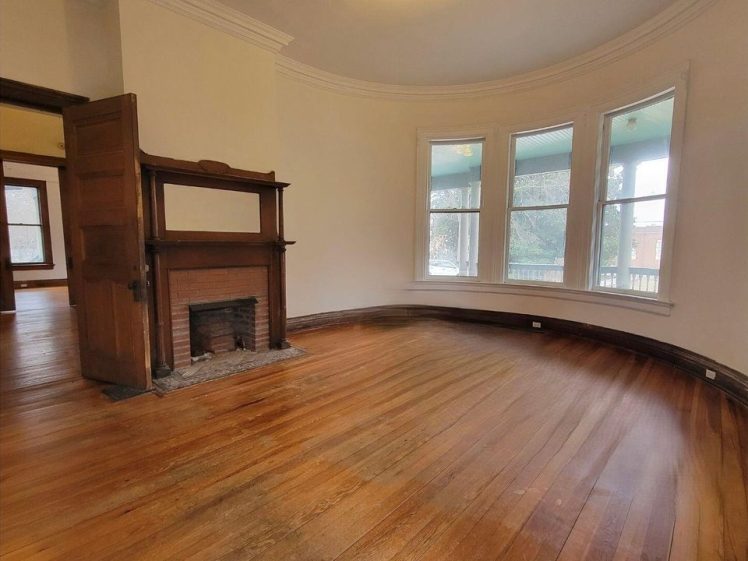
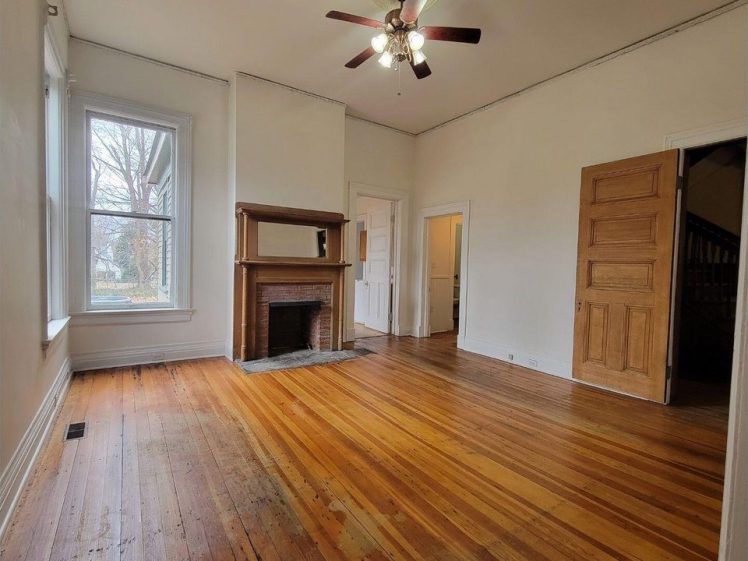
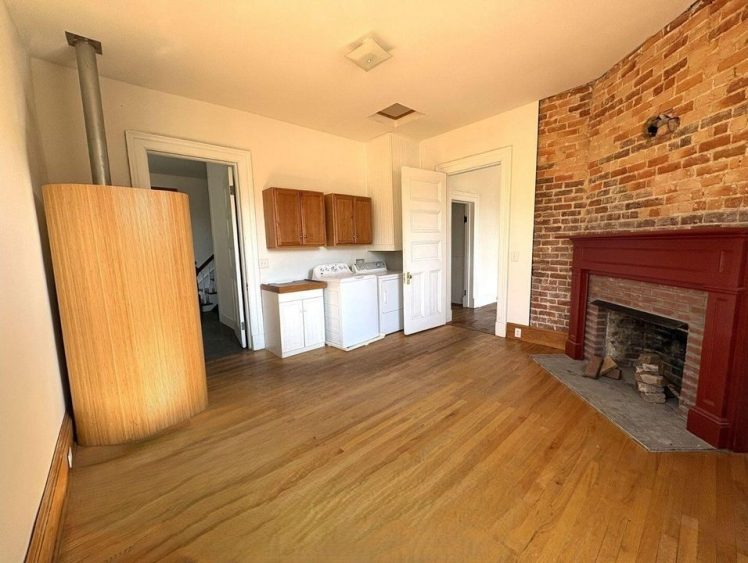
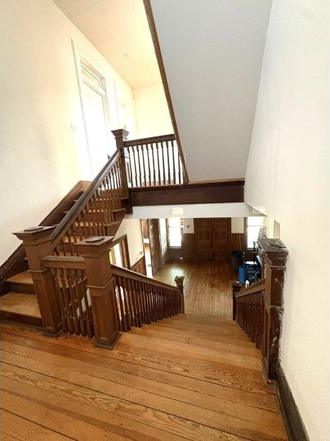
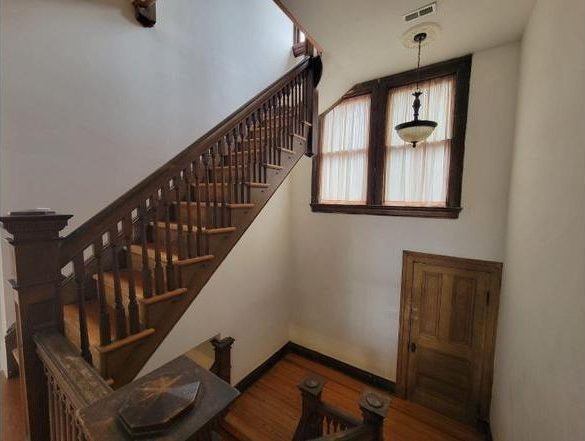
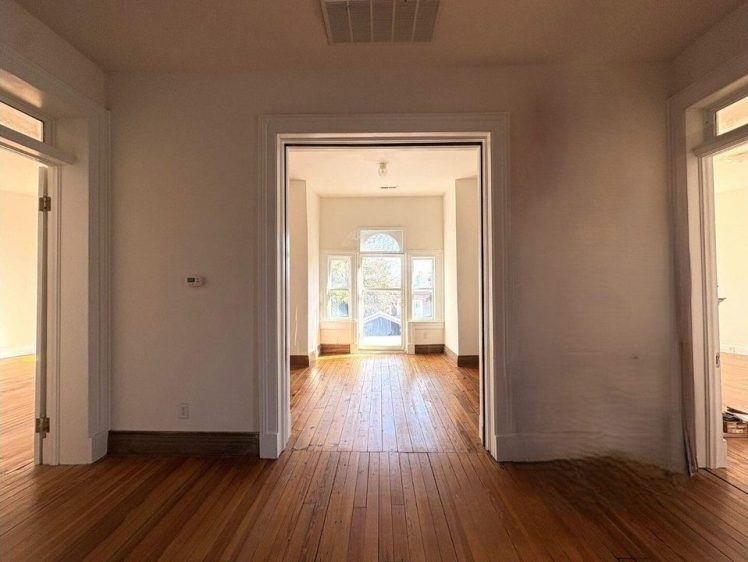
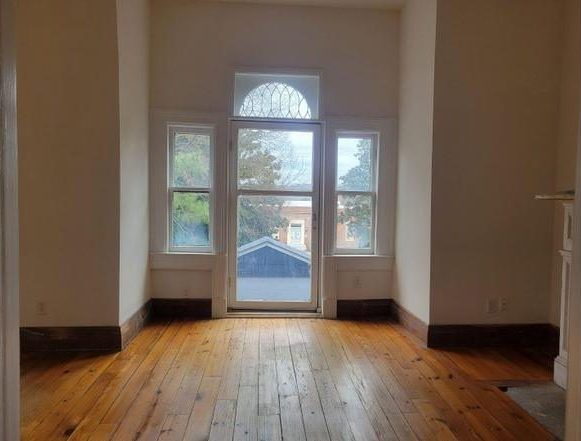
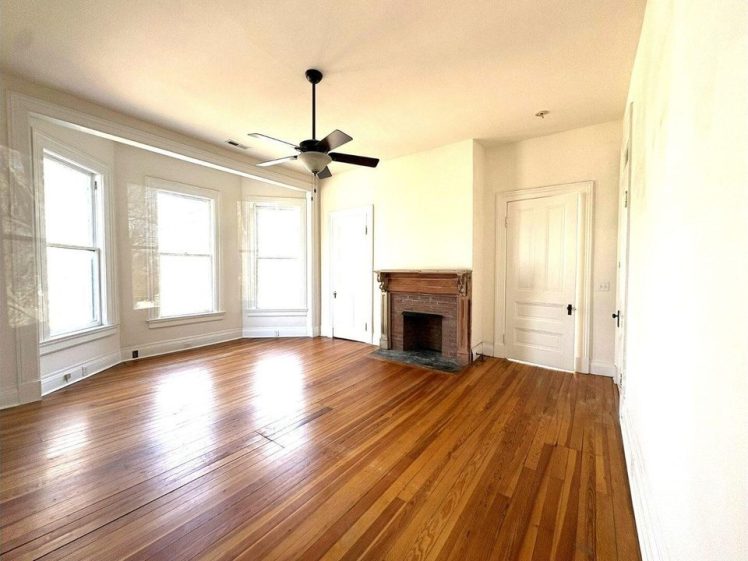
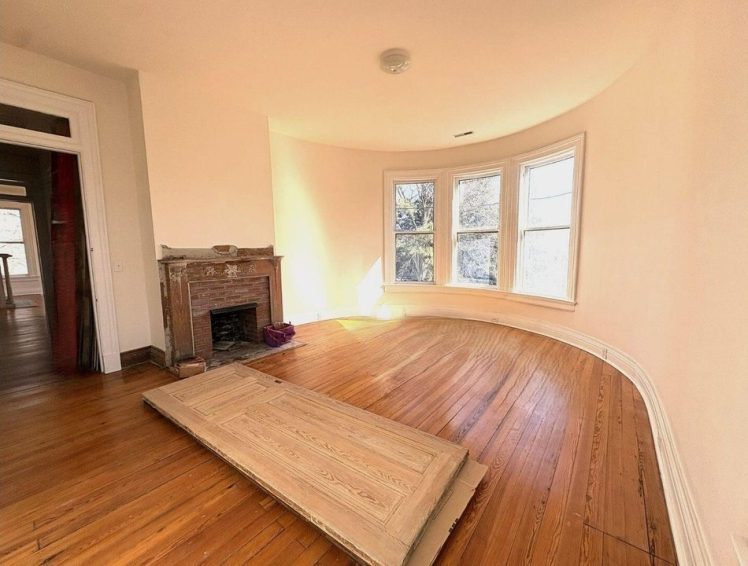
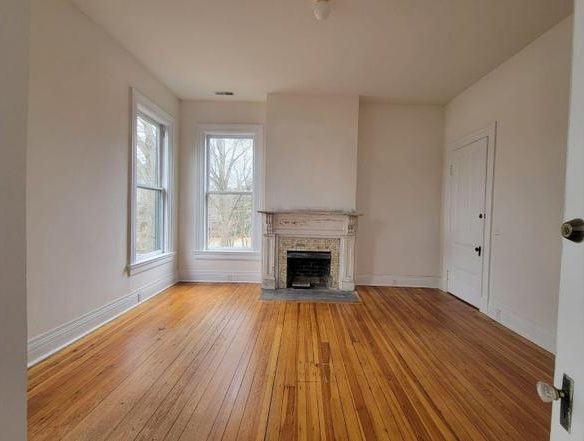
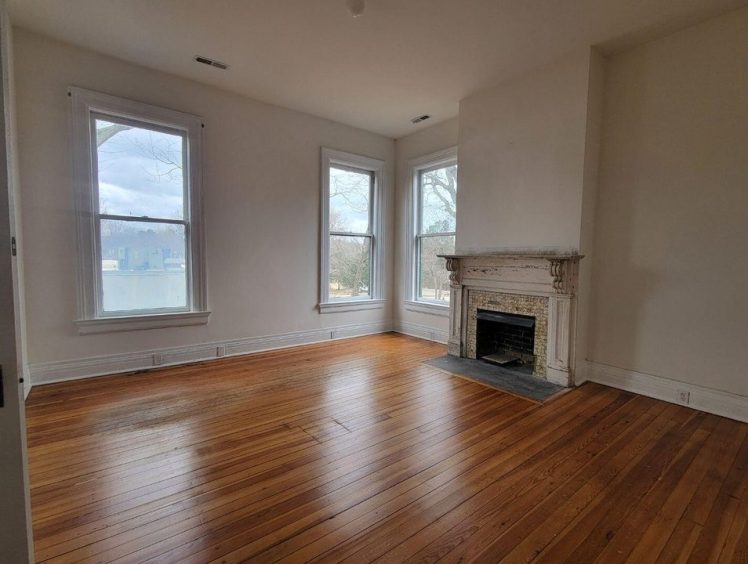
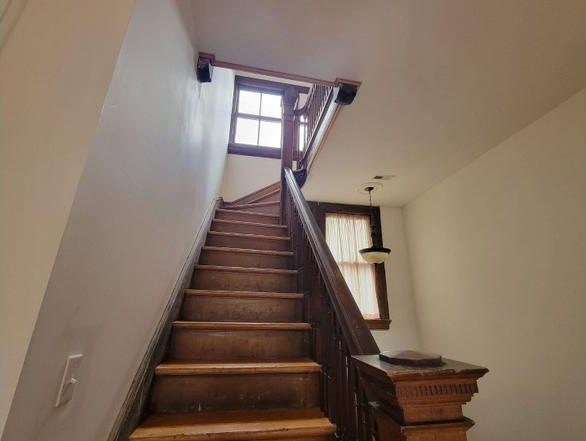
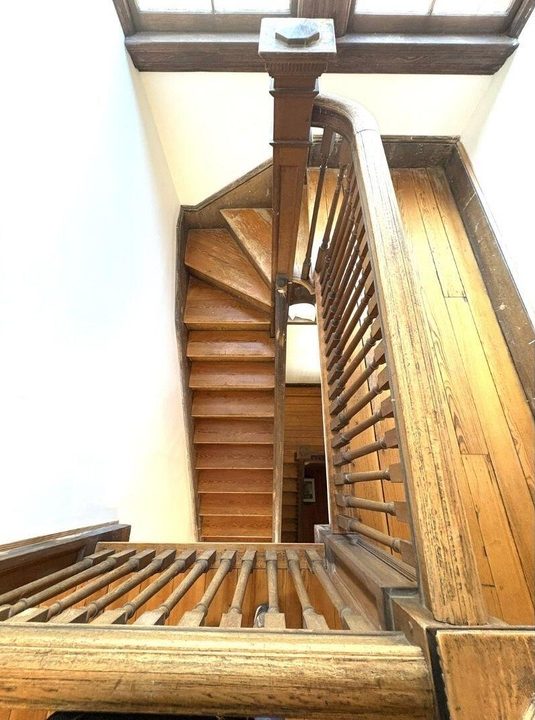
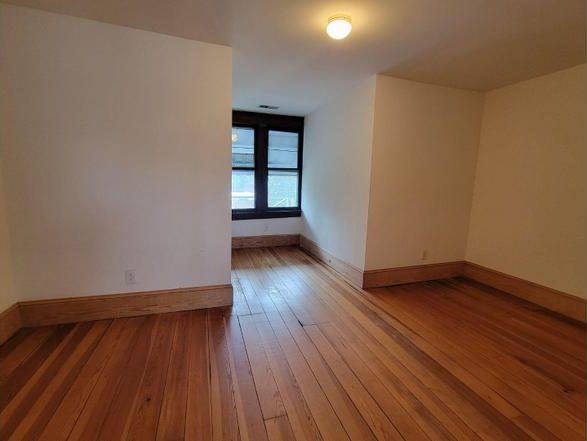
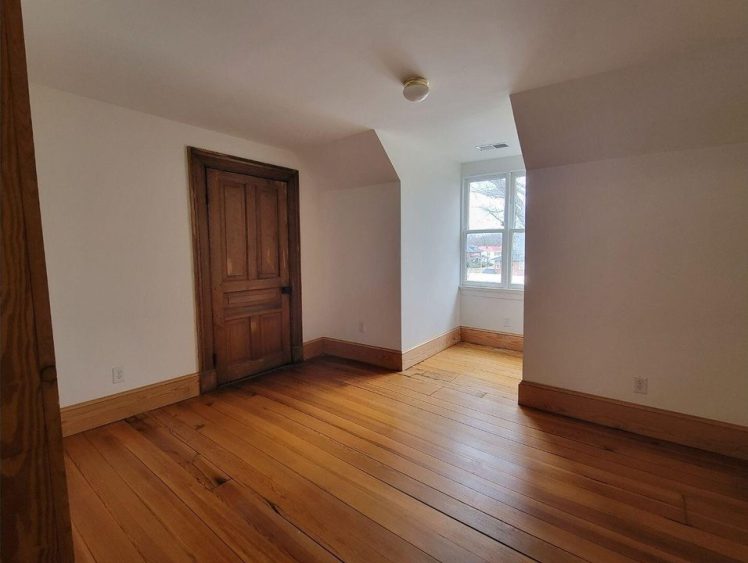
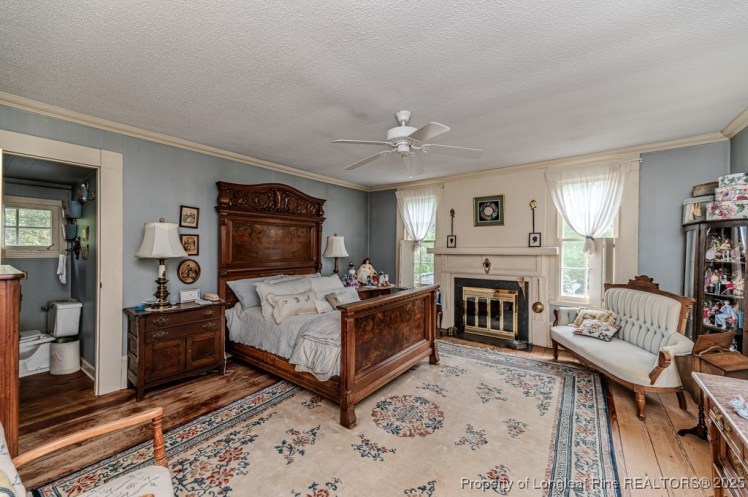
- Note: Original architectural features inside the house include a grand wooden staircase, 11 fireplaces, pocket doors, appliqued ceilings and ornate moldings.
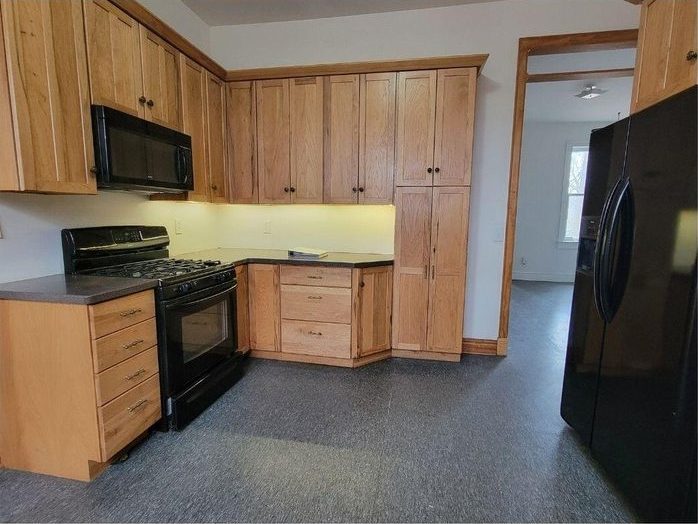
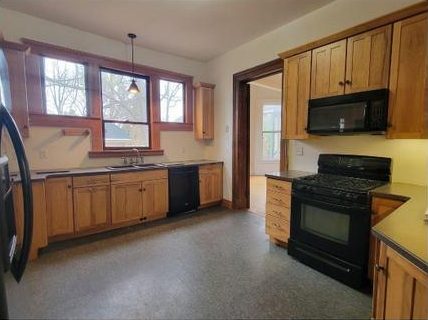
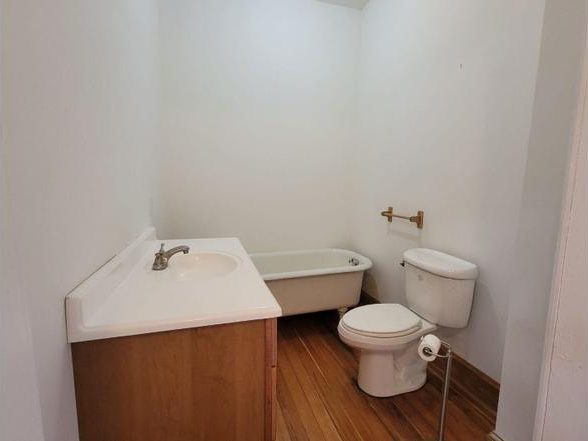
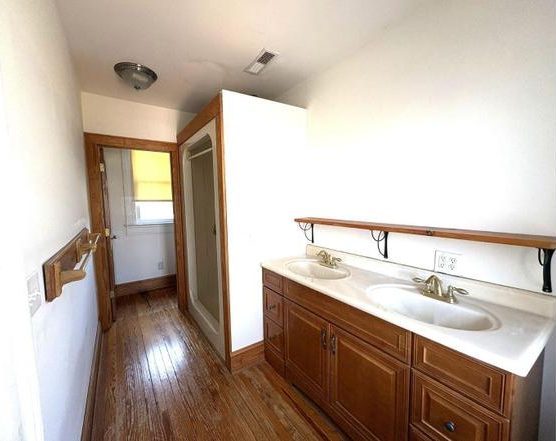
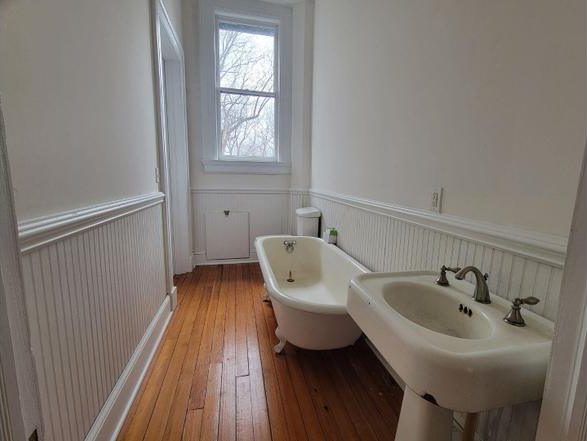
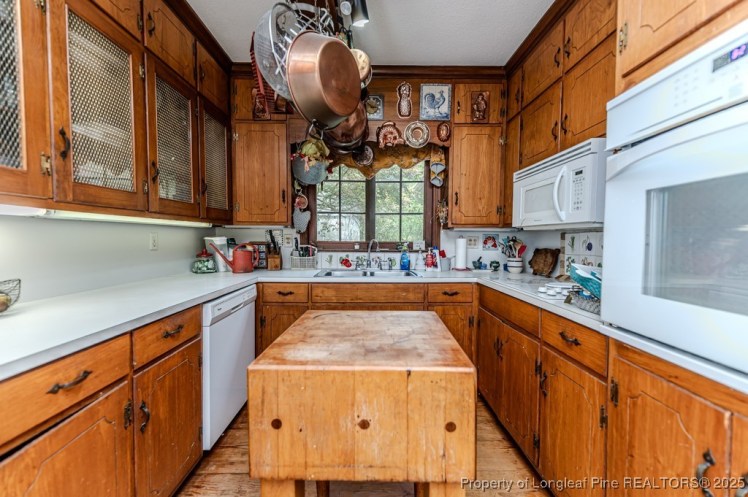
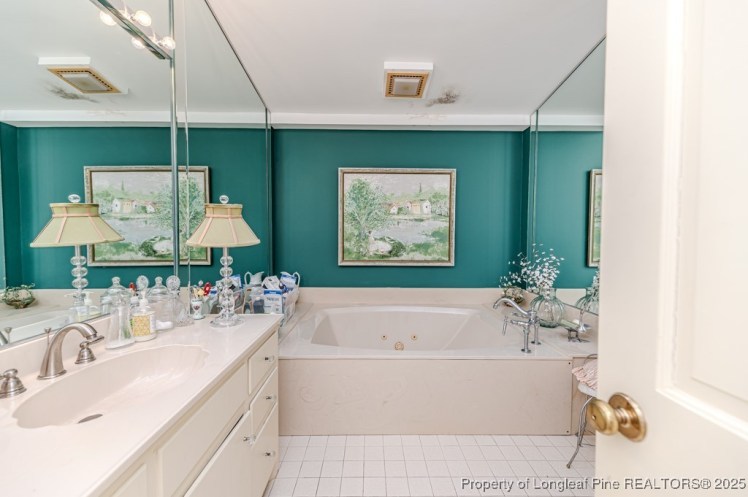
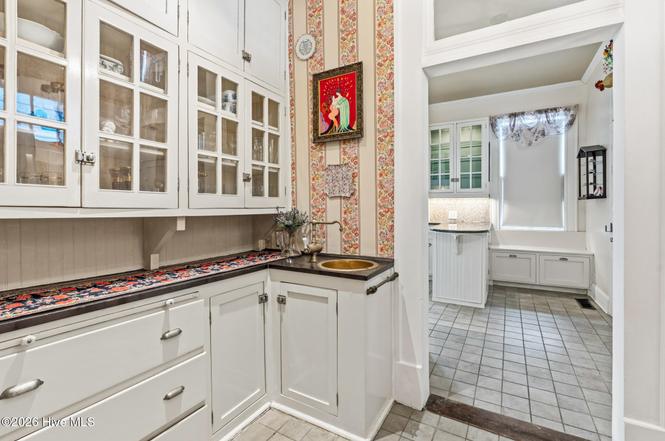
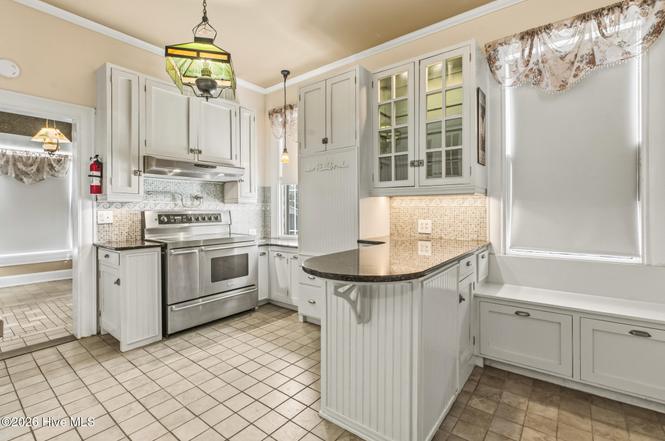
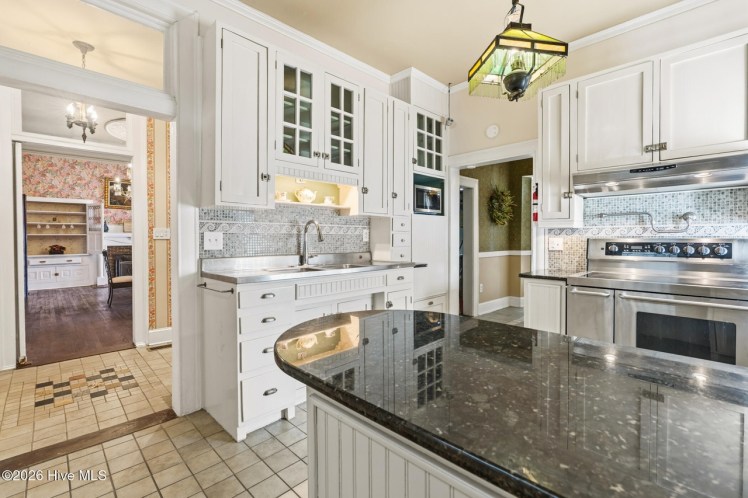
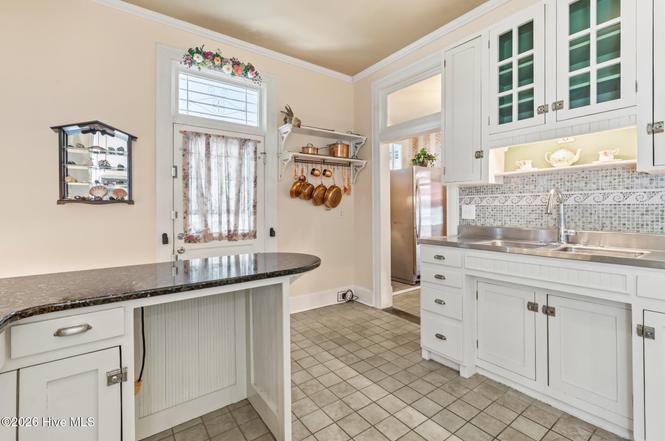
- Most of the interior is terrific, but for a house this expensive, the kitchen and bathrooms are conspicuously underwhelming.
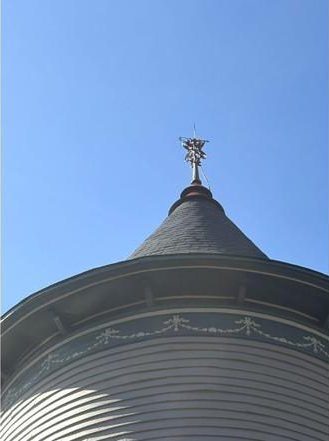
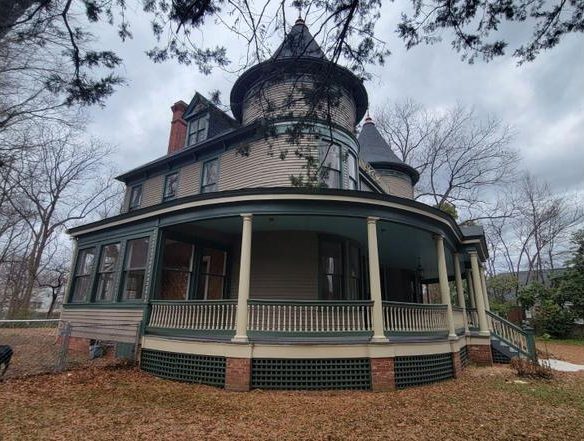
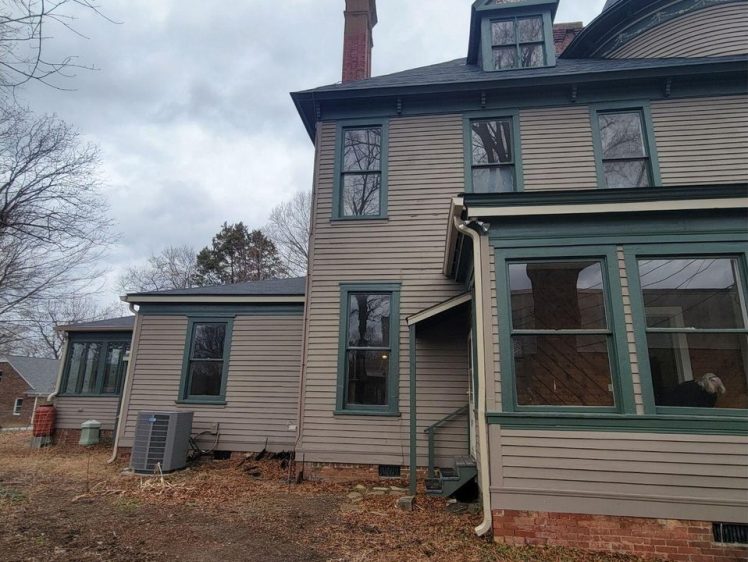
National Register nomination: “Completed in 1896, the James A. and Laura Thompson Long House is Roxboro’s most outstanding Queen Anne dwelling and a well-preserved, intact representative of the style in a North Carolina town that prospered after the Civil War. It also exemplifies the changes in the style that took place as Beaux Arts design reemerged in American architecture after the 1893 World’s Columbian Exposition in Chicago. At the time of its completion, the Roxboro Courier described the Long House as ‘magnificent,’ ‘a modem design and strikingly beautiful,’ and ‘the most costly dwelling ever built in Person County.’ …
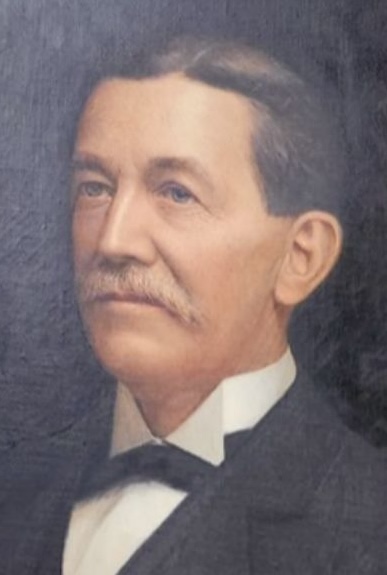
“J.A. Long, the ‘founder of modern Roxboro,’ built the locally significant house, and this is the only extant residence associated with him. Long, a local businessman and industrialist founded Roxboro’s first cotton mill and is credited with bringing the railroad to Roxboro. A fellow Roxboro businessman recalled that Long worked day and night, traveling, writing letters, and ‘talking much at home and abroad in an effort to get others interested’ in rail service.
“Long also owned a tobacco factory, was a founder and president of People’s Bank, served as a state senator, and held a seat on the board of the Lynchburg and Danville Railroad. Beyond Roxboro’s town limits, Long served as a trustee for the Methodist Orphanage in Raleigh, Trinity College, and Greensboro Female College.
“In addition to its association with J. A. Long, the house is the most outstanding example of Queen Anne design in Roxboro, and its grandeur and mass-produced materials represent post-Civil War mechanization and Long’s personal prosperity that resulted from New South industrialization.
“The symmetrical two-story facade with prominent round towers flanking a central entrance bay, incorporates Queen Anne elements as well as classical motifs that were reinvigorating popular architecture after the Columbian Exposition in Chicago in 1893. The interior reveals lavish use of mahogany paneling and decorative mantelpieces with fanciful tiles surrounding the fireboxes.
“A grand mahogany staircase leads from the first floor hallway up three flights to the attic, which is finished with the same paneled doors with enriched Eastlake style hardware seen on the two lower levels.
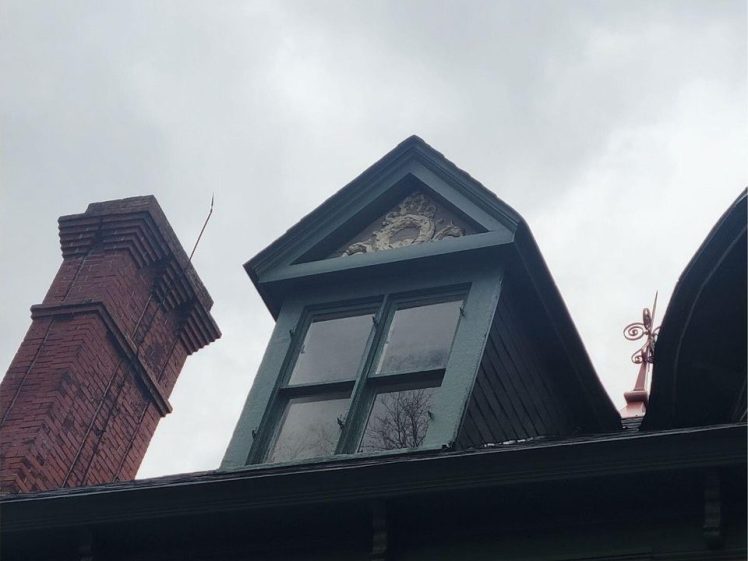
“With the exception of a small 1940s addition to the rear elevation, two missing balcony railings, a missing tympanum in one gabled dormer, and early twentieth century alterations to the floor plan of the rear ell and back porch, the house remains intact and is an outstanding illustration of the enthusiasm and optimism of the age in which it was built.”
James Anderson Long (1841-1915) was born in Person County. His life was recalled as a classic rags-to-riches story. “Beginning life a poor boy giving four years of his best to a cause he loved so well, he returned from the war disconsolate and sad at the great devastation, but he was not discouraged,” The Roxboro Courier said upon his death. “Without a dollars capital he went to work and today his estate is worth probably half a million dollars, and every penny of it clean money.”









2007 Windmill Drive, Sanford, Lee County
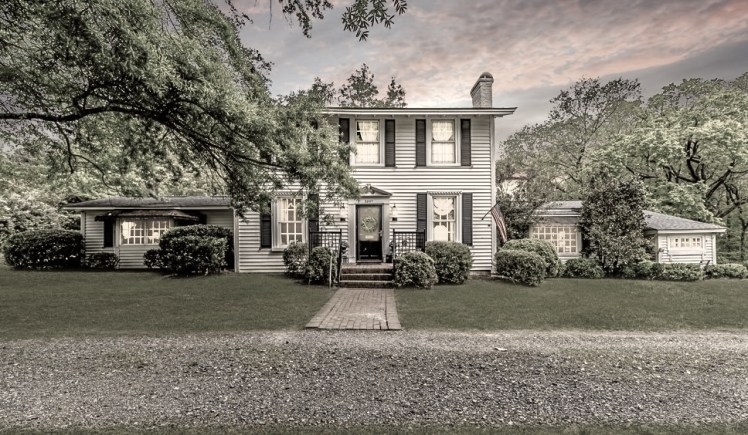
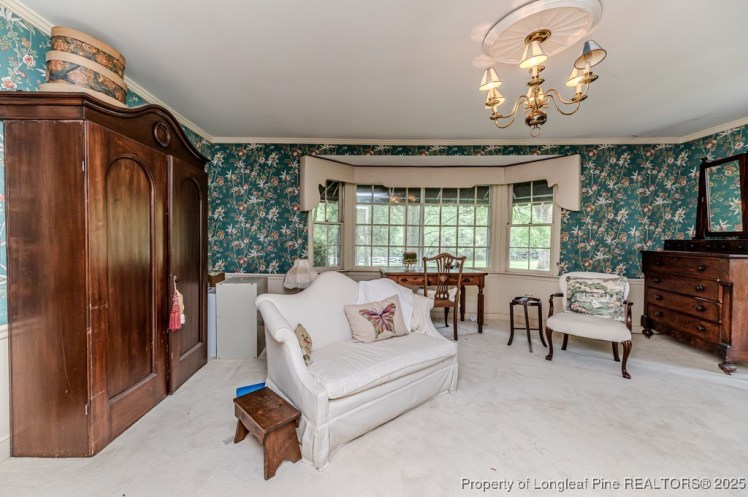
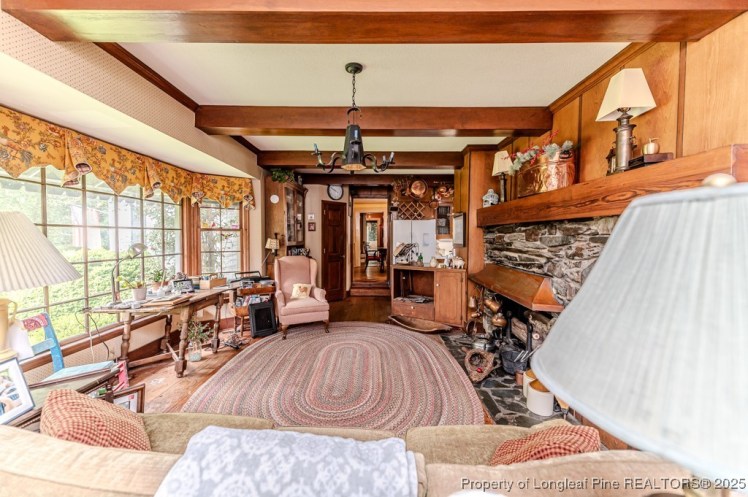
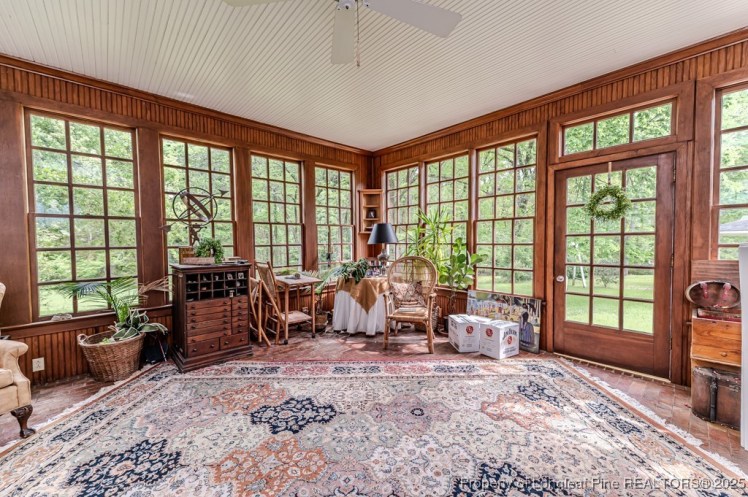
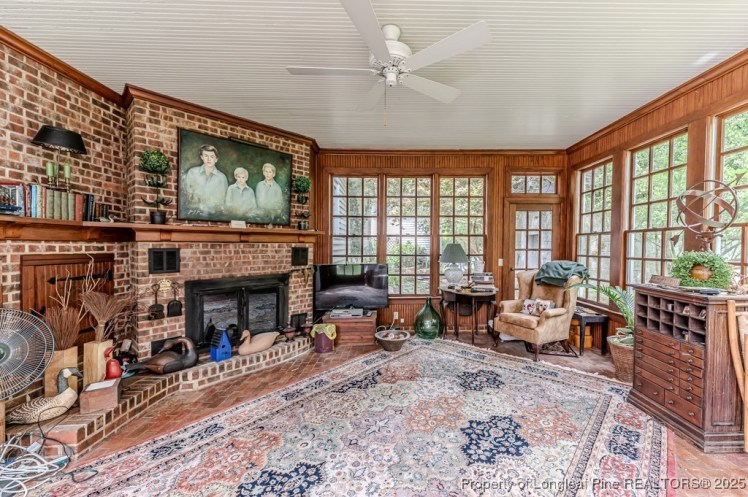
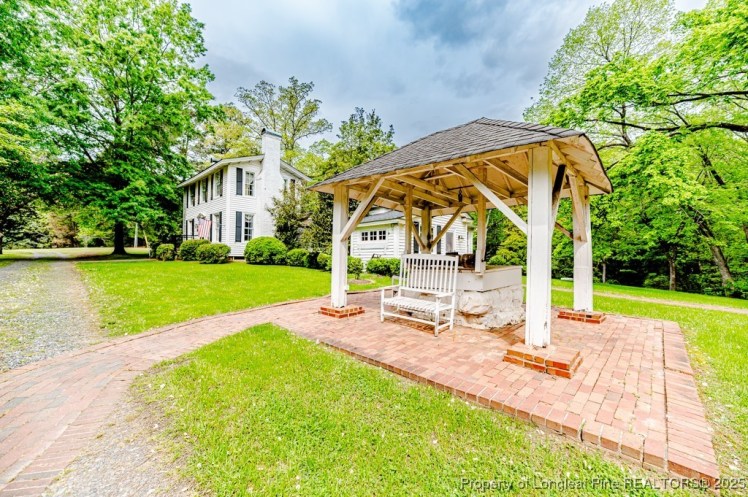
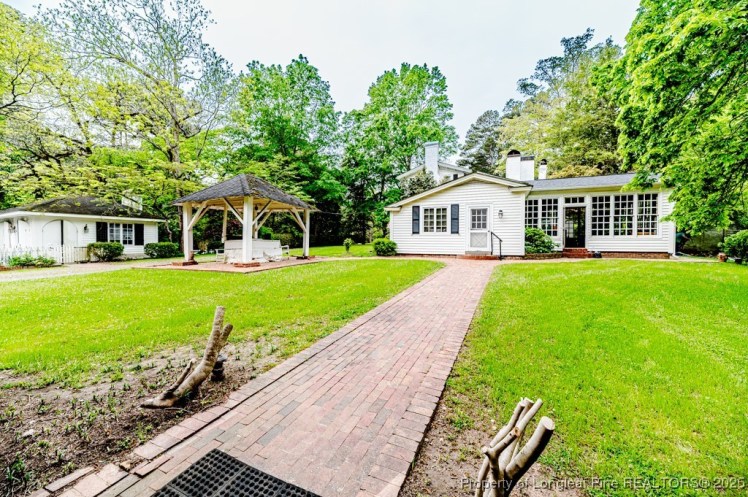
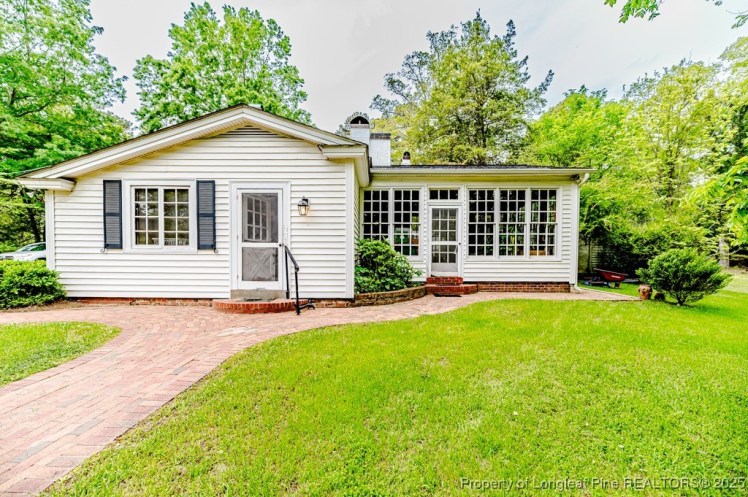
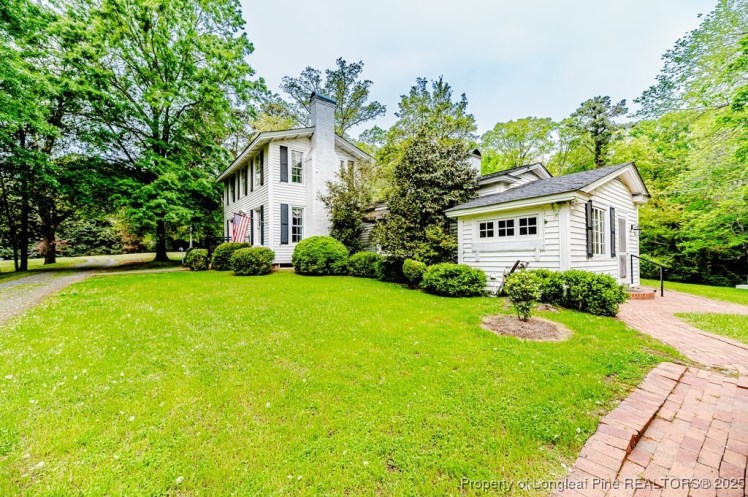
The John Dalrymple McIver House
- $699,000 (originally $875,000)
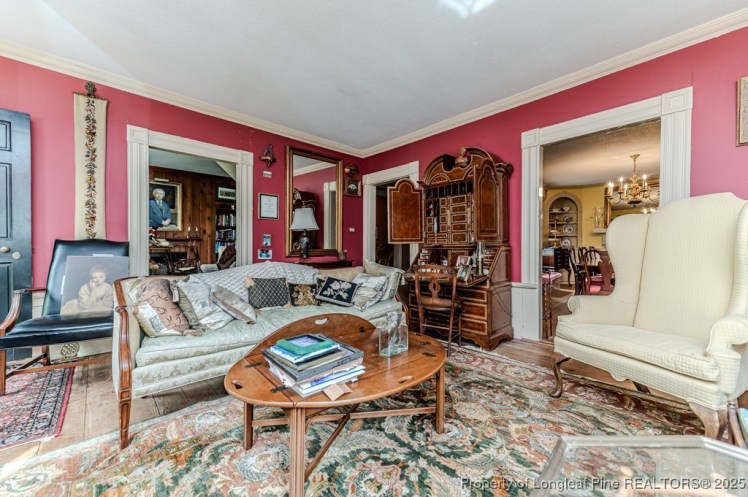
- 3 bedrooms, 3 1/2 bathrooms, 3,588 square feet, 6.31 acres
- Price/square foot: $195
- Built circa 1855
- Listed April 8, 2025
- Last sale: $25,500, April 1985
- Neighborhood: Westlake Valley
- Note: County records and online listings show the date of the house as 1830. The National Register nomination makes a case for 1855 as a more likely date.
- The property includes a swimming pool and pool house. Structures original to the farm include a well, storage building, barn and detached kitchen.
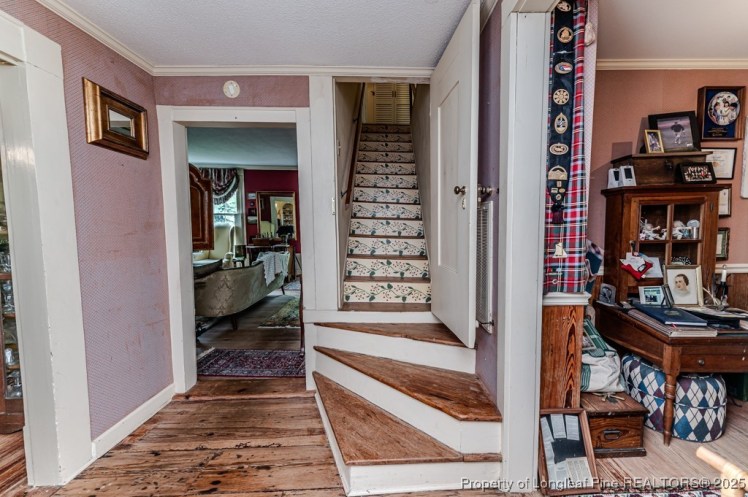
National Register nomination: “The house belongs to a group of mid-nineteenth-century Lee County dwellings that share vernacular Greek Revival detailing. The vernacular aspects of the McIver farmhouse are the richly molded door and window surrounds in the downstairs east room, and the stylized, almost abstract composition of the surviving mantels. … The stylistic similarities among these houses and the familial ties among their original owners suggest that the houses are the product of a single vernacular builder, one with an imaginative and idiosyncratic approach to Greek Revival styling. …
“The farm stands on the high ground on the west side of Big Buffalo Creek, a tributary of the Deep River. At the heart of the farm is a two-story, weatherboarded, mortise-and-tenon frame farmhouse dating to about 1855. The dwelling has an I house form, a brick and brownstone foundation, a standing-seam metal-sheathed gable roof, brick exterior end chimneys, an integral one-story -ell, and extensive one-story rear and side additions dating to the second half of the twentieth century. The hall-parlor-plan interior features vernacular Greek Revival styling and an enclosed stair that rises from a rear shed room.”
John Dalrymple McIver (1826-1911) was a farmer, businessman and prominent local figure in Lee County. By 1854, he had acquired 419 acres of land. He grew corn, oats wheat and cotton. In 1864 he volunteered as a Confederate soldier, but was mustered out as either wounded or ill after less than a year. By 1877 he had opened McIver’s General Store in Sanford with his relative Matthew Henry McIver (father of Charles Duncan McIver, founder of the Women’s College, now UNC Greensboro).
John operated a cotton gin on his farm and owned considerable property in town. He also served as a magistrate and county commissioner. By 1893, he had moved to a house in Sanford. “According to local tradition, the hustle and bustle of Sanford’s main residential street proved too much for McIver, and he moved back to his farm,” the National Register nomination says. In 1911 at age 85 he died, “one of Lee County’s oldest and most honored citizens,” The Raleigh Times said, “having suffered a stroke of paralysis Saturday night from which he never rallied.”
While the National Register nomination and a 1911 obituary say he never married, other records show him married to his widowed sister-in-law Jane C. McIver (1825-1883) for some period of time between the death of her husband, his older brother Wesley (1820-1875), and her death eight years later.


206 N. Brook Street, Wilkesboro, Wilkes County
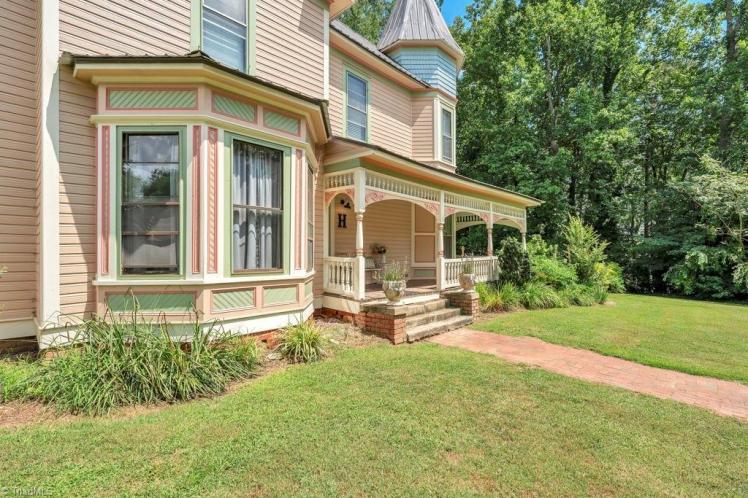
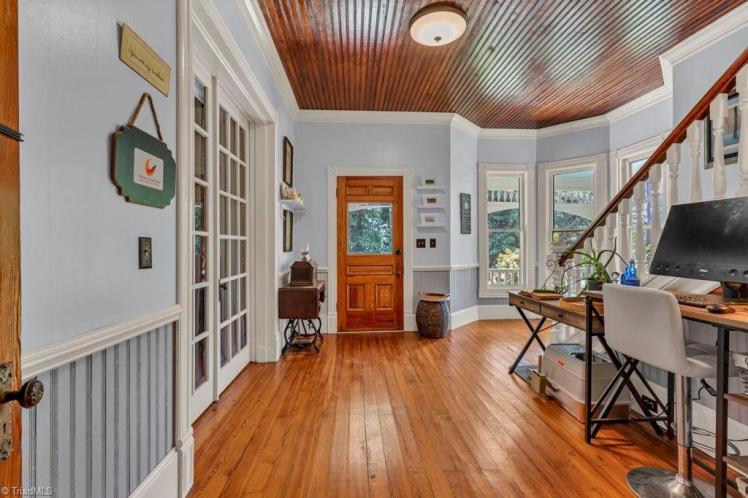
The J.L. Hemphill House, also known as the Lowe-Hemphill House
Listing withdrawn November 11, 2025
Relisted November 17, 2025
- $499,000 (originally $625,000)
- 4 bedrooms, 4 bathrooms, 3,066 square feet, 1.17 acres
- Price/square foot: $163
- Built in 1895 (per county; see note)
- Listed July 31, 2025
- Last sale: $270,000 March 2006
- Note: The property includes a garage apartment.
- The National Register nomination gives the address as 203 N. Brook Street, an address that doesn’t exist or no longer exists. It also dates the house to 1899.
- National Register nomination: “The 1899 J.L. Hemphill House is the most prominent Queen Anne style dwelling remaining in Wilkesboro. More than any other house it embodies the salient characteristics of this late Victorian style — irregular massing and variety of texture and ornamentation — as often interpreted in frame houses of the turn-of-the- century period in North Carolina.”
- James Lafayette Hemphill (1862-1949) operated a wholesale dry goods company in North Wilkesboro. He was also may have built houses, including this one.
- “After Hemphill, the Brook Street house had several owners, including a Miller family and a Dr. Reeves, until it was purchased in 1920 by Carl A. Lowe. The Lowes had eight children, and when both Carl A. Lowe and his wife had died, one of their daughters, Beulah Lowe Woodie [1908-1989], and her husband, Glenn C. Woodie [1912-1998], purchased the house from the estate.” Glenn was a driver for Greyhound for 45 years. His estate sold the house in 1999. Beulah attended Meredith College and the Woman’s College. She worked as office manager for her father.
- Carl Arthur Lee Lowe (1884-1952) was a businessman, originally from Moravian Falls. He was unrelated to the Lowes of North Wilkesboro who founded North Wilkesboro Hardware, now Lowe’s Companies Inc., and Lowe’s Foods. Carl operated the biggest fur dealership in the South in North Wilkesboro. He also owned a wholesale feed, grocery and fertilizer business.
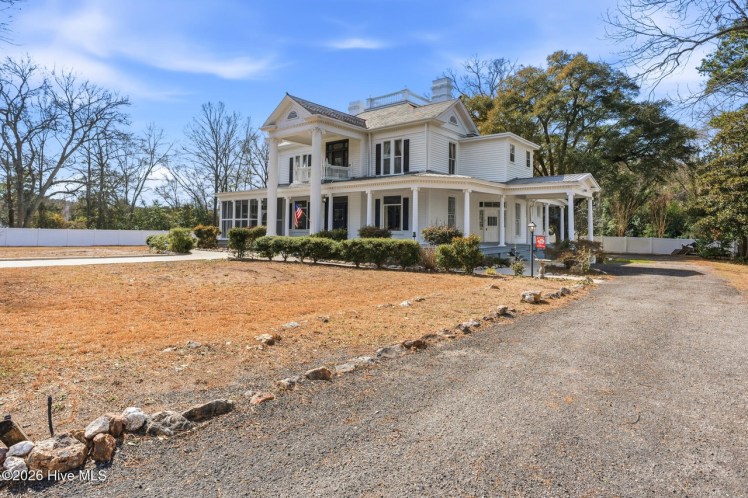
526 S. Caroline Street, Rockingham, Richmond County
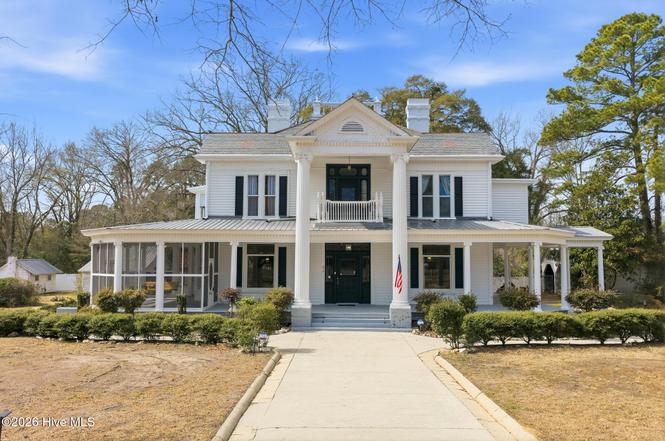
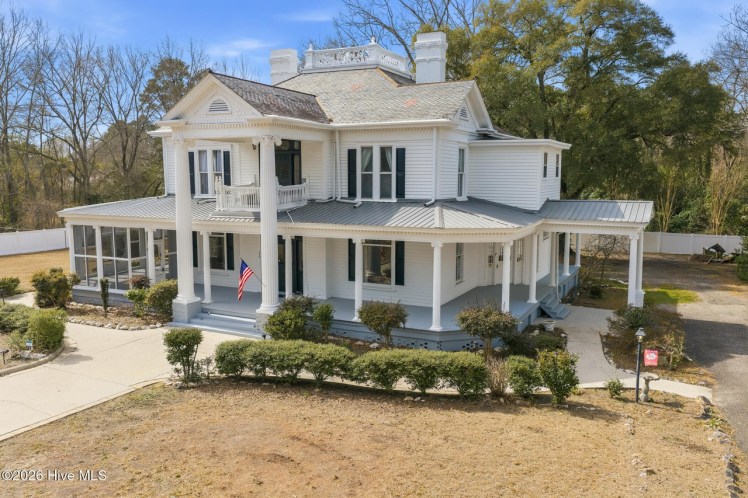
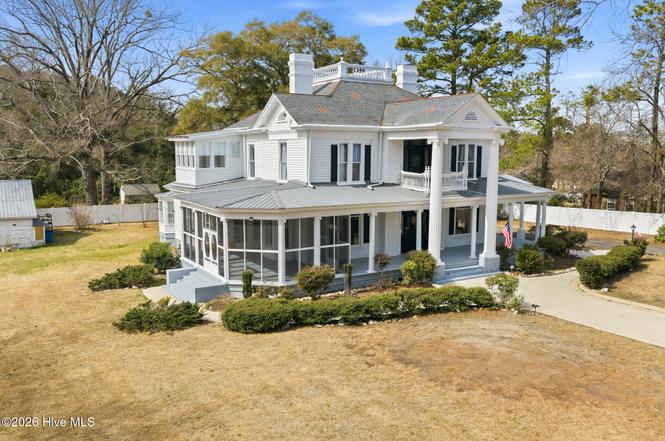
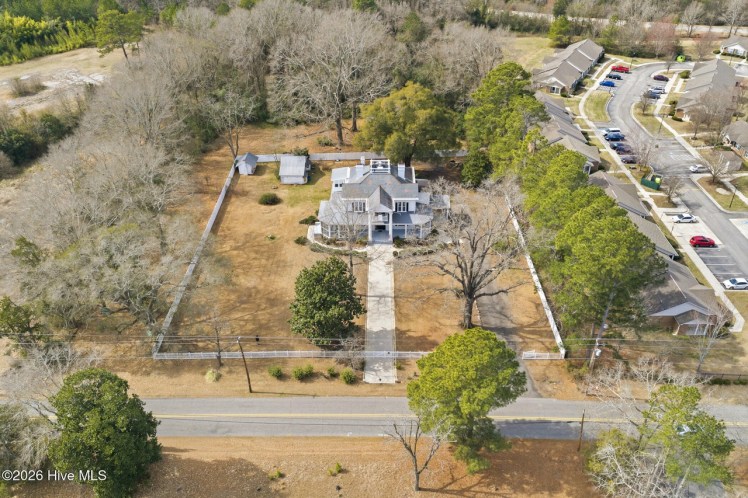
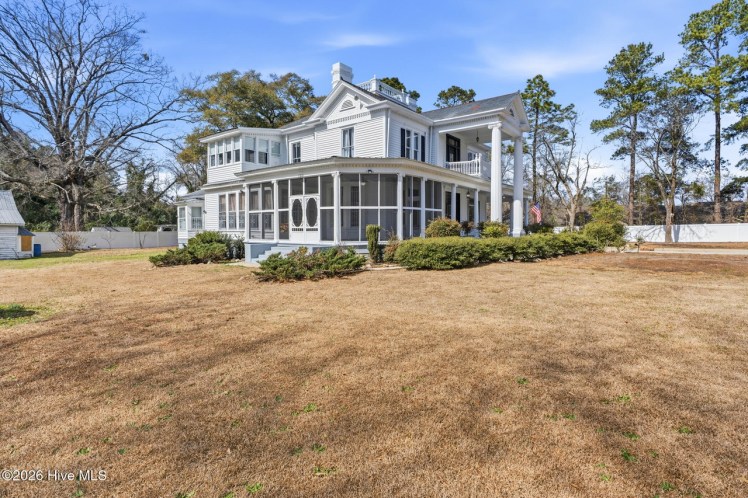
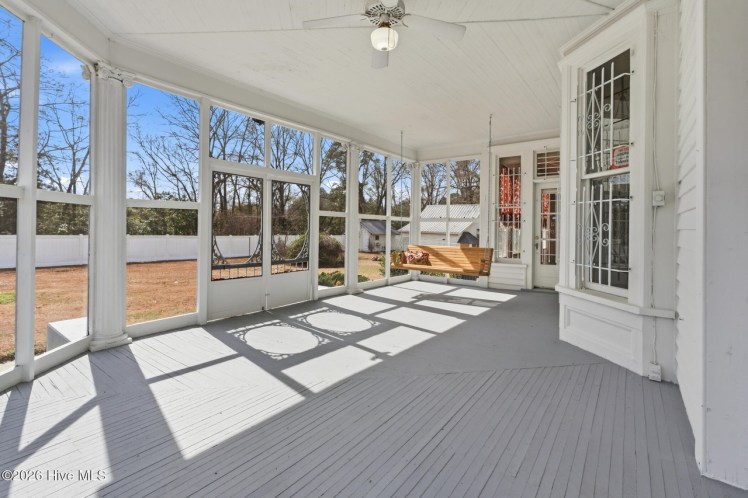
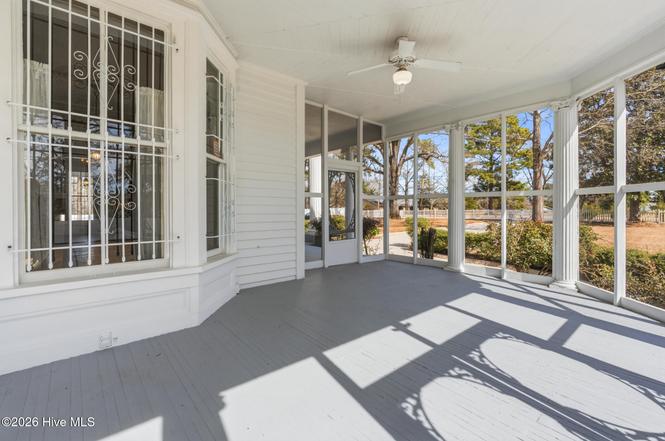
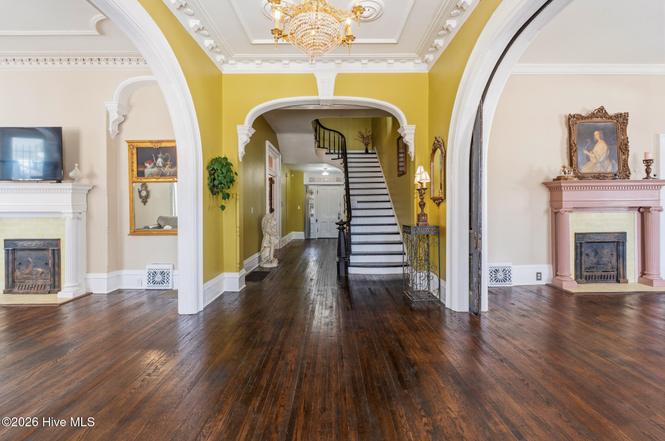
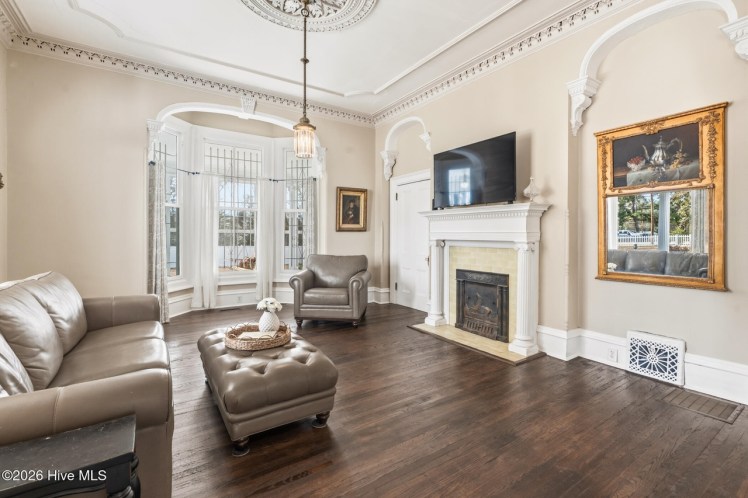
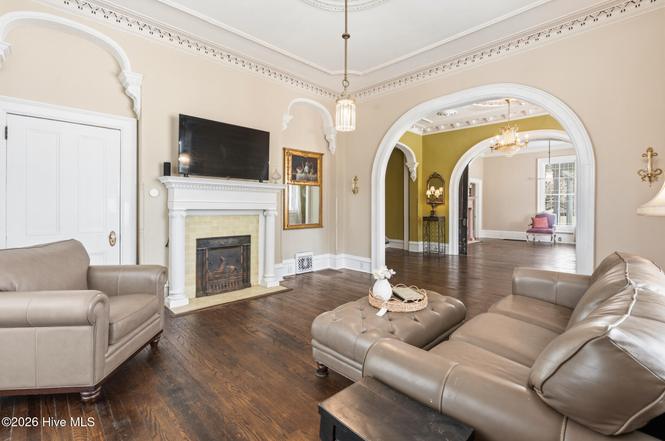
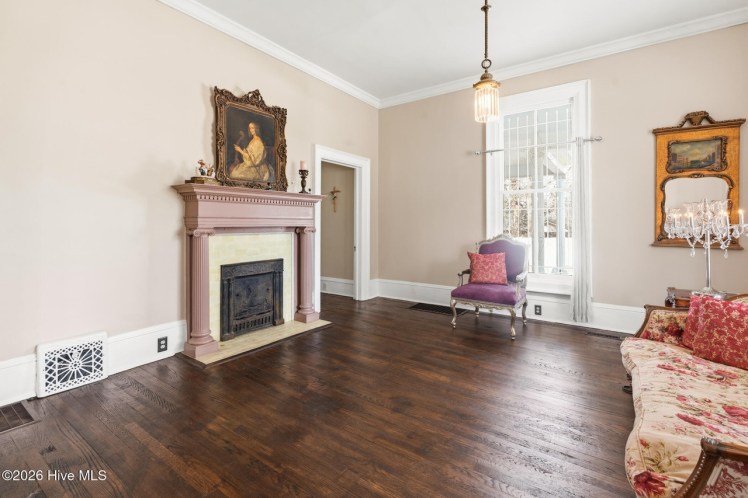
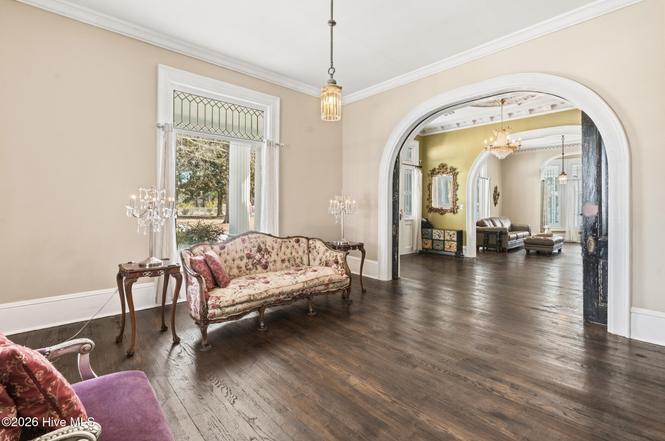
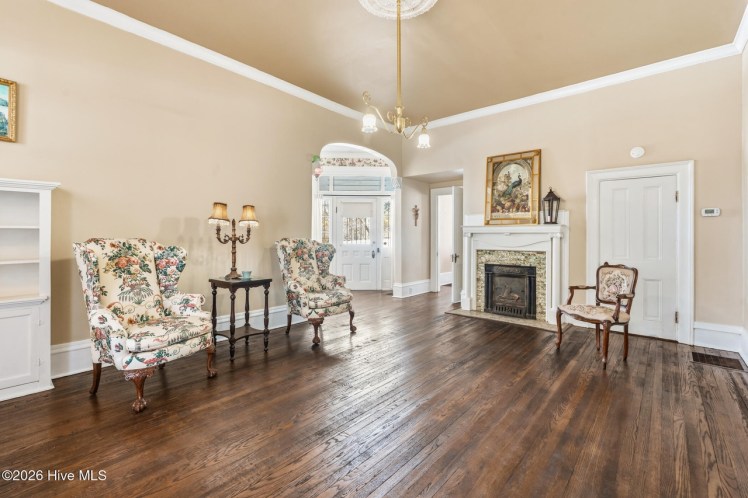
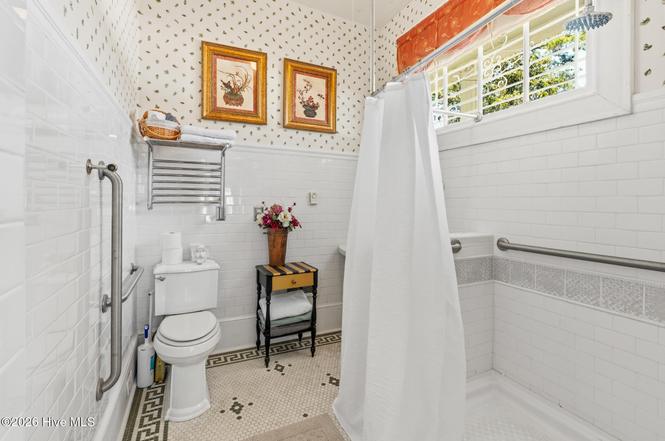
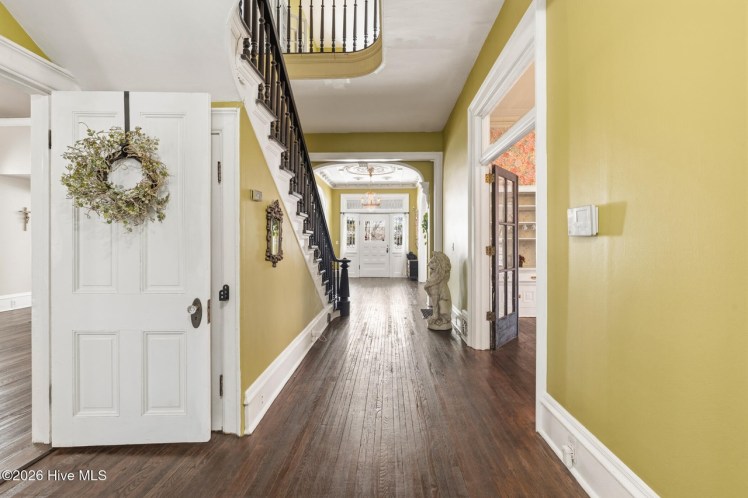
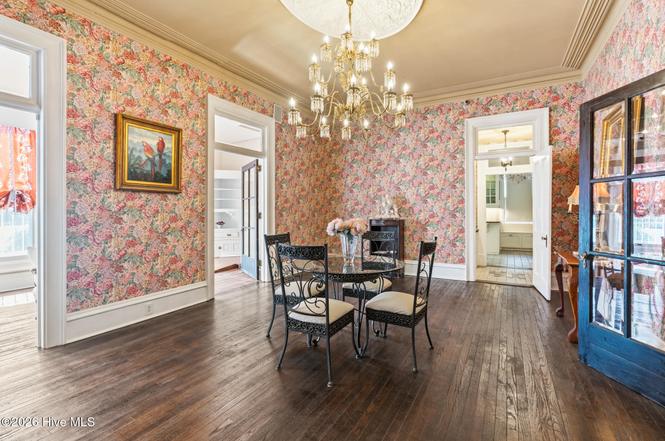
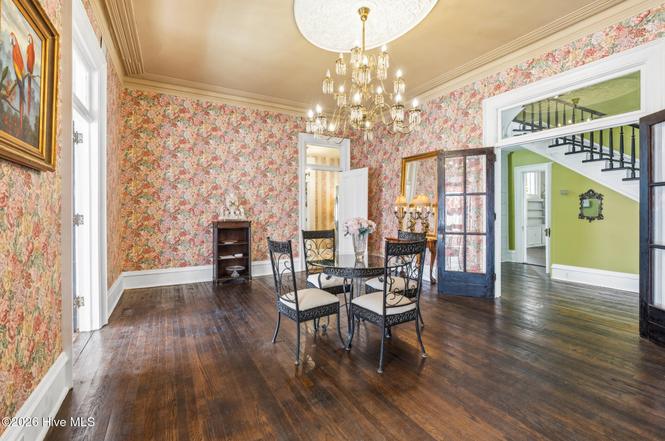
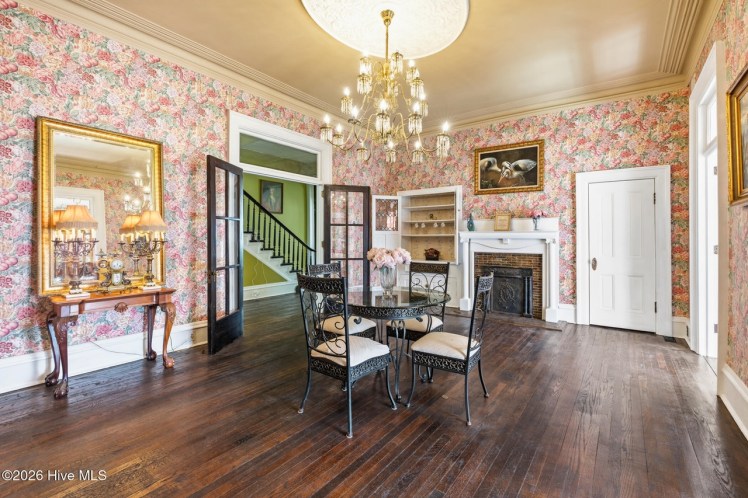
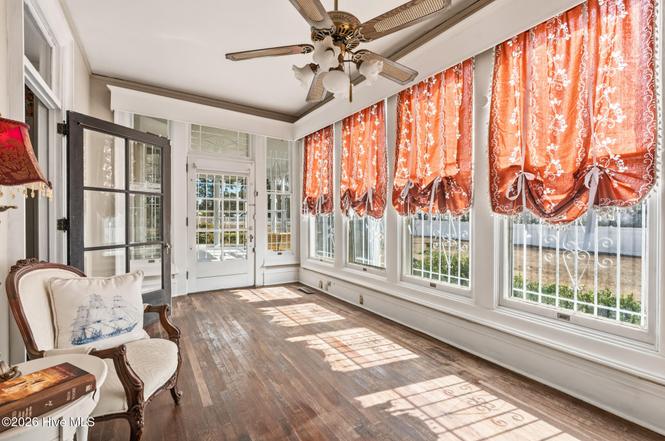
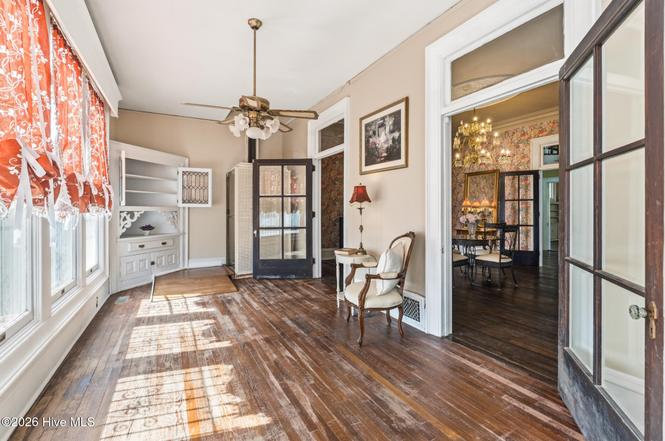
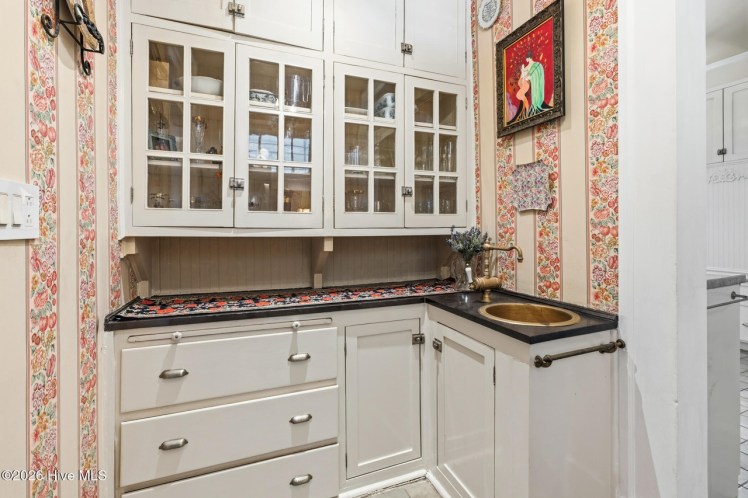
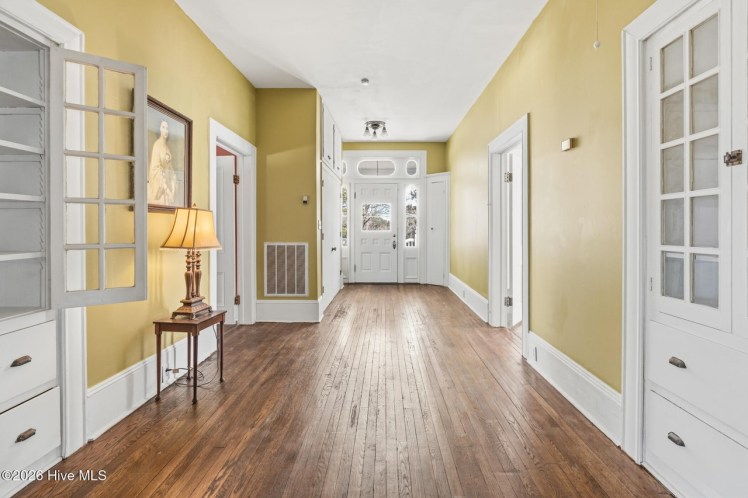
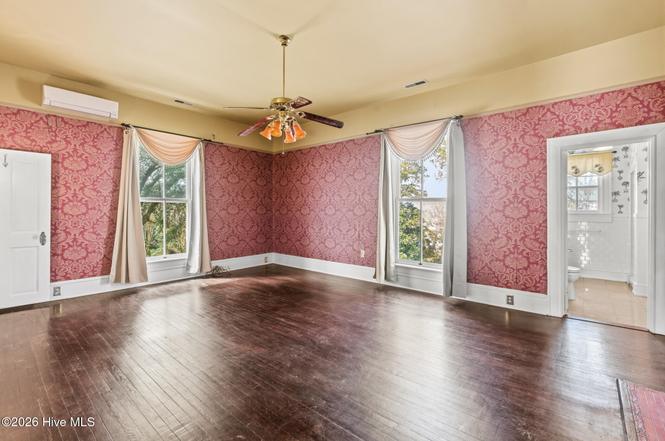
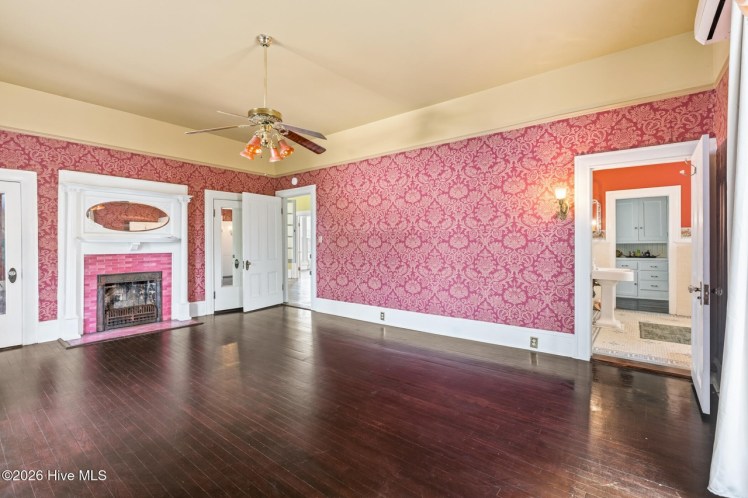
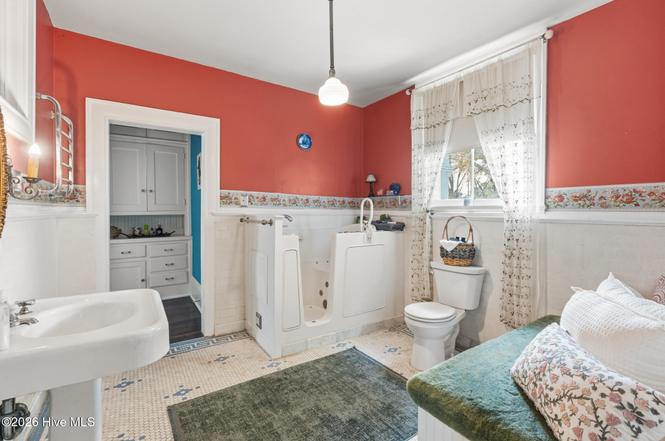
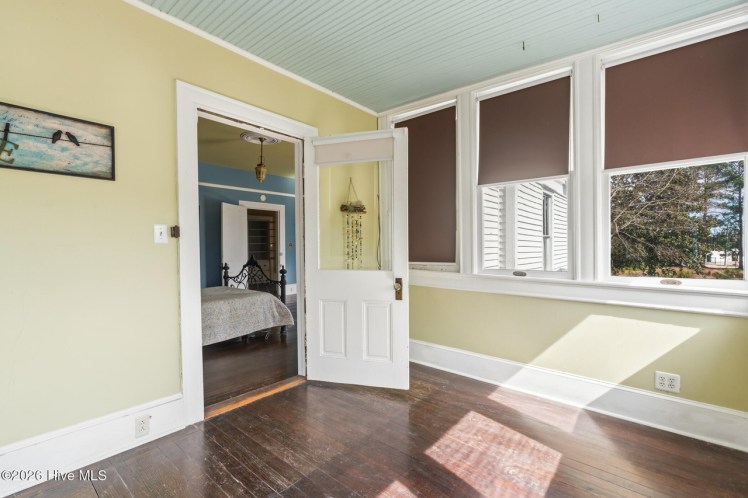
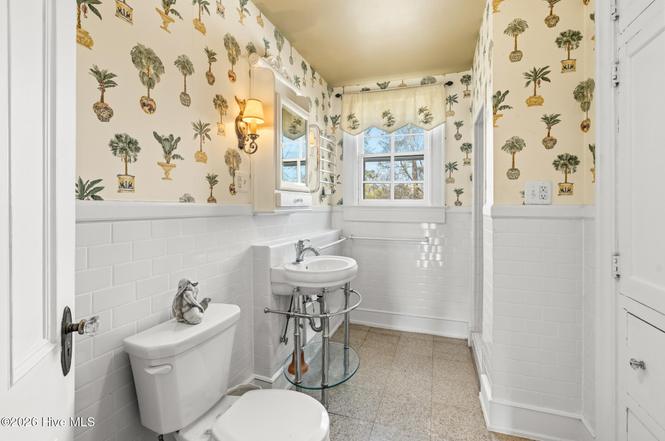
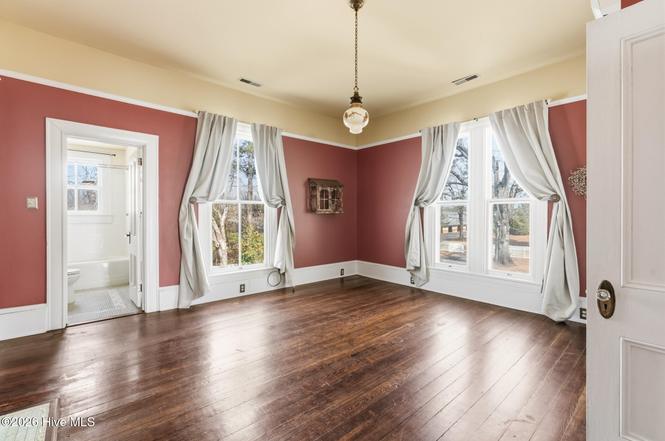
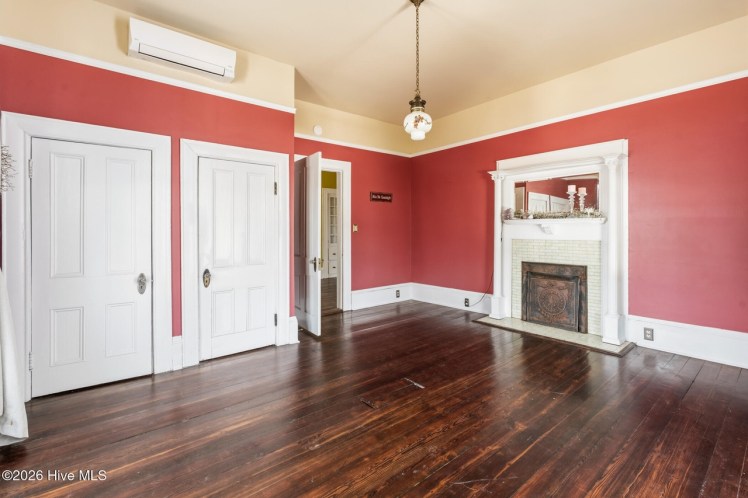
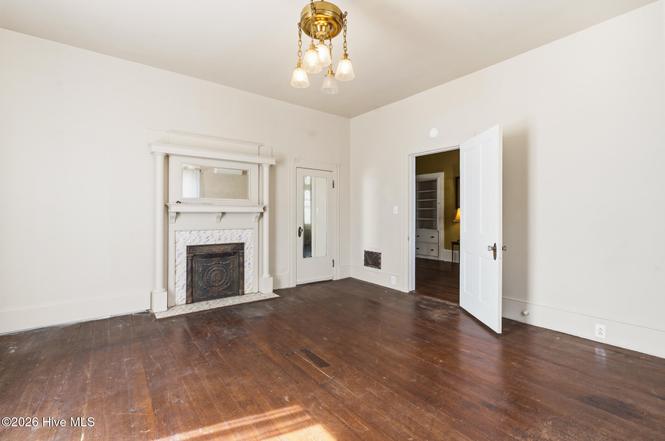
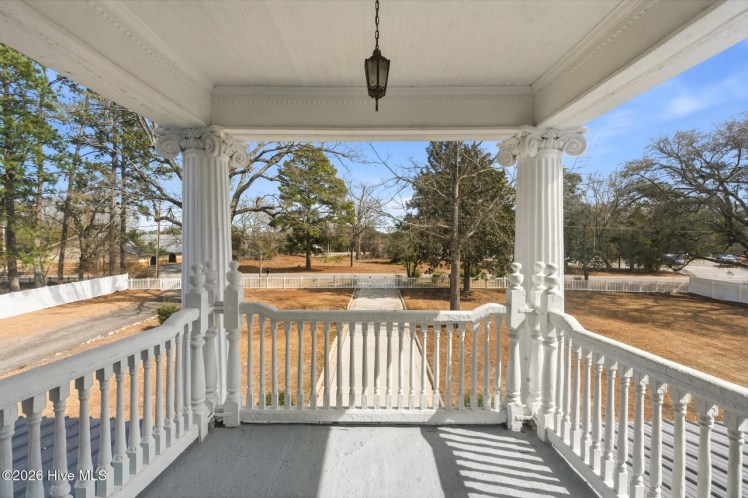
The H.C. Watson House
- $495,000
- 5 bedrooms, 4 full bathrooms and 2 half-bathrooms, 4,888 square feet, 1.30 acres
- Price/square foot: $101
- Built in 1883
- Listed February 27, 2026
- Last sales: $284,900, February 2024; $187,000, May 2005
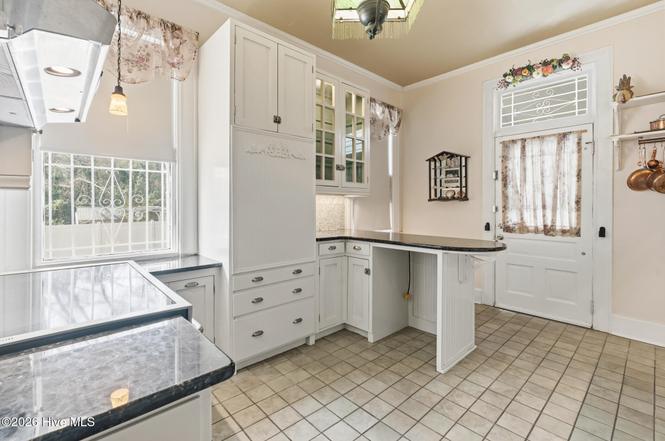
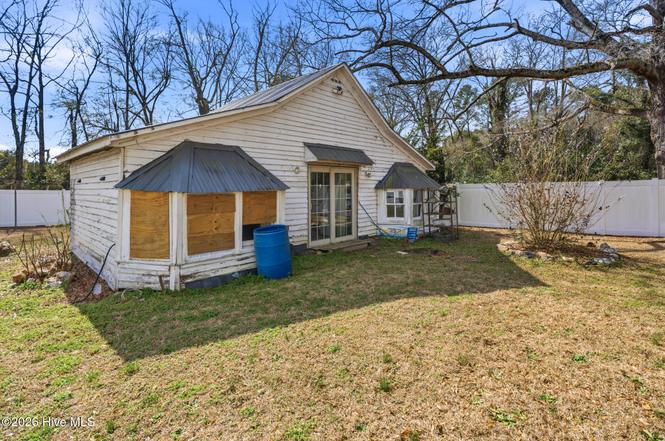
- Note: The property includes the original detached cookhouse and a three-bay carriage house with living quarters.
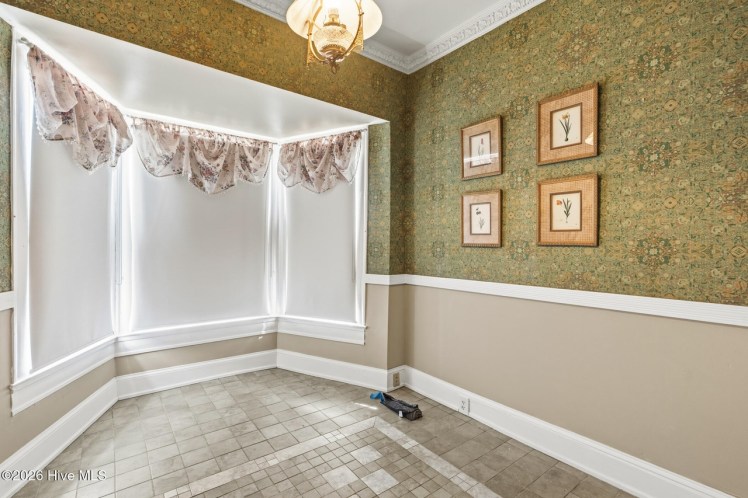
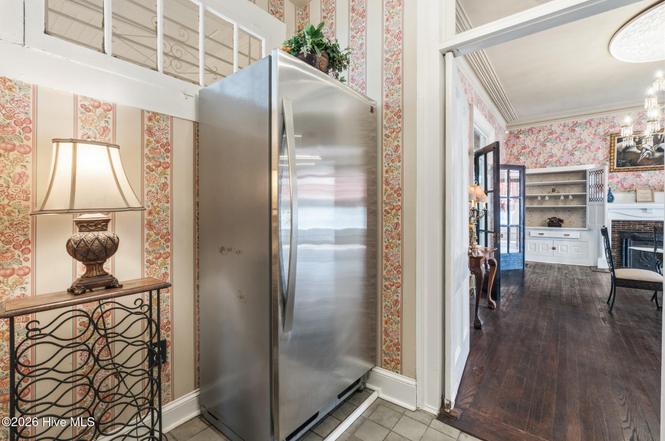
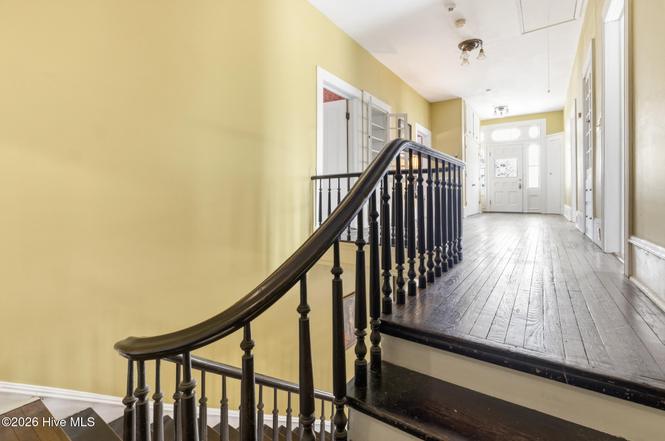
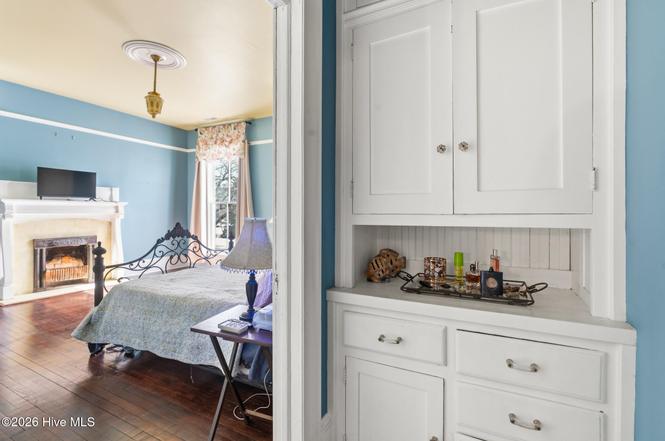
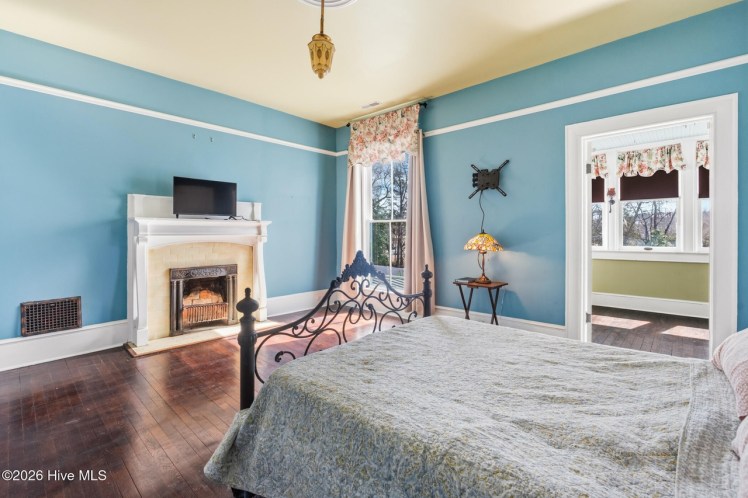
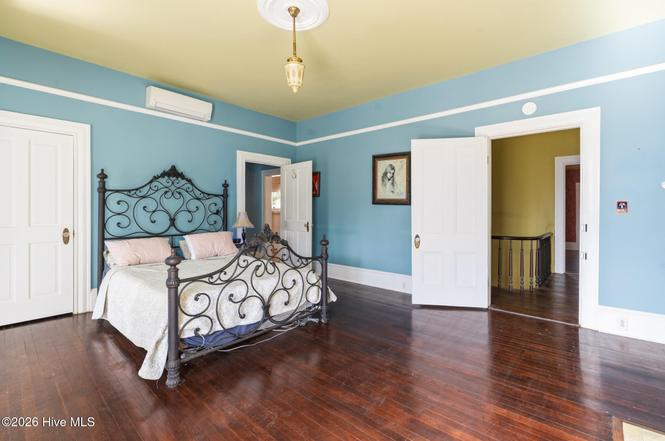
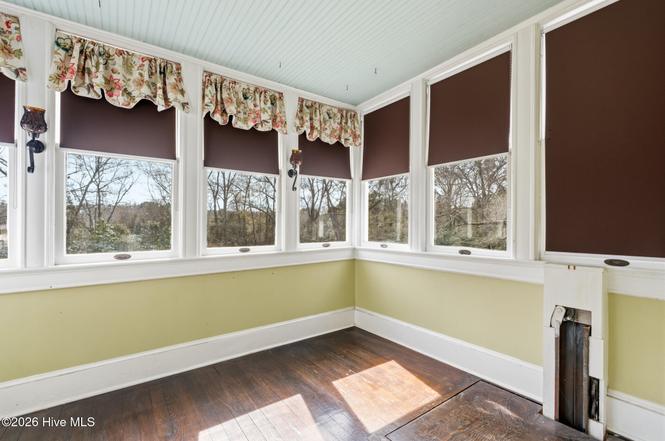
- The current owners have extensively restored the house.
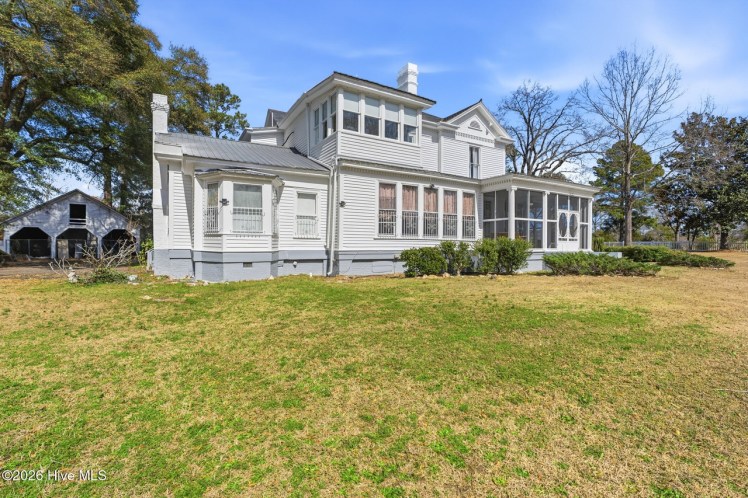
National Register nomination: “The H.C. Watson House, located at 526 Caroline Street approximately one-half mile south of downtown Rockingham, was constructed in the mid-1880s as a High Victorian residence. During a remodeling effort of the early 1900s the two frame house received numerous Classical Revival additions.
“In Rockingham during the early 1900s, fortunes were being made in the textile industry and related commercial enterprises. This newly acquired wealth was manifested in a burst of residential construction. Because of the resources available and the desire to keep a status residence. wealthy owners of older nomes continually remodeled to keep pace with. changing architectural trends, Rockingham’s elite who regarded the house as a visual symbol of prosperity were drawn to the theatrical and grandiose expression of Classical Revival style.
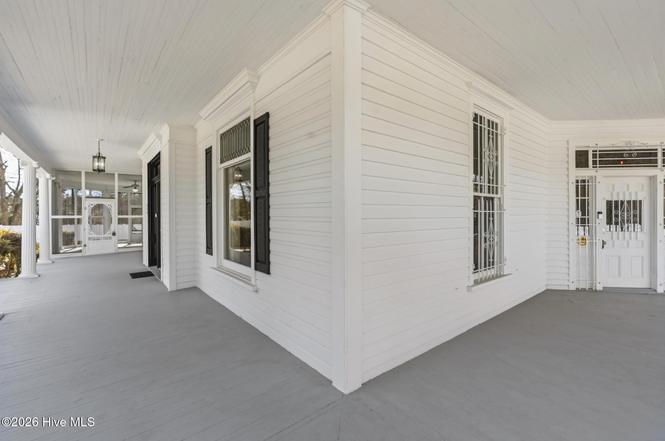
“The elegant two story pedimented portico with fluted Ionic columns, dentiled cornice, formal wraparound porch and attached porte-cochere demonstrate the strong influence of the Classical Revival style, as do the striking beveled and leaded glass door and window transoms and the crowning upper deck widow’s walk. The truncated hipped roof exhihibits a colorful decorative use of slate shingle work, the only example in the Rockingham vicinity. Features retained from its Victorian origins include ornamental splayed door surrounds, long narrow paired second story windows, and rounded transom and sidelights surrounding the entrance to the balcony. …
“In ca. 1895, H.C. Watson commissioned an itinerate Irish craftsman to stylishly update the entrance hall and two front parlors of the house, with exceptionally fine and unspoiled plasterwork. The cornices of the south parlor are pierced with a highly decorative leafy pattern and the cornice of the central hall features an alternating series of small plaster modillions and flowerettes.
“The ceiling medallions are formed from a repetitive use of leaves and flowers in a circular pattern, Other applied plaster motives include large ornamental bosses, elaborately scrolled console brackets supporting shallow arched niches, and elegantly curved window pediments.
“The resulting effect is richly designed and beautifully executed. The R.C. Watson House is distinguished as possessing the most notable and well preserved late nineteenth century plasterwork in the Rockingham vicinity and perhaps Richmond County.”
Henry Clay Watson (1855-1926) “was a prominent landholder, cotton gin operator and respected downtown merchant. … Among other accomplishments, he was co-founder of the Watson-King Funeral Home in 1911.” His death was front-page news in the Rockingham Post-Dispatch:


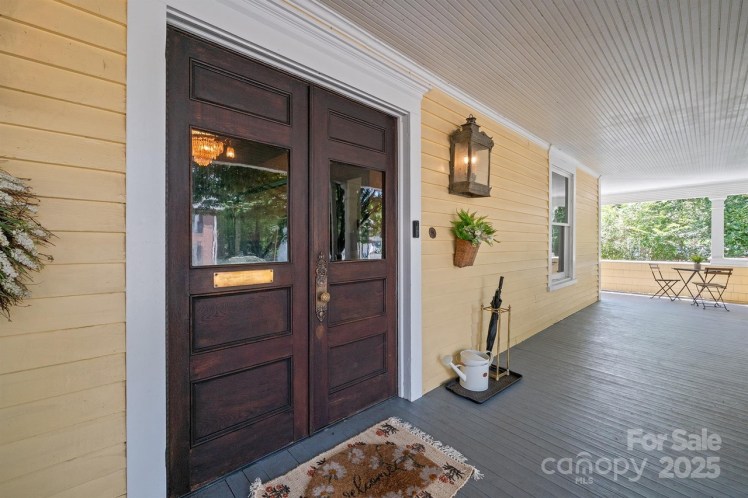
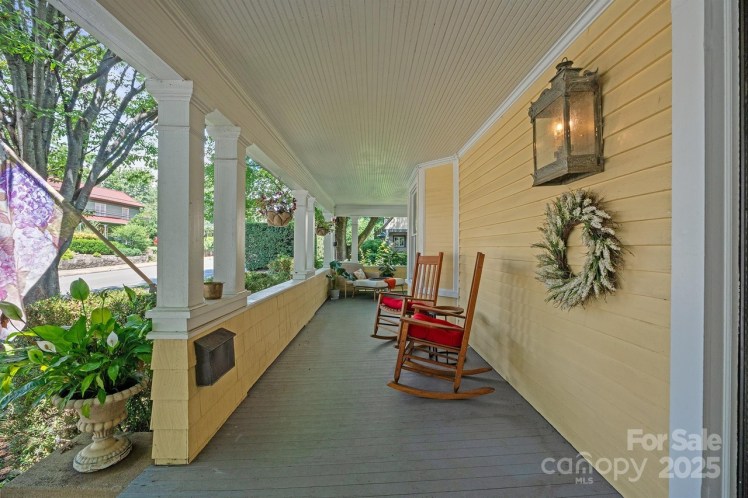
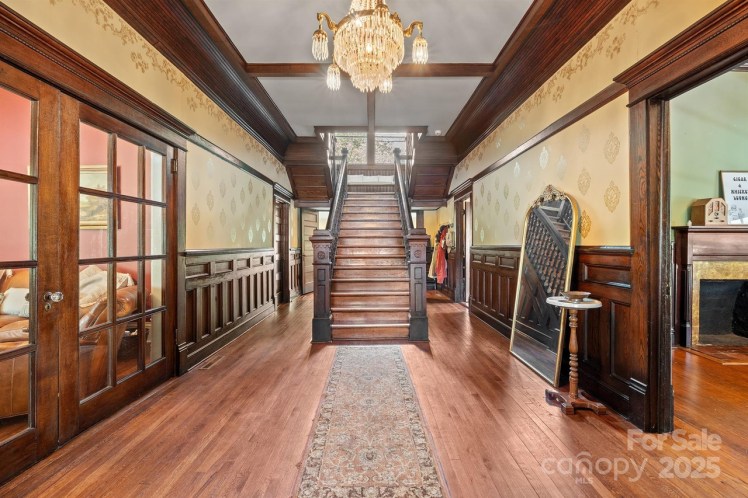
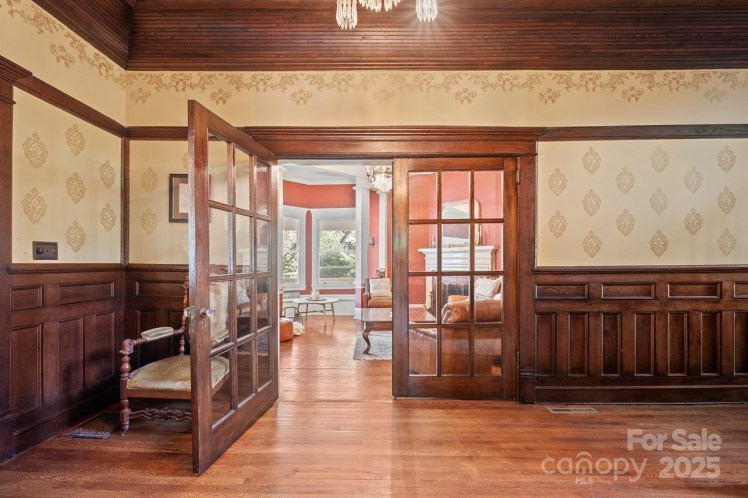
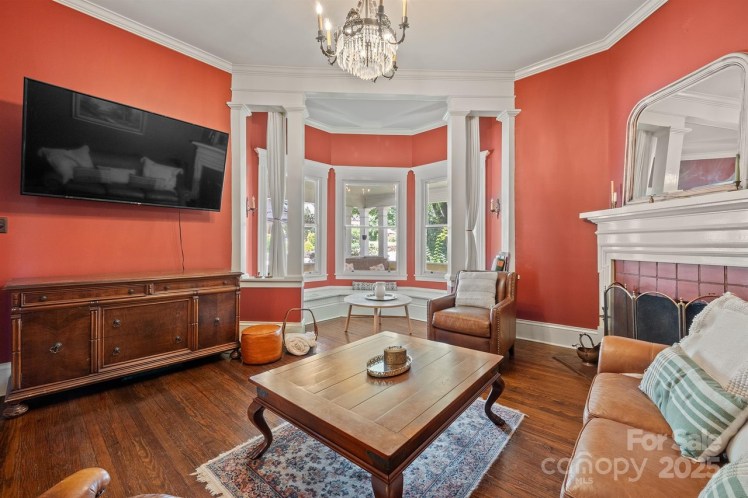

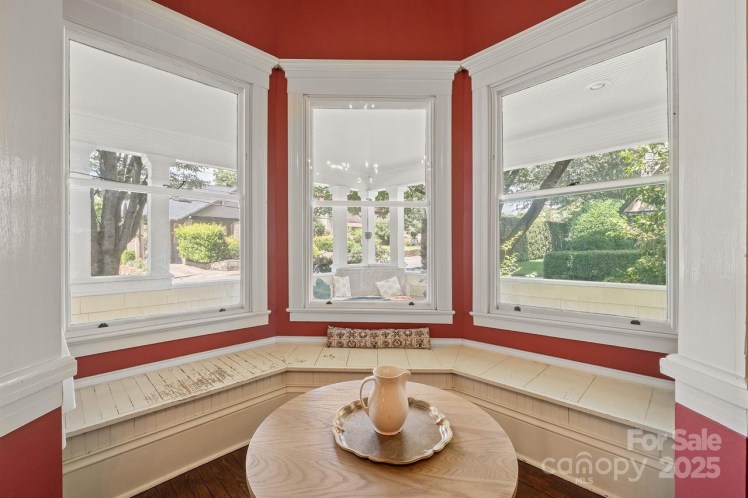


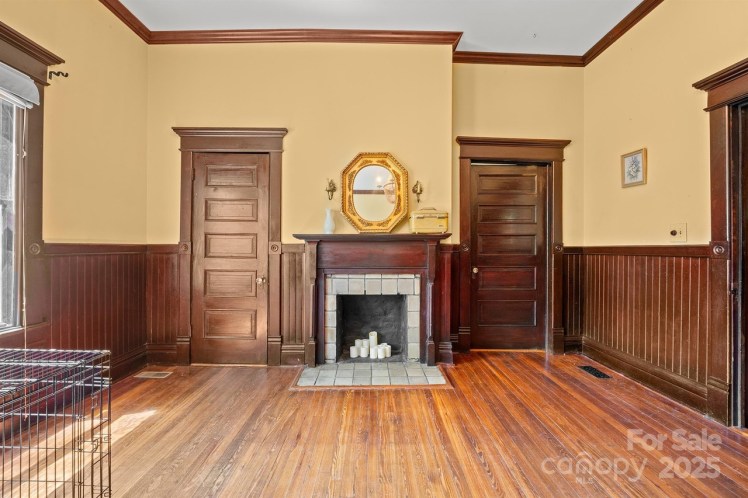


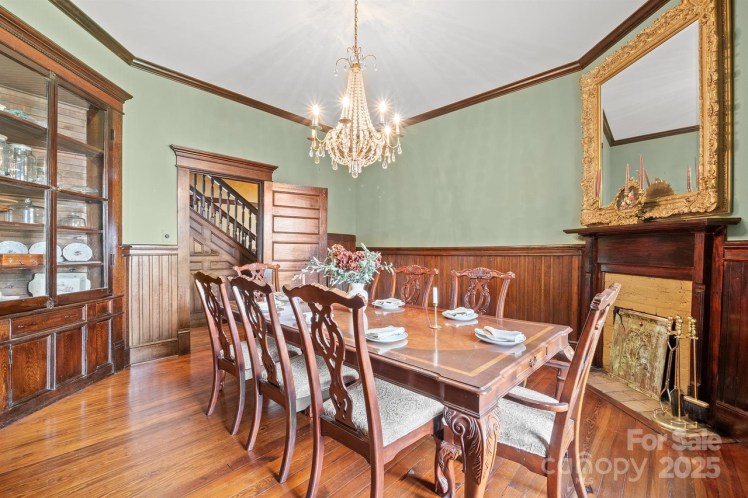


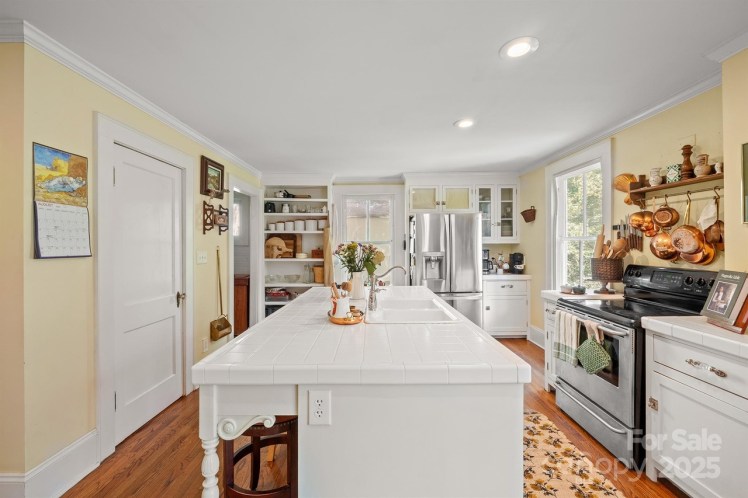


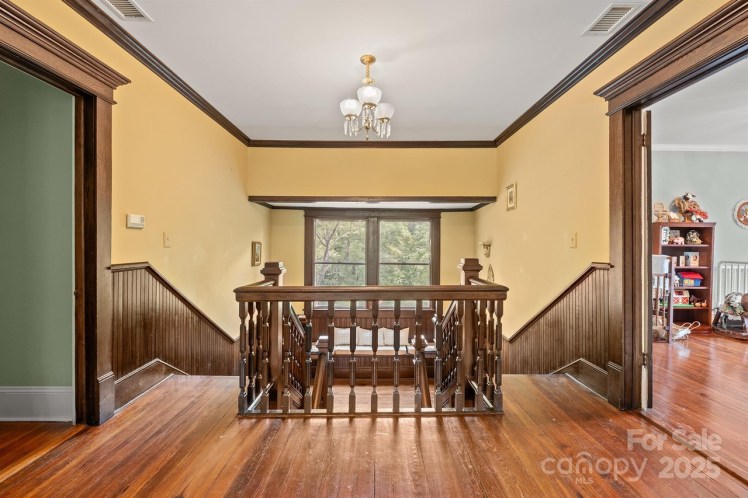
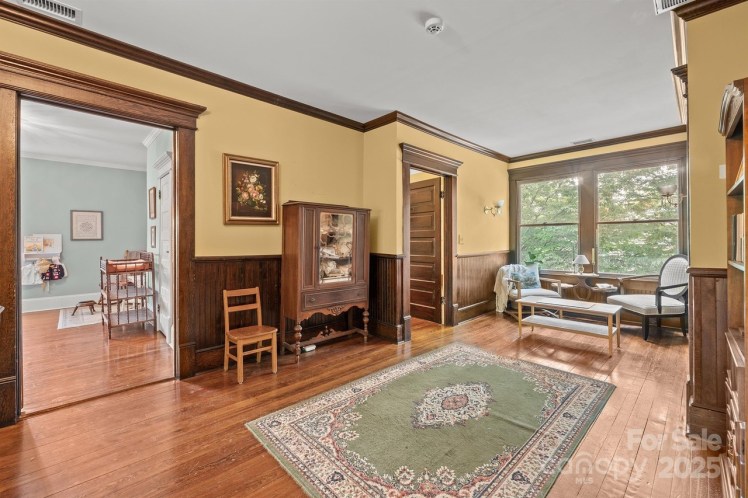
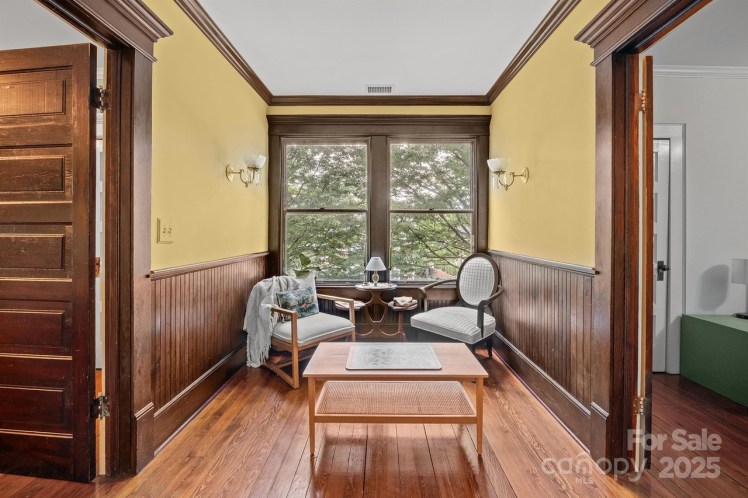

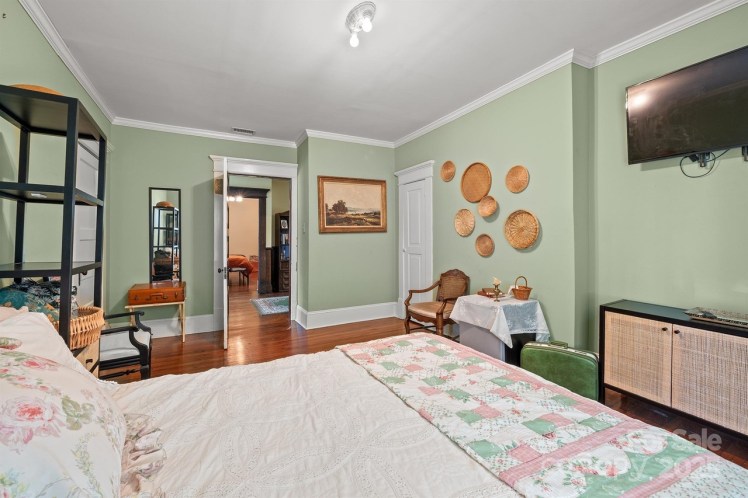
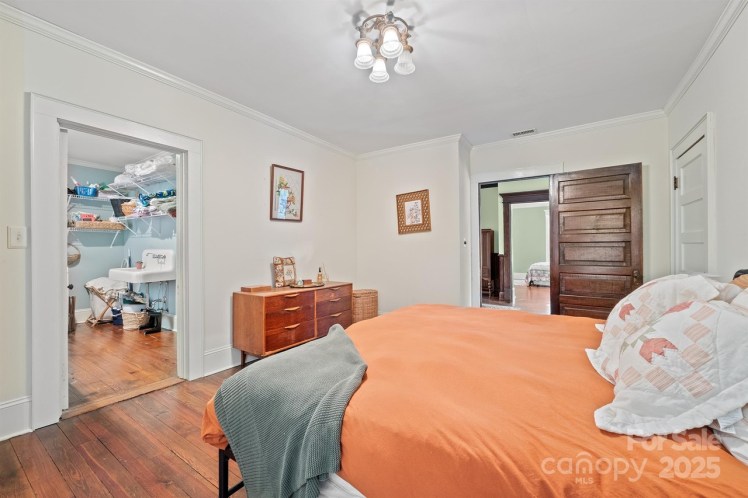


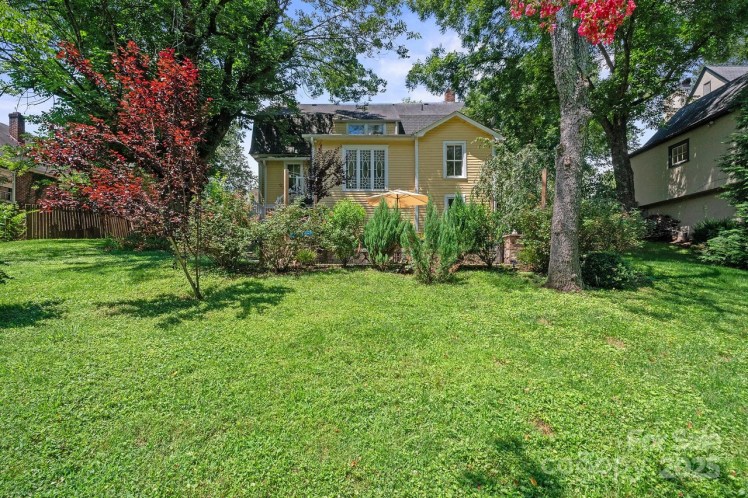
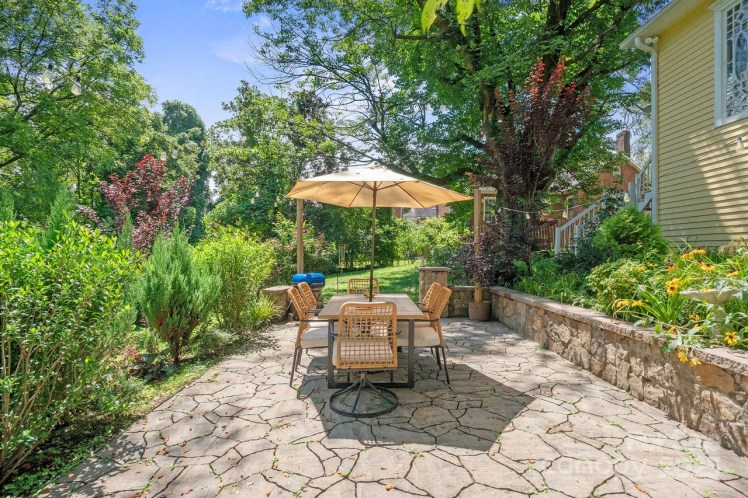

- $385,000 (originally $399,900)
- 4 bedrooms, 2 bathrooms, 3,202 square feet, 0.53 acre
- Price/square foot: $120
- Built in 1906
- Listed August 17, 2025
- Last sales: $325,000, June 2023; $270,000, November 2021; $200,000, July 2020; $145,000, August 2013; $135,000, September 2010
- Note: The Poe family owned the house until 1999. It has been sold seven times since then. The house was added to the National Register in 2001.
- The property backs up to a wooded area of Broyhill Park.
NR nomination: “The Poe House stands out as a highly intact example of the Dutch Colonial Revival style with especially notable interior woodwork and is representative of the work of local builder Edgar Allan Poe.
“The lot drops slightly to the rear, allowing for a full basement on the east side of the house. Built in 1905, it appears that all rear wings were in place by 1913, with the rear porch being enclosed sometime after this. A kitchen fire in recent years led to the rebuilding of the rear wing at the northeast comer on the same foundation as the original. …
“Poe was an important builder/architect in the town of Lenoir and other parts of western North Carolina during the late nineteenth and early twentieth century. In addition to his work as a builder, Edgar Allan Poe (1868-1949) was a well known citizen, active member of the community, lawyer, and mayor of Lenoir for four years.
“Poe constructed several commercial buildings in Lenoir’s business district, including the Courtney Building (1907) and the Lenoir Furniture and Hardware Building (1908). He also built the Caldwell County Courthouse (1903).
“His house on North Main Street was built at the height of his activity as a builder and is representative of his residential work. During the early twentieth century, Poe designed and built numerous houses in Lenoir in a variety of styles popular during the period, including Spanish Revival and Colonial Revival, as well as Dutch Colonial Revival, as represented by his own residence. The Poe house serves as one of the best examples of his work as architect and builder.”
Recently Withdrawn


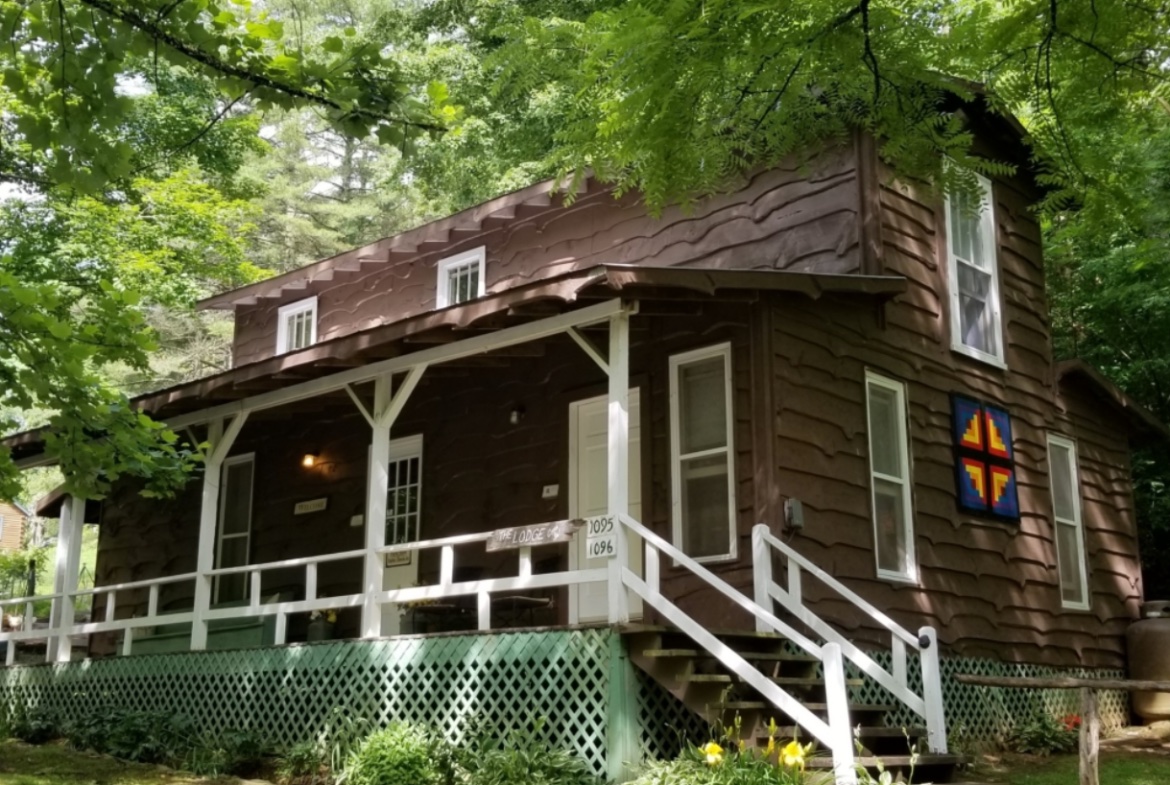
1097 Healing Springs Road East, Crumpler, Ashe County (or here)
The Cabins at Healing Springs
National Register of Historic Places
Listing withdrawn July 2023; relisted October 2, 2023
Listing withdrawn October 27, 2023
- $1.2 million (originally $1.68 million)
- 16 units in nine buildings, 6,276 square feet, 11.32 acres
- Price/square foot: $191
- Built in 1888 (per listing; other sources say some cabins were built in the early 20th century with the rest ca. 1920)
- Listed November 29, 2021
- Last sale: $310,000, February 2014
Previous listing: “The historic Healing Spring was discovered in 1884 and was originally called Thompson’s Bromine and Arsenic Springs. The property was then known as Healing Springs Resort in later years and now simply called The Cabins at Healing Springs.
“Many of the cabins are the original cabins that were built in the early 1900’s. … [While the cabins] may look rustic on the outside, they have sympathetically been remodeled each cabin to highlight the original historical features. … There is a range of cabin sizes to choose from.”
NRHP nomination: “The discovery of the mineral waters in Ashe County, which tradition holds to have been in 1885 by Willie Barker, opened the way for Captain H.V. Thompson of Washington County, Virginia, to develop this into a widely advertised and highly popular resort.
“The mineral spring spas of the nineteenth and early twentieth centuries were not only centers for rejuvenating health, but were the most popular social centers. Thompson’s Bromine and Arsenic Springs is a good representative of a segment of our social heritage, of which only a few survive.”
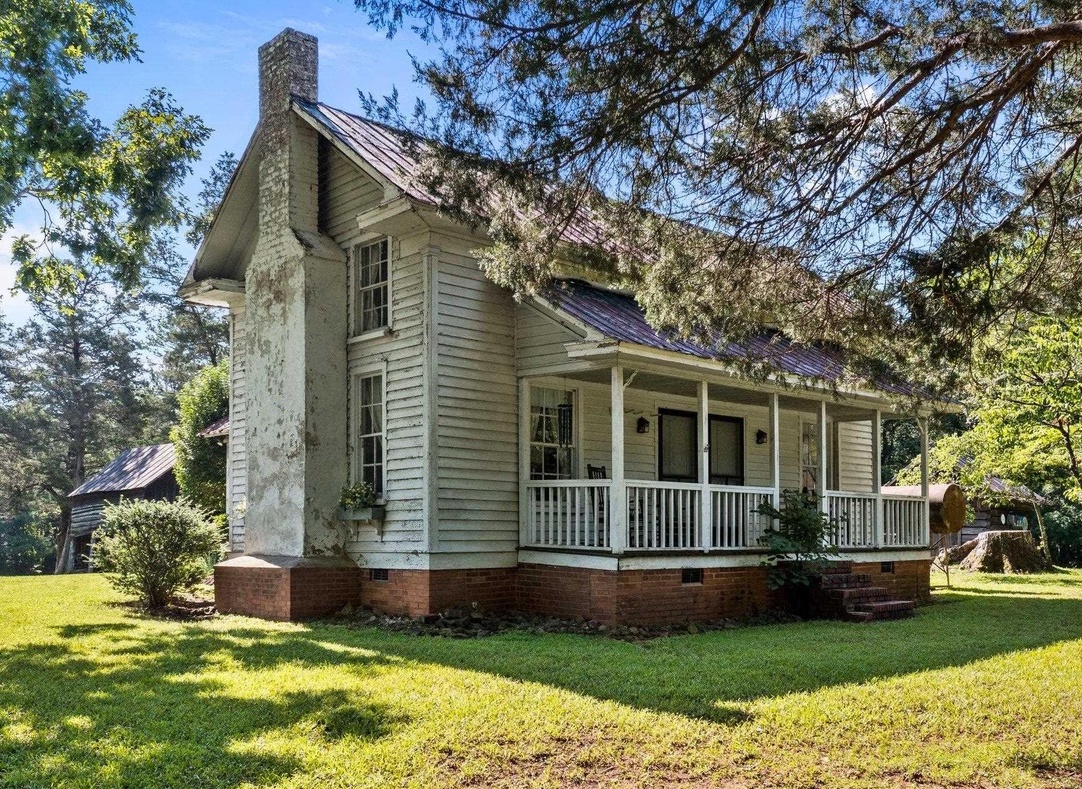
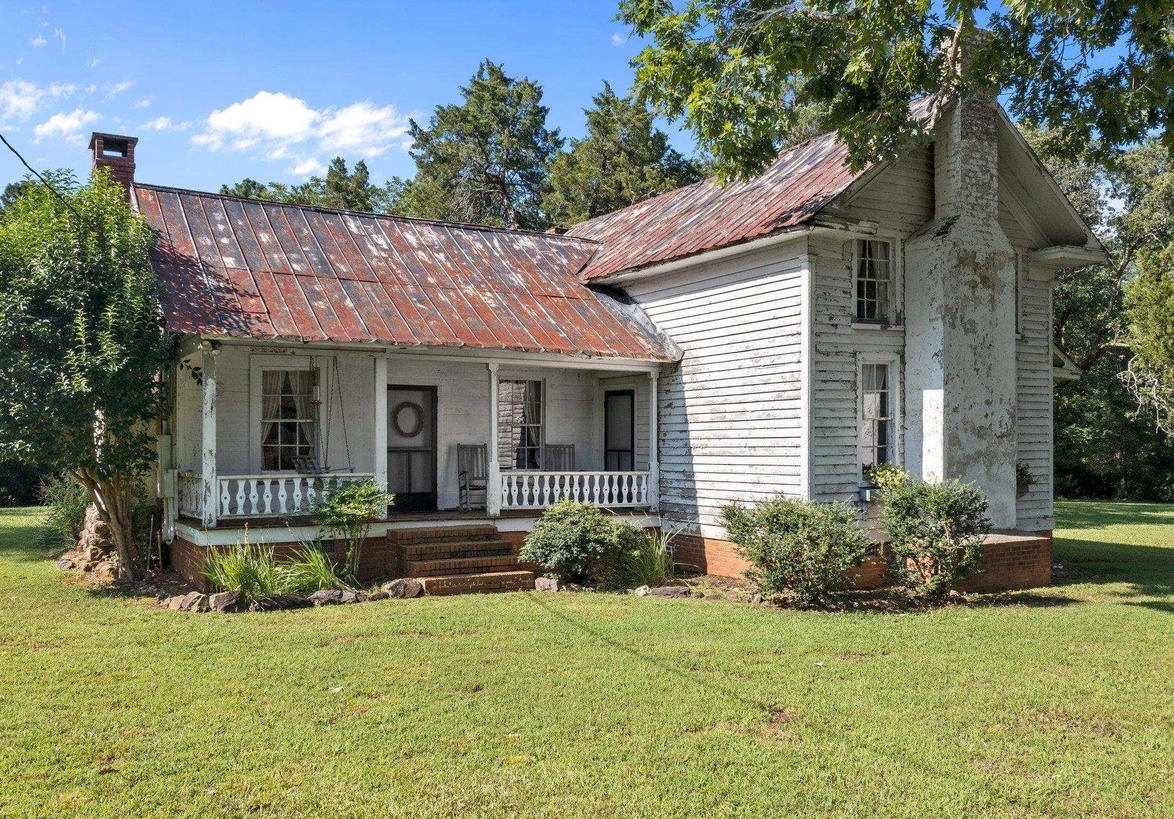
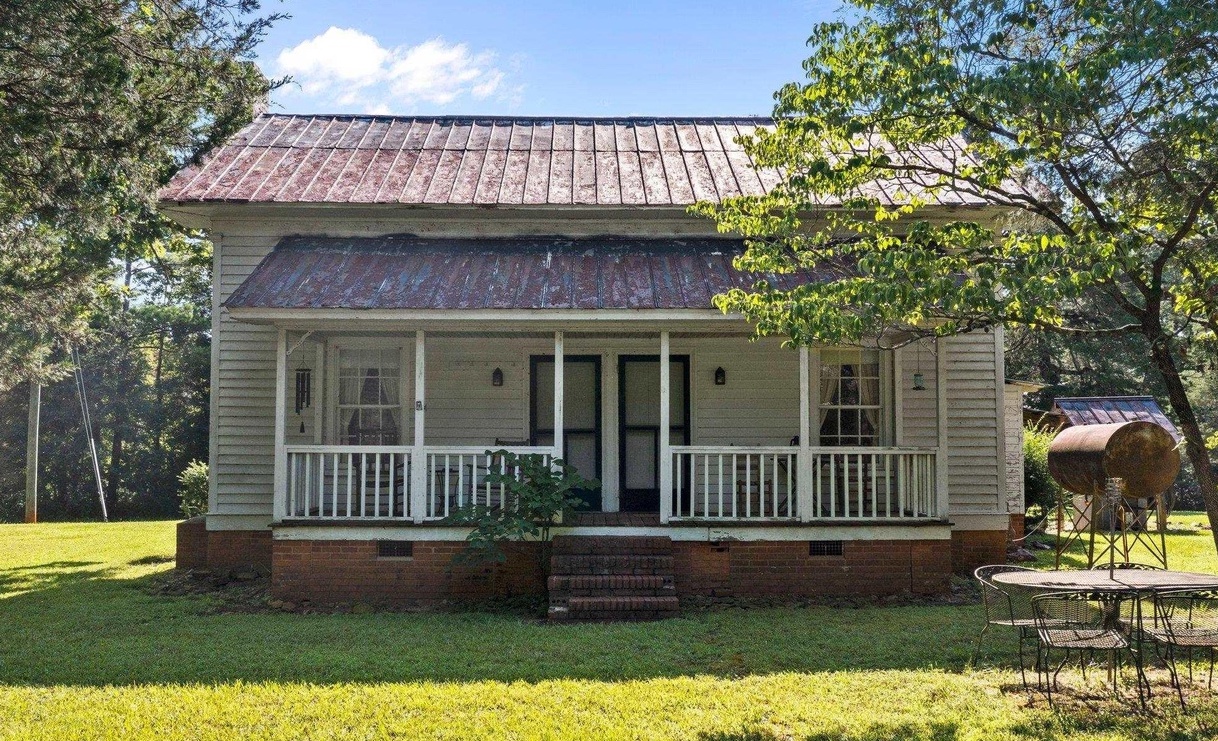
2929 Seaforth Road, Chatham County
The James A. Thomas Farm
Listing withdrawn February 1, 2023
- $1.2 million (originally $1.3 million)
- 4 bedrooms, 1 bathroom, 1,528 square feet, 10.4 acres
- Price/square foot: $785
- Built in 1880
- Listed August 14, 2022
- Last sale: Unknown
- Note: The property has a Pittsboro mailing address but is 8 miles east of the town.
- No central air conditioning
- NRHP nomination: To come
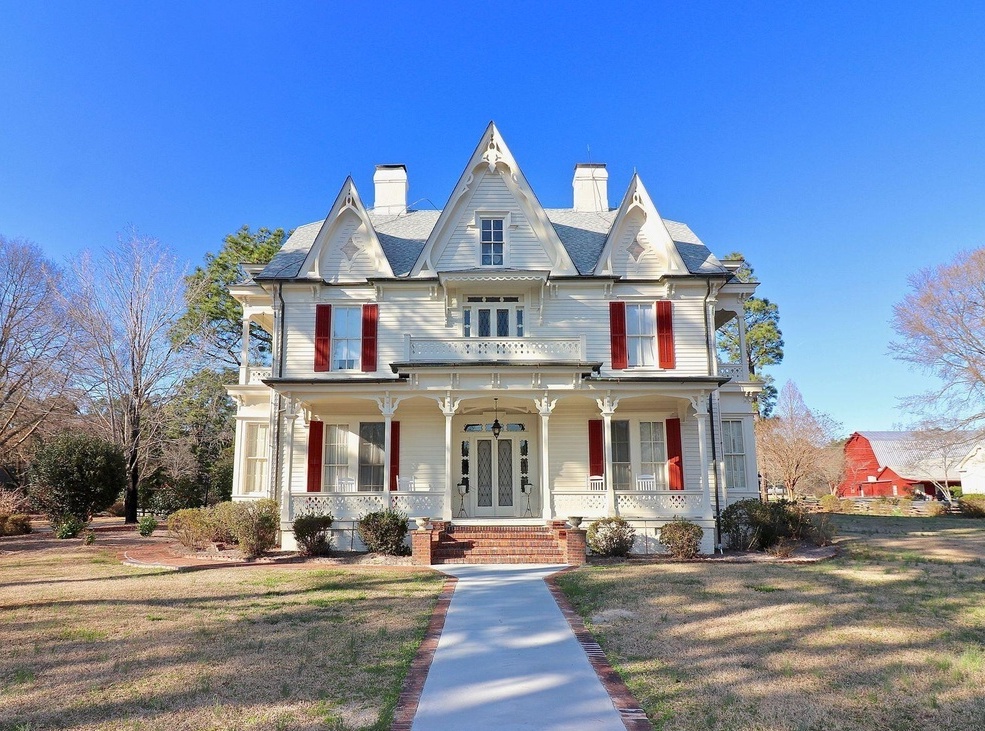
270 Vass-Carthage Road, Vass, Moore County
Maple Lawn, The Leslie-Taylor House
Listing withdrawn October 1, 2022
- $799,000
- 5 bedrooms, 3 1/2 bathrooms, 4,844 square feet, 4.7 acres
- Price/square foot: $165
- Built in 1879
- Listed March 15, 2022
- Last sale: July 2014, price not recorded on deed; last previous sale was circa 1871, part of a 1,000-acre tract, price not known
- Listing: “Outbuildings include buggy/carriage house, seven sided smokehouse (40 hogs), three car detached garage with apartment.”
NRHP nomination: “The Leslie-Taylor House is a three-story, double-pile, frame house located on the north side of Carthage Road in Vass, Moore County, North Carolina. The house is set well back from the road and is pristine in its rural setting.
“The land surrounding the house is owned by the descendants of the Leslie-Taylor family and encompasses approximately one thousand acres total. The land included in this nomination is approximately eleven acres immediately surrounding the house and contributing outbuildings.
“In its overall form and elaborate detailing the house, built around 1879, is the most finely ornamented example of Victorian Eclecticism in Moore County. Rear additions were built in the 1950s but do not detract from the magnificence of this home. The main house as well as its contemporary smokehouse and carriage house all maintain a high degree of integrity with respect to location, setting, design, workmanship, feeling, and association.
“The property has remained in the possession of the original owners, descendants who have been constant stewards of this architectural landmark. …
“The Leslie-Taylor House meets Criterion C for architecture due to its local architectural significance as one of the fullest examples of Victorian Eclecticism in Moore County. The style is characterized by steeply pitched gable roofs, full-width porches, decorated bargeboards, cross-bracing, bay windows, drip mold window crowns, and brackets. The Leslie-Taylor House, built around 1879 for local physician Dr. James Addison Leslie, exhibits all of these elements in a single picturesque composition. The house maintains a high degree of integrity with respect to location, design, materials, workmanship, setting and association. The house and surrounding outbuildings represent an intact representation of a late-nineteenth century home and its necessary buildings in North Carolina.”
James Addison Leslie (1843-1918) was born in Holly Springs in Wake County. He was a Civil War veteran and graduate of the University of Virginia and medical school in Pennsylvania. He married Annie Maria McNeil (1847-1914) in 1871. “Family tradition says that Dr. Leslie acquired the thousand acre tract from a cousin of his bride, a McKeithan. The two moved with three children to Vass in 1878 and began building their home, to be known as ‘Maple Lawn.’ …
“Dr. Leslie continued his medical practice out of his home and operated the farm and lumber business until his death in 1918. He is listed in the 1880, 1900, and 1910 Federal Census as a farmer and merchant rather than a physician. The Leslies’ second daughter, [Lillie Leslie Taylor, 1875-1921], married Frederick Whiteside Taylor [1876-1970] in 1905 and lived at Maple Lawn. In addition to maintaining the house, farm, and family lumber business, Mr. Taylor began a dairy in 1926, marked by the construction of a large barn on the property.
“Their son, Frederick Leslie Taylor [1906-1977], was born at Maple Lawn and maintained it as his home. He became President of Troy Lumber Company, the family lumber company, as well as Chairman of the Board of Trustees of Campbell College near Buies Creek in Harnett County.
“In the mid-twentieth century the dairy ceased operation and the barn was used for horses until 1963-1964 when it became home to the Moore County Humane Society.
“The family has continued to farm and timber this land throughout its history. Mr. Taylor’s widow, [Lily Alliene Fresh Taylor, b. 1910], passed away in 2005, leaving Maple Lawn to her children, Frederick H. Taylor, Anthea Taylor Tate, and Leslie Taylor Whitesell, the present owners of the property.”
The 2014 sale of the property ended the family’s ownership after about 140 years.
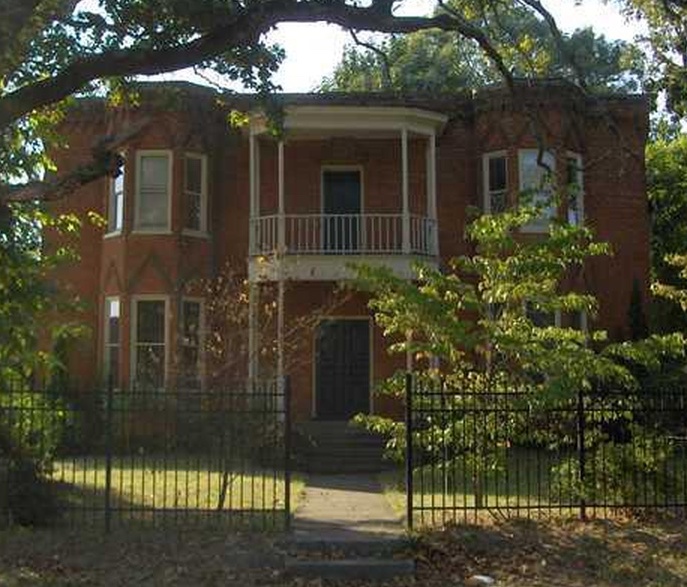
608 Vance Street, Reidsville, Rockingham County
Villa Fortuna, aka The Jennings-Baker House
Jennings-Baker House NRHP
Blog post — Villa Fortuna: An Eclectic 1888 National Register Property in Reidsville, $99,900
Listing withdrawn and relisted repeatedly since 2019
Contract pending June 26-27, 2020
Contract pending November 7 to December 4, 2021
Listing withdrawn January 29, 2022; relisted June 27, 2022
Listing withdrawn September 24, 2022
- $200,000 (previously as low as $99,900)
- 3 bedrooms, 1 bathroom, 2,188 square feet, 0.5 acre
- Price/square foot: $91
- Built in the late 1880s, per NRHP nomination
- Listed February 26, 2019
- Last sale: $25,000, June 2011
- Note: For sale by owner
Listing: “the perfect blend of unpretentious elegance and a rustic urban farm. … This house is for someone with vision, passion and some skills would be handy.”
“The 30’x32, steel frame greenhouse has a block base. There is a 8’x12′ barn used for my goats. It is Amish made with a metal roof and 2 lofts. The woodshed is 3′ deep x 13′ long. There is an addition not included in the square footage. It includes a sun room, a pantry, and mud room off the driveway.”
Answering the most obvious question: “YES there is a urinal on the wall in the purple bedroom. The last owner put it there it is no longer hooked up.”
Previous listing: “The facing came off the back of the second story and squirrels got in and damaged the wiring in the ceiling of the purple bed room. All 22 windows need to be replaced [Editor’s note: or, better yet, repaired].”
NRHP nomination (1986): “… a distinctive example of a vernacular use of elements of the Gothic Revival and Italianate styles of architecture popular in the mid nineteenth century.”
The first owner and probable builder of the house was William G. Jennings, a brick manufacturer.
“Only six brick houses dating from the years prior to 1890 are known to survive in the city, and it is unlikely that any substantial number more were built. Of these six, five can be described as in the Italianate style or exhibiting Italianate influence. … The Jennings-Baker House is a much more vernacular and personal expression of Victorian tastes, as it combines elements of several styles. The triangular patterned brickwork above windows and doors on the facade have a vaguely Gothic flavor, while the segmental arch openings on the side and rear elevations and in the ell … are typical of masonry construction of the period. The facade’s projecting bays and porch suggest the influence of architecture predominantly found at military institutions, while the corbel table on the facade and the parapeted side elevations of the main block are reminiscent of commercial architecture in the late nineteenth century.”
“This combination of elements strengthens the possibility that Jennings may have intended his house as a sort of advertisement for what was then a young enterprise, exhibiting the products of his brick yard and demonstrating the masonry skills of his workers.”
Travelers from the East meet next door.

132 Becktown Road, Mocksville, Davie County
Boxwood Lodge
Boxwood Lodge NRHP
Blog post — Boxwood Lodge: An Elegant National Register Mansion-Wedding Venue-B&B near Mocksville, $3.45 million
Listing withdrawn March 8, 2021
- $3.45 million
- 10 bedrooms, 8 full bathrooms and two half-bathrooms, 9,304 square feet, 48.23 acres
- Price/square foot: $372
- Built in 1934
- Listed January 17, 2019
- Last sale: $782,500, March 2002
The house was designed by Delano & Aldrich of New York.
The property is what remains of a 1,500-acre hunting retreat developed from 1911 to 1931 by William Rabb Craig, a New York cotton and sugar broker who died in 1931. Craig’s widow built the house on the site of a hunting lodge built in the 1910’s.
The listing says a $5 million restoration of the house was completed in 2007.
The property includes a guest cabin built in 1933, a barn built in the 1910’s and a pond.
It is now a bed and breakfast and a wedding/event venue.

4564 S. N.C. Highway 150, Tyro, Davidson County
Tyro Tavern, 1840
Tyro Tavern NRHP
Listing expired November 18, 2018
- $250,000
- 5 bedrooms, 2 bathrooms, 3,470 square feet, 0.96 acre
- Price/square foot: $72
- Built in 1840
- Listed May 20, 2018
- Last sale: $65,000, November 2001
From the NRHP nomination, 1983: “This Greek Revival style structure has survived with almost no alterations except the removal of the two-story front porch in the mid-twentieth century.”
“… the finest example of Greek Revival domestic architecture in Davidson County. It was apparently built as the residence and tavern of Joseph H. Thompson, son of early nineteenth century innkeeper Frederick Thompson. J. H. amassed a fortune from his Tyro Iron Works, the largest agricultural foundry in the county throughout most of the second half of the nineteenth century. The imposing brick dwelling, which still dominates the crossroads village of Tyro, is the only structure remaining of Thompson’s mercantile and industrial empire.”

4840 Solomon Lea Road, Leasburg, Caswell County (also here)
Listing withdrawn May 2018
The Garland-Buford House
- $412,000
- 3 bedrooms, 2 1/2 bathrooms, 3,744 square feet, 2.37 acres
- Price/square foot: $110
- Built around 1832
- Last sale: $282,500, December 2007
- Note: Interior and exterior woodwork attributed to the renowned Thomas Day.
- The home was used as a hospital during the Civil War.
- Kitchen has granite counter tops, stainless appliances, custom cabinetry and stone flooring.
- The property includes a swimming pool, hot tub, porches, decks, a detached pool house/office and wired workshop.
- The house has been featured in Country Living, Money and Smithsonian magazines.
 Piedmont Historic Homes