2835bellemont

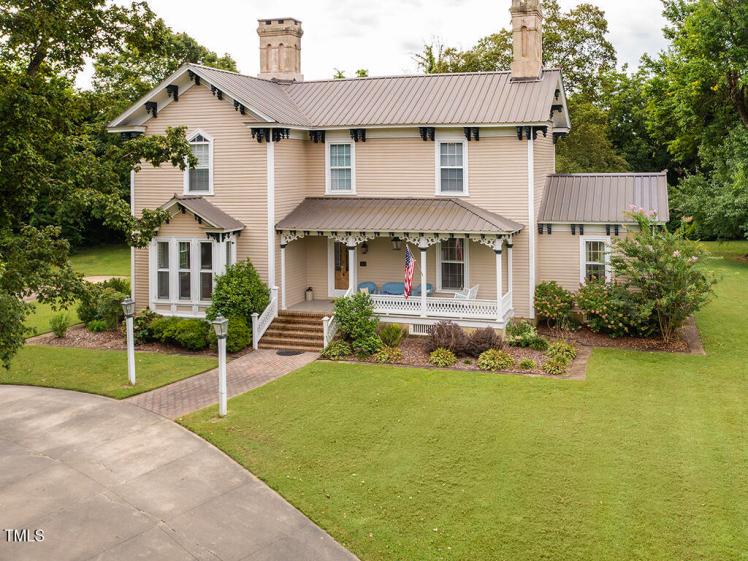

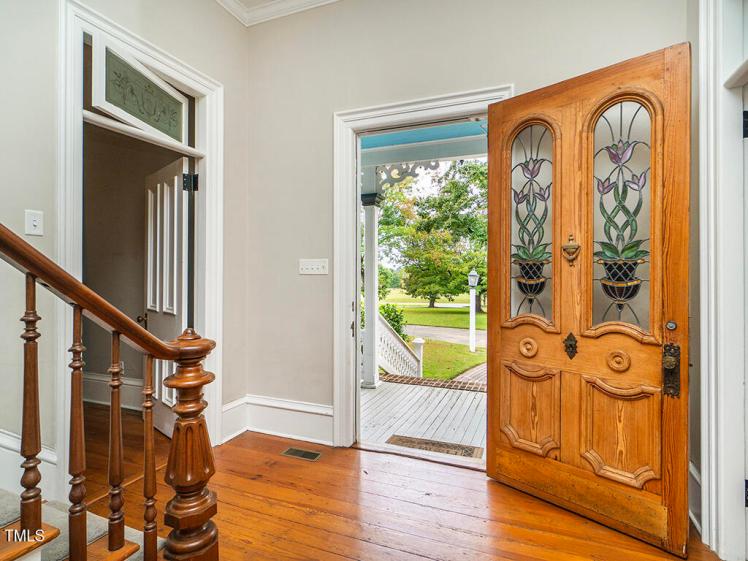


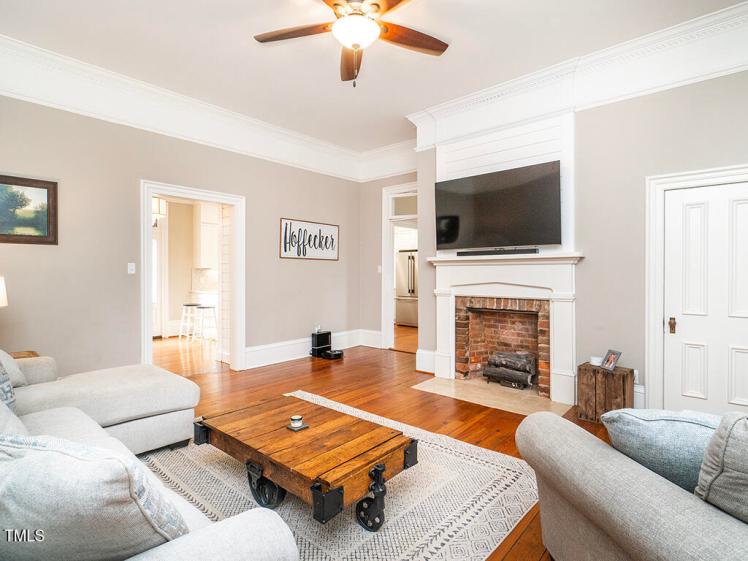
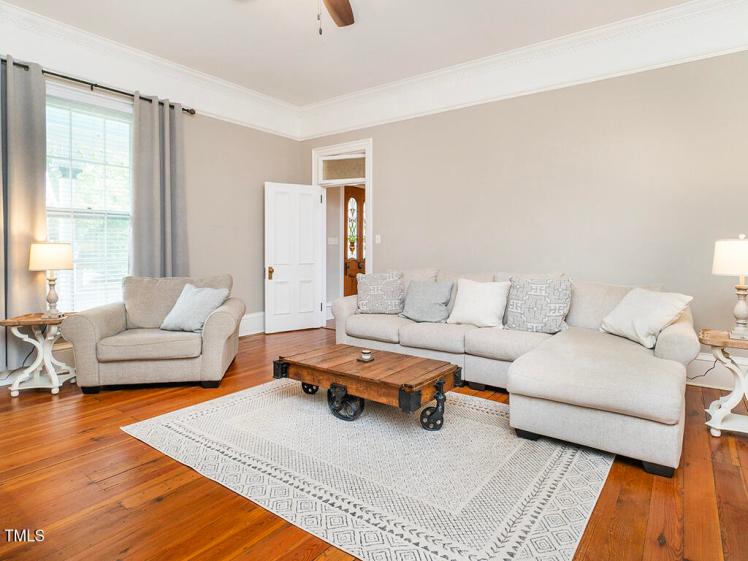
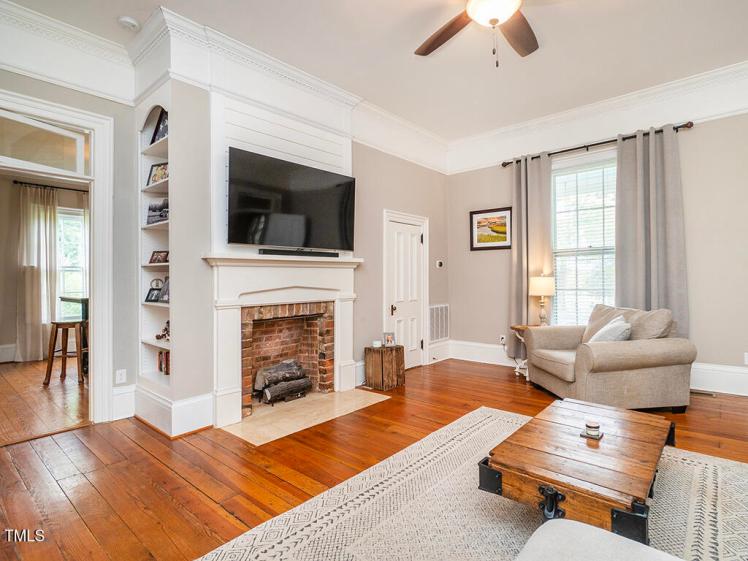
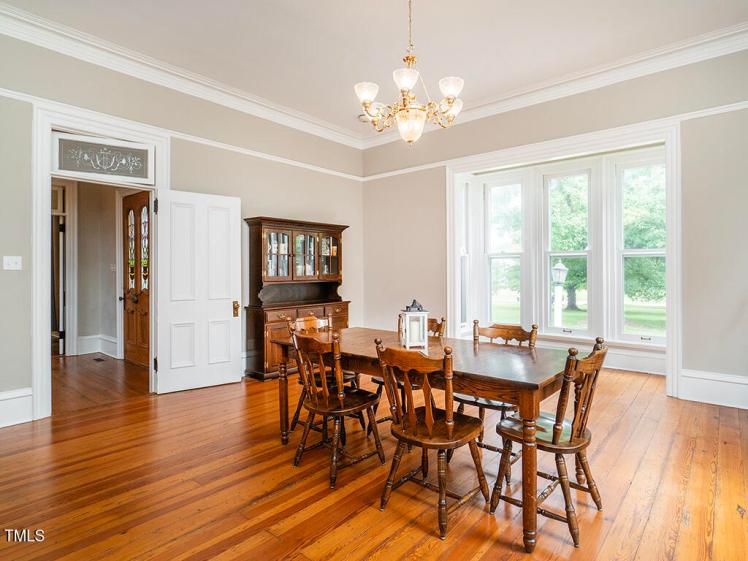


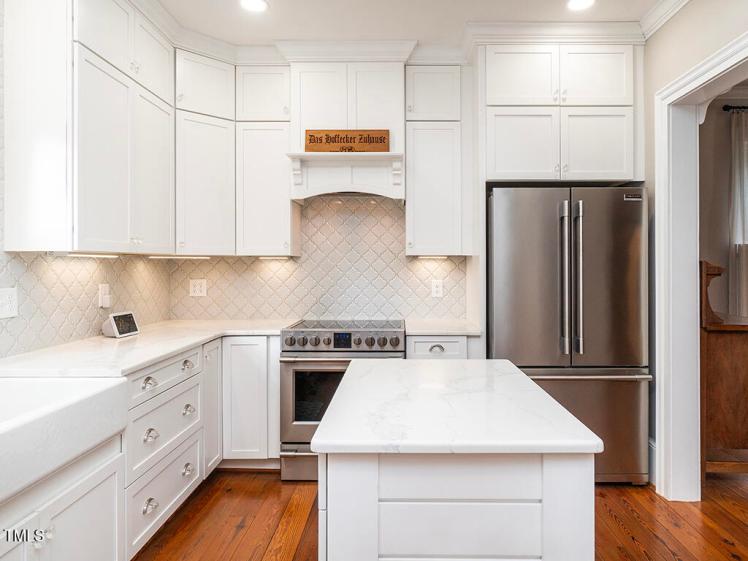
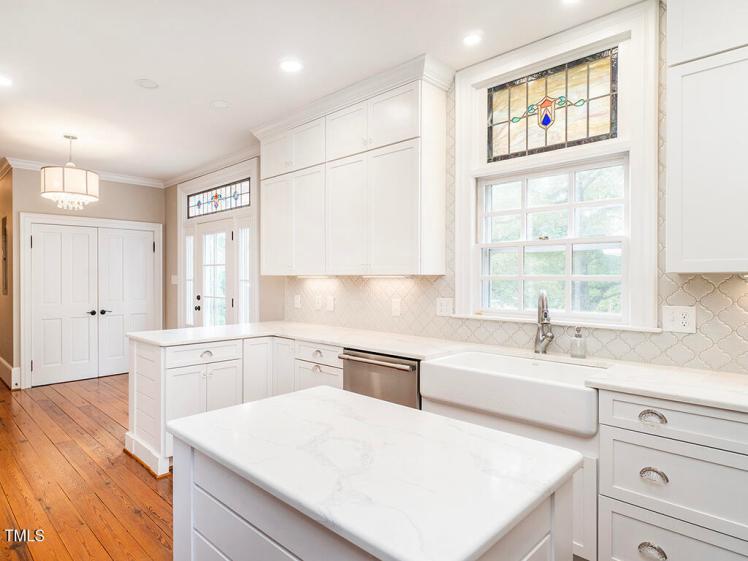




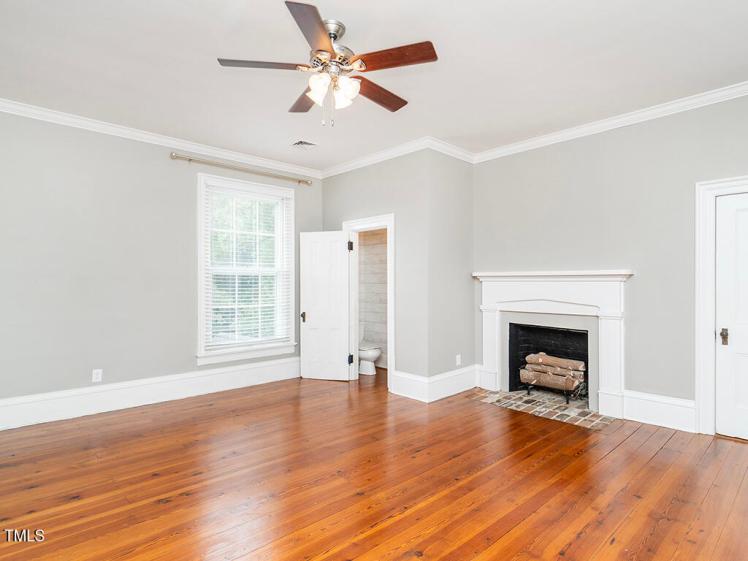
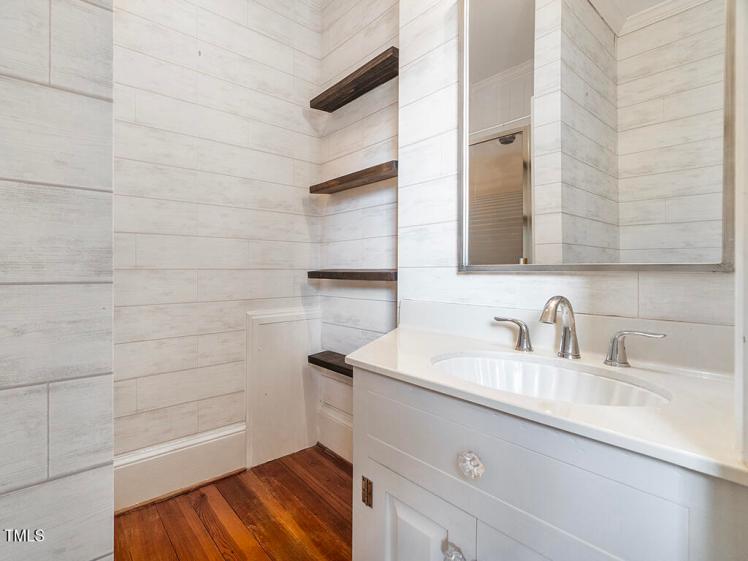
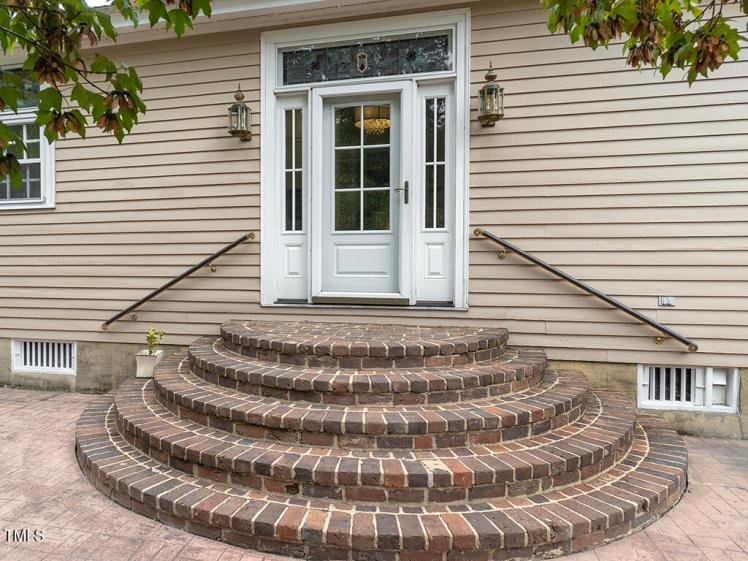

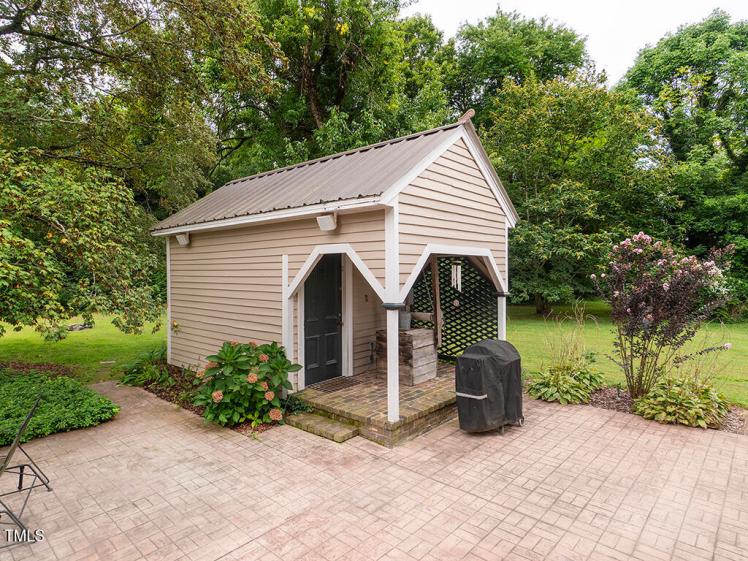



2834 Bellemont Alamance Road, Alamance County
Sunny Side
- Sold for $650,000 on November 4, 2025 (listed at $650,000)
- 3 bedrooms, 3 bathrooms, 3,411 square feet, 1.77 acres (see note)
- Price/square foot: $191
- Built in 1871
- Listed September 2, 2025
- Last sales: $470,000, September 2021; $275,000, May 2016
- Note: The house has a Burlington mailing address but is well to the south, just off N.C. 62 south of the village of Alamance.
- County records give two lot sizes. Property records show 1.766 acres. The county GIS system shows 1.766 calculated acres but 2.03 deeded acres.
- The surrounding lots have no buildings on them (23 acres to the left and rear, 1.77 acres to the right).
The house was built by Lawrence Shackleford Holt (1851-1937), third-generation member of the local family that dominated the Alamance textile industry in the 19th and early 20th centuries.
Nation Register nomination: “Sunny Side is a well~detailed, little-altered, two-story T-shaped frame Italianate style house with some Gothic Revival style features constructed in 1871 …. The cross-gable roof house with an elaborate bracketed cornice faces north and has a three-bay wide, single-pile main core with ornate two-bay hip-roof front porch, a projecting double-pile gable-front wing and rear ell at the east, and a small one-story single-room wing at the west. …
“Approached by a long gravel driveway, Sunny Side is situated on a slight knoll near the rear of a well-landscaped two-acre yard which retains remnants of the gardens planted by the original owner, textile magnate Lawrence S. Holt. The present house tract, once the center of a 600-acre working farm, is now bordered by contemporary houses located on large lots which line the road.”
Lawrence Holt was the youngest of 10 children born to Edwin Michael Holt, a pioneering textile manufacturer, and Emily Farish Holt (one of Lawrence’s brothers was Gov. Thomas M. Holt). He attended the Melville School in Alamance County and Davidson College. Along with his father and brothers, Lawrence established the Commercial National Bank in Charlotte. He returned to Alamance County in 1873 to join the family’s textile business. He went out on his own in 1884, buying an old mill in Company Shops, which he renamed Aurora. Later, he organized more mills and other businesses. In 1911 he built the Church of the Holy Comforter in Burlington.
“As a manufacturer, Mr. Holt was credited with having been the first to voluntarily shorten working hours in his cotton mills, first in 1886 and again in 1902,” the Burlington Daily Times-News said. “He introduced double-entry bookkeeping into his business in the early 70s, taught it to others and was a man regarded expert on figures and accounts.”
112nstratford
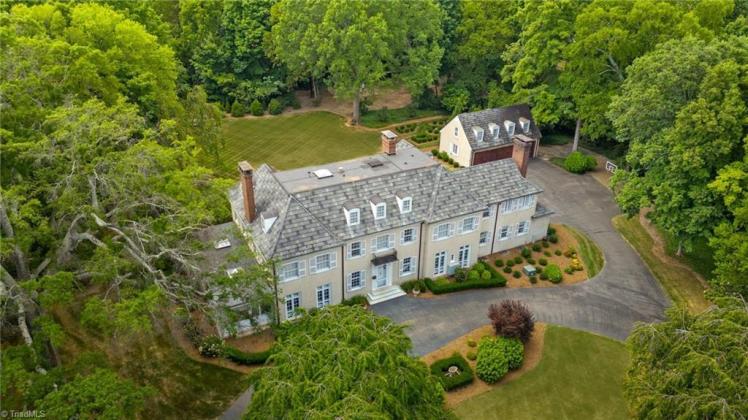
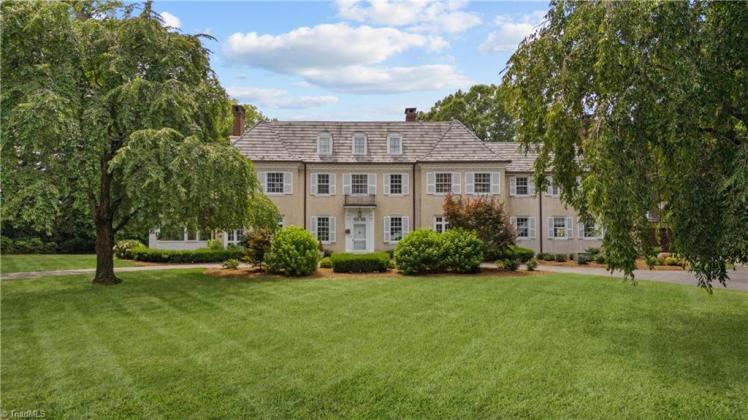





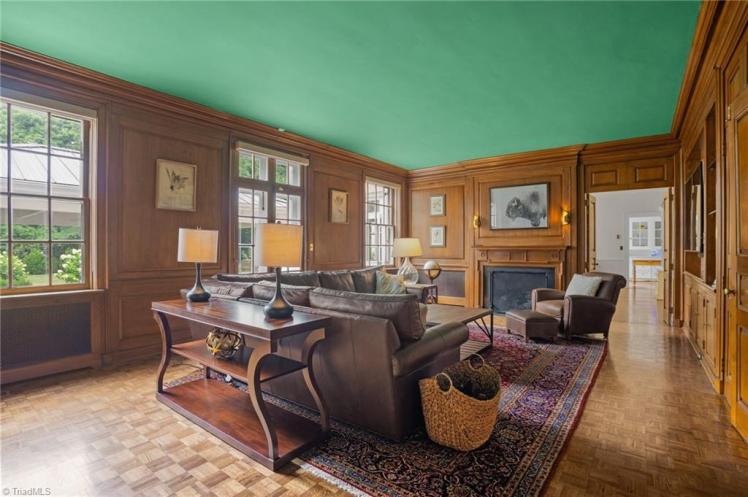
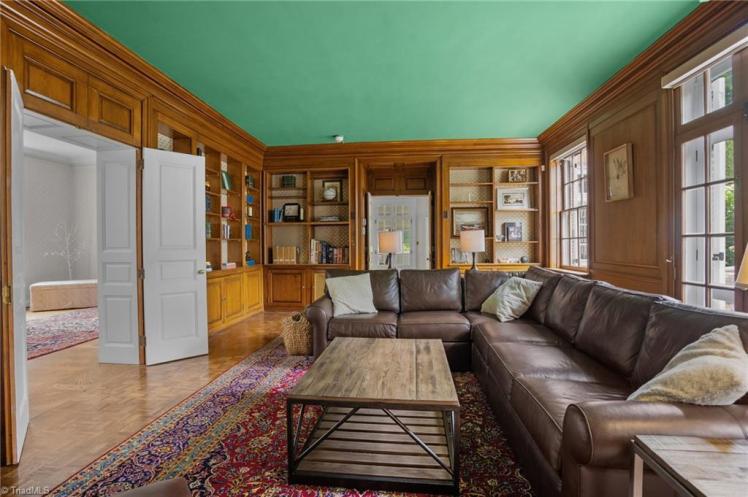


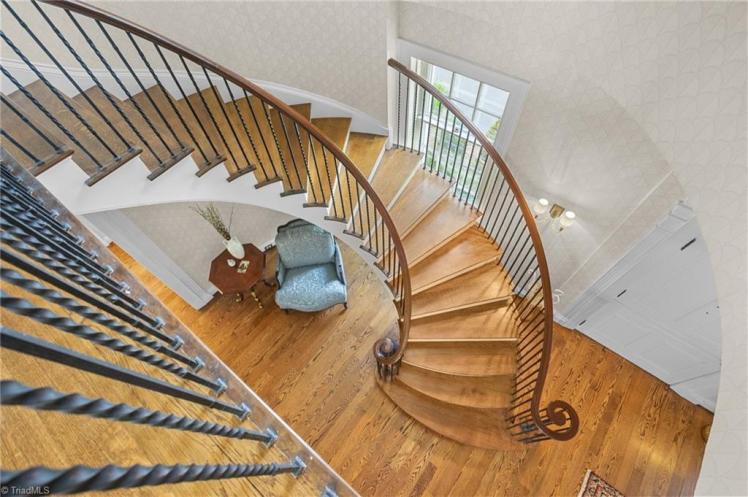


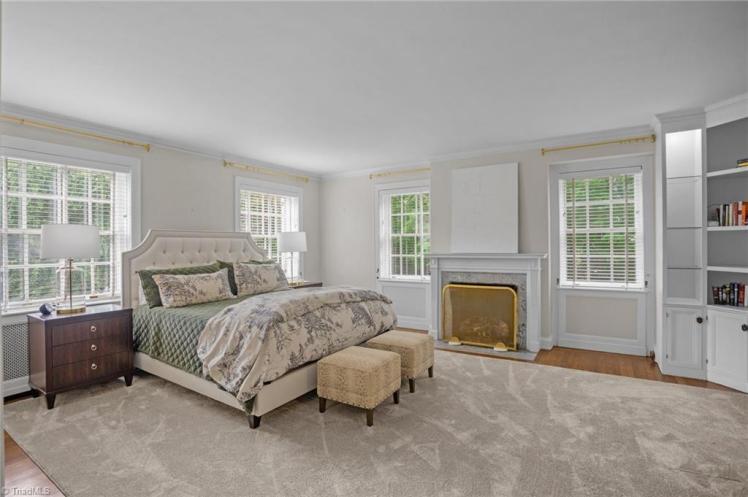


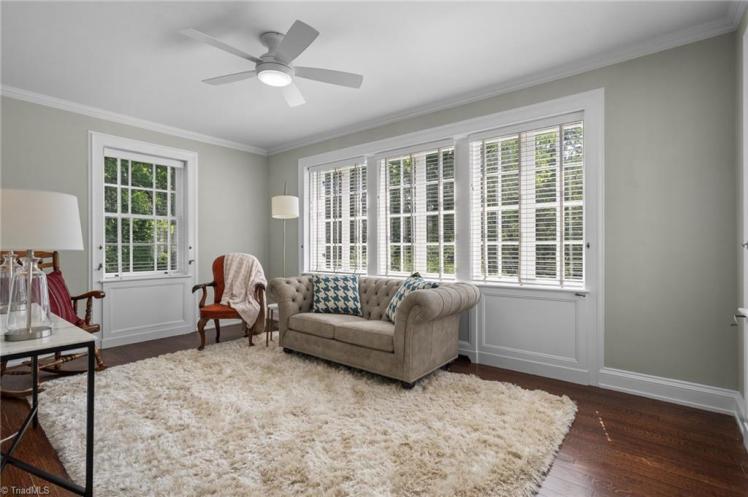

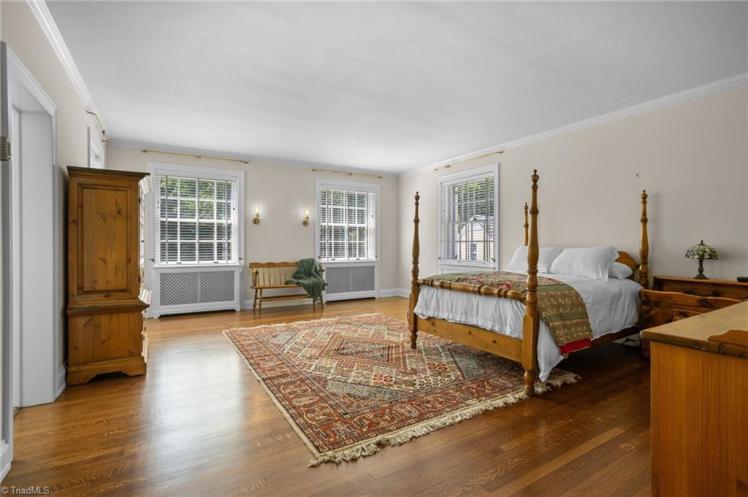
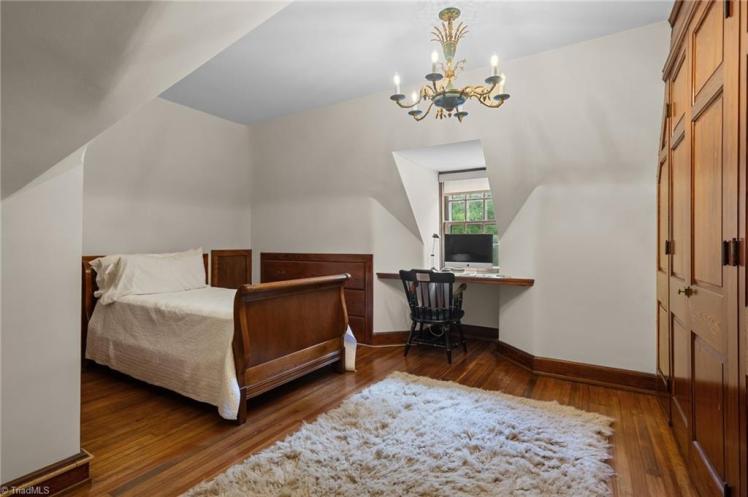
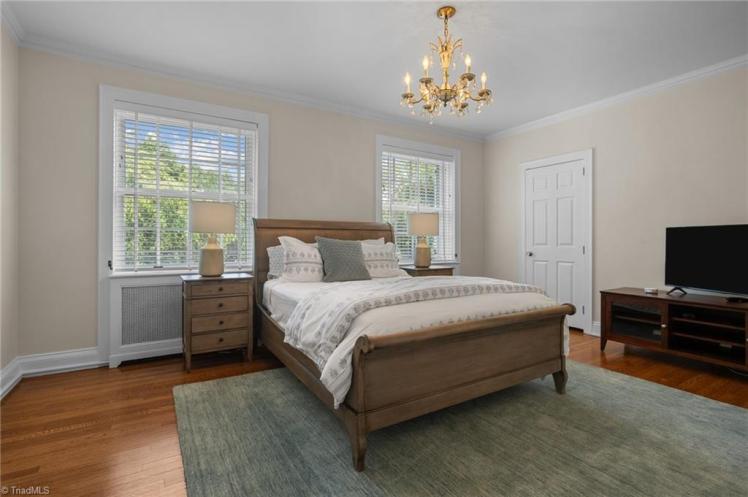

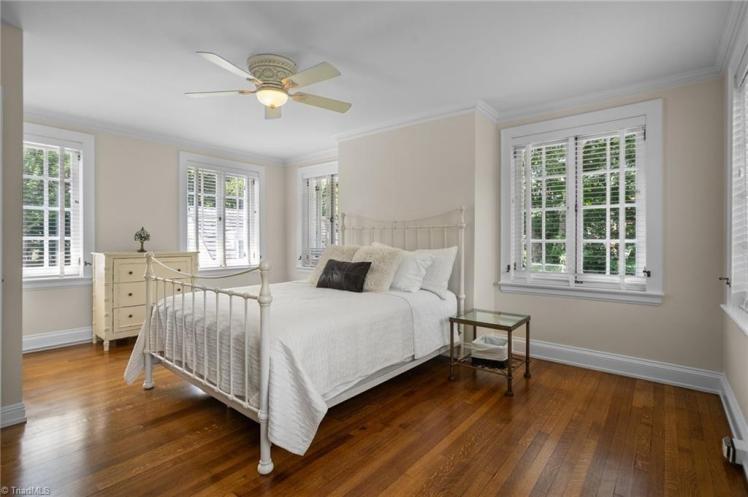
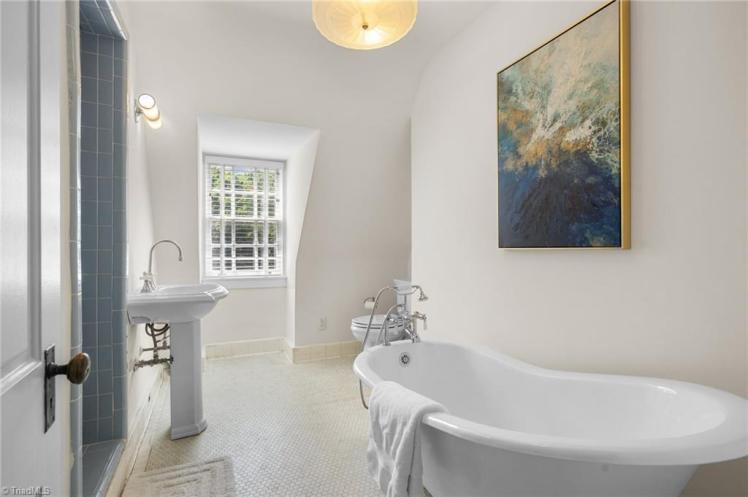
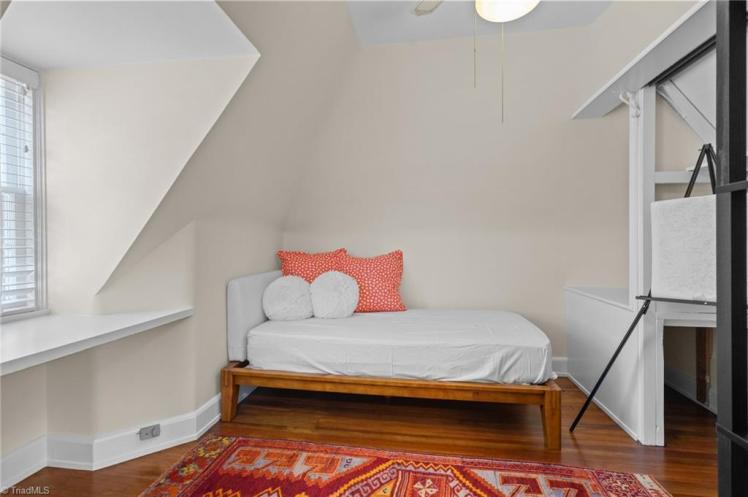




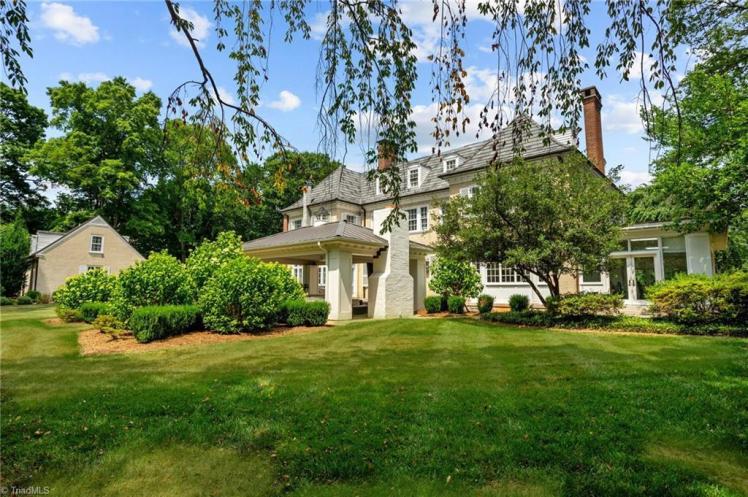
- Sold for $2.40 million on May 12, 2025 (originally $2.95 million)
- 6 bedrooms, 6 bathrooms, 9,872 square feet, 2.72 acres
- Price/square foot: $243
- Built in 1925
- Listed October 4, 2023
- Last sales: $1.725 million, September 2021; $1.325 million, April 5, 2019
- Neighborhood: Stratford Place
- Note: Designated as a Forsyth County Landmark
Designed by Charles Barton Keen and William Roy Wallace for a couple whose marriage united two major Winston-Salem textile families, the Chathams (Chatham Manufacturing) and the Hanes (Hanes Hosiery and P.F. Hanes Knitting Company).
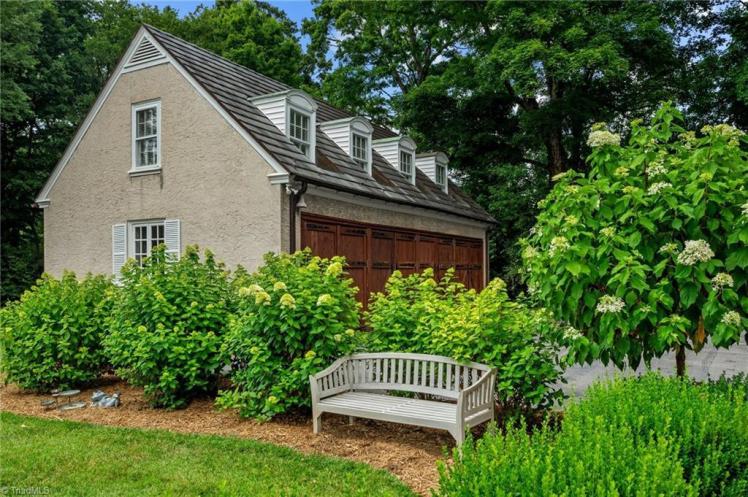
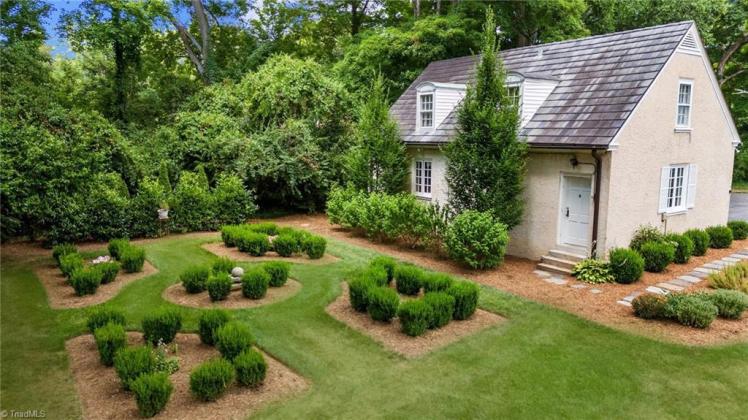
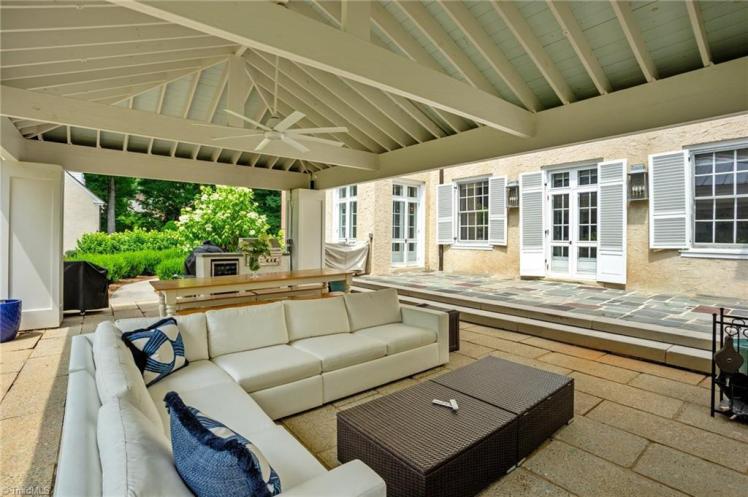
The property includes “a 4 vehicle carriage house garage, 2 iron-gated entries, circular drive, 2 bedrm guest house, English boxwood garden, ultra private firepit & basketball court, bluestone terrace and rear atrium with fireplace, tv, & kitchen essentials.”
“Designed by architects Keen and Wallace, the residence is one of four imposing 1920s dwellings facing east toward Stratford Road in the exclusive Stratford Place subdivision platted by Philadelphia landscape architect Thomas Sears. Members of the Chatham and Hanes families erected three of the homes.” (NR nomination)
290emaple
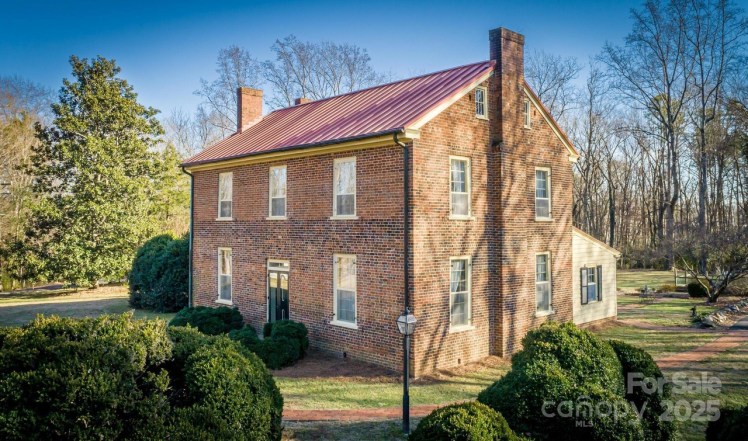


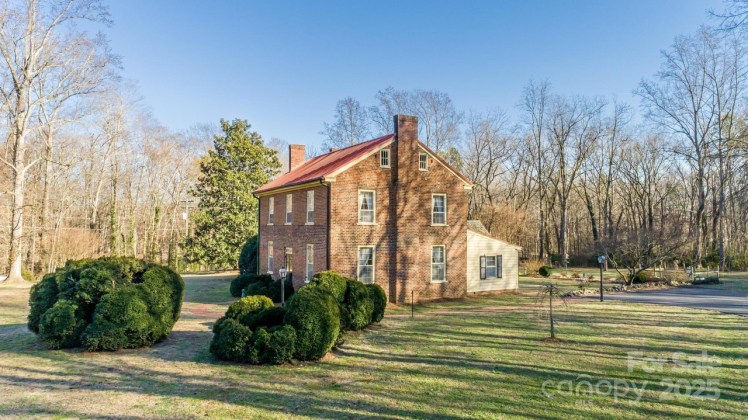
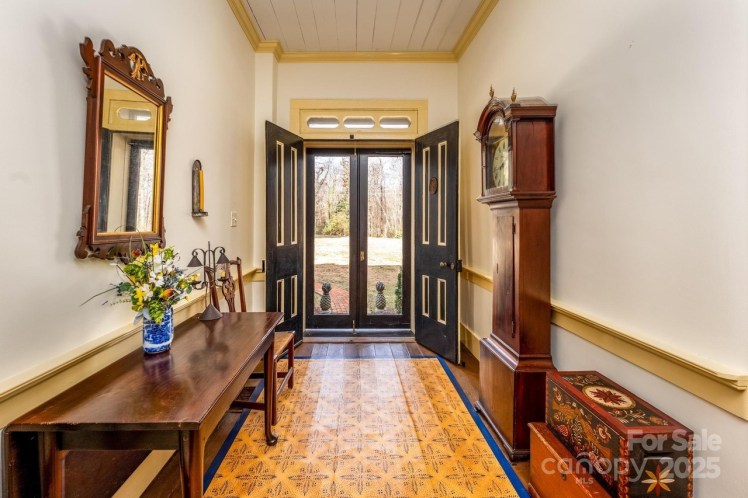

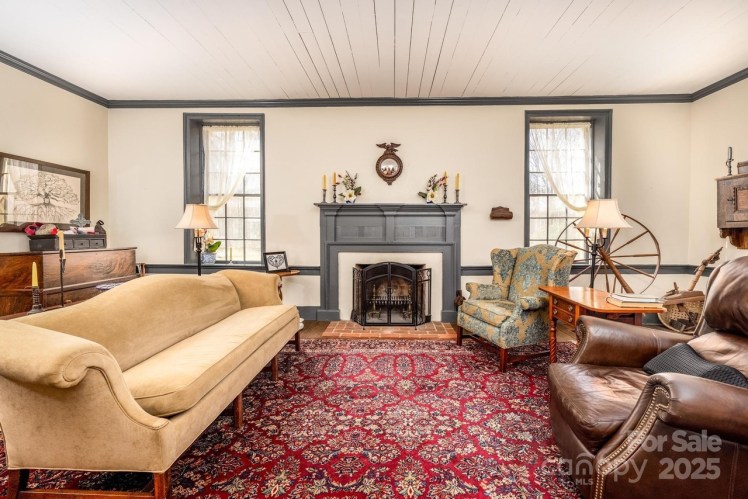
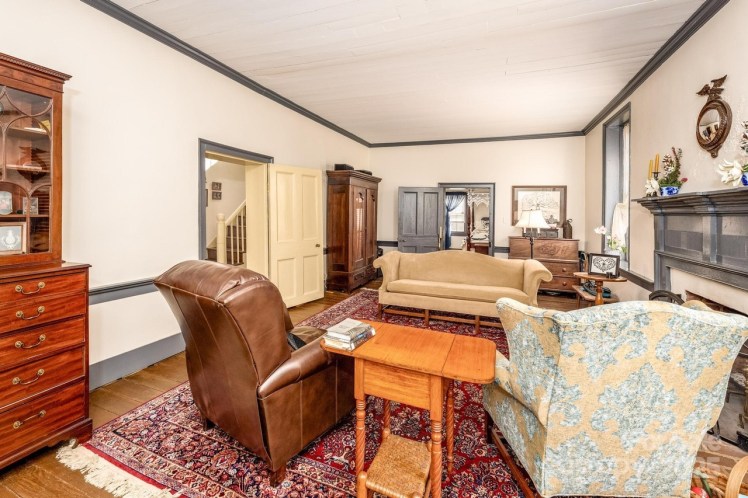


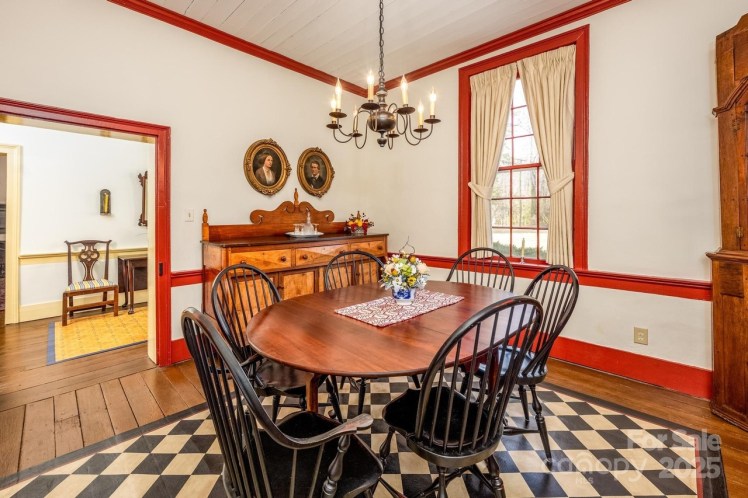


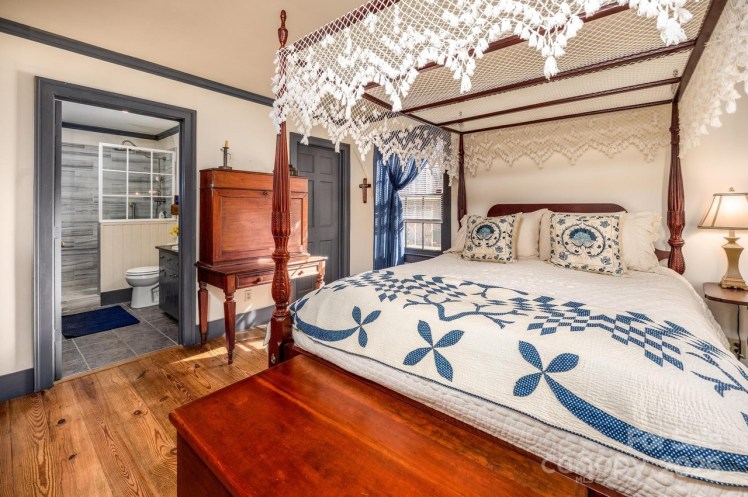
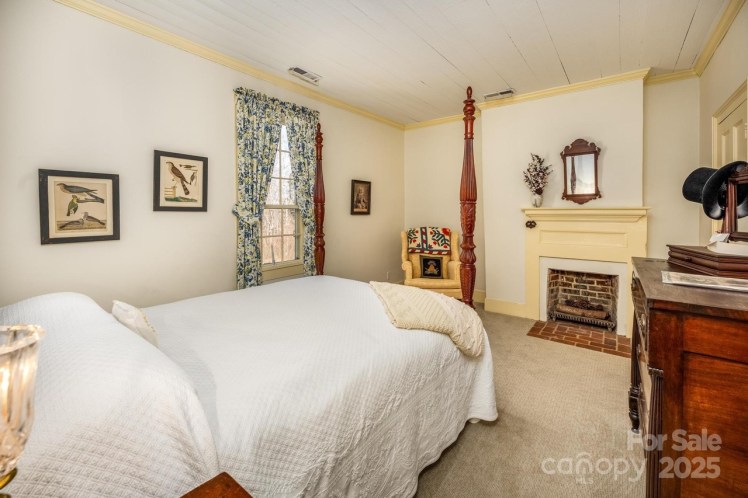
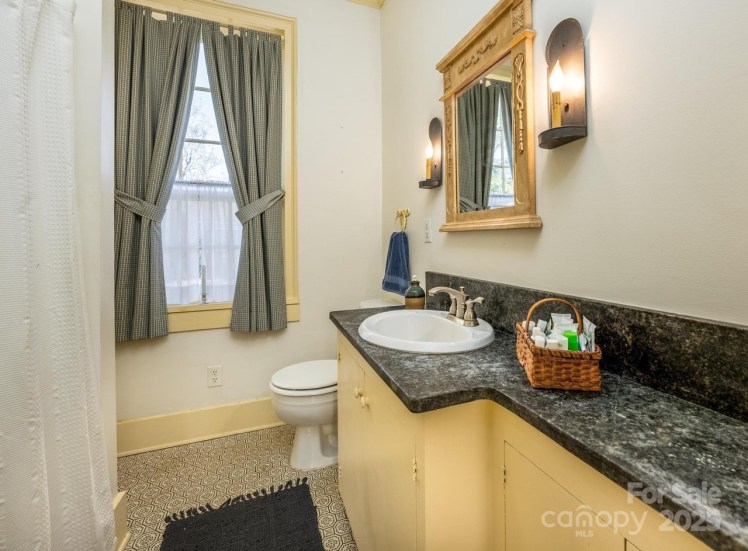

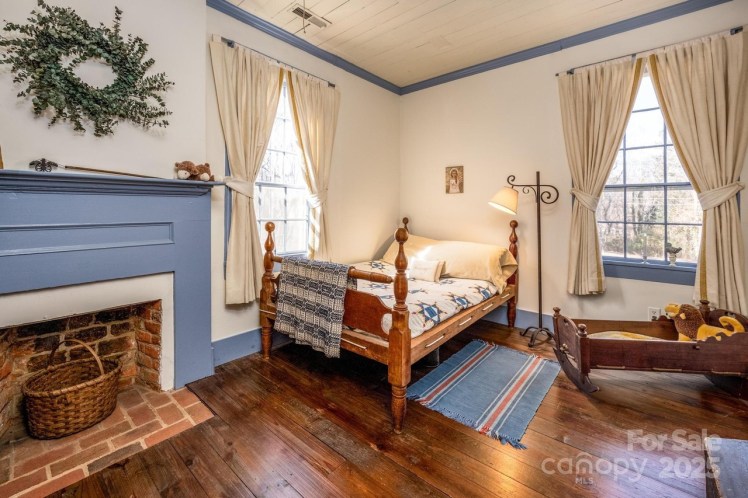


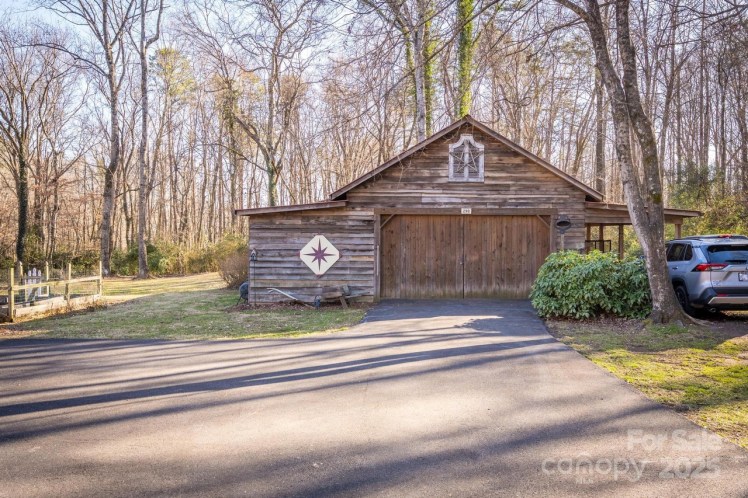




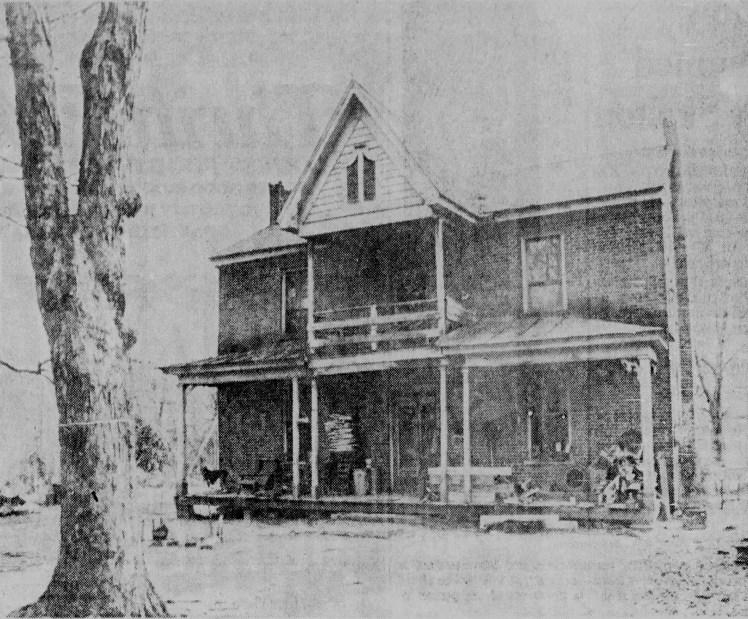

290 E. Maple Avenue, Mocksville, Davie County
The Jesse A. Clement House
- Sold for $695,000 on April 15, 2025 (listed at $695,000)
- 5 bedrooms, 4 bathrooms, 2,640 square feet, 12.75 acres
- Price/square foot: $263
- Built in 1828 (per county)
- Listed February 22, 2025
- Last sale: $323,500, June 2006
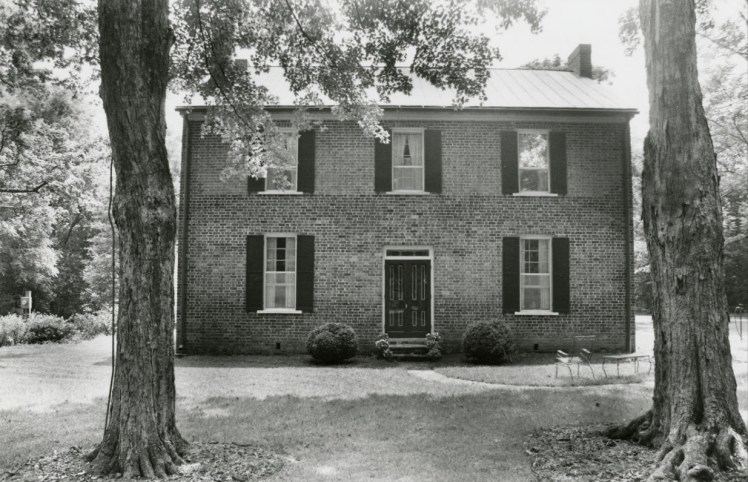
- Note: Post-restoration photo above by Kirk Franklin Mahoney from Davie County Historical and Genealogical Society, via Davie County Public Library and DigitalNC.org.
- A double front porch was added in the late 19th century. It was removed when the house was restored in 1978.
- As late as 1979, when the house was listed on the National Register, it had no house number.
- The current owners operated a B&B in the house, the Clement House Bed and Breakfast, with two guest rooms.
The house remained in the Clement family for 150 years. It was bought in 1978 and restored by Rev. Dr. William Fife Long (1926-2020) and Dr. Ann Phifer Hammond Long (1931-2023). They lived in the house until selling it to the current owners in 2006.
William was born in High Point and raised in Thomasville. He served in the Army during World War II, receiving the Bronze Star. After the war he graduated from Davidson College and the UNC law school. He earned a doctoral degree from Union Presbyterian Seminary in Richmond and was ordained as a Presbyterian minister in 1958, serving as a pastor in Mocksville, Gastonia and Hamlet before returning to Mocksville.
Ann was a native of Charlotte and a Phi Beta Kappa graduate of Duke University. She earned her masters in education from UNC Charlotte and a doctorate in psychology from Duke. She worked as a public-school teacher, guidance counselor and school psychologist until retiring in 1994. The N.C. School Psychology Association named her Practitioner of the Year in 1993.
“The house, built around 1828, exhibits a variety of brick bonds, chimney types, and fenestration,” its National Register nomination says. “The use of Flemish bond on the more prominent front and east elevations is notable. The interior finish is of vernacular late Federal character. …
“The Jesse A. Clement House, a two-story brick structure in Mocksville, was built about 1828 for a member of a prominent western Piedmont family. The regional Federal character of the house reflects construction methods of the period in Rowan and Davie County area. Sturdy, boxy, two-story brick houses of the early-19th century, rare in eastern North Carolina, are a key element in the architectural development of the Piedmont.
“Clement was a prosperous local businessman who owned a tannery, two plantations, and a brokerage firm dealing in plug tobacco, cotton, and wheat. … During the Civil War, Jesse Clement at the age of 53 commanded a regiment known as the ‘Davie Greys’; he died at the age of 68 in 1876.””
Jesse’s brother John was a member of the North Carolina House of Commons and introduced the legislation to create Davie County from a part of Rowan County in 1836. Two of Jesse’s sons, Baxter Clegg (1840-1927) and William (1838-1899), attended medical school in Louisiana and settled in Arkansas. Baxter practiced medicine. William served in the Arkansas state senate and as lieutenant governor. He was a candidate for governor when he died.
After Jesse’s death, his widow, Melinda A. Nail Clement (1810-1891), continued to live in the house, joined by son Baxter, who returned to Mocksville from Arkansas with his wife, Lina Barber Clement (1860-1944). They all lived in the house for the rest of their lives. After Lina’s death, their heirs rented the house out before selling it to the Historic Preservation Fund of North Carolina in 1978, which sold it to the Longs.
One of the current owners wrote a short history of the house for the Davie County Historical and Genealogical Society in 2014. The house is described in detail in The Historic Architecture of Davie County, North Carolina (p. 197).
1007nelm
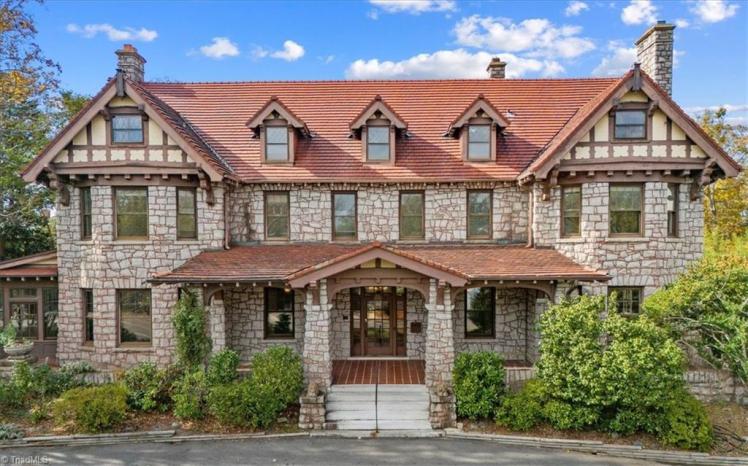
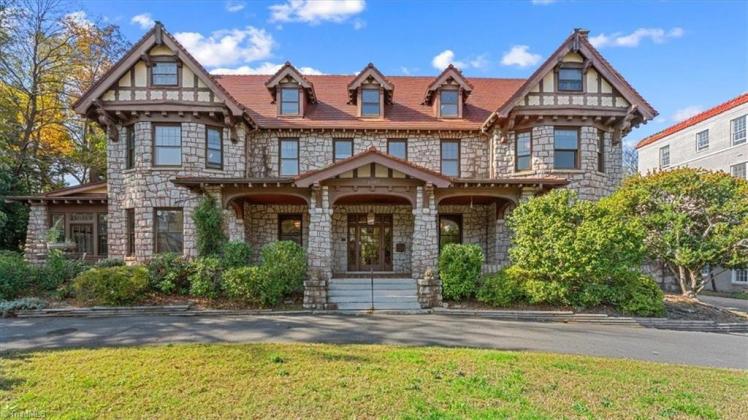


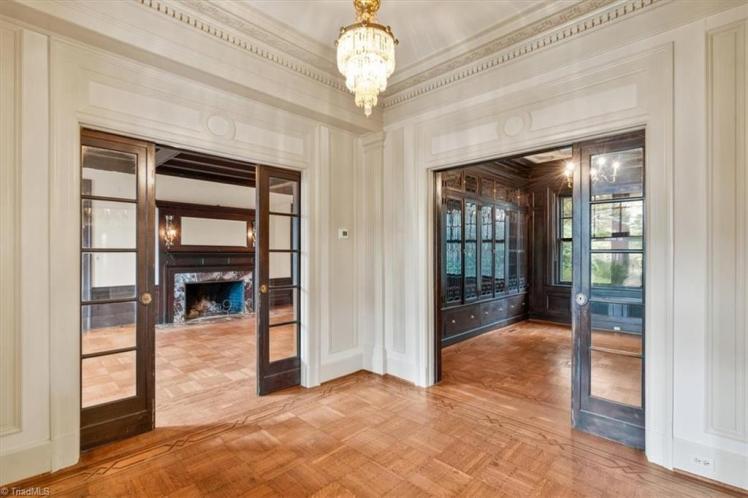


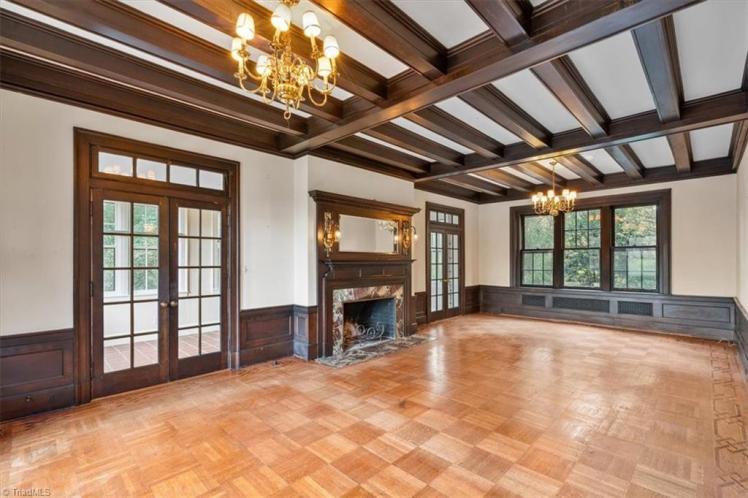
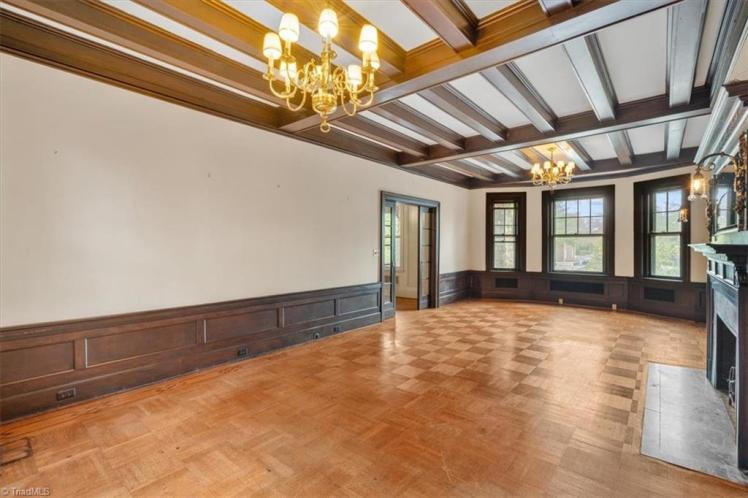
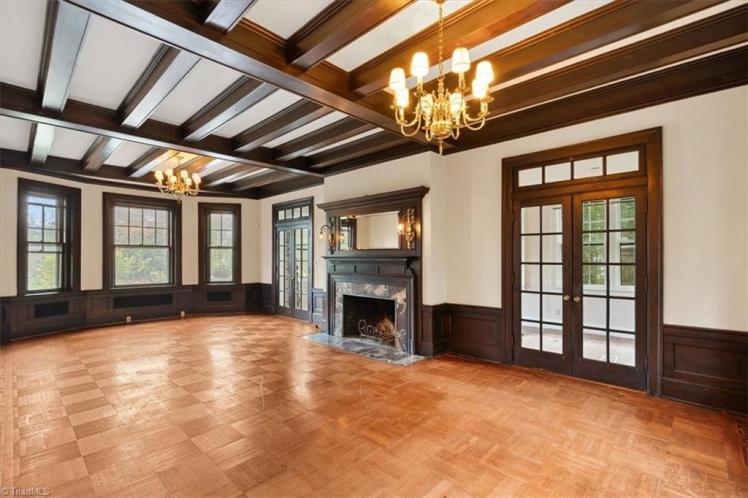
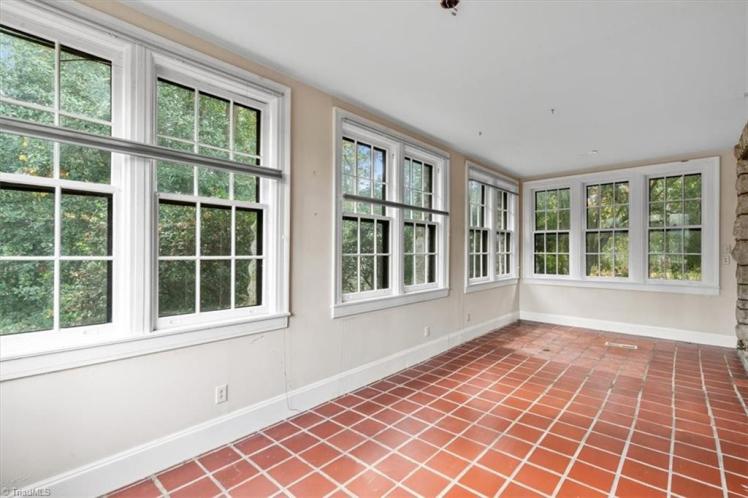


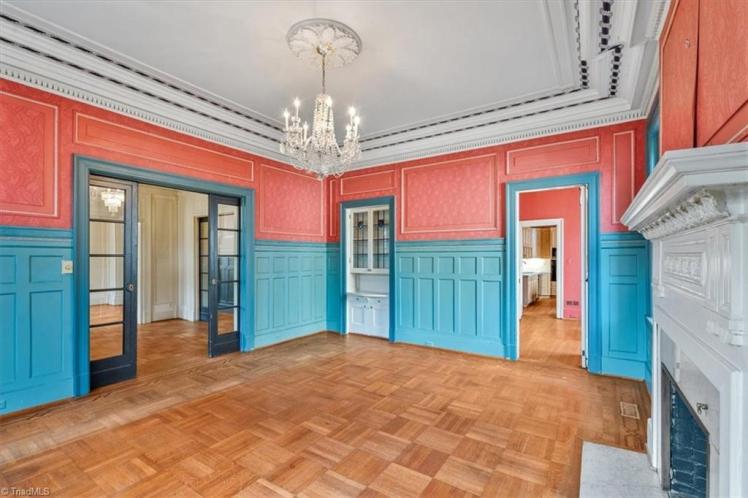
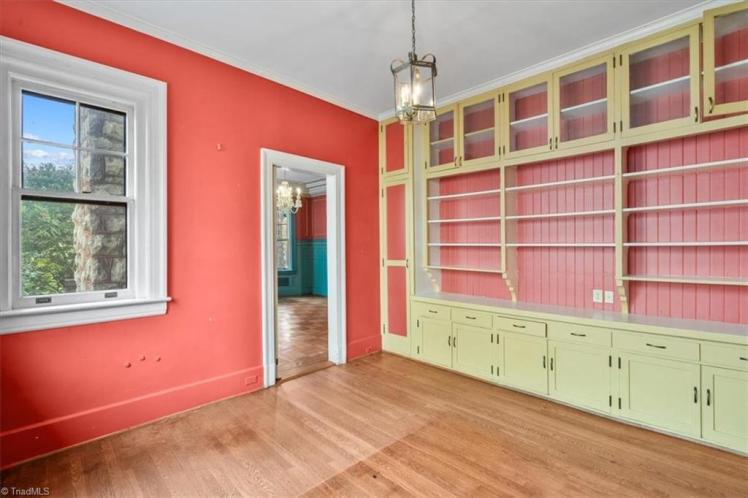
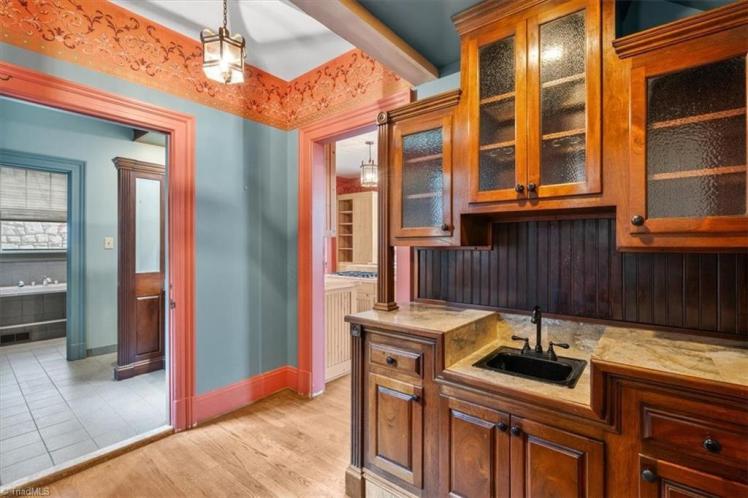








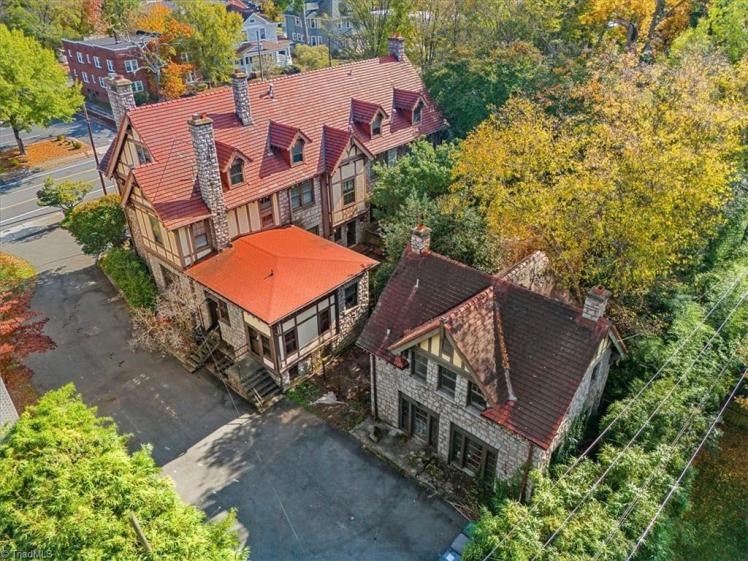
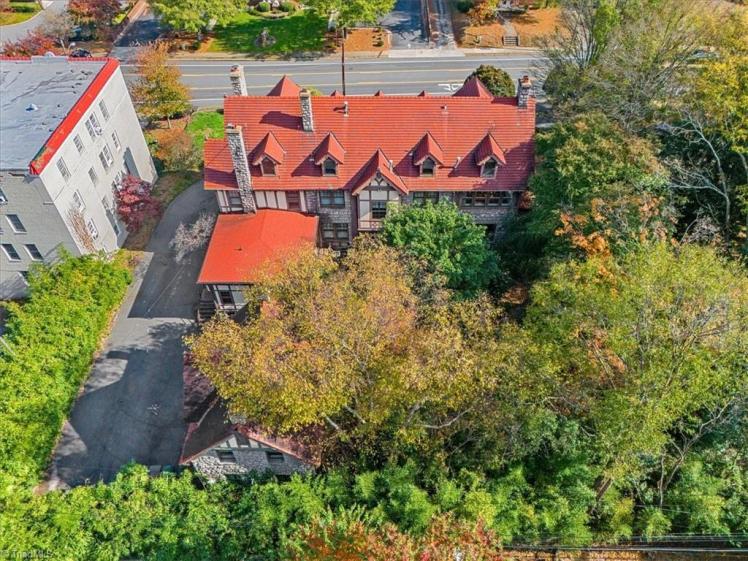

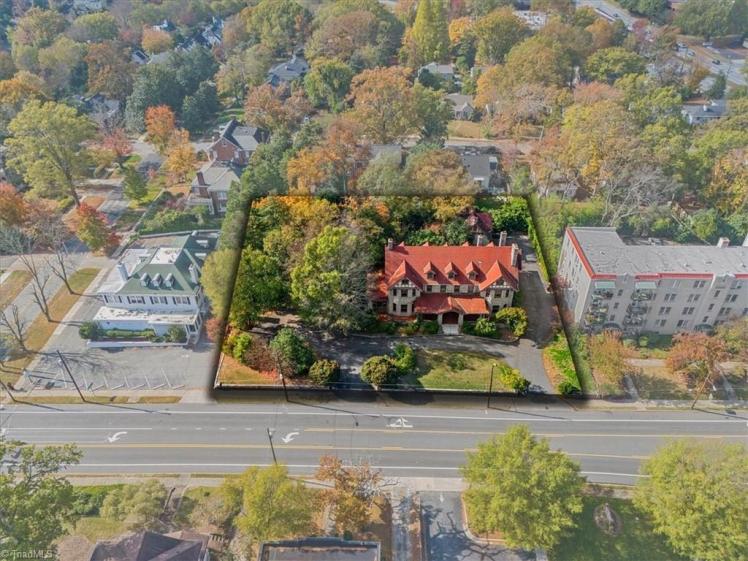
1007 N. Elm Street, Greensboro
The John Marion Galloway House
- Sold for $1.1 million on December 19, 2024 (listed at $950,000)
- 7 bedrooms, 5 1/2 bathrooms, 5,655 square feet (per county), 0.69 acre
- Price/square foot: $195
- Built in 1919
- Listed November 16, 2024
- Last sale: $365,000, September 1988
- Neighborhood: Fisher Park Historic District (local and NR)
- Note: Online listings show 7,121 square feet.
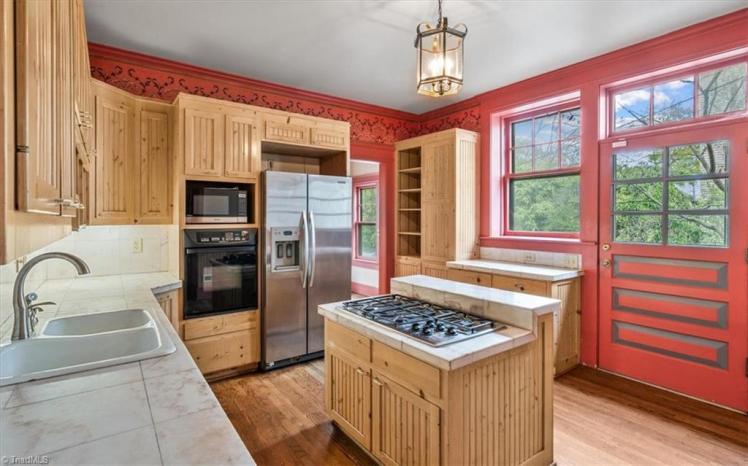
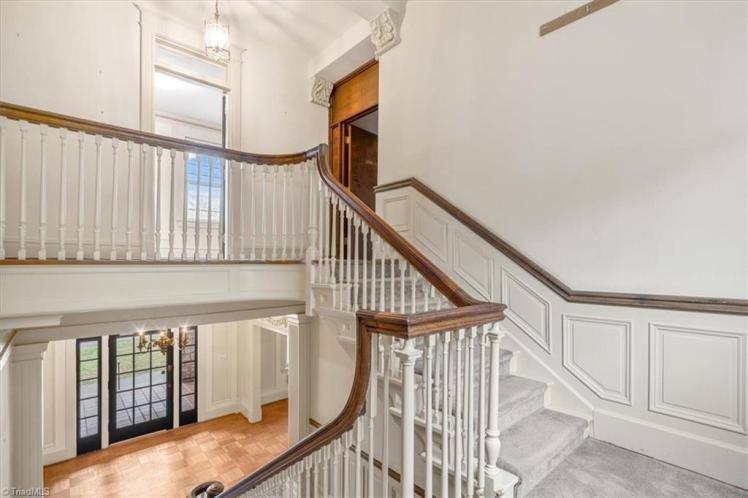
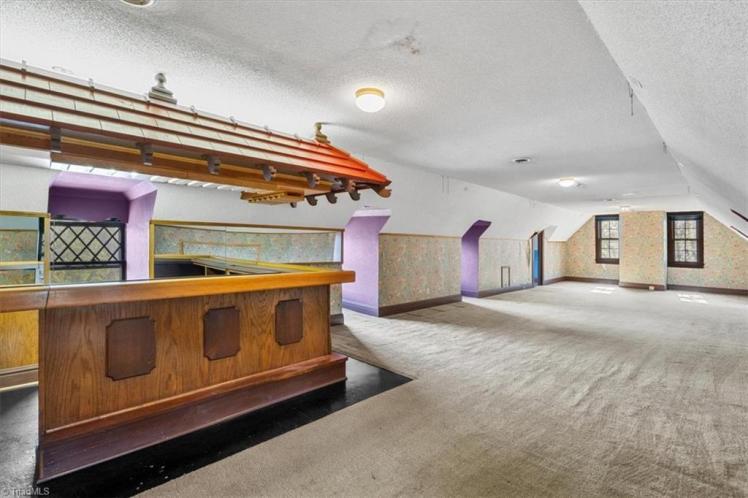
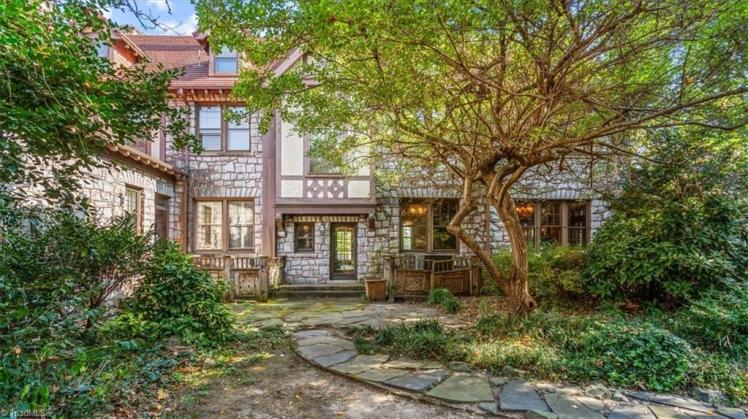
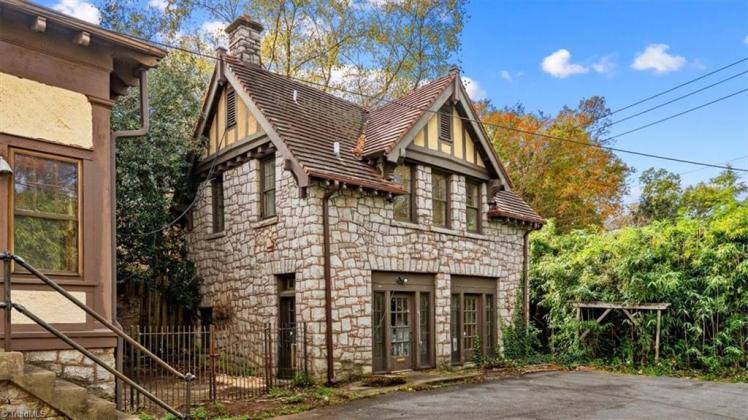
National Register nomination: “An eclectic residence in which elements of the Tudor Revival and bungalow styles are most evident, the Galloway House was designed by Greensboro architect Harry Barton. It is built with a veneer of random-coursed granite with half-timbered gable ends, gable-roofed dormers, and a red tile roof. The mortar of the house is chocolate colored, as is the wood trim. The area between the half timbering is filled with ochre colored stucco. An adjacent two-story double garage which once included servants’ quarters is of the same type material and style.”
Few architects have been as historically prominent in Greensboro and across the state as Harry Barton. For more than 20 years until his death in 1937, he designed many homes and several of Greensboro’s most notable buildings, including the UNCG Auditorium, the Quad and others on the campus; the Guilford County Courthouse; the Cone Export and Commission Building; First Presbyterian Church and Presbyterian Church of the Covenant; and World War Memorial Stadium.
“During the flush 1920s, Barton was Greensboro’s leading architect, along with his sometimes competitor Charles C. Hartmann, who arrived in mid-decade. Like many architects of his generation, Barton worked confidently and skillfully in a variety of styles and building types. During the 1910s, 1920s, and 1930s, he designed classically inspired courthouses and municipal buildings, churches in Gothic and classical modes, eclectic collegiate and high school buildings, Art Deco commercial buildings, and substantial residences that covered the spectrum from the picturesque and romantic to formal Georgian Revival modes.” (North Carolina Architects & Builders)
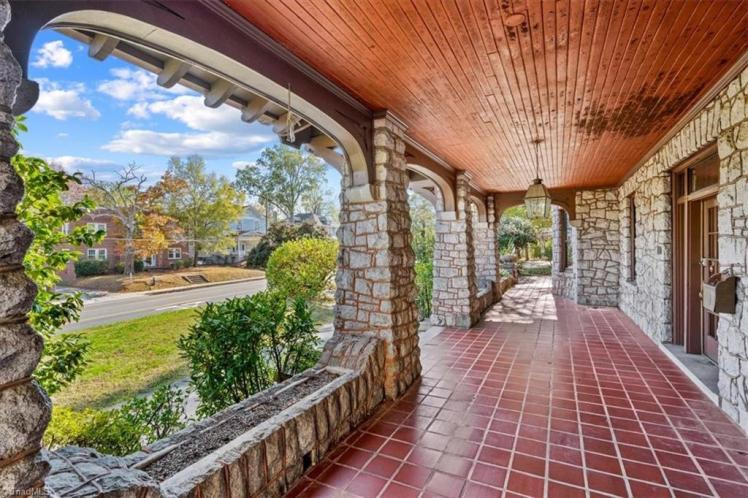
The remarkable stonework is attributed to master stone-mason Andrew Leopold Schlosser of Greensboro. “Schlosser was the stone-mason for the Latham-Baker house at 412 Fisher Park Circle, a rare example of the Prairie style in North Carolina which was recently listed in the National Register,” the Galloway House nomination says. “Several features of the Galloway House resemble those of the Latham-Baker House, including the random-coursed, rock-faced granite construction of the house and retaining wall, the built~in flower boxes on the front porch, and the general excellence of the work.”
The home’s original owner, John Marion Galloway (1880-1922), was born in Tennessee, but he grew up in Rockingham County, where his ancestors had arrived from Scotland. He graduated from Oak Ridge Military Academy and the University of North Carolina. At age 21, he was elected mayor of Madison, his hometown (he ran against his father). He and his wife, Margaret Terressa “Maggie” Greeson Galloway (1893-1981) moved to Greensboro in 1919. “Mr. Galloway constructed on North Elm Street one of the most beautiful residences in the city,” the Greensboro Daily News said.
By 1922 he owned about 10,000 acres of farmland; the Greensboro Daily News said he was the biggest grower of bright leaf tobacco in the world. Just three years after building the house, John died at age 42 after having his appendix removed.
Maggie remained in the house until she died at age 87. She remarried around 1924; by 1930 she and her husband had separated and were divorced. By 1958, she was renting out furnished rooms.
Her daughters sold the house in 1982 to Russell A. Cobb Jr. (1943-2009) and Maria Alomia Cobb. Russell was a chiropractor whose practice was located next door at 1001 N. Elm, where one of his sons still operates it.
He received praise from his patients and was named N.C. Chiropractor of the Year, but he was tragically less successful as a businessman. He bought practices in several states, which turned out to be unprofitable. While trying to keep his practices afloat financially, he and a partner swindled lenders for $5.7 million. He declared bankruptcy in 1988 and pleaded guilty to federal wire fraud charges. He blamed the debacle on bipolar disorder. His partner received 10 years in prison, but the judge let Russell keep working to repay the millions he owed, sentencing him to six months in a halfway house and five years probation. The state suspended his license to practice for 90 days.
Russell and Maria lost the house. It was bought by the renowned Aileen Oldham (1918-1994), known in Greensboro as “Mrs. Leon.” She had been a young widow when she and Leon Oldham (1914-1975) married in 1966, 20 years after he founded Leon’s Beauty Salons. Mrs. Leon ran the business when he died. “A savvy businesswoman and quiet philanthropist, she was also one of the city’s most colorful personalities,” the News & Record said.
“She bought that house on Elm Street, I think, because she thought it ought to be saved,” the newspaper’s society columnist, Martha Long, said.
On Aileen’s death 30 years ago, ownership of the house and the business passed to her daughter, Patricia “Parker” Washburn (1946-2024). Parker and her husband, Arthur, met while studying at Guilford College. After graduation, they worked together at Oakwood Friends School in Poughkeepsie, New York, where Parker was dean of students and Arthur taught history and world studies. Arthur became an anatomist and physical anthropologist. He has taught at the University of Pennsylvania and Temple University and has worked with the Philadelphia medical examiner’s office.
Like her mother, Parker became a well-known business figure in Greensboro, operating the school and six salons. Beginning in the 1990s, she began offering space in her salons to local artists to display and sell their work.
1015wkent

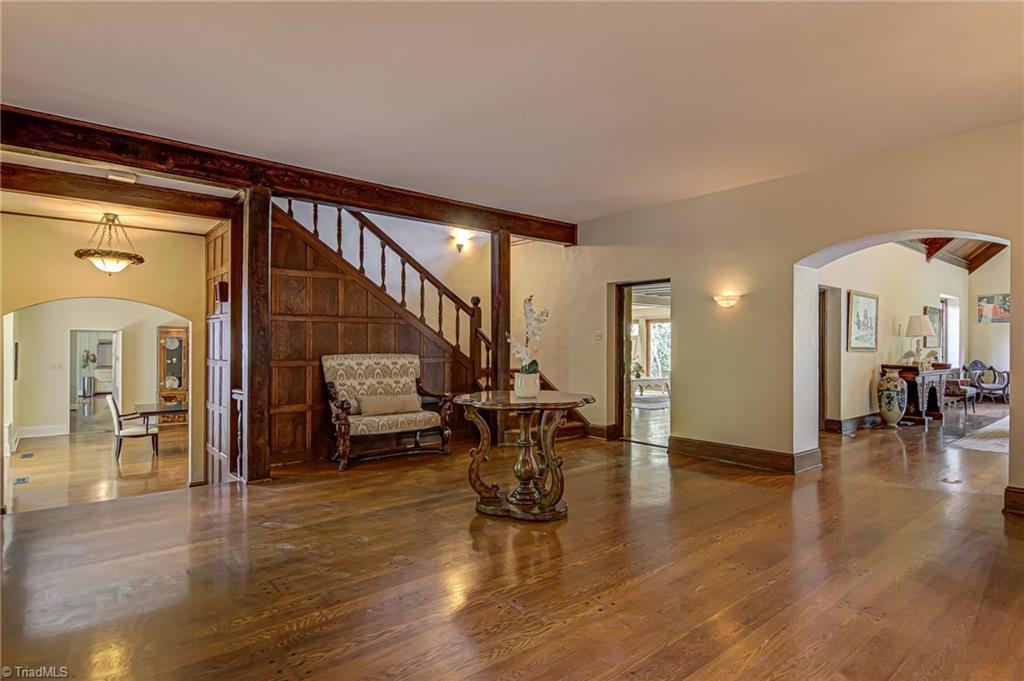
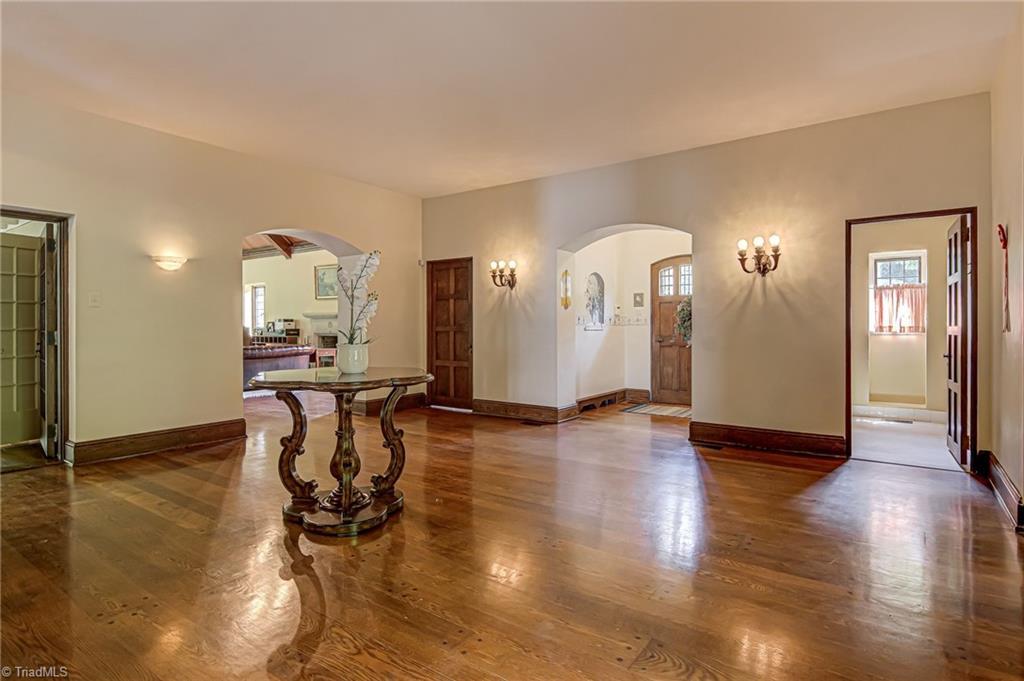

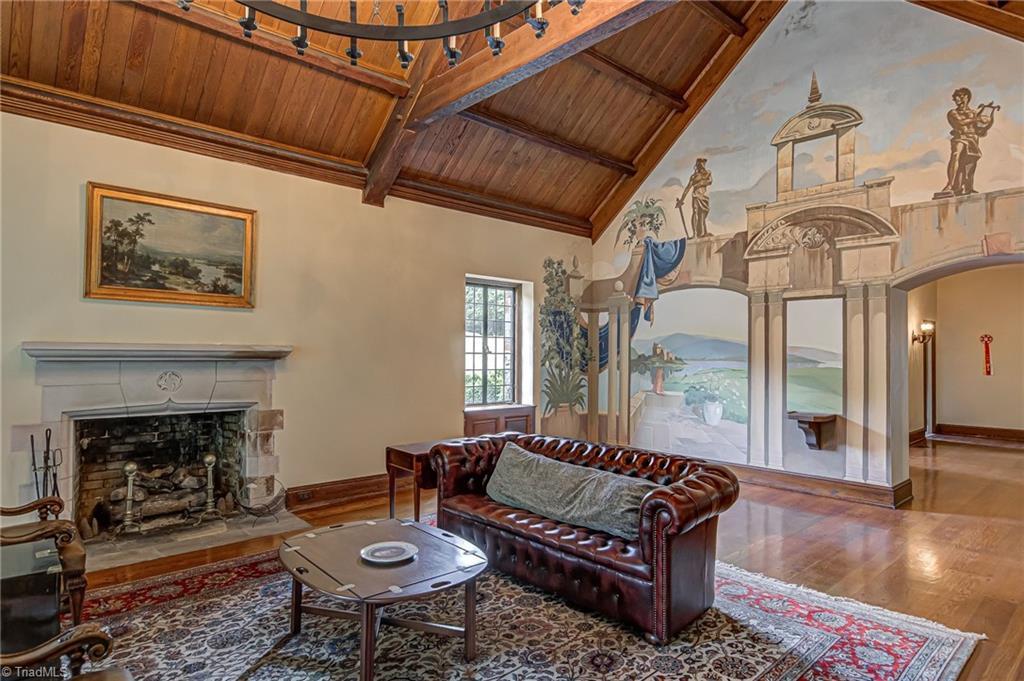

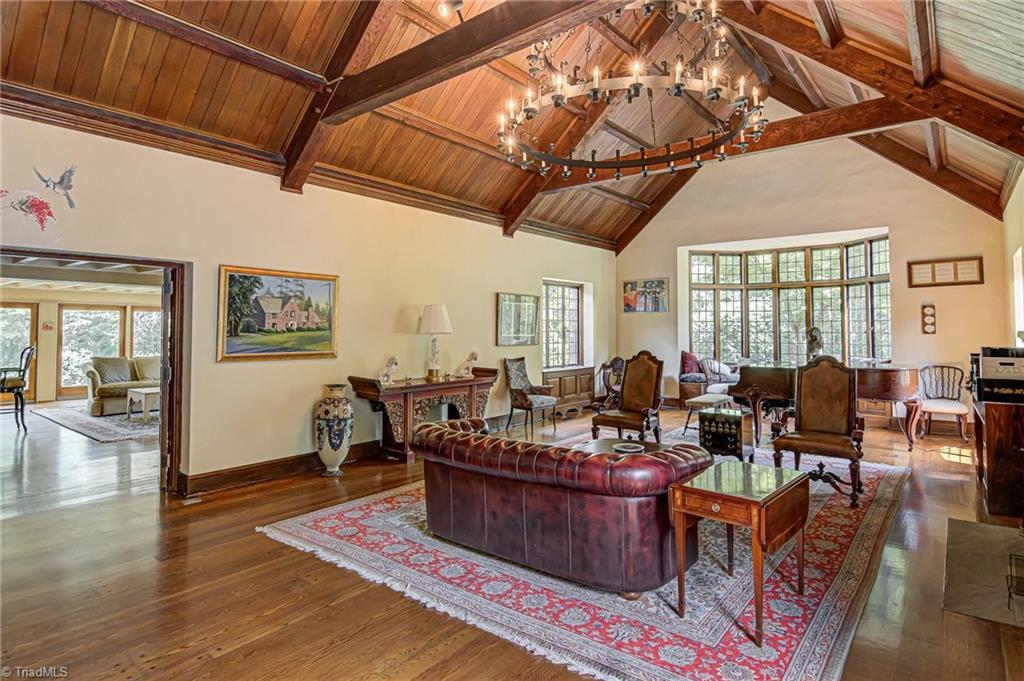

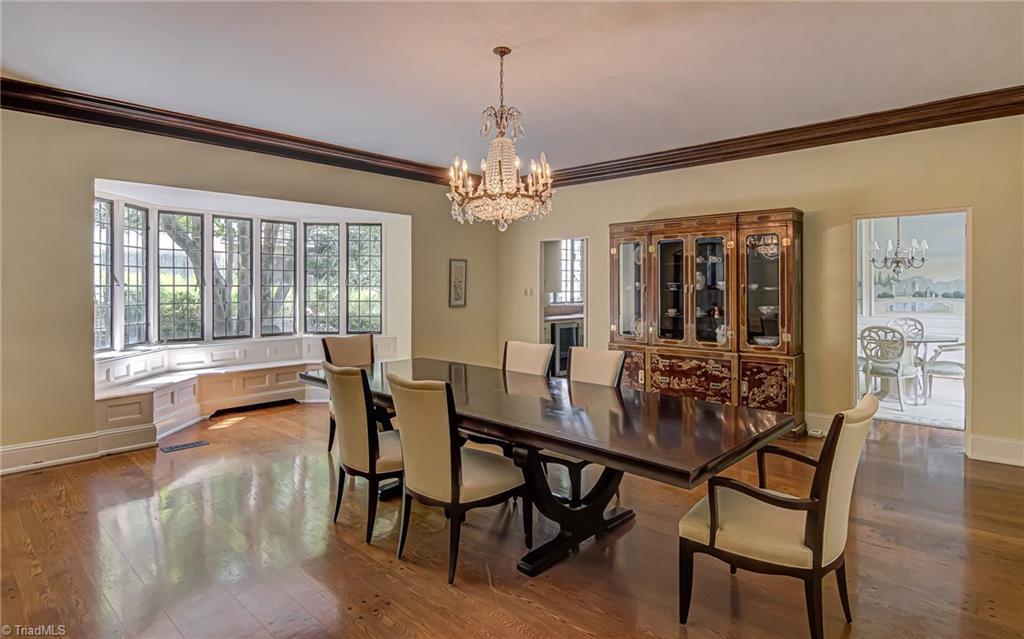









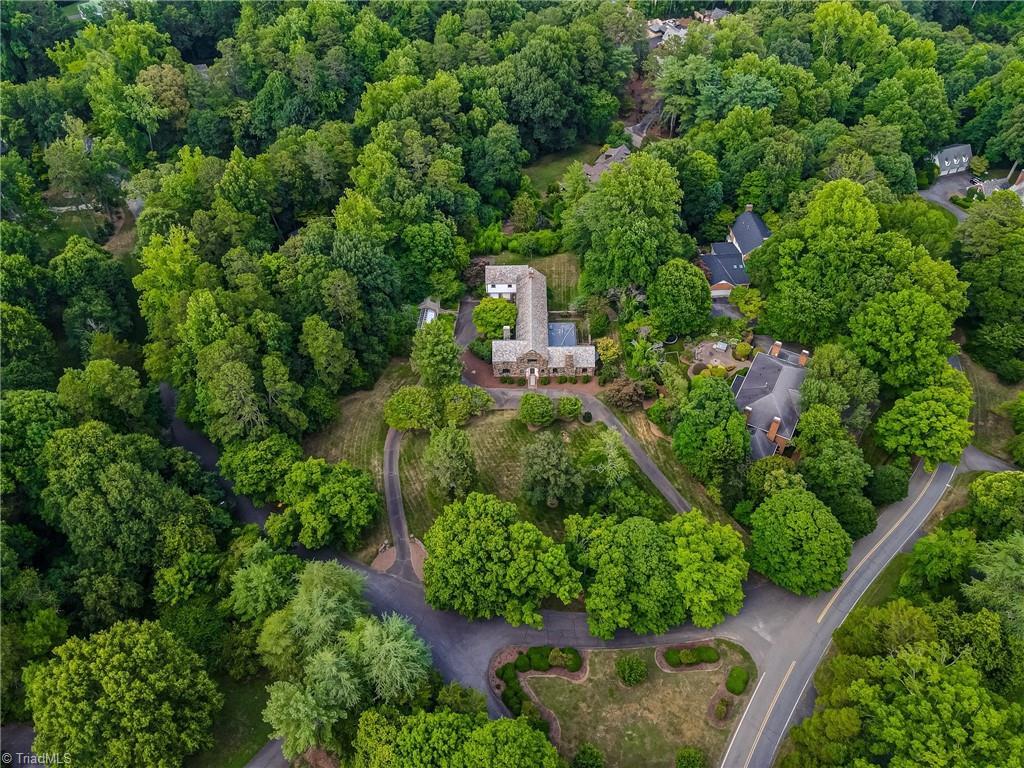
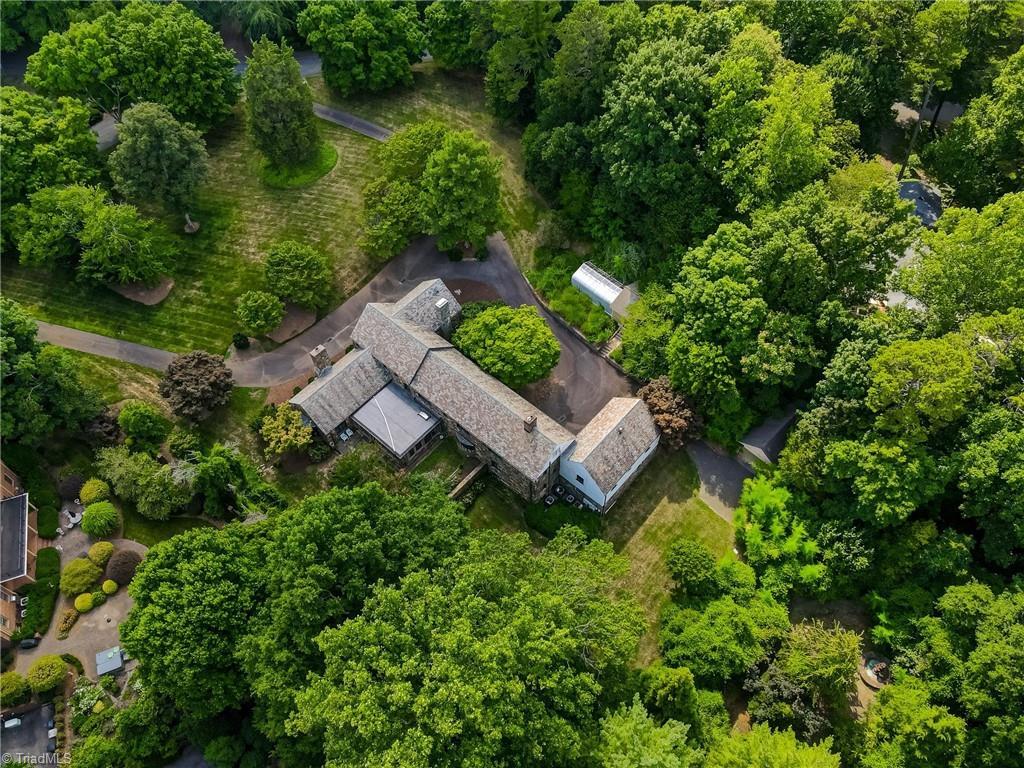


1015 W. Kent Road, Winston-Salem
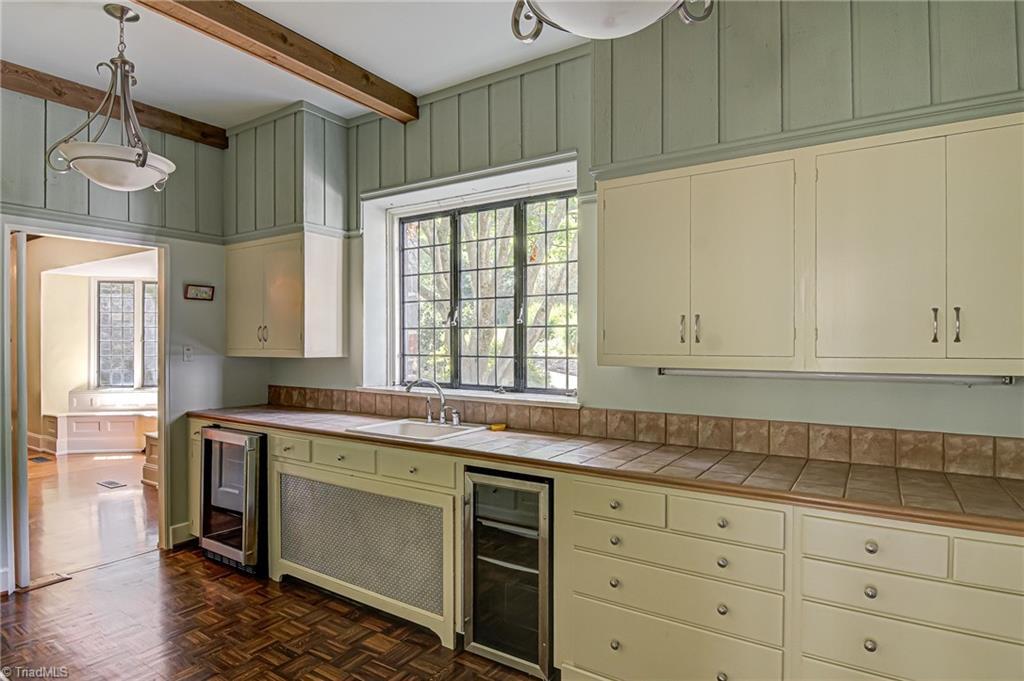
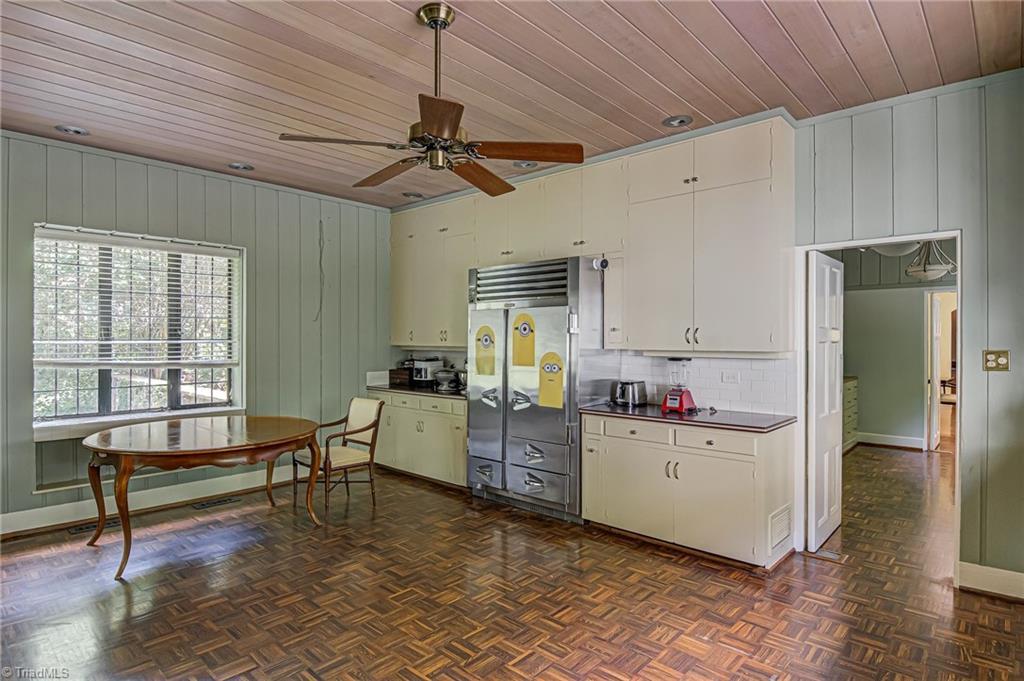
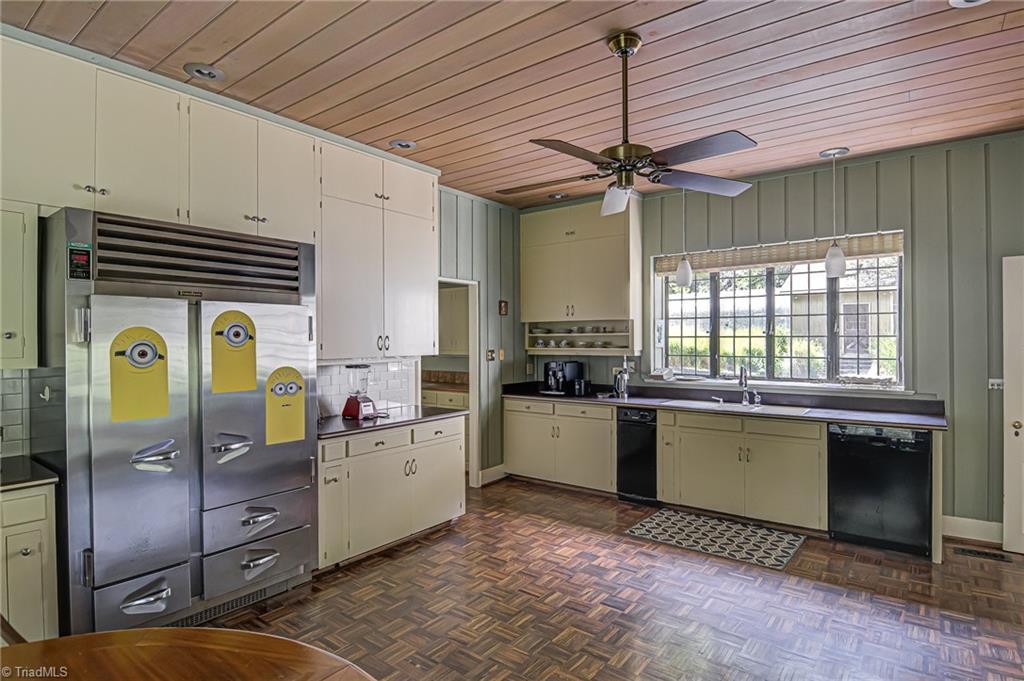
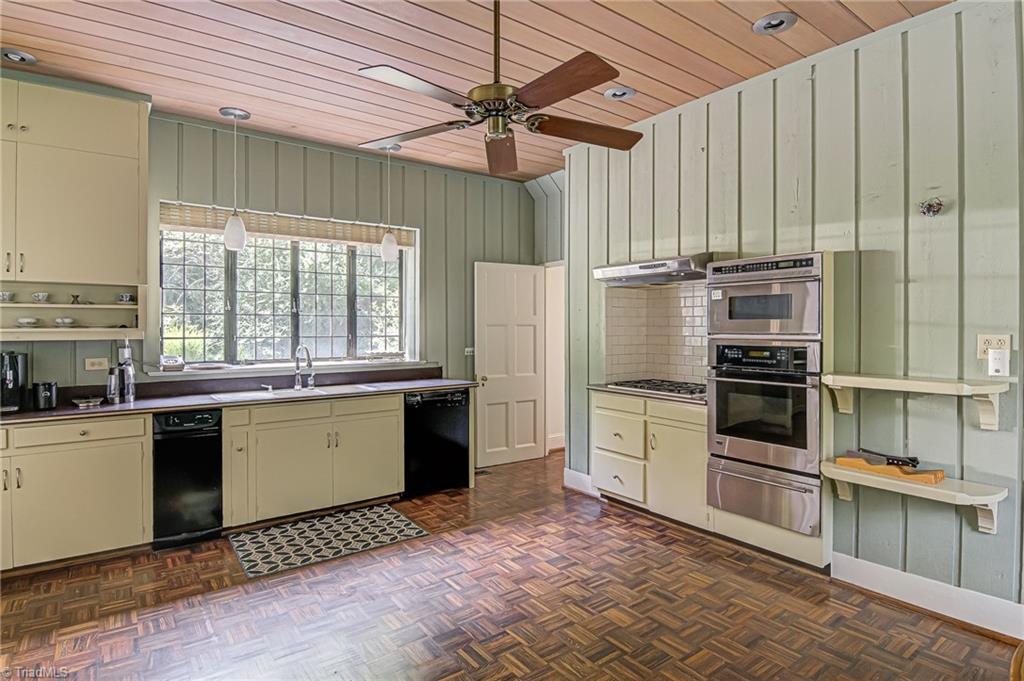
The James and Diana Dyer House
- Sold for $1.72 million on November 19, 2024 (listed at $2 million)
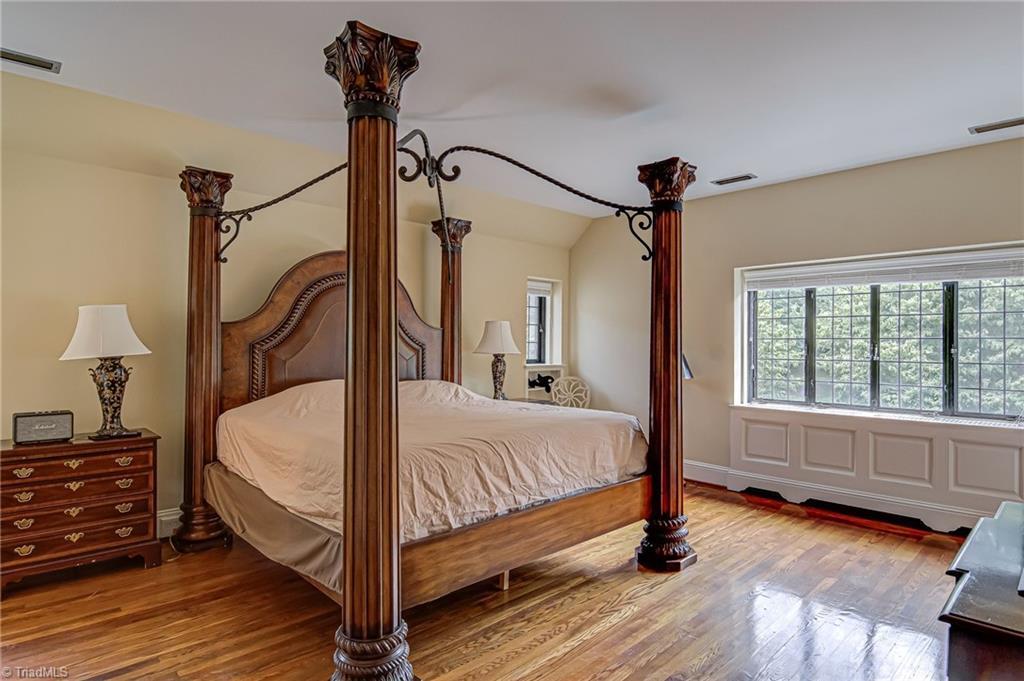
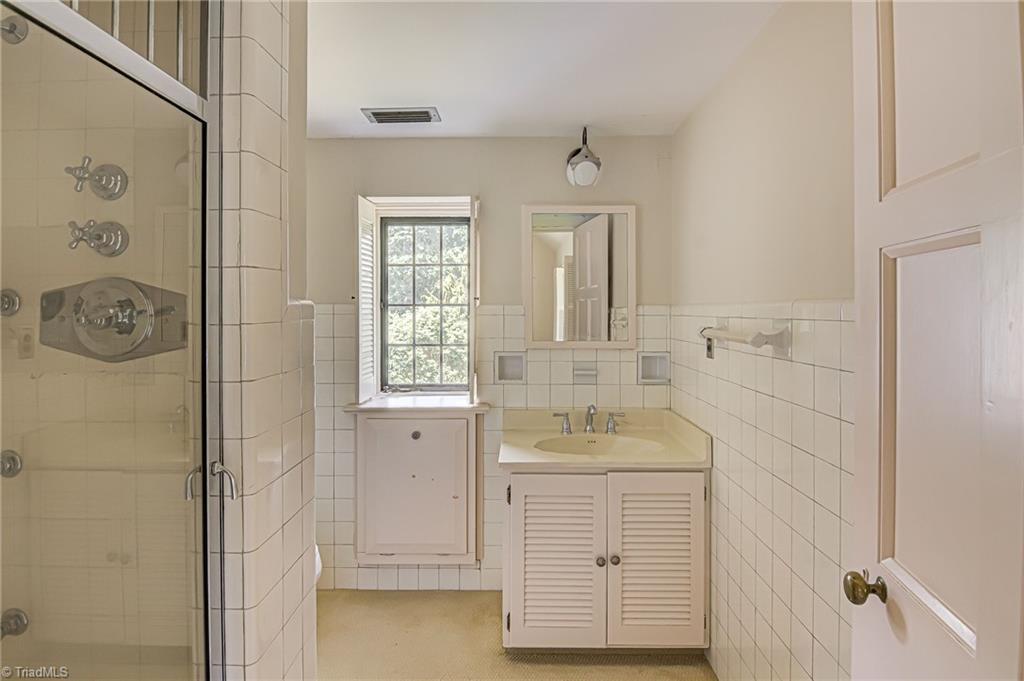
- 5 bedrooms, 5 1/2 bathrooms, 8,168 square feet, 2.37 acres
- Price/square foot: $211
- Built in 1931
- Listed July 17, 2024
- Last sale: $1.05 million, March 2015
- Neighborhood: Reynolda Place
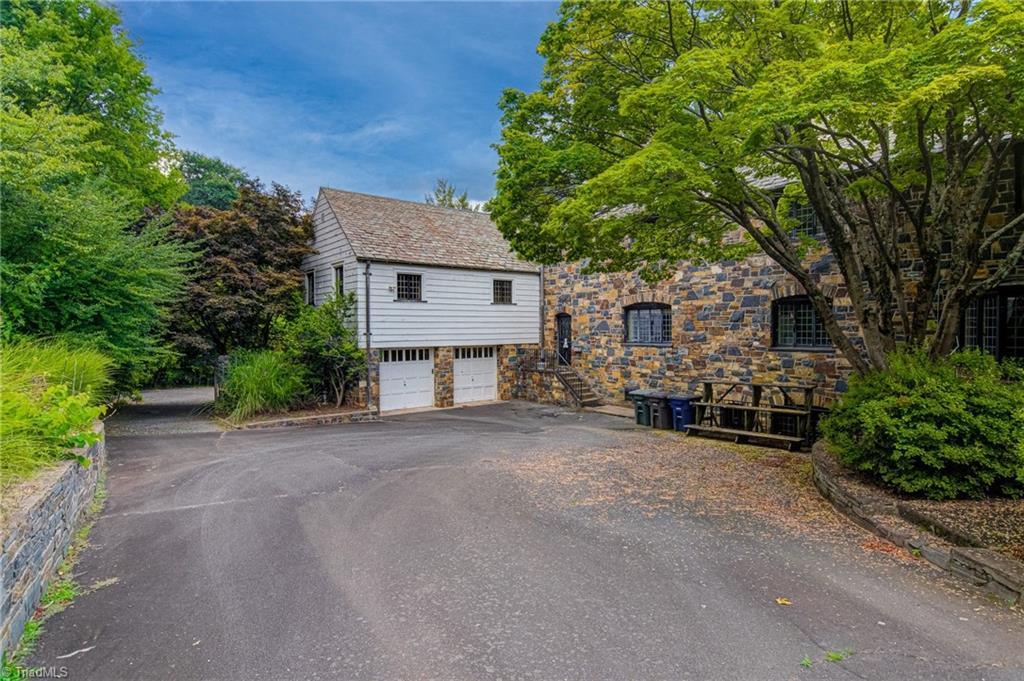
- Listing: The property includes three garages.
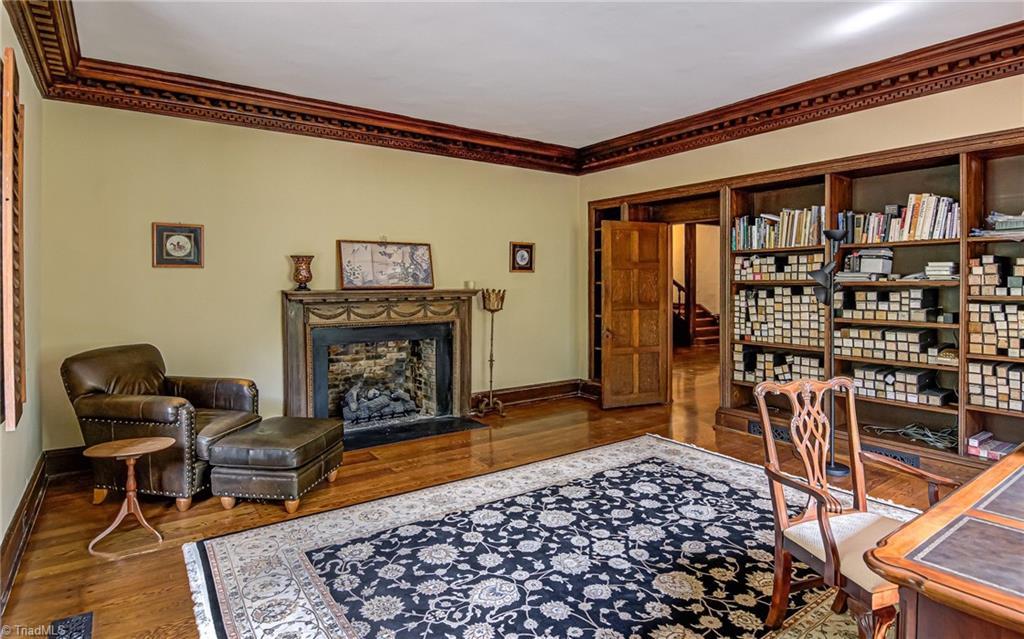
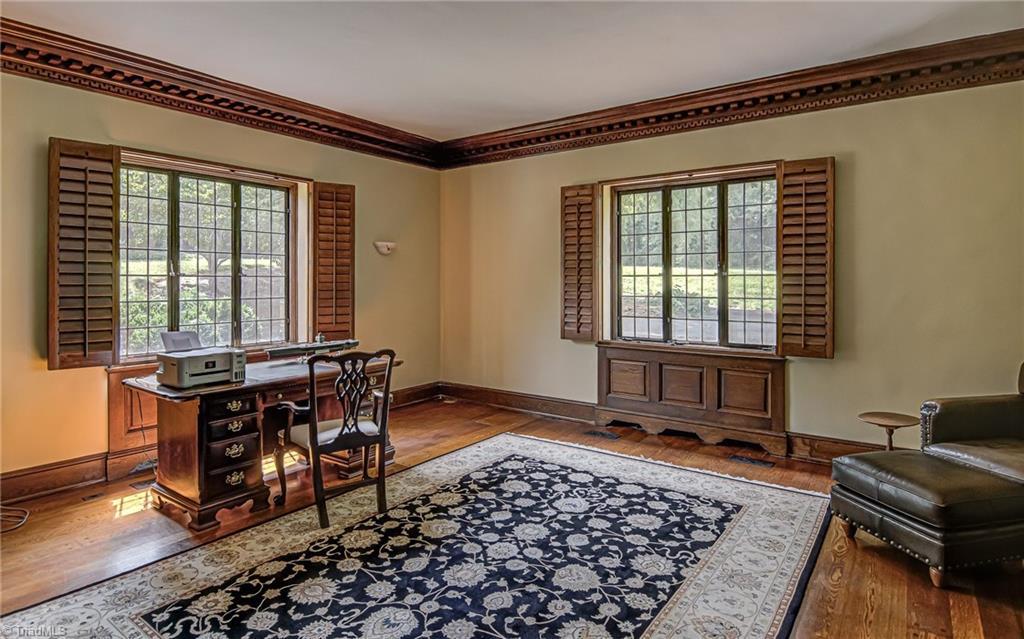
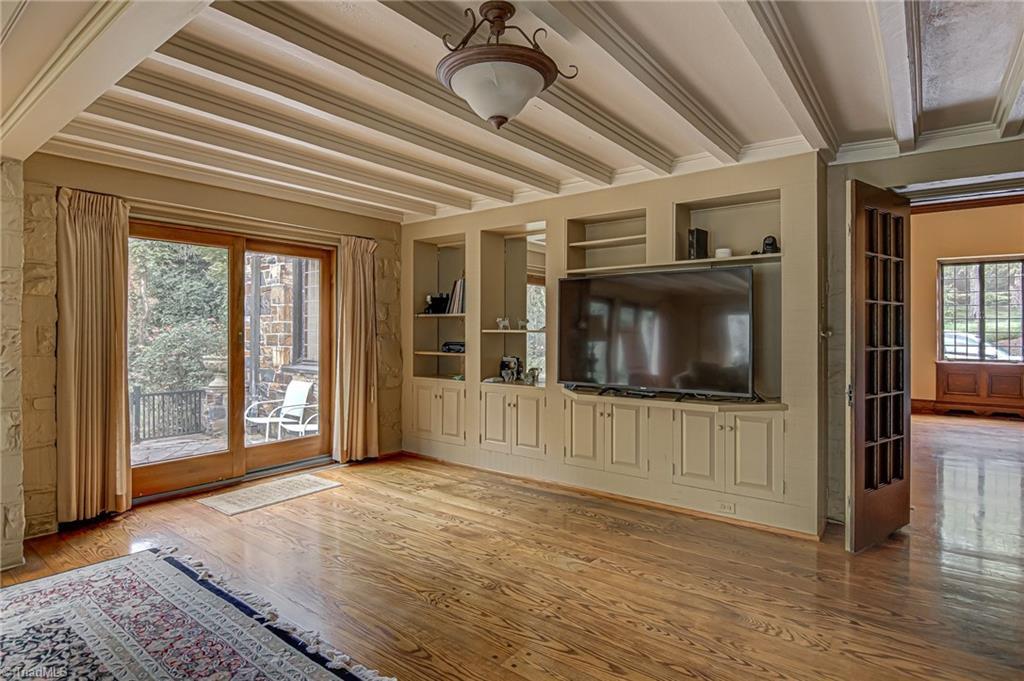
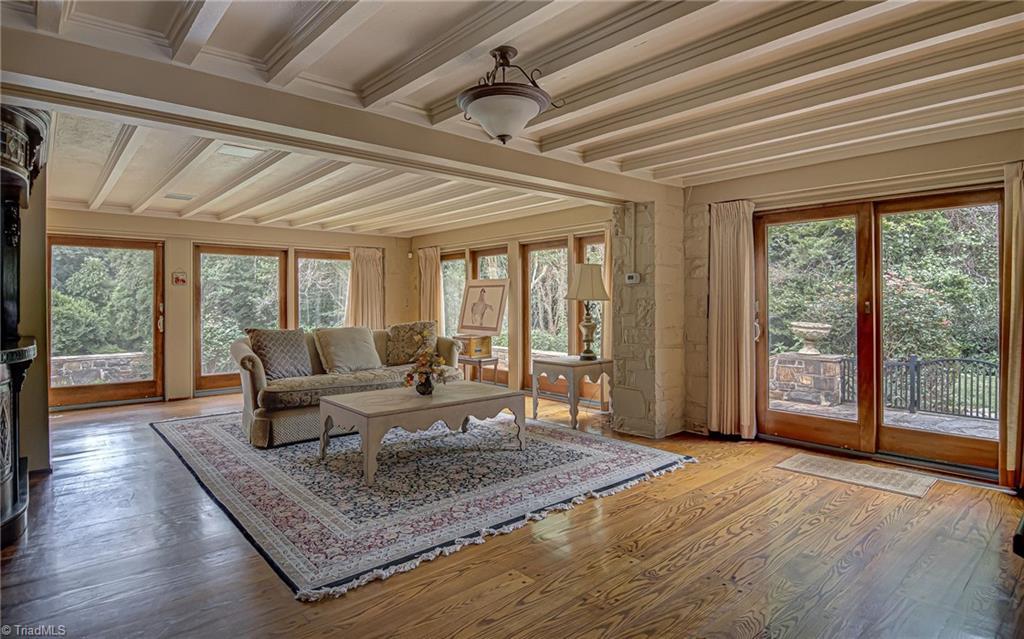
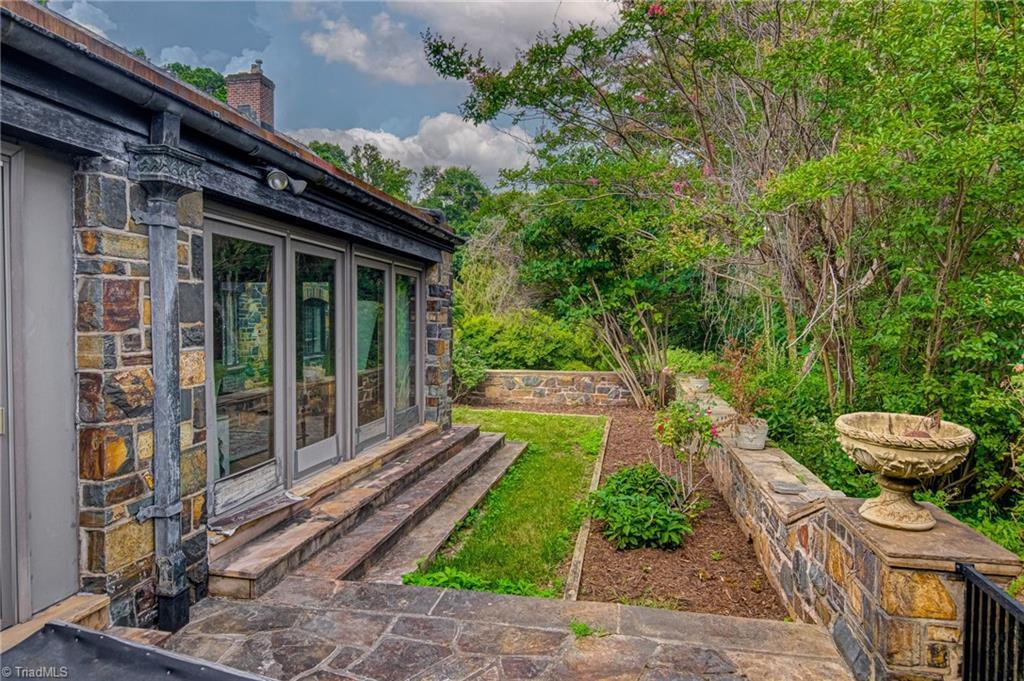
National Register nomination: “The 1931 residence, located in the exclusive Reynolda Park neighborhood approximately two and a half miles northwest of downtown, is locally significant as one of two Winston-Salem commissions of the New York architectural firm of Mayers, Murray and Phillip. Although homes influenced by the grand country estates of England were the norm in Reynolda Park, the Tudor Revival-style Dyer House manifests an austere architectural sophistication that is quite different from the few other Tudor style houses, as well as the dominant Neoclassical and Georgian Revival style neighboring houses. The rough-cut-stone, manorial Dyer House evokes a feeling of permanence intended to make a statement of social and cultural status. The house is situated on a prominent 2.37-acre lot at the main entrance to Reynolda Park, reflecting Mr. Dyer’s position as a top executive at R. J. Reynolds Tobacco Company. The grounds were not originally landscaped, but the planting beds, formal garden, stone retaining walls, and stone entrance gates developed since 1977 are in keeping with the style of the house. The property includes a modern greenhouse, shed, and detached garage.”
James Ballard Dyer (1869-1929) and Diana Lynn Mauzy Dyer (1880-1962) were born in Virginia. After they moved to Winston-Salem, James spent 35 years with R.J. Reynolds Tobacco Company. “Mr. Dyer was one of four men, including James Walter Glenn and R. J. and W.N. Reynolds, who developed the Camel blend, introduced as the ‘the first truly American cigarette’ in 1913. Dyer was appointed to the board of directors in 1913 and oversaw the company’s shift from horse-drawn conveyances to trucks over the next few years. He became superintendent of the tobacco leaf department in 1914. Dyer also served on the Real Estate Committee, which managed the lease and sale of modest homes to company employees. Dyer remained part of the top management team after the death of R.J. Reynolds in 1918.
“Mrs. Dyer was as enterprising as her husband. A nurse by training, she assisted Dr. J.K. Pfohl of Salem and raised the couple’s four children … They were well-known for their philanthropic activities and owned a number of investment properties.”
The Dyers bought three lots, eight acres, at the entrance to Reynolda Park in 1925. Sadly, James died of a heart attack in 1929. Diana had the house built and lived there until she died in 1962.
After Diana’s death, Dr. Marcus Frank “Buddy” Sohmer (1924-2007) and Elizabeth C. Sohmer (dates unknown) bought the house. Buddy practiced gastroenterology and internal medicine for 35 years. He served as president of the Forsyth County Medical Society and of the North Carolina Medical Society and as president the Bowman Gray School of Medicine alumni association.
The Sohmers sold the house in 1970 to Smith Walker Bagley (1935-2010). Bagley is remembered for two things — being a grandson of R.J. Reynolds and for the extremely messy bankruptcy of his unwieldy conglomerate, the Washington Group. The company was formed in 1972 when he and a partner used their firm, which operated convenience stores and the Mayberry ice-cream shop chain, to take over a textile company, Washington Mills. Bagley and his partner were indicted on charges of stock manipulation and conspiracy (“[T]hey were accused of fooling the shareholders of Washington Mills into financing the takeover of their own company,” The Charlotte News said). He was acquitted but later settled a lawsuit brought by the Securities and Exchange Commission for an undisclosed amount.
Bagley was actively involved in the Democratic Party at the national level and served for 50 years as a trustee of the Z. Smith Reynolds Foundation. The foundation said he “was instrumental in developing the Foundation’s interest in social justice, strengthening democracy, and environmental advocacy.”
Bagley sold off most of the home’s original eight acres. He sold the house and remaining 2.37 acres in 1976 to Dr. James H. Butler and Jacquelyn F. Butler (dates unknown for both). Dr. Butler was a radiologist. The Butlers sold the house a year later to Dr. Robert E. Nolan (1926-2017) and Judith L. Nolan (d. 2008). Robert was a surgeon. He began his practice in Winston-Salem in 1960. He was a founder of Medical Park Hospital and later served as chief of surgery and chief of staff at Forsyth Hospital. Robert sold the house to the current owners in 2015.
2715old
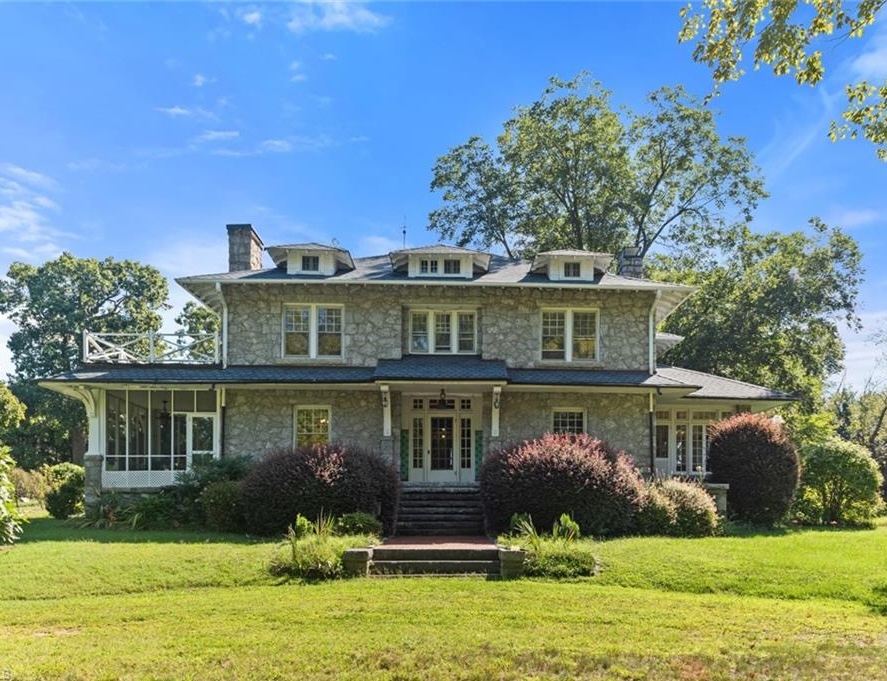
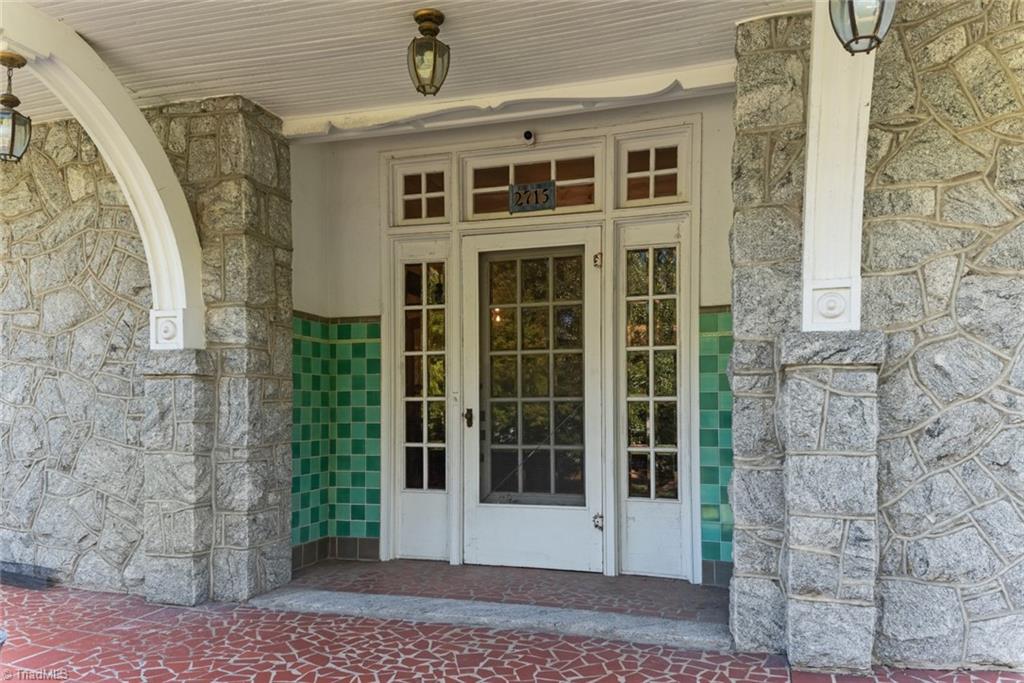











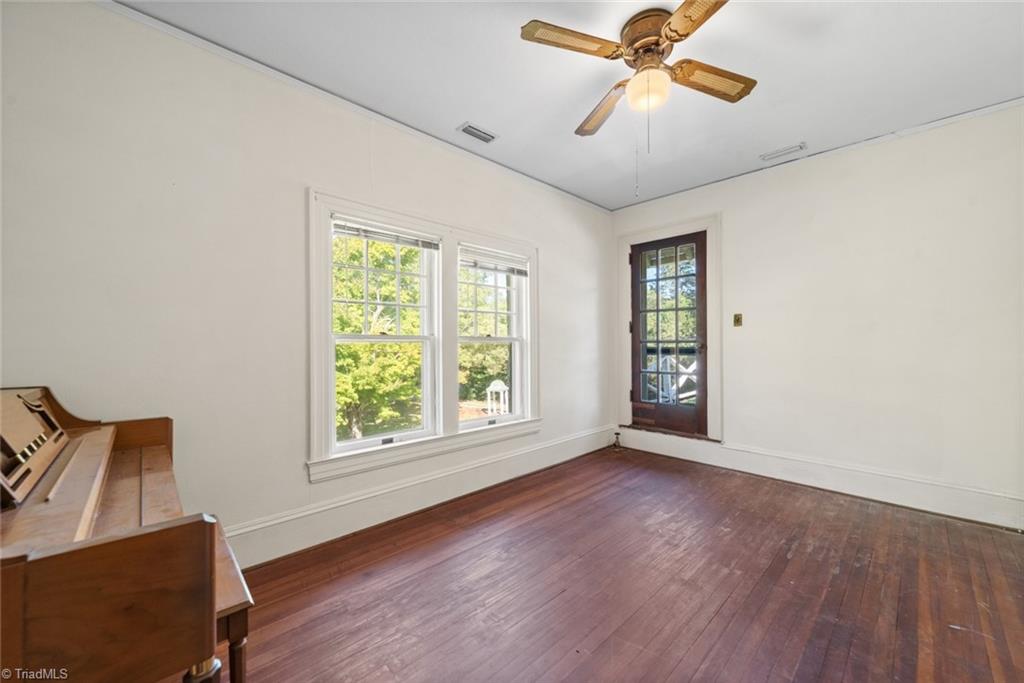


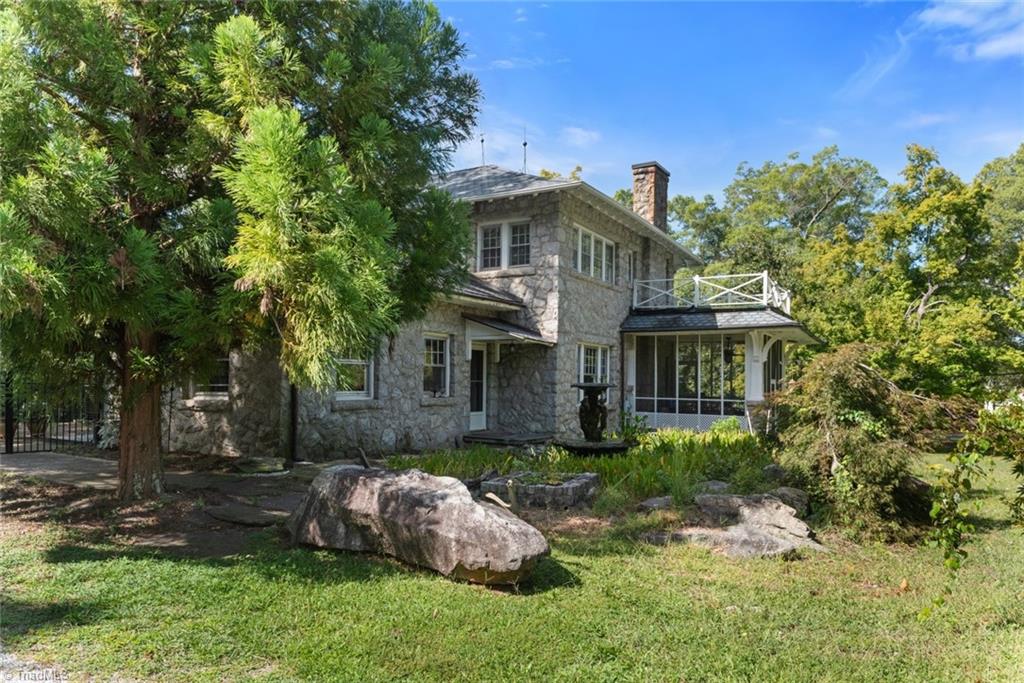
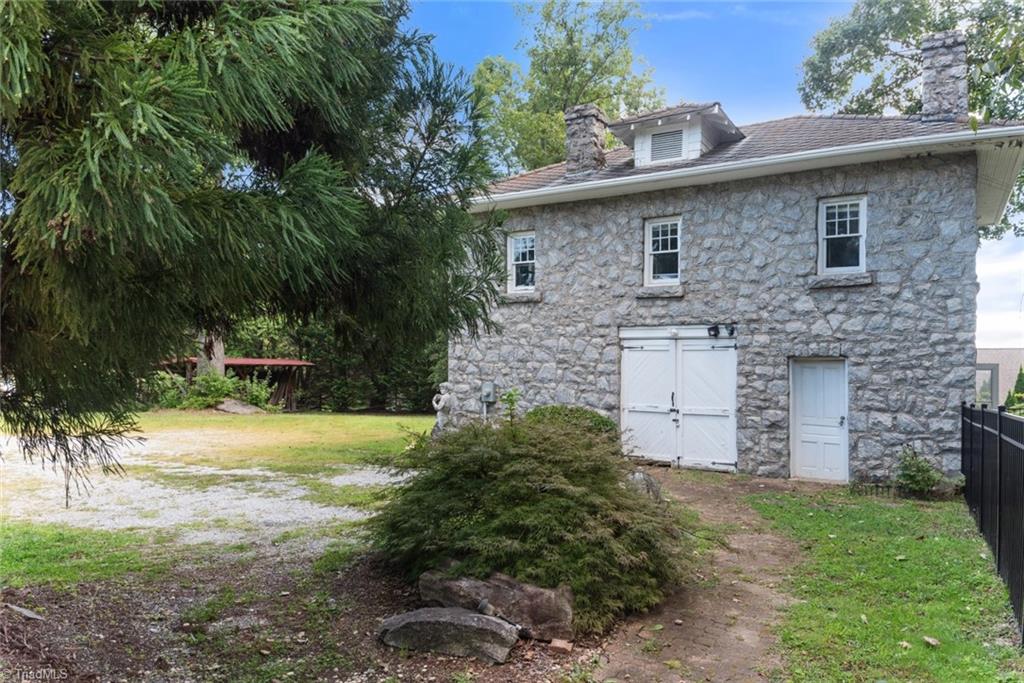


2715 Old Salisbury Road, Winston-Salem
The John Wesley Snyder House
- Sold for $433,500 on November 11, 2024 (listed at $429,900)
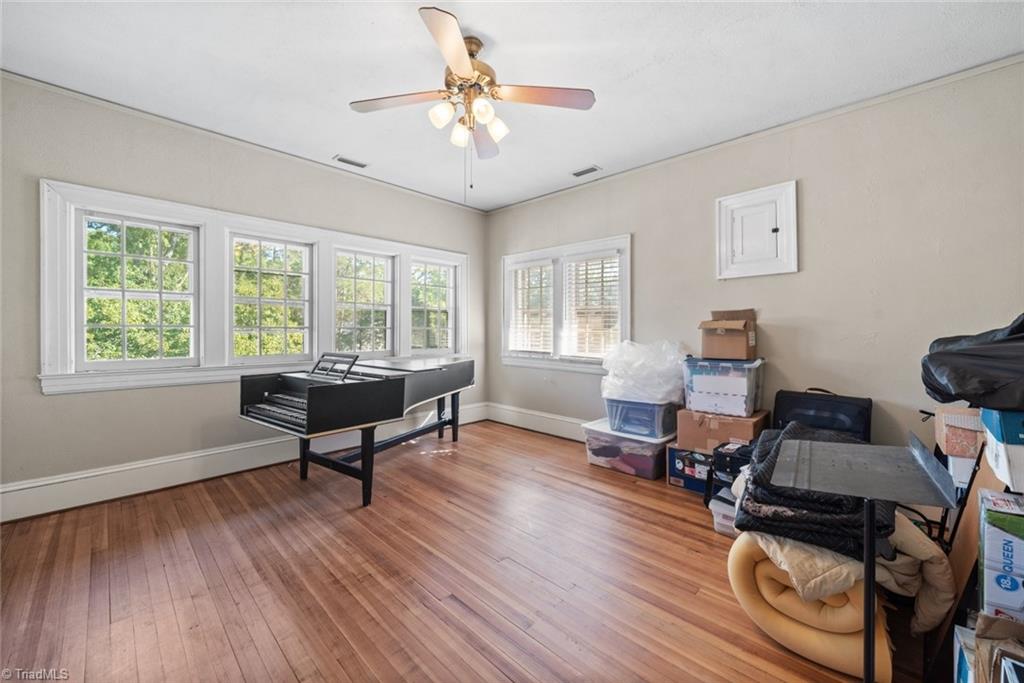
- 5 bedrooms, 3 bathrooms, 3,373 square feet, 2.19 acres
- Price/square foot: $129
- Built in 1922
- Listed September 12, 2024
- Last sale: $296,000, July 2016
- Note: Designated as a Forsyth County Historic Landmark in 2000.
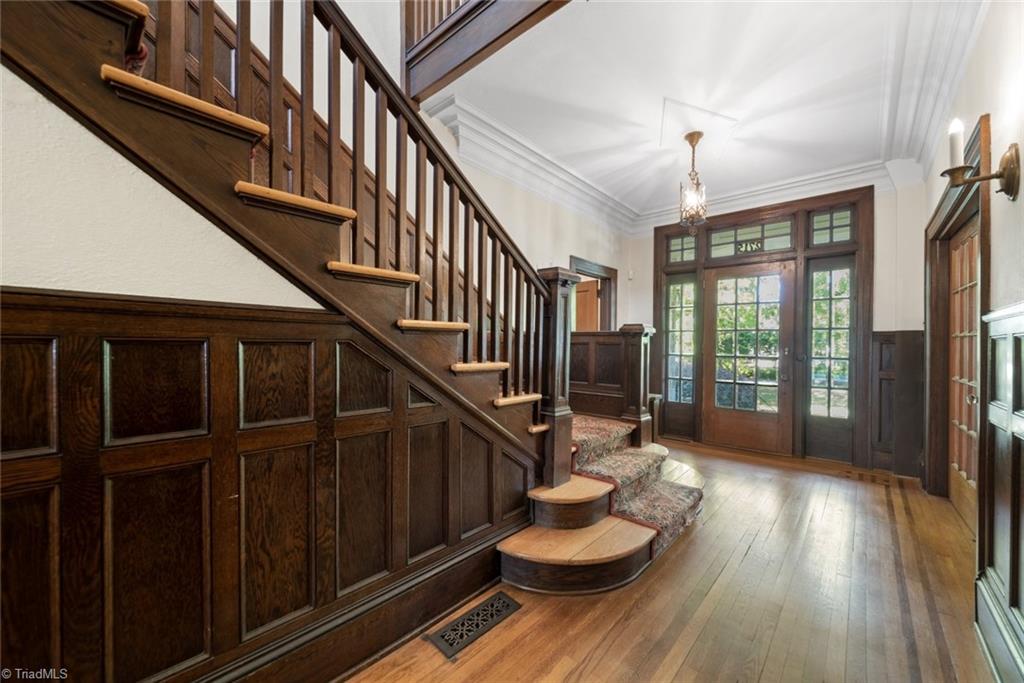
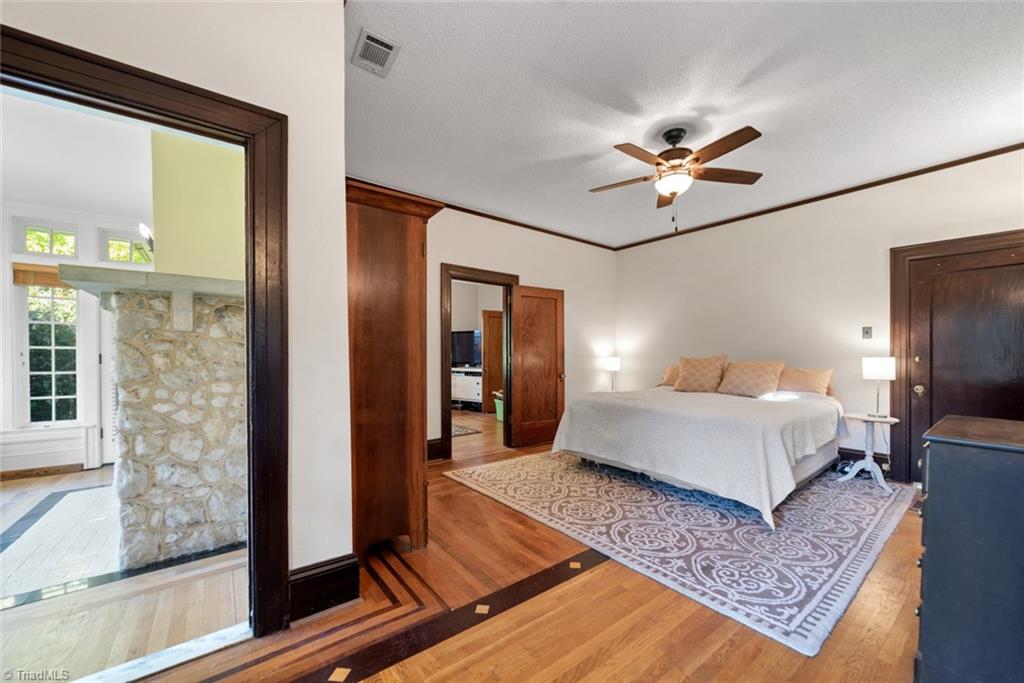
National Register nomination: “Located just south of Winston-Salem, the John Wesley Snyder House is one of the most architecturally striking dwellings erected in Forsyth County during the early 1920s. The two-story house with its matching garage/apartment and smokehouse is a rare domestic example of solid stone construction in the county, particularly outside the city.
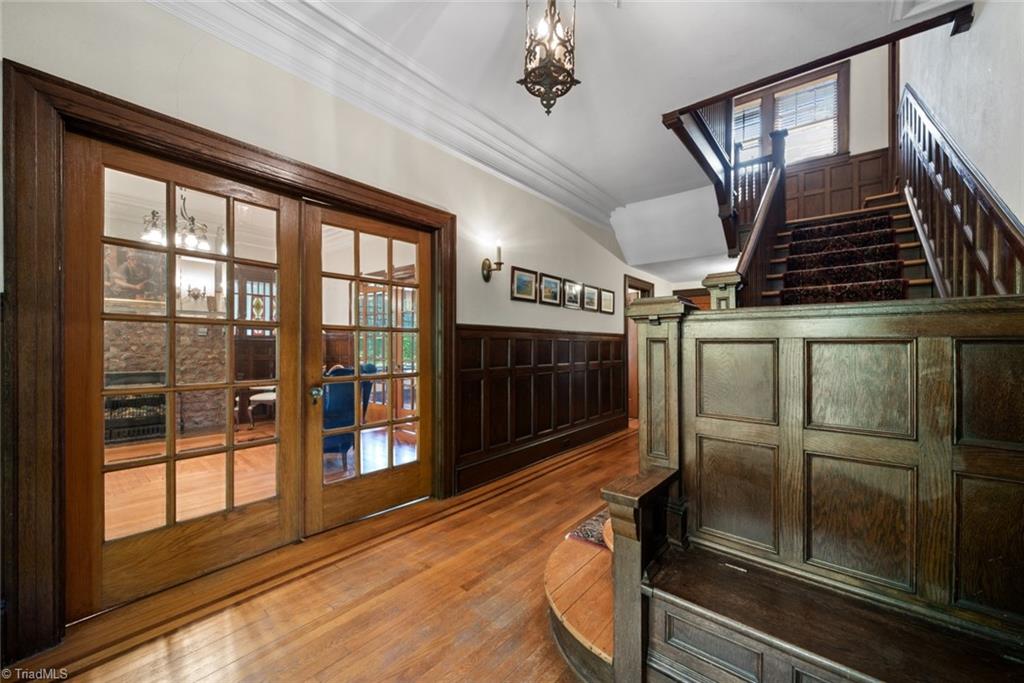
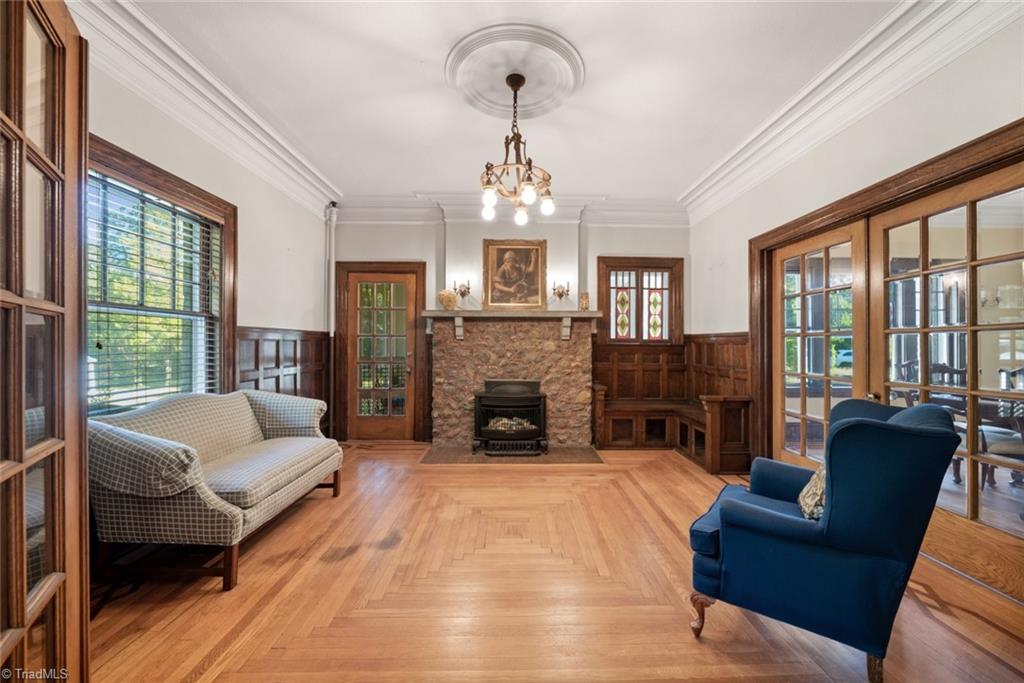
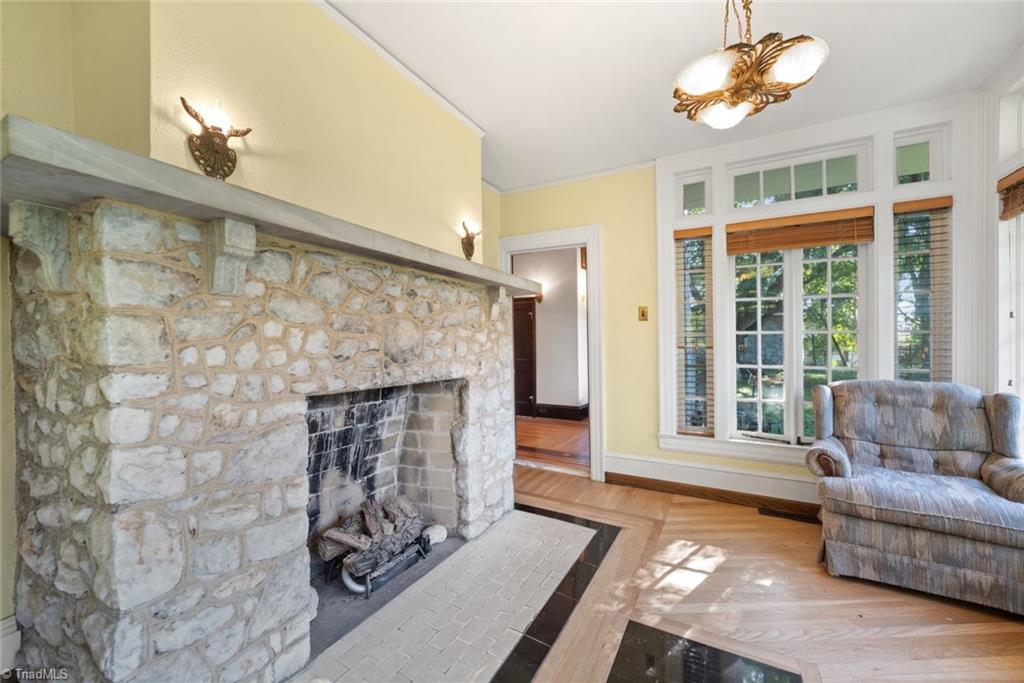
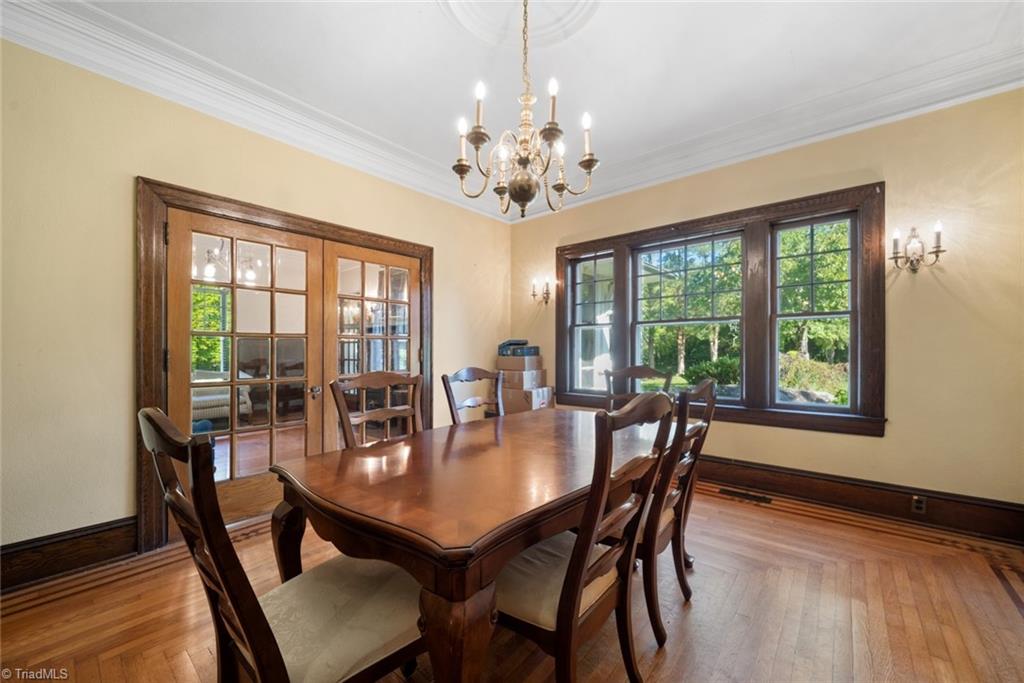
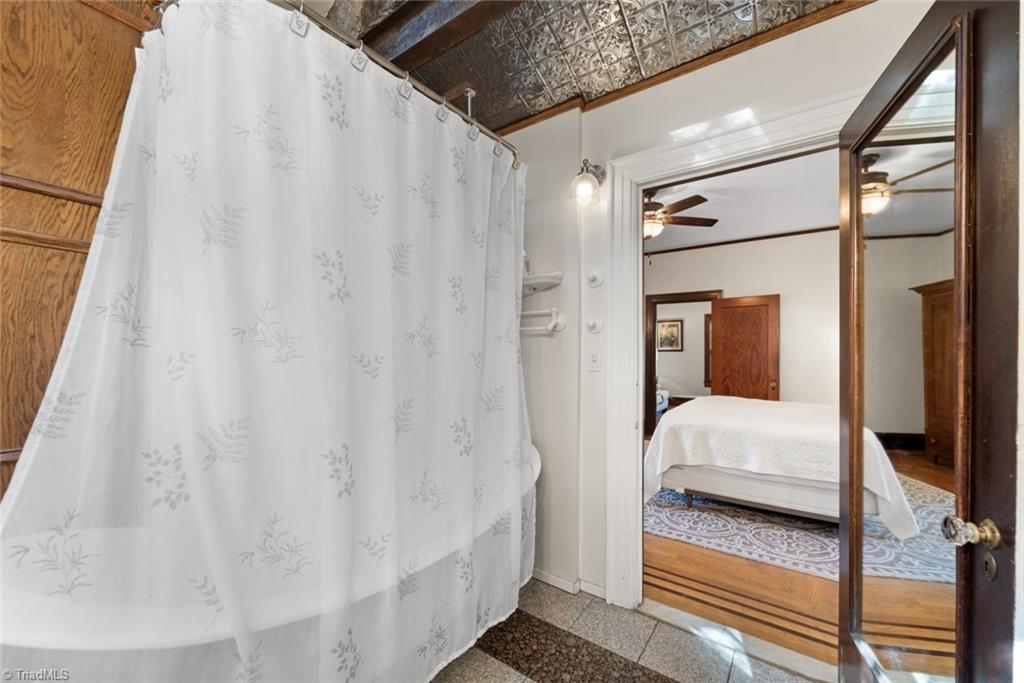
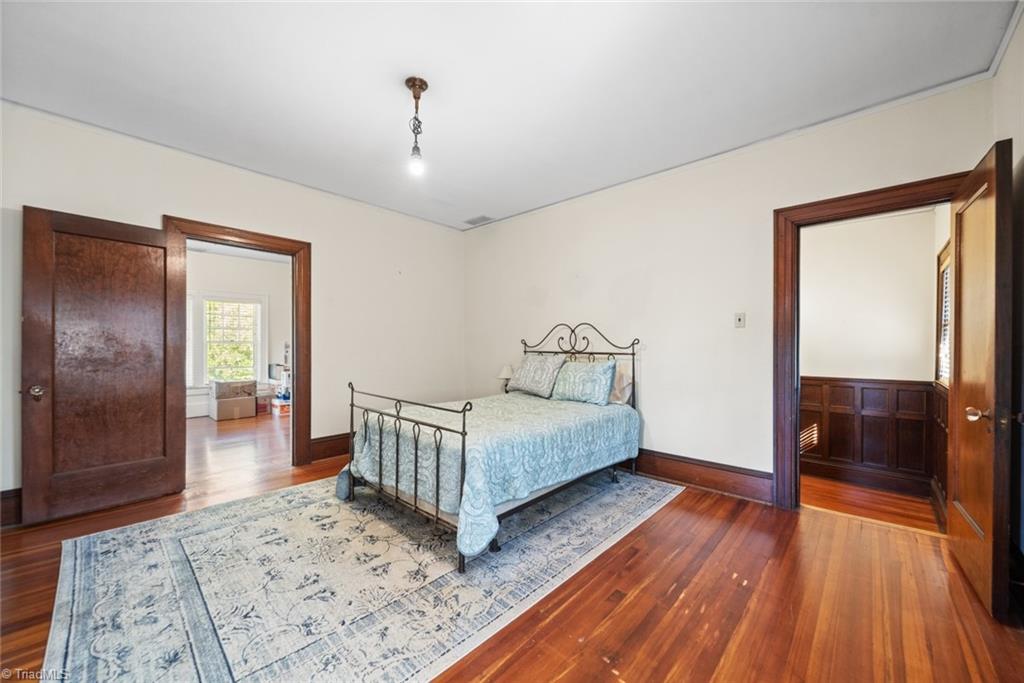
“Though it is more modest than the mansions of Winston-Salem’s industrial magnates, the Snyder House’s use of materials, Craftsman-style exterior, and outstanding Colonial Revival/Craftsman interior with wood paneling, stone fireplaces, and extensive collection of original lighting fixtures, combined with its matching outbuildings and picturesque rural setting, make it one of the county’s best domestic architectural complexes from the early 1920s.”
John Wesley Snyder (1889-1961) grew up in southern Forsyth County. Around 1912 he joined his brother Fred, in establishing the Snyder Credit Company, a credit and furniture business. In 1918, John and wife Treva Adelia Shore Snyder (1892-1938) bought 30 acres on Old Salisbury Road from Treva’s father to build their home. “Despite the stylishness of the house and the high quality of its design and construction, no architect was involved. Rather, John Snyder planned the house with the help of his brothers, Roy and Fred.”
Roy was a building contractor, and Fred had started a lumber company. “This meant not only that the brothers would have been able to direct the construction of a house, but also that they would have known of good craftsmen and would have had access to quality millwork and to builders’ design books of the period. John Snyder was also fortunate in that a small granite quarry was located across Old Salisbury Road just west of his house. He took full advantage of these assets.
“Family tradition claims that the house was two years in the building. A black man by the name of Ephram is said to have done all the stone work. The interior woodwork itself took a year to complete. It was done by a Winston-Salem carpenter named Arthur Black, who was known for his excellent workmanship. Although the exact span of construction dates is not certain, based on the recollections of two of John and Treva Snyder’s daughters, it is likely that most of the work on the house took place in 1922 with occupancy taking place in 1923.”
John operated the furniture store until 1959. He also owned Snyder Peach Orchard. He died at age 71 after he was hit by a car on Old Salisbury Road. His widow, Pearl K. Longworth Snyder (1904-1993), lived in the house until 1988. It was sold in 1990.
418fisher
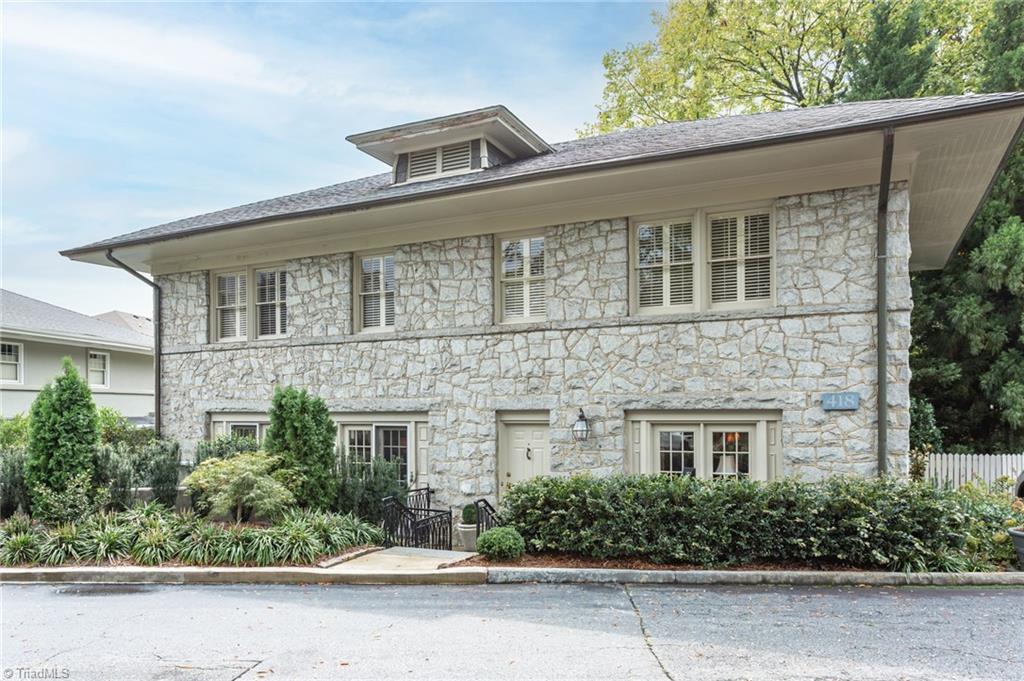
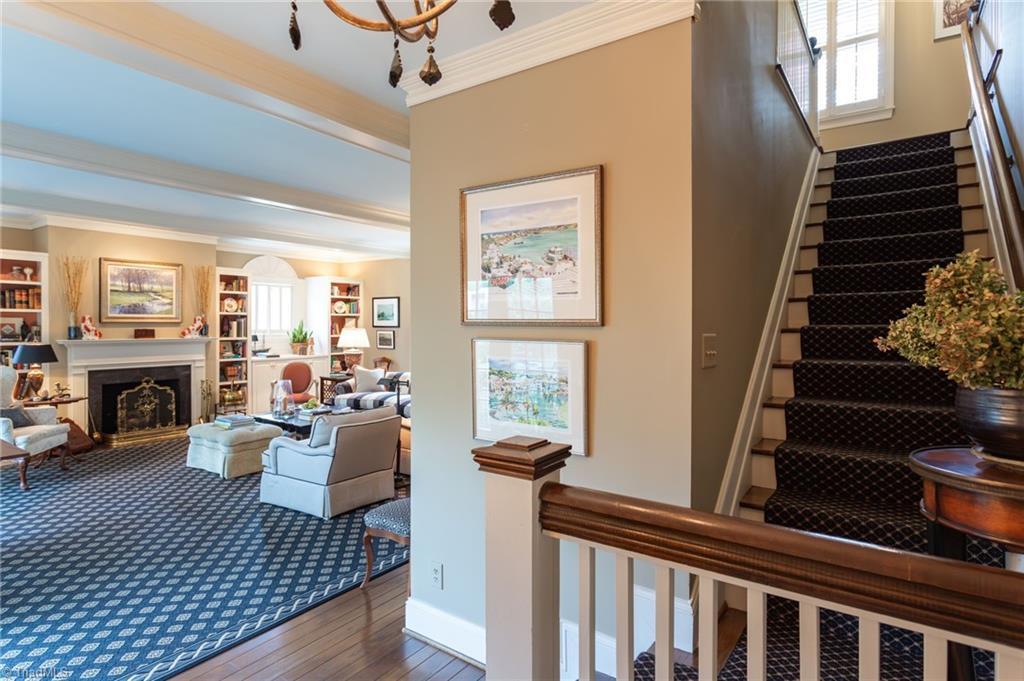

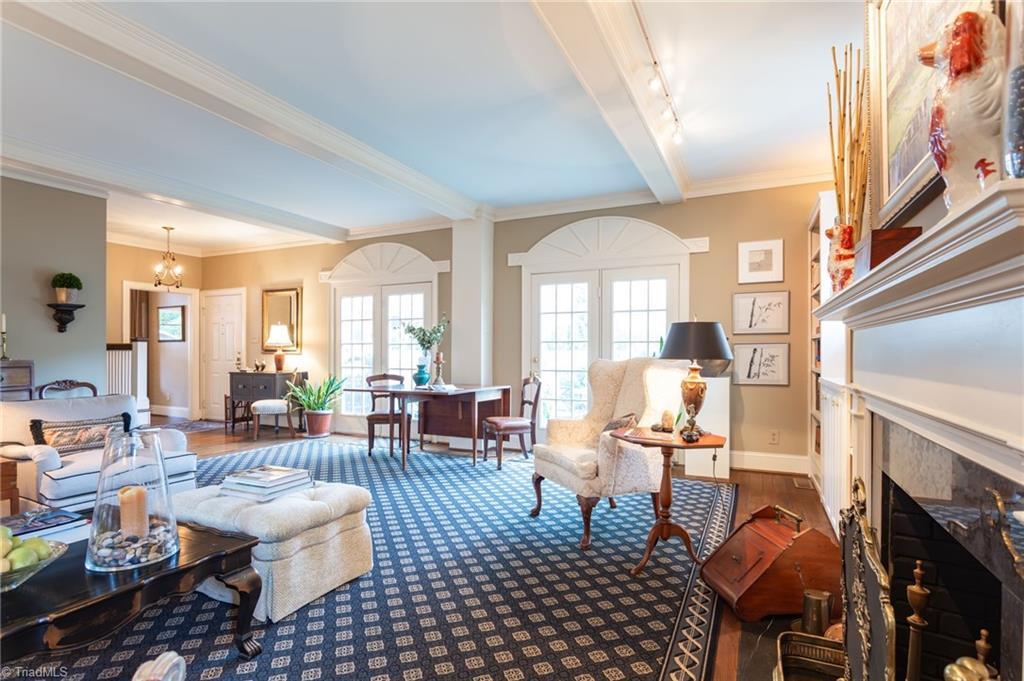
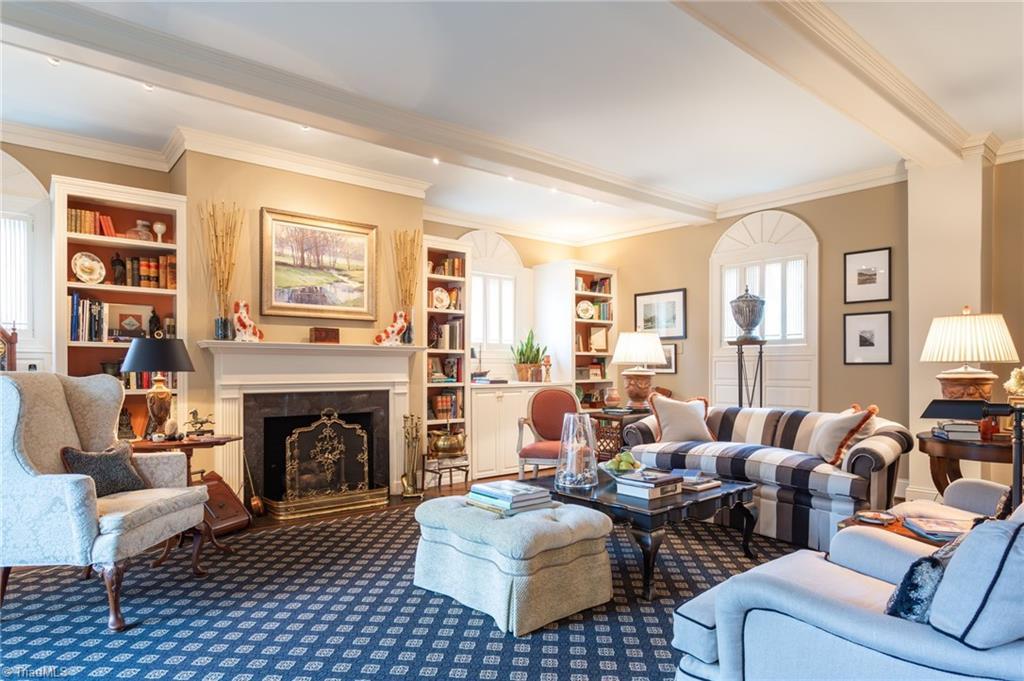
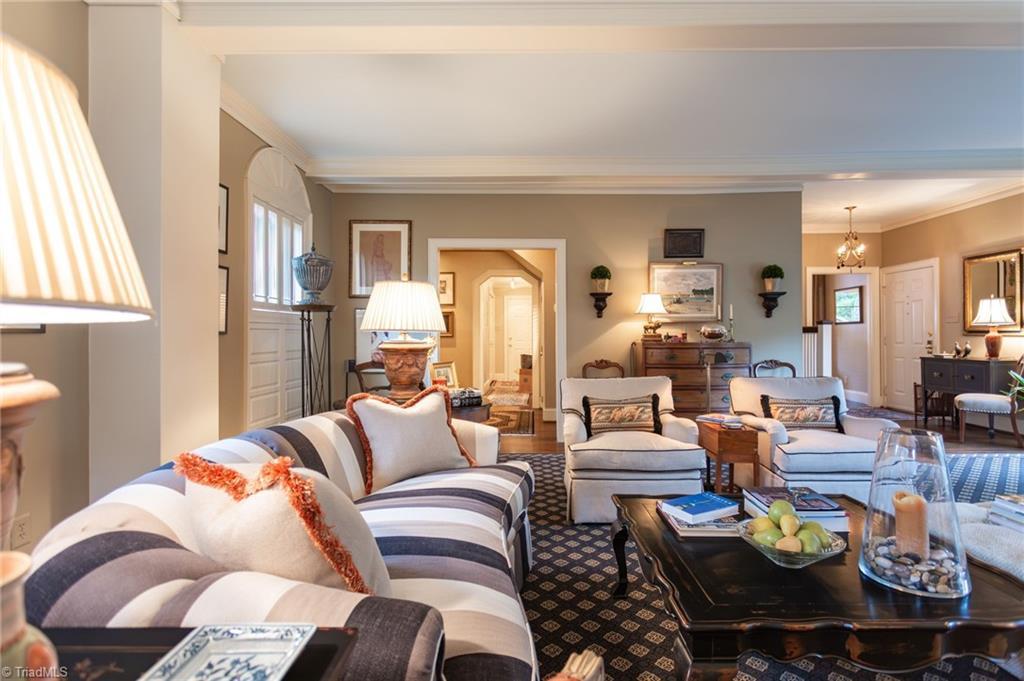


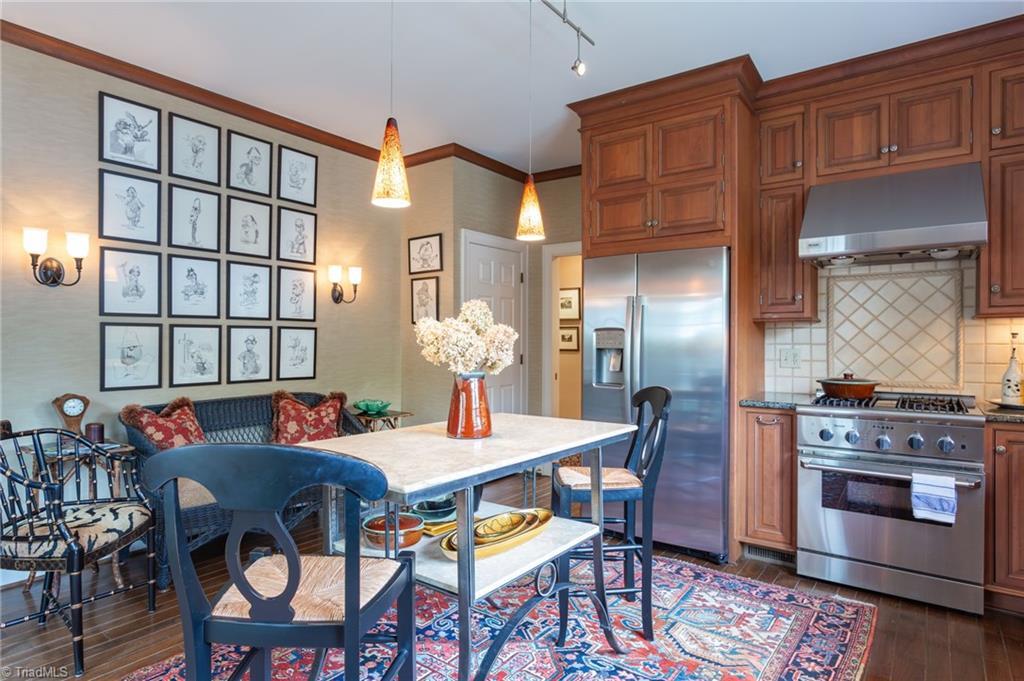
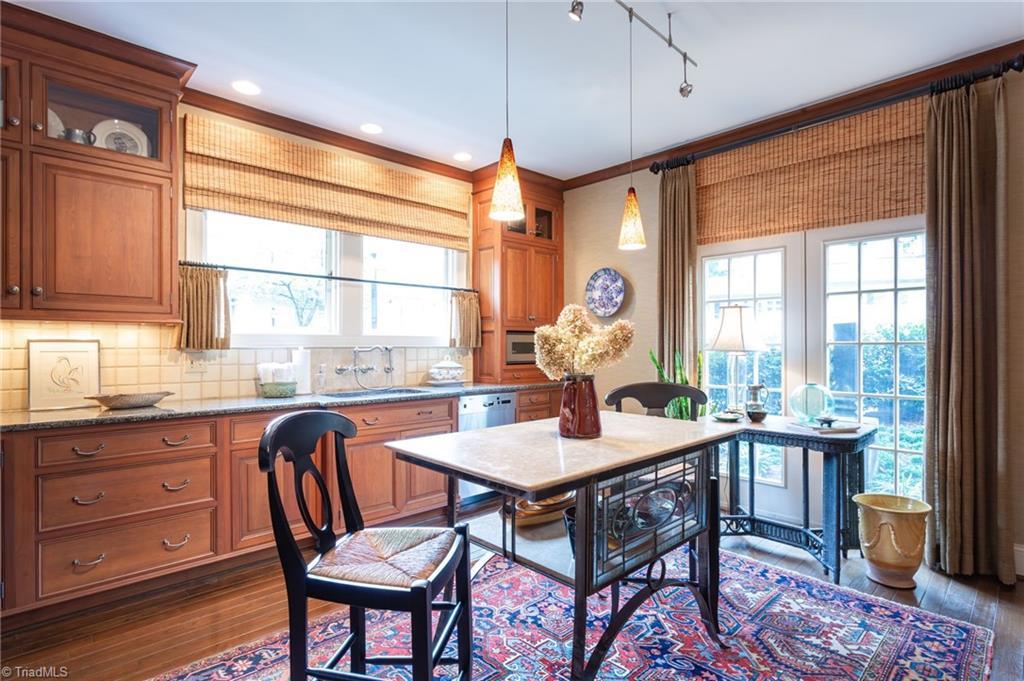


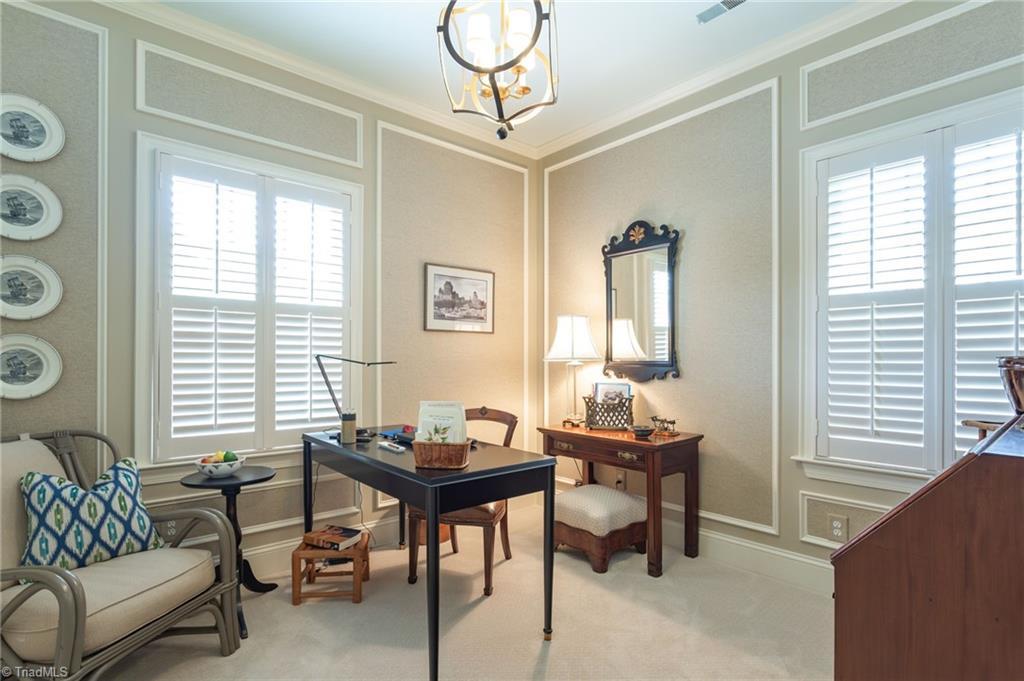
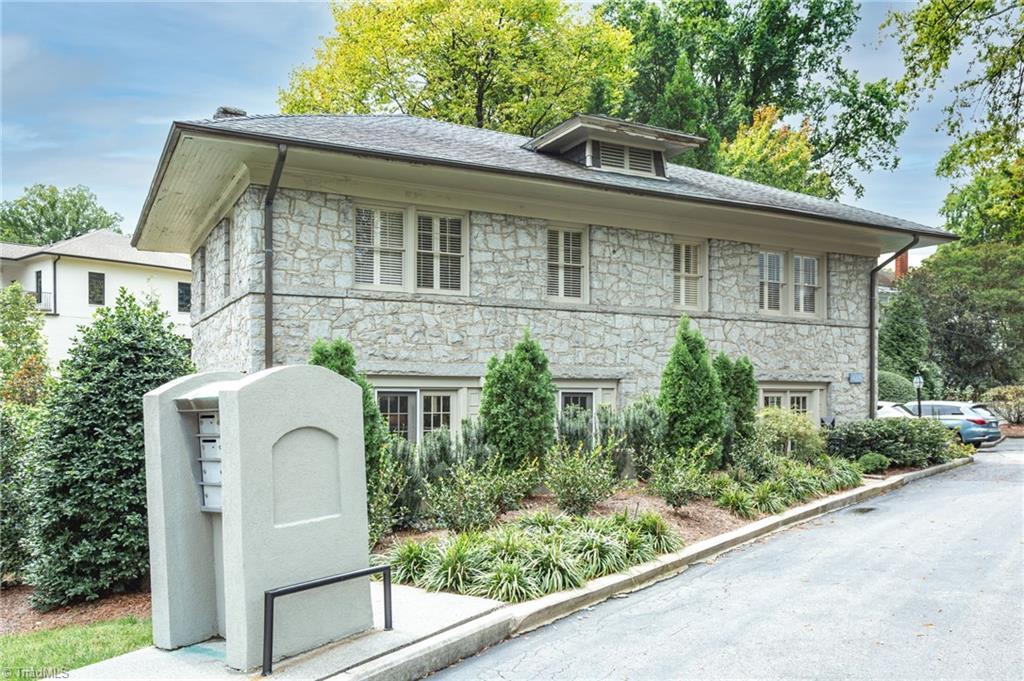
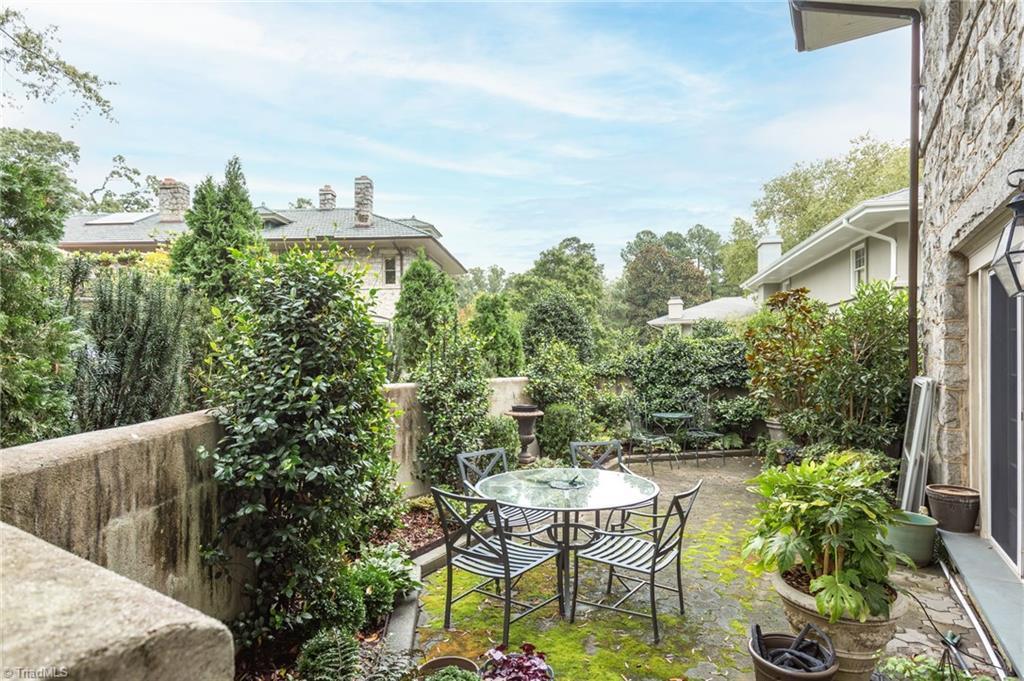
418 Fisher Park Circle, Greensboro
The Latham-Baker House (carriage house)
- Sold for $659,000 on November 5, 2024 (listed at $599,000)
- 2 bedrooms, 2 1/2 bathrooms, 2,294 square feet, 0.03 acre
- Price/square foot: $287
- Built in 1900 (per county, but probably later; see note)
- Listed September 26, 2024
- Last sale: $350,000, September 2003
- Neighborhood: Fisher Park Historic District (local and NR)
This is the carriage house of the Latham-Baker House. Both structures were built around 1913, when J.E. Latham began buying the five lots (1.9 acres) where the two properties now stand. One of the lots was bought from next-door neighbor George Grimsley.
The carriage house became a separate property around 1983, when developers converted the main house into three condos and added four more buildings to the property (one single-family house and three condo buildings — a triplex and two duplexes).
The Latham-Baker House itself, 412 Fisher Park Circle, is a massive granite structure of almost 9,000 square feet. It was divided into three condos around 1983; none of those units have been sold since 1997.
National Register nomination: “The carriage house, or three-car garage, is located southwest of the main house. It is constructed of granite, in the random-coursed rock-faced style of the house. It too has a smooth granite belt course between the first and second stories. There are three dormers and two chimneys in the carriage house, and the roof was originally of the same green terra cotta tile as the main house.
“The second floor of the carriage house was used as servants’ quarters and the interior is finished in the mode typical of modest Fisher Park houses of the period. …
“The architect for the Latham-Baker house was Wells L. Brewer, who had established his architectural firm in Greensboro in 1900. He had the oldest architectural practice in the city when he designed the house. Wells L. Brewer was a native of Rochester; New York, and began his study of architecture in 1878. …
“Andrew Leopold Schlosser was the stonemason for the construction of the Latham-Baker house. Mr. Schlosser came to Greensboro c. 1900 from Germany. … His masonry work was considered to be of the highest quality, and his services were sought-after by architects and builders throughout the state.
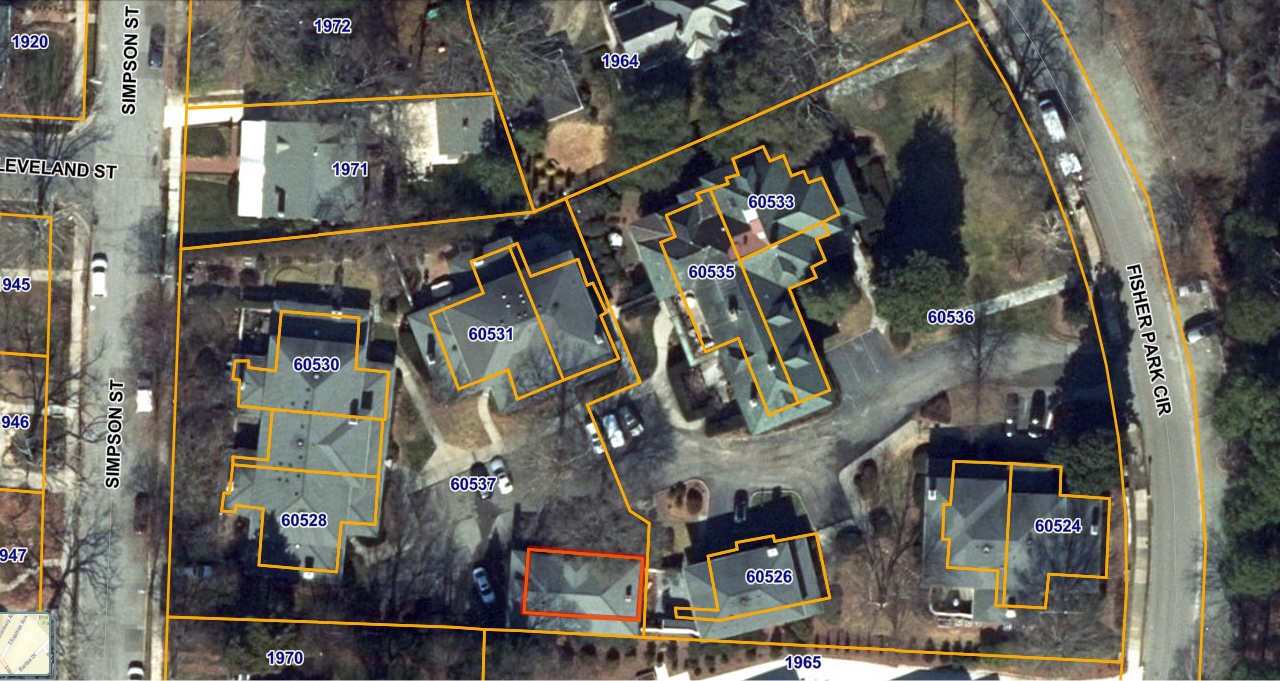
The house is marked in red below:
710nlafayette

- Sold for $472,000 on October 17, 2024 (originally $800,000)
- 8 bedrooms, 7 bathrooms, 5,869 square feet, 1.4 acres
- Price/square foot: $80
- Built in 1874 (see note below)
- Listed November 9, 2019
- Last sale: $37,000, April 1984
- Note: The current real-estate listings for the house show 1840 as its date. The National Register nomination says 1874; county records show 1900, which seems the least likely.
- The house has been in the Hull-Daniel family for 115 years.
NRHP nomination: “The James Heyward Hull House [is] an excellent example of a 1907 Neoclassical Revival style dwelling in Shelby, one of several built at the turn of the century by some of Shelby’s most prominent residents. The large two-story house was originally built ca. 1874 in the Italianate style for Methodist minister Hilary T. Hudson. James Heyward Hull, a cotton broker, bought the house in 1907 and had it transformed into a Neoclassical Revival style house by adding a monumental portico, flanking wings, an ornate deck-on-hip roof, and completely redoing the interior.”
“The residential Neoclassical Revival style was a monumental version of classical elements that became very popular among wealthy industrialists in North Carolina during the bustling ‘New South’ era of the early twentieth century. Also known as ‘Southern Colonial,’ the principal feature was a colossal central portico with one-story porches extending out to the sides. Other characteristic elements of the style were the two-story massing and richly detailed classical columns, entrances, and eaves. The popularity of the style caused it to be chosen as the form for the North Carolina Building at the 1907 Jamestown Tercentennial Exposition in Norfolk, Virginia. The style came to be associated with the ‘new’ southern aristocracy, the cotton mill owners, cotton brokers, and cotton planters.” (footnote in original: “Bishir, Catherine W. North Carolina Architecture. Chapel Hill, North Carolina: University of North Carolina Press, 1990, pp. 420-423″)
3110indian





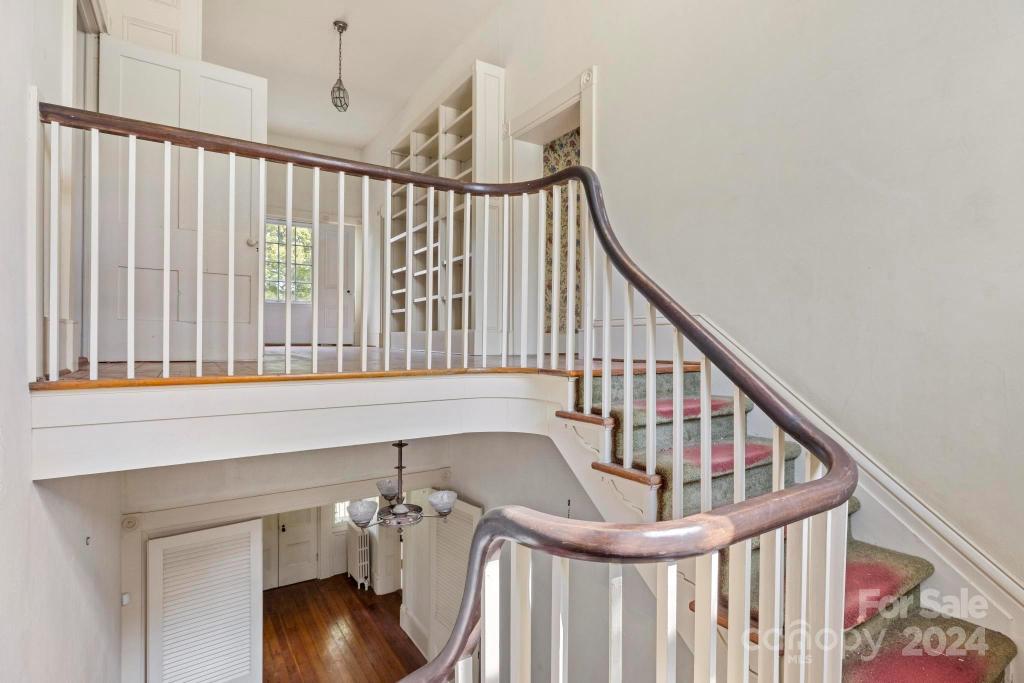


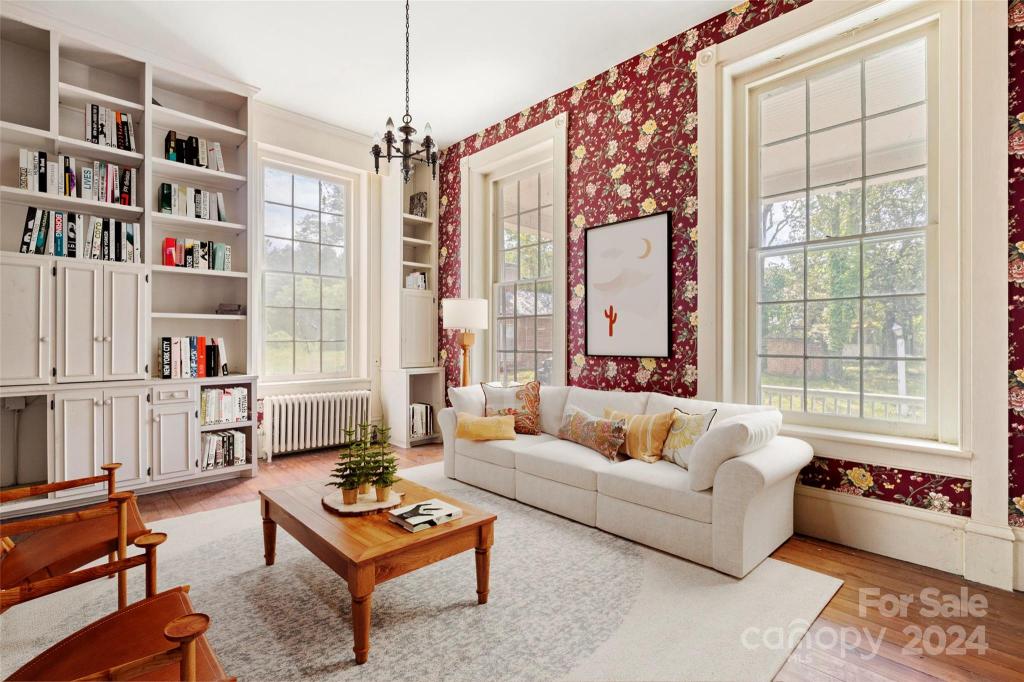
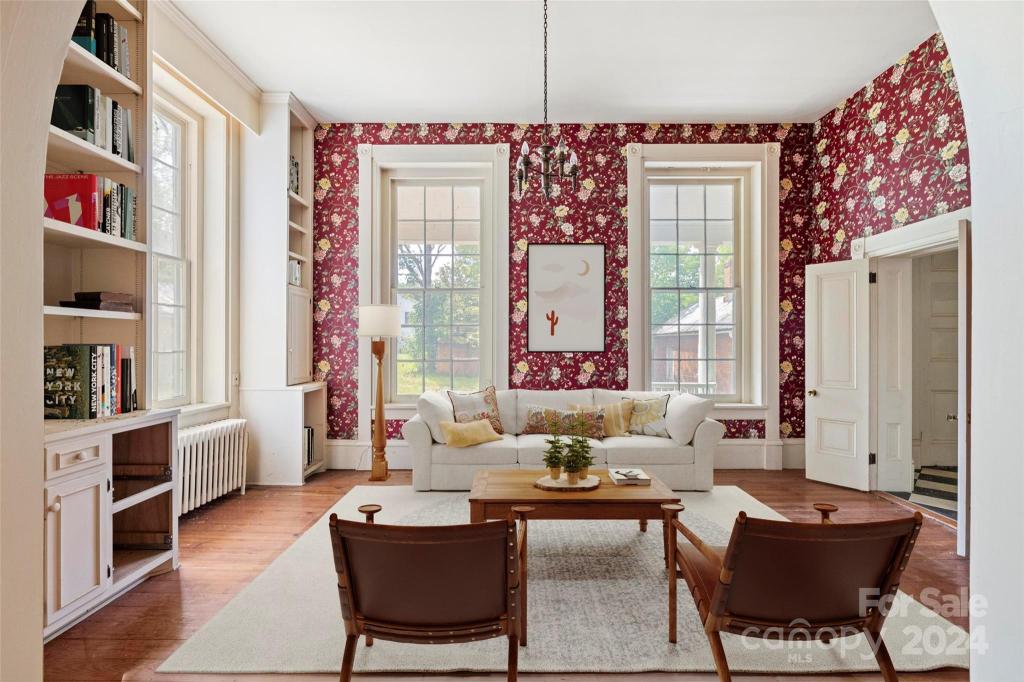


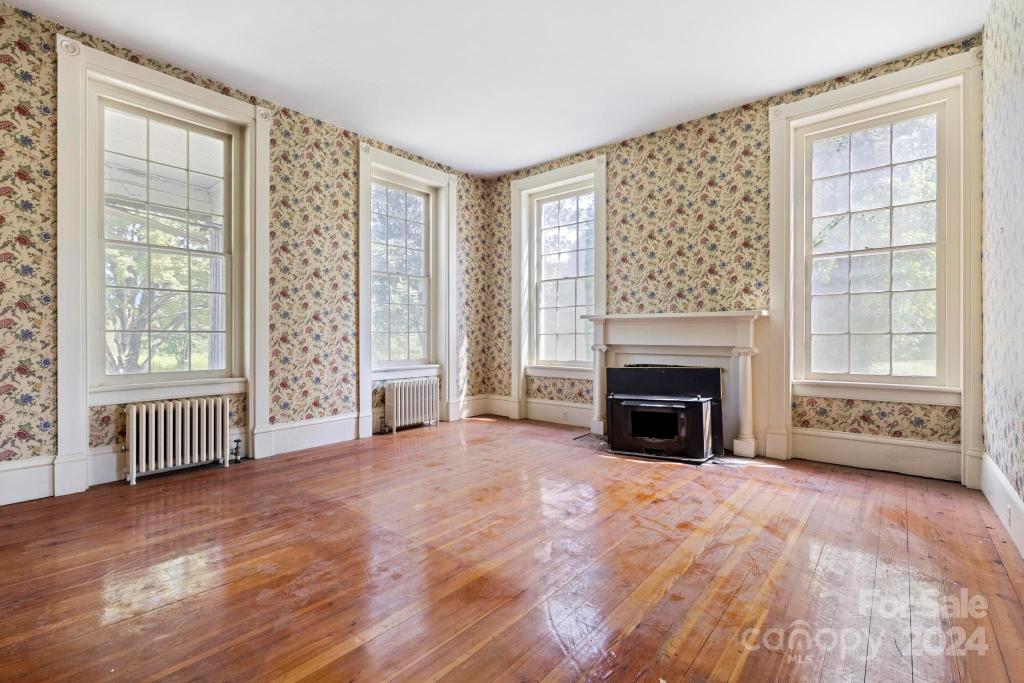



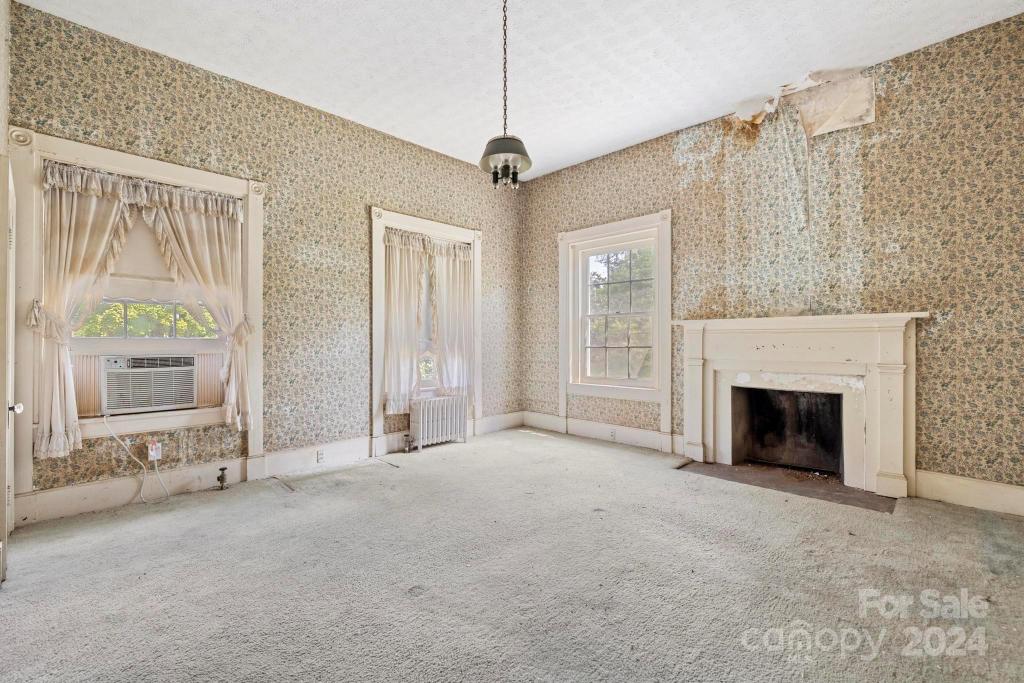

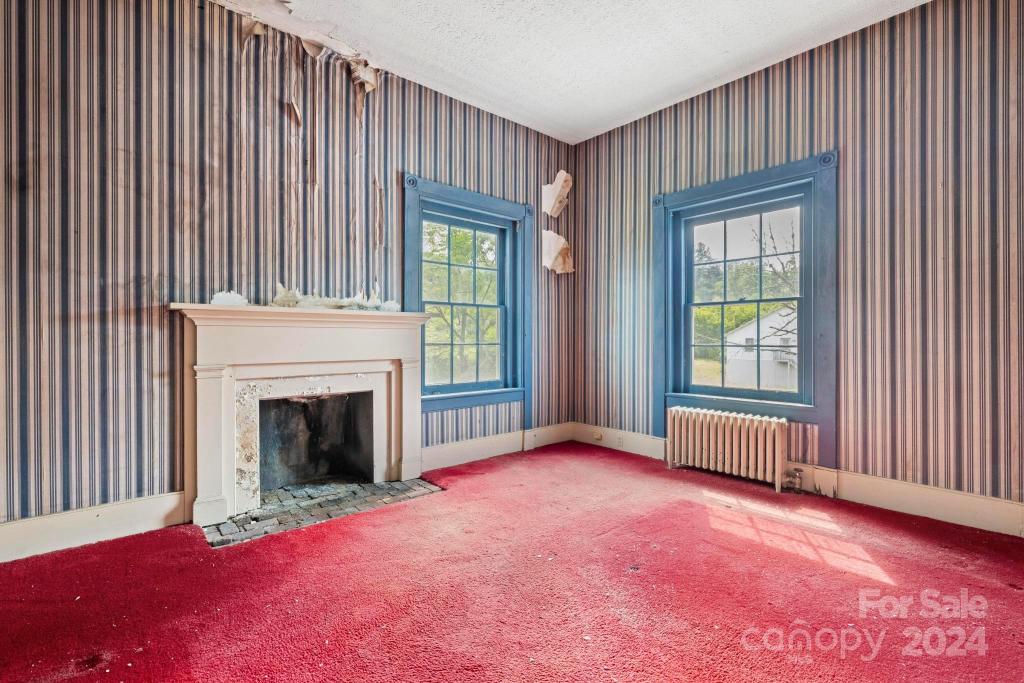
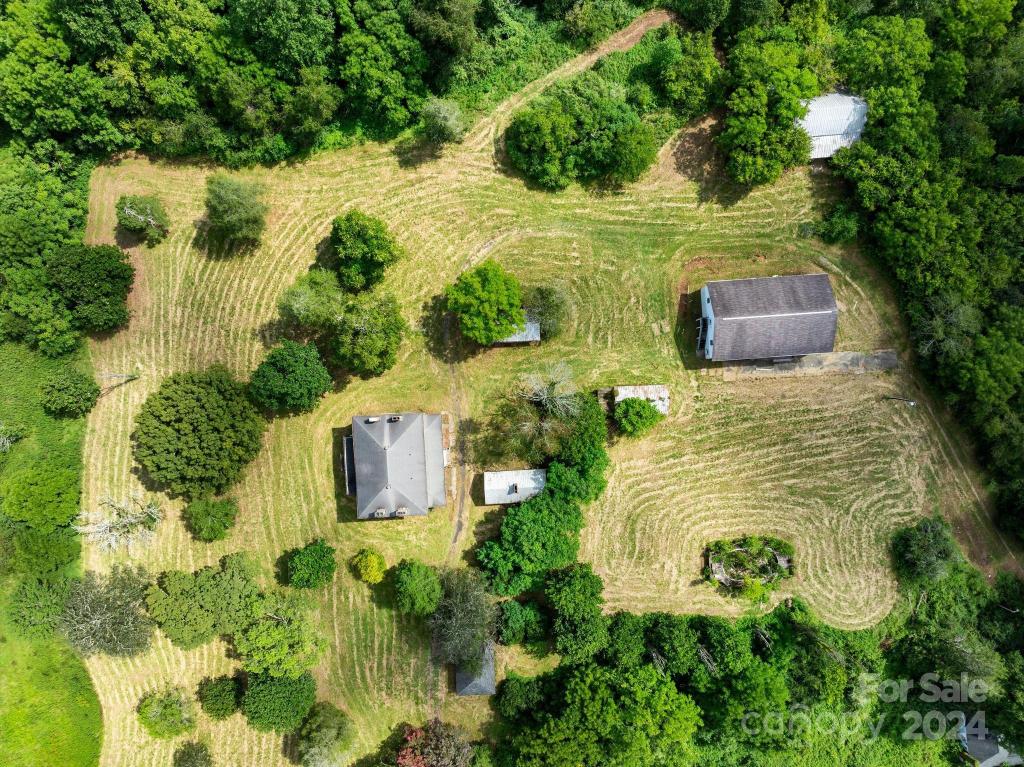
3110 Indian Grave Road, Caldwell County
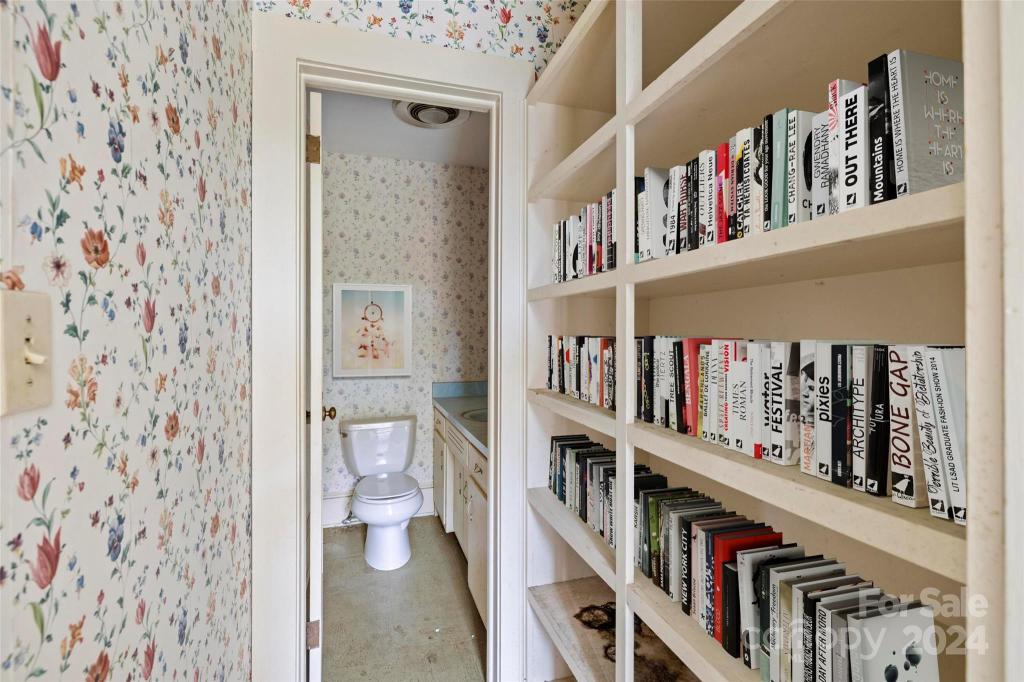
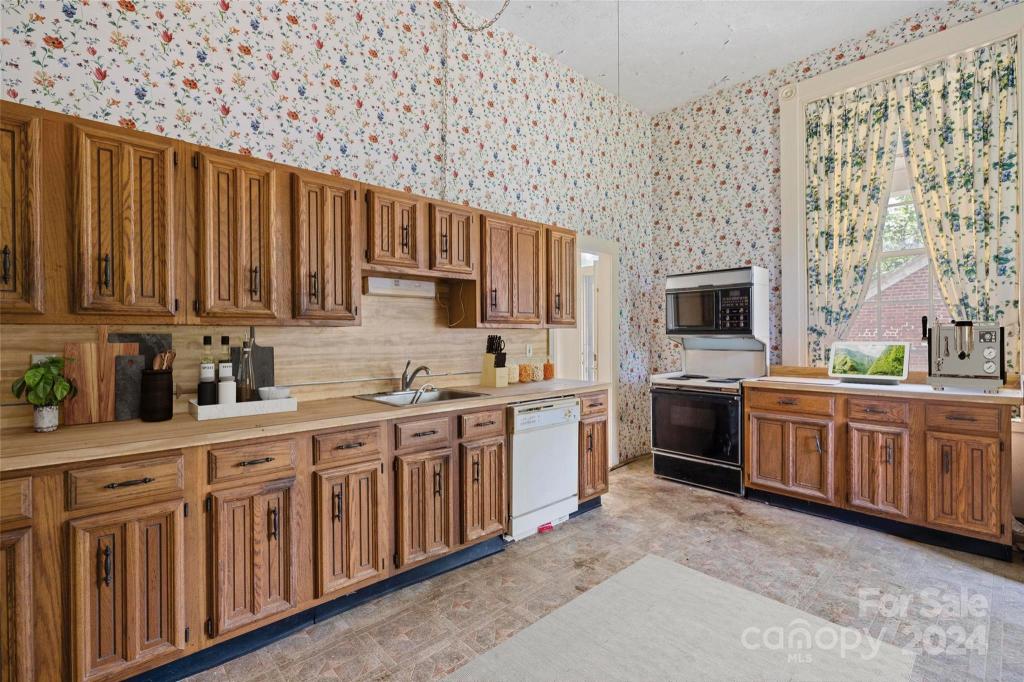
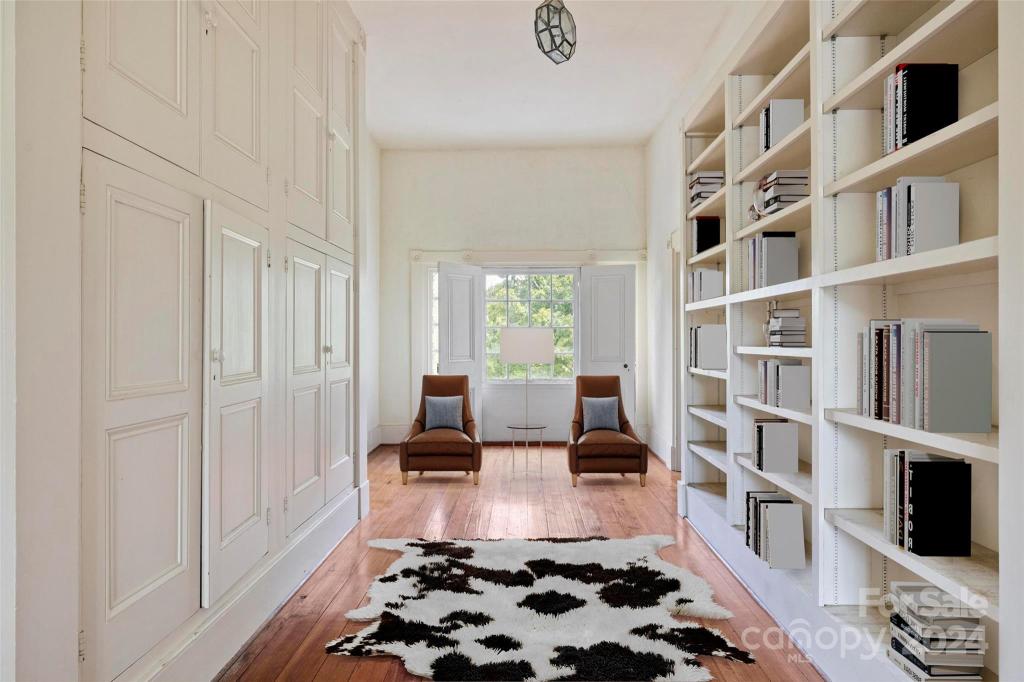
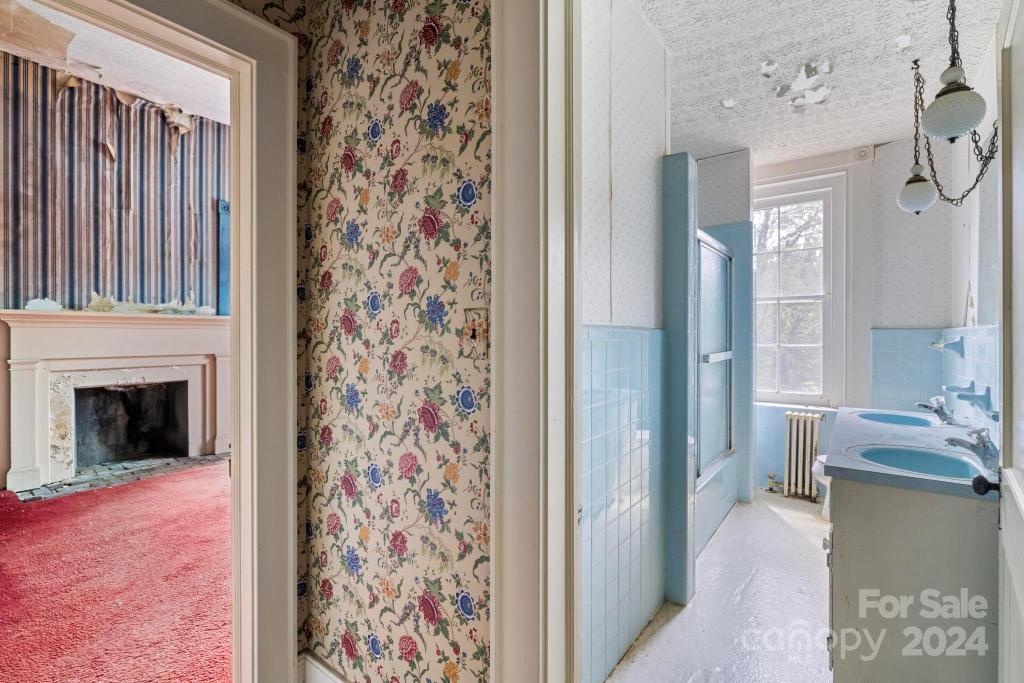
Clover Hill, the Col. Edmund W. Jones House
- Sold for $1,001,000 on September 5, 2024 (listed at $899,900)
- The sale closed 12 days after the for-sale listing went up, at an 11 percent premium to the asking price. The seller was a trust in California that ad owned the property for 34 years; the buyer, an LLC in Ferguson.
- 4 bedrooms, 3 bathrooms, 3,800 square feet, 69.24 acres
- Price/square foot: $263
- Built in 1848
- Listed August 23, 2024
- Last sale: $450,000, January 1990
- Neighborhood: Happy Valley; the property has a Lenoir mailing address but is 7 miles north of the town.
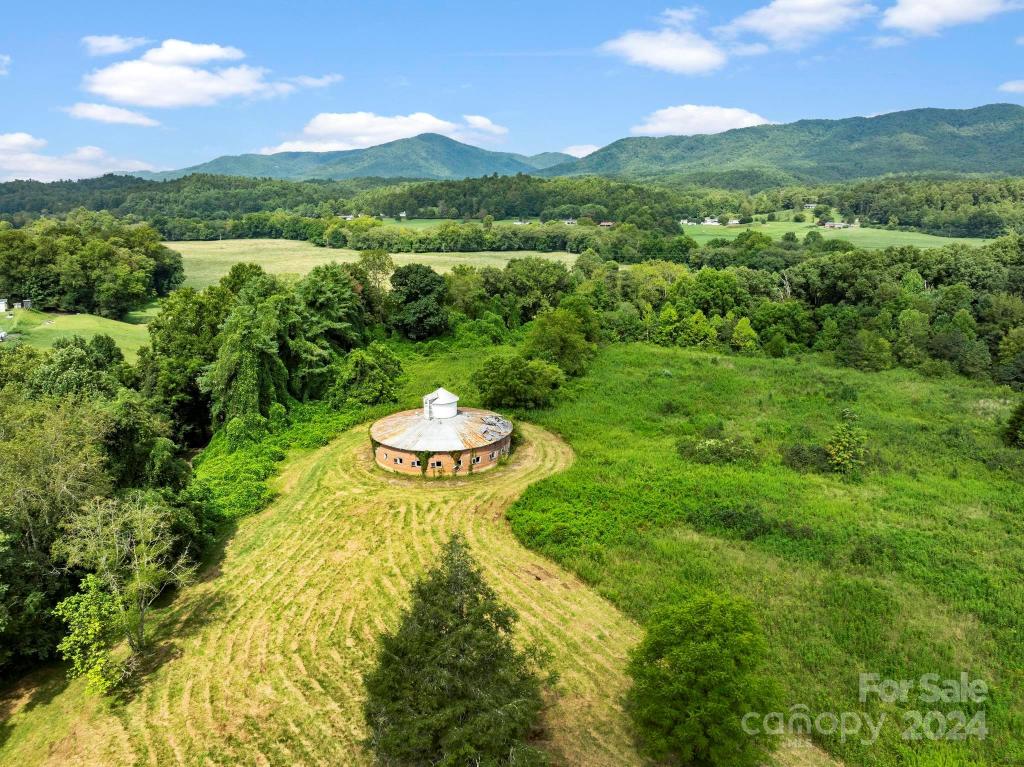
- Note: The property includes a round brick barn, two individual guest quarters, a carriage house, a 6,000 square-foot library building with additional bathroom and bedroom, a red barn and two additional outbuildings.
- Online listings seem to suggest there are no central heating or air-conditioning systems.
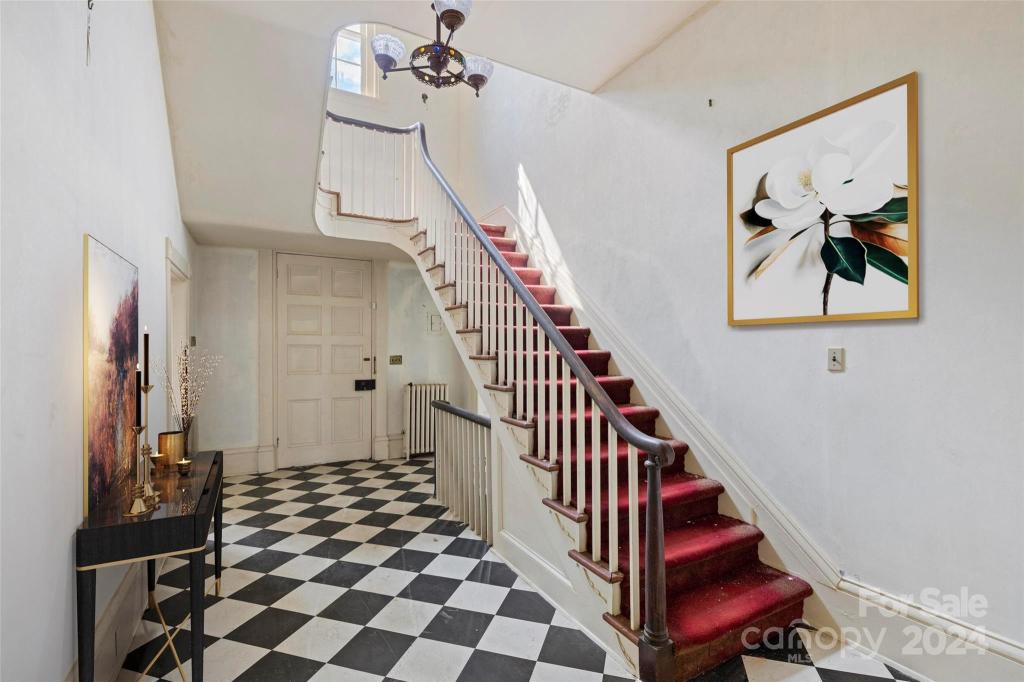
National Register nomination: “Clover Hill is a Greek Revival plantation house distinguished from other houses of the mode in the area by its unusually handsome Ionic porch, entrances, and its well-executed interiors. It is enhanced by its idyllic setting, overlooking Happy Valley against the distant Appalachian Mountains. …
“During the nineteenth century, the rich up-country river valleys supported an affluent plantation society which was very much in touch with the planter class of North Carolina and had social and family ties throughout the South as well. A section of the Yadkin River Valley was referred to as Happy Valley early in the nineteenth century due to the congenial relations enjoyed by the inhabitants. Among these were members of the Jones family, who were associated with farming, manufacturing and politics.
“In 1846 Colonel Edmund W. Jones [1811-1876], son of General Edmund Jones and [Anne] Lenoir, built Clover Hill for his bride, Sophia C. Davenport [1912-1860], across the Yadkin River from his father’s house, Palmyra. It was just down the river from Fort Defiance, home of General William Lenoir [brother of Anne Lenoir] and nucleus of the Happy Valley community. Jones helped establish Yadkin Valley School in 1852 and is also remembered as co-founder of the first cotton factory in Caldwell County. Following his death in 1876, Clover Hill went to his son, Edmund Jones, the third generation of that name to live in Happy Valley. Following this, Clover Hill passed through numerous ownerships and legal entanglements. …
“Clover Hill was cited by Thomas Waterman in The Early Architecture of North Carolina and by Talbot Hamlin in Greek Revival Architecture in America as being among the state’s best examples of Greek Revival domestic architecture.”
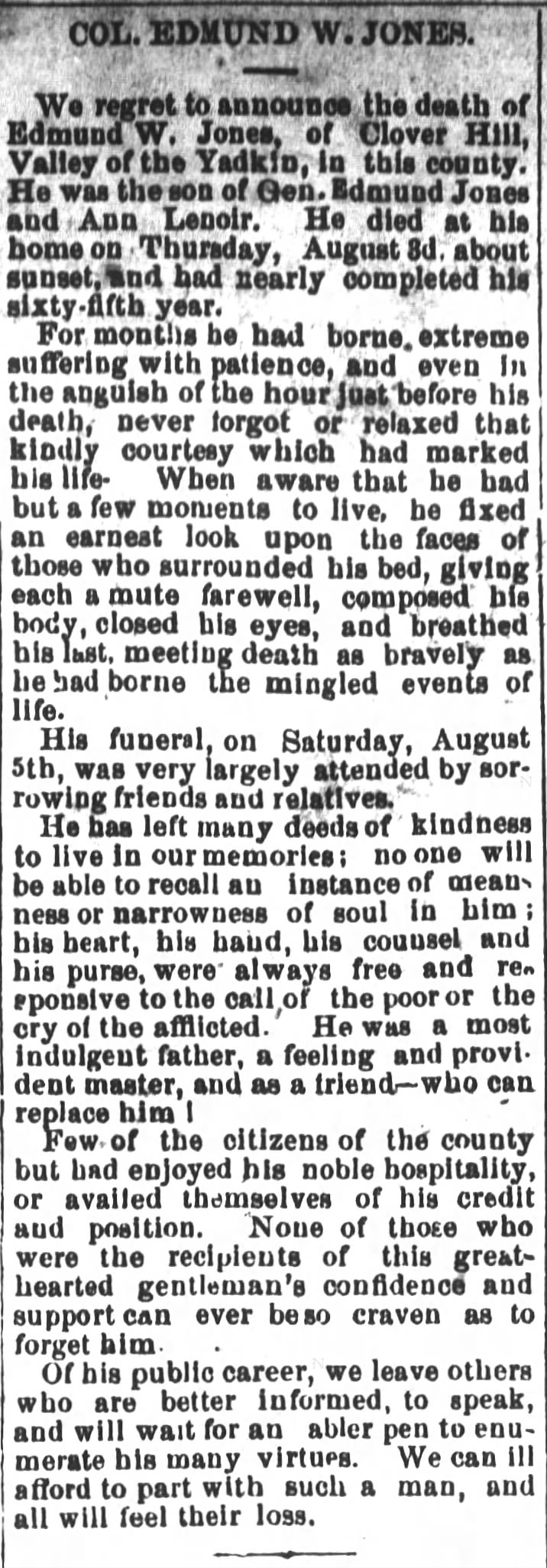
The colonel’s obituary in The Caldwell Messenger is a sterling example of over-the-top 19th-century obituary writing.
630spencer





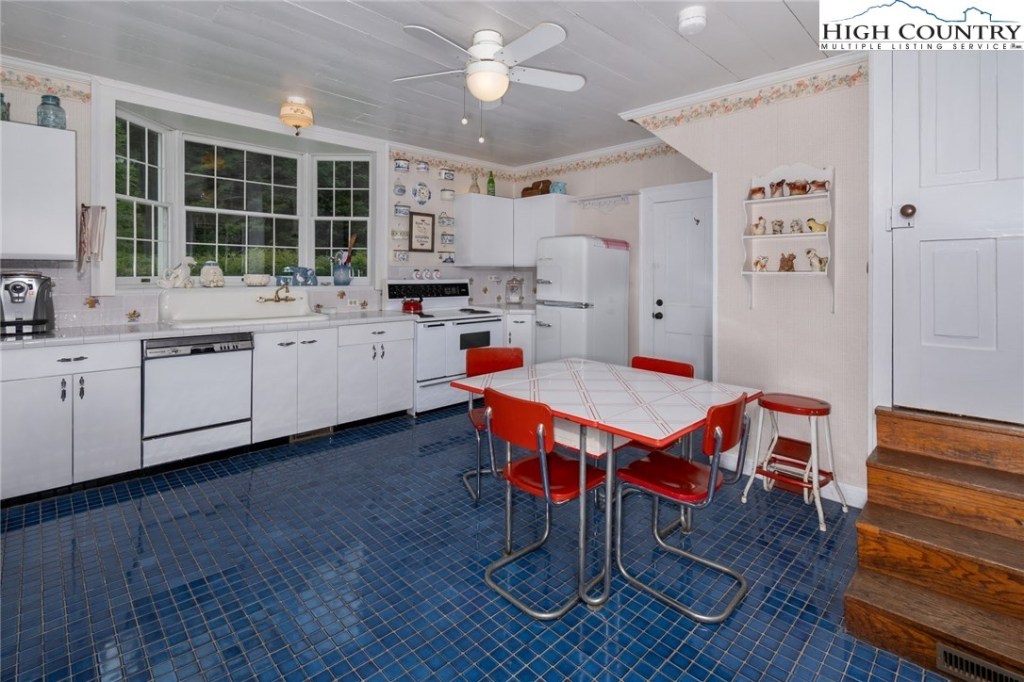


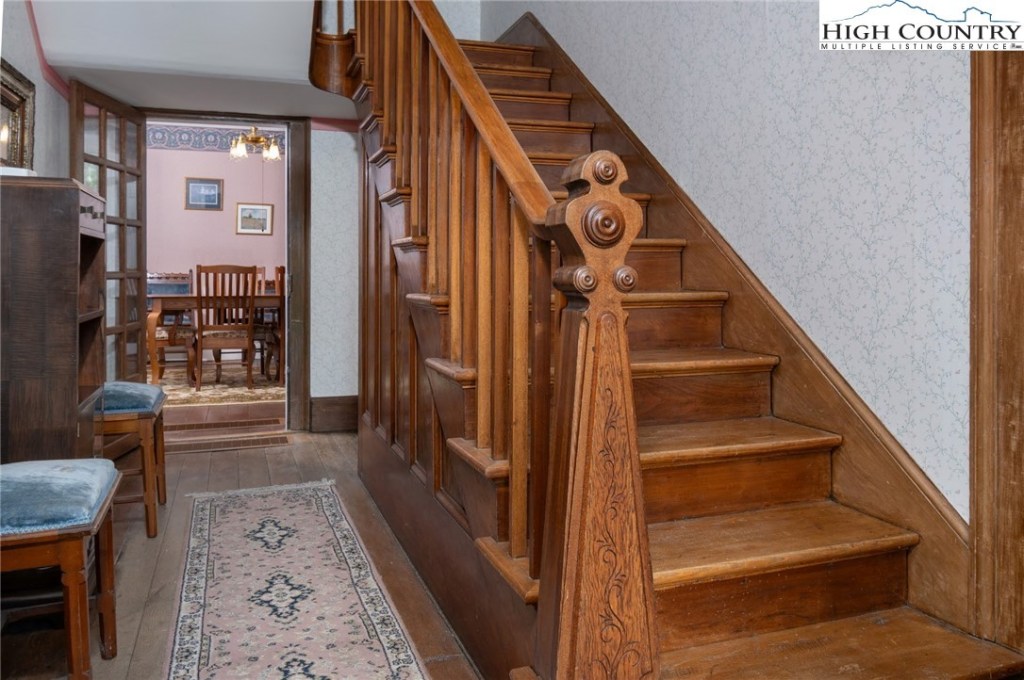

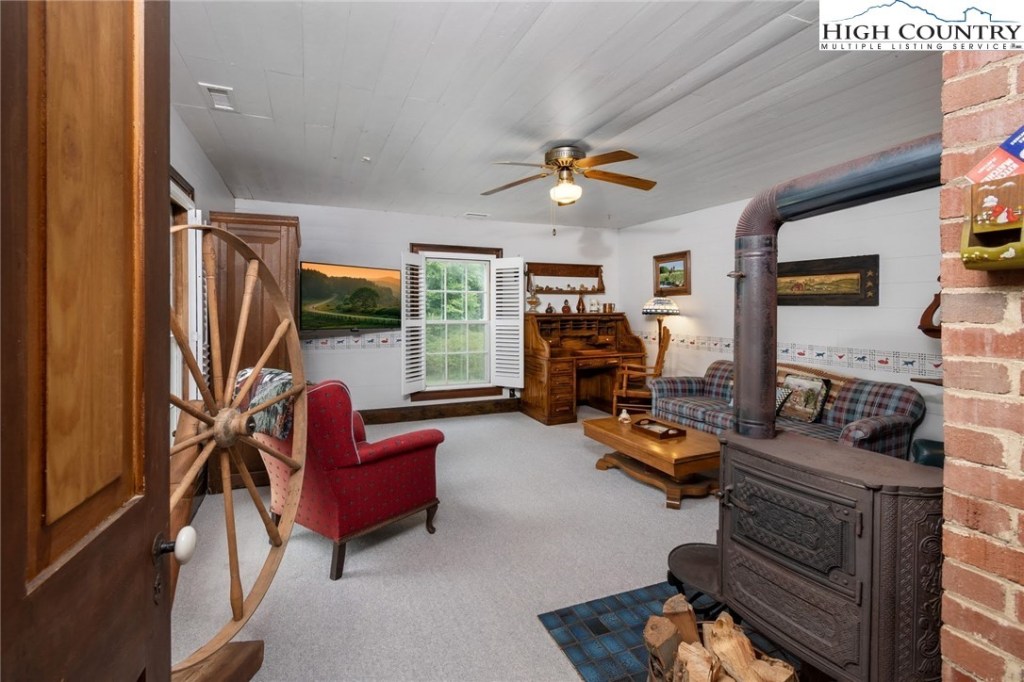

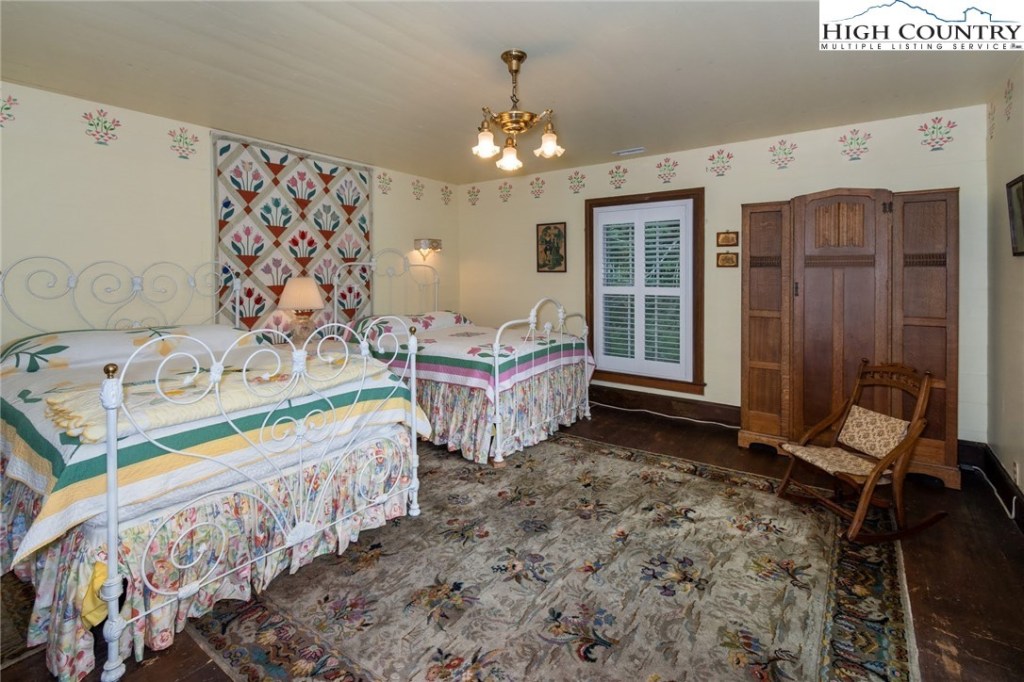

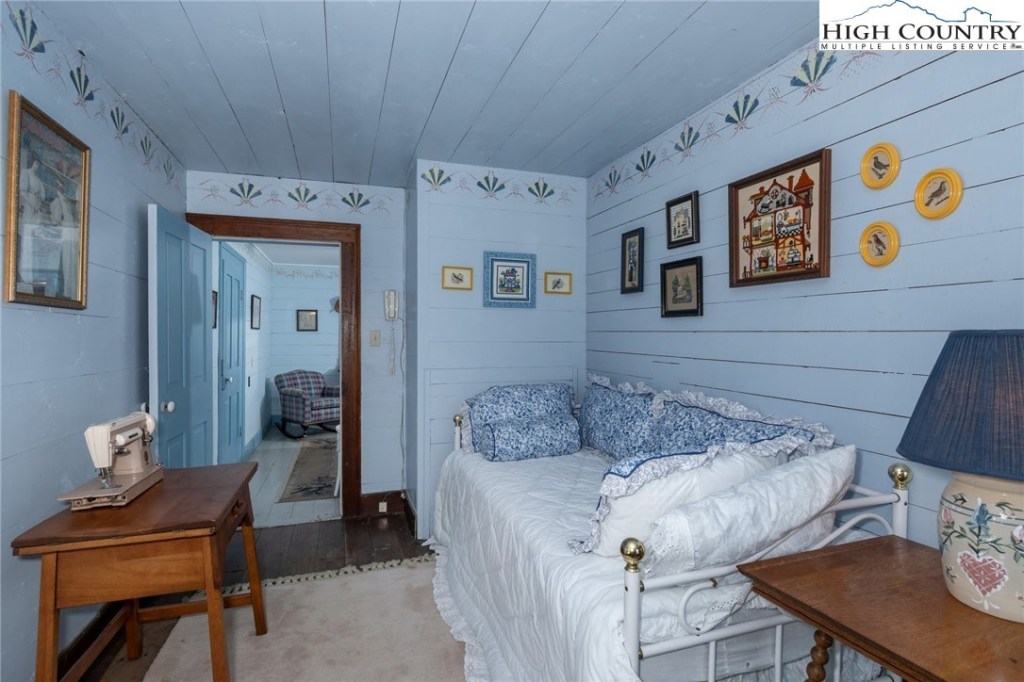
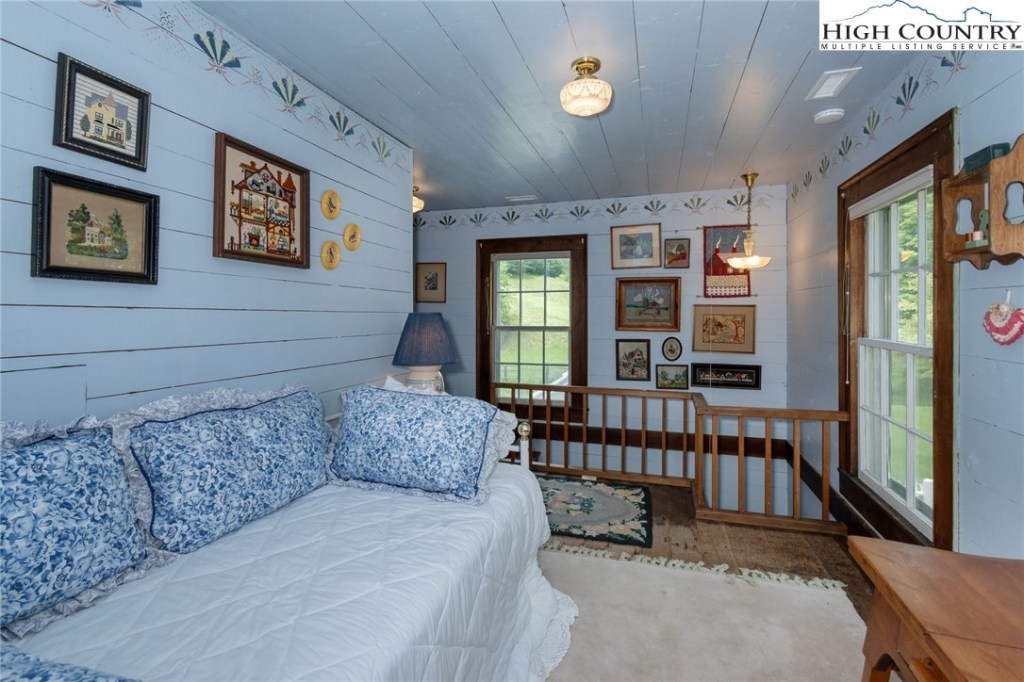
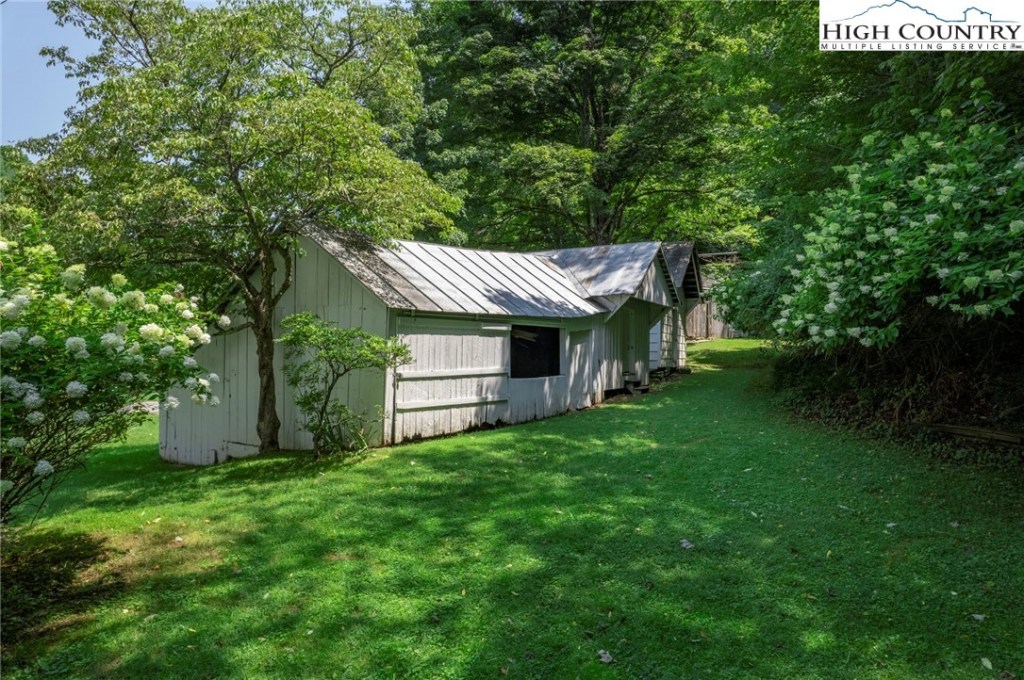
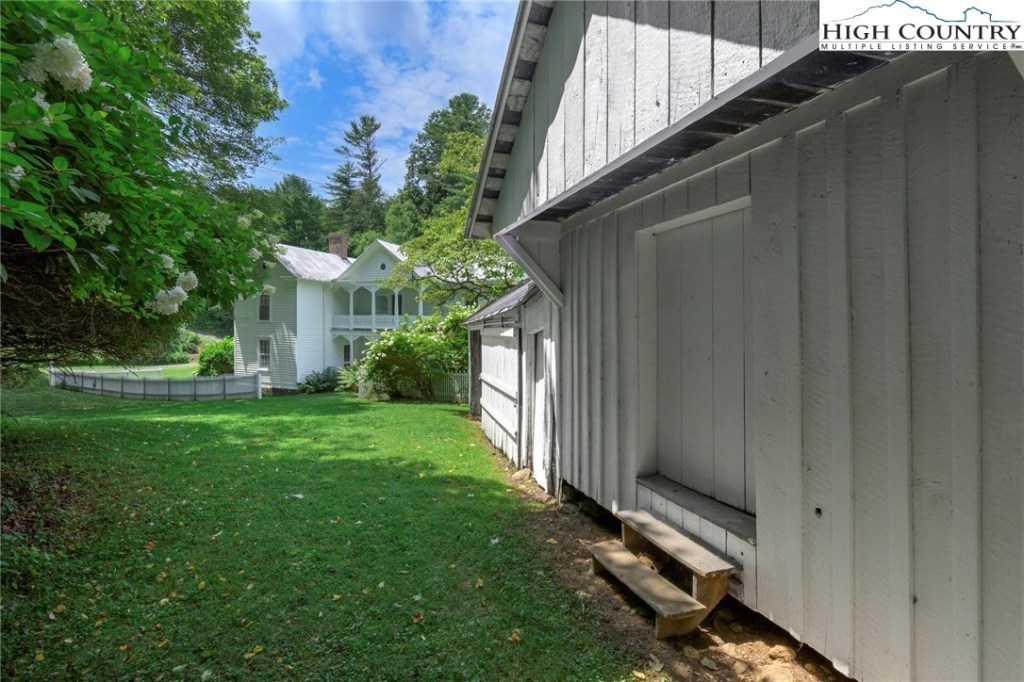

630 Spencer Branch Road, Lansing, Ashe County
The Cicero Pennington Farm
- Sold for $649,000 on August 21, 2024 (listed at $649,000)
- The buyer is an LLC in Raleigh, owned by two pharmacists who operate a company that provides specialty pharmacy services to chronically ill patients.
- The sale closed 17 days after the house was listed for sale, an astonishingly short time for such a significant property.
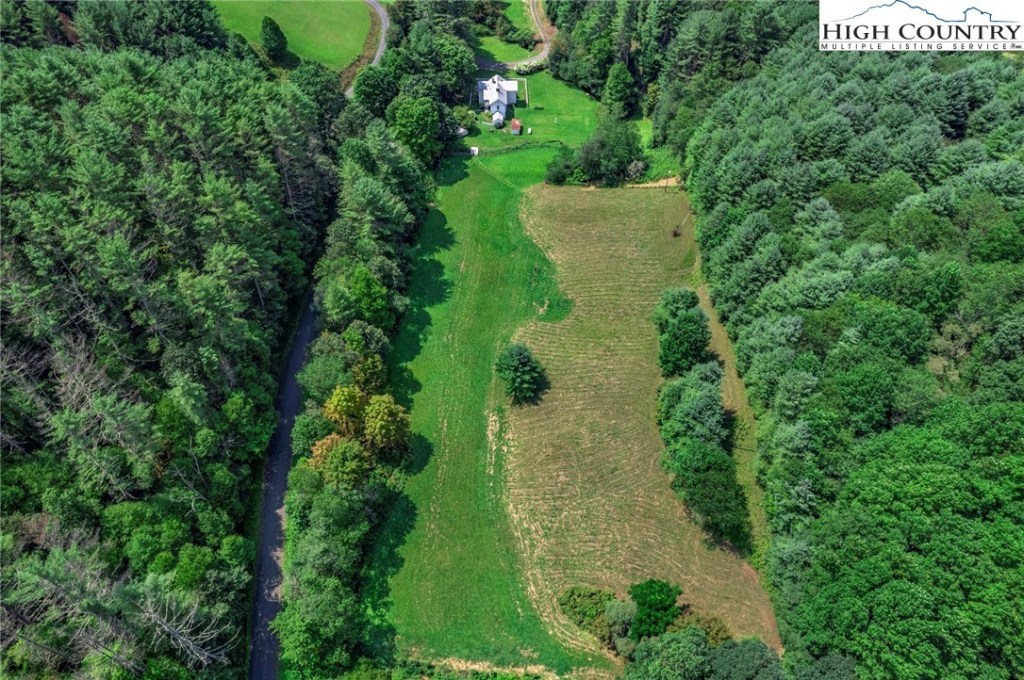
- 4 bedrooms, 2 bathrooms, 2,453 square feet, 20.80 acres
- Price/square foot: $265
- Built in 1884
- Listed August 4, 2024
- Last sale: $322,000, September 2016
- Neighborhood: Located between the communities of Sturgills and Helton, about 1 mile south of the Virginia state line. It has a Lansing mailing address but is six miles north of the town.
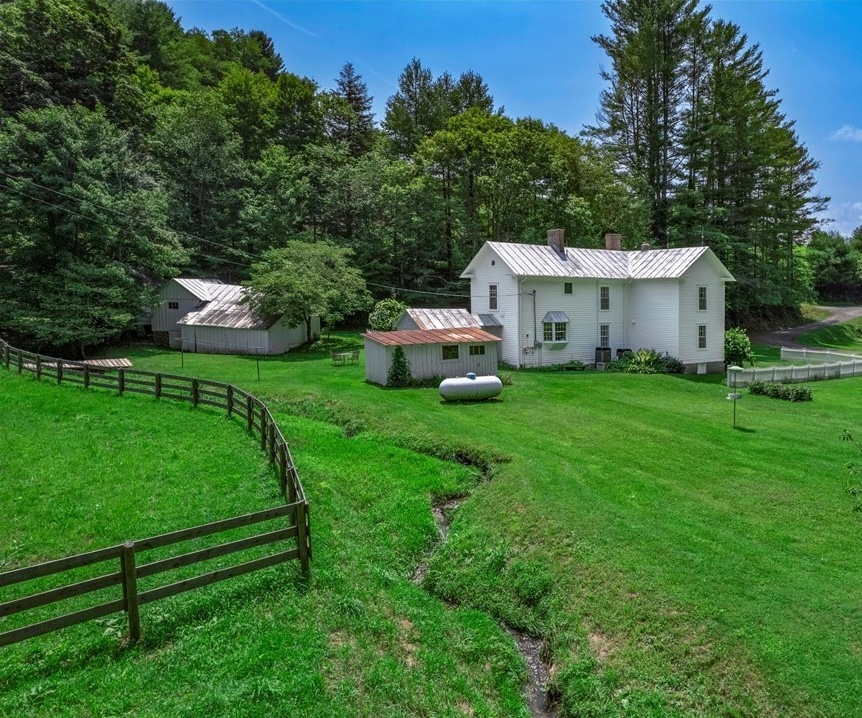
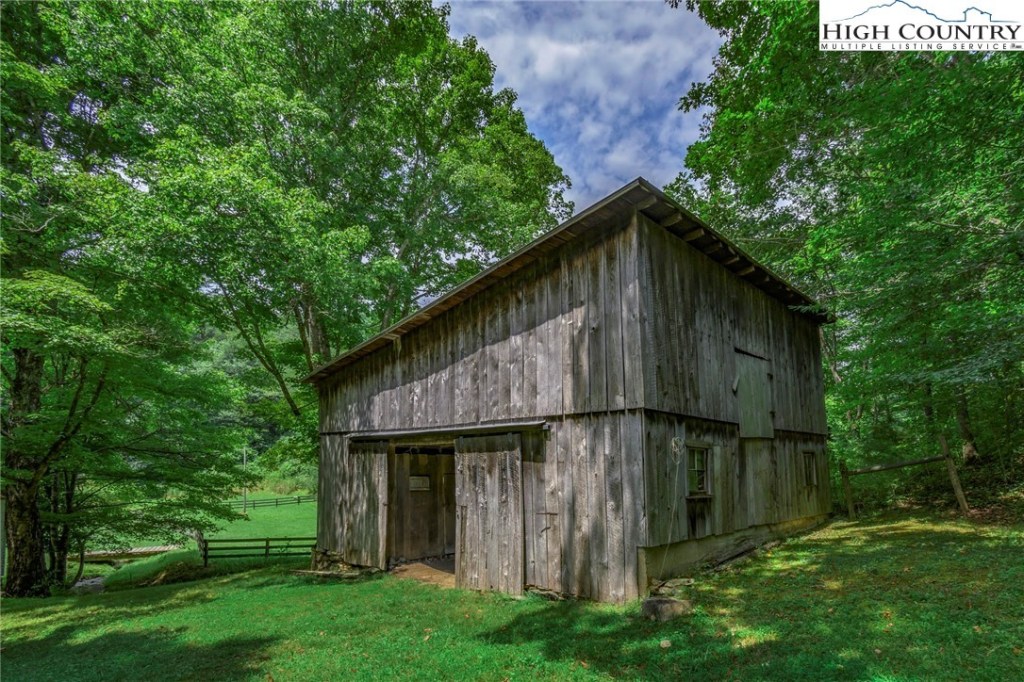
- Listing: A creek runs through the property, which includes a fenced-in pasture, a historic springhouse/laundry room, garden shed, carriage house, woodshed, workshop, root cellar and barn.
- The house is being sold furnished.
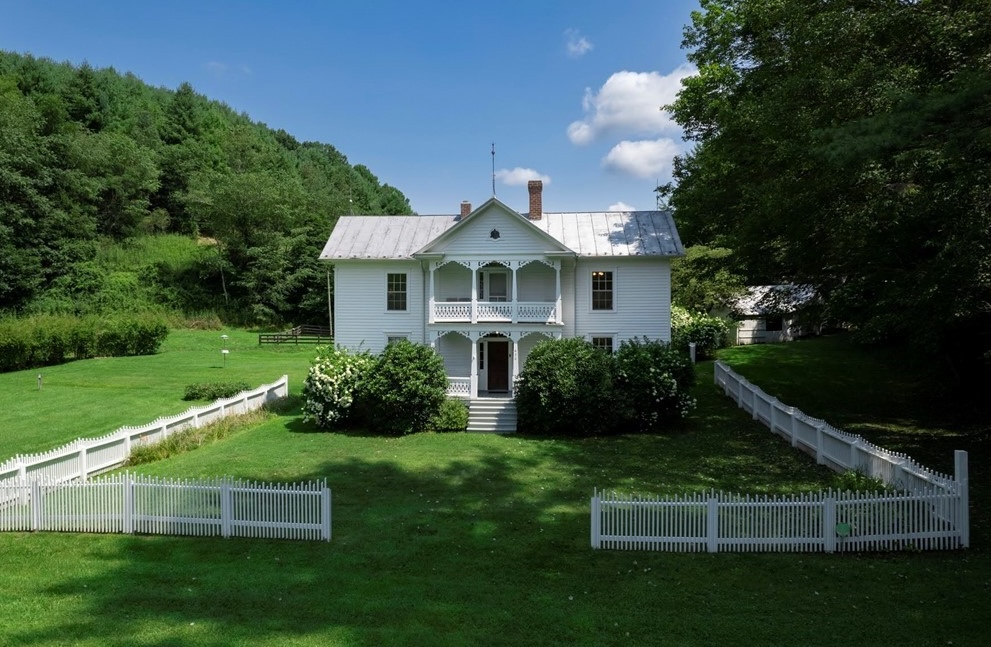
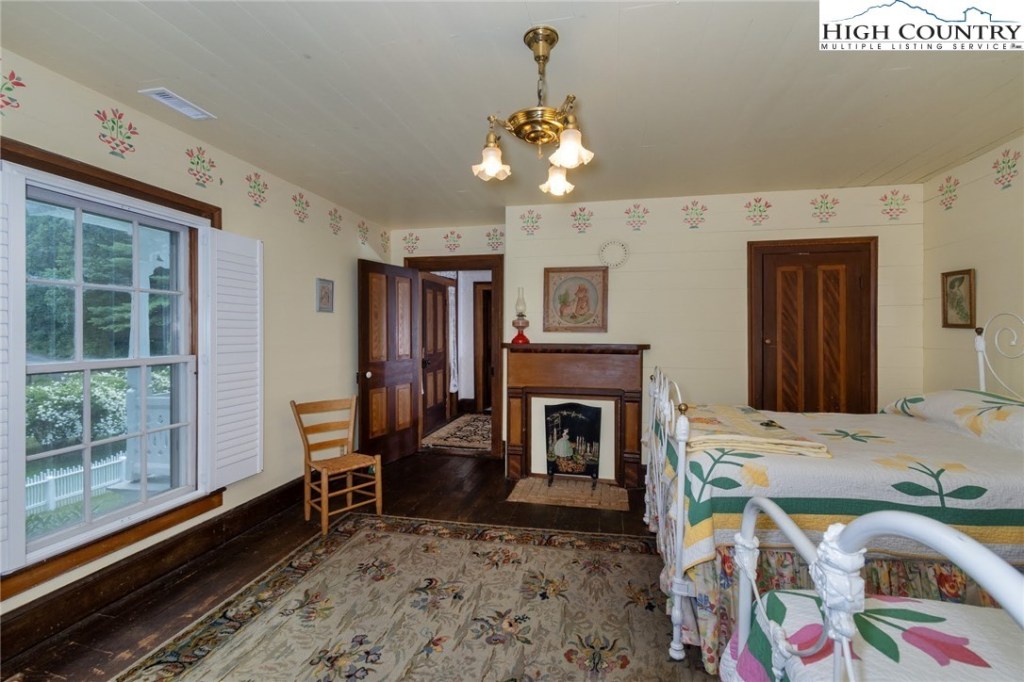
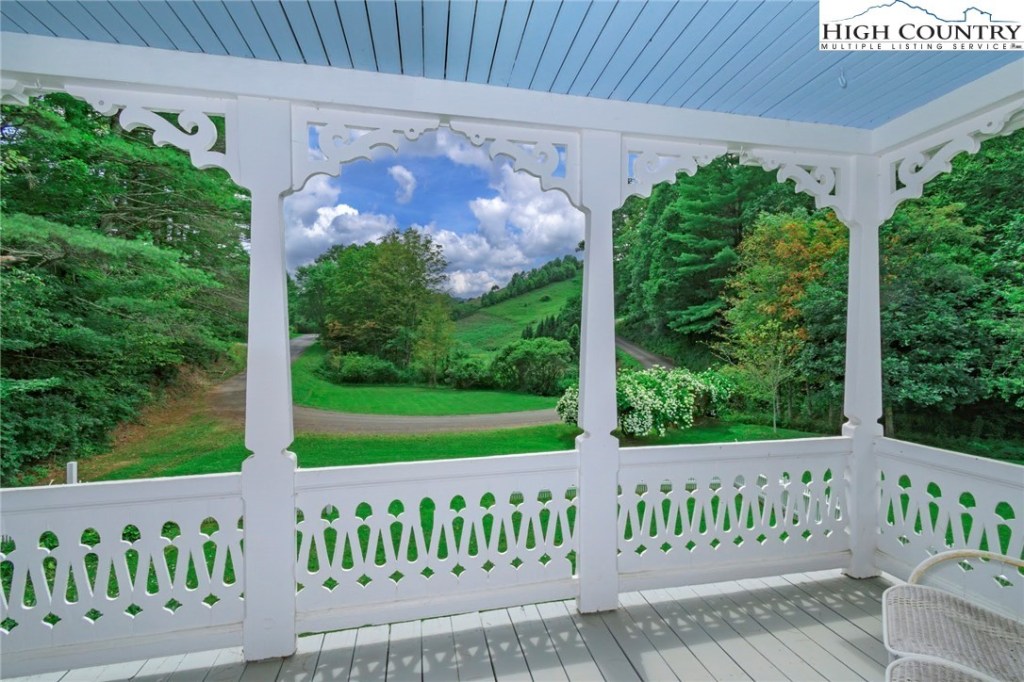
National Register nomination: “The Cicero Pennington Farm sits on a 20.799-acre parcel in northern Ashe County, North Carolina, and includes a main house built in 1884. It is a frame I-house with a rear ell. It features a gabled, double-tier porch centered on its façade and another gabled, double-tier porch on the rear ell.
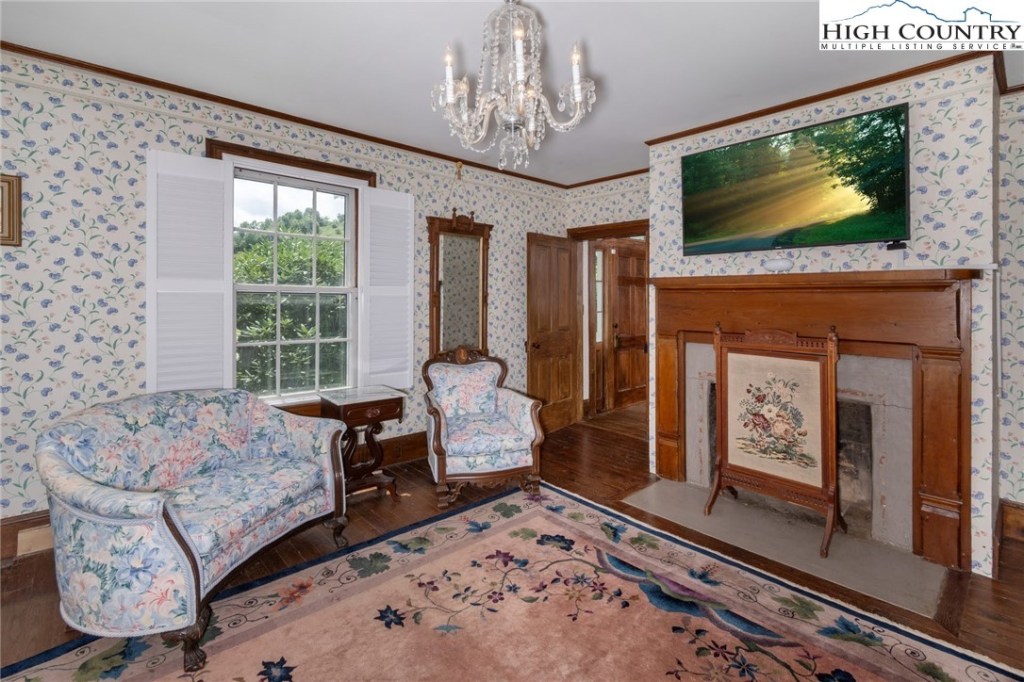
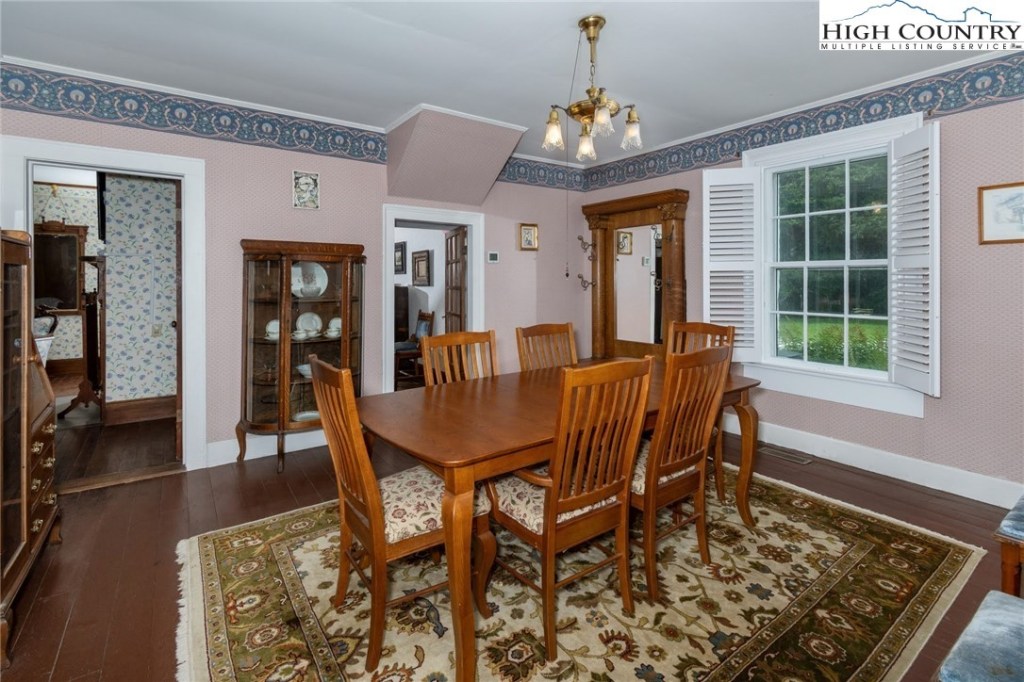
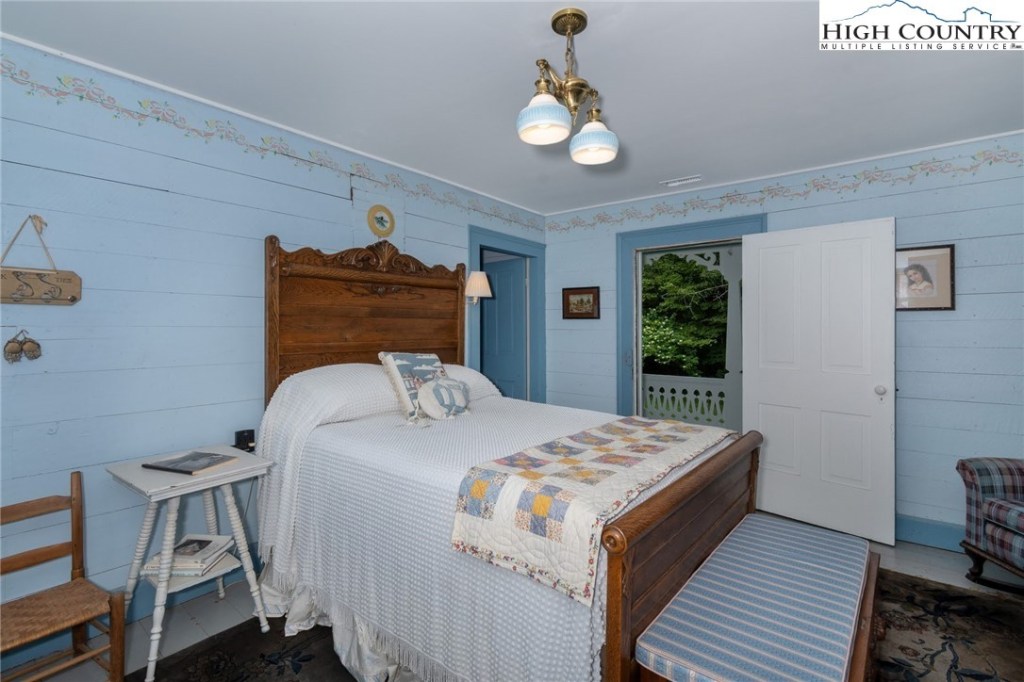
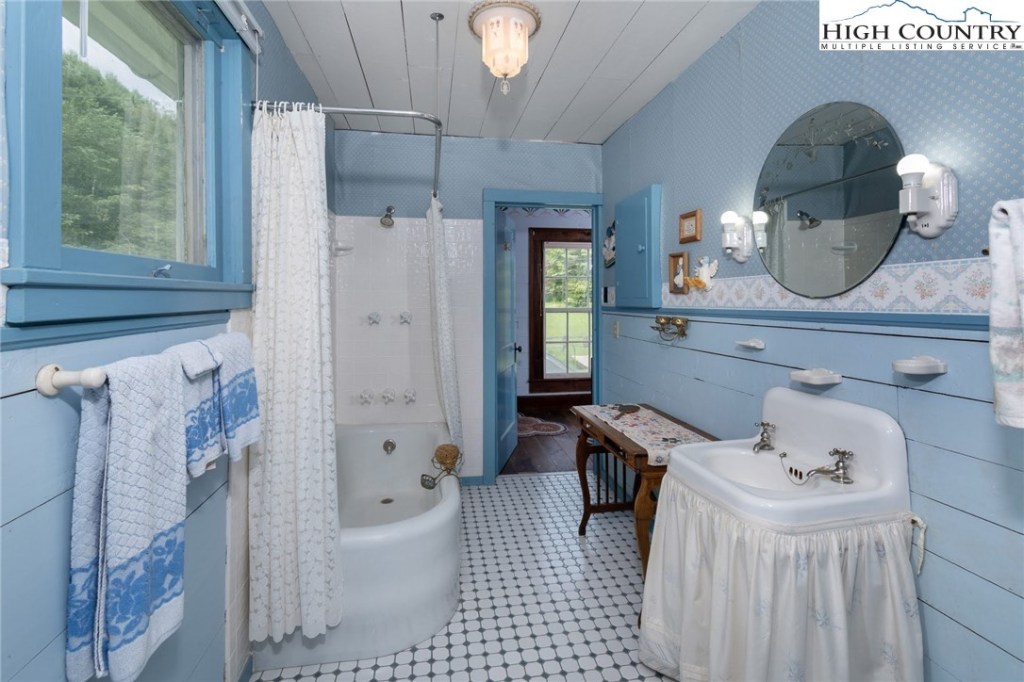
“This common house form has a high degree of sawn-wood, ornamental detail applied, primarily to the porches, in keeping with the vernacular interpretation of popular architectural trends of the mid- to late-nineteenth century. Both the exterior and interior of the house display an unusually high level of decoration in comparison to similar I-houses in Ashe County, reflecting the skilled workmanship of its builder. Family oral history attributes the design, construction, and finish carpentry of the house to Cicero Pennington, who was also the original owner.
“The property also contains five outbuildings—a springhouse, garden shed, carriage house/garage/wood shop complex, granary, and livestock barn—that were likely built shortly after the house was completed in 1884. Four of these outbuildings are considered to be contributing resources to the significance of the property; Masonite covers the character-defining ventilation features of the fifth outbuilding, the granary, so it is non-contributing. …
In 1868, Cicero Pennington (1847-1928) married Almeda Grubb Pennington (1851-1925). They eventually had eight children and outgrew the one-room cabin they initially built for themselves. In 1875, Cicero purchased three acres of land on what is now Spencer Branch Road, adjoining the large spread of his father, and then 75 acres from his father. He continued to buy and sell land throughout his life, owning 113 acres at his death on 1928.
“Family tradition holds that Cicero built the house on his own, using his skills as a self-taught carpenter, coffin-maker, cobbler, and fine woodworker on timber he harvested from his own land. Documenting Cicero’s various professions, however, is difficult.” Census records from 1870 to 1920, for example, simply list him as a farmer.
“That Cicero possessed some measure of carpentry skills may be best evident in the skills of his sons. Both Dent and his brother C. Bradley Pennington were somewhat renowned in Ashe County throughout the twentieth century for their master carpentry skills, while their brother William Edward Pennington was alleged to have “built many of the nicest homes in the south part of Kansas City.” Still another source claims that another brother was a “master builder in the Northern States…[of] homes in the $50,000 bracket which were highly advertised as ‘The Pennington Homes.'”
Cicero was active fellow. He served as a magistrate in the Helton community, was a co-foudner of the Helton Cooperative Cheese Factory at Sturgills and sold the mineral rights to 125 acres of his land that supported three mines by 1919.
Cicero died in 1928 and left the house and land to his son, Dent (1895-1984). “Living at Cicero’s farm and house was not a new experience for Dent Pennington, who had lived in the house for the vast majority of his life, aside from a short stint in World War I, where he was wounded on the battlefield just three hours before the Armistice. Indeed, Dent grew up in the house, lived there immediately after his marriage to [Linnie Melvina Lawrence Pennington, 1899-1983] in December 1921, and remained there after he inherited the farm until his death in 1984.
“During his life, Dent Pennington also established a reputation for being a ‘jack of all trades [and] master of several.’ In his early life, he apparently worked as a mechanic for a garage in Lansing, as an electrician for houses in Grayson County, Virginia, as a plumber, and as a noted furniture maker in the region. By the time he was in his 80s, Dent Pennington and his wife Linnie had transformed the Cicero Pennington Farm into something of a museum, showcasing furniture built by both Cicero and Dent Pennington over the preceding century.”
Dent and Linnie sold off most of the land. The house and remaining 20.80 acres were sold by auction after Dent’s death to Lorena P. Wolff of Asheville. She sold it 30 years later to the current owners.
204nmendenhall




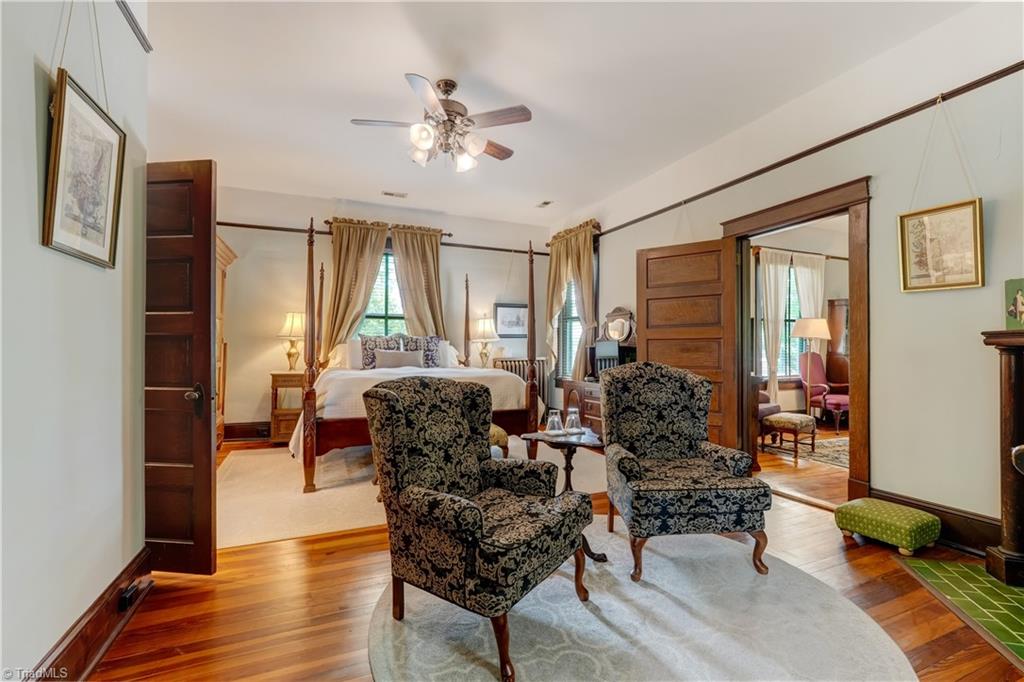


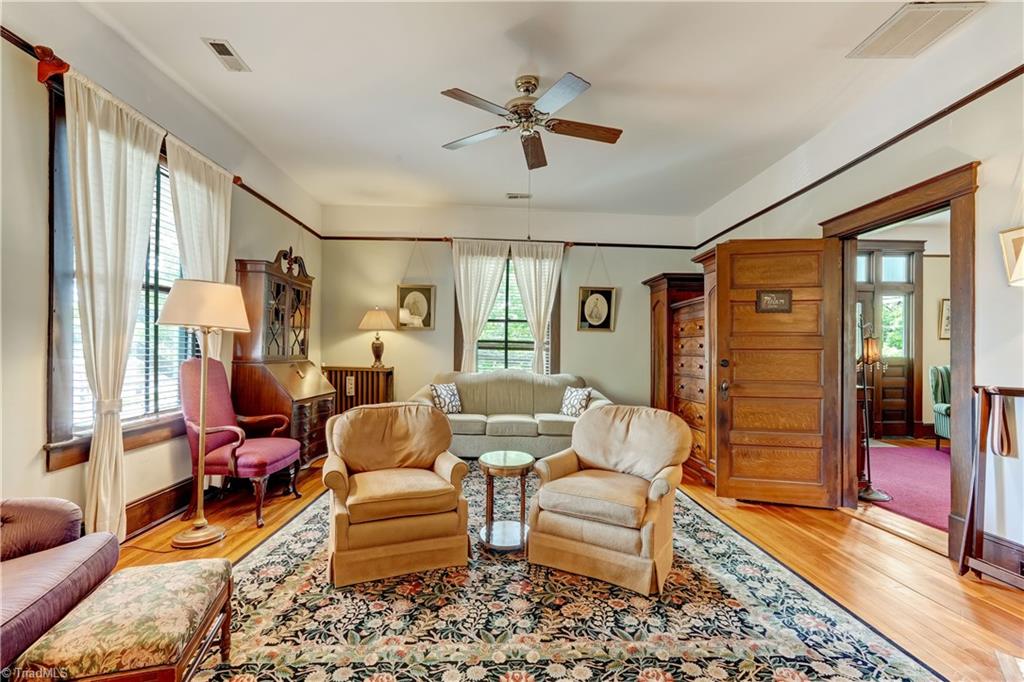
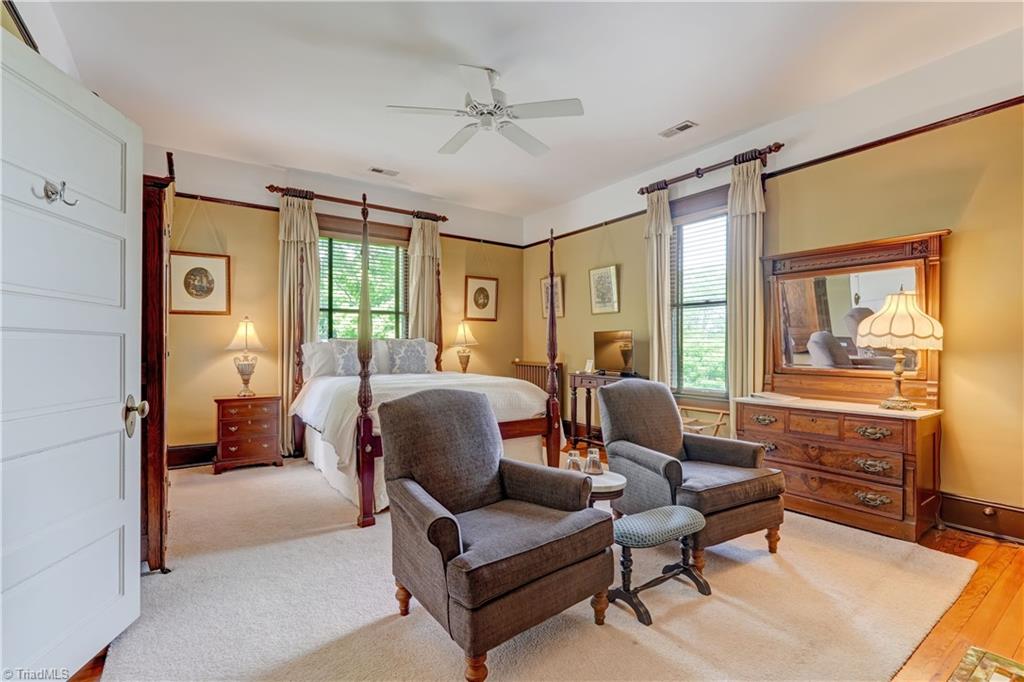


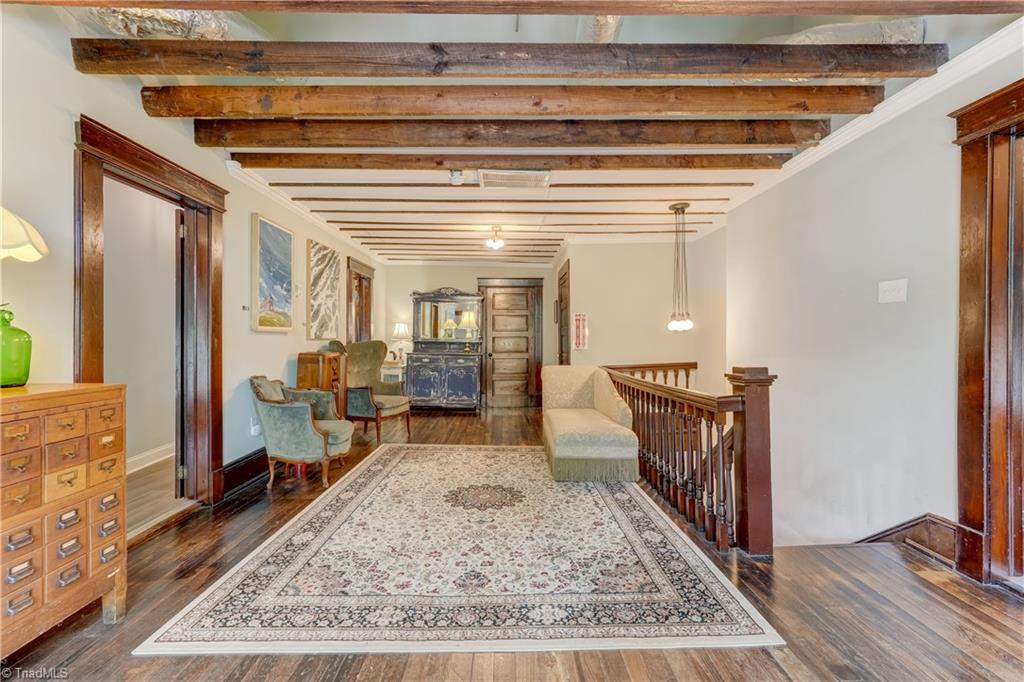
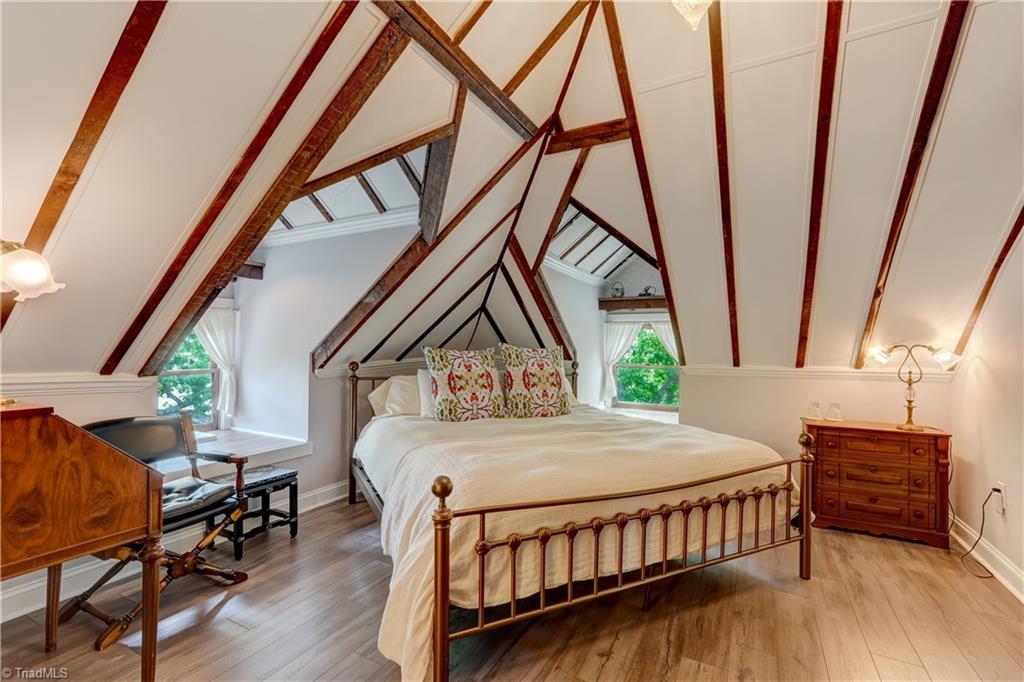


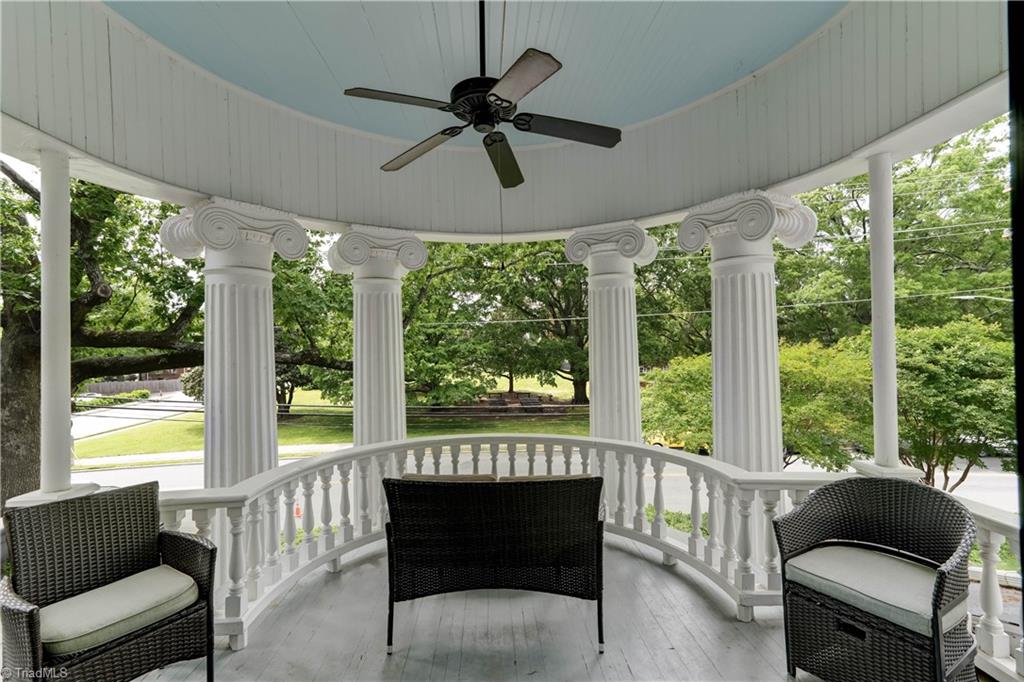

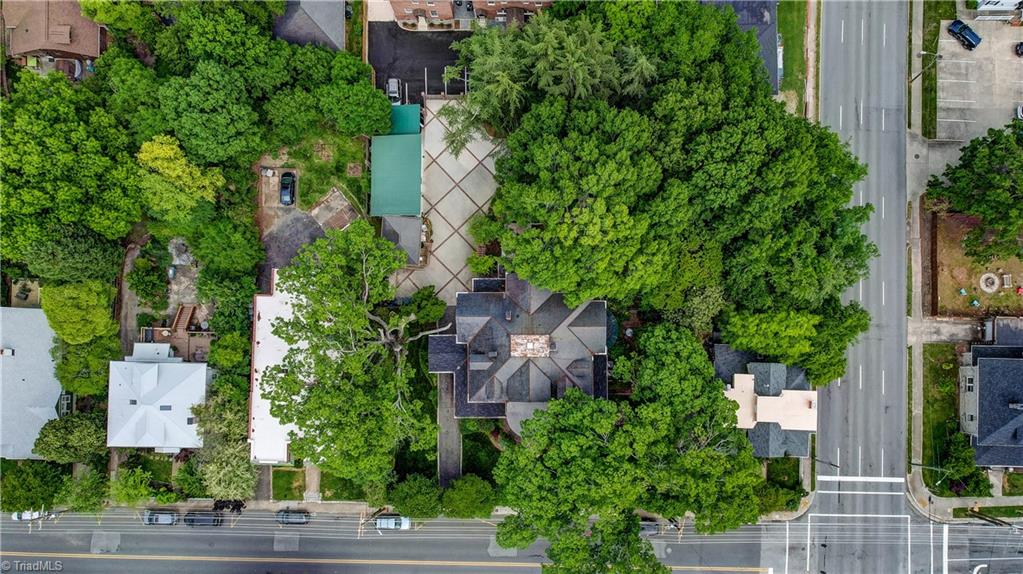
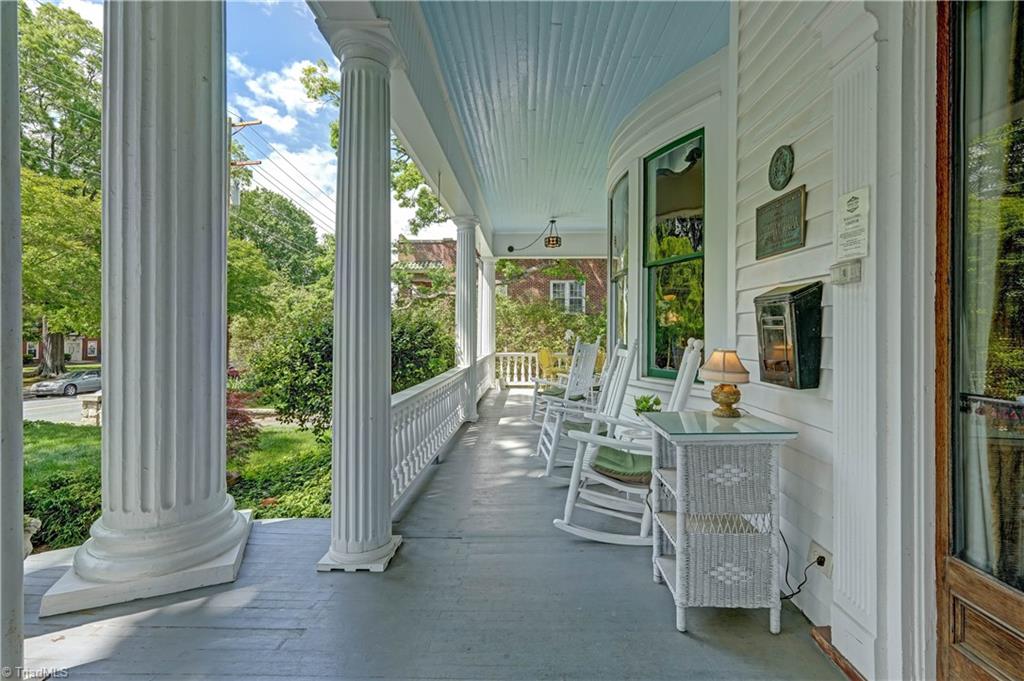

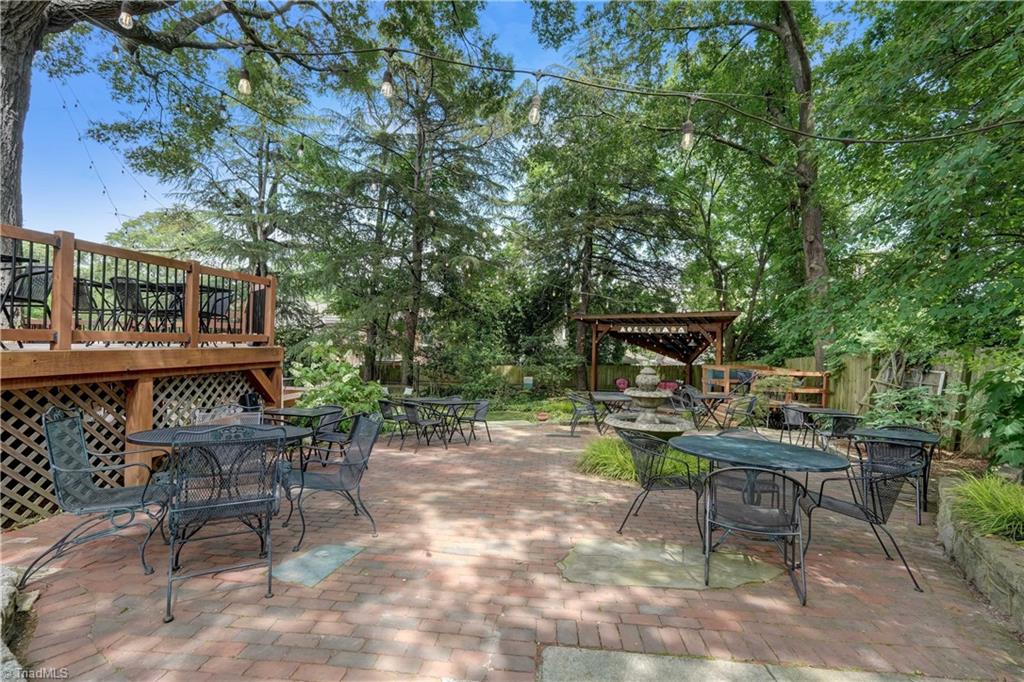
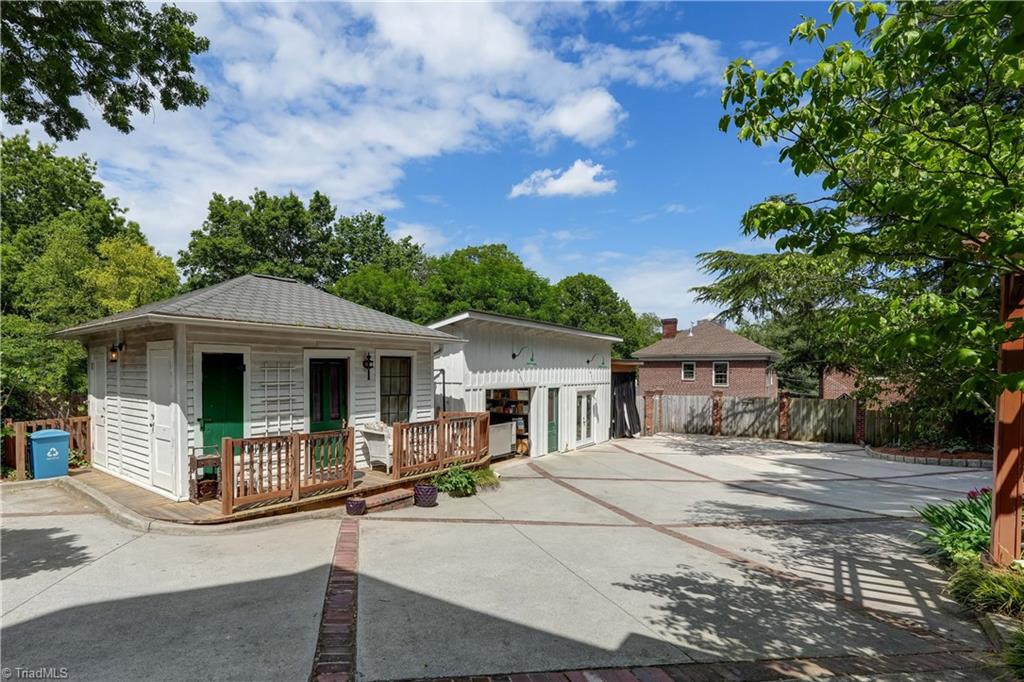
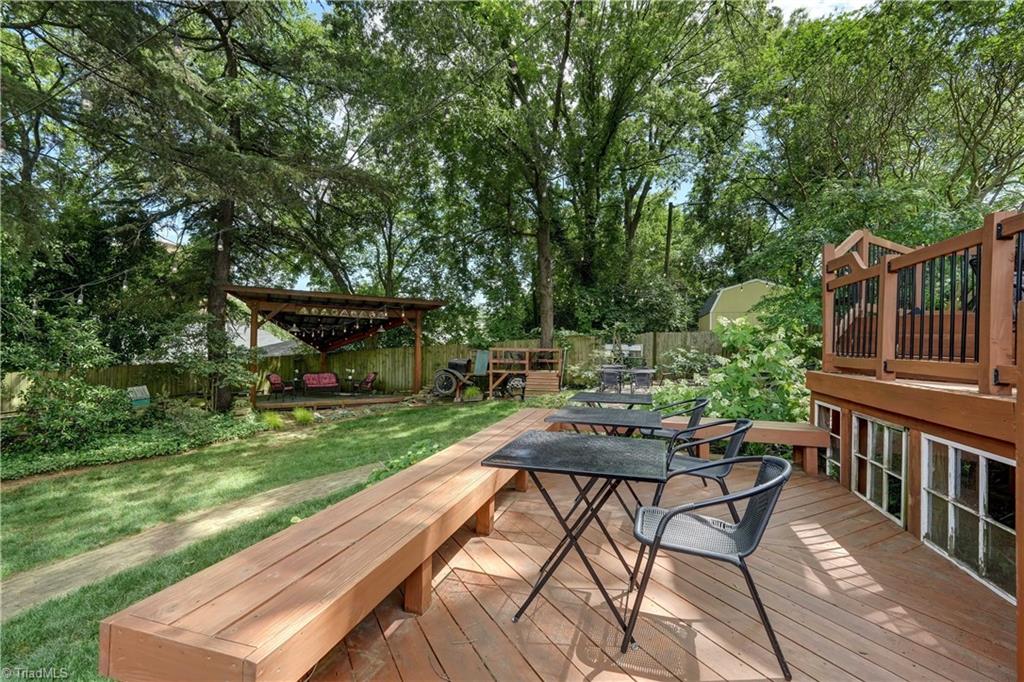
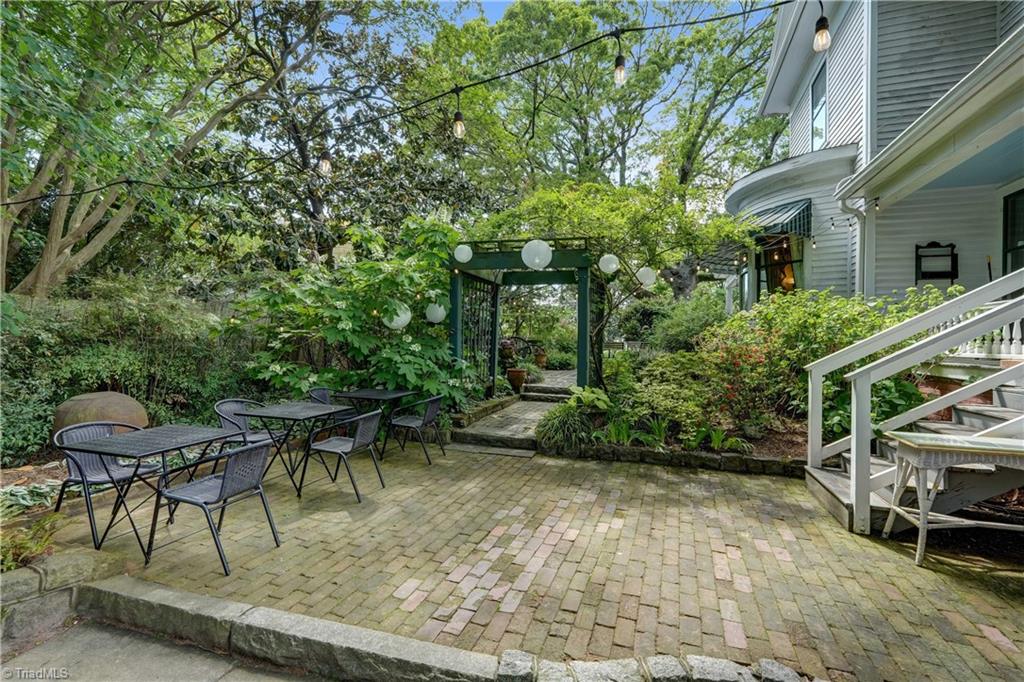
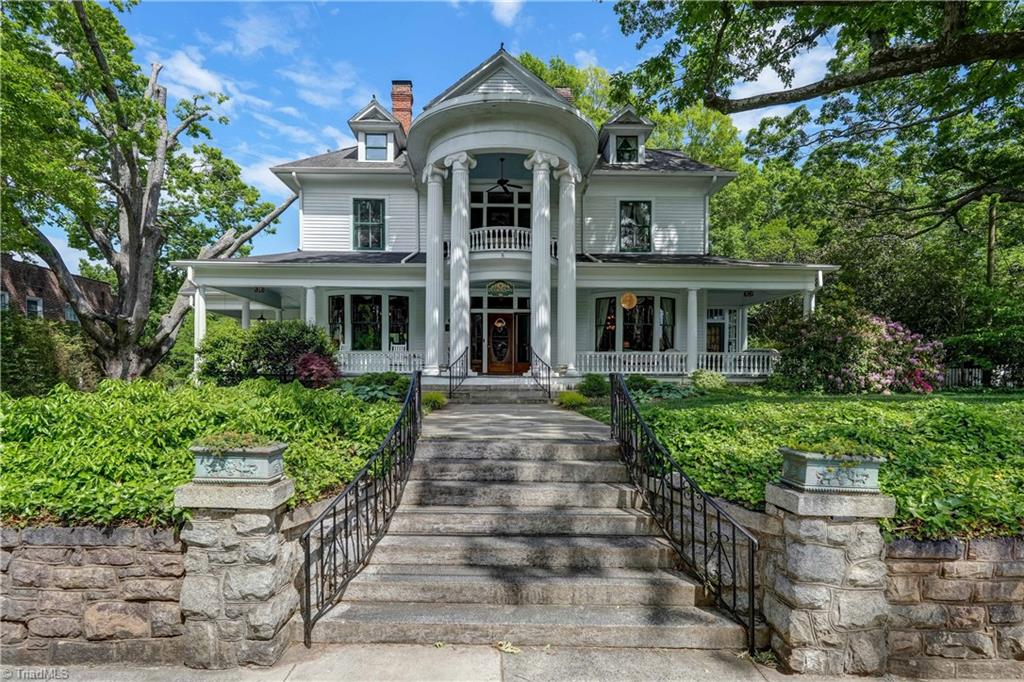
204 N. Mendenhall Street, Greensboro
Double Oaks Bed & Breakfast
The Harden Thomas Martin House
Blog post — One of Greensboro’s Most High-Profile B&B’s, the Iconic 1909 Double Oaks, $1.795 Million
- Sold for $1.5 million on July 22, 2024 (originally $1.795 million)
- 6 bedrooms, 9 bathrooms, 6,700 square feet, 0.54 acre
- Price/square foot: $224
- Built in 1909
- Listed March 8, 2022
- Last sale: $625,000, June 2016
- Neighborhood: Westerwood
- Listing: “This is a turnkey business sale with all furnishings, fixtures and equipment included.”
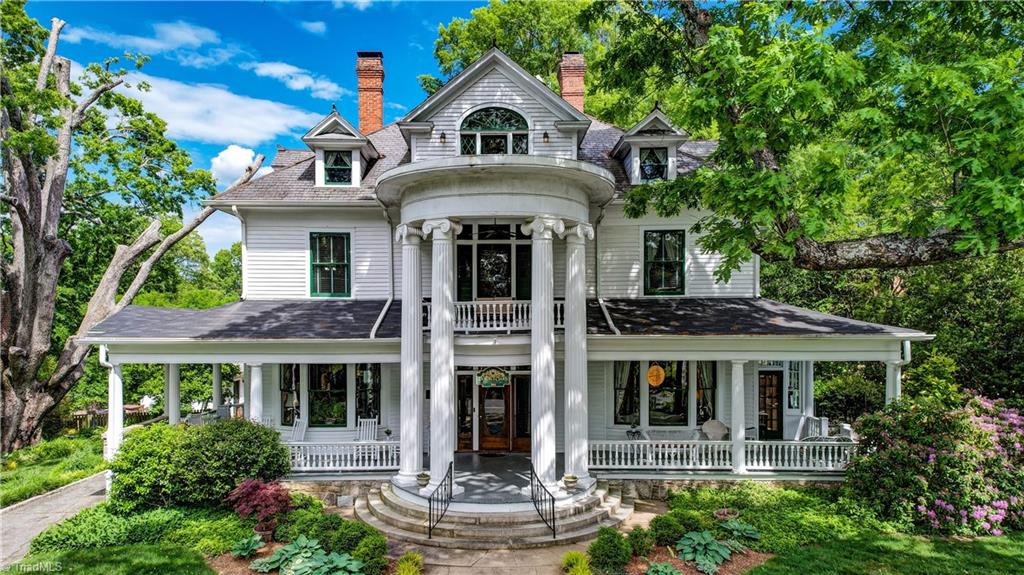
NRHP nomination: “The dominant exterior feature of the Martin residence is the broad front porch with Tuscan columns and a turned balustrade which carries across the full facade and the forward bays of each side elevation. The centerpiece of the porch — and of the entire house — is the bowed, two-story portico supported by four fluted Ionic columns with large terra cotta capitals. The portico shelters a bowed, second story balcony with a turned balustrade.”
“A handsome retaining wall of Mt. Airy granite, whose materials match those of the foundation, lines Mendenhall Street in front of the residence. An early photograph of the house does not show this wall, which was probably added during the 1920s when the grade of Mendenhall Street was lowered to meet the newly created Madison (now Friendly) Avenue to the south.
“Completed in early 1909, the Harden Thomas Martin House is one of a handful of early Colonial Revival style residences surviving in the city of Greensboro.
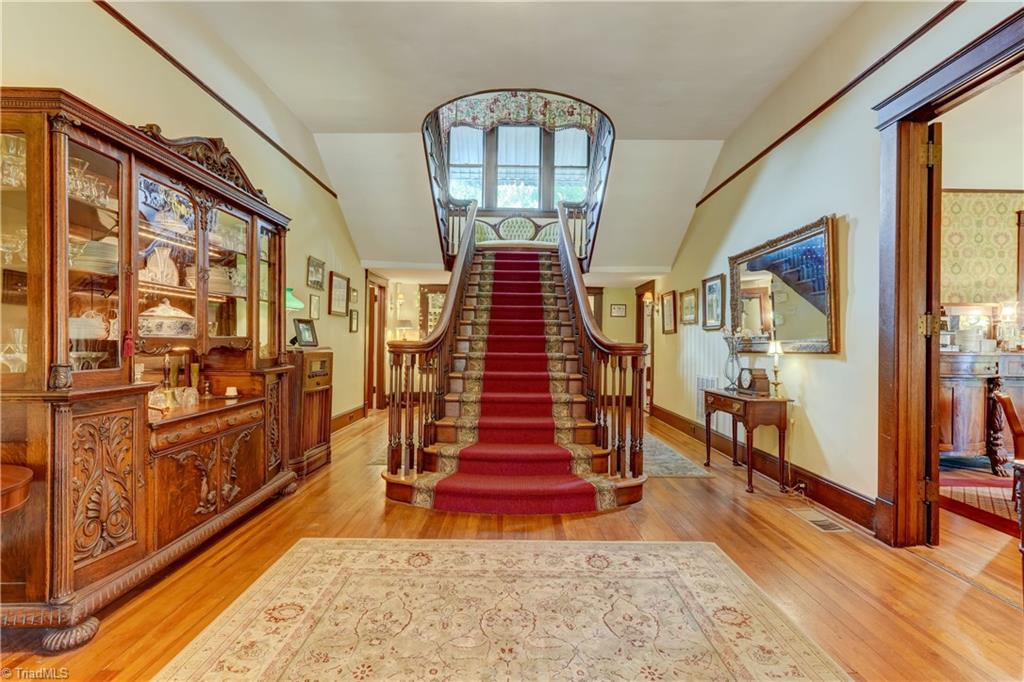
“Designed by Greensboro architect G. Will Armfield, the house features a bowed, two-story, Ionic portico and an exceptionally generous center hall with a grand split-run stair. The house’s interior trim – including a handsome first-floor portal and eight mantels – remains completely intact.
“The house is the only known residential design of Armfield (1848-1927), a Guilford County native who pursued a successful career as a dry goods merchant before taking up architecture in his late 50’s.
“The house was built for Harden Thomas Martin (1857-1936) a native of Rockingham County who operated stores in the communities of Ayersville and Reidsville before moving to Greensboro in 1909, where he entered semi-retirement and engaged in small-scale real estate development.”
The NCSU Architects and Builders directory: “When North Carolina passed an architectural practice act and began the formal registration of architects, G. Will Armfield of Greensboro was granted certificate #1 on May 15, 1915. He was one of a large number of men who were certified based on having already been in practice prior to 1915. The Armfield Family Newsletter stated that his son Joseph joined him in architectural practice, and G. Will Armfield continued in that line of work as late as 1924.
“Armfield gained a number of substantial commissions, of which the best known is the large, classically inspired Alumni Hall (1914) at the Oak Ridge Institute in the village of Oak Ridge in Guilford County. He also undertook commercial and residential buildings in Greensboro. One of the few that have been identified as standing is the large, Southern Colonial-style residence Harden Thomas Martin House of 1909, built on Mendenhall Street in Greensboro as a retirement residence for Reidsville merchant Martin. The Manufacturers’ Record of July 23, 1908, noted that Armfield was building the house for Martin. Armfield’s blueprints for the house remained with the house and are now in the Special Collections Research Center at NCSU Libraries.”
Note: County records shows the size of the house as 4,973 square feet, which may not reflect recent work that restored the third floor. They also show the date as 1910.
228holt
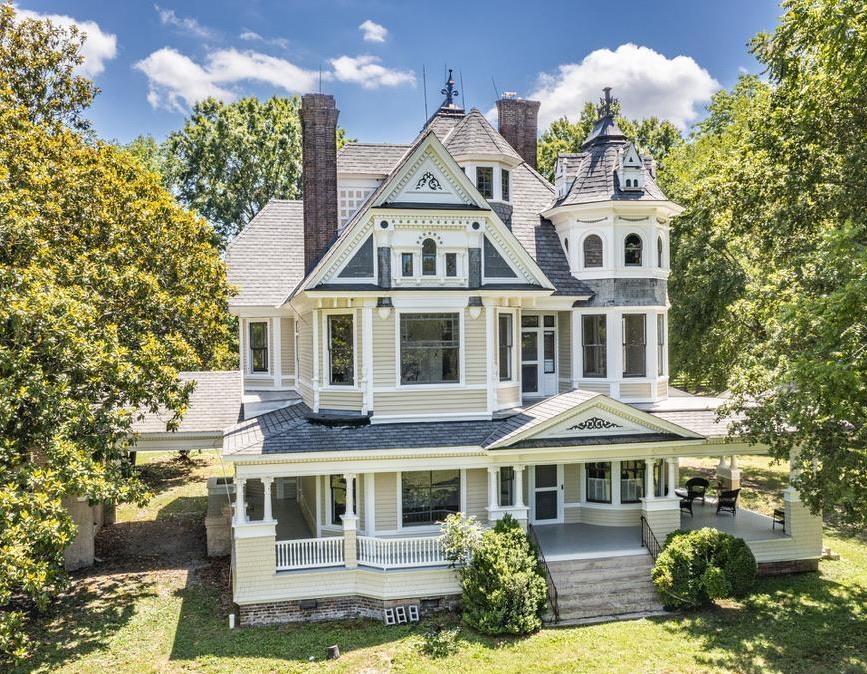
228 Holt Road, Haw River, Alamance County
The Charles T. Holt House
Blog post — For Sale: “The Most Ornate 19th Century Mansion in Alamance County,” $2.4 Million
- Sold for $1.7 million on July 12, 2024 (originally $2.4 million)
- 5 bedrooms, 2 bathrooms, 4,454 square feet, 21.10 acres (per county)
- Price/square foot: $382
- Built in 1897
- Listed July 18, 2022
- Last sale: $650,000, October 2007
- Note: A second home on the property dates to 1905 and has 3 bedrooms, 2 bathrooms and 2,431 square feet.
- The property also includes a pond, a barn and a two-car garage with additional upstairs and downstairs rooms.
- County records show 5,653 square feet as the “finished area” of the house, which may be larger than the “heated area” typically listed.
- The listing shows 23 acres.
- The house has a Graham mailing address but is in Haw River.
NRHP nomination: “The Charles T. Holt House, the most ornate nineteenth century mansion in Alamance County, is located in the town of Haw River overlooking the Granite Mills complex, on twenty-five acres of lawn, grazing pasture, and farm land.
“The large Queen Anne dwelling and its six outbuildings were constructed in 1897 for textile businessman Charles T. Holt, the son of Thomas Holt, governor of North Carolina, and his wife, Gena Jones Holt, the daughter of Thomas Goode Jones, governor of Alabama.
“The elaborate style and asymmetrical composition of this well-preserved two-and-a- half story Queen Anne house serves as a classic example of the form, devices and motives employed by late-nineteenth century high-style builders. Peaks, turrets and decorative chimney stacks project in the irregular manner of the fashionable Queen Anne architecture of the 1880s and 1890s.
“Also characteristic of the superior examples of the Queen Anne style, the elevations are sheathed with a variety of materials including wood, slate, brick and stone. The exterior is richly decorated with intricate woodwork and bayed gable end projections, porches and pedimented gable ends.”
721nc61
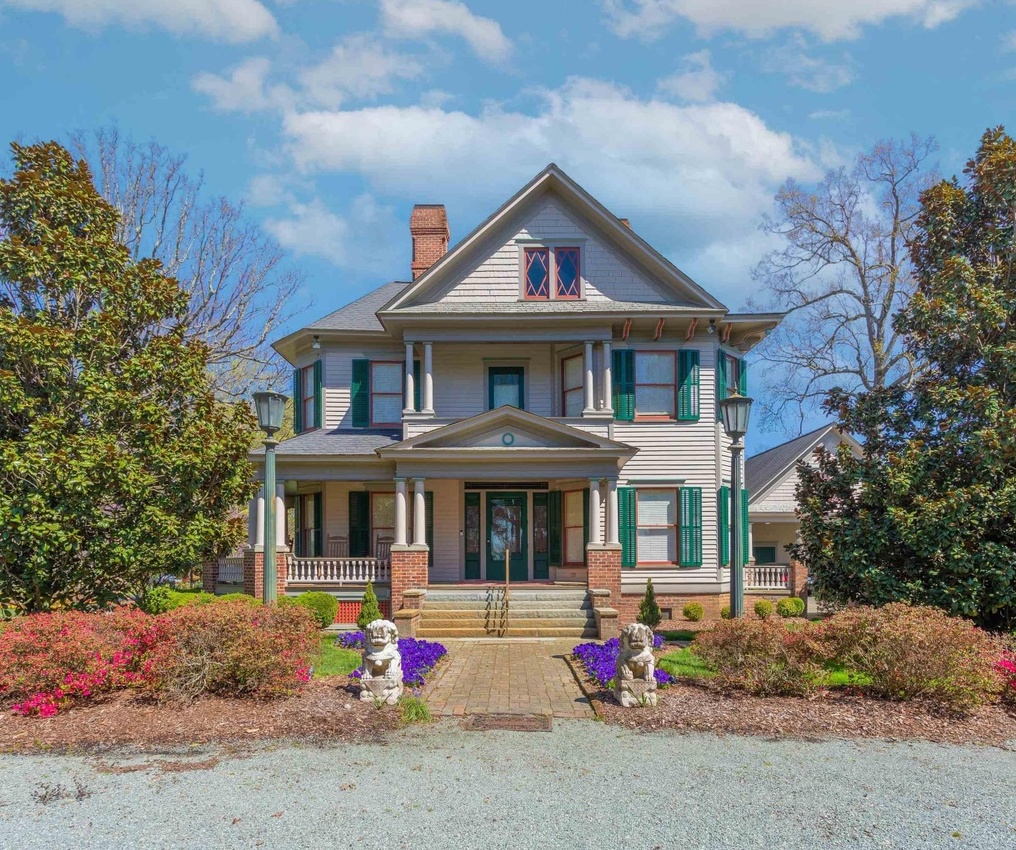
721 N.C. Highway 61, Whitsett, Guilford County
Holly Gate
The James Henry Joyner House
Blog post — Holly Gate: A 1908 National Register Mansion in Whitsett, $1.75 Million
- Sold for $925,000 on April 11, 2024 (originally $1.75 million)
- 4 bedrooms, 3 1/2 bathrooms, 3,530 square feet, 4.04 acres
- Price/square foot: $262
- Built in 1908
- Listed October 21, 2022
- Last sale: $50,000, June 1976
“Impressive, two-story, Queen Anne style, frame house built around 1910, one of the best surviving in the county. Well landscaped and maintained. Prof. Joyner, a brother-in-law of W.T. Whitsett … taught English, Mathematics and penmanship at the nearby Whitsett Institute.” (An Inventory of Historic Architecture: High Point, Jamestown, Gibsonville, Guilford County, McKelden Smith, 1979, p. 106)
Joyner himself (1873-1960) was a graduate of the institute and a 1903 graduate of Catawba College. He taught at Whitsett for 23 years and later served as the first principal of Gibsonville High School. After he retired, he was a member of the Guilford County Bard of Education for 21 years and a member of the state Board of Education. His wife, Effie Whitsett Joyner (1877-1976), also taught at the school. She was a younger sister of William Thornton Whitsett, founder of the institute.
“Whitsett [Institute] burned tn 1918 and was not re-opened. Dr Whitsett and Professor Joyner both turned their energies and influence on behalf of the establishment of a public high school in nearby Gibsonville. The school was established and Joyner became its first principal. Under his leadership Gibsonville High School became the first accredited high school in Guilford County.” (NRHP nomination)
NRHP nomination: “Holly Gate, the residence of Professor and Mrs. J.H. Joyner, is a transitional Queen Anne-Colonial Revival house constructed in 1908-1910. It is a frame two-and~a-half story dwelling with picturesque massing and a gray slate roof.
“The house is one of several large residences built by the faculty of Whitsett Institute in the late nineteenth and early twentieth centuries The remaining structures from this group are the finest Queen Anne Revival houses standing in the eastern section of Guilford County.
“No architect or contractor tor for this house is known.
“The Joyner House is set well back from NC 61 on a four-acre lot surrounded by mature hardwood trees and complemented by a series of outbuildings to the rear. The residence presents an irregular silhouette and plan, typical of the Queen Anne aesthetic.
“A tall hipped roof is complicated by a large projecting gable to the front and a semi-hexagonal hip to the left. The roofline is broken further by three high chimneys with brick band courses and molded tops. The first two stories are covered with clapboarding, while the gable end is covered in shingles.
“A Colonial Revival porch wraps around the left side of the house. The porch begins with a pedimented gable over the main central entrance to the house. There is an inset balcony immediately above the entrance pediment.
“On both levels, the porches are composed of grouped Doric colonettes on plinths. A turned balustrade was placed between the plinths in the first story porch.
“The house sits on a high brick basement partially concealed by mature foundation plantings.”

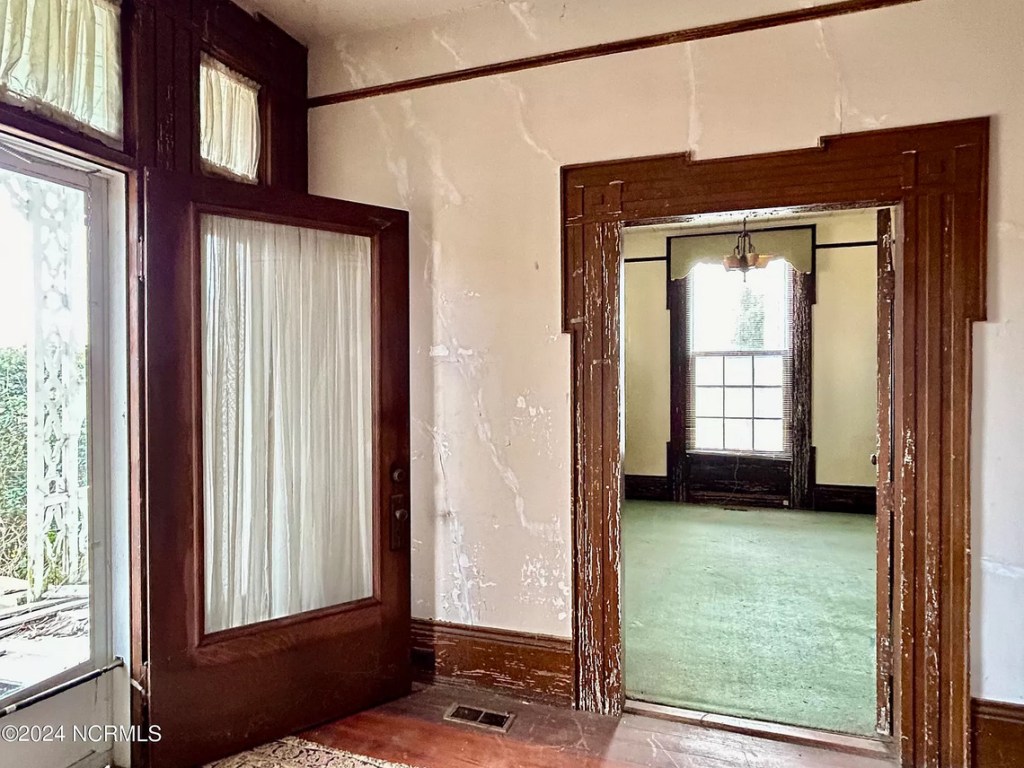
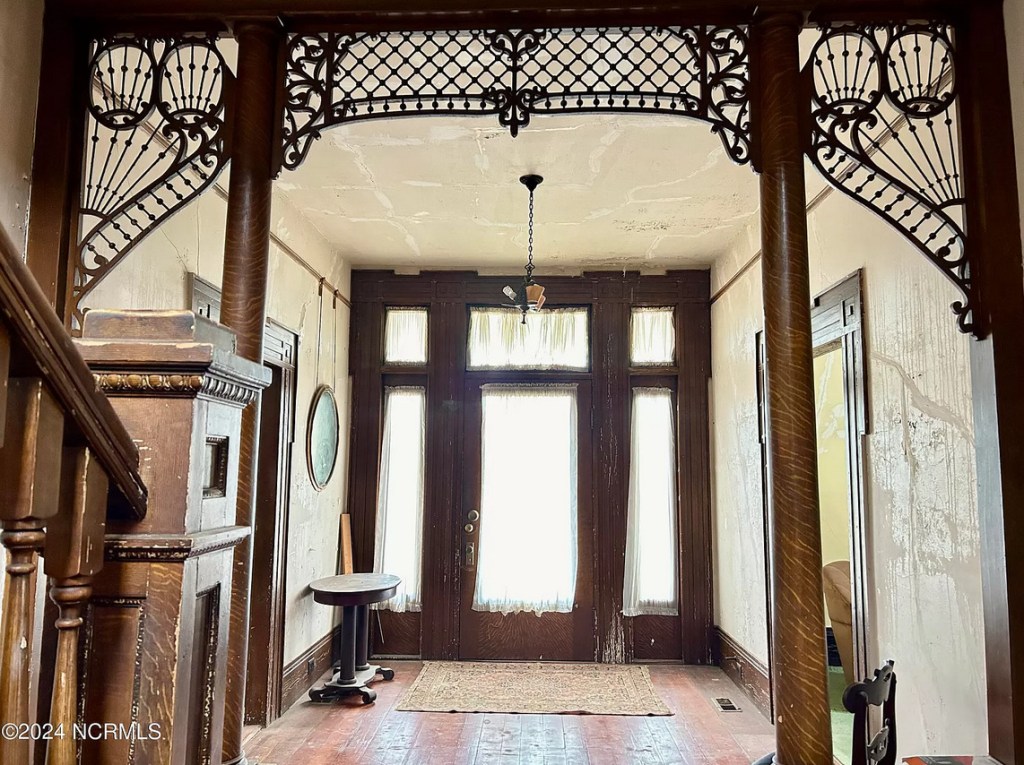


- Sold for $95,000 on March 18, 2024 (listed at $108,000)
- The buyers appear to be a married couple who live in Pennsylvania.
- 4 bedrooms, 2 bathrooms, 3,724 square feet, 2.47 acres
- Price/square foot: $26
- Built in 1840
- Listed February 5, 2024
- Last sale: 1917, price unknown
- Neighborhood: Just north of the town of Hamilton in northwest Martin County
- Listing: “While the porch floor is in disrepair and not being used, the lacy sawn-work balustrade, brackets and posts that remain are some of the best examples in the area. … Back steps could be dangerous. Utilities can be turned on for inspections.”
- “A deteriorated, board and batten smokehouse still stands at the rear of the house.”
- District NR nomination: “Hickory Hill, significant for the excellence of its craftsmanship and elaborate Greek Revival finish, was constructed by Simon Turner Price as the center of his large and successful antebellum farm. After the Civil War the house changed hands several times before being acquired in 1876 by John M. Sherrod and his son-in-law, Richard B. Salsbury. Both were prominent in local business and agricultural affairs. John Sherrod acquired complete title in 1888. After his death in 1905, he left the house to grandson J.M. Salsbury who sold it to Jessie B. Everett in 1917. The house has remained in Everett hands.
- “Reflecting the changing tastes of its owners, the handsome original two-story double- pile house with shallow hip roof and elaborate Greek Revival woodwork was further enhanced by a picturesque Victorian porch with graceful sawnwork features in the late nineteenth century. Also during the early twentieth century, its interiors were refurbished in the Colonial Revival style including such notable details as handsome oak wood graining, an Eastlake spindle screen, and decorative pressed tin ceilings.”
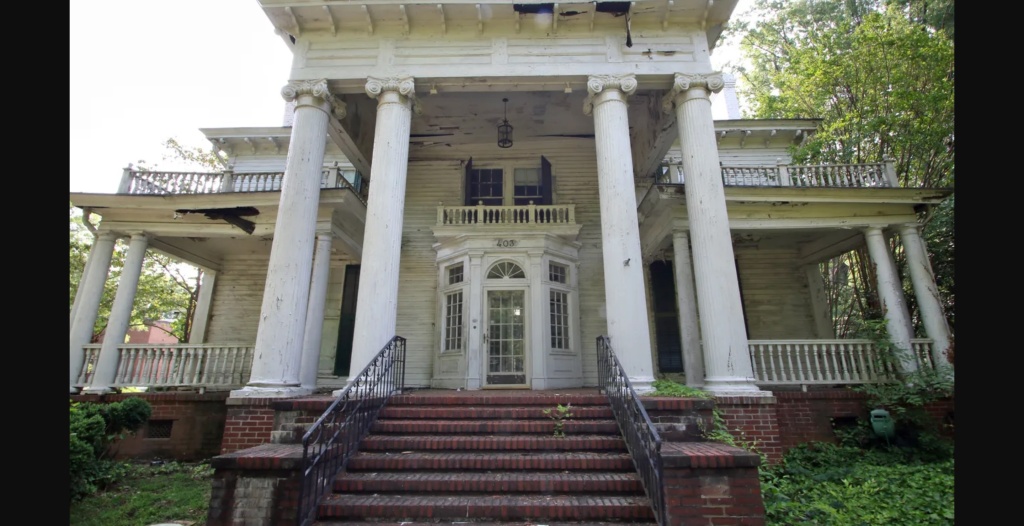
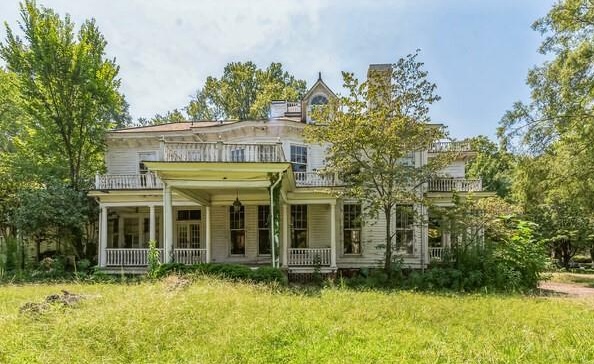


(The first photo above is by Mike Hensdill of The Gastonia Gazette via The Shelby Star.)
403 S. Washington Street, Shelby, Cleveland County
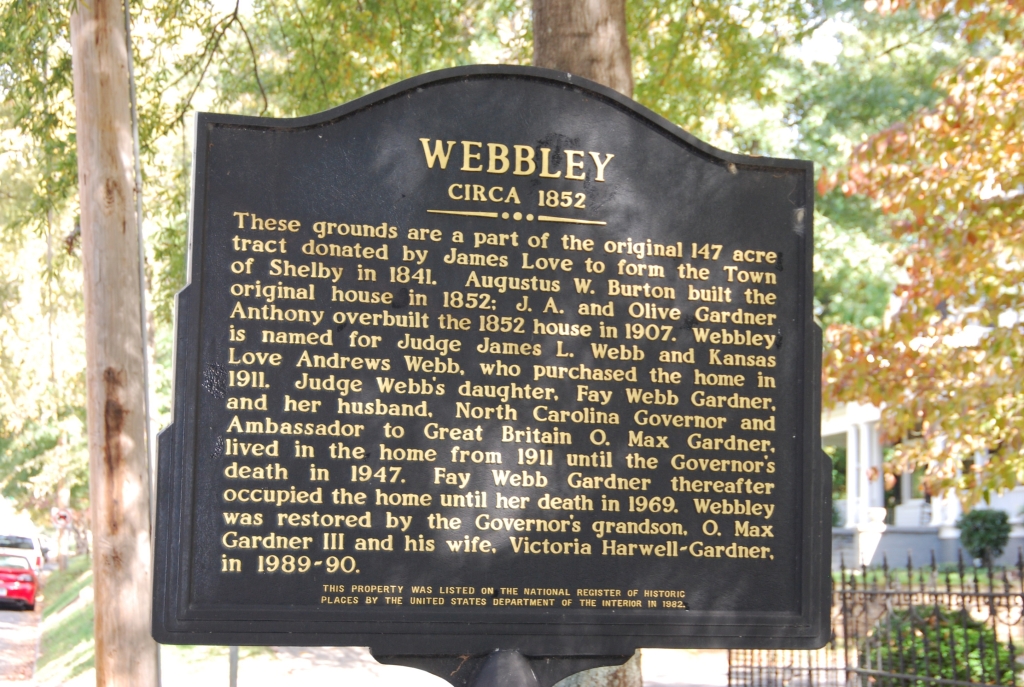
Webbley, the O. Max Gardner House
Blog post — Someone Really Needs to Save the O. Max Gardner House in Shelby
- Sold for $350,000 on February 22, 2024 (originally $461,300)
- The buyer is an LLC called Webbley Mansion LLC.
- 6 bedrooms, 8 full bathrooms, 1 half-bathroom, 6,813 square feet (per county), 2.43 acres
- Price/square foot: $51
- Built in 1850
- Listed September 21, 2023
- Last sale: $758,893, July 2023 (foreclosure)
- Neighborhood: Central Shelby Historic District (NR)
- Note: The listing shows 7,406 square feet.
- The house remained in the Gardner family until a foreclosure in 2023.
“In May of 1993, O. Max Gardner III and his wife, Victoria Harwell Gardner, turned the home into a bed and breakfast with a political theme. The Inn at Webbly was one of the nation’s finest inns, but closed in 1998 due to an illness in the family which made operation of the inn difficult.” (National Park Service)
National Register nomination: “Webbley, more commonly known today as the O. Max Gardner House, was the home of one of North Carolina’s most prominent twentieth century public leaders.
“A key figure of the state’s famous ‘Shelby Dynasty,’ O. Max Gardner (1882-1947) enjoyed a distinguished career that included service as state senator, lieutenant governor, and governor from 1929 to 1933. As the state’s chief executive during the first years of the Depression, he was credited with initiating programs that helped many small farmers weather the difficult times.
“He later served under Roosevelt as chairman of the Advisory Board of the Office of War Mobilization and Reconversion, and under Truman as Undersecretary of the Treasury. He was appointed as ambassador to the Court of St. James, but did not live to fulfill that appointment.
“The original portion of the Gardner House in Shelby was constructed about 1852 for attorney Augustus Burton. In 1907 it was enlarged to its present form by J.A. Anthony, Gardner’s brother-in-law. The house became Gardner’s permanent North Carolina residence in 1911 when it was purchased by his father-in-law, Judge James L. Webb, and received the name Webbley. …
“Webbley, or the O. Max Gardner House, is one of the most distinguished residences in the town of Shelby. The house is set back on a wide, deep lot on the east side of South Washington Street and is shaded with mature hardwood trees. A semi-circular drive lined with boxwoods approaches the house from the street.
“The house is an early twentieth century overbuilding of a mid-nineteenth century Italianate dwelling, and though remnants of the earlier structure can be seen in places, the house is of thoroughgoing Colonial Revival character … here fully developed in one of the most striking examples of the style in western North Carolina.”
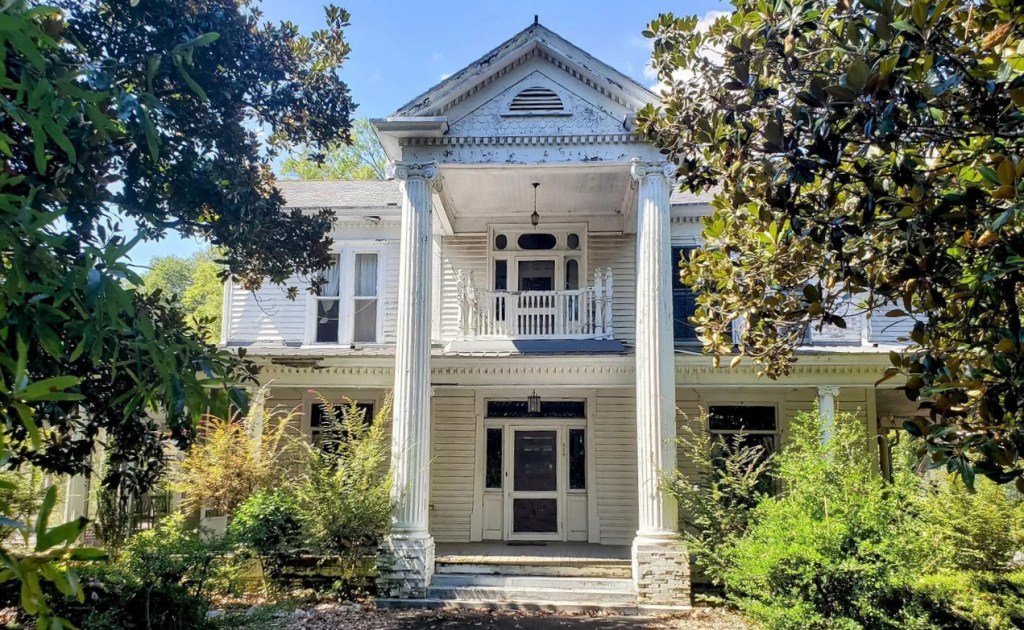
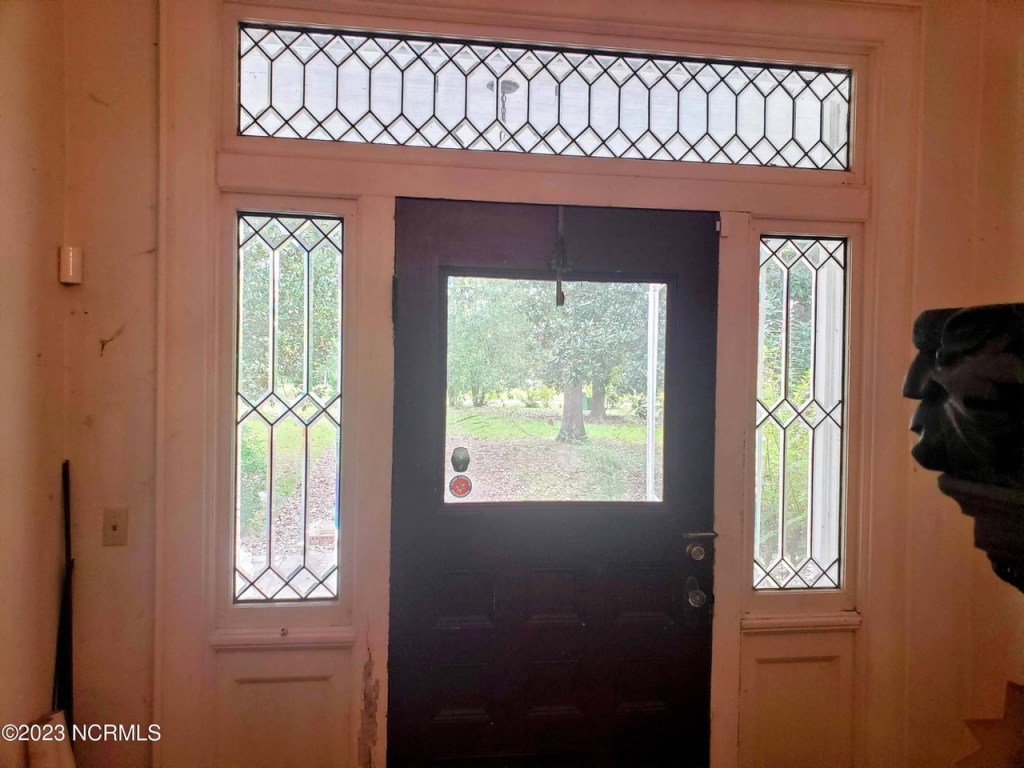
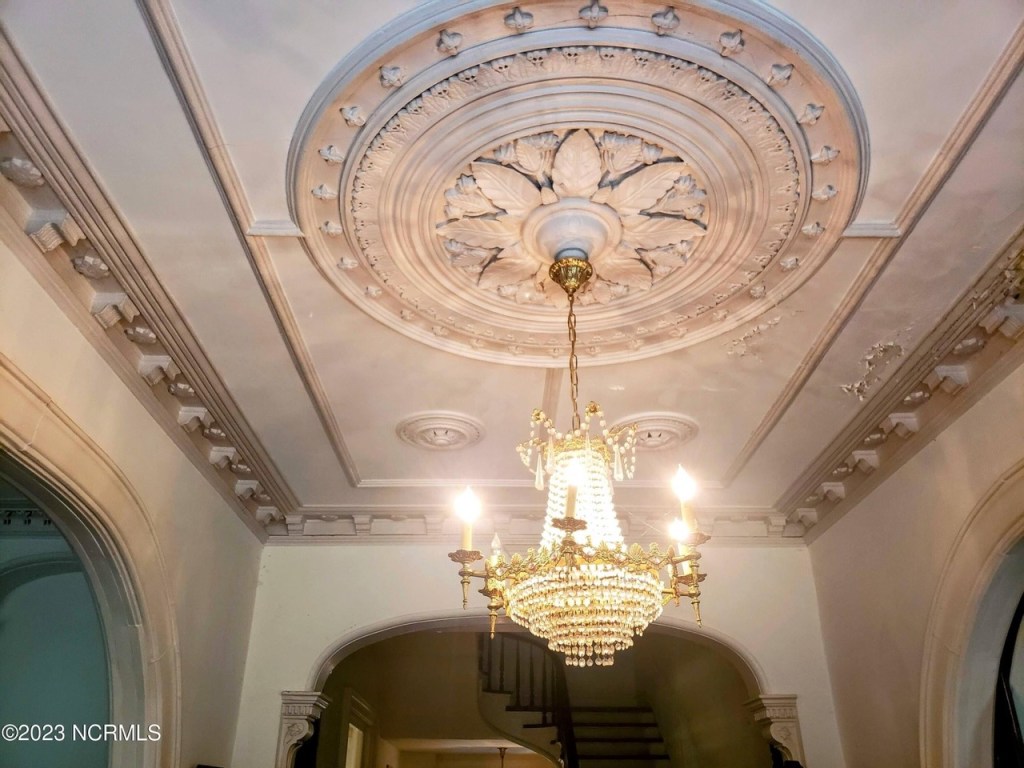
In better days (photos from TripAdvisor and GetLostintheUSA.com):






526 S. Caroline Street, Rockingham, Richmond County
The H.C. Watson House
- Sold for $284,900 on February 1, 2024 (listed at $299,900)
- 4 bedrooms, 3 full bathrooms, 2 half-bathrooms, 4,648 square feet, 1.30 acres
- Price/square foot: $61
- Built circa 1885
- Listed October 10, 2023
- Last sale: $187,000, May 2005
- Listing: The property includes a guest house and three-bay carriage house.
- Listing: “The house can remain residential since that is what is has been used for. Current zoning B3 (Highway Business) and R7 ( High Density Residential) allows for many other Commercial and Residential uses. … Additional land is available. … The property does need work. Cash or Renovation loan only.”
National Register nomination: “The H. C Watson House, located at 526 Caroline Street approximately one-half mile south of downtown Rockingham, was constructed in the mid-1880s as a High Victorian residence. During a remodeling effort of the early 1900s the two frame house received numerous Classical Revival additions.
“In Rockingham during the early 1900s, fortunes were being made in the textile industry and related commercial enterprises. This newly acquired wealth was manifested in a burst of residential construction. Because of the resources available and the desire to keep a status residence. wealthy owners of older nomes continually remodeled to keep pace with. changing architectural trends, Rockingham’s elite who regarded the house as a visual symbol of prosperity were drawn to the theatrical and grandiose expression of Classical Revival style.
“The elegant two story pedimented portico with fluted Ionic columns, dentiled cornice, formal wraparound porch and attached porte-cochere demonstrate the strong influence of the Classical Revival style, as do the striking beveled and leaded glass door and window transoms and the crowning upper deck widow’s walk. The truncated hipped roof exhihibits a colorful decorative use of slate shingle work, the only example in the Rockingham vicinity. Features retained from its Victorian origins include ornamental splayed door surrounds, long narrow paired second story windows, and rounded transom and sidelights surrounding the entrance to the balcony. …
“In ca. 1895, H. C. Watson commissioned an itinerate Irish craftsman to stylishly update the entrance hall and two front parlors of the house, with exceptionally fine and unspoiled plasterwork. The cornices of the south parlor are pierced with a highly decorative leafy pattern and the cornice of the central hall features an alternating series of small plaster modillions and flowerettes.
“The ceiling medallions are formed from a repetitive use of leaves and flowers in a circular pattern, Other applied plaster motives include large ornamental bosses, elaborately scrolled console brackets supporting shallow arched niches, and elegantly curved window pediments.
“The resulting effect is richly designed and beautifully executed. The R.C. Watson House is distinguished as possessing the most notable and well preserved late nineteenth century plasterwork in the Rockingham vicinity and perhaps Richmond County.”
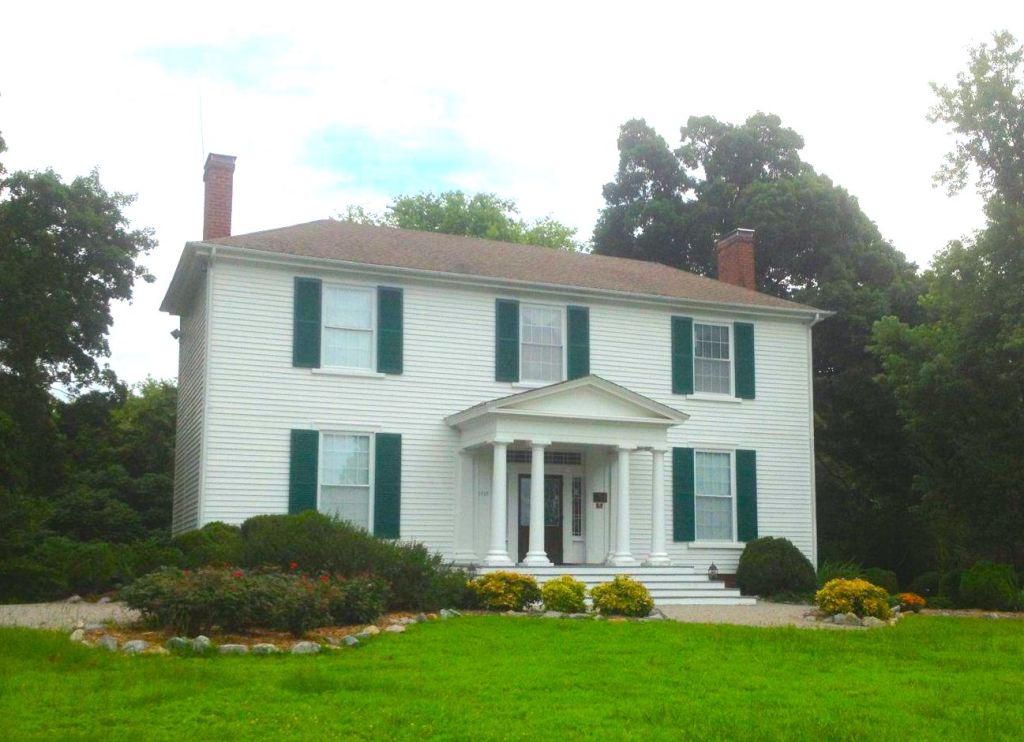
Henry Clay Watson (1855-1926) “was a prominent landholder, cotton gin operator and respected downtown merchant. … Among other accomplishments, he was co-founder of the Watson-King Funeral Home in 1911.” His death was front-page news in the Rockingham Post-Dispatch:

1939 N.C. Highway 57 N., Milton, Caswell County
Woodside, the Caleb Hazard Richmond House
National Register of Historic Places
Blog post — Woodside: An 1838 Mansion in Caswell County on the National Register, $595,000
- Sold for $395,000 on May 4, 2023 (originally $595,000)
- 5 bedrooms, 5 1/2 bathrooms, 4,400 square feet, 5 acres
- Price/square foot: $90
- Built in 1838
- Listed January 19, 2022
- Last sale: $75,000, December 2021
- Note: The property is under protective easements held by the Historic Preservation Fund of North Carolina.
Woodside had fallen into serious disrepair by the time it was nominated for the National Register. In the 1990s, it was restored as a bed and breakfast and restaurant, which operated as recently as three years ago.
The house is about two miles southeast of Milton.
Listing: “Thomas Day Staircase.”
News & Record, April 18, 1995: “Woodside is filled with beautifully executed woodwork attributed to Thomas Day, Milton’s free black craftsman. A fine example of the workmanship is the mahogany staircase railing which ends in a nautilus-shaped swirl.”
National Register nomination: “Woodside, the home of Caleb Hazard Richmond in northeastern Caswell County, is a splendid … example of Greek Revival residential architecture produced during the county’s ‘Boom Era’ in the middle decades of the 19th century.
“Standing on its elevated site some 2 miles east of the small town of Milton, Woodside overlooks the surrounding countryside that produced the bright-leaf tobacco which was the mainstay of the county’s economy during that boom period. …
“The large house was once the seat of a plantation consisting of 350 acres and was probably built in the late 1830s, shortly after Richmond married his second wife, Mary R. Dodson, and within a few years after he had made his first land purchase in the county.
“Although only 5 of those 350 acres are now associated with the house and only one of the numerous outbuildings which supported the household survives, Woodside remains as a vivid reminder of the prosperity which characterized the county during the period from the late 1830s until the Civil War.”
“Typical of the substantial houses constructed in the county during the period, Woodside is a large dwelling of simple vernacular form finished with well-executed pattern-book Greek Revival details.
“The fine interior woodwork, including the distinctive scrolled staircase newel and bowed parlor mantel flanked by niches, is attributed to Thomas Day. Day was a superior craftsman and free black who operated a furniture-making shop in nearby Milton and is credited with creating many of the county’s finest interiors during the ‘Boom Era.’
“It was at Woodside that the Confederate officer (later general) Dodson Ramseur met, courted and married (1863) Ellen Richmond, daughter of Caleb.” Dodson and the soon-to-be-widowed Ellen were cousins.
Dodson was from Lincolnton. Although much is made of his connection to the house, he stayed there only briefly during the war, including some months while recovering from wounds. A roadside plaque on the property is devoted to him, put up by the Daughters of the Confederacy and the “Military Order of Stars and Bars.”
A laudatory article on Dodson in America’s Civil War magazine recounts his “conspicuous gallantry,” “magnetic leadership” and victories in battle but also notes his “unaccountable lapses,” staggering numbers of his troops being “slaughtered,” poor decisions, mistakes, and rashness. He ultimately died as a prisoner of Union generals Sheridan and Custer after after attracting heavy fire as one of the conspicuously few men on horseback during an October 1864 battle in the Shenandoah Valley. His only child, Mary, had been born four days earlier.
The Caswell County Historical Society relates the sad consequences for his family: “Ellen Ramseur never remarried and wore black mourning clothing for the rest of her life. She remained with her family in Caswell County until she died in 1900 at the age of fifty-nine. Mary Ramseur never married and died at the age of seventy-one in 1935.”
Curiously, the civil-war magazine article says, one Dodson’s best friends at West Point had been the same George Armstrong Custer, who ultimately took Dodson prisoner and eventually outperformed Dodson as an author of battlefield catastrophe. “Stephen Dodson Ramseur and George Armstrong Custer were just about as unlike as any two cadets who had ever attended the U.S. Military Academy. Custer, nicknamed Fanny by his fellow cadets, was tall, blond and voluble. A poor but popular student, he chafed at the restrictions and rules at West Point.
“Ramseur, on the other hand, was a small, darkly handsome young man whose natural reserve hid an underlying strength of purpose. While not an outstanding student, he applied himself well enough to finish in the top third of the class, and his leadership skills made him captain of cadets.
“Deeply religious, he was also a staunch Southerner who, since a Yankee had ruined his father in a business deal, had little use for anyone from the scheming, cold-hearted North. He politely defended states’ rights and the institution of slavery, which he called the very foundation of our existence.
“Yet the two cadets had become friends, for they did have more than a few things in common. Both were superb athletes, especially on horseback. And although Ramseur was very religious, he was not an insufferable Puritan like some of the New Englanders, and certainly was not too good to enjoy a joke, a drink or a twist of tobacco.
“In short, he was a boon companion and as such was willing to accept Custer, Merritt [a future Union general and cavalry commander] and a few others from his general dislike of Northerners. Wes Merritt thought him one of the most universally beloved men in the class.”
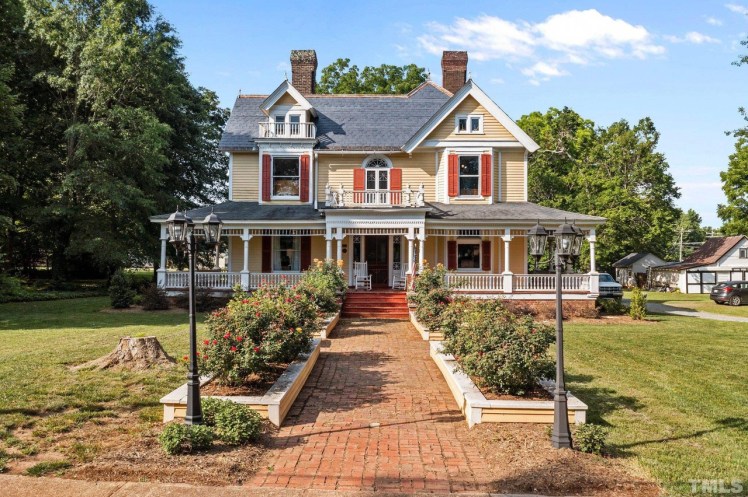
204 E. Railroad Avenue, Gibsonville, Guilford County
Blog post — National Register Property For Sale: Gibsonville’s ‘Most Stylish and Impressive’ Turn-of-the Century Home, $425,000
The Francis Marion Smith House
- Sold for $350,000 on February 28, 2023 (originally $475,000)
- 4 bedrooms, 2 1/2 bathrooms, 3,536 square feet, 1.12 acres (per county)
- Price/square foot: $99
- Built in 1898
- Listed June 9, 2022
- Last sale: $143,500, August 1989
- Note: County records show the square footage as 1,921, which looks way off.
- The property includes a storage building and a gazebo.
NRHP nomination: “The Francis Marion Smith House, erected in 1898, is the most stylish and impressive residence in Gibsonville surviving from the 1890-1910 period that witnessed the town’s major growth.
“The two-and-a-half-story frame house combines elements of the Colonial Revival and Queen Anne styles, including an elaborate program of classical trim and turned ornament.
“It is one of three notable late nineteenth and early twentieth residences associated with the Whitsett Institute, a boarding secondary school and junior college in the Whitsett community near Gibsonville. The three houses (one of which has already been listed in the National Register) are among the finest houses combining Colonial Revival and Queen Anne style elements in eastern Guilford County.
“Francis Marion Smith [1864-1910] was a farmer, businessman, and civic official in and around Gibsonville. His wife, Lizzie E. Whitsett [1869-1922], taught at the Whitsett Institute both before and after her marriage.”
Lizzie’s brother was the renowned William Thornton Whitsett, founder of the institute. The 1883 mansion of their father, Joseph Bason Whitsett, is now under contract to be sold; the listed price is $1.3 million. The property, located on U.S. 70 just east of Whitsett, includes 11 acres of land.
The Smith house remained in the Smith-Whitsett family until 1976. Lizzie bequeathed the house to her sister, Effie Whisett Joyner (1877-1976). After her death, the house was sold for $20,000 to Jerry Nix, who has restored several historic properties in Gibsonville. Nix sold it to the current owners in 1989.
 Piedmont Historic Homes